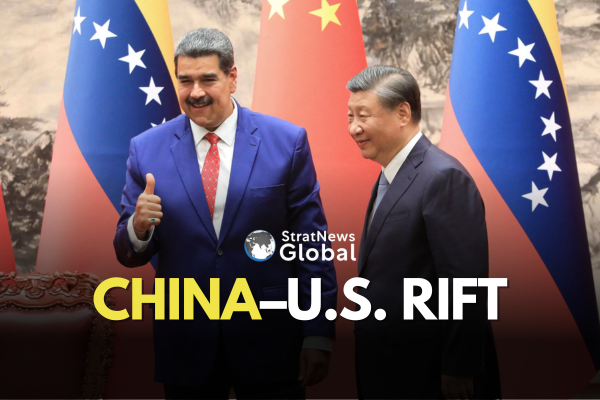
China has criticised Washington’s decision to impose a blockade on sanctioned oil tankers entering and leaving Venezuela, calling the move an act of “unilateral bullying.” Beijing, however, stopped short of outlining specific measures it would take to support its ally or protect Venezuelan President Nicolas Maduro’s government.
Beijing Defends Sovereignty Amid Rising Tensions
The condemnation followed U.S. President Donald Trump’s order earlier this week for a complete blockade of sanctioned vessels linked to Venezuela, as the United States deployed troops and warships to the region. China, the largest buyer of Venezuelan crude, imports roughly 4% of its total oil supply from the OPEC nation, with shipments in December expected to exceed 600,000 barrels per day, analysts said.
Chinese Foreign Minister Wang Yi reaffirmed Beijing’s opposition to “unilateral bullying” during a phone conversation with his Venezuelan counterpart Yvan Gil on Wednesday. He said China supports all nations in safeguarding sovereignty and national dignity. Although Wang did not mention the United States or President Trump by name, he repeated China’s stance against any actions that undermine the UN Charter or violate international norms.
Strategic Interests and Regional Diplomacy
The U.S. has defended its latest sanctions as part of an effort to combat terrorism, drug smuggling, and human trafficking. Last week, the U.S. Coast Guard seized an oil tanker off Venezuela’s coast, deepening tensions between Washington and Caracas. President Maduro accused the United States of seeking to seize Venezuela’s oil wealth and claimed the military build-up was aimed at toppling his government. Trump, in a recent interview, said Maduro’s “days were numbered.”
China has long maintained strong economic ties with Venezuela, providing billions of dollars in credit under loans-for-oil deals. During a meeting earlier this year in Moscow, Maduro told Chinese President Xi Jinping that he hoped to expand cooperation in energy and trade.
Global Calls for Restraint
Despite its criticism of Washington, Beijing continues to balance its strategic interests, as it works to stabilise relations with the U.S., its largest trading partner. Following months of tense trade negotiations, Trump and Xi reached a temporary consensus in October on managing disputes over tariffs and market access.
Meanwhile, the United Nations Secretary-General António Guterres has called for calm and urged both the U.S. and Venezuela to uphold international law and avoid further escalation. Leaders from Mexico and Brazil have also appealed for dialogue.
Russia has voiced similar concerns, with President Vladimir Putin reaffirming his support for Maduro’s government during a phone call last week. On Wednesday, Venezuela requested that the UN Security Council convene an emergency session to address what it described as ongoing “U.S. aggression.”
China’s foreign ministry said it supports Caracas’ request for a Security Council discussion. When asked whether rising tensions could trigger a confrontation between Beijing and Washington, a spokesperson reiterated Wang Yi’s comments but declined to elaborate further.
(with inputs from Reuters)