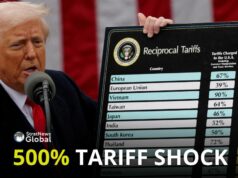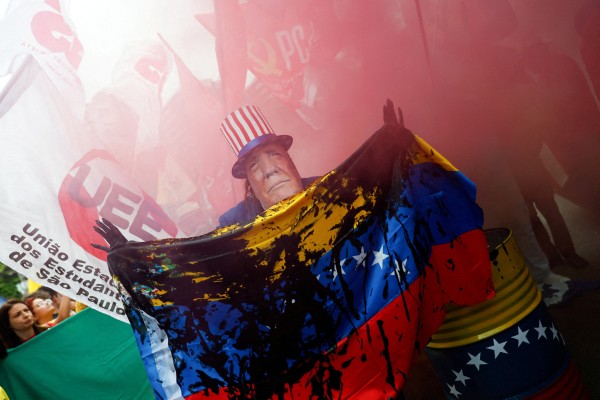
For Indian observers, the recent U.S. military action against Venezuela under President Donald Trump offers a masterclass in what not to do when power meets impatience.
Strip away the American chest-thumping, and what remains is a familiar story: a great power convinced of its own righteousness, mistaking speed for strategy and spectacle for success.
India would be wise to study this episode carefully—not because we are tempted to emulate it, but because the pressures that produced it are not uniquely American. Big states everywhere face the same temptations: to shortcut diplomacy, to conflate leverage with legitimacy, and to believe that force settles arguments that politics has failed to resolve.
Power: Easy To Use, Hard To Justify
From an Indian strategic perspective, the most striking feature of the Venezuelan operation is not its military execution but its casual disregard for international legitimacy. You know you have a challenge when regime change is spoken of openly, sovereignty is treated as an inconvenience, and legality is seen as something to be sorted out later—if at all.
India’s own experience should inoculate us against such thinking. From Kashmir to Doklam to Ukraine debates at the UN, New Delhi has consistently argued that process matters. Not because international law is sacred scripture, but because weak process today becomes dangerous precedent tomorrow. When powerful countries normalise unilateral intervention, they quietly license similar behaviour elsewhere—often by actors far less restrained.
Energy Security Not Licence For Adventurism
The subtext of the Venezuelan action, thinly disguised, was energy. Oil has a way of dissolving lofty rhetoric into transactional impulses. For India—one of the world’s largest energy importers—this lesson is especially relevant. New Delhi has learnt, sometimes painfully, that energy security is best pursued through diversification, contracts, and diplomacy. The alternative—treating resources as strategic prizes to be seized—invites instability, retaliation, and long-term supply risk. Energy gained through force is rarely secure; it must be guarded endlessly, at escalating cost.
The Perils Of Shock Therapy
Another familiar element in the Venezuelan case is the faith placed in sanctions and economic strangulation. The assumption is simple: squeeze hard enough, and political collapse will follow. Indian policymakers know this assumption well—and know its limits.
Sanctions often hurt societies more than regimes, harden elite resolve, and create perverse incentives for smuggling, criminal networks, and external patrons.
India’s calibrated use of economic pressure in its neighbourhood has always been paired—at least in theory—with political engagement. New Delhi’s earlier attempts to blockade Nepal only led to lingering long-term resentment. Venezuela is a reminder that economic pain does not automatically translate into political compliance.
The Fantasy Of Spheres Of Influence
There is an older, almost colonial instinct at work in this episode: the belief that geography confers entitlement. Big powers periodically convince themselves that certain regions are “theirs” to manage, discipline, or reorder. Indian history offers little comfort to such thinking.
India has resisted framing South Asia as an exclusive sphere of dominance, precisely because we know how quickly smaller neighbours react against perceived hegemony. Influence that relies on intimidation is brittle. Influence built through consent, interdependence, and restraint lasts longer—even if it feels slower and less satisfying in the short term.
Of course, kindness, particularly in international relations, is often mistaken for weakness.
Which is where that old adage of ‘Speak Softly, But Carry a Big Stick’ comes in. India must not just wield that big stick, but also show that it is ready and able to use it. But only when pushed against the wall, and not to push smaller, weaker nations around.
Optics Matter
One of the underappreciated aspects of the Venezuelan episode is the global reaction. Condemnation did not come only from rivals, but also from countries that otherwise have little sympathy for Caracas. The message was clear: the method, not just the target, was the problem.
India has invested decades in cultivating an image—sometimes frustratingly cautious—of a rising but responsible power. That reputation pays dividends in crises, whether at the UN, in trade negotiations, or during regional standoffs. Loud interventions may energise domestic audiences, but they quietly drain international credibility.
Domestic And Foreign Policy Don’t Mix
Indian analysts will also recognise another pattern: foreign adventures launched under domestic political pressure. History is littered with examples where leaders sought external drama to simplify internal complexity. The results are rarely elegant.
India’s own democratic churn ensures constant political noise. The Venezuelan case is a reminder that foreign policy made for domestic applause often ages badly. Strategic patience should not be mistaken for indecisiveness.
Takeaways For New Delhi
The real lesson for India is not about Venezuela per se. It is about temperament. India is rising, influential, and increasingly consequential. With that comes temptation—to speak louder, act faster, and prove strength theatrically. The Venezuelan episode shows the cost of giving in to that temptation.
Military, economic and political power are absolutely critical, but so is speaking softly. India does not need to shout to be heard. Its advantage lies precisely in doing the opposite—thinking longer, speaking less, and acting with an eye not just on outcomes, but on precedents.
In the end, the most useful takeaway from Trump’s Venezuelan gamble is simple and deeply Indian in spirit: just because you can, does not mean you should.

In a career spanning three decades and counting, Ramananda (Ram to his friends) has been the foreign editor of The Telegraph, Outlook Magazine and the New Indian Express. He helped set up rediff.com’s editorial operations in San Jose and New York, helmed sify.com, and was the founder editor of India.com.
His work has featured in national and international publications like the Al Jazeera Centre for Studies, Global Times and Ashahi Shimbun. But his one constant over all these years, he says, has been the attempt to understand rising India’s place in the world.
He can rustle up a mean salad, his oil-less pepper chicken is to die for, and all it takes is some beer and rhythm and blues to rock his soul.
Talk to him about foreign and strategic affairs, media, South Asia, China, and of course India.