

Support us by contributing to StratNewsGlobal on the following UPI ID
ultramodern@hdfcbank

Strategic affairs is our game, South Asia and beyond our playground. Put together by an experienced team led by Nitin A. Gokhale. Our focus is on strategic affairs, foreign policy and international relations, with higher quality reportage, analysis and commentary with new tie-ups across the South Asian region.
You can support our endeavours. Visit us at www.stratnewsglobal.com and follow us on YouTube, Twitter, Facebook and Instagram.
र 500 per month
र 1000 per month
र 5000 per year
र 10000 per year
Donate an amount of your choice
र 500 per month
Donate र 500 per month

र 1000 per month
Donate र 1000 per month
र 5000 per year
Donate र 5,000 per year
र 10000 per year
Donate र 10,000 per year
Donate an amount of your choice
Donate an amount of your choice



Greece Approves Law Allowing 13-Hour Work Days Despite Worker Protests
Greece’s parliament on Thursday passed a controversial bill permitting private employers to extend working hours, despite strong protests from workers grappling with a cost-of-living crisis.
The bill, which allows employers to enforce 13-hour work days, up from the current eight hours, aims to make the labour market more flexible and effective, the conservative government says.
But the proposal has triggered two general strikes this month by workers who see it as a move to undermine their rights just as they are struggling with stagnating wages and the rising costs of food and rent.
Opposite Trend
“When the rest of Europe is in discussions to reduce working hours, in Greece we increase them,” said 41-year-old barman Themis Lytras, who said his rent had doubled over the past two years.
Greece already has among the longest working weeks in Europe at around 40 hours, EU data shows, against an average 34 hours worked in Germany or 32 in the Netherlands.
Greeks Struggle Despite Economic Rebound
Greece is recovering from a debilitating 2009-2018 debt crisis, marked by years of belt-tightening, that wiped out a quarter of national output.
Strong economic growth in recent years has opened up room for tax cuts and pay increases. But wages remain below pre-crisis levels and Greeks’ purchasing power is among the lowest in the European Union, Eurostat data shows.
Prime Minister Kyriakos Mitsotakis’ government has seen its popularity wane in opinion polls partly due to disappointment over the failure of the economic recovery to generate higher living standards.
‘Absurd’ New Law
“After the crisis, we expected a return to normality,” said George Koutroumanis, a former labour minister who called the new law “absurd”.
The extended work shift can only be applied three days a month and up to 37 days a year. The bill protects people from being fired if they refuse to work overtime, but unions say it strips workers of negotiating power in a country where there is undeclared work and where average wages remain relatively low.
The bill, which also gives employers more flexibility on short-term hirings and allows staff to work four days a week through the entire year upon prior agreement, was approved by a majority of lawmakers in the 300-seat parliament.
(With inputs from Reuters)
RBI’s New Playbook: Trusting Banks, Empowering Business
Traditionally, the Reserve Bank of India has been very conservative when it comes to regulatory controls. It has often erred on the side of caution. In fact, some believe that this has stifled innovation and agility of banks.
Not any longer. The just presented RBI credit policy has flipped a switch, as it were. It has freed banks from stringent controls, provided more play for markets, and initiated a very specific focus on the ease of doing business.
The obvious questions are, what will it do to India’s ecosystem for credit? More importantly, will this freedom bring with it increased risks to the banks and thereby the financial system?
To answer all this and more, StratNewsGlobal.Tech spoke to Ashima Goyal in Capital Calculus. She is a professor at IGIDR and a former member of the Monetary Policy Committee, and, of course, a previous guest on the show.
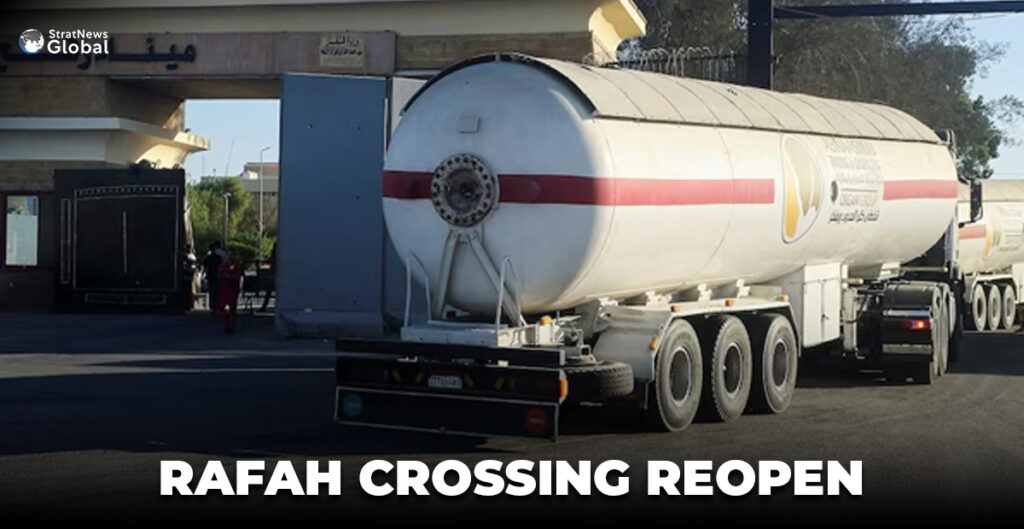
Israel Coordinates With Egypt To Reopen Rafah Crossing, Date Yet To Be Announced
Israel’s military aid agency COGAT stated on Thursday that it is working with Egypt to prepare the Rafah border crossing with Gaza for the movement of people, with the opening date to be announced later.
Israel had earlier warned it could keep Rafah shut and reduce aid into the Palestinian enclave as Hamas, it said, was returning the bodies of dead hostages too slowly, underlining the risks to a ceasefire that halted two years of devastating war and saw all living hostages held by Hamas released.
COGAT, the arm of the Israeli military that oversees aid flows into the Gaza Strip, said humanitarian aid continued to enter the territory via the Kerem Shalom crossing with Israel, and at other crossings.
“It should be emphasised that humanitarian aid will not pass through the Rafah crossing. This was never agreed upon at any stage,” COGAT added in a statement sent to Reuters.
Two sources had told Reuters on Wednesday that the Rafah crossing was expected to open for people on Thursday.
Ceasefire Violations
Israel said on Thursday traded blame with Hamas over violations of the U.S.-mediated ceasefire.
A row over the return of bodies of hostages held by Hamas in Gaza retains the potential to upend the truce, along with other major planks of the plan yet to be resolved, including disarmament of militants and Gaza’s future governance.
Israel demanded that Hamas fulfil its obligations in turning over the bodies of the 28 deceased hostages. The Islamist faction said it had handed over 10 bodies, but Israel said one of them was not that of a hostage.
“We will not compromise on this, and we will spare no effort until our fallen hostages return, every last one of them,” Israel’s government spokesperson said on Wednesday.
The armed wing of Hamas said the handover of more bodies in Gaza, which was reduced to vast tracts of rubble by the war, would require the admission of heavy machinery and excavating equipment into the Israel-blockaded Palestinian enclave.
On Thursday, a senior Hamas official accused Israel of flouting the ceasefire by having killed at least 24 people in shootings since Friday, and said a list of such violations was handed over to mediators.
“The occupying state is working day and night to undermine the agreement through its violations on the ground,” he said.
The Israeli military did not immediately respond to the Hamas accusations. It has previously said that some Palestinians have ignored warnings not to approach Israeli ceasefire positions and troops “opened fire to remove the threat”.
(With inputs from Reuters)
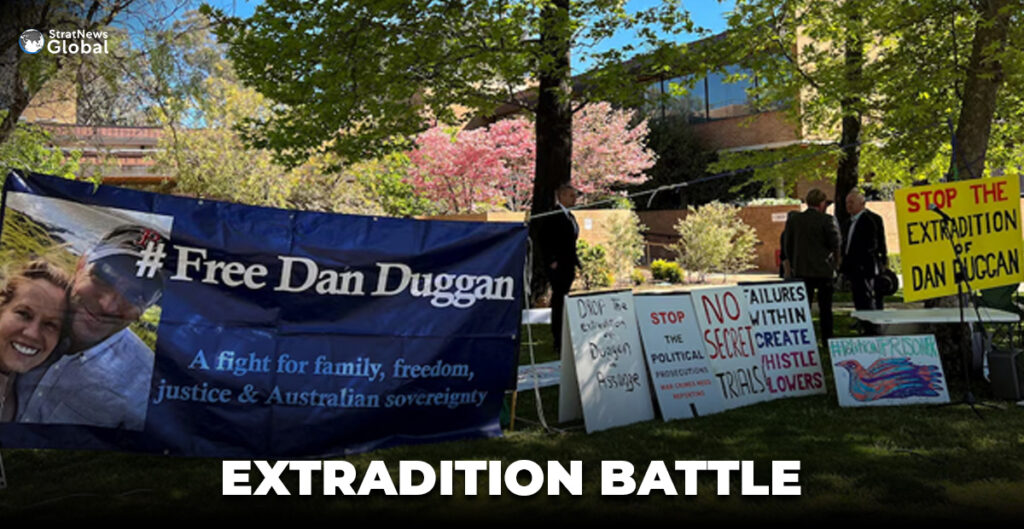
Ex-US Marine Pilot Who Trained Chinese Pilots Fights Australian Extradition
Former U.S. Marine Corps pilot Daniel Duggan on Thursday appealed in an Australian court against extradition to the United States over alleged violations of U.S. arms control laws involving China, with his lawyer contending that his actions were not illegal under Australian law at the time.
In December 2024, Australia’s then attorney-general Mark Dreyfus approved a United States extradition request for Duggan, who faces U.S. charges, including that he trained Chinese military pilots to land on aircraft carriers.
Duggan, 57, a naturalised Australian citizen, was arrested by Australian Federal Police in a rural town in the state of New South Wales in October 2022, shortly after returning from China, where he had lived since 2014.
Duggan appeared in the federal court in Canberra on Thursday, clean-shaven in a dark blue suit.
He sat erect in his seat as he followed the proceedings with a pen and documents on his lap, but did not speak until after the arguments had been heard, when he thanked the judge for allowing him to attend and “see justice done”.
Extradition Is ‘Uncharted Territory’
His lawyer, Christopher Parkin, told the court the extradition was “uncharted territory” for Australia, arguing that Duggan’s conduct was not an offence in Australia at the time or when the U.S. requested extradition, and so did not meet the requirement for dual criminality in Australia’s extradition treaty with the United States.
“This is a fairly extraordinary case,” Parkin said.
“The offences must be punishable under the laws of both parties at the time when the relevant conduct occurred,” he said, adding that it should not be possible to “punish someone in this country for something they did 10 years ago that wasn’t an offence at the time.”
The barrister for the Attorney-General, Trent Glover, said this was a false interpretation of the extradition procedure and nothing prevented Duggan from being sent to the United States.
Duggan’s lawyers previously argued in court that there is no evidence the Chinese pilots he trained in South Africa between 2010 and 2012 were military, and he was no longer a U.S. citizen at the time of the alleged offences.
Duggan renounced his U.S. citizenship in 2016 at the U.S. embassy in Beijing, and the certificate was backdated to 2012, they said.
A 2017 indictment in the United States said Duggan’s alleged violation of an arms embargo imposed on China by the United States also included providing aviation services in China in 2010, and providing an assessment of China’s aircraft carrier training.
Duggan, who has six children in Australia, has been held in prison since his arrest three years ago.
A small group of protesters stood outside the court with placards calling for Duggan’s release.
His wife, Saffrine, said Duggan had been treated unlawfully and the Australian government had allowed him to become a pawn in an ideological war between the United States and China.
“It’s been a real struggle,” she told Reuters. “We just want Dan to come home.”
(With inputs from Reuters)
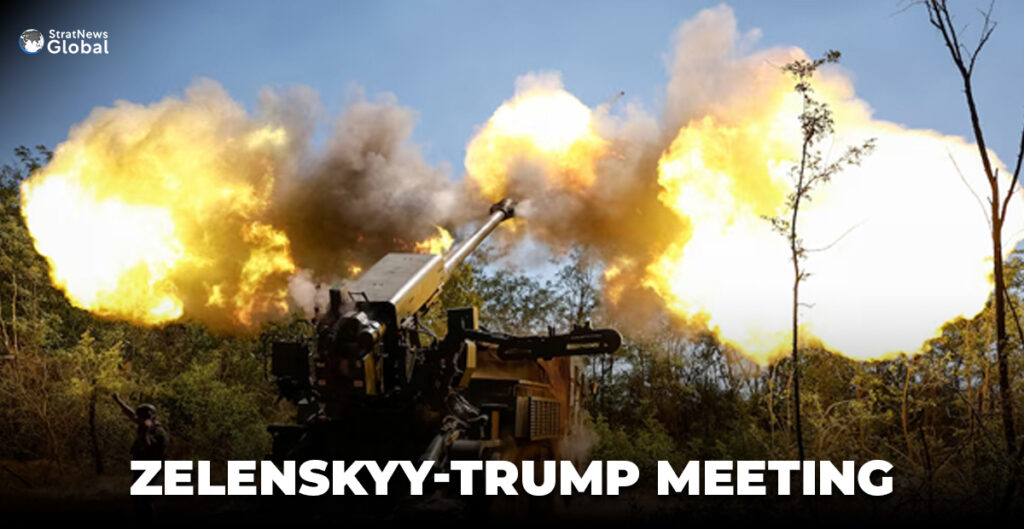
Zelenskyy Seeks Trump’s Backing Amid Escalating Ukraine War
Ukraine’s President Volodymyr Zelenskyy will meet Donald Trump on Friday to seek greater military support as Kyiv and Moscow intensify attacks on energy infrastructure and NATO grapples with a surge in airspace incursions.
Since Trump’s summit with Russian President Vladimir Putin in August failed to yield a breakthrough in the U.S. peace push, Kyiv has been hammering Russian oil refineries with drones while Russian strikes have caused major power outages across Ukraine.
NATO’s eastern flank is also on edge after Poland and Estonia said Russia had violated their airspace with drones and jets last month, eliciting denials from Moscow. There have since been other drone incidents in Germany and Denmark.
A former senior Ukrainian official said Russia and Ukraine were both trying to ramp up pressure and improve their hands ahead of any new window for negotiations, and that they lacked the resources to keep up the current intensity for long.
“I think two (more) months is quite enough for this round of escalation,” said the source, who spoke on condition of anonymity.
Zelenskyy is expected, among other things, to press Trump for long-range U.S. Tomahawks that would put Moscow and other major Russian cities within range of missile fire from Ukraine.
Trump has said he could supply the weapons to Ukraine if Putin fails to come to the negotiating table.
Russia, meanwhile, is seeking to revive momentum in U.S.-Russian relations that has been lost since the Alaska summit by underlining shared values, while at the same time vowing a tough response to any U.S. action that might harm it.
Post-Gaza Hopes
Trump’s rhetoric shifted in Ukraine’s favour last month, after weeks of voicing frustration with Putin and the lack of Russian movement towards a peace deal.
Having previously suggested that Kyiv should give up land to cut a deal, Trump said that Kyiv’s military was capable of expelling Moscow’s forces from all its territory and mocked Russia as a paper tiger.
He also praised Ukrainians, in a striking change of tone, just over half a year since he and Zelenskyy clashed publicly in the White House.
Even so, many Ukrainians greeted the change in tone with a shrug and doubted it would be backed with action.
Since then, two officials told Reuters on Oct. 1 that the United States would provide intelligence for Ukrainian long-range attacks on Russian oil infrastructure.
A senior government official in Kyiv also said that Ukraine hoped the ceasefire in Gaza would reinvigorate Trump’s peace push in Ukraine and train Trump’s focus more closely on ending Russia’s war.
Mykhailo Podolyak, an adviser in Zelenskyy’s office, said a delegation of senior Ukrainian officials was in Washington, DC, ahead of the Zelenskyy trip to present to U.S. officials a “strategy to raise the costs of war” for Russia.
“The tools are well known: cruise missiles, joint drone production, and strengthened air defences,” he wrote on X. “We want peace, so we must project power deep into the heart of Russia.”
Zelenskyy arrives in the United States on Thursday, where he is expected to meet representatives from U.S. energy and defence companies, according to Ukrainian media.
‘Mega Deal’
Despite Trump’s shifting stance, the U.S. president has not committed to new arms supplies to Ukraine, instead overseeing the creation of a new mechanism known as PURL that allows Washington’s allies to purchase U.S. arms for supply to Ukraine.
At NATO’s Brussels headquarters on Wednesday, U.S. Defence Secretary Pete Hegseth sought to keep up the pressure on Moscow, warning of “costs on Russia for its continued aggression” and urging Kyiv’s allies to increase purchases via PURL.
Trump and Zelenskyy could also discuss finalising a deal for Ukraine to share drone technology with the United States, one of several agreements aimed at giving Trump a bigger stake in Ukraine’s survival.
The U.S. Tomahawks, Zelenskyy suggested this week, could be supplied to Ukraine as part of a “Mega Deal” that he floated late last month as a way for Ukraine to procure $90 billion of U.S. weapons.
The Ukrainian delegation in Washington met officials from Raytheon, which manufactures the Tomahawk, as well as Lockheed Martin Corp, Zelenskyy’s top aide Andriy Yermak wrote on Telegram.
Sergiy Solodkyy, director of the New Europe Centre think tank in Kyiv, said particular weapons like Tomahawk missiles are less important for Kyiv’s defence than establishing a long-term plan with allies to keep Ukraine armed.
“The U.S., with its pauses in arms deliveries and changes in approach to supplying or selling weapons, had allowed Putin to dream about the fact that help was always just about to end,” he said.
(With inputs from Reuters)
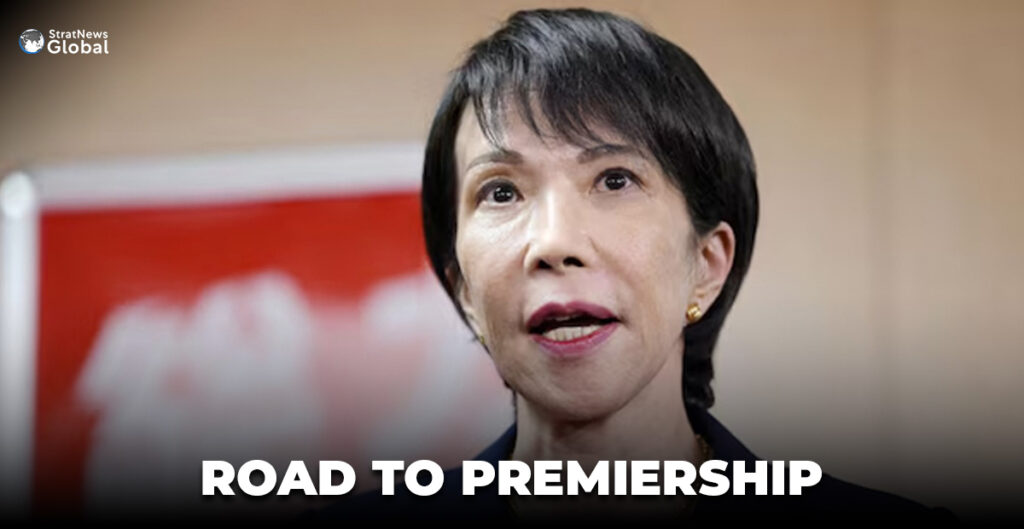
Japan: Takaichi Courts Conservative Bloc In Bid For Premiership
Sanae Takaichi, newly elected leader of Japan’s ruling Liberal Democratic Party, held coalition talks on Thursday with leaders of the right-leaning Innovation Party in an effort to secure support ahead of next week’s prime ministerial vote.
The Nikkei share average rose as prospects appeared to brighten for Takaichi to become Japan’s first woman premier, stoking bets on a revival in big spending and loose monetary policy.
Takaichi’s path to succeed Prime Minister Shigeru Ishiba had seemed all but certain until the LDP’s junior partner, Komeito, quit their 26-year coalition last week, setting off a flurry of negotiations with rival parties to select the next premier.
“There were strong views (among party members) that we should win as many of the policies we have been committed to as possible, then form a coalition and change Japanese politics,” said Fumitake Fujita, co-head of the Innovation Party.
He was speaking to reporters before a meeting with Takaichi and the policy chiefs of the parties.
Taken together, the two parties would be just two seats short of a majority in the lower house, which has the deciding vote to choose the prime minister, but the government has yet to agree on a date.
Second Capital
The Innovation Party’s plans include designating a second capital in addition to Tokyo, restarting nuclear power plants and setting limits on the number of foreign residents.
On security, it calls for a more robust defence posture and plans to revise Japan’s war-renouncing constitution, aligning with the views of Takaichi, a nationalist from the LDP’s right wing.
The main opposition Constitutional Democratic Party has also sought to draw the Innovation Party into a three-way tie-up with the Democratic Party For the People (DPFP), and enable a premiership bid by DPFP leader Yuichiro Tamaki.
However, those talks were inconclusive on Wednesday.
The LDP has proposed October 21 for a parliamentary vote on parties’ choices for the next premier, but the opposition has pushed back, citing coalition discussions.
Any candidate securing a simple majority in the first round of such a vote will win approval. If not, the two with the most votes go into a run-off.
“Although the situation remains fluid, there is a strong 75% probability that Takaichi will be named Japan’s next premier,” EurAsia Group analysts said in a note, citing the potential tie-up with the Innovation Party.
(With inputs from Reuters)
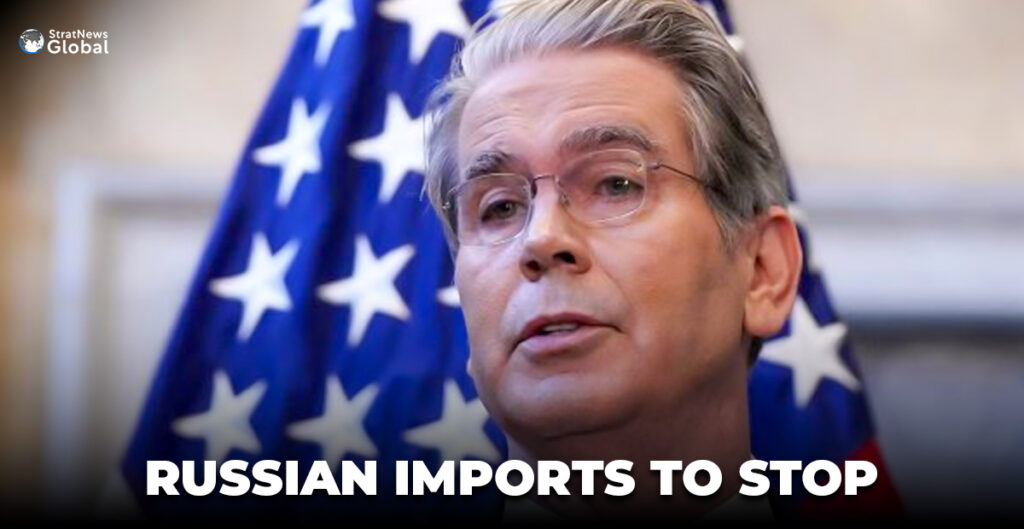
U.S. Urges Japan To End Russian Energy Imports: Bessent
U.S. Treasury Secretary Scott Bessent said on Wednesday that during his discussions with Japanese Finance Minister Katsunobu Kato, he conveyed the Trump administration’s expectation that Japan should halt all imports of Russian energy.
“Minister Kato and I also discussed important issues pertaining to the U.S.-Japan economic relationship and the Administration’s expectation that Japan stop importing Russian energy,” Bessent said on X, after the two met on Wednesday.
Bessent and Kato met on the sidelines of the annual International Monetary Fund meeting, and the G7 and G20 finance leaders’ gatherings held this week in Washington.
“Japan will do what it can based on the basic principle of coordinating with G7 countries to achieve peace in Ukraine in a fair manner,” Kato told reporters, when asked whether Japan was urged by Bessent to stop importing Russian energy.
Russian Oil Imports
Tokyo has agreed with other G7 countries to phase out Russian oil imports in response to Moscow’s 2022 invasion of Ukraine.
However, Japan continues to buy Sakhalin Blend crude, a byproduct of liquefied natural gas production at the Sakhalin-2 project, which is vital to Japan’s energy security as it accounts for about 9% of its LNG imports.
The Group of Seven (G7) nations – the U.S., Japan, Canada, Britain, France, Germany and Italy – agreed earlier this month to coordinate and intensify sanctions against Moscow over its war in Ukraine by targeting countries that buy Russian oil and thereby enable sanctions circumvention.
Last month, Japan lowered its price cap on Russian oil to $47.60 per barrel from $60, effectively in line with a new price cap set by the European Union in July as part of its 18th sanctions package against Moscow.
Japan bought 95,299 kilolitres, or 599,413 barrels, of crude from Russia between January and July, accounting for just 0.1% of its total imports, according to the finance ministry’s trade data.
The U.S. is pushing its allies to buy more of its LNG, including committing to the yet-to-be-built Alaska LNG project. Over recent months, Japan has signed a number of new LNG purchase deals with U.S. producers but has stopped short of any hard deals with the $44-billion Alaska LNG project.
(With inputs from Reuters)
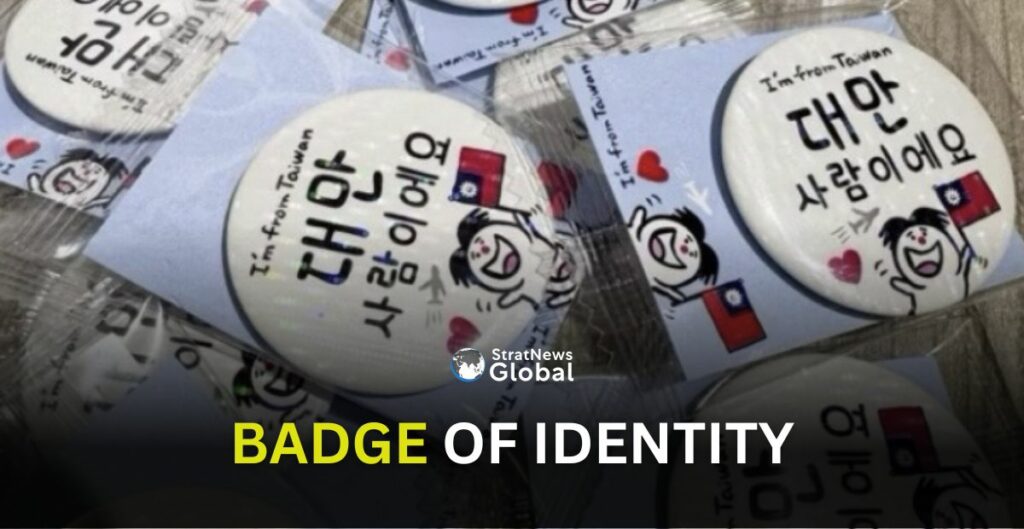
‘I’m from Taiwan’ Badge Emerges Amid Anti-China Sentiment
What began as a casual question online—“Should I wear this badge?”—has evolved into a symbol of safety and identity for Taiwanese travelers in South Korea.
The badge, bearing the words “I’m from Taiwan” in English and “I’m Taiwanese” in Korean alongside the Taiwanese flag, is helping visitors distinguish themselves amid growing anti-China sentiment.
Taiwanese tourists say they are frequently mistaken for Chinese nationals, often leading to uncomfortable or even hostile encounters. Many report that wearing the badge has significantly improved how locals interact with them.
The distinction has taken on a serious dimension following several incidents targeting Chinese speakers. Earlier this year, a man assaulted two Chinese women speaking Mandarin on a Seoul bus. In a separate attack, the same individual struck a Taiwanese man with a bottle, believing him to be Chinese. He was later sentenced to prison by a district court for committing a hate crime.
Tensions have risen alongside South Korea’s new visa-free entry policy for Chinese tour groups, part of efforts to revive tourism. The move has sparked protests by far-right groups opposing what they call “Chinese influence,” with demonstrators displaying slogans such as “China Out” and “Eradicate Communism.”
President Lee Jae Myung condemned the rallies, calling them damaging to South Korea’s image, and directed authorities to act against hate speech.
According to the Ministry of Justice, 525,396 Chinese nationals visited South Korea in October—a 16.4 percent increase from the same period last year. Data from the Korea Tourism Organization shows that Chinese visitors accounted for roughly one-third of all foreign tourists as of August.
The “I’m Taiwanese” badge first gained popularity during the COVID-19 pandemic, helping Taiwanese nations to distinguish themselves from mainland Chinese and avoid discrimination.
For many Taiwanese travelers, the badge has become more than a precaution—it is also a quiet assertion of identity amid a complex regional landscape shaped by politics, perception, and personal safety.
Blasts Hit Ecuador Bridges In Retaliation For Illegal Mining Raid
Explosions damaged two bridges in Ecuador early Wednesday in what authorities described as retaliation for a recent military crackdown on illegal mining operations, according to the country’s interior minister.
Interior Minister John Reimberg indicated that authorities suspected the criminal group Los Lobos, recently designated a terrorist organization by Washington, was responsible.
“The line we are pursuing is one of retaliation for what we have been doing in Imbabura (province), in terms of controlling the strike and cracking down on illegal mining,” Reimberg told a press briefing in the northern city of Otavalo.
No injuries were reported and no arrests have been made. Infrastructure Minister Roberto Luque suggested the attacks were intended to disrupt traffic.
One explosion damaged the base of a bridge in the province of Guayas, while another device only partially detonated in the province of Azuay.
The bridge explosions occurred just hours after a car bomb went off outside a shopping mall in Guayaquil, Ecuador’s largest city, late on Tuesday, leaving one dead and several injured. A second vehicle containing explosives was found nearby but was deactivated.
Crackdown On Illegal Mining
Ecuador’s military and air force on Monday destroyed several illegal mine entrances, which the army said were operated by organized crime groups seeking to protect a key income source.
Seven people were arrested in the military operation. Reimberg said some of those arrested belonged to the dissident Revolutionary Armed Forces of Colombia group.
Indigenous communities in Otavalo, Imbabura province, said on Wednesday they were withdrawing to their territories and ending a prolonged protest over diesel subsidies after reaching an agreement with the government to begin technical meetings to discuss their demands.
Otavalo has been a focal point for demonstrations organized by CONAIE, Ecuador’s largest Indigenous organization, since late September, following President Daniel Noboa’s decision to end diesel subsidies.
Noboa has defended the subsidy cuts, arguing that state-funded diesel was being diverted to illegal mining and smuggling.
Local Indigenous leaders reported one death in a hospital after clashes with security forces on Tuesday in Otavalo and said another protester died in the area last month.
Indigenous groups also reported at least 50 injuries, while the government said 13 military officers were hurt in the clashes.
Last week, Noboa’s convoy was attacked in a rural town, with rocks thrown at his car.
The president, speaking in Guayaquil on Wednesday, asserted that criminal groups were attempting to destabilize the government and prevent it from addressing Ecuadoreans’ needs.
(With inputs from Reuters)
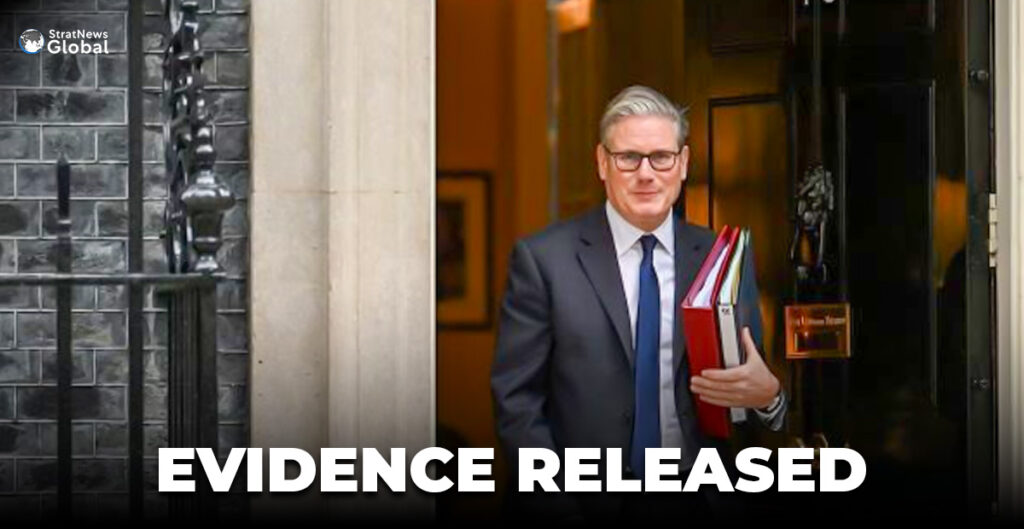
Britain: Starmer Releases Key Evidence In China Spy Case
British Prime Minister Keir Starmer on Wednesday released a key witness statement from a senior official in the case against two men accused of spying for China, aiming to show that the prosecution’s collapse was not the result of political interference.
In an unexpected move last month, Britain’s Crown Prosecution Service dropped charges against two British men who had denied passing politically sensitive information to a Chinese intelligence agent.
The CPS said the case was dropped because it needed evidence showing that the UK considered China a threat to national security, but the government had not provided it after months of requests.
While the newly published documents detailed Chinese malign activity, they did not unequivocally state that China posed a threat to UK national security.
Starmer Blames Previous Government
Starmer had earlier said the fault lay with the previous Conservative administration which was in power when the men were charged and which had only described Beijing as an “epoch-defining challenge”.
The trial’s collapse has led to accusations from opposition parties that the government was responsible because it did not want to jeopardise ties with China.
Seeking to draw a line under the issue on Wednesday, Starmer published witness statements by Britain’s Deputy National Security Adviser Matthew Collins, which the prime minister said were made without involvement from ministers or political advisers.
In a document dated February 21, Collins said: “China and the UK both benefit from bilateral trade and investment, but China also presents the biggest state-based threat to the UK’s economic security.”
A statement dated August 4 contained a section on the government’s assessment of the threat from China, including details of what he called the “active espionage threat that China posed to the UK”.
A subsequent section in that document added: “It is important for me to emphasise, however, that the UK Government is committed to pursuing a positive relationship with China to strengthen understanding, cooperation and stability.
‘Stinks Of A Cover-Up’
Kemi Badenoch, the leader of the main opposition Conservative Party, had earlier told parliament: “This all stinks of a cover-up”.
Starmer’s office said he was told the case was in danger of collapsing a couple of days before it happened but that it would have been inappropriate to intervene.
A Conservative Party spokesperson responded to the release of the documents: “What has already been published shows the extent of the threat that China poses to the UK, and makes it all the more shocking that the Prime Minister knew of the imminent collapse of this trial, but did nothing to stop it.”
The first witness statement from December 2023 said one of the men was allegedly passing on information to China about who was briefing former Prime Minister Rishi Sunak on China.
(With inputs from Reuters)