

Support us by contributing to StratNewsGlobal on the following UPI ID
ultramodern@hdfcbank

Strategic affairs is our game, South Asia and beyond our playground. Put together by an experienced team led by Nitin A. Gokhale. Our focus is on strategic affairs, foreign policy and international relations, with higher quality reportage, analysis and commentary with new tie-ups across the South Asian region.
You can support our endeavours. Visit us at www.stratnewsglobal.com and follow us on YouTube, Twitter, Facebook and Instagram.
र 500 per month
र 1000 per month
र 5000 per year
र 10000 per year
Donate an amount of your choice
र 500 per month
Donate र 500 per month

र 1000 per month
Donate र 1000 per month
र 5000 per year
Donate र 5,000 per year
र 10000 per year
Donate र 10,000 per year
Donate an amount of your choice
Donate an amount of your choice





MEA Clarifies India’s Stance After Trump’s Claim On Russian Oil
India on Thursday responded to U.S. President Donald Trump’s claim that Prime Minister Modi had pledged to halt Russian oil purchases, with the Ministry of External Affairs (MEA) stating that the current U.S. administration is focused on strengthening energy cooperation with India and that discussions are ongoing.
New Delhi reaffirmed that its oil import decisions are guided solely by national interests and energy security.
“India remains a major importer of oil and gas, and our consistent priority is to protect Indian consumers amid a volatile global energy market,” said Ministry of External Affairs spokesperson Randhir Jaiswal.
“Our import policies are designed to ensure both stability and security of supply. This means diversifying our sources and broadening our energy base in line with market realities,” he added.
Jaiswal noted that India has steadily expanded energy trade with the United States over the past decade.
“The current U.S. administration has shown interest in further deepening energy cooperation with India, and discussions are ongoing,” he said.
Trump, speaking to reporters in the Oval Office on Wednesday, said Washington was “unhappy” with India’s continued imports of Russian crude, arguing that such purchases indirectly supported President Vladimir Putin’s war in Ukraine.
He claimed Modi had assured him that India would soon halt the purchases, though it might take time to phase them out completely.
“Modi is a friend of mine, and we have a great relationship,” Trump said. “But we were not happy about India buying oil from Russia because that allows Russia to continue this ridiculous war. He assured me today that India will not be buying oil from Russia. That’s a big step. Now we need China to do the same.”
More Pressure On Moscow
Trump went on to assert that the move was intended to financially pressure Moscow to end the conflict. “All we want from President Putin is to stop killing Ukrainians and Russians,” he said, calling the war one that “should have ended in a week” but has now stretched into its fourth year.
He further suggested that India could resume oil trade with Russia once the war concludes: “If India doesn’t buy oil now, it helps a lot, and they will go back to Russia after the war is over.”
Relations between Washington and New Delhi have faced strain following Trump’s imposition of a 50% tariff on Indian goods — a move he described as retaliation for India’s continued purchases of Russian oil.
Tensions deepened further when his administration introduced a $100,000 fee for new H-1B visa applications, a programme vital for Indian tech professionals seeking employment in the U.S.
(With inputs from IBNS)
Swedish Prosecutor Names Suspect In Koran-Burning Murder Probe
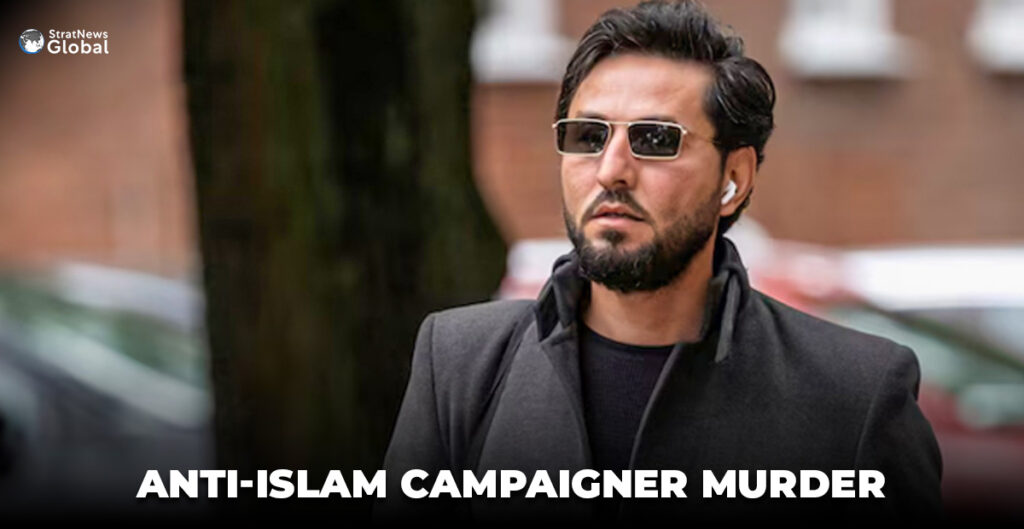
The public prosecutor announced on Monday that a suspect has been identified in the January murder of an anti-Islam campaigner in Sweden, a case the Swedish prime minister suggested could involve foreign connections.
“We have a good picture of the sequence of events, and after extensive technical investigations and review of obtained surveillance footage,” the prosecutor said in a statement. “At present, the suspect’s whereabouts are unknown.”
The statement did not name the suspect.
Court documents obtained by Reuters showed the suspect was a 24-year-old Syrian man who lived in Sweden at the time of the murder. It said Koran-burner Salwan Momika had been shot three times and the killing “had been preceded by careful planning”.
Detention Hearing
A detention hearing was set for Friday in a district court – a procedure under Swedish law prior to the issuance of an international wanted notice for the suspect.
Momika, an Iraqi refugee who frequently burned and desecrated copies of the Koran at public rallies, was shot dead in a town near Stockholm hours before the verdict in a trial where he stood accused of “offences of agitation against an ethnic or national group”.
Prime Minister Ulf Kristersson said in January, referring to the killing, that “there is obviously a risk that there is a connection to a foreign power”.
The Koran burnings, seen by Muslims as a blasphemous act as they consider the Koran to be the literal word of God, drew widespread condemnation and complicated Sweden’s NATO accession process, which was eventually completed in 2024.
Iranian Supreme Leader Ayatollah Ali Khamenei said in 2023 that people who desecrate the Koran should face the “most severe punishment” and that Sweden had “gone into battle array for war on the Muslim world” by allegedly supporting those responsible.
Sweden in 2023 raised its terrorism alert to the second-highest level and warned of threats against Swedes at home and abroad after the Koran burnings. It was lowered back to three on a scale of five earlier this year.
(With inputs from Reuters)
UN Reports 18 Dead, 360 Injured In Pakistan-Afghanistan Clashes So Far
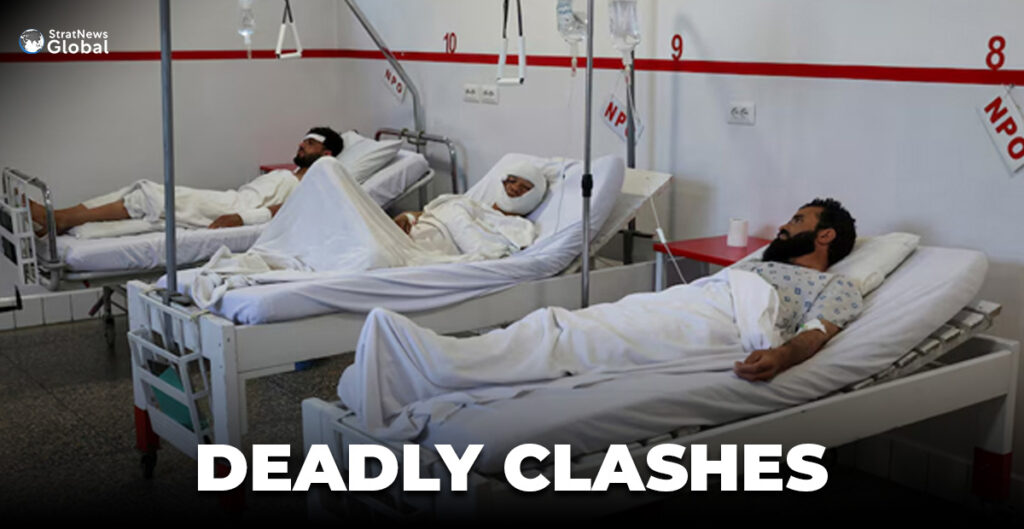
The United Nations Assistance Mission in Afghanistan (UNAMA) reported on Thursday that military clashes between Pakistan and Afghanistan since Oct. 10 have killed at least 18 people and wounded over 360.
“UNAMA calls on all parties to bring a lasting end to hostilities to protect civilians,” the statement added.
Militant Leader Stirring The Conflict
Hanging over the recent eruption of fighting between Pakistan and Afghanistan, the most serious clash between the neighbours in decades, is the spectre of a militant leader Islamabad accuses of directing near-daily attacks on its soil.
An uneasy ceasefire took hold on Wednesday, but Pakistan’s main grievance endures: the presence of Noor Wali Mehsud in Afghanistan, along with his top lieutenants.
Last week, an airstrike in Kabul hit an armoured Toyota Land Cruiser believed to be carrying him, according to Pakistani security officials. Militants and Pakistani officials say he likely survived, and the group released an audio message purportedly from him.
Pakistan has not officially owned the airstrike, the first in Kabul since the successful 2022 U.S. targeting of Al Qaeda leader, Ayman al-Zawahiri.
The Afghan Taliban denies harbouring Pakistani militants and, in turn, accuses Islamabad of sheltering the local branch of the Islamic State group, their main armed rival.
Revival Under His Leadership
Mehsud took over the leadership of Tehreek-e-Taliban Pakistan (TTP) in 2018 after his three predecessors were killed by U.S. drone strikes. By then, Pakistani army operations had largely driven the group out of their former strongholds and into Afghanistan.
He has revived the group, transformed its strategy and united warring factions with diplomatic skill, analysts say. Trained as a religious scholar, he also took up an ideological battle.
The Taliban’s 2021 takeover next door gave the TTP freer movement and greater access to weapons, Islamabad says, and attacks inside Pakistan escalated — especially in the northwest bordering Afghanistan.
In the past, the TTP struck civilian targets, like mosques and markets, including killing more than 130 children in a 2014 school assault. Mehsud, concerned that these attacks caused public revulsion in Pakistan, directed the group to target only military and police.
In a rare video speech released earlier this year, he portrayed Pakistan’s army as anti-Islam, criticised its role in politics, and said the generals had “hijacked the people of Pakistan for the last 78 years”.
Pakistan’s military says that the TTP has perverted Islam and that it is supported by the country’s adversary India, a charge that New Delhi denies.
(With inputs from Reuters)
UK: MI5 Chief Voices Alarm Over Persistent Chinese Espionage Threat
The head of Britain’s MI5 intelligence agency said on Thursday that China represents a constant threat to the United Kingdom’s national security. Expressing frustration over the collapse of a recent espionage case linked to Beijing, he said the episode had intensified scrutiny over whether government actions contributed to the failure.
Britain’s Crown Prosecution Service unexpectedly dropped charges last month against two British men, former parliamentary researcher Christopher Cash and academic Christopher Berry, who were accused of spying for Beijing between 2021 and 2023.
They had denied passing politically sensitive information to the Chinese state, while Beijing said the case was entirely fabricated.
The CPS said the case was abandoned because it needed evidence showing Britain considered China a threat to national security, but the government had not provided it after months of requests.
UK’s National Security Concerns
Opponents say that decision was because Prime Minister Keir Starmer wanted to appease Beijing. He has denied that accusation, saying his government could only describe China in the terms used by the previous Conservative government which called it an “epoch-defining challenge”.
“Of course, I am frustrated when opportunities to prosecute national security threatening activity are not followed through for whatever reason,” MI5 Director General Ken McCallum told reporters after delivering his annual speech on the threats to Britain.
“It’s frustrating when they don’t happen, but I would invite everyone to just not miss the fact that this was a strong disruption in the interests of the UK’s national security,” said McCallum, who stated MI5 had “intervened operationally” against China in the last week, without giving details.
Asked whether China posed a threat to British national security, he replied: “Do Chinese state actors present a UK national security threat? And the answer is, of course, yes, they do, every day.”
But he said Britain and China had a complex relationship and there were broader policy issues to consider.
“That one is perfectly legitimately a matter for government,” he said.
Closer Ties With Beijing?
Starmer’s government has been trying to forge closer ties to China in its pursuit of economic growth, employing what it calls a “three Cs approach” – to compete, cooperate and confront – leading to accusations from opponents that it has prioritised this over national security.
Starmer on Wednesday sought to draw a line under the spy case controversy by publishing three witness statements from Britain’s Deputy National Security Adviser Matthew Collins, which the CPS said had failed to provide the evidence it needed.
While the newly published documents detailed Chinese malign activity, they did not unequivocally state that Britain saw China as a threat to national security.
In his first statement, dated December 12, 2023, Collins said: “It is my assessment that the suspects’ alleged activities were prejudicial to the safety or interests of the UK, and the information and material passed would be directly or indirectly useful to the Chinese state.”
In a second statement, Collins said China presented “the biggest state-based threat to the UK’s economic security”, but added: “It is important for me to emphasise, however, that the government is committed to pursuing a positive economic relationship with China.”
Opponents say Starmer still has questions to answer as to why the government did not ensure the CPS had what it needed to progress the case, and whether any pressure was brought to bear on Collins.
“I’ve obviously worked for a number of years in adjacent roles alongside Matt Collins, and I feel I have to just say that I do consider him to be a man of high integrity and a professional of considerable quality,” McCallum said.
(With inputs from Reuters)
Cochin Shipyard Bags Major Global Order For LNG Containerships
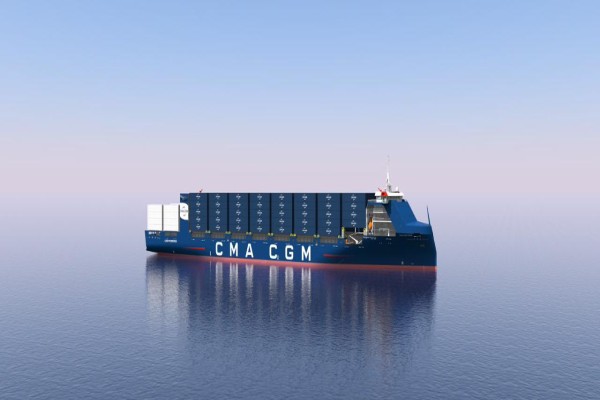
The CMA CGM Group, a global leader in shipping and logistics, has signed a letter of intent with Cochin Shipyard Limited (CSL) for the construction of six new 1,700 TEU dual-fuel LNG-powered containerships — marking the first time a major international container carrier has placed such an order with an Indian shipyard.
Each vessel will be registered under the Indian flag and designed to operate on liquefied natural gas (LNG), with readiness for future low-carbon fuels. The order supports CMA CGM’s global strategy for cleaner shipping and its ambition to achieve Net Zero Carbon emissions by 2050.
The vessels will be built in collaboration with HD Hyundai Heavy Industries, South Korea, which will provide technical expertise. Delivery is scheduled between 2029 and 2031.
The agreement reinforces CMA CGM’s long-term investment in India’s maritime ecosystem and aligns with national initiatives such as Make in India and Atmanirbhar Bharat.
In 2025, CMA CGM reflagged four vessels under the Indian registry and aims to recruit 1,000 Indian seafarers by the end of the year. An additional 500 will be hired in 2026, expanding its India-based maritime workforce.
Rodolphe Saadé, Chairman and CEO of the CMA CGM Group, said, “I am pleased that CMA CGM is the first international shipping company to order LNG vessels built in India. This milestone reflects the trust we place in India’s industrial and technological capabilities and supports Prime Minister Modi’s ambition to make India a global shipbuilding power.”
Madhu S Nair, Chairman and Managing Director of Cochin Shipyard, added: “We are honoured to partner with CMA CGM on this important project. It reflects our shipbuilding expertise and our collaboration with HD Hyundai. Together, we aim to deliver vessels that meet the future standards of sustainable maritime transport.”
With over three decades of operations in India, CMA CGM operates 19 weekly maritime services connecting the country to global trade routes and employs around 17,000 people across its Indian operations.
This order marks a significant step for both CMA CGM and India’s shipbuilding ambitions under the Maritime India Vision 2030 and Maritime Amrit Kaal Vision 2047, showcasing Cochin Shipyard’s growing capabilities in constructing advanced, environmentally responsible vessels for the global market.
Laos May Cut Power To Crypto Miners By 2026
Laos may stop supplying electricity to cryptocurrency miners by early 2026, as the government looks to prioritise power for industries that drive stronger economic growth, the country’s deputy energy minister told Reuters.
Crypto operators, drawn by cheap non-fossil energy, flocked to the landlocked Southeast Asian nation following a 2021 policy shift that triggered a rapid expansion in mining activity.
But the government now aims to prioritise power for sectors such as AI data centres, metals refining and electric vehicles, its deputy energy minister Chanthaboun Soukaloun said on Thursday.
Laos has already begun scaling back supply to crypto miners, who currently consume around 150 megawatts of electricity, down 70% from a peak of 500 MW in 2021 and 2022, Soukaloun said.
Better Value Found Elsewhere
“Crypto doesn’t create value compared to supplying it to industrial or commercial consumers. We proposed to the government in 2021 to supply to crypto mining due to the oversupply of electricity domestically,” Soukaloun told Reuters, adding that the industry creates few jobs and does not have a supply chain that benefits the economy.
Soukaloun said that Laos had initially planned to end supply this year, but continued due to abundant rainfall that boosted hydropower output and enabled increased exports to neighbouring Thailand and Vietnam.
“I think by the end of the first quarter of 2026, we might stop (supply to crypto) entirely,” he said on the sidelines of the ASEAN energy ministers meeting.
Reuters was unable to find associations representing the crypto mining industry, or ascertain which miners operate there.
Laos, often dubbed the “battery of Southeast Asia” for its hydropower export potential, plays a key role in the region’s clean energy transition. Hydropower exports are crucial for decarbonising neighbouring countries that face challenges scaling up solar and wind.
Laos, which exports most of its hydropower to independent power producers in cross-border deals with Thailand and Vietnam, is considering further increasing its bilateral export capacity to Vietnam from 8,000 MW currently, Soukaloun said.
China Arbitration, Exports To Singapore
Soukaloun said Laos has had bilateral talks with China about an arbitration suit filed by a unit of state-owned Power Construction Corp of China against its state utility Electricite du Laos (EDL), seeking $555 million in unpaid dues from its $2.73 billion hydropower project.
“It’s their right to do so (sue) under the power purchase agreement. We have to move on until the process is completed or unless the claimant withdraws the claim,” Soukaloun said.
He declined to comment on whether Laos had sought a revision of the claims, citing confidentiality, but said the dues stemmed from a mismatch between projected and actual demand.
Laos also expects exports to Singapore through the Lao-Thailand-Malaysia-Singapore (LTMS) power transmission corridor to “resume soon,” Soukaloun said, without providing further details.
Exports through the corridor had been halted as Thailand is yet to finalise terms of an extension to the deal, Thai and Singapore authorities said last year.
On Thursday, the four countries issued a joint statement reaffirming their commitment to continue advancing multilateral cross-border power trade and continue discussions, but did not specify when exports would resume.
(With inputs from Reuters)
China Accuses US Of Triggering Global Panic Over Rare Earths Controls
China on Thursday accused the U.S. of fuelling panic over its rare earth controls, criticising Treasury Secretary Scott Bessent for making “grossly distorted” remarks about a senior Chinese trade negotiator and rejecting the White House’s call to ease the restrictions.
The official newspaper of the governing Communist Party also issued a seven-point rebuttal after top U.S. negotiators suggested Beijing could avert President Donald Trump‘s threat to impose 100% tariffs on Chinese goods by scrapping the measures set to take effect on November 8.
While investors are relieved the world’s top two economies have avoided the retaliatory tariff hikes of March and April, each exchange risks derailing a meeting between Trump and Chinese leader Xi Jinping in South Korea later this month — a fixed point that has so far helped anchor market stability.
“The U.S.’ interpretation seriously distorts and exaggerates China’s (rare earths export control) measures, deliberately stirring up unnecessary misunderstanding and panic, He Yongqian, a commerce ministry spokesperson, told a news conference.
“Provided the export licence applications are compliant and intended for civilian use, they will be approved,” she added.
Beijing’s expanded rare earths export controls left trade negotiators and analysts the world over wondering whether China intends to require manufacturers of any product anywhere in the world containing even trace amounts of Chinese rare earths to apply for a licence to ship it to its final destination.
He Yongqian told reporters that was not the case.
U.S. Trade Representative Jamieson Greer on Wednesday called China’s new measures “a global supply-chain power grab,” and said that he expected Beijing not to implement them, while Bessent suggested another extension to the current 90-day tariff truce – which is set to expire around November 9 – could be possible.
U.S.-China trade relations had appeared relatively stable following a September 19 call between Trump and Xi, which came after a Madrid summit widely viewed as a success thanks to its breakthrough TikTok deal.
Trading Accusations
Beijing attributes the unexpected ramping up of rhetoric to the U.S. Commerce Department’s surprise expansion of its “Entity List” in late September to include companies in China and elsewhere that use subsidiaries to bypass export restrictions on chipmaking equipment and other high-tech goods.
Washington pins the start to China’s critical minerals move, which Trump described as “shocking.”
The Chinese side maintains that it not only notified Washington before announcing the new licensing regime, but that the controls are also consistent with measures long in place in other major economies.
“The United States has long overstated national security concerns and abused controls, adopting discriminatory practices against China,” read one of seven infographics published by the official People’s Daily. The poster added that Washington maintains a control list over 3,000 items long, compared to the 900 in Beijing’s catalogue.
“Implementing such export controls is consistent with international practice,” the first poster said, reiterating Beijing’s stance on the measures since their announcement.
Washington has had similar rules since the 1950s and has been using them in recent years to stop foreign semiconductor companies from selling chips to China if they are made using U.S. technology.
Trade Policy Turns Personal
Shifting from trade policy to the personal, Bessent on Wednesday described China’s chief trade negotiator Li Chenggang as “slightly unhinged” and “disrespectful”, alleging that he had threatened to “unleash chaos on the global system” if the U.S. went ahead with the port fees increases, and that he had invited himself to Washington for talks in August.
“The relevant remarks of the U.S. side seriously distort the facts,” He Yongqian said when asked about Bessent’s remarks, adding that China was “taking the initiative to negotiate and communicate with the United States.”
“Perhaps the vice minister who showed up here with very incendiary language on August 28 has gone rogue,” Bessent said.
The Treasury chief added that the level of trust between Trump and Xi had prevented tensions from escalating and kept the two men on track to meet in Korea, preserving a pathway for the superpowers to come to an understanding despite the apparent disagreement between their lead negotiators.
“It is hoped the U.S. will cherish the achievements of the earlier economic and trade talks and immediately correct its wrongdoings,” He Yongqian said.
(With inputs from Reuters)
Israel, Hamas Blame Each Other For Ceasefire Breaches
Israel said on Thursday preparations to reopen Gaza‘s Rafah crossing with Egypt for Palestinian movement, setting no date while trading blame with Hamas over U.S.-mediated ceasefire violations.
A row over the return of bodies of hostages held by Hamas in Gaza retains the potential to upend the truce, along with other major planks of the plan yet to be resolved, including disarmament of militants and Gaza’s future governance.
Israel demanded that Hamas fulfil its obligations in turning over the bodies of the 28 deceased hostages. The Islamist faction said it had handed over 10 bodies, but Israel said one of them was not that of a hostage.
“We will not compromise on this, and we will spare no effort until our fallen hostages return, every last one of them,” Israel’s government spokesperson said on Wednesday.
The armed wing of Hamas said the handover of more bodies in Gaza, which was reduced to vast tracts of rubble by the war, would require the admission of heavy machinery and excavating equipment into the Israel-blockaded Palestinian enclave.
On Thursday, a senior Hamas official accused Israel of flouting the ceasefire by having killed at least 24 people in shootings since Friday, and said a list of such violations was handed over to mediators.
“The occupying state is working day and night to undermine the agreement through its violations on the ground,” he said.
The Israeli military did not immediately respond to the Hamas accusations. It has previously said that some Palestinians have ignored warnings not to approach Israeli ceasefire positions and troops “opened fire to remove the threat”.
Next Phase Uncertain
Israel has said the next phase of the 20-point plan to end the war engineered by U.S. President Donald Trump’s administration calls for Hamas to relinquish its weapons and cede power, which it has so far refused to do.
Hamas has instead launched a security crackdown in urban areas vacated by Israeli forces, parading its power through public executions and clashes with local armed clans.
Twenty remaining living hostages were freed on Monday in exchange for thousands of Palestinians jailed in Israel.
Later on Thursday, the Gaza health ministry said Israel had released 30 bodies of Palestinians killed during the conflict, taking the total of bodies it has received since Monday to 120.
Longer-term elements of Trump’s plan, including the make-up of an international “stabilisation force” for the small, densely populated territory and moves towards creating a Palestinian state – rejected by Israel – have yet to be hashed out.
Palestinian Prime Minister Mohammad Mustafa said on Thursday the Western-backed Palestinian Authority (PA) would work with international institutions and partners to address Gaza’s security, logistical, financial and governance challenges.
An upcoming conference in Egypt on Gaza’s reconstruction would need to clarify how donor funds are organised, who would receive them and how they would be disbursed, he told reporters.
Hamas ejected the PA from Gaza in a brief civil war in 2007.
Massive Increase In Aid Needed
In a statement on Thursday, Israel’s military aid agency COGAT said coordination was underway with Egypt to decide a date for reopening the Rafah crossing for the movement of people after completing the necessary preparations.
COGAT said the Rafah crossing would not open for aid as this was not stipulated by the truce deal at any stage; rather, all humanitarian goods bound for Gaza would pass through Israeli-controlled Kerem Shalom after undergoing security inspections.
With famine conditions present in parts of Gaza, U.N. Under-Secretary-General for Humanitarian Affairs Tom Fletcher told Reuters in an interview on Wednesday that thousands of aid vehicles would now enter Gaza weekly to ease the crisis.
Aid trucks rolled into Gaza on Wednesday, and Israel said 600 had been approved to go in under the truce pact. Fletcher called that a “good base” but nowhere near enough, with medical care also scarce and most of the 2.2 million population homeless.
Ismail Al-Thawabta, head of the Hamas-run Gaza media office, said the quantities of aid that had entered Gaza since the fighting subsided were a “drop in the ocean” of what is needed.
“The region urgently requires a large, continuous, and organised inflow of aid, fuel, cooking gas, and relief and medical supplies,” he told Reuters.
Much of the heavily urbanised coastal enclave has been rendered a wasteland by Israeli bombardments and airstrikes that have killed nearly 68,000 Palestinians, according to Gaza health authorities.
The war was triggered by Hamas’ October 7, 2023, attack on southern Israel in which some 1,200 people were killed and 251 taken hostage back to Gaza, according to Israeli tallies.
(With inputs from Reuters)
India, Brazil Ramp Up Trade And Strategic Cooperation
India and Brazil have agreed to broaden the scope of their Preferential Trade Agreement (PTA) and enhance cooperation across sectors such as agriculture, defence, digital innovation, and clean energy, marking a key step in strengthening bilateral economic and strategic ties.
The decision was announced during the India-Brazil Business Dialogue held in New Delhi, jointly organised by FICCI, ApexBrasil, and the National Confederation of Industry (CNI). Both sides reaffirmed their commitment to advancing trade, fostering investment, and expanding market access.
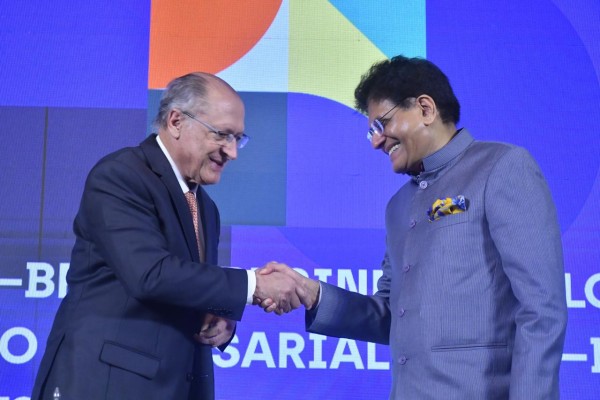
Brazil’s Vice President Geraldo Alckmin, who also serves as Minister of Development, Industry, Trade, and Services, described India as a “priority partner” in Brazil’s trade diversification strategy. Bilateral trade reached $12 billion in 2024, and both countries are aiming to achieve $20 billion by 2030.
“We want to broaden the Preferential Trade Agreement so that our trade flows expand,” Alckmin said, noting that initiatives such as investment facilitation and a mechanism to prevent double taxation would help create a stable business environment.
India and Brazil are exploring ways to expand the existing PTA between India and MERCOSUR—the South American trade bloc that includes Brazil, Argentina, Paraguay, and Uruguay—to enable greater tariff concessions and smoother market access. Officials said this aligns with India’s broader strategy to deepen trade ties with Latin America and other emerging economies.
Alckmin invited Indian companies to invest in sectors including automotive, IT, semiconductors, renewables, healthcare, agriculture, aerospace, and digital technologies. He added that both nations are working to introduce an e-visa system and a digital partnership covering AI, high-performance computing, and tech start-ups.
From the Indian side, Commerce and Industry Minister Piyush Goyal underscored India’s economic resilience, pointing to a 7.8% GDP growth in Q1 of FY25 and the IMF’s upward revision of India’s 2025 growth forecast to 6.6%. “Our engagement with Brazil reflects how complementary our economies are,” Goyal said, identifying agriculture as a key area for collaboration and global food security.
India’s trade surplus with Brazil currently stands at $6.77 billion in exports against $5.42 billion in imports for FY25. While overall trade volume has moderated since FY23, officials expressed optimism that targeted policy alignment will revive momentum.
The event also saw the relaunch of the India-Brazil Business Leaders Forum, with FICCI and CNI exchanging the Terms of Reference to boost private sector dialogue.
Other speakers, including Frederico Lamego of CNI and Ana Repezza of ApexBrasil, highlighted the role of business-to-business cooperation in driving innovation and sustainability.
Goyal reiterated India’s focus on structural reforms, ease of doing business, and infrastructure expansion, describing macroeconomic stability, modern infrastructure, and improved quality of life as the three pillars of India’s growth.
Both countries signalled intent to elevate their partnership beyond trade, deepening engagement in technology, innovation, agriculture, and defence cooperation.
French PM Lecornu Survives No-Confidence Votes After Pension Reform Concession
French Prime Minister Sebastien Lecornu survived two no-confidence votes in parliament on Thursday, securing key support from the Socialist Party by pledging to suspend President Emmanuel Macron’s controversial pension reform.
The two motions presented by the hard-left France Unbowed and the far-right National Rally (RN) secured just 271 and 144 votes respectively — well short of the 289 votes needed to bring down Lecornu’s days-old government.
Lecornu’s offer to mothball the pension reform until after the 2027 presidential election helped sway the Socialists, giving the government a lifeline in the deeply fragmented National Assembly.
Despite the reprieve, the motions underscored the fragility of Macron’s administration midway through his final term.
“A majority cobbled together through horse-trading managed today to save their positions, at the expense of the national interest,” RN party president Jordan Bardella wrote on X.
The French bond market remained steady after the back-to-back votes, with the government victory widely expected by investors.
Lecornu Faces Arduous Budget Negotiations
By putting the pension reform on the chopping block, Lecornu threatens to kill off one of Macron’s main economic legacies at a time when France’s public finances are in a perilous state, leaving the president with little in the way of domestic achievements after eight years in office.
There are 265 lawmakers in parliament from parties that said they would vote to topple Lecornu, and only a handful of rebels from other groups joined their cause.
If Lecornu had lost either vote, he and his ministers would have had to immediately resign, and Macron would have come under huge pressure to call a snap parliamentary election, plunging France deeper into crisis.
But despite the outcome of Thursday’s votes, Lecornu still faces weeks of arduous negotiations in parliament over passing a slimmed-down 2026 budget, during which he could be toppled at any point.
“The French need to know that we are doing all this work… to give them a budget, because it is fundamental for the future of our country,” said Yael Braun-Pivet, the president of the National Assembly and an ally of Macron.
“I am pleased to see that today there is a majority in the National Assembly that is operating in this spirit: work, the search for compromise, the best possible effort,” she added.
After winning the pension concession, the Socialists on Wednesday set their sights on including a tax on billionaires in the 2026 budget, underlining just how weak Lecornu’s hand is in the negotiations.
Political Kryptonite
France is in the midst of its worst political crisis in decades as a succession of minority governments seek to push deficit-reducing budgets through a truculent legislature split into three distinct ideological blocs.
Reforming France’s generous pension system has been political kryptonite ever since Socialist President Francois Mitterrand cut the retirement age to 60 from 65 in 1982.
In France, the average effective retirement age is just 60.7, compared to the OECD average of 64.4.
Macron’s reform raised the statutory retirement age by two years to 64 by 2030. Although that only brings French policy into line with other European Union member states, it chips away at a cherished social benefit beloved by the left.
(With inputs from Reuters)