

Support us by contributing to StratNewsGlobal on the following UPI ID
ultramodern@hdfcbank

Strategic affairs is our game, South Asia and beyond our playground. Put together by an experienced team led by Nitin A. Gokhale. Our focus is on strategic affairs, foreign policy and international relations, with higher quality reportage, analysis and commentary with new tie-ups across the South Asian region.
You can support our endeavours. Visit us at www.stratnewsglobal.com and follow us on YouTube, Twitter, Facebook and Instagram.
र 500 per month
र 1000 per month
र 5000 per year
र 10000 per year
Donate an amount of your choice
र 500 per month
Donate र 500 per month

र 1000 per month
Donate र 1000 per month
र 5000 per year
Donate र 5,000 per year
र 10000 per year
Donate र 10,000 per year
Donate an amount of your choice
Donate an amount of your choice
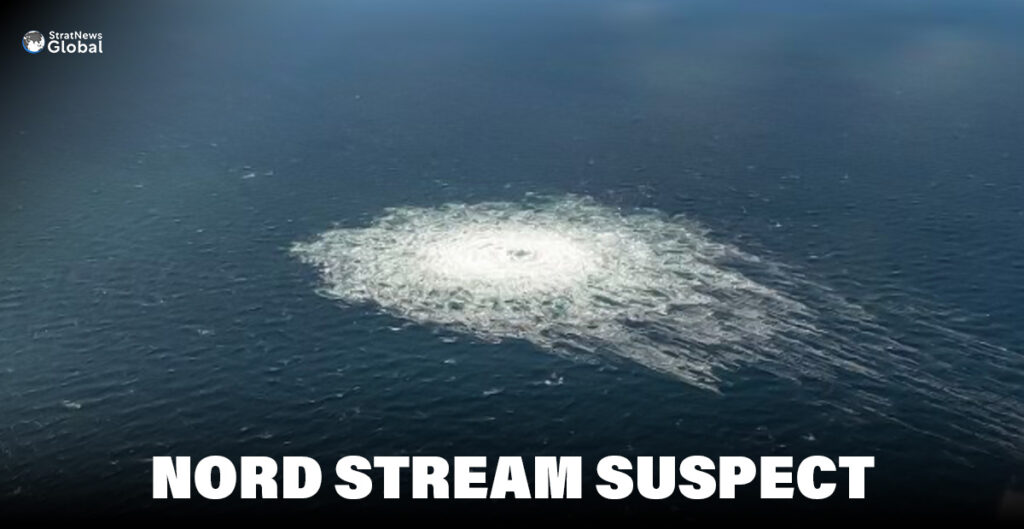


Poland Mulls Transfer Of Suspect Sought By Germany In Nord Stream Case
On Friday, a Polish court will determine if a Ukrainian diver, sought by Germany for his alleged involvement in the Nord Stream gas pipeline explosions, should be transferred to Berlin.
Although Warsaw says the decision over whether Volodymyr Z. should be transferred to Germany is one for the courts alone, its Prime Minister Donald Tusk said earlier this month that handing Volodymyr Z. over was not in Poland’s interest.
Tusk said the problem was not that the pipelines were blown up in September 2022, but that they were built at all.
The explosions largely severed Russian gas supplies to Europe, marking a major escalation in the Ukraine conflict and squeezing energy supplies.
Warsaw – Berlin Conflict
The pipelines were a source of conflict between Warsaw and Berlin as far back as the 2000s when they were still in the planning stage, with Poland arguing they compromised security by making Europe overly dependent on Russian energy while handing billions of euros to Moscow.
Germany’s government has declined to comment on Tusk’s remarks or tensions over the case, while a Polish government spokesperson did not respond to a request for comment.
One Germany diplomat, who spoke on condition of anonymity due to the sensitivity of the issue, said that Tusk’s comments could harm cooperation between two of Kyiv’s key allies.
However, another German diplomat said they did not expect Berlin to pick a fight with Warsaw over the case and that the investigation would continue whatever the outcome.
‘Anti-Constitutional Sabotage’
Germany’s top prosecutors’ office says Volodymyr Z. was one of a group suspected of renting a sailing yacht and planting explosives on the pipelines near the Danish island of Bornholm.
He faces allegations of conspiring to commit an explosives attack and of “anti-constitutional sabotage”.
His Polish lawyer rejects the accusations and says Volodymyr Z. has done nothing wrong. He has also questioned whether a case concerning the destruction of Russian property by a Ukrainian at a time when the countries are at war is a criminal matter.
“I’m personally pleased that this case is generating strong public sentiment, including statements from politicians,” Tymoteusz Paprocki said on Thursday.
Warsaw regional prosecutors’ spokesperson Piotr Skiba said that on legal grounds it would be hard not to hand the Ukrainian over to Germany.
“It’s very difficult to find any grounds on which we couldn’t transfer him to the Germans,” he said, cautioning that the final decision rests in the Warsaw court’s hands.
Reprieve For Suspect In Italy
A second Ukrainian suspect, Serhii K., won a reprieve on Wednesday when Italy’s top court upheld an appeal against his transfer on procedural grounds.
That case will have to go before court again.
In Poland, courts can refuse to hand over suspects wanted under European arrest warrants if this would violate their human rights or if criminal proceedings for the same offence are underway in Poland.
Warsaw has launched its own investigation into the Nord Stream bombings, but Volodymyr Z. is a witness not a suspect.
(With inputs from Reuters)
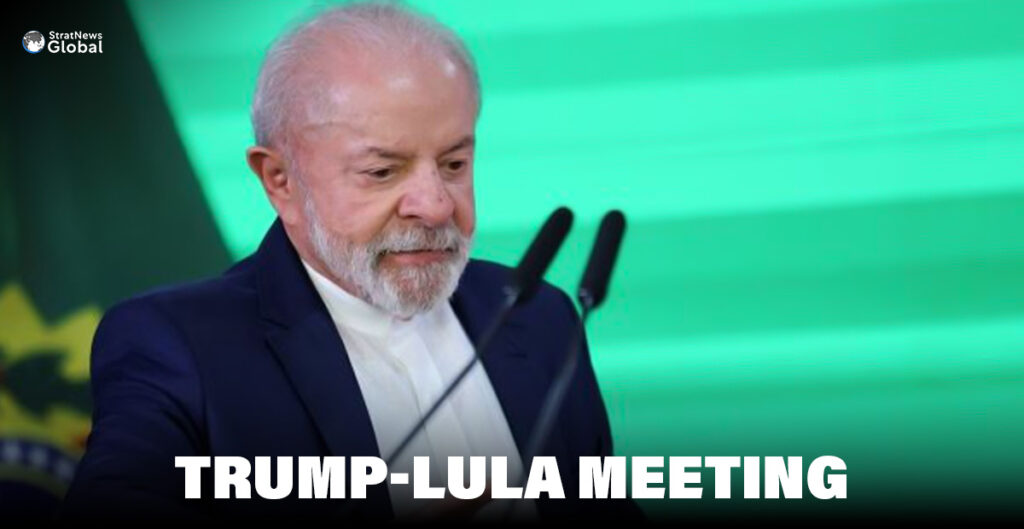
U.S. And Brazil Agree To Schedule Trump-Lula Meeting At Earliest
U.S. and Brazilian officials described their trade discussions on Thursday as constructive and said both governments are working to arrange a meeting between U.S. President Donald Trump and Brazilian President Luiz Inacio Lula da Silva at the earliest possible date.
In a joint statement, the delegations said they would “conduct discussions on multiple fronts in the immediate future and establish a working path forward,” though no timeline was given for the proposed Trump-Lula meeting.
The talks in Washington, which included U.S. Secretary of State Marco Rubio, U.S. Trade Representative Jamieson Greer and Brazilian Foreign Minister Mauro Vieira, marks the latest diplomatic contact between the two countries in recent weeks after months of a frozen relationship.
“This is an auspicious start to a negotiation process in which we will work to normalize and open new paths for bilateral relations,” Vieira told journalists in Washington.
Trump’s 50% Tariffs
The officials from both sides described the talks as a potential reset in bilateral relations, strained earlier this year by Trump’s sudden 50% tariffs on Brazilian exports
Trump increased tariffs on U.S. imports of most Brazilian goods to 50% from 10% in early August, linking the move to what he called a “witch hunt” against former President Jair Bolsonaro.
Bolsonaro ended up being convicted in September by a Supreme Court panel to more than 27 years in prison for plotting a coup after he lost the 2022 election to Lula.
Last week, Trump and Lula held a phone call, following a brief encounter at the United Nations in September, after which both said they came away with positive impressions.
During the call, they agreed to meet in person, raising hopes for a thaw in bilateral relations that are at their lowest point in decades.
Thursday’s talks were “great”, with a productive tone and focused on technical issues, Vieira said. The meeting lasted about an hour and included a 20-minute one-on-one session with Rubio, he added.
(With inputs from Reuters)
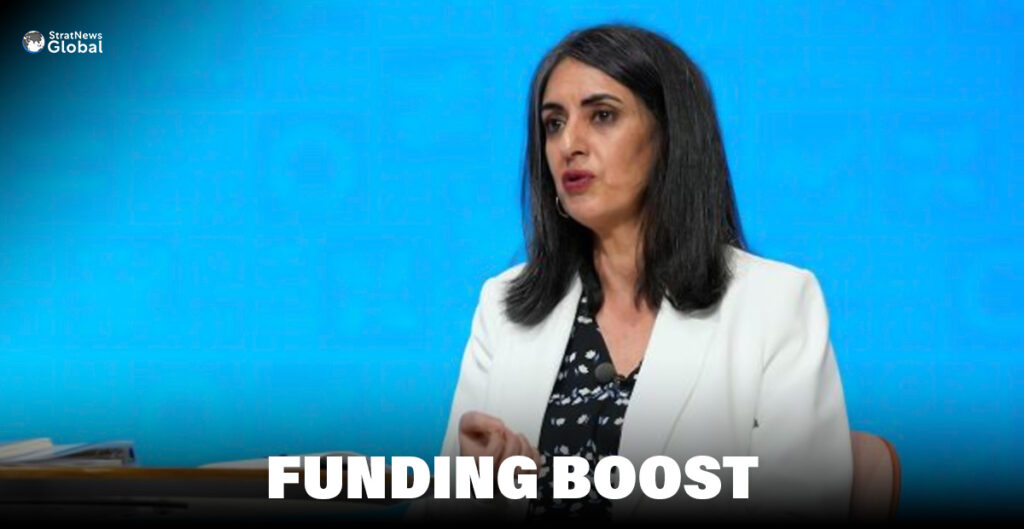
Morocco To Boost Health And Education Funding In 2026 Budget: Finance Minister
Morocco’s 2026 budget will focus on boosting investment in health and education while setting aside extra resources to tackle regional disparities, Finance Minister Nadia Fettah Alaoui said.
Youth-led protests spread across the kingdom in recent weeks, revealing deep-seated anger over poverty and public services behind a storyline of ambitious infrastructure projects and modern stadiums opening ahead of the 2030 FIFA World Cup.
“What we’ve heard from the youth protests is that they want a better education and health,” Alaoui said earlier this week, speaking on the sidelines of the International Monetary Fund and World Bank annual meetings in Washington.
Alaoui said the government spends just under 9% of GDP on those two areas, and authorities would have to get better at communicating what they are actually doing.
Upcoming Projects
But there was room in the budget to reprioritize upcoming projects, such as getting local hospitals up and running to ensure people don’t have to travel long distances to get treatment.
“(We will) reallocate for short-term, quick wins, because people cannot wait for the reform to happen,” she said, adding that exact details could not be provided ahead of the presentation of the budget to the parliament. The budget is usually presented and debated in parliament after late October.
It will also contain measures to support a push by King Mohammed VI to reduce regional inequalities by giving greater attention to the mountain and oasis regions, Alaoui said.
This effort would mean “probably some additional money, but much more focused on efficiency coordination and not putting at risk at all the macroeconomic balances,” she said.
Future Plans For Foreign Exchange
Asked about future plans for Morocco’s foreign exchange regime, Alaoui said the ministry was first of all going to launch medium-term inflation targeting and disclose that target in late 2026 or early 2027, which she expected to be between 2%-3%.
Morocco currently publishes its inflation target only annually rather than projecting an aim further in the future.
“Floating (the currency) is another step,” she said, adding that small and medium-sized enterprises in the country were not ready for that.
“They’re not prepared – the big companies are prepared. The financial sector can be exposed, but we still need to keep the house in order for the smallest one and prepare them for this.”
The dirham is pegged to a currency basket of 60% euro and 40% U.S. dollar, but allowed since 2018 to float in a 2.5% band on either side.
Asked about international debt sales, Alaoui said the government had no immediate plan to return to the market, though she expected Morocco would remain a regular issuer.
(With inputs from Reuters)
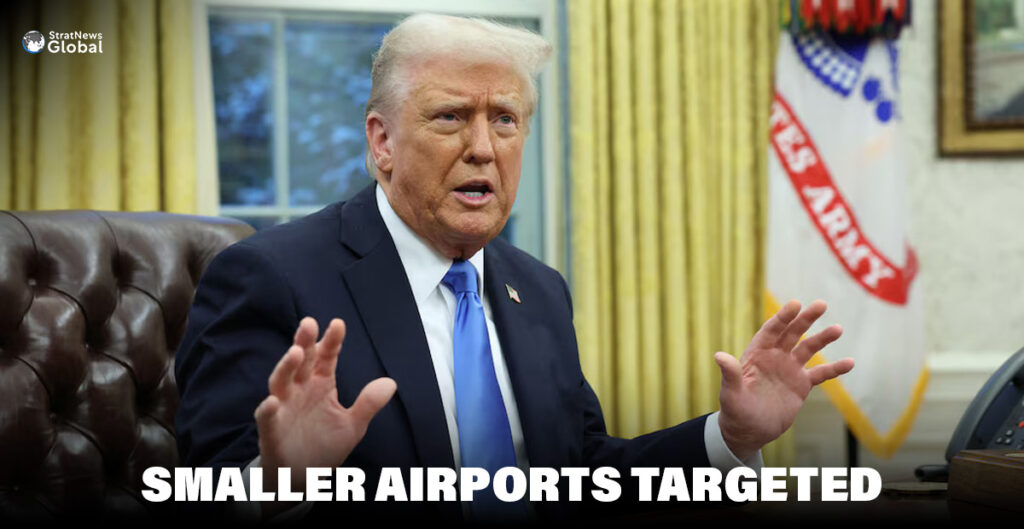
Hackers Use Airport Speakers To Praise Hamas, Criticise Trump
Hackers hijacked public address systems on Tuesday at four airports — three in Canada and one in the US — to broadcast pro-Hamas messages and criticism of President Donald Trump, officials and media reports confirmed.
An “advertisement streaming service” at the Kelowna International Airport in British Columbia “was briefly compromised and unauthorized content was shared,” according to the Kelowna Royal Canadian Mounted Police.
Hack Under Investigation
The RCMP said it is investigating the hack with other agencies and declined to provide further details.
Hackers broadcast messages in a foreign language and music over the PA system at Victoria International Airport in British Columbia, according to an airport spokesperson.
The hackers accessed the public address system by breaching third-party software, after which the airport shifted to an internal system to regain control, the spokesperson said.
The Canadian Centre for Cyber Security is assisting the airport and the RCMP with the investigation.
Pennsylvania Airport Targeted
Hackers similarly took control of the PA system at Harrisburg International Airport in Pennsylvania, US Transportation Secretary Sean Duffy said in a social media post on Wednesday.
In their message, the Hackers at Harrisburg International Airport in Pennsylvania attacked Netanyahu and Trump: “F*** Netanyahu. F*** Trump. Free, free Palestine. Free, free Palestine. Turkish hacker Cyber Islam was here.”
The US Federal Aviation Administration and airport officials are investigating the breach, he said.
The FAA did not immediately respond to a request for comment.
Hackers also breached the flight information display screens and public address system on Tuesday evening at Windsor International Airport in Ontario, and displayed “unauthorized images and announcements,” according to airport officials.
The breach was to a “cloud-based software provider” used by the airport, and “our systems returned to normal shortly thereafter,” according to the airport’s statement.
The four locations are smaller, feeder airports. In 2024, the busiest, Kelowna, served just over 2 million passengers, compared to the more than 25 million travelers who passed through Vancouver International Airport – British Columbia’s largest airport.
(With inputs from Reuters)
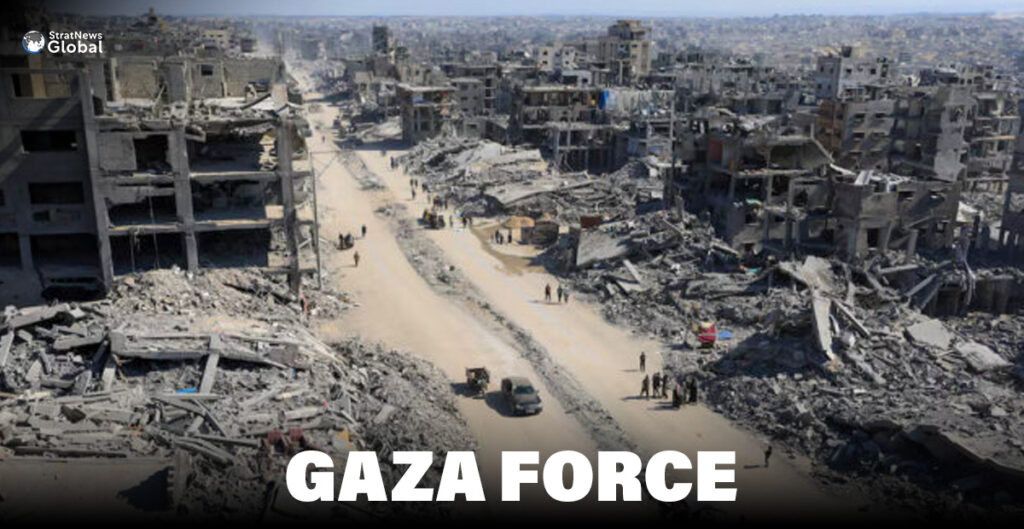
France, Britain And US Draft UN Resolution For Gaza Force
France on Thursday said it is working with Britain and the United States to finalise a UN Security Council resolution in the coming days, aimed at laying the groundwork for a future international force in Gaza.
With a shaky US-mediated ceasefire between Israel and Hamas holding, planning has begun for an international force to stabilize security in the Palestinian enclave, two senior US advisers said on Wednesday.
Speaking to reporters in Paris, French Foreign Ministry spokesperson Pascal Confavreux said such a force needed a UN mandate to provide a strong foundation in international law and ease the process of getting potential contributions from countries.
“France is working closely with its partners on the establishment of such an international mission, which must be formalised through the adoption of a UN Security Council resolution,” he said.
“Discussions, notably with the Americans and British, are ongoing to propose this resolution in the coming days.”
US President Donald Trump’s administration is speaking with many countries interested in contributing to the force, a White House official said on Thursday.
“We are also in conversations about a potential UN Security Council resolution to support this effort,” the White House official said.
Stabilisation Force ‘Will Take Some Time’, Says Britain
Paris hosted talks with other European and Arab powers on October 10 to flesh out ideas for Gaza’s post-war transition, including how an international force could take shape.
Diplomats said the stabilisation force would not be a formal United Nations peacekeeping force paid for by the world body.
Instead, a Security Council resolution could mirror action taken by the 15-member body to back the deployment of an international force to combat armed gangs in Haiti.
That resolution spells out and authorizes the mission and states contributing to the force to “take all necessary measures” – code for the use of force – to carry out the mandate.
“The stabilisation force will take some time,” British Prime Minister Keir Starmer told parliament on Tuesday. “The terms of reference are still being drawn up. There is a United Nations Security Council resolution on the establishment of the force, or I hope there will be, but the wider terms of reference are not yet agreed.”
Indonesia Previously Offered 20,000 Troops
Among the countries the US is speaking to about contributing to the force are Indonesia, the United Arab Emirates, Egypt, Qatar, and Azerbaijan, the advisers said on condition of anonymity.
There are also currently up to two dozen US troops in the region to help set up the operation, serving in a “coordination, oversight” role, they said.
Italy has publicly said it was willing to take part.
Indonesian President Prabowo Subianto told the United Nations General Assembly on September 23 that if there was a UN resolution, Indonesia was prepared to deploy 20,000 or more troops in Gaza to help secure peace.
The 193-member UN General Assembly last month overwhelmingly voted to endorse a declaration that aimed to advance a two-state solution between Israel and the Palestinians, which supports the deployment of a temporary international stabilization mission mandated by the UN Security Council.
(With inputs from Reuters)
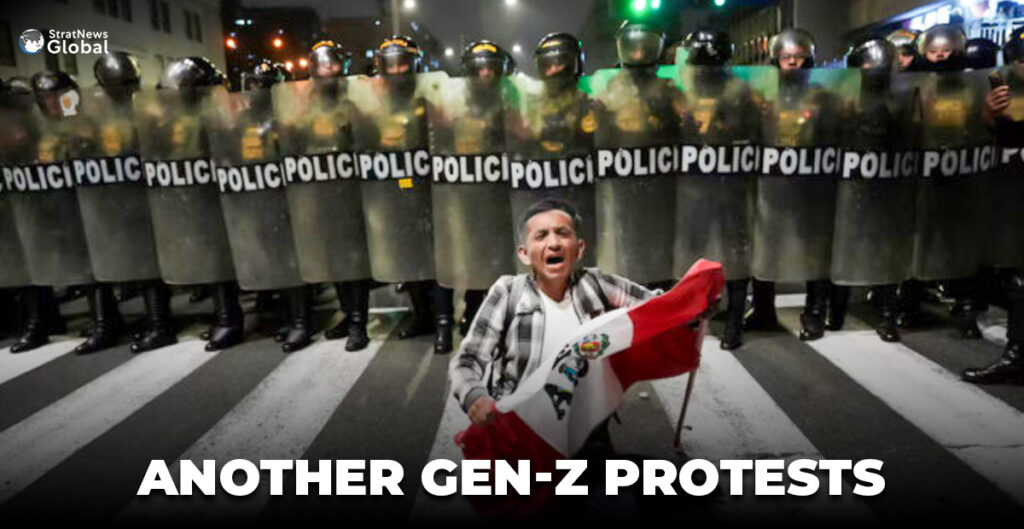
One Dies As Violent Protests Erupt Against Peru’s New President
Widespread protests rocked Peru overnight, leaving one dead and injuring several police officers, as anger mounted against newly sworn-in President Jose Jeri, the state ombudsman’s office said on Thursday.
The protest on Wednesday night, called by young Gen Z protesters, transport workers and civil groups, was the latest in a series of demonstrations against corruption and rising crime, which led to the dramatic midnight ouster of former President Dina Boluarte last Thursday.
Thousands of protesters amassed around the country, with hundreds clashing with police outside Congress in Lima. Police fired tear gas while some protesters hurled fireworks, rocks and burning objects.
‘Everyone Must Go’
“Everyone must go!” protesters chanted when they reached Congress and tried to tear down metal barriers protecting the building, leading to clashes.
A 32-year-old man, Eduardo Mauricio Ruiz, was killed during the protest and his death will be investigated, said Fernando Losada, a representative from the country’s Ombudsman’s office.
Peru’s prosecutor’s office said Ruiz died after being shot.
Later on Thursday, the head of Peru’s national police (PNP), Oscar Arriola told reporters that Luis Magallanes, a member of the PNP, had been physically assaulted and carried out the shooting. Arriola added that the Magallanes was being treated at the hospital and had been removed from his duties.
Jeri Promises ‘Full Force Of Law’
Jeri expressed regret over the death in a post on X, saying the death would be “objectively” investigated. He blamed violence on “delinquents who infiltrated a peaceful demonstration to sow chaos”.
“The full force of the law will be on them,” he wrote.
After attending a meeting about the protests at Congress Thursday afternoon, Jeri told reporters he would ask Congress for “authority to legislate on public safety issues”.
Jeri said one focus would be prison reform, but did not elaborate on what those powers would entail.
Pushing For Comprehensive Reform
Speaking to Congress soon after, newly appointed Interior Minister Vicente Tiburcio, said the government would push for comprehensive reform to the national police, adding that 89 police and 22 civilians had been injured during the protest and 11 people were detained.
The interior ministry did not immediately respond to a request for comment on the police reform or Jeri’s request for expanded legislative powers.
Could This Be A Trend?
Wednesday’s protests were a bellwether for how Jeri’s short-lived presidency, which ends next July due to scheduled elections, could play out.
Jeri, 38, has promised to make crime his top priority, but has faced a number of scandals himself, including corruption allegations and a now-shelved investigation for sexual assault. Jeri has denied wrongdoing in both cases and expressed willingness to cooperate with any corruption investigation.
Boluarte faced widespread protests after she assumed power in late 2022, leading to dozens of deaths and a plunge in her popularity levels, which oscillated between 2% and 4% in the days leading up to her ouster.
Congress – which was headed by Jeri before he became president – is almost equally unpopular with a single-digit approval rating.
(With inputs from Reuters)
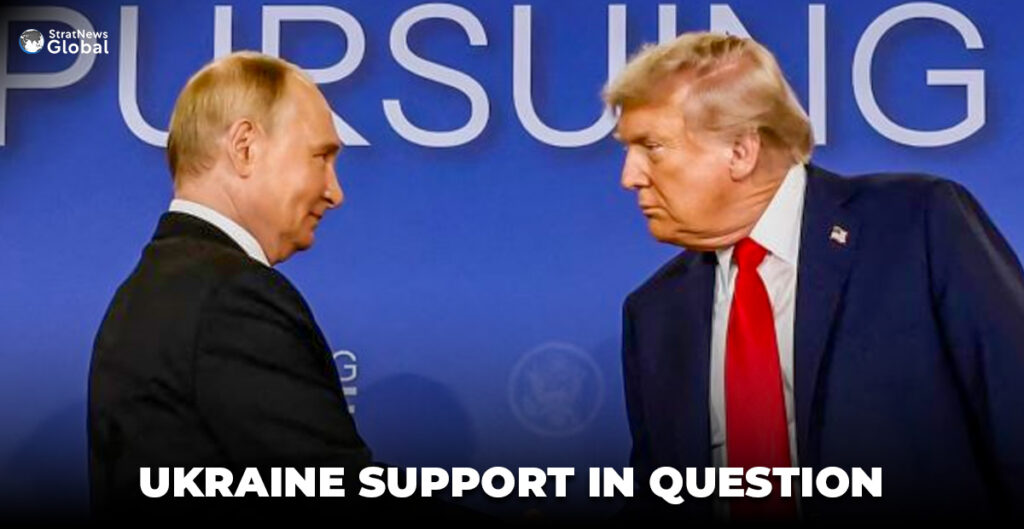
Trump, Putin Agree To New Summit Amid Ukraine Tensions
In a surprise development on Thursday, US President Donald Trump and Russian President Vladimir Putin agreed to hold another summit on the Ukraine war, even as Moscow expressed concern over possible renewed US military support for Kyiv.
Trump and Putin may meet within the next two weeks in Budapest, the US president said, after a more than two-hour phone conversation he called productive. The Kremlin confirmed plans for the meeting, though neither side provided a date for when it would occur.
“My whole life, I’ve made deals,” Trump told reporters later at the White House. “I think we’re going to have this one done, hopefully soon.”
The development came as Ukrainian President Volodymyr Zelenskyy was headed to the White House on Friday to push for more military support, including US-made long-range Tomahawk missiles.
New Ukraine Support In Question
The White House had seemed in recent days to be leaning toward granting Zelenskyy fresh support and increasingly frustrated with Putin.
Yet Trump’s conciliatory tone following the Russia call left in question the near-term likelihood of assistance and reignited European fears of US capitulation to Moscow.
Since taking office in January, Trump has regularly threatened action against Russia, only to delay those steps after talks with Putin.
Trump sought a ceasefire ahead of an Alaska summit with Putin in August that produced none. At the time, some analysts said Putin pocketed US concessions with no intent to halt fighting.
Three-way talks between Putin, Zelenskyy, and Trump, another goal sought by Washington at the time, never materialized, and there is no immediate plan for such a meeting now.
The Republican president has positioned himself as a peacemaker, brandishing diplomatic achievements including the recent Gaza ceasefire and hostage deal. He has said he thought the war in Ukraine, which began with Russia’s 2022 invasion, would have been easier to end.
“Putin is trying to derail the momentum toward greater pressure on Russia,” said Dan Fried, a former State Department official. “We’ll see what happens tomorrow, but the chances of moving toward a ceasefire by pushing Russia to get serious seem to have diminished.”
Putin Warns Trump About Supplying Missiles
During the call, Putin told Trump that supplying long-range missiles to Ukraine would harm the peace process and damage US-Russia ties, Kremlin aide Yuri Ushakov told reporters.
“What do you think he’s going to say, ‘Please sell Tomahawks?'” Trump later joked with reporters. “No, he doesn’t want,” Tomahawks given to Ukraine, Trump added, calling them a “vicious weapon.”
Zelenskyy, already in Washington, said Putin’s decision to seek talks showed he was on the defensive.
“We can already see that Moscow is rushing to resume dialogue as soon as it hears about Tomahawks,” he said on X.
The Hungarian location selected for the Trump-Putin summit has drawn attention. Putin is wanted for alleged war crimes in some jurisdictions, restricting his travel.
Ukraine’s relationship with Hungary has grown increasingly tense. Zelenskyy accused Hungarian drones of crossing into Ukraine last month, prompting Hungarian Prime Minister Viktor Orban to retort that Ukraine was not an independent sovereign state.
In contrast to most NATO and European Union leaders, Orban has maintained cordial relations with Russia while questioning the logic of Western military aid for Kyiv.
“The planned meeting between the American and Russian presidents is great news for the peace-loving people of the world,” Orban said on X. “We are ready!” He later said he had spoken by phone with Trump and that preparations for a US-Russia peace summit were under way.
The Trump-Putin meeting is expected to follow talks next week between teams led by US Secretary of State Marco Rubio and Russian Foreign Minister Sergei Lavrov, at a location to be determined.
In a post on Truth Social, Trump said he would brief Zelenskyy on the Russia talks in the Oval Office on Friday.
Ukraine Wants To Expand Attack Range
Kyiv and Moscow have been escalating their war as it heads toward a four-year anniversary with massive attacks on energy infrastructure. NATO has struggled to respond to a spate of Russian air incursions.
Ukraine wants missiles that would put Moscow and other major Russian cities within its range of fire.
In its latest barrage, Russia launched more than 300 drones and 37 missiles to target infrastructure across Ukraine in overnight attacks on Thursday, Zelenskyy said. Kyiv has ramped up its own attacks on Russian targets, including an oil refinery in the Saratov region on Thursday.
In his latest warnings to Russia, Trump said on Wednesday that Prime Minister Narendra Modi had agreed to stop buying Russian oil, and that the administration would push China to do the same. India has not confirmed any such commitment. The countries are among Russia’s biggest trading partners.
(With inputs from Reuters)
Myanmar: Elections The Answer To Junta’s Rule And Civil War?
The top trending news stories about Myanmar as of Thursday was a conspiracy-laden story about the Cocos Islands, whether Elon Musk’s Starlink was fuelling scam centres in that country and an earthquake.
The only civil war-related stories was a news agency’s photo report on a village ravaged by fighting and the para-glider attack on a Buddhist festival that killed 24 people, the last about a week old.
It would appear the civil war in that country, now into its fourth year, doesn’t hold the same attraction as perhaps the Gaza war, or rather peace now that Donald Trump has stepped in and got the protagonists to stop fighting.
It is least discussed and written about even in India despite sharing a border running more than 1,600-km along the sensitive northeastern states. The stakes are higher now that the military junta has announced it will hold elections in December.
Scholars believe the Myanmar Army, despite suffering severe territorial reverses, military defeats and casualties, has retained its institutional solidarity and much of its coherence.
The push for elections is a calculated one: it can be held only in 102 of 330 townships where the army retains control. But elections are an instrument for the junta to achieve other ends. Victory is assured for the “King’s Party, the USDP since all other political parties have been banned or outlawed.
It would enable junta leader Gen Min Aung Hlaing to depart into the sunset without having to account for his 2021 coup that drove the country into civil war. His departure will bring in a new set of military leaders probably beholden to Aung Hlaing.
According to a report dated April 9th in the online EastAsiaForum.org, Lt. Gen. Kyaw Swar Lin, who is some 16 courses junior to the junta chief, is seen as the potential successor. He “lacks significant combat experience,” says the report, “but has held key administrative roles within the commander-in-chief’s office.”
The report points to two other officers who could be in the running for deputy C-in-C and joint chief of staff, positions below Swar Lin: Gen Ko Ko Oo who currently heads special operations, and Maj. Gen. Than Hitke, presently army chief of staff. Both are under scrutiny for their reported brutal tactics in the Sagaing region in October last year.
An Indian view is that the civilian face could be former general Than Shwe, who was also head of state and government before stepping down in 2011.
What about technocrats who could bring specialised skills and expertise to government? There are possibly a few left in Myanmar but who would be interested in joining the new government post elections is not clear. That stems from the point that most ethnic groups will reject the poll result.
The Arakan Army, for instance, considered the most powerful among the ethnic armed organisations given it controls 80% of Rakhine state, has said it will not allow any voting to take place.
The same stand has been taken by the Kachin Independence Army which holds sway over northern Myanmar, and by the Chins who are based along the borders with Mizoram and Manipur in India’s northeast. Likewise the Ta’ang National Liberation Army which operates in northern Shan state.
But three ethnic Karen groups aligned with the junta have promised to provide security during the elections, says a report in the online Irrawaddy journal. Also the majority ethnic Bamars who make up the bulk of the army, will back the junta’s candidates.
For India the choice is pretty simple. Diplomats and officials say “We are optimistic and hopeful that polls will bring resolution to the conflict.”
There’s also a caveat. As a scholar put it “Any government that comes to power will have to keep our concerns, so no foreign power should be able to use Myanmar territory for anti-India purposes.”
That means the presence of northeastern separatist groups like the ULFA (United Liberation Front of Assam) and the two Naga factions (Isaac and Khaplang) in Myanmar is worrying.
Add to that reports that the runaway on Cocos Island, 55 km from India’s Andaman islands, is being extended to accommodate possibly Chinese fighter jets.
India is interested in accessing Myanmar’s rare earths concentrated in Kachin state bordering China. Reports say the Kachin Independence Army controls key mines with processing being done in China.
For India, security is a major concern when it comes to Myanmar. The civil war has left armed groups in control of many parts of the country and there’s been a huge surge in trafficking, whether of drugs, arms or even people. An election, howsoever flawed, might be the proverbial light at the end of the tunnel.
Experts Say Landmines Behind Thai-Cambodia Clash Were Recently Planted
On July 16, Thai Army Second Lieutenant Baramee Sricha was on a patrol near a disputed stretch of the border between Thailand and Cambodia when a member of his team stepped on a landmine that detonated, severing his ankle, an incident that became the catalyst for five days of clashes between the neighbours, which ended with a U.S.-brokered ceasefire, and also sparked a diplomatic row over PMN-2s—a Soviet-origin anti-personnel mine that litters parts of Cambodia and which Phnom Penh and Bangkok have pledged by treaty not to use.
Thailand accuses Cambodia of laying the mines along parts of their joint frontier and says PMN-2s have maimed at least six Thai soldiers since July, including a member of Baramee’s patrol.
Cambodia denies the accusations. It says that some Thai soldiers stepped on non-PMN-2 ordnance planted during a decades-long civil war that left it as one of the world’s most heavily mined countries.
Phnom Penh has since positioned itself as a global advocate against the use of landmines. It has invested some $1 billion alongside foreign donors over the past 30 years in demining operations.
Any use of anti-personnel mines by Cambodia, where tens of thousands have been killed or maimed by such ordnance since 1979, would mark a disappointing reversal in decades of public commitments, said Yeshua Moser-Puangsuwan of Landmine Monitor, which is part of the International Campaign to Ban Landmines.
It would also come as some European nations threatened by Russia pull out of the Ottawa Convention, which bans the use of anti-personnel landmines. They join major powers like Washington, Moscow and Beijing, which are not signatories to the treaty.
Thailand’s military provided Reuters with access to videos and photographs of what it said were subsequent PMN-2 demining operations carried out by its troops around the site of the July 16 incident, as well as another border-area mine blast on July 23.
During an August visit to frontline Thai military units, the news agency took photos of shrapnel that service members said they recovered from those incidents, as well as images of dozens of intact mines Thailand said were retrieved from along the border area.
Reuters examined the metadata on seven of the supplied images, which show they were taken at the same time as Thai demining operations carried out along the frontier between July 18-23 that were listed in two undated military documents about landmines on the border seen by the news agency.
The metadata did not include location information, and Reuters was not able to confirm independently where the images were taken.
Four independent landmine experts, asked by Reuters to evaluate the material, said the images depicted PMN-2s that had been freshly laid. However, the analysts were not able to determine who placed the ordnance.
The Cambodia Mine Action and Victim Assistance Authority (CMAA), a governmental agency that oversees demining activities, told Reuters that a determination on the incidents could only be made after an impartial third-party investigation. Cambodia’s military does not have stockpiles of live anti-personnel mines, it added.
CMAA’s First Vice President Ly Thuch, who reports directly to Prime Minister Hun Manet, said visual appearance alone is not conclusive proof of age.
“Environmental and disturbance factors can make long-buried items appear relatively fresh,” he told Reuters.
A Thai foreign ministry spokesperson said Bangkok’s investigations had determined that the landmines that injured its soldiers were newly planted PMN-2s: “They were found in new condition, still with clearly visible markings.”
Bangkok is a longtime U.S. ally which did not have widespread access to Soviet-origin munitions and says it has never deployed the PMN-2.
The defence ministry of Russia, which previously said it stopped manufacturing PMN-2-type mines in the late 1990s, did not respond to Reuters’ questions.
Independent Assessment
The condition of the PMN-2s in the visuals taken by the Thai military and Reuters indicates they had been on the ground for no longer than a few months, said U.K.-based independent expert Andrew Vian Smith.
There are tell-tale signs on older PMN-2s, Smith said: their pliant plastic casing becomes brittle over time, and they also have a rubber disc that in most soil conditions quickly becomes dull, collecting dirt in the gaps.
“The mines I was shown had nothing in those gaps,” said Smith, who has worked on operations in Cambodia.
The mines were not covered by roots and vegetation as one would expect if they had been in the ground for a long time, said Moser-Puangsuwan.
CMAA’s Thuch said that soil erosion, flooding and shifting vegetation could lead old mines to appear newer than they are.
Moser-Puangsuwan said that flooding might explain a mine shifting position, but that such factors don’t make ordnance look new.
“Ignoring the absence of other signs of ageing, it is not credible that floodwater could clean these mines and then bury them tidily again,” Smith said.
The CMAA has said in a public statement that the mine that exploded on July 16 was not a PMN-2, instead suggesting that mines of American, Chinese or Vietnamese origin might have been responsible.
Asked how it made the determination without access to the injured Thai service members, Thuch said it was a preliminary assessment of “the injury pattern reportedly observed … (based) on the limited open information available to us.”
Reuters’ images of the remnants from July 16 include an “initiation delay bellows” – a device that is compressed to trigger the mine’s firing mechanism – while photos of the July 23 shrapnel show a spring wire, both of which Smith said were characteristic of the PMN-2.
Thuch said fragment recognition from photos has inherent limits. And there was no verified evidence of local stockpiling or unsanctioned use of mines in the area, he added.
Diplomatic Pressure
A succession of civil wars, including those involving the genocidal Khmer Rouge regime, convulsed Cambodia for some two decades from 1970.
The conflicts left behind one of the world’s most densely mine-contaminated areas: a 1,046 km-long stretch along the Thai-Cambodia border.
Demining efforts began in earnest after a 1991 peace accord. More than 3,200 square kilometres of land have since been cleared of unexploded ordnance.
However, PMN-2 mines, which were among the most commonly-deployed in Cambodian and contiguous territory, continue to litter the countryside. Some 1,800 PMN-2s have been found and deactivated since September 2023, CMAA said.
The Ottawa Convention requires contracting states to “destroy all stockpiles of landmines they possess within 4 years” of signing up, said Moser-Puangsuwan.
Thailand is applying diplomatic pressure through the convention and has asked United Nations chief Antonio Guterres to request that Cambodia respond to its allegations through a compliance mechanism built into the treaty.
The convention provides a clear mechanism to address compliance issues, said Farhan Haq, deputy spokesperson for Guterres, adding that the Secretary General would “continue to support efforts in that sense and hopes that Thailand and Cambodia will achieve a cooperative resolution.”
Bangkok has also repeatedly petitioned member states party to the treaty since July. It argues that Cambodia has violated the convention by stockpiling and using landmines, as well as having previously declined joint demining operations along the disputed border.
(With inputs from Reuters)
Bolivia: Quiroga Pledges Bold Economic Reforms If Elected President
Bolivia’s conservative former president Jorge “Tuto” Quiroga has vowed sweeping economic reforms as the cornerstone of his campaign for the October 19 presidential runoff, where he will face centrist Senator Rodrigo Paz.
Quiroga placed second to Paz in the August 17 first round with 27% of the vote, as the ruling Movement to Socialism founded by Evo Morales suffered its biggest defeat in decades. Neither candidate secured the 50% needed to win outright, triggering Bolivia‘s first runoff since its return to democracy in 1982.
A longtime opposition figure, Quiroga, 65, served as interim president from 2001 to 2002. He has campaigned on promises to stabilize an economy battered by inflation – at its highest since the 1980s – and dwindling foreign reserves.
‘Dramatic, Radical Change’
“The country is broke,” Quiroga said at his home in La Paz in August. “We need dramatic, radical change, and I intend to bring it.”
Quiroga supports deep cuts to public spending and proposes curbing universal fuel subsidies, maintaining them only for public transport and vulnerable groups. His economic plan includes closing or privatizing loss-making state-owned companies and eliminating ministries in a move he says will reduce bureaucracy.
However, those policies could alienate Bolivia’s Indigenous majority, many of whom have become disillusioned with the socialists but remain skeptical of the right after earlier privatizations that led to steep price rises for basic utilities. The specter of street protests, should he win, may test his resolve.
Quiroga rose through the ranks to become finance minister in 1992 under President Jaime Paz Zamora — the father of his current opponent. In previous presidential attempts, Quiroga lost twice to Morales, who was barred from this year’s race.
Despite some voters’ fears about his plans for state job cuts, privatization of natural resources, and reduced social welfare, Quiroga insists his policies will benefit ordinary Bolivians.
“The inflation that causes you so much anxiety is going to end,” he said during a campaign stop in Samaipata, in Bolivia’s rural interior. Children and older people will be exempted from benefit cuts, he says.
Quiroga To Seek External Financing
If elected, Quiroga says he will seek external financing from institutions like the International Monetary Fund, secure new trade partnerships, and reform the judiciary.
Quiroga also proposes granting Bolivians individual ownership rights over state-controlled natural resources — including lithium and natural gas, via a mutual fund structure — a step critics say would weaken state control over strategic resources.
He aims to thaw Bolivia’s frosty relations with Washington after years of alignment with China, Iran, and Russia.
“I speak Texan, not English,” he joked, referring to his time at Texas A&M University and his stint at multinational IBM in Austin.
Since no party has won a majority in either chamber, Quiroga’s ability to forge alliances would be tested. His Alianza Libre (Free Alliance) secured 43 of 130 seats in the lower house and 12 of 36 in the Senate. That is behind Paz’s party, which has 47 congressional seats and 16 in the Senate.
Quiroga’s Challenge To Win Over Voters
A September Ipsos Ceismori poll found 59% of respondents saw Quiroga as the candidate most capable of fixing the economy.
His challenge is to win over voters who backed other candidates, including the just under 20% who supported businessman Samuel Doria Medina, who placed third and was eliminated.
Opinion polls suggest a tight race. Quiroga leads voting intentions with 42.9%, ahead of Paz with 38.7%, according to an October survey by Red Uno. Another poll indicated a late swing toward Paz, with 10% of undecided voters moving in his direction.
Gonzalo Gutierrez, 33, voted for Medina in the first round and remains undecided.
“‘Tuto’ seems like the best candidate because of his experience, but he doesn’t have my vote yet,” he said from La Paz.
(With inputs from Reuters)