

Support us by contributing to StratNewsGlobal on the following UPI ID
ultramodern@hdfcbank

Strategic affairs is our game, South Asia and beyond our playground. Put together by an experienced team led by Nitin A. Gokhale. Our focus is on strategic affairs, foreign policy and international relations, with higher quality reportage, analysis and commentary with new tie-ups across the South Asian region.
You can support our endeavours. Visit us at www.stratnewsglobal.com and follow us on YouTube, Twitter, Facebook and Instagram.
र 500 per month
र 1000 per month
र 5000 per year
र 10000 per year
Donate an amount of your choice
र 500 per month
Donate र 500 per month

र 1000 per month
Donate र 1000 per month
र 5000 per year
Donate र 5,000 per year
र 10000 per year
Donate र 10,000 per year
Donate an amount of your choice
Donate an amount of your choice


China’s Sanctions On Hanwha Strain South Korea–US Shipbuilding Cooperation
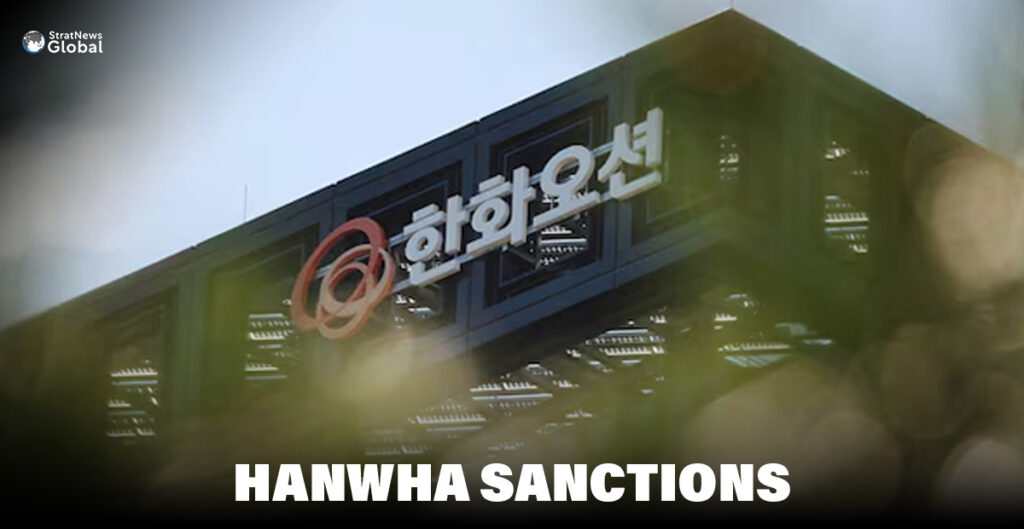
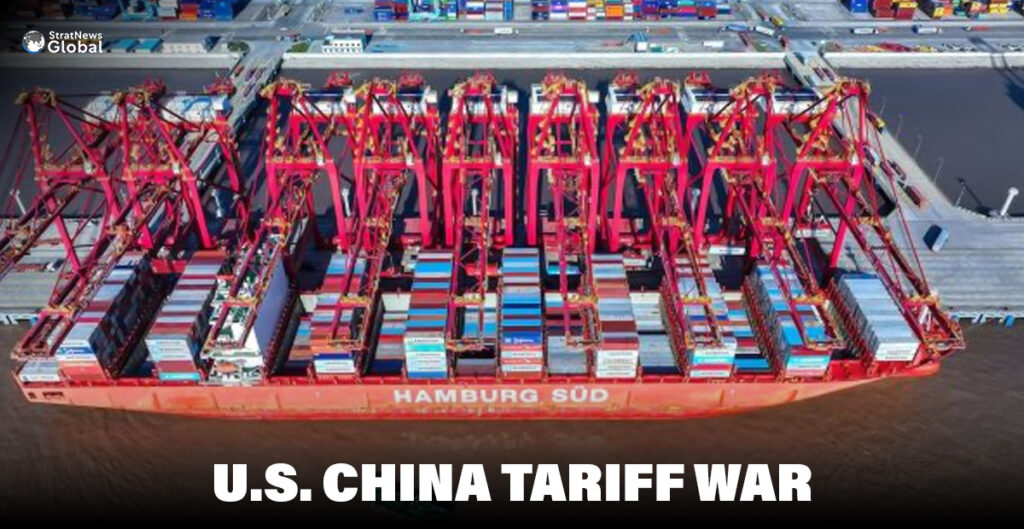
China‘s sanctions on U.S.-affiliated divisions of shipbuilder Hanwha Ocean could disrupt the supply of Chinese equipment and materials, potentially jeopardising South Korea–U.S. shipbuilding cooperation, officials in Seoul said on Friday.
Beijing announced the sanctions on Tuesday as the U.S. and China began charging additional port fees on each other’s vessels, in the latest exchange in a protracted trade war ahead of a planned meeting of the two countries’ leaders.
South Korea has vowed to “Make America Shipbuilding Great Again” with a pledge of $150 billion of investment in the sector to help U.S. President Donald Trump’s push to revitalise American shipbuilding to catch up with China’s.
The decline of the U.S. shipbuilding sector and the industries needed to support it made it impossible to supply materials and parts from within the U.S., officials in Seoul said.
“There is bound to be an impact,” South Korea’s Minister of Defence Procurement Program Administration Seok Jong-gun said.
“I don’t see how we can make all the materials and supplies for Philly Shipyard within the U.S.,” Seok said in a parliamentary hearing on Friday.
“So if you’re going to get a lot of things to the U.S. from South Korea, and you have sanctions and all kinds of obstacles to doing that, I’d say there’s going to be an impact on MASGA eventually.”
Hanwha also runs a shipyard in China’s eastern province of Shandong that builds modules of ship components, a company filing showed. It supplies the modules to its shipyard in South Korea for final assembly, according to the firm.
While analysts said the Chinese sanctions would not have an immediate impact, they may be a harbinger of tougher Chinese actions that could hit South Korean shipbuilders cooperating with the United States.
‘Not Simply A Trade Issue’
South Korean lawmaker Yu Yong-weon estimated the Chinese sanctions would cost Philly Shipyard $60 million over the next two years. Yu did not give a breakdown of the estimate but cited likely disruptions of supplies to the shipyard and delayed delivery of vessels.
“This is not simply a trade issue but a grave matter that affects our economic security and industrial supremacy,” said Yu, adding he visited the shipyard last month.
Hanwha Ocean declined to comment on the lawmaker’s estimate on losses, but a statement from Hanwha USA, a subsidiary, said it was reviewing the details of the Chinese announcement and added: “Hanwha will continue to provide world-class maritime services to our customers, including through our investments in the U.S. maritime industry and via Hanwha Philly Shipyard.”
Philly Shipyard, in Philadelphia, was bought by Hanwha last year and is one of five subsidiaries in the U.S. hit by the new Chinese sanctions.
Hanwha’s South Korean competitors, HD Hyundai and Samsung Heavy Industries, are eyeing projects envisioned for rebuilding U.S. maritime capabilities, including work to build and maintain navy vessels.
Earlier on Friday, the U.S. State Department criticised the Chinese sanctions as an “irresponsible” act that interferes with a private company’s operations and undermines South Korea-U.S. cooperation on revitalising U.S. shipbuilding and manufacturing.
“China’s actions … are the latest example in a long pattern of China’s attempts to coerce (South) Korea,” a spokesperson said in a statement to Reuters.
China’s Commerce Ministry banned transactions and cooperation with Hanwha Ocean’s U.S.-linked units, citing security risks stemming from what it said was their involvement in the U.S. government’s “relevant investigative activities”.
South Korea’s investment plan in the U.S. shipbuilding industry is the most concrete of pledges made to support a trade deal aimed at cutting U.S. duties on South Korean goods.
(With inputs from Reuters)
Kremlin Envoy Suggests ‘Putin-Trump Tunnel’ To Connect Russia And US
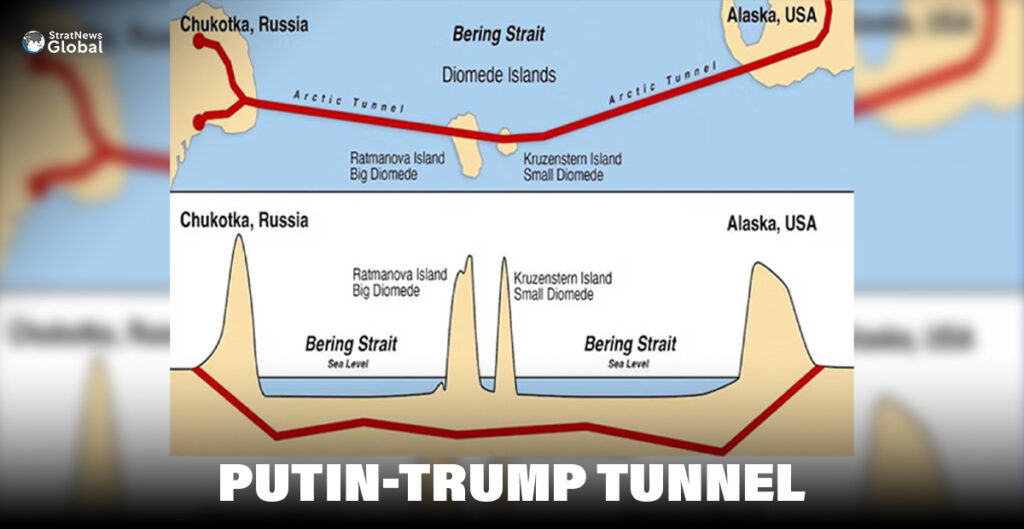
A Kremlin envoy has proposed constructing a “Putin–Trump” rail tunnel beneath the Bering Strait to connect Russia and the United States, facilitate joint natural resource exploration, and serve as a symbol of unity.
The proposal by Kirill Dmitriev, President Vladimir Putin’s investment envoy and head of Russia’s RDIF sovereign wealth fund, envisages a construction project costing $8 billion, funded by Moscow and “international partners”, to build a 70-mile (112-km) rail and cargo link in under eight years.
Dmitriev, who has helped spearhead a Russian charm offensive designed to revive U.S.-Russia ties, floated the idea late on Thursday after Putin spoke to U.S. President Donald Trump by phone and agreed to meet in Budapest to seek a way to stop the war in Ukraine.
Asked about the idea on Friday by a reporter during a meeting in Washington with Ukrainian President Volodymyr Zelenskyy, Trump called the idea “interesting” and asked Zelenskyy what he made of it.
“I’m not happy with this idea,” the Ukrainian leader said, prompting laughter from the U.S. side.
Musk’s ‘The Boring Company’ Proposed As Contractor
“The dream of a US–Russia link via the Bering Strait reflects an enduring vision — from the 1904 Siberia–Alaska railway to Russia’s 2007 plan. RDIF has studied existing proposals, including the US–Canada–Russia–China railroad, and will support the most viable,” Dmitriev wrote on X.
The Bering Strait, 51 miles (82 km) wide at its narrowest point, separates Russia’s vast and sparsely populated Chukotka region from Alaska. Ideas to link them have been around for at least 150 years. The small Diomede islands, one Russian and one belonging to the U.S., sit in the middle of the strait, only 2.4 miles (4 km) apart.
Dmitriev, who has struck up a working relationship with Steve Witkoff, Trump’s special envoy, suggested U.S. energy majors could join Russian projects in the Arctic, and proposed that the tunnel be built by The Boring Company, a U.S. tunnel construction company owned by U.S. billionaire and sometime Trump ally Elon Musk.
“Imagine connecting the US and Russia, the Americas and the Afro-Eurasia with the Putin-Trump Tunnel – a 70-mile link symbolising unity. Traditional costs are $65B+, but @boringcompany’s tech could reduce it to <$8B. Let’s build a future together,” Dmitriev wrote to Musk on X.
There was no immediate public response from Musk.
Beyond the tunnel itself, it would cost a huge sum to build and upgrade infrastructure on both sides of the strait. Chukotka’s existing roads and railways are sparse, at best.
Dmitriev said a plan for a “Kennedy-Khrushchev World Peace Bridge” over the strait had been floated during the Cold War. He posted a sketch from that era of the route it might have taken, with a graphic showing the route the new tunnel could take.
“RDIF has already invested in and built the first-ever Russia-China railroad bridge. The time has come to do more and connect the Continents for the first time in human history. The time has come to connect Russia and the US,” Dmitriev said.
(With inputs from Reuters)
Putin’s Visit To Budapest Poses Diplomatic Dilemma For EU, NATO
When Russia’s Vladimir Putin lands in Hungary — an EU and NATO member — for a summit with Donald Trump, it will present an uneasy sight for Ukraine’s allies, who have tried to isolate a leader they accuse of war crimes.
The U.S. President said on Thursday he may meet his Russian counterpart in Budapest within two weeks, adopting a more conciliatory tone towards Russia, just as it had looked like Washington could send Tomahawk missiles to Kyiv.
The choice of a country that is part of groupings that have spearheaded international efforts to help Ukraine and isolate Russia for the summit raised eyebrows among diplomats and analysts as much as the plan itself.
It was there that, in 1994, the United States, Britain and Russia signed the Budapest Memorandum, providing Ukraine with security assurances in exchange for Kyiv giving up its nuclear weapons. The signatories of that memorandum pledged to respect Ukraine’s territorial integrity – a pledge blown apart by Russia’s all-out invasion of its neighbour in 2022.
“It is awkward for both the EU and NATO,” said a senior Western European official. “Timing is everything: the Tomahawk threat is growing, and all of a sudden, Putin wants to meet. But if Trump can pull something off, he should do it.”
Orban On Good Terms With Russia
Hungarian Prime Minister Viktor Orban has maintained warm relations with Moscow, adding to the bete noire status he had already gained in Brussels after years of conflict over what the EU says is democratic backsliding in Budapest.
Putin is wanted under an arrest warrant from the International Criminal Court on charges of illegally deporting children from Ukraine, but few observers expect this to be a problem for him in Budapest.
Orban announced in April during a visit by Israeli leader Benjamin Netanyahu, who has an ICC warrant for his arrest on charges of war crimes in Gaza, that Hungary would withdraw from the court.
The process has not yet been completed, meaning that technically Putin should be arrested if he visits Budapest, although, as a senior diplomat from an EU country told Reuters, “nobody will be surprised if the Hungarians don’t arrest Putin”.
Hungarian Foreign Minister Peter Szijjarto said on Friday that Hungary will ensure Putin can enter the country for the summit and return home afterwards.
Symbolic Blow To EU
Botond Feledy, a geopolitical analyst at Red Snow Consulting, said the choice of Budapest for the meeting meant Putin could “hit several birds with one stone”.
“On the one hand, he will be holding talks on the Ukraine war in an EU country without EU leaders attending,” he said.
“For Putin, this is a much stronger blow to the stomach for Europe symbolically on several levels compared with this meeting being held in Turkey or elsewhere.”
Feledy also noted that the meeting would exclude Ukrainian President Volodymyr Zelenskyy for a second time after the Trump-Putin summit in Alaska and potentially add to bad blood between Budapest and Kyiv.
Ukraine’s relationship with Hungary has grown increasingly tense. Zelenskyy said Hungarian drones had crossed into Ukraine last month, prompting Orban to retort that Ukraine was not a sovereign state.
Tough Elections Ahead
Orban is one of the most high-profile international backers of Trump’s MAGA movement, lauded by MAGA devotees for his uncompromising approach to immigration and LGBTQ+ rights, and his focus on conservative Christian values.
Trump said on Tuesday that Orban was “fantastic” and “a great leader”, despite his failure to heed U.S. calls to stop buying Russian oil.
European officials expect the Hungarian leader to play up his mediator role ahead of elections next year, in which opinion polls show his Fidesz party trailing centre-right rivals Tisza.
“The Hungarian side will definitely try to present its role as an important one, bridging the gap between the two significantly different sides,” said Marcin Przydacz, foreign policy adviser to the Polish president.
Analysts say that domestic issues will determine the outcome of the elections, but the summit could help Orban bolster his argument that his links with Russia are needed to end the war.
“If there is an agreement, that will legitimise his narrative about peace retrospectively,” said Zoltan Novak, an analyst at the Centre for Fair Political Analysis.
(With inputs from Reuters)
Bangladesh Parties Endorse Reform Charter, But Student And Leftist Groups Boycott
Bangladesh’s sweeping “July Charter” for state reform, formulated in the wake of last year’s deadly student uprising, gained support from most political parties on Friday, but its signing ceremony was overshadowed by street clashes and the absence of a key group that refused to participate.
The charter seeks to reshape the country’s politics and institutions and give constitutional recognition to the 2024 uprising that forced Sheikh Hasina, a long-time prime minister, to flee to India.
Nobel Peace laureate Muhammad Yunus, the head of Bangladesh’s interim government, said the signing of the charter marked a major step toward restoring political order and preparing for national elections scheduled for February 2026.
“It’s the birth of a new Bangladesh,” Yunus said at the ceremony.
Boycotts And Tear Gas
The National Citizens Party, formed by the leaders of last year’s movement and four left-leaning parties, did not attend, however. The NCP said it stayed away due to the lack of a legal framework or binding guarantee for implementing the commitments made in the charter.
“The signing of the July Charter by a few political parties does not constitute national unity,” NCP convener Nahid Islam said.
The day’s events were earlier marred by clashes outside the venue, where families of those killed and injured during the 2024 uprising were staging a protest.
Police used batons, tear gas, and stun grenades to disperse the demonstrators, leaving several injured, witnesses said.
The National Consensus Commission announced a last-minute amendment to the charter on Friday, describing it as an “urgent revision” made in response to the demands of those who took part in the 2024 uprising.
The updated clause pledged justice for victims of disappearances, killings and torture during the rule of Hasina’s Awami League, and also for those killed and injured during the July-August 2024 uprising.
Among those signing the document on Friday were members of former Prime Minister Khaleda Zia’s Bangladesh Nationalist Party, the Islamist Jamaat-e-Islami party and several centrist and regional groups that have expressed support for the reform process.
(With inputs from Reuters)
Trump Signals Pause On Fresh Support During Talks With Zelenskyy
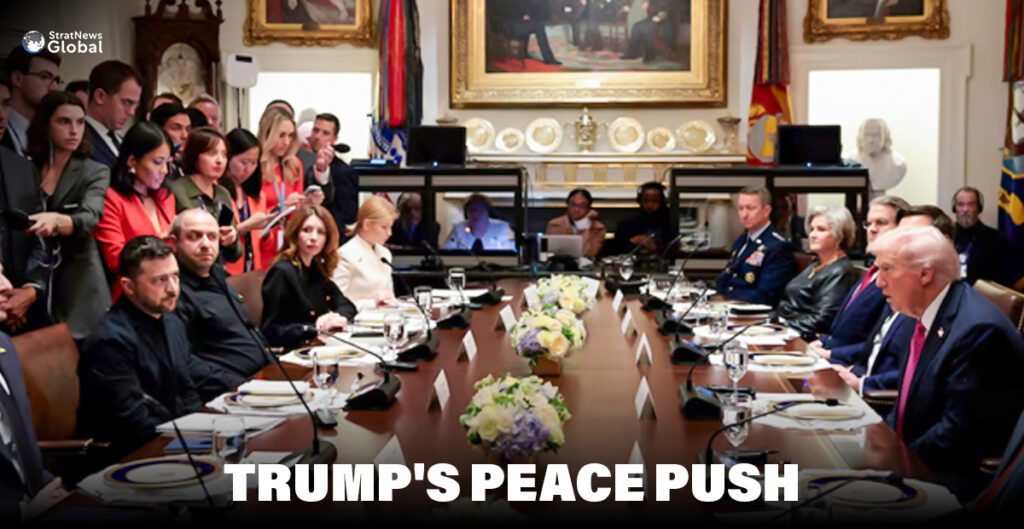
Ukrainian President Volodymyr Zelenskyy visited the White House on Friday seeking more weapons to continue the war against Russia, but was met by a U.S. president seemingly more focused on negotiating peace than strengthening Ukraine’s military arsenal.
While U.S. President Donald Trump did not rule out providing the long-range Tomahawk missiles Zelenskyy seeks, Trump appeared cool to the prospect as he looked ahead to a meeting with Russian President Vladimir Putin in Hungary in the coming weeks.
After speaking with Zelenskyy for more than two hours, Trump implored both Ukraine and Russia to “stop the war immediately,” even if it means Ukraine conceding territory.
“You stop at the battle line, and both sides should go home, go to their families,” Trump told reporters on his way to his home in West Palm Beach, Florida. “Stop the killing. And that should be it. Stop right now at the battle line. I told that to President Zelenskyy. I told it to President Putin.”
Trump’s move to re-engage with Putin, a strategy that has frustrated Zelenskyy and some European allies in the past, cast a shadow on the U.S. president’s otherwise cordial exchange with his Ukrainian counterpart as they spoke with reporters ahead of a private lunch.
The two leaders then went behind closed doors, where they also discussed a call the previous day between the Russian president and Trump, who has portrayed himself as a mediator between the warring forces despite the fact that Russia invaded Ukraine in 2022.
‘Get Along A Little’
“I think President Zelenskyy wants it done, and I think President Putin wants it done. Now all they have to do is get along a little bit,” Trump told reporters.
Zelenskyy, however, noted how difficult it has been to try to secure a ceasefire. “We want this. Putin doesn’t want (it),” he said.
The Ukrainian leader was frank, telling Trump that Ukraine has thousands of drones ready for an offensive against Russian targets, but needs American missiles.
“We don’t have Tomahawks, that’s why we need Tomahawks,” he said.
Trump responded: “We’d much rather have them not need Tomahawks.”
Later, Trump reiterated that he wants the United States to hold onto its weaponry. “We want Tomahawks also. We don’t want to be giving away things that we need to protect our country,” he said.
After the meeting, which Zelenskyy described as productive, he told reporters he did not want to talk about long-range missiles, saying the U.S. did not want escalation, and that he was “realistic” about his chance of getting them.
The Ukrainian president, who spoke by phone with European leaders after the meeting, said he was counting on Trump to pressure Putin “to stop this war.”
When asked about Trump’s comments, Zelenskyy said: “President (Trump) is right, and we have to stop where we are. This is important, to stop where we are, and then to speak.”
Back To The Table
It was unclear what Putin had told Trump that prompted him to agree to the upcoming meeting. Their August summit in Alaska ended early with no major breakthrough.
The Kremlin said much needed to be decided and that the summit might take place “a little later” than within the two-week period mentioned by Trump.
Trump’s conciliatory tone after the call with Putin raised questions over the near-term likelihood of assistance to Ukraine and reignited European fears of a deal that suits Russia. A spokesperson for the European Union said it welcomed the talks if they could help bring peace to Ukraine.
Trump was asked on Friday whether he was concerned Putin might be “playing” him for time by agreeing to talks.
“You know, I’ve been played all my life by the best of them, and I came out really well, so it’s possible,” Trump replied.
Michael Carpenter, a former U.S. official who is now a senior fellow at the International Institute for Strategic Studies, said the meeting with Trump was not what Zelenskyy had been hoping for but was in line with the administration’s approach to the war.
“The underlying reality is that there is no inclination to impose costs on Russia,” he said.
The president expressed affection for Zelenskyy, at one point praising him for wearing what Trump called a “very stylish” dark suit jacket after he was knocked earlier this year for visiting the White House without one.
“He looks beautiful in his jacket,” Trump said. “I hope people notice.”
War Gas Intensified
Trump, who has campaigned for the Nobel Peace Prize, is eager to add to the list of conflicts he says he has been instrumental in ending.
More than 3-1/2 years after its full-scale invasion of Ukraine, Russia has made some territorial gains this year, but Ukraine’s top military commander, Oleksandr Syrskyi, said on Thursday that the Russian offensive had failed.
Putin, this month, said his forces had taken almost 5,000 square kilometres (1,930 square miles) of land in Ukraine in 2025, equivalent to adding 1% of Ukraine’s territory to the nearly 20% already held.
Both sides have also escalated attacks on each other’s energy systems, and Russian drones and jets have strayed into NATO countries.
(With inputs from Reuters)
Brazil Offers India Oil Exploration Blocks, Pushes For Direct Air Links
Brazil’s Vice-President Geraldo Alckmin has confirmed that President Lula will visit India in February 2026, following Prime Minister Modi’s visit to Brazil in July 2025.
He was hopeful of a direct air route between India and Brasília, calling it a shared goal.
“Connectivity must follow trade,” he said during a media interaction in Delhi. “A direct flight is something we are discussing seriously.”
Oil Cooperation, Energy
Brazil has invited Indian companies to participate in upcoming oil exploration block auctions, Vice President Geraldo Alckmin confirmed during a media interaction in New Delhi.
The invitation is part of a broader effort to deepen cooperation with India in energy security, trade, healthcare, agriculture, and investment.
Sharing key deliverables from his three-day official visit, Alckmin said that Brazil’s National Petroleum Agency will release six oil exploration blocks in the Campos and Santos basins next year, and up to 18 additional blocks may be made available.
“We have invited Indian oil companies to participate in these auctions,” he said.
He also confirmed that Petrobras has signed a contract to supply six million barrels of crude oil to India, and that Brazil continues to import diesel from Indian refiners.
“This is a two-way partnership. We sell oil to India, and we buy refined fuel from India,” Alckmin noted.
A top diplomat later told StratNewsGlobal that “Brazil’s exports of crude to India on the first three quarters of 2025 exceeded $1.13 billion, which represents an increase of 35.5% compared to same period of 2024.”
Alckmin confirmed that both countries, along with the US, are discussing joint efforts under the Global Biofuels Alliance to scale up production of Sustainable Aviation Fuel.
Trade, MERCOSUR
The Vice President noted that bilateral trade is expected to reach $15 billion by the end of 2025, compared to $12 billion in 2024.
“Our goal is to reach $20 billion as soon as possible,” he said.
Alckmin announced that India and Brazil have reached an understanding to expand preferential tariff lines under the India-MERCOSUR trade framework, and that technical negotiations will aim to conclude within 10 months.
“The current agreement covers a small number of products. Expanding it will increase economic complementarity,” he explained.
He also highlighted MERCOSUR’s ongoing negotiations with partners including Singapore, EFTA, Canada, the European Union, and the United Arab Emirates, noting that Bolivia has now joined MERCOSUR as its fifth full member.
Investment Facilitation, E Visas
Alckmin confirmed the signing of two new deals: an Investment Facilitation Agreement to support bilateral business growth; and a Double Taxation Avoidance Agreement to enhance legal and financial certainty for investors.
“These agreements give legal security to businesses from both sides,” he said.
He also announced that starting next week, electronic business visas will be issued by the Brazilian Embassy in New Delhi and the Consulate in Mumbai.
“This will make business travel much easier for Indian professionals and consultants,” he said.
Agriculture, Food Security
Responding to a question on food security, Alckmin pointed out that Brazil’s agriculture sector grew by 16% this year, and that there is strong complementarity with India in areas like fertilizer trade and agribusiness innovation.
“India is the largest food producer. We import large amounts of fertilizer and have deep expertise in agri-business. Our economies do not compete, they complement each other,” he said. He also noted that 80% of Brazil’s cattle herd is of Indian origin.
Healthcare, Pharma
Brazil is looking to deepen its engagement with India’s pharmaceutical industry to support its universal healthcare system.
“There is great interest in Indian drug products,” he said, and confirmed an agreement between Fiocruz (Brazil) and Biological E (India) for vaccine co-development and technology transfer.
BRICS, Strategic Alignment
On global trade tensions and BRICS positioning, Alckmin clarified: “BRICS is not against anyone. It is in favour of multilateralism and free trade.”
He also said both Brazil and India are large democracies with shared values, and added that amid changing global trade dynamics, India and Brazil can serve as reliable partners for each other, especially in agriculture, technology, and industrial growth.
Thailand Delays ASEAN Power Deal Renewal
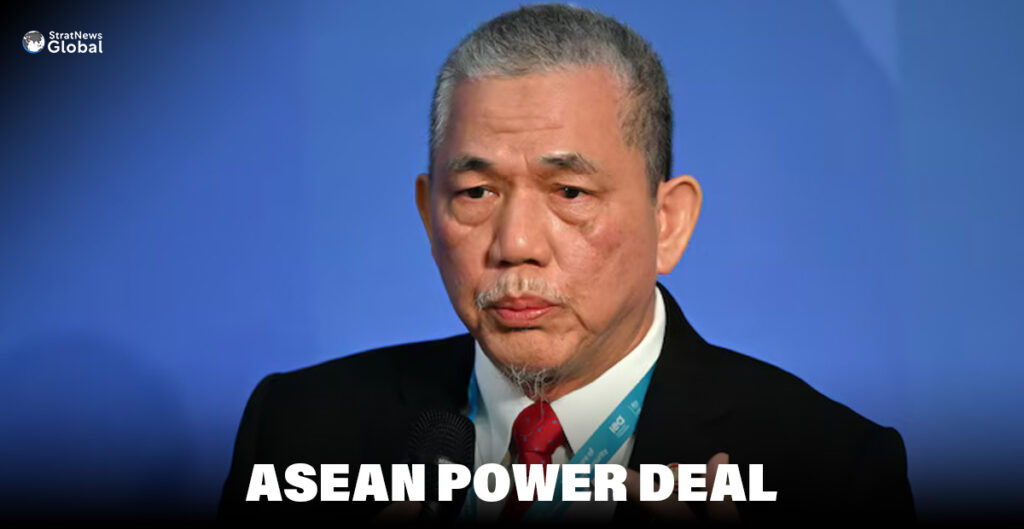
Citing ongoing political changes in Thailand, Malaysia’s energy minister said on Friday that Bangkok has postponed renewing a regional Southeast Asian power trade agreement.
The Lao PDR-Thailand-Malaysia-Singapore (LTMS) Project to supply hydropower from Laos via Thailand and neighbouring Malaysia is now expected to be renewed in November, Energy Transition and Water Transformation Minister Fadillah Yusof told Reuters.
Thailand’s Prime Minister Paetongtarn Shinawatra was removed by the Constitutional Court in August, with Anutin Charnvirakul appointed the following month.
Malaysia is currently the chair of Association of Southeast Asian Nations (ASEAN) and Fadillah spoke to Reuters on the sidelines of the bloc’s meeting of energy ministers on Friday.
‘Not Put On Hold’
“It’s not put on hold, but because of the political changes in the (Thai) government…that’s why there’s a bit of a delay on Thailand’s side,” Fadillah said.
“November will be the signing and so the second phase of LTMS will be working after November, hopefully after they have signed that,” he said, adding that Malaysia is already committed to it.
The Thai energy ministry did not immediately respond to a request for comment outside of business hours.
The LTMS project is a precursor to the broader ASEAN Power Grid (APG) initiative, which aims to interconnect all its ten member states and is widely seen as one of the main ways to cut Southeast Asia’s growing reliance on fossil fuels for power generation.
“APG is the backbone of ASEAN. If we want to be one of the economic powerhouses in the world, we need energy,” he said.
Significant progress is also being made on the Borneo Power Grid, Fadillah added.
“By the end of this year, Sabah will be connected with Sarawak,” he said, adding that West Kalimantan is already purchasing power from Sarawak, while Brunei’s connection is currently underway. The Philippines will also eventually join.
Reduced Reliance On Coal
Malaysia is also reducing its reliance on coal and increasing renewable energy capacity, Fadillah said.
The country’s power demand is forecast to rise 10% and 8%, respectively, in 2026 and 2027, driven by data centres and high demand industries, he added.
Separately, Laos’ deputy energy minister told Reuters that the country is considering halting electricity supply to cryptocurrency miners, as it seeks to redirect domestic power to industries that contribute more to economic growth.
(With inputs from Reuters)
Bessent Plans Meeting With Chinese Vice Premier To Ease Tariff Tensions
U.S. Treasury Secretary Scott Bessent said on Friday that he plans to meet Chinese Vice Premier He Lifeng in Malaysia next week in an effort to ease tensions over planned U.S. tariff increases on Chinese imports — a situation President Donald Trump has described as untenable.
Bessent made the announcement during a White House cabinet meeting and later confirmed plans for a meeting after a call with He on Friday evening.
Bessent said on X the two officials “engaged in frank and detailed discussions regarding trade between the United States and China.”
“We will meet in-person next week to continue our discussions,” Bessent wrote.
Discussion On Bilateral Relations
China state news agency Xinhua reported that He and Bessent had “candid, in-depth, and constructive discussions on major issues in bilateral economic and trade relations” in a video call, and agreed to a new round of trade talks as soon as possible.
The two officials previously met in four European cities over six months to hammer out a tariff truce that brought duties down from triple-digit levels for each country. That agreement expires on November 10.
A meeting in Malaysia would shift the venue to a Southeast Asian exporter that trades heavily with both China and the U.S. and whose goods are now subject to a 19% duty imposed by Trump.
Malaysia also faces a threatened 100% U.S. tariff on its semiconductors and derivative electronics devices under a national security trade review.
Trump’s 100% Tariff Threat
Trump earlier on Friday blamed Beijing for the latest impasse, a dispute over China’s sweeping new export restrictions on rare-earth minerals and magnets. He has threatened an additional 100% tariff on Chinese imports starting on November 1 unless Beijing scraps the restrictions.
Asked whether such a high tariff was sustainable and what that might do to the U.S. economy, Trump replied: “It’s not sustainable, but that’s what the number is.”
“They forced me to do that,” he said in an interview with Fox Business Network that was broadcast on Friday.
Trump also has threatened to impose new U.S. export controls that would halt supplies of “any and all critical software.”
The new trade actions were Trump’s reaction to China dramatically expanding its export controls on rare-earth elements. China dominates the market for such elements, which are essential to tech manufacturing.
Bessent and U.S. Trade Representative Jamieson Greer on Wednesday blasted the restrictions as a threat to global supply chains.
Trump To Meet Xi
Trump also confirmed he would meet with Chinese President Xi Jinping in two weeks in South Korea and expressed admiration for the Chinese leader.
“I think we’re going to be fine with China, but we have to have a fair deal. It’s got to be fair,” Trump said on FBN’s “Mornings with Maria,” which was taped on Thursday.
Later, as he was preparing to have lunch at the White House with Ukrainian President Volodymyr Zelenskyy to discuss efforts to end its war with Russia, Trump said: “China wants to talk, and we like talking to China.”
The softening in tone and affirmation of his intent to meet with Xi helped stem Wall Street’s early losses on Friday. Major U.S. stock indexes, which have been rattled over the last week by Trump’s abrupt re-imposition of steep levies on Chinese imports and by credit worries among regional banks, were up in afternoon trading.
WTO Urges De-Escalation Of Trade Tensions
The head of the World Trade Organization urged the U.S. and China to de-escalate trade tensions, warning that a decoupling by the world’s two largest economies could reduce global economic output by 7% over the longer term.
WTO Director-General Ngozi Okonjo-Iweala said in an interview the global trade body was extremely concerned about the latest spike in U.S.-China trade tensions and had spoken with officials from both countries to encourage more dialogue.
But tensions continued to run high, even as Trump and Xi prepared to meet.
Bessent took aim at China’s state-driven economic practices in a statement to the IMF’s steering committee on Friday, urging the IMF and World Bank to take a tougher stance on China’s external and internal imbalances and industrial policies that U.S. officials say have helped China build up excess manufacturing capacity that is flooding the world with cheap goods.
And China’s Commerce Ministry on Friday accused the U.S. of undermining the rules-based multilateral trading system since the Trump administration took office in 2025, vowing to intensify its use of dispute settlement actions at the WTO.
It also urged the U.S. to roll back measures that breach non-discrimination rules and align its industrial and security policies with WTO obligations.
Bessent earlier in the week had accused one of He’s top aides of being “unhinged” in recent interactions with U.S. trade negotiators. China said on Friday that Bessent’s remarks “seriously distort the facts.”
(With inputs from Reuters)
Court Orders Immigration Officers In Chicago To Wear Body Cameras
A federal judge in Chicago on Friday directed immigration enforcement officers to begin wearing body cameras during operations in the city, expressing concern that agents involved in the Trump administration’s immigration crackdown had failed to follow an earlier ruling regulating their conduct toward protesters.
U.S. District Judge Sara Ellis said federal officers trained and equipped with body-worn cameras must turn them on while conducting immigration enforcement activity, including during interactions with the public.
The new measure follows her earlier temporary restraining order requiring federal immigration officers to give warnings before using anti-riot weapons like tear gas and to wear visible identification.
Ellis also said she wants representatives from federal immigration agencies to appear at a hearing on Monday to answer her questions about how her order – in effect until November 6 – is being implemented.
At a hearing earlier on Thursday, the judge questioned U.S. Department of Justice attorneys about several incidents in Chicago in which she said federal immigration agents deployed tear gas without warning protesters and journalists nearby as required under an earlier order.
Widespread Protests
President Donald Trump’s ongoing “Operation Midway Blitz” deportation drive in Chicago has spurred mass arrests across the city and sparked widespread protests.
In response to the protests, Trump sent hundreds of National Guard troops to Illinois to quell what his administration called unprecedented violence against federal law enforcement.
Protesters, journalists, and clergy sued Trump, Attorney General Pam Bondi, Homeland Security Secretary Kristi Noem and other federal officials earlier this month, alleging they were deliberately targeted and brutalized during demonstrations. The lawsuit seeks a court order declaring the administration’s conduct unconstitutional.
The lawsuit also seeks a court order preventing law enforcement officers from threatening arrest or using riot-control weapons – such as tear gas or rubber bullets – against individuals who do not pose a threat, or unless proper warnings are given.
Ellis entered a 14-day temporary restraining order on October 9, agreeing that the groups had put forward evidence that federal law enforcement had retaliated against them.
The order barred federal law enforcement from using force or riot-control weapons against journalists, protesters and clergy unless they pose a threat and required the officers to wear visible identification.
Federal agents have deployed tear gas and pepper balls against residents in several high-profile incidents in the Chicago area in recent weeks, as well as firing their weapons in one incident in September that left a Mexican national dead.
State and city officials are challenging the Trump administration in court over the deployment of National Guard troops in Illinois.
In response to a lawsuit brought by Illinois Attorney General Kwame Raoul, another U.S. judge has entered a temporary restraining order barring the deployment of the troops that was bolstered by an appeals court on Thursday.
(With inputs from Reuters)
3 Afghan Cricketers Among 8 Killed In Pakistani Airstrike
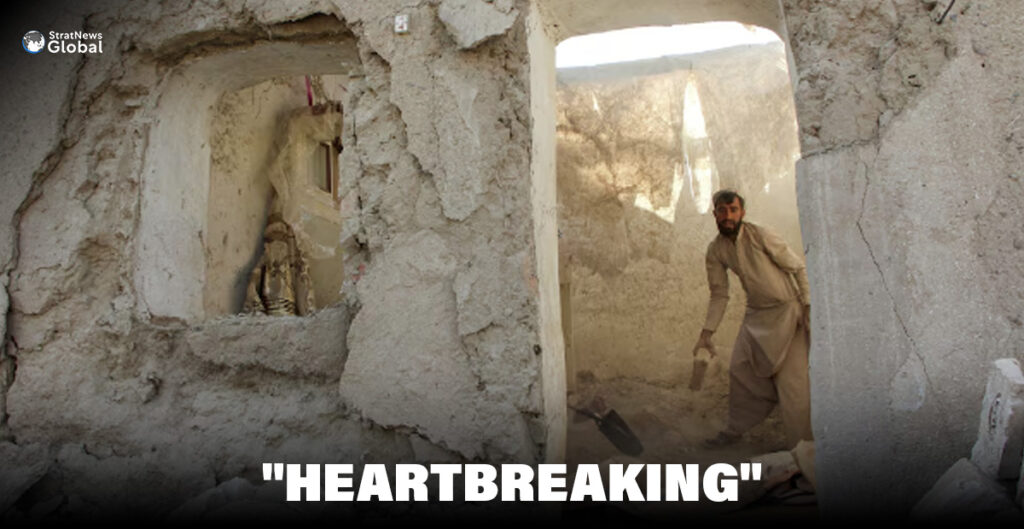
At least eight people, including three Afghan cricketers, were reportedly killed in Pakistani airstrikes in Afghanistan’s eastern Paktika province.
According to the Afghanistan Cricket Board (ACB), the players — identified as Kabeer, Sibghatullah, and Haroon — had travelled from Urgun to Sharana, near the Pakistan border, to participate in a friendly match.
The ACB stated that the players were targeted “after returning home to Urgun” during a local gathering, describing the incident as “a cowardly attack carried out by the Pakistani regime.” In addition to the three cricketers, five other civilians also lost their lives. The Board did not provide further details about the strike.
In response to the attack, Afghanistan announced its withdrawal from a tri-nation cricket series with Pakistan and Sri Lanka scheduled for next month, calling it a “gesture of respect to the victims.”
“The Afghanistan Cricket Board expresses its deepest sorrow and grief over the tragic martyrdom of the brave cricketers from Urgun District in Paktika Province, who were targeted this evening in a cowardly attack carried out by the Pakistani regime,” the ACB said in a post on X.
Cricketers Express Outrage
Afghanistan’s T20 captain Rashid Khan condemned the airstrikes, mourning the loss of innocent lives and voicing support for the ACB’s decision to withdraw from the upcoming fixtures.
“I am deeply saddened by the loss of civilian lives in the recent Pakistani aerial strikes on Afghanistan — a tragedy that claimed the lives of women, children, and young cricketers who dreamed of representing their nation,” Khan wrote on X.
He described the attack as “immoral and barbaric,” saying that targeting civilians was “a grave violation of human rights that must not go unnoticed.”
“In light of the innocent lives lost, I welcome the ACB’s decision to withdraw from matches against Pakistan. Our national dignity must always come first,” he added.
Another Afghan international, Mohammad Nabi, called the strike “a national tragedy,” saying it was not only a loss for Paktika but for the entire Afghan cricket community.
Similarly, pacer Fazalhaq Farooqi denounced the killings on Facebook, writing, “The massacre of innocent civilians and our domestic cricket players by these oppressors is a heinous and unforgivable crime.”
Border Tensions Escalate
According to reports from Afghan media, Pakistan carried out multiple airstrikes in Paktika province on Friday, allegedly breaching a fragile ceasefire agreement between the two nations.
Tolo News, citing local sources, reported that the strikes targeted residential areas in Urgun and Barmal districts, resulting in numerous civilian casualties.
The attack occurred despite a 48-hour ceasefire that had been brokered to ease tensions following a series of deadly cross-border clashes.
Earlier, Pakistan had proposed extending the truce until the conclusion of the ongoing Doha negotiations, aimed at reducing hostilities and addressing border disputes. Kabul reportedly agreed to the extension, with formal talks between the two sides expected to begin on Saturday.
(With inputs from IBNS)