

Support us by contributing to StratNewsGlobal on the following UPI ID
ultramodern@hdfcbank

Strategic affairs is our game, South Asia and beyond our playground. Put together by an experienced team led by Nitin A. Gokhale. Our focus is on strategic affairs, foreign policy and international relations, with higher quality reportage, analysis and commentary with new tie-ups across the South Asian region.
You can support our endeavours. Visit us at www.stratnewsglobal.com and follow us on YouTube, Twitter, Facebook and Instagram.
र 500 per month
र 1000 per month
र 5000 per year
र 10000 per year
Donate an amount of your choice
र 500 per month
Donate र 500 per month

र 1000 per month
Donate र 1000 per month
र 5000 per year
Donate र 5,000 per year
र 10000 per year
Donate र 10,000 per year
Donate an amount of your choice
Donate an amount of your choice
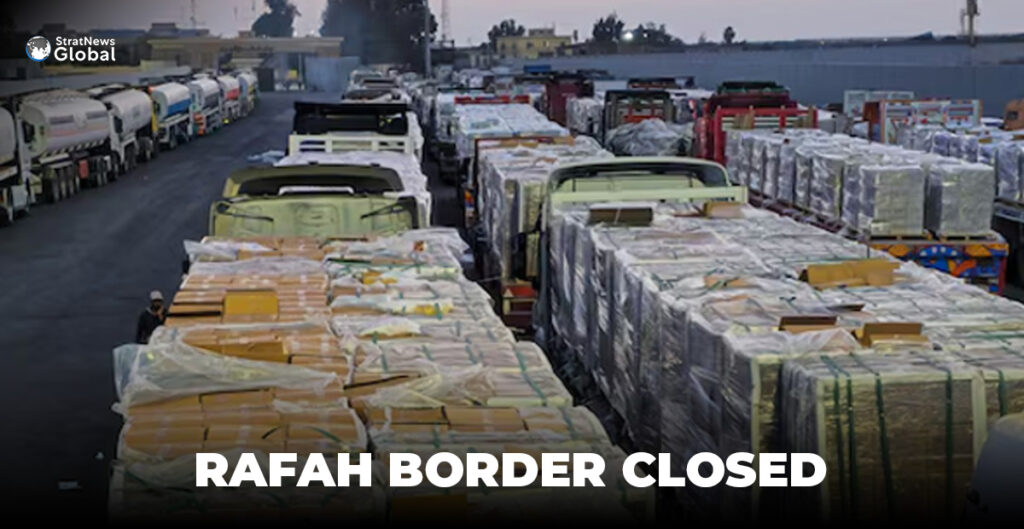

Israel Keeps Rafah Border Closed, Blames Hamas For Ceasefire Violations
Israel will keep the Rafah border crossing closed, Prime Minister Benjamin Netanyahu said Saturday, adding it will reopen only after Hamas returns the bodies of hostages, as both sides exchanged accusations of violating the ceasefire.
Netanyahu’s statement came shortly after the Palestinian embassy in Egypt announced that the Rafah crossing, the main gateway for Gazans to leave and enter the enclave, would reopen on Monday for entry into Gaza.
Netanyahu’s government and Hamas have been trading blame over violations of the U.S.-mediated ceasefire for days.
Late on Saturday in Washington, the State Department said it had received “credible reports indicating an imminent ceasefire violation by Hamas against the people of Gaza.”
The State Department said the planned attack against Palestinian civilians would be a “direct and grave violation of the ceasefire agreement”.
“Should Hamas proceed with this attack, measures will be taken to protect the people of Gaza and preserve the integrity of the ceasefire,” the department said in a statement, without providing further details.
Hamas denied on Sunday accusations of an “imminent attack” or a “violation” of the ceasefire.
It accused Israeli authorities of forming, arming and funding “criminal gangs” that carried out murders, kidnappings and aided looting.
The Palestinian militant group said police forces in Gaza were performing their duty by pursuing those gangs to hold them accountable.
“The movement calls on the U.S. administration to stop repeating the occupation’s misleading narrative,” it added.
Trump had said he would consider allowing Israeli forces to resume fighting in Gaza if Hamas fails to uphold its end of the ceasefire deal that he brokered.
The militant group has launched a security crackdown in urban areas vacated by Israeli forces, demonstrating its power through public executions and clashes with local armed clans.
Dispute Over Aid, Return Of Bodies
Hamas, in a statement late on Saturday, said Netanyahu’s decision “constitutes a blatant violation of the ceasefire agreement and a repudiation of the commitments he made to the mediators and guarantor parties.”
It also said the continued closure of the Rafah crossing would prevent the entry of equipment needed to search for and locate more hostage bodies under the rubble and would thus delay the recovery and handover of the remains.
Israel said it received two more bodies late on Saturday, meaning 12 out of 28 bodies have been handed over under a U.S.-brokered ceasefire and hostage deal agreed upon between Israel and Hamas last week.
The war has caused a humanitarian catastrophe in Gaza, with nearly all inhabitants driven from their homes, a global hunger monitor confirming famine and health authorities overwhelmed.
The dispute over the return of bodies and shipments of life-saving humanitarian aid underlines the fragility of the ceasefire and still has the potential to upset the deal, along with other major issues that are included in U.S. President Donald Trump’s 20-point plan to end the war.
As part of the deal, Hamas released all 20 living Israeli hostages it had been holding for two years in return for almost 2,000 Palestinian detainees and convicted prisoners jailed in Israel.
Formidable Obstacles To Peace
But Israel says that Hamas has been too slow to hand over the bodies of deceased hostages it still holds. The militant group says that locating some of the bodies amid the vast destruction in Gaza will take time.
The deal requires Israel to return 360 bodies of Palestinian militants for the deceased Israeli hostages, and so far it has handed over 15 bodies in return for each Israeli body it has received.
Rafah has largely been shut since May 2024. The ceasefire deal also includes the ramping up of aid into the enclave, where hundreds of thousands of people were determined in August to be affected by famine, according to the IPC global hunger monitor.
After cutting off all supplies for 11 weeks in March, Israel increased aid into Gaza in July, scaling it up further since the ceasefire.
Around 560 metric tonnes of food had entered Gaza per day on average since the U.S.-brokered truce, but this was still well below the scale of need, according to the U.N. World Food Programme.
Formidable obstacles to Trump’s plan to end the war still remain. Key questions of the Hamas disarming, the governance of Gaza, the make-up of an international “stabilisation force”, and moves towards the creation of a Palestinian state have yet to be resolved.
(With inputs from Reuters)
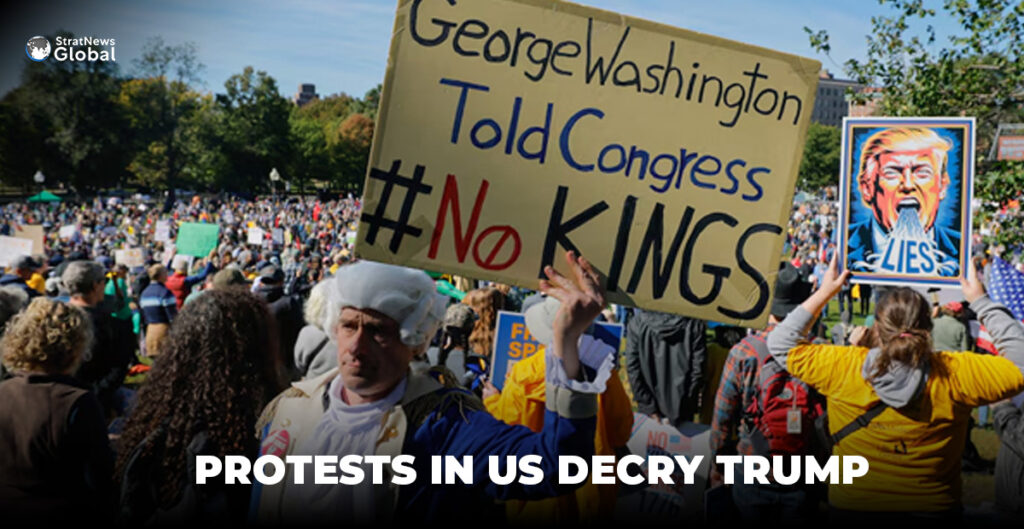
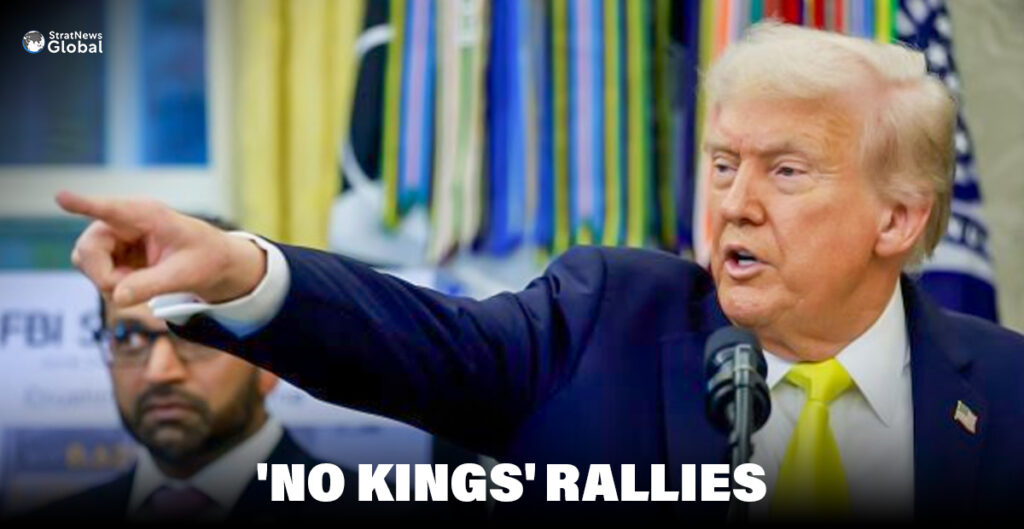
‘No Kings’ Protests Draw Thousands Across U.S. To Denounce Trump
Thousands joined ‘No Kings’ protests across the U.S. on Saturday, denouncing what they described as President Donald Trump’s authoritarian tendencies and corruption, as demonstrators marched in several major cities.
Organisers expected millions of people to turn out by day’s end at more than 2,600 planned rallies in major cities, small towns, and suburbs, challenging a Trump-led agenda that has reshaped the government and upended democratic norms with unprecedented speed since he took office in January.
By all accounts, the demonstrations were largely festive, often featuring inflatable characters and marchers dressed in costumes. The demographically mixed crowds included parents pushing youngsters in strollers alongside retirees and people with pets in tow.
Little, if any, lawlessness was reported.
Disillusioned With Trump
“There is nothing more American than saying, ‘We don’t have kings,’ and exercising our right to peacefully protest,” said Leah Greenberg, co-founder of Indivisible, a progressive organisation that led planning of Saturday’s events.
Demonstrators filled Times Square in New York City, where police said they made “zero protest-related arrests” even as more than 100,000 people rallied peacefully across all five boroughs.
Events in Boston, Philadelphia, Atlanta, Denver, Chicago and Seattle also drew crowds that each appeared to encompass thousands, if not tens of thousands, of people.
On the West Coast, more than a dozen rallies occurred around the Los Angeles area, including the primary site downtown.
In Seattle, demonstrators filled a parade route that stretched for more than a mile from downtown through the Seattle Center plaza around the city’s landmark Space Needle. More than 25,000 protested peacefully in San Diego, police said.
The protests reflected growing unease among many Americans, mainly on the ideological left, with developments such as the criminal prosecution of Trump’s perceived political enemies, his militarised immigration crackdown and the sending of National Guard troops into U.S. cities — a move Trump has said was aimed at fighting crime and protecting immigration agents.
As his administration has tried to rapidly implement its policies, Trump has installed inexperienced loyalists throughout the ranks of his administration and sought to apply pressure on the news media, law firms and universities.
Saturday’s rallies were boisterous but orderly, with police largely keeping a low profile.
Demonstrators filled a street in Washington, D.C., to march toward the U.S. Capitol, chanting and carrying signs, U.S. flags and balloons, as a carnival-like atmosphere prevailed.
Aliston Elliot, wearing a Statue of Liberty headpiece and holding a “No Wannabe Dictators” sign, said: “We want to show our support for democracy and fighting for what is right. I’m against the overreach of power.”
In downtown Houston, U.S. Marine Corps veteran Daniel Aboyte Gamez, 30, joined a crowd that officials said numbered about 5,000 at city hall.
“I don’t understand what’s going on in this nation right now,” said Gamez, who served in Iraq, Afghanistan and Syria.
‘Former Republican’
Kevin Brice, 70, a military veteran among thousands of protesters streaming into the riverfront of Portland, Oregon, wore a black sweatshirt emblazoned with the slogan “No Kings since 1776″ – referring to the year of the Declaration of Independence.
“Everything that I thought that I stood for while I was serving in the military seems to be at risk,” Brice said. “So even though I’m a lifelong Republican, I don’t support the direction the party is going.”
Steve Klopp, 74, a Houston-based oil industry retiree, expressed similar sentiments as he wore a shirt printed with the words “Former Republican”.
“I’ve been a Republican forever,” Klopp said. “My family’s been Republican forever and ever. And the idea that one individual could have turned me away from the Republican Party is insane.”
Kelly Kinsella, 38, standing among several thousand people outside the Colorado Statehouse in Denver, was dressed as Lady Liberty with bloody tears dripping down her face.
“Everyone comes to work stressed, and it’s because of the current conditions,” said Kinsella, who said she was motivated to turn out largely because of renewed inflation that she blamed on Trump’s tariff policies.
Trump has said little about Saturday’s protests. But in an interview with Fox Business aired on Friday, he said that “they’re referring to me as a king – I’m not a king.”
While the Democratic Party has coped with internal divisions since Trump won re-election last year, party establishment figures such as Senate Minority Leader Chuck Schumer and progressive firebrands like U.S. Representative Alexandria Ocasio-Cortez both voiced support for the “No Kings” movement.
Saturday’s protests were aimed at building on momentum gained from more than 2,000 “No Kings” protests that were staged on June 14, coinciding with Trump’s 79th birthday and a rare military parade in Washington.
House Speaker Calls Protests Anti-American
House of Representatives Speaker Mike Johnson, a Republican, on Friday echoed a common refrain among his party, labelling the “No Kings” protests “the hate America rally”.
Other Republicans have accused protest organisers of stoking an atmosphere that they said might spur political violence, especially in the wake of the September assassination of right-wing activist and Trump ally Charlie Kirk.
Vice President JD Vance, speaking on Saturday to a gathering of Marines at Camp Pendleton in Southern California, made no mention of the protests.
But he criticised Democrats over the government shutdown that began early this month in a partisan standoff over federal appropriations.
Dana Fisher, an American University professor in Washington and author of several books on political activism, predicted that Saturday could see one of the largest protest turnouts in modern U.S. history.
She expected that over 3 million people would take part based on registrations and participation in the June events.
Overall turnout for the June 14 rallies was estimated at 4 million to 6 million, according to a crowd-sourcing analysis published by prominent data journalist G. Elliott Morris.
(With inputs from Reuters)
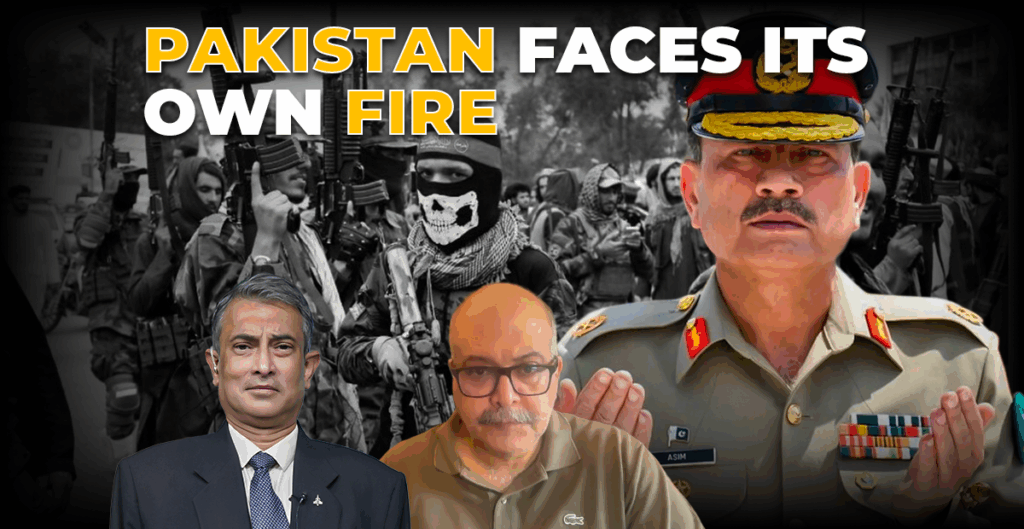
‘Divine Retribution’ For Pakistan’s Lies, Deceit And Deception
Senior Fellow at the Observer Research Foundation (ORF) and Af-Pak expert Sushant Sareen described Pakistan’s latest border clashes with Afghanistan as a crisis of its own making, calling it “divine retribution” for years of duplicity on terrorism and regional policy.
Speaking on the recent Pakistan-Afghanistan skirmishes, Sareen said the immediate trigger was “an attack inside Pakistan in which some soldiers were killed,” followed by “a couple of other attacks within 24 to 36 hours.” Nearly two dozen Pakistani security personnel were reportedly killed, he said, adding that Islamabad’s airstrikes inside Afghanistan were a “retaliation” that the Pakistani media conveniently “glossed over.”
While some have linked the bombing of Kabul to Afghan Foreign Minister Amir Khan Muttaqi’s visit to India, Sareen dismissed it as “a coincidence.” He noted that “these visits are planned weeks and months in advance,” but in Pakistan’s “disinformation sphere, this is how they positioned it.”
Sareen argued that Pakistan was now facing the same accusations it had long levelled at India. “They are blaming Afghanistan for what we have been complaining about for 30 years — terrorism emanating from across the border,” he said. “This is like divine retribution visiting Pakistan for its lies, deceit and deception.”
The veteran analyst traced the roots of the conflict to the Durand Line dispute, observing that Afghanistan never accepted the colonial-era border. “The Pakistanis thought the Taliban would sign on the dotted line,” he said. “But the Taliban and the Tehreek-e-Taliban Pakistan (TTP) are born from the same womb. The assumption that Afghan and Pakistani Taliban are different is utterly spurious.”
He criticised Islamabad’s lack of “strategic patience” and ideological confusion. “How can a country that swears by Islamist leaders like Iqbal fight the Islamists? There is no ideological clarity,” he remarked.
On US–Pakistan ties, Sareen said renewed American outreach “makes no sense in a realistic world.” He alleged that Pakistan was “selling fantasies” of vast mineral reserves and “using its old playbook of deception.”
Calling Pakistan’s current predicament a long “war of attrition,” Sareen said internal instability, political illegitimacy and religious extremism would prevent Islamabad from resolving the crisis. “They have no political stability and no ideological clarity,” he concluded. “This is a problem entirely of Pakistan’s own creation.”
For more candid insights, including why despite losing all the wars it has ever fought Pakistan seems to be winning the information battle, watch the full interview.
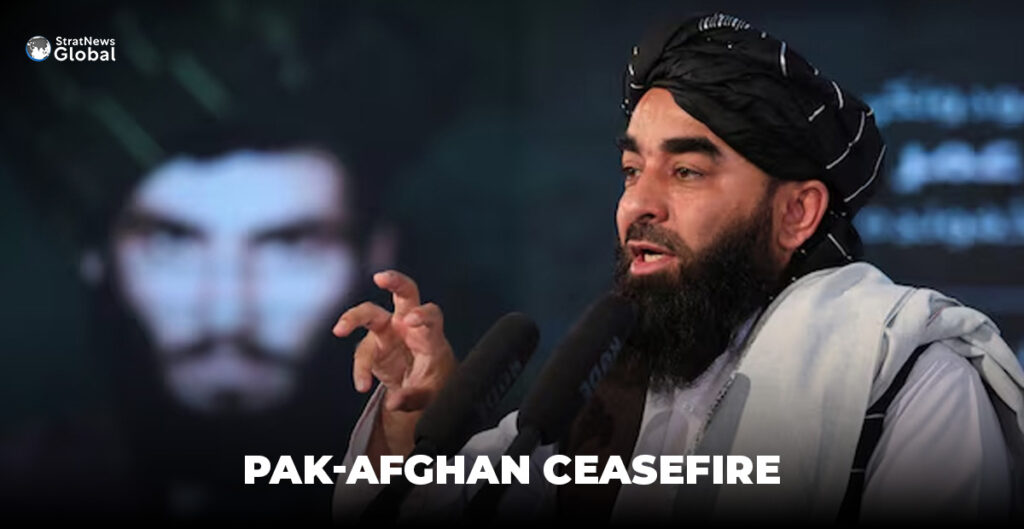
Afghanistan And Pakistan Agree To Immediate Ceasefire After Deadly Border Clashes
Afghanistan and Pakistan agreed to an immediate ceasefire during talks in Doha on Sunday, both sides said, following a week of intense border clashes — the worst since the Taliban took power in 2021.
The ceasefire “has been finalised”, Pakistan’s Defence Minister Khawaja Muhammad Asif posted on X on Sunday, saying both sides would meet again on October 25 in Istanbul to discuss “detailed matters”.
Taliban spokesperson Zabihullah Mujahid said in a statement the parties agreed on a complete and meaningful ceasefire.
Qatar’s foreign ministry, which mediated Saturday’s talks along with Turkey, said the follow-up meetings were meant “to ensure the sustainability of the ceasefire and verify its implementation in a reliable and sustainable manner”.
Militant Attacks, Airstrikes
Pakistan and Afghanistan are seeking a way forward after the clashes killed dozens and wounded hundreds.
The talks were led by Asif and his Afghan counterpart, Mullah Muhammad Yaqoob, both sides said.
The ground fighting between the one-time allies and Pakistani airstrikes across their contested 2,600-km (1,600-mile) frontier were triggered after Islamabad demanded that Kabul rein in militants who had stepped up attacks in Pakistan, saying they operated from havens in Afghanistan.
The Taliban denies giving haven to militants to attack Pakistan and accuses the Pakistani military of spreading misinformation about Afghanistan and sheltering Islamic State-linked militants to undermine its stability and sovereignty. Islamabad denies the accusations.
Militants have been waging a war for years against the Pakistani state in a bid to overthrow the government and replace it with their strict brand of Islamic governance.
On Friday, a suicide attack near the border killed seven Pakistani soldiers and wounded 13, security officials said.
“The Afghan regime must rein in the proxies who have sanctuaries in Afghanistan and are using Afghan soil to perpetrate heinous attacks inside Pakistan,” the Pakistan Army chief, Field Marshal Asim Munir, said on Saturday, addressing a graduation ceremony of cadets.
The Taliban spokesperson said that at the Doha talks, “It was decided that neither country will take hostile actions against the other, and support will not be provided to groups operating against the government of Pakistan.”
Afghanistan Withdraws From Cricket Series Over Strikes
Afghan government spokesperson Zabihullah Mujahid said Pakistan had conducted airstrikes in Afghanistan hours after the ceasefire, which began on Wednesday, was extended on Friday for as long as the Doha talks continued.
He said the attacks targeted civilians, adding that Kabul reserved the right to respond but that Afghan fighters had been directed to refrain from retaliating to respect the negotiating team.
Afghanistan withdrew from the Twenty20 international tri-series in Pakistan next month after the death of three local cricketers that the Afghanistan Cricket Board said were due to military strikes in Paktika province.
Pakistan’s Information Minister Attaullah Tarar said in a post on X on Saturday that Pakistan had struck “verified” camps of Islamist militants along the border areas and rejected that the strikes had targeted civilians.
He said militants had attempted to launch multiple attacks inside Pakistan during the ceasefire period.
He said more than 100 militants were killed by Pakistani security forces, the majority of them in strikes against a militant group that he said had carried out Friday’s suicide attack on the military camp.
Reuters could not independently verify the militant death toll given or any targets.
(With inputs from Reuters)
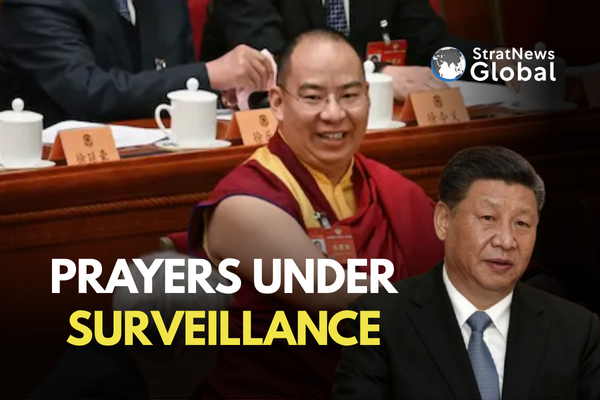
Beijing’s ‘Fake’ Panchen Lama Kalachakra Ceremony Shows Fear Not Faith: Experts
As President Xi Jinping carries out a sweeping purge of top generals in one of the largest shake-ups in the People’s Liberation Army (PLA) in decades, Chinese authorities are also tightening control over the religious sphere in Tibet. Thousands of Tibetans were reportedly compelled to attend a Kalachakra initiation led by the Beijing-appointed Panchen Lama.
According to a report by Phayul, Chinese authorities forced thousands of monks, nuns, laypeople, and senior lamas including the 7th Gunthang Rinpoche, the Sakya abbot, and the Sera abbot to attend the four-day Kalachakra ceremony held from October 9 to 12 at the Kyi-kyi Nakha site of Tashi Lhunpo Monastery in Shigatse, the traditional seat of the Panchen Lamas.
The event, led by Gyaltsen Norbu—the Chinese-appointed Panchen Lama often referred to by Tibetans as the “fake Panchen” was part of a state-organised initiative intended to project religious harmony under official supervision. Reports said attendance was mandatory for many.
This is not the first time authorities have directed Tibetans to attend ceremonies led by Norbu. In 2016, a similar Kalachakra near the same monastery drew controversy amid claims that Tibetans were coerced or paid to participate.
Rinzin Namgyal, a Tibetan scholar and Research Associate at the Foundation for Non-Violent Alternatives (FNVA), told StratNews Global that the recent events reveal “the two faces of religion under Chinese rule.”
“From October 10–12, the Chinese-appointed Panchen Lama led a state-organised Kalachakra meant to show stability and control, but many Tibetans were forced to attend,” he said. “From October 9–13, an independent ceremony in Ngawa by Alak Goru Rinpoche of Kirti Monastery showed genuine devotion and loyalty to traditional Buddhist authority. The presence of senior monks at the state event came more from fear than faith.”
Security during the event was tight, with heavy police and military presence. Officers disguised as medical staff were seen managing the crowds, according to reports. Observers said the arrangements reflected Beijing’s effort to maintain close control over major religious gatherings.
Dr. Shivam Bahuguna, Assistant Professor at the Hamdard Institute of International Studies, Jamia Hamdard University, told StratNews Global that such ceremonies are “part of China’s ongoing attempts to delegitimise the Dalai Lama by promoting a state-appointed Panchen Lama.” He said the initiative aligns with China’s broader “policy of Sinicisation of Tibetan Buddhism.”
Bhutan-based Khyentse Rinpoche’s presence at the Shigatse ceremony also drew notice.
Rinzin Namgyal said such participation “helps the Chinese state project an image of religious normalcy while reinforcing loyalty to the Communist Party.” He added that the Panchen Lama’s repeated calls for “gratitude, unity, and allegiance to the motherland” reflected political messaging rather than spiritual guidance.
A similar pattern was seen at the 7th Gungthang Rinpoche’s Kalachakra in 2023. In contrast, Kalachakra teachings by the Dalai Lama such as those held in India in 2012 and Ladakh in 2014 have been condemned by Chinese state media, and returning Tibetans were reportedly detained or subjected to “re-education” programmes.
The Dalai Lama-recognised 11th Panchen Lama, Gendun Choekyi Nyima, has remained missing since 1995, with Chinese authorities providing no verifiable information about his location or wellbeing for nearly three decades.
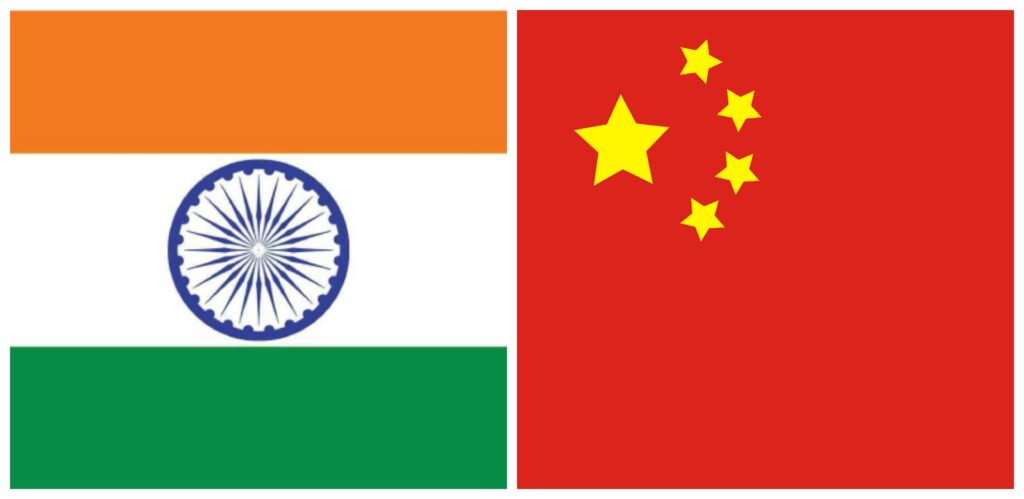
Disputed-II: No India-China Discord Over Sikkim, But Border Resolution Problematic
In the second part of our series Disputed, we look at the Sikkim-Tibet border where the Chinese have raised the possibility of “early harvest”, meaning a quick resolution. The irony is there are no territorial claims being made here by either side and there is consensus on the alignment of the Line of Actual Control. But China has refused to discuss Sikkim’s borders so far. With Bhutan China has a dispute, over the Doklam Plateau which has implications for the Siliguri Corridor. This entire series is based on Defence Ministry records.
China’s apparent eagerness to finalise the Sino-Indian boundary in Sikkim stems from its desire to open up the route from Khamba Dzong on Tibet’s border with India, to Nathu La in Sikkim,for trade.
It would also provide China access to the Bay of Bengal and prise open the markets of eastern India and Bangladesh. The Sikkim-Chumbi Valley (in Tibet) route is also the shortest as compared to the Yunnan-Myanmar CPEC Corridor. Opening up the trade route will be advantage China since it would not have to settle its boundary disputes in other sectors.
A former foreign secretary had warned against any move to settle the Sikkim boundary in isolation since it could set off a chain of events that might compel Bhutan to open its borders to the Chinese.
Sikkim is important for many reasons, notably it borders the Chumbi Valley in Tibet, which is shaped like a dagger pointing at India.
Chumbi Valley
The Chumbi Valley in Tibet is of immense strategic importance to the PLA, since it can station troops there far from the harsh climate of the Tibetan Plateau. It can also threaten the Siliguri Corridor in India just over 50-km away.
But the valley is also narrow and China may seek to obviate that by expanding into the Doklam Bowl on Bhutan’s western border. The India-China standoff in Doklam in 2017 comes to mind.
Stability can only be achieved if both sides continue to retain their existing vunlerabilities since any military confrontation could inadvertently escalate. India therefore needs to strengthen its hold over the Dongkya watershed, a mountain range running from north Sikkim southwards connecting with the Chumbi Valley and ending at Mt. Gipmochi, where it forms a disputed tri-junction between India, Tibet and Bhutan.
Importance of Doklam, Duktengang
The route to the Siliguri Corridor lies via Duktengang through the Doklam gateway. Thus the strategic importance of Doklam and Duktengang to India, is greater than what it means for Bhutan and even China. The security of the area is closely linked to the Siliguri Corridor and it will require some astute diplomacy and military actions so that the character of the area does not change.
A word on the Doklam crisis of June 2017 would provide context here. China tried to build a road in the area towards Jampheri, thus unilaterally attempting to shift the India-Bhutan-China tri-junction from Batang La to Gyemochen.
It was a clear violation of two agreements, that of 1988 and 1998 which laid down no change in the status quo while boundary negotiations were on. It also violated the 2012 understanding between the special representatives of India and China that the tri-junction boundary can only be decided in consultation with Bhutan.
Bhutan had initially protested to the Chinese about their road-building but when they took no heed, Indian troops stepped in to stop their construction activities. It remains frozen to this day but China is consolidating in north Doklam, building tunnels in Merug La and Sinchel La Ridge enabling all weather connectivity for the PLA.
Helipads have been built, accommodation for troops has expanded significantly and in 2019, Tibetans from Yadong County were relocated to North Doklam in purpose built village settlements. The situation can improve only after Bhutan and China reach a boundary settlement.
Siliguri Corridor
Otherwise known as the Chicken’s Neck, the Siliguri Corridor runs 60-km north to south through the state of West Bengal connecting the northeastern states. It is 170-km wide bounded by Nepal, Sikkim and Bhutan in the north and Bangladesh to the south. At its narrowest, it measures 20-km by 22-km between Nepal and Bangladesh.
The geography of the corridor is strategic: it comprises surface communication networks, power grids, oil pipelines, airports and so on, which makes it hugely vulnerable.
The conventional threat emanates from the PLA in the Chumbi Valley, that can also be manifested through Doklam, which is why the defence of this sector by the Royal Bhutanese Army is critical.
The area is rife with separatist groups: Bodos, Assamese, Kamtapuris, Rajbanshis and the Gorkhas of Darjeeling and Kalimpong besides of course Muslim fundamentalist organisations. The porous borders all around facilitate violent, anti-state activities.
The area is threatened by illegal immigration, illegal infiltration, drugs trafficking, arms smuggling and possible exploitation of old political fault lines. North Bengal has a history of association with the communists and the spread of the communist movement in Nepal poses security challenges to India.
China’s cultivation of Nepal and Bangladesh with offers of lavish infra projects challenges India’s influence. The development of aviation infra at Bhadrapur and Biratnagar by Chinese firms close to the India-Nepal border, is also of concern.
As for Bangladesh, three salients protrude into the Siliguri Corridor of which one of them, Titalia is of particular concern given its military geography. The Indian government is building alternative connectivity to the northeastern states and some under construction expressways into Bhutan can lead to that.
The West Bengal government is responsible for the security of the corridor during normal times with Central Armed Police Forces providing armed and other back-up. During conflict, the army is responsible for rear area security.
There is a need for multi-agency coordination both during peace time and conflict and although the army is doing this at the local level, an institutionalised mechanism is the need of the hour.
Its important to understand that along the entire Sino-Indian border, the risk of unintended escalation is highest in this area. The irony bears re-stating: there is no dispute between India and China here, the boundary dispute lies in a third country Bhutan, which makes things very tricky.
The army has to plan for the worst and hope for the best. Any effective military response to Chinese belligerence will be mounted from Sikkim and the border districts of West Bengal namely Kalimpong and Jalpaiguri. This is the importance of the hill districts of Bengal and the Siliguri Corridor.
Global Film Industry Keeps Rolling Despite Trump’s Renewed Tariff Warning
From Britain’s “Star Wars: Starfighter” shoot to busy studios in Hungary and post-production hubs in Australia, the global film industry continues to operate at full pace despite renewed threats from U.S. President Donald Trump to slap tariffs on movies produced overseas.
Trump has proposed levying a 100% tariff on films produced overseas to stem the loss of film jobs to production hubs around the world, reviving an idea he first broached in May.
The initial call for tariffs jolted the film world, and temporarily halted projects and international movie finance deals as producers evaluated the potential impact of the levy on each project’s financial viability, two sources familiar with Hollywood motion-picture financing told Reuters.
This time around, the reaction has been more muted.
“Other than the initial flurry of ‘Oh, he’s said it again,’ people are not taking it as seriously as they did the first time around,” said Lee Stone, a partner at London law firm Lee & Thompson, who worked on the Emmy-winning Netflix show “Adolescence.”
Trump’s 100% Tariff Call
Trump initially called for a 100% tariff on movies produced outside the country in early May, to stave off the “very fast death” of the American film industry as incentives lured filmmakers to production hubs around the world. The announcement – just weeks before the Cannes Film Festival – caused a panic.
“It was terrible timing. Everyone was saying, ‘What’s going to happen?'” said Stone, noting that Trump’s threat resulted in temporary paralysis. “I’m not getting the impression that there’s the same pause this time.”
Newly released data from industry researcher ProdPro reveals that while overall spending is down 15% from last year, amid a pullback in scripted television series and big-budget feature films, there is no evidence that Hollywood is abandoning global production hubs.
“We’re not seeing anything in the data that suggests studios are opting to film more of their production in the U.S. because of concern about the tariffs,” said ProdPro CEO Alexander LoVerde.
The U.S. remains the industry’s largest production hub, accounting for $16.6 billion in spending over the last 12 months, according to ProdPro. However, Hollywood studios and streaming services spent even more – $24.3 billion – on film and television projects produced outside the U.S. over that same period, ProdPro reported, as they took advantage of tax credits, lower labor costs and world-class soundstages.
The United Kingdom has become a major beneficiary of the Hollywood exodus, attracting $8.7 billion in film and scripted TV spending over the past year, including major film productions like “Star Wars: Starfighter,” the much-buzzed-about next entry in the “Star Wars” saga set for release in May 2027. Canada comes in a close second with $6.4 billion, according to ProdPro’s most recent report on production trends.
Other regions – Australia, Ireland, Hungary and Spain – together accounted for nearly one-quarter of all production.
COVID-19 Supercharged Production Exodus
The COVID-19 pandemic and the Hollywood strikes by U.S. writers and actors supercharged the exodus that began years earlier.
“Australia became a bit of a production bubble where particularly in Queensland, productions could continue even as the rest of the world shut down,” said University of Melbourne film expert Kirsten Stevens.
Prague increased its tax breaks from 20% to 25% in January, while Britain offers relief of 25.5% on qualifying films and TV productions, with a higher rate for animated films and a new credit for smaller independent films.
In places like Central Europe, a deep filmmaking tradition and lower labor costs have attracted a long list of Hollywood films including the Russo brothers’ “The Gray Man,” Netflix’s Oscar-winning “All Quiet on the Western Front” in the Czech Republic, and Warner Bros Studios’ “Dune: Part Three,” which began shooting this summer in Hungary.
“Hungarian soundstages are currently operating at full capacity with both international and domestic productions,” Csaba Kael, government commissioner for the development of the Hungarian Motion Picture Industry, told Reuters.
Any change in U.S. trade policy would take time to implement, Kael said.
Hollywood studios have found that distributing work across multiple locations can accelerate the production timetable, allowing films to be completed faster and cheaper.
“It’s not uncommon at high-end films that a bunch of work would come to Australia, but a bunch of work also might go to New Zealand and to London and to somewhere else,” said Mike Seymour, Emmy-nominated visual effects specialist and lecturer at the University of Sydney.
“Sometimes the film is being worked on literally 24 hours a day because of all the time zones,” he said.
Studios Want A National Tax Incentive
For the moment, it is business as usual for filmmakers, said Stephen Weizenecker, an entertainment lawyer with Barnes & Thornburg in Atlanta. They are hoping to avoid any interruption that throws off the schedule of a production, which can result in actors, directors or even a filming location being unavailable.
“The film industry dislikes uncertainty,” Weizenecker said. “Once it starts to hesitate, it means a project stops altogether.”
A coalition of American film industry unions and guilds, joined by veteran actor Jon Voight, has asked Trump to consider implementing a federal tax incentive to put domestic film production on a more competitive footing with incentives offered in other countries.
“What we really want is a national tax incentive that would be more effective than any tariffs,” one studio executive said.
Meanwhile, a bill with bipartisan support, known as the CREATE Act, was introduced in the U.S. Congress this past summer. It would extend a tax deduction for U.S. productions, which is set to expire in December, and increase the cap on deductible costs.
The looming threat of tariffs raises concern about the potential impact on the economy and livelihoods in production hubs around the world, if Trump follows through.
“It is hard for anyone here to understand the likelihood of this coming into effect, but if it did, it would have a huge impact,” said a visual artist in the industry who declined to be named over fears of losing financing. “It would be devastating.”
(With inputs from Reuters)
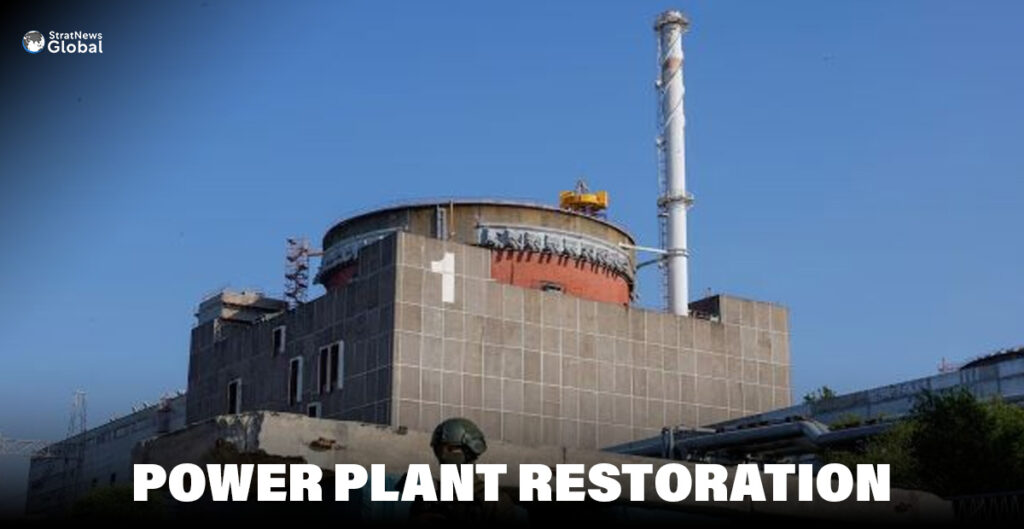
Ukraine Starts Restoring Zaporizhzhia Power Links Amid Local Ceasefire
Ukraine has begun repairing external power lines to the Zaporizhzhia nuclear power plant, authorities said on Saturday, ending a four-week disruption that left the facility relying on backup systems.
The restoration effort is taking place under localized ceasefire arrangements designed to protect crews working near the front lines.
IAEA Director General Rafael Grossi said the work began after ceasefire zones were established to allow for the repairs to proceed.
The plant currently produces no electricity, but needs power to ensure fuel in the reactors remains cool and no meltdown occurs.
“Restoration of off-site power is crucial for nuclear safety and security. Both sides engaged constructively with the IAEA to enable a complex repair plan to proceed,” Grossi said in a post on social media platform X.
Both the Ukrainian energy ministry and the Russian-appointed management of the plant confirmed the maintenance works.
The Outage
The Zaporizhzhia plant – Europe’s largest, with six reactors – was seized by Russian troops in the first weeks of Moscow’s 2022 invasion of Ukraine.
The outage began on September 23 after the plant’s final external power line was severed — the longest such blackout since Russia occupied the site in 2022 — forcing it to rely solely on diesel generators for reactor cooling.
Both Kyiv and Moscow regularly accuse each other of attacks that endanger nuclear safety. Located near the city of Enerhodar along the Dnipro river, the power plant is close to the front line.
During more than three and a half years of the war, the plant was frequently disconnected from the power grid, but the latest outage was one of the longest.
Ukrainian Energy Minister Svitlana Hrynchuk said that connecting the plant to the Ukrainian grid and ensuring its stable operation by Ukrainian experts were fundamental to preventing a nuclear incident.
The Russian-appointed management of the plant said Russia’s Defence Ministry would play a key role in ensuring the safety of the repair work.
(With inputs from Reuters)
Sri Lanka Offers to Be India’s ‘Complementary Production Base’
Millions Expected At Nationwide ‘No Kings’ Rallies Opposing Trump
Millions are expected to take part in over 2,600 planned “No Kings” rallies across the United States on Saturday — a coordinated nationwide protest against President Donald Trump’s immigration, education, and security policies, which organizers warn are edging the country toward authoritarian rule.
The protests – big and little, in cities, suburbs and small towns across the U.S. – follow similar demonstrations in June and will gauge the frustration level of opponents of a conservative agenda that has rolled out quickly.
Since Trump took office 10 months ago, his administration has ramped up immigration enforcement, moved to slash the federal workforce and cut funding to elite universities over issues including pro-Palestinian protests against Israel’s war in Gaza, campus diversity and transgender policies.
Residents in some major cities have seen National Guard troops sent in by the president, who argues they are needed to protect immigration agents and to help combat crime.
‘We Don’t Have Kings’
“There is nothing more American than saying ‘we don’t have kings’ and exercising our right to peacefully protest,” said Leah Greenberg, co-founder of Indivisible, a progressive organization that is the main organizer of the No Kings marches.
Trump has said very little about Saturday’s protests. But in an interview with Fox Business aired on Friday he said that “they’re referring to me as a king — I’m not a king.”
More than 300 grassroots groups helped organize Saturday’s marches, Greenberg said. The American Civil Liberties Union said it has given legal training to tens of thousands of people who will act as marshals at the various marches, and those people were also trained in de-escalation. No Kings ads and information have blanketed social media to drive turnout.
Senator Bernie Sanders, a progressive independent, and Congresswoman Alexandria Ocasio-Cortez, a progressive Democrat, have backed the marches along with former Secretary of State Hillary Clinton who lost the 2016 presidential election to Trump. An array of celebrities also has backed the movement.
In June, over 2,000 No Kings protests took place, mostly peacefully, on the same day that Trump celebrated his 79th birthday and held a military parade in Washington.
Protests Are ‘Anti-American’
U.S. House of Representatives Speaker Mike Johnson, a Republican, on Friday echoed a common refrain among the GOP on the No Kings protests.
“Tomorrow the Democrat leaders are going to join for a big party out on the National Mall,” Johnson said at a press conference on Friday. “They’re going to descend on our Capitol for their much anticipated, so-called No Kings rally. We refer to it by its more accurate description: The hate America rally.”
Other Republicans have blasted Democrats and marches like No Kings as motivating people to carry out political violence, especially in the wake of the September assassination of political activist Charlie Kirk, a close confidant of Trump and key members of his administration.
Dana Fisher, a professor at American University in Washington, D.C., and the author of several books on American activism, forecast that Saturday could see the largest protest turnout in modern U.S. history – she expected that over 3 million people would participate, based on registrations and participation in the June events.
“The main point of this day of action is to create a sense of collective identity amongst all the people who are feeling like they are being persecuted or are anxious due to the Trump administration and its policies,” Fisher said. “It’s not going to change Trump’s policies. But it might embolden elected officials at all levels who are in opposition to Trump.”
(With inputs from Reuters)