

Support us by contributing to StratNewsGlobal on the following UPI ID
ultramodern@hdfcbank

Strategic affairs is our game, South Asia and beyond our playground. Put together by an experienced team led by Nitin A. Gokhale. Our focus is on strategic affairs, foreign policy and international relations, with higher quality reportage, analysis and commentary with new tie-ups across the South Asian region.
You can support our endeavours. Visit us at www.stratnewsglobal.com and follow us on YouTube, Twitter, Facebook and Instagram.
र 500 per month
र 1000 per month
र 5000 per year
र 10000 per year
Donate an amount of your choice
र 500 per month
Donate र 500 per month

र 1000 per month
Donate र 1000 per month
र 5000 per year
Donate र 5,000 per year
र 10000 per year
Donate र 10,000 per year
Donate an amount of your choice
Donate an amount of your choice
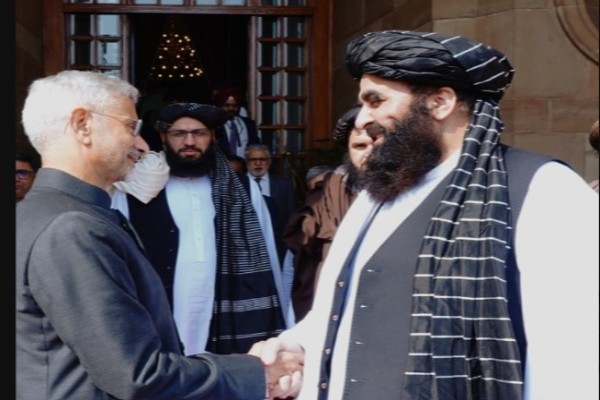


Days After Muttaqi Visit, India Restores Full Embassy in Kabul
China Prioritising Expansion Over Economic Challenges: Taiwan Official
China is prioritising expansion over addressing its urgent economic and social challenges, while Taiwan remains committed to defending itself against Chinese aggression, the island’s top security official said on Tuesday.
Democratically-governed Taiwan has complained of a stepped-up military and diplomatic pressure campaign by Beijing, which views the island as its own territory, including regular war games near the island. Taiwan’s government rejects China’s sovereignty claims.
Speaking at a forum in Taipei, Joseph Wu, head of Taiwan’s National Security Council, noted that China’s ruling Communist Party was holding a key meeting of senior officials this week, known as a plenum.
“Even though we see worrisome trends in the Chinese economy, the news these days is not how the PRC leadership is coming up with good or big packages to bring their economy up from the slump, it’s about the purge of top PLA generals,” he said, referring to the People’s Republic of China and People’s Liberation Army.
Last week, ahead of the plenum, China announced two top military leaders had been expelled from the party and the military on corruption charges, the most senior officers to be purged in an anti-graft drive that began in 2023.
Beijing Military Parade
Wu also mentioned the scenes from last month’s massive military parade in Beijing held by President Xi Jinping to mark the 80th anniversary of the end of World War Two.
“The footage of the September 3rd military parade gave an impression of China still seeking global dominance, not solving domestic economic and social problems. This doesn’t make too much sense to me,” he added.
China’s Taiwan Affairs Office did not immediately respond to a request for comment.
China views Taiwan President Lai Ching-te and his government as “separatists” and has rebuffed multiple offers of talks. China says Taiwan is one of its provinces with no right to call itself a country.
Wu said that Lai was committed to maintaining the status quo across the Taiwan Strait, and that while Taiwan “will not be seen as a provocateur”, peace had to come through strength, hence the government’s commitment to increased defence spending.
“Please allow me to be straightforward. Taiwan is determined to defend itself,” he said.
(With inputs from Reuters)
Modi To Attend ASEAN Summit For Key Trade, Strategic Talks
Prime Minister Narendra Modi is expected to travel to Kuala Lumpur from October 25 to 27 for the ASEAN and East Asia Summits, where discussions will focus on trade, strategic alignments, and India’s upcoming role as BRICS chair.
While the visit has not been officially confirmed by the Ministry of External Affairs, Malaysian officials have announced his participation. The meetings will bring Modi together with leaders from the United States, Japan, China and Australia, at a time when India’s external relations are being tested on multiple fronts.
A major focus will be the ongoing review of the ASEAN-India Trade in Goods Agreement (AITIGA). New Delhi has submitted a counter-proposal seeking to address a growing trade imbalance, with India’s deficit with ASEAN rising to over $45 billion in FY25 from $7 billion when the pact took effect in 2010.
Indian negotiators are pressing for improved market access in sectors such as agriculture, automobiles and pharmaceuticals, and are also raising concerns over non-tariff barriers and the rerouting of Chinese goods through ASEAN countries.
ASEAN members have acknowledged India’s concerns, and both sides aim to conclude the review by year-end. A joint statement outlining the next steps is expected during the summit.
On the sidelines, Modi may meet U.S. President Donald Trump, marking their first in-person engagement since Trump imposed a 50 per cent tariff on Indian goods in August, including 25 per cent over crude oil imports from Russia. Discussions are expected to include the stalled trade pact, defence cooperation, and the delayed Quad summit, which India was initially scheduled to host.
India’s role in both the Quad and BRICS will also draw attention. With New Delhi set to host the BRICS summit in 2026 and chair the Quad the same year, it faces the challenge of balancing its engagement between the U.S.-led and China-Russia-led groupings. Coordination among Quad members continues in defence and technology, with joint coast guard exercises and supply chain initiatives likely to be announced.
The summit will also feature discussions on critical minerals and clean energy supply chains, with India seeking stronger cooperation with ASEAN countries that possess key resources. These efforts align with regional initiatives promoting green economy partnerships and digital trade.
The Kuala Lumpur meetings come at a pivotal moment, as India navigates trade challenges, shifting alliances, and a crowded diplomatic calendar in its push to shape the regional agenda.
Takaichi Elected Japan’s First Female Premier In Hard-Right Shift
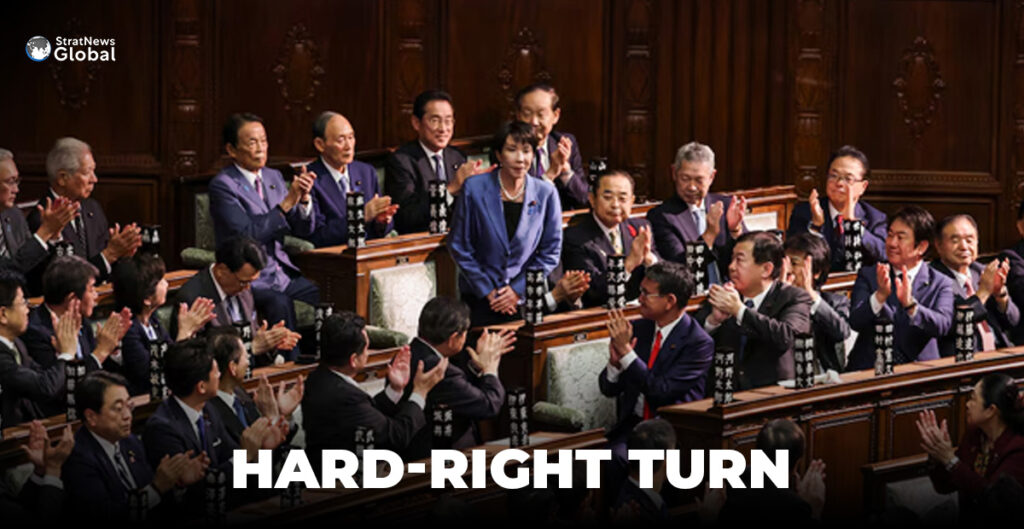
Hardline conservative Sanae Takaichi was elected Japan’s first female prime minister on Tuesday, breaking the nation’s political glass ceiling and steering it toward a pronounced rightward course.
An acolyte of former Prime Minister Shinzo Abe and an admirer of Britain‘s Margaret Thatcher, Takaichi is expected to return to Abe-style government stimulus as she attempts to jumpstart an economy saddled with slow growth and rising prices. While her victory marks a pivotal moment for a country where men still hold overwhelming sway, she named just two women to her cabinet, far fewer than what she had promised.
Takaichi is also likely to usher in a sharp move to the right on issues such as immigration and defence, making her the latest leader in tune with the broader rightward shift in global politics. She received 237 votes in the election in parliament’s 465-seat lower house on Tuesday and then won a similar vote in the less powerful upper house.
Her victory was secured after her Liberal Democratic Party, which has governed Japan for most of its postwar history, agreed on Monday to form a coalition with the right-wing Japan Innovation Party, known as Ishin.
Together the parties are two seats short of a majority in the lower house. That means Takaichi’s success will depend on her winning the cooperation of more opposition lawmakers, said Tadashi Mori, a professor of politics at Aichi Gakuin University.
“The two parties do not command a majority in either chamber, and to ensure a stable government and gain control of key parliamentary committees, they will need to secure more than half the seats,” he said.
Previous Coalition Broke Up After Quarter Century
Takaichi takes over when Japanese politics appears more fractured than at almost any other time in recent memory, thanks in part to the rise of the smaller, hard-right Sanseito Party, which has siphoned voters away from the LDP.
“Since former Prime Minister Abe passed away, we’ve felt that both national politics and the LDP itself have drifted leftward,” Sanseito head Sohei Komiya told broadcaster NHK, adding he hoped Takaichi would steer national politics back to the middle.
“While we won’t hesitate to oppose her when necessary, we intend to maintain a friendly working relationship,” he said.
The LDP’s former coalition partner, the more moderate Komeito, broke up their 26-year-old alliance this month after the LDP chose the right-wing Takaichi as its new leader.
No ‘Nordic’ Cabinet After All
Takaichi named just two women to her cabinet: fellow Abe disciple, Satsuki Katayama, becomes the country’s first female finance minister, while Kimi Onoda becomes economic security minister.
In her leadership campaign, she promised to boost the number of women in the cabinet to match socially progressive Nordic countries. The percentage of female ministers in Nordic governments ranges from Denmark’s 36% to Finland’s 61%. Under Takaichi, women will make up 16% of Japan’s cabinet, including her.
“Only two female ministers, no surprise,” said Yoko Otsuka, a professor of welfare policy and gender studies at Ritsumeikan University. “A female prime minister might slightly improve Japan’s Global Gender Gap Index ranking, but the reality barely changes.”
Takaichi Trade Moves Stocks Higher
Takaichi’s endorsement of Abe-style fiscal stimulus has prompted a so-called “Takaichi trade” in the stock market, sending the Nikkei share average to record highs, the most recent on Tuesday.
But it has also caused investor unease about the government’s ability to pay for more spending in a country where the debt load far outweighs annual output. Both the yen and bond prices have weakened as a result.
Any attempt to revive Abenomics could also run into trouble because the policy was devised to fight deflation, not higher prices, said Aichi Gakuin’s Mori.
Some analysts say Ishin, which has advocated for budget cuts, could restrain some of Takaichi’s spending ambitions.
Takaichi has said defence and national security would be core pillars of any administration she led. She pledged to raise defence spending, deepen cooperation with the United States and other security partners. U.S. President Donald Trump may visit as early as her first week in office.
A frequent visitor to the Yasukuni war shrine in Tokyo that some Asian neighbours view as a symbol of wartime aggression, Takaichi has also called for a revision of Japan’s postwar pacifist constitution to recognise the existence of the nation’s military forces.
Rising political star Shinjiro Koizumi will serve as defence minister, while veteran lawmaker Toshimitsu Motegi will be foreign minister.
Takaichi will be sworn in as Japan’s 104th prime minister on Tuesday evening to succeed the incumbent Shigeru Ishiba, who last month announced his resignation to take responsibility for election losses.
(With inputs from Reuters)
Vance Visits Israel Amid Uncertainty Over Gaza Ceasefire
U.S. Vice President JD Vance arrived in Israel on Tuesday, as Washington seeks to stabilise the fragile initial phase of the Gaza ceasefire and press both Israel and Hamas toward making tougher concessions in upcoming negotiations.
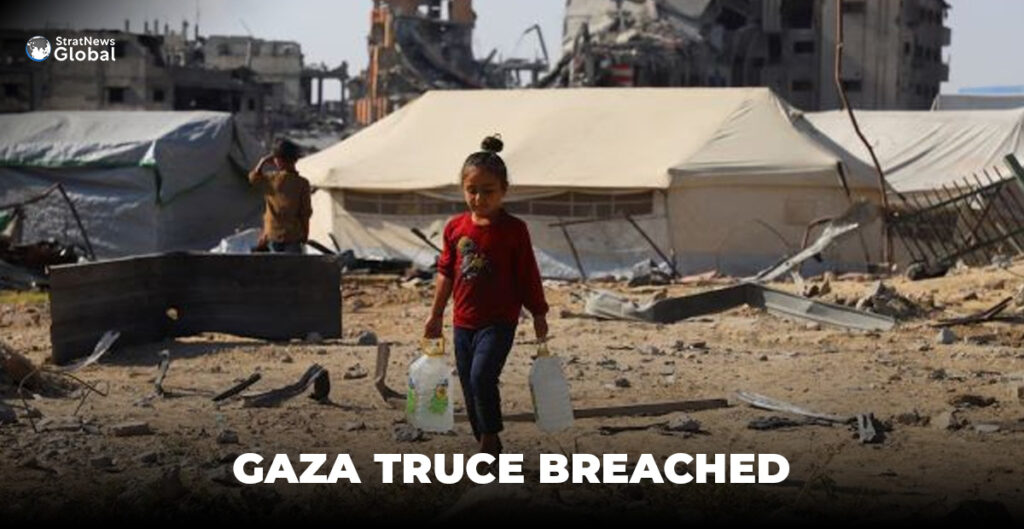
The two sides have accused each other of repeated breaches of the ceasefire since it was formally agreed eight days ago, with flashes of violence and recriminations over the pace of returning hostage bodies, bringing in aid and opening borders.
However, U.S. President Donald Trump’s 20-point ceasefire plan will require much more difficult steps to which the sides have yet to fully commit, including the disarmament of Hamas and steps towards a Palestinian state.
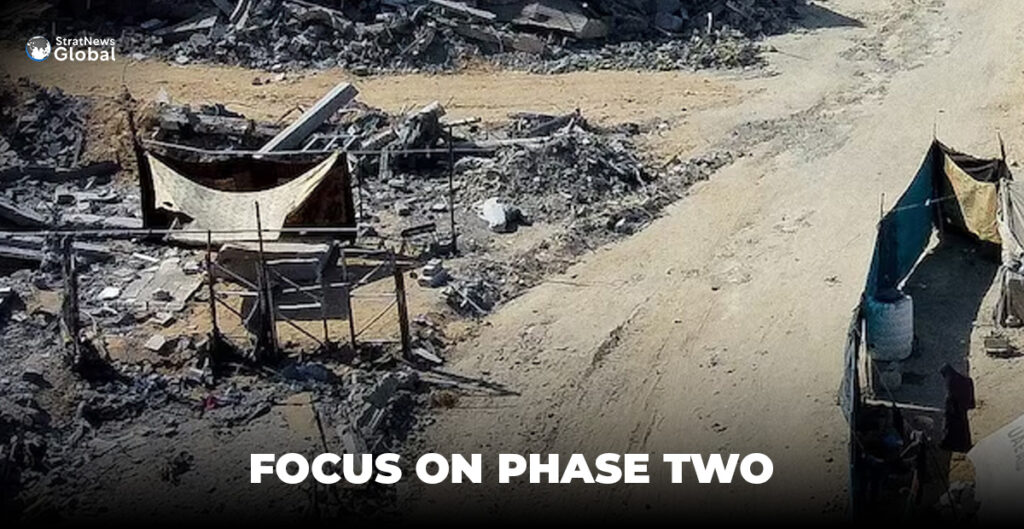
Focus On Moving To 2nd Phase Of Truce
Vance’s visit follows Monday’s talks between Israeli Prime Minister Benjamin Netanyahu and U.S. envoys Steven Witkoff and Trump’s son-in-law Jared Kushner, and comes as Hamas meet mediators in Cairo.
A senior Israeli official said the purpose of Vance’s visit was to advance the Gaza talks to the second phase of the ceasefire.
Hamas’ Cairo talks, led by the group’s exiled leader Khalil al-Hayya, are also looking at prospects for the next phase of the truce and post-war arrangements in Gaza as well as stabilising the existing ceasefire.
A delegation from Egypt, an important mediator in the conflict, arrived in Israel on Tuesday, Israeli and Egyptian sources said. It was not immediately clear if its arrival was related to Vance’s visit.
Underscoring the fragility of the truce, Qatar, another of the mediators, on Tuesday accused Israel of “continuous violations”. It and Turkey, which has used its role to bolster its regional position, have been key interlocutors with Hamas.
Trump’s plan called for the establishment of a technocratic Palestinian committee overseen by an international board, with Hamas taking no role in governance.
A Palestinian official close to the talks said Hamas encouraged the formation of such a committee to run Gaza without any of its representatives, but with the consent of the group as well as the Palestinian Authority and other factions.
Last week, senior Hamas official Mohammed Nazzal told Reuters the group expected to maintain a security role on the ground in Gaza during an undefined interim period.
Israel has said Hamas can have no role at all in Gaza, while it and Trump have said the group must disarm. Nazzal would not commit to the group disarming.
Hamas last week battled rival gangs on the streets in Gaza and publicly executed men it accused of having collaborated with Israel.
Trump condoned the killings, but the U.S. military’s Middle East command urged Hamas to stop violence “without delay”.
Vance was expected on Tuesday to visit the headquarters of joint forces led by the U.S. military and meant to help with Gaza stabilisation efforts.
Return Of Bodies And Aid Deliveries
Speaking to Egyptian television late on Monday, Hayya reaffirmed the group’s compliance with the truce and said it would fulfil its obligations in the first phase, including returning more bodies of hostages.
“Let their (hostages) bodies return to their families, and let the bodies of our martyrs return to their families to be buried in dignity,” he said.
One more body of a hostage seized by Hamas in its October 7, 2023, attack that triggered the war was returned on Monday and identified by Israeli authorities. Some 15 bodies are believed to remain in Gaza, with Israel expecting about five of them to be returned soon and others requiring a slower, more complex process of retrieval.
Israel handed back another 15 Palestinian bodies on Tuesday, local health authorities said, taking the total it has returned to Gaza to 165.
Inside the enclave on Tuesday, more aid was flowing into the enclave through two Israeli-controlled crossings, Palestinian and U.N. officials said.
However, with Gaza residents facing catastrophic conditions, aid agencies have said far more needs to be brought in.
Ismail al-Thawabta, director of the Hamas-run Gaza government’s media office, said far fewer trucks had entered than had been agreed upon and called it “a drop in the ocean of what people need”.
Violence in Gaza since the truce has mostly focused around the “yellow line” demarcating Israel’s military pullback. On Tuesday, Israel’s public Kan radio reported troops had killed a person crossing the line and advancing towards them.
Palestinians near the line, running across devastated areas close to major cities, have said it is not clearly marked and hard to know where the exclusion zone begins. Israeli bulldozers began placing yellow concrete blocks along the route on Monday.
(With inputs from Reuters)
U.S. Pushes To Restore Gaza Truce Following Renewed Violence
U.S. diplomats met with Israeli Prime Minister Benjamin Netanyahu on Monday in an effort to bring Israel and Hamas back to the ceasefire agreement in Gaza, following a surge of violence over the weekend that threatened to unravel the fragile, week-old truce.
Israel and Hamas have both recommitted to the ceasefire plan brokered by U.S. President Donald Trump since Sunday’s flare-up in which a Palestinian attack that killed two soldiers prompted an Israeli bombardment killing at least 28 people in Gaza.
However, with even the first stages of the truce shaken by repeated flashes of violence, including on Monday, it was far from clear whether the U.S. will be able to keep pressure on the two sides and maintain momentum to end the conflict.
The latest events reflected the stumbling blocks to keeping the long-sought ceasefire from unravelling and securing a lasting peace after two years of war in Gaza. Key questions of Hamas disarming, further Israeli troop pullbacks and future governance of the Palestinian enclave remain unresolved.
Next Phase Of Ceasefire
Trump, keeping pressure on both Hamas and Israel as he seeks to salvage the signature foreign policy achievement of the first year of his second term, said on Monday the U.S. was taking many steps to maintain the ceasefire.
He told reporters the “Hamas situation” would be handled quickly but that he had not told Israel to “go in and take care of it.” He said that while Hamas was in violation of the agreement, he did not believe its leadership was responsible but that it was facing “some rebellion” in its ranks.
If Hamas leaders do not straighten it out, “we’re going to eradicate them if we have to,” Trump said at the White House. But he insisted that such actions would not involve U.S. troops on the ground.
During their visit that began on Monday, the U.S. envoys, Steve Witkoff and Trump’s son-in-law Jared Kushner, were expected to try to shore up the truce then start talks on the next, more difficult, phase of the 20-step plan.
U.S. Vice President JD Vance was also due to visit Israel on Tuesday, with Netanyahu saying the pair would discuss regional challenges and opportunities.
High-level U.S. diplomacy in the region, with talks also due later on Monday with Hamas in Egypt, underscored the priority Trump has placed on cementing the ceasefire after proclaiming last week the deal heralded “the historic dawn of a new Middle East”.
More Killings
On Monday, Palestinian medics said three more people had been killed by Israeli tank fire near the “yellow line” inside Gaza demarcating Israel’s initial military pullback from the main populated areas.
The Israeli military said forces had fired at terrorists who crossed that line, which it was started marking with concrete barriers and yellow poles about every 200 meters (219 yards).
Gaza City residents reported confusion over the line’s location due to the lack of a visible boundary.
“The whole area is in ruins. We saw the maps, but we can’t tell where those lines are,” said Samir, 50, who lives in Tuffah.
Witkoff and Kushner’s visit to Israel, aimed at discussions on the next phase of Trump’s complex Gaza ceasefire plan, was scheduled before Sunday’s flare-up in violence, according to U.S. and Israeli sources.
Bodies Of More Hostages To Be Returned
Israel is unlikely to publicise any progress in the talks until the remains of more hostages are returned.
The Red Cross received the body of another hostage from Hamas on Monday and transferred it to the Israeli military, Netanyahu’s office said.
Israel believes Hamas could hand over up to five more bodies immediately. Other bodies among 15 still in Gaza may be hard to recover because of destruction in the enclave.
Egypt will host talks in Cairo on Monday with Khalil Al-Hayya, Hamas’ exiled Gaza chief, over ways to follow up on implementing the ceasefire, the group said in a statement.
A Palestinian official close to the talks said the group’s delegation would discuss formation of a technocratic body to run Gaza without Hamas representation.
Hamas and other allied factions reject any foreign administration of Gaza, as envisaged in the Trump plan, and have so far resisted calls to lay down arms, which may complicate implementation of the deal.
Residents Fear More Violence
Israel said it launched strikes across the enclave in response to a Palestinian attack that killed two soldiers operating inside the agreed deployment line in Rafah in southern Gaza.
Hamas’ armed wing said it was unaware of clashes in Rafah and had not been in contact with groups there since March.
Hamas has detailed what it calls a series of violations by Israel that it says killed 46 people and stopped essential supplies from reaching the enclave.
Israeli Defence Minister Israel Katz said any Hamas terrorists in areas of Gaza still under Israeli control must leave immediately and anyone remaining beyond the yellow line would be targeted without warning.
(With inputs from Reuters)
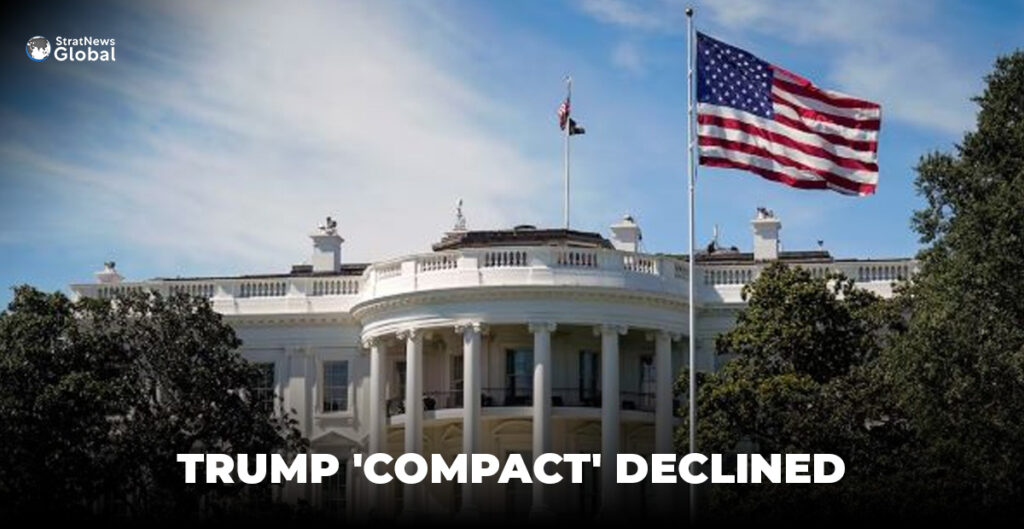
Arizona University Cites Academic Freedom In Refusal To Join Trump Funding ‘Compact’
The University of Arizona announced on Monday that it would not join the Trump administration’s proposed “compact,” citing the need to uphold academic freedom.
The decision makes it the seventh top-tier institution to reject the offer, which promised nine universities preferential access to federal funding in return for adopting a specific set of policies.
Vanderbilt University and the University of Texas at Austin have yet to announce whether they will sign the proposal, for which the administration gave a Monday deadline.
Brown University, the Massachusetts Institute of Technology, the University of Southern California, the University of Pennsylvania, the University of Virginia, and Dartmouth College previously rejected the proposal.
Asked for comment about the University of Arizona’s statement declining to sign the agreement, and whether UT Austin or Vanderbilt had responded, a White House official said that none of the three had “signed the compact yet.”
The official added: “The administration is still listening to the feedback from the universities, so there is not a version ready for signature just yet.”
Since President Donald Trump took office in January, the White House has targeted what it deems liberal-leaning institutions and tried to withhold funding from colleges and universities over issues such as pro-Palestinian protests against U.S. ally Israel’s war in Gaza, transgender policies, climate initiatives and diversity, equity and inclusion programs.
The ‘Compact’ – A New Approach
The administration has canceled federal contracts worth millions of dollars with numerous schools to pressure them to drastically change their admissions and hiring policies, among other issues.
Courts have ordered many of the federal cuts be restored. The compact, sent to the nine universities early in the month, marked a new approach.
“A number of the proposed federal recommendations deserve thoughtful consideration as our national higher education system could benefit from reforms that have been much too slow to develop,” University of Arizona President Suresh Garimella wrote in a statement addressed to the campus community.
“In fact, many of the proposed ideas are already in place at the U of A. At the same time, principles like academic freedom, merit-based research funding, and institutional independence are foundational and must be preserved.
“As a result, the university has not agreed to the terms outlined in the draft proposal,” but instead has submitted to the U.S. Department of Education its existing Statement of Principles enumerating such university policies as merit-based hiring and prioritizing admission of qualified Arizona students and applicants from U.S. tribal nations, Garimella wrote.
Capping Of International Enrollment
In the White House’s 10-point memo titled “A Compact for Academic Excellence in Higher Education,” the administration asked the nine elite colleges to cap international undergraduate enrollment at 15%, ban the use of race or sex in hiring and admissions and define genders based on biology.
The memo called for “transforming or abolishing institutional units that purposefully punish, belittle, and even spark violence against conservative ideas,” but did not include similar measures to protect liberal ideas.
It also proposed that the Classic Learning Test, embraced by some conservatives and already authorized for use by Florida’s public university system, be among the college entrance exams considered alongside the SAT and ACT.
Universities that pursue “models and values” beyond those outlined in the memo could “forgo federal benefits,” the memo reads, while institutions that comply could be rewarded.
A White House official has said schools other than the nine initially approached could sign on to the proposal.
(With inputs from Reuters)
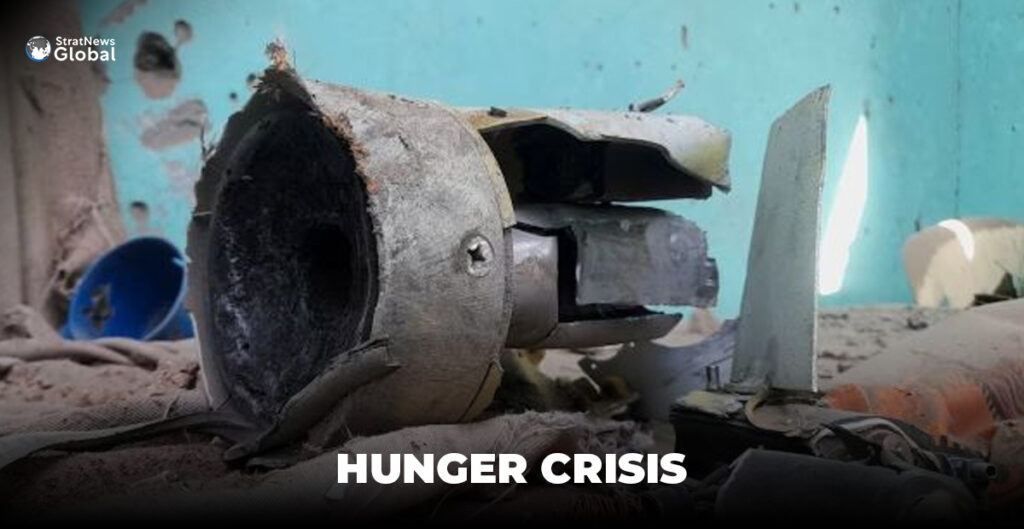
Sudan: Fear And Hunger Grip Al-Fashir As Residents Shelter From Drones And Shells
In Sudan’s besieged city of al-Fashir, residents are retreating into underground shelters to escape relentless drone strikes and shelling, as intensified assaults target displacement camps, medical centers, and mosques.
Famine-stricken al-Fashir is the Sudanese army‘s last holdout in the vast, western region of Darfur as it battles the paramilitary Rapid Support Forces (RSF) in a civil war that has raged for two-and-a-half years.
The conflict, which erupted from an internal power struggle, has triggered ethnic killings, drawn in foreign powers and created a massive humanitarian crisis.
The army has been gaining ground elsewhere in Sudan, but Darfur is the RSF’s stronghold where it aims to base a parallel government, potentially cementing a geographical splintering of the country.
More than one million have fled al-Fashir during an 18-month siege by the RSF, according to the U.N., but it has become dangerous and expensive to leave. An estimated quarter of a million civilians remain, and there are fears of mass reprisals if the city falls.
Drone Strikes On Civilians
Many of those still in the city have dug bunkers for protection after repeated strikes on civilians, according to more than a dozen residents reached by phone as well as footage.
The residents described avoiding drones by limiting movements and large gatherings during daytime, and not using lights after dark.
“We can only bury people at night, or very early in the morning,” said Mohyaldeen Abdallah, a local journalist. “It’s become normal for us.”
Five residents said drones have followed civilians into areas where they gather, such as clinics. “When you’re walking around you stick to the wall like a gecko so the drone won’t see you go inside,” said Dr. Ezzeldin Asow, head of al-Fashir’s now-abandoned Southern Hospital.
At one shelter in al-Fashir’s Abu Taleb school at least 18 people were killed in the week from September 30 by bombardment, a drone attack and an RSF raid, said Abdallah, who visited the site before and after the attacks.
Footage showed the school’s shattered ceilings and scarred walls. On the school grounds, it showed a dead body lying outside a shipping container buried in the ground to create a shelter, with sandbags around the entrance.
Residents Blame RSF
Neither the army nor the RSF responded to written requests or calls seeking comment on the incidents at Abu Taleb school and elsewhere in al-Fashir.
Residents captured in the footage blamed the RSF for attacks.
“They don’t distinguish between civilians and soldiers, if you’re human they fire at you,” Khadiga Musa, head of the North Darfur health ministry, told Reuters by phone from al-Fashir.
The RSF and its allies have been blamed for waves of ethnically driven violence in Darfur during the war, with the U.S. determining last year that they had committed genocide. Its leadership denies ordering such attacks and says rogue soldiers will face justice.
In a statement on October 12, the RSF said al-Fashir was “devoid of civilians”. The army and allied self-defence fighters and former rebels had “turned hospitals and mosques into military barracks and rocket launchers,” the RSF said.
The Sudanese army, which has denied responsibility for civilian deaths, has also used drones in al-Fashir.
Attacks On Shelter And Mosque
On October 10-11 another displacement shelter, Dar al-Arqam, located on university grounds that also house a mosque, suffered repeated strikes. The centre’s manager, Hashim Bosh, recorded 57 dead including 17 children, among them three babies.
“They were aiming at the mosque. They attacked right after Friday prayer,” he said, describing the first strike. A second strike, he said, came from a drone that followed people running to another shipping container used as a shelter.
The next morning four more shells hit during dawn prayers, Bosh said. Residents interviewed in footage taken by local activists confirmed the attacks.
The footage also showed what appear to be 10 bodies covered in sheets at the site, a child-sized body covered by a small prayer rug, and several bodies, mangled and uncovered, inside the container.
Satellite imagery published by the Yale Humanitarian Research Lab (HRL) on October 16 showed six impact points on Dar al-Arqam’s buildings.
Severe Hunger
According to HRL, as of October 4 the RSF had extended earthen barriers to almost fully encircle al-Fashir.
As a result, activists warned last week that even ambaz, an animal feed people had resorted to eating, had become unavailable.
Activists from a local network, the al-Fashir Resistance Committee, say on average 30 people a day are dying from violence, hunger, and disease.
So many bodies were scattered in the streets that it was a health risk, according to the Abu Shouk Emergency Response Room, a volunteer network.
Those who spoke to the media said they feared being kidnapped, robbed, or killed if they left.
“Al-Fashir is basically lifeless,” said a member of the Abu Shouk Emergency Response Room who only gave his first name, Mohamed. “But leaving is even more dangerous than staying.”
(With inputs from Reuters)
U.S. Marines Investigate Live Shell Explosion Over California Highway
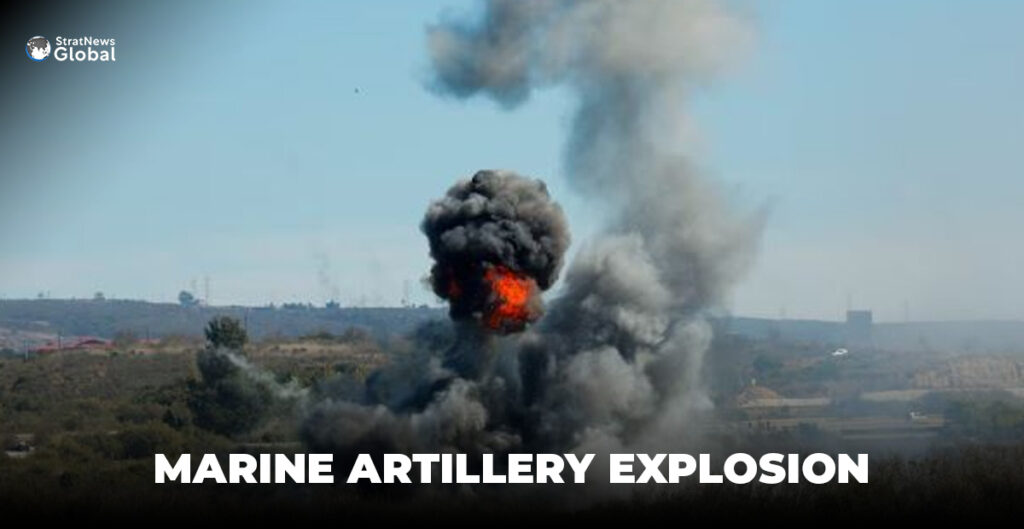
The U.S. Marines have initiated a probe into an incident in which live artillery rounds were fired over a major California highway during a ceremony attended by Vice President JD Vance. One of the shells reportedly exploded midair, scattering shrapnel onto nearby police vehicles, officials said on Monday.
Nobody was injured in the mishap, which occurred on Saturday afternoon during a demonstration of the military’s M777 Howitzer heavy artillery pieces at a Camp Pendleton event celebrating the 250th anniversary of the U.S. Marine Corps.
But the incident along Interstate 5, about 40 miles (64 km) north of San Diego, drew sharp criticism from California Governor Gavin Newsom, who blamed the Trump administration for what he called a “reckless” and “profoundly absurd show of force.”
The California Highway Patrol’s border division chief, Tony Coronado, a Marine veteran, labeled the mishap “an unusual and concerning situation,” adding “it is highly uncommon for any live-fire or explosive training activity to occur over an active freeway.”
No Serious Damage
The Highway Patrol had temporarily closed down a 17-mile stretch of the I-5 freeway to traffic as a precaution in advance of the M777 exercise.
But a CHP patrol cruiser and a motorcycle that had been assigned to Vance’s security detail for his arrival and were parked at a freeway on-ramp near the base during the event were showered by metal shrapnel when the first of 60 artillery shells that the Marines had planned to shoot over the freeway prematurely exploded in flight, according to a CHP incident report.
A 2-inch-wide chunk of shrapnel dented the patrol car’s hood, and smaller pieces rained onto and around a motorcycle, but no serious damage was detected, the report said.
“After the failed round, the exercise was terminated and no additional rounds were fired,” the report said.
Camp Pendleton did not immediately respond to a request for comment.
The relatively brief closure of the I-5, which connects the Los Angeles area with San Diego County, caused traffic gridlock across the region, the Los Angeles Times reported.
The White House said on X “the Marines repeatedly said there are no public safety concerns with today’s exercises.”
A U.S. official familiar with the situation said an investigation was under way and Saturday’s aborted Howitzer demonstration followed a “test” firing of 30 155-millimeter artillery shells the day before, though it was not made clear whether Friday’s rounds were shot over the freeway. The Los Angeles Times reported some were.
The official said safety measures were in place on Saturday, and that when an artillery spotter noticed that one shell did not land where it was supposed to, a “cease-fire was called.”
(With inputs from Reuters)
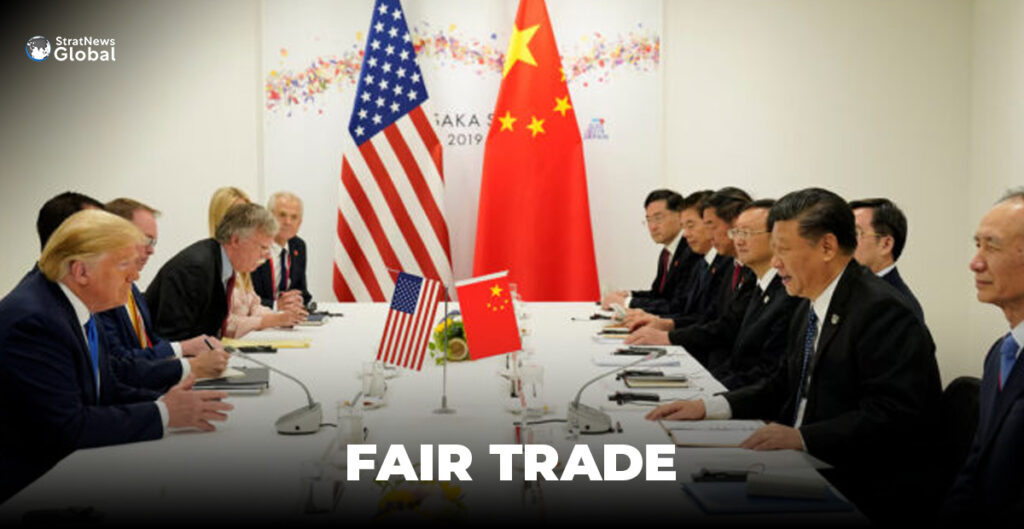
Trump Eyes ‘Fair’ China Trade Deal, Plays Down Taiwan Tensions
US President Donald Trump on Monday expressed confidence in reaching a fair trade agreement with Chinese counterpart Xi Jinping and played down the chances of a confrontation over Taiwan, even as his top trade negotiator accused China of practising “economic coercion.”
Trump suggested to reporters that China had no designs on invading Taiwan but acknowledged he expected the issue to be on the agenda at a planned meeting with Xi on the sidelines of an economic conference in South Korea next week.
Trade tensions between the US and China, the world’s two biggest economies, have lingered. Disputes over tariffs, technology and market access remain unresolved days before the meeting. Trump spoke at the start of a meeting with Australian Prime Minister Anthony Albanese where the two signed a critical minerals agreement aimed at countering China.
Trump Says China Doesn’t Want To Invade Taiwan
Trump’s comments on Taiwan reflect one of the most sensitive issues in US-China relations. Beijing has repeatedly pressed Washington to alter the language it uses when discussing its position on Taiwanese independence.
Trump pledged to accelerate deliveries of nuclear submarines to Australia and was asked if US actions in the waters of the Indo-Pacific were a sufficient deterrent to keep Xi from invading Taiwan.
“China doesn’t want to do that,” Trump said, before boasting about the size and strength of the US military.
He added: “We have the best of everything and nobody is going to mess with that … I think we’ll end up with a very strong trade deal. Both of us will be happy.”
Greer’s Warning
But US Trade Representative Jamieson Greer took a tougher line later in the day, warning the US would respond with unspecified action to what he called a “broader pattern of economic coercion” by Beijing against firms that make strategic investments in critical US industries.
Officials in South Korea said last week that China’s sanctions on US-linked units of shipbuilder Hanwha Ocean threatened to impact ambitious plans for shipbuilding cooperation between Seoul and Washington.
“Attempts at intimidation will not stop the United States from rebuilding its shipbuilding base and responding appropriately to China’s targeting of critical industrial sectors for dominance,” Greer said in a statement.
Taiwan Could Come Up In China Talks
Asked by a reporter whether the US might adjust its position on Taiwan independence in order to reach a trade deal with China, Trump said, “We’re going to be talking about a lot of things. I assume that will be one of them, but I’m not going to talk about it now.”
Speaking in Taipei, Wang Liang-yu, head of the Taiwan foreign ministry’s North American Affairs Department, said Taiwan-US communication is “quite smooth”, and that since Trump took office, the US has repeatedly reiterated its support for Taiwan.
“The foreign ministry will continue to closely pay attention to relevant developments and will maintain communication with the US side to ensure Taiwan-US relations continue to deepen in a stable way and that our interests can really be guaranteed,” she added.
Beijing has ramped up a campaign of military and diplomatic pressure on democratically governed Taiwan, which it views as its own territory. China has never renounced the potential use of force to bring Taiwan under its control.
The United States is Taiwan’s most important international backer and arms supplier despite the lack of formal diplomatic ties. Beijing regularly denounces any shows of support for Taipei from Washington.
(With inputs from Reuters)