

Support us by contributing to StratNewsGlobal on the following UPI ID
ultramodern@hdfcbank

Strategic affairs is our game, South Asia and beyond our playground. Put together by an experienced team led by Nitin A. Gokhale. Our focus is on strategic affairs, foreign policy and international relations, with higher quality reportage, analysis and commentary with new tie-ups across the South Asian region.
You can support our endeavours. Visit us at www.stratnewsglobal.com and follow us on YouTube, Twitter, Facebook and Instagram.
र 500 per month
र 1000 per month
र 5000 per year
र 10000 per year
Donate an amount of your choice
र 500 per month
Donate र 500 per month

र 1000 per month
Donate र 1000 per month
र 5000 per year
Donate र 5,000 per year
र 10000 per year
Donate र 10,000 per year
Donate an amount of your choice
Donate an amount of your choice
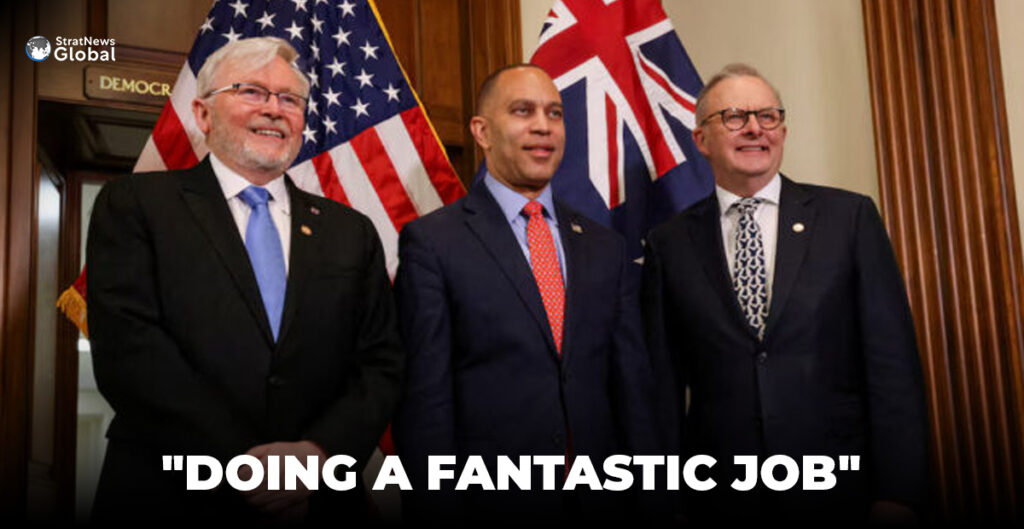

Albanese Dismisses Trump’s Jibe At Rudd, Backs Envoy As ‘Fantastic’
Prime Minister Anthony Albanese praised Australia’s ambassador to Washington, calling him “fantastic” and dismissed US President Donald Trump’s remarks about not liking Kevin Rudd as merely “light-hearted”.
Australia’s main conservative opposition party has called for Rudd, a former Labor prime minister, to be sacked after Trump made the comments at a press briefing in Washington on Monday.
Asked by an Australian reporter about Rudd’s past criticism of the president on social media, and told Rudd was sitting across the table from him, Trump said: “I don’t like you either, and I probably never will.”
‘All Is Forgiven’
Albanese said Trump had later told Rudd “all is forgiven”.
“It was pretty light-hearted, was what it was,” Albanese said in a television interview with Australian broadcaster Nine in Washington on Tuesday.
“Kevin said, ‘Oh, sorry about comments in the past’, and they moved on,” he added.
‘Fantastic Job’
Albanese, who previously served as Rudd’s deputy, praised the ambassador’s work to build support for the AUKUS nuclear submarine deal in Congress and to prepare for the first summit with Trump, which Australia has declared a success.
“Kevin Rudd is doing a fantastic job as the ambassador,” Albanese told reporters in Washington.
2-Time Prime Minister
Rudd in 2020 called Trump “the most destructive president in history,” later deleting the comment from social media when he was appointed ambassador.
He swept to power as prime minister in 2007 as a Mandarin-speaking progressive, returning the centre-left Labor to office after a decade in opposition. He was dumped by his party in 2010, but returned as prime minister briefly in 2013.
During the 2024 US presidential election campaign, Trump called Rudd “a little bit nasty” after being asked in a television interview with populist right-wing British politician Nigel Farage about Rudd’s social media posts.
This fuelled calls from Australia’s opposition Liberal Party, which suffered a resounding loss at this year’s national election, for Rudd to be sacked when Trump won office.
(With inputs from Reuters)
Ceasefire Dispute Derails Immediate Plans For Trump-Putin Talks
The planned summit between US President Donald Trump and his Russian counterpart Vladimir Putin was put on hold on Tuesday, after Moscow refused to agree to an immediate ceasefire in Ukraine — casting a shadow over ongoing efforts at negotiation.
A senior White House official told Reuters “there are no plans for President Trump to meet with President Putin in the immediate future” after Secretary of State Marco Rubio and Russian Foreign Minister Sergei Lavrov had a “productive call” but opted against an in-person meeting.
Trump had announced last week that he and Putin would meet soon in Hungary to try to bring an end to the war in Ukraine. But Putin has been unwilling to consider concessions. Moscow has long demanded that Ukraine agree to cede more territory before any ceasefire.
Trump, asked by reporters about the prospect for a summit, said he did not want to have a “wasted meeting” but suggested there could be more developments and that “we’ll be notifying you over the next two days” about them.
Kirill Dmitriev, Putin’s investment envoy, said in a social media post that “preparations continue” for a summit.
‘Non Paper’ Communique
Russia reiterated its long-standing terms for a peace deal in a private communique known as a “non paper” that it sent to the US last weekend, according to two US officials and two people familiar with the situation.
The communique reaffirmed Russia’s demand for full control of the long-contested eastern Donbas region, according to one official, effectively rejecting Trump’s call for a ceasefire to commence with a freeze of the frontlines at their prevailing locations.
Russia controls all of the province of Luhansk and about 75% of neighbouring Donetsk, which together make up the Donbas region.
European leaders called on Washington on Tuesday to hold firm in demanding an immediate ceasefire in Ukraine, with present battle lines to serve as the basis for any future talks.
NATO-US Meeting
NATO said Secretary General Mark Rutte travelled to Washington on Tuesday for talks with Trump that two sources familiar with the matter said would take place on Wednesday.
A Western official, speaking on condition of anonymity, said Rutte planned to present to Trump the European views on a ceasefire and any subsequent peace negotiations.
Trump, who last week spoke by phone to Putin and met Ukrainian President Volodymyr Zelenskyy, had hoped for another high-profile session with the Russian leader after their August summit in Alaska failed to advance negotiations.
But the two sides postponed a preparatory meeting between Rubio and Lavrov that had been expected to take place in Budapest on Thursday.
Lavrov and Rubio spoke by phone on Monday. Lavrov said the place and the timing of the next Trump-Putin summit was less important than the substance of implementing the understandings reached in Alaska.
The Kremlin said there was no clear date and that “serious preparation” for a summit was needed, which may take time.
“Listen, we have an understanding of the presidents, but we cannot postpone what has not been finalised,” Kremlin spokesman Dmitry Peskov said. “Neither President Trump nor President Putin gave exact dates.”
Asked if Moscow had an understanding of a possible date for the summit, Peskov said: “No, there is no understanding.”
‘I Guess The Russians Wanted Too Much’
Neither side has publicly abandoned plans for Trump to meet Putin. Hungary’s foreign minister, Peter Szijjarto, was in Washington on Tuesday, where he posted on Facebook: “We have some serious days ahead”.
But two senior European diplomats said the postponement of the Rubio-Lavrov meeting was a sign the Americans would be reluctant to go ahead with a Trump-Putin summit unless Moscow yields its demands.
“I guess the Russians wanted too much and it became evident for the Americans that there will be no deal for Trump in Budapest,” said one.
The Russians “haven’t at all changed their position, and are not agreeing to ‘stop where they are’,” said the second diplomat. “And I assume Lavrov gave the same spiel, and Rubio was like: ‘See you later’.”
Europeans Concerned Trump Will Get No Concessions
Ukraine’s European allies have been concerned that Trump could meet Putin for a second time without getting any serious concessions from the Russian leader.
In a statement on Tuesday, the leaders of European powers, including Britain, France, Germany and the EU, said they “strongly support President Trump’s position that the fighting should stop immediately, and that the current line of contact should be the starting point of negotiations”.
Trump has often changed his emphasis in public when speaking about Ukraine. But last Friday after his meeting with Zelenskyy at the White House, he explicitly endorsed the position that a ceasefire should start with forces at their present positions.
Reuters and other news organisations reported that Trump’s meeting with Zelenskyy behind closed doors was contentious, with the US president repeatedly using profanity and pushing Zelenskyy to accept some Russian demands.
But Zelenskyy has painted the meeting as a success because it ended with Trump publicly backing a ceasefire at the present lines, Kyiv’s longstanding position.
European leaders are due to meet this week with Zelenskyy as their guest, first at an EU summit and then at a meeting of the “coalition of the willing” countries discussing a security force to guarantee a post-war settlement in Ukraine. Russia rejects such an international security force.
The choice of Budapest as a venue for a Putin-Trump meeting is contentious within the EU, where Hungary’s Prime Minister Viktor Orban is an outlier as one of the few leaders to maintain warm relations with Russia.
Any trip to Budapest would require Putin to fly through the airspace of other EU countries. Poland said on Tuesday it could force Putin’s plane down and arrest him on an international warrant if he flies over its territory, but Bulgaria said Putin could use its airspace to reach the meeting.
(With inputs from Reuters)
Saudi Arabia Scraps Sponsorship System For Migrant Workers
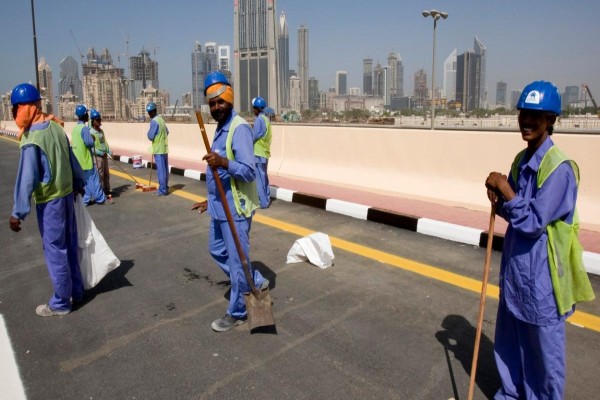
In a historic labour reform, Saudi Arabia has formally abolished the Kafala (sponsorship) system that governed foreign employment for more than seven decades.
The move marks a major shift in labour rights for over 13 million migrant workers in the Kingdom, including nearly 2.65 million Indians.
The announcement, described by Indian diplomats as a welcome Diwali gift for the Indian community, dismantles a legal framework that had long tied workers’ residency and employment status to a single employer, or kafeel. Under the old system, workers required employer permission to change jobs, leave the country, or file legal complaints — a structure widely criticised by international rights groups as exploitative.
According to the Saudi Ministry of Human Resources, the Kafala system is being replaced with a contract-based model that modernises employer-employee relations. Key reforms include:
- Job mobility: Workers can now change employers upon completion of their contracts without requiring approval from their previous sponsor.
- Freedom of movement: Exit and re-entry visas no longer need employer consent.
- Access to justice: Workers have greater recourse to labour courts and dispute resolution mechanisms.
- Digital oversight: Employment contracts will be registered and verified through digital platforms such as Qiwa, enhancing transparency and compliance.While the reforms apply to private-sector employees, domestic workers — who make up a significant portion of the workforce — are still governed by separate regulations and may not immediately benefit from the new rules.
The reform aligns with Saudi Arabia’s Vision 2030, Crown Prince Mohammed bin Salman’s blueprint for economic diversification and social transformation. Labour market modernisation is central to this initiative, aimed at improving the Kingdom’s international image, attracting skilled global talent, and fostering productivity through transparent employment practices.
For India, the policy change is particularly significant. Saudi Arabia is home to one of the largest Indian expatriate populations, contributing billions in remittances annually. Between 2023 and 2024, the number of Indian workers in the Kingdom rose by nearly 200,000. Over 3,000 Indian firms now operate in Saudi Arabia, up from 400 in 2019. Partnerships between India’s National Skill Development Corporation (NSDC) and Saudi Arabia’s Takamol Holding continue to certify Indian workers across more than 65 professions.
“The Indian community in Saudi Arabia is a living bridge between the two countries,” said Indian Ambassador to Riyadh Suhel Ajaz Khan. “This reform will strengthen that bridge and improve the everyday lives of our people working there,” added a senior Indian diplomat.
Human rights groups, while welcoming the move, have urged vigilance in its enforcement. Some employers reportedly continue to resist changes, and recruitment-related abuses such as illegal fees or contract substitution persist in some cases.
“Legal reform is a necessary first step, but effective implementation and awareness among workers are vital,” said a statement from Human Rights Watch.
With this decision, Saudi Arabia joins a small but growing list of Gulf nations dismantling or reforming the sponsorship model. The abolition of the Kafala system signals a new era for migrant labour rights in the region and reinforces the deepening strategic and people-to-people ties between India and Saudi Arabia.
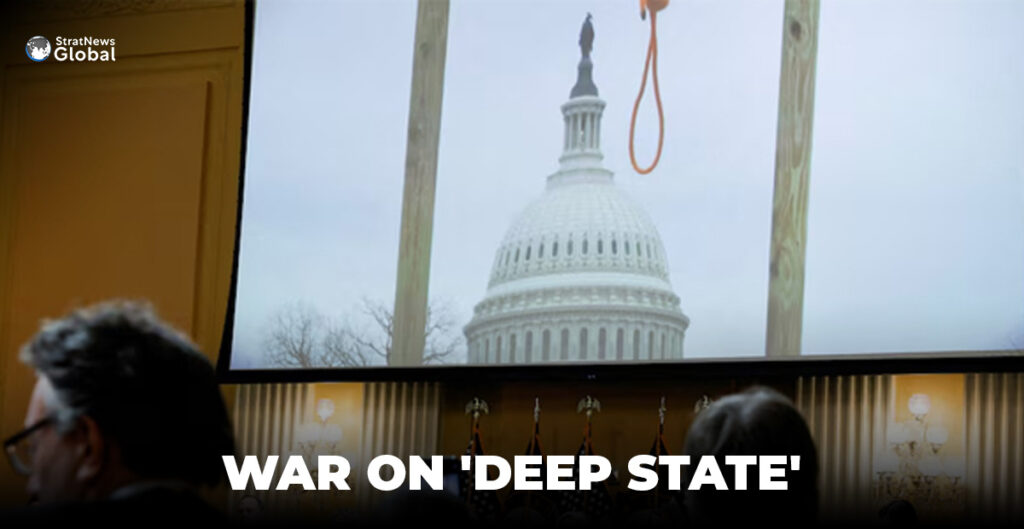
Broad Coalition Of US Officials Advances Trump’s Battle Against ‘Deep State’
Dozens of officials across the U.S. government, including intelligence officers, have been aiding President Donald Trump’s campaign for retribution against his perceived enemies, according to government records and a source familiar with the effort.
The Interagency Weaponisation Working Group, which has been meeting since at least May, has drawn officials from the White House, the Office of the Director of National Intelligence, the Central Intelligence Agency, the Justice and Defense Departments, the Federal Bureau of Investigation, the Department of Homeland Security, the Internal Revenue Service and the Federal Communications Commission, among other agencies, two of the documents show.
Trump issued an executive order on his inauguration day in January, instructing the attorney general to work with other federal agencies “to identify and take appropriate action to correct past misconduct by the federal government related to the weaponisation of law enforcement and the weaponisation of the Intelligence Community.”
Attorney General Pam Bondi and Director of National Intelligence Tulsi Gabbard, earlier this year, announced groups within their agencies to “root out” those who they say misused government power against Trump.
Shortly after Reuters asked the agencies for comment on Monday, Fox News reported the existence of the group, citing Gabbard as saying she “stood up this working group.” Key details in the Reuters story are previously unreported.
Several U.S. officials confirmed the existence of the Interagency Weaponisation Working Group to Reuters in response to the questions and said the group’s purpose was to carry out Trump’s executive order.
“None of this reporting is new,” said a White House official, speaking on condition of anonymity.
ODNI spokeswoman Olivia Coleman said, “Americans deserve a government committed to deweaponizing, depoliticising and ensuring that power is never again turned against the people it’s meant to serve.”
The existence of the interagency group indicates the administration’s push to deploy government power against Trump’s perceived foes is broader and more systematic than previously reported. Interagency working groups in government typically forge administration policies, share information and agree on joint actions.
Trump and his allies use the term “weaponisation” to refer to their unproven claims that officials from previous administrations abused federal power to target him during his two impeachments, his criminal prosecutions, and the investigation into Russia’s interference in the 2016 election.
The interagency group’s mission is “basically to go after ‘the Deep State,’” the source said. The term is used by Trump and his supporters to refer to the president’s perceived foes from the Obama and Biden administrations and his own first term.
Reuters could not determine the extent to which the interagency group has put its plans into action. The news agency also could not establish Trump’s involvement in the group.
Biden, Comey, Others ‘Discussed’
Among those discussed by the interagency group, the source said, were former FBI Director James Comey; Anthony Fauci, Trump’s chief medical advisor on the COVID-19 pandemic; and former top U.S. military commanders who implemented orders to make COVID-19 vaccinations compulsory for servicemembers. Discussions of potential targets have ranged beyond current and former government employees to include former President Joe Biden’s son, Hunter, the source said.
A senior ODNI official disputed that account and said there was “no targeting of any individual person for retribution.”
“IWWG is simply looking at available facts and evidence that may point to actions, reports, agencies, individuals, etc. who illegally weaponised the government in order to carry out political attacks,” the official said.
Lawyers for Comey and Hunter Biden did not immediately respond to requests for comment, and there was no immediate response from Fauci.
Reuters reviewed more than 20 government records and identified the names of 39 people involved in the interagency group. Five of the records concerned the interagency group, five pertained to the Weaponisation Working Group that Bondi announced in February, and nine referred to a smaller subgroup of employees from DOJ and several other agencies that remain focused on the January 6, 2021, attack by Trump supporters on the U.S. Capitol.
The source said an important player in the interagency group is Justice Department attorney Ed Martin, who failed in May to win Senate support to become U.S. attorney for Washington after lawmakers expressed concern about his support for January 6 rioters. Martin, who also oversees Bondi’s DOJ weaponisation group, is the department’s pardon attorney.
Martin did not immediately respond to a request for comment.
Other people working in or with the group include COVID-19 vaccine mandate opponents and proponents of Trump’s false claims that the 2020 presidential election was stolen from him, according to a Reuters review of their social media accounts and public statements.
A Justice Department spokesperson acknowledged that Bondi and Gabbard were ordered by Trump to undertake a review of alleged acts of “weaponisation” by previous administrations but did not comment specifically on the Interagency Weaponisation Working Group’s activities.
Reuters could not determine whether the group has the power to take any action or instruct agencies to act, or if its role is more advisory.
(With inputs from Reuters)
Syria Expects Complete Lifting Of US Sanctions Within Months
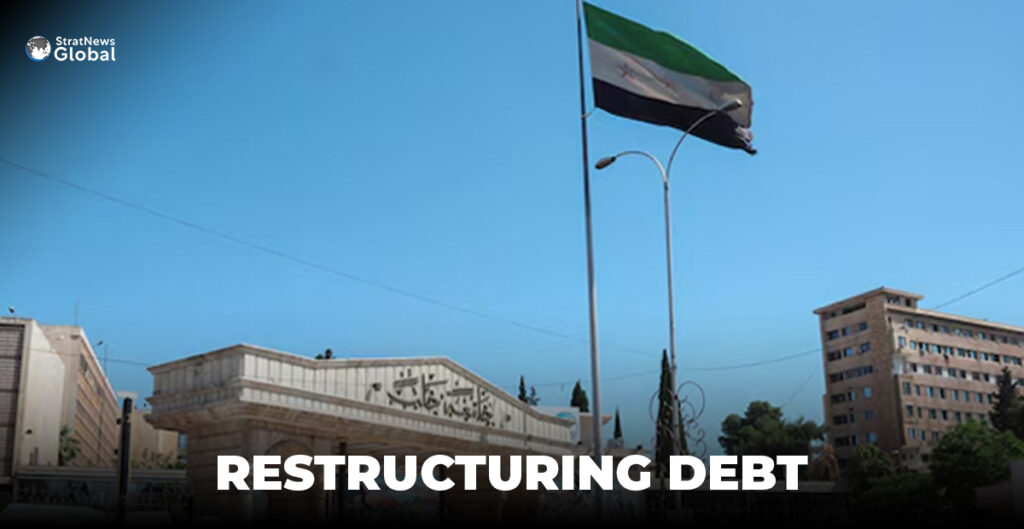
Syria expects U.S. sanctions to be fully lifted within the next few months and has begun restructuring billions of dollars in debt accumulated under President Bashar al-Assad’s rule, Economy Minister Mohammad Nidal al-Shaar said.
President Donald Trump ordered the lifting of most U.S. sanctions on Syria in May after meeting President Ahmed al-Sharaa, but the Caesar Syria Civilian Protection Act of 2019, which authorises them, remains U.S. law.
“We have to do some push and some lobbying to continue with this path that started in the right direction, and we’re hoping by the end of the year the bill (to scrap the act) will reach the president (Trump), and hopefully he’ll sign it,” al-Shaar told Reuters during a conference in London.
“And once that happens, then we are sanctions-free,” he said on the sidelines of the Future Resilience Forum.
Hopes For A Reduction Of US Tariffs
The act’s removal will enable foreign investment, restore access to international banking and help revive key industries.
Al-Shaar hopes Washington will reduce its 41% tariffs on trade with Syria and that U.S. firms will invest in the country as the economy opens up.
Gulf countries have pledged support and Chinese firms have committed hundreds of millions of dollars, Al-Shaar said, for “big” new cement, plastic and sugar factories.
The government is on course to introduce a new currency early next year, he said.
Sources said in August that new banknotes would be issued in December, removing two zeros – and Assad’s face – from the currency, to try to restore public confidence.
Syria’s pound has lost over 99% of its value since the civil war began in 2011, but has been broadly stable in recent months.
“We’re consulting with many entities, international organisations, experts, and eventually it will come very soon,” al-Shaar said of the currency.
Reconstruction Costs
A World Bank report on Tuesday estimated the cost of Syria’s reconstruction at $216 billion, saying the figure was a “conservative best estimate”.
Al-Shaar said the amount could be over 1 trillion dollars if the rebuild brought infrastructure up to date, but would be spread over a long time, with the rebuilding of houses alone likely to take 6-7 years.
Asked about plans to overhaul Syria’s debt burden, al-Shaar said the process had started already.
“The sovereign debt that we have, which is not very big actually, will be restructured,” he said, adding that Syria would be asking for grace periods and other relief.
Assad left Syria in disarray when he was ousted last December, and fighting continued in the oil-producing north until a ceasefire was struck this month.
“I’m hopeful that in the next, maybe a few weeks, or maybe a month or two, we will reach some kind of an agreement with those who are controlling that part of Syria,” Al-Shaar said.
“Once that happens, I think we will have greater ability, financial, natural resources, to really start meaningful (investment) projects,” he said, predicting a “quantum leap in our GDP”.
(With inputs from Reuters)
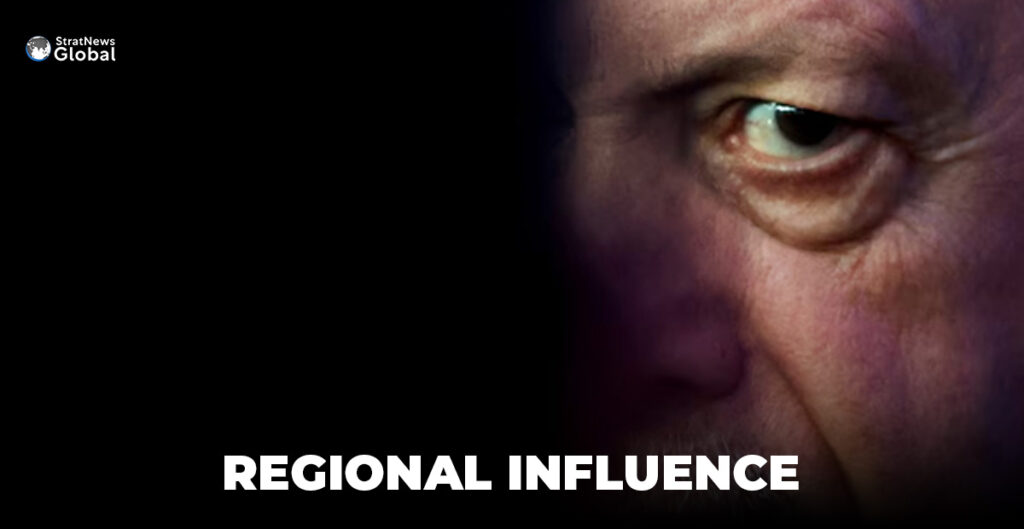
Erdogan Uses Trump’s Gaza Deal To Boost Turkish Influence
Turkiye has transformed its previously problematic ties to Hamas into a geopolitical asset, leveraging the group’s acceptance of Donald Trump’s Gaza deal to reassert influence in the Middle East, alarming Israel and Arab rivals.
Initially resistant to the U.S. president’s ultimatum — free the Israeli hostages or face continued devastation — Hamas leaders relented only when Turkiye, a country they view as a political patron, urged them to agree to the American plan.
Two regional sources and two Hamas officials told Reuters that Ankara’s message was unequivocal: The time had come to accept.
“This gentleman from a place called Turkiye is one of the most powerful in the world,” Trump said last week, referring to Turkish President Tayyip Erdogan, after the Palestinian militant group agreed to a ceasefire and hostage-release plan.
“He’s a reliable ally. He’s always there when I need him.”
Erdogan’s signature on the Gaza document supercharged Turkiye’s push for a central role in the Middle East, a status Erdogan has increasingly sought to reclaim, often invoking Ottoman-era ties and leadership.
Now, after the deal, Turkiye is seeking to reap dividends, including in bilateral issues with the U.S., the sources said.
Sinan Ulgen, director of the Istanbul-based think tank EDAM and a senior fellow at Carnegie Europe, said Ankara’s success in delivering Hamas’s acceptance of Trump’s Gaza deal has given it new diplomatic leverage at home and abroad.
Turkiye, he said, is likely to use its renewed goodwill in Washington to push for progress on stalled F-35 fighter jet sales, an easing of U.S. sanctions and U.S. help in advancing Turkiye’s security goals in neighbouring Syria.
“If those laudatory statements from Trump translate into lasting goodwill, Ankara could use that momentum to resolve some of the long-standing disagreements,” Ulgen told Reuters.
A Revamp Of Ties Began At Trump-Erdogan Meeting
The diplomatic recalibration between Ankara and Washington, officials said, began during Erdogan’s September visit to the White House, his first in six years.
The meeting addressed unresolved flashpoints, including Turkiye’s push to lift U.S. sanctions imposed in 2020 over its purchase of Russian S-400 missile systems, a move that angered Washington and also led to its removal from the F-35 programme.
Syria was another key topic. Turkiye wants to pressure the U.S.-backed Kurdish Syrian Democratic Forces (SDF) to merge into the Syrian army. Ankara views the SDF as a threat due to its ties to the PKK, which Turkiye designates a terrorist group.
That push appears to be gaining ground. SDF commander Mazloum Abdi confirmed a mechanism to merge with the Syrian army, an outcome Turkiye sees as a strategic win.
The Gaza deal follows other boosts to Turkish prestige. Trump praised Erdogan for hosting Russia-Ukraine talks earlier this year, and Ankara’s influence grew after Bashar al-Assad’s fall in Syria in 2024, where Turkiye backed opposition forces.
Turkiye’s ambition to reclaim a dominant Middle East role recalls for some sceptics the legacy of the Ottoman empire, which once ruled much of the region. Its collapse a century ago left modern Turkiye inward-looking as it built a secular republic and somewhat sidelined from regional diplomacy.
For years, Ankara was not part of high-level efforts to solve the Israeli-Palestinian dispute, a core source of regional instability.
Turkiye’s support for Islamist movements — including political and diplomatic backing for Hamas, whose leaders it has hosted — strained ties with Israel and several Arab states, and its perceived drift under Erdogan from NATO norms further distanced it from peacemaking.
But to break the deadlock in Gaza ceasefire talks, Trump turned to Erdogan, betting on the Turkish leader’s sway over Hamas. Turkish officials, led by spy chief Ibrahim Kalin, assured Hamas the ceasefire had regional and U.S. backing, including Trump’s personal guarantee.
By enlisting Erdogan, Trump handed Ankara the role it craved as a dominant regional Sunni power. The move unsettled Israel and rival Arab states, including Egypt, Saudi Arabia, and the UAE, long wary of Erdogan’s Islamist ambitions, two diplomats said.
“Erdogan is a master in expanding his influence, seizing opportunities, taking advantage of events, turning them to his own interest and taking credit for them,” said Arab political commentator Ayman Abdel Nour. “Obviously, the Gulf countries were not happy about Turkiye taking a leading role on Gaza, but at the same time they wanted this conflict to end, to see an agreement and to see Hamas sidelined.”
While Arab states shared an interest with Turkiye in ending the war, said Lebanese analyst Sarkis Naoum, the larger role given to Ankara was worrisome for them, recalling the history of Ottoman imperial rule over many countries in the region.
Turkiye’s Foreign Ministry and MIT intelligence agency did not respond to Reuters requests for comment. The U.S. State Department did not immediately reply to a request for comment.
For Hamas, the main concern was that Israel might renege on the deal and resume military operations. Deep distrust nearly derailed the process, regional sources said.
“The only real guarantee,” a senior Hamas official told Reuters, “came from four parties: Turkiye, Qatar, Egypt, and the Americans. Trump personally gave his word. The U.S. message was: ‘release the hostages, hand over the bodies, and I guarantee there will be no return to war.’”
Crushing Pressure On Hamas
Turkiye’s entry into the talks was initially vetoed by Israel, but Trump intervened, pressuring Tel Aviv to allow Ankara’s involvement, two diplomats said.
There was no immediate comment from Israel’s foreign ministry.
A senior Hamas official said Gaza’s military leaders accepted the truce not as surrender, but under the crushing pressure of relentless mediation, a collapsing humanitarian situation, and a war-weary public.
The deal won the release of Israeli hostages taken during Hamas’s October 7, 2023, attack, which killed 1,200 people, and triggered an Israeli offensive that has since left over 67,000 Palestinians dead, according to Gaza health authorities.
Whether the Gaza deal will eventually open a way toward a Palestinian state remains unclear. Turkiye and Arab states, including Qatar and Egypt, say the plan lacks a roadmap toward a two-state solution, a historic Palestinian demand.
Asked about a potential Turkish troop deployment to Gaza in a post-war scenario and ways to ensure the enclave’s security, Erdogan said on October 8 the ceasefire talks were critical for discussing the issue in detail, but the priority was achieving a full ceasefire, aid deliveries and rebuilding Gaza.
(With inputs from Reuters)
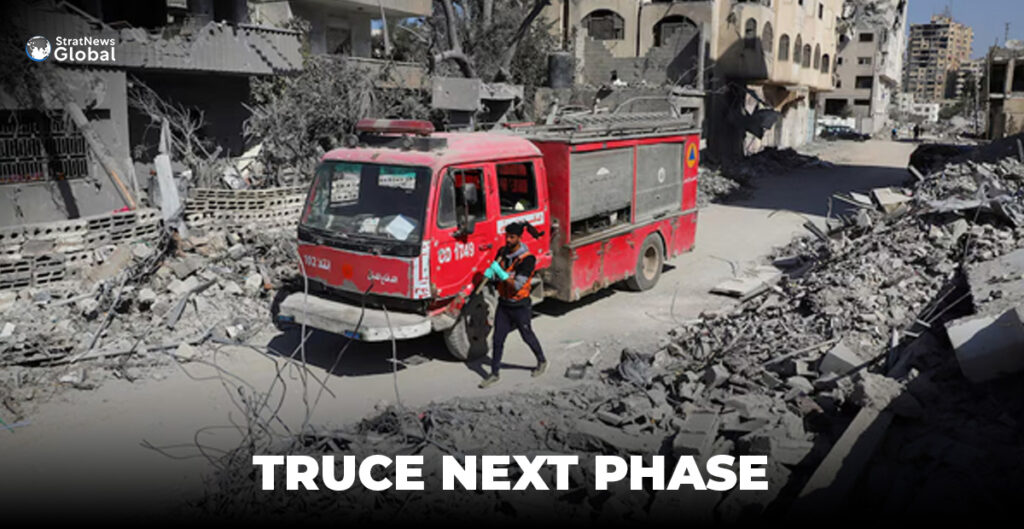
Trump Warns Hamas As US Presses Next Gaza Ceasefire Steps
U.S. President Donald Trump warned Hamas on Tuesday of a “FAST, FURIOUS & BRUTAL” response if it fails to “do what is right,” as he advances the next, more complicated phase of a repeatedly tested Gaza ceasefire.
Increasing the pressure on the Palestinian militant group, Trump said in a social media post that numerous U.S. allies had said they would welcome the chance to go into Gaza and hit Hamas, but he had told them and Israel “not yet”.
Israel and Hamas have accused each other of repeated breaches of the truce since it was signed eight days ago, with flashes of violence and recriminations over the pace of returning hostage bodies, bringing in aid and opening borders.
Vance Is Visiting Israel
U.S. Vice President JD Vance, who arrived on Tuesday, was due to meet Israeli Prime Minister Benjamin Netanyahu on Wednesday for talks Israel said would focus on security challenges and political opportunities.
Those are expected to focus on Trump’s 20-point ceasefire plan that will require moving beyond the existing, shaky ceasefire to much more difficult steps, including the disarmament of Hamas and a path towards a Palestinian state.
The trip follows Monday’s talks between Netanyahu and U.S. envoys Steven Witkoff and Trump’s son-in-law Jared Kushner, and comes as Hamas meets mediators in Cairo.
Israel is pressing for stronger assurances on Hamas disarming – a step to which the group has so far refused to commit – said a source briefed on the matter.
Hamas’ Cairo talks, led by the group’s exiled leader Khalil al-Hayya, are also looking at prospects for the next phase of the truce and post-war arrangements in Gaza as well as stabilising the existing ceasefire.
The head of intelligence for key Gaza mediator Egypt met Netanyahu earlier on Tuesday to discuss advancing the ceasefire plan and other issues, Israel said. The intelligence chief, Hassan Mahmoud Rashad, will later meet Witkoff, Egyptian television reported.
Underscoring the fragility of the truce, Qatar, another of the mediators, on Tuesday accused Israel of “continuous violations”. It and Turkey, which has used its role to bolster its regional position, have been key interlocutors with Hamas.
Future Role Of Hamas?
Trump’s plan called for the establishment of a technocratic Palestinian committee overseen by an international board with Hamas taking no role in governance.
A Palestinian official close to the talks said Hamas encouraged the formation of such a committee to run Gaza without any of its representatives, but with the consent of the group as well as the Palestinian Authority and other factions.
Last week, senior Hamas official Mohammed Nazzal told Reuters the group expected to maintain a security role on the ground in Gaza during an undefined interim period.
Hamas last week battled rival gangs on the streets in Gaza and publicly executed men it accused of having collaborated with Israel. Trump condoned the killings but the U.S. military’s Middle East command urged Hamas to stop violence “without delay”.
Vance was expected to visit the headquarters of joint forces led by the U.S. military and meant to help with Gaza stabilisation efforts.
Return Of Bodies And Aid Deliveries
Speaking to Egyptian television late on Monday, Hayya reaffirmed the group’s compliance with the truce and said it would fulfil its obligations in the first phase, including returning more bodies of hostages.
“Let their (hostages) bodies return to their families, and let the bodies of our martyrs return to their families to be buried in dignity,” he said.
Hamas released another hostage body late on Monday and said it would hand over two more late on Tuesday. That would leave another 13 bodies in Gaza. Israel believes Hamas could still return more bodies soon but has recognised that some remains would likely need a slower, more complex, process of location and retrieval.
Israel handed back another 15 Palestinian bodies on Tuesday, local health authorities said, taking the total it has returned to Gaza to 165.
Inside the enclave on Tuesday, more aid was flowing in through two Israeli-controlled crossings, Palestinian and U.N. officials said.
However, with Gaza residents facing catastrophic conditions, aid agencies have said far more needs to be brought in.
The U.N. World Food Programme said supplies were ramping up but fell far short of its daily target of 2,000 tons, saying this was because only two crossings into Gaza were open. It said none had reached the famine-hit north of Gaza yet.
Violence in Gaza since the truce has mostly focused been around the “yellow line” demarcating Israel’s military pullback. On Tuesday Israel’s public Kan radio reported troops had killed a person crossing the line and advancing towards them.
Palestinians near the line, running across devastated areas close to major cities, have said it is not clearly marked and hard to know where the exclusion zone begins. Israeli bulldozers began placing yellow concrete blocks along the route on Monday.
The Gaza health ministry said on Tuesday at least seven Palestinians were killed by Israeli fire across the enclave over the previous 24 hours, bringing to 68,229 the total number killed since the war began.
Hamas’ October 7, 2023, attack on Israel that triggered the war killed around 1,200 people according to Israeli tallies, with another 251 dragged into Gaza as hostages.
(With inputs from Reuters)
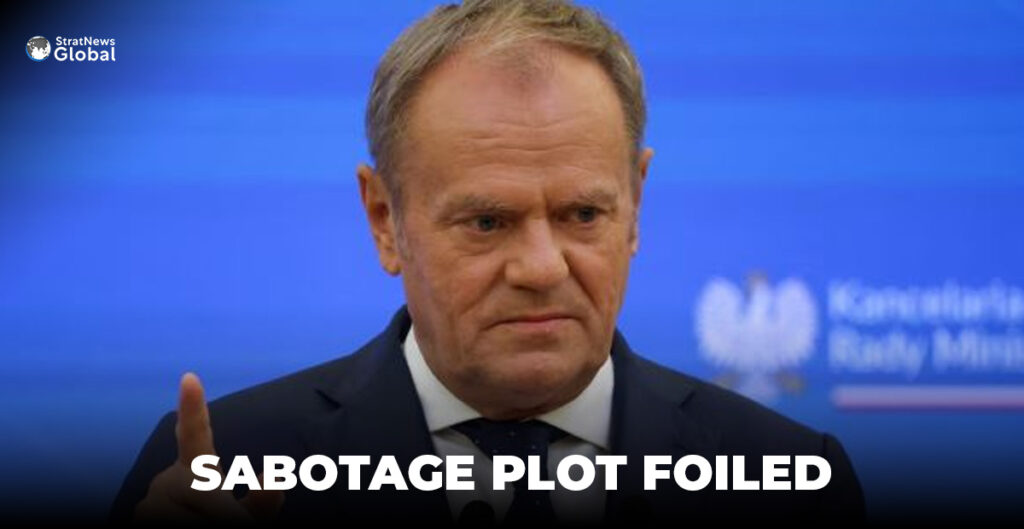
Polish Authorities Say Russian Sabotage Plan Foiled In Joint Operation With Romania
Authorities in Warsaw said on Tuesday that Poland and Romania had detained eight individuals suspected of carrying out sabotage activities on behalf of Russia, including three arrests tied to a newly uncovered plot to send explosive parcels to Ukraine.
European officials have previously blamed Russia for detonations of parcels carried by DHL and DPD in Europe in 2024, in what security services said was part of a test run for a Russian plot to trigger explosions on cargo flights to the United States.
Russia has denied having any such plans.
Poland says it has been targeted with tactics such as arson and cyberattacks in a “hybrid war” waged by Russia to destabilise nations that support Kyiv in the Russian war in Ukraine. Moscow has denied such accusations.
“Preliminary information indicates that they created a route of some kind to send explosives through Poland and Romania to Ukraine,” Jacek Dobrzynski, spokesman for Poland’s Special Services Coordinator, told reporters.
“One of them, a 21-year-old Ukrainian, was detained here in Poland near Warsaw. His colleagues, who were traveling to Romania, were detained by the Romanian special services in Bucharest.”
Acts Of Sabotage
The Polish National Prosecutor’s Office said the shipments were supposed to spontaneously combust or explode during transport, and that the objective of the planned actions was to intimidate the population and destabilise European Union countries supporting Ukraine.
The Romanian anti-organised crime prosecuting unit DIICOT confirmed that on October 16, two Ukrainian citizens were detained on suspicion of attempting acts of sabotage.
DIICOT prosecutors said that on October 15 the two suspects left two packages containing homemade devices at an international delivery company with the intent of destroying the building through fire.
“The devices were dismantled by specialists. They (suspects) are currently detained for 30 days,” the DIICOT prosecutors said in a statement.
Romania’s intelligence agency SRI said authorities “have prevented new sabotage acts on national territory by two Ukrainian citizens under direct coordination of some representatives of Russian secret services, their aim being to destroy by fire an office of NOVA POST company in Bucharest”.
Dobrzynski also said that in recent months the Internal Security Agency has detained a total of 55 people who acted to the detriment of Poland and on behalf of Russian intelligence.
(With inputs from Reuters)
Report Reveals Deadly Lisbon Rail Crash Caused By Uncertified Cable
A preliminary report found that the cable that snapped in the September Lisbon funicular crash, killing 16 people, was uncertified for passenger use and highlighted maintenance shortcomings.
Portugal’s Office for Air and Rail Accident Investigations (GPIAAF) said in the report late on Monday that it was still impossible to say whether the use of an inadequate cable had caused the crash, as other factors were also at play.
GPIAAF’s final report is due by next September.
The yellow tram-like carriage, which carries people up and down a steep hillside in the Portuguese capital, hit a building after leaving the track on September 3.
Gloria, which opened in 1885, is one of three old funiculars operated by the municipal public transport company Carris, which suspended their use after the incident. The line carried around 3 million tourists and locals a year.
GPIAAF said the maintenance procedures, designed by Carris, have not been updated for many years and “the use of cables that did not comply with the specifications and usage restrictions was due to several accumulated failures in the process of acquiring, accepting, and using them by Carris”.
Carris’ internal control mechanisms “were not sufficient or adequate to prevent and detect such failures.”
Carris has outsourced maintenance of the elevator since 2007, and the GPIAAF also identified deficiencies in this area.
“There is evidence that maintenance tasks recorded as completed do not always correspond to the tasks actually performed,” it said.
Carris said in a statement, “it is not possible at this stage to say whether the nonconformities in the use of the cable are relevant to the accident or not.”
(With inputs from Reuters)
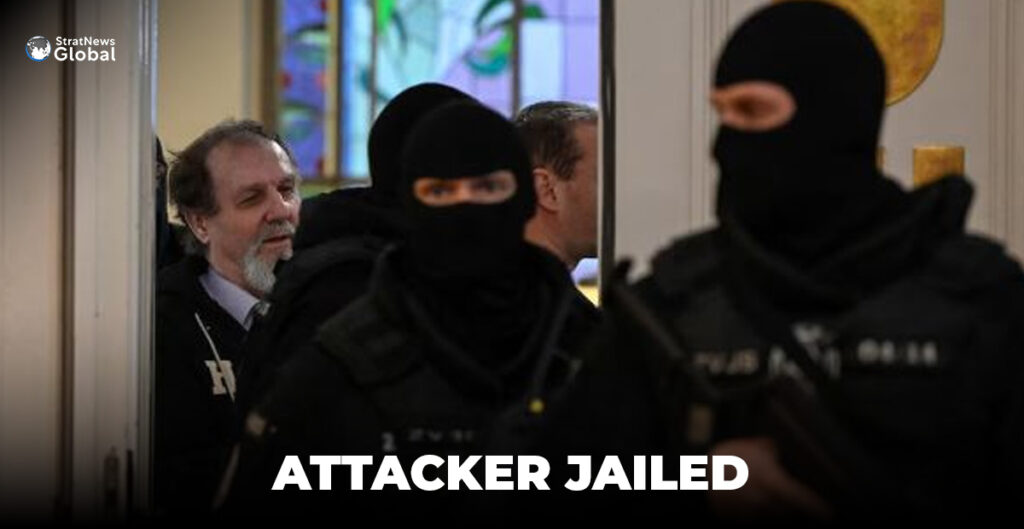
Slovak Court Jails PM Fico’s Attacker For 21 Years On Terrorism Charges
A Slovak court on Tuesday convicted the man who shot and injured Prime Minister Robert Fico last year on terrorism charges and sentenced him to 21 years in prison.
Juraj Cintula, 72, shot at Fico five times from just over a one-metre distance as the prime minister greeted people in the central Slovak town of Handlova in May 2024.
The verdict of the Specialised Criminal Court in the city of Banska Bystrica closes a trial that began in July and whose main question was whether Cintula, who admitted shooting Fico, was guilty of terrorism or less serious crimes of murder or attack.
Fico, 61, was struck four times and was seriously injured in his abdomen, and also suffered injuries to his hip, hand and foot. He made his first public appearance in July last year, a few months after the attack and returned to work shortly after.
Cintula appeared in court in a blue shirt and black hooded sweatshirt, accompanied by guards with automatic weapons. He has said he wanted to hurt but not kill Fico, because he wanted to stop him from continuing his policies which he said damaged Slovak freedom and culture.
Cintula told reporters when leaving court on Tuesday he would “for sure” appeal the verdict. “It was unjust,” he said.
Allegations Against Fico
The shooting laid bare deep divisions in Slovak society, and animosity between the populist Fico and the opposition.
Fico, who has held power for 11 years over three stints since 2006, has blamed the mostly liberal, pro-EU opposition for fostering a climate of anger that led to the shooting.
The opposition accuses Fico of eroding democratic standards, media freedom, and covering up corruption.
Judge Igor Kralik cited Cintula’s own reasoning for the attack when reading his justification for the terrorism count.
“The court considers proven that the defendant did not attack a citizen but specifically the prime minister,” Kralik said.
The sentence was less than the maximum of life in prison.
The defence counsel for Cintula, a pensioner and former mine worker, stonemason, writer and public activist, argued that not every attack on an official was terrorism. It had sought a lesser sentence for an attack on a public official.
Attacker Opposed Fico’s Policies
David Lindtner, a lawyer for Fico, said it was clear that the defendant was “no pensioner but a terrorist” who wanted to set a precedent that “political confrontation should be resolved by violent means”.
Fico returned to power in 2023 and ended state military assistance to Ukraine, sought better ties with Moscow, overhauled the public broadcaster and introduced some new criminal codes – changes critics say hurt democracy.
Cintula has said he opposed the prime minister’s policies on Ukraine, media and culture and at his trial described the attack as a “scream against fear that is paralysing the society”.
Fico, who has suffered ongoing health problems related to the shooting, has said he has forgiven Cintula.
(With inputs from Reuters)