

Support us by contributing to StratNewsGlobal on the following UPI ID
ultramodern@hdfcbank

Strategic affairs is our game, South Asia and beyond our playground. Put together by an experienced team led by Nitin A. Gokhale. Our focus is on strategic affairs, foreign policy and international relations, with higher quality reportage, analysis and commentary with new tie-ups across the South Asian region.
You can support our endeavours. Visit us at www.stratnewsglobal.com and follow us on YouTube, Twitter, Facebook and Instagram.
र 500 per month
र 1000 per month
र 5000 per year
र 10000 per year
Donate an amount of your choice
र 500 per month
Donate र 500 per month

र 1000 per month
Donate र 1000 per month
र 5000 per year
Donate र 5,000 per year
र 10000 per year
Donate र 10,000 per year
Donate an amount of your choice
Donate an amount of your choice


Six Killed In Russian Airstrikes On Ukraine As Trump-Putin Summit Shelved
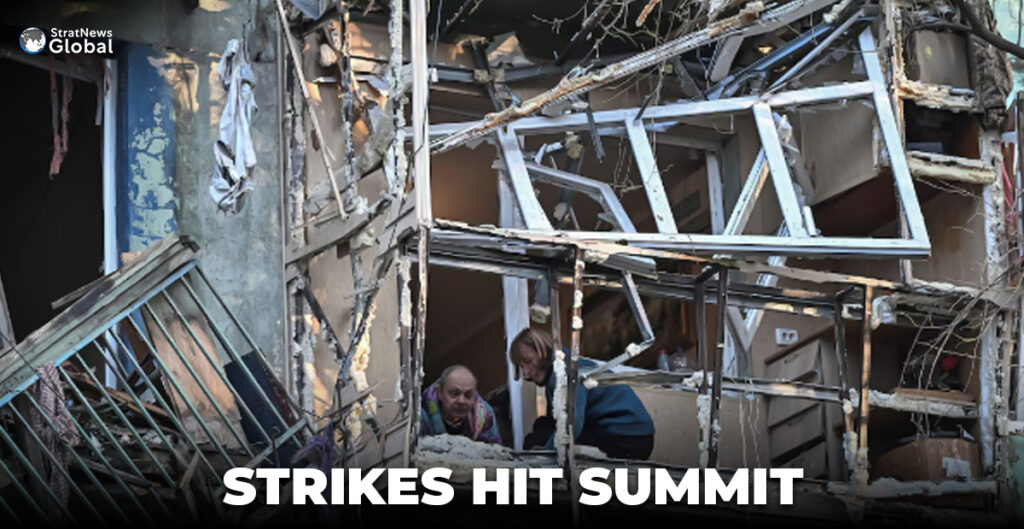
Russian missile and drone strikes on Ukraine killed six people, including two children, and triggered nationwide power outages on Wednesday, officials said, as plans for a Russia-U.S. leaders’ summit were abandoned following Moscow’s rejection of a ceasefire.
Debris from downed weapons strewed the Ukrainian capital, sparking fires in half its districts, Timur Tkachenko, head of Kyiv’s military administration, said on the Telegram messaging app.
“Ukraine long ago agreed to the U.S. proposal for a ceasefire, while Moscow is doing everything to keep the killing going,” Zelenskyy’s chief of staff, Andriy Yermak, said in a Telegram post after the newest Russian attacks.
“This means collective actions against Putin are currently insufficient, and we must all do more together to make him stop killing our people.”
Trump-Putin Summit On Hold
The comments came after the White House on Tuesday put on hold a planned summit of U.S. President Donald Trump and Russian President Vladimir Putin after Moscow rejected calls for an immediate ceasefire.
A senior U.S. official told Reuters there were no plans for a meeting soon.
Two people were killed in the Kyiv attack, while four, including two children, died in the aftermath of Russian strikes on the surrounding region, Ukraine’s emergency service said.
Ten people were rescued from a fire in a high-rise building in Kyiv’s district of Dniprovskyi, said Mayor Vitali Klitschko, with a child among the five admitted to hospital across the city.
Officials said fires also broke out in the districts of Desnianskyi, Darnytskyi and Pecherskyi, the last home to the Kyiv Pechersk Lavra monastery, a symbol of Ukrainian spiritual and cultural history.
Ukrainian officials said the attacks ran through most of the night and early Wednesday, initially with ballistic missiles and subsequently drone strikes.
There was no immediate comment from Russia.
Energy Facilities Targeted Again
“All night the enemy struck the country’s energy infrastructure,” Energy Minister Svitlana Hrynchuk said on Telegram, with no details.
In a separate post, the ministry said there were emergency power outages in most regions of Ukraine, as a result of the Russian attack on energy infrastructure, including in the city of Kyiv and the region surrounding it.
In the central region of Poltava, oil and gas facilities were damaged in the Myrhorod district by the Russian attack, the regional governor said.
28 Missiles, 405 Drones Launched
Russia launched 405 drones and 28 missiles at Ukraine in an overnight attack targeting energy infrastructure, Ukraine’s air force said on Wednesday.
Ukraine downed 16 missiles and 333 drones, and other missiles directly hit targets, it added.
In the frontline southeastern region of Zaporizhzhia, which has been subject to continued strikes and shelling by Russian forces, 13 people were wounded in overnight attacks, regional governor Ivan Fedorov said on Wednesday.
Russia has consistently hit Ukrainian energy facilities since launching a full-scale invasion of the country in 2022, maintaining that they are a legitimate military target in the war.
A Tuesday attack on Ukraine killed four and left hundreds of thousands without power and many without water in what Kyiv said was Moscow’s latest salvo in a campaign to break its neighbour’s energy system ahead of winter.
(With inputs from Reuters)
With Eye On Chile’s Lithium, Peru’s Minerals, India Fast Tracks FTA
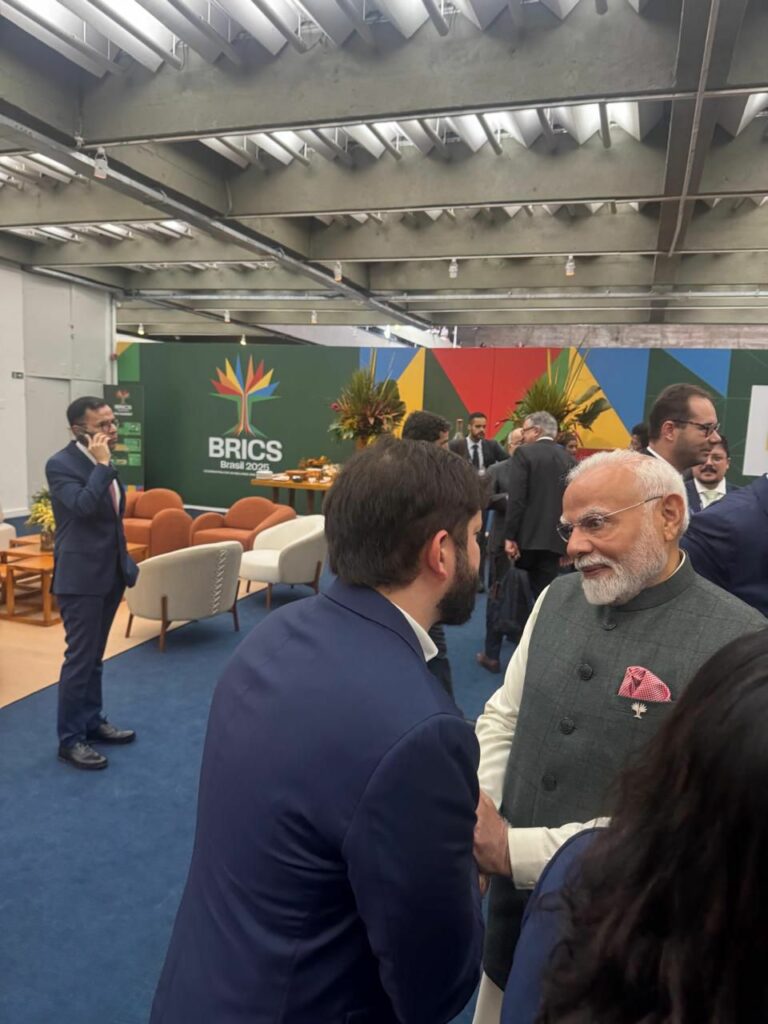
India is fast-tracking free trade negotiations with Latin American partners: talks with Peru could be concluded latest by the first quarter of 2026. Trade talks with Chile are also advancing, sources told StratNewsGlobal.
An Indian team is expected to leave for Santiago, Chile by the weekend for two days of discussions followed by three days in Lima. Peru appears to be further along in the negotiations.
“The pace of discussions with Peru has picked up after an 18-month pause. If momentum continues, we could see closure by early 2026 or possibly even by the end of this year,” a senior diplomatic source confirmed to StratNewsGlobal.
Peru Talks
The meeting in Lima will mark the eighth round of India–Peru FTA talks. The last round was in New Delhi in April 2024. Sources say many of the core issues have already been addressed, and the remaining discussions are now centered on tariff concessions, rules of origin, and market access for sensitive sectors.
Trade figures are small. Last year India’s exports to Peru stood at $1.02 billion, while imports reached $4.98 billion, primarily driven by shipments of gold, copper, and other key minerals. Indian exports to Peru include automobiles, pharmaceuticals, textiles, and industrial components.
Trade experts see strategic value in the Port of Chancay, which is emerging as a logistics hub in South America. “It’s growing connectivity with Asia could dovetail well with India’s Indo-Pacific strategy,” said Dr. Aparaajita Pandey, a Latin America specialist at Amity University.
Chile Talks
The talks with Chile are part of a broader Comprehensive Economic Partnership Agreement, building on a preferential trade pact originally signed in 2006 and expanded in 2017. The current negotiations, which began in May this year, aim to expand cooperation to cover digital services, MSMEs, investment promotion, and access to critical minerals.
Chile is the world’s second-largest producer of lithium, a key input for electric vehicle batteries. As India intensifies its transition to clean energy and electric mobility, bilateral collaboration in mining and value-added processing is becoming a major focus of the talks.
“There is strong trust between our companies,” Chile’s Ambassador to India, Juan Angulo, told StratNewsGlobal in an earlier interaction. “Indian businesses are exploring opportunities in Chile’s mining sector, especially in sectors like agro-tech, lithium processing, and manufacturing.”
Officials are hopeful but both sides are still in the process of exchanging offers and aligning on key sectors.
“With Chile, the framework is broader, and negotiations are at an earlier stage. But both countries are committed to an outcome in 2026,” an official familiar with the talks said.
Why Peru, Chile Matter
India is racing to secure new trade partnerships amid shifting global trade dynamics and rising protectionism. The US tariffs on Indian goods have created an added sense of urgency, pushing New Delhi to deepen trade ties with emerging economies across Latin America and Africa.
Chile and Peru are seen as important to this strategy, not only as sources of critical raw materials but also as entry points to Latin American markets. Despite their potential, India’s exports to Latin America accounted for just 3.5% of total exports in FY2024–25, stressing the need for better market access.
Japan’s First Woman PM Faces Uncertain Fate
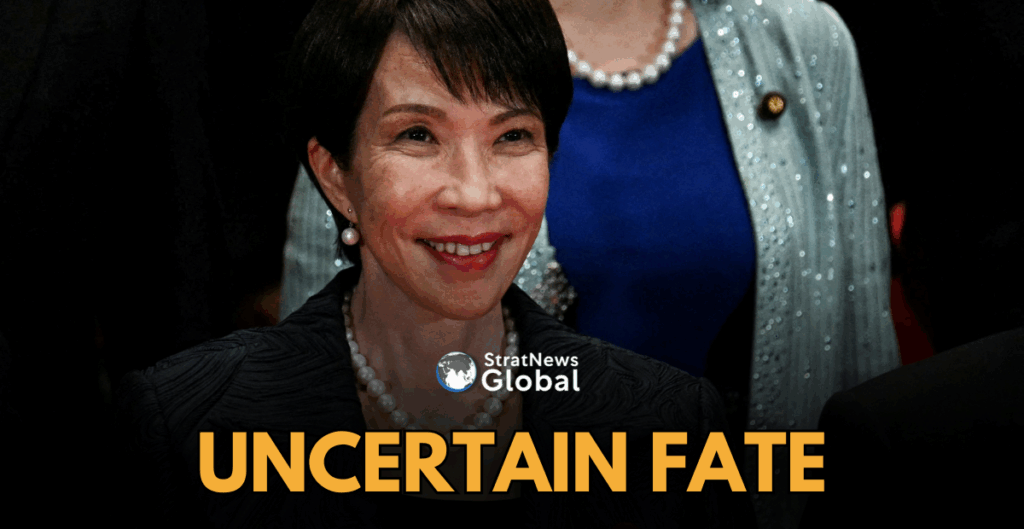
Sanae Takaichi has become Japan’s first female Prime Minister, with Satsuki Katayama appointed as the country’s first female finance minister — a historic moment in a nation long dominated by male leadership. However, analysts say the new government may not last its full term amid deep political uncertainty.
Takaichi, known for her hardline conservative views, has long promoted “traditional” family structures in which women are expected to shoulder most domestic responsibilities. According to NBC News, she opposes same-sex marriage and supports maintaining male-only succession within Japan’s imperial family. She also backs the law requiring married couples to share a surname, a policy widely criticised for pressuring women to take their husband’s name.
But observers suggest that Takaichi’s gender or popularity may not determine the fate of her administration. Instead, the key challenge lies in the fragile coalition her Liberal Democratic Party (LDP) has formed with the Japan Innovation Party (JIP). The JIP, which had previously sided with the opposition, abruptly switched alliances to help the LDP form a last-minute government.
A report in the South China Morning Post describes the alliance as one-sided, offering JIP neither cabinet seats nor real influence. It notes that the partnership rests on reform promises from the LDP — promises that have often been broken in the past, including under former Prime Minister Shinzo Abe.
The report predicts that Takaichi may remain in office until the budget is finalised, after which tensions with the JIP could force a withdrawal of support, plunging Japan into renewed political instability.
Stephen Nagy, visiting fellow at the Japan Institute for International Affairs, told TIME magazine that Takaichi’s ability to maintain stability will depend on how she manages relations with U.S. President Donald Trump and whether she can resist prioritising short-term ideological goals over long-term pragmatic policies.
The SCMP concludes that the coalition is unlikely to endure, warning that a JIP withdrawal could leave Takaichi in an untenable position and force early elections — cutting short the historic tenure of Japan’s first female Prime Minister.
Record-Breaking Temperatures Hit Australia And New Zealand As Strong Winds Fuel Wildfires
Fierce hot winds tore across Australia and New Zealand on Wednesday, intensifying wildfires and pushing spring temperatures to record highs, with parts of Sydney experiencing unprecedented October heat.
Australia‘s weather bureau said a powerful mass of hot air that built up over the country’s outback on Tuesday was now moving across the southeast of the country and bringing a spring heatwave.
Wind gusts of up to 100 kph (62 mph) raised bushfire threats and forced authorities to issue several total fire bans across New South Wales, the most populous state.
A total of 36 fires are burning, with nine yet to be contained, authorities said. Almost 2,000 properties also lost power.
Spring Heatwave
Temperatures in Sydney’s central business district soared past 37 C (98.6 degrees Fahrenheit) by the afternoon, while the western suburbs of Penrith and Bankstown nearly reached 40 C, breaking October heat records.
“It is still spring and we are seeing these incredibly warm temperatures,” said Bureau of Meteorology forecaster Angus Hines.
On Sydney’s popular Bondi Beach, Tony Evans, a retiree visiting from England, said he was surprised by the wind’s heat.
“It’s really hot and what surprised me is the temperature of the wind, it’s just no cooling effect and actually it seems like it’s a heating effect and it’s too warm to be comfortable,” he said.
The fire season usually runs from November through February, the late southern hemisphere spring through summer.
Across the Tasman Sea in New Zealand, authorities issued rare “red” level wind warnings – reserved for only the most extreme weather events – for central and southern parts of the country.
Firefighters battled to contain wildfires near Kaikoura on the South Island and in Hawke’s Bay on the North Island, fanned by the winds.
State Of Emergency
The wildfires have so far destroyed several properties, including five homes.
Ingka, the parent company of the Swedish furniture giant IKEA, confirmed that fire had burnt some pine trees that were intended for furniture but that it would not impact the company’s global supply chain.
The government also declared a state of emergency in the Canterbury region on Wednesday afternoon to assist in the response to the severe weather conditions.
Forecaster MetService said it expects gusts could reach 150 kph along the South Island’s east coast and up to 140 kph around Wellington, the capital, on Thursday. Heavy rain is also forecast for parts of the country.
Authorities said people should stay indoors, avoid travel and prepare for possible power and communications outages.
The warnings follow strong winds and heavy rain on Tuesday that left thousands without power and killed a man in a Wellington park when a tree branch fell on him.
(With inputs from Reuters)
Beijing To Celebrate Contested Taiwan ‘Retrocession’ At Great Hall Of The People
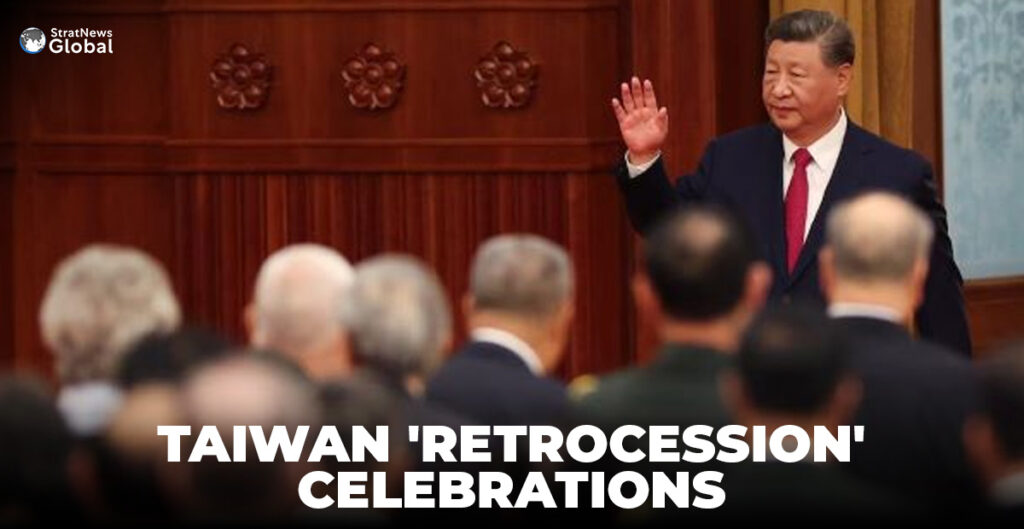
China announced on Wednesday that it will hold a ceremony commemorating the 80th anniversary of Taiwan’s “retrocession” to Chinese rule, according to sources. The event is planned for this weekend at Beijing’s Great Hall of the People.
Both China and Taiwan use the term “retrocession” to refer to the island’s 1945 handover by Japan, which colonised Taiwan in 1895, to the Republic of China government, a transfer whose anniversary falls on Saturday.
“Taiwan’s retrocession stands as a significant achievement of the victory in the War of Resistance,” Zhu Fenglian, a spokesperson for China’s Taiwan Affairs Office, told reporters in Beijing, referring to World War Two.
“It was a great triumph forged through the relentless and bloody struggles of all Chinese people, including our compatriots in Taiwan, and deserves to be commemorated jointly by compatriots on both sides of the Taiwan Strait.”
Anniversary Celebration
China would hold an anniversary celebration and invite people from Taiwan to attend, she added, but did not state a date or say which Chinese leaders would attend.
China and democratically-governed Taiwan, which Beijing views as its own territory, have repeatedly clashed this year over their differing interpretations of the 80th anniversary of the end of World War Two.
Taiwan says it was the Republic of China that fought the war, not the People’s Republic of China, founded by Mao Zedong’s communists in 1949 after they won a civil war.
The Republic of China government fled to Taipei and the Republic of China remains Taiwan’s formal name.
Three diplomatic sources told Reuters that China had sent out invitations for the event, scheduled for Saturday in Beijing’s Great Hall of the People, but it lacked details of who would address the meeting.
The sources spoke on condition of anonymity as the matter is a sensitive one.
Contested History
Taiwan’s government says the island was handed to the Republic of China, not the People’s Republic of China, which did not exist at the time.
Beijing says as the successor state to the Republic of China, it has a right to claim the island as its own territory. Taiwan says that is nonsense as the Republic of China still exists.
At the last such anniversary event in 2015, Yu Zhengsheng, at the time China’s fourth-ranked leader, gave a speech and foreign representatives also attended.
Taiwan’s government last week banned Taiwanese officials from attending any “retrocession” events in China, saying Beijing was trying to distort history for its own ends.
Zhu in turn said Taiwan was trying to “distort and deny the historical facts” of World War Two, and “intimidate and suppress” Taiwanese from attending related Chinese events.
China held a massive military parade for last month’s anniversary of the end of World War Two.
On Saturday, Taipei is set to host East Asia’s largest Pride march, a riotous celebration of LGBTQ+ equality and diversity.
(With inputs from Reuters)
Trump Refuses To Meet Democrats Until Government Shutdown Ends
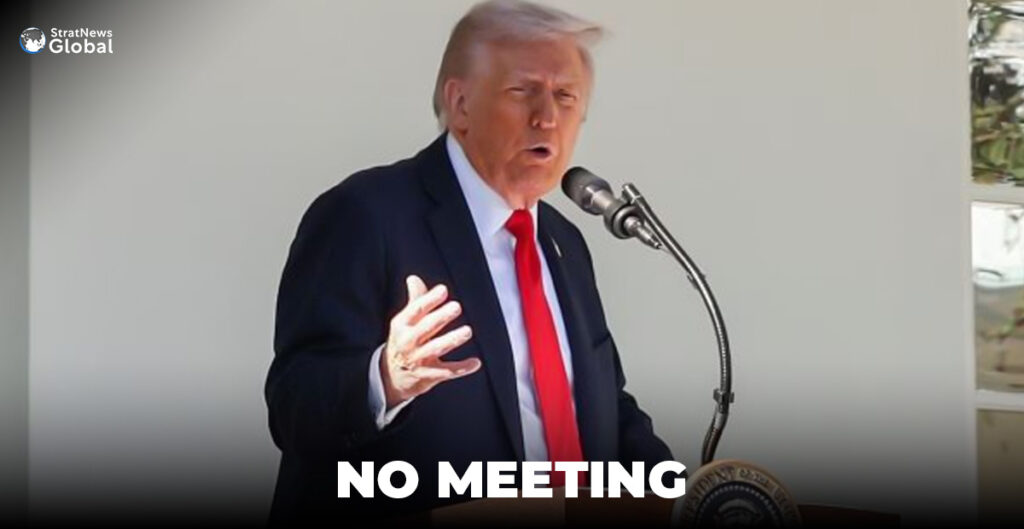
U.S. President Donald Trump on Tuesday declined a request from senior Democratic leaders for a meeting, saying he would not engage in talks until the three-week-old government shutdown is brought to an end.
“I would like to meet with both of them, but I said one little caveat, I will only meet if they let the country open,” Trump told reporters, referencing the request by U.S. Senate Minority Leader Chuck Schumer and House Minority Leader Hakeem Jeffries to meet “anytime, anyplace.”
All but three senators in the Democratic caucus are withholding their support for the Republican-led stopgap funding bill, unless Trump and enough Republican lawmakers agree to an extension of an enhanced Affordable Care Act tax credit that is due to expire on December 31.
Without an ACA extension, millions of Americans are girding for significant increases in their healthcare premiums, which Democrats have called “a healthcare crisis.”
Meanwhile, Republicans who control Congress have begun talking about possible next steps in what has been a stalemate with Democratic leaders who are withholding their support from a temporary funding bill until they win an extension of a healthcare subsidy.
Extension For Spending Bills
Senator Susan Collins, who chairs the Senate Appropriations Committee that oversees federal spending, on Tuesday told reporters that Republicans will likely need to extend their stopgap bill to reopen the government and fund operations beyond its November 21 end-date.
“There’s a realization that we’re going to have to have an extension because we’ve wasted all these weeks,” the Maine Republican said, noting she does not want to see stopgap funding go into 2026.
Her remarks follow those of Senate Majority Leader John Thune late on Monday acknowledging that more time would be needed to finish the 12 annual spending bills that fund Washington’s “discretionary” programs.
Thune needs the support of a handful of Senate Democrats in order to win passage of the temporary funding bill approved by the House of Representatives last month. Republicans have a narrow, 53-47 majority in the 100-member Senate, with 60 votes needed to advance most bills.
Thousands of federal workers have been furloughed as federal agencies pared their activities beginning on October 1, the start of the new fiscal year. Simultaneously, previous-year funding expired on about $1.7 trillion in funds for agency operations, which amounts to about one-quarter of annual federal spending.
Trump huddled with Republican senators at midday on Tuesday but they did not discuss an ACA extension, according to Republican Senator Mike Rounds of South Dakota, who attended the get-together. Republicans want to kick such talks towards the end of the year.
(With inputs from Reuters)
Colombia: Court Acquits Ex-President Uribe In Witness Tampering Trial, Senator To Challenge Ruling
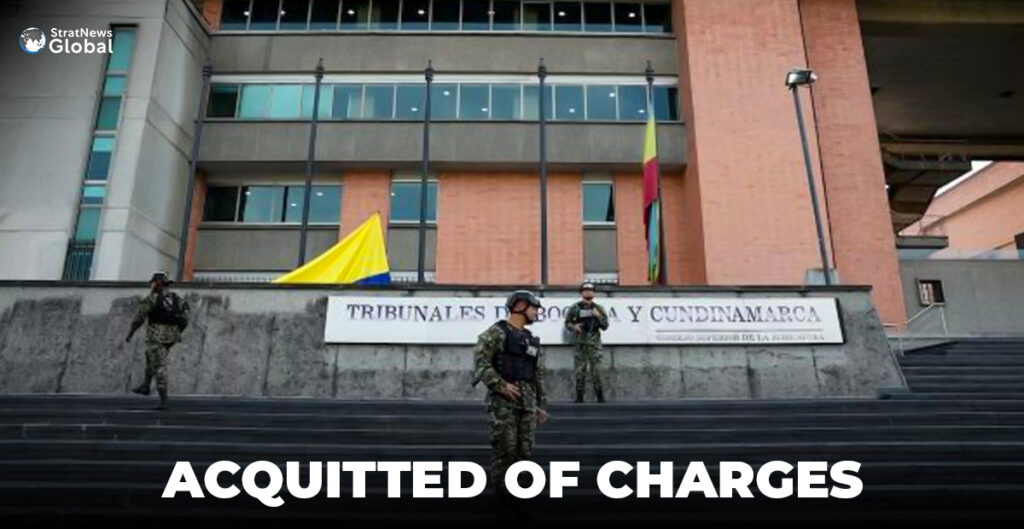
A Colombian court on Tuesday acquitted former President Alvaro Uribe of fraud and bribery charges in a long-running case over alleged witness tampering that could have placed him under 12 years of house arrest.
However, a senator involved in the proceedings said he would appeal the decision, potentially sending the case to the Supreme Court.
Uribe, who led Colombia’s executive branch from 2002 to 2010, was sentenced in early August, making him Colombia’s first-ever former president to be criminally convicted.
No Valid Evidence
The three-magistrate panel ruled in a decision read by Magistrate Manuel Antonio Merchan that the evidence cited by the judge who sentenced Uribe was not sufficiently strong or legally valid to merit the conviction.
“Bogota’s Supreme Tribunal is repeating history, contradicting the Supreme Court of Justice and affirming that a judicial interception carried out by a magistrate of the Supreme Court against a criminal, where the voice of Uribe appears, is private,” current President Gustavo Petro said on X.
“That’s how you hide the history of paramilitary governance in Colombia,” added Petro, who rose to prominence as a senator by exposing links between paramilitaries and politicians.
Uribe has always maintained his innocence, calling the case a political persecution. The tribunal in August suspended immediate enforcement of the house arrest until this appeal was decided.
The case against the former president revolves around allegations that he ordered a lawyer to bribe jailed paramilitaries to discredit claims he had ties to their organizations.
Leftist Senator Cepeda To Appeal
The paramilitaries, funded by cattle ranchers, landowners and merchants to protect themselves from leftist guerrillas, are estimated by a truth commission to be responsible for nearly half of more than 450,000 people killed in Colombia’s conflict between 1985 and 2018.
Uribe in 2012 accused leftist Senator Ivan Cepeda of manipulating jailed ex-paramilitary members to link him to the groups, but the Supreme Court found no wrongdoing by Cepeda and turned the tables, saying it was Uribe who had pressured witnesses.
Cepeda said he would appeal Tuesday’s ruling, meaning the case could go up to Colombia’s highest court and extend the already 13-year-long legal proceedings.
In a video on social media, Cepeda said a majority of the judges had chosen to ignore a conclusive body of evidence.
“We will continue to work so the truth comes out in this case as well as others in which Alvaro Uribe is responsible for very serious acts,” he said. “We will persevere.”
Victim Of “Weaponization” Of Judges
U.S. Secretary of State Marco Rubio had shortly after the initial guilty verdict said Uribe was a victim of a “weaponization” of Colombian judges, prompting Petro to call for respect for the independence of the judiciary.
“Colombia’s justice has prevailed as former President Uribe is absolved after years of the political witch hunt against him and his family,” Rubio said on X after the ruling.
Petro is feuding with the Trump administration, which has threatened tariffs against the South American nation over accusations of involvement in drug trafficking.
U.S. President Donald Trump earlier this year raised tariffs on Brazil over its conviction of political ally Jair Bolsonaro for plotting a coup.
The U.S. is Colombia’s top export destination.
Political campaigns will soon begin for next year’s presidential and legislative elections, in which several of Uribe’s allies will compete to succeed Petro, who cannot run again for president.
Cepeda, an advocate for victims of state violence, is among those vying to stand for president on behalf of the ruling leftist coalition.
(With inputs from Reuters)
Japan Plans Major Stimulus Under New PM Takaichi
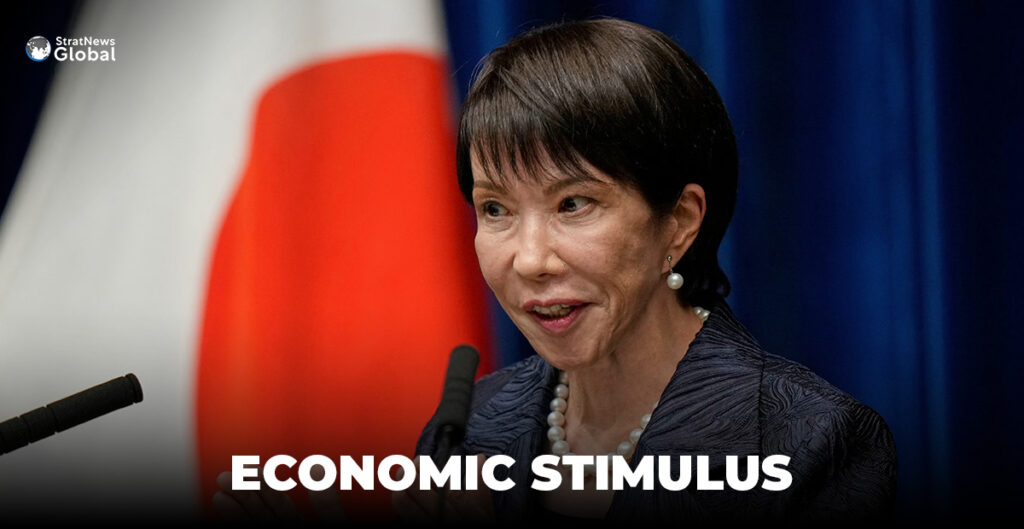
Japan’s new Prime Minister Sanae Takaichi is working on a fresh economic stimulus package, which is expected to be larger than last year’s $92 billion plan, according to government sources. The new package aims to support households struggling with rising prices and inflation, and is likely to be announced in the coming weeks.
The package of more than 13.9 trillion yen marks Takaichi’s first major economic initiative since the advocate of big fiscal spending took office on Tuesday, reflecting her commitment to what she calls “responsible proactive fiscal policy”.
It will be built around three main pillars: measures to counter inflation, investment in growth industries, and national security, the sources said, declining to be identified because the matter is still private.
Japan’s Nikkei share gauge erased losses and turned higher on Wednesday afternoon following the Reuters report, while the yen pared morning gains and was little changed.
Inflation Relief Measures
As part of its core inflation relief measures, the Takaichi administration plans to swiftly abolish the provisional gasoline tax rate.
It also aims to expand local government grants, with a focus on supporting small and medium-sized companies that are unable to benefit from existing tax incentives for wage hikes.
The package will also include investments in growth sectors such as artificial intelligence and semiconductors as the government focuses on strategic economic development.
The exact scale of the package is still being finalised, the sources said. It could be announced as early as next month.
Supplementary Budget
To fund the measures, the government is moving ahead with drafting a supplementary budget for the current financial year through March, with an eye toward passing it during the upcoming extraordinary parliament session.
If additional spending exceeds initial expectations, the government may need to issue deficit-covering bonds, raising questions about how to balance economic growth with fiscal discipline.
(With inputs from Reuters)
China: Major Military, Political Purge Ahead Of CCP’s Fourth Plenum
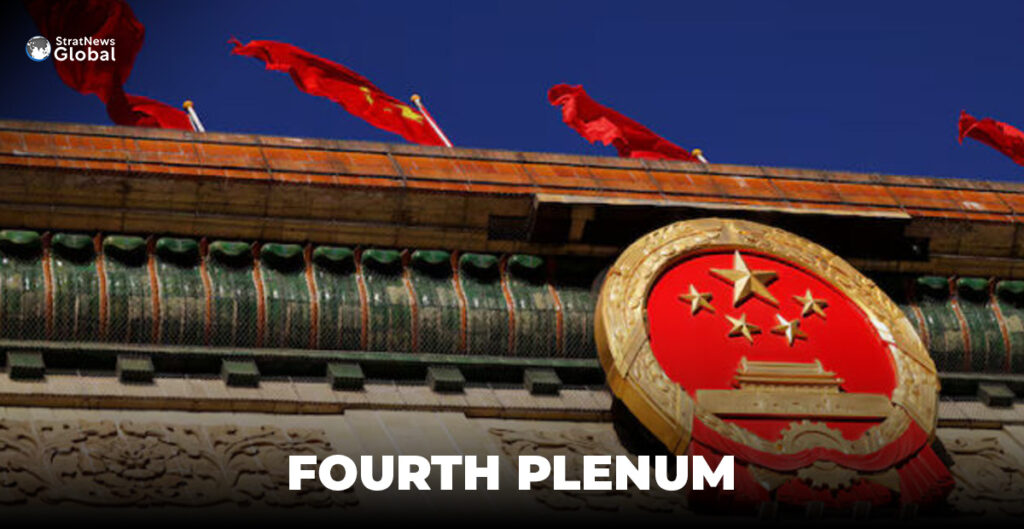
This week, China’s ruling Communist Party (CCP) will see its biggest change in leadership since 2017, following the recent expulsion of eight top generals on corruption charges.
The closed-door meeting, known as the Fourth Plenum, will discuss Beijing’s forthcoming five-year economic development plan, but will also confirm personnel decisions such as formally removing members already expelled from the party.
At least 11 full members of the Central Committee, out of 300-plus full and alternate members, are likely to be replaced by alternates, according to convention.
This could potentially be the highest turnover at a single meeting since 2017’s Seventh Plenum, when a record 11 members were expelled. Over the course of President Xi Jinping’s first term, a record 19 members were replaced in total as he launched a sweeping anti-corruption crackdown.
Here are some of the people who are likely to be replaced this week:
Military Reshuffle
The eight People’s Liberation Army generals expelled last week include He Weidong, China’s number two general, marking China’s biggest military purge in decades.
An important question looming over the plenum is whether He’s role as second-ranked vice-chair of the Central Military Commission (CMC) will be filled in. The seven-person top military command body chaired by Xi has lost three members to anti-corruption probes since 2023.
“He can either elevate one of the other CMC members, Liu Zhenli or Zhang Shengmin, in accordance with Party tradition. Doing this would of course create another vacancy on the CMC that the plenum could fill, in all likelihood with a Theatre Command-grade level officer,” said Jon Czin, a PLA expert at the Brookings Institution.
“Alternatively, Xi can give a Theatre Command-grade level officer a ‘helicopter promotion’ to the CMC vice chairman position, which is exactly what Xi did for He, ironically.”
He Weidong was also part of the 24-member Politburo. If someone is promoted to his former CMC role, they could potentially also take his seat on the elite policymaking body.
Other than the 8 officers announced on Friday, another senior military official who could be expelled is Zhang Lin, head of the CMC’s logistics support unit, who was removed from the national legislature in September.
At least a dozen further PLA officials have been missing from public view for months, a sign they may be under investigation.
“I do believe these secondary purges and the results of their investigations can be announced at a later date since the most significant of these were made public last Friday,” said James Char, Assistant Professor with the China Programme at Nanyang Technological University.
“Announcing more of these amidst the Plenum will distract from the Plenum itself, and cause further damage to PLA morale.”
Certain Replacements
Three more senior politicians are certain to be replaced. These include the former head of China’s General Administration of Customs Yu Jianhua who died last December, former Shanxi provincial governor Jin Xiangjun, who was expelled from the party this month, and former agriculture minister Tang Renjian, expelled last November for graft.
Officials Under Investigation
Since April, four members including Jin have come under public investigation for suspected corruption. They are: Guangxi regional chairman Lan Tianli, Inner Mongolia regional chairwoman Wang Lixia and Yi Huiman, the former head of the China Securities Regulatory Commission.
If any of these investigations have concluded, the individual’s expulsion could be announced at the plenum. An internal party investigation typically takes around six months or longer.
Uncertain Fate
Former industry minister Jin Zhuanglong, who has not been seen in public since last December, was dismissed from his role in February. An investigation has not been made public.
Senior diplomat Liu Jianchao was replaced by Liu Haixing as head of the Communist Party’s International Department last month. Liu was detained for questioning in early August, Reuters reported.
Investigations, reshuffles and retirements have caused at least 11 new provincial-level leaders – Party secretaries, governors or regional chairpersons – to be appointed this year so far.
The unusually high number of personnel appointments could be an attempt to prepare a new generation of potential leadership candidates who could enter the Central Committee or Politburo during or before the next major Communist Party leadership reshuffle in 2027.
Politburo member Ma Xingrui was removed from his post as Xinjiang Party Secretary in July “to be appointed to another position”, according to a Central Committee announcement.
It is not known whether he has been transferred to a new role but he has continued appearing in public, most recently at the Chinese leadership’s National Day reception in Beijing last month.
(With inputs from Reuters)
North Korea Fires Ballistic Missiles Ahead Of Asia-Pacific Summit
North Korea launched what seemed to be several short-range ballistic missiles into the sea off its east coast on Wednesday, South Korea’s military reported. This comes just one week before an important Asia-Pacific leaders’ meeting scheduled to take place in South Korea, raising concerns about regional security.
This was the first time Pyongyang fired ballistic missiles since May, breaking an international ban supported by the US and South Korea. Despite warnings and sanctions, North Korea continues to develop and test these weapons, ignoring global calls for restraint.
South Korean President Lee Jae Myung and US President Donald Trump are expected to meet in South Korea next week at a summit meeting of the Asia-Pacific Economic Cooperation (APEC) forum. Trump is also expected to meet with Chinese President Xi Jinping.
Security Beefed Up
According to reports, Seoul is stepping up its security measures in the southeastern city of Gyeongju, which will host the summit.
Up to 18,500 police officers, SWAT teams and coast guard staff as well as anti-drone jammers, armoured vehicles and helicopters will be mobilised as international leaders gather in Gyeongju, a quiet city known for its heritage tourism.
Short Range Ballistic Missiles Fired
South Korea detected several projectiles believed to be short-range ballistic missiles fired from an area near North Korea’s capital, Pyongyang, in a northeasterly direction early on Wednesday, its Joint Chiefs of Staff said in a statement.
South Korea was sharing information about the launch with the US and Japan, the military said.
No Harm To Japan, Says PM Takaichi
Japan’s new Prime Minister Sanae Takaichi, who broke the glass ceiling by becoming the first woman at the top post in male dominated Japanese politics, said there was no impact on her country’s security from the North Korean missile launch and Tokyo was sharing real-time information with the US.
North Korea last launched ballistic missiles on May 8 when it fired multiple short-range missiles from its east coast.
North Korea showcased its latest intercontinental ballistic missile this month at a parade attended by the Chinese premier.
(With inputs from Reuters)