

Support us by contributing to StratNewsGlobal on the following UPI ID
ultramodern@hdfcbank

Strategic affairs is our game, South Asia and beyond our playground. Put together by an experienced team led by Nitin A. Gokhale. Our focus is on strategic affairs, foreign policy and international relations, with higher quality reportage, analysis and commentary with new tie-ups across the South Asian region.
You can support our endeavours. Visit us at www.stratnewsglobal.com and follow us on YouTube, Twitter, Facebook and Instagram.
र 500 per month
र 1000 per month
र 5000 per year
र 10000 per year
Donate an amount of your choice
र 500 per month
Donate र 500 per month

र 1000 per month
Donate र 1000 per month
र 5000 per year
Donate र 5,000 per year
र 10000 per year
Donate र 10,000 per year
Donate an amount of your choice
Donate an amount of your choice



US Weighs Restricting Exports To China Made With American Software: Sources
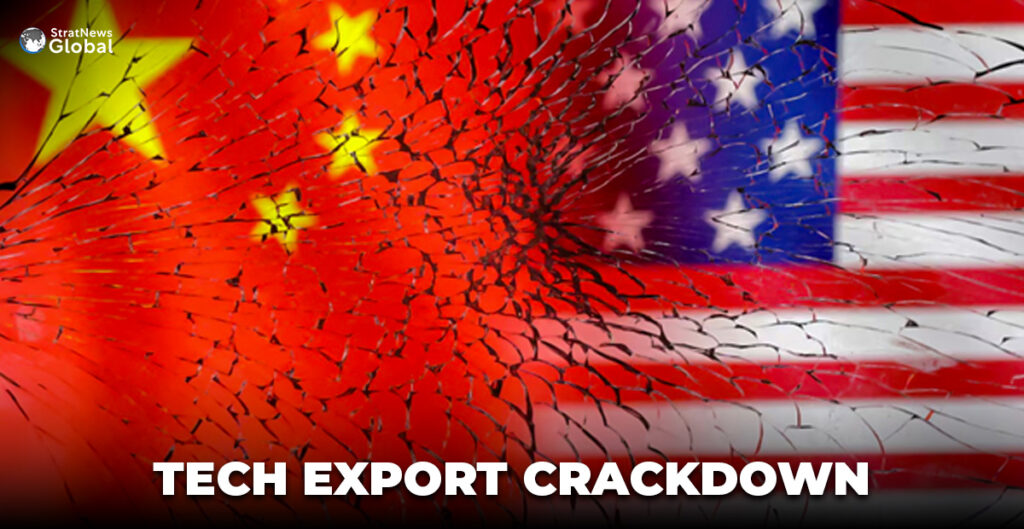
The Trump administration is weighing a plan to restrict a wide range of software-driven exports to China — including items from laptops to jet engines — in response to Beijing’s latest rare earth export curbs, according to a U.S. official and three people briefed on the discussions.
While the plan is not the only one being deliberated, it would make good on President Donald Trump’s threat earlier this month to bar “critical software” exports to China by restricting global shipments of items that contain U.S. software or were produced using U.S. software.
On October 10, Trump said in a social media post that he would impose additional tariffs of 100% on China’s U.S.-bound shipments, along with new export controls on “any and all critical software” by November 1, without further details.
To be sure, the measure, details of which are being reported for the first time, may not move forward, the sources said.
But the fact that such controls are being considered shows the Trump administration is weighing a dramatic escalation of its showdown with China, even as some within the U.S. government favour a gentler approach, according to two of the sources.
“I will confirm that everything is on the table,” U.S. Treasury Secretary Scott Bessent told reporters at the White House on Wednesday when asked about software curbs on China. “If these export controls – whether it’s software, engines or other things – happen, it will likely be in coordination with our G7 allies.”
U.S. stock indexes dipped following the Reuters report, before paring losses. The S&P 500 closed down 0.5% while the Nasdaq was about 1% lower at the market’s close.
Emily Kilcrease, a former trade official now at the Centre for a New American Security, said software was a natural point of leverage for the U.S. Still, such controls would be extraordinarily difficult to implement and would lead to blowback for U.S. industry, she said.
“You would hope they are only putting threats on the table that they would carry out and stick with,” Kilcrease said.
The White House declined to comment. The Commerce Department, which oversees export controls, did not respond to requests for comment.
A spokesperson for the Chinese embassy did not comment on the specific U.S. measures under consideration but said China opposed the U.S. “imposing unilateral long-arm jurisdiction measures” and vowed to “take resolute measures to protect its legitimate rights and interests” if the U.S. proceeds down what it views as a wrong path.
Measure Could Be Used To Pressure China
Administration officials could announce the measure to put pressure on China but stop short of implementing it, one of the sources said. Narrower policy proposals are also being discussed, two of the people said.
“Everything imaginable is made with U.S. software,” one of the sources said, highlighting the broad scope of the proposed action.
The sources declined to be named because the matter was not public.
The move could disrupt global trade with China, especially for technology products, and could come at a cost to the U.S. economy if fully implemented.
It echoes restrictions the Biden administration imposed on Moscow after its 2022 invasion of Ukraine. Those rules restricted exports to Russia of items made globally using U.S. technology or software.
Trump’s Truth Social post came just three weeks before a previously announced meeting with Chinese President Xi Jinping in South Korea, and a day after China dramatically expanded its export controls on rare earth elements. China dominates the market for such elements, which are essential to tech manufacturing.
In his post, Trump also accused China of considering “large-scale Export Controls on virtually every product” it makes and on some foreign-made items, which he said would affect all countries, also starting November 1. Any such move would constitute “a moral disgrace,” he added.
But questions have swirled about what Trump meant in his response by “critical software” controls.
While Trump has slapped a series of tariffs on China since taking office in January, he has wavered in his use of export restrictions against Beijing, first imposing strict new curbs on shipments of Nvidia’s and AMD’s AI chips before later removing them.
Likewise, in late May, the U.S. imposed new restrictions on chip design software as well as on other items after China held up rare earth shipments needed by U.S. automakers and others, only to lift the restrictions in early July.
Meanwhile, China has expressed its opposition to a Trump administration rule last month that restricts U.S. companies from shipping goods and technology to companies at least 50% owned by sanctioned Chinese firms.
Chinese imports currently face U.S. tariffs of around 55%, which could shoot up to 155% if Trump follows through on his threatened tariff hike. But Trump appeared to soften his posture on Beijing following the threats, posting on October 12 that “The U.S.A. wants to help China, not hurt it!!!”
U.S. Treasury Secretary Bessent is expected to meet with Chinese Vice Premier He Lifeng in Malaysia this week, ahead of the meeting between Trump and Xi in South Korea later this month.
(With inputs from Reuters)
Rubio Warns West Bank Annexation Could Derail Trump’s Gaza plan
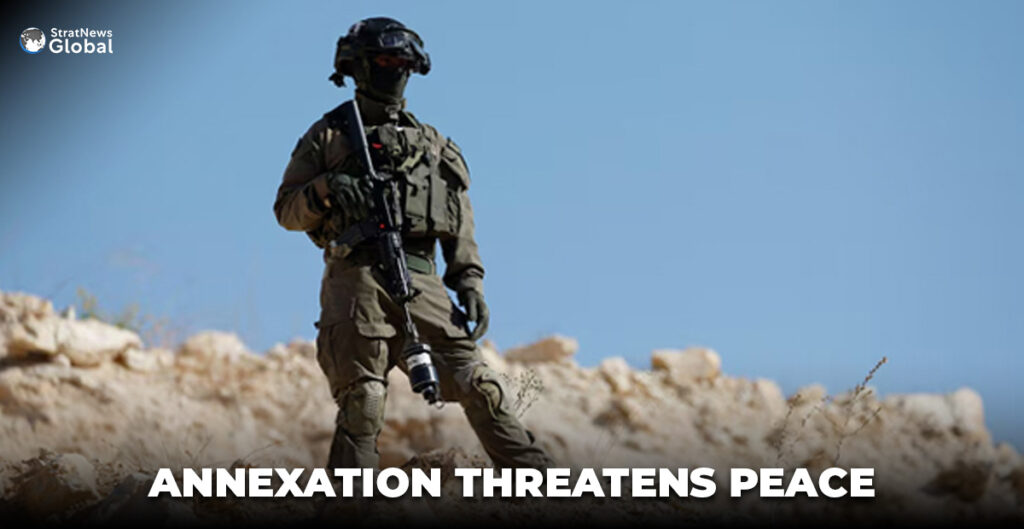
U.S. Secretary of State Marco Rubio warned that the Israeli Knesset’s push to annex the West Bank could jeopardise President Donald Trump’s plan to resolve the Gaza conflict, which has so far resulted in a fragile ceasefire.
“I mean, that’s a vote in the – yeah, that’s a vote in the Knesset, but obviously I think the president’s made clear that’s not something we’d be supportive of right now, and we think it’s potentially threatening to the peace deal,” Rubio told reporters late on Wednesday before leaving for Israel.
Rubio’s visit to Israel, announced by the State Department on Wednesday, is the latest by a senior U.S. official seeking to keep alive a fragile truce between Israel and the Palestinian militant group Hamas.
U.S. Vice President JD Vance arrived in Israel this week and met Israeli Prime Minister Benjamin Netanyahu on Wednesday. He is due to meet Defence Minister Israel Katz and Strategic Affairs Minister Ron Dermer on Thursday before departing.
The State Department said Rubio was visiting Israel to support the implementation of Trump’s 20-point plan to end the Gaza war.
West Bank Annexation Efforts
A bill applying Israeli law to the occupied West Bank, a move tantamount to annexation of land that Palestinians want for a state, won preliminary approval from Israel’s parliament on Wednesday.
There are around 700,000 Israeli settlers living in settlements across the Israeli-occupied West Bank. The United Nations and much of the international community consider the settlements illegal under international law.
Israel’s government, however, cites biblical and historical connections to the West Bank, a territory that it regards as disputed, and opposes the establishment of a Palestinian state.
The settlements are an explosive issue that has, for decades, been seen as a major obstacle to Middle East peace.
The vote was the first of four needed to pass the law and coincided with Vance’s visit to Israel, a month after President Donald Trump said that he would not allow Israel to annex the West Bank.
Netanyahu’s Likud party did not support the legislation, which was put forward by lawmakers outside his ruling coalition and passed by a vote of 25 in favour and 24 against out of 120 lawmakers. A second bill by an opposition party proposing the annexation of the Maale Adumim settlement near Jerusalem passed by 31 votes to 9.
Palestinian Statehood
Netanyahu’s government had been mulling annexation as a response to a string of its Western allies recognising a Palestinian state in September, but appeared to scrap the move after Trump objected.
Settlement building has been expanding rapidly since 2022, when Netanyahu’s government came to power. It is the most right-wing in Israel’s history, featuring several ultra-nationalist lawmakers.
The UAE, the most prominent Arab country to establish ties with Israel under the so-called Abraham Accords brokered by Trump in his first term in office, last month warned that annexation in the West Bank was a red line for the Gulf state.
Senior Emirati official Anwar Gargash, a diplomatic adviser to the UAE president, told the Reuters NEXT Gulf Summit in Abu Dhabi on Wednesday that he believed the Gulf state had averted annexation.
The United Arab Emirates’ national security adviser, Sheikh Tahnoon bin Zayed Al Nahyan, discussed on Wednesday developments related to the ceasefire in Gaza and efforts to consolidate it with U.S. envoy Steve Witkoff and Trump’s son-in-law Jared Kushner, Emirati state news agency WAM reported.
The meeting in the Gulf country came after a visit by Witkoff and Kushner to Israel.
(With inputs from Reuters)
Ahead Of UN Vote, US-Sanctioned Cuba Seeks India’s Backing
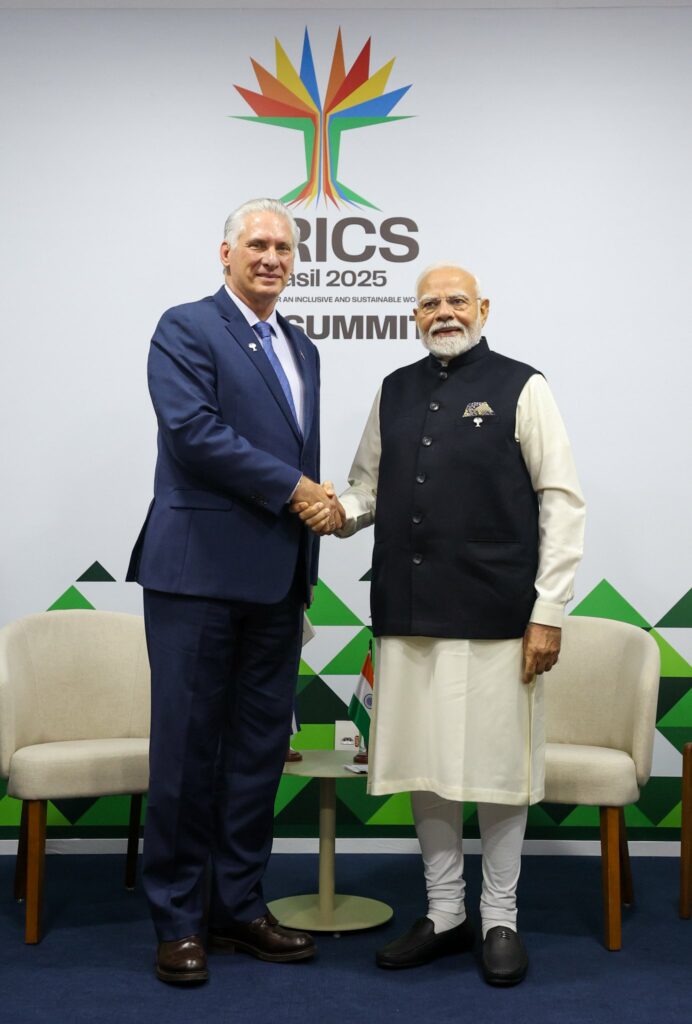
With the clock ticking on the expected UN General Assembly resolution next week condemning the US economic and financial blockade of Cuba, its Ambassador in India Juan Carlos Marsan underscored his country’s condition.
“Our economy continues to operate under immense pressure due to the blockade, which has lasted more than six decades and intensified with over 200 additional measures during the Trump administration. These restrictions affect every aspect of life, from importing food and medicines to conducting basic financial transactions,” he said during a media interaction in Delhi.
The U.S. blockade was not merely an embargo but a policy designed to isolate Cuba globally.
“Despite every obstacle, we continue to send doctors, teachers, and humanitarian aid to over 100 countries. Cuba’s contribution to global health, from developing vaccines to disaster response, shows our commitment to humanity, even under sanctions,” he said.
He criticized the U.S. decision to maintain Cuba on its list of “state sponsors of terrorism,” calling it “baseless and politically motivated”. He said this designation prevents Cuba from accessing international financial institutions and discourages global banks from facilitating transactions with Havana.
“India has stood by Cuba through every global challenge. We trust that this historic friendship, built on principles of respect, solidarity, and South-South cooperation, will once again shine through in the forthcoming vote,” he said.
He said Havana was ready to deepen trade and investment ties with India, including bypassing dollar-dominated financial systems.
“We are open to trading in local currencies and establishing direct financial channels with India. Cuba has begun similar arrangements with Russia and China, and we hope to extend this model to India through mechanisms like UPI and bilateral banking links,” he said.
Cuba, which has a strong biotechnology base, is keen to collaborate with India’s pharmaceutical sector to develop and produce medicines for cancer, diabetes, and neurological disorders.
He highlighted that Cuba has pioneered several patented treatments that could be made in India for the wider Global South.
“India has manufacturing strength; Cuba brings research and innovation. Together, we can create affordable solutions for millions of patients across Latin America, Africa, and Asia,” he added.
Energy, Food Security
Cuba is also seeking Indian investment in renewable energy, sugar processing, and agricultural modernization. Cuba’s fertile land and India’s expertise in green technology create natural synergies, he said.
“We are ready to offer long-term land leases to Indian companies for joint food production, ensuring food security for both our nations. India’s achievements in renewable energy and sustainable farming are models we wish to learn from,” he said.
Tourism, Culture
The envoy also urged greater tourism exchanges between the two nations, noting that Indian hotel chains such as the Muthu Group are already managing properties in Cuba.
“Cuba is open to Indian travellers, and visa procedures have been simplified. We would love to see more Indians discovering our culture, music, and warmth,” he said.
“Our friendship with India is historic, but also forward-looking,” he said, “Together, we can build a fairer, multipolar world based on equality, mutual benefit, and peace.”
Why India’s Carb Heavy Diet Could Derail Its Growth Story
India’s health crisis is no longer about infections. Instead, it is about what we consume, which in turn is an outcome of our lifestyle.
A research study based on the ICMR-India Diabetes survey provides empirical proof that India’s carb-heavy, protein-poor diet is driving poor health. Worse, this is also exacting staggering economic costs, both nationally and for individual household budgets.
To answer all this and more, StratNewsGlobal.Tech spoke Dr. R Anjana to unpack how India’s diet is quietly undermining its health and economy. And what it will take to change course.
Dr Anjana is the study’s lead author and the Managing Director at Chennai-based Dr Mohan’s Diabetes Specialities Centre.
‘Pakistan’s Proxy Warfare Has Come Back To Bite It’
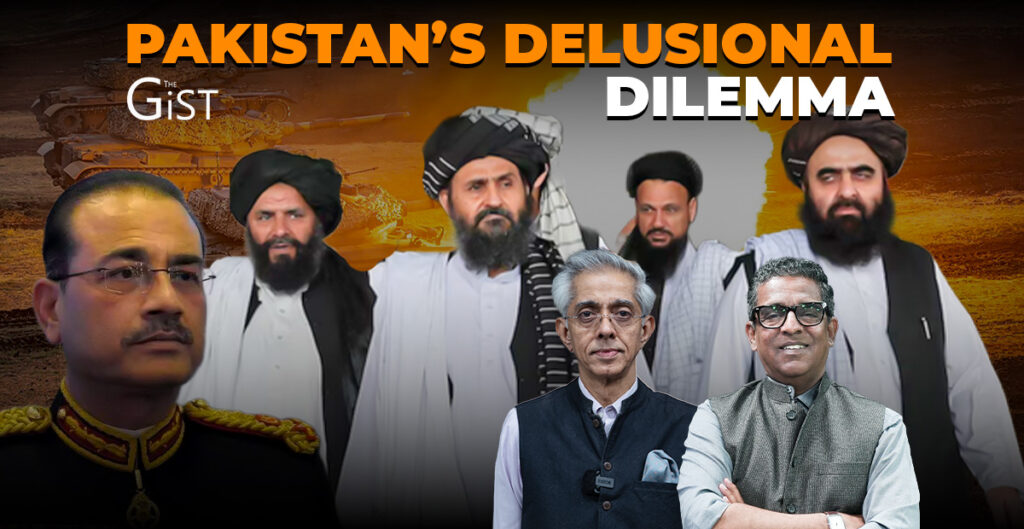
Pakistan is once again reaping the bitter harvest of its long-cultivated policy of nurturing jihadist groups, says Ramanathan Kumar, former Special Secretary of the Research & Analysis Wing (R&AW). Speaking on the spiralling violence in Pakistan’s border regions, Kumar described the situation between Afghanistan and Pakistan as “a sea change” from the triumphal mood of 2021, when the ISI chief had publicly celebrated the Taliban’s return to power in Kabul.
“Everything is far from all right now,” he observed, invoking the paradoxical logic of strategy outlined by Edward Luttwak — that a nation’s most effective weapon can eventually become its weakest. “Pakistan’s weapon of proxy warfare has come back to bite it with a vengeance,” he said, pointing to the Tehreek-e-Taliban Pakistan (TTP)’s growing attacks launched from sanctuaries inside Afghanistan despite Taliban denials.
Kumar noted that Islamabad’s alternating strategies of negotiation and force — the carrot and the stick — have both failed spectacularly. The country, he said, finds itself “back where it was in 2007–08,” when militants were nearly at the gates of Islamabad. The irony, he added, was striking: Pakistan’s military leadership now warns Afghanistan against “religious obscurantism” — the very ideology it once weaponised.
Turning to Pakistan’s rhetoric against India, Kumar described recent threats by Field Marshal Asim Munir as “the ultimate irony of the pot calling the kettle black,” given how deeply politicised the Pakistani military has become. He also underlined the contradictions in Pakistan’s foreign policy — “deep military dependence on China” even as it seeks to woo back the United States for economic relief.
Calling Pakistan a “rentier state obsessed with security-centric policies,” Kumar said genuine reform would require “a fundamental change in Pakistan’s DNA.” For India, he advised caution: “Overt force against a wielder of covert tools plays into their hands. Covert games are best left in the covert domain.”
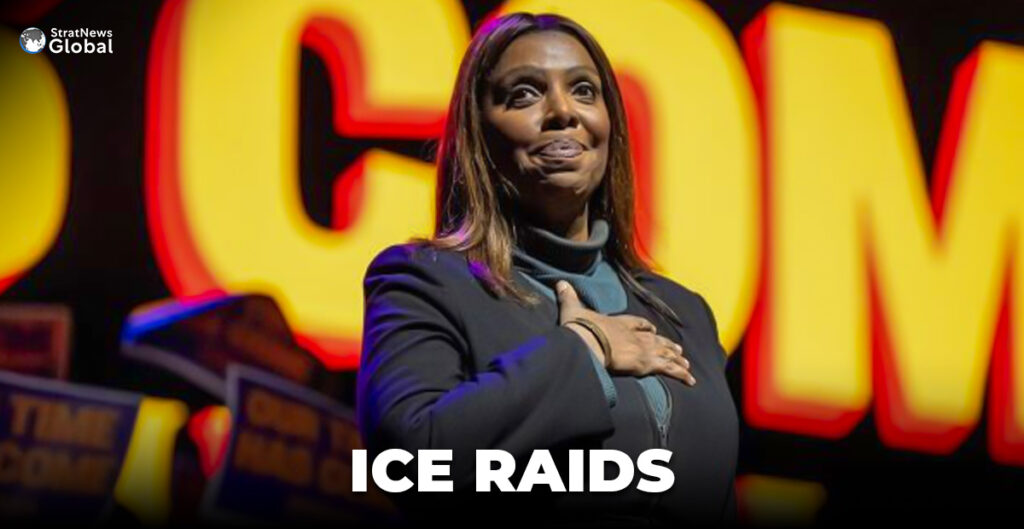
New York Attorney General Calls On Public To Report ICE Operations After Manhattan Raid
A day after federal immigration agents carried out a high-profile raid on street vendors in Manhattan, New York State Attorney General on Wednesday called on the public to share photos, videos, and other evidence of Immigration and Customs Enforcement activity with her office for review.
Attorney General Letitia James said her office would review footage and other information from operations shared through a “Federal Action Reporting Form,” saying in a statement that “every New Yorker has the right to live without fear or intimidation.”
President Donald Trump, a Republican, has launched an aggressive immigration crackdown in major U.S. cities, including Los Angeles, Chicago and Washington, D.C. The San Francisco Chronicle reported on Wednesday that the Trump administration would send more than 100 federal agents to the city to ramp up enforcement, citing an unnamed source.
Protesters in the cities have used phones to record ICE operations, which critics say have employed racial profiling and swept up many immigrants with no criminal records.
The immigration raid on New York City’s Canal Street, a prominent shopping area known for bargain prices and imitation goods, triggered pushback in the street from residents in the vicinity.
When asked for comment on James’ oversight effort, U.S. Department of Homeland Security spokesperson Tricia McLaughlin said it “looks like obstruction of justice.”
Democrats’ Efforts To Record ICE Abuses
The new effort to record possible abuses by U.S. Immigration and Customs Enforcement officers and other federal agents is part of a broader resistance by Democrats.
U.S. Representative Robert Garcia, a Democrat based in Los Angeles, said on Monday that he and other Democrats would launch an online site to track the agency’s operations and urged the public to record ICE activity.
The Trump administration in March gutted the DHS offices charged with monitoring civil rights abuses as part of its government downsizing efforts.
The ICE monitoring effort by James, a longtime Trump foe, could further inflame political tensions with the White House. James, who brought a civil fraud case against Trump in 2022, was charged earlier this month with lying on a mortgage application, as the Trump administration stepped up its use of government power against his perceived political enemies.
DHS said Tuesday’s operation targeting Canal Street resulted in nine arrests of alleged immigration offenders from Mali, Senegal, Mauritania and Guinea, including some with prior criminal arrests. Four people were arrested for allegedly assaulting law enforcement and another for obstruction of justice, DHS said.
Democratic U.S. Representative Dan Goldman, whose district includes Canal Street, said his office had helped secure the release of four U.S. citizens detained by ICE.
“Dozens of masked federal agents stormed Lower Manhattan, roughing up protestors and indiscriminately arresting people,” Goldman said in statement.
The Canal Street raid came after at least two prominent pro-Trump influencers posted videos in recent weeks focusing on African immigrants selling goods along the busy thoroughfare. One of the influencers, Savanah Hernandez, said in an October 19 post on X that African immigrants without legal status were operating a black market there and urged ICE to visit the area and arrest the vendors.
“I don’t know that ICE officials saw my post,” Hernandez said in an email. “However, the White House has been very responsive to on the ground reporters who have utilized X to share their stories.”
The normally bustling street was largely empty of street vendors on Wednesday, according to a witness.
(With inputs from Reuters)
Taiwan To Strengthen Military Collaboration With U.S. Amid Rising Regional Tensions
Taiwan’s defence ministry announced on Wednesday that it plans to expand military cooperation with the United States through reciprocal visits and participation in military exercises. The initiative aims to reinforce regional peace and stability amid growing security challenges in the Asia-Pacific.
The United States, like most countries, has no formal diplomatic ties with Chinese-claimed Taiwan, but is the island’s most important international backer and is bound by law to provide Taiwan with the means to defend itself.
In a report to parliament, the ministry said the United States is an important strategic partner.
“Our armed forces continue to strengthen Taiwan-U.S. communication channels and advance multi-domain, multi-level strategic cooperation on defence and security,” it said, ahead of Defence Minister Wellington Koo taking lawmaker questions on Thursday.
“Looking ahead, we plan to gradually expand and deepen cooperation,” it added.
Strategic Partnership
Those areas include high-level strategic and security policy dialogues and reciprocal visits, observation of exercises and discussions on operational issues “so as to jointly maintain peace and stability in the Taiwan Strait”, the ministry said.
The Pentagon declined to comment.
Military cooperation between Taiwan and the U.S. are already close, including Taiwanese F-16 fighter pilots training in Arizona, though such collaborations normally remain outside the public spotlight given their sensitive nature.
Taiwan has complained of stepped up military and political pressure from China, including regular Chinese war games around the island.
The ministry, in its report, said China is conducting “normalised” harassment, including using so-called “joint combat-readiness patrols”.
“These measures aim to exert psychological coercion and tactical deterrence against us, wear down our defence capacity, and demonstrate an ability to deny third-party intervention -together creating a severe regional security challenge.”
China’s defence ministry did not immediately respond to a request for comment.
Taiwan’s defence ministry said that it has been using “channels for international exchange and cooperation to share intelligence resources and technology”. That way, Taiwan can better track key warning indicators of Chinese military activity, assess possible future courses of action, and “secure early warning to enable rapid responses and prevent a surprise attack”, it added. It did not provide further details.
Taiwan’s government rejects Beijing’s sovereignty claims, saying only the island’s people can decide their future.
(With inputs from Reuters)
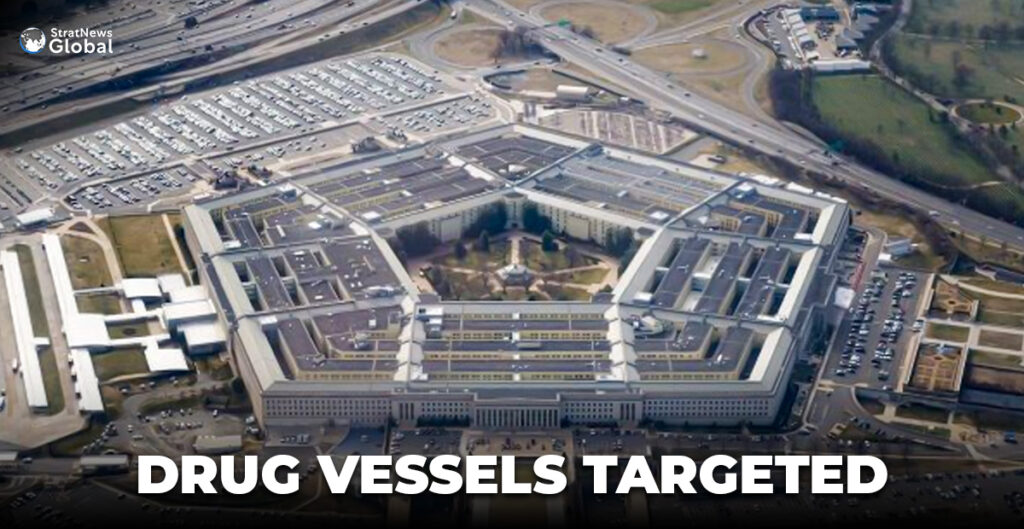
U.S. Forces Hit Alleged Drug Vessels In Eastern Pacific, Killing Five
U.S. Defence Secretary Pete Hegseth said on Wednesday that military forces carried out strikes on two suspected drug-smuggling vessels in the eastern Pacific Ocean, killing five people.
The operation marks an expansion of the Trump administration’s strategy of deploying the armed forces in its ongoing campaign against narcotics trafficking.
On Wednesday afternoon, Hegseth said the military attacked a vessel in the eastern Pacific Ocean and killed two men on Tuesday. It was the first known U.S. military operation in the Pacific since President Donald Trump kicked off a new offensive against the drug trade.
Hours later, Hegseth said the military had struck another vessel in the eastern Pacific on Wednesday, killing three men.
U.S. Strikes In The Caribbean
The strikes came on top of at least seven others in the Caribbean in a campaign that has raised U.S. tensions with Venezuela and Colombia.
“The vessel was known by our intelligence to be involved in illicit narcotics smuggling, was transiting along a known narco-trafficking route and was carrying narcotics,” Hegseth said, without providing evidence, after the latest strike.
He posted videos of around 30 seconds in length of the two strikes on X; both appeared to show a vessel traveling in the water before exploding.
The strikes in the Caribbean have killed at least 32 people, but the Trump administration has provided few details, such as how many alleged drugs the targeted vessels were carrying or what specific evidence it had to suggest they were carrying drugs.
News of the Tuesday strike in the eastern Pacific was first reported by CBS News.
‘It Is Murder’
“The attack on another boat in the Pacific, we don’t know if it’s Ecuadorean or Colombian, killed people,” said Colombian President Gustavo Petro, who is in the midst of a spat with Trump over the boat strikes and tariffs. “It is murder. Whether in the Caribbean or Pacific, the U.S. government strategy breaks the norms of international law.”
Colombia’s Foreign Ministry said in a separate statement the U.S. must halt the attacks.
Ecuadorean President Daniel Noboa, who has declared war on gangs in his country, has expressed support for Trump’s anti-narcotics efforts.
Trump, asked about the strike by reporters in the Oval Office, said his administration had the legal authority to carry it out and that he believed each strike saved American lives.
Trump also reiterated plans to strike targets on the ground in Venezuela, which would be an escalation. He said if he takes this step, his administration likely would inform the U.S. Congress.
“We’ll probably go back to Congress and explain exactly what we’re doing when we come to the land,” Trump said. “We don’t have to do that, but I think … I’d like to do that.”
Military Buildup
Legal experts have questioned why the U.S. military is carrying out the strikes, instead of the Coast Guard, which is the main U.S. maritime law enforcement agency, and why other efforts to halt the shipments are not made before resorting to deadly strikes.
The strikes in the Pacific come against the backdrop of a U.S. military buildup in the Caribbean that includes guided missile destroyers, F-35 fighter jets, a nuclear submarine and around 6,500 troops.
In August, the Coast Guard launched an operation, known as Operation Viper, to interdict drugs in the Pacific Ocean. As of October 15, the Coast Guard said it had seized more than 100,000 pounds (45,000 kg) of cocaine.
It was unclear why the administration carried out a strike in this instance instead of interdicting the vessel.
Last week, two alleged drug traffickers survived a U.S. military strike in the Caribbean, according to reports. They were rescued and brought to a U.S. Navy warship before being repatriated to their home countries of Colombia and Ecuador.
(With inputs from Reuters)
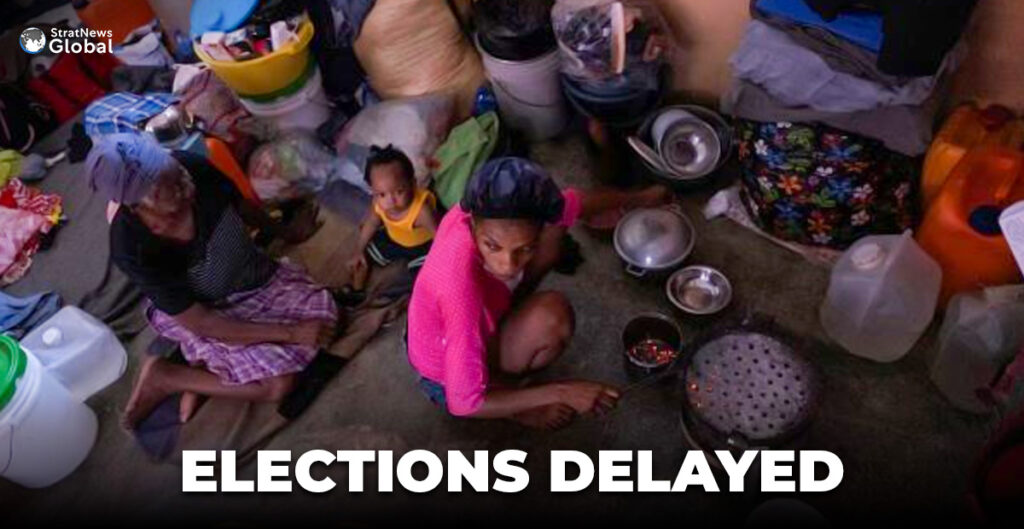
Haiti Rules Out Elections Before February Amid Escalating Gang War
Haiti’s top electoral official said on Wednesday that the country will be unable to hold general elections before the interim government’s mandate expires next February. The worsening grip of heavily armed gangs across the country has made it impossible to organize a secure, nationwide vote.
The Caribbean’s most populous nation has not held elections since 2016. Its last president, who repeatedly delayed elections, was assassinated in 2021. Armed gangs have since taken control of much of the capital and surrounding areas.
“We cannot hold elections before February,” electoral council president Jacques Desrosiers said. “It is impossible.”
The council in June conducted an evaluation of hundreds of voting centers around the country, though many communes were inaccessible due to the insecurity. Access has since worsened as gangs have expanded in areas outside the capital.
“A lot has changed now,” Desrosiers said, adding that new areas cut off from electoral registries include the towns of La Chapelle and Liancourt in the lower Artibonite, Haiti’s main agricultural region.
February Deadline
At the start of the year, the interim government had said it planned for elections to take place around November 15 of this year.
In a report disseminated on Wednesday, the U.N. estimated, citing the June evaluation, that just over 6 million people – around half the population – might have access to working voting centers. Desrosiers said he could not provide a current estimate.
“Critical decisions will be required by national authorities and stakeholders in the coming months in the lead-up to the 7 February 2026 deadline,” U.N. Secretary General Antonio Guterres said in the report.
“Haiti cannot afford a political vacuum.”
February 7 marks the end of the term envisioned for the nine-member transitional presidential council, which took power in April 2024.
That February 7 date has traditionally marked the constitutional deadline for handing over power, and is often met with protests, as it has been flouted in the past by leaders refusing to step aside. The day will have particular salience in 2026 as it would have been the presidential handover had an election taken place five years previous.
Gang Alliance Calls For Dialogue
Haitian political groupings are divided over how to move forward, with some calling for an extension or modification of the interim presidential council and others for it to step aside in favor of a Supreme Court judge.
Meanwhile, Haiti’s Viv Ansanm gang alliance – which controls most of the densely populated capital Port-au-Prince – has declared itself a political party and called for dialogue with the establishment.
Washington has designated the group as a terrorist organization, with its members accused of thousands of killings, as well as widespread kidnappings, torture, arson and gang rape. Gangs also often provide key services and food in areas they control.
Around half of Haiti’s 12 million-strong population faces severe food insecurity and over 1.3 million are internally displaced due to the violence, many living temporarily with friends or families or in crowded displacement camps.
(With inputs from Reuters)
New Zealand Bill Proposes Curbing Social Media Use For Teens
New Zealand officials on Thursday announced that a bill will be introduced in parliament to limit social media use for children under 16, aiming to protect young people from online harm.
The proposed legislation will require social media platforms to conduct an age verification process, similar to Australia’s world-first teen social media ban law passed in 2024.
Hangs In The Balance
A member’s bill submitted in May by ruling National Party lawmaker Catherine Wedd to restrict children using social media was selected on Thursday to be introduced in the parliament.
The bill has received support from National Party members but its coalition partners have not confirmed whether they will support the bill.
Members’ bills can be introduced by any lawmaker not in the cabinet and are selected after a ceremonial lottery.
It is not immediately clear when the bill will be introduced in the parliament.
Tracking The Perils Of Social Media
A New Zealand parliamentary committee has been looking at the impact of social media harm on young people and the roles that government, business, and society should play in addressing those harms. A report is due in early 2026, according to a statement from the committee last week.
Prime Minister Christopher Luxon has been raising concerns about harms to mental health from the overuse of social media among young teens, including misinformation, bullying and harmful depictions of body image.
Counterproductive Measure?
Civil-liberties organisation PILLAR said the bill would not protect children online, and instead would create serious privacy risks and restrict online freedom for New Zealanders.
“Aligning with international efforts may sound responsible, but it is lazy policymaking,” PILLAR Executive Director Nathan Seiuli said in a statement.
New Zealand’s trans-Tasman neighbour Australia will be stating a similar social media ban on teenagers from December. The country has rolled out a multimillion-dollar campaign promoting its upcoming world-first social media ban for teens, calling it “for the good of our kids” as the December launch nears.
(With inputs from Reuters)