

Support us by contributing to StratNewsGlobal on the following UPI ID
ultramodern@hdfcbank

Strategic affairs is our game, South Asia and beyond our playground. Put together by an experienced team led by Nitin A. Gokhale. Our focus is on strategic affairs, foreign policy and international relations, with higher quality reportage, analysis and commentary with new tie-ups across the South Asian region.
You can support our endeavours. Visit us at www.stratnewsglobal.com and follow us on YouTube, Twitter, Facebook and Instagram.
र 500 per month
र 1000 per month
र 5000 per year
र 10000 per year
Donate an amount of your choice
र 500 per month
Donate र 500 per month

र 1000 per month
Donate र 1000 per month
र 5000 per year
Donate र 5,000 per year
र 10000 per year
Donate र 10,000 per year
Donate an amount of your choice
Donate an amount of your choice
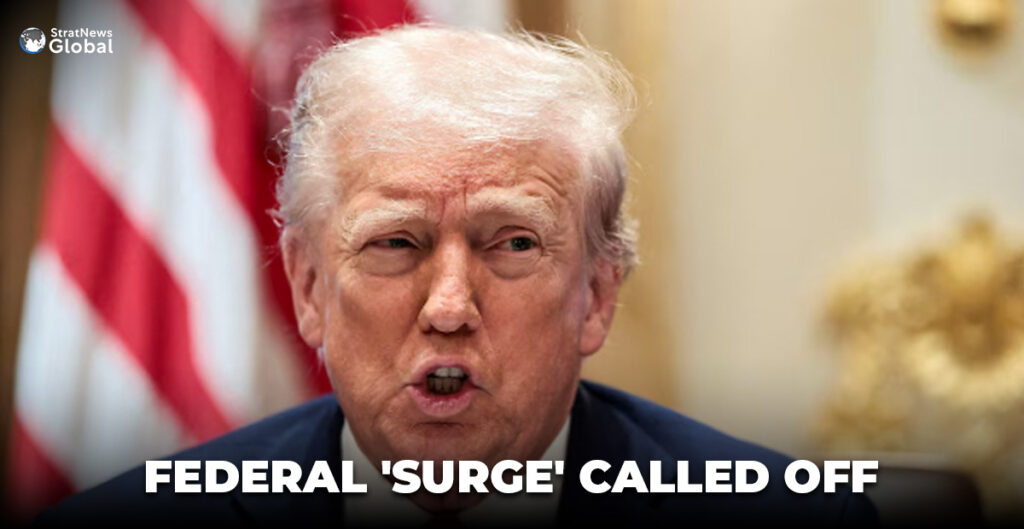



Trump Calls Off Federal ‘Surge’ To San Francisco Amid Pushback
U.S. President Donald Trump announced on Thursday that he would no longer move forward with plans to send federal troops to San Francisco, following conversations with the city’s mayor and mounting criticism from prominent figures in the tech industry.
The decision comes after weeks of speculation about a potential “surge” of federal forces into the city, which Trump had repeatedly suggested might be necessary to combat crime.
Tech Backlash
In a post on Truth Social, Trump explained that the federal government had been preparing to send troops to San Francisco on Saturday. However, he said, friends who live in the area—including high-profile tech leaders—advised him against proceeding.
“Friends of mine who live in the area called last night to ask me not to go forward with the surge, as the Mayor, Daniel Lurie, was making substantial progress,” Trump wrote.
Trump specifically cited Nvidia CEO Jensen Huang and Salesforce CEO Marc Benioff among those encouraging him to reconsider.
“The people of San Francisco have come together on fighting crime, especially since we began to take charge of that very nasty subject,” he said. “Great people like Jensen Huang, Marc Benioff, and others have called, saying that the future of San Francisco is bright. They want to give it a ‘shot.’ Therefore, we will not surge San Francisco on Saturday.”
Mayor ‘Spoke’ To Trump
Mayor Lurie, a Democrat elected last year with strong support from local tech executives, confirmed speaking with Trump on Wednesday night.
“I told him the same thing I told our residents: San Francisco is on the rise,” Lurie said in a statement. While welcoming continued cooperation with federal law enforcement agencies—including the FBI, DEA, ATF, and U.S. Attorney’s office—Lurie stressed that deploying the military or militarised immigration enforcement within the city would undermine its recovery efforts.
“We appreciate that the president understands that we are the global hub for technology, and when San Francisco is strong, our country is strong,” he added.
Trump has hinted at sending federal troops to San Francisco since the summer, citing concerns about rising crime.
His consideration gained momentum in recent weeks after Benioff initially expressed support for federal involvement, telling The New York Times that San Francisco lacked sufficient police presence.
“We don’t have enough cops, so if they can be cops, I’m all for it,” Benioff said.
Benioff Withdraws National Guard Support
However, Benioff reversed his stance on Friday, writing on X (formerly Twitter) that he no longer believes the National Guard is necessary to address public safety in the city.
“My earlier comment came from an abundance of caution around the event, and I sincerely apologise for the concern it caused,” he said.
Benioff, long regarded as one of San Francisco’s more progressive billionaires, has historically supported initiatives such as a 2018 business tax to fund homelessness programs.
Like many tech executives, he has shifted politically in recent years and maintains close ties with figures such as Elon Musk, whom he has praised for promoting “great vision” for Trump-era policies.
Other tech leaders also weighed in against a federal deployment. Garry Tan, CEO of the startup incubator Y Combinator, encouraged Trump to allow local leadership to continue their work.
“SF is on the way to resurgence, and there is a lot more to be done, but Mayor Lurie and DA Jenkins are doing the work,” Tan said on X. “Let them cook.”
The broader political context includes Lurie’s partnership with District Attorney Brooke Jenkins, who was appointed in 2022 after voters recalled progressive DA Chesa Boudin.
Both Lurie and Jenkins have focused on tackling crime while supporting community-led recovery efforts.
The White House emphasised that Trump’s decision reflects a willingness to work with local leaders and prioritise public safety without overstepping authority.
Trump ‘Supports’ Local Leadership
Press Secretary Karoline Leavitt told reporters that “the president is willing to work with anyone across the aisle, across the country, to do the right thing and clean up America’s cities.”
She added, “He heard from the mayor, who told him he is going to earnestly try to make his city better on his own. The president said, ‘OK, I’ll give you a chance. We’ll be watching. And if you need us, we are here.’”
Earlier this month, Trump had indicated that a future deployment was still possible. Speaking to reporters aboard Air Force One, he said, “We’re going to go into San Francisco at some point in the not-too-distant future. It can only be a great city if it doesn’t have crime. If it has crime, it can’t be a great city.”
He also suggested he might invoke the Insurrection Act to justify military action, noting, “I’m allowed… like 50% of presidents have used the Insurrection Act.”
The idea of deploying troops to San Francisco drew widespread criticism from California Democrats, including Governor Gavin Newsom and Attorney General Rob Bonta, both of whom threatened legal action.
Newsom condemned the concept as “a direct assault on the rule of law” and warned, “Sending troops to San Francisco? Do it and we’ll sue. We don’t bow to kings. We defend the Constitution.” A White House spokesperson later indicated that Trump had “listened to reason” and reconsidered the plan in light of these objections.
Legal Challenges
This episode follows a broader pattern of federal troop deployments under Trump, including earlier mobilisations in Los Angeles, Portland, Chicago, and Washington, D.C., often tied to immigration enforcement or civil unrest. Legal challenges have repeatedly limited these actions.
A federal judge in San Francisco ruled last September that the deployment of National Guard troops to Los Angeles had been unlawful, and a three-judge panel of the 9th U.S. Circuit Court of Appeals has questioned the president’s authority to deploy troops without oversight.
Despite these setbacks, Trump’s administration has continued to assert federal authority in other states.
Trump’s decision to halt the San Francisco deployment underscores the influence of both local governance and prominent business leaders in shaping federal policy.
It also highlights the ongoing tension between federal authority and state sovereignty, particularly when it comes to law enforcement and public safety in major urban centres.
By stepping back, Trump has avoided a direct confrontation with San Francisco’s elected officials while keeping open the possibility of future federal involvement.
For now, the city’s leadership, supported by local tech executives and the broader community, will continue its efforts to tackle crime and strengthen public safety without an overt military presence.
(With inputs from IBNS)
Trump To Meet Xi In South Korea On October 30 During Asia Swing
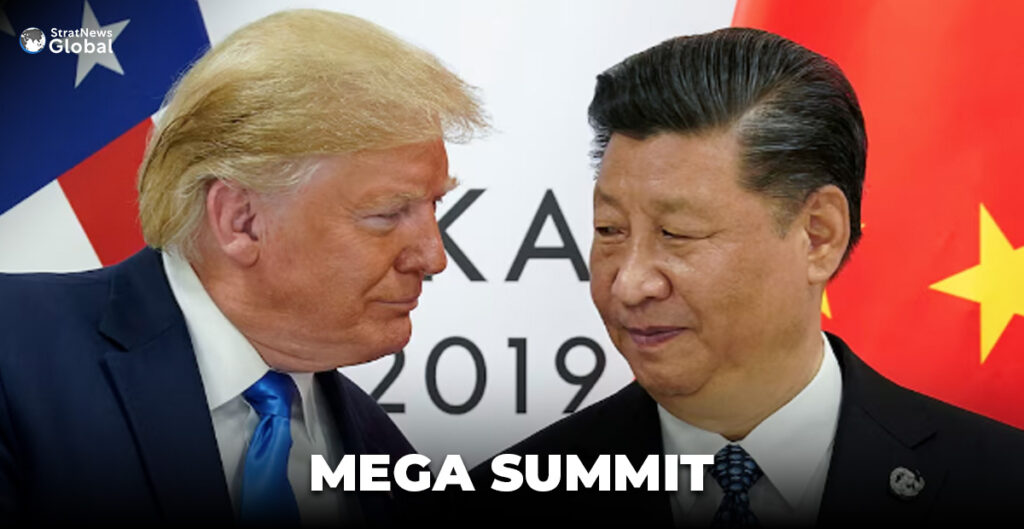
The White House confirmed on Thursday that U.S. President Donald Trump will meet Chinese President Xi Jinping next week during his trip to Asia, reaffirming plans for the summit that had been uncertain amid escalating trade tensions.
White House press secretary Karoline Leavitt told reporters that Trump departs for Malaysia late on Friday night and will also visit Japan and South Korea, where he will meet Xi next Thursday after addressing the Asia-Pacific Economic Cooperation (APEC) CEO Summit.
“On Thursday morning local time, President Trump will participate in a bilateral meeting with President Xi of the People’s Republic of China, before departing to return home,” Leavitt said.
On Sunday, Trump will meet Malaysia’s Prime Minister Anwar Ibrahim and attend a working dinner of leaders of the Association of Southeast Asian Nations, then fly to Tokyo on Monday to meet Japan’s new Prime Minister Sanae Takaichi on Tuesday.
On Wednesday, Trump flies to South Korea, where he will meet South Korean President Lee Jae Myung, deliver keynote remarks at a luncheon for CEOs on the sidelines of the Asia-Pacific Economic Cooperation forum summit, and then participate in a U.S.-APEC leaders working dinner.
Escalating Trade War
A U.S.-China trade war, which had been simmering for months, exploded into full view in early October, after Beijing dramatically expanded curbs on exports of rare-earth minerals.
Trump had quickly threatened to retaliate with tariffs and other measures, but has in recent days expressed optimism about reaching a trade deal with China.
“I think we’re going to come out very well, and everyone’s going to be very happy,” Trump said of the meeting later on Thursday.
Those comments have been in contrast to more strident remarks from his top trade negotiator and finance chief, who were headed to Asia on Wednesday to keep Trump’s meeting with Xi, the first of his second term, on track.
Trump said the first question he would ask the Chinese leader would be about fentanyl.
Washington accuses Beijing of failing to curb the flow of precursor chemicals for fentanyl, a leading cause of U.S. overdose deaths. Beijing has defended its record and accused Washington of using fentanyl to “blackmail” China.
The White House used the flow of the chemicals from China as one justification for increasing tariffs on Chinese goods.
“The first question I’m going to be asking him about is fentanyl,” Trump said. “I’m putting it right at the front of the list.”
(With inputs from Reuters)
US, Chinese Officials To Meet In Kuala Lumpur To Prevent Trade War
Senior U.S. and Chinese economic officials will arrive in Kuala Lumpur on Friday for talks aimed at preventing an escalation in the trade war and ensuring next week’s meeting between U.S. President Donald Trump and Chinese President Xi Jinping proceeds as planned.
U.S. Treasury Secretary Scott Bessent and U.S. Trade Representative Jamieson Greer will meet with Chinese Vice Premier He Lifeng to find a way forward after Trump threatened new 100% tariffs on Chinese goods and other trade curbs starting November 1 in retaliation for China’s vastly expanded export controls on rare earth magnets and minerals.
The talks, due to start on Saturday on the sidelines of the Association of Southeast Asian Nations Summit in the Malaysian capital, are the fifth meeting between He, Bessent and Greer since May, shifting from European cities to a key Asian exporter dependent on both China and the U.S.
Rare Earths Stranglehold
The talks are again focused on China’s stranglehold over global supplies of rare earth minerals and magnets essential for high-tech manufacturing, which Beijing has used as an effective leverage point against Washington.
In April, Trump hit Chinese imports with new tariffs that quickly escalated to triple-digit rates on both sides, and Beijing cut off rare earths supplies to U.S. buyers, a move that threatened to halt U.S. production of electric vehicles, semiconductors and weapons systems.
Bessent and Greer’s first meeting with He in Geneva in May led to a 90-day truce, which brought down tariffs sharply to about 55% on the U.S. side and 10% on the Chinese side and restarted the flow of magnets. The terms were refined in London and Stockholm, and the September talks in Madrid produced a deal to transfer the Chinese short video app TikTok to U.S. ownership control.
But the delicate truce frayed two weeks later, when the U.S. Commerce Department vastly expanded a U.S. export blacklist to automatically include firms more than 50% owned by companies already on the list, banning U.S. exports to thousands more Chinese firms.
China struck back with the new global rare earth export controls on October 10, aiming to prevent their use in military systems by requiring export licenses for products using Chinese rare earths or rare earth refining, extraction or processing technology developed by Chinese firms.
Bessent and Greer blasted China’s move as a “global supply chain power grab” and vowed the U.S. and its allies would not accept the restrictions. Reuters reported that the Trump administration is considering a plan to up the ante with curbs on a dizzying array of software-powered exports to China, from laptops to jet engines, according to sources familiar with the deliberations.
Stepping Back From Brink
But their challenge in Kuala Lumpur, analysts say, is to negotiate a return to the prior status quo to keep magnets flowing and avoid a massive U.S. tariff hike. If they fail, next Thursday’s Trump-Xi meeting in South Korea during the Asia Pacific Economic Cooperation Summit may be cancelled.
“Ultimately, I’m optimistic that at this particular meeting there will be tactical decisions to sort of extend the pause,” said Dennis Wilder, a senior fellow at Georgetown University’s Initiative for U.S.-China Dialogue on Global Issues.
“Trump won’t go to the 100% tariffs. The Chinese will back away a little bit from this idea that rare earths exports to defence sectors around the world will not happen,” Wilder told an online forum hosted by the Centre for Strategic and International Studies.
The U.S. side is also likely to press Beijing to resume buying American soybeans after China bought none in September, heaping economic pain on farmers, a key Trump political constituency.
But the talks are less likely to dig into the core U.S. complaints about China’s export-driven economic model that prompted Trump’s tariffs in the first place, which include a long-sought rebalancing of the Chinese economy towards more consumption and reducing its excess production capacity.
“We’re not able to get to that because we’ve got to ask them to buy soybeans, right?” said Philip Luck, director of the Centre for Strategic and International Studies’ Economics Program. “It’s not the core issue.”
(With inputs from Reuters)
Taiwan Cautious China’s Economic Plan May Target Strategic Islands
Taiwan is closely monitoring Beijing’s discussions this week, concerned that China may attempt to exert economic control over sensitive frontline Taiwanese islands, according to officials familiar with the matter.
China’s ruling Communist Party, at its closed-door meeting ending Thursday, known as a plenum, is going to discuss, among other things, the country’s 15th five-year development plan, which will formally begin next year and be unveiled in detail at March’s annual meeting of parliament.
Two officials briefed on the matter told Reuters that Taiwan is paying particular attention to whether the new five-year plan makes any mention of deepening economic integration with the Taiwan-controlled Kinmen islands that sit just off China’s coast.
China has long taken a carrot and stick approach to Kinmen, threatening it with frequent coast guard incursions into its waters while dangling perks from gas and electricity supply to bring the islands of 140,000 closer to China.
For policy makers in Taipei, Kinmen’s proximity to China makes it extra vulnerable to Beijing’s economic and political clout, especially when many residents there have close family and business ties with China, whose Xiamen city is a short boat ride away for work or shopping.
Kinmen also gets a regular water supply from China, a deal secured under the previous government led by the Kuomintang party, which favours close relations with Beijing.
China, which has not ruled out using force to seize democratically governed Taiwan, could seek to gain de facto jurisdiction over Kinmen if it includes it in its economic development plan, a move that would further escalate Taipei-Beijing tensions, the officials told Reuters.
“Cross-strait relations could shift from past sovereignty disputes to a contest over jurisdiction,” said one of the sources, a senior Taiwan official briefed on the matter, speaking on condition of anonymity given the sensitivity of discussing security assessments.
A second source, an official in the region looking into the issue, said with a new economic blueprint, China could try to exert “de facto administrative power” over Kinmen and push for its unification agenda.
Taiwan’s Mainland Affairs Council said it would not comment on the story before any Chinese policy details from the plenum are released later this week. China’s Taiwan Affairs Office did not respond to a request for comment.
Jessica Chen, Kinmen’s Kuomintang member of parliament, told Reuters that China indeed wanted closer economic integration for Kinmen, but that sovereignty could not be compromised.
“Kinmen is the territory of the Republic of China. Its jurisdiction belongs to the Republic of China – this is beyond doubt,” she added, referring to Taiwan’s formal name.
Five-year plans have previously mentioned Taiwan in a vague way, though in 2016, the 13th five-year plan proposed a tunnel to the island and the opening of a high-speed rail line. Taiwan rejected that idea.
‘Next Crimea’
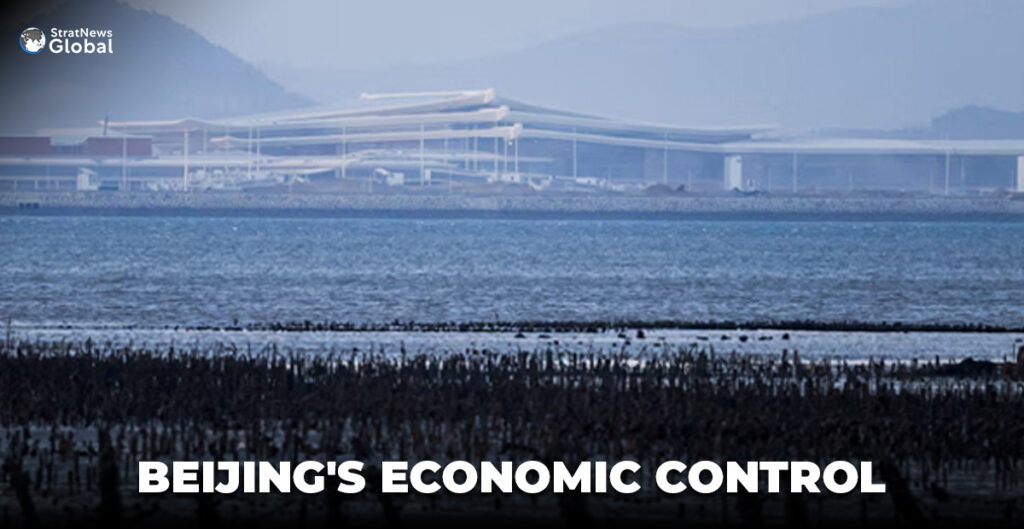
China’s still-in-construction bridge to Kinmen is a major concern for Taiwan, a project Taipei has not approved, as is the new Xiamen airport slated to open next year and which is only around 3 km (1.9 miles) at its closest point from Kinmen, the officials said.
Taiwan officials worry greater integration could chip away at Taiwanese sovereignty. China says Taiwan is not a country, only a Chinese province, and that it has no sovereignty.
“What if they try to press ahead with the bridge, which carries national security concerns for us?” the Taiwan official said, adding such a proposal could also sow division between local residents and the central government as well as the military.
“If they dare to invade (Kinmen), we will become the next Crimea,” the official said, referring to Russia’s annexation of Crimea in 2014 after people there voted in a disputed referendum to become part of Russia.
To be sure, there are differences with Crimea, where many people identify as Russian, not Ukrainian, whereas in Kinmen most people identify as being Chinese, albeit from the Republic of China.
Xiamen’s new airport is so close to Kinmen that it could pose an aviation safety risk, and China has not reached out to discuss the issue, the official said.
China last year opened a new air route from Xiamen, which Taiwan said was done without consultation and brought aircraft too close to Kinmen airspace, posing aviation and security concerns.
The new airport could offer another way for China to further jurisdiction claims over Kinmen, the official added.
“Mutual development is not a bad thing,” the Taiwan official said. “But if this is for the purpose of annexation, that’s a problem.”
(With inputs from Reuters)
Israel’s Parliament Initially Approves West Bank Annexation
Israel’s parliament on Wednesday gave preliminary approval to a bill extending Israeli law to the occupied West Bank, effectively annexing land claimed by Palestinians for a future state.
The vote was the first of four needed to pass the law, and it coincided with the visit of U.S. Vice President JD Vance to Israel, a month after President Donald Trump said that he would not allow Israel to annex the West Bank.
Prime Minister Benjamin Netanyahu’s Likud party did not support the legislation, which was put forth by lawmakers outside his ruling coalition and passed by a vote of 25-24 out of 120 lawmakers. A second bill by an opposition party proposing the annexation of the Maale Adumim settlement passed by 31-9.
Some members in Netanyahu’s coalition – from National Security Minister Itamar Ben-Gvir’s Jewish Power party and Finance Minister Bezalel Smotrich’s Religious Zionism faction – voted in favour of the bill, which would require a lengthy legislative process to ultimately pass.
Annexation Calls, Abraham Accords
Members of Netanyahu’s coalition have been calling for years for Israel to formally annex parts of the West Bank, territory to which Israel cites biblical and historical ties.
Israel argues the territories it captured in the 1967 war are not occupied in legal terms because they are on disputed lands, but the United Nations and most of the international community regard them as occupied.
The U.N.’s highest court in 2024 said that Israel’s occupation of Palestinian territories, including the West Bank, and its settlements there are illegal and should be withdrawn as soon as possible.
Netanyahu’s government had been mulling annexation as a response to a string of its Western allies recognising a Palestinian state in September, but appeared to scrap the move after Trump’s objection.
The Palestinian foreign ministry said Israel will have no sovereignty over Palestinian land, condemning the Knesset’s move.
“The Ministry of Foreign Affairs affirms that the occupied Palestinian territory in the West Bank, including Jerusalem, and the Gaza Strip, is a single geographical unit over which Israel has no sovereignty,” it said.
Palestinian militant group Hamas said in a statement on Wednesday that the Israeli votes on the West Bank and Maale Adumim bills reflected “the ugly face of the colonial occupation”.
“We affirm that the occupation’s frantic attempts to annex West Bank lands are invalid and illegitimate,” it said.
Hamas has been trying to reassert its presence in the Gaza Strip after being pounded and severely weakened during two years of war with Israel.
The Palestinian Authority exercises limited self-rule in some areas of the occupied West Bank.
Netanyahu himself has not been explicit about annexation since a past election pledge was scrapped in 2020 in favour of normalising ties with the United Arab Emirates and Bahrain.
The UAE, the most prominent Arab country to establish ties with Israel under the so-called Abraham Accords brokered by Trump in his first term in office, last month warned that annexation of the West Bank was a red line for the Gulf state.
Senior Emirati official Anwar Gargash, a diplomatic advisor to the UAE president, told the Reuters NEXT Gulf Summit in Abu Dhabi on Wednesday that maximalist views on the Palestinian issues are no longer valid.
(With inputs from Reuters)
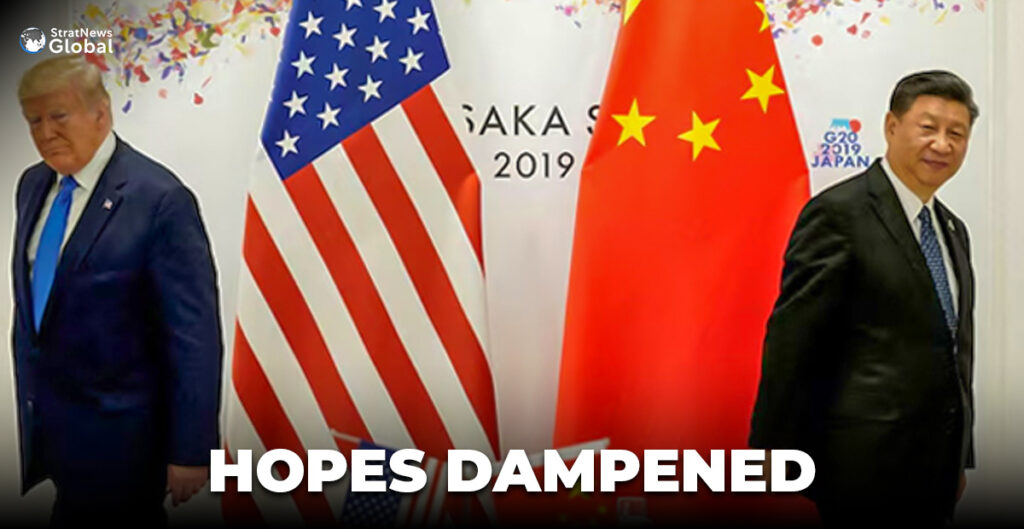
Rising Tensions, Hardline Beijing Moves Dim Hopes For Xi-Trump Summit
Only a month after U.S. President Donald Trump praised “progress” in talks with China, the two powers are now racing to save a planned Xi-Trump summit just a week away, each side blaming the other for rising tensions.
Even if the talks between Trump and President Xi Jinping can be put back on track, experts say each side’s belief that it has the upper hand, coupled with China’s tougher posture, makes a narrow deal on a few issues the most likely outcome.
“China believes negotiations alone are insufficient and that effective countermeasures against the United States are necessary to prevent the U.S. from exerting pressure,” said Wu Xinbo, an expert on ties between the two biggest economies.
At risk are a fragile truce negotiated over months and the world’s most important trade relationship, worth $660 billion a year.
“China’s recent measures actually reflect a shift in its approach to economic and trade negotiations with the United States during Trump’s second term,” added Wu, director of the American Studies Centre at Shanghai’s Fudan University.
A trade war simmering for months exploded into full view in early October, after Beijing dramatically expanded curbs on exports of rare earths, in response to a U.S. hike in the number of firms blocked from purchasing its technology.
China’s move to tighten control over critical minerals, even beyond its borders, was a vast expansion of its toolkit for tackling trade disputes, underscoring Beijing’s intent to wield its dominance over vital supply chains, experts say.
“This is a huge expansion of extraterritorial jurisdiction,” said Cory Combs, an expert at consultancy Trivium China. “There is surprisingly explicit language in the controls about this, specifically targeting a number of chips.”
China, which turns out more than 90% of the world’s processed rare earths, modelled its curbs on U.S. rules aimed at limiting other countries’ exports of semiconductor-related products to the Asian nation.
The Trump administration was surprised by China’s salvo, said two sources familiar with its internal deliberations. Another source said officials were canvassing U.S. companies to see how China’s measures would affect them.
Experts say that while Beijing subsequently sought to portray its controls as targeted, the framework had been prepared for a long time and would almost certainly remain.
Officials in Washington accuse China of waging “economic war”, Trump has warned that the meeting might not happen, and each side blames the other for a sudden escalation.
It is a far cry from Trump’s comments hailing “progress” on issues ranging from trade and TikTok to fentanyl smuggling and the Ukraine war, made after the latest round of talks in Madrid and a September telephone call with Xi.
‘Economic War’
Trump has said he continues to plan on meeting Xi in South Korea at the end of October on the sidelines of the Asia-Pacific Economic Cooperation gathering and expects to reach a deal, but reiterated his threat of 100% tariffs if it is not successful.
Seeking a last-minute off-ramp, U.S. Treasury Secretary Scott Bessent and Chinese Vice Premier He Lifeng will meet in Malaysia just days before.
The meetings follow tough negotiations in European capitals from Geneva to Stockholm over trade, fentanyl, market access, and other aspects of ties, after which both sides traded accusations that the other did not stick to its promises.
Trump’s cabinet secretaries view China’s move on rare earths as “full-blown economic war”, said a person familiar with the administration’s thinking.
“The prospect for escalation is severe,” the person added. “There isn’t an easy fix, like another 90-day pause.”
The White House and U.S. Treasury Department did not respond to Reuters’ requests for comment. China’s foreign and commerce ministries did not immediately respond to a request for comment.
Part of the challenge is that each side believes it has the upper hand, said Michael Hart, the president of the American Chamber of Commerce in China.
“In our discussions with Chinese officials, they express confidence in their economy and believe the U.S. economy and political system are in turmoil. As a result, they feel they are in a strong bargaining position,” said Hart.
Negotiations are challenging, he added, because U.S. officials in turn feel confident about their own economy and believe the Chinese economy is weak.
‘Flexible And Pragmatic’
Washington’s lack of a unified China policy complicates matters, said people familiar with the administration’s thinking, citing the mix of punitive measures but also easing on some chip sales and the deal on social media app TikTok.
“People I have met in D.C. made it clear the Trump administration’s policies on China are fairly hawkish,” said Hart. “However, they also acknowledged the president himself can sometimes be more flexible and pragmatic.”
While both sides prepare for talks, they are also diversifying their economies and developing new measures.
Trump signed a critical minerals pact with Australia on Monday that aims to offset Beijing’s role, while Reuters reported on Wednesday that the United States is considering targeting software-powered exports.
Officials say extensive sectoral tariffs are also being drawn up for semiconductors, pharmaceuticals and other key industries.
China, for its part, could resort to aggressive enforcement of its new rare earths controls, launch fresh antitrust investigations into U.S. companies, or beef up tariffs, as it did in April.
Amid the mistrust, an optimistic scenario would be a follow-up to the Phase One deal of 2020, said one person familiar with the administration’s thinking, although deals to buy soybeans or other farm products could be within easier reach.
“The best-case scenario is confidence-building measures and more directives to negotiate a deal that could be launched in the first half of next year,” said Peter Harrell, an international economics official in the Biden administration.
(With inputs from Reuters)
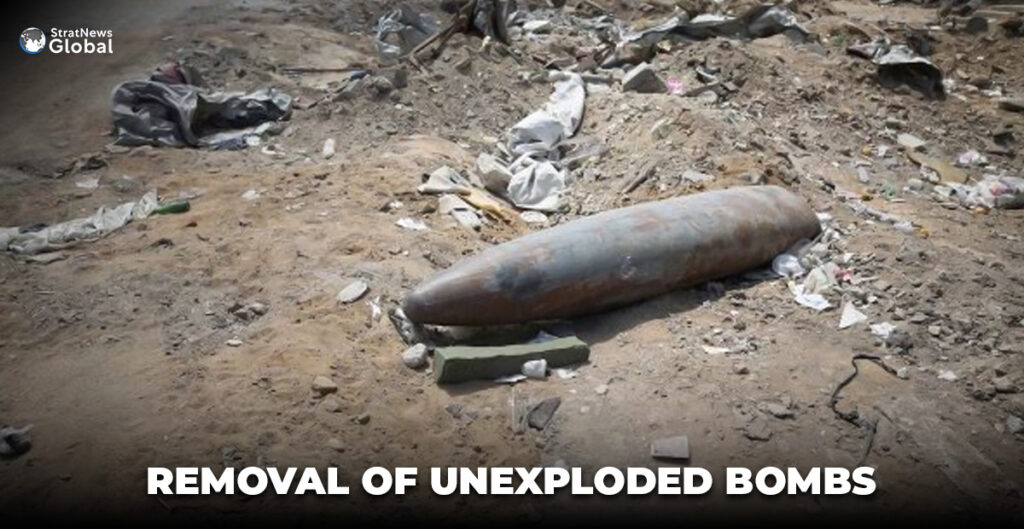
Aid Group Says Removing Unexploded Bombs From Gaza May Take Decades
An official from the aid organization Humanity & Inclusion warned that removing unexploded bombs from the surface of Gaza could take between 20 and 30 years, calling the territory a “horrific, unmapped minefield” due to the vast amount of ordnance scattered across the area.
More than 53 people have been killed and hundreds injured by lethal remnants from the two-year Israel-Hamas war, according to a U.N.-led database, which is thought by aid groups to be a huge underestimate.
A U.S.-brokered ceasefire this month has raised hopes that the huge task of removing them from among millions of tons of rubble can begin.
“If you’re looking at a full clearance, it’s never happening, it’s subterranean. We will find it for generations to come,” said Nick Orr, an Explosive Ordnance Disposal expert at Humanity & Inclusion, comparing the situation with British cities after World War Two.
“Surface clearance, now that’s something that’s attainable within a generation, I think 20 to 30 years,” he added.
“It’s going to be a very small chipping away at a very big problem.”
War Remnants
Orr, who went to Gaza several times during the conflict, is part of his organisation’s seven-person team that will begin identifying war remnants there in essential infrastructure like hospitals and bakeries next week.
For now, however, aid groups like his have not been given blanket Israeli permission to start work on removing and destroying the ordnance nor to import the required equipment, he said.
COGAT, the arm of the Israeli military overseeing Gaza aid, did not immediately respond to a request for comment. It blocks items into Gaza which it considers have “dual use” – both civilian and military.
Orr said it was seeking permission to import supplies to burn away bombs rather than detonate them, to ease concerns about them being repurposed by Hamas.
He voiced support for a temporary force such as one foreseen in the 20-point ceasefire plan.
“If there is going to be any kind of future inside of Gaza, there needs to be an enabling security force that allows humanitarians to work,” Orr said.
(With inputs from Reuters)
Europe Imposes 19th Sanctions Package On Russia, Bans LNG Imports
European Union (EU) countries on Thursday officially approved their 19th sanctions package against Russia over its war in Ukraine, which includes a ban on Russian liquefied natural gas imports.
The 27 member states had already approved the package on Wednesday evening after Slovakia dropped its block.
“It’s a significant package that targets main Russian revenue streams through new energy, financial, and trade measures,” the Danish rotating presidency of the EU said.
The LNG ban will take effect in two stages: short-term contracts will end after six months, and long-term contracts will take effect on January 1, 2027.
The full ban comes a year earlier than the Commission’s roadmap to end the bloc’s reliance on Russian fossil fuels.
Measures in the package also include a new mechanism to limit the movement of Russian diplomats within the EU, the statement said.
“It targets Russian banks, crypto exchanges, entities in India and China, among others,” EU foreign policy chief Kaja Kallas said in a post on X.
“The EU is curbing Russian diplomats’ movements to counter the attempts at destabilisation. It is increasingly harder for Putin to fund this war.”
Danish Foreign Minister Lars Løkke Rasmussen said the ban on LNG imports is an important step towards a complete phasing out of Russian energy in the EU.
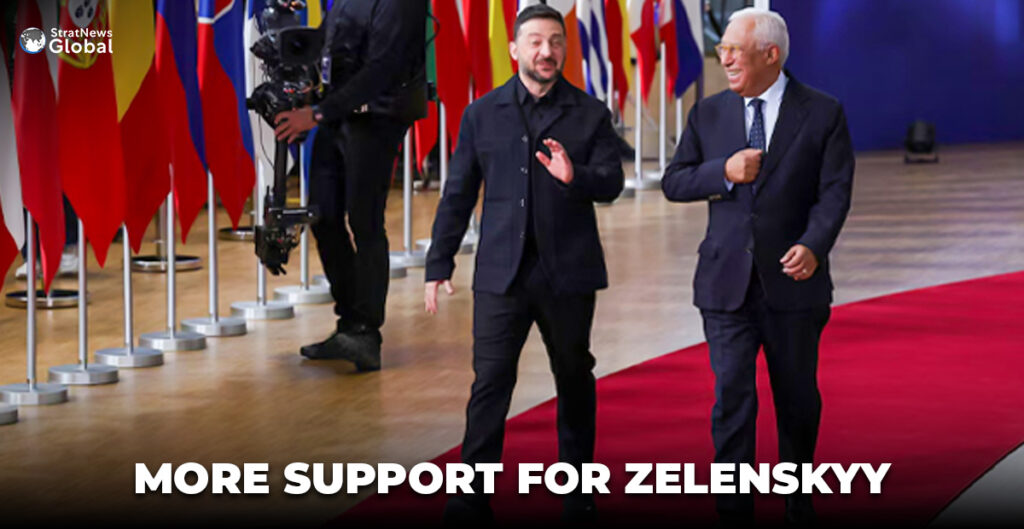
EU To Back Zelenskyy
European leaders plan to demonstrate support for Ukrainian President Volodymyr Zelenskyy in Brussels on Thursday, following a turbulent week during which Donald Trump first announced, then withdrew, plans to meet Russia’s Vladimir Putin.
At a summit meeting, leaders of the European Union are expected to meet Zelenskyy, reiterate backing for Ukraine’s territorial integrity and agree to develop a proposal to use frozen Russian assets for a big loan to Kyiv.
Zelenskyy will also receive a boost in the form of a new package of EU sanctions against Russia.
(With inputs from Reuters)
Orban Tries To Rally Hungarians As Trump-Putin Meeting Falls Through
Following the cancellation of the planned Trump-Putin summit, Hungarian Prime Minister Viktor Orban on Thursday accused the European Union of trying to impose a “puppet” government on Hungary.
He framed next year’s national election as a stark choice between preserving peace or entering a war to, in his words, “die for Ukraine.”
As tens of thousands of his supporters filled a central square in Budapest, Orban, under threat from a centre-right pro-EU opposition party that leads most opinion polls, said Brussels wanted war and intended to eventually divide up Ukraine.
“This is why they want to squeeze Ukraine into the EU at any price….to bring war into Europe, and take EU money to Ukraine,” Orban told the rally in front of parliament.
Ukraine Is A ‘Threat’
Orban, who has opposed the EU’s policy of providing military aid to Kyiv, has long cast Ukraine as a threat to Hungarians, saying its potential EU membership would destroy agriculture and put Hungarian jobs and even pensions at risk. He reiterated his stance on Thursday, saying Ukraine must not be allowed to join the bloc.
The EU is set to agree in principle to finance Ukraine for the next two years at a summit in Brussels on Thursday. It rejects suggestions providing military aid prolongs the war and says it is helping Kyiv to defend itself.
Hungary’s commemoration on Thursday of the 1956 anti-Soviet uprising that was crushed by the Red Army comes at a delicate time for Orban, who has kept good ties with the Kremlin despite the rest of the EU seeking to isolate Moscow.
Trump-Putin Talks Cancelled
Orban, a long-time Trump ally, who has campaigned on wanting peace in Ukraine for years without saying at what price, was also pinning great hopes on a summit in Budapest between U.S. President Donald Trump and Russian President Vladimir Putin.
But late on Wednesday Trump cancelled the summit citing a lack of diplomatic progress and slapped sanctions on Russia’s two largest oil companies. Hungary is heavily reliant on Russian crude and it was not immediately clear how the U.S. measures would affect its oil supply.
Orban faces elections likely in April 2026, and the new opposition Tisza party of Peter Magyar, a former government insider, leads most opinion polls. Magyar will address an opposition rally in Budapest around 1430 GMT.
Magyar has accused Orban of running an increasingly authoritarian and corrupt government. The government has denied such allegations but Magyar has tapped into voter frustrations with Orban, especially as the economy is just barely growing after an inflation shock.
As tens of thousands of opposition supporters gathered for their rally, they said it was high time for change.
“I am fed up with this system, which has already been in place for 15 years,” said Istvan Cirkusz, who said young people were fleeing the country.
“We are sliding downwards, GDP is at rock-bottom by European comparison.”
(With inputs from Reuters)
EU Leaders To Back Zelenskyy At Brussels Summit
European leaders plan to demonstrate support for Ukrainian President Volodymyr Zelenskyy in Brussels on Thursday, following a turbulent week during which Donald Trump first announced, then withdrew, plans to meet Russia’s Vladimir Putin.
At a summit meeting, leaders of the European Union are expected to meet Zelenskyy, reiterate backing for Ukraine’s territorial integrity and agree to develop a proposal to use frozen Russian assets for a big loan to Kyiv.
Zelenskyy will also receive a boost in the form of a new package of EU sanctions against Russia.
U.S. President Trump announced last week that he and his Russian counterpart would meet soon in Budapest, sparking concern among Kyiv’s European allies, but the planned summit was later put on hold.
On Wednesday, the U.S. hit Russia’s major oil companies with sanctions.
Following a tense meeting between Trump and Zelenskyy at the White House last Friday, European leaders have been eager to show that Ukraine can still count on their support.
EU Working On ‘Reparation Loan’
One sign of long-term support is a proposal by the European Commission to use Russian assets frozen in Europe to provide a 140 billion euro ($163 billion) “reparation loan” to Ukraine.
Under the plan, the EU would use cash balances from frozen Russian central bank securities to give Kyiv support that would cover much of its funding needs for 2026 and 2027.
To move forward with the proposal, leaders will seek to address concerns about legal and financial risks raised by Belgium, which holds the Russian assets in its Euroclear securities depository.
European governments have also begun wrangling over what conditions to impose on the loan.
Some want all the money to go to Ukraine’s military, with the bulk spent on European weapons. Others say Kyiv should be able to use some of the loan to buy U.S. arms and that the money could also be used for general budget support.
“While there is, I think, a fairly clear political will to move forward, there are still many questions,” said an EU diplomat, speaking on condition of anonymity.
Kyiv Wants Free Hand With Loan Cash
A senior official in Zelenskyy’s administration told Reuters that Ukraine needed the funds by the end of the year and autonomy over how to spend them.
The European Commission suggested a compromise whereby the majority of the loan would be spent on Ukrainian and European weapons but a smaller part would be for general budget support, which Kyiv could also use to buy arms from outside Europe.
As a next step, leaders are expected to task the European Commission to present a formal legal proposal.
Russia has described the idea as an illegal seizure of property and warned of retaliation.
EU countries approved a 19th package of sanctions against Russia late on Wednesday, after Slovakia dropped its block, and they are expected to formally adopt it on Thursday morning.
The package includes a ban on Russian liquefied natural gas from January 2027, as well as new measures on the so-called shadow tanker fleet and two independent Chinese oil refineries.
(With inputs from Reuters)