

Support us by contributing to StratNewsGlobal on the following UPI ID
ultramodern@hdfcbank

Strategic affairs is our game, South Asia and beyond our playground. Put together by an experienced team led by Nitin A. Gokhale. Our focus is on strategic affairs, foreign policy and international relations, with higher quality reportage, analysis and commentary with new tie-ups across the South Asian region.
You can support our endeavours. Visit us at www.stratnewsglobal.com and follow us on YouTube, Twitter, Facebook and Instagram.
र 500 per month
र 1000 per month
र 5000 per year
र 10000 per year
Donate an amount of your choice
र 500 per month
Donate र 500 per month

र 1000 per month
Donate र 1000 per month
र 5000 per year
Donate र 5,000 per year
र 10000 per year
Donate र 10,000 per year
Donate an amount of your choice
Donate an amount of your choice

Japan: Takaichi Confronts Early Defence Challenge During Trump Visit
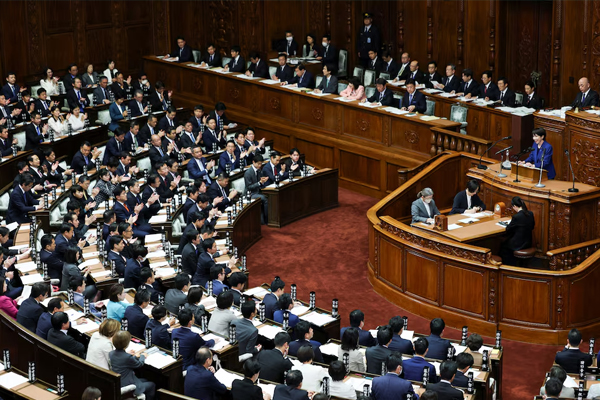
Japan‘s leader Sanae Takaichi’s new hardline coalition partner empowers her security agenda and allows U.S. President Donald Trump to advocate for increased military spending, though her fragile government could limit the extent of her actions.
Takaichi, an admirer of conservative British Prime Minister Margaret Thatcher, was sworn in on Tuesday as head of a government that is two votes shy of a majority in the decision-making 465-seat lower house.
“She is conservative, wants to increase defence spending, and has styled herself the Japan First candidate. If she has a vulnerability with Trump, it is her relative weakness at home,” said Professor Michael Green, head of the United States Studies Centre in Australia and a former senior U.S. National Security Council official.
Takaichi has only a few days to prepare for her first face-to-face talks with Trump since becoming Japan’s first female prime minister on Tuesday. They may cross paths at the ASEAN regional bloc summit in Malaysia on Sunday before holding formal talks in Tokyo early next week.
“She certainly will be experiencing a baptism of fire on the diplomatic front,” a senior U.S. diplomat told Reuters, asking not to be identified because he is not authorised to speak publicly.
Unshackled By Move To Partner Ishin
A follower of assassinated Japanese premier and Trump confidant Shinzo Abe, Takaichi ended the ruling Liberal Democratic Party’s 26-year coalition with the pacifist-leaning Komeito, replacing it with the right-wing Japan Innovation Party, known as Ishin.
“Komeito always served as a brake, and now you have two coalition partners that are pretty much aligned,” said Jeffrey Hornung, an expert on Japanese security policy at the RAND Corporation.
The shift frees Takaichi to push Abe-era security reforms further.
Like her, Ishin wants to revise Japan’s pacifist constitution, strengthen the military to deter China and loosen restrictions on arms exports.
Ishin has even floated a U.S.-style nuclear-sharing deal that would give Tokyo a say over any U.S. weapons deployed in Japan. That would be a radical departure from Japan’s long-held three non-nuclear principles of not developing, deploying or hosting such weapons.
Takaichi has signalled she will accelerate Japan’s largest military buildup since World War Two, doubling defence spending to 2% of GDP. She has said that a “contingency” in Taiwan, which Beijing says must eventually be reunited with the mainland, would be a contingency for both Japan and the United States.
“Managing relations with China will be a major hurdle for her,” said Kenji Minemura, a senior research fellow at the Canon Institute for Global Studies. “The loss of Komeito, which maintained ties with Beijing, is another setback.”
China’s response to Takaichi, a frequent visitor to the Yasukuni war shrine that Beijing views as a symbol of past militarism, expressed concern about Japan’s commitment to peace and self-defence.
“We urge Japan to reflect on its history of aggression, adhere to the path of peace, and exercise caution in its words and deeds in the field of military and security,” Guo Jiakun, a Chinese Foreign Ministry spokesperson, said in a news briefing.
The upcoming Trump meeting gives Takaichi a chance to outline her regional security goals before Trump meets Chinese leader Xi Jinping next week, ahead of the annual Asia-Pacific Economic Cooperation summit in South Korea.
Reliance On Opposition Parties For Support
Her political weakness, however, will limit how much she can promise Trump on defence spending, said Tokyo University professor Ryo Sahashi.
“Speeding up the buildup was always on the cards, but the real issue is the budget,” he said. “It’s doubtful a government with such a weak footing can decide to jump to 3%.”
While Takaichi won enough votes to become prime minister, her bloc will still have to shop around for opposition support to pass key bills, a challenge Abe never faced.
“If Trump pushes her for a specific number, it could cause early friction,” said Hornung. “It wouldn’t surprise me if he says, you’re an ally, you need to do 3%, even 5%.”
To win Trump’s favour, which could bolster her standing at home, Takaichi instead plans to present a package of U.S. purchases, including Ford F-150 pickup trucks, soybeans, natural gas and a list of potential U.S. investments, sources earlier told Reuters.
While Takaichi and the LDP will miss the presence of Abe, who was assassinated in 2022, his widow, Akie, will be there to meet Trump.
Takaichi’s officials may even take the U.S. leader to the golf course he and Abe played at in 2019 during his last visit, local media reported.
(With inputs from Reuters)
With White House Support, Taiwan Turns To MAGA Outreach To Reach Trump
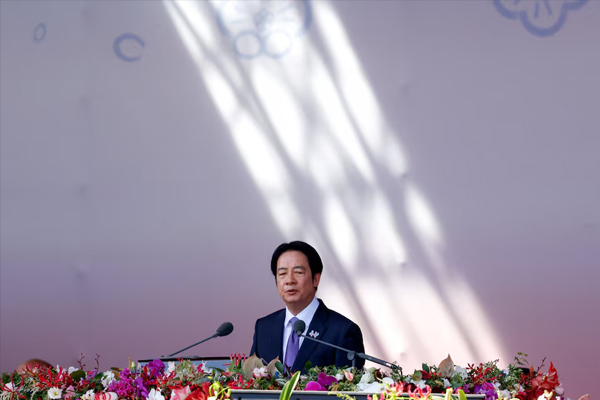
As Taiwan cannot directly call United States President Donald Trump due to its unique diplomatic situation, it has adopted an alternative approach to capture his attention—engaging with the MAGA community, with support from the White House.
Since taking office earlier this year, Trump has vacillated on his position towards China-claimed Taiwan as he seeks to strike a trade deal with Beijing.
Trump says Chinese President Xi Jinping has told him he won’t invade while the Republican leader is in office, but is also yet to approve any new U.S. arms sales to Taipei.
The fear in Taipei, which has long enjoyed strong unofficial support from Washington, is that a Trump-Xi meeting next week in South Korea could see some sort of “selling out” of Taiwan’s interests by Trump to Xi.
Four senior Taiwan officials described ongoing jitters over those talks and feeding into a “U.S. scepticism” theory on the island that questions Washington’s security support.
In turn, they said, Taipei is reaching out through all possible channels to make clear its determination to defend itself is heard, especially by “Make America Great Again” supporters.
“Everyone in Taiwan is worried, and it is the government’s job to make sure that it will not happen,” a senior Taiwan official told Reuters, referring to fears Trump could sacrifice Taiwan’s interests in talks with Xi.
Locked out of the White House, given the lack of formal diplomatic ties, Lai and his team have been courting conservative U.S. media, including podcaster and radio host Buck Sexton, who interviewed Lai this month.
“We cannot simply call up Trump, so we have had to find other ways to talk to him,” said a second Taiwan official, who, like the others, spoke on condition of anonymity given the sensitivity of the matter.
One U.S. administration official told Reuters that members of the Trump administration had encouraged Taiwan to engage with “new media” so it can engage with “real Americans instead of liberal elites”.
The U.S. and Taiwan have a deep partnership on security, technology and manufacturing, and the government is in “close and continuous contact” with Taiwan at many levels, the official added.
Courting MAGA
Lai told Sexton, from The Clay Travis & Buck Sexton Show, that Trump should get a Nobel Peace Prize – an award Trump has lobbied for – if he can convince China to abandon the use of force over Taiwan.
Sexton, whose show airs on hundreds of U.S. radio stations, did a separate segment lauding the island.
“Highly recommend any American visit. They’re big fans of the USA here,” Sexton, who has described U.S. Defence Secretary Pete Hegseth as “our friend”, wrote from Taipei on X, where the post on the interview itself got more than 150,000 views.
A third Taiwanese official told Reuters the interview was “very positive” for Taiwan.
In June, Vice President Hsiao Bi-khim, a fluent English speaker and formerly Taiwan’s de facto ambassador to the United States, gave an interview to the Shawn Ryan Show, while in May, then Presidential Office spokesperson Lii Wen wrote an op-ed in the conservative Washington Times.
Taiwan’s presidential office told Reuters that communication with the United States was “smooth” and that Taiwan will continue to seek bipartisan and consistent U.S. support.
“As for building broad, cross-party pro-Taiwan networks among our international friends and allies, including the United States, this has always been an important task of the governing team,” it said.
A U.S. State Department spokesperson said the administration has been very clear that the “enduring U.S. commitment to Taiwan continues, as it has for over four decades”.
Key Allies Gone
Still, Taiwan has lost some key allies in the U.S. national security system, including former Trump adviser John Bolton, charged this month with sharing classified information, charges he disputes.
Secretary of State Marco Rubio, however, remains a strong supporter of Taipei.
In an effort to keep the Trump administration onside, Taiwan has been keen to underscore its commitment to spending more on defence.
“Ensuring peace through strength and boosting security through cooperation is our goal,” Lai told visiting foreign guests, including Matt Schlapp, chairman of the American Conservative Union, who were in Taipei for a security forum this month.
Schlapp himself told the forum, organised by a Taiwan military-funded think-tank, that Taiwan and the U.S. had a security partnership “that should not be diminished: that President Trump understands – he’s an ally in that fight”.
The State Department spokesperson said the U.S. strongly supports Taiwan’s own efforts to bolster defence and deterrence through reforms and a commitment to increasing defence spending.
The administration has continued to give succour to Taiwan in other ways.
That includes allowing Taiwan’s foreign minister to visit New York last month while the U.N. General Assembly was taking place, and condemning China for “mischaracterising” World War Two-era documents to put pressure on and isolate Taiwan.
“The United States cannot abandon Taiwan. America’s greatness stems from its vital strategic importance, which is intrinsically linked to Taiwan,” the first Taiwan official said.
(With inputs from Reuters)
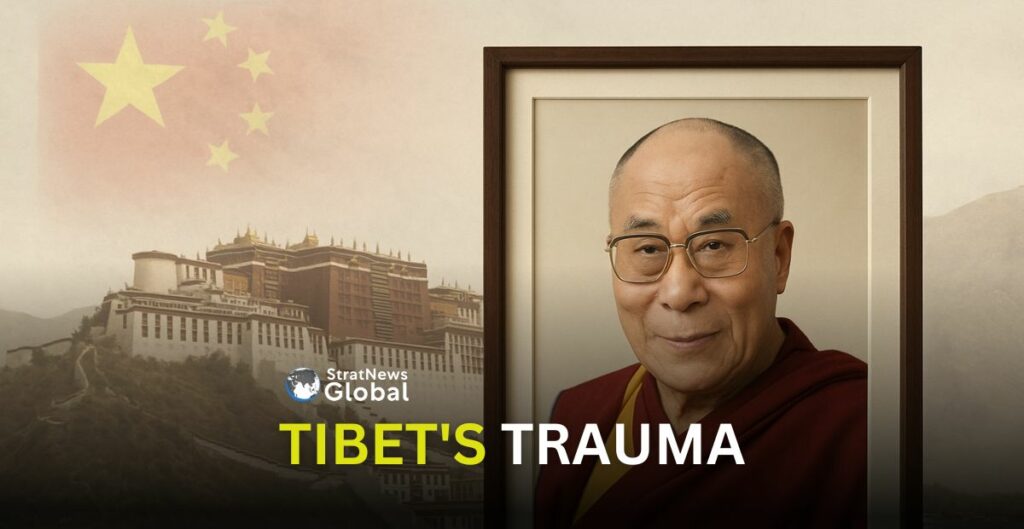
Dalai Lama Photos Seized As China Step Ups Tibet Crackdown
Chinese authorities have launched a fresh crackdown on religious practices across several regions of Tibet, confiscating portraits of the Dalai Lama and detaining monks accused of “illegal religious activity.”
According to local reports, security forces have conducted raids since mid-October at Tashi Lhunpo Monastery in Shigatse and nearby villages, entering monks’ quarters and private homes to seize photos of the exiled Tibetan spiritual leader.
Officials reportedly warned residents that displaying the Dalai Lama’s image constitutes a serious political crime, with threats of imprisonment for those who continue to venerate him. While no major violence has been reported, locals described an atmosphere of fear, with searches extending to rural households and smaller monasteries.
In a related move, monks and nuns were recently compelled to attend a Kalachakra initiation ceremony led by Gyaltsen Norbu, the Beijing-appointed “Panchen Lama,” whose legitimacy many Tibetans reject. Attendance was mandatory, and government officials were present to monitor compliance.
In eastern Tibet, several monks who protested against a planned hydropower project were detained and allegedly tortured after opposing the dam’s construction, which threatens to submerge monasteries and sacred sites.
Together, the incidents mark a tightening of state control over religious and cultural expression in Tibet, reinforcing Beijing’s efforts to bring Tibetan Buddhism under the framework of Communist Party ideology.
Outgoing New York Mayor Adams Endorses Cuomo, Criticises Mamdani
New York Mayor Eric Adams on Thursday endorsed former Governor Andrew Cuomo to succeed him, aiming to block leftist Democratic nominee Zohran Mamdani from winning the November 4 election.
Adams and Cuomo, both moderate Democrats, warned that Mamdani, a self-described democratic socialist, was too extreme for New York, with Cuomo describing him as an “existential threat” to the city and Adams calling him a “snake-oil salesman.”
Adams abandoned his own reelection campaign in September with his approval ratings at a record low, and it remains to be seen whether his endorsement will deliver a meaningful boost to Cuomo, who has trailed Mamdani in polls.
Adams’ popularity plummeted after his indictment on bribery charges, a case that was dismissed by President Donald Trump’s administration.
At a joint press conference, Adams said he would campaign in “Black and brown communities” in the race’s final days to try to convince his supporters to back Cuomo. Adams is the second Black mayor in the history of New York City.
Cuomo thanked Adams, praising him for putting the welfare of the city above his own personal ambition.
‘Existential Threat’
“He believes Zohran is an existential threat to New York City, and we all have to do our best to make sure that Zohran does not become the next mayor,” Cuomo said.
In response, Mamdani issued a statement attacking both men.
“Today confirms what we’ve long known: Andrew Cuomo is running for Eric Adams’ second term,” he said. “It’s no surprise to see two men who share an affinity for corruption and Trump capitulation align themselves at the behest of the billionaire class and the President himself.”
Trump, a native New Yorker who made his fortune in the city’s real estate market, has made little secret of his disdain for Mamdani, calling him a communist and threatening to cut federal funding to the city if Mamdani is elected.
Mamdani, a 34-year-old Uganda-born New York assembly member, pulled off a surprising victory over Cuomo in the city’s Democratic primary election.
Cuomo, who resigned as governor in 2021 over sexual harassment allegations that he has denied, stayed in the race as an independent candidate with backing from donors who criticise Mamdani for his lack of experience and left-wing views.
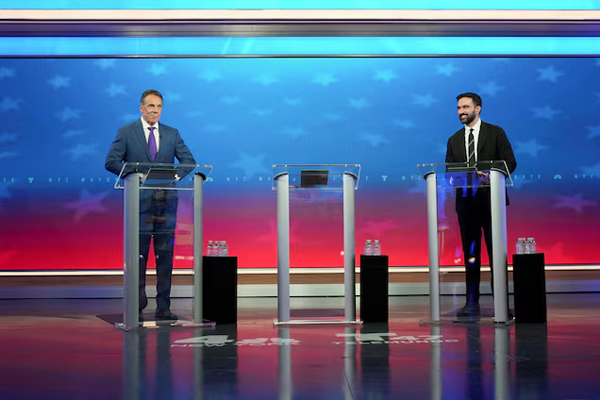
Adams’ endorsement came one day after the campaign’s final debate, where Cuomo and Mamdani traded barbs alongside the Republican nominee, Curtis Sliwa, a radio host and founder of the Guardian Angels anti-crime organisation.
Cuomo has pressured Sliwa to quit the race, a move that could help the former governor come within striking distance of Mamdani, but the Republican candidate has refused.
Cuomo was seen sitting next to Adams at the New York Knicks season-opening game on Wednesday night, soon after the debate ended.
Early voting in the election begins on Saturday.
(With inputs from Reuters)
EU Commits Financial Aid To Kyiv But Postpones Plan To Tap Frozen Russian Funds
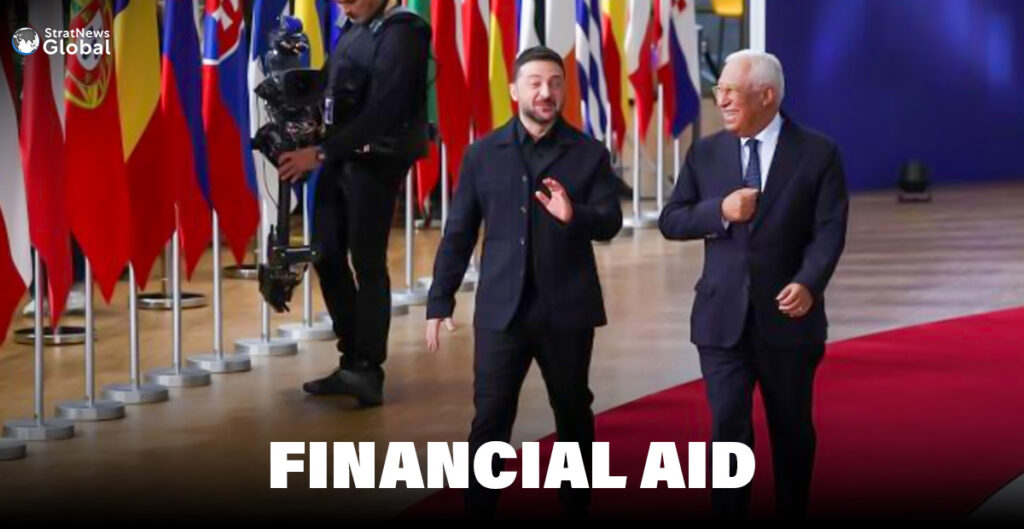
European Union leaders on Thursday committed to covering Ukraine’s urgent financial needs over the next two years but held off on approving a proposal to use frozen Russian assets to finance a large loan for Kyiv. The decision was taken after Belgium voiced concerns over the plan.
Belgium’s stance was crucial as a Belgian financial institution, Euroclear, holds the assets that would be used to fund a loan of 140 billion euros ($163.27 billion) to bolster Ukraine in its fight against Russia’s invasion.
Many EU governments had hoped the leaders, meeting at a summit in Brussels, would give their blessing to the concept and ask the European Commission, the EU’s executive body, to come up with a formal legal proposal in the coming weeks.
But a text backed by all the leaders – except Hungary’s Russia-friendly Prime Minister Viktor Orban – was watered down from previous drafts to ask the Commission for “options for financial support based on an assessment of Ukraine’s financing needs”.
Frozen Russian Assets
“Russia’s assets should remain immobilised until Russia ceases its war of aggression against Ukraine and compensates it for the damage caused by its war,” the declaration added. The aim is now for EU leaders to reach a deal in December.
“This is a topic that is certainly not trivial. It’s very complex,” European Commission President Ursula von der Leyen told reporters after the summit. “It was also very clear that there are points to be clarified.”
Earlier, Ukrainian President Volodymyr Zelenskyy, a guest at the summit, urged the EU to approve the loan proposal quickly.
“Anyone who delays the decision on the full use of frozen Russian assets is not only limiting our defence, but also slowing down the EU’s own progress,” he told the leaders, saying Kyiv would use a significant part of the funds to buy European weapons.
The money could also be used right away to strengthen Ukraine’s air defence, air fleet and frontline positions, he said, adding: “That means saving lives.”
Belgium Wants Clear Guarantees
But Belgian Prime Minister Bart De Wever sounded a strong cautionary note, saying he could only support the plan if he had strong assurances that it was legal and that other EU countries would share the risks involved.
“If demands are met, we can go forward. If not, I will do everything in my power at the European level, also at the national level, politically and legally to stop this decision,” De Wever told reporters on arrival at the summit.
De Wever called on all EU members to share the costs of any legal action pursued by Russia and contribute financially if the money ever had to be paid back. He also said Russian frozen assets held by other countries should be part of the scheme.
As the summit wrapped up, De Wever insisted the legality of the “reparation loan” plan was not clear and still needed to be resolved. The biggest problem is to guarantee that the money could be paid back if something goes wrong, he said.
Deal Still Feasible
But von der Leyen and European Council President Antonio Costa, the summit chairperson, insisted the discussion had shown that the reparation loan plan could work.
“It is possible to solve all the technical issues. That means that this solution is feasible,” the chairman of EU leaders Antonio Costa told a press conference.
Russia has described the idea as an illegal seizure of property and warned of retaliation.
($1 = 0.8575 euros)
(With inputs from Reuters)
Colombian President Petro Says Halt In U.S. Military Aid Could Present Significant Challenges
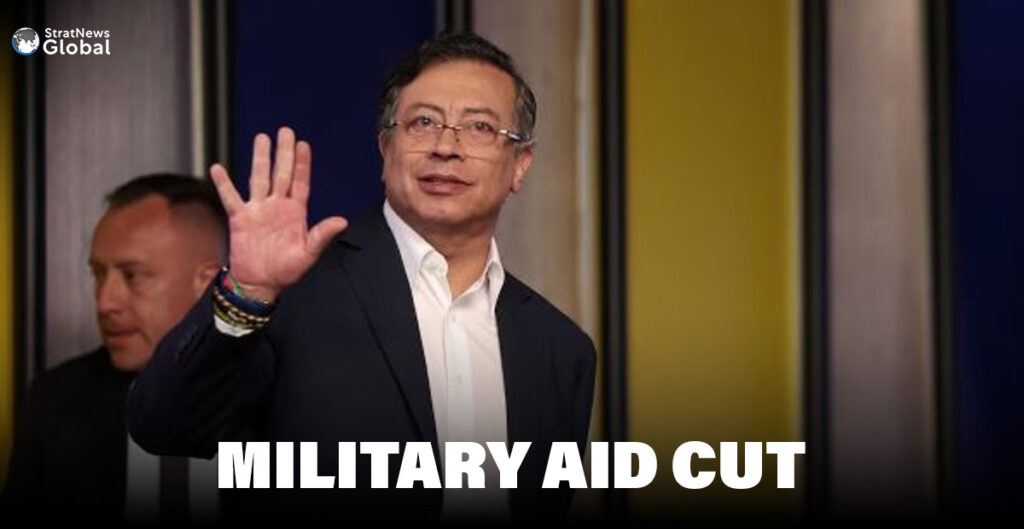
Colombian President Gustavo Petro said on Thursday that while a suspension of overall U.S. aid would have little consequence for the country, any reduction or change in U.S. military funding could present significant challenges.
U.S. President Donald Trump threatened over the weekend to raise tariffs on Colombia and said Wednesday that all funding to the country had been halted.
Colombia was once among the largest recipients of U.S. aid in the Western Hemisphere but the flow of money was suddenly curtailed this year by the shuttering of USAID, the U.S. government’s humanitarian assistance arm. Military cooperation has continued.
“What happens if they take away aid? In my opinion, nothing,” Petro told journalists, adding that aid funding often moved through U.S. agencies and employed Americans.
But a cut to military cooperation would matter, he added.
“Now in military aid we would have some problems,” Petro said, adding that the loss of U.S. helicopters would have the gravest effect.
The Trump administration has already “decertified ” Colombia’s efforts to fight drug trafficking, paving the way for potential further cuts, but some U.S. military personnel remain in the country and the two continue to share intelligence.
U.S. Military’s Strikes
Petro has objected to the U.S. military’s strikes against vessels in the Caribbean, which have killed dozens of people and inflamed tensions in the region. Many legal experts and human rights activists have also condemned the actions.
Trump has responded by calling Petro an “illegal drug leader” and a “bad guy” – language Petro’s government says is offensive.
Petro has recalled his government’s ambassador from Washington, but met with U.S. charge d’affaires in Bogota late on Sunday.
Although Trump has not announced any additional tariffs on top of the 10% rate already assessed on Colombian goods, he said on Wednesday he may take serious action against the country.
Petro said Trump is unlikely to put tariffs on oil and coal exports, which represent 60% of Colombia’s exports to the U.S., while the effect of tariffs on other industries could be mitigated by seeking alternative markets.
An increase in tariffs would flip a long-established U.S. policy stance that free trade can make legitimate exports more attractive than drug trafficking, and analysts say more duties could eventually bolster drug trafficking.
Although his government has struggled to take control of major hubs for rebel and criminal activity, Petro said it has made record seizures of 2,800 metric tons of cocaine in three years, partly through increased efforts at Pacific ports where container ships are used for smuggling.
He also repeated an accusation that Trump’s actions are intended to boost the far right in Colombia in next year’s legislative and presidential elections.
(With inputs from Reuters)
Trump Says Military Action Against Drug Cartels To Continue Without Formal War Declaration
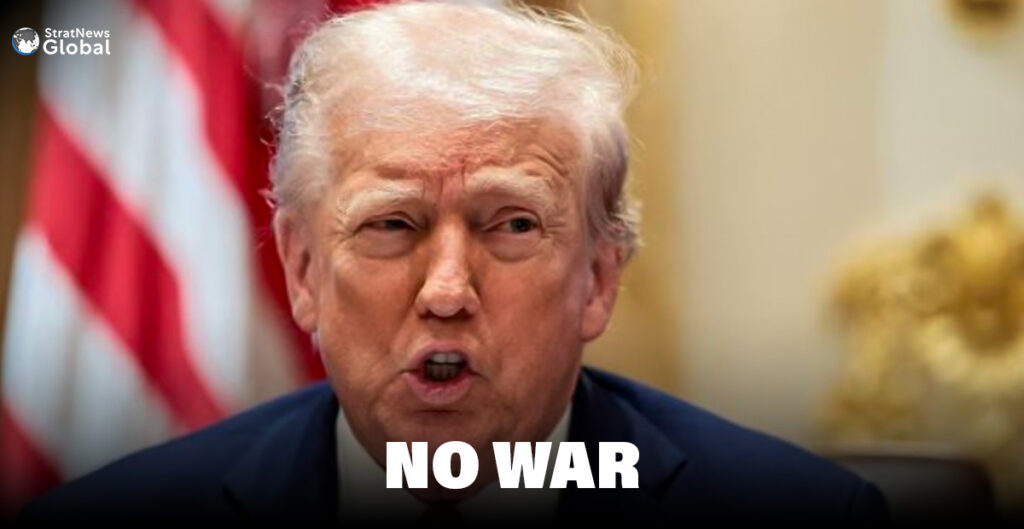
U.S. President Donald Trump said on Thursday that his administration would soon brief the Congress on its actions against drug cartels, emphasizing that a formal declaration of war was unnecessary.
He added that the next stage of the campaign would shift focus to operations conducted on land.
The U.S. military has been increasing its presence in the Caribbean, including deployments of guided-missile destroyers, F-35 fighter jets, a nuclear submarine and thousands of troops.
“Well, I don’t think we’re going to necessarily ask for a declaration of war. I think we’re just going to kill people that are bringing drugs into our country. OK? We’re going to kill them,” Trump told reporters at the White House.
U.S. Strikes On Suspected Drug Vessels
The United States has carried out a number of strikes against suspected drug vessels in the Caribbean and Pacific Ocean since early September, killing nearly 40 people. While the Pentagon has provided little information, it has said some of those strikes have been against vessels near Venezuela.
“Now they (drugs) are coming in by land … you know, the land is going to be next,” Trump added, echoing comments he has made in recent weeks.
Venezuelan President Nicolas Maduro, speaking at a live event in Caracas on Thursday, warned that if the U.S. ever intervened in the country, “the working class would rise and a general insurrectional strike would be declared in the streets until power is regained,” adding that “millions of men and women with rifles would march across the country.”
Last week, two alleged drug traffickers survived a U.S. military strike in the Caribbean, according to reports. They were rescued and brought to a U.S. Navy warship before being repatriated to their home countries of Colombia and Ecuador.
Sitting next to Trump at the same event on Thursday, U.S. Defence Secretary Pete Hegseth defended the decision to repatriate two survivors, likening it to battlefield practices during the Iraq and Afghanistan wars.
“In those conflicts, we captured thousands on the battlefield and handed over 99% to host-nation authorities,” Hegseth said. “Did we always like the outcome? Not always. But it was the standard, and it’s the same here.”
(With inputs from Reuters)
Trump, Xi To Visit South Korea Next Week, Seoul Security Adviser Says
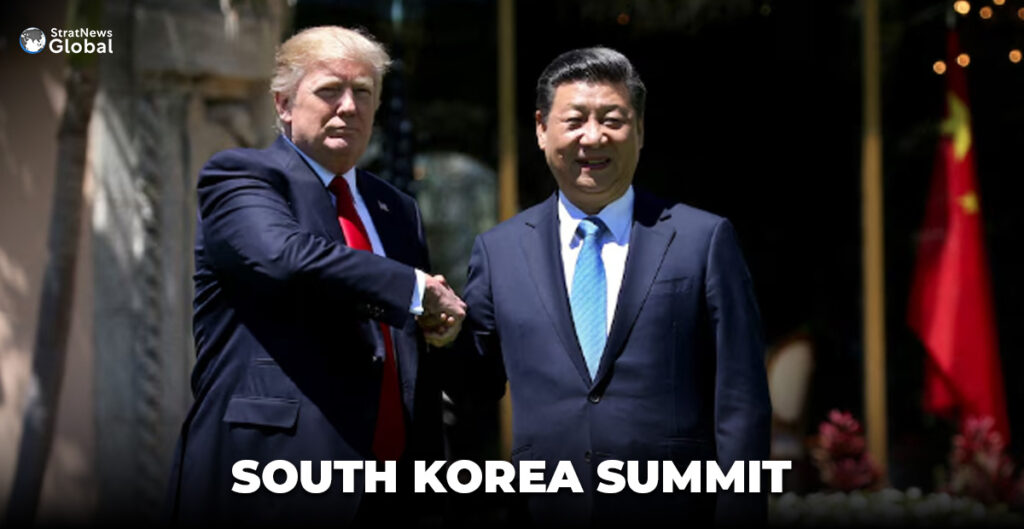
U.S. President Donald Trump and Chinese President Xi Jinping are scheduled to make state visits to South Korea next week, coinciding with the country’s hosting of Asia-Pacific Economic Cooperation (APEC) events, South Korea’s top security adviser announced on Friday.
South Korean President Lee Jae Myung plans to hold summit meetings with Trump and Xi separately, said Wi Sung-lac, South Korea’s presidential security adviser.
“Through a series of summits between the leaders of South Korea and the United States, the United States and China, and South Korea and China, we will not only highlight South Korea’s role as a platform but also build consensus for peace, prosperity, and stability in the region,” Wi told reporters.
Talks Amid Trade Tensions
As part of a trip to Asia, Trump will meet Xi next week in South Korea, the White House said earlier, amid an escalation in trade tensions between the world’s two largest economies.
Wi said South Korea was hoping to move forward on issues surrounding security and U.S. tariffs at an upcoming meeting between Lee and Trump, but he was uncertain whether any agreement between the two sides would be reached.
South Korea and its major ally remain “sharply” apart on the level of cash investment as part of a $350 billion package pledged by South Korea under a deal to lower U.S. tariffs on the country’s exports, Seoul’s industry minister said on Friday.
Lee plans to hold a summit with Xi where the two leaders are expected to discuss a deepening bilateral partnership and issues related to North Korea, said top security adviser Wi.
Before the APEC meetings, Lee will make a two-day trip to Malaysia between October 26-27 to attend a summit of the Association of Southeast Asian Nations (ASEAN), also joined by Trump.
On the sidelines of the ASEAN summit, Lee will talk to Cambodia’s Prime Minister Hun Manet and discuss recent online scam issues.
“A super week of multilateral summits is kicking off, starting with the ASEAN Summit and continuing into the APEC Summit in Gyeongju,” Wi said.
(With inputs from Reuters)
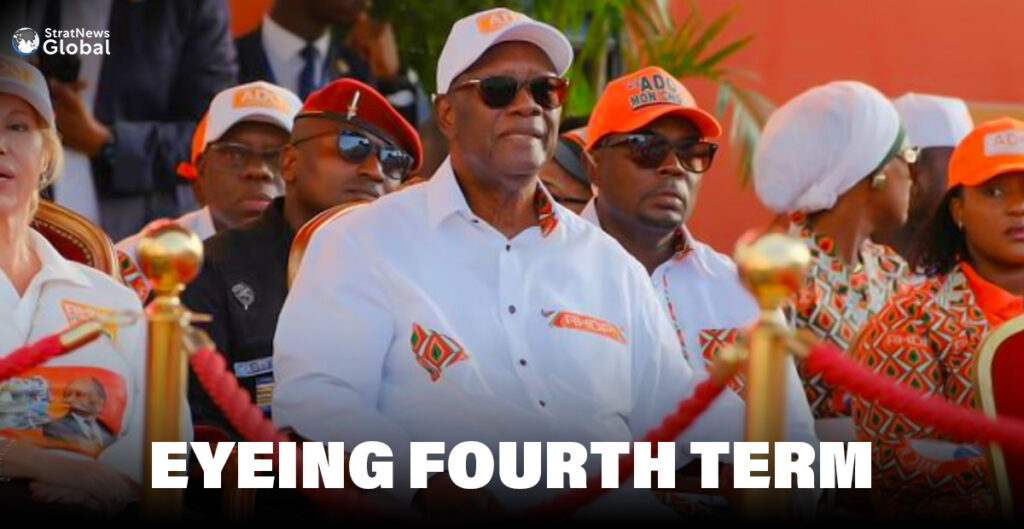
Ivory Coast: President Ouattara Pursues Fourth Term, Citing Growth Record Amid Criticism
Ivory Coast President Alassane Ouattara is running for a fourth term in Saturday’s election, pledging to extend the country’s nearly 15 years of steady economic growth. His critics, however, accuse the government of orchestrating a campaign to silence opposition voices.
The election in the world’s biggest cocoa producer pits Ouattara, 83, against two former government ministers as well as the ex-wife and former spokesperson for his predecessor, Laurent Gbagbo. Ouattara is the only candidate with the backing of a strong political party, making him the clear favourite.
Two more prominent challengers, Gbagbo and former Credit Suisse CEO Tidjane Thiam, were barred from running. Thiam has said the race was shaping up to be a “coronation”.
Ouattara, who has brushed off concerns about his age and health, came to power after a four-month civil war that drew on ethnic tensions and was spurred by Gbagbo’s refusal to acknowledge defeat in the 2010 election.
Economic Recovery
A former international banker and deputy managing director of the IMF, Ouattara has helped place Ivory Coast among the fastest growing economies in the region, with international bonds that are some of the best performing in Africa.
Along the way he has struck political deals to twice coast to re-election and overseen constitutional reforms that allowed him to sidestep a two-term limit, drawing the ire of his rivals.
Both Thiam and Gbagbo accuse Ouattara of eroding democratic institutions and failing to provide equitable growth.
Ivory Coast’s economic recovery is a big part of the record Ouattara is now running on, Patrick Achi, government spokesperson and former prime minister, said.
“The whole economic system was really down. The education system was down, health was down, (the) road system was down,” Achi said, adding that Ouattara’s government had “to rebuild the whole thing”.
After investment in schools and road infrastructure, along with flashier projects like a 60,000-seat stadium, a fourth term will emphasise attracting private sector investment, he said.
This will help employ 400,000 Ivorians graduating every year, he said.
“If we cannot grow the private sector fast enough to absorb them… then that becomes a threat,” he said.
‘Disproportionate’ Ban On Protests
At a pro-Ouattara rally in Abidjan’s Yopougon neighbourhood, Lacine Cisse, a 42-year-old employee of the state postal service, said Ouattara should be credited with offering stability in a region rife with insurgencies and coups.
“Look at Guinea, look at Niger – very rich in resources and coups slow them down,” he said.
“After the vote, everyone will be at the nightclub because there is peace here.”
However, Dominique Yapo, a 37-year-old cooking gas vendor in Yopougon, said economic growth had not trickled down and the cost of living had increased.
“We feel like nothing is being done to improve the situation,” he said. “Ouattara’s supporters are the ones who find work easily.”
During the campaign, rallies for Ouattara’s rivals have gone ahead but the government has deployed 44,000 members of the security forces throughout the country and enforced what Amnesty International said was a “disproportionate” ban on protests.
Hundreds have been arrested, and the interior ministry said dozens had received prison terms of up to three years for offenses including disturbing public order.
In a statement last week, Justice Minister Sansan Kambile said the restrictions were limited to the election period and that the government was committed to respecting freedom of assembly.
(With inputs from Reuters)
Trump Announces Termination Of All Trade Negotiations With Canada
U.S. President Donald Trump announced on Thursday that all trade negotiations with Canada have been terminated, citing what he described as a fraudulent advertisement in which former and late President Ronald Reagan allegedly criticised tariffs.
Trump imposed tariffs on Canadian steel, aluminium and autos earlier this year, prompting Ottawa to respond in kind. The two sides have been in talks for weeks on a potential deal for the steel and aluminium sectors.
“Based on their egregious behaviour, ALL TRADE NEGOTIATIONS WITH CANADA ARE HEREBY TERMINATED,” Trump wrote on Truth Social.
Ontario Premier Doug Ford said earlier this week the ad from his province with anti-tariff messaging had caught Trump’s attention. The ad showed Reagan, a Republican, criticising tariffs on foreign goods while saying they caused job losses and trade wars.
“I heard that the president heard our ad. I’m sure he wasn’t too happy,” Ford said on Tuesday.
Reagan Foundation Condemns Ad
The Ronald Reagan Presidential Foundation issued a statement late on Thursday saying the ad by the government of Ontario was “using selective audio and video” of Reagan and that the foundation was reviewing its legal options.
“The ad misrepresents the Presidential Radio Address (by Reagan in 1987), and the Government of Ontario did not seek nor receive permission to use and edit the remarks,” the foundation said in its statement.
The Canadian government had no immediate comment.
Trump has used tariffs as leverage on many countries around the world.
Trump’s trade war has increased U.S. tariffs to their highest levels since the 1930s, and he has regularly threatened more duties, sparking concerns among businesses and economists.
Canadian Prime Minister Mark Carney told reporters on Thursday that Canada will not allow unfair U.S. access to its markets if talks on various trade deals with Washington fail.
Next year, the U.S., Canada and Mexico are due to review their 2020 continental free-trade agreement.
(With inputs from Reuters)