

Support us by contributing to StratNewsGlobal on the following UPI ID
ultramodern@hdfcbank

Strategic affairs is our game, South Asia and beyond our playground. Put together by an experienced team led by Nitin A. Gokhale. Our focus is on strategic affairs, foreign policy and international relations, with higher quality reportage, analysis and commentary with new tie-ups across the South Asian region.
You can support our endeavours. Visit us at www.stratnewsglobal.com and follow us on YouTube, Twitter, Facebook and Instagram.
र 500 per month
र 1000 per month
र 5000 per year
र 10000 per year
Donate an amount of your choice
र 500 per month
Donate र 500 per month

र 1000 per month
Donate र 1000 per month
र 5000 per year
Donate र 5,000 per year
र 10000 per year
Donate र 10,000 per year
Donate an amount of your choice
Donate an amount of your choice

EU Unveils Plan To Reduce Dependence On Chinese Rare Earths
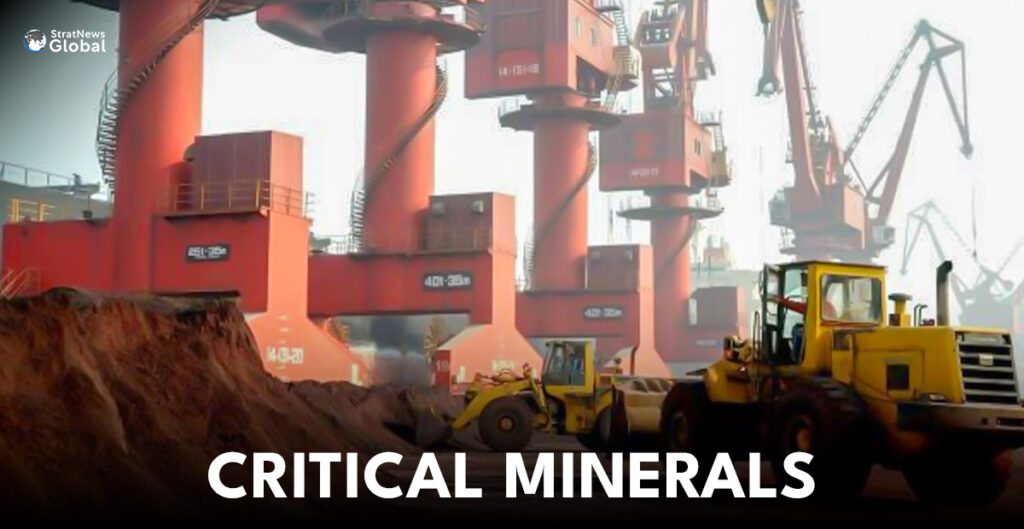
European Commission President Ursula von der Leyen announced on Saturday that the European Union is drafting a new strategy to lessen its dependence on China for rare earths and critical raw materials.
She also criticized Beijing for tightening export controls on rare earth elements, warning that Europe must strengthen its own supply chains to ensure economic and strategic security.
The European Union has for years attempted to reduce its dependence on China for the minerals that are needed for the transition to cleaner energy, the defence sector and electric vehicle production.
Von der Leyen said the EU would seek to speed up critical raw materials partnerships with countries such as Australia, Canada, Chile, Greenland, Kazakhstan, Uzbekistan and Ukraine.
Alternative Sources Of Critical Raw Materials
The plan would also include greater efforts to recycle critical raw materials in products sold in Europe, she said.
“The aim is to secure access to alternative sources of critical raw materials in the short, medium and long term for our European industries,” she told a conference in Berlin.
The scheme, called RESourceEU, would be similar to a plan the EU developed after Moscow’s 2022 invasion of Ukraine to cut its reliance on Russian energy, known as REPowerEU, she said.
“We will focus on everything from joint purchasing to stockpiling. We will boost investment in strategic projects for the production and processing of critical raw materials here in the European Union,” she added.
On October 9, China imposed export restrictions on rare earths and battery materials.
Western governments and analysts view the increased curbs as part of China’s response to trade tariffs imposed by the United States.
But von der Leyen said it also had a huge impact on Europe, in industrial sectors, including automotive, defence, aerospace, AI chips and data centres.
“If you consider that over 90% of our consumption of rare earth magnets comes from imports from China, you see the risks here for Europe and its most strategic industrial sectors,” she said.
“In the short term, we are focusing on finding solutions with our Chinese counterparts. But we are ready to use all of the instruments in our toolbox to respond if needed,” she said.
(With inputs from Reuters)
Overnight Russian Strikes On Kyiv Leave Two Dead And Thirteen Injured: Officials
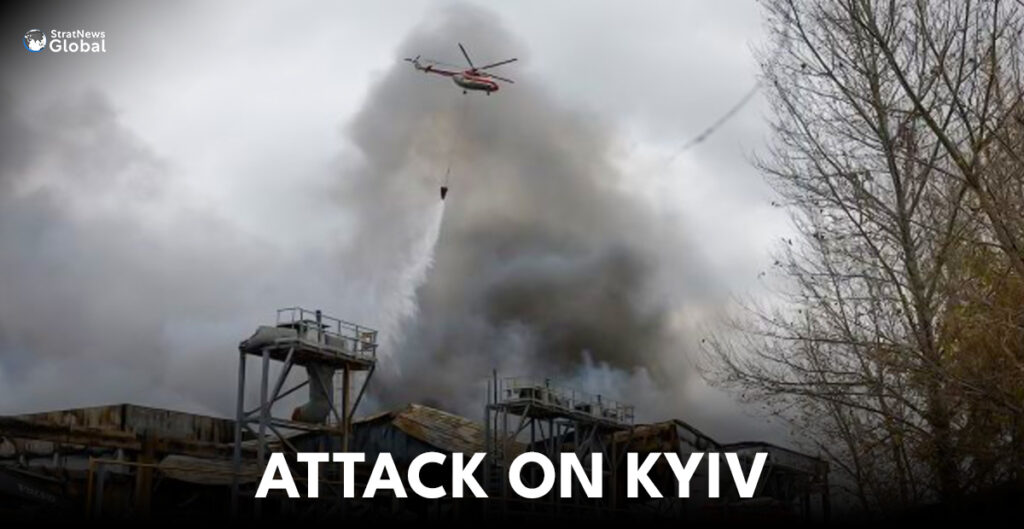
Russian missile and drone attacks on Kyiv overnight left two people dead and thirteen others injured, Ukrainian officials said on Saturday. The strikes, which hit several parts of the capital, targeted critical infrastructure and energy facilities.
The attack in Kyiv set off multiple fires and damaged residential infrastructure, including a kindergarten, according to city officials.
“These strikes were once again directed at our civilian and energy infrastructure,” Prime Minister Yulia Svyrydenko said on X.
“Russia is now attempting to create a humanitarian catastrophe in Ukraine to coincide with winter.”
Ukraine’s Foreign Minister Andrii Sybiha said Russian missiles and drones had also targeted the energy grid, railroads, and homes in Dnipro, Kharkiv and Sumy.
Russia’s defence ministry said in a statement on Telegram that the overnight attacks were targeted at enterprises of Ukraine’s military-industrial complex and energy infrastructure facilities that support its operations.
Russia’s defence ministry separately said that its forces had downed 121 Ukrainian drones overnight, including seven that were flying towards Moscow.
Patriot Systems
Large clouds of smoke were seen over Kyiv on Saturday morning as firefighters raced to put out fires across the city.
As of midday, they had localized one fire in a 13,000 square metre (140,000 sq. ft) warehouse with the help of two helicopters, and had put out a fire in another building.
Ukrainian President Volodymyr Zelenskyy said the attacks highlighted the importance of Patriot air defence systems in protecting Ukrainian cities from Russia’s continuous attacks.
“Since the beginning of this year alone, Russia has launched about 770 ballistic missiles and more than 50 ‘Kinzhal’ missiles at Ukraine,” Zelenskyy said on Telegram.
The Patriot systems have proven effective at destroying Russian ballistic missiles and Ukraine is currently seeking a contract to buy 25 Patriot air defence systems from the U.S.
Ukraine’s air force downed four of nine missiles and 50 of 62 drones launched in the overnight attacks, it said on Telegram.
The air force reported five direct missile hits and 12 drone hits on 11 sites around the country.
(With inputs from Reuters)
UN To Sign Landmark Cybercrime Treaty In Hanoi To Combat Global Crimes
A landmark United Nations (UN) cybercrime treaty, designed to address offences that cost the global economy trillions of dollars each year, is scheduled to be signed in Vietnam’s capital, Hanoi, by approximately 60 countries over the upcoming weekend.
The convention, which will take effect after it is ratified by 40 nations, is expected to streamline international cooperation against cybercrime, but has been criticised by activists and tech companies over concerns of possible human rights abuses.
“Cyberspace has become fertile ground for criminals…every day, sophisticated scams defraud families, steal livelihoods, and drain billions of dollars from our economies,” U.N. Secretary-General Antonio Guterres said at the opening ceremony.
“The U.N. Cybercrime Convention is a powerful, legally binding instrument to strengthen our collective defences against cybercrime.”
The convention targets a broad spectrum of offences from phishing and ransomware to online trafficking and hate speech, the U.N. has said, citing estimates that cybercrime costs the global economy trillions of dollars each year.
Vietnam President Luong Cuong said the signing of the convention “not only marks the birth of a global legal instrument, but also affirms the enduring vitality of multilateralism, where countries overcome differences and are willing to shoulder responsibilities together for the common interests of peace, security, stability and development.”
Critics have warned that its vague definition of crime could enable abuse.
Cybersecurity Tech Accord
The Cybersecurity Tech Accord, which includes Meta and Microsoft, has dubbed the pact a “surveillance treaty,” saying it may facilitate data sharing among governments and criminalise ethical hackers who test systems for vulnerabilities.
The U.N. Office on Drugs and Crime (UNODC), which led the treaty negotiations, said the agreement includes provisions to protect human rights and promote legitimate research activities.
The European Union, the United States and Canada sent diplomats and officials to sign the treaty in Hanoi.
Vietnam’s role as host has also stirred controversy. The U.S. State Department recently flagged “significant human rights issues” in the country, including online censorship. Human Rights Watch says at least 40 people have been arrested this year, including for expressing dissent online.
Vietnam views the treaty as an opportunity to enhance its global standing and cyber defences amid rising attacks on critical infrastructure.
(With inputs from Reuters)
US Sanctions Colombian President, Alleges Role In Drug Trade Growth
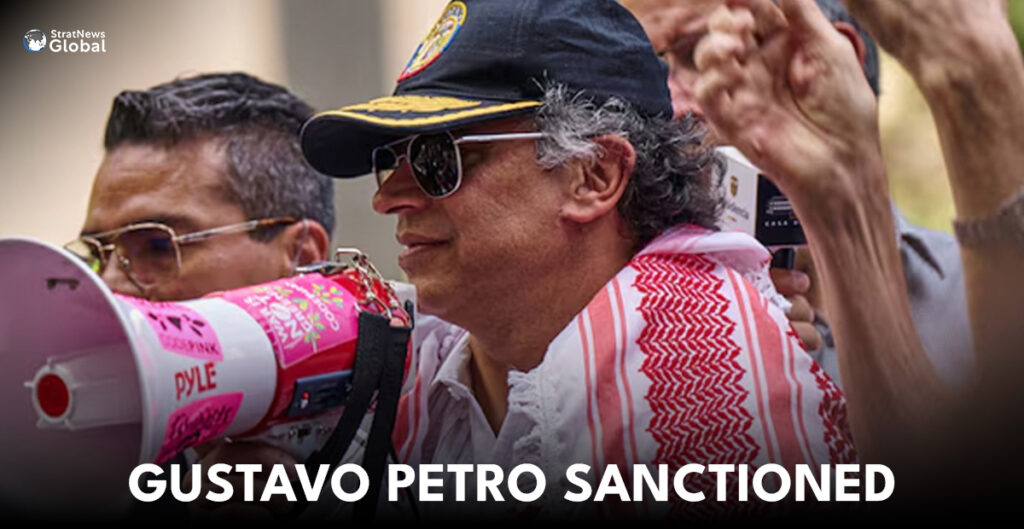
The United States on Friday imposed sanctions on Colombian President Gustavo Petro, as President Donald Trump intensified tensions with the longtime Latin American ally, accusing Petro of failing to curb the flow of cocaine into the U.S.
Tensions between Washington and many countries in the region have been mounting for weeks. The U.S. military has ratcheted up activity in the southern Caribbean, striking vessels in international waters that it has alleged without evidence are carrying drugs. Trump this week called Petro an “illegal drug leader” after the leftist president accused the U.S. of committing “murder” with the strikes.
Petro, whose term will end in 10 months, has always opposed the strikes. He has attempted to end Colombia’s six-decade conflict through peace and surrender deals with rebels and crime gangs, but those efforts have borne little fruit.
“Since President Gustavo Petro came to power, cocaine production in Colombia has exploded to the highest rate in decades, flooding the United States and poisoning Americans,” U.S. Treasury Secretary Scott Bessent said in a statement.
“President Petro has allowed drug cartels to flourish and refused to stop this activity. Today, President Trump is taking strong action to protect our nation and make clear that we will not tolerate the trafficking of drugs into our nation.”
Petro disputes the basis for the U.S. allegations, saying his government has seized cocaine at unprecedented rates and that expansion of coca crops – the base ingredient for cocaine – has slowed every year since 2021.
“What the U.S. Treasury says is a lie,” Petro said on X on Friday afternoon. “My government did not increase cocaine; it did the opposite, my government has seized more cocaine than in the whole history of the world.”
Petro, who first rose to prominence as a senator by exposing links between some of his fellow lawmakers and paramilitary groups involved in cocaine trafficking, earlier called the sanction “a complete paradox”.
He said he had hired a U.S. lawyer to defend him and spoke to thousands of supporters in central Bogota on Friday evening, saying he has no money in the United States.
While rare, the imposition of sanctions on a head of state is not unprecedented. The move adds Petro to a short list that includes the leaders of Russia, Venezuela and North Korea.
Petro’s wife and son, as well as Armando Benedetti, Colombia’s interior minister, were also hit with sanctions on Friday under the authority that allows Washington to target those it accuses of being involved in the global illicit drug trade.
On X, Benedetti said he had been penalised for merely stating that Petro was not a drug trafficker and that the sanctions proved the U.S. anti-drug fight was a “sham.”
Former lawmaker Nicolas Petro, who is already facing corruption charges in Colombia, said on X that he was targeted for being his father’s son and that his pending case has nothing to do with drug trafficking.
Friday’s action freezes any U.S. assets of those targeted and generally bars Americans from dealing with them.
“President Trump has been clear that President Petro better close up these killing fields immediately, or the United States will close them up for him, and it won’t be done nicely,” said White House spokeswoman Anna Kelly.
Clashes Since Trump Took Office
Trump and Petro have clashed several times since the Republican U.S. president took office in January, including in an escalating feud stemming from the U.S. strikes on vessels allegedly transporting drugs.
Last weekend, Trump threatened to raise tariffs on Colombia and said on Wednesday all funding to the country had been halted.
In a separate statement on Friday, the State Department said Secretary of State Marco Rubio will not certify Colombia’s counter-narcotics efforts.
Last month, the United States revoked Petro’s visa after he joined a pro-Palestinian demonstration in New York and urged U.S. soldiers to disobey Trump’s orders.
Earlier in the year, Petro and Trump clashed over Colombia’s refusal to accept military aircraft carrying deported migrants.
Petro also had differences with Trump’s Democratic predecessor Joe Biden, sometimes criticizing the U.S. for not taking enough responsibility for dealing with Americans’ demand for illegal narcotics.
But Petro and Biden sought ways to maintain drug enforcement cooperation and also shared common ground on issues such as climate change and migration.
Brett Bruen, who served as a foreign policy adviser under former President Barack Obama and is now head of the Global Situation Room consultancy, said Trump was creating more problems by imposing sanctions on Petro and conducting strikes against suspected drug traffickers off the coast of Colombia.
“These cowboy theatrics may play well to his base on social media, but they are creating very combustible conditions we will soon have to contend with on our doorstep,” Bruen said.
In a meeting with the U.S. charge d’affaires in Colombia on Sunday night, Petro “reiterated the importance of the United States basing its assessments on accurate data regarding Colombia’s fight against drugs,” the Colombian foreign ministry said.
(With inputs from Reuters)
Trump Aims For Trade Agreement With Chinese President Xi On Asia Visit
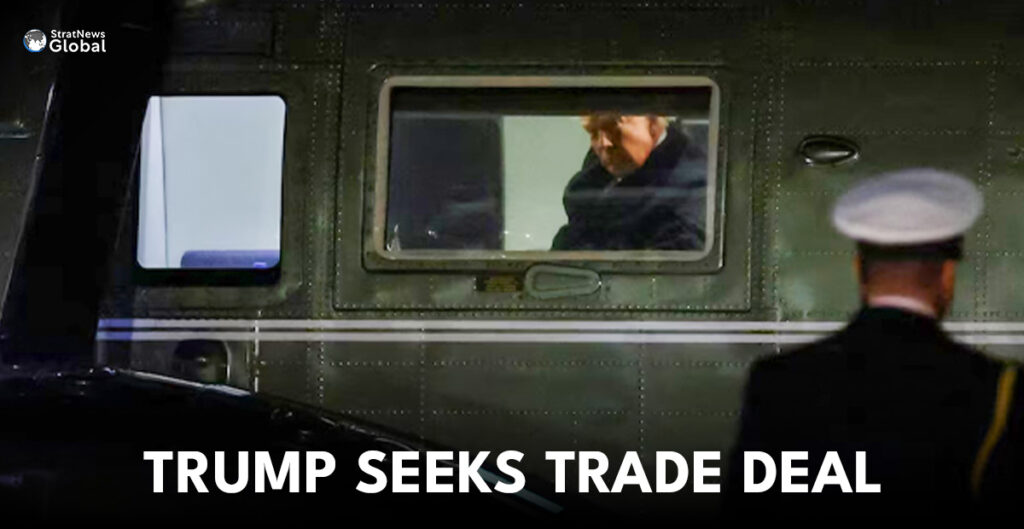
U.S. President Donald Trump will put his deal-making skills to the test during the forthcoming visit to Asia, a region impacted by his tough trade policies, as uncertainty surrounds his much-anticipated meeting with China’s Xi Jinping.
Trump, who left Washington on Friday night, is set for a five-day trip to Malaysia, Japan and South Korea, his first to the region and longest journey abroad since taking office in January.
The Republican leader hopes to pile up trade, critical mineral and ceasefire deals before turning to the toughest challenge, a face-to-face with Xi on Thursday in South Korea.
Trump is also working to maintain the signature foreign policy achievement of his second term, a fragile ceasefire he helped to strike in the Israel-Gaza conflict, while the Russian war in Ukraine rages and a trade war with China shows little sign of ending.
US And China Trade Threats
Washington and Beijing have hiked tariffs on each other’s exports and threatened to cut off trade in critical minerals and technologies altogether.
The trip was formally announced by the White House on Thursday. Details remain in flux, including the meeting between leaders of the world’s two largest economies.
Neither side expects a breakthrough that would restore the terms of trade that existed before Trump’s second-term inauguration in January, according to a person familiar with the conversations.
Instead, talks between the two sides to prepare for the meeting focused on managing disagreements and modest improvements.
An interim agreement could include limited relief on tariffs, an extension of current rates, or China committing to buy U.S.-made soybeans and Boeing airplanes. Beijing reneged on similar promises in a 2020 deal with Trump.
Washington could let more high-end computer chips flow to Beijing, which in turn could loosen controls on rare earth magnets that have angered Trump.
Or, nothing could come of the talks at all.
On Wednesday, U.S. Treasury Secretary Scott Bessent said the Trump-Xi talk would be a “pull-aside,” suggesting nothing formal. Trump later told reporters the two would have “a pretty long meeting,” allowing them to “work out a lot of our questions and our doubts and our tremendous assets together.”
China has not confirmed a meeting is planned.
Trump Set To Visit Three Countries
Mira Rapp-Hooper, a visiting fellow at the Brookings Institution and former Biden administration official, said Trump’s Asia policy has been defined by intense pressure on countries’ trade policies and defence spending.
“The high-level question on this trip is really, who does the United States stand with, and what does it stand for?” she said.
Trump is expected at the Association of Southeast Asian Nations summit, which starts Sunday in Kuala Lumpur, Malaysia.
There, he could oversee the signing of a ceasefire deal between Thailand and Cambodia. The deal would formalise an agreement that ended the worst fighting in years between the two countries in July, though it falls short of a comprehensive peace deal. During his second term in office, Trump has branded himself as a global peacemaker.
After that stop, Trump will head to Japan to meet Sanae Takaichi, the newly elected prime minister. Takaichi is expected to affirm plans by her predecessor to hike military spending and to make $550 billion in Trump-directed investments in the U.S.
Then, in Busan, South Korea, Trump plans to meet Xi ahead of an international trade summit. Trump is set to return to Washington before the Asia-Pacific Economic Cooperation leaders’ forum gets underway, according to the schedule announced by the White House on Thursday.
Trump has threatened to raise tariffs on Chinese imports to a total of some 155% from November 1 if they cannot strike a deal. That would almost certainly provoke a reaction from Beijing and end a truce that paused tit-for-tat hikes.
Beyond trade, the two leaders are expected to discuss Taiwan, a long-running U.S.-China irritant, and Russia, a Chinese ally now subject to expanded U.S. sanctions over the war in Ukraine.
“There’s no intent from the U.S. side to discuss other issues,” aside from China’s trade, export controls and its purchases of Russian oil, according to a U.S. official, who said Trump would be prepared to reiterate previous responses if Xi raised other topics.
Before departing the White House on Friday for the trip, Trump told reporters he expected the Taiwan issue to be raised during his talks with Xi.
Trump also said he will likely raise the issue of releasing Jimmy Lai, the founder of the now-defunct pro-democracy newspaper Apple Daily. Lai is serving a prison sentence in Hong Kong under Beijing-imposed national security laws.
“It’s on my list. I’m going to ask … We’ll see what happens,” Trump told reporters.
Deal Or No Deal
It was not clear if Trump would try to resume trade negotiations with Canadian Prime Minister Mark Carney, who is also travelling in Asia, after abruptly cutting off talks. The two “will likely see each other” on Wednesday at a dinner with other leaders, another official said.
Trump told reporters that he doesn’t plan on meeting with Carney and said he was “satisfied with the deal we have.”
Trump is also trying to close trade deals with Malaysia and India, while shoring up a deal that has already been struck with South Korea.
U.S. and South Korean relations have been strained by Seoul’s concerns over the $350 billion investment in U.S. companies sought by Trump and the deportations of the country’s foreign workers.
South Korean President Lee Jae Myung wants Trump to pursue peace with North Korea’s Kim Jong Un. U.S. officials considered, but never confirmed, a trip to the demilitarised zone (DMZ) separating the two Koreas, according to another person familiar with the discussions. Another U.S. official said on Friday that no Kim-Trump meeting was on the schedule for the trip.
Trump said contacting North Korea’s secluded society is challenging and told reporters, “If you want to put out the word, I’m open to it. You know, they don’t have a lot of telephone service.”
(With inputs from Reuters)
US Bolsters South America Military Presence With Carrier Strike Group Deployment
President Donald Trump’s administration intensified the U.S. military buildup in the Caribbean on Friday, announcing the deployment of the Gerald Ford aircraft carrier group to Latin America in a show of force surpassing past counter-narcotics operations and marking Washington’s strongest move in the region to date.
The deployment, which adds to the eight warships, a nuclear submarine and F-35 aircraft already in the region, marks a significant escalation amid heightened tensions with Venezuela, whose government Washington has long accused of harbouring drug traffickers and undermining democratic institutions.
“The enhanced U.S. force presence in the USSOUTHCOM AOR will bolster U.S. capacity to detect, monitor, and disrupt illicit actors and activities that compromise the safety and prosperity of the United States homeland and our security in the Western Hemisphere,” Pentagon spokesperson Sean Parnell posted on X.
He did not specify when the carrier would be moving to the region, but as of a few days ago, the carrier was travelling via the Strait of Gibraltar and in Europe.
The Ford, which was commissioned in 2017, is the United States’ newest aircraft carrier and the world’s largest, with more than 5,000 sailors aboard.
The U.S. military has carried out 10 strikes against alleged drug vessels, mostly in the Caribbean, since early September, killing about 40 people. While the Pentagon has not given much information, it has said some of those killed were Venezuelan.
Venezuelan President Nicolas Maduro has repeatedly alleged that the U.S. is hoping to drive him from power.
On Thursday, Maduro warned that if the U.S. ever intervened in the country, “the working class would rise and a general insurrectional strike would be declared in the streets until power is regained,” adding that “millions of men and women with rifles would march across the country.”
Washington in August doubled its reward for information leading to Maduro’s arrest to $50 million, accusing him of links to drug trafficking and criminal groups that Maduro denies.
Tensions between the United States and Venezuela’s neighbour, Colombia, have also spiked in recent days, with Trump accusing Colombian President Gustavo Petro of being an “illegal drug leader” and a “bad guy” – language that Petro’s government says is offensive.
“These forces will enhance and augment existing capabilities to disrupt narcotics trafficking and degrade and dismantle (transnational criminal organisations),” Parnell said.
Trump has authorised the Central Intelligence Agency to conduct covert operations in Venezuela.
Just hours after U.S. Defence Secretary Pete Hegseth announced the carrier deployment, the Trump administration announced that it was imposing sanctions on Petro, citing alleged illicit drugs.
Increasing Military Buildup
Trump has said that his Republican administration plans to brief the U.S. Congress on operations against drug cartels and that even though he did not need a declaration of war, operations against cartels on land would be next.
On Friday, Hegseth announced that the latest strike against an alleged drug vessel killed six suspected “narco-terrorists” in the Caribbean.
The strikes have raised alarms among some legal experts and Democratic lawmakers, who question whether they adhere to the laws of war.
Some Republican lawmakers cheered the carrier deployment.
“President Trump is not messing around when it comes to protecting the U.S. and our Western Hemisphere neighbourhood,” U.S.
Representative Rick Crawford of Arkansas posted on X.
Last week, Reuters was first to report that two alleged drug traffickers survived a U.S. military strike in the Caribbean. They were rescued and taken to a U.S. Navy warship before being repatriated to their home countries of Colombia and Ecuador.
With only 11 aircraft carriers in the U.S. military’s arsenal, they are a scarce resource and their schedules are usually set well in advance.
Last year, the USS George Washington deployed to South America, but that was scheduled well in advance and was part of an exercise.
The Ford carrier, which includes a nuclear reactor, can hold more than 75 military aircraft, including fighter aircraft like the F-18 Super Hornet jets and the E-2 Hawkeye, which can act as an early warning system.
It has an arsenal of missiles, like the Evolved Sea Sparrow Missile, a medium-range, surface-to-air missile used to counter drones and aircraft.
The Ford also includes sophisticated radars that can help control air traffic and navigation.
The supporting ships, such as the Ticonderoga-class guided missile cruiser Normandy, Arleigh Burke-class guided missile destroyers Thomas Hudner, Ramage, Carney, and Roosevelt, include surface-to-air, surface-to-surface, and anti-submarine warfare capabilities.
(With inputs from Reuters)
Federal Judges Scrutinize Trump’s National Guard Deployments In U.S. Cities
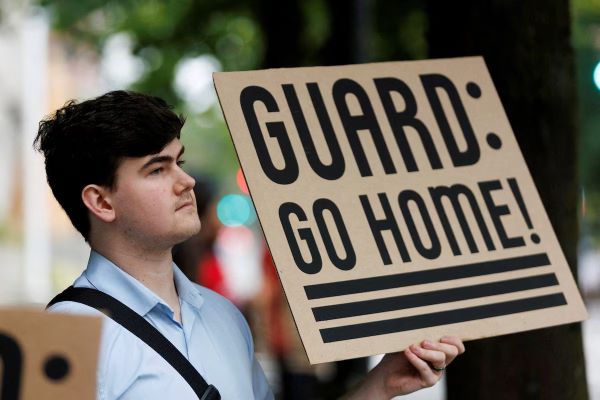
Federal judges in Portland, Oregon, and Washington, D.C., on Friday examined legal challenges to President Donald Trump’s decision to deploy National Guard forces to U.S. cities.
The proceedings highlight growing scrutiny of Trump’s rare decision to use the military for domestic purposes and his push to expand such actions further.
In Portland, Justice Department lawyers asked U.S. District Judge Karin Immergut to lift the second of her two orders restricting Trump’s attempts to send troops to the city. This week, an appeals court ruled the president likely has the authority to do so.
In Washington, U.S. District Judge Jia Cobb heard a challenge to Trump’s deployment of about 2,500 National Guard troops to the nation’s capital. The local government argues the Guard has improperly been serving as a “federally run police force.”
Troops Are Barred
Neither judge immediately issued a ruling, meaning the status quo remains intact in both cases: troops are barred from deploying to Portland, and remain on the ground in D.C. In Oregon, Immergut said she would decide by Monday.
Trump has sought to deploy National Guard troops to cities run by Democratic officials, saying they are needed to protect immigration enforcement operations, suppress protests, and fight crime over the objections of local elected leaders.
Troops are on the ground in Los Angeles as well as D.C., and Trump has announced plans to send them to other cities, including Chicago.
States and cities have filed lawsuits to block the deployments, arguing they are based on exaggerated descriptions of crime and chaos. Courts have yet to issue final rulings on whether the actions are lawful.
Immergut on October 4 blocked Trump from taking control of Oregon’s National Guard and sending troops to Portland.
The next day, after Trump attempted to circumvent that order by sending troops from California and Texas to Portland, the judge barred deployment of troops from any state, including Oregon.
‘Merits’ Of Troop Deployment
Both orders were preliminary and based on the judge’s initial assessment that there was no evidence that protests in Portland seriously interfered with federal law enforcement. Immergut has scheduled a trial next week on the merits of troop deployment.
A three-judge panel of the 9th U.S. Circuit Court of Appeals this week paused Immergut’s October 4 order while the court battle plays out. But troops have not yet deployed to Portland because the October 5 order remains in effect.
Jacob Roth, a Justice Department lawyer, asked Immergut to lift her October 5 order in light of the 9th Circuit panel’s ruling, despite the state’s request for a larger panel of appellate judges to review the case.
“The prospect of further review does not deprive them of their weight in the meantime,” Roth said.
If Immergut, who was appointed by Trump during his first term, agrees, the administration could move forward with the deployment.
Trump’s Action Violates Laws
State and local officials say Trump’s action violates several federal laws that govern the use of military forces as well as the states’ rights under the U.S. Constitution’s 10th Amendment.
Oregon has argued the three-judge 9th Circuit panel, which included two Trump-appointed judges, got it wrong. The state’s lawyer Scott Kennedy asked Immergut to maintain the status quo ahead of next week’s trial.
“There is at least good reason to pause and await finality,” Kennedy said.
The case before Cobb in Washington hinges in part on how to interpret the Home Rule Act, a law passed by the U.S. Congress in 1973 that gave Washington residents more control over the city’s affairs and the ability to elect a mayor and city council.
The president has more power over law enforcement in Washington than in the rest of the country, because of the city’s unique status as a federal district that is not part of any state. Trump said he was deploying the guard to fight crime, though city police say crime had been falling before the deployment.
A lawyer for the city said at Friday’s hearing that the deployment has made residents fearful of going about their daily lives or reporting crimes to police lest they encounter armed troops.
A Justice Department lawyer called the city’s lawsuit a “political stunt” and dismissed the District’s claims about declining public trust as speculative.
(With inputs from Reuters)
U.S. Calls For Open Global Contest For Next UN Chief, Irking Latin American Nations
The United States announced on Friday that it will back an open, worldwide search for the next U.N. secretary-general, a stance likely to frustrate Latin American nations, many of which insist the position should go to their region this time.
The 10th U.N. secretary-general will be elected next year for a five-year term starting on January 1, 2027. The job traditionally rotates among regions and next on the list is Latin America and the Caribbean.
“We believe the process for selection of such an important position should be purely merit-based with as wide a pool of candidates as possible,” said Deputy U.S. Ambassador to the U.N. Dorothy Shea. “With this in mind, the United States invites candidates from all regional groupings.”
The race will formally start when the 15-member Security Council and the president of the 193-member General Assembly send a joint letter by the end of this year soliciting nominations. Candidates are nominated by a U.N. member state.
“We maintain the hope that during this process, the leadership experience and profiles from the developing world will be duly recognized for this vital position, particularly from the Latin American/Caribbean region,” Panama’s Deputy U.N. Ambassador Ricardo Moscoso told the Security Council on Friday. Panama is serving a two-year term on the council.
Ultimately the permanent five veto-wielding powers of the council – Britain, China, France, Russia and the U.S. – have to agree on a candidate.
‘Merit Before Gender’, Says Russia
Russia’s U.N. Ambassador Vassily Nebenzia said that it was a tradition, not a rule, that the position of secretary-general be rotated among regions.
“Latin Americans have all the moral reason to claim this term, but it does not prevent candidates from other regions to step in if they want to,” he said. “My criteria is merit.”
“I don’t mind a woman who will win it on merit, but merit comes first. Merit comes before gender,” Nebenzia said.
There is a growing push for the United Nations to choose the first female secretary-general.
“After 80 years, it is long past time for a woman to be at the helm of this organization,” said Denmark’s U.N. Ambassador Christina Markus Lassen. Denmark is also serving a two-year council term.
U.S. President Donald Trump’s administration “recognizes it has a real opportunity to shape the U.N.’s future with the choice of the next leader,” said International Crisis Group U.N. director Richard Gowan.
“Ironically a lot of U.N. insiders would actually agree that we need a merit-based process, but they will worry about whether the U.S. is looking for a good multilateralist or someone who will focus on downsizing the U.N. further,” Gowan said. “But I wouldn’t count the Latin Americans out. They will lobby very hard as a bloc to ensure that this is their moment.”
While the race has not formally begun, Chile has said it will nominate former president, Michelle Bachelet, and Costa Rica plans to nominate former Vice President Rebeca Grynspan.
(With inputs from Reuters)
Putin’s Envoy Suggests U.S., Ukraine, And Russia Close To Peace Deal
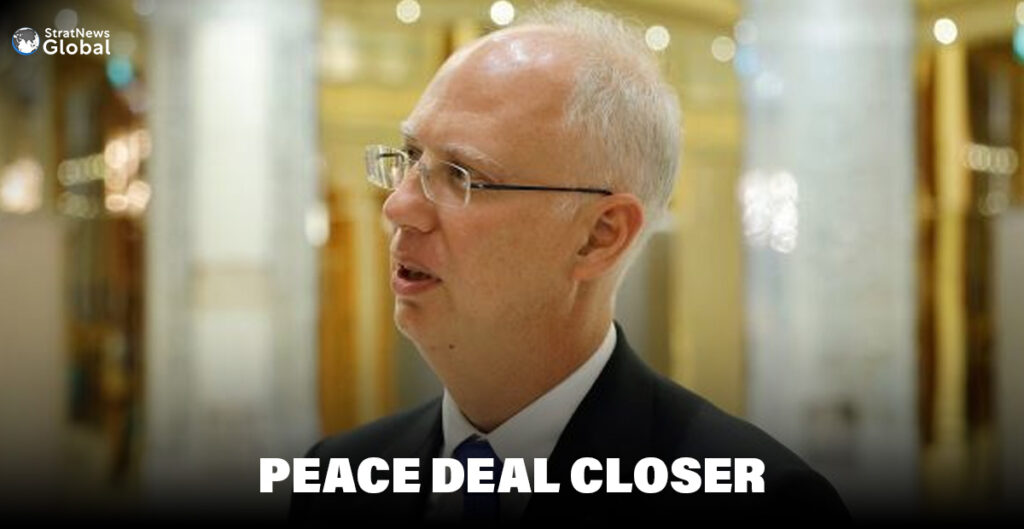
Kirill Dmitriev, a special envoy to President Vladimir Putin focused on investment and economic affairs, said on Friday that Russia, the United States, and Ukraine were edging closer to a negotiated settlement aimed at ending the ongoing war.
Speaking to CNN after arriving in Washington for talks with U.S. officials, Dmitriev said that a meeting between Donald Trump and Putin had not been cancelled, as the U.S. president described it, and that the two leaders will likely meet at a later date.
The planned summit was put on hold on Tuesday, as Russia’s rejection of an immediate ceasefire cast a cloud over attempts at negotiations. Trump said he cancelled the planned meeting with Putin in Budapest because of a lack of progress in diplomatic efforts toward ending the war and a sense that the timing was off.
However, Dmitriev on Friday said, “I believe Russia and the U.S. and Ukraine are actually quite close to a diplomatic solution.”
Dmitriev in his comments did not offer details of what this would entail.
New Proposal For Ceasefire
European nations are working with Ukraine on a new proposal for a ceasefire in the war along current battle lines, European diplomats said this week, mainly incorporating ideas already under discussion while pressing to keep the United States in a central role.
“It’s a big move by President Zelenskyy to already acknowledge that it’s about battle lines,” Dmitriev said. “You know, his previous position was that Russia should leave completely – so actually, I think we are reasonably close to a diplomatic solution that can be worked out.”
Russia launched its large-scale invasion of Ukraine in February 2022.
Trump had announced last week that he and Putin would meet soon in Hungary to try to bring an end to the war. But Putin has been unwilling to consider concessions. Russia has longeu demanded that Ukraine agree to cede more territory before any ceasefire.
Dmitriev’s visit to the United States for a long-planned meeting takes place against the backdrop of newly announced U.S. sanctions on two of Russia’s biggest oil companies – a move aimed at pressing Putin to end the war.
Despite the move, Dmitriev said dialogue between Russia and the United States will continue.
“It is certainly only possible if Russia’s interests are taken into account and treated with respect,” Dmitriev earlier said.
Dmitriev declined to say who he was meeting and predicted that the U.S. oil sanctions would backfire.
“They will only lead to gasoline costing more at American gas stations,” Dmitriev said.
The U.S. news outlet Axios reported that Dmitriev would meet Trump special envoy Steve Witkoff in Miami on Saturday. The Russian state TASS news agency quoted Dmitriev as saying he would also meet other people who he did not name.
(With inputs from Reuters)
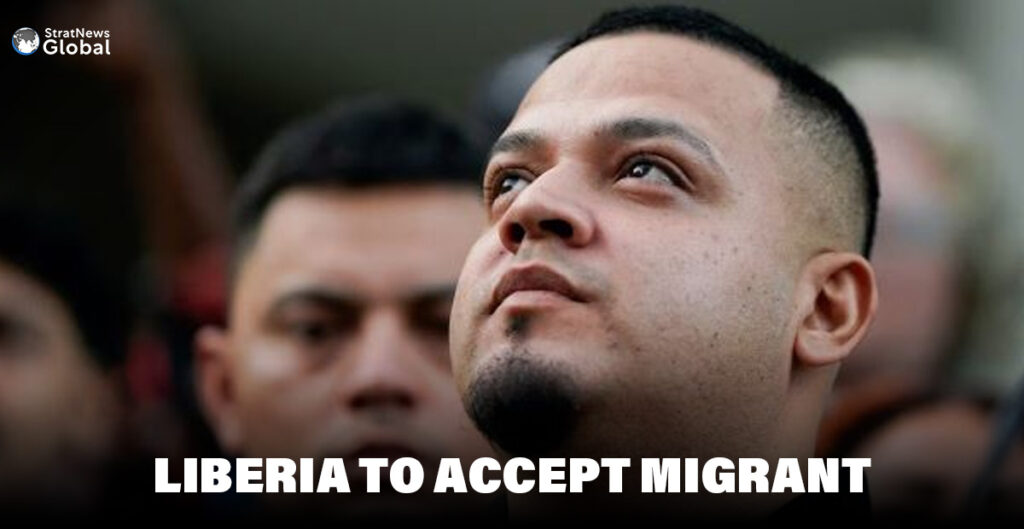
Washington Says Liberia Will Accept Kilmar Abrego Who Was Wrongly Deported To El Salvador
The Trump administration announced on Friday that Liberia has agreed to accept Kilmar Abrego, a migrant whose deportation to El Salvador in March sparked controversy and became a symbol of the Republican president’s hardline immigration policies.
The Justice Department said in a court filing that Abrego could be deported to the African country as soon as October 31.
Maryland-based U.S. District Judge Paula Xinis has temporarily blocked the U.S. government from deporting Abrego while she considers his bid to be released from immigration detention.
It is unclear how the administration’s agreement with Liberia will influence the judge’s decision.
Abrego also could seek to challenge his removal by claiming fear of torture or persecution.
Liberia said it agreed to take Abrego “on a strictly humanitarian and temporary basis” following a request from the United States. Liberia’s information ministry said in a statement that it would ensure that Abrego is not removed to “any country where he may face substantial risk of persecution, torture or other serious harm.”
Abrego Wrongly Deported To El Salvador
Liberia is the first country in Africa to agree to accept Abrego after the administration unsuccessfully floated Uganda, Eswatini and Ghana as options for a potential second deportation.
Abrego, a sheet metal worker who entered the United States illegally, had been living in Maryland with his wife, their child and two of her children – all of whom are American citizens – when he was arrested and sent to his native El Salvador.
He was deported to El Salvador, where he spent time in a mega-prison known for its harsh conditions, in violation of a prior U.S. court order.
Abrego was sent back to the United States in June, and Trump’s Justice Department brought criminal charges accusing him of smuggling migrants. He has pleaded not guilty, and his lawyers have accused the administration of vindictive prosecution. The administration also has said Abrego was a member of the MS-13 gang, an accusation his lawyers deny.
A lawyer for Abrego, Simon Sandoval-Moshenberg, said Abrego has no personal connection to Liberia, and added that the country is far from his wife and children in Maryland.
Violation Of Rights
“The government has chosen yet another path that feels designed to inflict maximum hardship,” Sandoval-Moshenberg said in a statement. “Their actions are punitive, cruel and unconstitutional.”
His lawyers in the past have accused the administration of violating Abrego’s rights to due process under the U.S. Constitution.
A deportation in the coming days could also impact a court hearing in his criminal case scheduled for November 4 and 5 in Nashville, Tennessee, that will examine whether Abrego was improperly charged in retaliation for his decision to bring a legal challenge to his March deportation. Abrego’s lawyers have sought testimony from several Justice Department officials.
The administration vowed to remove Abrego again from the United States in August. Abrego’s lawyers have indicated a preference for Costa Rica, a Spanish-speaking country in Central America that has said it would take in Abrego, but the administration has so far not agreed to send him there.
The Justice Department highlighted Liberia’s historic ties to the United States, its “humane treatment of refugees” and its “robust” human rights protections. A 2024 U.S. State Department report flagged significant rights issues in the West African country, including extrajudicial killings.
Liberia was one of five African countries the Trump administration pressed in July to accept migrants being deported to countries other than their own.
(With inputs from Reuters)