

Support us by contributing to StratNewsGlobal on the following UPI ID
ultramodern@hdfcbank

Strategic affairs is our game, South Asia and beyond our playground. Put together by an experienced team led by Nitin A. Gokhale. Our focus is on strategic affairs, foreign policy and international relations, with higher quality reportage, analysis and commentary with new tie-ups across the South Asian region.
You can support our endeavours. Visit us at www.stratnewsglobal.com and follow us on YouTube, Twitter, Facebook and Instagram.
र 500 per month
र 1000 per month
र 5000 per year
र 10000 per year
Donate an amount of your choice
र 500 per month
Donate र 500 per month

र 1000 per month
Donate र 1000 per month
र 5000 per year
Donate र 5,000 per year
र 10000 per year
Donate र 10,000 per year
Donate an amount of your choice
Donate an amount of your choice
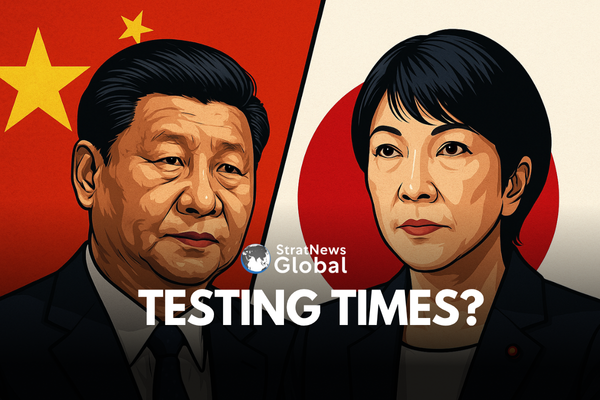

China Wary As Japan’s New PM Pushes The Envelope
The silence from Beijing a week after the inauguration of Japan’s first woman prime minister, Sanae Takaichi, is seen as unprecedented. But not so when you consider some of her recent remarks.
“She has made it clear that China, Russia, and North Korea are strategic threats, and that Tokyo’s defence budget will expand sharply to meet these challenges,” says Dr. Gitanjali Sinha Roy, who teaches and researches on Japan at the Jindal School of International Affairs.
There’s more. Takaichi’s views on Taiwan are unlikely to have gone down well in Beijing.
“Her view of Taiwan as a separate and strategic partner, is a position that directly contradicts Beijing’s ‘One China’ principle,” Gitanjali notes. “By strengthening Japan–Taiwan ties, she is signalling a decisive and unapologetic departure from Japan’s traditionally cautious diplomacy.”
She called on Taiwan’s President William Lai in April and then had a meeting with the foreign minister in July.
An article in China’s Guancha.cn by Taiwan-born scholar Dr Lin Quanzhong, warns that Takaichi may challenge China’s three “red lines”: Taiwan, wartime history, and territorial disputes. He likens her ideology to that of the late prime minister Shinzo Abe, though she lacks his pragmatism and political heft. He believes Takaichi’s fragile coalition will limit her room for maneuvre, so she may prefer to focus on the US relationship and economic revival, at least for now. The key issue would be if she moves to revise Article 9 of Japan’s pacifist constitution.
“If Japan moves towards re-militarisation, it would fundamentally alter the security architecture of Northeast Asia. Beijing, already anxious about Tokyo’s expanding military role, will see this as a direct challenge, reawakening what many describe as China’s ‘imperial fear’ of Japan’s resurgence,” Gitanjali says.
“There is even quiet discussion, both within Japan and abroad, about whether Tokyo should consider limited nuclear capability, an idea once hinted at by Donald Trump. If such debates gather momentum, Japan could re-emerge not just as a regional counterweight, but as a decisive military power, one that Beijing can no longer ignore.”
A nuclear Japan would be the ultimate nightmare for China, it could enormously complicate Beijing’s plans for Taiwan apart from introducing the nuclear element in its backyard.
China scholar at the Takshashila Institution Manoj Kewalramani summed it up: “One should expect the relationship to remain challenging despite economic ties remaining resilient. Beijing will also bewary of Tokyo partnering with the US on issues of economic secirity which adversely impact Chinese interests.“
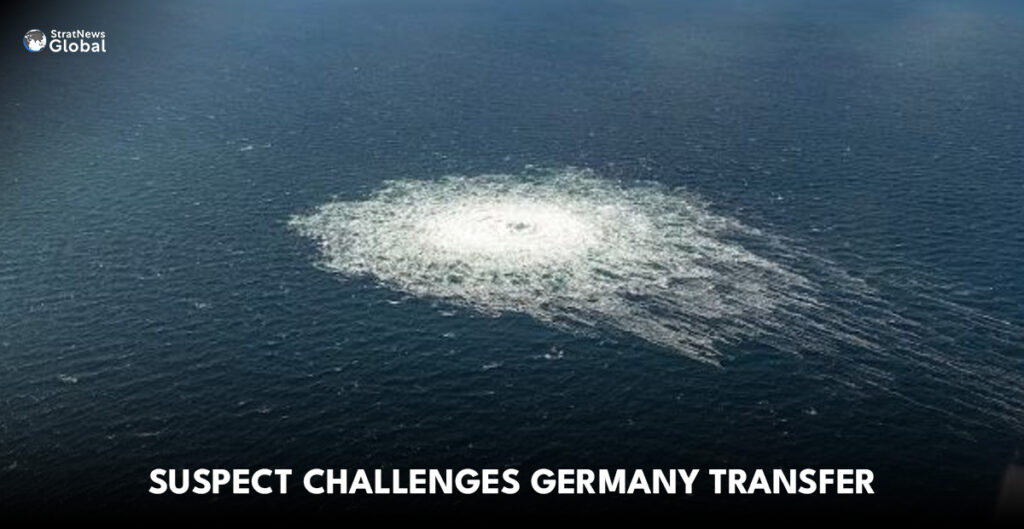
Ukrainian Accused In Nord Stream Sabotage Fights Transfer To Germany In Italy’s Highest Court
A Ukrainian national accused of orchestrating the 2022 Nord Stream gas pipeline sabotage will appeal his transfer to Germany before Italy’s highest court, his lawyer said on Monday.
The move marks the latest twist in a complex legal battle that has seen the extradition case repeatedly shift between Italian courts.
An Italian appeals court in Bologna on Monday ordered that the suspect, identified only as Serhii K. under German privacy laws, should be transferred to Germany, confirming a previous ruling that it had issued last month.
However, defence lawyer Nicola Canestrini said the man would remain in Italy pending a further hearing at the Court of Cassation, the top court, which is expected to take place within about a month.
‘A Political Act’
“The defence reiterates that it will not stop until a court has fully examined the international law and human rights implications of the case,” Canestrini said in a statement, arguing his client should be granted immunity for what the lawyer termed a political act.
German prosecutors declined to comment on the Italian legal process.
The new appeal will also cite a decision this month in Poland, where a court ruled against handing over another Ukrainian suspect wanted by Germany in connection with the explosions and ordered his immediate release from detention.
Described by both Moscow and the West as an act of sabotage, the mysterious explosions in September 2022 largely severed Russian gas transit to Europe, squeezing energy supplies on the continent.
No one has taken responsibility for the blasts and Ukraine has denied any role. Serhii K, described by the defence as a former military officer, was arrested in August near the Italian town of Rimini on a European warrant.
He won a temporary reprieve against transfer earlier this month when the Court of Cassation in Rome sent the case back to the appeals court in Bologna after an initial challenge.
German prosecutors allege he was part of a group of people who planted devices on the pipelines near the Danish island of Bornholm in the Baltic Sea.
He faces charges of collusion to cause an explosion, anti-constitutional sabotage and destruction of important structures.
(With inputs from Reuters)
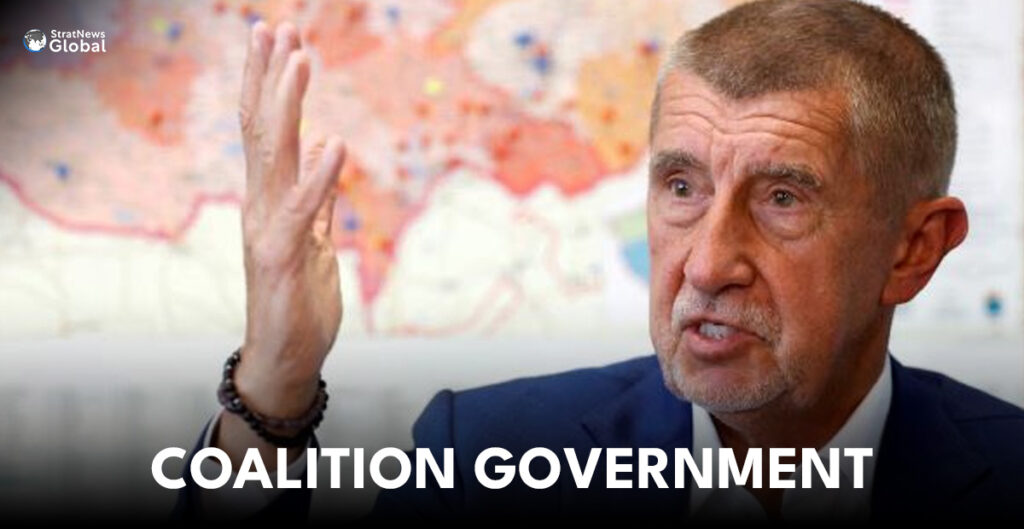
Czech President Invites Babis To Initiate Coalition Talks Following ANO’s Victory
Czech President Petr Pavel on Monday appointed Andrej Babis, the billionaire head of the populist ANO party, to begin negotiations on forming a new government after his party’s victory in this month’s parliamentary election.
The move marks the latest step in Babis’s bid to return to power as the country’s next prime minister.
Since the October 3-4 election, ANO has been in talks with the right-wing, eurosceptic Motorists and the far-right, anti-European Union and anti-NATO SPD parties, which would hold a combined 108 out of the 200 seats in parliament’s lower house.
The parties are finalising a joint government agenda that is likely to lead to higher fiscal spending, less support for Ukraine’s defence against Russia and stronger opposition to EU migration and climate policies than under outgoing Prime Minister Petr Fiala’s centre-right government.
Pavel said he entrusted Babis with forming a government due to the course of negotiations between the parties. He said he would see the text of the planned government agenda in the second half of this week.
Next Step In Forming Government
Asking Babis to officially lead talks is another step in the handover of power, and comes before Babis can be nominated as prime minister-designate.
Babis said on X he aimed to form a government by mid-December. He said earlier he had informed the president about parts of the shared programme, including foreign policy.
After finalising a joint government agenda, parties must agree ministerial nominations.
ANO officials said last week the country’s anchoring in the EU and NATO was explicit and “unquestionable” in the agenda. The SPD had campaigned demanding a law allowing a referendum on those issues.
Pavel, a former NATO official who has focused on foreign policy and security aspects in the government talks, has also urged parties to maintain a Czech-led and foreign-funded programme shipping artillery ammunition to Kyiv, which Babis has called overpriced and non transparent.
The president appoints prime ministers and ministers. Parliament meets on November 3, after which it elects a new house speaker before the resignation of the current cabinet – the earliest time a new prime minister can be appointed.
Babis also faces conflict of interest questions related to his food, agriculture and chemical business empire. Pavel said Babis ensured him he would publicly address this before any possible appointment.
(With inputs from Reuters)
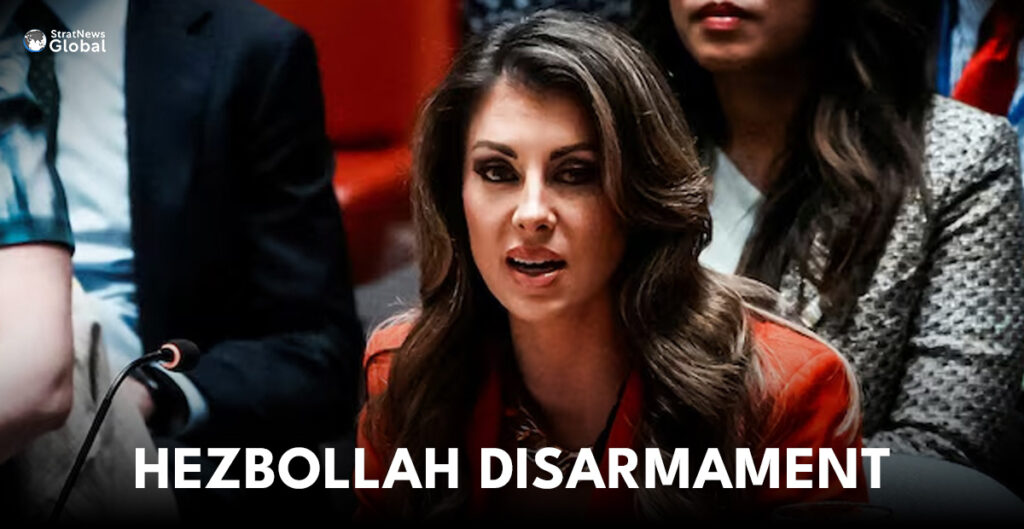
US Envoy Ortagus Set To Visit Lebanon Amid Rising Israel Tensions
U.S. envoy Morgan Ortagus is expected to arrive in Beirut on Monday for discussions with Lebanese officials about disarming Hezbollah, sources familiar with the visit said, as fears grow in Lebanon over a potential renewed Israeli air campaign against the group.
Those worries have been driven by days of intensifying Israeli strikes on Lebanon’s south and east that have killed more than a dozen people, most of them Hezbollah members, according to Lebanese security sources.
Lebanon fears the bombing shows Israel intends to ramp up its air campaign, despite a November 2024 ceasefire that was intended to end a year-long war between Israel and Iran-backed Hezbollah in Lebanon.
Ortagus To Review Disarmament
Ortagus, the White House’s deputy Middle East envoy, is expected to attend a meeting on Wednesday reviewing the Lebanese army’s efforts to clear Hezbollah arms caches in the country’s south, in line with the 2024 truce.
Another U.S. envoy, Tom Barrack, warned last week that Hezbollah may face a new confrontation with Israel if Lebanese authorities fail to act quickly to disarm the group in full, which Hezbollah has so far rejected doing.
On Sunday, an Israeli strike killed a man whom Israel said was a weapons dealer on behalf of Hezbollah. Lebanese security sources said the man, named Ali al-Musawi, was the most senior member of the group to be killed since the ceasefire.
Also on Sunday, United Nations peacekeepers said they had “neutralised” an Israeli drone that was flying over their patrol in south Lebanon in “an aggressive manner”.
A source briefed on the incident told Reuters that peacekeepers shot the drone instead of downing it with jamming devices because it was deemed to be posing a threat, and that an Israeli tank then fired a warning shot near peacekeepers.
Israeli military spokesman Avichay Adraee said the drone was carrying out “routine intelligence gathering” and was not posing a threat. He said Israeli troops then threw a hand grenade at the area, but did not fire directly at U.N. troops.
The Israeli military says its continued strikes in Lebanon are targeting Hezbollah’s attempts to re-establish military infrastructure in the south, which the group denies doing.
(With inputs from Reuters)
Cameroon: At 92, Biya Secures Another Term As Opposition Alleges Violence
Cameroon’s long-serving President Paul Biya, aged 92 and the world’s oldest head of state, won a record eighth term in office on Monday, according to official results.
Meanwhile, his main opposition rival, who has also declared himself the winner, reported gunfire near his residence.
Biya, 92, won 53.66% of the vote, against 35.19% for his former ally, Issa Tchiroma Bakary, the Constitutional Council said. A new seven-year term could keep the veteran leader in power until he is nearly 100.
Opposition protesters have clashed with security forces repeatedly over the past week after partial results suggested Biya was on course to win the October 12 vote.
There was no immediate comment on the result from the government, which has rejected opposition accusations of irregularities.
After the results were announced, Tchiroma wrote on Facebook that two people were killed after shots were fired at civilians outside his home in the northern city of Garoua.
He did not say who had fired the shots or comment directly on the election result. Last week he said he had won the election and would not accept any other result.
Confrontations And Political Violence
The result raised the prospect of more confrontations between opposition supporters and security forces, a day after at least four people died in clashes in Cameroon’s commercial capital Douala.
“We expect unrest to escalate as Cameroonians widely reject the official result, and we cannot see the Biya government lasting much longer,” said Francois Conradie, lead political economist at Oxford Economics.
“Biya now has a notably shaky mandate given many of his own citizens don’t believe he won the election,” Murithi Mutiga, Africa Program Director at the International Crisis Group, said.
“We call on Biya to urgently initiate a national mediation to prevent further escalation,” Mutiga added.
Biya, 92, took office in 1982 and has held a tight grip on power ever since, doing away with the presidential term limit in 2008 and winning reelection by comfortable margins.
“Hereby declared elected President of the Republic, having obtained the majority of the votes cast, the candidate, Biya, Paul,” Clement Atangana, president of the Constitutional Council, said.
Tchiroma is a former government spokesperson and employment minister in his late 70s who broke ranks with Biya earlier this year.
He mounted a campaign that drew large crowds and endorsements from a coalition of opposition parties and civic groups.
(With inputs from Reuters)
China Minimises Strain After German Foreign Minister Scraps Beijing Trip
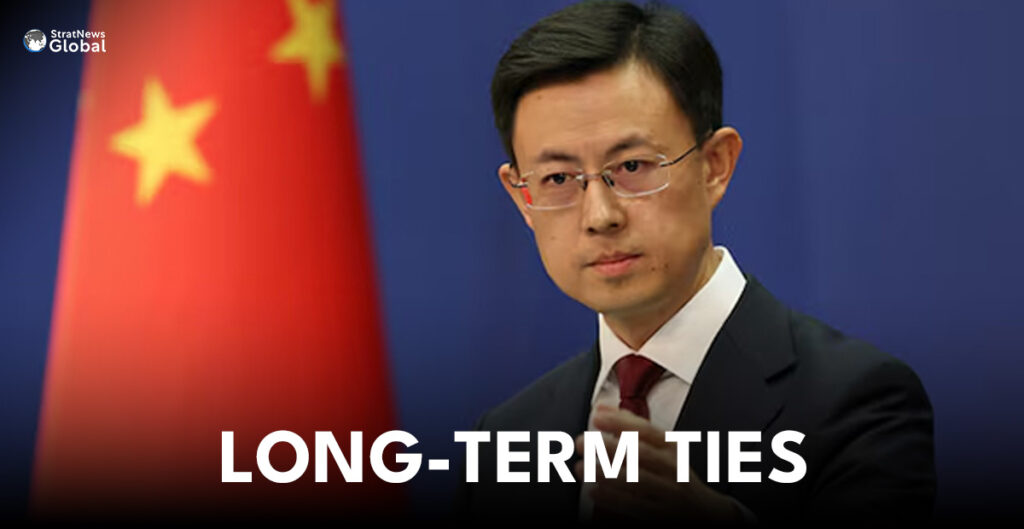
China on Monday called on Germany to take a long-term perspective on relations between the world’s second and third largest economies, seeking to downplay talk of rising tensions after Foreign Minister Johann Wadephul postponed his first visit to Beijing.
Wadephul was originally due in the Chinese capital from Sunday on the first visit by a minister of Chancellor Friedrich Merz’s government, but opted not to travel after only one of his requested meetings was confirmed, with Foreign Minister Wang Yi.
That prompted a senior German parliamentarian to accuse China of having provoked the cancellation from a fear of debate.
“China has always viewed and developed its ties with Germany from a strategic and long-term perspective,” said Guo Jiakun, a spokesperson of China’s foreign ministry.
“The two sides should respect each other, treat each other as equals and cooperate for win-win results to propel bilateral ties along the right track,” Guo told a press conference on Monday.
The “current circumstances” provided further reason for both countries to seek common cause, he added, but gave no details.
Top Trade Partner
Germany is China’s top European trade partner, with two-way trade exceeding $200 billion in 2025, Chinese data shows.
However, neither side has made any official visits since Merz’s Christian Democratic Union party defeated the Social Democrat Party of his predecessor, Olaf Scholz, at the polls this year.
In comparison, China’s top diplomat has visited Austria, Italy, Poland, Slovenia and Switzerland this year.
Wadephul has struck an increasingly tough stance on China since he took office as foreign minister in May.
He has highlighted Beijing’s support for Russia’s war in Ukraine, its “increasingly aggressive behaviour” in the Indo-Pacific region, and its export curbs on rare earths and semiconductors.
In doing so, he has gone further than his predecessor Annalena Baerbock, already known for being outspoken, who labelled Chinese President Xi Jinping a “dictator”.
On Friday, Agnieszka Brugger, a senior leader of the opposition Greens, said “the cancellation of Foreign Minister Wadephul’s trip to mainland China is only logical and consistent”.
She added, “The list of extremely difficult issues with China, which is a relevant player in many global political issues, is growing ever longer.”
(With inputs from Reuters)
Trump Receives Royal Welcome In Japan As Trade Truce Hopes With China Grow
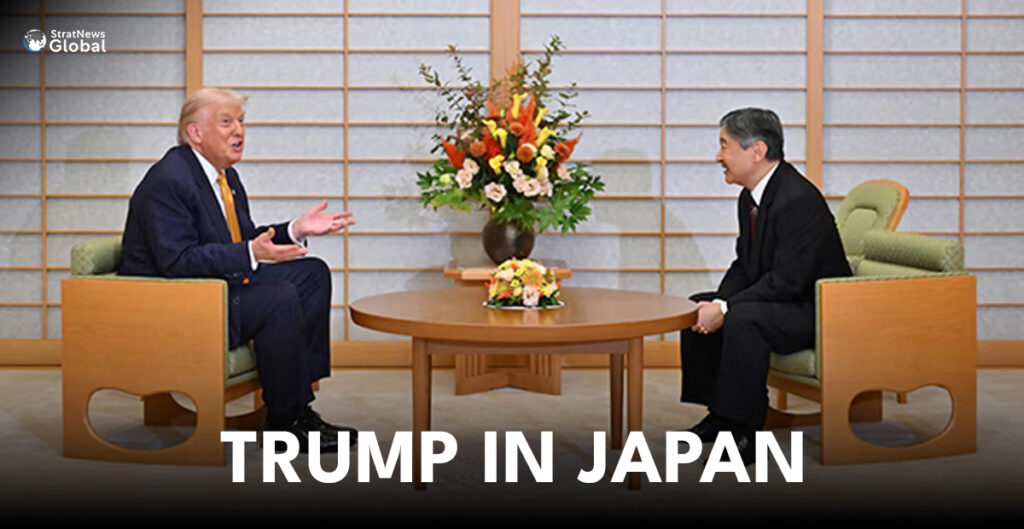
U.S. President Donald Trump was given a royal welcome in Japan on Monday, continuing a five-day Asia tour he aims to conclude with a trade war truce agreement with Chinese leader Xi Jinping.
Trump, making his longest journey abroad since taking office in January, announced a flurry of deals on trade and critical minerals with four Southeast Asian nations during the first stop in Malaysia and is set to meet Xi in South Korea on Thursday.
Negotiators from the world’s top two economies hashed out a framework on Sunday for a deal to pause steeper American tariffs and Chinese rare earths export controls, U.S. officials said. The news sent Asian stocks soaring to record peaks.
“I’ve got a lot of respect for President Xi and I think we’re going to come away with a deal,” Trump told reporters on Air Force One before landing in the Japanese capital, Tokyo.
Trump Meets Japanese Emperor
Wearing a gold tie and blue suit, Trump gave a few fist pumps before his helicopter whisked him off for a scenic night tour of Tokyo, several of its towers lit up in the red, white and blue of the American flag.
He later headed in a long motorcade to the Imperial Palace, where he shook hands and posed for photographs with Japanese Emperor Naruhito.
Trump has already won a $550-billion investment pledge from Tokyo in exchange for respite from punishing import tariffs.
Commerce Secretary Howard Lutnick and Japanese counterpart Ryosei Akazawa, architects of the tariff deal agreed in July, discussed power grids as being a potential investment area over a sushi lunch in Tokyo earlier on Monday, local media reported.
Japan’s newly elected prime minister, Sanae Takaichi, is hoping to further impress Trump on Tuesday with promises to purchase U.S. pickup trucks, soybeans and gas, and announce an agreement on shipbuilding, sources with knowledge of the plans told Reuters.
Takaichi, who became Japan’s first female premier last week, told Trump that strengthening their countries’ alliance was her “top priority” in a telephone call on Saturday.
Trump said he was looking forward to meeting Takaichi, a close ally of his late friend and golfing partner, former Prime Minister Shinzo Abe, adding: “I think she’s going to be great.”
Thousands of police are guarding Tokyo. A knife-wielding man was arrested on Friday outside the U.S. embassy, and an anti-Trump protest is planned in downtown Shinjuku.
Trade And Security On Agenda For Talks
Trump was the first foreign leader to meet Naruhito after he came to the throne in 2019, continuing an imperial line that some say is the world’s oldest hereditary monarchy.
Naruhito’s role, however, is purely symbolic, and the key diplomacy will take place with Takaichi on Tuesday.
Trump and Takaichi are set to meet at the nearby Akasaka Palace, where he met Abe six years ago, and will be welcomed by a military honour guard. Among the investment pledges, the two countries will sign a memorandum of understanding on Tuesday on investment in shipbuilding, a source with knowledge of the plans said.
Takaichi is also expected to reassure Trump that Tokyo is willing to do more on security after telling lawmakers on Friday she plans to accelerate Japan’s biggest defence build-up since World War II.
Japan hosts the largest concentration of U.S. military power abroad. Trump has said previously that Tokyo is not spending enough to defend its islands from an increasingly assertive China.
While Takaichi has said she will speed up plans to boost defence spending to 2% of GDP, she may struggle to commit Japan to any further increases that Trump seeks, as her ruling coalition does not have a majority in parliament.
Trump is due to leave on Wednesday for Gyeongju in South Korea, where he will hold talks with President Lee Jae Myung. Bessent told reporters the overall framework of a deal with South Korea was also done, but would not be finalised this week.
Thursday’s expected meeting with Xi will come after Washington and Beijing have raised tariffs on each other’s exports and threatened to halt trade involving critical minerals and technologies.
Neither side expects a breakthrough that would restore the terms of trade that existed before Trump’s return to power.
Talks to prepare for the meeting have focused on managing disagreements and modest improvements, before a visit by Trump to China expected early next year.
(With inputs from Reuters)
China Pushes To Deepen Trade Ties Following Trump’s ASEAN Departure
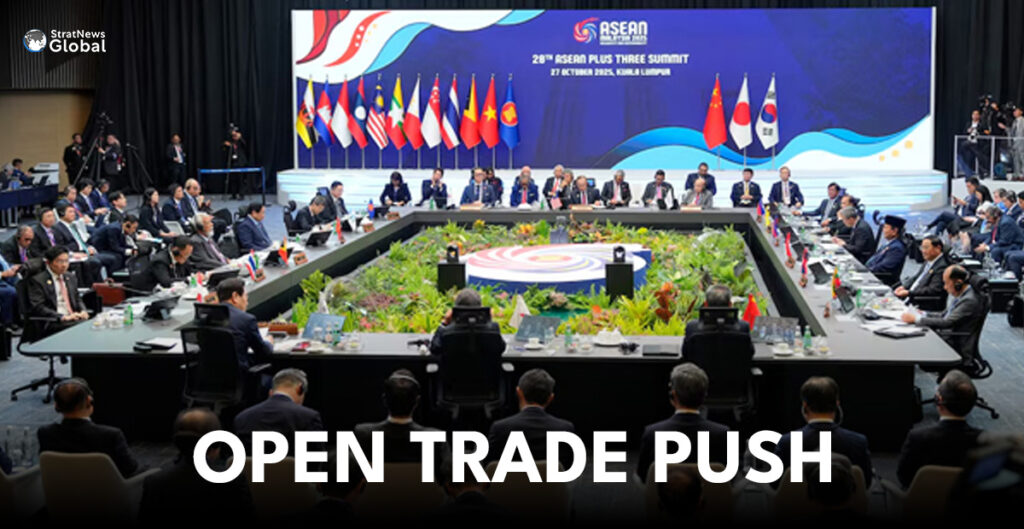
China on Monday urged deeper economic cooperation and freer trade at a regional summit in Malaysia, where discussions were overshadowed by steep U.S. tariffs following President Donald Trump’s participation.
In a flurry of deal-making on his first stop during a five-day tour of Asia, Trump oversaw the signing on Sunday of an expanded ceasefire pact between Cambodia and Thailand and four regional trade deals.
None of those frameworks deals with reduced steep U.S. tariffs on Cambodia, Malaysia, Thailand and Vietnam, the White House said, though they left room for some exemptions.
“Our message to the nations of Southeast Asia is that the United States is with you 100% and we intend to be a strong partner for many generations,” Trump said on a day when U.S. and Chinese negotiators agreed to a tariff pause in their trade war.
While Trump and Secretary of State Marco Rubio fly to Japan, top officials from China and the leaders of Brazil, Canada, the European Council and the 11-strong ASEAN bloc will work to solidify economic partnerships and hammer out trade pacts.
With two lower-profile U.S. officials left at the summit after Rubio’s departure, Chinese officials are expected to press for lower barriers and anchoring measures under World Trade Organisation rules while seeking to shore up regional ties.
At a meeting of ASEAN members with China, Japan, and South Korea, Chinese Premier Li Qiang called for all parties to uphold free trade and oppose protectionism, a phrase China has used to call out Trump’s tariffs.
“We must fully safeguard the hard-earned peace and stability in East Asia,” Qiang said in a summary of remarks from state media.
He urged countries to “uphold free trade and the multilateral trading system, oppose all forms of protectionism, and continuously advance regional economic integration”.
Leadership Ambitions
The China-backed Regional Comprehensive Economic Partnership, comprised of 10 ASEAN nations with Australia, Japan, New Zealand and South Korea, also called for wider trade efforts and faster addition of new members in its first summit since 2020.
The world’s largest trading bloc, RECP, covers about 30% of global gross domestic product and is touted by some analysts as a potential buffer against U.S. tariffs.
However, China’s leadership attempts at a summit featuring Brazilian President Luiz Inacio Lula da Silva and Canadian Prime Minister Mark Carney, among other world leaders, could face resistance due to concerns about its rising military ambitions.
Philippines President Ferdinand Marcos Jr criticised Beijing’s actions in the South China Sea, a busy waterway in which Malaysia and Vietnam also have territorial claims.
“It is regrettable that incidents continue to occur … which endanger the lives of Philippine personnel and compromise the safety of our vessels and aircraft,” Marcos said of a series of confrontations there.
In response to Marcos’ comments, China’s foreign office said the “Philippine side’s deliberate violation of rights and provocation at sea is the source of tension”.
EU-China Meet
European Council President Antonio Costa met Chinese Premier Li Qiang and said he conveyed strong concern about Beijing’s expansion of export controls on critical raw materials.
“I urged him to restore as soon as possible fluid, reliable and predictable supply chains,” Costa said after the meeting, adding that he had also sought China’s help for efforts to end Russia’s war in Ukraine.
Rare earth magnets and minerals have been a major sticking point in Beijing’s trade war with Washington, with China using its control over 90% of the global supply as leverage to combat U.S. tariffs.
Japan’s foreign ministry also expressed concerns over China’s curbs and questioned Beijing’s rhetoric on wider trade.
“They have imposed or tried to impose export restrictions on rare earths that have had a great impact on the supply chain, not only for Japan, but also for the entire world,” spokesperson Toshihiro Kitamura said.
“China is very powerful, a big country in terms of economy, and they try to make use of these U.S. tariff issues in order to pretend as if they are the guardian or champion of the free trade system.”
Brazilian President Luiz Inacio Lula da Silva said his meeting with Trump on Sunday “guaranteed” a more favourable trade deal than the current 50% tariff on Brazilian goods.
“I told him it was extremely important to take into account Brazil’s experience as the largest country in South America, as the most economically important country that has almost all of South America as a neighbour,” Lula, as he is popularly known, said on Monday.
The Association of Southeast Asian Nations (ASEAN) groups Brunei, Cambodia, Indonesia, Laos, Malaysia, Myanmar, the Philippines, Singapore, Thailand, East Timor and Vietnam.
(With inputs from Reuters)
China Says H-6K Bombers Flew Near Taiwan Ahead Of Trump-Xi Talks
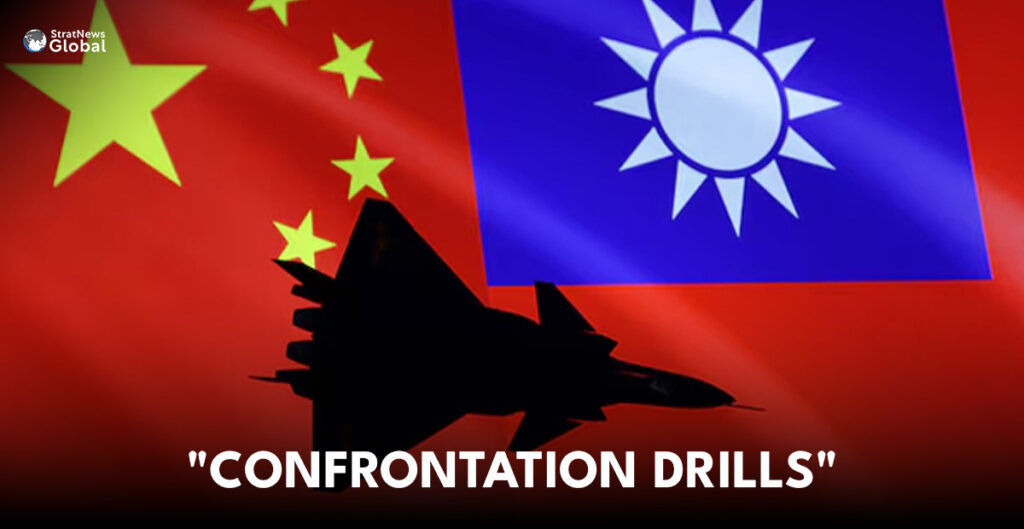
China’s state media reported late on Sunday that several Chinese H-6K bombers flew near Taiwan to conduct “confrontation drills,” publicising the operation just days before the U.S. and Chinese presidents are set to meet in South Korea.
Taiwan’s defence ministry denounced the report as a propaganda ploy.
Taiwan, which China views as its own territory, sends its combat aircraft and warships into the skies and waters around the island on a daily basis, though Taipei’s defence ministry has not reported any unusual activity lately.
Chinese state television’s military channel’s Weibo account said that recently – it did not give a date – units from the Eastern Theatre Command had conducted combat-oriented training to test their capabilities in areas like air blockades and precision strikes.
“Several J-10 fighters flew in combat formation to a designated target airspace, and multiple H-6K bombers went to the waters and airspace around Taiwan island to carry out simulated confrontation drills,” it added, without providing the location.
The H-6K is a strategic bomber that can carry nuclear weapons.
‘Aimed At Intimidation’
Taiwan’s defence ministry said in a statement that the report was “clearly a public-opinion operation aimed at intimidation”.
“We call on our citizens to remain united in the face of such cognitive operations, to uphold freedom and democracy, and to defend our homeland together,” it added.
China’s defence ministry did not respond to a request for comment.
On Monday morning, in its daily bulletin of Chinese activities in the previous 24 hours, Taiwan’s defence ministry reported just four Chinese military aircraft – three fighter jets in the Taiwan Strait and one support aircraft to the southwest of Taiwan.
The Chinese state television report said defending national sovereignty and territorial integrity through “concrete actions and safeguarding the peace and happiness of hundreds of millions of people is our solemn commitment”.
It showed a video of bombs being dropped, and in one segment, an air force officer says that the “coast of Taiwan can be clearly made out”, though it is not clear from the image whether any land can be seen.
Trump-Xi Meeting
U.S. President Donald Trump and Chinese President Xi Jinping are expected to meet on the sidelines of a regional summit in South Korea this week to discuss their ongoing trade dispute.
U.S. Secretary of State Marco Rubio said on Sunday that Taiwan should not be concerned about the talks.
Taiwan, whose government rejects Beijing’s sovereignty claims, has over the decades enjoyed strong though unofficial support from the United States, which, despite the lack of formal diplomatic ties, is bound by law to provide the island with the means to defend itself.
On Saturday, a senior Chinese official said China and Taiwan should work to achieve “peaceful reunification”, marking the 80th anniversary of Taiwan being handed over to the Chinese government from Japanese rule at the end of World War Two.
In an interview with two Taiwanese YouTubers broadcast late on Saturday, Taiwan President Lai Ching-te said peace had to rely on strength, pointing to his government’s commitment to increased defence spending.
“We have ideals about peace, but cannot have illusions to believe that an agreement on a piece of paper can achieve peace,” he added.
China has rebuffed multiple offers of talks from Lai, accusing him of being a “separatist”. Lai has said only Taiwan’s people can decide their future.
(With inputs from Reuters)
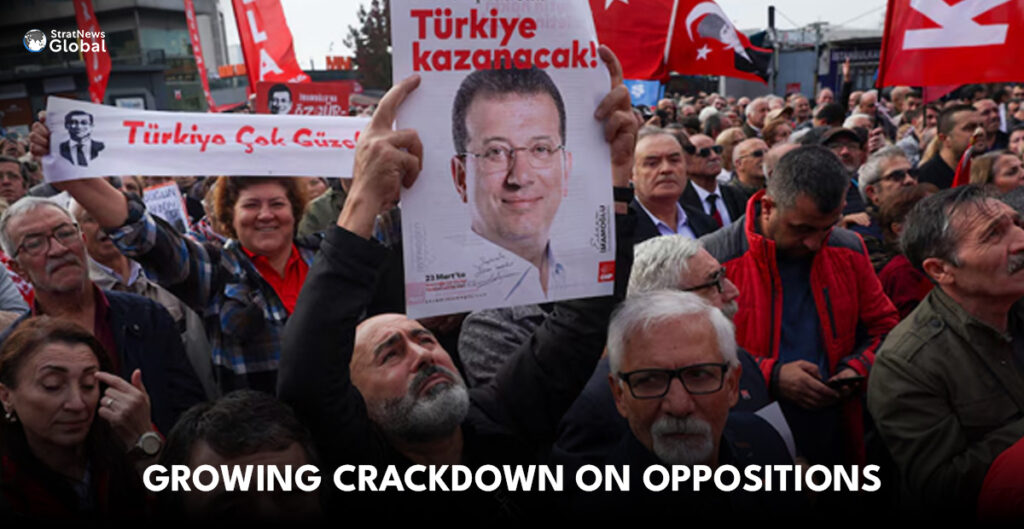
‘Political Espionage’: Turkish Court Issues New Arrest Order For Jailed Istanbul Mayor
A Turkish court has issued an additional arrest order for Istanbul’s imprisoned mayor, Ekrem Imamoglu, on “political espionage” allegations, state media reported on Monday, intensifying the government’s crackdown on the opposition.
Imamoglu, a key rival of President Tayyip Erdogan, who has been in jail since March pending trial on separate corruption charges, received a fresh jail sentence in July for insulting and threatening the chief Istanbul prosecutor.
Imamoglu denies all charges against him.
He denied the latest charge in court on Sunday and in a statement from prison on Friday.
“Such a slander, lie, and conspiracy wouldn’t even cross the devil’s mind!” he said on X. “We are facing a shameful indecency that can’t be described with words.”
Crackdown On Critics?
Anadolu said an Istanbul court issued the arrest order overnight for Imamoglu and two others, including Merdan Yanardag, editor-in-chief of television news channel Tele1.
The channel, which is critical of the government, was seized by the state on Friday, citing the espionage accusations.
The latest court ruling accuses Imamoglu of engaging in graft to raise funds for his presidential candidacy and espionage to secure international support, the agency said.
Hundreds of members and elected leaders of Imamoglu’s main opposition Republican People’s Party (CHP) face an array of corruption-related charges in a crackdown the party calls politicised and anti-democratic.
The CHP denies graft accusations as a politicised attempt by the government to remove electoral threats against Erdogan, a charge the government rejects.
But the opposition got some respite from the pressure on Friday, after another court dismissed a bid to oust the CHP’s leader and annul its 2023 congress.
(With inputs from Reuters)