

Support us by contributing to StratNewsGlobal on the following UPI ID
ultramodern@hdfcbank

Strategic affairs is our game, South Asia and beyond our playground. Put together by an experienced team led by Nitin A. Gokhale. Our focus is on strategic affairs, foreign policy and international relations, with higher quality reportage, analysis and commentary with new tie-ups across the South Asian region.
You can support our endeavours. Visit us at www.stratnewsglobal.com and follow us on YouTube, Twitter, Facebook and Instagram.
र 500 per month
र 1000 per month
र 5000 per year
र 10000 per year
Donate an amount of your choice
र 500 per month
Donate र 500 per month

र 1000 per month
Donate र 1000 per month
र 5000 per year
Donate र 5,000 per year
र 10000 per year
Donate र 10,000 per year
Donate an amount of your choice
Donate an amount of your choice
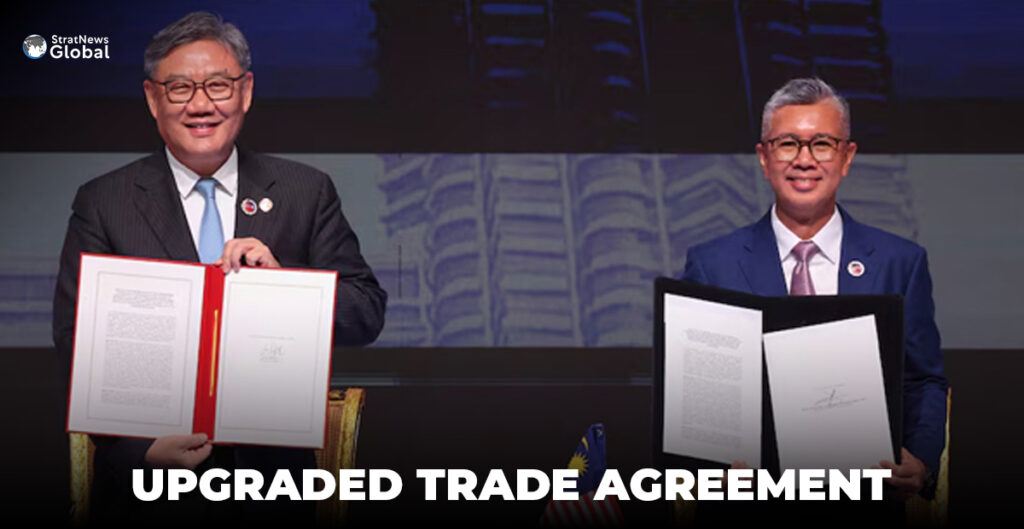


China, ASEAN Seal Upgraded Free Trade Pact Amid US Tariff Strain
China and Southeast Asia’s ASEAN bloc on Tuesday signed an upgraded free trade pact, with leaders praising its new focus on digital trade, green industries and other emerging sectors.
The 11-member Association of Southeast Asian Nations is China’s largest trading partner, with bilateral trade totalling $771 billion last year, according to ASEAN statistics.
China is seeking to intensify its engagement with ASEAN, a region with a collective gross domestic product of $3.8 trillion, to counter hefty import tariffs imposed by U.S. President Donald Trump’s administration on countries around the world.
“We must accelerate trade and investment liberalisation and facilitation and strengthen industrial integration and interdependence,” Chinese Premier Li Qiang said at the ASEAN leaders’ meeting on Tuesday.
Beijing has been seeking to position itself as a more open economy, despite criticism from other major powers of its expanding export restrictions on rare earths and other critical minerals.
Improved Market Access
The so-called 3.0 version of the free trade agreement between ASEAN and China was signed into effect at a summit of the bloc’s leaders in Malaysia, which Trump attended on Sunday at the start of a trip through Asia.
Negotiations on the upgraded ASEAN-China deal began in November 2022 and concluded in May this year, just after Trump’s tariff offensive kicked into gear. The first FTA came into force in 2010.
“The upgrade will further reduce trade barriers, strengthen supply chain connectivity, and unlock opportunities in future growth areas,” Singapore’s Prime Minister Lawrence Wong said.
China has previously said the agreement would pave the way for improved market access in sectors such as agriculture, the digital economy and pharmaceuticals between China and ASEAN.
Both China and ASEAN are part of the Regional Comprehensive Economic Partnership, the world’s largest trading bloc, which covers nearly a third of the global population and about 30% of global gross domestic product. Malaysia hosted an RCEP summit in Kuala Lumpur on Monday, the first in five years.
The bloc is seen by some analysts as a potential buffer against tariffs imposed by the United States, though its provisions are considered weaker than some other regional trade deals due to competing interests among its members.
Flashpoint Waterway
Standing in the way of China taking a leading role in regional trade cooperation are heightened concerns around Beijing’s military ambitions.
On Monday, Philippine President Ferdinand Marcos Jr criticised Chinese aggression in the South China Sea, where the two countries have been engaged in a series of confrontations.
Beijing’s foreign office responded to Marcos’ statement by saying the clashes were due to provocation from Manila.
China claims almost the entire resource-rich waterway on its official maps, overlapping with parts of the exclusive economic zones of Brunei, Indonesia, Malaysia, the Philippines and Vietnam.
Unresolved disputes have festered for years over ownership of multiple islands and features.
“We must strengthen strategic mutual trust,” Li said in his Tuesday address. “We must accelerate consultations on the Code of Conduct in the South China Sea and strive for an early conclusion.”
Wong also raised the flashpoint as a key diplomatic issue.
“Inevitably, there will be differences of views around the South China Sea, but all of us agree that peace, stability, safety and freedom of navigation and overflight are critical in this important waterway.”
Trade War Truce
China has been engaged in an escalating trade war with the United States since Trump took office in January and imposed steep tariffs on Chinese goods.
Beijing has labelled Trump’s tariffs, which have hit most countries, as protectionism, while expanding its controls over the flow of its critical minerals and magnets. China processes more than 90% of the world’s rare earths.
The world’s two largest economies extended a trade truce when negotiators met in Kuala Lumpur on the weekend, hashing out an agreement for Trump and Chinese President Xi Jinping to decide later this week when they meet in Seoul.
Since Trump departed Malaysia on Monday morning, China has pressed for increased economic cooperation in the region, stressing the importance of open trade.
“The world must not slip back to the law of the jungle where the strong prey on the weak,” Premier Li said at a different event on Monday.
“We should more firmly uphold the free trade regime, create a high-standard regional free trade network, and vigorously and effectively advance regional integration.”
(With inputs from Reuters)
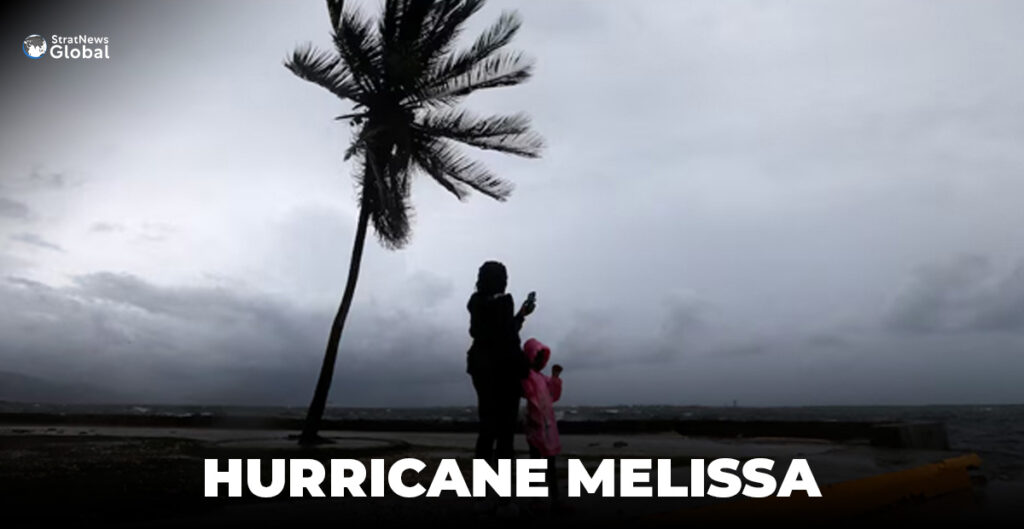
‘Catastrophic’ Category 5 Hurricane Melissa Batters Jamaica
Hurricane Melissa, a slow-moving Category 5 storm with sustained winds reaching 175 mph (282 kph), was tracking toward Jamaica on Monday, threatening what could become the strongest hurricane the island has ever recorded.
As of 2 p.m. (1800 GMT), Melissa was a “catastrophic” storm, the strongest possible on the Saffir-Simpson scale, according to the U.S. National Hurricane Centre.
The NHC expects Melissa to move over Jamaica late Monday or in the early hours of Tuesday, cross eastern Cuba the following night and move over the Bahamas and Turks and Caicos by Wednesday.
The storm’s slow movement over unusually tepid Caribbean water had contributed to its ballooning size and strength, NHC forecasters said, threatening Jamaica with days of never-before-seen catastrophic winds and as much as 3 feet of rain.
Melissa’s wind-span is currently larger than the length of Jamaica, an island roughly the size of Connecticut and whose main airports sit very close to sea level.
Hours after ordering mandatory evacuations for parts of southern Jamaica, including the historic town of Port Royal, Prime Minister Andrew Holness called on foreign support and warned of damage to farmlands, homes and infrastructure such as bridges, roads, ports and airports.
Despite warnings, some residents told Reuters they were reluctant to leave their homes for fear of looting, and authorities said buses were waiting to be filled up and transport some 28,000 people affected by mandatory evacuation orders.
“There is no infrastructure in the region that can withstand a Category 5,” he said.
Holness said his government was as prepared as can be, with an emergency response budget of $33 million and insurance and credit provisions for damage a little larger than those sustained from last year’s devastating Hurricane Beryl.
Beryl was the earliest and fastest Atlantic hurricane on record to reach Category 5, but scientists warn that storms are becoming stronger and faster as a result of climate change, warming ocean waters, and piling up fuel for seasonal storms.
“Tens of thousands of families are facing hours of extreme wind gusts above 100 mph and days of relentless, torrential rainfall,” said AccuWeather Chief Meteorologist Jonathan Porter, adding that infrastructure damage could hamper the arrival of aid.
“Slow-moving major hurricanes often go down in history as some of the deadliest and most destructive storms on record,” he added. “This is a dire situation unfolding in slow motion.”
Jamaica has seen many large hurricanes in the past, including Category 4 Hurricane Gilbert in 1988, but a direct hit from a Category 5 would be unprecedented, said Evan Thompson, of Jamaica’s Meteorological Service.
Melissa is moving much slower than Gilbert, Jamaica’s last major direct hit, Porter added, warning people should prepare to hunker down for days, and some communities could be cut off for weeks.
‘We Can’t Move’
Damian Anderson, a teacher from Hagley Gap, a town nestled in Jamaica’s soaring Blue Mountains, said impassable roads had already cut off his community.
“We can’t move,” Anderson, 47, said. “We’re scared. We’ve never seen a multi-day event like this before.”
Nearby Haiti and the Dominican Republic have already faced days of torrential downpours leading to at least four deaths, authorities in those island nations said.
In Haiti, impoverished by years of gang violence, more than 3,650 residents in the southern parts of the country moved into temporary shelters, authorities said, as they suspended flights to and from the southern peninsula and banned sailing.
Bahamian Prime Minister Philip Davis also ordered evacuations for people in the southern and eastern parts of the archipelago, while much of eastern Cuba battened down ahead of Melissa’s expected landfall.
Cuban authorities said they had evacuated upwards of 500,000 people living in coastal and mountainous areas vulnerable to heavy winds and flooding, and cancelled schools and transport across eastern Cuba.
More than 250,000 people were brought to shelters around Santiago de Cuba, the island’s second-largest city, which lies squarely in the crosshairs of the hurricane’s predicted path.
(With inputs from Reuters)
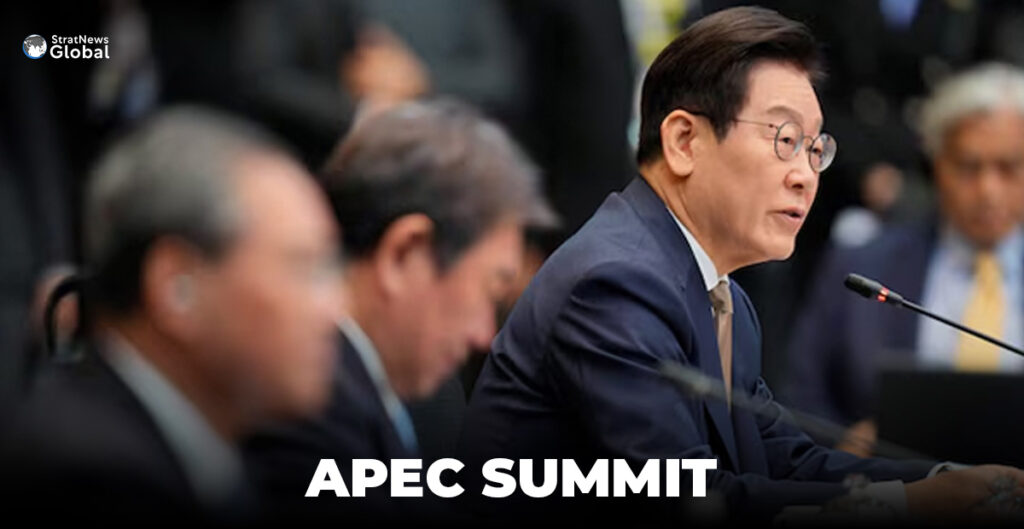
South Korea’s Agenda Dims As Trump And Xi Command The Asia-Pacific Stage
After weeks of intense talks, South Korea’s chances of securing relief from U.S. tariffs at this week’s Asia-Pacific summit appear to be slipping, as President Donald Trump and China’s Xi Jinping focus on striking a deal to cool trade tensions.
Trump will arrive in South Korea on Wednesday for the first time in his second term, but will leave the following day, skipping the main sessions of the annual Asia-Pacific Economic Cooperation forum and forcing several other leaders to reschedule trips, according to three diplomatic sources.
The APEC forum this year has been overshadowed by Trump’s sweeping tariffs that he announced soon after his inauguration in January, and other challenges to global trade, particularly Washington’s deepening tensions with Beijing.
Trump’s policies have heightened the importance of bringing world leaders together and brought rare international attention to a typically stodgy diplomatic event, said John Delury, a senior fellow at the Asia Society.
“Given the state of multilateralism and world order right now, this may be one of the most consequential APECs we’ve seen in a while,” he said. “I think we could see drama that APEC is not used to.”
For APEC host South Korea, this week marks a major diplomatic test for President Lee Jae Myung, who took office in June in a snap election called after his predecessor was removed following an attempt to impose martial law.
Lee will meet Trump, Xi, and Japan’s new Prime Minister Sanae Takaichi, key players in North Asian diplomacy and handling North Korea. South Korea will also play host to an expected meeting between Xi and Trump on Thursday, the first such face-to-face since Trump began his second term.
Stock markets across the world jumped on Monday after U.S. officials said negotiators from the U.S. and China had hashed out a framework for a trade agreement, and expectations are growing that the two leaders will sign a deal.
Trump may see a win as headlines saying that he is making progress on his trade agenda, signing deals with a number of countries and not backing down in the face of criticism of his approach, said Matthew Goodman, with the Council on Foreign Relations in Washington, D.C.
“I suspect President Xi wants to portray China, and himself, as the real leader of a more prosperous, economically integrated Asia-Pacific region,” he added. “Although there is widespread scepticism in the region about these claims, President Trump’s disruptive approach helps feed China’s narrative.”
As for the host South Korea, the bar is lower.
“I think Seoul will be seen as a successful host — and will feel it has dodged a bullet — if it gets through the APEC and related meetings without major disruption,” Goodman said.
South Korea Deal In Doubt
Seoul has sought to finalise by the APEC forum its preliminary trade deal reached with Trump in July, after the first summit meeting between Lee and Trump ended with no agreement in August, with sticking points over the details of a $350 billion investment package included in the pact.
U.S. Treasury Secretary Scott Bessent said on Monday that the overall framework of a deal with South Korea was done but was unlikely to be finalised during Trump’s visit, and South Korean officials have also said wide disagreements remained.
South Korea’s industry ministry said on Tuesday that both sides are continuing to communicate and that Seoul was seeking to maximise its national interests.
A further delay to the trade deal would be a setback to South Korean automakers like Hyundai Motor, which has been hit by 25% tariffs on U.S. exports, compared with 15% U.S. tariffs on Japanese cars.
A South Korean official said Lee and Trump may release a document that summarises areas of recent agreement, but that does not resolve the tariff issues.
Global Order In Flux
Lee will have his first meeting with Xi, who will be visiting South Korea for the first time in 11 years, as South Korea increasingly finds itself in the political and economic crossfire between the U.S. and China.
China has slapped some South Korean shipbuilders with sanctions for their cooperation with the United States.
The Lee administration said it is circulating an APEC draft joint statement on the importance of free trade, and is separately seeking agreement for statements on artificial intelligence and tackling demographic change.
Three diplomats from APEC member states told Reuters that after years of declining consensus, they were not optimistic that the forum could agree on a joint statement, at least on any substantive measures.
Trump will arrive in South Korea after announcing a slew of trade agreements in Malaysia on the sidelines of the 11-member Association of Southeast Asian Nations summit, overseeing the signing of an expanded truce between Thailand and Cambodia, and meeting Japan’s Takaichi.
However, his early departure from APEC will symbolically cede the spotlight to Xi, who is expected to stay through the final ceremonies on Saturday, as China will host next year’s forum.
“APEC’s not the most substantive global talk shop, but Trump shouldn’t leave the stage to Xi,” said Sean King of Park Strategies in New York. “We need to remind our partners and allies that we’re there for them.”
(With inputs from Reuters)
Afghanistan, Pakistan Talks In Istanbul Conclude Without Breakthrough
Talks in Istanbul to secure a long-term truce between Afghanistan and Pakistan have concluded without a resolution, two sources said on Tuesday, dealing a setback to regional stability following deadly clashes earlier this month.
The efforts aimed to reach lasting peace between the South Asian neighbours after dozens were killed along their border in the worst such violence since the Taliban took power in Kabul in 2021.
Both agreed to a ceasefire brokered in Doha on October 19, but could not find common ground in a second round of talks mediated by Turkiye and Qatar in Istanbul, Afghan and Pakistani sources briefed on the issue said, with each blaming the other for the failure.
A Pakistani security source said the Taliban had been unwilling to commit to rein in the Pakistani Taliban, a separate militant group hostile to Pakistan that Islamabad says operates with impunity inside Afghanistan.
‘Tense Exchanges’
An Afghan source familiar with the talks said they had ended after “tense exchanges” over the issue, adding that the Afghan side said it had no control over the Pakistani Taliban, which has launched attacks against Pakistani troops in recent weeks.
The sources sought anonymity as they were not authorised to speak publicly.
Spokespersons for Afghanistan’s Taliban government and defence ministry, and for Pakistan’s army, defence and foreign ministries, did not immediately respond to requests for comment.
The October clashes began after Pakistani air strikes this month on Kabul, the Afghan capital, among other locations, targeting the head of the Pakistani Taliban.
The Taliban responded with attacks on Pakistani military posts along the length of the 2,600-km (1,600 miles) border.
The breakdown in talks that have caught the attention of U.S. President Donald Trump could strain the ceasefire between Taliban-controlled Afghanistan and nuclear-armed Pakistan.
On Saturday, Pakistan’s defence minister said he believed Afghanistan wanted peace but that failure to reach an agreement in Istanbul would mean “open war”.
Despite a ceasefire between Pakistan and the Taliban, weekend clashes killed five Pakistani soldiers and 25 Pakistani Taliban militants near the border with Afghanistan, the military said on Sunday.
(With inputs from Reuters)
How Energy Became a Weapon Once Again
For much of the twentieth century, controlling the flow of energy—especially oil—was a defining instrument of global power.
From Britain’s World War I blockade of Germany to the Arab oil embargo of 1973, nations used energy to coerce, punish, or influence others. But after decades of market liberalisation, diversification, and globalisation, the world had largely come to see energy weaponisation as a relic of the past.
That assumption has now been shattered. As Jason Bordoff and Meghan L. O’Sullivan write in the November-December issue of Foreign Affairs magazine, the “energy weapon” is once again being unsheathed—this time in an era of great-power competition, economic fragmentation, and a complex transition toward clean energy.
Russia’s 2022 invasion of Ukraine marked the sharpest reminder of how energy can be wielded as a geopolitical cudgel. By cutting gas deliveries to Europe, Moscow inflicted economic pain across the continent, triggering a crisis that reverberated globally.
China, meanwhile, has restricted exports of critical minerals essential for semiconductors, defence systems, and renewable technologies. Even the United States has entered the arena, using sanctions and trade threats to shape energy flows, including restrictions on firms operating in Venezuela and tighter curbs on countries importing Russian and Iranian oil.
In a world accustomed to stable energy markets and growing faith in the clean energy transition, Bordoff and O’Sullivan warn, these developments have caught many by surprise. The resurgence of energy coercion is driven by two powerful forces: the return of geopolitical rivalry and the structural shifts underway within the global energy system itself.
The authors trace the evolution of energy as a tool of statecraft from the early twentieth century onwards. Oil, they note, became central to military and economic power. During the 1973 Arab oil embargo, OPEC’s decision to restrict supply caused the price of oil to skyrocket nearly sevenfold, exposing the West’s vulnerability.
That crisis, however, prompted a profound rethink. Nations sought to build resilience and cooperation, leading to the creation of the International Energy Agency in 1974 and the liberalisation of global energy markets. As futures trading and transparent pricing replaced fixed long-term contracts, oil became the world’s most traded commodity.
Natural gas followed a similar trajectory, with liquefied natural gas (LNG) transforming what had once been a regional market into a global one. Europe’s dependence on Soviet—and later Russian—gas was long seen as manageable, thanks to the interdependence created by trade. For much of the Cold War, the authors note, energy exchange between Europe and the USSR was even regarded as a stabilising factor.
The post–Cold War years deepened this sense of security. The 1994 Energy Charter Treaty created legal frameworks for cross-border cooperation. Western investment poured into the former Soviet energy sector, and China’s entry into the World Trade Organization in 2001 further globalised the energy economy. Beijing’s “going out” policy and later its Belt and Road Initiative built sprawling infrastructure networks to secure diversified energy access.
By the early 2000s, most advanced economies believed they had achieved energy security. The integration of global markets, coupled with the rise of U.S. shale oil, seemed to have buried the spectre of the energy weapon.
That complacency, Bordoff and O’Sullivan argue, has evaporated. Globalisation’s retreat, growing protectionism, and the resurgence of state intervention in energy markets have revived coercive tendencies.
Major powers are increasingly turning to what the authors call “state capitalism”. The United States has expanded its use of tariffs and trade measures, while China is honing its ability to employ export controls as leverage. Even energy-exporting allies such as Norway have faced domestic pressures to restrict exports to stabilise prices at home.
In this fragmented landscape, governments no longer trust markets alone to deliver reliable energy. The clean energy transition, paradoxically, is both alleviating and aggravating this insecurity. While renewables diversify the energy mix, they also introduce new vulnerabilities—particularly dependence on critical minerals and technologies concentrated in a few countries.
Oil markets, the authors warn, are heading toward tighter conditions. With U.S. shale output plateauing and exploration investments declining, spare production capacity is shrinking. BP now expects oil demand to keep rising through the decade, while the International Energy Agency’s forthcoming World Energy Outlook projects OPEC’s market share could climb back to 40 percent by 2050—levels not seen since the 1970s. Such concentration, they note, will amplify the cartel’s geopolitical influence.
Natural gas faces similar pressures. The expansion of LNG helped mitigate Europe’s crisis in 2022, but future supplies are set to concentrate in a few producers, notably the United States and Qatar. This shift increases the risk of new chokepoints, such as the Strait of Hormuz or the U.S. Gulf Coast, becoming flashpoints for coercion or attack.
At the same time, the accelerating clean energy transition is creating dependencies of its own. The authors highlight that China produces or refines more than 70 per cent of the world’s critical minerals and dominates manufacturing in solar panels, wind turbines, and batteries. Such control gives Beijing significant potential leverage—already demonstrated when it restricted graphite and rare earth exports during trade tensions with Washington in 2024–25.
The world’s march toward electrification—driven by AI data centres, electric vehicles, and industrial demand—will raise electricity’s share of global energy use from 20 per cent today to 25 per cent by 2035, according to the IEA. While countries can generate much of this power domestically, cross-border electricity trade introduces new vulnerabilities. Unlike oil, electricity cannot be easily stored or rerouted, making power grids tempting targets for cyber or physical attacks.
Bordoff and O’Sullivan point to recent warnings from the FBI that state-sponsored Chinese hackers have infiltrated U.S. critical networks. In a world where electricity underpins everything from advanced manufacturing to AI, such disruptions could cause disproportionate harm.
As the “energy weapon” reemerges in multiple forms—through oil, gas, minerals, and even electrons—the authors argue that policymakers must rethink both energy and foreign policy. Building resilience will require reducing exposure to volatile imports, investing in domestic production, and improving energy efficiency. But complete self-sufficiency is a myth: even the United States, which produces more energy than it consumes, remains deeply tied to global markets.
The authors conclude that clean energy offers the best long-term defence. Unlike fossil fuels, clean technologies can be produced in many countries and made more secure through diversification of supply chains. Strengthening domestic manufacturing, refining, and grid infrastructure, they note, can blunt coercive pressures while accelerating decarbonisation.
Ultimately, Bordoff and O’Sullivan suggest, the new age of energy weaponisation may contain its own silver lining. By exposing the fragility of fossil-fuel dependence and the risks of concentrated supply chains, it could spur the political will for massive investment in clean energy systems. In doing so, the very forces destabilising the world’s energy order might also drive the next great leap toward its security.
Trump’s Redistricting Drive Sparks Legislative Action In Virginia And Indiana
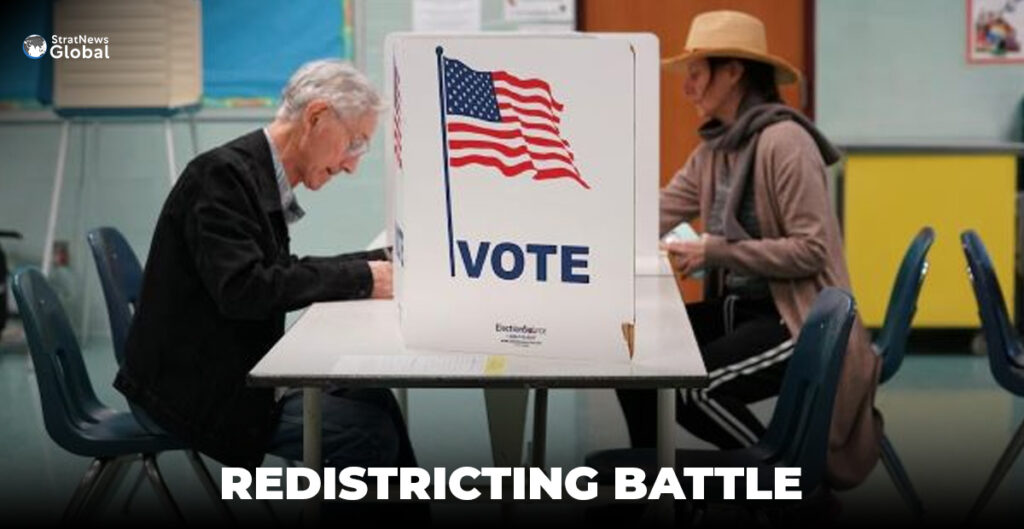
In a new escalation of the nationwide redistricting battle, Democratic lawmakers in Virginia convened a special legislative session on Monday to debate a proposal to redraw congressional districts in their favour.
Meanwhile, Indiana’s Republican governor called for lawmakers to meet next week to consider a similar redistricting effort pushed by President Donald Trump.
Virginia and Indiana were poised to become the latest battlegrounds in a mid-decade redistricting war, instigated by Trump, that could play a pivotal role in the outcome of next year’s congressional elections.
Redistricting, the periodic reshaping of political boundaries dividing legislative seats, traditionally is conducted just once a decade following the U.S. Census to account for population shifts.
The widening coast-to-coast redistricting scramble, set off by Trump pushing for Texas to redraw its maps this year, is unprecedented in modern U.S. politics.
Republicans, including Trump, openly acknowledge that redrawn maps enacted in recent months in Texas, Missouri and North Carolina are aimed at preserving their party’s slim U.S. House of Representatives majority in the hotly contested 2026 midterm races.
Democrats’ Own Redistricting Initiatives
Democrats have fought back by advancing redistricting initiatives of their own, starting in California, where a plan to redraw congressional boundaries to their party’s advantage was passed by the legislature in August and will be decided by voters in a special election next week.
Abruptly entering the redistricting fray on Monday in the midst of its gubernatorial race was Virginia, which has a Republican governor and Democratic-controlled legislature. Democrats currently hold six of Virginia’s 11 seats in the U.S. House.
The opening round in Virginia’s statehouse was mostly procedural, with Democrats in the House of Delegates pushing through legislative ground rules required for consideration of a state constitutional amendment to the redistricting process.
The resolution passed on a party-line vote of 50-42, and the House was swiftly adjourned until Wednesday, when more substantive action is expected to commence. Democrats in Virginia have said little publicly about their precise intentions, and it was not clear when the state Senate might act.
Virginia Considers New Map
“Virginia’s decision to convene and preserve the right to consider a new map in 2026 is critical to the fight to ensure voters have fair representation,” Courtney Rice, spokesperson for the Democratic Congressional Campaign Committee, said in a statement last week.
In a radio interview on Friday, Governor Glenn Youngkin, a term-limited Republican whose successor will be determined by voters on November 4, called Democrats’ steps toward redistricting “a desperate power grab.”
Under Virginia law, the governor plays no role in amending the state constitution.
In Indiana, Republican Governor Mike Braun called a special legislative session for November 3 to weigh redistricting proposals in his state, bowing to a White House pressure campaign.
Braun said he was acting to protect Indiana “from efforts in other states that seek to diminish their voice in Washington and ensure their representation in Congress is fair.”
The Democratic leader in the state Senate, Shelli Yoder, responded in a statement, “This is not democracy. This is desperation.”
Fights Over Handful Of Seats
No political map alterations have been specifically proposed in Virginia. But local news media reports have said Democrats would stand to gain at least two additional U.S. House seats.
California’s redistricting plan, which comes before voters in a special ballot on November 4, is designed to flip five Republican seats to the Democrats’ column.
The redrawn Texas map could yield as many as five more Republican seats. The party is also seeking to gain one additional seat each in Missouri and North Carolina. Other Republican states, including Ohio, Kansas and Florida, are either planning or considering similar moves.
Democrats’ redistricting ambitions in Virginia face several hurdles that must be surmounted in short order.
Virginia law requires a majority of both houses of the General Assembly to vote in two consecutive sessions – this year and next – to alter the state constitution, then submit the plan to voters for approval in a referendum early next year.
While Democrats control both the state’s Senate and House of Delegates, Virginia is eight days away from elections on November 4 for governor and all 100 legislators in the lower house, leaving little time for lawmakers to act on redistricting in this session.
In Indiana, by contrast, lawmakers have the authority to alter the existing map, though some Republicans have expressed skepticism about doing so. Republicans now control seven of the state’s nine U.S. House seats.
Signaling the next potential flashpoint in skirmishes over political boundaries, the Kansas Senate president announced he has collected enough signatures to call for a special session on redistricting. The House has not yet done so.
(With inputs from Reuters)
Mexico, U.S. Push Back Trade Deadline To Resolve Pending Issues: Sheinbaum
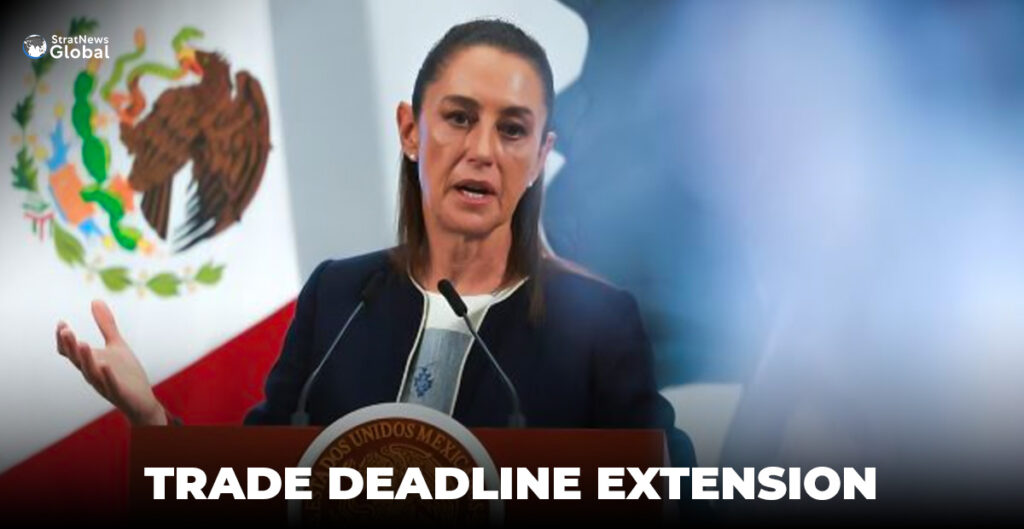
Following a weekend phone call with U.S. President Donald Trump, Mexican President Claudia Sheinbaum announced on Monday that both sides have agreed to extend an approaching trade deadline by several weeks.
She said the decision would provide additional time for negotiations aimed at settling outstanding trade issues between Mexico and Washington.
The U.S. agreed in July to pause for 90 days an increase in tariffs on some Mexican goods to 30% – from 25% – as the two countries continued talks aimed at reaching a new trade deal. That pause was set to end this week.
“I was interested in making sure that November 1 didn’t arrive without us having communicated and that we were in agreement that our teams were still working,” Sheinbaum said in her regular morning press conference, adding they were aiming to resolve 54 outstanding trade barriers.
“We’re practically closing this issue,” she said.
Mexico’s peso strengthened 0.29% to 18.38 per dollar following Sheinbaum’s comments.
Trade Agreement
Mexico has been largely spared the brunt of Trump administration tariffs thanks to the USMCA free trade agreement with the U.S. and Canada that is up for review next year.
The extension follows weeks of uncertainty over U.S. demands to revise parts of the USMCA trade pact, a key issue that has strained bilateral relations in recent months.
Earlier in October, Sheinbaum said she was confident Mexico would reach a favourable agreement with the U.S. on trade and that she was planning to unveil new advances in projects developing electric vehicles, semiconductors, satellites, drones and an artificial intelligence lab.
“We continue working and there is no situation in the near future where there could be any special tariff on November 1st,” Sheinbaum said.
Trump said last week he was ending trade talks with Canada, with the White House citing frustration with how negotiations had been progressing.
When asked how Mexico would react and whether Mexico could negotiate separately with Canada, Sheinbaum said last week, “Let’s not get ahead of ourselves.”
(With inputs from Reuters)
Venezuela Puts Energy Partnership And Joint Gas Projects With Trinidad On Hold
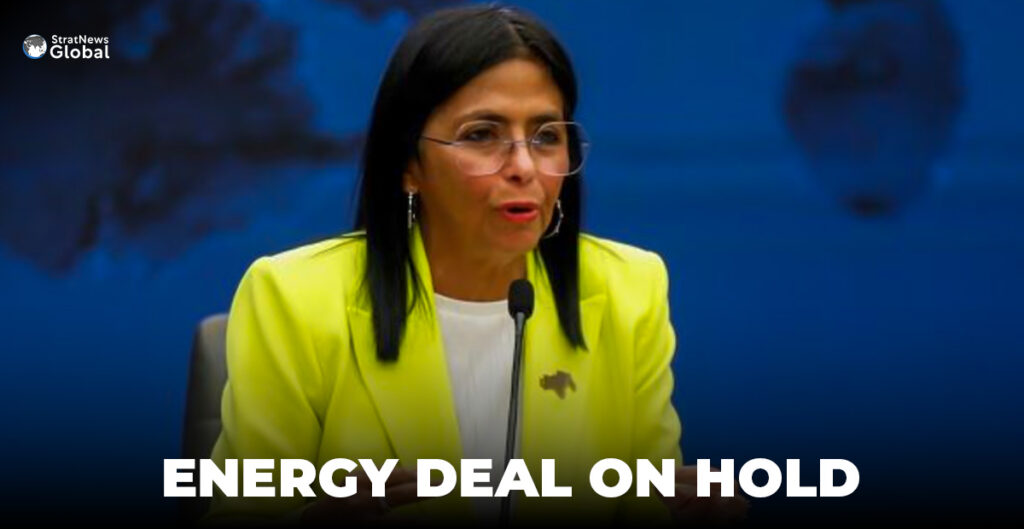
Venezuelan President Nicolas Maduro announced on Monday that his government has suspended all energy agreements with Trinidad and Tobago, halting joint development initiatives and natural gas projects that had been underway between the two countries.
Maduro said in a TV broadcast that the oil ministry and state-run oil producer PDVSA’s board sent a proposal to suspend a cooperation agreement with Trinidad to his desk.
“I have approved the measure,” Maduro said.
His order immediately suspended all aspects of the energy agreement with Trinidad and Tobago, he said, and Congress and the Supreme Court will be asked to weigh in with additional recommendations.
That would likely mean Venezuela would revoke the license to develop the massive Dragon natural gas field, among other projects.
Pro-U.S. Stance Of Trinidad
Maduro criticized what he described as the pro-U.S. stance of Trinidad Prime Minister Kamla Persad-Bissessar, who took office on May 1.
Her government has had a close relationship with the administration of U.S. President Donald Trump, while tensions between Washington and Caracas have escalated.
Maduro, who has claimed the U.S. wants to drive him from power, said Persad-Bissessar threatened “to turn Trinidad and Tobago into the U.S. empire’s aircraft carrier against Venezuela.”
On Sunday, a U.S. warship docked in Trinidad, two days after the U.S. announced the deployment of an aircraft carrier group to Latin America.
As Trinidad faced declining gas reserves and production, former Trinidad prime minister Keith Rowley favoured energy diplomacy with Venezuela and resisted U.S. sanctions pressure.
Those efforts centered on the delayed Dragon natural gas field in Venezuelan waters near Trinidad. Its 4.2 trillion cubic feet of reserves could be a lifeline for Trinidad’s energy-dependent economy.
Rowley lost an election this year to Persad-Bissessar.
Shell and the National Gas Company of Trinidad received a renewed U.S. license earlier this month for the project.
Persad-Bissessar said her country did not need Venezuela’s gas.
“We have our plans to grow our economy both within the energy and non-energy sectors,” she told the Trinidad and Tobago Newsday newspaper.
Shell, NGC and BP, which are involved in various projects that include Venezuela, did not immediately reply to requests for comment.
Shell is separately developing the Manatee gas project, which crosses the maritime border into Venezuela but has received permission from the Maduro government to be developed on the Trinidad side independently. It was not immediately clear if that project could also be at risk.
(With inputs from Reuters)
Amazon To Cut 30,000 Corporate Jobs From Tuesday
Beginning Tuesday, Amazon is set to slash up to 30,000 corporate jobs as it looks to rein in costs and offset overhiring during the pandemic’s demand surge, according to three people familiar with the matter.
The figure represents a small percentage of Amazon’s 1.55 million total employees, but nearly 10% of its roughly 350,000 corporate employees. This would mark Amazon’s largest job cut since late 2022, when it started to eliminate around 27,000 positions.
An Amazon spokesperson declined to comment.
Ongoing Process
Amazon has been trimming smaller numbers of jobs over the past two years across multiple divisions, including devices, communications and podcasting. The cuts beginning this week may affect a variety of divisions, including human resources, known as People Experience and Technology or PXT; operations, devices and services; and Amazon Web Services, the people said.
Managers of impacted teams were asked to undergo training on Monday for how to communicate with staff following email notifications that will start going out on Tuesday morning, the people said.
Amazon CEO Andy Jassy is undertaking an initiative to reduce what he has described as an excess of bureaucracy, including by reducing the number of managers. He installed an anonymous complaint line for identifying inefficiencies that has elicited some 1,500 responses and over 450 process changes, he said earlier this year.
Jassy said in June that the increased use of artificial intelligence tools would likely lead to further job cuts, particularly through automating repetitive and routine tasks.
‘Under Pressure’
“This latest move signals that Amazon is likely realizing enough AI-driven productivity gains within corporate teams to support a substantial reduction in force,” said Sky Canaves, an eMarketer analyst. “Amazon has also been under pressure in the short-term to offset the long-term investments in building out its AI infrastructure.”
The full scope of this round of job cuts was not immediately clear. The people familiar with the matter said the number could change over time as Amazon’s financial priorities shift. Fortune earlier reported that the human resources division could be targeted with a cut of roughly 15%.
A programme begun early this year to bring employees back in the office five days per week, among tech’s most stringent, has failed to generate sufficient attrition, said two of the people, citing that as another reason for the size of the layoff. Some of the employees who are not swiping in daily because they live far from corporate offices, or for other reasons, are being told they have voluntarily quit Amazon and must leave without severance, a savings for the company.
Layoffs.fyi, a website tracking tech job cuts, estimated that about 98,000 jobs have been lost so far this year among 216 companies. For all of 2024, the figure was 153,000.
Outshone By Competitors
Amazon’s largest profit center, cloud computing unit AWS, reported second-quarter sales of $30.9 billion, a 17.5% increase that was well below gains of 39% for Microsoft’s Azure and of 32% for Alphabet’s Google Cloud.
Estimates indicate that AWS will have boosted third-quarter sales by about 18% to $32 billion, a slight slowdown from last year’s 19% increase. AWS is still reeling from a roughly 15-hour internet outage last week that felled many of the most popular online services, like Snapchat and Venmo.
Amazon appears to be expecting another big holiday selling season. It plans to offer 250,000 seasonal jobs to help staff warehouses, among other needs, the same as in the prior two years.
Amazon on Friday also announced a reorganization of a segment of its PXT unit focused on diversity initiatives, a memo reviewed by Reuters showed. The changes largely involved promoting people to new roles.
Amazon shares rose 1.2% to $226.97 on Monday. The company plans to report third-quarter earnings on Thursday.
(With inputs from Reuters)
Trump Praises Takaichi, Signs Defence, Trade Pacts With Japan
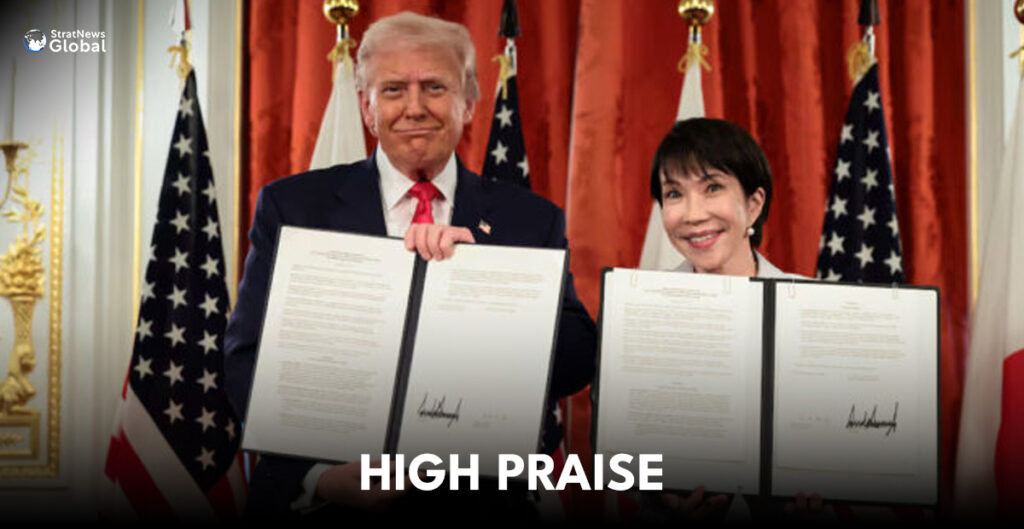
During his visit to Tokyo on Tuesday, US President Donald Trump praised Japan’s first female leader, Sanae Takaichi, for her commitment to accelerating the country’s military buildup, while also signing agreements on trade and critical minerals.
Takaichi, a close ally of Trump’s friend and golfing partner late Japanese Prime Minister Shinzo Abe, said she would nominate Trump for the Nobel Peace Prize, White House spokeswoman Karoline Leavitt told reporters.
She is also expected to offer a package of US investments under a $550-billion deal agreed this year, including shipbuilding, and increased purchases of US soybeans, natural gas and pickup trucks, sources familiar with the talk said.
Those gestures may temper any Trump demands for Tokyo to spend more on defending islands from an increasingly assertive China, which Takaichi sought to head off by pledging last week to fast-track plans to increase defence spending to 2% of GDP.
‘It’s A Big Deal’
“It’s a very strong handshake,” Trump said, as the pair posed for photos at the Akasaka Palace in downtown Tokyo.
“Everything I know from Shinzo and others, you will be one of the great prime ministers. I’d also like to congratulate you on being the first woman prime minister. It’s a big deal,” Trump told Takaichi as the pair sat down for discussions with their delegations.
Takaichi gifted Trump Abe’s putter, a golf bag signed by Japanese major winner Hideki Matsuyama and a gold leaf golf ball, according to photos posted on X by Trump’s assistant Margo Martin.
Deal On Critical Minerals Signed
Trump also praised Japan’s efforts purchase more US defence equipment, while Takaichi said Trump’s role in securing ceasefires between Cambodia and Thailand, and Israel and Palestinian militants, were “unprecedented” achievements.
Takaichi followed other world leaders to recommended Trump for the Peace Prize he has long said he is worthy of.
The leaders then signed an agreement to support the supply of critical minerals and rare earths, as the countries seek to wean reliance off China’s chokehold on the materials crucial for a wide range of products from smartphones to fighter jets.
The deal aims to jointly identify projects of interest in areas such as magnets and batteries over the next six months and work together to develop stockpiles of key minerals among other measures.
Trump was last at the palace, an ornate residence built in a European style, in 2019 for talks with Abe, who was assassinated in 2022.
The US leader received a royal welcome shortly after his arrival on Monday, meeting with Japanese Emperor Naruhito at the Imperial Palace.
Visit US Naval Base
Takaichi’s gifts to Trump and repeated references to Abe are aimed at evoking memories of a close bond forged over hours the pair spent golfing together during Trump’s first term. Abe was assassinated in 2022, with the trial of his assailant coincidentally beginning in the western city of Nara on Tuesday.
A similar close relationship with the leader of Japan’s key security and trade partner could help Takaichi bolster her weak political position at home.
Though she has seen a surge in public support since becoming prime minister, her coalition government is two votes shy of a majority in parliament’s lower house.
Trump and Takaichi will later visit the US naval base in Yokosuka near Tokyo, which is home to the aircraft carrier USS George Washington, part of the US military’s powerful presence in the region.
Trump will then meet business leaders in Tokyo, before travelling on Wednesday to South Korea. In talks there with Chinese President Xi Jinping, Trump said he hopes to seal a trade war truce between the world’s two biggest economies.
(With inputs from Reuters)