

Support us by contributing to StratNewsGlobal on the following UPI ID
ultramodern@hdfcbank

Strategic affairs is our game, South Asia and beyond our playground. Put together by an experienced team led by Nitin A. Gokhale. Our focus is on strategic affairs, foreign policy and international relations, with higher quality reportage, analysis and commentary with new tie-ups across the South Asian region.
You can support our endeavours. Visit us at www.stratnewsglobal.com and follow us on YouTube, Twitter, Facebook and Instagram.
र 500 per month
र 1000 per month
र 5000 per year
र 10000 per year
Donate an amount of your choice
र 500 per month
Donate र 500 per month

र 1000 per month
Donate र 1000 per month
र 5000 per year
Donate र 5,000 per year
र 10000 per year
Donate र 10,000 per year
Donate an amount of your choice
Donate an amount of your choice


Global Climate Fund Backs $6 Billion Jordan Water Desalination Project
The world’s largest multilateral climate fund has approved its biggest financial commitment yet to support a $6 billion water desalination project in Jordan, its chief executive said.
The Green Climate Fund’s backing comes ahead of the COP30 event in Brazil in November and a decade after the Paris Agreement, which named the fund as a primary way to finance efforts to curb global warming.
“It will transform the country,” Mafalda Duarte told Reuters, adding that the commitment to Jordan’s Aqaba-Amman Water Desalination and Conveyance Project marked the fund’s “highest investment in a single project”.
A grant and loan totalling $295 million was approved at a board meeting in South Korea on Wednesday with the aim of drawing in financing from others, including the International Finance Corporation and private lenders.
One Of The World’s Largest Desalination Projects
The desalination project, one of the largest in the world, will eventually directly serve nearly half the population of Jordan, which has the second-lowest water availability of any country on the planet.
That was slated to get worse, with a 4 degrees Celsius rise in temperatures and a 21% decrease in rainfall projected by the end of the century, leading to increased evaporation, reduced groundwater and more frequent droughts.
Such a scenario has led Jordan’s leader to describe the Meridiam and SUEZ-led project as a strategic priority.
The U.S., which considers Jordan a key regional ally, has pledged $300 million in grants and $1 billion in loans for the project, Jordanian government officials told Reuters, while other countries in the region were expected to contribute.
“The project is a strategic project to desalinate and transport 300 million cubic meters of water every year to most parts of the kingdom,” Jordan’s Minister of Water and Irrigation, Raed Abu Soud, told Reuters.
24 Projects Up For GCF Board Meeting Approval
A senior official involved with the project said the GCF money would allow it to lower the cost of water by 10 cents a litre and help the government save $1 billion over its lifetime.
It would also allow the IFC to offer better loan terms, which will mean cheaper private sector financing, he added.
The project in Jordan is one of 24 up for discussion at the GCF board meeting. If all are approved, they would total $1.4 billion and mark the fund’s biggest ever financial disbursement.
The GCF this year moved to speed up its decision-making as part of a broader overhaul of the world’s multilateral financial system – and the COP30 talks will look at ways to do even more.
While MDBs were still not doing enough to mobilise private sector capital, their stakeholders needed to be realistic about how much risk they could take, Duarte said.
(With inputs from Reuters)
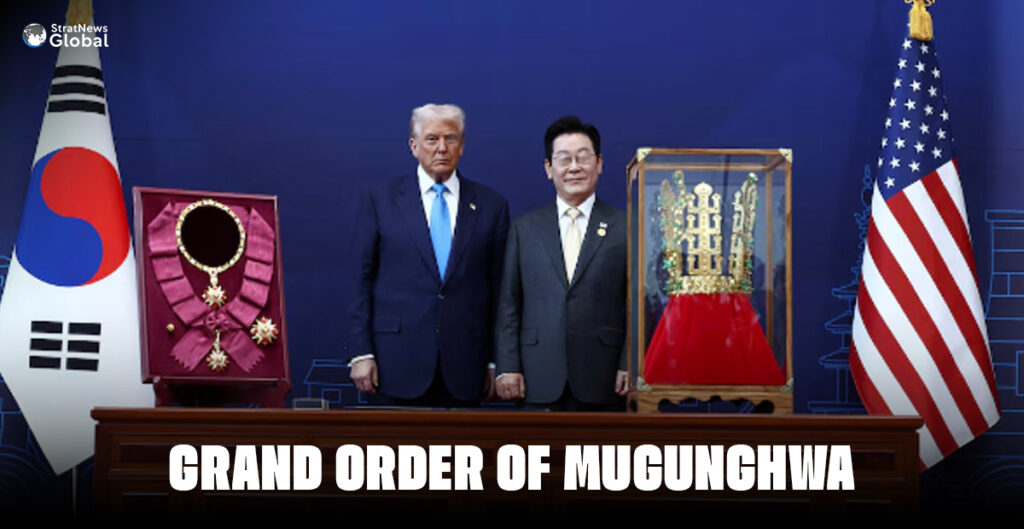
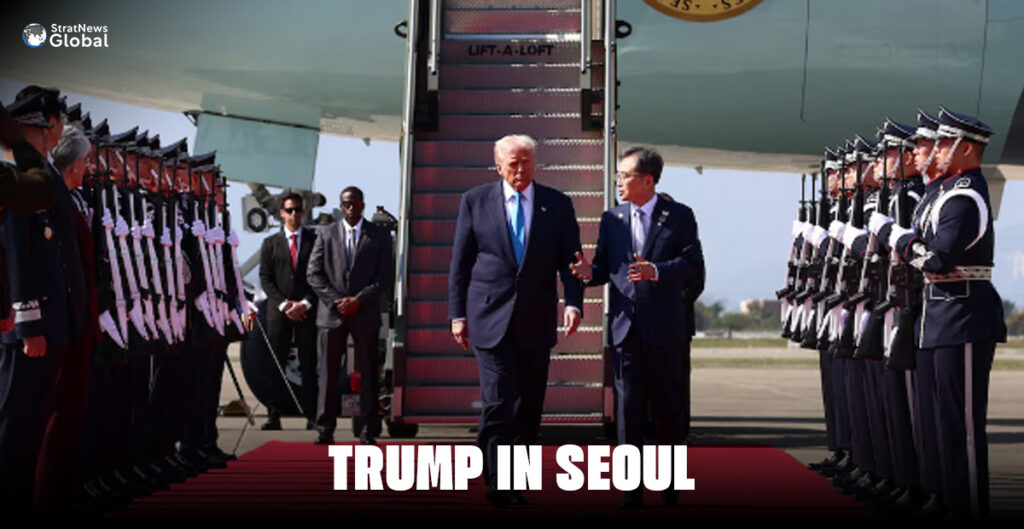
Trump Arrives In Seoul, Receives South Korea’s Highest Award, Golden Crown
South Korea welcomed U.S. President Donald Trump on Wednesday with a replica gold crown and presented him the “Grand Order of Mugunghwa,” the nation’s highest decoration, according to the presidential office.
Trump landed in South Korea on the final leg of a trip through Asia that also saw stops in Malaysia and Japan, with high-profile trade talks expected with South Korean President Lee Jae Myung and Chinese President Xi Jinping.
U.S. and South Korean warplanes escorted Air Force One on approach, and on the tarmac, a South Korean military band greeted Trump with a rendition of “YMCA”, and guns fired a salute.
Lee is hoping to win concessions from Trump in drawn-out negotiations aimed at lowering U.S. tariffs on South Korea, and has wooed the U.S. president by praising his outreach to North Korea.
‘Peacemaker’ Trump
Lee’s office said that in recognition of Trump’s role as a “peacemaker” on the Korean peninsula, he was awarded the “Grand Order of Mugunghwa”, which is named after South Korea’s national flower, a pink hibiscus also known as the Rose of Sharon in English.
“I’d like to wear it right now,” Trump said when presented with the glittering award. A South Korean official said he was the first U.S. president to receive the honour.
During his first term, Trump held a series of summits with North Korean leader Kim Jong Un before the talks broke down as Pyongyang surged ahead with developing its nuclear weapons and ballistic missiles.
On Wednesday, Trump repeated his invitation to meet Kim again, but so far, North Korea has not commented on his latest overtures.
Lee wore a custom-made gold-coloured tie, which his office said “reflects President Trump’s taste for gold, captures the golden future of the South Korea-US alliance and the status of South Korea.”
Lee and Trump met at a museum in the city of Gyeongju, a quiet tourist town filled with historic tombs and palaces from its time as the capital of the ancient Silla kingdom, which ruled about a third of the Korean peninsula until the 9th century.
Golden Crown
Trump was gifted a replica of the golden Cheonmachong crown. The delicate original, which was found in a tomb in Gyeongju, features towering gold prongs and dangling leaf shapes.
“This symbolises the history of Silla, which maintained a long-term era of peace on the Korean Peninsula, and a new era of peaceful coexistence and common growth on the Korean Peninsula that the United States and South Korea will work together for.”
The leaders had a working lunch that included Thousand Island salad dressing, in what Lee’s office said was a nod to Trump’s “success story in his hometown of New York.” The meal also included local specialities, “according to President Trump’s preferences.”
On the menu were “mini beef patties with ketchup”, a “Korean Platter of Sincerity” featuring U.S. beef and local rice and soybean paste, and grilled fish with a glaze of ketchup and gochujang, a red chilli paste.
The lunch was capped by a “Peacemaker’s Dessert” consisting of a brownie adorned with gold.
The day will wrap up with a dinner with the leaders of Vietnam, Australia, New Zealand, Canada, Thailand, and Singapore. The leaders will be served Trump Chardonnay and Trump Cabernet Sauvignon, from a winery run by Trump’s son, Eric Trump, according to Lee’s office.
Three diplomatic sources said some of those leaders changed their schedules to accommodate Trump, who arrived and will leave before the scheduled Asia-Pacific Economic Cooperation (APEC) leaders’ summit on Friday and Saturday.
Gyeongju is not typically the scene for such international events, and foreign diplomats complained of difficulties booking rooms, finding suitable venues for meetings, and having to move staff from Seoul.
On Wednesday, South Korea’s Foreign Ministry disputed reports of room shortages, saying only about half the available accommodation in the area was booked.
(With inputs from Reuters)
Trump Eyes South Korea, China Deals On Last Asia Tour Stop
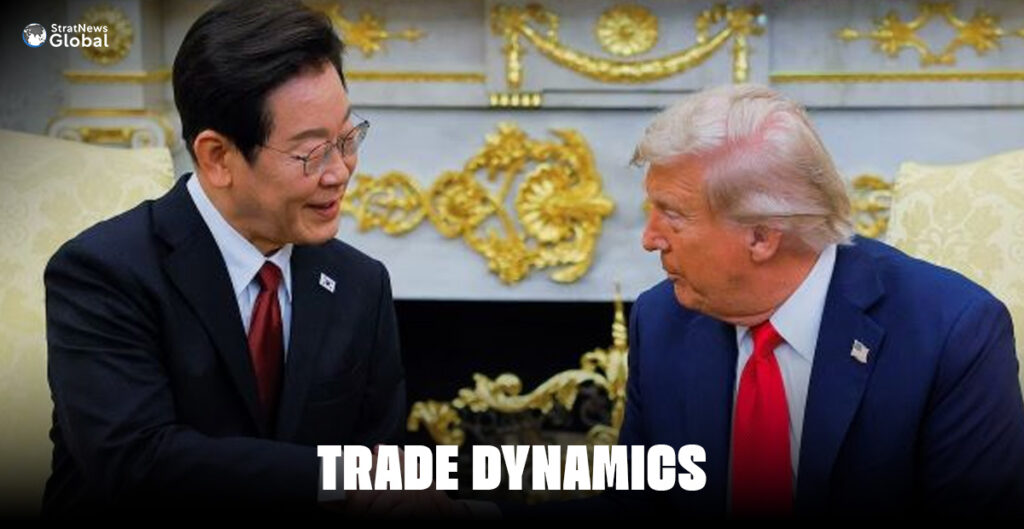
U.S. President Donald Trump kicked off the final leg of his Asia tour in South Korea on Wednesday, expressing optimism about advancing a pending tariff agreement with President Lee Jae Myung and negotiating a trade war truce with China’s President Xi Jinping.
Arriving from Tokyo hours after North Korea test-fired a nuclear-capable cruise missile, Trump received a lavish reception from Lee in Gyeongju, a historic city hosting this year’s Asia-Pacific Economic Cooperation forum.
His talks with Xi are set for Thursday in the port city of Busan.
Speaking earlier to reporters aboard Air Force One en route to South Korea, Trump dismissed the North Korea missile test and said he was squarely focused on his meeting with the leader of the world’s second-largest economy.
“I think we’re going to have a very good outcome for our country and for the world, actually,” Trump said.
He expects to reduce U.S. tariffs on Chinese goods in exchange for Beijing’s commitment to curb exports of fentanyl precursor chemicals, he added.
The United States could halve the levies of 20% on Chinese goods it now charges in retaliation for the export of such chemicals, the Wall Street Journal said.
China’s foreign ministry said the meeting of the two leaders would “inject new momentum into the development of U.S.-China relations”, and Beijing was ready to work together for “positive outcomes”.
South Korea Trade Talks Struggle
Speaking at a summit of APEC CEOs in Gyeongju before his meeting with Lee, Trump said a trade deal with South Korea would be finalised “very soon”, though officials on both sides have been downplaying the prospect of a breakthrough this week.
The allies unveiled a deal in late July under which Seoul would avoid the worst of the tariffs by agreeing to pump $350 billion of new investments into the United States. But talks over the structure of those investments have been deadlocked.
Meeting Lee at the nearby Gyeongju National Museum, Trump was presented with a gold crown and the “Grand Order of Mugunghwa”, the country’s highest decoration, worn as an elaborate sash and medal.
“I’d like to wear it right now,” Trump quipped.
At the start of a working lunch topped off with a “golden dessert”, Lee pledged to spend more on defence, as he sought to head off a Trump concern that allies are not pulling their weight militarily.
He also asked that the U.S. allow the country to reprocess nuclear fuel to power submarines. Seoul is barred from doing so without U.S. consent, under a pact between the countries.
Trump pledged to help “straighten out” South Korea’s problems with its nuclear-armed northern neighbour. The two are still technically at war after their 1950-53 war ended in an armistice, not a peace treaty.
Trump, who has repeatedly called for a meeting with North Korean leader Kim Jong Un on this trip, said on Wednesday the timings would not work out.
Taiwan On The Agenda?
Skipping the main APEC summit, Trump plans a dinner with Lee and bilateral meetings with several countries’ leaders, including China’s Xi, before he departs on Thursday.
Negotiators from the world’s top two economies hashed out a framework on Sunday for a deal to pause steeper American tariffs and Chinese rare earths export controls, U.S. officials said. The news sent stocks to record peaks.
Beijing has been more circumspect about the prospect of an agreement, but in a possible sign of thawing, China bought its first cargoes of U.S. soybeans in several months, Reuters reported exclusively on Wednesday.
The lack of Chinese buying has cost U.S. farmers, a key support base for Trump, billions of dollars in lost sales.
Trump said he would also speak to Xi about Nvidia’s (NVDA.O), opens new tab state-of-the-art Blackwell AI chips, with sales to China a key sticking point in trade talks.
Trump said he did not know whether Taiwan would be discussed with Xi.
Since taking office in January, Trump has vacillated on his position towards the democratically-governed island claimed by China as he seeks to strike a trade deal with Beijing.
Trump says Xi has told him he will not invade Taiwan while the Republican president is in office, but Trump has yet to approve any new U.S. arms sales to Taipei.
Taiwan Foreign Minister Lin Chia-lung said on Tuesday he was not worried that Trump would “abandon” the island in his meeting with Xi.
Final Stop In Asia Trip
Trump’s trip to South Korea concludes a whirlwind swing through the region, among the hardest hit by his tariff policies and increased U.S.-China competition.
In Malaysia, he announced a slew of trade pacts and oversaw the signing of an expanded truce between Thailand and Cambodia after a border conflict.
In Tokyo on Tuesday, Trump lavished praise on Japan’s first female Prime Minister Sanae Takaichi, welcoming her pledge to accelerate a military buildup and signing deals on trade and rare earths.
The U.S. and Japan also released a list of projects in which Japanese companies are eyeing U.S. investments, related to Tokyo’s pledge this year of $550 billion in strategic U.S. investments, loans and guarantees in exchange for a tariff reprieve.
Washington has pressed South Korea for a similar arrangement, but Seoul says it cannot afford to pay the $350 billion it pledged upfront. Instead, South Korea has offered a mix of phased investments, loans and other measures.
(With inputs from Reuters)
Trump Warns He May Deploy Forces Beyond National Guard To US Cities
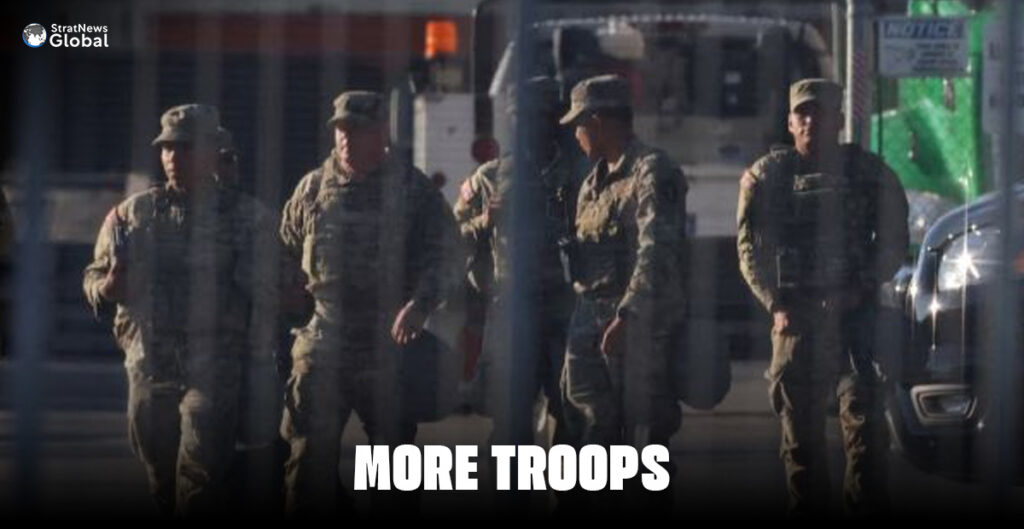
U.S. President Donald Trump said he was prepared to deploy forces “beyond the National Guard” into U.S. cities if necessary, underscoring his readiness to intensify the standoff with Democratic-led local governments that have opposed the federal deployments.
Trump delivered his remarks on Tuesday aboard the George Washington aircraft carrier, which was docked at the Yokosuka naval base near Tokyo. His speech, which occasionally touched on partisan issues, was interrupted by applause and cheers from the troops several times.
“We have cities that are troubled … and we’re sending in our National Guard. And if we need more than the National Guard, we’ll send more than the National Guard because we’re going to have safe cities,” Trump said.
When later asked about those remarks, Trump said he would do it if necessary.
“It hasn’t been necessary. We’re doing a great job without that. As you know, I’m allowed to do that,” he told reporters on Air Force One during a flight to South Korea on Wednesday.
Using The Military For Domestic Purposes
Since June, Trump has deployed National Guard troops to various Democratic-led jurisdictions in an extraordinary expansion of the use of the military for domestic purposes. Trump has sent them to Los Angeles, Memphis and Washington, D.C., and is waging court battles to try to dispatch them to Portland and Chicago.
In Los Angeles, Trump also took the rare step of deploying active duty Marines, although their job was to protect federal agents and federal property and they have since been withdrawn.
Trump has left open the possibility that he might use the centuries-old Insurrection Act to deploy active duty troops for policing purposes and sidestep any court rulings blocking the dispatch of Guard troops into American cities.
Under federal law, National Guard and other military troops are generally prohibited from conducting civilian law enforcement. But the Insurrection Act allows for an exception, giving troops the power to directly police and arrest people.
“If I want to enact a certain act I’m allowed to do it routinely. I’d be allowed to do whatever I want,” Trump said in his remarks on Air Force One. “The courts wouldn’t get involved, nobody would get involved. I can send the Army, Navy, Air Force, Marines. I can send anybody I wanted.”
Since his second term as president began in January, Trump has shown little hesitation in seeking to wield governmental authority against his political opponents, as he pushes to expand the powers of the presidency in ways that have tested the limits of the law.
Last month, in a speech to top military commanders, Trump suggested using U.S. cities as “training grounds” for the armed forces, alarming Democrats and civil liberties groups.
(With inputs from Reuters)
South Korea Outlines Strategy To Balance US-China Trade Pressures
South Korea’s top trade envoy said the country plans to strengthen ties with the United States, maintain stable supply chains with China, and broaden its network of trade partners to weather rising global competition. The comments came as Seoul hosts Asia-Pacific leaders for a major trade forum.
Minister for Trade Yeo Han-koo said it was still uncertain if South Korea and the United States could finalise a trade deal when U.S. President Donald Trump visits on Wednesday.
“What matters most, however, is not the timing of the agreement but achieving a mutually beneficial deal that best serves our national interest,” Yeo said in response to written questions.
South Korea’s political and economic high-wire act is on full display this week as President Lee Jae Myung hosts both Trump and Chinese President Xi Jinping, as well as leaders from a number of other Pacific Rim nations for the annual summit of the Asia-Pacific Economic Cooperation grouping.
South Korea-U.S. Cooperation
Seoul has faced pressure from the Trump administration over trade imbalances and is seeking to avoid heavy tariffs by promising billions of dollars of investment.
South Korea, a close U.S. military ally and major exporter to the United States, does not have the leverage that China does, said Baizhu Chen, an economics professor at the University of Southern California.
“Korea is a much smaller economy, and its security heavily depends on the U.S. Korea can only expect to push for the best result within the scope given,” he said.
South Korea has also been squeezed by China’s export controls, and some South Korean shipbuilders were recently sanctioned by Beijing for cooperating with the United States, amid a trade war between its two biggest trading partners.
“It is true that heightened U.S.–China tensions have created additional uncertainty that makes global businesses attentive to the possible outcome coming out of APEC this week,” Yeo said.
“In a way, such circumstances make dialogue and cooperation within multilateral frameworks like APEC all the more crucial and timely.”
APEC follows a Southeast Asia summit last week in Malaysia, where China pushed for multilateralism, as Trump’s tariffs overshadowed the meeting.
Trading Partners
Through tariff negotiations, South Korea will seek to strengthen cooperation with the U.S. in various sectors, such as semiconductors, batteries, biotechnology, shipbuilding and nuclear energy, Yeo said.
The trade-reliant economy grew in the third quarter at the strongest pace in a year-and-a-half, as exports remained resilient despite stalled trade talks with Washington.
South Korea’s exports have been mostly led by strong technology demand this year, while a hit from high U.S. tariffs on autos was also offset by growing car sales to Europe and emerging markets. Exports to Southeast Asia have also been a boost amid subdued momentum in U.S. and China-bound shipments.
With China, Seoul will pursue multi-layered communication to continue cooperation to stabilise supply chains, Yeo said.
“It is clear that we must diversify our trading partners to reduce dependence on any single country and open up new opportunities,” Yeo said, as he vowed to expand networks with emerging economies across the “Global South”, while maintaining stable and strategic relations with the U.S. and China.
Yeo, who last week signed a trade pact with Malaysia at the Association of Southeast Asia Nations summit in Kuala Lumpur, said South Korea will also pursue negotiations with Thailand and deepen cooperation with the region on digital transformation, supply chain resilience and climate change.
South Korea will also initiate talks with countries in South Asia, such as Bangladesh and Pakistan, for trade agreements, Yeo said.
(With inputs from Reuters)
Tanzania: Hassan Expected To Secure Victory Amid Opposition Ban
Tanzanians head to the polls on Wednesday in an election widely expected to deliver another term for President Samia Suluhu Hassan, after authorities disqualified candidates from the country’s two main opposition parties.
In addition to the presidential election, voters will choose members of the country’s 400-seat parliament and a president and lawmakers in the semi-autonomous Zanzibar archipelago.
The presidential vote will be held without the leading opposition party, CHADEMA, whose leader Tundu Lissu is on trial for treason, charges he denies. The electoral commission disqualified CHADEMA in April after it refused to sign an electoral code of conduct.
The commission also disqualified Luhaga Mpina, the candidate for the second largest opposition party, ACT-Wazalendo, after an objection from the Attorney General, leaving only candidates from minor parties taking on Hassan.
Hassan’s CCM, whose predecessor party led the struggle for independence for mainland Tanzania in the 1950s, has dominated national politics since its founding in 1977.
Results Due Within Three Days
Echoing criticism from other rights groups and opposition figures, Amnesty International last week accused the authorities of repressing dissent, charges the government denied.
U.S. crisis-monitoring group Armed Conflict Location & Event Data said CCM was intent on maintaining its status as the “last hegemonic liberation party in southern Africa” and avoiding the recent electoral pressures faced by counterparts in South Africa, Namibia and Zimbabwe.
The election commission says it will announce the results within three days from election day. The polls open at 0400 GMT and close at 1300 GMT.
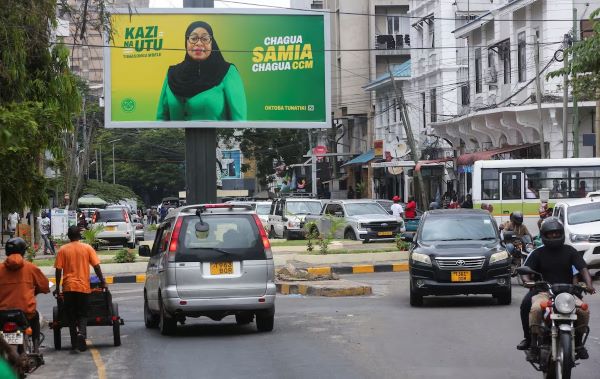
Hassan, whose posters dominate towns and villages, has been traversing the country of around 68 million people.
She has boasted about expanding road and railway networks and increasing power generation capacity. In her next term, she has promised to prioritise hiring more teachers.
Hassan won plaudits after coming to power in 2021 for easing repression of political opponents and censorship that proliferated under her predecessor, John Magufuli, who died in office.
Unexplained Abductions
But in the last two years, rights campaigners and opposition candidates have accused the government of unexplained abductions of its critics.
Hassan, one of just two female heads of state in Africa, has said her government is committed to respecting human rights and last year ordered an investigation into the reports of abductions. No official findings have been made public.
Earlier this month, the country’s former ambassador to Cuba, now a fierce critic of the government, was taken from his home by unknown assailants, his family said. Police said they were investigating.
“Authorities must end their unacceptable campaign of repression against dissent,” Amnesty said in its statement on October 20.
Tanzanian government spokesperson Gerson Msigwa said Amnesty had not asked authorities to respond before publishing the statement, though the rights watchdog said it had in fact done so.
“The brief’s portrayal of Tanzania as a country that tolerates arbitrary arrests, enforced disappearances, and suppression of freedoms is inconsistent with the legal and institutional safeguards in place,” Msigwa said in a statement.
(With inputs from Reuters)
Netherlands Election: The Main Prime Minister Candidates
Voters in the Netherlands will head to the polls on October 29 to elect parties that will form a new government and choose the next prime minister to succeed Dick Schoof.
Here is a look at the main candidates:
Geert Wilders – PVV
Far-right leader Geert Wilders, 62, has been a dominant force in Dutch politics for over 20 years, relentlessly calling for an end to all asylum migration and warning about the existential threat he says Islam poses to the Netherlands.
Opinion polls put his Freedom Party (PVV) ahead, but by a smaller margin than before.
Consistently shunned by potential coalition partners, Wilders had seemed destined for a career in opposition, until a shock win in the 2023 general election propelled PVV into government for the first time.
Lacking the support of other parties to lead government due to his radical views, Wilders sacrificed his own desire to be prime minister. The short-lived, right-wing government was instead led by Schoof.
Wilders remained in parliament, from where he sometimes openly opposed the fragile governing coalition, which struggled to agree on any major policy. He ultimately toppled the government in less than a year by suddenly demanding total support for an immigration freeze that went too far for other parties.
With PVV still leading the polls, Wilders says he will become prime minister this time, but his chances of actually joining a government look slim with major parties ruling out working with him again.
Wilders has lived under tight security for 21 years due to Islamist death threats and briefly suspended his campaign this month citing security risks.
Henri Bontenbal – CDA (Christian Democrats)
A relative newcomer to Dutch politics, 42-year-old Henri Bontenbal has revived the once powerful Christian Democrats following their demise in the 2023 election, when they fell to a historically low five seats in the 150-seat Lower House.
Campaigning on a promise for stable government, following the chaos of the PVV-dominated coalition, opinion polls rate the former energy sector consultant as the most popular candidate for prime minister, even among many who vote for other parties.
In a clear sign of his popularity, Bontenbal’s ratings also held up after he announced his party’s plan to scrap a popular tax break for homeowners, and to fund an increase in military spending through higher VAT and cuts in healthcare budgets.
Frans Timmermans – GreenLeft/Labour
Left-wing political veteran Frans Timmermans (64) is fighting for what is widely seen as his last chance to become prime minister, the job for which he left his position as vice-president of the European Commission in 2023.
But his ambition to rule the country as head of a recently merged social democrat (Labour) – environmentalist (GreenLeft) party was upended by Wilders’ stunning victory.
Timmermans campaigns on traditional left-wing values of higher minimum wages and raising corporate taxes, but he also backs tighter migration policy and increased military spending.
A former foreign minister who speaks six languages including Russian, the bearded and soft-spoken Timmermans is by far the most internationally experienced party leader. Opinion polls show around half of voters value his experience, but only a third would pick him to be prime minister.
Rob Jetten – D66
The centrist D66 party has made gains in the polls in recent weeks, driven by the energetic performance of its 38-year-old leader, former climate minister Rob Jetten.
His “Yes, we can”-like campaign messaging, promising a surge in home-building and strong education spending, has set him apart from other parties and he is considered an outsider for the premiership.
A traditional backer of European integration and climate policies, D66 is hated by many on the far right, who see it as a party serving a progressive elite. Windows at its headquarters were recently smashed during a violent anti-migration protest in The Hague.
Dilan Yesilgoz – VVD
Dilan Yesilgoz (48) in 2023 was favoured to become the first female prime minister of the Netherlands when she took over as leader of the conservative VVD from Mark Rutte, the longest-serving government leader in Dutch history and current chief of NATO.
But she has struggled to recover from the defeat by Wilders and the VVD’s decision to join the chaotic PVV-led coalition. Polls indicate the VVD could be headed for its worst result in decades.
A child of Turkish Kurdish human rights activists who fled to the Netherlands when she was 8 years old, Yesilgoz campaigns on a promise to make good on the unfulfilled aim of the last government to curb migration.
She has said she will not join another coalition with Wilders, but she also excludes working with the left-wing Timmermans.
(With inputs from Reuters)
Israel Launches Strikes In Gaza After Ceasefire Breach Claim
Israeli warplanes carried out strikes in Gaza on Tuesday after accusing Hamas of breaching a ceasefire, testing the fragile truce brokered earlier this month by US President Donald Trump.
Local health authorities said the strikes killed at least 26 people, including five in a house hit in the Bureij refugee camp in the central Gaza Strip, four in a building in Gaza City’s Sabra neighbourhood, and five in a car in Khan Younis. The attacks by Israeli planes continued into early Wednesday across the Gaza Strip, according to witnesses.
The Israeli military did not immediately comment on the strikes, the latest violence in a three-week-old ceasefire and which followed a statement by Prime Minister Benjamin Netanyahu’s office saying he had ordered immediate “powerful attacks”.
The statement did not give a specific reason for the attacks but an Israeli military official said Hamas had violated the ceasefire by carrying out an attack against Israeli forces in an area of the enclave that is under Israeli control.
“This is yet another blatant violation of the ceasefire,” the official said.
The US-backed ceasefire agreement went into effect on October 10, halting two years of war triggered by deadly Hamas-led attacks on Israel on October 7, 2023.
Both sides have accused each other of ceasefire violations.
‘Ceasefire Is Holding’
US Vice President JD Vance, part of a parade of Trump administration officials who visited Israel last week, said that despite the latest flare-up, “the ceasefire is holding”.
“That doesn’t mean that there aren’t going to be little skirmishes here and there,” he told reporters on Capitol Hill. “We know that Hamas or somebody else within Gaza attacked an (Israeli) soldier. We expect the Israelis are going to respond, but I think the president’s peace is going to hold despite that.”
Earlier on Tuesday, Israeli media reported an exchange of fire between Israeli forces and Hamas fighters in the southern Gaza city of Rafah. The Israeli military did not respond to a request for comment on the reports.
Hamas denied responsibility for an attack on Israeli forces in Rafah. The group also said in a statement that it remained committed to the ceasefire deal in Gaza.
Tuesday’s strikes on Gaza City followed what Israel called a “targeted strike” on Saturday on a person in central Gaza who it said was planning to attack Israeli troops.
Netanyahu Accuses Hamas Of Violating Ceasefire
Netanyahu said earlier on Tuesday that Hamas had violated the ceasefire by turning over some wrong remains in a process of returning the bodies of hostages to Israel.
Netanyahu said the remains handed over on Monday belonged to Ofir Tzarfati, an Israeli killed during Hamas’ October 7, 2023, attack. Tzarfati’s remains had already been partially retrieved by Israeli troops during the war.
Hamas initially said in response to this that it would hand over to Israel on Tuesday the body of a missing hostage found in a tunnel in Gaza. However, Hamas’ armed wing, Al-Qassam Brigades, said later it would postpone the planned handover, citing what it said were Israel’s violations of the ceasefire.
Late on Tuesday, Al-Qassam issued a statement saying it had recovered the bodies of two Israeli hostages, Amiram Cooper and Sahar Baruch, during search operations in Gaza.
Hamas said Netanyahu was looking for excuses to back away from Israel’s obligations.
Under the ceasefire terms, Hamas released all living hostages in return for nearly 2,000 Palestinian convicts and wartime detainees, while Israel pulled back its troops and halted its offensive.
Search For Hostage Bodies
Hamas has also agreed to hand over the remains of all dead hostages yet to be recovered, but has said it will take time to locate and retrieve the bodies amid Gaza’s ruins. Israel says the militant group can access the remains of most of the hostages.
The issue has become one of the main sticking points in the ceasefire, which Trump says he is watching closely. He has touted the truce and hostage-prisoner exchange deal as one of the top foreign policy achievements of his second term, and he and his top aides have sought to keep the ceasefire intact.
The White House did not immediately respond to a question on whether Israel notified the US before carrying out the Gaza strikes.
In Gaza City, an Israeli strike that killed four people hit a residential building near Shifa hospital, the largest operational hospital in northern Gaza. The hospital itself was also hit, according to Gaza officials, witnesses and Hamas media. Two people were wounded in an attack on a tent in Zawayda in the central Gaza Strip, according to local health authorities.
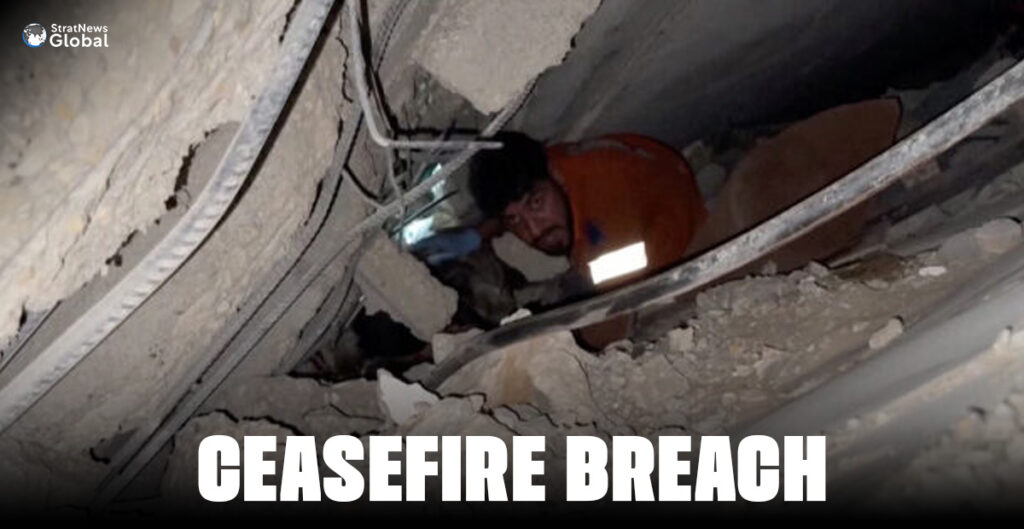
The search for hostage bodies stepped up over the past few days after the arrival of heavy machinery from Egypt. Bulldozers were working in Khan Younis on Tuesday, in the southern Gaza Strip, and further north in Nuseirat, as Hamas fighters deployed around them.
Some of the bodies are believed to be in Hamas’ network of tunnels running below Gaza.
Witnesses in Khan Younis said the Egyptian teams, working with armed Hamas fighters, were digging deep near the Qatari-funded Hamad Housing City in the western side of Khan Younis, reaching tunnel shafts.
Reuters images showed an excavation a dozen or so metres below the surface, with Hamas men at the bottom of the trench next to a tunnel opening in an apparent search for bodies.
Gaza health authorities say 68,000 people are confirmed killed in the Israeli strikes and thousands more are missing. Israel launched the war after Hamas-led fighters stormed through southern Israel, killing 1,200 people and bringing 251 hostages back to Gaza.
(With inputs from Reuters)
China’s Digital Silk Road Tightens Its Global Grip
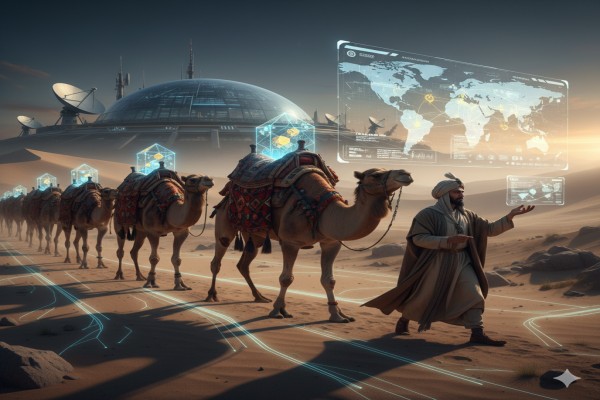
As the Digital Silk Road (DSR) marks its tenth anniversary in 2025, a new report by the Center for a New American Security (CNAS) examines how China’s decade-long drive to shape global digital infrastructure has evolved into a central pillar of its geopolitical strategy.
“Countering the Digital Silk Road”, authored by Vivek Chilukuri and Ruby Scanlon of CNAS’s Technology and National Security Program, draws on 18 months of research and over 40 expert interviews across Indonesia, Brazil, Kenya, and Saudi Arabia. The authors credit local insights gathered during field visits to these nations for grounding their analysis in emerging-market realities.
According to CNAS, the Digital Silk Road, launched in 2015 as the technology arm of the Belt and Road Initiative, has become the centrepiece of Beijing’s efforts to expand economic and strategic influence through digital infrastructure. What began as a government-driven policy has now matured into a global technology ecosystem powered by Chinese firms such as Huawei, ZTE, Alibaba, and Tencent. Despite Beijing’s public retreat from the DSR label, the initiative’s objectives have been woven into China’s broader statecraft, enabling it to dominate crucial areas of digital connectivity from telecommunications to artificial intelligence.
The report finds that China’s influence over global digital infrastructure is now both pervasive and understated. By pairing generous state financing with aggressive commercial diplomacy, Beijing has advanced a model of “technology statecraft” that often gives Chinese vendors a decisive edge in price, speed, and integration. Huawei, for instance, now operates in over 170 countries and leads the global telecommunications equipment market.
The authors argue that countering the DSR is not about rejecting all Chinese technology, but about addressing where its spread threatens U.S. interests and democratic values.
The case rests on four key concerns: the erosion of U.S. and allied market share in fast-growing digital markets; mounting cybersecurity and surveillance risks; Beijing’s growing control over next-generation technologies such as 5G, AI, and low-Earth orbit satellites; and the export of techno-authoritarian systems that erode democratic governance.
Chilukuri and Scanlon highlight how Beijing’s approach combines industrial policy, concessional financing, bundled services, and diplomatic leverage. China Exim Bank and the China Development Bank have extended billions in tied loans for projects that mandate the use of Chinese technology and services, a model the authors describe as an “Iron Triangle”.
The CNAS report identifies six key technology arenas where the U.S. and its allies are competing with China: subsea cables, next-generation telecommunications, low-Earth orbit satellites, data centres and cloud services, artificial intelligence, and smart cities. Each domain represents an essential component of the world’s digital foundation, where control over infrastructure translates directly into long-term strategic influence.
Chinese dominance in telecom equipment gives Beijing sustained leverage over countries’ communications systems, while its expanding smart city programmes and surveillance networks across Africa and Latin America have raised global concerns about data integrity and privacy.
The study turns a critical eye on Washington’s response, concluding that while awareness has grown, strategy and resources remain lacking. Despite initiatives such as the Partnership for Global Infrastructure and Investment (PGI) and the Quad’s Indo-Pacific digital programmes, CNAS finds that “ambitious rhetoric has outstripped committed resources.” Washington, the authors argue, has focused more on restricting Chinese technologies than on offering credible, competitive alternatives.
New efforts such as the State Department’s Bureau of Cyberspace and Digital Policy and the International Technology Security and Innovation Fund (ITSI) are significant, but their budgets and coordination mechanisms fall short. Successes, such as U.S. support for Costa Rica in replacing Huawei-built networks, remain the exception rather than the rule. Similar challenges face allied initiatives, including the European Union’s Global Gateway, Japan’s Official Development Assistance, and Australia’s cyber diplomacy, all of which have advanced parallel but uncoordinated agendas.
To address these gaps, Chilukuri and Scanlon urge the United States to adopt a coherent Global Technology Competition Strategy led by the State Department. The report calls for the creation of a Strategic Competition Council to align interagency efforts, consolidate and expand development and export finance institutions under a new U.S. Partnership Agency, and direct greater investment toward digital infrastructure in key emerging markets.
It also recommends quadrupling the U.S. International Development Finance Corporation’s lending capacity to $240 billion, expanding the Countering PRC Influence Fund to at least $1 billion, and updating Export-Import Bank policies to prioritise advanced technology exports.
Beyond funding, the CNAS study emphasises the need for a modernised diplomacy framework. This includes appointing ambassadors with technology expertise, deploying foreign technology officers to critical posts, and leveraging NATO member-state investment funds to build resilient digital ecosystems abroad. The authors also advocate for new strategic technology partnerships that allow foreign governments to align with the United States under shared principles of transparency, security, and trust.
The report further underscores the importance of setting global technology standards. By actively engaging in international standards bodies and shaping regulations in artificial intelligence, cybersecurity, and data governance, Washington and its allies can ensure that democratic values, not authoritarian controls, define the next phase of the digital world.
Chilukuri and Scanlon conclude that the experience of the 5G race offers a cautionary lesson: market forces alone cannot ensure U.S. and allied competitiveness. The United States, they argue, must not mimic Beijing’s state-driven model, but instead adopt “ambitious statecraft fit for an era of global technology competition”.
While acknowledging recent reforms and investments, CNAS warns that without greater resources, coordination, and long-term vision, China’s head start through the Digital Silk Road could become permanent. In their final assessment, the authors describe the DSR as a litmus test for the ability of democracies to act collectively, to compete, to innovate, and to preserve a digital future built on openness, accountability, and shared opportunity.
Trump’s Handpicked Prosecutor For Comey, James Cases Faces Legal Scrutiny
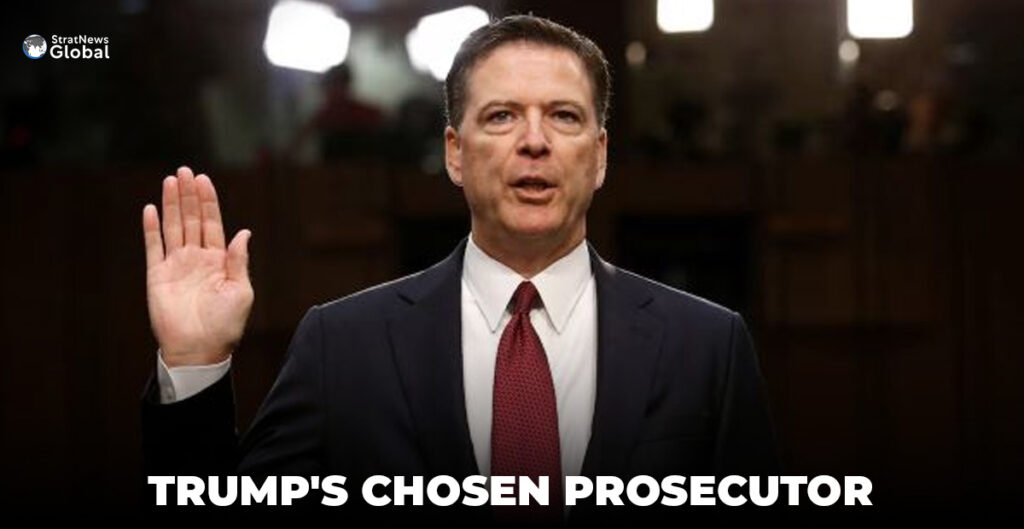
Legal experts said U.S. President Donald Trump’s decision to personally choose the prosecutor who filed charges against former FBI Director James Comey and New York Attorney General Letitia James, two of Trump’s political foes, could jeopardize the cases, as the unusual selection process may raise procedural concerns.
Both Comey and James in court filings have argued that their criminal cases must be dismissed on the grounds that the prosecutor who brought them, Lindsey Halligan, is not validly serving in her role as the interim U.S. Attorney for the Eastern District of Virginia.
“There’s a strong argument that Halligan’s appointment was invalid,” said Thomas A. Berry, a legal scholar at the Cato Institute, a libertarian think tank.
If a court comes to that conclusion, and also determines that Halligan acted alone in securing the indictments of Comey and James, those indictments “become invalid because she didn’t have lawful authority” to bring them, Berry said.
Bypassing The Senate
Trump has used legal workarounds to install loyalists in a handful of top prosecutorial jobs around the country, circumventing the traditional process of having the U.S. Senate confirm nominees. Comey and James’s defence has highlighted the pitfalls of that approach, said Patrick Cotter, a former federal prosecutor now at the law firm UB Greensfelder.
Halligan was sworn in last month, despite having no prosecutorial experience.
She has spent much of her 11-year legal career on local insurance cases in Florida state court. After meeting Trump in 2021, she represented him in a handful of lawsuits. She became a White House aide earlier this year.
Halligan’s predecessor, Erik Siebert, resigned amid pressure from Trump administration officials to bring criminal cases against James and Comey. Siebert believed the evidence against them was weak, two people familiar with the matter said at the time.
The Justice Department, which did not respond to a request for comment, is expected to submit a court filing on Nov. 3 explaining why Halligan’s appointment is lawful. In other cases involving the legality of Trump appointments, the Justice Department has said U.S. law gives the president numerous ways to appoint public officials and that Trump’s administration has carefully complied with legal requirements.
Trump Demanded Action
Hours before announcing Halligan’s appointment, Trump had urged U.S. Attorney General Pam Bondi to quickly bring criminal charges against Comey, James, and Democratic Senator Adam Schiff, who is facing a mortgage fraud investigation.
“They’re all guilty as hell…we can’t delay any longer,” Trump said in the September 20 post on Truth Social, which multiple U.S. media outlets reported was intended to be a private message to Bondi.
Comey and James have pleaded not guilty and have said they will seek dismissal of the charges on multiple grounds, including that Halligan’s appointment was invalid.
Schiff, who has not been criminally charged, has called the mortgage fraud investigation “baseless” and “politically motivated.” The investigation into Schiff is being handled by prosecutors in Maryland, so Halligan is not involved in it.
In an order memorializing Halligan’s appointment, Bondi said the legal basis for it is a statute known as Section 546 that allows for 120-day interim appointments of U.S. attorneys.
Section 546 states that, if the 120 days expire without a Senate-confirmed appointee, the federal judges in the relevant district may then appoint a U.S. attorney.
Section 546 states that, if the 120 days expire without a Senate-confirmed appointee, the federal judges in the relevant district may then appoint a U.S. attorney.
The Justice Department already used Section 546 to appoint Siebert, Halligan’s predecessor. After his 120-day interim period ended, federal judges voted unanimously to keep him in the job.
Questions About 120-Day Limit
According to some legal experts, the best interpretation of Section 546 is that it does not allow for a second interim appointment once a first interim appointee has hit the 120-day limit.
Comey adopted this position in a recent motion to dismiss his indictment, arguing that the “only logical reading” of Section 546 is that it “limits the total tenure of the Attorney General’s interim appointments to 120 days.”
Otherwise, the executive branch could keep appointing an endless stream of interim U.S. attorneys for 119 days, without ever needing Senate approval.
While Section 546 has rarely been interpreted by the courts, there is a recent opinion endorsing Comey and James’ reading of the statute.
In that decision, a judge concluded that another former Trump lawyer, Alina Habba, has been unlawfully serving as the U.S. attorney in New Jersey. Habba has appealed that decision and remains in the role while her appeal is pending.
Validity Of Appointment Rule
There is also a Justice Department memo from 1986 that interprets Section 546 the same way Comey and James do today. The author of that memo was Supreme Court Justice Samuel Alito, back when he was a young government lawyer and not the famous conservative jurist he is today.
If the appointment is ruled invalid, there is some uncertainty over what happens next and whether the James and Comey indictments need to be dismissed.
In the ruling about Habba, the judge said the Justice Department could still move forward with indictments signed by her so long as other prosecutors in her office had helped secure those indictments.
But Halligan presented both the Comey and James cases alone. That will make it more difficult for the Justice Department to revive the cases if Halligan’s appointment is ruled invalid, said Cotter, the former federal prosecutor.
Halligan’s appointment was “the executive branch removing the legislative branch from the appointment process,” he said.
“And the Constitution says you can’t do that, that they have to both be involved,” Cotter said.
(With inputs from Reuters)