

Support us by contributing to StratNewsGlobal on the following UPI ID
ultramodern@hdfcbank

Strategic affairs is our game, South Asia and beyond our playground. Put together by an experienced team led by Nitin A. Gokhale. Our focus is on strategic affairs, foreign policy and international relations, with higher quality reportage, analysis and commentary with new tie-ups across the South Asian region.
You can support our endeavours. Visit us at www.stratnewsglobal.com and follow us on YouTube, Twitter, Facebook and Instagram.
र 500 per month
र 1000 per month
र 5000 per year
र 10000 per year
Donate an amount of your choice
र 500 per month
Donate र 500 per month

र 1000 per month
Donate र 1000 per month
र 5000 per year
Donate र 5,000 per year
र 10000 per year
Donate र 10,000 per year
Donate an amount of your choice
Donate an amount of your choice
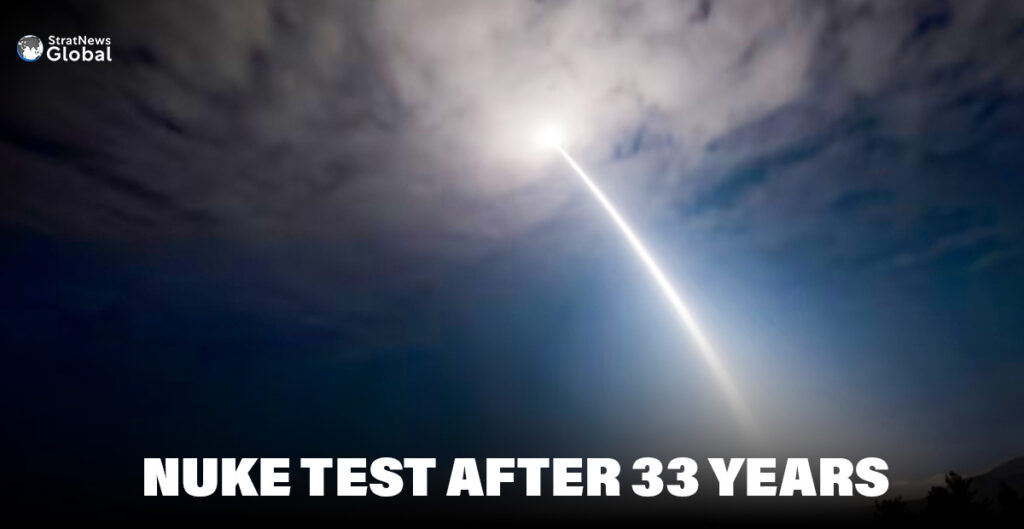

Trump Orders Immediate Resumption Of US Nuclear Weapons Testing
U.S. President Donald Trump on Thursday directed the military to immediately restart nuclear weapons testing after a 33-year hiatus, just moments before his meeting with Chinese President Xi Jinping in Seoul.
Trump made the surprise announcement on Truth Social while he was aboard his Marine One helicopter flying to meet Xi for a trade negotiating session in Busan, South Korea. He said he was instructing the Pentagon to test the U.S. nuclear arsenal on an “equal basis” with other nuclear powers.
“Because of other countries’ testing programs, I have instructed the Department of War to start testing our Nuclear Weapons on an equal basis. That process will begin immediately,” Trump posted.
“Russia is second, and China is a distant third, but will be even within 5 years.”
A senior Russian lawmaker said Trump’s decision would herald a new era of unpredictability and open confrontation, state news agency RIA reported.
China’s Foreign Ministry called for the U.S. to abide by its commitment to a moratorium on nuclear testing and uphold the global strategic balance and stability.
It was not immediately clear whether Trump was referring to nuclear-explosive testing, which would be carried out by the National Nuclear Security Administration, or flight testing of nuclear-capable missiles.
No nuclear power, other than North Korea, has carried out explosive testing in more than 25 years.
Nuclear Testing Sites To Be Determined Later
Later, on his way back to Washington, Trump said testing was needed to ensure the U.S. keeps up with its rival nuclear powers.
“With others doing testing, I think it’s appropriate that we do also,” Trump said on board Air Force One, adding that nuclear test sites would be determined later.
Asked whether the world was entering a more risky phase around nuclear weapons, Trump dismissed the threat, saying U.S. stocks were “well locked up” before adding he would welcome denuclearisation.
“I’d like to see a denuclearisation because we have so many and Russia’s second and China’s third and China will catch up within four or five years,” he said.
“We are actually talking to Russia about that, and China would be added to that if we do something.”
China’s Growing Nuclear Arsenal
Trump’s decision to restart nuclear weapons testing follows a rapid expansion by China of its nuclear stockpile in recent years, and comes just after Russia announced what it called a successful test of a nuclear-powered and nuclear-capable cruise missile as well as a nuclear-powered torpedo.
Trump addressed the Russian moves on his way to Asia earlier this week, telling reporters that Russian President Vladimir Putin should be working to end the war in Ukraine “instead of testing missiles.”
Beijing has more than doubled the size of its arsenal to an estimated 600 nuclear weapons in 2025 from 300 weapons in 2020, according to the Centre for Strategic and International Studies, a Washington-based think tank.
It said U.S. military officials estimate that China will have more than 1,000 nuclear weapons by 2030. A Victory Day parade in September revealed five nuclear capabilities that can all reach the continental United States, CSIS said.
The Washington-based Arms Control Association says the United States has a stockpile of 5,225 nuclear warheads and Russia has 5,580.
Putin said on Wednesday that Russia had successfully tested a Poseidon nuclear-powered super torpedo that military analysts say is capable of devastating coastal regions by triggering vast radioactive ocean swells.
As Trump has toughened both his rhetoric and his stance on Russia, Putin has publicly flexed his nuclear muscles with the test of a new Burevestnik cruise missile on October 21 and nuclear launch drills on October 22.
Negative Reactions To Trump’s Post
The reaction to Trump’s announcement on testing was swift. Representative Dina Titus, a Democrat from Nevada, said on X: “I’ll be introducing legislation to put a stop to this.”
Daryl Kimball, director of the Arms Control Association, said it would take the United States at least 36 months to resume contained nuclear tests underground at the former test site in Nevada.
“Trump is misinformed and out of touch. The U.S. has no technical, military, or political reason to resume nuclear explosive testing for the first time since 1992,” Kimball said on X.
Trump’s announcement could “trigger a chain reaction of nuclear testing by U.S. adversaries, and blow apart the nuclear Non-Proliferation Treaty.”
Apart from providing technical data, a U.S. test would be seen in Russia and China as a deliberate assertion of Washington’s strategic power. Putin has repeatedly said that Russia will test if the United States does.
In August, Trump said he had discussed nuclear arms control with Putin and wanted China to get involved. Beijing responded by saying it was “unreasonable and unrealistic” to ask the country to join in nuclear disarmament negotiations with the two countries, since its arsenal was much smaller.
Trump had first laid out his intention to pursue nuclear arms control efforts in February, saying he wanted to begin discussions with both Putin and Xi about imposing limits on their arsenals.
Most major nuclear powers, except North Korea, stopped explosive nuclear testing in the 1990s. North Korea conducted its last nuclear test in 2017. Russia’s last confirmed test was in 1990, followed by the last U.S. test in 1992, and by China’s in 1996.
The United States opened the nuclear era in July 1945 with the test of a 20-kiloton atomic bomb at Alamogordo, New Mexico, and then dropped atomic bombs on the cities of Hiroshima and Nagasaki in August 1945 to force Japan to surrender in World War Two.
(With inputs from Reuters)
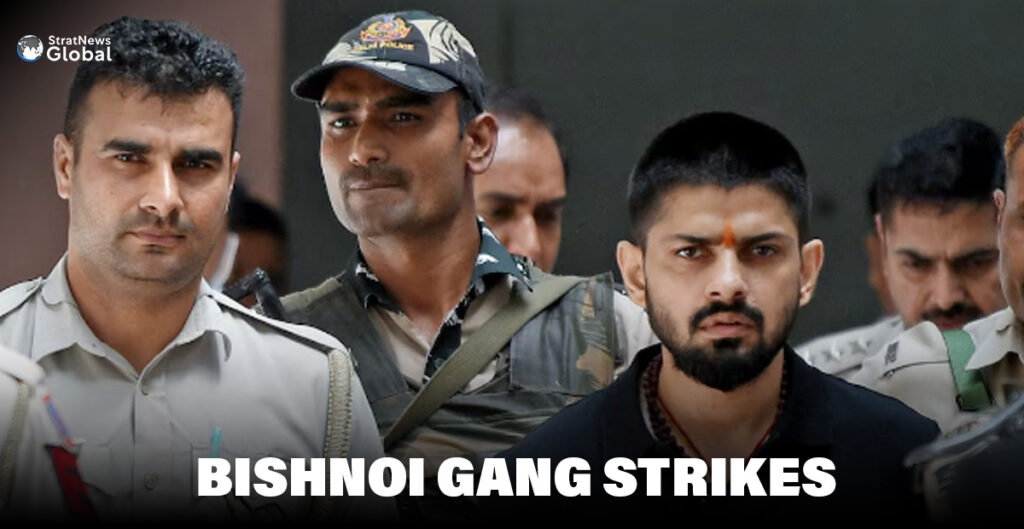
Indian-Origin Industrialist Killed In Canada, Lawrence Bishnoi Gang Takes Blame
The Lawrence Bishnoi gang has continued its violent streak in Canada, claiming responsibility for the killing of an Indian-origin industrialist from Abbotsford on Monday and for opening fire at the home of a Punjabi singer.
A day after police in Rajasthan arrested Jagdeep Singh, alias Jagga — a key Lawrence Bishnoi gang operative believed to have been operating from the U.S. — the gang has once again made headlines in Canada with two violent crimes.
Industrialist Shot Dead
In a chilling social media post, Bishnoi gang member Goldy Dhillon claimed responsibility for the killing of 68-year-old Indian-origin industrialist Darshan Singh Sahasi in Abbotsford, British Columbia.
Dhillon alleged that Sahasi was involved in the narcotics trade and had failed to pay the money the gang demanded, which, according to the post, led to his murder.
Sahasi was gunned down outside his home on Monday morning. Initial investigations suggest that the assailant had been lying in wait for him to approach his car parked near his residence. The shooter opened fire as soon as Sahasi entered the vehicle and then fled the scene.
Responding officers found Sahasi critically injured. Despite efforts by first responders to save his life, he succumbed to his wounds.
In the aftermath of the shooting, authorities imposed precautionary lockdowns at three nearby schools under “shelter-in-place” protocols. No students were harmed during the incident.
From Migrant To Industrialist
Darshan Singh Sahasi was the president of Canam International, a well-known textile recycling firm. He had immigrated to Canada in 1991 and initially worked small jobs before acquiring a stake in a struggling recycling company, which he later built into a successful global enterprise.
Beyond his business achievements, Sahasi was widely respected in the Punjabi community for his philanthropic work.
His murder has triggered grief and outrage among Indian-origin residents across Canada, with community leaders calling it a grave warning for the safety of Indian immigrants and demanding swift action from law enforcement.
Firing At Punjabi Singer’s Home
In another incident linked to the Bishnoi gang, shots were fired outside the residence of Punjabi singer Channi Nattan.
Gang member Dhillon later claimed on social media that the attack was connected to Nattan’s growing association with singer Sardar Khera.
He clarified that the gang held no personal grudge against Nattan but warned that any artist collaborating with Khera would “bear the consequences.”
The Bishnoi Network
The Lawrence Bishnoi gang, which has been designated as a terrorist organisation in Canada, is believed to have a vast international network of over 700 operatives and shooters.
Its leader, Lawrence Bishnoi, has been in Indian custody since 2014 and faces multiple criminal charges ranging from extortion and arms trafficking to murder.
The gang’s name has surfaced in several high-profile cases, including the assassination of Punjabi rapper and politician Sidhu Moosewala, threats issued to Bollywood actor Salman Khan, and alleged links with pro-Khalistan groups.
(With inputs from IBNS)
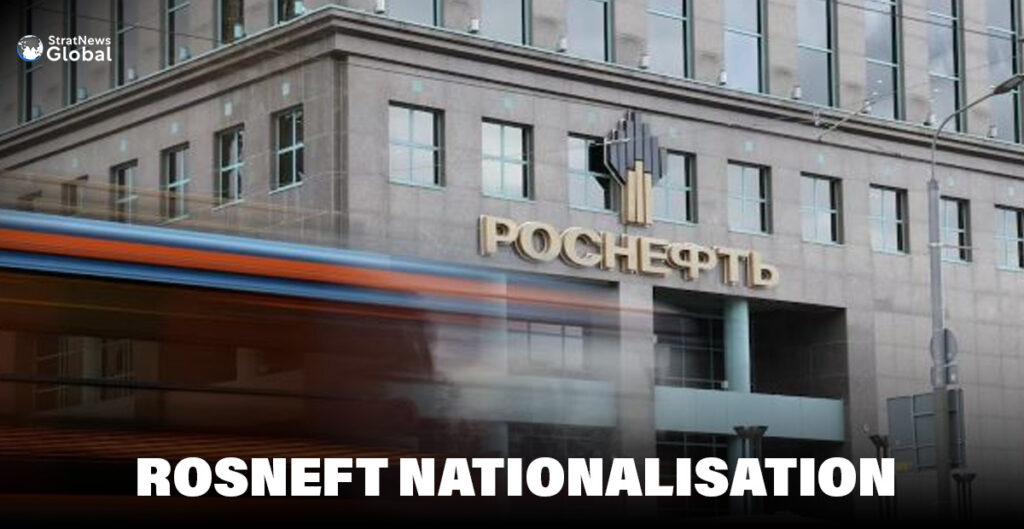
Germany Reviews Possible Rosneft Nationalisation After U.S. Sanctions: Sources
Germany has revived talks about taking control of Rosneft’s local operations after U.S. sanctions on the Russian oil firm, including a refinery that supplies most of Berlin’s fuel, according to two people familiar with the matter
The situation highlights the complex web linking Germany with Russia, which supplied Europe’s industrial powerhouse with energy in the decades leading up to the war in Ukraine.
The U.S. Treasury said on Wednesday it had issued a licence exempting Rosneft’s German arm from the U.S. sanctions until April 2026.
Securing a permanent exemption remains Berlin’s preferred option, but German officials are also examining potentially seizing the operations and selling them to a foreign investor, the two people said.
A spokesperson for the economy ministry said it had received a letter from the United States that would serve as a “temporary solution”.
Rosneft’s German arm owns a controlling stake in the Schwedt oil refinery which supplies most of Berlin’s fuel, including to its airport, petrol to pumps across eastern Germany and key ingredients to the local chemicals industry.
It also has stakes in the MiRo and Bayernoil refineries.
These assets were placed in a trusteeship giving the German government control in 2022 following Moscow’s invasion of Ukraine, which rocked Germany’s decades-long energy ties with Russia.
The trusteeship arrangement is renewed every six months but could be overturned in court because, with each renewal, the legal basis for what was supposed to be a temporary, emergency measure is examined.
So far, Berlin has shied away from seizing Rosneft’s local assets due to concerns about having to pay compensation to Moscow.
Multi-Billion-Dollar Business
Russian media have put the value of Rosneft’s German assets at around $7 billion, though one of the two sources said the true value may be less than half of that. Moscow has warned Europe against any seizure of its property. German companies with factories and other investments in Russia could bear the brunt of any response from the Kremlin.
Rosneft has been trying to sell the business since March 2024, to no avail. It did not respond to a request for comment on Wednesday.
Michael Kellner, a Green Party lawmaker in Germany’s parliament who worked in the last coalition government, overseeing Rosneft, urged the government to nationalise the business.
“It is systemically important for Germany,” Kellner said. “The government needs to nationalise Rosneft’s business in Germany in order to have certainty over its future.”
Kellner said he had wanted to nationalise the business while in government and that Qatar and Kazakhstan had signaled interest in buying it in 2024.
It is unclear, however, whether those countries were still interested.
Germany used to buy oil directly from Russia. Rosneft in Germany now buys oil from Kazakhstan. However, Russia controls the pipeline used to deliver it.
(With inputs from Reuters)
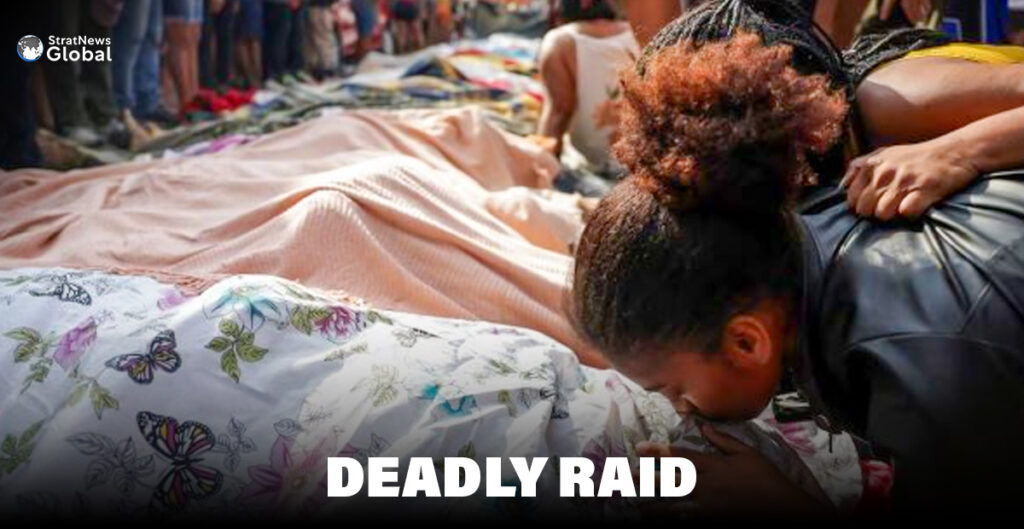
Rio Streets Strewn With Bodies Following Brazil’s Deadliest Anti-Drug Raid
At least 121 people were killed in Brazil’s deadliest-ever police operation against drug gangs, authorities said on Wednesday. In Rio de Janeiro, residents reported finding dozens of corpses lining a street overnight following the massive crackdown.
State police said the raids targeting a major drug gang had been planned exhaustively for more than two months, and were designed to drive suspects into a forested hillside where a special operations unit was waiting in ambush.
“The elevated lethality of the operation was expected but not desired,” Victor Santos, head of security for Rio state, told a news conference. He also promised an investigation into any police “misconduct.”
Rio police confirmed 121 deaths so far, including four officers. Public defenders said the final count would rise to at least 132.
Drug Violence
President Luiz Inacio Lula da Silva said the scourge of drug violence had to be confronted, calling for coordinated work that targets the gangs without putting police and innocent families at risk.
“We cannot accept that organized crime continues to destroy families, oppress residents, and spread drugs and violence throughout the cities,” he said in a post on X.
Residents of the Penha neighborhood in Rio gathered dozens of corpses from the surrounding forest overnight and lined up more than 70 of the bodies in the middle of a main street.
“I just want to take my son out of here and bury him,” said Taua Brito, a mother of one of those killed, surrounded by weeping mourners and onlookers on either side of the long row of bodies, some of which were covered with sheets or bags.
A motorcycle caravan set off from the neighborhood in the afternoon to protest the police violence outside the governor’s palace, where demonstrators gathered waving Brazilian flags stained with red palm marks.
Most Deadly Police Raid
The city’s most deadly police drug raid before Tuesday was in 2021, when 28 people were killed in the Jacarezinho neighborhood.
The latest raids were also Brazil’s deadliest ever police operation. In 1992, 111 prisoners died when Sao Paulo police stormed the Carandiru Penitentiary to put down a rebellion.
UN officials and security experts criticized the heavy casualties of the military-style operation. The United Nations human rights office said the killings add to a trend of extremely lethal police raids in Brazil’s marginalized communities.
“We remind authorities of their obligations under international human rights law, and urge prompt and effective investigations,” the agency said in a statement.
Relatives of the fallen described evidence of summary executions, including bound limbs, knife wounds and gunshots to the face and neck.
“Several families reported signs of torture on the victims’ bodies,” said Guilherme Pimentel, a human rights lawyer working with families of the deceased at Rio’s police morgue.
Those Killed Were ‘Criminals’
Santos, Rio state’s security secretary, said: “Any misconduct that may have occurred, which I believe did not happen, will be investigated.”
He said there was no connection between the violence and the global events Rio will host next week related to the United Nations COP30 climate negotiations, including the C40 summit of mayors addressing global warming and Prince William’s Earthshot Prize.
Rio Governor Claudio Castro said he was certain those killed in the operation were criminals firing guns from the forest.
“I don’t think anyone would be walking in the forest on the day of the conflict,” he told reporters, calling the raids an effort to combat “narcoterrorism.”
“The only real victims were the police officers,” he said.
The Rio state government said the operation was its largest ever to target the Comando Vermelho gang, which controls the drug trade in several favelas – poor and densely populated settlements woven through the city’s hilly oceanside terrain.
Police said they had arrested 113 suspects in the operation and seized 118 firearms.
At least 50 federal police officers would be temporarily deployed to Rio help fight organized crime, Justice Minister Ricardo Lewandowski said.
(With inputs from Reuters)
U.S., China Reach Trade Deal As Trump Slashes Tariffs To 47% Following ‘Amazing’ Meeting
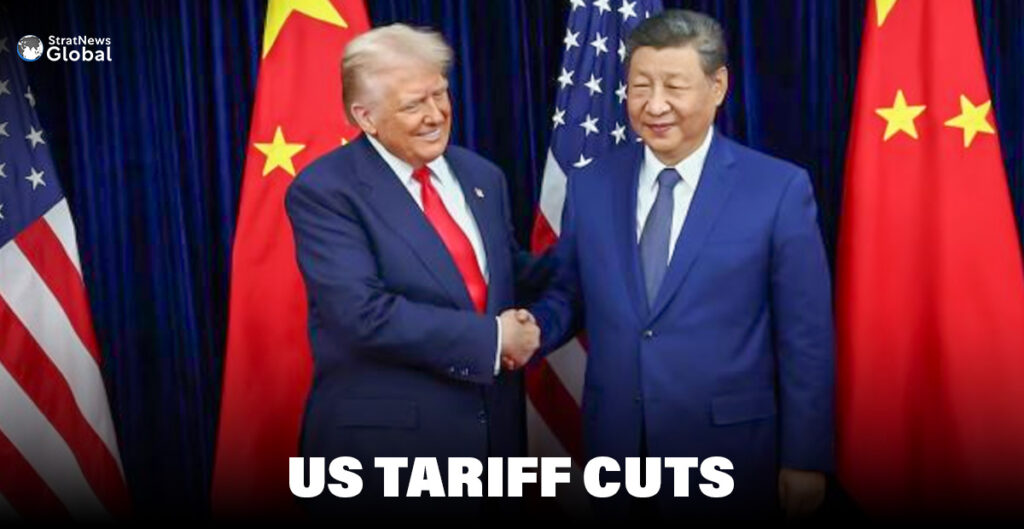
U.S. President Donald Trump said on Thursday he had agreed to cut tariffs on Chinese goods to 47% following what he called an “amazing” meeting with President Xi Jinping, in return for China resuming purchases of U.S. soybeans, continuing rare earth exports, and curbing fentanyl trafficking.
His remarks after face-to-face talks with Chinese President Xi Jinping in the South Korean city of Busan, their first since 2019, marked the finale of Trump’s whirlwind Asia trip on which he also touted trade breakthroughs with South Korea, Japan and Southeast Asian nations.
“I thought it was an amazing meeting,” Trump told reporters aboard Air Force One shortly after he departed Busan, adding that tariffs imposed on Chinese imports would be cut to 47% from 57%.
Trading in global stocks was choppy as Trump revealed details of the deal, with major Asian indexes and European futures swinging between gains and losses. China’s Shanghai Composite Index slipped from a 10-year high, while U.S. soybean futures were weaker.
Breakthrough In Trade War
World stock markets from Wall Street to Tokyo had hit record highs leading up to the meeting on hopes of a breakthrough in a trade war between the world’s two largest economies that has upended supply chains and rocked global business confidence.
The meeting, which took place on the sidelines of the Asia-Pacific Economic Cooperation (APEC) summit, lasted nearly two hours. Trump shook hands and escorted Xi to his car before the U.S. president was given a red carpet send-off at the airport.
Trump repeatedly talked up the prospect of reaching agreement with Xi since U.S. negotiators on Sunday said they had agreed a framework with China that will avoid 100% U.S. tariffs on Chinese goods and achieve a deferral of China’s export curbs on rare earths, a sector it dominates.
But with both countries increasingly willing to play hardball over areas of economic and geopolitical competition, many questions remain about how long any trade detente may last.
(With inputs from Reuters)
Trump, Xi Sound Hopeful After Talks On Trade Tensions
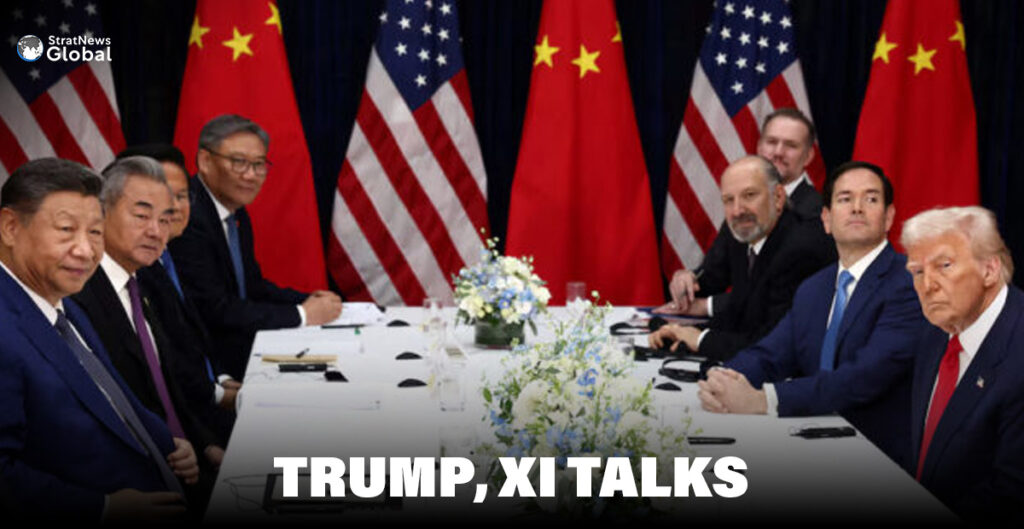
US President Donald Trump met China’s President Xi Jinping at a South Korean air base on Thursday, with both leaders expressing optimism about easing trade tensions between the world’s two largest economies.
The talks in the southern port city of Busan, their first face-to-face meeting since 2019, marked the finale of Trump’s whirlwind Asia trip on which he also touted trade breakthroughs with South Korea, Japan and Southeast Asian nations.
“We are going to have a very successful meeting, I have no doubt. But he is a very tough negotiator,” Trump said as he shook hands with Xi, who showed little emotion as Trump told reporters the pair might sign a trade deal on Thursday.
As they sat down with their delegations to begin talks, Xi told Trump via a translator it was normal for the two leading economies of the world to have frictions now and then.
‘Willing’ To Work With Trump
A few days ago, trade negotiators for both countries reached a “fundamental consensus on addressing each other’s primary concerns”, Xi said. “I am willing to continue working with President Trump to lay a solid foundation for China-US relations,” he added.
The meeting, taking place on the sidelines of the Asia-Pacific Economic Cooperation (APEC) summit, lasted nearly two hours. Trump shook hands and escorted Xi to his car before the US president was given a red carpet send off at the airport.
Neither side has yet released further details of the talks.
Chinese stocks climbed to a decade high and the yuan currency to a near one-year peak against the dollar as investors hoped for an easing of trade tensions that have upended supply chains and rocked global business confidence.
World stock markets from Wall Street to Tokyo have hit record highs in recent days.
Trump has repeatedly talked up the prospect of reaching agreement in his meeting with Xi, since negotiators from both sides appeared to reach an understanding in Kuala Lumpur on Sunday.
But with both countries increasingly willing to play hardball over areas of economic and geopolitical competition, many questions remain about how long any trade detente may last.
The trade war reignited this month after Beijing proposed dramatically expanding curbs on exports of rare-earth minerals vital for high-tech applications, a sector China dominates.
Trump vowed to retaliate with additional 100% tariffs on Chinese exports, and with other steps including potential curbs on exports to China made with US software – moves that could have upended the global economy.
“THE G2 WILL BE CONVENING SHORTLY,” Trump posted on Truth Social shortly before meeting Xi.
In a separate post, he said the US would step-up testing of nuclear weapons immediately, noting China’s growing arsenal. Trump declined to respond to a reporter’s question on the post at Thursday’s meeting.
US Expects Beijing To Delay Rare Earth Controls
After a weekend scramble between top trade negotiators, US Treasury Secretary Scott Bessent said he expected Beijing to delay the rare earth controls for a year and revive purchases of US soybeans critical to American farmers, as part of a “substantial framework” to be agreed by the leaders.
Ahead of the summit, China bought its first cargoes of US soybeans in several months, Reuters reported exclusively on Wednesday.
The White House has signaled it hopes the summit will be the first of several between Trump and Xi in the coming year, including possible leader visits to each country, indicating a protracted negotiation process.
But Trump wants some quick progress, in talks being closely watched by businesses worldwide.
Trump said on Wednesday he expects to reduce US tariffs on Chinese goods in exchange for Beijing’s commitment to curb the flow of precursor chemicals to make fentanyl, a deadly synthetic opioid that is the leading cause of American overdose deaths.
Trump has also said he might sign a final deal with Xi on TikTok, the social media app that faces a US ban unless its Chinese owners divest its US operations.
Prior Deals On Tariffs And Rare Earths Due To Expire
Previous deals, which brought down retaliatory tariffs sharply to about 55% on the US side and 10% on the Chinese side and restarted the flow of rare earth magnets from China, are due to expire on November 10.
Bessent said China had agreed to help curb the flow of fentanyl precursors, but did not say whether the US had made any concessions in return.
Beijing has sought the lifting of 20% tariffs over fentanyl, an easing of export controls on sensitive US technology, and a rollback of new US port fees on Chinese vessels aimed at combating China’s global dominance in shipbuilding, ocean freight and logistics.
Trump’s meeting with Xi comes at the end of a five-day trip to Asia in which he signed pacts with Japan and Southeast Asian nations on rare earths, seeking to blunt China’s stranglehold on minerals used in everything from cars to fighter jets.
Tensions Over Taiwan
Regional strategic tensions, particularly over Beijing-claimed Taiwan, a US partner and high-tech powerhouse, are an ominous backdrop to the summit.
On Sunday, Chinese state media said Chinese H-6K bombers recently flew near Taiwan to practise “confrontation drills.”
US Secretary of State Marco Rubio said Taiwan should not be concerned about the US-China talks, despite some experts expressing fears that Trump might offer concessions over the island. Washington is required under US law to provide Taiwan with the means to defend itself.
(With inputs from Reuters)
Putin Says Russia Has Tested Poseidon Nuclear-Capable Torpedo
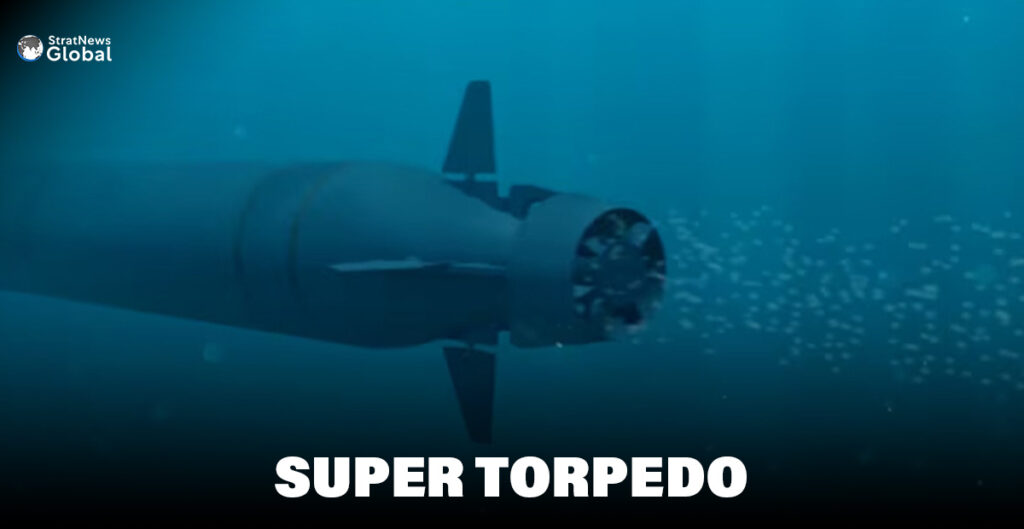
President Vladimir Putin said on Wednesday that Russia has successfully tested its Poseidon nuclear-powered super torpedo, a weapon military analysts warn could devastate coastal areas by generating massive radioactive ocean surges.
As U.S. President Donald Trump has toughened both his rhetoric and his stance on Russia, Putin has publicly flexed his nuclear muscles with the test of a new Burevestnik cruise missile on October 21 and nuclear launch drills on October 22.
There are few confirmed details about the Poseidon, named after the ancient Greek god of the sea, but it is essentially a nuclear-capable cross between a torpedo and a drone.
Putin, over tea and cakes at a hospital in Moscow with Russian soldiers wounded in the Ukraine war, said the test had taken place on Tuesday.
“For the first time, we managed not only to launch it with a launch engine from a carrier submarine, but also to launch the nuclear power unit on which this device passed a certain amount of time,” Putin said.
“There is nothing like this,” he said, adding there was no way to intercept the Poseidon, which analysts believe has a range of 10,000 km (6,200 miles) and can travel at about 185 km per hour.
The Burevestnik and Poseidon tests are intended to send a clear message that Russia, in Putin’s words, will never bow to Western pressure over the war in Ukraine.
For Trump, who has called Russia a “paper tiger” for failing to swiftly subdue Ukraine, the message is that Russia remains a global military competitor, especially on nuclear weapons, and that Moscow’s overtures on nuclear arms control should be acted on.
Poseidon And The New Nuclear Arms Race
The Poseidon is a new weapon that has appeared amid what Putin has cast as a global arms race – primarily between the United States, Russia and China – to modernise and develop their nuclear arsenals.
Poseidon, known in NATO as Kanyon, is 20 metres long, 1.8 metres in diameter and weighs 100 tonnes, according to Russian media.
Arms control experts say the weapon breaks most of the traditional nuclear deterrence and classification rules. They have estimated it would carry a two megaton warhead and perhaps is powered with a liquid-metal-cooled reactor.
Putin said Poseidon’s power exceeded that of “even our most promising Sarmat intercontinental-range missile”, which is known as SS-X-29, or Satan II.
Since first announcing the Poseidon and Burevestnik in 2018, Putin has cast them as a response to U.S. moves to build a missile defence shield after Washington in 2001 unilaterally withdrew from the 1972 Anti-Ballistic Missile Treaty, as well as to NATO’s eastern enlargement.
After Russia’s test of the Burevestnik, Trump said Putin should end the war in Ukraine instead of testing a nuclear-powered missile.
(With inputs from Reuters)
Hurricane Melissa Barrels Into Cuba After Devastating Jamaica
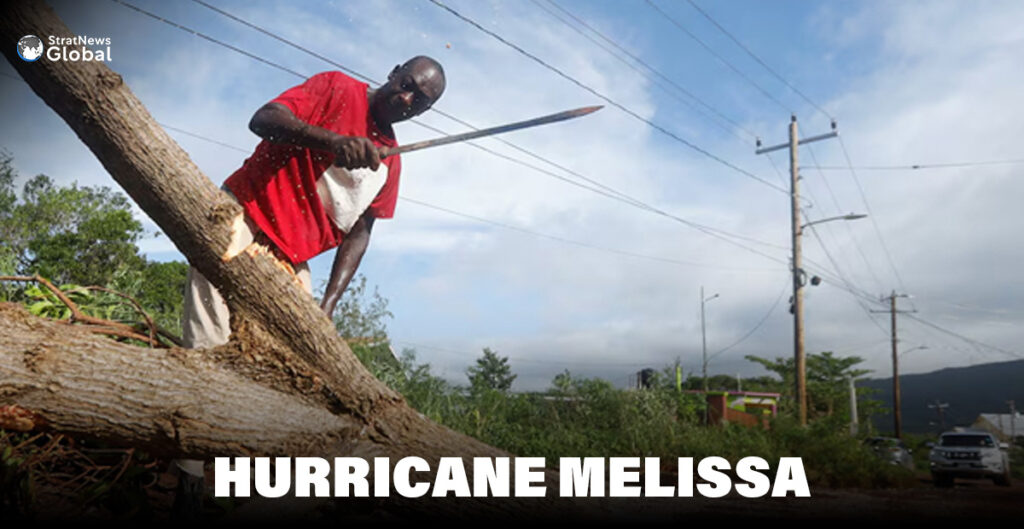
Hurricane Melissa tore through Jamaica as the most powerful storm ever recorded in the island nation, before barreling into eastern Cuba on Wednesday, battering Santiago and inundating rural areas with severe flooding.
A Category 5 storm with sustained winds of 185 mph (298 kph) when it barrelled into Jamaica, Melissa had been downgraded to a still dangerous Category 3 when it hit Cuba with sustained winds of 120 mph, the U.S. National Hurricane Centre (NHC) said.
“Life-threatening storm surge, flash flooding and landslides, and damaging hurricane winds are ongoing this morning,” the centre said.
The historic storm blasted western Jamaica, demolishing homes, knocking down swaths of trees and washing out roadways. Authorities did not yet release details of fatalities but said they expected loss of life.
Eyewitness reports and videos on social media from Jamaica showed vehicles destroyed by flying debris, hotel doors blown off hinges and roofs scattered across neighbourhoods. Video of the airport in Montego Bay showed inundated seating areas, broken glass and collapsed ceilings.
The storm was expected to weaken somewhat as it crossed Cuba, but would remain a dangerous hurricane upon reaching the Bahamas.
In eastern Cuba, around 735,000 people were evacuated from homes as the storm approached, authorities said. By mid-morning, President Miguel Diaz-Canel said Cuba had already suffered extensive damage and warned residents against letting down their guard, urging them to remain sheltered.
‘Some Loss Of Life Expected’
In southwestern Jamaica, the parish of St. Elizabeth was left “underwater,” an official said, with more than 500,000 residents without power.
“The reports that we have had so far would include damage to hospitals, significant damage to residential property, housing and commercial property as well, and damage to our road infrastructure,” Jamaican Prime Minister Andrew Holness said on CNN after the storm had passed.
The government had not yet received news of any confirmed deaths from the storm, but given the strength of the hurricane and the extent of the damage, “we are expecting that there would be some loss of life,” Holness said.
“It was so crazy. Like a freight train trying to come to a stop for eight hours,” said Journie Ealey, 34, a U.S. tourist on vacation in Jamaica, reached by phone. “I’ve never experienced anything like this before.”
Meteorologists at AccuWeather said Melissa ranked as the third most intense hurricane observed in the Caribbean, after Wilma in 2005 and Gilbert in 1988 – the last major storm to make landfall in Jamaica.
Scientists say hurricanes are intensifying faster with greater frequency as a result of warming ocean waters caused by greenhouse gas emissions. Many Caribbean leaders have called on wealthy, heavy-polluting nations to provide reparations in the form of aid or debt relief to tropical island countries.
Melissa’s winds subsided as the storm drifted past the mountains of Jamaica, lashing highland communities vulnerable to landslides and flooding.
“Our country has been ravaged by Hurricane Melissa, but we will rebuild and we will do so even better than before,” Prime Minister Holness said early on Wednesday.
U.S. President Donald Trump said Wednesday he was prepared to assist Jamaica’s recovery. The State Department said it would send search-and-rescue teams.
In the Bahamas, next in line after Cuba in Melissa’s path to the northeast, the government ordered evacuations of residents in southern portions of that archipelago.
Farther to the east, the island shared by Haiti and the Dominican Republic had faced days of torrential downpours leading to at least four deaths, authorities there said.
Cuba Hit
The storm’s centre, churning with violent wind gusts over 125 mph and heavy rain, slammed early on Wednesday into Guama, a rural, mountainous area 25 miles west of Santiago de Cuba, the island’s second most populous city.
The storm pressed on north-northeast across eastern Cuba. Authorities had shut down power to virtually all of eastern Cuba, evacuated vulnerable areas and had asked residents to shelter in place in the provincial capital, Santiago, a city of 400,000 people.
Photos and videos posted early on Wednesday on local media and eyewitness accounts in the city laid bare a chaotic scene, with downed power lines, shattered windows, trees and debris littering roadways.
In more rural areas to the west, videos showed torrents of brown rainwater rushing down roads through dark towns at the base of Cuba’s Sierra Maestra mountains. As the storm passed, winds remained too strong by mid-morning for residents to venture onto the streets.
Authorities reported widespread flooding of lowland areas early on Wednesday from Santiago to Guantanamo, where upwards of 35% of the population had been evacuated.
The timing could hardly be worse for the communist-run Caribbean island, already suffering from food, fuel, electricity and medicine shortages that have complicated life, prompting record-breaking emigration since 2021.
President Diaz-Canel said Cuba had mobilised 2,500 electric line workers who would begin recovery immediately following the storm’s passage across the island later on Wednesday.
The hurricane was not expected to directly affect the capital, Havana.
(With inputs from Reuters)
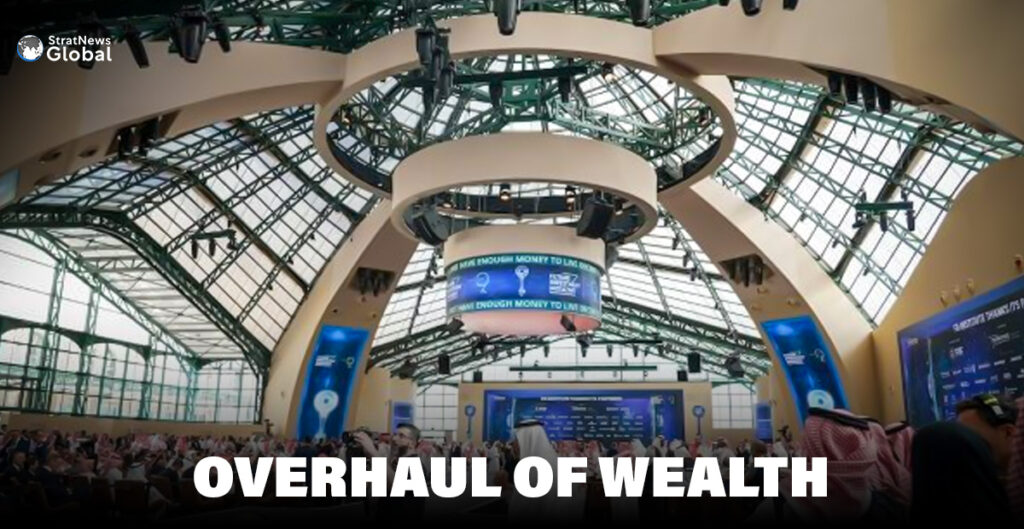
Saudi Arabia Plans Overhaul Of Wealth Fund After Gigaproject Setbacks: Sources
Saudi Arabia is preparing to redirect its $925 billion sovereign wealth fund away from the massive real estate gigaprojects that have defined its development agenda for the past decade, according to a source familiar with the plan.
Crown Prince Mohammed bin Salman, the de facto ruler of Saudi Arabia, known as MbS, introduced his Vision 2030 plan in 2016 to transform the economy with a focus on large real estate projects.
The sovereign fund, Public Investment Fund (PIF), has been the driving force for financing the plan.
The original strategy included developments such as NEOM, a futuristic city in the desert by the Red Sea, and a plan to host international winter sports in the kingdom’s northern mountains, with ski slopes largely using manmade snow.
NEOM, with a projected population of 9 million, and other projects have faced repeated delays.
New Strategy And PIF
Driven by a determination to secure more sustainable near-term returns for PIF, the new strategy aims to narrow the focus to other existing developments, such as logistics, mineral exploitation and religious tourism, said the source, who asked not to be identified due to the sensitivity of the matter.
The kingdom is also betting on investment in artificial intelligence, and data centres powered by its vast hydrocarbon and other energy resources, the source said.
PIF did not have an immediate comment on the strategy shift.
The repositioning comes as pressure mounts on PIF and its portfolio companies to generate better returns in the near term, the source said.
Analysts have said many of the gigaprojects have not yet yielded sufficient returns to justify their lofty price tags, as several remain far from completion, while other PIF investments have had a mixed track record.
PIF’s current five-year investment strategy ends this year and the fund is expected to unveil an updated strategy soon that will detail its new priorities, a banking source said.
The fund’s board in recent days approved a new “core strategy”, a separate source familiar with the matter said.
Global Logistics Hub
The new plan bets on the kingdom becoming a global logistics hub, the source with direct knowledge said, with recent disruptions in Red Sea shipping routes underscoring the importance of resilient supply chains.
The kingdom holds large undisclosed reserves of rare earth minerals, which the source said will be a focus as part of efforts to expand its mining sector.
The updated strategy also emphasizes expanding religious tourism to the holy cities of Mecca and Medina.
MbS this month announced a project at Mecca’s Grand Mosque which adds around 900,000 indoor and outdoor praying spaces.
At the kingdom’s flagship investment forum FII this week, AI dominated discussions and renderings of hyper futuristic cities adorned displays in the main auditorium, as a robot walked around the conference centre’s halls.
AI Boost
Humain, a PIF-owned AI company set to spearhead Saudi Arabia’s push into the booming sector, has said it will build around 6 gigawatts of data centre capacity. Asked about funding, CEO Tareq Amin told reporters on Tuesday: “Let’s just put it this way – everything we ask for, we get.”
The kingdom will continue to invest strongly in the oil and petrochemicals sector, while renewables will supplement this, the source said.
PIF’s annual average return between 2017 and 2024 was 7.2%, its most recent annual report shows, down from an average of 8.7% at the end of 2023 as it booked impairments on projects.
In the last year PIF has also signalled plans to scale back international investments as its gigaprojects stalled. PIF Governor Yasir Al-Rumayyan a year ago said the fund was aiming to bring international investments down to between 18% and 20% of its total portfolio from 30%.
The Red Sea Global project, a collection of ultra-luxury hotels, is among the gigaprojects farthest along but occupancy is averaging around 40%, its CEO told local media in September.
PIF also recently made a big push into gaming, a favourite pastime of MbS. PIF in September announced its backing for a $55 billion buyout of Electronic Arts, the developer behind the popular “Battlefield” and “Madden NFL” video games.
Some projects tied to global events are already delayed, most notably Trojena, which is scheduled to host the 2029 Asian Winter Games. Saudi officials are considering postponing the kingdom’s hosting of the games until 2033, according to sources.
Work on NEOM’s “The Line” – billed as an indoor city 170 kilometres long and 200 metres wide – has been scaled back to focus on completing a 2.4 km stretch to include a World Cup stadium.
(With inputs from Reuters)
Tanzania Orders Curfew After Election Violence
Violence during Tanzania’s election prompted police to announce a night curfew in Dar es Salaam on Wednesday, as President Samia Suluhu Hassan looked set for victory after the two main opposition candidates were barred from contesting.
Internet service was disrupted across the country, monitor group NetBlocks said, as videos of young protesters throwing rocks at security forces and a petrol station in flames circulated on social media.
Witnesses reported aggressive demonstrations in several neighbourhoods of Dar es Salaam, the country’s main city, including the burning of a local government office.
Video posted on X by the leading opposition party showed dozens of young men running through the streets of the northern city of Arusha, columns of dark smoke rising behind them, chanting: “We want our country!”
Protesters are angry about the banning of the two leading opposition candidates from the election and a wave of alleged abductions of government critics.
They were coordinating on the Zello app, which allows a smartphone to function like a walkie-talkie.
Government and police spokespeople did not respond to requests for comment.
The government has said the election is being conducted fairly and denied allegations of widespread human rights abuses in the run-up.
The police curfew started at 6 p.m. local time (1500 GMT), and the US embassy said American government personnel had been advised to shelter at their residences.
Protesters Angry About Candidates’ Disqualification
CHADEMA had called for protests during the election, which it said amounted to a “coronation” of Hassan, who came to power in 2021 after her predecessor died in office.
The party was disqualified in April after it refused to sign a code of conduct, and its leader Tundu Lissu was charged with treason.
The commission also disqualified Luhaga Mpina, the candidate for opposition party ACT-Wazalendo, leaving only minor parties to take on Hassan.
Turnout appeared low at polling stations, which closed at 4 p.m. Results are expected within three days.
After voting in the administrative capital Dodoma, Hassan told reporters: “I urge all Tanzanians, those who are still at home, to come out and exercise their right and vote and choose their preferred leaders.”
Voters were also choosing members of the country’s 400-seat parliament and a president and lawmakers in the semi-autonomous Zanzibar archipelago.
Government Ordered Probe Into Alleged Abductions
Hassan’s CCM, whose predecessor party led the struggle for independence for mainland Tanzania in the 1950s, has dominated national politics since it was founded in 1977.
Hassan, one of only two female heads of state in Africa, has been touring the country of around 68 million people to tout her record of expanding transport networks and increasing power generation.
She has won plaudits for easing repression of political opponents and censorship that proliferated under her predecessor, John Magufuli.
In recent years, however, rights campaigners and opposition candidates have accused the government of unexplained abductions of its critics.
Hassan said last year she had ordered an investigation into reports of abductions. No official findings have been made public.
(With inputs from Reuters)