

Support us by contributing to StratNewsGlobal on the following UPI ID
ultramodern@hdfcbank

Strategic affairs is our game, South Asia and beyond our playground. Put together by an experienced team led by Nitin A. Gokhale. Our focus is on strategic affairs, foreign policy and international relations, with higher quality reportage, analysis and commentary with new tie-ups across the South Asian region.
You can support our endeavours. Visit us at www.stratnewsglobal.com and follow us on YouTube, Twitter, Facebook and Instagram.
र 500 per month
र 1000 per month
र 5000 per year
र 10000 per year
Donate an amount of your choice
र 500 per month
Donate र 500 per month

र 1000 per month
Donate र 1000 per month
र 5000 per year
Donate र 5,000 per year
र 10000 per year
Donate र 10,000 per year
Donate an amount of your choice
Donate an amount of your choice
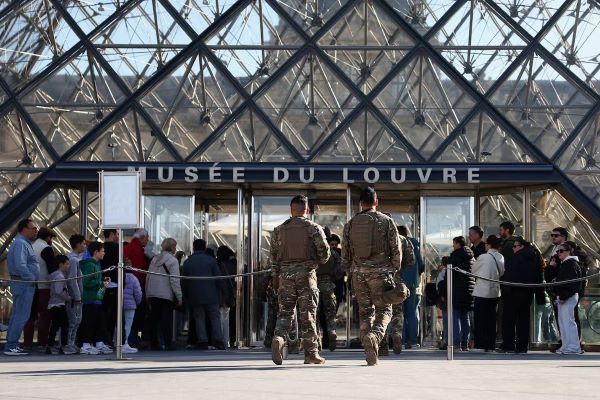

More Suspects Arrestedd In $102 Million Louvre Jewels Theft
French police have taken five additional suspects into custody in connection with the $102 million jewel theft from the Louvre’s Apollo gallery, the Paris prosecutor said on Thursday, adding that they hope the arrests will aid in recovering the stolen pieces.
Four hooded thieves made off with their booty during opening hours on the morning of October 19, exposing security lapses at the world’s most-visited museum in a brazen daylight heist that sent shockwaves around the world and prompted soul-searching in France over what some viewed as a national humiliation.
Paris prosecutor Laure Beccuau told radio station RTL on Thursday the latest suspects had been arrested in coordinated raids in Paris and its northern suburbs on Wednesday evening. One of them was identified through DNA traces left at the crime scene but it was not clear if all were suspected of direct involvement.
The investigation was gaining momentum after phones and other objects found on the suspects allowed investigators to study encrypted communications they made, she added.
Jewels Not Yet Found
Beccuau said a police unit specialised in the trafficking of cultural objects was scouring the black market to locate the stolen artifacts. She said the jewels could be used as a means to launder money or as a bargaining chip in organised crime circles.
Finding the jewels will be harder than finding the thieves, art crime experts have cautioned.
The plunder included royal necklaces, tiaras and earrings — artifacts that may now be difficult to sell on. Alternatively, their jewels, including thousands of diamonds, rubies and emeralds, could be broken up and the stones recut, and the gold melted down, in a bid to disguise their provenance.
Beccuau sought to encourage those in possession of the treasures to surrender them.
“I want to make it very clear to those who are in possession of them today that the courts would obviously take into account the fact that no loss was caused by this burglary,” she said.
Two Suspects ‘Partially Admit’ Involvement
Shortly before the latest arrests were made, Beccuau revealed that two other men detained over the weekend in connection with the heist had “partially admitted” their involvement in the robbery.
One of them, a 34-year-old unemployed Algerian national living in France since 2010, was detained by police as he tried to board a flight to Algeria.
“At that point, we obviously had to speed up the arrest operations,” Beccuau told RTL.
The other man, 39, was already under judicial supervision in an aggravated theft case, Beccuau said. Both live in Aubervilliers, a low-income neighbourhood in northern Paris.
The museum’s cameras failed to detect the intrusion swiftly enough to prevent the robbery, which took between six to seven minutes. The shortcomings forced the museum to transfer some of its most precious jewels to the Bank of France under secret police escort for safekeeping, according to RTL.
Four people carried out the robbery, but Beccuau has said she did not rule out the possible involvement of a wider network, including a person who could have ordered the theft and been the mastermind behind it.
(With inputs from Reuters)
Afghanistan, Pakistan Set To Resume Peace Talks In Istanbul, Sources Say
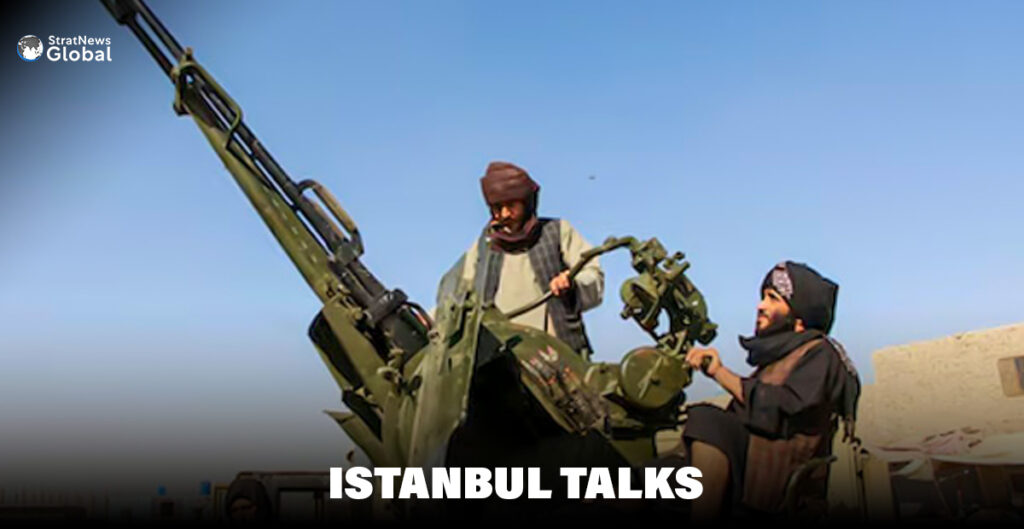
Afghanistan and Pakistan are set to resume peace talks in Istanbul, three sources said on Thursday, a day after Islamabad declared the negotiations had collapsed.
Two of the sources said the nations had agreed to recommence talks at the request of host nation Turkiye. Negotiation teams from both countries are currently in Istanbul, two of the sources said, to ensure they do not resume border clashes that have killed dozens this month.
One of the sources, a Pakistani security official, said Islamabad will press its central demand at the talks: that Afghanistan take action against militants using its territory as a safe haven and to plan attacks on Pakistani soil.
Islamabad accuses the Taliban of harbouring the Pakistani Taliban, a separate militant group hostile to Pakistan, allowing them to launch attacks from Afghanistan against Pakistani troops. Kabul denies this, saying it has no control over the group.
The sources declined to be named as they are not authorised to comment publicly on the issue.
The Afghan Taliban and Pakistan’s military and foreign office did not immediately respond to requests for comment.
Deadly Clashes
Dozens were killed this month along the border between Afghanistan and Pakistan in the worst such violence since the Taliban took power in Kabul in 2021.
The October clashes began after Pakistani air strikes this month on Kabul, the Afghan capital, among other locations, targeting the head of the Pakistani Taliban.
The Taliban responded with attacks on Pakistani military posts along the length of the 2,600-km (1,600 miles) border, which remains closed.
Both nations agreed to a ceasefire brokered in Doha on October 19, but could not find common ground in a second round of talks mediated by Turkiye and Qatar in Istanbul, Afghan and Pakistani sources briefed on the issue told Reuters on Tuesday.
Clashes between the Pakistan military and the Pakistani Taliban have continued throughout the ceasefire period, with multiple fatalities reported on both sides on Sunday and Wednesday.
(With inputs from Reuters)
Trump Says South Korea Cleared To Develop Nuclear-Powered Submarines
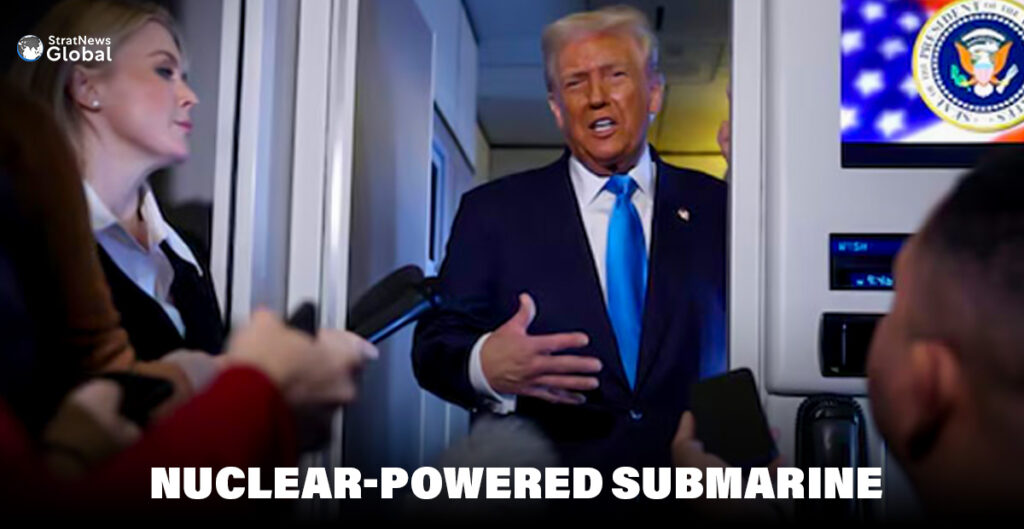
U.S. President Donald Trump said on Thursday he had authorised South Korea to develop a nuclear-powered submarine, a major step that would place Seoul among the few nations operating such advanced vessels.
The submarine will be built in a Philadelphia shipyard, where South Korean firms have increased investment, Trump wrote on social media.
“I have given them approval to build a Nuclear Powered Submarine, rather than the old fashioned, and far less nimble, diesel powered Submarines that they have now,” Trump wrote on his Truth Social platform.
The U.S. president, who met with South Korean President Lee Jae Myung and other regional leaders during his visit, also said Seoul had agreed to buy vast quantities of U.S. oil and gas.
Trump and Lee finalised details of a fraught trade deal at a summit in South Korea on Wednesday. Lee had also been seeking U.S. permission for South Korea to reprocess nuclear fuel.
Nuclear Restrictions Easing?
South Korea’s Industry Ministry said its officials had not been involved in any detailed discussions about building the submarines in Philadelphia.
While South Korea has a sophisticated shipbuilding industry, Trump did not spell out where the propulsion technology would come from for a nuclear-powered submarine, which only a handful of countries currently possess.
One opposition lawmaker said on Thursday that the Philadelphia shipyard does not have facilities to build submarines.
Asked about Trump’s submarine announcement, Hanwha Ocean, which owns the shipyard with another Hanwha affiliate, said it was ready to cooperate with both countries and provide support with advanced technology, but did not mention specifics.
Defence Minister Ahn Gyu-back told lawmakers that plans called for South Korea to build its own submarines and modular reactors, and receive a supply of enriched uranium fuel from the United States.
Seok Jong-gun, the minister for the defence acquisition program administration, told the same hearing that South Korea had been developing small nuclear reactors for some time and would be able to build one for a submarine in less than a decade, which is usually needed to develop such nuclear-powered vessels.
“We believe if we use the technologies we have been preparing for the future … we’ll be able to achieve this within a short period of time,” he said.
The United States has been working with Australia and Britain on a project for Australia to acquire nuclear-powered submarines involving technology transfers from the United States.
The United States has so far only shared that technology with Britain, back in the 1950s. Lee said when he met Trump on Wednesday that allowing South Korea to build several nuclear-powered submarines equipped with conventional weapons would significantly reduce the burden on the U.S. military.
He also asked for Trump’s support to make substantial progress on South Korea being allowed to reprocess spent nuclear fuel, or on uranium enrichment, something currently not allowed under the nuclear agreement between the two countries, even though South Korea possesses nuclear reactors to generate power.
Chinese foreign ministry spokesperson Guo Jiakun said Beijing “hopes that South Korea and the United States will earnestly fulfil their nuclear non-proliferation obligations and do things to promote regional peace and stability, and not the other way around”.
Approval Raises Questions
Lee’s predecessors had wanted to build nuclear-powered submarines, but the United States had opposed this idea for decades. Daryl Kimball, executive director of the Washington-based Arms Control Association, said the issue of South Korea acquiring such submarines “raises all sorts of questions”.
“As with the AUKUS deal, (South Korea) is probably looking for nuclear propulsion services suitable for subs, including the fuel, from the U.S,” he said. Kimball said such submarines usually involved the use of highly-enriched uranium and would “require a very complex new regime of safeguards” by the International Atomic Energy Agency, which has a key role in implementing the Treaty on the Non-Proliferation of Nuclear Weapons (NPT).
“It remains technically and militarily unnecessary for South Korea to acquire the technology to extract weapons-usable plutonium from spent fuel or to acquire uranium enrichment capabilities, which can also be used to produce nuclear weapons,” he said.
“If the United States seeks to prevent the proliferation of nuclear weapons worldwide, the Trump administration should resist such overtures from allies as strongly as it works to deny adversary access to these dual-use technologies.” Kim Dong-yup, a North Korea studies professor at Kyungnam University, said the Lee-Trump summit had formalised a “transaction scheme of security guarantees and economic contributions” for maintaining the extended deterrence and alliance in exchange for South Korea’s increased defense spending and nuclear-powered subs and U.S. investments.
“In the end, this South Korea-U.S. summit can be summarised in one word: the commercialisation of the alliance and the commodification of peace,” he said. “The problem is that the balance of that deal was to maximise American interests rather than the autonomy of the Korean Peninsula.”
(With inputs from Reuters)
Heat, Floods, and Cyclones: New Risks Shaping India’s Economy
India is seeing a spurt in extreme weather events like frequent heat and cold waves, excessive and erratic rainfall, cloudbursts triggering floods and landslides and so on.
It is estimated that in 2024 some part of India experienced extreme weather for little under 300 days.
This is almost the entire year!
Remember, Calcutta nearly drowned last month, when it was struck by a cloudburst.
Why is this happening?
How can businesses and the Indian economy cope with climate risk?
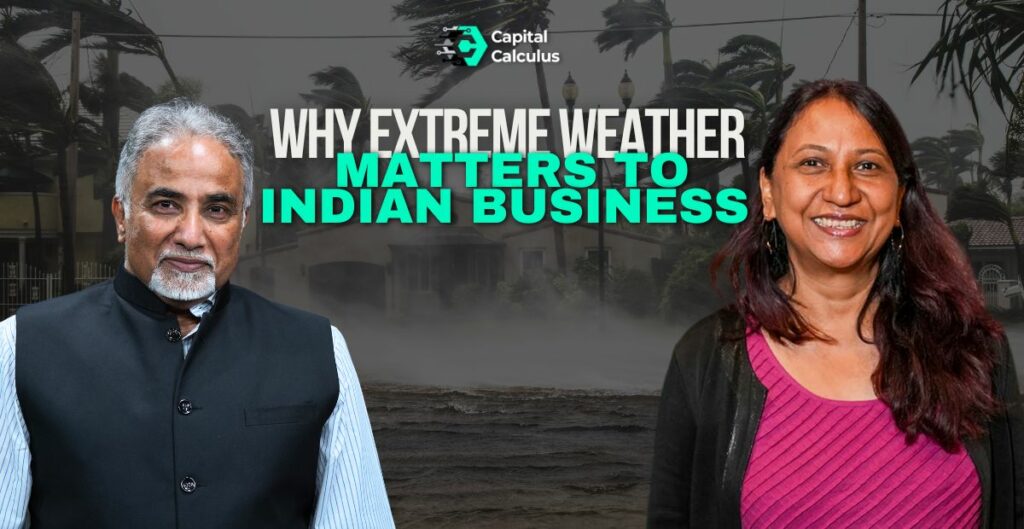
To help unpack this vexing challenge StratNewsGlobal.Tech spoke to Prarthana Borah on Capital Calculus.
She is a sustainability expert, the former Country Director, CDP and at present VP Sustainability at Momentum.
Hurricane Melissa Ravages Caribbean Islands, Gains Strength On Path Toward Bermuda
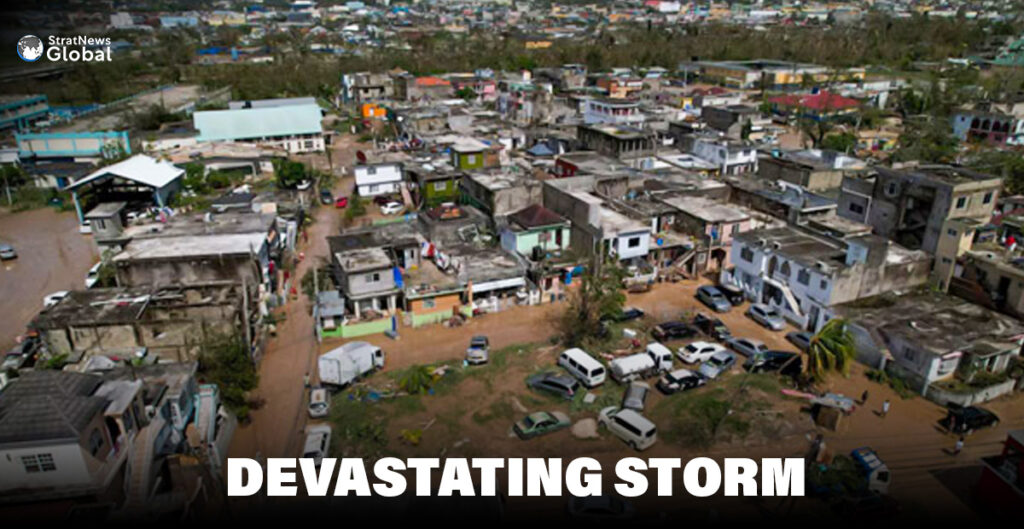
Hurricane Melissa tore through the northern Caribbean on Thursday, accelerating across the open ocean toward Bermuda after leaving behind widespread destruction and powerful winds that battered Jamaica, Cuba, and Haiti.
People across the Bahamas and nearby Turks and Caicos hunkered down as the passing storm pummelled them with dangerous gusts and rain. Around 700 miles (1,100 km) northeast of the storm’s last position, Bermudans prepared for its approach, expected by the evening.
Authorities across the region, struggling to keep track of the devastation, confirmed 25 deaths in Haiti – 10 of them children – and four in Jamaica.
As of 0900 GMT, Melissa was packing winds of close to 105 miles per hour (165 kph), according to the U.S. National Hurricane Centre (NHC), downgraded from its height to a Category 2 storm.
Wading Barefoot Through MUD
It was expected to continue accelerating northeastward and “pass to the northwest of Bermuda” later on Thursday, before likely weakening on Friday, the Florida-based forecaster said.
Hurricane Melissa struck Jamaica on Tuesday as the strongest-ever hurricane to directly hit its shores, with sustained winds of 185 mph, far above the minimum strength for a Category 5, the strongest classification for hurricanes.
In a neighbourhood of the island‘s Montego Bay, 77-year-old Alfred Hines waded barefoot through thick mud and debris as he described his narrow escape from the rising floodwaters.
“At one stage, I see the water at my waist and (after) about 10 minutes time, I see it around my neck here and I make my escape,” he told Reuters on Wednesday.
“I just want to forget it, and things come back to normal.”
Evacuations And Floods
U.S. forecaster AccuWeather said Melissa was the Caribbean’s third-most intense recorded hurricane, as well as its slowest-moving, which made it particularly destructive.
Across the Bahamas archipelago, the government flew out nearly 1,500 people as the storm approached, in what it called one of its largest evacuation operations.
The storm did not directly hit Haiti, the Caribbean’s most populous nation, but lashed it with days of rain. Authorities reported at least 25 deaths, largely due to floods in Petit-Goave, a coastal town 64 km west of the capital, where a river burst its banks.
At least 10 children were killed and 12 people are missing there, Haiti’s disaster management agency said, adding that more than 1,000 homes have been flooded nationwide and nearly 12,000 people have been moved into emergency shelters.
In Cuba, at least 241 communities remained isolated and without communications on Wednesday following the storm’s passage across Santiago province, according to preliminary media reports, affecting as many as 140,000 residents.
Across eastern Cuba, authorities evacuated around 735,000 people as the storm approached.
(With inputs from Reuters)
APEC Summit In Seoul Nears Consensus Following Trump’s Departure
Member nations of the Asia-Pacific Economic Cooperation (APEC) forum are nearing agreement on a joint declaration ahead of the annual summit in South Korea beginning Friday, South Korea’s foreign minister said on Thursday.
APEC is a non-binding 21-member forum accounting for 50% of global trade and 61% of GDP, and this year’s meeting has been overshadowed by U.S. President Donald Trump’s protectionist policies.
“We are very close,” Minister Cho Hyun said at a joint briefing with Minister for Trade Yeo Han-koo, after chairing a ministerial meeting held ahead of the leaders’ summit.
Cho said negotiations were still taking place on a joint statement even for the ministerial meeting itself, but added that he was hopeful it would be adopted together with a leaders’ declaration when the summit concludes on Saturday.
Trump left the country on Thursday, after striking a trade deal with China earlier in the day. He also formalised a deal on tariffs with South Korea on Wednesday, after reaching a slew of trade agreements on the sidelines of a Southeast Asia summit in Malaysia earlier in his Asia trip.
“It is in line with our interest for the U.S. and China to find a balance and stabilise supply chains and other issues,” Yeo said, referring to South Korea’s two biggest trading partners.
China Urges Stronger Regional Trade Ties
China pressed on Monday for open trade and stronger economic ties at a Southeast Asian summit, where the U.S. was represented by two lower-profile officials as Trump left for Japan to meet its new prime minister.
Yeo said South Korea supported multilateralism, and most member countries agree that there are challenges such as protectionist measures, non-tariff barriers and economic as well as security uncertainties.
Cho said tariffs were not the only problem disturbing the global trade order. There were several issues, such as problems facing global value chains, he said.
APEC failed to adopt a joint declaration in 2018 and 2019, during Trump’s first presidency.
(With inputs from Reuters)
Russia Pounds Ukraine’s Energy Grid With Overnight Strikes, Three Killed
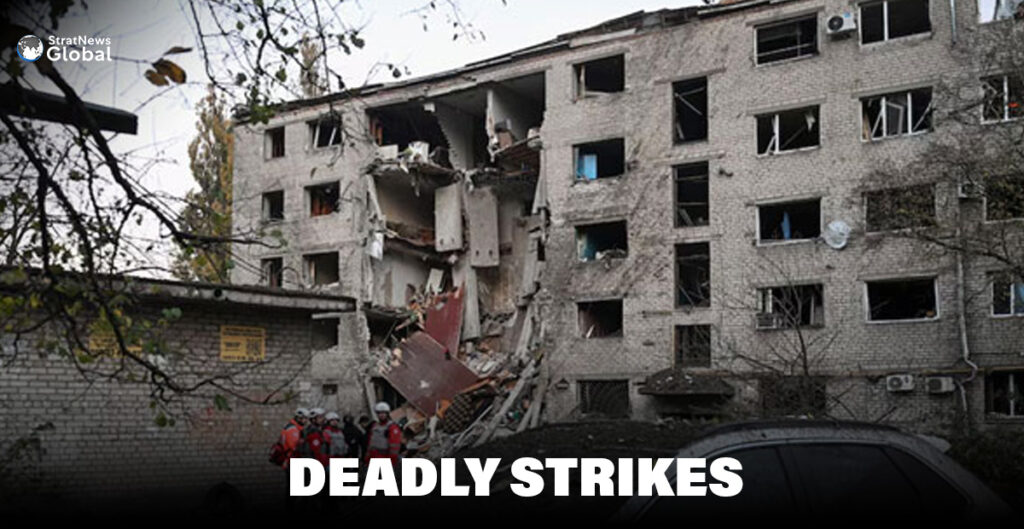
Russia unleashed a wave of drone and missile strikes on Ukraine’s energy infrastructure overnight, triggering nationwide power cuts and killing three people, including a child, in Zaporizhzhia, officials said on Thursday.
Prime Minister Yulia Svyrydenko accused Moscow of targeting Ukrainian people and power supplies as the cold winter months approached.
“Its goal is to plunge Ukraine into darkness. Ours is to preserve the light,” Svyrydenko said on the Telegram app. “To stop the terror, we need more air defence systems, tougher sanctions, and maximum pressure on the aggressor.”
Moscow denies targeting civilians and has said its strikes are responses to Ukraine’s attacks on Russian infrastructure. Ukraine has launched regular drone attacks on military and oil sites as it fights Russia’s almost four-year-old invasion.
‘There Have Been Hits’
Ukrainian President Volodymyr Zelenskyy said Russia launched more than 650 drones and 50 missiles overnight. “Many were shot down, but unfortunately, there have been hits,” he wrote on X.
The attacks hit energy facilities in central, western and southeastern regions, Ukrainian officials said.
The energy ministry announced nationwide limits on electricity supplies to retail and industrial consumers. In some regions, water supplies and heating were also disrupted.
Regional officials said two energy facilities in the western Lviv region had been damaged. DTEK, the largest private energy company, said its thermal power stations in a number of regions were under attack.
Three people, including a child, were killed and five children were among the 15 wounded in strikes on the southeastern industrial city of Zaporizhzhia, its governor, Ivan Fedorov, said.
The attacks damaged five apartment blocks and infrastructure, he added. “People have acute reactions to stress, wounds, concussions, bruises and fractures”.
State-owned railway Ukrzaliznytsia reported power cuts in the southern region of Mykolaiv that delayed trains.
(With inputs from Reuters)
US Grants India Six-Month Sanctions Waiver for Chabahar
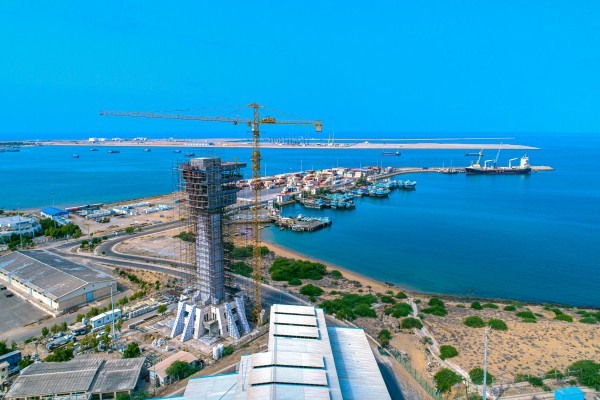
The United States has granted India a six-month exemption from sanctions on Iran’s Chabahar port, effective October 29, enabling New Delhi to continue operations and development work at the strategically significant maritime facility.
At the Ministry of External Affairs (MEA) weekly briefing, spokesperson Randhir Jaiswal confirmed that the waiver, valid until April 2026, will allow India Ports Global Private Limited (IPGPL) to maintain management of the Shahid Beheshti terminal at Chabahar.
“We can confirm that India has received a six-month waiver from the United States for the Chabahar port project,” Jaiswal said.
During the same briefing, Jaiswal also said India is reviewing the implications of recent US sanctions on Russian oil companies. “We are studying the implications of the recent US sanctions on Russian oil companies. Our decisions naturally take into account the evolving dynamics of the global market,” he stated, adding that India’s energy strategy remains focused on securing affordable and reliable supplies.
“Our position on the larger question of energy sourcing is well known. We are guided by the imperative to secure affordable energy from diverse sources to meet the energy security needs of our 1.4 billion people,” he added.
Located in Iran’s Sistan-Balochistan province along the Gulf of Oman, the Chabahar port serves as a crucial trade route for India to access Afghanistan and Central Asia, bypassing Pakistan. It also forms a key link in the International North-South Transport Corridor (INSTC), designed to connect India with Russia through Iran and the Caucasus.
The waiver took effect on October 29, following Washington’s earlier decision in September 2025 to revoke the previous exemption as part of its “maximum pressure” campaign against Tehran. The latest move effectively reinstates the waiver, ensuring India’s operational continuity at the port.
In May 2024, India signed a 10-year agreement with Iran to operate the Shahid Beheshti terminal through IPGPL, replacing an annual renewal system. The long-term lease provides greater stability for investors and ensures uninterrupted management. Since India began managing the terminal in 2018, more than five million tonnes of cargo have been handled through Chabahar.
The port’s proximity—just 172 kilometres from Pakistan’s China-backed Gwadar port—underlines its strategic value in India’s regional connectivity and outreach efforts.
US sanctions on Iran are grounded in the Iran Freedom and Counter-Proliferation Act of 2013, which authorises Washington to penalise entities engaging with key sectors of Iran’s economy. A waiver for Chabahar was first issued in 2018 to facilitate Afghanistan’s reconstruction and humanitarian trade but was withdrawn after the Taliban’s return to power in 2021.
The latest six-month reprieve indicates Washington’s acknowledgement of Chabahar’s ongoing strategic importance and India’s stabilising role in the region, particularly as China expands its presence in Iran under their 25-year strategic cooperation agreement.
For India, the waiver offers space to strengthen port operations, further integrate Chabahar with the INSTC, and sustain engagement with Tehran without breaching US sanctions. However, the limited duration highlights the continued need for careful diplomatic navigation.
Dutch Far Right Suffers Setback In Election, Paving Way For Centrist Coalition Talks
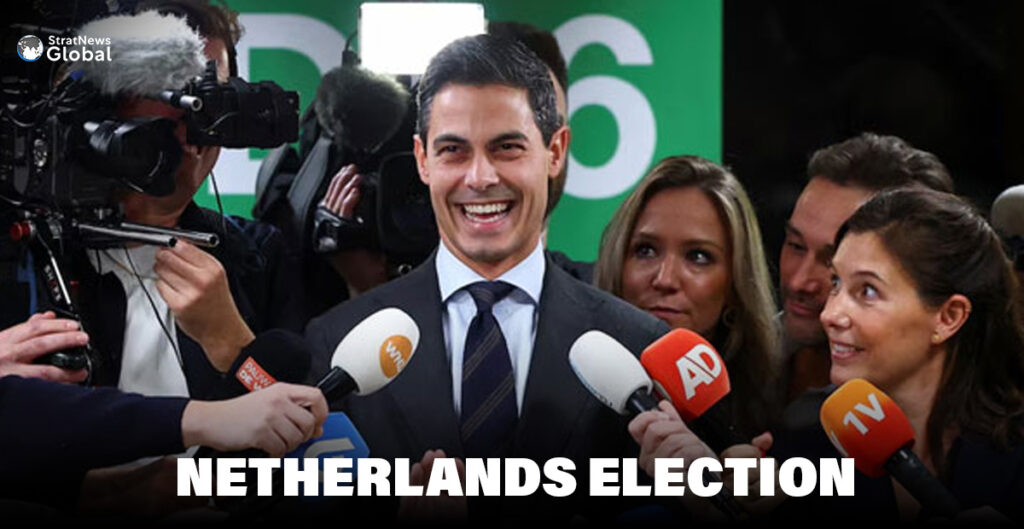
The Netherlands appears poised for a centrist-led government likely excluding the far right, after Geert Wilders’ Freedom Party lost ground and support shifted toward the liberal D66, positioning its openly gay leader as a potential next prime minister.
With most of the votes counted from Wednesday’s election, Rob Jetten’s D66 and Wilders’ PVV were tied early on Thursday, with both projected to take 26 seats in the 150-seat lower house of parliament.
That was a sharp drop for the far right, even if it was tied for first spot, as it lost over a quarter of its seats in two years, while D66 tripled its score.
The Dutch election was seen as a test of whether the far right can expand its reach or whether it has peaked in parts of Europe.
The outcome suggests there are some limits to its appeal, but also that it is an enduring part of the European political landscape at a time when many other parties have toughened their stance on immigration.
Turning The Page?
All major mainstream parties have ruled out governing with Wilders this time after he brought down the last coalition, which was led by his own party.
This leaves him no viable path to a majority, unlike D66’s young leader Jetten.
“We’ve shown not only to the Netherlands, but also to the world that it is possible to beat populist and extreme-right movements,” Jetten told the crowd at his party’s election-night celebration.
Tough Coalition Talks Ahead
For Wilders, Wednesday’s outcome was well below the 37 seats the anti-immigration PVV won in the previous election in 2023.
But it was also the first time that there was a tie between the top two parties. With less than 3,000 votes between the top two, it could take days for a winner to emerge.
That could further delay and complicate coalition talks, which usually take months in the Netherlands.
Traditionally, the party with the most votes is first tasked by parliament with trying to form a government.
On Wednesday evening, exit polls and early results had indicated a narrow victory for the progressive D66, with Wilders’ party trailing in second place. But vote counting later indicated a slightly stronger showing for PVV.
Wilders Says It’s Not Over Yet
With mainstream parties having ruled out a coalition with Wilders, that puts Jetten in pole position to form a government and become the country’s youngest prime minister.
“I’m very excited that we’re going to have the first homosexual prime minister in the Netherlands and also one that is combining all the positive forces,” Lotte van Slooten, a 25-year-old voter, said at the D66 rally.
Wilders said he would take the lead in forming a government if the PVV ultimately came out on top, however.
“As long as it’s not 100% clear, D66 can’t take the lead. We will do everything we can to prevent that,” he said in a post on X.
Counting of ballots was still under way, but with 98.8% of votes accounted for, it was not expected to change the fact that the two biggest parties are tied for the top spot.
However, voters can still expect a long wait before having a new government.
“With the outcome, it’s difficult to form a coalition, which we need, of course, to run the country in a stable way,” said 61-year-old auditor Herman van Meel, 61, who welcomed the fact that Wilders’ party had a lower score than in 2023.
(With inputs from Reuters)
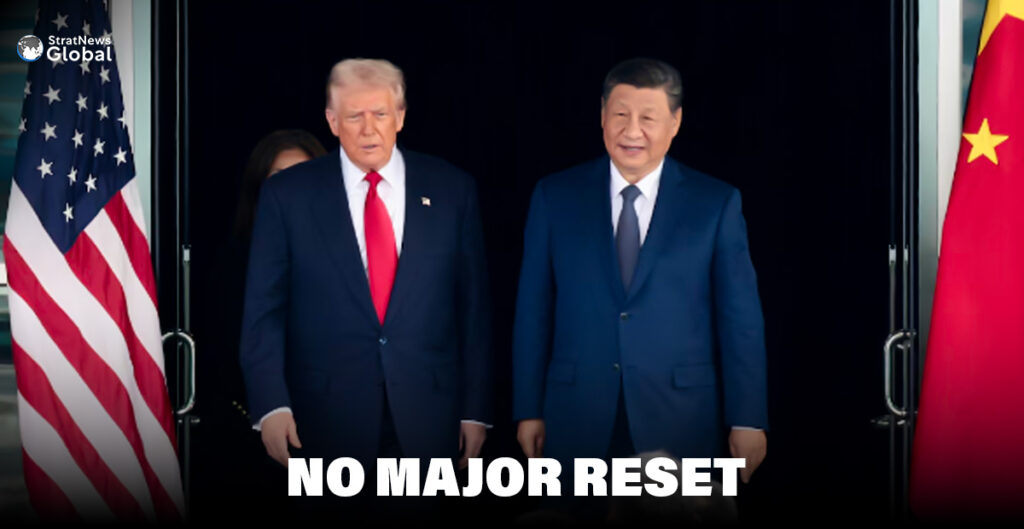
Trump-Xi ‘Amazing’ Summit Yields Tactical Truce But No Major Breakthrough
U.S. President Donald Trump described his meeting with China’s Xi Jinping as “amazing” and rated it “12 out of 10,” yet the agreement they reached amounted to little more than a temporary truce in a trade war whose deeper issues remain unsettled.
The framework announced on Thursday – that includes China resuming soybean purchases, suspending its rare earths export curbs for a year, and the U.S. lowering tariffs on China by 10% – broadly rewinds ties to the status that existed before Trump’s “Liberation Day” offensive triggered tit-for-tat escalation.
But the deal exposes the fundamental mismatch between what Washington wants and what Beijing is willing to offer. Absent from the talks were the big issues cited by Trump as he launched his tariffs in April – China’s industrial policies, manufacturing over-capacity, and its export-led growth model.
“So what are we talking about? We are talking about de-escalation of the measures that both sides have taken since the start of the Trump administration in this kind of escalating trade war,” said Emily Kilcrease, director at the Centre for a New American Security.
The outcome underscores the robustness of Xi’s new approach to dealing with the U.S., which relies on a broad toolbox of measures like export controls, swiftly deployed in response to each move by the Trump administration.
An official briefed on the deliberations said the Chinese had a realistic set of expectations for this encounter – and those did not include a fundamental reset of two-way ties.
They were nonetheless happy with Trump’s tone coming in and his framing of the meeting as a “G2”, said the official, who declined to be named or further identified because he was not authorised to speak to the media.
China sees this as a stepping stone to a bigger meeting where they can stabilise the relationship, the official added.
‘World-Class Leaders’
Given the long-simmering tensions, the very fact that both leaders had a warm meeting – and agreed to two follow-up visits next year – offers rattled multinational corporations caught in the middle a much-needed reprieve, say experts.
Xi opened the talks, which took place ahead of the Asia-Pacific Economic Cooperation summit, by saying that “China’s development and rejuvenation are not incompatible with President Trump’s goal of ‘Making America Great Again’.”
He added that he was willing to work with Trump to “lay a solid foundation for China-U.S. relations and create a favourable environment for the development of both nations.”
Trump emerged from the encounter glowing, chit-chatting and leaning into Xi as both left the venue, later calling him the “great leader of a great country,” and saying that this is how two global superpowers should deal with one another.
“When we have this limited time frame, the deal and the deal-making structure both function as an engagement mechanism between the two countries, so they can address the issues properly and adjust their mutual interests down the road to make sure people keep talking to each other,” said Bo Zhengyuan, Shanghai-based partner at research consultancy Plenum.
Trump said that tariffs on Chinese imports would be cut to 47% from around 57% by halving the rate of levies related to trade in fentanyl precursor chemicals to 10% from 20%.
Xi will work “very hard to stop the flow” of the chemicals used for the production of the deadly opioid that is the leading cause of American overdose deaths, Trump said, acknowledging that the issue was complex. The tariff was reduced “because I believe they are really taking strong action,” he added.
China’s Foreign Minister Wang Yi emphasised that Trump and Xi were “world-class leaders” in a Monday call with his U.S. counterpart Marco Rubio.
“Their long-term engagement and mutual respect have become the most valuable strategic asset in U.S.-China relations,” he told his American counterpart, in unusually effusive language for a Chinese diplomat.
‘Difficult Situation’
The deal buys both sides some breathing room: Trump gets a win before his planned visit to Beijing in April, Xi gets relief from elevated U.S. tariffs that have put pressure on Chinese manufacturers.
But even this tactical detente is incomplete.
China’s latest rare earths licensing curbs are delayed, not dismantled, but earlier restrictions on the critical minerals that have upended global trade remain, leaving U.S. factories facing ongoing uncertainty in sourcing critical materials.
“I think that what we’ve seen this year has been a more or less total vindication of China’s strategy of never striking first but always striking back,” Joe Mazur, geopolitics analyst at Trivium China, a consultancy.
“It’s very clear that rare earths is the primary piece of leverage, the ace in the hole that China is able to wield over the U.S. – it doesn’t look like the U.S. has any comparable leverage or any way of breaking the stranglehold for the time being.”
The agreement also highlights how dramatically the relationship between the world’s two biggest economies has deteriorated since Trump’s first term, when negotiators produced a comprehensive 96-page document covering intellectual property, banking, and agriculture.
This time around, the talks were far less intensive, and both sides only offered relatively brief readouts that mostly focused on holding back threats made in the run-up to the talks.
Da Wei, the director of Tsinghua University’s Centre for International Security and Strategy, warned that repeated escalations could exhaust Xi and Trump’s personal rapport.
“If the escalation of tensions happens many times, probably the patience and trust between the two leaders at a personal level will run out,” he said. “Then we will have a very difficult situation.”
(With inputs from Reuters)