

Support us by contributing to StratNewsGlobal on the following UPI ID
ultramodern@hdfcbank

Strategic affairs is our game, South Asia and beyond our playground. Put together by an experienced team led by Nitin A. Gokhale. Our focus is on strategic affairs, foreign policy and international relations, with higher quality reportage, analysis and commentary with new tie-ups across the South Asian region.
You can support our endeavours. Visit us at www.stratnewsglobal.com and follow us on YouTube, Twitter, Facebook and Instagram.
र 500 per month
र 1000 per month
र 5000 per year
र 10000 per year
Donate an amount of your choice
र 500 per month
Donate र 500 per month

र 1000 per month
Donate र 1000 per month
र 5000 per year
Donate र 5,000 per year
र 10000 per year
Donate र 10,000 per year
Donate an amount of your choice
Donate an amount of your choice
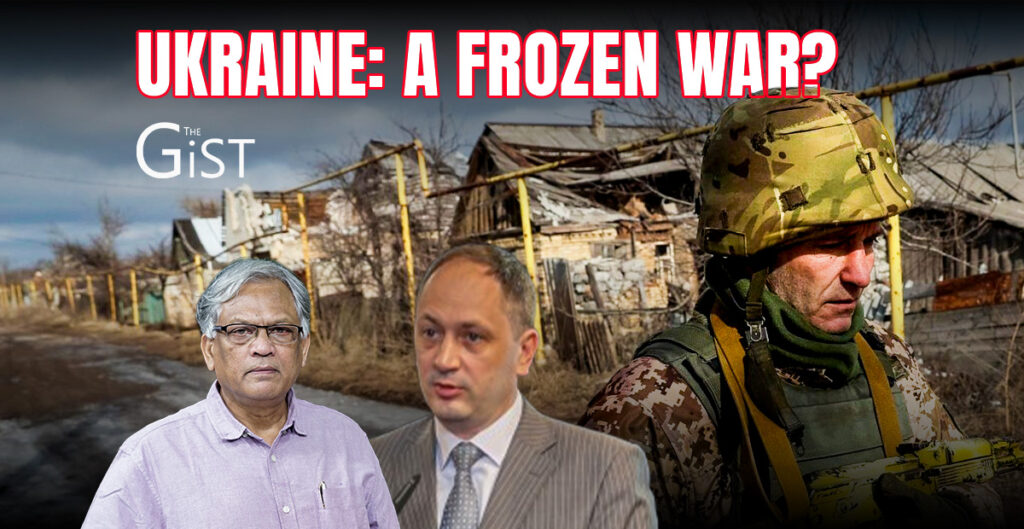


India Could Have Been Mediator In Russia-Ukraine Conflict: Vadym Chernysh
“We believe that India could have been a mediator or a kind of main negotiator in the process to settle the conflict by engaging with the two parties, Russia and Ukraine. But now it’s gone completely,” says Vadym Chernysh, former Ukrainian minister and now the head of the governing council of the Centre for Security Studies in Kyiv.
Chernysh was a guest on The Gist, providing a perspective on the Ukraine-Russia conflict now in its third year.
In his view, India is seen as close to Russia and the purchase of Russian oil is a corollary to that. But he also acknowledges that this “is a difficult and complex issue,” given that India is energy starved, resource constrained and needs to strike the best deal it can.
On the peace efforts underway with US President Trump leading, Chernysh believes the war is getting closer to the definition of “frozen conflict”. But right now the war is full blown and will continue until the Russians have captured some more Ukrainian territory.
As for Trump’s efforts, many in Ukraine see it as a headache.
“His chaotic approach and the absence of strategy makes for a difficult and fluid environment. In this unstable situation add Trump’s tariffs policy, his dealing with European partners, with Ukraine, that’s the kind of challenge.”
Chernysh believes President Zelenskyy also needs to polish up his act.
“The majority of the Ukrainian population believes in Zelenskyy in general. But at the same time we think he could be more sophisticated in some things, less emotional and more strategic. If you are talking about trust, we trust him.”
He says Russia will continue fighting until President Putin can present his results as a victory to his people. That means more Ukrainian territory under his control, which also means it is unrealistic to expect any withdrawal.
Tune in for more in this conversation with Vadym Chernysh of the Centre for Security Studies in Kyiv, Ukraine.
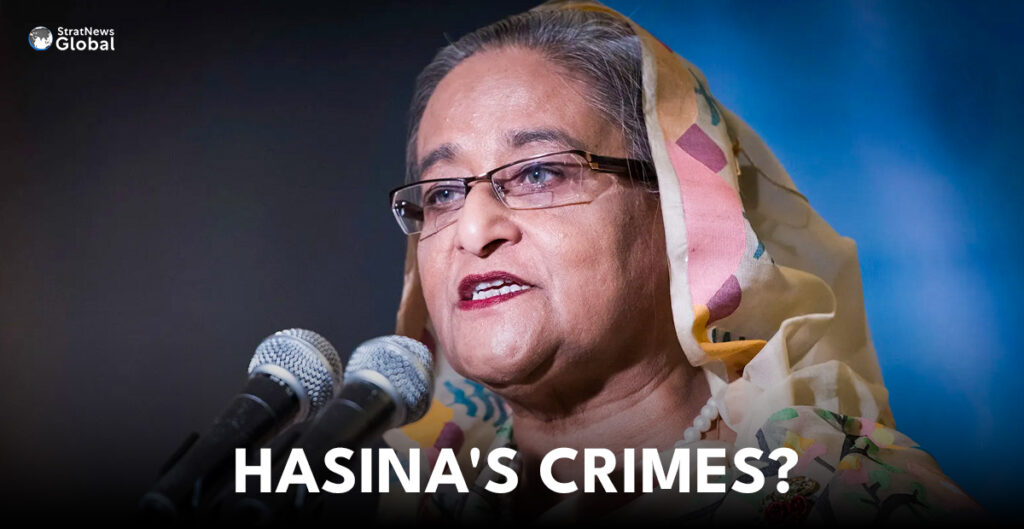
Sheikh Hasina Breaks Silence, Speaks To Foreign Media On War Crimes
Hasina’s triple interview: Coincidence or power play?, ran the headline of a story in the Dhaka Tribune on Friday. It was in the context of written answers to questions given by ousted former Bangladesh prime minister Sheikh Hasina to The Independent, Reuters and AFP.
All the interviews were published on the same day, the report in the Dhaka Tribune noted, evidently for maximum impact and may have reflected concern that the verdict of the Bangladesh War Crimes Tribunal, due next month, could indict her for abuse of power including the torture and death of individuals and opposition figures.
Chief Prosecutor Tajul Islam has accused Hasina of “being the nucleus around whom all the crimes were committed.”
Fifteen army officers have already been identified for such actions during her tenure and 14 of them are currently in custody awaiting trial.
In the interview with AFP, she dismissed as “bogus”, charges before the tribunal that she ordered security forces to fire on protestors.
In the Reuters interview, Hasina described the proceedings of the tribunal as “a politically motivated charade. They have been brought by kangaroo courts with guilty verdicts a foregone conclusion.”
She also said the ban on her party the Awami League, from taking part in the elections “is not only unjust, it is self-defeating. Millions of people support the Awami League, so as things stand they will not vote. You cannot disenfranchise millions of people if you want a political system to work.”
She said she will not ask her supporters in Bangladesh to vote for other parties, rather she hoped “common sense will prevail and we will be allowed to contest the elections ourselves.”
The Dhaka Tribune report made another interesting point: “after internal discussions, India too gave a green light.”
The view is that for Hasina’s views to be broadcast internationally would have required a nod from Delhi. It recalled that Bangladesh Interim Adviser Muhammad Yunus had urged Prime Minister Modi that Hasina not be allowed any publicity as it could destabilise the situation at home.
Modi’s remark, the report said, spoke volumes: “In the age of social media, it’s impossible to silence anyone.”
Vance Predicts Holiday Aviation Crisis In U.S. If Shutdown Persists
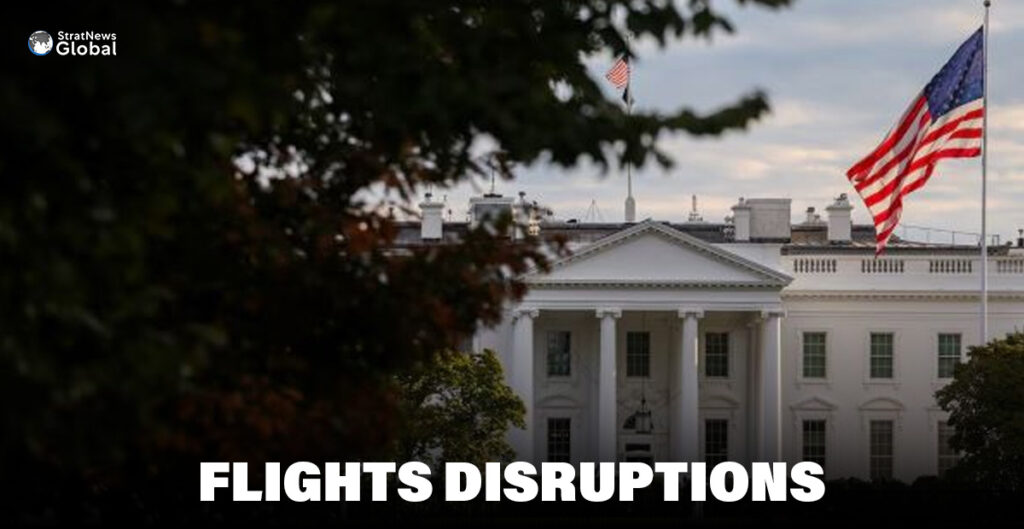
Vice President JD Vance on Thursday warned that the United States could face severe travel disruption over the Thanksgiving holiday if the government shutdown continues, and called on Democrats to arrange the votes needed to reopen the government.
Vance said after a White House meeting with the CEOs of American Airlines and United Airlines, unions and other aviation industry officials that a shutdown into late November could lead to more employee absences and much longer security lines and flight delays.
“It could be a disaster. It really could be, because at that point you’re talking about people have missed three paychecks,” Vance said. “How many of them are not going to show up for work?”
Delta Air Lines, United, Southwest Airlines and American all called on Congress to quickly pass a stop-gap funding bill known as a continuing resolution or “CR” to let the government reopen and discussions continue over health care policy disputes.
Aviation Disruptions
A 30-day government shutdown has led to a surge in flight delays due to air traffic controller absences and impacted thousands of flights, the Transportation Department said.
“It’s putting stress on the economy,” United CEO Scott Kirby told reporters, adding it was impacting bookings. “It is time to pass a clean CR.”
Delta said “a system under stress must be slowed down, reducing efficiency and causing delays for the millions of people who take to the skies every day.”
The shutdown has forced 13,000 air traffic controllers and 50,000 Transportation Security Administration officers to work without pay, the sources added.
Airlines have repeatedly urged an end to the shutdown, citing aviation safety risks.
The meeting comes as the shutdown exacerbates pre-existing staffing shortages. This has led to a spike in unscheduled absences, threatening to cause widespread disruptions similar to those that helped end a 35-day government shutdown in 2019.
Duffy said 44% of delays on Sunday and 24% on Monday were caused by air traffic controller absences, compared to 5% on average before the shutdown.
Hundreds of air traffic controllers have taken second jobs to pay bills after missing their first full paycheck on Tuesday, and airlines and others are donating food to TSA agents and other federal workers at airports.
The FAA is about 3,500 air traffic controllers short of targeted staffing levels and many had been working mandatory overtime and six-day weeks even before the shutdown.
(With inputs from Reuters)
U.S. Refugee Limit Cut To 7,500, Prioritizing White South Africans
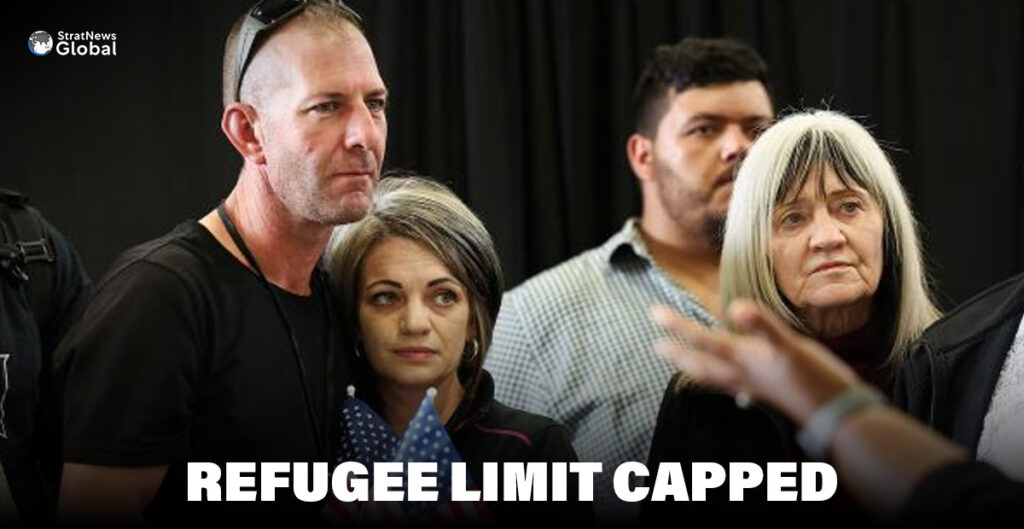
U.S. President Donald Trump has fixed the refugee intake limit at 7,500 for the 2026 fiscal year, the lowest cap ever, according to a White House document released on Thursday, as part of his administration’s push to overhaul refugee policy in the United States and globally.
Trump said in an annual refugee determination dated September 30 that admissions would be focused largely on South Africans from the country’s white Afrikaner ethnic minority.
The Republican President has claimed Afrikaners face persecution based on their race in the Black-majority country, allegations the South African government has denied.
Trump paused all U.S. refugee admissions when he took office in January, saying they could only be restarted if they were established to be in the best interests of the U.S.
Weeks later, he launched an effort to bring in Afrikaners, sparking criticism from refugee supporters. Only 138 South Africans had entered the U.S. by early September, according to reports.
Prioritizing Refugees
In the determination published on Thursday, Trump said his administration would consider bringing in “other victims of illegal or unjust discrimination in their respective homelands.”
An internal document drafted by U.S. government officials in April suggested the administration could also prioritize bringing in Europeans as refugees if they were targeted for expressing certain views, such as opposition to mass migration or support for populist political parties.
Europeans and other groups were not named in Trump’s public refugee plan.
U.S. law requires the executive branch to consult with members of Congress before setting refugee levels, but Democratic lawmakers said on September 30 that the meeting never took place.
In a statement on Thursday, U.S. Representative Jamie Raskin, U.S. Senator Dick Durbin and other Democratic lawmakers said Trump’s low refugee cap was both wrongheaded and lacked legal force.
The Determination Is ‘Illegal And Invalid’
“This bizarre presidential determination is not only morally indefensible, it is illegal and invalid,” the lawmakers said.
A senior Trump administration official blamed the government shutdown that began on October 1 for delayed consultation and said no refugees would be admitted until it occurred.
During the United Nations General Assembly in September, top Trump administration officials urged other nations to join a global campaign to roll back asylum protections, a major shift that would seek to reshape the post-World War Two migration framework.
This month, according to media reports, Trump’s plans for the 7,500-person refugee ceiling, which contrasts sharply with the 100,000 refugees who entered under former President Joe Biden in fiscal 2024.
Gideon Maltz, CEO of Tent Partnership for Refugees, said in a statement that refugees help address labor shortages and that the program “has been extraordinarily good for America.”
“Dismantling it today is not putting America first,” he said in a statement.
In a related move, the White House said it would move oversight of the refugee support programs from the State Department to the Department of Health and Human Services.
(With inputs from Reuters)
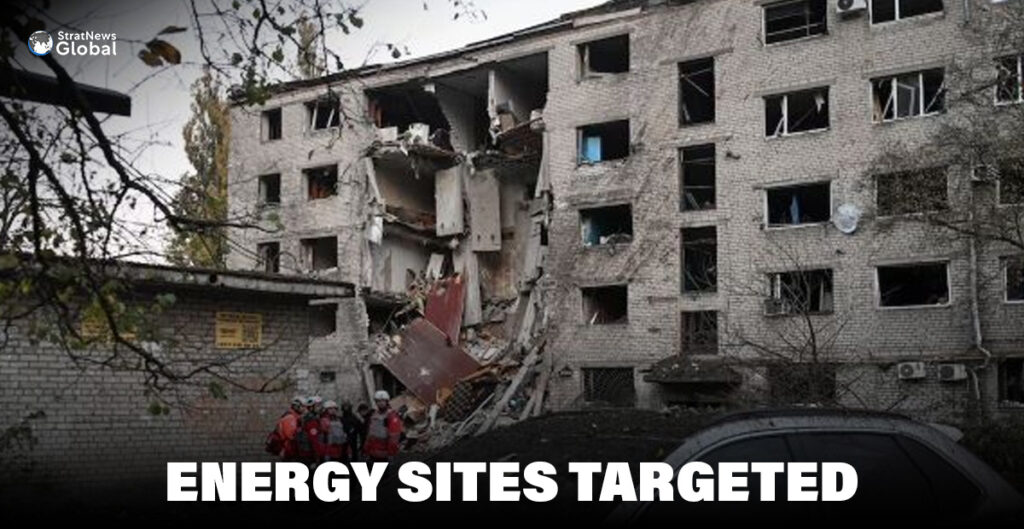
Seven Killed, Including A Child, In Russian Attack On Ukraine Energy Sites
Russia unleashed drones and missiles on Ukraine’s energy facilities and other locations on Thursday, triggering nationwide electricity restrictions and killing seven people, among them a seven-year-old girl, according to Ukrainian officials.
Prime Minister Yulia Svyrydenko accused Moscow of targeting Ukrainian people and power supplies as the cold winter months approach.
“Its goal is to plunge Ukraine into darkness. Ours is to preserve the light,” Svyrydenko said on the Telegram app. “To stop the terror, we need more air defence systems, tougher sanctions, and maximum pressure on the aggressor.”
Regional officials said two men were killed in the southeastern industrial city of Zaporizhzhia, and a seven-year-old girl from the central Vinnytsia region died in hospital from injuries sustained in the attacks.
The regional governor said a later drone strike on a village south of Zaporizhzhia killed one person and injured another.
In Sumy, a city near the northern border with Russia, the regional governor wrote on Telegram that 10 Russian drones had attacked the city in an hour early on Friday. He said two people were injured when two apartment buildings were hit and pictures posted online showed several apartments ablaze.
Russia Denies Targeting Civilians
President Volodymyr Zelenskyy said in his nightly video address that a bomb attack on a thermal power plant in Sloviansk in eastern Donetsk region killed two people and injured a number of others.
Prosecutors in Donetsk region said Russian attacks on dwellings in the city of Kramatorsk killed one person and injured three.
Sloviansk and Kramatorsk are considered key future targets in Russian troops’ slow advance westward through Donetsk region.
Russia’s defence ministry said its forces launched a strike on facilities of the Ukrainian military-industrial complex overnight.
Moscow denies targeting civilians and has said its strikes are responses to Ukraine’s attacks on Russian infrastructure.
Ukraine has launched regular drone attacks on military and oil sites as it fights Russia’s almost four-year-old invasion.
Zelenskyy said Russia launched more than 650 drones and 50 missiles in the attacks. Most of the drones were neutralised and two-thirds of the missiles were downed, he said.
Air defence units shot down 592 drones and 31 missiles, the air force said.
Power Supply Restrictions
The attacks hit energy facilities in central, western, and southeastern regions, Ukrainian officials said.
The government announced nationwide limits on electricity supplies to retail and industrial consumers. In some regions, water supplies and heating were also disrupted.
Regional officials said two energy facilities in the western Lviv region had been damaged. DTEK, Ukraine’s largest private energy company, said its thermal power stations in a number of regions were under attack.
“(T)his attack is a bad blow to our efforts to keep power flowing this winter,” said Maxim Timchenko, DTEK’s CEO. “Based on the intensity of attacks for the past two months, it is clear Russia is aiming for the complete destruction of Ukraine’s energy system.”
Six children were among the 17 people wounded in strikes on Zaporizhzhia, its governor said. Four people were injured in the Vinnytsia region, officials said.
Air alerts lasted nearly the entire night in Kyiv, where residents took shelter in deep underground metro stations.
“There’s nothing good in it. We are doing our best to hide,” Viktoria, 39, mother of a six-year-old boy, said at a metro station.
“There’s a lot of stress involved. When you wake your child in the middle of the night, he cries because he doesn’t understand why he has to do it.”
(With inputs from Reuters)
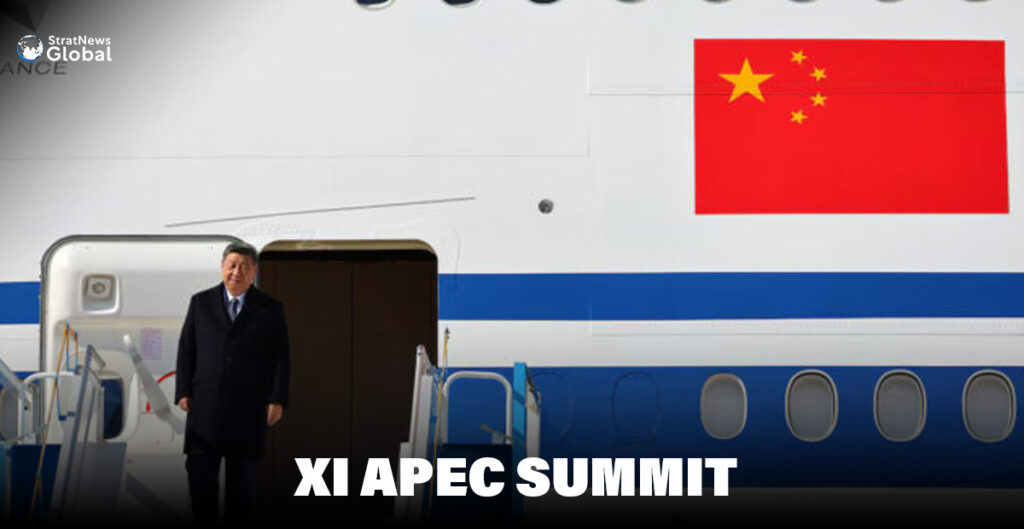
Xi Takes Lead At APEC Summit After Trump Trade Truce
Chinese President Xi Jinping took centre stage at the Pacific Rim leaders’ summit in South Korea on Friday, where he was set to meet the leaders of Canada, Japan and Thailand after striking a tentative trade truce with US President Donald Trump.
That agreement, struck just before Trump left South Korea, skipping the main two-day Asia-Pacific Economic Cooperation summit, will suspend further curbs on China’s exports of rare earths that threatened to jam up global supply chains.
Bolstering supply chains and reducing trade barriers is a key focus of the talks, hosted in the historic town of Gyeongju. Yet decisions made at the 21-member economic club are non-binding and finding consensus has been increasingly difficult due to geopolitical strains.
“Changes unseen in a century are accelerating across the world,” Xi told the assembled leaders at the closed-door opening session on Friday morning, according to China’s foreign ministry.
“The rougher the seas, the more we must pull together,” Xi added, in a speech calling for protection of the multilateral trading system and deeper economic cooperation.
US Treasury Secretary Scott Bessent stood in for the absent Trump.
Xi Set To Meet Japan’s New Hawkish Leader
With the leader of the world’s biggest economy absent, attention turns to Xi, who is expected to hold his first talks with Japan’s newly elected leader Sanae Takaichi.
The leaders are expected to hold talks on Friday, sources familiar with the matter said. Before she departed for the summit on Thursday, Takaichi told reporters that arrangements were underway to meet Xi.
While relations between the historic rivals have been on a sounder footing in recent years, Takaichi’s surprise elevation to become Japan’s first female leader may strain ties due to her nationalistic views and hawkish security policies.
One of her first acts since taking office last week was to accelerate a military build-up aimed at deterring the territorial ambitions of an increasingly assertive China in East Asia. Japan also hosts the biggest concentration of US military abroad.
The detention of Japanese nationals in China and Beijing’s import restrictions on Japanese beef, seafood and agricultural products are also likely to be among sensitive issues on the agenda.
Canada Seeks To Restart China Engagement
Canadian Prime Minister Mark Carney will meet Xi at 4 p.m. (0700 GMT), his office said, aiming to restart broad engagement with China after years of poor relations.
Embroiled in a bitter trade war with its biggest trading partner, the United States, Canada is aiming to wean itself off that overwhelming dependence and seek new markets. China is Canada’s second-biggest trading partner.
Under the leadership of Carney’s predecessor Justin Trudeau, Canadians were detained and executed by the Chinese government and Canada’s security authorities concluded that China interfered in at least two federal elections. Xi also publicly scolded Trudeau, alleging he leaked their discussions to the press.
China announced preliminary anti-dumping duties on Canadian canola imports in August, a year after Canada said it would levy a 100% tariff on imports of Chinese electric vehicles. Senior officials from both sides met to discuss those issues earlier this month, but gave no indication of any looming breakthrough.
Thai Prime Minister Anutin Charnvirakul is also due to meet Xi in the afternoon, Bangkok said, fresh from signing an enhanced ceasefire deal with neighbouring Cambodia on Sunday overseen by Trump.
The US president has repeatedly touted himself as a global peace broker. Xi told Trump on Thursday that China also played a major role in advocating for dialogue and reconciliation on various pressing matters.
South Korea Hopeful Of Joint Statement
“It is clear we cannot always be on the same side, but we must work together to achieve common prosperity,” this year’s host, South Korean President Lee Jae Myung, said in his opening address.
South Korean Foreign Minister Cho Hyun said on Thursday that negotiations were still taking place on a joint statement even for the ministerial meeting itself, but added that he was hopeful it would be adopted together with a leaders’ declaration when the summit concludes on Saturday.
“We are very close,” he told a briefing. Two APEC member nation diplomats privately expressed scepticism that any statement would be particularly substantive given fractures in global politics. APEC failed to adopt a joint declaration in 2018 and 2019, during Trump’s first presidency.
The APEC region, which stretches from Russia to Chile, accounts for 50% of global trade and 61% of GDP.
Nvidia’s CEO Jensen Huang will be speaking this afternoon to a gathering of executives running parallel to the APEC Summit.
Huang has had a whirlwind week, with Nvidia becoming the first company to surpass a $5 trillion valuation but the issue of the US chipmaker’s sale of advanced AI chips in China was seemingly left out of Thursday’s Xi-Trump summit.
(With inputs from Reuters)
Lebanon And Hezbollah Signal Retaliation After Israeli Incursion
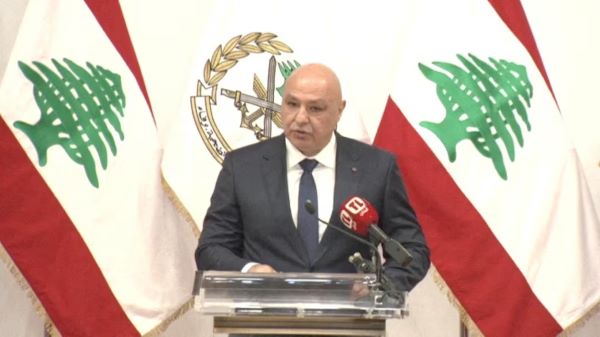
Lebanese President Joseph Aoun on Thursday directed the army to respond to any Israeli entry into southern Lebanon, after Israeli forces crossed the border overnight and killed a local municipal worker, despite a ceasefire mediated by the United States.
Lebanon’s army has historically stayed on the sidelines of major conflicts with Israel, and has not confronted its military in recent months.
But in a sign of the strains on the ceasefire, Israeli warplanes flew over the presidential palace in Beirut, according to a witness, shortly after Aoun’s first order for the army to engage Israeli troops since he became president in January.
Lebanese terrorist group Hezbollah, which fought Israel for more than a year after the Gaza war erupted in October, 2023, expressed support for the president’s call.
Israel has continued airstrikes and limited ground operations in Lebanese territory since the ceasefire. It says its actions are intended to prevent Hezbollah from rebuilding its military presence in the south, while Lebanon accuses Israel of violating the truce.
Hezbollah’s Pledge Of Support
On Wednesday morning, Israeli troops entered the border town of Blida and fired at the municipality building, killing a worker there, the Lebanese army said in a statement, calling it ‘a criminal act’ and a violation of the ceasefire agreement.
The Lebanese state news agency (NNA) identified the worker as Ibrahim Salameh, who had been sleeping there. It was not immediately clear whether Salameh had been deliberately targeted and if so, why he would be.
The Israeli military said its forces had opened fire in Blida after identifying “an immediate threat” during an operation to destroy Hezbollah infrastructure. The incident was under review, it added.
Aoun asked army commander General Rudolph Haykal “to have the Lebanese army confront any Israeli incursion into the liberated southern territories, in defence of Lebanese lands and the safety of citizens,” a statement from the presidency said.
Hezbollah, which Aoun has been urging to disarm under U.S. pressure in line with the ceasefire deal, said it valued his orders and called for support for the army in confronting Israel. It did not specify from where the support would come.
“Hezbollah urges full support for the army with all available capabilities to enhance its defensive strength and provide it with the necessary political cover to confront this savage enemy,” the group said in a statement.
Hezbollah rejects the pressure for it to disarm.
After deploying to the site at 4 a.m. the Lebanese army found no military infrastructure in the building and saw pockmarks indicating Israeli troops had fired heavily from outside the building, the Lebanese security official said.
Aoun Condemns The Attack
A senior Lebanese security official said Salameh’s body was found in his pyjamas in a pool of blood on the floor, with several gunshot wounds to his body.
Aoun condemned the attack as part of a pattern of Israeli aggression and said it was launched shortly after a meeting of an international ceasefire monitoring committee that is chaired by the U.S.
He urged the committee to go beyond recording violations and to press Israel to abide by the November 27, 2024, ceasefire agreement and halt its breaches of Lebanese sovereignty.
The United Nations peacekeeping force in southern Lebanon said it was seeking more information on the incident.
Israel had already dealt powerful blows to Hezbollah during the war, killing the group’s senior leaders.
(With inputs from Reuters)
India Stays Firm As Talks On Trade Deal With U.S Continue
India has reaffirmed that discussions with the United States on the long-pending Bilateral Trade Agreement (BTA) are continuing, even as Washington seeks to accelerate the process. The Ministry of External Affairs (MEA) on Thursday said New Delhi remains “actively engaged” with the US to conclude the negotiations.
“We continue to remain engaged with the US side to conclude a trade deal, and these discussions are continuing,” MEA spokesperson Randhir Jaiswal told reporters during the weekly briefing in New Delhi.
The statement followed US President Donald Trump’s meeting with Chinese President Xi Jinping on the sidelines of the APEC 2025 Summit in South Korea, where the two leaders announced a series of new trade understandings. The US has also signed or advanced trade agreements with Japan, South Korea, Cambodia, Malaysia, and Thailand during the APEC and ASEAN summits this week.
Union Commerce and Industry Minister Piyush Goyal earlier this month described the India-US trade talks as “progressing in a cordial atmosphere.” However, he emphasised that no agreement would be signed unless it fully protects the interests of India’s key sectors, including agriculture, fisheries, and micro, small and medium enterprises (MSMEs).
“Free trade agreements or trade talks are never based on deadlines,” Goyal said on October 18. “There is no agreement unless we fully address the interests of the nation, India’s farmers, India’s fishermen, India’s MSME sector. The talks are progressing very well.”
The minister also voiced concern over the US’s continued push to close the deal quickly, cautioning that India would not be rushed into an agreement under external pressure. Speaking at the Berlin Dialogue recently, he remarked, “India does not do trade agreements in a hurry or with a gun to our head. We view trade partnerships as long-term relationships built on mutual trust.”
Goyal also criticised Washington’s decision to impose sanctions on Russian oil firms, calling the move inconsistent since several European nations had sought exemptions. “Why single out India?” he asked, pointing out that countries like Germany and the UK had already requested flexibility in sourcing energy supplies.
At the APEC Summit, President Trump praised New Delhi for reducing its imports of Russian crude. “India’s been very good on that front,” he told reporters, adding that while energy issues were not central to his talks with Xi Jinping, both leaders discussed ways to end the ongoing conflict in Eastern Europe.
The proposed Bilateral Trade Agreement was first announced in February 2025 following directions from Prime Minister Narendra Modi and President Trump. The pact aims to boost bilateral trade from the current $191 billion to $500 billion by 2030.
Five rounds of formal negotiations have taken place so far, including Goyal’s visit to New York in September. The first phase of the agreement was initially expected to be finalised by October–November 2025, though both sides have acknowledged that more time may be needed.
Key sticking points include high US tariffs on Indian goods—such as a 50% levy on certain exports and a 100% duty on branded pharmaceutical products.
For now, India remains cautious about any accelerated timetable for the pact. “The talks are ongoing, and we will announce the outcome when the time is right,” Goyal said.
Poland Holds Off On Reopening Belarus Border To Support Lithuania
Poland said on Thursday it would postpone reopening additional border crossings with Belarus until at least mid-November, signalling support for Lithuania, a fellow NATO member, amid rising security concerns over Belarus’ ties with Russia.
Poland closed its border with Belarus six weeks ago because of what Warsaw said were “very aggressive” Russia-led military exercises on Belarusian territory, days after 21 Russian drones entered Polish airspace.
Lithuania shut its land border with Belarus this week in response to airspace disruptions by smuggling balloons and said on Wednesday they would remain closed until the end of November.
Poland has since then reopened one road border crossing with Belarus for cars and coaches, and one for cargo lorries, and Prime Minister Donald Tusk said this week that Warsaw would be ready to reopen two more border crossings in November.
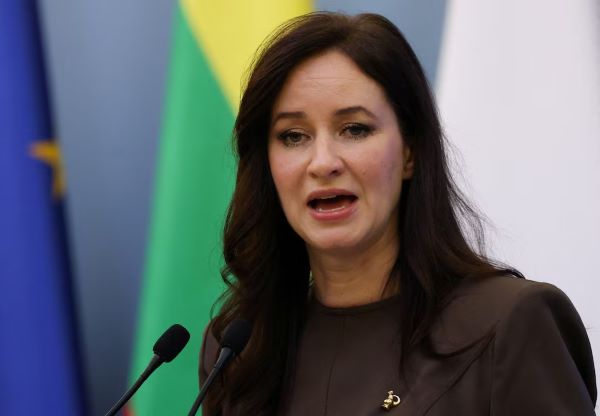
He did not set a date and, following talks with Tusk on Wednesday, Lithuanian Prime Minister Inga Ruginiene said Poland had agreed to delay reopening those border crossings.
“The conversation (with Tusk) was very comprehensive and detailed. And we decided that the Polish prime minister will postpone the opening of the (Belarus) border,” Ruginiene told a press conference on Thursday.
“This means we are coordinating our actions. And for now, borders will be closed both in Poland and Lithuania.”
Poland’s Solidarity With Lithuania
Polish Interior Minister Marcin Kierwinski told public radio that Warsaw was showing solidarity with Lithuania.
“That’s why the opening of the crossings… is delayed by several weeks,” he said.
Apparently seeking to clarify Poland’s position, a Polish government spokesperson later told state news agency PAP that it was possible that more border crossings between Poland and Belarus would be reopened in mid-November.
Already strained relations between Poland and Belarus have hit new lows since Russia invaded Ukraine in 2022.
In the second such incident this week, Polish MiG-29 fighter aircraft intercepted a Russian reconnaissance plane over the Baltic Sea on Thursday, Polish Defence Minister Wladyslaw Kosiniak-Kamysz said.
Latvia, which like Poland and Lithuania is a member of the European Union as well as the NATO military alliance, said on Thursday it was ready to close its sole remaining border crossing with Belarus if required.
“At the moment, we don’t see such threat to our border”, Prime Minister Evika Silina told reporters after meeting Ruginiene in Riga.
(With inputs from Reuters)
US Experts Oppose Nvidia Chip Sales To China
A top Republican lawmaker on China policy warned on Wednesday that allowing Nvidia to sell its most advanced AI chip to China would be like “handing Iran weapons-grade uranium,” as experts cautioned the move could erode America’s edge in artificial intelligence.
House Select Committee on China Chairman John Moolenaar said in a post on X that he told the administration, “we cannot sell the latest advanced AI chips to our country’s primary adversary”.
His comment came after President Donald Trump opened the door on Wednesday to Nvidia selling a lesser version of its Blackwell AI chip to China.
US trade experts said giving China the chips could effectively spell the end of US chip export restrictions, which were put in place in 2022 to make sure Beijing’s military would not benefit from American technology, and to slow the development of China’s AI efforts.
“If we decide to export B30As, it would dramatically shrink the US’s main advantage it currently has over China in AI,” said Tim Fist, co-author of an analysis of the impact of allowing China the B30A chip, a downgraded version of Nvidia’s state-of-the-art Blackwell chip.
‘China Has More Than Enough’
A spokesperson from Nvidia disagreed, saying the US policy of controlling chips under President Joe Biden did not give America an advantage in AI. “Winning the support of mainstream developers everywhere enhances America’s economic and national security,” the spokesperson said in a statement.
“China has more than enough domestic chips for all of its military applications and has no reason to use our products for that purpose,” the statement said.
Senate Democratic leader Chuck Schumer and 11 Democratic senators also urged Trump on Wednesday to not lift restrictions on AI chips and American technology in pursuit of a trade deal.
Moolenaar said, “these chips should instead go to the US companies that are building American AI dominance for years to come — not the future of the Chinese military.”
Trump May Discuss ‘Super-Duper’ Chip
Trump said on Wednesday he might speak to Chinese President Xi Jinping about Nvidia’s “super-duper” Blackwell chip at their Thursday meeting. The comments echoed those he made in August suggesting he might allow a 30% or 50% scaled-down version of Nvidia’s top chip to China.
But, Fist said, the B30A is a version of the best Nvidia chip in different packaging: China could buy twice as many and get the same result, likely at the same price.
A spokesperson for Nvidia declined comment on the details about the chip.
In the paper, published on Saturday, Fist and his co-authors analyzed nine scenarios covering a range of export strategies the administration might take for a downgraded Blackwell chip.
Best- And Worst-Case Scenarios
In the best scenario, where no powerful chips are exported to China next year, the US would have 30 times the AI computing power of China.
In the worst, where the US allows the export of the B30A and comparable chips from other US companies, China could surpass the US in terms of how much AI computing power they gain in 2026.
Even in a median scenario, where a small amount of the chips is exported, the US advantage shrinks to four times China’s computing power, the analysis found.
“If any meaningful quantities are allowed, it’s a huge change,” said Fist, director of emerging technology policy at the Institute for Progress, a Washington-based think tank. “It’s functionally ending the export control regime that we have today.”
Chris McGuire, a national security and technology expert who served in the US State Department until last summer, agreed.
“If this chip is allowed to go, there are effectively no AI chip export controls anymore,” McGuire said. “The reason we have a big advantage on AI is because we have big advantages in computing power and in chips. If we give that away, best case is, it’s like a tie. Worst case, we fall behind.”
“We would be trading China our most advanced technology for soybean purchases,” McGuire said.
(With inputs from Reuters)