

Support us by contributing to StratNewsGlobal on the following UPI ID
ultramodern@hdfcbank

Strategic affairs is our game, South Asia and beyond our playground. Put together by an experienced team led by Nitin A. Gokhale. Our focus is on strategic affairs, foreign policy and international relations, with higher quality reportage, analysis and commentary with new tie-ups across the South Asian region.
You can support our endeavours. Visit us at www.stratnewsglobal.com and follow us on YouTube, Twitter, Facebook and Instagram.
र 500 per month
र 1000 per month
र 5000 per year
र 10000 per year
Donate an amount of your choice
र 500 per month
Donate र 500 per month

र 1000 per month
Donate र 1000 per month
र 5000 per year
Donate र 5,000 per year
र 10000 per year
Donate र 10,000 per year
Donate an amount of your choice
Donate an amount of your choice
Irish PM Aims to Deepen Economic Ties With China Amid EU Strains
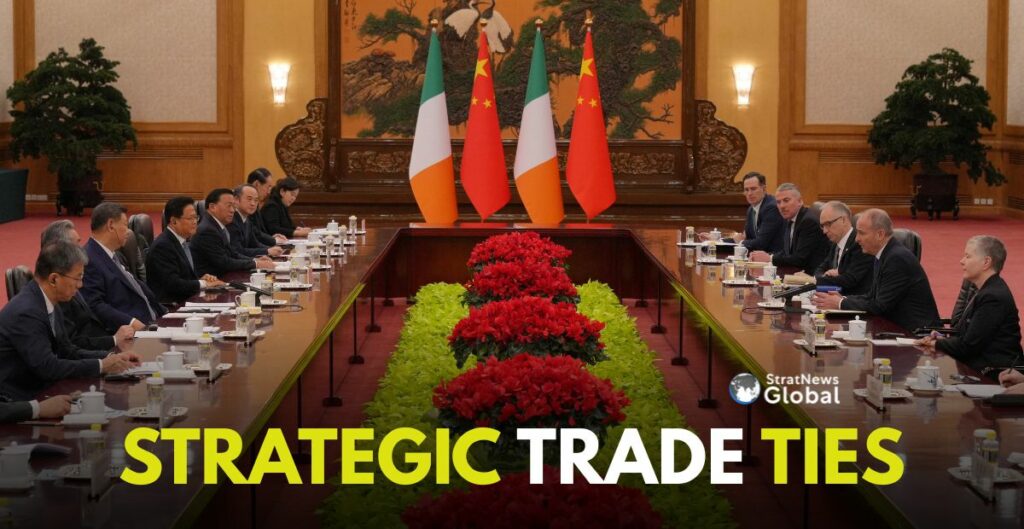
Irish Prime Minister Micheál Martin will hold deeper trade discussions with China’s second-ranking official on Tuesday, aiming to bolster strategic ties with the world’s second-largest economy despite strained China–EU relations.
Martin’s scheduled meeting with Chinese Premier Li Qiang forms part of his five-day trip that he said would include “a significant economic dimension”, a clip posted on the Irish Taoiseach’s X handle on Monday evening showed.
Talks on Tariffs
The Irish leader was seen in the clip telling the media that he would discuss with Li in “greater detail” trade issues such as beef exports and China’s recently imposed tariffs on dairy, a day after a summit with Chinese President Xi Jinping.
“I discussed obviously the situation in terms of Irish beef exports into China, the tariff situation in respect of dairy products,” Martin said, adding that Xi “undertook to engage with Chinese officials in respect of those specific issues.”
EU-China Ties
Martin described his meeting with Xi on Monday as a “warm and constructive engagement”, covering a range of issues including bilateral and EU-China ties.
“On a broader level, I think the President was keen that Europe and China would have a broader framework to govern trade into the future,” he said.
Xi had told Martin during the meeting that China and the EU should “bear the long-term picture in mind”, according to state news agency Xinhua.
Ties between China and the EU have been tense since the EU imposed levies on Chinese electric vehicle imports in 2024. China has since retaliated with a series of measures including the latest tariffs on EU dairy products.
Last week, China also set import quotas and additional tariffs on beef imports from this year, a move affecting global exporters of the meat into the Asian country.
The first Taoiseach to visit China since 2012, Martin has recently downplayed the Irish intelligence agency’s portrayal of China as a “hostile state actor”, preferring instead to adopt a long-term and strategic understanding of China.
(With inputs from Reuters)
UN Warns Of Venezuela Instability Following U.S. Operation
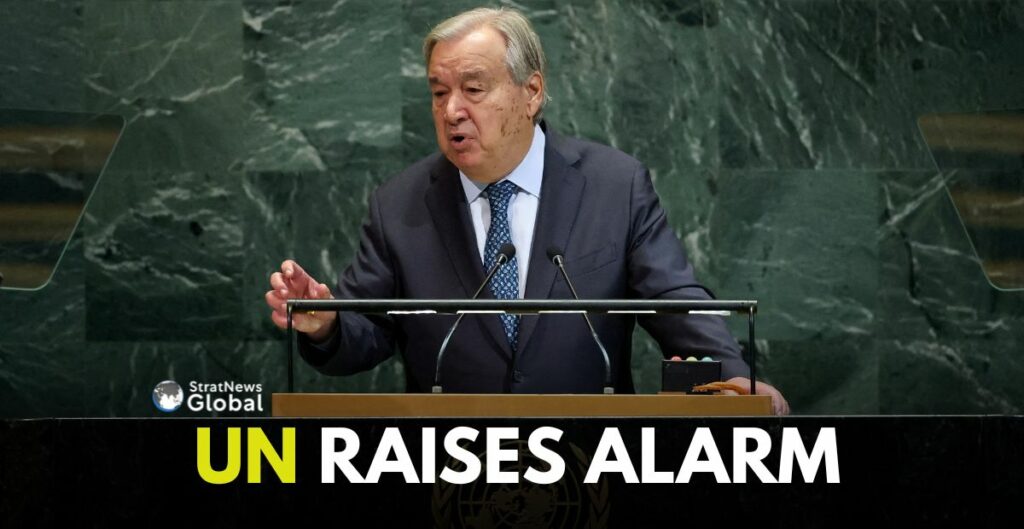
On Monday, UN Secretary-General Antonio Guterres voiced worries about mounting instability in Venezuela following the U.S. capture of President Nicolás Maduro, though Washington emphasized it has no intention of occupying the Latin American nation.
The 15-member Security Council met at U.N. headquarters in New York just hours before Maduro was due to appear in a Manhattan federal court on drug charges including narco-terrorism conspiracy. Maduro has denied any criminal involvement.
No Occupation
U.S. Ambassador to the U.N. Mike Waltz told the Security Council U.S. carried out “a surgical law enforcement operation facilitated by the U.S. military against two indicted fugitives of American justice,” referring to Maduro and his wife Cilia Flores.
Venezuela’s U.N. Ambassador Samuel Moncada called the U.S. operation to capture Maduro “an illegitimate armed attack lacking any legal justification.” Moncada told the council that Venezuelan institutions are functioning normally, constitutional order has been preserved, and the state exercises effective control over all of its territory.
International Law
Guterres also expressed concern that the U.S. operation to capture Maduro in Caracas on Saturday did not respect the rules of international law. The U.N. Charter states that members “shall refrain in their international relations from the threat or use of force against the territorial integrity or political independence of any state.”
The United States has cited Article 51 of the U.N. Charter, which says that nothing “shall impair the inherent right of individual or collective self-defense if an armed attack occurs against a member of the United Nations.”
Russia, China and Colombia condemned the U.S. military operation as illegal. Most remaining council members did not directly criticize the United States and instead stated the importance of abiding by international law and the U.N. Charter.
Colombia, which requested Monday’s meeting, condemned the U.S. operation as a clear violation of the sovereignty, political independence and territorial integrity of Venezuela. Russia, China and Venezuela called on the United States to release Maduro and his wife.
(With inputs from Reuters)
Strong 6.2 Magnitude Earthquake Strikes Japan, No Tsunami Alert
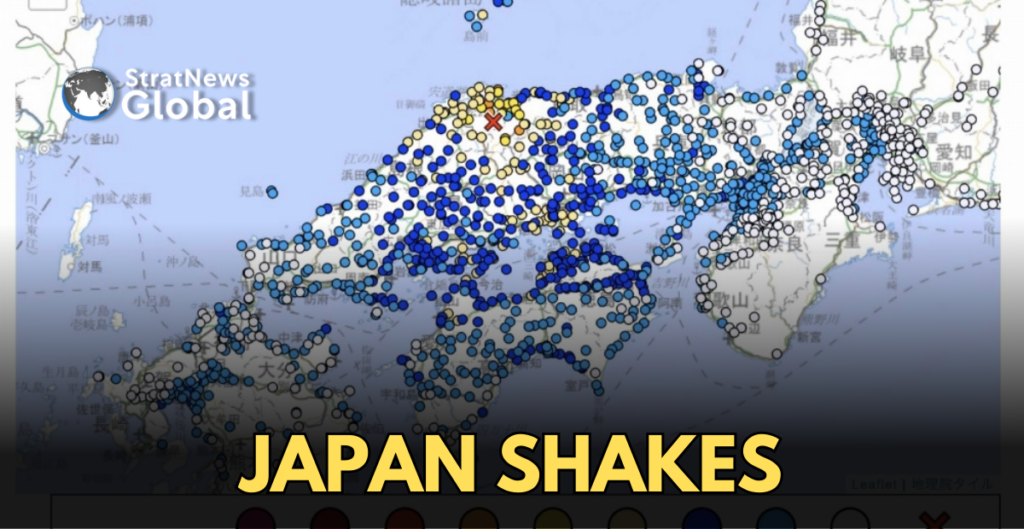
An earthquake with a preliminary magnitude of 6.2 hit the western Chugoku region of Japan on Tuesday, followed by a series of sizeable aftershocks, the Japan Meteorological Agency(JMA) said.
The epicentre of the first earthquake was in eastern Shimane prefecture, the agency said, adding that there was no danger of a tsunami.
Chugoku Electric Power 9504.T, which runs the Shimane Nuclear Power Station about 32 km (20 miles) away, said operations were continuing as usual at its No.2 unit. Japan’s Nuclear Regulation Authority said there were no irregularities following the quake.
The plant’s No.2 unit restarted in December 2024 for the first time since all of Japan’s nuclear power plants were shut down in the aftermath of the March 2011 disasters in Fukushima.
The earthquake had a seismic intensity of upper-5 on Japan’s 1-7 scale, strong enough to make movement difficult without support.
Earthquakes are common in Japan, one of the world’s most seismically active areas. Japan accounts for about one-fifth of the world’s earthquakes of magnitude 6 or greater.
West Japan Railway 9021.T said it had suspended Shinkansen bullet-train operations between Shin-Osaka and Hakata following the quake.
More Quakes Possible
The Japan Times reported that the epicentre of the initial quake, which occurred at a depth of 10 kilometres, was recorded in eastern Shimane Prefecture. But shaking was felt across wide areas of western Japan, triggering early warning alerts on television broadcasts and mobile phones.
The report further added that the JMA observed Level 4 long-period ground motion — the strongest designation — in western Tottori. This marked the first time a Level 4 alert was observed in the prefecture, and it was the first Level 4 issued since the powerful January 2024 quake on the Noto Peninsula. People in tall buildings or on large bridges are advised to be vigilant when facing long-period ground motion, which causes a prolonged back-and-forth shaking, the agency said.
The JMA also warned that quakes measuring 5 or higher could occur over the next week, and especially during the next two or three days.
“Seismic activity is still active in the area. There is a possibility that a quake larger than a strong 5 will occur, so please remain vigilant,” said Ayataka Ebita, a JMA official in charge of the earthquake and tsunami division.
(with inputs from Reuters)
Trump Team Sets Meetings With Oil Firms Over Venezuela
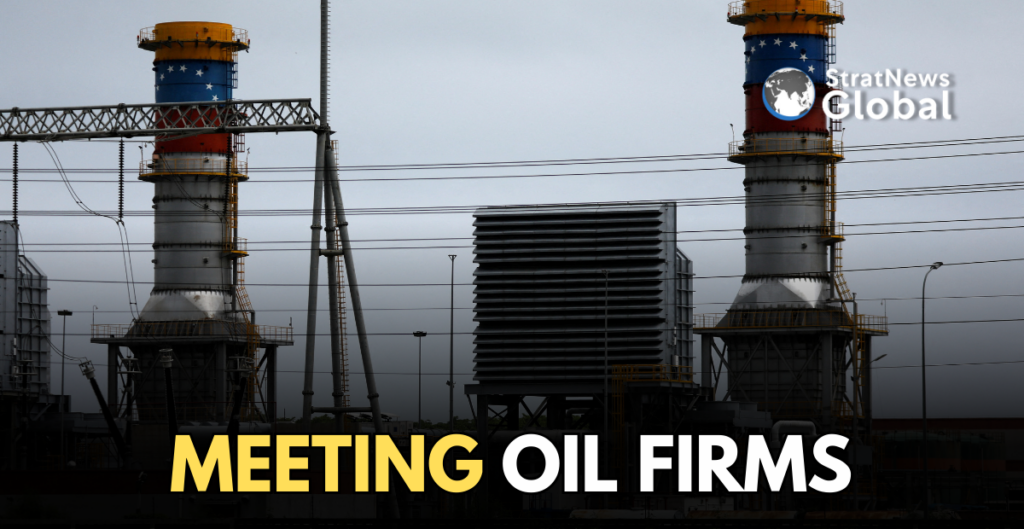
The administration of President Donald Trump is planning to meet with executives from U.S. oil companies later this week to discuss boosting oil production in Venezuela after U.S. forces ousted its leader, Nicolas Maduro, according to a source familiar with the matter.
The meetings are crucial to the administration’s hopes of getting top U.S. oil companies back into the South American nation after its government, nearly two decades ago, took control of U.S.-led energy operations there.
The three biggest U.S. oil companies – Exxon Mobil, ConocoPhillips, and Chevron – have not yet had any conversations with the administration about Maduro’s ouster, according to four oil industry executives familiar with the matter, contradicting Trump’s statements over the weekend that he had already held meetings with “all” the U.S. oil companies, both before and since Maduro was seized.
“Nobody in those three companies has had conversations with the White House about operating in Venezuela, pre-removal or post-removal to this point,” one of the sources said on Monday.
Boosting Crude Exports
The upcoming meetings will be crucial to the administration’s hopes to boost crude oil production and exports from Venezuela, a former OPEC nation which sits atop the world’s largest reserves and whose barrels can be refined by specially designed U.S. refineries. Achieving that goal will require years of work and billions of dollars of investment, analysts say.
It is unclear what executives will be attending the upcoming meetings, and whether oil companies will be attending individually or collectively.
The White House did not comment on the meetings but said it believed the U.S. oil industry was ready to move into Venezuela.
“All of our oil companies are ready and willing to make big investments in Venezuela that will rebuild their oil infrastructure, which was destroyed by the illegitimate Maduro regime,” said White House spokesperson Taylor Rogers.
Exxon, Chevron and ConocoPhillips did not immediately respond to requests for comment.
Subsidising Oil Companies?
Trump told NBC News the U.S. may subsidise oil companies to enable them to rebuild Venezuela’s energy infrastructure.
Asked if the administration had briefed any oil companies ahead of the military operation, Trump said, “No. But we’ve been talking to the concept of, ‘what if we did it?'”
“The oil companies were absolutely aware that we were thinking about doing something,” Trump told NBC News. “But we didn’t tell them we were going to do it.”
He told NBC News it was “too soon” to say whether he had personally spoken to top executives at the three companies.
“I speak to everybody,” he said.
CBS News, citing an unnamed source, said executives from the three were expected to meet on Thursday with Energy Secretary Chris Wright.
One oil industry executive told Reuters the companies would be reluctant to talk about potential Venezuela operations in group settings with the White House, citing antitrust concerns that limit collective discussions among competitors about investment plans, timing and production levels.
Big Plans, Big Problems
U.S. forces on Saturday conducted a lightning raid on Venezuela’s capital, arresting Maduro in the dead of night and sending him to the United States to face narcoterrorism charges.
Trump said hours after Maduro’s capture, he expects the biggest U.S. oil companies to spend billions of dollars boosting Venezuela’s oil production, after it dropped to around a third of its peak over the past two decades due to underinvestment and sanctions.
But those plans will be hindered by a lack of infrastructure, along with deep uncertainty over the country’s political future, legal framework and long-term U.S. policy, according to industry analysts.
Chevron is the only American major currently operating in Venezuela’s oil fields.
(with inputs from Reuters)
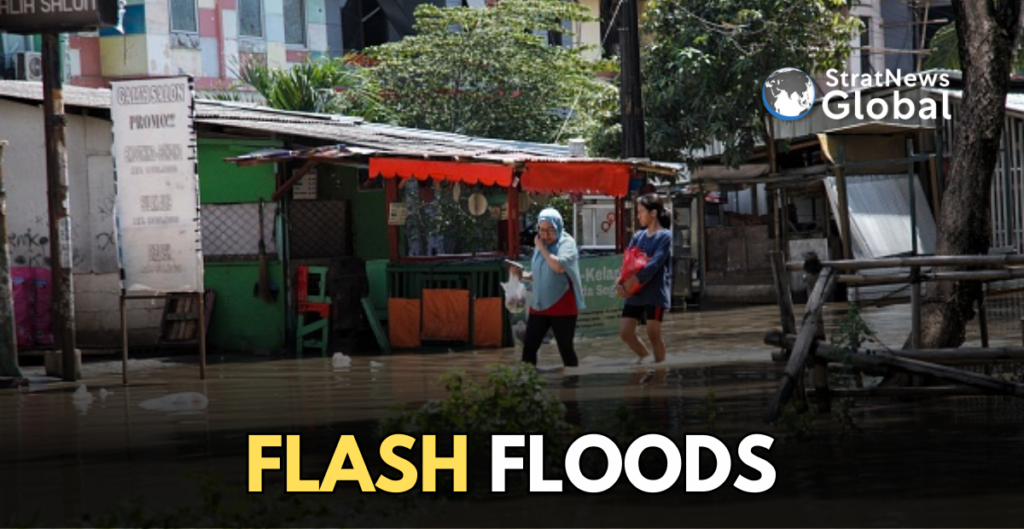
Indonesia: Flash Floods Kill 14 In North Sulawesi
At least 14 people were killed after being swept away by flash floods in Indonesia’s North Sulawesi, an official said on Tuesday, as the search for the missing continued.
Heavy rain early on Monday triggered flash floods on the island of Siau, located in the region of Siau Tagulandang Biaro, said Nuriadin Gumeleng, a spokesperson for the local rescue agency.
Sixteen rescuers have been deployed to search for four people who remain missing on Tuesday, Gumeleng told Reuters, adding that 18 people had been injured so far.
“We continue to collect data from local residents in case there are more missing people,” he said.
People Evacuated
As of Tuesday, main roads in the affected areas were still covered by rocks, debris and thick mud, Gumeleneg said.
At least 444 people have been evacuated to local schools and churches after the flash floods, the country’s disaster mitigation agency spokesperson Abdul Muhari said in a statement.
Authorities have deployed excavators to clear roads that have been blocked by the debris and mud, he said.
The floods also destroyed hundreds of houses and government buildings, North Sulawesi governor Yulius Selvanus said.
As per Xinhua news, the National Disaster Mitigation Agency (BNPB) said logistical challenges for evacuation persist due to limited ferry schedules to the island regency.
Peak Wet Season
The flash floods took place at the peak of the wet season in Sulawesi Island, as forecast by Indonesia’s weather agency.
The islands of Java, Sulawesi, Maluku, and Papua are expected to experience their peak wet seasons over January and February this year, bringing more risks of floods, the weather agency had said.
Rain in other parts of Indonesia, like Sumatra and Borneo, reached its peak in November and December last year.
Last November, cyclone-induced floods and landslides killed more than 1,000 people in Sumatra, with hundreds still missing. Green groups say deforestation linked to mining and logging exacerbated the impact of the floods.
(with inputs from Reuters)
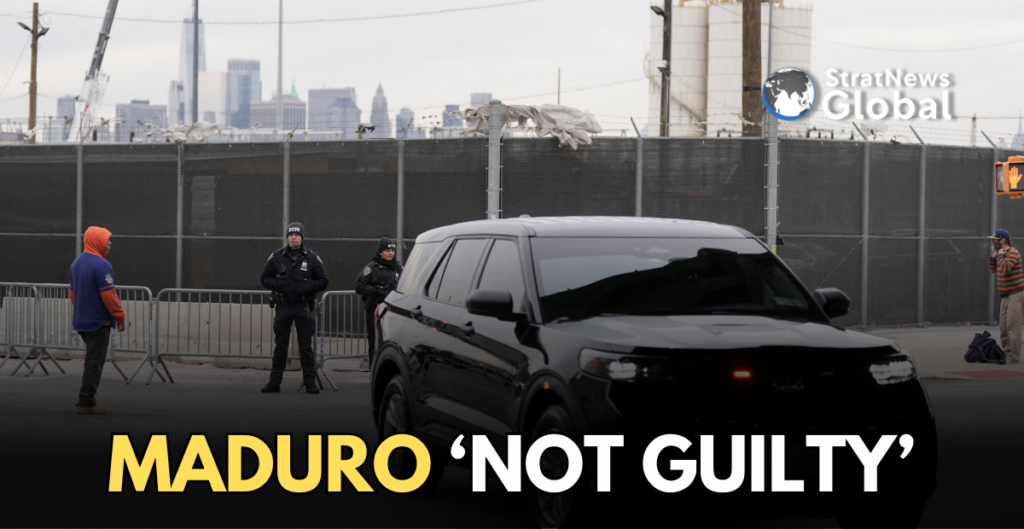
Maduro Pleads Not Guilty At U.S. Court, Says “I Am Still President Of Venezuela”
Toppled Venezuelan President Nicolas Maduro pleaded not guilty on Monday to narcotics charges after President Donald Trump’s stunning capture of him rattled world leaders and left officials in Caracas scrambling to regroup.
“I am innocent. I am not guilty. I am a decent man. I am still president of my country,” Maduro, 63, said through an interpreter, before being cut off by U.S. District Judge Alvin Hellerstein in Manhattan federal court.
Maduro’s wife, Cilia Flores, also pleaded not guilty. The next court date was set for March 17.
Maduro Denies Allegations
Dozens of protesters, both pro- and anti-Maduro, gathered outside the courthouse before the half-hour hearing.
Inside, as he stood shackled at the ankles and wearing orange and beige prison garb, Maduro declared he had been “kidnapped” and remained president of Venezuela. He listened to an interpreter through headphones as Hellerstein summarised the charges.
Maduro is accused of overseeing a cocaine-trafficking network with international drug cartels and faces four criminal counts: narco-terrorism, cocaine importation conspiracy and possession of machine guns and destructive devices.
Maduro has long denied the allegations, saying they were a mask for imperialist designs on Venezuela’s rich oil reserves.
Maduro’s defence lawyer, Barry Pollack, said he anticipated voluminous and complex litigation over what he called his client’s “military abduction.”
Successor Sworn In
Hours later in Caracas, Maduro’s vice president, Delcy Rodriguez, was sworn in as Venezuela’s interim president with words of support for Maduro but no indication she would fight the U.S. move.
A recent U.S. intelligence assessment determined Rodriguez would be best positioned to lead a temporary government in Maduro’s absence, finding that opposition figures such as Nobel Peace Prize winner Maria Corina Machado or onetime presidential candidate Edmundo Gonzalez would struggle to gain legitimacy, the Wall Street Journal reported, citing people familiar with the classified report.
Asked by Reuters about the report, White House spokeswoman Karoline Leavitt said, “The President and his national security team are making realistic decisions to finally ensure Venezuela aligns with the interests of the United States.”
While many anti-Maduro activists had assumed this would be their moment, Trump appeared to have sidelined the Venezuelan opposition for now. Instead, he has suggested that Rodriguez was willing to work with Washington.
Leavitt told Fox News that Secretary of State Marco Rubio was in “constant correspondence” with the remaining Maduro government, and that Washington maintained “leverage” over Caracas.
‘Fix The Country’
In Caracas, senior officials from Maduro’s 13-year-old government remained in charge of the South American oil producer of 30 million people, alternating between angry defiance and possible cooperation with the Trump administration.
The intelligence assessment concluded that Rodriguez was among the few Venezuelan leaders capable of maintaining order, along with the interior and defence ministers, in a government dominated by ideological opponents of the U.S., the Wall Street Journal said.
Trump told NBC News the U.S. was not at war with Venezuela but rather, “we’re at war with the people that sell drugs.”
The U.S. would need to help address the South American country’s problems before any new elections, Trump said, calling a 30-day timeline for a vote unrealistic.
“We have to fix the country first. You can’t have an election. There’s no way the people could even vote,” Trump told NBC.
Legality Questioned
The U.S. has considered Maduro an illegitimate dictator since he declared victory in a 2018 election marred by allegations of massive irregularities.
At the same time, experts in international law have questioned the legality of the raid, with some condemning Trump’s actions as a repudiation of a rules-based international order.
Deputy Attorney General Todd Blanche, who previously served as Trump’s criminal defence lawyer while in private practice, told NBC News the Trump administration “did everything within the law,” and that the United States has an “absolute legal right to go and arrest people charged with horrible crimes.”
As world leaders and U.S. politicians grappled with the extraordinary seizure of a head of state, the United Nations Security Council debated the implications of the raid, which was condemned by Russia, China and leftist allies of Venezuela.
The future governance of Venezuela also remained uncertain after Trump asserted on Sunday that “we are in charge.” White House Deputy Chief of Staff Stephen Miller reiterated to CNN on Monday that “the United States of America is running Venezuela.”
“We set the terms and conditions. We have a complete embargo on all of their oil. So for them to do commerce, they need our permission,” Miller said.
Rubio, Secretary of Defence Pete Hegseth and other top administration officials spent more than two hours briefing congressional leaders and the heads of national security committees about the Venezuela operation on Monday evening.
(with inputs from Reuters)
Taiwan Sounds Alarm Over China’s Attempt At Digital Intimidation
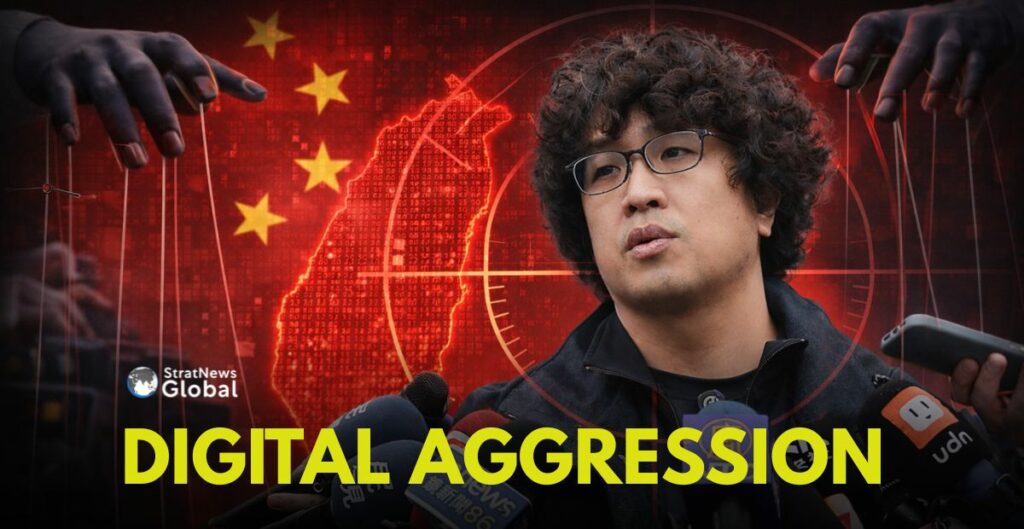
Last week China conducted high profile naval and air exercises around Taiwan, firing missiles that landed along its coast. This week, Beijing has been more subtle, using its cyber expertise to circulate commercial satellite images of the home of a Taiwanese ruling party legislator Puma Shen. Taiwanese officials denounced the move as a blatant attempt to intimidate public figures through personal exposure.
Although the images were eventually removed from major social media platforms following pressure from Taiwan’s Ministry of Digital Affairs, the subtle attempt at intimidation underscored that Beijing will stop at nothing to nudge Taiwan or Taiwanese into its way of thinking.
A newly released report by Taiwan’s National Security Bureau (NSB) said the “doxxing” of Puma Shen is part of a larger campaign of digital aggression. According to the NSB’s analysis of China’s cyber operations in 2025, the number of attempted cyberattacks on Taiwan’s critical infrastructure hit an average of 2.63 million per day, more than double figures from two years earlier.
The Ministry of Foreign Affairs described the dissemination of Shen’s personal information as ‘digital authoritarianism’ and an attempt to create a ‘chilling effect’ on Taiwan’s democratic society. They equated the act with transnational repression that breaks international human rights norms.
Analysts say the episode underscores an unsettling trend where Beijing appears to be complementing its conventional military and diplomatic pressure such as live-fire exercises around the island, with much subtle yet pervasive digital tactics aimed at shaping political narratives.
The incident also highlights the risks faced by Taiwanese lawmakers like Shen, who is a frequent target for Beijing. Last year, China labeled him ‘wanted’ for alleged ‘secession-related activities,’ a characterization Taipei dismisses as politically motivated and legally baseless. Shen is also the co-founder of the Kuma Academy, an organization that focuses on civil defence and media literacy to counter Chinese disinformation.
Beyond condemning the act, Taiwan officials have increased Shen’s security and pressed global platforms like Meta to remove harmful content.
The incident signals how cyberspace has become another battleground in the enduring confrontation with Beijing, one where propaganda, legal instruments, and digital incursions reinforce the familiar patterns of geopolitical rivalry.
Bangladesh: BNP Leads In Opinion Polls, Jamaat Trailing
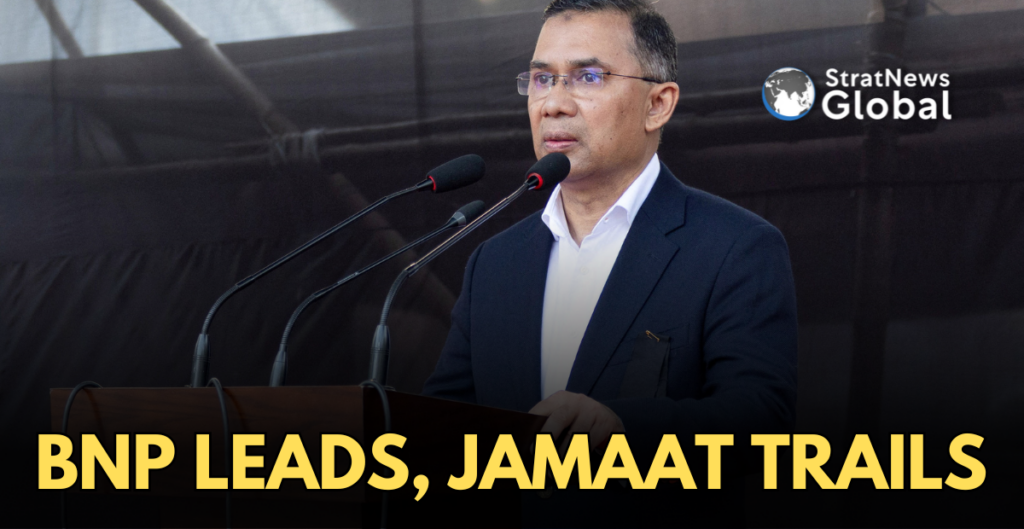
At nine degrees Celsius and dense fog, Dhaka and other cities in Bangladesh may not have been congenial for any movement. But politics can’t be left to the weather. The top priority for the BNP is the formalisation of acting leader Tarique Rahman’s status:
“At present, he is the acting chairman, but I believe that within a day or two, we will be able to make him chairman. This is because our leader, chairperson Khaleda Zia, has already left us. That position must, of course, be filled,” Fakhrul Islam Alamgir, secretary-general, told a crowded press briefing on Sunday in Sylhet.
He was also hopeful that Tarique would begin his election campaign in Sylhet because “Khaleda Zia used to begin her election campaigns from Sylhet, we hope that this time it will be the same. Our expectation, indeed everyone’s expectation, is that he (Tarique Rahman) will begin his election campaign from Sylhet.”
The party faithful would have been buoyed by the results of an opinion poll, which found that 70% of voters prefer the BNP, only 19% favour the Jamaat. According to Prothom Alo, the poll was conducted by a private agency, Eminence Associates for Social Development, which covered more than 20,400 people across 300 constituencies.
Only 2.6% expressed support for the NCP, the party comprising students who led the uprising last August that ousted Sheih Hasina from power. Doubtless, as the election date nears and campaigning heats up, there will be more opinion polls giving a radically different result; nonetheless, for the leadership of the Jamaat-e-Islami, it’s a sobering reminder that their street power and organisation are not an indication of public support.
But there’s something else. All candidates are required by law to give details of all wealth, including property, cash, jewellery and so on, and members of the public are wondering why the value of the assets is so low given their lifestyle. Even the assets published by Rahman from BNP and the Jamaat chief have come under scrutiny.
“The public has little confidence in the asset and income–expenditure information provided by election candidates in their affidavits,” Transparency International Bangladesh Executive Director Iftekharuzzaman told Prothom Alo. “There are questions about how realistic these figures are. It should be examined whether candidates have undisclosed assets or income, and their lifestyles should also be taken into consideration.” Expect more on this in the run-up to voting day.
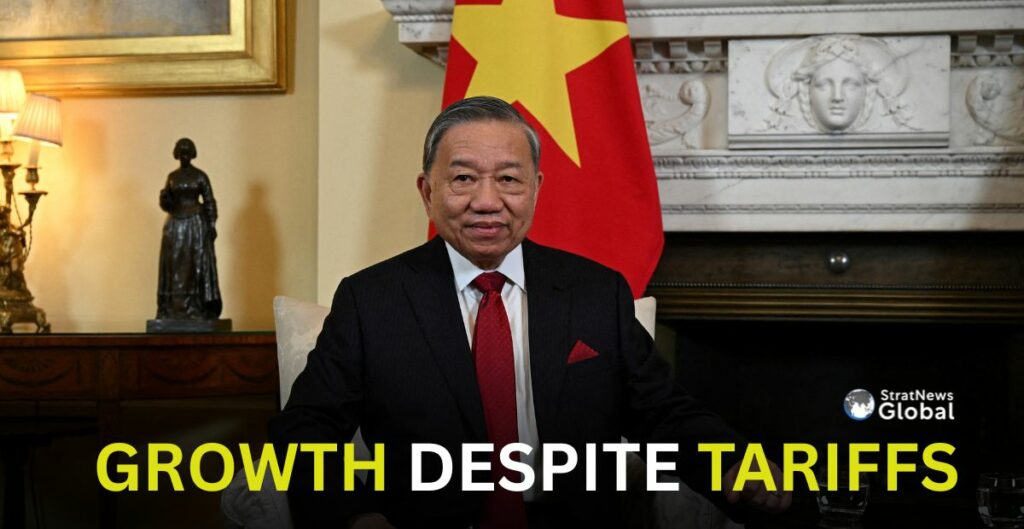
Vietnam’s Economy Surges Despite U.S. Tariffs
Vietnam’s economy grew 8% in 2025, up from the previous year’s growth, driven by strong exports despite U.S. tariffs, according to preliminary government data released Monday. The country also recorded its largest annual trade surplus with Washington.
The Southeast Asian nation, which is one of the top exporters to the United States, is still in talks with Washington over a possible trade deal but has largely shrugged off U.S. duties of 20% imposed on its goods by the Trump administration to cut Vietnam’s huge trade advantage.
Vietnam’s total exports rose by 17% to about $475 billion last year, the data showed, with shipments to the United States worth $153 billion, far outstripping 2024’s record figure of $119.5 billion.
That has led to an unprecedented trade surplus with Washington of nearly $134 billion last year, far higher than the previous peak reached in 2024, according to the Vietnamese figures, which are usually more conservative than U.S. data.
Accusation of Transshipment
Vietnam’s imports of Chinese goods reached a record level last year of $186 billion, the data showed, from $144.2 billion in 2024.
The Trump administration has accused Vietnam of being a transshipment hub for Chinese goods exported to the United States. Illegally transshipped goods face U.S. tariffs of 40%, but the White House has not yet indicated its criteria to determine what can be considered as illegal transshipment.
Roaring Growth
Vietnam’s growth rate was 8.02% last year, up from 7.09% in 2024, showing no immediate disruption from U.S. tariffs or floods. The government had set a target of more than 8%. In the fourth quarter, the economy grew 8.46%, the strongest quarterly rate of the year.
Average annual growth for the five‑year period stood at 6.25%. For 2026‑2030, the government is targeting at least 10%. Growth was backed by domestic consumption and higher infrastructure spending. Industrial production and retail sales both rose 9.2% in 2025. Inflation was 3.31%.
Foreign investment inflows rose 9% to $27.6 billion, while pledges were flat at $38.4 billion.
(With inputs from Reuters)
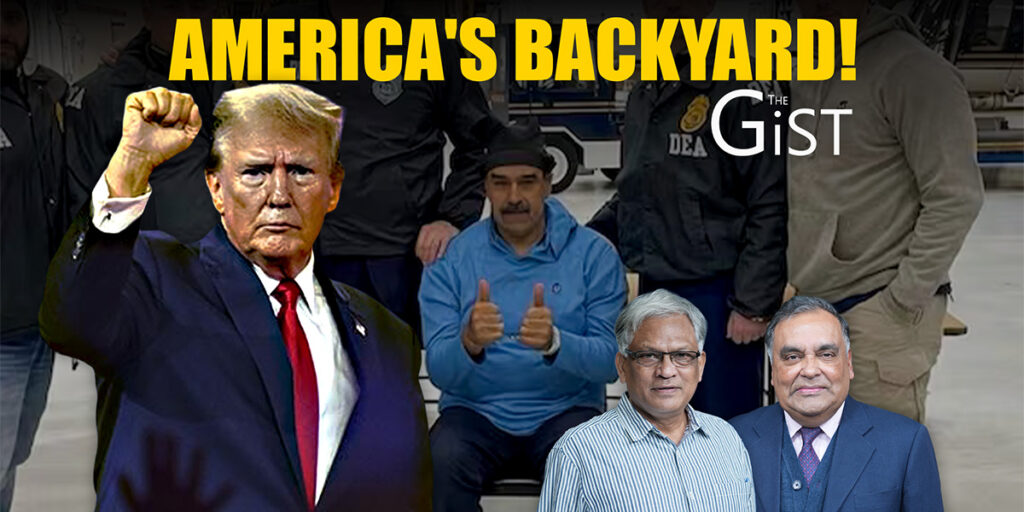
Maduro Capture Ties In With US History: Yash Sinha, Ex-Amb To Venezuela
How should India see the kidnapping/abduction of Venezuela’s President Nicolas Maduro by the US? Yash Sinha, India’s former ambassador to Caracas, says the US appears to be going back to the times when it did pretty much what it wanted in its South American backyard.
“They have a history. Remember, Noriega, was abducted or kidnapped from Panama. They used the word rendition. Then you had invasion of Grenada. You had a coup against Allende in Chile and the installation of Gen Pinochet,” he recalled during an interview on The Gist.
He warned that if this goes unchallenged, any superpower with military might, will believe it can do anything. Where is the world order? The UN seems to be completely moribund with the Security Council unable to take a decision on anything.
“I wish we had that capability to take care of some of our, troublesome neighbors, and others who are Jihadi terrorists who have created problems for India in the past,” he said.
India has been circumspect about its comments on Venezuela, being careful not to antagonise the US because there’s too much at stake. Then again, we have been muted about Russia’s invasion of Ukraine too since Russia is a time tested friend.
There is still some uncertainty in Venezuela. There is calm on the surface. There is relief among people who oppose Maduro, but we still don’t know what’s really going to happen,” Sinha said.
“Surprisingly, President Trump seems to have ruled out the most popular leader Maria Corina Machado, the Nobel Peace Prize winner. Even the candidate who supposedly won the election of May 2025, Edmundo Gonzalez, last I heard he was in exile in in Spain.”
Sinha recalled meeting Maduro when he was ambassador to Caracas. “He was then foreign minister and he did not boast of any intellectual credentials. He began life as a bus driver, but otherwise a very charming person to talk to.”
The army was the real support base for Maduro, Sinha underscored, and if the army is with Vice President Delcy Rodriguez, then the situation could pan out different from what the Americans are hoping. But if the army is divided, and compromises, which is quite possible, then there may be a situation where as per the Constitution, elections are held in 30 days.
Sinha was dismissive of the US claim that Maduro was trafficking drugs into the US. In his view, Colombia and Mexico are to be blamed, even China for exporting fentanyl to the US. Trump has accused Colombia and Mexico also of drugs trafficking, whether he would carry out a regime change operation there is not clear.