

Support us by contributing to StratNewsGlobal on the following UPI ID
ultramodern@hdfcbank

Strategic affairs is our game, South Asia and beyond our playground. Put together by an experienced team led by Nitin A. Gokhale. Our focus is on strategic affairs, foreign policy and international relations, with higher quality reportage, analysis and commentary with new tie-ups across the South Asian region.
You can support our endeavours. Visit us at www.stratnewsglobal.com and follow us on YouTube, Twitter, Facebook and Instagram.
र 500 per month
र 1000 per month
र 5000 per year
र 10000 per year
Donate an amount of your choice
र 500 per month
Donate र 500 per month

र 1000 per month
Donate र 1000 per month
र 5000 per year
Donate र 5,000 per year
र 10000 per year
Donate र 10,000 per year
Donate an amount of your choice
Donate an amount of your choice


Taiwan Objects To New Chinese Airport, Cites Safety Issues
Taiwan’s Civil Aviation Administration said on Wednesday that China has not provided any information about a new airport expected to open next year less than 10 kilometers from a Taiwanese facility, sparking concerns over flight safety.
The new Xiang’an airport in the Chinese city of Xiamen lies just about 3 kilometers from Taiwan-controlled Kinmen islands where construction activity is clearly visible and audible from the Taiwan side.
Taiwan Seeks Information
In a written statement sent to Reuters, Taiwan’s Civil Aviation Administration said that airports close to each other need detailed advanced planning and coordination to ensure smooth operations and safety.
The administration has requested China, via existing liaison channels, provide planning information to assess the impact of Xiang’an airport on Kinmen airport, it said. However, it added, Chinese civil aviation authorities have yet to provide any details. Taiwan stressed that China has an obligation to ensure the new airport does not infringe on or affect its airspace.
Kinmen airport mostly offers domestic flights to other Taiwanese airports, but has occasional international charters.
China’s government refuses to speak to Taiwan President Lai Ching-te, saying he is a “separatist”.
Urges Coordination for Air Safety
Taiwan officials have raised concerns that China could try to exert economic control over Kinmen in a key development plan that will be rolled out early next year, and see Xiamen’s airports as potential part of that plan.
Taiwan and China have clashed over flight safety around Taiwan’s offshore islands before, including over China’s opening of new flight routes in the sensitive Taiwan Strait that Taipei denounced as unilateral moves likewise made without consultation.
Taiwan has controlled the Kinmen and Matsu islands, which sit just off the Chinese coast, since the defeated Republic of China government fled to Taipei in 1949 after losing a civil war with Mao Zedong’s communists.
(With inputs from Reuters)
Moscow Urges Ukrainian Troops To Surrender In Pokrovsk and Kupiansk
Russia has said that Ukrainian troops fighting in the embattled eastern cities of Pokrovsk and Kupiansk are surrounded and should surrender, warning that they face certain death if they continue to resist.
Moscow’s Push For Full Control of Donbas
According to Russia’s defence ministry, its forces have almost fully encircled Ukrainian troops in Pokrovsk—dubbed “the gateway to Donetsk”—and have gained control of significant parts of Kupiansk. Russia has been attempting to capture Pokrovsk since 2024 as part of its wider goal to seize the entire Donbas region, around 10% of which remains under Ukrainian control.
Rather than relying on direct assaults, Russian troops have used pincer tactics to cut off supply routes and isolate Ukrainian positions. The ministry said that its mobile units, supported by drones, have been targeting logistics hubs and disrupting Ukrainian communications.
Battlefield reports suggest that Russian forces are only a few kilometres from completing the encirclement of Pokrovsk, while in Kupiansk they are advancing along the city’s main access road.
Conflicting Claims From Both Sides
The Russian defence ministry contradicted Ukrainian President Volodymyr Zelenskiy’s statement earlier in the week that Ukrainian troops were successfully clearing a small Russian force in Kupiansk. Moscow said that Ukrainian units are trapped in “cauldrons” with their situation worsening by the hour, leaving “no chance for Ukrainian servicemen to save themselves other than by voluntary surrender.”
Russian military bloggers have described the battle zones as “grey areas” where neither side has complete control. These zones, they claim, make it extremely difficult for Ukraine to stabilise its defences.
Escalation In The East
Nearly four years into the war—Europe’s deadliest conflict since World War Two—Russia continues to expand its control in the east, including parts of the Kharkiv and Dnipropetrovsk regions. Moscow’s military claims to hold more than 19% of Ukrainian territory, or roughly 116,000 square kilometres.
Meanwhile, pro-Ukrainian maps indicate that Russia has seized over 3,400 square kilometres of territory so far this year alone, underscoring the continued intensity of the fighting and the slow but steady Russian advance in eastern Ukraine.
(with inputs from Reuters)
China Orders State-Funded Data Centres To Use Domestic AI Chips
China has issued new rules requiring data centres that receive government funding to use only domestically-made artificial intelligence chips, two sources familiar with the matter told Reuters. The move marks one of Beijing’s strongest efforts yet to remove foreign technology from its critical infrastructure and accelerate its goal of AI chip self-sufficiency.
Removal of Foreign Chips From New Projects
According to the sources, Chinese regulators have instructed data centre projects that are less than 30% complete to remove any installed foreign chips or cancel planned purchases. Projects at more advanced stages will be assessed individually. The new rule could significantly impact foreign chipmakers such as Nvidia, AMD and Intel, who have long supplied chips for China’s fast-growing AI data centre sector.
It remains unclear whether this guidance applies nationwide or to certain regions. Regulators, including the Cyberspace Administration of China and the National Development and Reform Commission, have not responded to requests for comment.
Impact on Nvidia and U.S.-China Chip Tensions
The new directive could deal a major blow to Nvidia, whose AI chips, including the H20, B200 and H200 models, are widely used in AI data processing. Nvidia had been seeking to recover its market share in China after U.S. export controls sharply limited its sales. However, these restrictions already reduced Nvidia’s market share in China to zero from 95% in 2022.
The move comes shortly after U.S. President Donald Trump said that Washington would allow China to buy some Nvidia chips, but not the most advanced ones. Despite that, China’s latest measure effectively shuts out foreign chip suppliers from government-funded projects, creating new opportunities for local firms such as Huawei, Cambricon, MetaX, Moore Threads and Enflame.
Boon and Risks for Domestic Firms
Since 2021, Chinese AI data centre projects have received more than $100 billion in state funding, according to a Reuters review. Many of these projects will now need to rely solely on domestic chip producers. While this could boost local manufacturers’ sales, it also poses challenges. Developers accustomed to Nvidia’s reliable hardware and software may find the transition difficult.
Some projects have already been paused as a result of the directive, including one planned in a northwestern province that had intended to deploy Nvidia chips. Meanwhile, U.S. sanctions continue to restrict China’s access to advanced chipmaking tools, limiting the country’s capacity to produce high-end processors.
Beijing has made similar moves before, such as discouraging purchases of Nvidia’s top chips and banning Micron products from critical infrastructure. The latest rule deepens the divide between U.S. and Chinese technology ecosystems, reinforcing Beijing’s long-term plan to achieve full technological independence.
(with inputs from Reuters)
China Backtracking On Taiwan Participation At APEC Summit?
Taiwan’s foreign minister said on Wednesday that China has “added a lot of conditions” to its attendance at next year’s APEC summit in Shenzhen, accusing Beijing of backtracking on its earlier commitment to allow “equal” participation.
The Asia-Pacific Economic Cooperation forum is one of the few international bodies that Taiwan belongs to, and next November’s summit comes as tensions between Taipei and Beijing remain high amid intensified Chinese military pressure on the island.
Gone Back on its Word
Taiwan says it had been promised by China last year the right to “equal participation” and that the safety of its people attending would be guaranteed.
China’s foreign ministry said this week that Taiwan’s participation in APEC activities must comply with the “one China” principle, which Beijing views as meaning both sides of the Taiwan Strait belong to one country, something Taipei’s government rejects.
Speaking to reporters at parliament, Taiwan Foreign Minister Lin Chia-lung said China had made promises last year at the Peru APEC summit.
“During last year’s APEC meeting in Peru, when China was vying for next year’s hosting rights, it made a written commitment to support Taiwan’s equal participation, particularly regarding the safety of attendees,” Lin said.
“China has now imposed numerous conditions on our participation in next year’s APEC summit in Shenzhen, which violates that prior commitment. We will defend our rights and coordinate with like-minded nations to counter these actions.”
‘One China Principle’
Zhang Han, a spokesperson for China’s Taiwan Affairs Office, said in Beijing later on Wednesday that China will handle Taiwan’s participation “in accordance with the one China principle and provisions and practices of relevant APEC memorandums of understanding”.
Taiwan’s democratically-elected government says China has no right to speak for or represent the island on the international stage.
Taiwan participates in APEC under the name “Chinese Taipei” and does not send its president to summits, to avoid political problems.
No APEC member has formal diplomatic relations with Taiwan.
China refuses to talk to Taiwan’s President Lai Ching-te, saying he is a “separatist”.
The last time China hosted an APEC summit in 2014, relations with Taiwan were much better under then-president Ma Ying-jeou, who signed landmark trade and tourism deals with Beijing.
However, in 2001 Taiwan boycotted the APEC summit in China after a disagreement over who it could send.
(With inputs from Reuters)
China Suspends 24% Tariffs On U.S, But Keeps Duty On Soybeans
China will suspend for one year the 24% additional tariffs it imposed on U.S. goods in April, while maintaining the 10% levies also introduced in response to U.S. President Donald Trump’s ‘Liberation Day’ duties, its Cabinet confirmed on Wednesday.
The State Council’s tariff commission also announced it would remove the duties of up to 15% it imposed on certain U.S. agricultural goods from November 10, referring to a release from March detailing the products the world’s top agricultural buyer would begin taxing on import.
But the cut still leaves Chinese buyers of soybeans facing tariffs of 13%, including a preexisting 3% base tariff. Traders say that makes U.S. shipments still too expensive for commercial buyers compared to Brazilian alternatives.
U.S.-China Trade War
Before Trump took office in 2017 and the first U.S.-China trade war began, soybeans were by far the top U.S. export to China, with the world’s biggest agricultural buyer purchasing $13.8 billion worth of the staple in 2016.
But China has largely held off on buying U.S. crops this year, costing American farmers billions of dollars in lost exports. In 2024, China bought roughly 20% of its soybeans from the United States, down from 41% in 2016, customs data shows.
Investors on both sides of the Pacific breathed a sigh of relief last week when Trump met Chinese leader Xi Jinping in South Korea, easing fears that the world’s two largest economies might abandon talks aimed at resolving a tariff war that has disrupted global supply chains.
Goodwill Gesture
While Trump and the White House were quick to publish their take on the meeting, the Chinese side did not immediately move to provide a detailed summary of what it had agreed.
China’s state-owned COFCO bought three U.S. soybean cargoes the day before the summit, an act analysts attributed to a goodwill gesture signalling Beijing’s desire to avoid a destabilising escalation in trade tensions.
Some market participants expressed doubt that the soybean trade would return to normal anytime soon.
“We don’t expect any demand from China to return to the U.S. market with this change,” said one trader at an international trading company. “Brazil is cheaper than the U.S., and even non-Chinese buyers are taking Brazilian cargoes.”
(with inputs from Reuters)
Mamdani Wins New York, Other Gains For Democrats
Democrats scored sweeping victories in three key contests on Tuesday, the first major elections since Donald Trump returned to the White House, offering the struggling party a surge of momentum ahead of next year’s congressional midterms.
In New York City, 34-year-old Zohran Mamdani, a democratic socialist, won the mayoral election, rising from a little-known state lawmaker to a leading figure in the party. In Virginia and New Jersey, Democrats Abigail Spanberger and Mikie Sherrill also won their governor races by wide margins.
Mamdani’s Historic Win
The midterm elections are a year away, an eternity in the Trump era. And the contests on Tuesday all unfolded in Democratic-leaning regions that did not support Trump in last year’s presidential election.
In a sign of how Zohran Mamdani’s campaign had energized many voters, more than 2 million ballots including early voting were cast across the city, according to the board of elections, the most in a mayoral race since at least 1969.
Republicans have already signaled they intend to present Mamdani as the face of the Democratic Party. Trump has incorrectly labeled Mamdani a “communist” and vowed to cut funding for the city in response to Mamdani’s ascension.
In a social media post on Tuesday night, Trump blamed the losses on the fact his name was not on the ballot and on an ongoing federal government shutdown.
Trump Looms Over Race
Spanberger, who beat Republican Lieutenant Governor Winsome Earle-Sears, will take over from Republican Governor Glenn Youngkin in Virginia. New Jersey’s Sherrill defeated Republican Jack Ciattarelli and will succeed Democratic Governor Phil Murphy.
Both Sherrill and Spanberger had sought to tie their opponents to Trump in an effort to harness frustration among Democratic and independent voters over his chaotic tenure.
Trump gave both candidates some late-stage grist during the ongoing government shutdown.
His administration threatened to fire federal workers — a move with an outsized impact on Virginia, a state adjacent to Washington, D.C., and home to many government employees.
For Republicans, Tuesday’s elections served as a test of whether the voters who powered Trump’s victory in 2024 will still show up when he is not on the ballot.
But Ciattarelli and Earle-Sears, both running in Democratic-leaning states, faced a conundrum: criticizing Trump risked losing his supporters, but embracing him too closely could have alienated moderate and independent voters who disapprove of his policies.
Trump remains unpopular: 57% of Americans disapprove of his job performance, a Reuters/Ipsos poll showed. But Democrats are not gaining support as a result, with respondents evenly split on whether they would favor Democrats or Republicans in 2026.
(With inputs from Reuters)
China Limits TikTok — America Lets It Rot Young Minds
The United States is struggling to contain the social and educational fallout of short-form video platforms like TikTok—a failure that could erode the foundations of its future power, according to a new analysis from The China-Russia Report.
Titled “Short-form video addiction is undermining U.S. society and power: Comparing approaches in China, Russia, and Australia,” the article argues that Washington has failed to address the cognitive and psychological consequences of algorithm-driven apps dominating young people’s lives.
The study was co-authored by Samantha Wong, assistant director at the Atlantic Council’s Global China Hub, and Joe Webster, a senior fellow at the Atlantic Council who runs The China-Russia Report, an independent, nonpartisan publication examining economic, political, and security dynamics between China and Russia.
Wong and Webster write that “failing to get technology education right will hold decades-long consequences for millions of American children and their families—and the future of American power.” They urge U.S. policymakers to study how other countries are regulating short-form video platforms, especially their use by children.
Beijing, they note, has introduced sweeping restrictions at home while allowing these same platforms to operate almost freely abroad. Douyin, the Chinese version of TikTok, must enforce a “youth mode” limiting users under 14 to 40 minutes a day and blocking access between 10 p.m. and 6 a.m. Authorities have also targeted content deemed inconsistent with official values, suspending luxury influencers and banning material seen as encouraging materialism.
China’s curbs extend to gaming, with minors restricted to three one-hour sessions per week. Though some children evade the limits using parents’ accounts, official data show progress: the share of youth gaming excessively dropped from 37 per cent in 2021 to 25 per cent in 2024. These measures, the report notes, aim to improve study habits, mental health, and social discipline — objectives made easier by China’s centralised control over companies like Tencent.
Russia’s approach, by contrast, focuses on censorship and information control rather than child protection. Since 2022, the Kremlin has banned or throttled platforms including Facebook, Instagram, and TikTok under sweeping “fake news” and “discrediting the army” laws. It has simultaneously promoted VKontakte (VK) — a Gazprom-owned domestic platform — as a substitute, while adding minimal safeguards for minors. A 2024 breach that exposed 390 million VK profiles, many belonging to children, highlighted deep security flaws.
The report argues that Russia’s strategy “prioritises surveillance and propaganda over youth welfare”, revealing its limited capacity to craft balanced technology policy.
Australia, meanwhile, has taken the boldest democratic step. Starting December 10, 2025, it will bar children under 16 from using social media entirely. The decision follows research, notably by psychologist Jonathan Haidt, linking surging adolescent depression and anxiety to smartphones and social media. Wong and Webster call the policy “a necessary intervention to protect mental health, especially for young girls.”
The authors point to new threats from AI-generated influencers such as “Mia Zelu”, a virtual persona that went viral despite being completely artificial. They warn that exposure to such flawless avatars could intensify insecurity and social comparison among children already vulnerable to dopamine-driven “like” and “comment” loops.
The report concludes that the U.S. risks both social decay and strategic decline if it continues allowing unrestricted short-form video use. It warns that the platforms degrading youth attention and literacy could also serve as tools of foreign influence. Under China’s 2017 National Intelligence Law, companies like ByteDance are legally required to “support, assist, and cooperate with national intelligence efforts”, raising serious security concerns about TikTok’s global operations.
“The short-form video status quo is unacceptable,” Wong and Webster write. “Limiting short-video platforms and delaying social media for children will help ensure a happier society and a stronger country.”
‘Self-Reliance, Not Dependence, Must Be Our Final Goal’
‘India A Trusted Power In The Indo-Pacific’
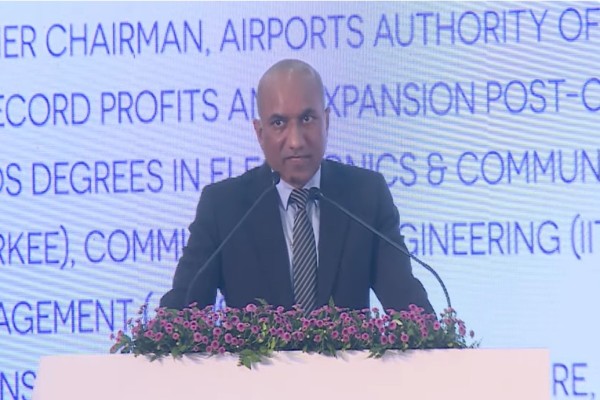
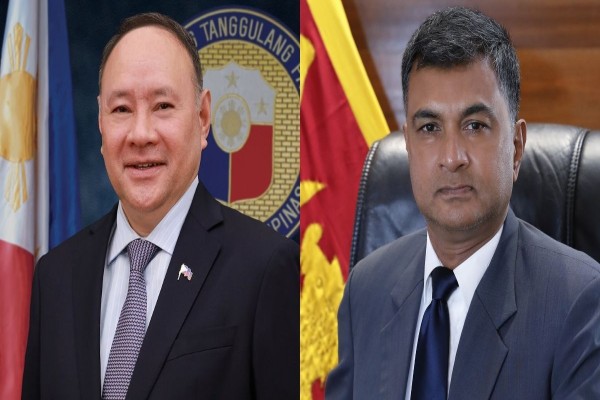
Senior defence officials from Sri Lanka and the Philippines underscored India’s growing role as a trusted and principled partner in the Indo-Pacific at the 10th edition of the Indian Defence Conclave in New Delhi on November 4.
Addressing a distinguished gathering of strategic and defence leaders, both speakers highlighted the urgency of deeper cooperation, resilience, and adherence to international law in an increasingly volatile region.
Delivering a recorded address, Sri Lanka’s Defence Secretary Air Vice Marshal Sampath Thuyacontha described the conclave’s theme—“Future Forward: Building Global Partnerships and Indigenous Strength” — as “not only timely, but visionary”, adding that it “represents a dual imperative for our region: the need to deepen strategic collaboration across borders, while simultaneously cultivating self-reliance through indigenous capabilities.”
He said that in an era defined by “rapid technological evolution, unpredictable geopolitical currents and unconventional security challenges”, this dual approach “is not optional, it is essential.”
Thuyacontha commended platforms like Bharat Shakti for their role in fostering regional understanding and cooperation. “They act as vital bridges between governments, military institutions, industry and civil society, offering a space where informed debate leads to actionable outcomes,” he said.
Describing the Indian Ocean as “a defining arena for global trade, energy routes and maritime stability”, he warned that it had become “a critical battleground where traditional threats like piracy now converge with modern dangers such as sophisticated cyber-attacks, climate-driven crises and evolving asymmetric warfare that defies conventional defence strategies.”
He called for collective responses to shared challenges, observing that “no nation can withstand such challenges alone, but we can overcome them together through cooperation.” The Indo-Pacific, he said, was “home to diverse cultures, economies and security perspectives,” and this diversity “is not a source of division but of strength if we approach one another with mutual respect and open dialogue.”
Highlighting the strategic significance of India–Sri Lanka relations, Thuyacontha said, “Both countries have long served as crossroads of trade, culture and dialogue between East and West. This position gives India and Sri Lanka a responsibility and an opportunity to act as a bridge of peace and cooperation in the Indo-Pacific.”
He reaffirmed Sri Lanka’s commitment to maintaining the Indian Ocean as a “zone of peace, where maritime routes are secure, open and free from conflict.” The goal, he stressed, was to ensure that “the Indo-Pacific is not a theatre of rivalry, but a platform for inclusive growth, security cooperation and shared prosperity.”
Referring to the recently signed India–Sri Lanka Defence Cooperation Agreement of April 2025, he called it “a testament to our shared historical relations and to our collaboration and partnership for the way forward.” The agreement, he said, had matured into a “multi-pillar framework encompassing not just naval security, but humanitarian assistance, counter-terrorism, environmental protection, and cyber security.”
He also cited India’s “inspiring” example of self-reliance through the Atmanirbhar Bharat initiative. “Indigenous strength is not isolation; it is the foundation on which strong, equal partnerships are built,” he said, adding that “local capacity, when fused with international collaboration, ensures both strategic autonomy and mutual interdependence.”
Thuyacontha urged the region to “build ecosystems of trust where data sharing, joint training, technological co-development, and crisis response mechanisms are the norm rather than the exception,” supported by “real political will and institutional frameworks that can adapt to the evolving security landscape.”
In conclusion, he stressed the need for “a harmonious balance between global collaboration and national capability, between advanced technology and time-tested principles and between the vision of a secure region and the hard realities we must navigate together.”
Taking the floor live via video link, Philippine Defence Secretary Gilberto Teodoro Jr. echoed many of the same themes, describing India as a “paradigm of what we should aspire to if we become a power.”
Recalling his earlier meetings with Defence Minister Rajnath Singh, he said India’s conduct was exemplary: “India entered into an arbitration with a much smaller country… and though the outcome was not to India’s liking, it complied with the arbitral ruling to the letter, unhesitatingly and willingly.”
Such behaviour, Teodoro said, was “the kind of spirit and behaviour of a power that every country that evolves into a power should aspire to copy.” He noted that “those that are major powers should have the humility to take a look at [India] and perhaps guide their future actions accordingly.”
Describing the Philippines–India relationship as “a greenfield one, though way too late,” Teodoro said it was now being rediscovered with “enthusiasm, optimism and ambition for our shared goals, particularly for ensuring a free and open Indo-Pacific and upholding international norms.”
He praised India’s leadership in “cementing the applicability of UNCLOS in the international domain” and acknowledged joint maritime activities in the South China Sea “as a way of trust and confidence building.” The Philippines, he said, was proud to be “the first foreign recipient of the BrahMos system,” which “adds considerably to our deterrent posture.”
Beyond defence hardware, Teodoro outlined a broad agenda for cooperation with India in “health care, food security, energy security, connectivity and disaster risk reduction,” adding that India had played a vital role in protecting Filipino seafarers “victimised by crimes at sea and other state and non-state-sponsored actions.”
He said the Philippines was studying “India’s systems to ensure resilience and strategic autonomy” and even revisiting “Cautilian politics” and “the India Way” to better understand how India structures its long-term strategic planning. He also noted interest in how “the BJP has structured its politics to ensure continuity in the operation of a strategic plan for India’s rise economically, socially, while preserving and protecting its interests.”
Teodoro warned that “if a country cannot stand its ground… it will be a disservice to future generations if its leadership were to fall down the easier path of abasement.” Commending India’s example, he said it demonstrated “how we should hold fast our own national resilience and our own projections in the international community.”
He cautioned against attempts “to redefine the world order towards the selfish agenda of irresponsible large powers,” calling instead for a “principled collective movement” led by India and like-minded partners “to resist unilateral attempts to justify oppression or expansionism.”
Concluding his remarks, Teodoro quoted India’s National Security Adviser Ajit Doval, noting his distinction between “individual morality and actions of the state.” Citing Doval’s words that “mutual power creates mutual resistance over time and leads to lasting peace,” he said the Philippines was grateful to India “for helping us bolster our defense capabilities and for serving as an inspiration on how to stand up to a bully.”
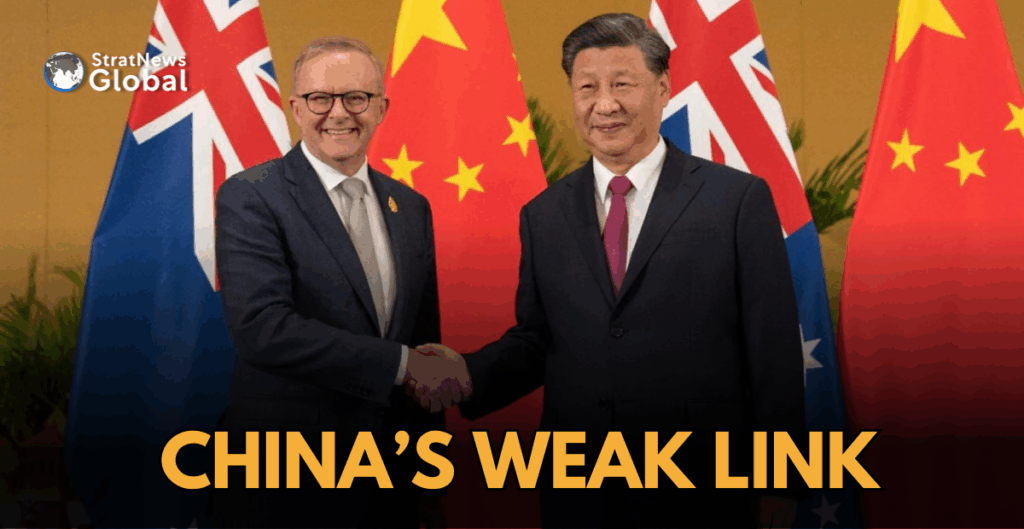
Beijing’s Critical Weak Link: Australian Zirconium
China’s dominance in the global rare earths and critical minerals trade has long been a strategic advantage, but recent investigations by Discovery Alert, Four Corners, Mining News, and ABC News reveal an unexpected dependency — Beijing’s growing reliance on Australian zirconium, a material essential to both civilian nuclear power and advanced weapons development.
Zirconium, commonly found in tiles and ceramics, has evolved into a critical resource for modern defence and energy systems. Its high-purity variant — zirconium sponge — is indispensable in nuclear reactors because it does not absorb neutrons, making it ideal for cladding nuclear fuel rods.
According to Mining News, Australia is the world’s largest producer of zirconium, while China is its leading importer. ABC News data show that Australia supplies about 41 per cent of China’s zirconium imports — a concentration that exposes Beijing to potential supply disruptions in a tense geopolitical environment.
Zirconium’s high melting point (above 1,800°C) also makes it suitable for components in hypersonic weapons — a field where China is accelerating research and deployment. Four Corners reported that once zirconium enters China, its final use is nearly impossible to trace, given the overlap between its civilian nuclear and military-industrial supply chains.
China’s system of military–civil fusion allows materials like zirconium to flow between civilian and defence sectors with little transparency. Four Corners and ABC’s PM program both highlighted concerns that these supply chains may already be contributing to Beijing’s missile and nuclear programs.
Defence analysts cited by ABC warned that zirconium’s role in both nuclear fuel and hypersonic systems makes it a key enabler of strategic capability — and a potential lever in any future supply chain confrontation.
Four Corners further revealed that some zirconium imported by China is being re-exported to Russia, potentially aiding its military-industrial complex despite sanctions. Between February 2024 and February 2025, Chinese zirconium exports to Russia surged over 300 per cent, reaching nearly AUD 70 million. Russian buyers reportedly include CMP, a subsidiary of Rosatom, Moscow’s state nuclear enterprise.
These findings have raised alarms in Canberra and among its allies that Australian-origin zirconium may be indirectly feeding into Russia’s defence sector through Chinese intermediaries.
The revelations have reignited debate in Australia over the governance of critical mineral exports. Mining News and Discovery Alert both noted rising calls for stricter oversight, especially for materials with potential dual-use applications. Canberra now faces the challenge of balancing its role as a leading supplier of critical minerals to China with its security obligations under the AUKUS framework and its broader Indo-Pacific partnerships.
The developments have also resonated in New Delhi, which has been pursuing its own critical minerals strategy to reduce reliance on Chinese processing and secure inputs for clean energy and advanced technologies.
India’s 2023 Critical Minerals Strategy identified zirconium as one of 30 key resources essential for national security, energy transition, and industrial self-reliance. While India possesses limited zircon reserves, it remains dependent on imports for high-purity grades used in nuclear and defence applications.
The revelations from Four Corners and ABC reinforce concerns in India’s policy circles about the strategic vulnerabilities that come from overdependence on opaque global supply chains dominated by China. They also lend urgency to India’s efforts to build direct partnerships with mineral-rich nations such as Australia under mechanisms like the India–Australia Critical Minerals Investment Partnership.
For India, the zirconium episode underscores both opportunity and caution — the opportunity to collaborate with trusted suppliers like Australia, and the caution that even such ties must be managed through robust transparency and export frameworks that guard against diversion to adversarial uses.
As Four Corners concluded, zirconium may not command the same public attention as lithium or rare earths, but it sits at the heart of a rapidly evolving contest over strategic resources. For both Australia and India, controlling access and ensuring traceability of such materials will be key to maintaining autonomy in an era of intertwined supply chains and intensifying geopolitical competition.