

Support us by contributing to StratNewsGlobal on the following UPI ID
ultramodern@hdfcbank

Strategic affairs is our game, South Asia and beyond our playground. Put together by an experienced team led by Nitin A. Gokhale. Our focus is on strategic affairs, foreign policy and international relations, with higher quality reportage, analysis and commentary with new tie-ups across the South Asian region.
You can support our endeavours. Visit us at www.stratnewsglobal.com and follow us on YouTube, Twitter, Facebook and Instagram.
र 500 per month
र 1000 per month
र 5000 per year
र 10000 per year
Donate an amount of your choice
र 500 per month
Donate र 500 per month

र 1000 per month
Donate र 1000 per month
र 5000 per year
Donate र 5,000 per year
र 10000 per year
Donate र 10,000 per year
Donate an amount of your choice
Donate an amount of your choice


Islamabad, Kabul to Resume Istanbul Talks Amid Rising Tensions
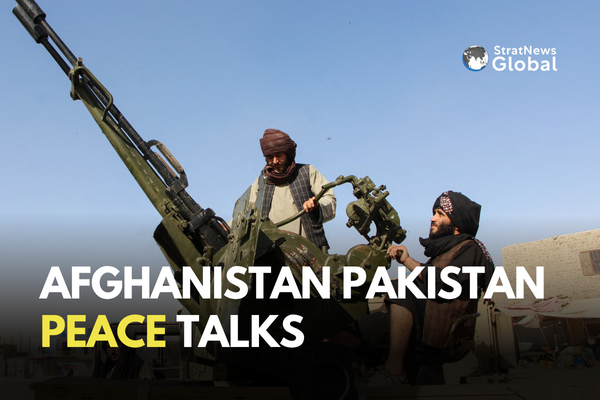
Afghanistan and Pakistan will restart peace negotiations in Istanbul on Thursday, officials from both countries confirmed, following a previous round that ended without progress toward a lasting truce.
Renewed Effort To End Border Clashes
Tensions have escalated between the neighbouring South Asian nations after deadly clashes last month left dozens dead—the worst violence since the Taliban regained control of Kabul in 2021. Both sides agreed to a ceasefire in Doha on 19 October, but talks in Istanbul last week failed to produce a long-term peace deal. The main sticking point remains militant groups based in Afghanistan that Pakistan says are attacking its forces.
“We hope that wisdom prevails and peace is restored in the region,” Pakistan’s Defence Minister Khawaja Asif told reporters on Wednesday. He said Islamabad’s sole aim in the talks is to persuade Afghanistan to curb militants launching cross-border assaults, allegedly with the Taliban’s awareness.
Two government sources confirmed that Asim Malik, head of Pakistan’s military intelligence, will lead Islamabad’s delegation. The Taliban’s intelligence chief, Abdul Haq Wasiq, will represent Afghanistan, according to Taliban spokesperson Zabihullah Mujahid.
Long-Standing Frictions Between Neighbours
While Pakistan once maintained close ties with the Taliban, relations have soured in recent years. Islamabad accuses the Taliban government of sheltering the Pakistani Taliban, a separate militant group that has fought repeatedly against Pakistani forces. Kabul denies the accusation, saying it does not control the group’s actions.
The latest clashes were triggered after Pakistani airstrikes in early October targeted areas around Kabul, reportedly in pursuit of the Pakistani Taliban’s leadership. In response, the Taliban launched attacks on Pakistani military posts along the 2,600-kilometre frontier, forcing the closure of trade routes.
Hopes for De-escalation
Despite the ceasefire, violence has continued, with casualties reported on both sides. The renewed talks in Istanbul aim to prevent further escalation and to rebuild diplomatic and security cooperation between the two countries.
Observers say that while both governments appear keen to avoid a wider conflict, mistrust remains high, particularly over cross-border militant activity.
(with inputs from Reuters)
U.S. Backs Taiwan’s Full Participation In 2026 APEC Summit In China
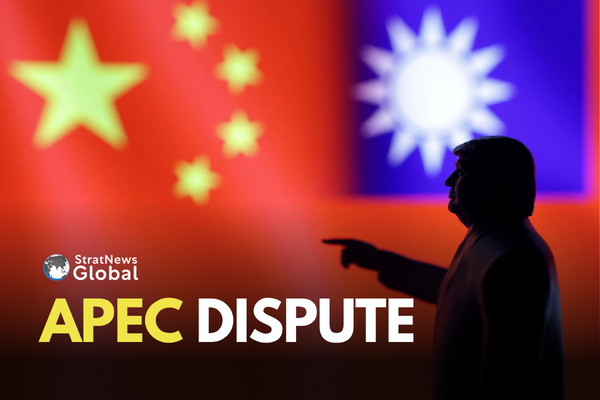
The United States has urged China to ensure Taiwan’s full and equal participation when it hosts the Asia-Pacific Economic Cooperation (APEC) summit next year, following complaints from Taipei that Beijing had imposed excessive conditions on its attendance.
Washington Presses For Equal Participation
A U.S. State Department spokesperson said that all APEC members, including Taiwan known as “Chinese Taipei” within the organisation should be allowed to take part equally in all meetings. The spokesperson emphasised that APEC members had agreed by consensus to China’s 2026 hosting bid and must uphold the principle of equal participation.
“The United States insists on the full and equal participation of all APEC member economies – including Taiwan, referred to as Chinese Taipei in APEC – consistent with APEC’s guidelines, rules and established practice, as affirmed by China in its offer to host in 2026,” the spokesperson said.
The statement followed reports from Taipei that Beijing had “added a lot of conditions” to Taiwan’s involvement in next year’s summit in Shenzhen. Washington also stressed that it would continue to seek security arrangements that protect all participants, including U.S. citizens, during APEC events in China.
Beijing Reaffirms ‘One China’ Principle
China’s foreign ministry responded by reiterating that Taiwan’s participation must comply with the “one China” principle, which asserts that both sides of the Taiwan Strait belong to one nation. Speaking in Beijing, ministry spokesperson Mao Ning said that China would “fulfil its duty as APEC host” and that its position on Taiwan’s participation remained clear.
Taiwan, however, rejects Beijing’s sovereignty claims. Its democratically elected government insists that only the people of Taiwan can decide their island’s future and that China has no authority to represent it internationally.
APEC Tensions Reflect Wider Strains
The APEC summit, scheduled for November 2026 in Shenzhen, will take place amid heightened military and diplomatic tensions between China and Taiwan. The self-governed island is one of the few members of APEC that China claims as its own, yet its involvement in the group has long been a delicate issue.
Taiwan has taken part under the name “Chinese Taipei” since its admission to APEC but traditionally sends lower-ranking representatives instead of its president to avoid political disputes. The last APEC summit hosted by China in 2014 saw warmer cross-strait ties under then-president Ma Ying-jeou. In contrast, relations have deteriorated sharply in recent years as China has increased military pressure around the island.
In 2001, Taiwan boycotted the APEC meeting in China after a disagreement over who it could send, reflecting the political sensitivities that continue to surround its international participation.
(with inputs from Reuters)
Trump Urges Xi To Free Hong Kong Media Tycoon Jimmy Lai
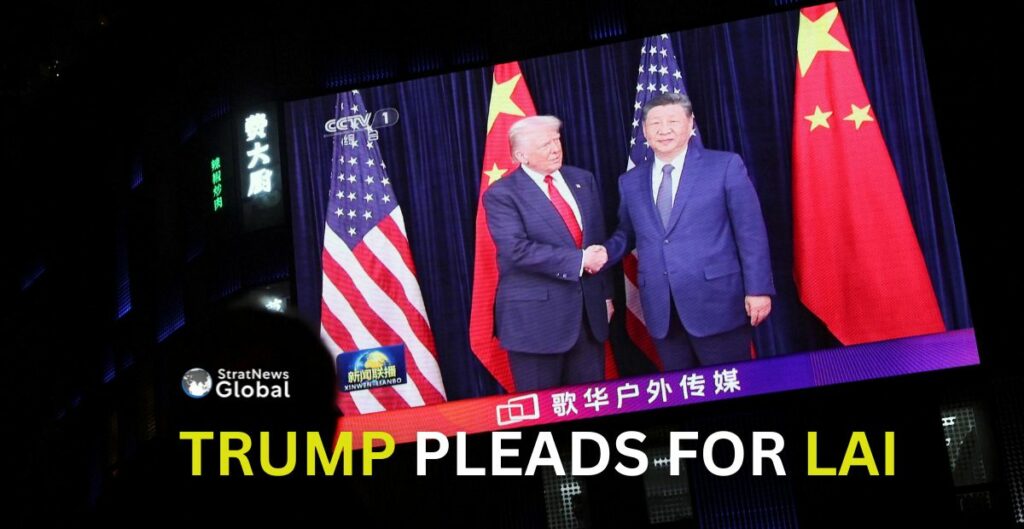
U.S. President Donald Trump urged Chinese leader Xi Jinping to release jailed Hong Kong media tycoon Jimmy Lai during their meeting in South Korea last week, according to three people familiar with the discussions and a U.S. administration official.
During the meeting, Trump briefly raised Jimmy Lai’s case, voicing concern over the 77-year-old Hong Kong media tycoon’s health following his prolonged national security trial, according to people familiar with the talks.
Officials said Xi acknowledged the issue after Trump suggested that releasing Lai would improve China’s image and help U.S.-China relations.
China’s Crackdown
Trump’s direct intervention comes as Lai awaits a verdict after a trial widely seen as a symbol of China’s crackdown on rights and freedoms in the Asian financial hub under a national security law imposed after mass pro-democracy protests in 2019.
Lai, who founded the now-shuttered pro-democracy Apple Daily tabloid newspaper, has pleaded not guilty to two charges of conspiracy to collude with foreign forces, and a charge of conspiracy to publish seditious material.
The U.S. president said ahead of the talks that he planned to raise Lai’s case but neither he nor both sides’ readouts mentioned it afterwards.
Though Lai is a British citizen, his case has been a source of friction between Washington and Beijing, with Trump having said last year during his campaign for the presidency that he would “100%” get Lai out of China.
Broader U.S.-China Talks
Trump hailed the trade-dominated talks with Xi as a success, pointing also to progress on rare earth shipments and promises of “strong action” on the export of chemicals used to produce the highly addictive fentanyl drug. He said tensions over Taiwan never came up in the 90-minute talks in South Korea.
Lai has been held in solitary confinement for more than 1,700 days according to his family and rights groups and is now being held in the maximum security Stanley Prison as he awaits a verdict and sentencing after his trial ended in late August.
(With inputs from Reuters)
Bangladesh Army On Edge As Plans For Referendum Go Forward
“Certain vested groups are carrying out false, fabricated and intentional propaganda. The army is more united than ever before. The responsibilities entrusted to us will be carried out by the army with full commitment.”
Who was senior Bangladesh army officer Lt Gen Mohammad Mainur Rahman taking aim at when he made those remarks at a press briefing in Dhaka on Wednesday?
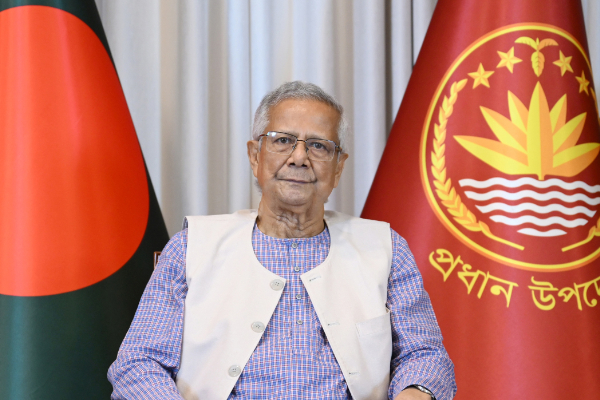
Sreeradha Datta, professor of international relations at Jindal Global University believes Gen Rahman was targeting the interim administration led by Mohammad Yunus and certain other stakeholders.
“The interim administration is seen to be pandering to elements that could delay or even derail the elections proposed to be held in February next year,” she told StratNewsGlobal. “It appears supportive of the Jamaat-e-Islami idea of holding a referendum before the elections. It also has the backing of the students-led NCP (National Citizens Party).”
The referendum seeks safeguards to ensure no future government will be able to rule in an arbitrary or authoritarian manner. It wants curbs on the powers of the executive, electoral reforms, proportional representation and so on.
None of these demands are objectionable. They in fact flow from the fear that minus such safeguards, Bangladesh will descend into another round of authoritarian government, which is what rule by the Awami League was all about.
The BNP has behaved in much the same manner in earlier years when it was in power. But it has no interest in the referendum because its leadership apparently believes that with the Awami League banned from contesting, the election is virtually in its pocket.
For the army, it’s even more black and white: elections are a way out of the current political uncertainty and turmoil.
A report in the Dhaka Tribune quoted Gen Rahman as saying that “We hope the election will bring stability to the country and the law and order situation will gradually improve. The army will return to the barracks after the election.”
Prof Datta suspects Gen Rahman’s remarks contained a hidden warning to the interim administration: in Jan 2007 the army stepped in to topple the caretaker government of Iajuddin Ahmad who had earlier served as Bangladesh president under prime minister Khaleda Zia.
At that time the army feared the election would be neither free nor fair given that Ahmad’s political loyalties were with Khaleda.
“That caretaker government lasted nearly two years,” Prof Datta noted, “and it was seen in many circles as an army takeover. It carried out a major anti-corruption drive before holding democratic elections in Dec 2008.”
Could the army repeat that? Gen Rahman’s remarks suggest that with the Jamaat stepping up its pro-referendum campaign, this issue may have figured at the highest levels of the army including the chief Gen Waker-uz-Zaman.
The Jamaat plans to hand over a memorandum on this issue to the leader of the interim administration, Mohammad Yunus on Thursday. It has also called for a rally to be held on Nov 11 to press its demand.
Why is the Jamaat keen on a referendum when it is widely expected to do well in the elections? Some estimates indicate it may win 70 or more seats in parliament. It has deep pockets with each cadre handing over a percentage of his salary to the Jamaat. Add to that money from the Bangladeshi diaspora.
The Jamaat is probably haunted by its mediocre past performance despite its ability to mobilise thousands of supporters. That is also testament to the discipline with which its cadres behave in contrast to those of the BNP, with media reports accusing them of intimidation and extortion.
The BNP’s situation reflects lack of leadership. Khaleda’s son Tarique Rahman is yet to make an appearance on home soil. His return could help bring the cadres back in line. But in his absence, middle level leaders are handling issues as best as they can.
The BNP is seen as hardly different from the Awami League when it comes to how its cadres behave. If the BNP does win the elections, politics may reflect those of the Awami League days. That would be the ultimate irony.
China Sets Up New Debt-Management Body To Oversee Borrowing
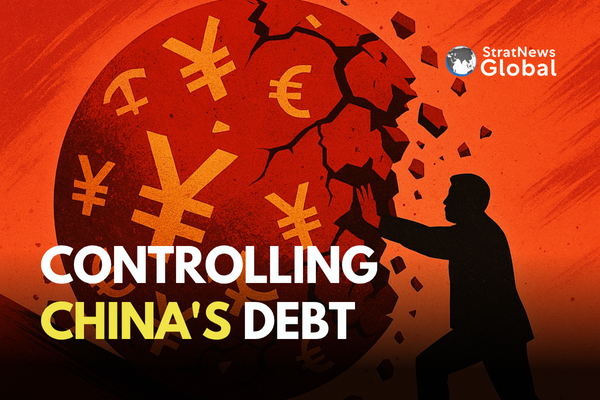
China has set up a debt-management department that will oversee borrowing by central and provincial governments, set debt ceilings, and police the murky world of liabilities generated by local government financing vehicles (LGFVs).
It is headed by Li Dawei who was until recently in charge of a government debt research and rehabilitation body.
Recall that last year the Chinese government had issued a 1.1 trillion debt-relief package to ease funding pressures on cash-strapped provinces and shore up flagging growth. The package underscored Beijing’s consolidation of the purse strings.
“Since the 1994 tax reforms, local governments can neither introduce new taxes nor alter rates without Beijing’s approval,” says China scholar Amit Kumar of the Takshashila Institution. “Even their borrowing quotas are centrally assigned. This new department merely reinforces that existing control.”
The department will streamline oversight and improve administrative efficiency, not to rewrite fiscal power equations. It sends out the clear message that fiscal risk management is now front and centre in Beijing’s economic strategy.
Old Problem, New Structure
“Tackling local debt has been a central government priority for over a decade,” Kumar noted, adding that “Audits began in the early 2010s, and multiple reforms followed after 2014. This is not a sudden pre-emptive measure; the leadership knows the scale of the problem. The challenge is that the debt mountain is simply too vast to dismantle quickly.”
Finance Minister Lan Foan has pledged to enhance debt-management mechanisms over the next five years to support “high-quality economic development”.
But the underlying message is clear: the age of easy local borrowing is ending, and Beijing intends to keep every yuan of public debt under its watchful eye.
Defence Startups Push for Speed as Russia Moves In
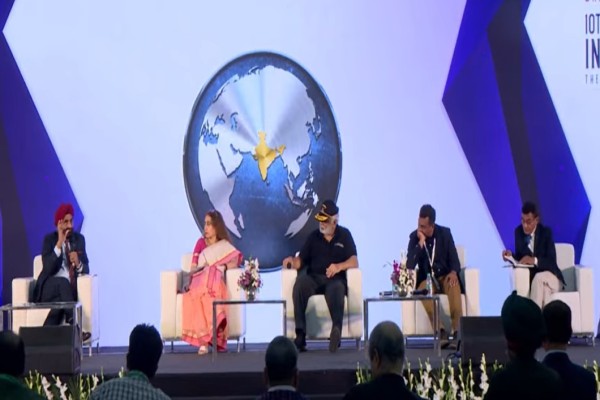
The tension between innovation and inertia was on full display at the India Defence Conclave in New Delhi, where Indian entrepreneurs and global collaborators urged a radical rethink of how India buys and builds military technology.
The session on “Ease of Business and Speed of Acquisition” brought together officials and industry veterans, but it was the voice of Sanjeev Kulkarni, a Silicon Valley technologist turned defence investor, that cut through with blunt clarity. “Our biggest enemy is time,” he said. “Every month of delay in signing a contract kills innovation.”
Kulkarni, CEO of Optimus Logic and founder of SessionAI (USA), said India’s defence procurement system must evolve to reflect the rapid tempo of modern technology. His company, which developed India’s first 5G handset, now builds secure communication systems for defence and dual-use industries. “In our world, chipsets and components have short lifespans. If trials take two years, the technology we’re evaluated on is already obsolete,” he warned.
The discussion came as Innopraktika, a Russian innovation body, announced plans for a technology hub in India in partnership with the Chamber for Indo-Russo Technology Collaboration (CIRTC). The hub will serve as a bridge for Russian IT and AI firms to enter the Indian market and co-develop high-tech products with local partners.
Its stated aim is to help India achieve “technological sovereignty” by reducing reliance on Western technologies and nurturing indigenous innovation. Among its planned objectives are bilateral research exchange, standardisation of AI and digital technologies, and support for start-ups on both sides. “This is not just about market access,” one industry official said. “It’s about aligning two technology ecosystems that are looking for autonomy.”
Kulkarni, who has advised and invested in both Indian and international defence start-ups, welcomed such collaborations, provided they fit into India’s self-reliance framework. “What we need is not isolation, but intelligent partnership,” he said. “If Russia or anyone can help Indian companies build core tech here—chipsets, AI, secure software—that’s good for our sovereignty.”
But even as new partnerships emerge, domestic bottlenecks persist. Kulkarni pointed out that while India’s defence manufacturing has doubled in six years, procedural slowdowns still drain momentum from start-ups. “We can’t move at the speed of the private tech sector globally if we’re waiting months for file movement,” he said.
He urged the government to prioritise speed and scale in contract awards, calling them “lifelines for small innovators”. Without such support, he warned, India risks losing the very start-ups it seeks to empower under Atmanirbhar Bharat.
Supporting his view, Air Marshal (Retd.) S.B. Deo, now head of JSR Dynamics, said funding remains the weakest link. “MSMEs can’t bootstrap missiles or drones. You need debt, but banks still see defence as risky. Even a ten-day delay can destroy cash flow,” he said, adding that the system must eliminate conflicts of interest between state-run entities and private developers.
Admiral Vashishta, formerly with the Navy’s quality assurance wing, echoed this sentiment. He argued that rigid specifications and lack of accessible test facilities often hold back indigenous innovation. “If a product meets 98% of functional requirements and is safe, it should be accepted as Version 1. Otherwise, nothing moves forward,” he said.
Responding to the criticism, Dipti Mohil Chawla, Additional Secretary, Ministry of Defence, defended the need for procedural safeguards.
“Procedure is not the villain—it is the backbone of transparency,” she said, adding that DAP 2025 would embed faster testing cycles, parallel trials, and third-party certifications to reduce delays. “We are committed to both spectrums — the industry and the armed forces. DAP 2025 will not be about paperwork; it will be about performance,” she told the audience.
Moderator Rajinder S. Bhatia, head of Defence Business at Kalyani Group, summarised the discussion: “The acquisition cycle cannot be longer than the technology development cycle. If it is, you end up buying yesterday’s tech for tomorrow’s wars.”
By the session’s close, the consensus was unmistakable: India’s procurement ecosystem must evolve to match the pace of innovation. The convergence of policy reform, start-up demand, and international collaboration — symbolised by the planned Indo-Russian tech hub — signals a turning point. For entrepreneurs like Kulkarni, the hope is that DAP 2025 will finally connect India’s aspirations for self-reliance with the reality of global technology cycles. “We don’t want to import innovation,” he said. “We want to build it here—faster.”
India Now Aims To Engage Ecuador, Bolivia, Cuba
India is set to strengthen its engagement with Latin America and the Caribbean (LAC) through an official visit to Ecuador, Bolivia, and Cuba from November 4 to 10, 2025.
The visit, led by Minister of State for External Affairs Pabitra Margherita, aims to boost cooperation in trade, technology, critical minerals, and development partnerships.
The Ministry of External Affairs said the visit reflects India’s growing focus on the LAC region as part of its South–South Cooperation strategy, which promotes collaboration among developing countries and enhances access to key natural resources supporting India’s clean energy transition.
In Ecuador, discussions will review bilateral cooperation in trade, investment, health, and education, and take forward preparations for the opening of a resident Indian Mission in Quito. Ecuador’s Pacific coastline and its potential in energy and technology make it a strategic partner in India’s outreach to the Andean region.
The visit to Bolivia will include participation in the inauguration of the newly elected President of the Plurinational State of Bolivia in La Paz on November 8, 2025. Bolivia holds some of the world’s largest lithium reserves, primarily in the Salar de Uyuni salt flats, and has emerged as a key partner in India’s Critical Minerals Mission.
India and Bolivia signed an MoU on cooperation in lithium and other minerals during the 2019 visit of former President Ram Nath Kovind, laying the groundwork for sustained collaboration in resource development. Bilateral trade, currently estimated at USD 120–150 million, includes Indian exports of pharmaceuticals, automobiles, and machinery, and imports of minerals, gold, and agricultural products.
Bolivia’s full membership in MERCOSUR—the regional trade bloc comprising Argentina, Brazil, Paraguay, and Uruguay—offers new avenues for regional market access and industrial partnerships. For India, this development expands opportunities to integrate with South American value chains and pursue technology-driven collaboration in mineral processing and manufacturing.
In Cuba, the discussions will centre on cooperation in pharmaceuticals, biotechnology, health, digital public infrastructure, and capacity building. The visit coincides with the 65th anniversary of India–Cuba diplomatic relations, a partnership rooted in friendship and shared developmental priorities.
Cuban Ambassador to India Juan Carlos Marsán said the visit would reinforce political ties and broaden cooperation in sectors such as pharma, biotechnology, AYUSH, IT, and tourism, following recent exchanges between leaders of both countries.
Ecuador, Bolivia, and Cuba represent three distinct pillars of India’s Latin American engagement—economic diversification, critical mineral access, and development cooperation—underscoring New Delhi’s intent to strengthen regional partnerships across the Global South.
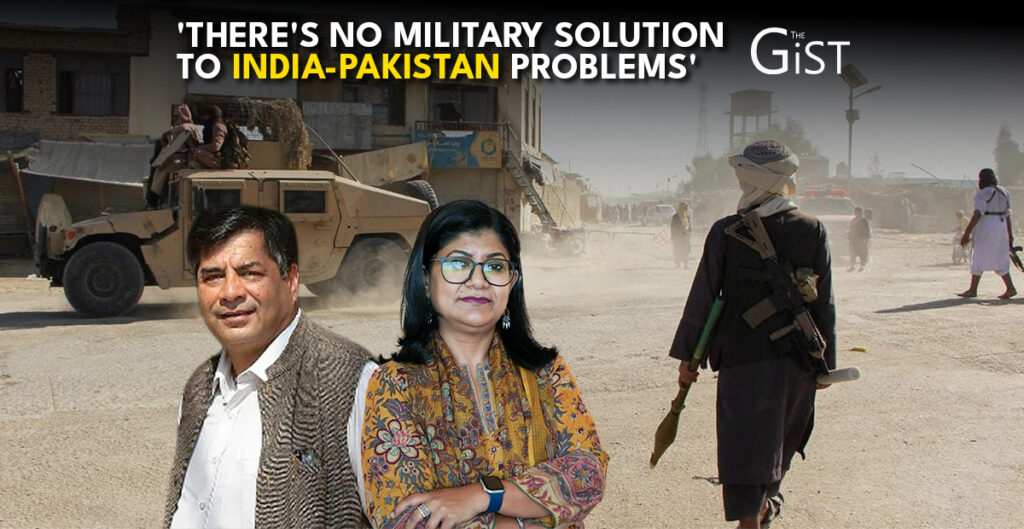
India-Pakistan Ties At Zero Point, Says Ex-Envoy TCA Raghavan
Pakistan and Afghanistan, through the good offices of Turkey and Qatar, are currently maintaining a temporary truce, but the former’s exasperation over how the Taliban has turned on them is evident, says T.C.A Raghavan, former Indian High Commissioner to Pakistan.
Raghavan, who also headed the Pakistan-Afghanistan-Iran Division in the Ministry of External Affairs, told StratNewsGlobal that “There is a definite increase in the kind of actions which the TTP (Tehreek-e-Taliban) is undertaking. The figures coming out of Pakistan show that in 2024 and 2025, the number of incidents or TTP-related terrorist attacks or militant attacks was possibly the highest in the last decade.”
“The Pakistanis obviously feel the pain of losing personnel or facing constant attacks. They may be tactical, but nevertheless a series of attacks saps morale of any country, and particularly of the Pakistan military and their security forces, which has been facing the brunt of these attacks.”
Raghavan, who represented India at the Moscow format peace talks on Afghanistan in 2018, also said that Pakistan is unable to come to terms with the reality that the Taliban has turned against them.
“They still haven’t got over the fact that the Taliban, which was their creation and which they nurtured and in fact, took a lot of policy risks, vis-à-vis the Americans, they find that something which they have created has now turned against them.”
He also said, “This exasperation also makes them undertake even more intense actions, including airstrikes. And, their pointing the finger at India or blaming India emerges out of that same sense of exasperation and anger that they are, in fact, caught in a situation to which they have no real policy solution themselves.”
‘Zero Ties With Pakistan’
The India-Pakistan relationship, he said, stands at “zero” with only “bare bones” left of formal diplomatic ties. He said especially after the Pahalgam attacks both sides have stopped talking completely and currently both Afghanistan as well as India see Pakistan in adversarial terms.
“While to some extent there was a stabilization (post 2019 Pulwama attacks) it is now clear that it was a very fragile kind of stability… And so we are now in the low point of a fresh crisis situation and there is really no saying how long this will last,” Raghavan warned.
“But one thing is very clear that this situation will not go on indefinitely because, like all other India-Pakistan issues there, there’s always a cyclical pattern. So this situation will change, but I don’t think anyone can reasonably predict when and how it will change.”
Pakistan downgraded diplomatic ties after India changed the status of J&K. and the high commissioner was withdrawn.
“What is important is the kind of longer term policy position you are taking. At present, it looks to me that we are not in a frame of mind of looking at longer term policy positions. But we are really in a short-term tactical mode. This is because of the constant threat of further terrorist attacks,” Raghavan said.
But “there is no military solution to India-Pakistan problems. At some stage, both countries will have to think about medium and longer term approaches. Because, the short-term, highly securitized approaches are effective but only effective in the short-term. They leave you without a longer term trajectory and direction.”
Will Africa’s Resources Quench Global Critical Minerals Demand?
As global powers scramble for critical minerals, African countries are pushing for new investment to process more of their own raw materials and meet their people’s demands for economic growth and jobs, analysts say.
To capitalise on the burgeoning demand, the continent must address power shortages, skills gaps, trade barriers, and limited industrial capacity.
“This is an unprecedented opportunity for Africa to get on the value-chain bandwagon,” said Hany Besada, senior fellow at the Firoz Lalji Institute for Africa at the London School of Economics and associate professor at the Wits School of Governance.
Africa has around 30% of the world’s mineral reserves, including cobalt, lithium, and nickel.
The International Energy Agency expects lithium demand to grow fivefold by 2040, graphite and nickel demand to double, and demand for cobalt and rare earth elements to increase by 50% to 60% by 2040.
African Resources
Africa needs to “build local value chains that integrate mining with refining and manufacturing and innovation, and this goes hand-in-hand with the green transformation of the continent’s economies,” Besada said.
For example, Zimbabwe, Africa’s top lithium producer, has been nudging mining companies to process the minerals in the country to help lift its economy.
“We are creating new jobs, not only in the mining sector, but in the value addition of our minerals,” Evelyn Ndlovu, minister of environment, climate, and wildlife, told the Thomson Reuters Foundation. “We have got a lot of people coming in to invest in Zimbabwe.”
China’s Zhejiang Huayou Cobalt said in October it would start producing lithium sulphate during the first quarter of 2026 from its new $400 million plant in Zimbabwe.
At the United Nations’ COP30 climate talks in Brazil in November, African countries hope to win support, especially from the Global South, to ensure demand for the minerals fuelling the digital economy and clean energy transition translates into growth, jobs, and development.
Africa “wants to be a meaningful participant and beneficiary of the green economy,” said Ibrahima Aidara, deputy Africa director at the National Resource Governance Institute.
“That means an industrial policy that creates jobs, protects rights, and enables countries to climb the value chain and not be trapped at the bottom.”
Hurdles For Africa
Aidara pointed to the Democratic Republic of Congo, which supplies 70% of the world’s cobalt, as an example of a country where mineral wealth has led to child labour, displacement, and armed conflict.
Across Africa, barriers to mineral processing – called beneficiation – include a lack of electricity, high tariffs between African countries, infrastructure gaps, and cumbersome customs procedures.
“Addressing barriers to trade is critical … If you don’t do that, efforts towards (mineral) beneficiation and industrialisation remain aspirational,” Besada said.
Regional cooperation is also key, including initiatives like the African Continental Free Trade Area (AfCFTA), designed to unify all 1.4 billion people in more than 50 nations into a single market.
Tariff Push
U.S. President Donald Trump’s imposition of tariffs could give momentum to the AfCFTA, which was officially launched in 2021 but has less than half of its member states actively trading under the framework.
The African Union’s Green Minerals Strategy, launched this year, and the Lobito Corridor railway, which connects Zambia’s copper belt to Angola’s Atlantic coast, are examples of cooperation that can help make Africa more than a mere supplier.
In West Africa, the minerals boom has sparked a resurgence of resource nationalism, with countries, particularly military regimes like the one in bauxite-rich Guinea, imposing conditions on foreign mining companies to force value addition.
But Aidara said this approach might not ensure lasting benefits to local communities.
“This problem … is bigger than individual countries. We believe at the national level we need … well-defined and evidence-based strategies to leverage minerals and create more economic and industrialisation opportunities.”
(with inputs from Reuters)
Vietnam Pushes Private Sector to Drive Economic Growth
Two days after Vietnam’s top leader urged private firms to take a greater role in national infrastructure, major conglomerate Vingroup announced plans to invest $70 billion in developing a high-speed railway and manufacturing the trains for it.
The appeal from Communist Party chief To Lam was part of a broader push outlined in Resolution 68, a development roadmap unveiled in May that analysts have dubbed “Doi Moi 2.0”, referencing the 1980s reforms that transformed Vietnam’s economy.
The high-speed railway, Vietnam’s most expensive infrastructure project, has emerged as a test case — and a source of financial stability concerns flagged in rare instances of explicit criticism by the central bank and finance ministry in documents seen by Reuters.
Party Offers Preferential Policies To Private Firms
The Communist-run country aims to make the private sector the key “driving force” of the economy under the state’s “leading role”, according to a party document released in October.
To achieve that, it wants more private Vietnamese companies to have a global footprint and is willing to favour their involvement in strategic projects with incentives and “preferential policies”, such as “limited bidding or direct contracting”, according to Resolution 68.
Investors Remain Cautious
Hong Sun, honorary chairman of the Korean Business Association in Vietnam, says the country wants “chip-to-ship” corporations, citing South Korean chaebols as models.
Overseas investors have been cautious. Investment pledges fell 5% in the five months after Resolution 68 was issued compared to the same period last year, and foreign cash has continued to exit the stock market despite a rally, with foreign ownership of Vietnamese shares down to around 15% of the total from 16% in May.
Many investors express support for the party’s declared intention to boost the private sector, but others worry about transparency and favouritism.
(With inputs from Reuters)