

Support us by contributing to StratNewsGlobal on the following UPI ID
ultramodern@hdfcbank

Strategic affairs is our game, South Asia and beyond our playground. Put together by an experienced team led by Nitin A. Gokhale. Our focus is on strategic affairs, foreign policy and international relations, with higher quality reportage, analysis and commentary with new tie-ups across the South Asian region.
You can support our endeavours. Visit us at www.stratnewsglobal.com and follow us on YouTube, Twitter, Facebook and Instagram.
र 500 per month
र 1000 per month
र 5000 per year
र 10000 per year
Donate an amount of your choice
र 500 per month
Donate र 500 per month

र 1000 per month
Donate र 1000 per month
र 5000 per year
Donate र 5,000 per year
र 10000 per year
Donate र 10,000 per year
Donate an amount of your choice
Donate an amount of your choice
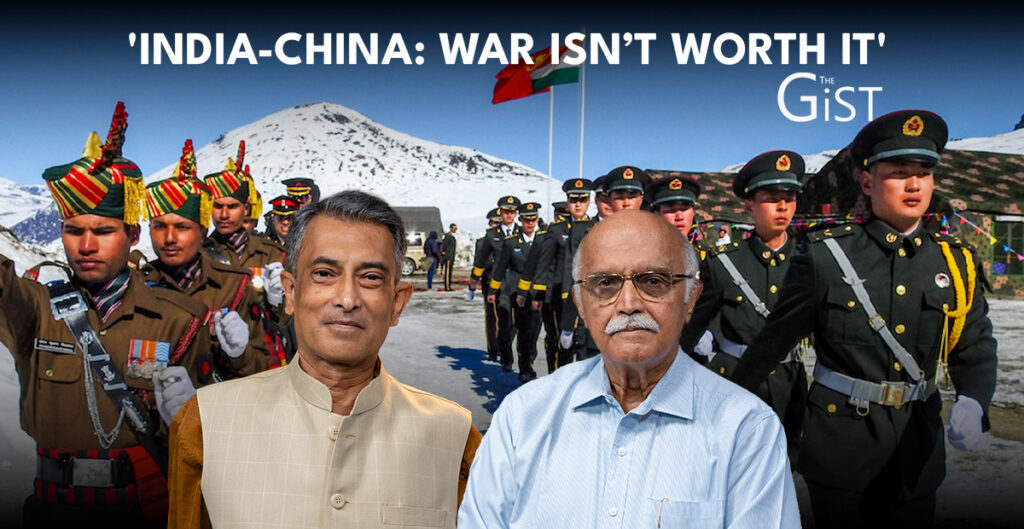



‘We Are Two Big Powers — We Must Learn to Coexist’
Former intelligence officer and author Vappala Balachandran believes India and China must “learn to coexist” as two major Asian powers, setting aside their political differences to focus on peace, trade and regional stability.
Speaking to StratNews Global about his new book, India and China At Odds In The Asian Century (2025), Balachandran said his key message was that relations between the two civilisations had historically been rich and respectful, far from the current tension. “From prehistoric times, India and China had excellent relations — cultural, religious and intellectual,” he said, recalling ancient figures like Kashyapa Matanga, Kumarajiva, and Bodhidharma who shaped Buddhism in China and are still honoured there.
He said modern ties, too, had moments of “Sakura”—a Japanese term for cherry blossom, symbolising harmony. “Till 1959, Indo-China relations were in the Sakura season,” he noted, adding that the spirit of cooperation continued until the Pokhran-II nuclear tests in 1998, when Atal Bihari Vajpayee’s leaked letter to U.S. President Bill Clinton “brought that season to an end.”
Balachandran defended Jawaharlal Nehru’s China policy, arguing that the first Prime Minister “understood China very well.” “He was pragmatic. He knew India could not afford a war. We had just faced Partition,” he said.
While acknowledging border tensions, he said both sides must avoid military confrontation. “If there is a war tomorrow with China, we might even win. But is it worth it? If we can have an accommodation and keep the border issue in cold storage, that is preferable,” he said.
He emphasised that at a people-to-people level, relations remain cordial, citing examples of Indian businessmen flourishing in China. “They do not hate Indians. They just don’t know enough about us,” he remarked.
On the Quad, Balachandran clarified that it was “never meant to be a military alliance.” As for U.S. policy, he dismissed the idea that Washington ever saw India as a counterweight to China. “America never really believed that,” he said. Besides, “We have our own pride — we are not a pliable ally.”
Balachandran received the Lifetime Achievement Award for National Security at the India Defence Conclave in New Delhi in November 2025.
Sheikh Hasina Grateful For India Safe Haven, Lashes Out At Mohammad Yunus
Former Bangladesh prime minister Sheikh Hasina is “deeply grateful to the Indian people for providing me with a safe haven this past year.”
Hasina who fled Bangladesh for India last August in the wake of massive public protests against her rule, has been living quietly in Delhi at an undisclosed location. Breaking her silence, she gave written replies to questions from the Hindustan Times.
She was clear that the policies of the interim government of Mohammad Yunus were to blame for the friction with India.
“If there is friction between India and Dr Yunus’ unelected administration, that has nothing to do with me and everything to do with the chaotic, violent and extremist policies that are taking shape under Dr Yunus’ rule. That includes physical and judicial attacks on religious minorities, retrograde social and religious policies and even hostile rhetoric towards India from officials in Dhaka.”
In her view, such hostility did not “sit comfortably” with most Bangladeshis given deep and broad cross-border connections and Dhaka’s status as a reliable partner. She was critical of the electoral ban placed on the Awami League.
“There can be no hope for democracy,” she warned “when the country’s oldest political party the Awami League is banned from participating. The ban is a violation of Bangladesh’s constitution and the fundamental democratic rights of Bangladesh’s 173 million people.”
The ban, she said, will result in many people not voting in the elections scheduled for next February. She indicated the ban will be challenged “diplomatically and peacefully”, noting that her party has never seized power through unconstitutional means.
The next government, she said, would not have any electoral legitimacy if the ban stays in place and urged “free, fair and inclusive elections.”
She rejected accusations that she was personally to blame for the loss of lives in the chaotic days preceding her flight to India.
“To suggest that I was directing minute-by-minute tactical responses from the prime minister’s office is to fundamentally misunderstand how security forces work. At no point did I authorise security forces to fire on crowds.”
She said these allegations had been brought against her by an unelected regime intent on silencing its main political opponent. She recalled that in the days following the first deaths, she had ordered an independent inquiry, which the Yunus administration had quickly dismantled.
Referring to the charges against her of crimes against humanity and the ongoing trial by a tribunal in Dhaka, Hasina urged that “a fair and independent judicial body like the International Criminal Court has to step in to identify and verify present day abuses and hold the Yunus regime accountable.”
She termed as “disgraceful”, Yunus “consistent denial of violence that still targets Hindu, Buddhist, Christian, indigenous communities,”and pointed to “rising extremism and sectarian violence in day to day life.”
She targeted Yunus for corruption, wondering how a man “Who began his career with Grameen Bank with a salary of only 6000 taka, how did he amass such vast wealth … today he is said to hold fixed deposits worth 5,000 crore taka across multiple accounts.”
She regretted that Bangladesh, which was leaving behind its LDC status, had been downgraded by the IMF multiple times in the past year with key development initiatives delayed and ties with India strained by short-sighted policy shifts.
Germany II: Welcoming Indian Workers But Not Accepting Them
In the second and final part of our series on the impact of immigration in Germany, the author looks at the experience of Indians.
For the first part click here: https://stratnewsglobal.com/europe/germany/germany-i-asylum-seekers-refugees-driving-anti-foreigner-sentiment/
After World War II, as the then divided German nation (a capitalist west and a communist east) rebuilt, West Germany found itself in need of industrial labour. About 300,000 workers were needed annually to operate the country’s factories. They were brought in from abroad under a ‘guest worker’ scheme, wherein foreigners could work in Germany for a number of years, after which they were expected to go home.
Approximately 14 million such workers came to Germany in the 1960s. Eleven million left in 1973 when their roles were terminated, while three million stayed. Their children, even if born in Germany, did not automatically receive citizenship. Until 2000, it was not possible for immigrants without German ancestry to be naturalized.
That year, a provincial German politician caused a furor. In opposition to the federal government’s proposal to bring in 20,000 foreign IT-workers from, among other places, India, he coined a slogan: ‘Kinder statt Inder’ (‘Children instead of Indians’).
He argued that instead of addressing the failure of Muslim assimilation into German society, the country was adding Hindus into the mix. The solution to a shortage of computer experts, he suggested, was to invest in technical education for German children rather than importing foreign workers.
While sensationally worded and likely offensive, the sentiments expressed — create local talent rather than patch over capability shortfalls with hired foreign labour — might not have been totally nonsensical.
Germany has come a very long way in the last 25 years, in terms of assimilation. Not only skilled workers, but even some of the refugees who entered the country in 2015 have become citizens, having learnt the language and found jobs. One sought election to the Bundestag, before racist threats forced him to withdraw.
Those who follow German politics would hardly be surprised: borrowing from the guest worker example, the country can be welcoming, but not necessarily accepting. A guest whose stay is fixed-term and decided by a local employer can be welcomed. A migrant (in the general sense of a foreigner who wishes to stay for several decades, with unrestricted access to the labour market) might struggle to be accepted.
Racism for example, forced Germany’s first Africa-born black parliamentarian to resign in 2024. Strangely, just the previous year, a Syrian refugee was elected mayor of a village. Explaining this incongruity might come down to levels of visibility and impact: a local election is less central to one’s sense of a ‘national identity’, defined by cultural heritage and ethnicity. A federal election suggests an intrusion of wider foreigners into the seat of long-term policy-making.
Just because one is successful at winning over one’s immediate neighbours does not mean one can sprinkle magic dust and charm those dark corners of cyberspace where extreme and exclusionary ideas propagate.
German police noted in early 2025 that there had been a year-on-year increase in the number of online hate speech offenses. With India now being the fifth-largest net source of migrants to Germany, and the largest source of economic migrants (the first four are primarily countries from which asylum-seekers originate), there is cause for both celebration and concern.
In 2022, Germany and India concluded a Migration and Mobility Partnership Agreement. This aims to enable the movement of a minimum of 3000 professionals from India to Germany annually. In the two decades, the number of Indians living in Germany has risen seven-fold, from 40,000 to 280,000, with a sharp rise occurring in the last ten years, from 86,000 in 2015.
The Indian presence in Berlin has increased more than ten-fold from 3500 in 2015 to 40,000 at the start of 2025. German media coverage of this trend has been generally positive, but it is unclear whether the publicity being given to Indian migration will provoke a backlash.
In 2015, German media coverage of Indian workers in the country tended to be of an instrumental nature: how much their presence would benefit the German economy. The workers’ own views and experiences were less important. This calculus has not necessarily changed.
Some Indians who emigrated to Germany are considering moving to other countries due to the ongoing rise of anti-immigration sentiment in German society. Initially finding the country a good place to launch their careers, they seem to have encountered obstacles to career advancement thereafter.
Financially, the rewards are good: Indians are the highest-earning foreign professionals in Germany, with average incomes of 5,359 Euros per month. The next highest are the Americans, who earn 5095 Euros per month.
However, any talk about Indians being a model minority in Germany should be accompanied by a reminder of what happened in the US. There too, the high academic standards and strong work ethic of Indian professionals were celebrated for many years.
But once right-wing populism gripped American political discourse, the Indian-origin population ran for cover. They were viewed not as economically-productive assets but as ‘job stealers’. Their success was the object of envy, and their numbers and financial heft insufficient to protect them.
Reports of the German labour minister telling Indian science students at an event in Berlin, ‘Please stay Germany needs you’, might be soothing to read but they do not change broader societal attitudes. A survey has found that over half of foreign workers living in Germany (not only Indians) had faced discrimination in the real estate market, and over a third experienced it in public spaces.
Other studies have shown that school students with Turkish names tend to be awarded lower scores than students with German names, even when both have the same levels of academic achievement.
Asians especially are not recognized in Germany as being at risk of racist treatment. This means there are few institutional efforts to deal with the problem. As Indians become more numerous in German society, and some aspire to prominence in their local communities, they might experience what their compatriots in the US have faced.
Resentment Amidst Polarization
In 2024, German police registered a 48% rise in crime committed by right-wing activists and a 28% rise in crimes by left-wing activists. The year had a total of 84,000 politically motivated crimes, which was the highest since record-keeping began in 2001. Polarization means that across the political spectrum, extremist ideas are gaining ground and validating the need for each other.
Angela Merkel’s decision to let refugees into Germany in 2015 was a context-specific decision. Four days before she said ‘Wir schaffen das’, a meat truck filled with the decomposing bodies of 71 migrants was discovered in Austria. They had fled conflicts in either Afghanistan, Iraq and Syria. Angela Merkel said her counterparts in Vienna were ‘shaken by this terrible news’.
Her decision to permit entry to migrants was initially seen as a humanitarian reaction. But it also subtly positioned Germany as a moral leader for all Europe. By engaging in virtue signalling, Merkel enabled her country, which had long been self-effacing of its growing importance in European affairs, to take the lead in shaping continent-wide debates.
Alongside French President Francoise Holland, she told the European parliament on 7 October 2015 that ‘pan-European challenges are not to be solved by a few member states on their own, but by all of us together’. In so doing, she staked a claim to European leadership, which was unexpectedly strengthened the following year when Britain opted to exit the EU, leaving France and Germany as key powers inside the bloc.
This increased geopolitical and intellectual prominence has not been without cost. Germany received a third of all first-time asylum applications in the EU, and has been the favoured destination for asylum-seekers over the last decade. By the end of 2024, the number of refugees in Germany had more than quadrupled from 750,000 in 2014 to 3.3 million.
The German economy was the only one among the G7 that failed to grow for two consecutive years in 2023-24, having instead contracted. Its international soft power appeal has not been enhanced by Merkel’s decision, but rather dented because of a sharp increase in racially-motivated discrimination.
Worst affected have been black Africans. By 2023, Germany had the highest rate of increase in anti-black discrimination, with blacks thrice as likely to be unemployed as native Germans.
It would be incorrect to say that there is no middle ground in Germany between xenophobes and xenophiles. One survey found an almost resigned acceptance of the fact that Germany was bound to become more ethnically diverse, but this acceptance was accompanied by concerns over how the country’s traditional identity could be preserved.
As long as crime remains a serious public concern, public anxiety about cultural change will be reinforced by deeper, more visceral fears about personal safety. Such a grim reality cannot be wished away by sloganeering.
Prem Mahadevan is Senior Analyst, Global Initiative Against Transnational Organized Crime, Switzerland
Who’ll Fund Trump’s Grand Nuclear Revival?
The United States has unveiled what analysts describe as its most ambitious government-backed nuclear-energy expansion in decades, coupling trade and investment diplomacy with large-scale industrial mobilisation.
The development, analysed in the Critical Questions segment of the Center for Strategic and International Studies (CSIS) by Ray Cai, Jane Nakano and Joseph Majkut, marks a pivotal moment in U.S. energy and industrial strategy. Their report details how two cornerstone initiatives — a $550 billion U.S.–Japan investment agreement and an $80 billion partnership with Westinghouse Electric Company — could redefine the country’s approach to nuclear power.
In a parallel strategic move, President Donald Trump has also signalled his intention to resume nuclear explosive testing—a decision that, according to the International Institute for Strategic Studies (IISS), could mark “a return to an unstable nuclear age.”
In his recent analysis IISS Senior Fellow Dr Daniel Salisbury warns that restarting testing “on an equal basis” with other major powers would reverse nearly three decades of U.S. adherence to the global testing moratorium and risk unravelling arms-control norms. The institute notes that such a step would have implications far beyond deterrence, likely prompting reciprocal testing by Russia, China, and possibly emerging nuclear states.
If implemented, this shift would represent the most consequential break from the post–Cold War nuclear consensus since the 1996 Comprehensive Nuclear-Test-Ban Treaty (CTBT). The IISS cautions that the move could reintroduce competitive test-based weapons development into global nuclear politics, intensifying mistrust at a time when strategic stability is already under strain.
Last week, the White House released further information on the U.S.–Japan agreement, originally concluded earlier this year, which commits substantial capital to U.S. energy-technology deployment, including nuclear-reactor construction, power-plant components, grid infrastructure, and critical minerals. Simultaneously, Washington announced the Westinghouse partnership to build a fleet of new reactors across the United States. Taken together, these moves underscore a strategic shift in how America plans to finance, build, and manage the next phase of its energy transition.
Under the U.S.–Japan deal, Tokyo is expected to commit up to $550 billion before the end of the current U.S. presidential term in 2029. A joint fact sheet allocates roughly $100 billion each to Westinghouse and GE Vernova Hitachi for reactor construction, $25 billion each to Bechtel and GE Vernova for power equipment and services, and another $25 billion for Carrier’s cooling systems. Emerging advanced-reactor firms such as NuScale Power and ENTRA1 are also identified as beneficiaries, though without specified allocations.
The agreement establishes a U.S. investment committee chaired by the Commerce Secretary to oversee funding decisions from a newly created “Investment Accelerator” within the Commerce Department. Japan will mirror this effort through a Strategic Investment Facility under its export-credit agency. Financing will come from yen-denominated loans, dollar bonds, and allocations from foreign-exchange reserves.
Returns will be shared equally until Japan recovers its principal investment, after which the U.S. will receive 90 percent of the profits. The U.S. government, for its part, will provide federal land, utilities access, and fast-track regulatory clearances, while Japanese companies will enjoy supplier priority in eligible projects.
In parallel, the $80 billion partnership with Westinghouse—owned by Brookfield and Cameco—will receive government support for financing, land acquisition, and permitting. In exchange, the U.S. government will gain a contingent right to 20 per cent of profits above $17.5 billion, or an equity stake of up to 20 per cent if the company’s valuation exceeds $30 billion by 2029.
The CSIS analysis situates these announcements within a broader continuum of industrial-policy initiatives designed to rebuild domestic nuclear capacity.
The Biden administration’s earlier policy moves — including tax credits under the Inflation Reduction Act and expanded loan-authority provisions via the One Big Beautiful Bill Act (OBBBA) — laid the groundwork for this latest phase of activity. After years of stagnation and cost overruns, such as those witnessed in the Plant Vogtle expansion in Georgia, these new partnerships are intended to rekindle investor confidence and stabilise the supply chain around advanced nuclear technologies.
Yet the authors caution that significant uncertainties remain over implementation. Chief among them is how the proposed funds will actually be deployed and managed. Details of the new Investment Accelerator’s structure and legal authorities remain unclear, particularly how it will differ from the Department of Energy’s previous financing model under the Loan Programs Office (Title XVII). The lack of transparency, they note, leaves open questions about governance, risk allocation, and accountability.
Equally critical is the issue of offtake commitments — the long-term power-purchase arrangements that underpin the financial viability of nuclear projects. While the agreements spotlight service and equipment providers, the report underscores the absence of clear utility or federal off-takers that would guarantee revenue streams. Without such anchors, financing for multi-billion-dollar reactor projects could remain fragile, even with robust government backing.
Other challenges include workforce development, supply-chain scalability, waste-management infrastructure, and regulatory bottlenecks. Cost overruns, construction delays, and multi-layered permitting remain persistent risks. The CSIS authors point out that for these projects to succeed, early coordination on siting, licensing, and regulatory streamlining will be essential.
At a strategic level, the analysis frames these developments as part of a wider re-industrialisation effort, where nuclear power is positioned alongside semiconductors, clean energy, and critical minerals as core components of U.S. national-security and economic policy. By aligning Japanese capital with American industrial ambitions, the administration aims to strengthen supply-chain resilience and reassert technological leadership in the global energy transition.
However, as the CSIS report makes clear, the success of this initiative will hinge on execution rather than ambition. While the framework signals a bold revival of U.S. nuclear capability, the mechanics of funding deployment, offtake structuring, regulatory reform — and now the renewed prospect of nuclear-weapons testing — will determine whether this becomes a genuine nuclear renaissance or another cycle of stalled projects.
Destination Afghanistan: US Wants To Get Back In, Will Taliban Succumb?
For some time, in the wake of reports that India has moved out of the Ayni airbase in Tajikistan (which it has since the bilateral agreement has expired), there was speculation that India may be seeking to move into the Soviet-era Bagram airbase 60-km from the Afghan capital Kabul.
StratNewsGlobal learns that this is not the case and India has no interest in Bagram, nor has the Taliban invited India or asked it to refurbish the base. Rather they have conceded they are in talks with the US, which is keen to get back into Bagram four years after leaving Afghanistan.
What explains the US demand and why would the Taliban even talk to them on this issue? On paper it’s about the Taliban handing back remaining two American hostages of the five it held. But as always there’s more to it.
Sitting in Kabul would enable the US to monitor developments in Iran and the Persian Gulf, keep an eye on Central Asia, not to forget China and Russia.
Officially the US claims it can help the Taliban against Iran.There are tensions with Iran over sharing of trans-boundary rivers resulting in border clashes, also Tehran’s forcible expulsion of thousands of Afghan refugees.
The US has also sought a foot in Bagram for counter-terrorism purposes. Major terrorist groups, like the Uzbeks and the Uyghurs, have had sanctuary in Taliban controlled areas of Afghanistan for years, and fought alongside Taliban cadres during the decades of civil war.
No less than Al Qaeda chief Ayman Zawahiri was killed in a US drone strike in Kabul in July 2022. Even the India-centric Lashkar-e-Tayyaba and the Jaish-e-Mohammad are present in Afghanistan, although the Taliban has said no anti-India activities on their part will be allowed.
It appears pressure on the Taliban from the US is mounting. For the former, the key issue is sovereignty: would the American presence undermine their standing in Afghanistan? What would be the size of the American footprint and what could they get up to once they are in the country?
The Taliban regime knows it is vulnerable. Apart from Russia no country recognises them. China has allowed the Taliban flag to fly in Beijing but sans diplomatic recognition. Apart from securing the Wakhan Corridor which provides access to Muslim-majority Xinjiang province, China has not shown any great interest in the country.
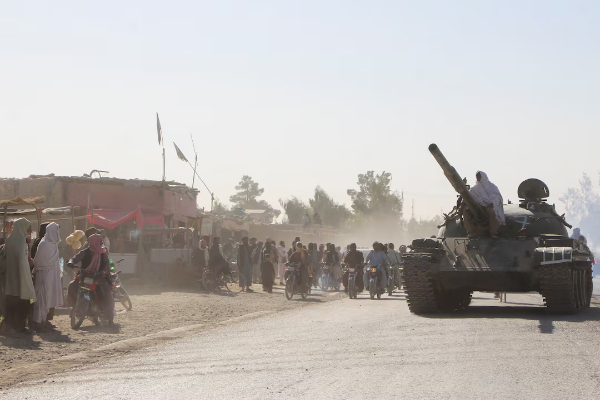
During the recent round of fighting with Pakistan, there was no support forthcoming from any country. In a word, they are friendless. The aerial strikes by Pakistan underscored their other vulnerability: they had no counter to attacks from the air.
Any US air campaign against Afghanistan, as Donald Trump has hinted at, could be devastating and weaken Taliban control and undermine its legitimacy. That could give new life to the anti-Taliban groups currently scattered and lying low.
This is not to say the Taliban is isolated domestically. All the ethnic groups within the Taliban stood together as fighting with Pakistan escalated. The powerful Haqqanis also stuck with the Taliban.
But the Pakistanis have Trump on their side, at least for now. Deals on cryptocurrency and critical minerals are expected to lead to further deals even for military hardware, and as history has shown, Islamabad has invariably used such hardware against neighbours.
For the US to get the Taliban to bend, it needs to reach the inner circle of advisers around Akhundzada. The buzz is it hasn’t got that far but is trying.
What if the Taliban concedes to the US, how would its rank and file react? Would that make groups like the ISKP more appealing? The Taliban is not expected to take a decision without consulting Russia. Meanwhile US pressure mounts.
Taliban Official To Head Afghan Embassy In New Delhi?
Is India incrementally moving towards formal recognition of the Taliban regime in Afghanistan? It would appear so.
While India has already upgraded its technical mission in Kabul to an embassy with a charge de affairs in place, StratNewsGlobal learns that an official being sent by the Taliban regime is expected to take over as charge de affairs at the Afghan embassy in Delhi. It could happen fairly soon.
This was reportedly among a clutch of decisions taken during the recent visit of Taliban acting foreign minister Amir Khan Muttaqi.
Currently, all work at the embassy is being handled by an official of the former Afghan regime, who will step aside when the new official arrives. Taliban representatives are already functioning from the Afghan consulates in Mumbai and Hyderabad.
However, that does not mean the Taliban flag will fly from any of these locations. The old Afghan black red and green flag will continue until India recognises the regime in Kabul.
How long could such recognition take? Currently, the Taliban is only recognised by Russia. China does not recognise the Taliban even though the Afghan embassy in Beijing is staffed by Taliban officials and the building flies the white flag of the emirate.
But a cross-section of academics and former diplomats StratNewsGlobal spoke to, indicated that it would not help if India was among a large number of countries recognising the regime.
India may have to do so earlier as the Taliban has been urging Delhi for some time. “The early bird catches the worm,” and being an early bird could help India consolidate its ties with the regime and expand its activities in the country.
Does recognition mean the consulates in the cities of Kandahar, Jalalabad, Mazar-e-Sharif and Herat will also open? That is not clear.
Security of its diplomatic personnel is India’s primary concern and while the Taliban has a grip over the country, the killing of minister for refugees Khalil Rahman Haqqani last December by a suicide bomber, revealed major chinks in the Taliban armour.
The sense is Pakistan has penetrated every section of Afghan society and the Inter-Services Intelligence (ISI) remains influential and active.There are reported to be a number of Pakistani intelligence operatives among the Afghan refugees Islamabad has been sending back. They are a threat to India and Indians.
Also important to note, the Jaish-e-Muhammad and the Lashkar-e-Tayyaba are present in Afghanistan and the latter, presumably at the behest of the ISI, is working with the Islamic State Khorasan Province (ISKP).
The ISKP is reported to be active in Nangarhar province bordering Pakistan and has long been regarded as the cat’s paw of the ISI.
That deepens India’s security concerns. What happens if there is an attack on the consulate in Kandahar or any other? Can Taliban claims of being able to provide adequate security be taken at face value?
What if embassy or consulate staff have to be evacuated at short notice? The Taliban regime may not have the resources or platforms to bring the Indians out. It was a different story when the “resource-rich” Americans were there.
For now, it would seem, India will concentrate its diplomatic and other efforts through the Kabul mission, seeking a low-profile but steady build-up of activities. That may not square with the Taliban which is anxious for India to speed up projects across the country since this helps ordinary Afghans.
But India has lost precious lives in Afghanistan in the past and caution is the watch-word.
India Steps Up LatAm Outreach Amidst Global Lithium Race
India is expanding engagement with Latin America to secure access to critical minerals and strengthen food and energy supply chains.
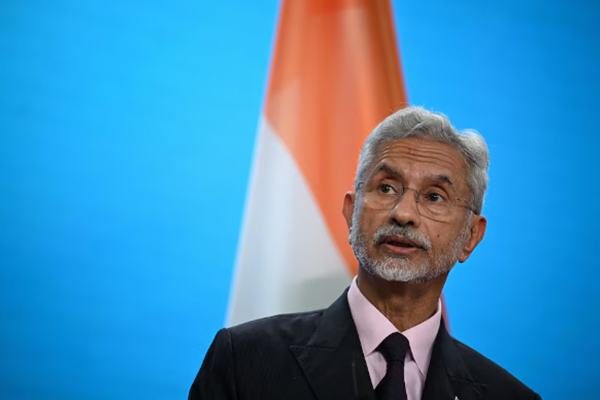
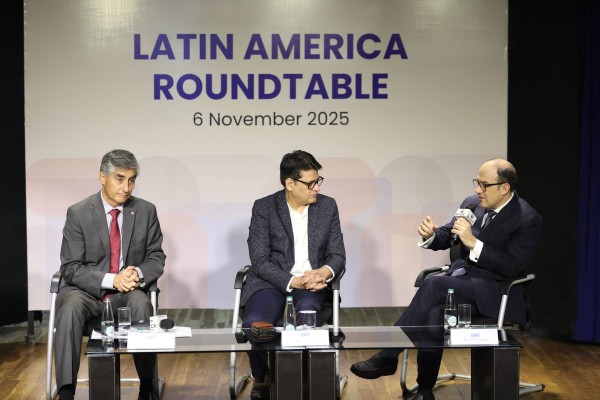
At a discussion hosted by the Observer Research Foundation (ORF) on Thursday, the Ambassadors of Chile and Argentina outlined growing opportunities for collaboration as New Delhi looks to diversify from China-centric supply routes.
Chile’s Ambassador Juan Angulo said the country had adopted a national lithium policy focusing on sustainable extraction involving local communities. “The system for extraction is now open, but it must be done in a sustainable way,” he said. “Lithium is part of the strategic minerals dialogue we are having with India, and several Indian companies have already expressed interest in new projects.”
Chile, which holds the world’s largest proven lithium reserves—estimated at 9.3 million tonnes—is a leading global supplier of the mineral critical to electric vehicle batteries and renewable energy storage. State-owned ENAMI has received international bids, including from Indian firms, for joint ventures in lithium production.
For India, the “Lithium Triangle” of Chile, Argentina, and Bolivia forms a key element of its mineral security strategy. India’s public-sector consortium Khanij Bidesh India Limited (KABIL) has already committed $24 million to lithium exploration across five blocks in northern Argentina.
“Indian companies are working in the north of Argentina, which is very positive,” said Ambassador Mariano Caucino. “However, our partnership must also extend to technology, manufacturing, and innovation.”
The upcoming visit of Minister of State for External Affairs Pabitra Margherita to Bolivia—another lithium-rich nation—is expected to advance cooperation in mining technologies, renewable energy, and sustainable resource development.
India and Chile are also negotiating a Comprehensive Economic Partnership Agreement (CEPA) to expand trade and investment beyond the limited pact signed in 2006. Angulo said the new CEPA “goes beyond goods” to include intellectual property, services, and professional mobility.
Argentina, through Mercosur, is working with Brazil, Paraguay, Uruguay, and Bolivia to expand the Preferential Trade Agreement with India. “There is broad consensus within Mercosur to deepen trade with India,” said Caucino.
Both ambassadors said the partnership extends beyond mining to food and energy security. Angulo noted Chile’s goal of being a long-term contributor to India’s “security chains” in food and clean energy.
India is also opening new embassies in Bolivia, Ecuador, and Uruguay, strengthening its diplomatic footprint in the region. “For decades, distance held us back,” Angulo said. “Now, both regions are discovering the real potential of partnership.”
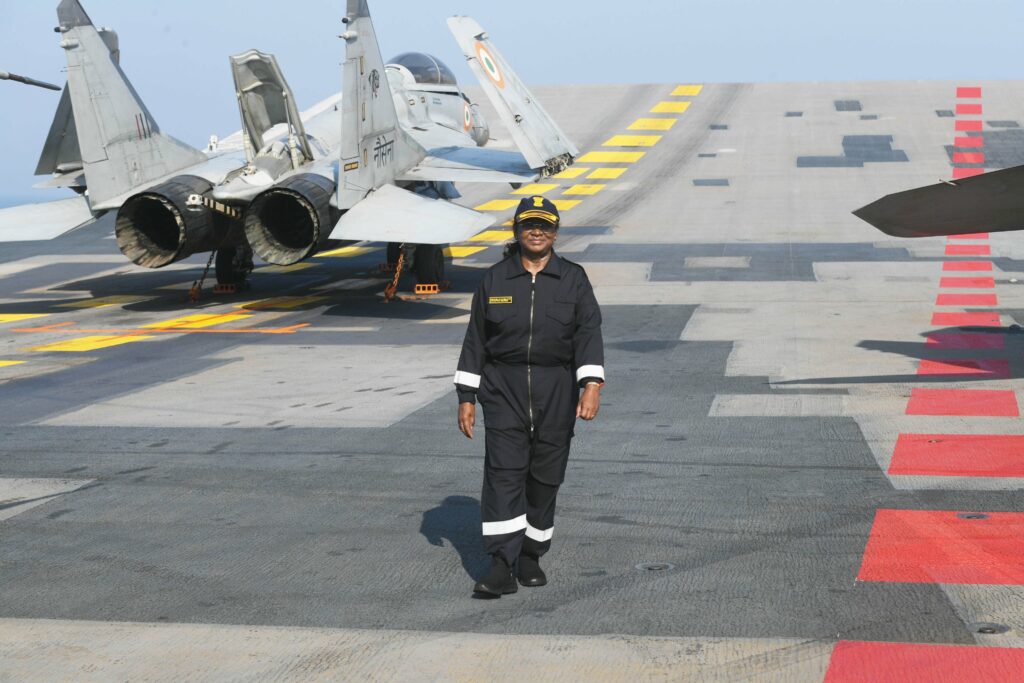
Agenda Africa: President Murmu To Visit Angola, Botswana
India begins a diplomatic outreach targeting southern Africa with the first ever back to back presidential visits to Angola and Botswana.
“Our engagement with Africa has grown across every pillar, political, economic, developmental, and people-to-people,” said Sudhakar Dalela, Secretary (Economic Relations) Ministry of External Affairs, while briefing the media. “The President’s visit comes at a time when both Angola and Botswana are key partners in our shared vision for sustainable growth and global South solidarity.”
The four-day visit to Angola on the Atlantic coast begins on Saturday. President Droupadi Murmu will hold talks with her counterpart João Lourenço and participate in the country’s 50th Independence Day celebrations. Lourenço was in India in May, marking the first visit by a head of state of that country in 38 years.
Angola is Africa’s second largest supplier of crude oil and liquefied natural gas, accounting for nearly 80% of bilateral trade worth $4.2 billion. With Angola’s exit from OPEC and efforts to expand production, Indian public and private firms are exploring equity stakes in offshore oil blocks and potential collaboration in refining and petrochemical projects.
“Energy and food security are critical dimensions of this partnership,” Dalela said in his response to StratNewsGlobal question. “Angola is rich in arable land, and they are keen to use Indian technology and expertise to enhance agricultural productivity.”
Angola also joined the International Solar Alliance earlier this year, becoming its 123rd member, and India is encouraging its participation in other global initiatives such as the Coalition for Disaster Resilient Infrastructure and the Global Biofuels Alliance.
Defence, Space Cooperation
Both leaders are expected to review the progress of the $200 million Line of Credit extended by India in May for the modernisation of Angola’s armed forces. It covers covers defence procurement, repair and overhaul of platforms, and training of personnel.
India also plans to offer expanded defence training slots under the Indian Technical and Economic Cooperation programme, which already trains officers from several African militaries.
Beyond defence, space collaboration is emerging as a new frontier. Angola is interested in leveraging India’s low-cost satellite and geospatial technologies for agriculture, disaster management, and communications. The two sides are expected to discuss cooperation through the Indian Space Research Organisation in building small satellites and capacity-building programmes.
Critical Minerals, Digital Infra
Angola has significant deposits of rare earths and critical minerals vital for India’s green transition, including cobalt, lithium, and nickel. As part of India’s National Critical Minerals Mission, New Delhi aims to explore joint ventures for exploration, processing, and value addition in Africa.
Luanda has shown strong interest in India’s Digital Public Infrastructure model, including platforms like Aadhaar, UPI, and DigiLocker. India is expected to offer technical cooperation to help these nations build transparent, inclusive, and interoperable digital ecosystems.
Botswana
From November 11–13, President Murmu will be in Botswana for talks President Duma Gideon Boko and address the National Assembly. The visit will coincide with preparations for the 60th anniversary of diplomatic relations between India and Botswana, to be celebrated next year.
Botswana’s Vision 2036 plan aims to diversify its economy and transition to a high-income society, an agenda that aligns with India’s development experience in agriculture, health, pharmaceuticals, and renewable energy.
Both nations are also cooperating on Project Cheetah, which involves the translocation of African cheetahs to India as part of a broader biodiversity conservation effort.
“With Botswana, our defence cooperation has a historic legacy,” Dalela noted. “Indian training teams were embedded with the Botswana Defence Forces for three decades, and we continue to train officers under the ITEC programme.”
Botswana has also shown interest in partnering with India in cybersecurity, railway connectivity, and space-based applications, building on its earlier collaboration in education and capacity-building.
The visits underscore India’s renewed diplomatic momentum across Africa. Over the past decade, New Delhi has opened 17 new embassies, extended over $12 billion in concessional credit, and offered $700 million in grant assistance to African partners. Trade between India and the continent has reached nearly $100 billion, supported by rising private-sector investments.
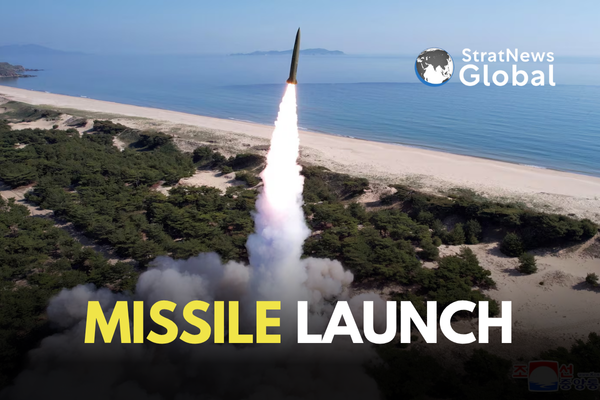
North Korea Conducts Missile Test After Trump’s Call For New Dialogue
North Korea launched a ballistic missile toward the sea off its east coast on Friday, South Korea and Japan said, marking the latest in a series of weapons tests as tensions rise despite renewed diplomatic overtures from Washington.
Missile Fired Amid Diplomatic Uncertainty
South Korea’s Joint Chiefs of Staff said the suspected short-range ballistic missile was fired from North Korea’s northwest region near the Chinese border. It travelled roughly 700 kilometres (435 miles) before landing in waters outside Japan’s exclusive economic zone.
South Korean and U.S. surveillance systems detected and tracked the missile throughout its flight, sharing data with Japan, officials said. Japanese Prime Minister Sanae Takaichi confirmed that there were no reports of damage.
The launch follows several missile tests in recent weeks, including short-range and hypersonic weapons, which North Korea claimed were successful. Analysts see the latest launch as a show of defiance amid stalled dialogue with the United States.
Trump Signals Willingness for Dialogue
The missile test came shortly after U.S. President Donald Trump reiterated his readiness to meet North Korean leader Kim Jong Un. While visiting South Korea last week, Trump said he remained open to talks and was willing to return to the region for a meeting.
Although no meeting has yet taken place, Trump’s comments revived speculation about potential U.S.-North Korea diplomacy. The two leaders last met in 2019 at the Panmunjom truce village along the inter-Korean border during Trump’s first term.
Kim Jong Un has not publicly responded to the latest outreach but previously said he held “fond memories” of his meetings with Trump. However, he maintains that talks can only resume if Washington stops insisting that North Korea abandon its nuclear weapons programme.
Rising Tensions and Military Posturing
North Korea’s foreign ministry on Thursday accused the Trump administration of “antagonising” Pyongyang with new sanctions targeting its officials and institutions over alleged money laundering activities. It vowed to respond but did not specify how.
During a recent visit to Seoul, U.S. Defence Secretary Pete Hegseth reaffirmed Washington’s “ironclad” commitment to South Korea’s security alliance. He said that while the U.S. military was increasing its regional flexibility, its main priority remained deterring Pyongyang’s provocations.
North Korea has conducted several missile launches in the past month ahead of a regional summit that brought Trump and Chinese President Xi Jinping to South Korea. The tests included what Pyongyang described as a hypersonic missile and multiple sea-to-surface cruise missiles.
Regional analysts say the latest launch underscores Kim’s strategy of combining weapons demonstrations with cautious diplomacy to gain leverage in any future negotiations.
with inputs from Reuters
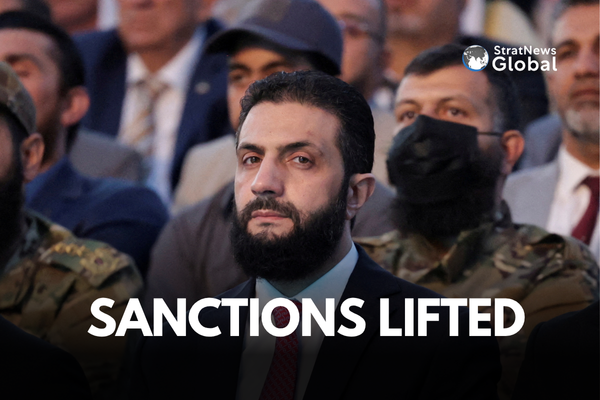
Sanctions Lifted on Syrian Leader Ahead of Trump-White House Talks
Britain lifted sanctions on Syrian President Ahmad al-Sharaa on Friday, a day after the United Nations Security Council also removed restrictions on the former rebel leader. The move comes just days before Sharaa is set to meet U.S. President Donald Trump at the White House.
UN and UK Remove Restrictions
The British government confirmed the decision in a notice published on its official website, which also announced the lifting of sanctions on Syria’s interior minister, Anas Khattab. Both men had previously been subject to financial sanctions linked to measures targeting Islamic State and al Qaeda.
The U.N. Security Council ended its sanctions against Sharaa and Khattab on Thursday, stating that there was no longer evidence of active connections between Hayat Tahrir al-Sham (HTS) — the militant group formerly associated with al Qaeda — and the global terror network.
From Rebel Commander to President
Ahmad al-Sharaa, formerly known as Abu Mohammad al-Julani, assumed Syria’s presidency in January after rebel factions led by HTS ousted longtime ruler Bashar al-Assad in a rapid offensive. Once a senior figure in HTS, Sharaa was sanctioned by both the U.N. and Britain in 2014, facing a travel ban, asset freeze, and arms embargo.
Analysts say his rise from a militant commander to Syria’s head of state represents a dramatic shift in the country’s political landscape, as international powers cautiously reassess their engagement with Damascus.
Upcoming White House Meeting
The lifting of restrictions clears the way for Sharaa’s visit to Washington next week, where he is expected to hold talks with President Trump on stabilisation efforts, counterterrorism, and regional reconstruction.
The Syrian government has not yet issued a statement on Britain’s decision. Friday is not a working day in Syria, and officials have so far declined to comment on the recent diplomatic developments.
(with inputs from Reuters)