

Support us by contributing to StratNewsGlobal on the following UPI ID
ultramodern@hdfcbank

Strategic affairs is our game, South Asia and beyond our playground. Put together by an experienced team led by Nitin A. Gokhale. Our focus is on strategic affairs, foreign policy and international relations, with higher quality reportage, analysis and commentary with new tie-ups across the South Asian region.
You can support our endeavours. Visit us at www.stratnewsglobal.com and follow us on YouTube, Twitter, Facebook and Instagram.
र 500 per month
र 1000 per month
र 5000 per year
र 10000 per year
Donate an amount of your choice
र 500 per month
Donate र 500 per month

र 1000 per month
Donate र 1000 per month
र 5000 per year
Donate र 5,000 per year
र 10000 per year
Donate र 10,000 per year
Donate an amount of your choice
Donate an amount of your choice

Chinese Records Debunk Senkaku Claims, Says Japan
Japan will soon display a set of historical Chinese documents that indicate China did not regard the Senkaku Islands as part of its territory in the past, according to Jiji Press. The exhibition, which will open on November 14 at the National Museum of Territory and Sovereignty in Tokyo, will show the parts of the documents, the agency reported.
The Documents
The three sets of documents, include a 1950 internal document from China’s Foreign Ministry prepared for peace treaty discussions with Japan, an 1889 report by a Qing dynasty official who visited Japan, and an 1895 record detailing the handover of Taiwan from the Qing government to Japan.
Notably, the 1950 document refers to the islands by their Japanese name ‘Senkaku,’ rather than the Chinese ‘Diaoyu,’ and classifies them as part of the Ryukyu chain, the present day Okinawa Prefecture.
The documents offer objective evidence that China did not consider the Senkaku Islands part of its territory prior to the 1970s. In 1968, the UN Economic and Social Commission for Asia and the Pacific (ESCAP) published a report on the rich oil and gas deposits under the East China Sea. Soon after, China began asserting its claims over the area, marking a significant shift in its territorial stance.
The report suggests that the 1895 Taiwan-related materials will be made public for the first time, while the other two have previously featured in Japanese educational resources.
The Rising Tensions
The exhibition comes amid rising tensions between the two Asian powers. Chinese coast guard vessels have frequently entered waters near the Senkakus in recent months, prompting Japanese protests and diplomatic warnings. Tokyo hopes the display will reinforce its position that “there exists no territorial dispute” over the islets, which it administers as part of Okinawa.
China, however, maintains that the islands have been part of its territory “since ancient times.” The Chinese Foreign Ministry has repeatedly accused Japan of “distorting historical facts” to justify what it sees as an illegal occupation.
By highlighting archival records from China itself, Japan aims to bolster international understanding of its claim and counter Beijing’s growing assertiveness in the East China Sea. As regional tensions rise, the exhibition underscores how even century-old documents continue to shape the geopolitics of Asia’s contested waters.
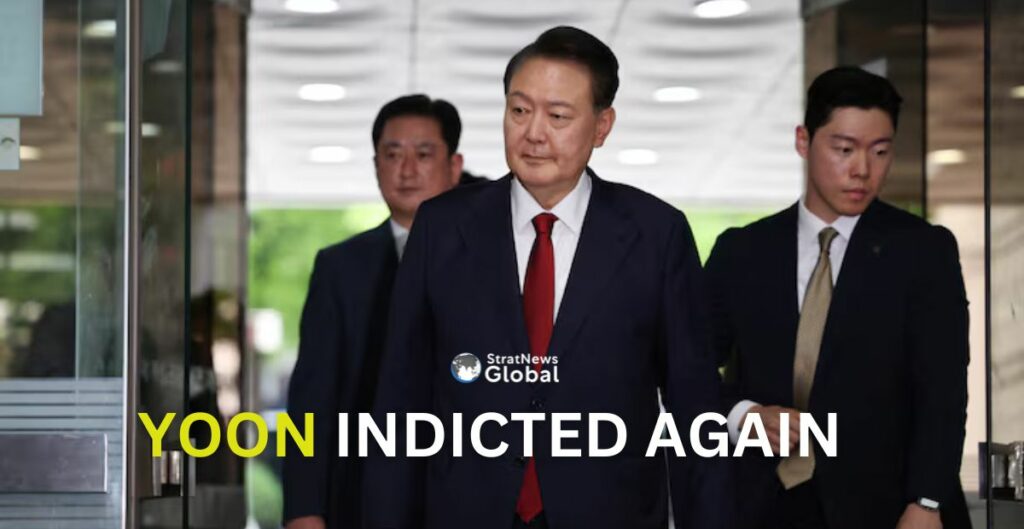
South Korea: Ex-President Yoon Charged With Aiding Enemy, Abuse Of Power
South Korea’s special prosecutor on Monday filed additional charges against former President Yoon Suk Yeol, accusing him of abuse of power and aiding an enemy state in connection with his brief declaration of martial law last year.
Yoon allegedly attempted to provoke military conflict between South and North Korea in order to declare martial law, a prosecutor’s spokesperson told a briefing, citing evidence found on a military official’s mobile phone that included some words suggesting potential provocations against North Korea, such as “drones” and “surgical strike”.
Yoon was removed from office by the Constitutional Court in April and is on trial for insurrection stemming from his failed martial law declaration. If found guilty, he could be sentenced to death.
Conspiracy And Allegations
Yoon has said consistently he never intended to impose military rule but declared martial law to sound the alarm on wrongdoings by opposition parties and to protect democracy from “anti-state” elements.
According to the memo, Yoon, former defence minister Kim Yong-hyun and former military intelligence chief Yeo In-hyung planned to induce a North Korean attack against the South, the spokesperson, Park Ji-young, said.
The trio conspired to create tensions in the country as a justification for Yoon to declare martial law, she said.
Kim and Yeo were also indicted on the same additional charges, the prosecutor said.
Covert Operation Claims
The special prosecutor’s team has accused Yoon and his military commanders of ordering a covert drone operation into the North to inflame tensions between the neighbours and justify his martial law decree.
In October last year, North Korea said the South had sent drones to scatter anti-North Korean leaflets over Pyongyang, and published photos of the remains of a crashed South Korean military drone.
Former defence minister Kim is also on trial on charges related to the martial law declaration.
Yeo has said he deeply regretted not challenging the order from Yoon, according to media reports. The prosecutor’s spokesperson said Yeo was making excuses that did not make sense about the notes discovered on his mobile phone.
(With inputs from Reuters)
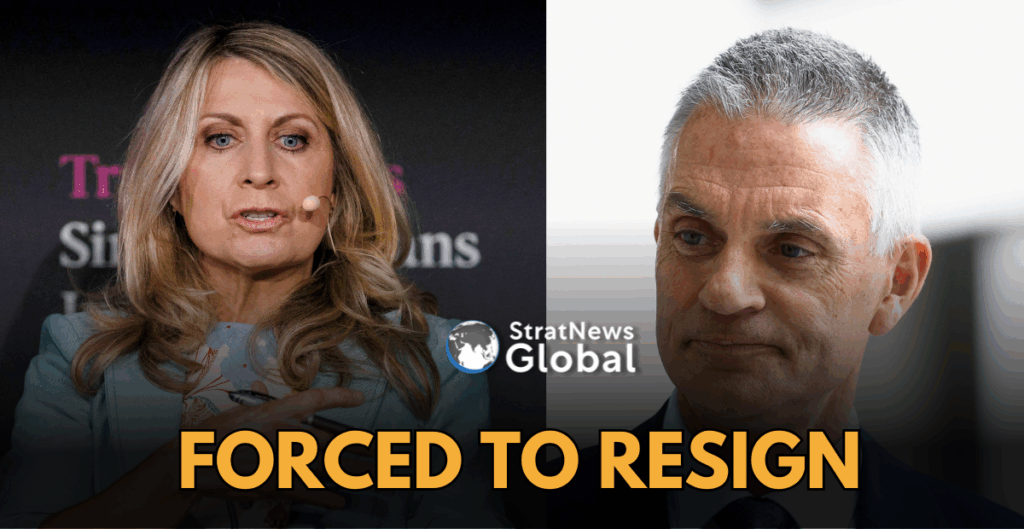
BBC Director General, CEO Resign After Criticism Of Trump Edit
The BBC’s boss Tim Davie and its head of news Deborah Turness resigned on Sunday following accusations of bias at the British broadcaster, including in the way it edited a speech by U.S. President Donald Trump.
The publicly funded BBC had been under mounting pressure after an internal report by a former standards adviser, which cited failings in its coverage of the Israel-Hamas war, transgender issues, and a speech made by Trump, was leaked to the Daily Telegraph newspaper.
Trump welcomed the departures, criticising the two as “very dishonest people” after the BBC’s flagship Panorama programme edited two parts of one of his speeches together so he appeared to be encouraging the Capitol Hill riot of January 2021.
News Judgment Questioned
Tim Davie, who has led the British Broadcasting Corporation since 2020, defended the organisation, saying its journalism was seen as the gold standard around the world. But he said mistakes had been made and he had to take ultimate responsibility.
Deborah Turness, the CEO of BBC News, also resigned. In an email to staff, she said: “I want to be absolutely clear, recent allegations that BBC News is institutionally biased are wrong.”
Widely respected around the world, the BBC remains the most trusted news brand in Britain, boasting a vast reach in the country, which provides news, entertainment, and sports.
But the corporation, which is funded by a licence fee paid by all television-watching households, comes under intense scrutiny from some newspapers and critics on social media, who object to its funding model and perceived liberal stance.
It has, in recent years, been accused of failing to maintain its commitment to impartial news by critics on both sides of the political divide, struggling to navigate the fractious political and cultural environment.
The leaked internal report said BBC Arabic had shown anti-Israel bias in its reporting of the war in Gaza and that an effort to cover a group campaigning for single-sex spaces had been suppressed by a small group of staff who saw it as hostile to the transgender community.
The report was written by Michael Prescott, a former political editor of the Sunday Times, who was an independent adviser to the BBC’s Editorial Guidelines and Standards Board for three years before he left in June.
He compiled a dossier for the BBC’s board after he said bosses had “repeatedly failed” to tackle what he described as multiple examples of an institutional bias.
Multiple Scandals
In recent years, the BBC has struggled to contain multiple scandals.
In 2023, Gary Lineker, at the time its most highly paid sports presenter, was suspended for criticising the government’s immigration policy. That briefly led to many sports staff walking off the job in solidarity.
It was condemned for showing punk-rap duo Bob Vylan chanting against the Israeli military at this summer’s Glastonbury music festival, and it pulled a documentary about Gaza earlier this year because it featured the son of a deputy minister in the Hamas-run government.
In the Panorama documentary broadcast last year, Trump was shown telling his supporters that “we’re going to walk down to the Capitol” and that they would “fight like hell”, a comment he made in a different part of his speech.
He had actually said his supporters would “cheer on our brave senators and congressmen and women”.
Trump, in a social media post on Sunday, accused the two executives of having tried to influence a U.S. presidential election.
“On top of everything else, they are from a Foreign Country, one that many consider our Number One Ally. What a terrible thing for Democracy!” he said.
(with inputs from Reuters)
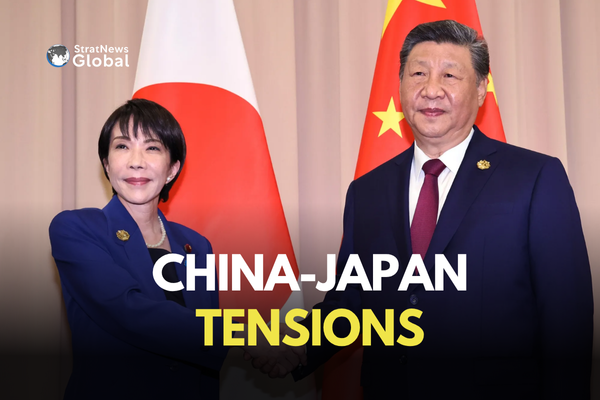
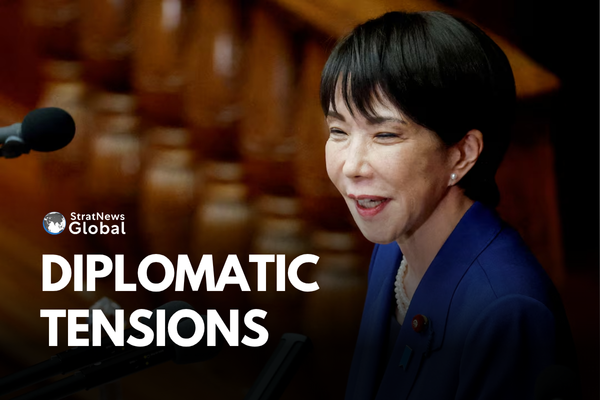
China Warns Japan Over Takaichi’s Comments on Taiwan
China has lodged strong protests with Japan following comments by Japanese Prime Minister Sanae Takaichi on Taiwan, escalating tensions between the two Asian neighbours. Chinese foreign ministry spokesperson Lin Jian said on Monday that Beijing had made “serious representations” to Tokyo over what it sees as interference in its internal affairs.
Beijing Warns Against “Provocations”
Speaking at a regular press briefing, Lin criticised Takaichi’s recent remarks, describing them as a “provocation” that could harm bilateral ties. He urged Japan to stop making statements on the Taiwan issue, warning that such comments would “cause serious damage to China-Japan relations.”
Takaichi had told Japanese lawmakers on Friday that a potential Chinese attack on Taiwan could pose a “survival-threatening situation” for Japan, according to the Kyodo news agency. Her comments underscored growing concerns in Tokyo over regional security and China’s military pressure on the self-governed island.
Rising Tensions in the Region
Beijing considers Taiwan part of its territory and has repeatedly warned other nations against engaging in what it calls “separatist” or “provocative” actions. Japan, meanwhile, has increasingly voiced support for peace and stability in the Taiwan Strait, seeing the island’s security as directly linked to its own national defence.
The latest exchange comes amid a backdrop of strained relations between the two countries, fuelled by maritime disputes and growing military activity in the East China Sea. With both sides trading diplomatic protests, regional analysts warn that the rhetoric could further complicate efforts to stabilise ties between Tokyo and Beijing.
(with inputs from Reuters)
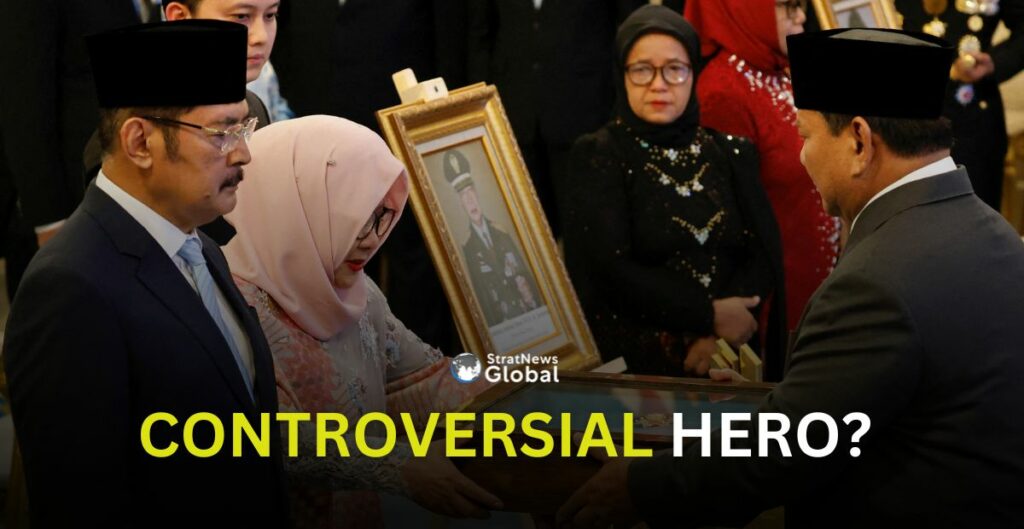
Indonesia: President Subianto Honours Father-in-Law Suharto
On Monday, Indonesia posthumously honored former President Suharto with the title of national hero. Suharto, who was ousted from office in 1998 amid violent protests, had ruled for three decades during a period criticized for widespread human rights abuses, corruption, and nepotism.
The title was conferred in a ceremony overseen by President Prabowo Subianto, Suharto’s former son-in-law, despite protests by pro-democracy activists and the families of those affected by the strongman’s iron-fisted rule. Prabowo took office one year ago.
Every year, the title of national hero is awarded to Indonesians who have contributed significantly to the country’s development. Suharto, who died in 2008, was one of 10 people to get the title on Monday.
Suharto, a military officer, formally became president in 1967 after seizing control of Indonesia from the country’s first president and independence leader, Sukarno.
He led Indonesia through three decades of rapid economic growth and relative stability, but much of his progress collapsed during the Asian financial crisis of 1997–98, plunging the country into chaos.
Whitewashing History
Activists gathered last week in Jakarta to protest against the proposal to grant the title, reflecting wider concerns about historical revisionism in the country.
Even after his death, Suharto’s party, Golkar, remains a major political force which backs Prabowo in his current presidency, and holds key ministries in his cabinet.
Political analyst Kevin O’Rourke said naming Suharto a national hero could whitewash history and be an attempt to restore some authoritarianism, although it would not be easy.
Enduring Memory
While half of Indonesia’s population never experienced Suharto’s rule, many still remember its hardships. A group of people, known as the Aksi Kamisan has held silent vigils outside the presidential palace in Jakarta every Thursday for nearly 20 years, dressing in black and demanding justice for excesses endured under Suharto.
Many of them say they still do not know the whereabouts of loved ones who went missing under his rule.
Culture Minister Fadli Zon stated that Suharto met the criteria for the national hero title, noting his role in the 1965 mass killings was unproven.
Historians say about 500,000 people were killed. Indonesia has never investigated the killings.
(With inputs from Reuters)
Japan Protests Over Chinese Diplomat’s “Extremely Inappropriate” Remarks
Japan has lodged a formal protest with China after one of its senior diplomats made what Tokyo described as “extremely inappropriate” comments directed at Japanese Prime Minister Sanae Takaichi. The remarks, made by China’s Consul General in Osaka, Xue Jian, have also drawn strong criticism from the United States, which characterised them as threatening.
Controversial Social Media Post Sparks Outrage
The dispute erupted after Xue posted a message on X (formerly Twitter) on November 8, responding to Takaichi’s comments about how Japan might react to a Chinese attack on Taiwan. In his post, Xue wrote, “We have no choice but to cut off that dirty neck that has lunged at us without a moment’s hesitation,” adding, “Are you ready?” The post was later deleted but widely shared before its removal.
Speaking on Monday, Japan’s Chief Cabinet Secretary Minoru Kihara said the intent behind the post “was not entirely clear,” but he stressed that such language was “extremely inappropriate.” He confirmed that Japan’s foreign ministry and its embassy in Beijing had lodged a strong protest and demanded the post’s deletion.
China’s consulate in Osaka did not immediately respond to requests for comment from Reuters.
Diplomatic Tensions Intensify
When asked whether Japan might expel the diplomat, Kihara said Xue had made “multiple inappropriate statements” in the past. He added that Tokyo had repeatedly called on Beijing to take suitable measures. The incident underscores rising diplomatic tensions between the two neighbours, already strained over territorial and security issues in the East China Sea and growing concerns about China’s actions toward Taiwan.
US Condemns Remarks as Threat
The controversy also drew a swift response from the United States. Sharing the deleted post on X, US ambassador to Japan George Glass condemned the remarks, saying that Xue had “threatened Takaichi and the Japanese people.” He added, “The mask slips – again,” signalling Washington’s unease over Beijing’s increasingly aggressive tone in regional affairs.
Tokyo’s protest marks another diplomatic flashpoint between Japan and China as both sides navigate an already fragile relationship amid heightened security concerns in the Asia-Pacific region.
(with inputs from Reuters)
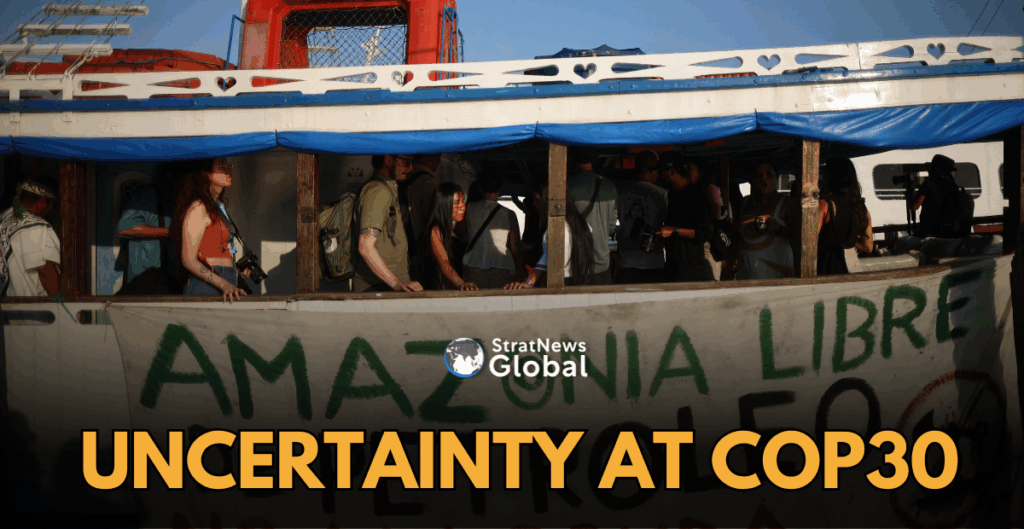
COP30 Climate Summit Begins In Belem Amid Outcome Uncertainty
As COP30 Summit opens on Monday for the more than 190 countries participating, it was unclear what exactly they would discuss during the two-week U.N. summit in Brazil’s Amazon city of Belem.
Also unclear is how they’ll handle testy issues, such as a 2023 pledge to wean off polluting energy sources and demand for financing to make that happen. But the biggest question mark was whether countries would aim to negotiate a final agreement – a hard sell in a year of fractious global politics and U.S. efforts to obstruct a transition away from fossil fuels.
Some, including Brazil, have suggested that countries focus on smaller efforts that don’t need consensus, after years of COP summits that have celebrated lofty promises only to leave many unfulfilled.
“My preference is not to need a COP decision,” COP30 President Andre Correa do Lago said in an interview with Reuters and other media. “If countries have an overwhelming desire for a COP decision, we will certainly think about it and deal with it.”
Do Lago noted the rise of China’s importance in the talks, as the United States promises to exit the Paris Agreement in January and the European Union struggles to maintain its ambition amid worries over energy security.
“Emerging countries are appearing in this COP with a different role. China is coming with solutions for everyone,” do Lago said, noting that inexpensive green technologies from China were now leading the energy transition worldwide.
“You start complaining that China is moving the GDP all over the world,” he said. But “that is great for the climate.”
Indigenous Groups Join
Countries will be joined by Indigenous leaders, who arrived Sunday evening by boat after traveling some 3,000 km (1,864 miles) from the Andes to the Brazilian coast. They are demanding more say in how their territories are managed as climate change escalates and industries such as mining, logging, and oil drilling push deeper into forests.
“We want to make sure that they don’t keep promising, that they will start protecting, because we as Indigenous people are the ones who suffer from these impacts of climate change,” said Pablo Inuma Flores, an Indigenous leader from Peru who also bemoaned the oil spills and illegal mining he says are happening along the river.
Hours before the summit’s start, scientists at dozens of universities and science institutions from Japan to South Africa and Britain sounded an alarm over the world’s thawing glaciers, ice sheets, and other frozen spaces.
“The cryosphere is destabilizing at an alarming pace,” the groups said in a letter to COP30 published Monday. “Geopolitical tensions or short-term national interests must not overshadow COP30 Summit. Climate change is the defining security and stability challenge of our time.”
Agenda Referendum
The first point of order for COP30 will be to vote on an agenda. Do Lago said countries had been wrangling for months over what to include, a process he described as a healthy exchange of priorities.
Brazilian President Luis Inácio Lula da Silva hopes countries will consider setting a plan for quitting fossil fuels.
“How are we going to do this? Is there going to be a consensus about how we are going to do it? This is one of the great mysteries of COP30,” do Lago said.
Other possible issues for the agenda include deciding how countries will cut emissions further, with their current plans falling short of what’s needed to limit extreme warming. By Monday morning, 106 governments had submitted new climate plans.
Sources familiar with the talks said more would offer plans this week, including South Korea and India.
Uniquely this year, delegates are keen to tackle agriculture emissions – a topic often left to the side given the difficulty of addressing the farming and livestock practices central to many countries’ food security and livelihoods.
Among developing countries, do Lago said, “there is a movement” to advance solutions and access to technologies that can help make farming more efficient and less polluting.
Countries also want to address financial and action targets for adapting to the conditions of a warmer world, with hopes that development banks can undergo enough reform to ensure more money – including from the private sector – goes to these goals.
(with inputs from Reuters)
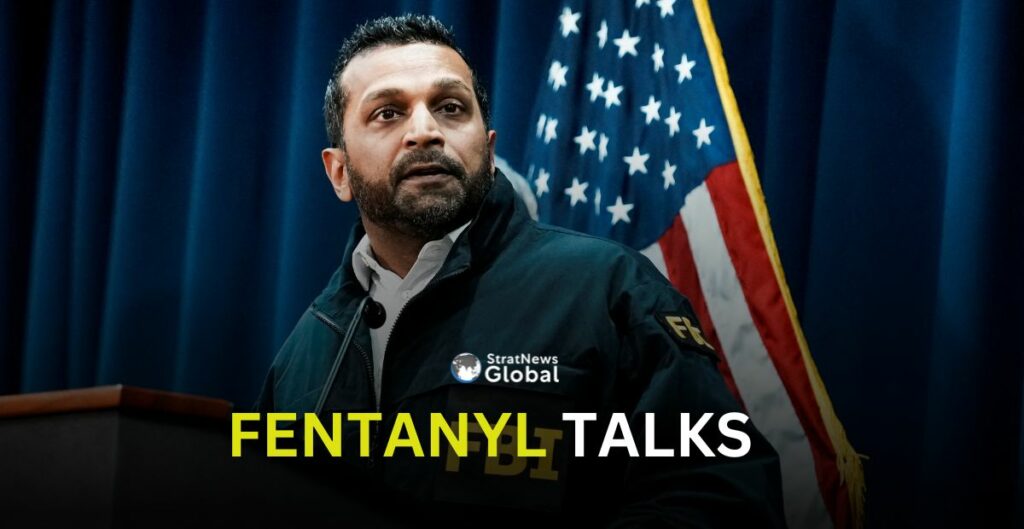
FBI Chief Patel In China To Address Fentanyl Concerns
According to recent reports, FBI Director Kash Patel traveled to China last week to address fentanyl and law enforcement concerns. The trip followed a summit between the U.S. and Chinese presidents, during which both leaders praised the “consensus” reached on these issues.
Reports stated that the director of the Federal Bureau of Investigation flew into Beijing on Friday and stayed for about a day. He held talks with Chinese officials on Saturday, the person added.
U.S.-China Agreement on Fentanyl and Trade
U.S. President Donald Trump halved the tariffs on Chinese goods imposed as a punishment over the flow of fentanyl to 10% after reaching the agreement during last month’s talks with Chinese leader Xi Jinping.
Xi will work “very hard to stop the flow” of fentanyl, a deadly synthetic opioid that is the leading cause of American overdose deaths, Trump told reporters after the talks.
Treasury Secretary Scott Bessent said the details of the fresh consensus would be hashed out through a new bilateral working group. It was unclear whether Patel discussed the new mechanism during his Beijing visit.
The deal signals a shift for Trump officials, who had insisted that punitive measures would remain in place until China proved it was cracking down on fentanyl supply chains.
China’s Response
Chinese officials vehemently defend their record on fentanyl, saying they have already taken extensive action to regulate precursor chemicals used to make the drug and accuse Washington of using the issue as “blackmail.”
The Xi-Trump deal went beyond fentanyl and included the resumption of U.S. soybean purchases by China.
For its part, Beijing agreed to pause export curbs unveiled in October on rare earths, elements with vital roles in many modern technologies.
(With inputs from Reuters)
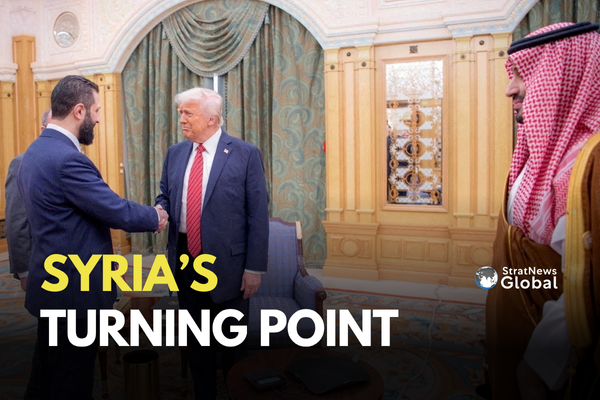
Sharaa’s White House Visit Signals New US-Syria Partnership
Syrian President Ahmed al-Sharaa’s meeting with US President Donald Trump on Monday marks a remarkable milestone in both his personal and political journey. The former rebel, who rose to power after toppling Bashar al-Assad last year, is now seeking to rebuild Syria’s global ties after years of isolation.
From Rebel Leader to World Diplomat
Sharaa’s visit is the first ever by a Syrian president to the White House. It comes just six months after his first encounter with Trump in Saudi Arabia and days after Washington removed him from its “Specially Designated Global Terrorist” list.
At just 42, Sharaa’s path to power has been extraordinary. His Islamist forces launched a swift offensive from northwestern Syria, overthrowing Assad on December 8 last year. Since then, his government has pivoted away from Assad’s longtime allies Iran and Russia, moving closer to Turkey, the Gulf states, and now Washington.
Security issues are expected to dominate the discussions on Monday. The US is mediating talks between Syria and Israel on a possible security deal and, according to reports, may establish a military presence at a Damascus airbase. Syria is also expected to formally join the US-led coalition against Islamic State, a move that could be announced during the visit.
Push to Lift Remaining Sanctions
Ahead of the meeting, Trump praised Sharaa’s leadership, saying, “He’s doing a very good job. It’s a tough neighbourhood, and he’s a tough guy.”
Following their first meeting in Riyadh, Trump pledged to lift sanctions on Syria. However, the toughest measures — the Caesar Sanctions Act — can only be repealed by Congress. Both the White House and State Department have supported their removal before the end of 2025, though a government shutdown could delay progress.
Sharaa is expected to urge lawmakers to repeal the sanctions, arguing that such a step would attract international investors to rebuild a war-torn country the World Bank estimates needs over $200 billion for reconstruction.
Despite progress, Syria’s internal divisions remain deep. Fresh sectarian violence since Assad’s fall has claimed more than 2,500 lives, testing the new government’s ability to unite the country.
From Militant to Political Partner
Sharaa’s personal transformation mirrors Syria’s political shift. Once an al Qaeda member during the Iraq War, he was detained by US forces before returning to Syria to lead the insurgency against Assad. In 2013, Washington designated him a terrorist under the name Abu Mohammad al-Golani. After severing ties with al Qaeda in 2016, he consolidated control in Syria’s northwest.
In December, the US removed a $10 million bounty on his head, followed by the United Nations lifting sanctions against him and Interior Minister Anas Khattab. Britain and the US soon followed, erasing their terror designations.
According to Firas Maksad of the Eurasia Group, “Sharaa’s visit to Washington reflects Syria’s dramatic transformation—from an Iranian client state to a potential US partner. While challenges remain, this moment signals real hope for Syria’s future.”
(with inputs from Reuters)
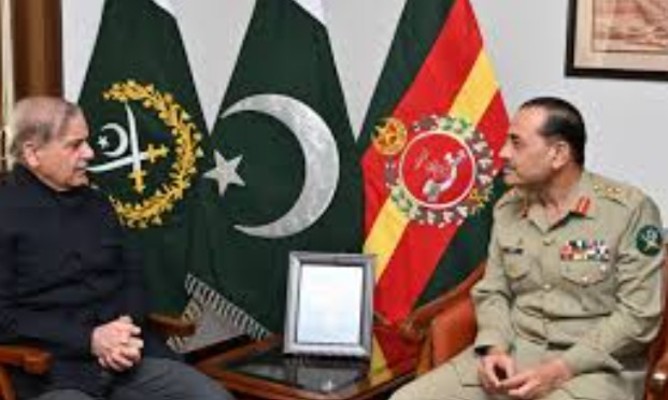
Pakistan’s 27th Amendment: Martial Law, Legalised
Democracy in Pakistan hasn’t fallen to a coup this time. It’s been buried by consent.
The 27th Constitutional Amendment, now before parliament, does what decades of generals and juntas never quite managed — it gives military rule constitutional legitimacy.
The bill abolishes the Chairman of the Joint Chiefs of Staff Committee and creates a new Chief of Defence Forces, a role that will be held by the Army Chief. He will command all three services. Article 243, which once placed the armed forces under civilian authority, will be rewritten. Once that happens, Pakistan’s army won’t just control the state; it will be the state.
No civilian government in Pakistan’s history has ever completed a five-year term. Every prime minister since 1947 has been dismissed, exiled, jailed, assassinated, or pressured out. The military has ruled directly for over three decades and indirectly for the rest. Civilian governments have been placeholders between coups. This amendment simply admits it.
General Asim Munir, recently promoted to Field Marshal, already runs the country. The 27th Amendment will now make that official. It’s not a coup. It’s certification. And it’s being handed to him by politicians who no longer pretend to be in charge.
Once this passes, parliament will be ornamental. The courts will comply. And the Constitution, once a check on power, will become its excuse. Pakistan will have a civilian façade with a military core, a republic in uniform.
For India, the implications are real. The civilian buffer that sometimes softened Pakistan’s security reflex is gone. Every border incident, every diplomatic exchange, every crisis will now be managed by generals. The army’s calculus is military, not political. It prizes control, not compromise.
The new Chief of Defence Forces will also oversee Pakistan’s nuclear command. Civilian oversight, already token, disappears completely. That makes future crises riskier and communication harder. When the chain of command is entirely military, the margin for misjudgement widens.
It will also freeze regional diplomacy. Trade, cultural exchange, water sharing — all of it will now be filtered through a national security lens. For Pakistan’s military, politics and threat perception are the same thing.
And this move won’t stay within Pakistan’s borders. When a major South Asian state codifies military rule, it sends a signal across the region: democracy is optional, stability is supreme. That’s the message others may find tempting. India should see and treat Pakistan for what it now is, or perhaps always was: a military state with a constitutional mask.
Dialogue should be transactional, not hopeful. Diplomacy should expect the generals, not the civilians, to call the shots. Deterrence must be steady; expectations, low.
At the same time, India should reinforce democratic partnerships around the neighbourhood. Civilian control of the military isn’t weakness; it’s the foundation of stability.
But the Pakistani military’s deep entanglement in the nation’s economic and civil life makes a separation of the two almost impossible. The military operates a vast commercial and civil empire through organisations like the Fauji Foundation, Army Welfare Trust (AWT) / Askari Group, Shaheen Foundation, Bahria Foundation, and Defence Housing Authorities (DHAs).
While technically established as “welfare” or “charitable” trusts for ex-servicemen, these entities function as powerful, tax-exempt conglomerates that permeate and often dominate significant sectors of the economy, from financial services (Askari Bank) and manufacturing (Fauji Fertilizer Company) to extensive education systems, food distribution, healthcare facilities, and major real estate developments.
These entities collectively establish the military as the largest landholder and one of the most powerful economic actors in the country. This profound economic and institutional entrenchment suggests that the military’s influence is not merely a political phenomenon but an integral, systemic part of Pakistan’s societal and economic infrastructure.
Consequently, calls for a clear separation of civil and military affairs face the immense challenge of disentangling a complex web of interests that renders such a division almost infeasible.
The 27th Amendment will be sold in Islamabad as a matter of efficiency and national interest. It’s neither. It’s martial law, legalised.
For decades, Pakistan’s army toppled governments to “save” the country. Now it won’t need to. The law will do the job. Democracy there isn’t collapsing in chaos. It’s being signed out of existence, one amendment at a time.