

Support us by contributing to StratNewsGlobal on the following UPI ID
ultramodern@hdfcbank

Strategic affairs is our game, South Asia and beyond our playground. Put together by an experienced team led by Nitin A. Gokhale. Our focus is on strategic affairs, foreign policy and international relations, with higher quality reportage, analysis and commentary with new tie-ups across the South Asian region.
You can support our endeavours. Visit us at www.stratnewsglobal.com and follow us on YouTube, Twitter, Facebook and Instagram.
र 500 per month
र 1000 per month
र 5000 per year
र 10000 per year
Donate an amount of your choice
र 500 per month
Donate र 500 per month

र 1000 per month
Donate र 1000 per month
र 5000 per year
Donate र 5,000 per year
र 10000 per year
Donate र 10,000 per year
Donate an amount of your choice
Donate an amount of your choice
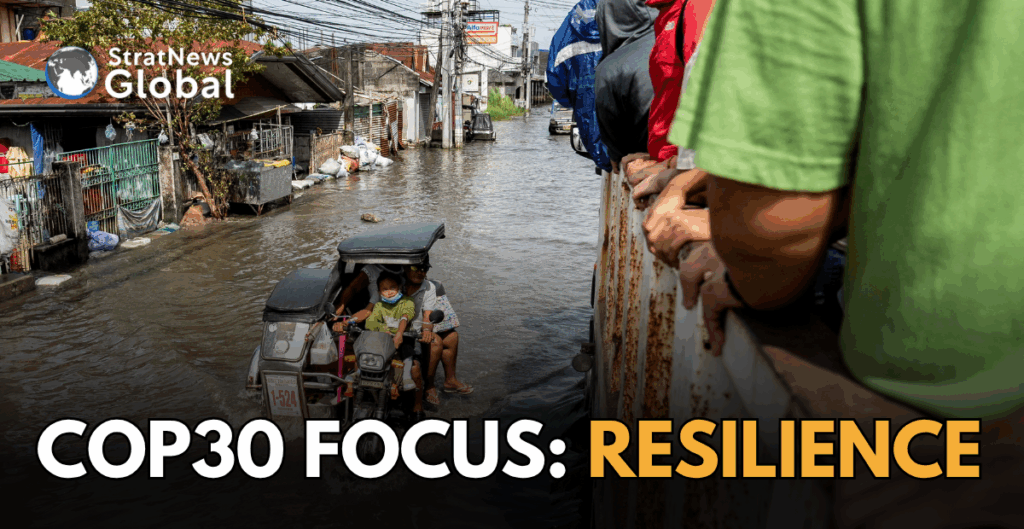



COP30 Puts ‘Resilience’ At The Core Amid Rising Climate Disasters
With typhoons tearing across Southeast Asia this week while areas of Jamaica and Brazil are still clearing debris from damaging storms, delegates at Brazil’s COP30 summit began grappling with how best to help the vulnerable withstand worsening weather and other climate extremes.
The topic of “adaptation” has grown more important as countries fail to rein in climate-warming emissions enough to prevent extreme warming linked to increasingly frequent weather disasters across the planet. A U.N. report last month said developing countries alone would need up to $310 billion every year by 2035 to prepare.
Where that money will come from is unclear. Ten of the world’s development banks, under pressure to free more cash for climate action, said on Monday they would continue to support the need.
“Lives, well-being, and jobs cannot be sustained where homes, schools, farms, and businesses are under threat from flooding, drought, or other climate extremes,” the banks said in a statement. Last year, they channeled more than $26 billion to low- and middle-income economies for adaptation.
Climate Financing
Separately, the director of a multipartner U.N. fund told Reuters it would soon announce a new impact bond aimed at raising $200 million by the end of 2026.
“The whole bond idea started exactly one year ago at the previous COP in Baku,” said Markus Repnik, who leads the Systematic Observations Financing Facility backed by the World Meteorological Organization, U.N. Development Programme, and U.N. Environment Fund. “We were getting the sense that things are going to change significantly from an international perspective.”
The fund, which also works to plug gaps in weather data for developing countries, hopes for country donations this week during COP30.
On Monday, Germany and Spain pledged $100 million to a different effort, the multilateral Climate Investment Funds (CIF), which is financing projects to boost climate resilience in developing countries.
The organization’s chief praised Brazil for featuring the issue as a COP30 focus, after years of seeing the issue slide down U.N. climate summit agendas.
“We’re really thrilled that, for the first time, adaptation is Day 1 and Day 2 of the COP,” CIF Chief Executive Tariye Gbadegesin told Reuters.
Rising Dangers and Costs
Vietnam estimated the initial costs from Typhoon Kalmaegi at nearly $300 million, a month after Typhoon Bualoi delivered $436 million in property damages. The Philippines is still tallying damages from Kalmaegi and the deadly Super Typhoon Fung-wong that hit this week.
Jamaica is looking at up to $7 billion in damages, or about a third of its GDP, from last month’s Hurricane Melissa, according to preliminary government estimates.
Beyond storms, there is damage from flooding, extreme heat, drought, and wildfires. More adaptation efforts are to be announced at COP30, from funding air conditioners and fans for people suffering extreme heat to AI mapping of soil conditions to improve crop yields.
Outside of national protections, about 86 million refugees – or three-quarters of the world’s total population displaced by conflict – are also exposed to extreme climate hazards, according to a UNHCR report on Monday.
U.N. climate chief Simon Stiell urged countries to agree on how to track progress to accelerate change in water, sanitation, health, and other areas.
“We now need to agree on the indicators that will help speed up implementation, to unleash its potential,” he said.
Adaptation Funding
Attracting private money to the cause can be tough. Resiliency projects are less likely to deliver a high return on investment than renewable energy projects that would help bring down greenhouse gas emissions.
A September report by the multi-stakeholder Zurich Climate Resilience Alliance said public funding remains crucial. Private finance now makes up just 3% of adaptation funding, which could rise to 15% with supportive policies, it said.
“We need resources that flow directly to local partners and communities who are already leading the response — rebuilding homes, restoring livelihoods, and protecting health systems from climate shocks,” said David Nicholson, chief climate officer at ZCRA member Mercy Corps.
(with inputs from Reuters)
China Started Dumping Goods Before U.S. Imposed Tariffs: ECB Study
Weak domestic demand rather than U.S. tariffs is the main reason China is dumping surplus products on European markets at rock-bottom prices at the expense of domestic producers, a European Central Bank study argued on Tuesday.
Pressure has been growing on the European Union to act on surging imports from China as U.S. tariffs force Beijing to find new markets for products it now struggles to sell.
“Escalating trade tensions between the United States and China might result in a further diversion of Chinese exports to Europe,” the ECB argued in an Economic Bulletin article.
“However, the rise in China’s exports to the EU predates the latest tensions and coincides instead with the onset of weakness in domestic demand in China,” the ECB added.
2021 Trend
The ECB argues that the start of the current trend can be dated back to 2021, when a housing downturn in China depressed domestic demand and started weighing on housing investment, an import-sensitive sector.
Meanwhile, state-led manufacturing investment, aimed at stabilising growth, created excess capacity and led firms into price wars, prompting them to redirect sales toward foreign markets, the ECB argued.
“To expand abroad, firms must gain competitiveness,” the ECB argued. “They typically do so by reducing short-run marginal costs and prices, or by accepting narrower profit margins, and in some cases even losses.”
Meanwhile, a host of factors in China, like weak consumer demand, trade policies, and a strategic focus on the domestic manufacture of key products, keep curbing import demand and point to a lasting shift in China’s import behaviour, leaving the trade gap on a widening path.
Trump-Xi Meeting
Late last month, U.S. President Donald Trump said he had agreed to cut tariffs on Chinese goods to 47% following what he called an “amazing” meeting with President Xi Jinping, in return for China resuming purchases of U.S. soybeans, continuing rare earth exports, and curbing fentanyl trafficking.
Trump repeatedly talked up the prospect of reaching an agreement with Xi since U.S. negotiators said they had agreed on a framework with China that will avoid 100% U.S. tariffs on Chinese goods and achieve a deferral of China’s export curbs on rare earths, a sector it dominates.
But with both countries increasingly willing to play hardball over areas of economic and geopolitical competition, many questions remain about how long any trade detente may last.
(with inputs from Reuters)
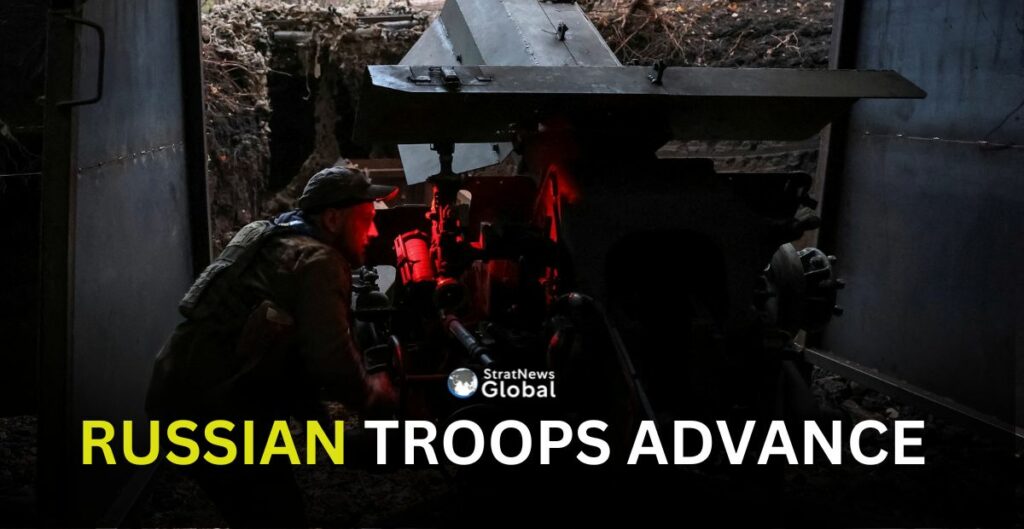
Russian Troops Enter Kupiansk City, Seize Train Stations
Russian forces have advanced deep into the Ukrainian city of Kupiansk and moved southward to seize several train stations, a Russian field commander said on Tuesday.
The commander, who gave his call sign as “Hunter” and identified himself as being in charge of Russia’s 1486th Motorised Rifle Regiment’s assault detachment, said his forces had taken control of an oil depot on the eastern edge of Kupiansk.
Russian Forces Advance
In a video statement issued by the Defence Ministry, he said that his forces had also taken control of a series of train stops along the railway to Kupiansk Vuzlovyi, a settlement which is about 6 km (4 miles) south of the centre of Kupiansk itself.
Russian forces were also fighting to clear the railway station at the nearby settlement of Kupiansk-Sortuvalnyi, he added.
Russia has been using pincer movements to try to encircle the Ukrainian cities of Pokrovsk in the Donetsk region and Kupiansk in the Kharkiv region, though Ukraine said on Monday it had delivered supplies to Myrnohrad, east of Pokrovsk.
Russian war bloggers published an unverified video on Tuesday showing what they said were Russian forces entering Pokrovsk along a road enveloped in fog or mist.
Russian forces on motorcycles and in an odd assortment of cars and other vehicles, many missing doors and windows, were shown driving along a road strewn with debris as soldiers looked on. Some Russian soldiers sat on the roof of a battered vehicle. A drone was seen beside the road.
Ukraine’s Response
Ukraine’s top military commander, Oleksandr Syrskyi, in an interview with the New York Post, said Russia was concentrating some 150,000 troops in a drive to capture Pokrovsk, with mechanised groups and marine brigades part of the push.
Syrskyi told the same newspaper that Ukrainian forces were using built-up urban areas to limit the progress of Russian troops and were confronting Russian sabotage units.
(With inputs from Reuters)
China: CO2 Emissions Remain Flat For 18 Months, Analysis Finds
China’s carbon dioxide emissions were flat year-on-year in the third quarter, extending a now 18-month streak of flat or falling emissions, an analysis for climate publication Carbon Brief found.
The trend, which began in March 2024, suggests that CO2 emissions could decline this year, provided there is no year-end spike, according to an analysis by Lauri Myllyvirta of the Helsinki-based Centre for Research on Energy and Clean Air.
CO2 output rose 0.8% in 2024 after a post-pandemic rebound at the start of the year, a previous Carbon Brief analysis found.
The government in September pledged to cap its carbon emissions by 2030 and, by 2035, reduce them by 7% to 10% from that as-yet unknown peak.
That commitment was China’s first to reduce emissions, though the scale of the cuts fell short of broader expectations. The EU climate commissioner called it “disappointing”.
The U.S. pullback from international climate agreements under President Donald Trump has created an opening for China to play a greater role in the matter, including at the U.N. COP30 climate summit in Brazil, which began on Monday.
Flat emissions in the third quarter of 2025 came as rising chemical sector emissions offset declines or plateaus elsewhere.
Transport emissions fell 5% and power-sector emissions were flat in the third quarter, even as electricity demand grew 6.1%, the analysis found.
Electricity generation from wind, solar, nuclear, and hydropower covered some 90% of that increase in demand. Gas-fired generation also cut into coal’s share.
But growth in the chemical industry kept overall emissions from falling. Plastic production grew 12% in the year in January-September, driven by surging domestic demand for plastic in food delivery and e-commerce.
China has also ramped up domestic production of polyethylene, the most widely used type of plastic, in response to the trade war with the U.S., the analysis said.
The government has also encouraged refineries to shift to chemical production to make up for a drop in transport fuel demand amid a widespread shift to electric vehicles.
(with inputs from Reuters)
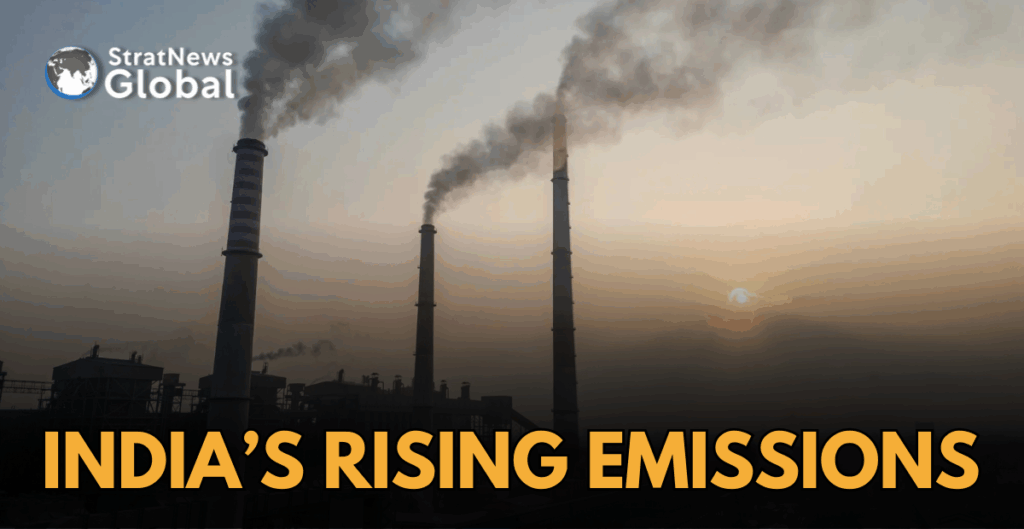
India Tops Global Emission Rise, But Defends Record
India recorded the world’s largest annual increase in greenhouse gas emissions last year, according to the United Nations Emissions Gap Report 2025 released last week.
The report found that India added 165 million tonnes of GHGs, followed by China and Russia. Together, G20 nations, including India, China and Indonesia, accounted for 77% of global emissions in 2024, with most members, except the European Union, registering an increase. The findings have placed India under the global spotlight at COP30 in Brazil, as the world calls for stronger climate action.
However, experts say the numbers do not tell the full story. “India is a developing economy, and our energy demand is increasing. Hence, our emissions will grow. However, in per capita emission terms, India remains one of the lowest emitters globally,” said Srinivas Krishnaswamy, CEO of the Vasudha Foundation. He noted that per capita emissions in the United States, China, Russia, and even the European Union far exceed the global mean of 6.4 tonnes of CO₂ equivalent.
Dr Manish Kumar Shrivastava, Associate Director at The Energy and Resources Institute (TERI), agreed that the UNEP data needs context. “Around 53% percent of the global increase in emissions is from land use change and forestry (LULUCF). This should have been assigned country-wise, but it isn’t, which distorts the picture,” he said. “With LULUCF, India’s emissions are much lower. Even excluding LULUCF, India’s emissions increase aligns with commitments and expected lines. India already achieved its initial 2030 targets and is leading the renewable transition, especially solar.”
India’s renewable achievements back that claim. A Press Information Bureau report states that as of 30 September 2025, India’s total installed electricity capacity reached 500.89 GW — surpassing the 500 GW mark. With over half of this from non-fossil fuel sources, India has already achieved one of its major COP26 Panchamrit goals — to have 50% of installed power capacity from non-fossil fuel sources by 2030 — five years ahead of schedule.
Still, the installed capacity figures can be misleading. Srinivas adds, “Renewables have a much lower capacity utilisation as compared to coal — for example, renewables operate at about 18–30% capacity, whereas coal has an 80–90% plant load factor. So effectively, you need roughly four times the installed renewable capacity to match coal’s electricity generation,” he said.
Therefore, with growing electricity demand, we would still need coal in the mix. Manish adds, “The shift towards renewables has begun in India, but it is still some time till it surpasses coal-based generation. Rapid reduction in coal is possible once green hydrogen gets deployed at scale.”
At COP30, India reiterated that developed countries must accelerate emissions cuts and fulfil their promises. As New Delhi eyes a presidency in 2028, its message remains clear: the next decade must focus not just on targets but on implementation, resilience, and shared responsibility based on mutual trust and fairness.
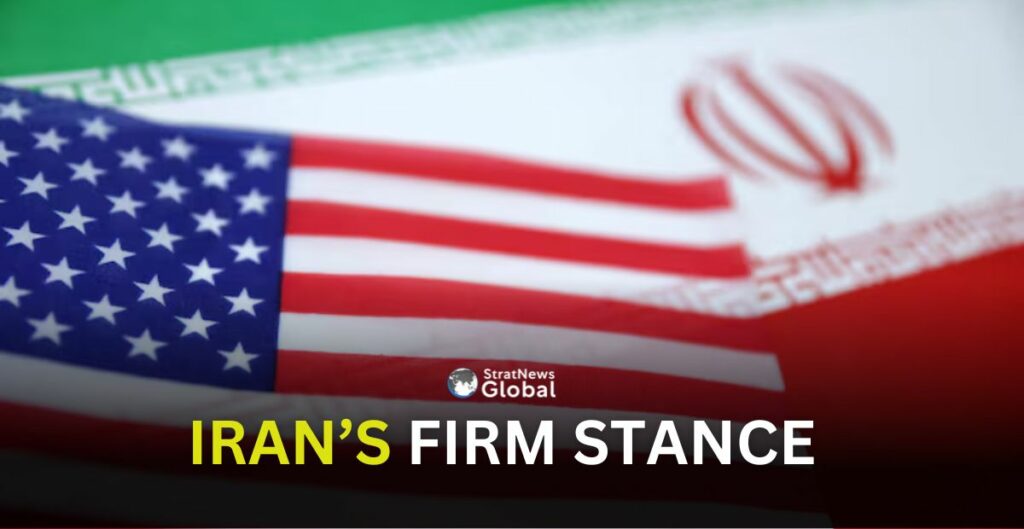
Iran For ‘Peaceful Nuclear Deal’, Offers Hand Of Friendship
Iran is seeking a “peaceful” nuclear agreement with the United States to end a decades-long standoff, but it will not make any concessions that threaten its national security, Deputy Foreign Minister Saeed Khatibzadeh said on Tuesday.
The United States, its European allies and Israel accuse Tehran of using its nuclear programme as a veil for efforts to try to develop the capability to produce weapons.
Iran says its nuclear programme is for peaceful purposes only.
In October, President Donald Trump said the United States was prepared to make a deal with Iran when Tehran was ready to do so, adding, “The hand of friendship and cooperation (with Iran) is open.”
Washington Accused Of Sending Contradictory Messages
Speaking at the 12th Abu Dhabi Strategic Debate, Khatibzadeh said Washington was sending Tehran contradictory messages about nuclear talks through third countries.
The two nations held five rounds of nuclear talks prior to a 12-day war between Iran and Israel in June, which Washington joined by striking key Iranian nuclear sites.
Repeating Tehran’s view, Khatibzadeh accused Washington of “betraying diplomacy” and the nuclear talks have stopped since the June war.
Major gaps remain between the two sides such as the issue of uranium enrichment on Iranian soil, which the United States wants to cut to zero to minimise any risk of weaponisation, a plan Tehran has rejected.
Supreme Leader Ruled Out Negotiations
Last week, Iran’s Supreme Leader Ayatollah Ali Khamenei, who has the last say on key state matters, such as foreign policy and Iran’s nuclear programme, ruled out negotiations with the United States under threat.
“Tehran is not seeking nuclear bombs and … is prepared to assure the world about it. We are very proud of our home-grown nuclear programme,” Khatibzadeh said.
(With inputs from Reuters)
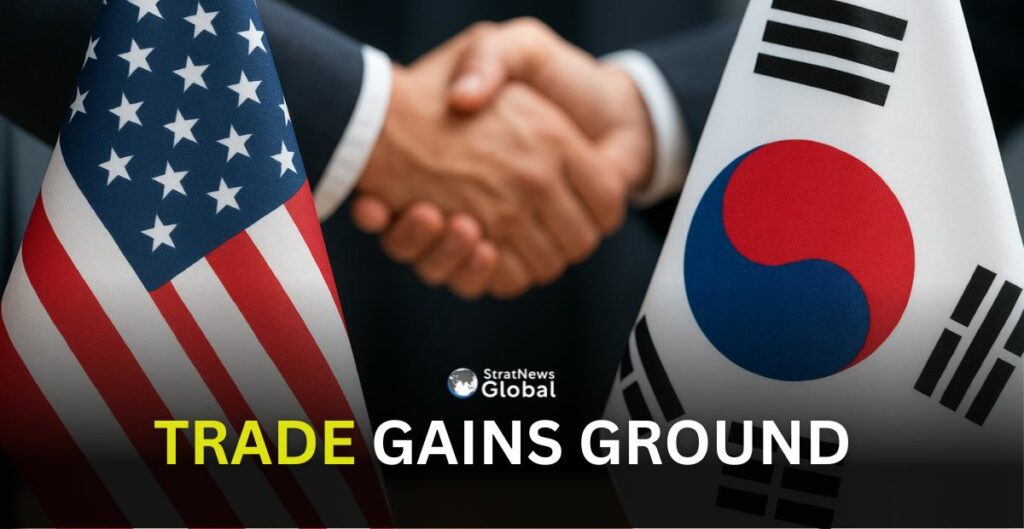
US-South Korea Trade Ties Move Forward, N-Sub Plan In Slow Lane
Recall the headline-grabbing report last month that the US had cleared a plan for South Korea to build nuclear submarines. Nothing appears to have moved since then because various US governemnt departments have to give their opinions. Now President Trump’s posts on social media suggest the vessel will be built only in a US shipyard. There are also questions about the US transferring sensitive technologies.
StratNewsGlobal learns that the Korean firm Hanwha owns a shipyard in Philadelphia, Pennsylvania state, on the US east coast. If Hanwha starts building there, it will be the third submarine building yard in the US and will operate under tight US controls.
But as far as trade goes, ties are moving forward. According to a report in The Korea Herald, a joint fact sheet is being readied summarizing trade and security agreements between Seoul and Washington. It includes $25 billion in U.S. arms sales to South Korea although the terms “have yet to be finalized.”
Agency reports said any plan to buy arms would depend on the government’s assessment of “spending capacity and the overall security environment.”
Korea Herald quoted Finance Minister Koo Yoon-cheol as saying that the trade component of the fact sheet is nearly finalized, while the security portion “is still being coordinated.” He added that both documents would be signed simultaneously once all security terms are settled.
$350 Billion Investment Framework
The broader economic framework involves a $350 billion South Korean investment package in U.S. projects, of which $200 billion will be allocated to commercially viable ventures overseen by a committee chaired by U.S. Commerce Secretary Howard Lutnick, according to Kim Yong-beom, the president’s chief policy secretary.
To safeguard South Korea’s currency market annual investments will be capped at $20 billion, with the remaining $150 billion directed toward shipbuilding and infrastructure projects, including loans and guarantees.
In return, the United States will reduce tariffs on South Korean-made cars to 15 percent from the current 25 percent, aligning with reciprocal tariff rates for most other South Korean exports. Products such as pharmaceuticals, semiconductors, and aircraft parts will also benefit from lower duties or most-favored-nation treatment.
Political Divide
However, the political divisions persist over whether the agreements require parliamentary ratification. The ruling party argues the joint fact sheet and memorandum are not legally binding, while the opposition insists that, given the scale of financial commitments, parliament must formally ratify the deal under constitutional requirements governing treaties.
The government aims to present a special bill in November to provide legal grounds for the investments, signaling that both economic and defense cooperation with Washington remain central to Seoul’s long-term strategy.
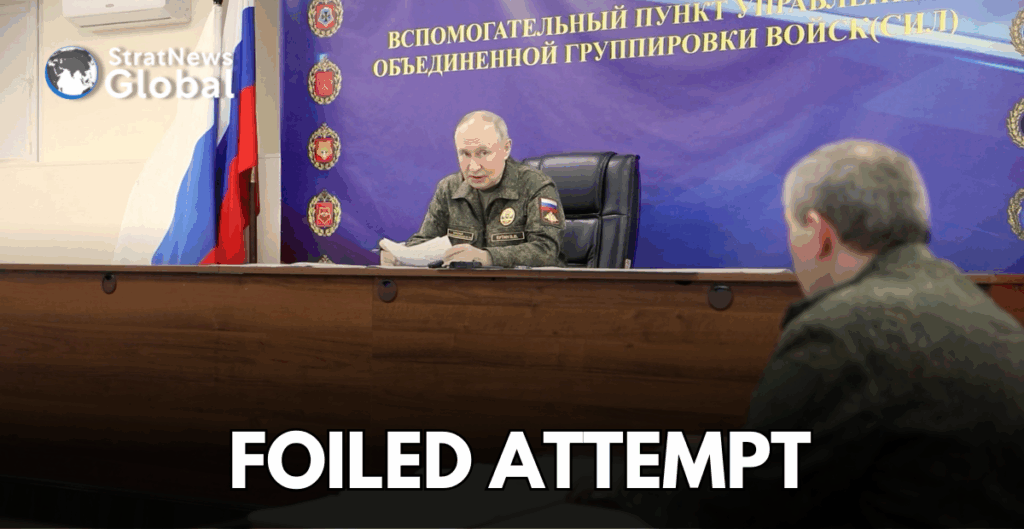
Russia Claims It Foils Ukrainian-British Plot To Steal MiG-31 Jet
Russia’s Federal Security Service (FSB) said it had foiled a plot by Ukrainian and British spies to tempt Russian pilots to steal a MiG-31 jet armed with a Kinzhal hypersonic missile for $3 million, Russian state media RIA agency reported on Tuesday.
The RIA news agency cited the FSB as saying that the hijacked jet was to be flown toward a NATO air base in the Romanian city of Constanta, where it could have been shot down by air defences, the agency reported.
‘Large Scale Provocation’
The FSB, the main successor to the Soviet-era KGB, said Ukraine and Britain had planned a large-scale “provocation” using the hijacked aircraft, and that Ukrainian military intelligence had sought to recruit Russian pilots for $3 million to steal the fighter.
“The measures taken have thwarted the Ukrainian and British intelligence services’ plans for a large-scale provocation,” RIA cited the FSB as saying.
State TV showed pictures of messages and recordings of a man who they said was working for Ukrainian and British intelligence and had offered $3 million to a Russian pilot to fly a MiG to Europe, and that the pilot had also been offered citizenship.
Reuters could not independently verify the account.
Russia-UK Rivalry
Russia’s Kinzhal is an air-launched ballistic missile that Moscow calls hypersonic, capable of very high speeds and manoeuvring flight paths intended to make it difficult for air defences to track and intercept.
Russia has long cast Britain as its main enemy. Moscow accuses London of stoking the Ukraine war and British intelligence of helping Ukraine to mount a series of operations deep inside Russia.
Britain casts the Russian invasion of Ukraine as an imperial-style land grab by Moscow. London has repeatedly warned that Russian intelligence is trying to sow mayhem across Britain and Europe to undermine democracy.
(with inputs from Reuters)
South Korea Blocks Google Map Data Request Over Security Concerns
South Korea’s Ministry of Land, Infrastructure and Transport announced on Tuesday that it has once again postponed its decision on Google’s request to export map data, stating that a final ruling will be made after the company provides additional documentation.
The ministry said in a statement that its National Geographic Information Institute would give Google 60 business days until February 5, 2026 to submit the additional material before making a decision.
Security Concerns
South Korea previously rejected requests from Google, whose parent is Alphabet, for permission to use map data on servers outside the country, in 2016 and 2007, citing security concerns.
In September, Google said it would comply with South Korea’s security-related request to ensure that coordinate information for areas within the country is not displayed to any users, either inside or outside South Korea. The company had earlier agreed to blur images of security facilities.
Inconsistencies In Application
However, South Korea’s ministry said on Tuesday Google had not yet filed an updated application reflecting this, arguing inconsistencies between Google’s earlier statements and its submissions were making the review difficult.
Google is seeking approval to export South Korea‘s 1:5,000-scale map data, equivalent to 50 metres per centimetre, which the company says is the same scale used by domestic map services provided by Kakao Corp and Naver.
Google currently operates with 1:25,000-scale data, which it says is insufficient to support reliable navigation.
The negotiations with Google come amid efforts by South Korea and the United States to wrap up negotiations on tariff and security agreements between the allies.
(With inputs from Reuters)
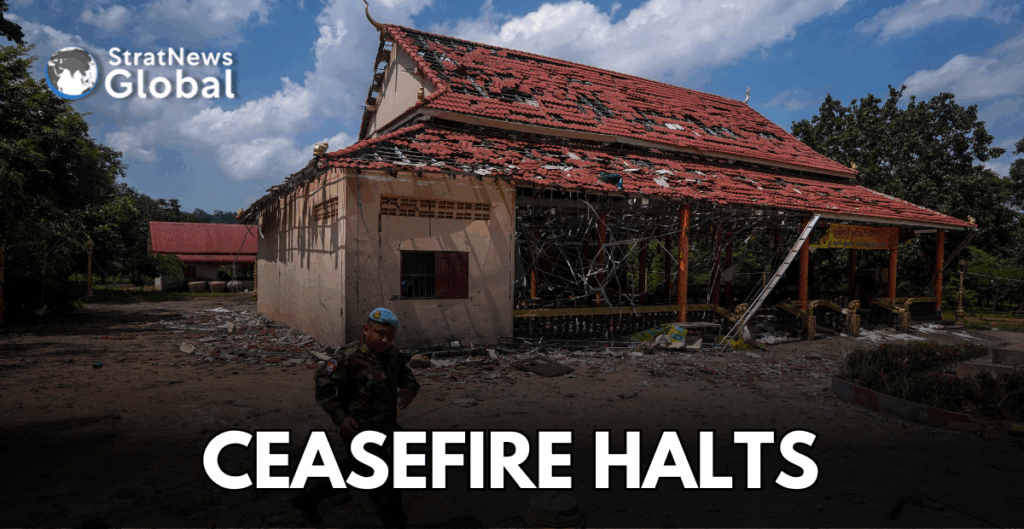
Thailand To Halt Ceasefire Deal With Cambodia
Thailand’s government confirmed on Tuesday it will halt the implementation of an enhanced ceasefire agreement with Cambodia, signed last month in the presence of U.S. President Donald Trump and said it would explain its decision to Washington.
Bangkok will also put on hold the return of 18 Cambodian prisoners of war currently held by the Thai military, Defence Minister Natthaphon Narkphanit told reporters. He declined to answer a question on whether troops would be redeployed.
Thailand-Cambodia Tensions
Tensions between the two Southeast Asian neighbours, who clashed for five days in July, have escalated following a landmine blast on Monday that injured four Thai soldiers.
Thailand’s military has accused Cambodia of laying new landmines after the two countries agreed on the enhanced ceasefire steps, which included the withdrawal of troops and heavy weapons, as well as Bangkok’s release of the Cambodian detainees.
In a statement on Tuesday, Cambodia’s defence ministry denied that it had laid new landmines and urged Thailand to avoid patrols in old minefield areas. It said it was committed to working with Bangkok in line with the October deal.
Enhanced Ceasefire
The enhanced ceasefire between Thailand and Cambodia, signed during a regional summit in Malaysia, sought to build on a truce brokered in July by Trump, who called the then-leaders of the two countries, urging them to end hostilities or face halts to their respective trade talks with Washington.
Both sides blame each other for starting the exchange of rockets and heavy artillery, which killed at least 48 people and temporarily displaced an estimated 300,000 during their worst fighting in recent history.
Thailand’s Foreign Minister Sihasak Phuangketkeow said his country’s decision would be explained to the United States and to Malaysia, the chair of the regional bloc ASEAN, which has facilitated the ceasefire process.
“What they (Cambodia) have said is not sufficient. We have to see what Cambodia’s stance is from now on,” he said.
(with inputs from Reuters)