

Support us by contributing to StratNewsGlobal on the following UPI ID
ultramodern@hdfcbank

Strategic affairs is our game, South Asia and beyond our playground. Put together by an experienced team led by Nitin A. Gokhale. Our focus is on strategic affairs, foreign policy and international relations, with higher quality reportage, analysis and commentary with new tie-ups across the South Asian region.
You can support our endeavours. Visit us at www.stratnewsglobal.com and follow us on YouTube, Twitter, Facebook and Instagram.
र 500 per month
र 1000 per month
र 5000 per year
र 10000 per year
Donate an amount of your choice
र 500 per month
Donate र 500 per month

र 1000 per month
Donate र 1000 per month
र 5000 per year
Donate र 5,000 per year
र 10000 per year
Donate र 10,000 per year
Donate an amount of your choice
Donate an amount of your choice
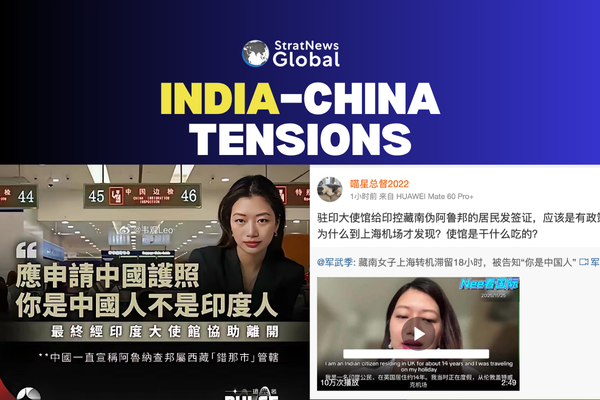


Chinese Social Media Storm Over Arunachal Woman’s Detention
The detention of a UK-based Indian woman from Arunachal Pradesh for nearly 18 hours at Shanghai Pudong Airport this week triggered a surge in nationalist Chinese social-media commentary under the hashtag #Zangnan (Southern Tibet) Beijing’s term for the Indian state, amplifying concerns over China’s increasingly aggressive public messaging on the disputed region.
Pema Wangjom Thongdok, who was travelling from London to Japan via Shanghai, said airport authorities stopped her after noticing that her Indian passport listed “Arunachal Pradesh” as her birthplace. Officials insisted her passport was “invalid”, mocked her nationality, and repeatedly told her she needed a Chinese passport to travel, according to her account. They blocked her onward journey until she purchased a fresh ticket. The Indian Consulate later intervened to secure her release.
‘Zangnan’ Trends on Chinese Social Media
As details of her detention circulated, Chinese social media erupted. “Zangnan (Southern Tibet)” shot to the top of Weibo trends, drawing thousands of posts endorsing the harassment and echoing Beijing’s territorial assertions. One user wrote: “I hope to see the People’s Liberation Army reclaim the territory of South Tibet occupied by India in my lifetime!” Another declared: “She belongs from illegal India-occupied Arunachal Pradesh Zangnan.”
Some even proposed a “Zangnan (Southern Tibet) Compatriot Card” a symbolic identity document for residents of Arunachal Pradesh aimed at demonstrating “kinship” while reinforcing China’s claims. One post argued: “This would show who the real compatriots are.” Others attacked Indians directly, writing: “Using Zangnan again as a tool to stir up trouble this group of Indians is truly disgusting.”
Even Chinese diplomats drew fire. A widely shared comment criticised the Chinese Embassy in New Delhi for granting a visa to an Arunachal resident at all:
“The Chinese Embassy must have rules for people from the so-called Arunachal Pradesh, right? Why was this only discovered at Shanghai Airport? What is the embassy even doing?”
The intensity of the online nationalism has raised concerns among observers, who note that China’s social-media space is tightly controlled and often reflects the political mood in Beijing. Analysts say such digital surges regularly accompany periods of heightened assertiveness on foreign-policy issues, particularly along contested borders.
In India, the response was immediate. The Ministry of External Affairs reiterated that Arunachal Pradesh is an “integral and inalienable” part of India. The state’s Chief Minister, Pema Khandu, condemned the “humiliation and racial mockery” inflicted on Thongdok. Many in India view the viral “Zangnan” narrative as part of China’s broader campaign to normalise its territorial claims through public discourse and administrative pressure.
For travellers like Thongdok, the dispute is no longer distant it has immediate, personal consequences.
China Vows to ‘Crush’ Foreign Interference Over Taiwan
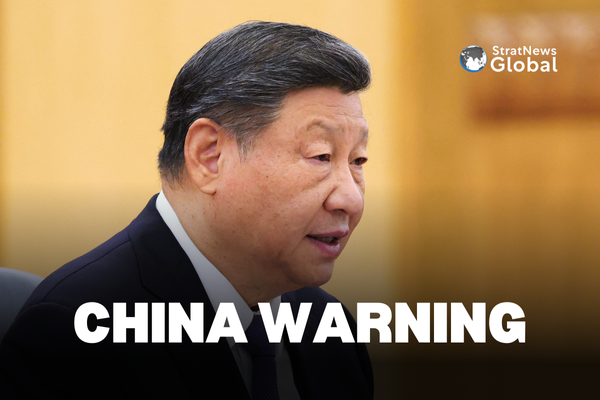
China issued a strong warning on Wednesday, saying it would “crush” any foreign efforts to interfere in matters related to Taiwan. The warning came after Japan announced plans to deploy missiles on an island close to the self-ruled territory.
Firm Warning from Beijing
Peng Qingen, spokesperson for China’s Taiwan Affairs Office, made the statement during a regular press conference. Responding to questions about Japan’s missile deployment, Peng stressed that China was prepared to defend its sovereignty and territorial integrity.
“We have a firm will, strong determination and a strong ability to defend our national sovereignty and territorial integrity,” Peng said. “We will crush all foreign interference.”
Tensions Over Taiwan’s Status
Beijing considers Taiwan part of its territory and has not ruled out the use of force to bring the island under its control. However, Taiwan’s democratically elected government rejects Beijing’s claim. It insists that the island’s future can only be decided by its own people.
Japan’s Missile Deployment Raises Concerns
Japan recently announced plans to place long-range missiles on an island near Taiwan, which lies close to China’s southeastern coast. The move, aimed at strengthening Japan’s defence capabilities, has drawn criticism from Beijing.
Peng described Japan’s decision as a “deliberate provocation” that risks escalating regional tensions. “Japan’s deployment of offensive weapons in areas adjacent to China’s Taiwan region is extremely dangerous,” he said. “It deliberately creates regional tensions and provokes military confrontation.”
The exchange highlights growing friction in East Asia, where China’s increasing military activity around Taiwan and Japan’s defence build-up continue to heighten concerns about stability in the region.
(with inputs from Reuters)
India-EU Talks Drive FTA Finalisation
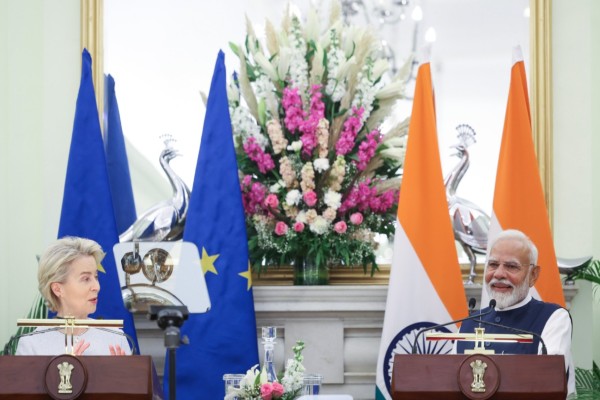
India and the European Union emerged from two days of high-level engagements in Brussels with a renewed commitment to finalise the long-pending Free Trade Agreement by the end of the year.
The discussions took place during the 11th India–EU Foreign Policy and Security Consultations and the 6th Strategic Partnership Review Meeting, reflecting continued momentum in the relationship shaped by the Strategic Roadmap launched in 2020.
Economic security featured prominently in the consultations, with both sides agreeing to deepen cooperation on supply chain diversification, protection of critical infrastructure and the safeguarding of key sectors against global disruptions. Officials noted forward movement on several FTA chapters and confirmed that parallel efforts are being advanced on the Investment Protection Agreement and the Geographical Indications Agreement, indicating steady institutional progress across trade-related frameworks.
Connectivity and infrastructure development were also central to the dialogue, with the European Union reaffirming its intention to work closely with India under the Global Gateway initiative. The focus remained on sustainable financing models and cross-border digital infrastructure aligned with shared standards. Progress under the India–EU Connectivity Partnership was reviewed, with attention on secure digital ecosystems, green energy supply routes and transport corridors, while both sides reiterated continued engagement on the India-Middle East-Europe Economic Corridor, which was identified as a strategic element for ensuring resilient commercial flows.
Innovation and science and technology cooperation were emphasised as future-facing pillars of the partnership. India and the EU agreed to intensify collaboration in clean energy technologies, advanced manufacturing, digital governance, space cooperation and research initiatives. Strong momentum under the Trade and Technology Council was acknowledged, with a shared commitment to accelerate projects ahead of the 2026 Ministerial session. The discussions also underlined the importance of student mobility, academic partnerships and collaborative research, recognising the role of people-to-people exchanges in reinforcing long-term strategic ties.
Defence and security cooperation saw renewed focus, with both sides expressing intent to elevate engagement across maritime security, counterterrorism, cyber resilience, space cooperation, defence industry collaboration, disarmament and non-proliferation.
They reaffirmed their goal of concluding negotiations on a Security and Defence Partnership and a Security of Information Agreement to facilitate enhanced information-sharing and operational coordination. The consultations reiterated support for a free, open and rules-based Indo-Pacific, anchored in respect for sovereignty, territorial integrity and peaceful dispute resolution.
The European Union welcomed India’s upcoming BRICS Chairship in 2026, and the two partners identified areas of convergence in global governance reform. Discussions also addressed humanitarian cooperation, disaster resilience and collaboration through the Coalition for Disaster Resilient Infrastructure. On wider international issues, both sides called for sustained efforts toward comprehensive and lasting peace in Ukraine and early restoration of stability in Gaza.
With the current joint roadmap nearing its conclusion, India and the EU agreed to begin work on a new Joint Comprehensive Strategic Agenda to guide cooperation beyond 2025. This framework is expected to be adopted at the India–EU Summit in New Delhi in the first quarter of 2026.
Secretary (West) in India’s Ministry of External Affairs, Sibi George, also participated in the EU Indo-Pacific Ministerial Forum, highlighting India’s perspectives on critical maritime infrastructure, economic security and digital connectivity.
Australian Senator Suspended Over ‘Burka Stunt’
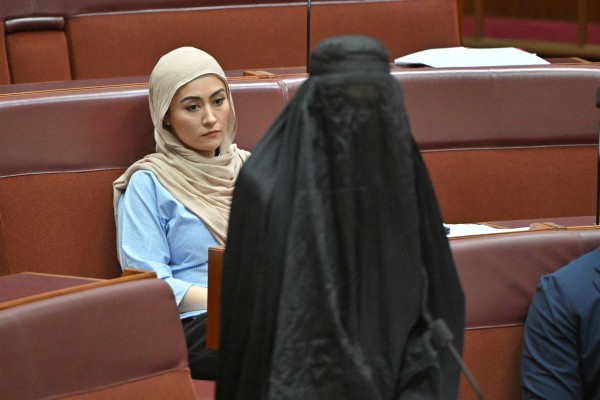
Australian senator Pauline Hanson has been suspended from the chamber for one week after wearing a burka into parliament as part of a renewed push to ban full-face coverings in public.
The move drew immediate condemnation from colleagues across party lines, culminating in a formal censure motion that criticised her conduct as disrespectful to Muslim Australians.
Hanson, a Queensland representative from the anti-immigration One Nation party, attempted on Monday to introduce legislation seeking a nationwide prohibition on full-face veils. The Senate declined to allow the bill to be introduced, a position consistent with previous rejections of similar proposals she has advanced over the years. Shortly after the bill was blocked, Hanson re-entered the chamber wearing a black burka, prompting protests from fellow senators and a temporary halt to proceedings.
Greens senator Mehreen Faruqi, a Muslim lawmaker from New South Wales, denounced the act as “blatant racism”. Faruqi was last year found by the Federal Court to have been subjected to racial discrimination by Hanson, a ruling Hanson is currently appealing. Independent senator Fatima Payman of Western Australia also criticised the display, calling it “disgraceful” and accusing Hanson of using the chamber to provoke rather than legislate.
On Tuesday, Foreign Minister Penny Wong, who leads the government in the Senate, introduced a censure motion that passed 55–5. The motion stated that Hanson’s conduct was “intended to vilify and mock people on the basis of their religion” and was “disrespectful to Muslim Australians”. Wong said Hanson’s behaviour represented a pattern, arguing that she “has been parading prejudice as protest for decades” and adding that the stunt was “not worthy of a member of the Australian Senate”.
The chamber also supported Hanson’s suspension for one week after she declined to remove the garment when directed, forcing presiding officers to interrupt proceedings. The temporary suspension bars her from participating in Senate business during that period.
Hanson later defended her actions on Facebook, writing, “If they don’t want me wearing it – ban the burka.” She has long campaigned for restrictions on Muslim face coverings, describing them in the past as a threat to public safety and social cohesion. Monday’s incident marks the second time she has worn a burka into Australia’s parliament; she first did so in 2017 while advocating a similar ban.
Hanson’s positions on immigration and multiculturalism have drawn controversy throughout her political career. In her 2016 maiden speech to the Senate, she warned that Australia risked being “swamped by Muslims”, echoing language from her first speech to the House of Representatives in 1996 in which she claimed the country was in danger of being “swamped by Asians”. Both remarks triggered widespread criticism but became central to her political identity and the platform of One Nation.
The latest confrontation underscores ongoing tensions in Australia over issues of race, religion, and national identity.
While Hanson has framed her actions as part of a long-running campaign on public security, most senators rejected the method and message of her protest, describing it as an attempt to mock a religious practice rather than a legitimate legislative intervention. Her suspension takes immediate effect, though her party has indicated she will continue to push for debate on face-covering restrictions once she returns to the chamber.
(With Inputs from Agencies)
Tanzania Scraps Independence Celebrations After Unrest
Tanzania has called off next month’s Independence Day celebrations, diverting the money originally set aside for festivities to repair public infrastructure damaged during recent election-related disturbances, Prime Minister Mwigulu Nchemba has announced.
The decision comes ahead of the 9 December national holiday, a date that opposition groups and civil society actors had urged citizens to use as a moment to assemble and protest against what they describe as deadly violence following the country’s disputed presidential poll.
According to BBC reports, the move follows growing pressure from opposition parties who allege that security forces used lethal force to suppress demonstrations after last month’s election, resulting in significant loss of life, allegations that the government has not confirmed through an official death toll.
Opposition leaders claim that hundreds of people were killed during the crackdown on post-election protests. In response to the growing outcry, authorities have established a commission of inquiry to investigate the events. However, the government has so far refrained from releasing any confirmed figures on fatalities, prompting criticism and calls for greater transparency from rights groups and political observers.
President Samia Suluhu Hassan, who secured a landslide victory with 98% of the vote, has faced sharp criticism from her rivals, who labelled the result a “mockery of democracy”. Several of her main challengers were unable to participate in the election. Tundu Lissu, a prominent opposition figure, remains in detention on treason charges, which he denies, while another contender, Luhaga Mpina, was barred from running after his candidacy was rejected on what authorities termed technical grounds.
International and domestic election observers later reported indications that the polling process had been compromised and fell short of accepted democratic standards. Amid the unrest, the government imposed a five-day internet shutdown beginning on election day, 29 October, and warned citizens against sharing images or videos of protests on social media platforms.
In the weeks that followed, graphic images and footage purportedly showing bodies of protesters circulated widely online. International media organisations verified some of the content as genuine. The government, however, criticised such coverage arguing it was designed to damage Tanzania’s global reputation, and insisted that the country remains safe and stable.
Government spokesperson Gerson Msigwa stated on Sunday that the commission of inquiry would provide clarity on the incidents surrounding the protests. Despite this assurance, civil society organisations and advocacy groups have expressed concern about the independence and impartiality of the investigative body.
Authorities charged at least 240 individuals with treason in connection with the protests. In a move aimed at lowering political tension, President Samia later urged prosecutors to exercise leniency. Reports indicate that many of those charged have since been released.
While announcing the cancellation of Independence Day celebrations, Prime Minister Nchemba appealed for restraint and unity, emphasising dialogue as the path forward. “I urge my fellow Tanzanians to come together and discuss the issues affecting us. Let us not return to what we went through, because the consequences are irreparable,” he said.
President Samia Suluhu Hassan assumed office in 2021 following the death of former President John Magufuli, becoming Tanzania’s first female head of state. Her early tenure was marked by praise for easing political restrictions and opening up civic space. However, critics argue that the environment has since tightened, pointing to recent arrests, restrictions on opposition activity, and limitations on freedom of expression as signs of a shrinking democratic space.
(With Agency Inputs)
Australia Strikes Landmark Deal To Guarantee Minimum Pay For Food Delivery Workers
Australian food delivery workers are set to secure minimum pay protections following a landmark deal between Uber Eats, DoorDash, and the country’s transport union—an agreement being celebrated as a global first.
According to the draft released Tuesday, couriers would be guaranteed at least A$31.30 (US$20.19) per hour. For many riders currently paid per delivery rather than for time worked, this marks a pay rise of roughly 25%, signaling a major shift in how gig economy labor is valued.
Minimum Pay Deal for Gig Workers
The deal would put them on par with the minimum wage earned by Australian casual workers.
If approved by the Fair Work Commission, the agreement will go into effect next July.
The agreement comes after Australia’s centre-left government passed a law last year that defined gig workers as “employee-like” workers and gave them the right to negotiate minimum pay and conditions.
Uber Eats and DoorDash are the main players in the Australian food delivery market, with Sydney-founded app Menulog set to close local operations at the end of November.
Additional Worker Protections
The U.S. companies must also take out accident insurance for their workers, give them access to their records and provide them with more details about each delivery job, according to the agreement.
“It is a world first set of conditions for gig workers performing this work, and it will result in life-transforming wage increases,” Michael Kaine, national secretary of the Transport Workers’ Union, told a news conference.
“Until this point in time and even as we speak today, there are swathes of workers in the gig economy that are being paid below the minimum national wage.”
Utsav Bhattarai, a Canberra food delivery worker, told the same news conference he had worked through illness and dangerous weather to pay the bills.
Ed Kitchen, Uber Eats managing director for Australia and New Zealand, said in a statement the agreement was a “meaningful step towards building modern laws for modern forms of work” and gave delivery workers protection, security and flexibility.
(With inputs from Reuters)
50 Abducted Nigerian School Students Escape
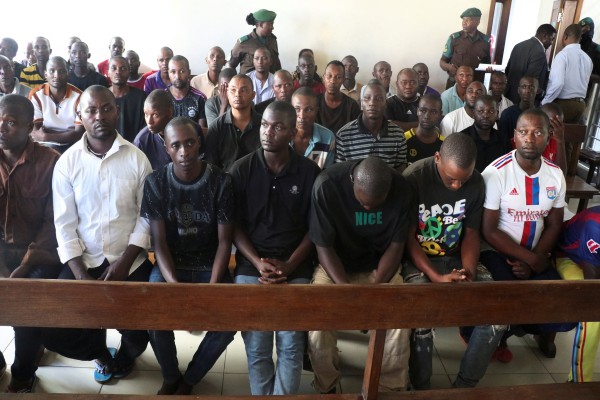
Fifty students who were abducted during a large-scale raid on a Catholic school in northern Nigeria have returned to their families after managing to escape from captivity, while more than 250 children and a dozen teachers remain unaccounted for following the attack.
According to CNN, the abduction occurred on Friday when armed bandits stormed St. Mary’s Private Catholic School in Niger State, located in Nigeria’s north-central region, and forcibly took away 303 children and 12 members of staff. The Christian Association of Nigeria (CAN) confirmed on Sunday that 50 of the captured students succeeded in escaping and have since been reunited with their parents.
The students who broke free did so between Friday and Saturday and did not return to the school premises after their escape, instead making their way directly to their families. This was confirmed in a statement by Daniel Atori, spokesman for the Niger State chapter of CAN chairman Most Rev. Bulus Dauwa Yohanna. Atori said the pupils who escaped were unable to go back to the institution, which remains in a state of distress following the incident.
Despite the escape of the 50 students, the situation remains critical. CAN stated that 253 children are still being held by the attackers. This figure includes 250 students from the school and three children of staff members. In addition, 12 teachers also remain in captivity, raising growing concern among parents, religious organisations and local authorities.
Images from the scene showed the school’s entrance signboard standing amid an atmosphere of anxiety, while personal belongings lay scattered outside a student dormitory, underscoring the suddenness and chaos of the raid. Families continue to search for information, hoping for safe returns and official updates about ongoing rescue efforts.
The incident prompted international concern, including an appeal from Pope Leo during his Sunday Angelus address. The Pope called on relevant authorities to take swift and decisive measures to ensure the release of both the students and the teachers. He expressed sorrow for the abducted children and their families, saying he felt deep pain for the young victims and those waiting anxiously for their return.
This attack is the latest in a prolonged wave of violence targeting civilians in northern Nigeria, where armed groups frequently carry out kidnappings for ransom. The abduction at St. Mary’s has triggered heightened fear across the region, leading several federal and state-run schools to temporarily suspend operations to prevent similar incidents.
The assault came during a week marked by multiple violent events across neighbouring states. In Kwara State, gunmen attacked a church service, resulting in the deaths of at least two people and the abduction of several worshippers, including the pastor. Meanwhile, in Kebbi State, armed men stormed a government-run girls’ boarding school and kidnapped 25 female students. During that incident, the school’s vice principal was shot and killed.
Nigeria continues to grapple with overlapping security challenges, including religious violence, ethnic conflicts and long-standing tensions between farming communities and herders over access to land and water. These pressures have further destabilised already vulnerable rural regions.
International attention has also focused on the situation. US President Donald Trump has previously spoken out strongly about violence against Christians in Nigeria, referencing what he described as a “mass slaughter” by Islamist insurgents, and has even suggested the possibility of military intervention. Analysts, however, have noted that victims of such attacks include both Christians and Muslims, highlighting the complex nature of the conflict.
In a related development, US Secretary of War Pete Hegseth met Nigeria’s National Security Advisor Mallam Nuhu Ribadu to discuss the deteriorating security situation. In a post on X, Hegseth said the United States was working closely with Nigeria to address the violence and protect vulnerable communities from extremist attacks.
As families continue to wait for news of the remaining abductees, the fate of the 253 children and 12 teachers still in captivity remains uncertain, intensifying pressure on Nigerian authorities to secure their safe release and prevent further attacks on educational institutions.
(with Inputs from Agencies)
China Deepens Pacific Ties with Fresh Investment in Tonga
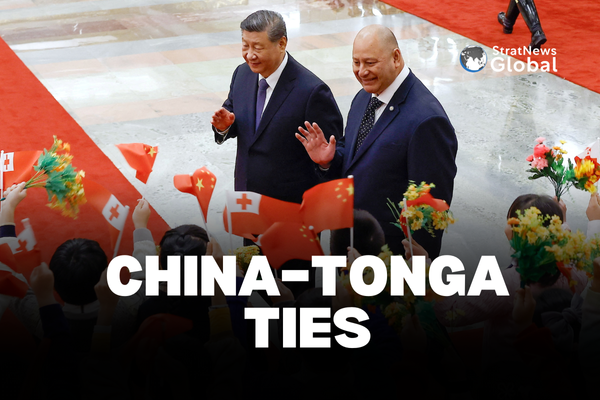
China’s President Xi Jinping has promised new investments in Tonga during a meeting with King Tupou VI in Beijing, reaffirming the growing partnership between the two nations. The commitment comes as China seeks to enhance its influence across the Asia-Pacific region, where small island nations like Tonga play a key strategic role.
Expanding Economic Cooperation
During talks held at the Great Hall of the People, Xi assured King Tupou that China would continue to support Tonga’s economic and social development. While no specific funding amount was disclosed, Xi emphasised that both countries have built a friendship that has endured through challenges. He stated that China would continue to support Tonga in maintaining its independence and sovereignty, regardless of global changes.
China and Tonga plan to deepen cooperation in several sectors, including trade, agriculture, fisheries, tourism, and climate action. The partnership will also include discussions on aligning development strategies to promote sustainable growth and resilience.
Tonga’s Debt Challenge
Tonga, home to around 108,000 people, owes about $112 million to China’s Export-Import (EXIM) Bank. These debts, largely accumulated from loans taken nearly two decades ago, now account for 48% of Tonga’s total external debt. Repayments surged last year due to a loan used to rebuild the capital’s business district after the 2006 riots. The growing burden of debt has become a major issue in Tonga’s 2025 budget discussions.
Tonga has sought Australia’s assistance in negotiating debt restructuring with China. It also looks to both Canberra and Washington for support to strengthen infrastructure and address the escalating risks of climate change.
Balancing Partnerships in the Pacific
China views Tonga as an important participant in its Belt and Road Initiative, which the island nation joined in 2018. During the meeting, King Tupou expressed gratitude for China’s continued support in improving Tonga’s infrastructure.
Meanwhile, Australia has committed A$27.1 million (US$17.49 million) in aid this year to help Tonga adapt to climate challenges. The United States has also pledged $4.1 million for 2024.
Both Xi and Tupou witnessed the signing of a new “framework agreement” designed to enhance economic ties, allowing flexible negotiations and aiming to expand trade between the two nations.
(with inputs from Reuters)
Singapore Orders Apple and Google to Block Government Agency Spoofing
Singapore’s police have ordered Apple and Google to take action against the spoofing of government agencies on their messaging platforms, the Ministry of Home Affairs said on Tuesday.
The directive, issued under the country’s Online Criminal Harms Act, follows a rise in scams on Apple’s iMessage and Google Messages that falsely claimed to be from local organisations such as the postal service SingPost.
Messaging Scams Exploit Government Name
In September, Singapore also warned Meta Platforms that it could face fines if it failed to introduce stronger safeguards, such as facial recognition, to tackle impersonation scams on Facebook involving government officials.
Although government agencies have registered with a local SMS registry to ensure only authorised senders can use the “gov.sg” name, this protection does not currently extend to iMessage and Google Messages.
“Members of the public may assume that messages they receive from accounts claiming to be from ‘gov.sg’ on iMessage or Google Messages are legitimate because messages sent through these platforms appear alongside and are not easily distinguishable from SMSes,” police said.
Apple and Google Commit to Compliance
Under the new order, Apple and Google must prevent accounts and group chats from displaying names that impersonate “gov.sg” or other government entities, or filter such messages out entirely.
The Ministry of Home Affairs said both companies have agreed to comply and urged users to update their apps to ensure the latest protections take effect.
Google confirmed in a statement that it is working closely with the Singapore government to implement these preventive measures, adding that they build upon its ongoing efforts to combat scams through proactive spam filtering.
Apple could not immediately be reached for comment.
(with inputs from Reuters)
Bangladesh: Election Commission To Hold Mock Voting, Vows Fair Poll
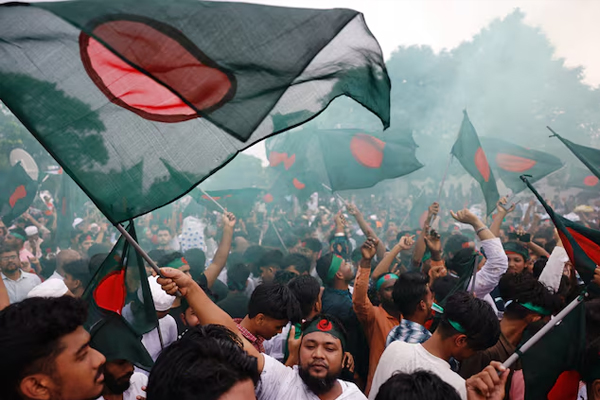
The Bangladesh Election Commission (EC) will hold a mock round of voting on Saturday to iron out any deficiencies ahead of general elections in February. Dhaka Tribune said the voting will take place at a designated school in Dhaka and the media will be present.
It’s not clear if there will be more rounds of mock voting as the election date nears, but Chief Election Commissioner AMM Nasir Uddin was quoted by Dhaka Tribune as saying that “We have promised the nation that we would deliver a fair, beautiful and credible election. The Election Commission alone cannot ensure this. We all must work together for it.”
He also called upon local observers organisation that will oversee the voting, to ensure that no person involved with any party or in politics, is on their staff. This was important, he said, to ensure their impartiality.
“If they have participated in political programmes, processions or meetings, please do not appoint them,” he said. “If any report comes that your observer is working in favour of a political party or influencing the process, this will be a great damage done to your reputation. So, please ensure they remain totally impartial.”
Describing the observers and journalists as the CCTV cameras for the EC, he said “If they keep watch, no one will dare to commit irregularities. Your role is very important. You have a very important role to play. If they see an irregularity, it is their duty to report it, not to intervene or stop it.”
Apart from meeting observer organisations, the Election Commission is also sitting down with law enforcement agencies and the armed forces on Thursday, followed by top officials of the interim administration on Friday.
The EC has already held discussions with 47 registered political parties, including BNP, Jamaat and the National Citizen Party (NCP). The schedule for elections is expected to be announced early next month.