

Support us by contributing to StratNewsGlobal on the following UPI ID
ultramodern@hdfcbank

Strategic affairs is our game, South Asia and beyond our playground. Put together by an experienced team led by Nitin A. Gokhale. Our focus is on strategic affairs, foreign policy and international relations, with higher quality reportage, analysis and commentary with new tie-ups across the South Asian region.
You can support our endeavours. Visit us at www.stratnewsglobal.com and follow us on YouTube, Twitter, Facebook and Instagram.
र 500 per month
र 1000 per month
र 5000 per year
र 10000 per year
Donate an amount of your choice
र 500 per month
Donate र 500 per month

र 1000 per month
Donate र 1000 per month
र 5000 per year
Donate र 5,000 per year
र 10000 per year
Donate र 10,000 per year
Donate an amount of your choice
Donate an amount of your choice




French Police Arrest Four in Espionage Probe
French authorities detained four individuals, including two Russian nationals, on suspicion of espionage, the Paris prosecutor announced on Wednesday.
Suspect Under Surveillance
The prosecutor’s office identified one of the individuals as Anna N, a dual French-Russian national who has been under the surveillance of France’s DGSI domestic intelligence agency since January on the belief she was gathering intelligence.
“In particular, she was suspected of having approached executives of various French companies in order to obtain information relating to French economic interests,” the prosecutor said in an emailed statement.
The prosecutor’s office did not identify the country the four people are suspected of spying for.
The others were identified as Vincent P and Bernard F, who were born in France and Vyacheslav P, a Russian national.
Pro-Russia Association Links
According to the prosecutor’s office, Anna N founded SOS Donbass, a France-based association which says on its website that it campaigns for closer ties between Europe and Russia, and the end of arms deliveries to Ukraine. It often displays campaign posters in public places.
Anna faces up to 45 years in jail and 600,000 euros ($694,500.00) in fines for charges ranging from complicity to damage historic heritage sites, organised crime, spying and intelligence for a foreign power.
The others also face jail terms and fines on similar charges.
(With inputs from Reuters)
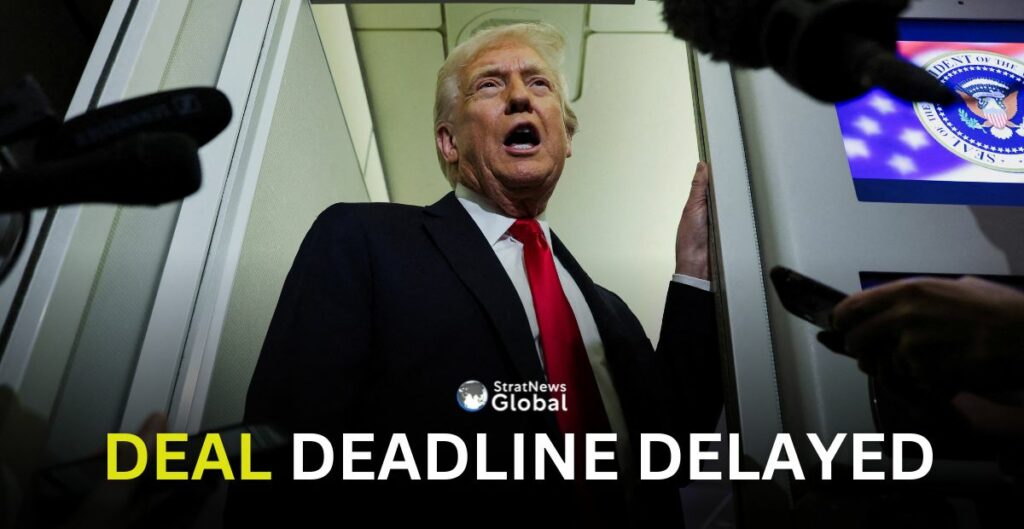
Trump Delays Ukraine Peace Deal Deadline
On Tuesday, U.S. President Donald Trump postponed a Thursday deadline for Ukraine to accept a U.S.-supported peace plan and dismissed reports that American negotiator Steve Witkoff had advised the Russians on how to raise the issue with him.
Deadline Postponed, Talks Continue
Trump, speaking to reporters on board Air Force One as he flew to Florida for the Thanksgiving holiday, said U.S. negotiators were making progress in discussions with Russia and Ukraine, and Moscow had agreed to some concessions. He did not detail them.
A U.S.-based framework for ending the war, first reported last week, prompted fresh concerns that the Trump administration might be willing to push Ukraine to sign a peace deal heavily tilted toward Moscow.
Trump said his envoy Steve Witkoff would be traveling to Moscow to meet with Russian President Vladimir Putin next week and that his son-in-law Jared Kushner, who helped negotiate the Gaza deal that brought about an uneasy ceasefire in the Israel-Hamas war, was also involved.
Trump in recent days had set the Thanksgiving holiday on Thursday as the day when he wanted to see Ukraine agree to a deal to bring about an end to Russia’s war in Ukraine.
But he and his aides have backed away from a firm deadline and now say they would like an agreement as soon as possible.
Ceasefire Plan
Bloomberg News reported that Witkoff, in an October 14 telephone call with Yuri Ushakov, the top foreign policy aide to Putin, said they should work together on a ceasefire plan for Ukraine and that Putin should raise it with Trump.
Bloomberg said Witkoff’s guidance included suggestions on setting up a Trump-Putin call before Ukrainian President Volodymyr Zelenskiy’s White House visit later that week, and using the recently concluded Gaza agreement as a way in.
Asked about the report, Trump said he had not heard the recording of the call that Bloomberg based its story on but that he was not surprised because “that’s what a dealmaker does.”
Trump said it appeared that Russia had the upper hand in the war and that it would be in Ukraine’s best interests to reach an agreement.
He said some Ukraine territory “might be gotten by Russia anyway” over the next couple of months.
Trump said security guarantees for Ukraine were being negotiated with Europeans.
(With inputs from Reuters)
China Buys U.S. Soybeans After Leaders’ Call
China has purchased at least 10 shipments of U.S. soybeans — worth about $300 million — in deals signed since Tuesday, according to two traders familiar with the transactions. The buying came just one day after the two countries’ presidents held a phone call.
The purchases of the unusually large volumes extend a surge in Chinese buying after the recent thaw in U.S.-China trade relations. U.S. President Donald Trump touted relations with China as “extremely strong” after a phone call with his Chinese counterpart Xi Jinping on Monday.
Trump said he had pressed Xi to accelerate and increase Beijing’s purchases of U.S. goods during the call, and that the Chinese leader had “more or less agreed”.
One trader said China bought about 12 cargoes, while another estimated the volume at 10–15. Each cargo is about 60,000 to 65,000 metric tons.
All the cargoes are scheduled for January shipment from U.S. Gulf Coast terminals and Pacific Northwest ports, the sources said on Wednesday.
Higher Price
The purchases come despite U.S. soybeans being priced higher than Brazilian supplies.
China paid around $2.3 per bushel over the January Chicago futures contract SF26 for shipments from Gulf terminals and a premium of $2.2 per bushel from Pacific Northwest ports, well above the prices for Brazilian soybeans, which are around $1.8 per bushel over the January CBOT futures, traders said.
China, which had largely shunned U.S. soybeans for months amid a tense Washington–Beijing trade standoff, has stepped up purchases recently following late-October talks between the two countries’ leaders in South Korea.
Trade Commitments
State-run grain buyer COFCO has led the buying, booking nearly 2 million tons of U.S. soybeans since late October, according to U.S. Department of Agriculture data.
The recent deals still remain well below the 12 million tons of purchases announced by the White House.
However, U.S. Treasury Secretary Scott Bessent said on Tuesday Chinese purchases of American soybeans are “right on schedule,” citing an agreement for Beijing to buy 87.5 million tons of the U.S. product over the next three-and-a-half years.
(With inputs from Reuters)
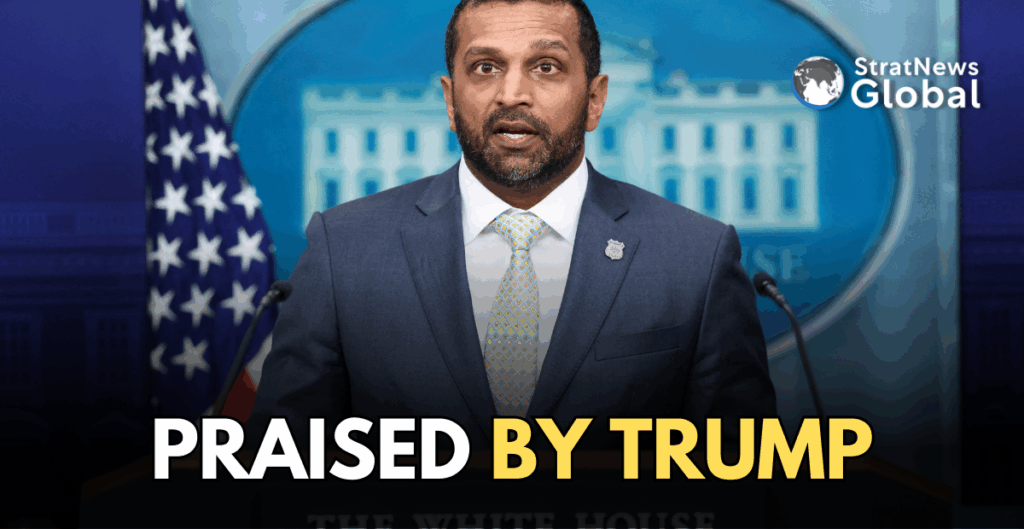
Trump Praises Kash Patel After Rumours Of Ousting The FBI Director
President Donald Trump offered support to FBI Director Kash Patel on Tuesday, after news outlet MS NOW reported that Trump was considering ousting Patel from his current role.
“He is doing a great job, I think,” Trump told reporters aboard Air Force One when asked about the report.
The White House earlier denied that Trump was considering removing Patel.
MS NOW, citing three unidentified people with knowledge of the situation, said in an online report that Trump and his top aides had grown increasingly frustrated by the unflattering headlines Patel has generated.
They have confided to allies that Trump is weighing removing Patel and considering Andrew Bailey, the FBI’s co-deputy director, as his replacement, according to MS NOW, formerly MSNBC.
FBI directors, by law, are appointed to 10-year terms as a means of insulating the bureau from politics, and are subject to confirmation by the Senate.
Patel, a Trump loyalist who during the president’s first term advised both the director of national intelligence and the secretary of defence, has previously called for stripping the FBI of its intelligence-gathering role and purging its ranks of any employee who refuses to support Trump’s agenda.
White House spokeswoman Karoline Leavitt said on X that the MS NOW story was “completely made up.” She posted a photo of Trump and Patel that she said was taken in the Oval Office on Tuesday.
Leavitt said Trump and Patel were in a meeting when the report was published, and the president reacted to it by laughing and saying, “What? That’s totally false. Come on, Kash, let’s take a picture to show them you’re doing a great job!”
MS NOW said it stood behind its reporting.
More than 200 people have been fired from the Justice Department, of which the FBI is a part, since Trump took office for his second term in January. Of those, dozens worked on criminal cases related to Trump or his allies.
(with inputs from Reuters)
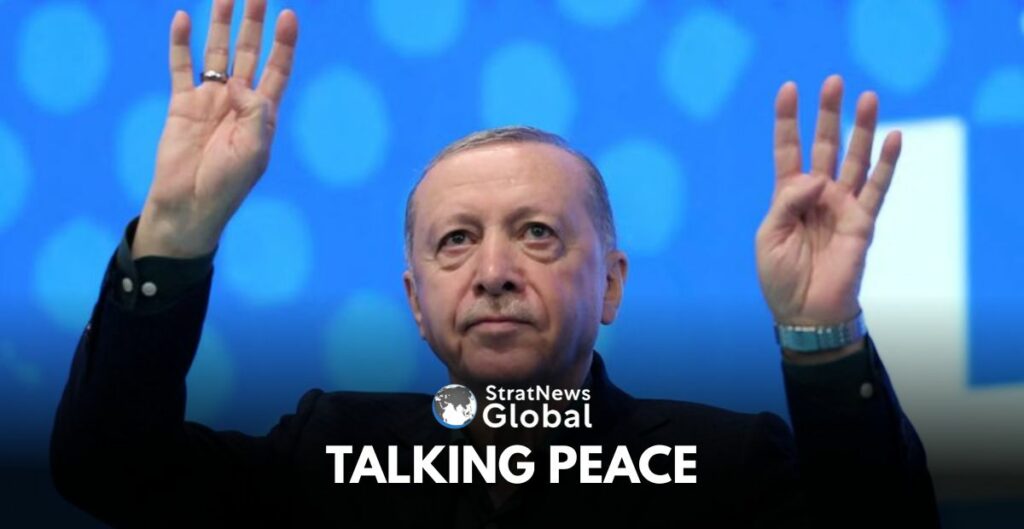
Turkey: Peace Talks To End Kurdish Insurgency Moving Forward
After 26 years in a Turkish prison, Abdullah Ocalan is carving out a key role for himself as Ankara tries to end his outlawed Kurdistan Workers Party’s four-decade
insurgency.
In an event that was unimaginable a year ago, three Turkish lawmakers visited Ocalan on Monday to further the peace process following the PKK’s announcement in May that it would disarm and disband.
In July, the PKK symbolically burned weapons and last month announced it was withdrawing fighters from Turkey as part of the disarmament process. PKK attacks have come to a halt since the process began.
But there is still some way to go to complete the peace process after a conflict that has killed more than 40,000 people, and Ocalan’s abiding authority over the PKK ensures his
involvement is vital.
Balancing Act
The parliament speaker’s office said that during Monday’s talks at Imrali prison in the Marmara Sea, the parliamentarians took statements from Ocalan related to the PKK’s disbandment and Syrian Kurdish forces, which Turkey regards as part of the PKK.
Achieving peace would be a major achievement for President Tayyip Erdogan – the conflict has sown deep political and cultural divisions in Turkey and set back the economy in the
mainly Kurdish southeast by a generation.
Erdogan, 71, has remained largely in the background as peace moves progress with the PKK, which is deemed a terrorist organisation by Ankara and its Western allies after its attacks on both civilian and military targets.
But he welcomed the decision by the three members of a parliamentary commission to visit Ocalan, 76, saying it “paves the way for the process, contributes to it and accelerates the elimination of terrorism”.
Erdogan may be partly motivated by hopes of winning Kurdish support if he calls early elections or seeks constitutional changes to extend his rule beyond his scheduled term limit in 2028, his critics say.
But completing the peace process involves a delicate balancing act between the government, Ocalan and the active PKK leadership in northern Iraq’s Qandil mountains, as well as the forces aligned with Ocalan in northern Syria.
With inputs from Reuters
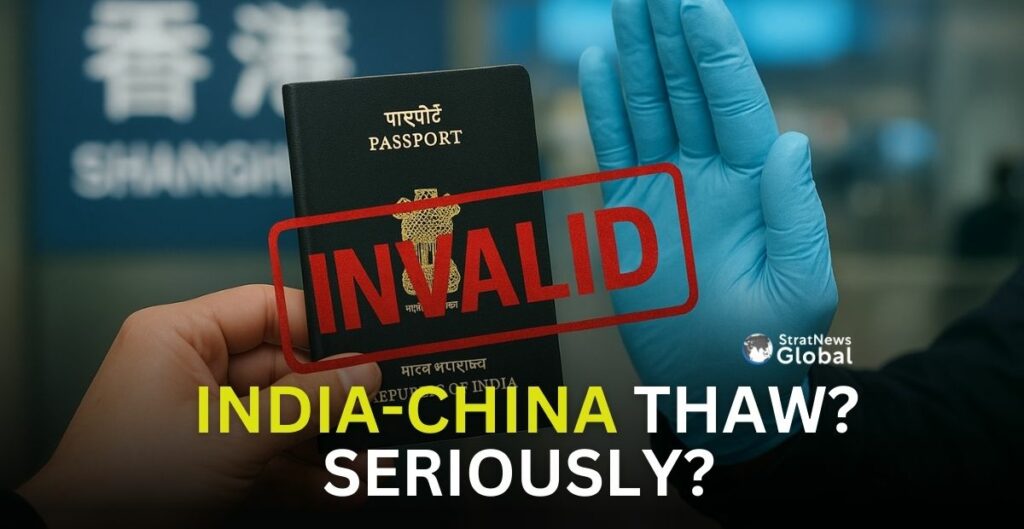
Pema Thongdok’s Detention In China: Reading Between The Lines
It’s been nearly a week since immigration authorites at Shanghai’s Pudong Airport detained Arunachali native Pema Thongdok, declaring her Indian passport invalid and insisting that since Arunachal Pradesh is a part of China, she needs a Chinese passport.
Pema Thongdok’s 18-hour ordeal was an unpleasant reminder, not for the first time, that the more things change on the India-China diplomatic front, the more they remain the same. The question is what would the Chinese have gained from this? Was it planned? Or was it some over zealous officials trying to score brownie points?
The statement released by the Ministry of External Affairs spoke volumes: “Chinese authorities have still not been able to explain their actions which are in violation of several conventions governing international air travel. The action by the Chinese authorities also violate their own regulations that allow visa-fred transit up to 24 hours for nationals of all countries.”
The MEA statement also pointed out that “At a time when both sides are working on restoring normalcy, such actions by the Chinese side introduce unnecessary obstructions to the process.”
The statement was with reference to the two sides moving to normalise relations for the first time since the Galwan clash saw these go bottom up. Today flights have resumed between key cities, Chinese tourists and investments are coming into India, diplomatic consultations on a range of issues have been stepped up in the wake of the tariff storm unleashed by President Trump.
Given the opaque nature of the Chinese state, we will probabaly never know. But the treatment meted out to Pema Thongdok would have recalled the period when the Chinese were issuing “stapled visas” to Arunachal residents. China never disavowed those stapled visas despite Indian protests resulitng in the cancellation of delegation level visits.
China scholars and diplomats say the mandarins in Beijing will always work to ensure relations remain on edge especially on issues where they have an interest. They need to show Arunachal prominently on their radar. Perhaps this is what the People’s Liberation Army, which is a known a hardline element in the Chinese establishment when it comes to India.
The million-dollar question; Was the Pema incident a one-off thing or will there be more such incidents going forward? Wait and see.
Eight Decades, Zero Shame: Pakistan’s Terror War On India
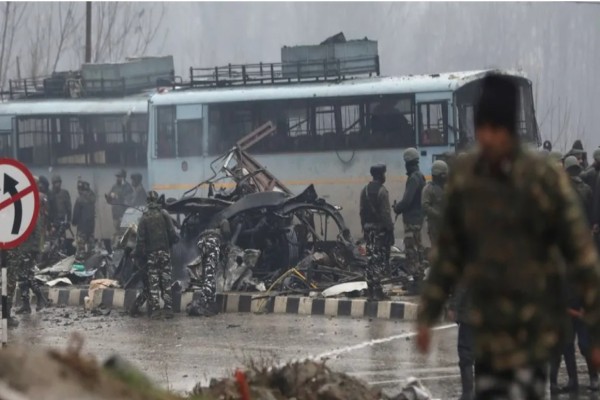
India’s turbulent relationship with Pakistan has been marked by repeated cycles of conflict, terrorism, and proxy warfare—a pattern documented in a new chronology by NatStrat that tracks major Pakistan-origin attacks on India over nearly eight decades.
The report, covering incidents from 1947 to 2025, outlines how Pakistan’s military and intelligence establishment used covert warfare, extremist groups, infiltration, and hybrid tactics to target India repeatedly and systematically.
According to NatStrat, a New Delhi-based strategic think tank, the story begins with the 1947–48 invasion of Jammu & Kashmir, when thousands of Pashtun tribal militias and Pakistani Army regulars entered the region under “Operation Gulmarg”, triggering the first India-Pakistan war.
The document notes that the raiders captured Muzaffarabad and Uri, carried out killings and looting in Baramulla, and advanced to within 48 km of Srinagar before India airlifted troops on 27 October 1947 to repel them. It cites the admission of former Pakistani Major General Akbar Khan, who described the operation as a pre-planned intervention disguised as a local uprising.
The report then traces Pakistan’s support for insurgent groups in Northeast India through the late 1960s, when the ISI provided training, shelter, and weapons to Mizo and Naga militants operating along the India–East Pakistan border. Pakistani operatives helped facilitate cross-border movement, supported coordinated attacks on Indian posts, and created safe havens in the Chittagong Hill Tracts and Sylhet.
A major escalation followed in 1965 with Operation Gibraltar, a Pakistan-led infiltration designed to incite an uprising in Jammu & Kashmir. Thousands of Pakistani soldiers disguised as civilians crossed the Line of Control, prompting clashes that widened into the 1965 India-Pakistan war. The document describes Pakistan’s miscalculation that Kashmiris would join the insurgency and highlights India’s eventual counter-offensive that advanced toward Lahore before a UN-brokered ceasefire.
The chronology also covers Pakistan’s 1971 air attacks under Operation Chengiz Khan, which marked the start of the 1971 war, followed by the Indian offensive that led to the creation of Bangladesh and the surrender of 93,000 Pakistani troops. The report notes the mass casualties inflicted on civilians in East Pakistan during the military crackdown known as Operation Searchlight.
Between 1972 and 1989, Pakistan expanded its use of proxy groups, backing hijackings and militancy linked to the Khalistan movement. The hijacking of the Indian Airlines aircraft “Ganga” in 1971 and subsequent attacks by groups such as Al-Fatah and the Kashmir Liberation Army were supported by Pakistani intelligence operatives, who provided arms smuggling channels, training, and logistical support.
The NatStrat report also lists ISI officers who supervised these networks and facilitated operations in both Kashmir and Punjab.
The 1980s saw Pakistan’s covert role in sustaining Sikh militancy through the supply of AK-47 rifles, explosives, and training camps in Lahore and Karachi. The report documents how extremist factions used the Golden Temple complex for arms storage and how the ISI attempted to exploit sectarian grievances to destabilise Indian Punjab. Testimonies cited in the document describe Pakistan-backed plans ranging from coordinated terror attacks to attempts to weaponise civil aviation.
From 1989 onwards, Pakistan shifted its focus sharply to Jammu & Kashmir. The NatStrat timeline describes the “K2 Project,” a coordinated ISI strategy aimed at fuelling simultaneous insurgencies in Punjab and Kashmir. Militancy in Kashmir escalated dramatically with assassinations, kidnappings, ethnic-targeted killings, and attacks on civilians and security personnel. Groups such as the JKLF, Hizbul Mujahideen, Lashkar-e-Taiba (LeT), and Jaish-e-Mohammad (JeM) received extensive assistance through training camps in Pakistan and Pakistan-occupied Kashmir.
The report lists a series of major attacks in the 1990s, including the killing of community leaders, massacres of Kashmiri Pandits, the Hazratbal siege, and the kidnappings of foreign tourists in 1995. It describes attacks such as the 1997 Sangrampora massacre, the 1998 Wandhama killings, and the 2000 Chittisinghpura massacre, attributing them to Pakistan-based groups including LeT.
The 1993 Mumbai bombings, coordinated through 12 powerful explosions that killed 257 people, are described in the report as having links to D-Company and the ISI, which allegedly facilitated RDX supplies and training for the conspirators. Other major incidents detailed include the 1996 Lajpat Nagar blast, the 1998 Coimbatore bombings, and the 1999 IC-814 hijacking, where hijackers linked to Pakistan-based Harkat-ul-Mujahideen forced the release of Jaish-e-Mohammad founder Masood Azhar.
The chronology highlights the 1999 Kargil conflict, describing internal Pakistani admissions that the operation was planned by senior military officers without the knowledge of then-Prime Minister Nawaz Sharif. Pakistani forces occupied heights in the Kargil sector to target India’s supply lines, leading to a two-month-long conflict that India eventually won after intense fighting.
In the 2000s and 2010s, the report lists attacks including the Red Fort attack (2000), the Parliament attack (2001), the 2008 Mumbai attacks, and the 2016 strikes in Pathankot, Uri, and Nagrota—all linked to Pakistan-based groups such as LeT and JeM. The chronology concludes with incidents up to 2025, reiterating Pakistan’s long-term use of terrorism, covert operations, and hybrid warfare.
According to the NatStrat compilation, this pattern of state-backed violence has claimed tens of thousands of civilian and military lives in India over nearly eight decades and continues to shape the security dynamics between the two neighbours.
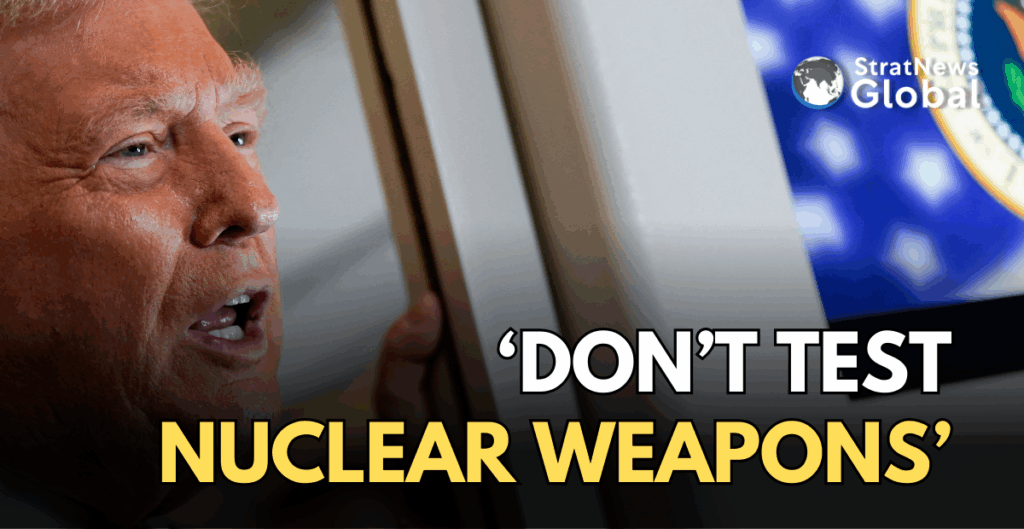
U.S. Senator Urges Trump To Hold Testing Of Nuclear Weapons
Democratic U.S. Senator Edward Markey on Tuesday urged President Donald Trump not to resume explosive nuclear weapons testing, saying that doing so could spur rival nuclear powers Russia and China to do the same.
Trump late last month announced on social media that he was directing the Pentagon to immediately restart the process for testing nuclear weapons after a halt of 33 years. His move caused confusion because it is the National Nuclear Security Administration, a branch of the Energy Department, that would carry out explosive nuclear weapons tests.
“Even one small U.S. nuclear test would give Russia and China the green light to conduct many large nuclear tests that would be much more useful for the development of new nuclear weapons that could pose a threat to U.S. national security,” Markey wrote in a letter to Trump.
Markey, a co-chair of the Nuclear Weapons and Arms Control Working Group with members in the Senate and House of Representatives, has been a longtime leader of non-proliferation efforts in Congress. He had pushed Trump in 2020, during his first presidential term, against resuming explosive nuclear weapons tests.
The White House reiterated on Tuesday that the testing process will begin “immediately” and that Trump had instructed his administration to do it “because of other countries’ testing programs.”
Trump would like to see denuclearisation, but he feels the action is appropriate to “maintain a strong, credible and effective nuclear deterrent,” a White House official said.
CIA Director John Ratcliffe said on social media on November 3 that Trump “is right” about other countries testing nuclear weapons.
In response to Trump, Russian President Vladimir Putin ordered his top officials to draft proposals for a possible test of nuclear weapons, something Moscow has not done since the 1991 collapse of the Soviet Union.
Trump has suggested that Russia and China are conducting small nuclear tests that are hard to detect, known as hydronuclear tests, in violation of U.S. policy and the Comprehensive Test Ban Treaty, Markey said in the letter.
“Reports of such tests from 2019 raise concerns, but they are unconfirmed,” Markey said. “Even if true, they would not justify renewed U.S. nuclear testing.”
Markey asked Trump for evidence by December 15 that Russia and China are conducting secret nuclear tests. He also asked Trump whether his statements reflect a misunderstanding of the difference between missile tests and nuclear explosive tests.
(with inputs from Reuters)
South Korea Introduces Bill To Finance $350 Bln U.S. Investment
South Korea’s ruling Democratic Party introduced a bill on Wednesday to establish a special fund to finance $350 billion of investment in the U.S. committed under a deal with Washington to cut U.S. tariffs on its exports, the Industry Ministry said.
The bill, which was written in consultation with the government, fulfils the condition for the U.S. to lower tariffs on South Korean autos and automobile parts retroactively to November 1, the ministry said in a statement.
Special Bill
Yonhap News Agency reported that the envisioned corporation, tentatively named Korea-U.S. Strategic Investment Corp., will be created for a maximum 20-year operation under a special bill.
The two countries this month unveiled details of the agreement reached by their presidents, capping more than three months of intense negotiations on how to structure the massive investment in a way that would not sharply weaken and destabilise the South Korean won currency.
Under a special act to be legislated, South Korea will establish a fund financed by income from the country’s foreign assets and government-backed bonds issued in offshore markets, according to the bill.
South Korea has pledged $250 billion to be invested in strategic U.S. industries and $150 billion in projects to modernise the American shipbuilding industry. In return for this investment, the U.S. administration agreed to reduce the 25 per cent tariffs on Korean automobiles to 15 per cent, with the reduction to be applied retroactively from the start of the month the bill is submitted, reports Yonhap News agency.
South Korea’s Industry Ministry has sent a letter to U.S. Commerce Secretary Howard Lutnick informing him about the introduction of the bill on Wednesday and requesting the implementation of the tariff cuts on autos and automobile parts, the statement said.
Implementation
The Yonhap report suggests that the fund’s resources will be raised through earnings from foreign exchange reserves entrusted by the Korean government and the Bank of Korea, and through overseas issuance of government-guaranteed bonds.
The Korean government said the special bill stipulates that related authorities must comply with safeguard measures specified in the memorandum of understanding (MOU) on the investment pledge signed by the two countries.
The safeguard measures include the $20 billion annual cap on investments, adjustments to the amount and timing of the investment when it is feared to cause instability in Korea’s foreign exchange market, selection of “commercially reasonable” projects and others.
(with inputs from Reuters)
Japan: Opposition Ramps Up Preparation For Early Snap Election
Japanese Prime Minister Sanae Takaichi’s high approval ratings are prodding opposition parties to ramp up preparations in case she calls an early election, the Yomiuri newspaper reported on Wednesday.
A snap election, which some analysts say could come as soon as January, would affect the administration’s economic policies, including deliberations over Japan’s annual long-term fiscal blueprint, due around June next year.
Depending on when a vote might be called, it could also affect the timing and pace of interest rate hikes by the Bank of Japan, which typically avoids making big policy changes ahead of elections.
Jun Azumi, an executive of the Constitutional Democratic Party of Japan (CDPJ) – the country’s largest opposition party – signalled on Tuesday his party will work with other parties to win back seats from the ruling coalition, the Yomiuri said.
“There’s a good chance (the premier) could consider dissolving parliament at an early date,” Yoshihiko Noda, head of CDPJ, was quoted as saying by domestic media, including Yomiuri, earlier this month.
Takaichi has repeatedly said she has no time to consider a snap election, and instead would focus on implementing policies to cushion the economic blow from the rising cost of living.
Yuichiro Tamaki, head of a smaller opposition Democratic Party for the People, is touring regional areas aiming to have at least one candidate run in all prefectures, the Yomiuri said. The paper did not mention the possible timing of a snap election.
A hardline nationalist and a fiscal dove, Takaichi has enjoyed strong public approval ratings since taking office on October 21. A poll by television broadcaster FNN showed on Monday her administration’s approval rating stood at 75.2%.
Her 21.3-trillion-yen ($136 billion) stimulus package has driven up bond yields on concern over Japan’s finances, and raised calls for clarity on how the administration will get the country’s fiscal house in order.
Proponents of an early election hope Takaichi’s popularity can help the ruling Liberal Democratic Party (LDP) win enough seats to reclaim a majority in the powerful lower house.
Takaichi was elected prime minister after the LDP agreed to form a coalition with the right-wing Japan Innovation Party, known as Ishin. Together, the parties are short of a majority in the lower house, forcing the administration to heed opposition demands in passing a budget and legislation through parliament.
(with inputs from Reuters)