

Support us by contributing to StratNewsGlobal on the following UPI ID
ultramodern@hdfcbank

Strategic affairs is our game, South Asia and beyond our playground. Put together by an experienced team led by Nitin A. Gokhale. Our focus is on strategic affairs, foreign policy and international relations, with higher quality reportage, analysis and commentary with new tie-ups across the South Asian region.
You can support our endeavours. Visit us at www.stratnewsglobal.com and follow us on YouTube, Twitter, Facebook and Instagram.
र 500 per month
र 1000 per month
र 5000 per year
र 10000 per year
Donate an amount of your choice
र 500 per month
Donate र 500 per month

र 1000 per month
Donate र 1000 per month
र 5000 per year
Donate र 5,000 per year
र 10000 per year
Donate र 10,000 per year
Donate an amount of your choice
Donate an amount of your choice



USA: Two National Guard Soldiers Shot Near White House
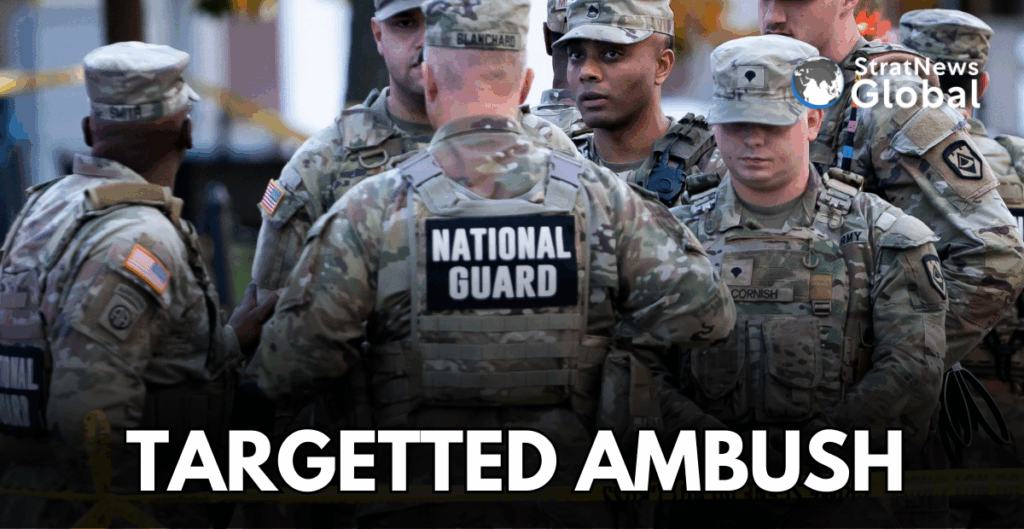
Two National Guard soldiers were shot and critically wounded on Wednesday in downtown Washington near the White House in what officials described as a targeted ambush, and the suspect was in custody after suffering gunshot wounds during the attack.
Investigators identified the suspect as Rahmanullah Lakanwal, a 29-year-old Afghan national from Washington State, according to two Trump administration officials who spoke on condition of anonymity. The attack is being investigated as an act of terrorism, one official said.
Lakanwal came to the U.S. in 2021 under Operation Allies Welcome, according to the second official, a Biden-era program to resettle thousands of Afghans who assisted the U.S. during the Afghanistan war and were vulnerable to reprisals from the ruling Taliban after the U.S. withdrawal. He was processed through Washington Dulles International Airport on September 8 of that year.
Lakanwal applied for asylum in December 2024 and was approved on April 23 of this year, according to the official, three months after President Donald Trump took office. He has no criminal history.
Trump, who was at his resort in Florida at the time of the attack, released a prerecorded video statement late on Wednesday calling the shooting “an act of evil, an act of hatred and an act of terror.” He said his administration would “re-examine” all Afghans who came to the U.S. during Joe Biden’s presidency.
Immigration Policy
The two soldiers, members of the West Virginia National Guard, were part of a “high-visibility patrol” around 2:15 p.m. ET (1915 GMT) near the corner of 17th and I streets, a few blocks from the White House. The suspect came around a corner and “ambushed” them, Metropolitan Police Assistant Chief Jeff Carroll said at a press briefing.
After an exchange of gunfire, other National Guard troops subdued the shooter, he said. The two wounded soldiers were in critical condition at local hospitals, FBI Director Kash Patel said.
“This is a targeted attack,” Washington Mayor Muriel Bowser said at the briefing.
The shooter appeared to have acted alone, officials said.
Trump ordered 500 more guard soldiers deployed to Washington, Secretary of Defence Pete Hegseth told reporters, joining about 2,200 already in the city as part of the president’s contentious immigration and crime crackdown targeting Democratic-led cities.
U.S. Vice President JD Vance, who was in Kentucky on Wednesday, said in a post on X that the shooting proved that the Trump administration’s immigration policy was justified.
“We must redouble our efforts to deport people with no right to be in our country,” he said.
Critics of the Trump administration’s immigration policy say it has employed illegal, harsh tactics and swept up immigrants indiscriminately, including some with no criminal history and others here legally.
Chaotic Scene
The shooting unfolded near Farragut Square, a popular lunch spot for office workers just a few blocks from the White House. The park, where light posts are wrapped in wreaths and bows for the holiday season, is flanked by fast-casual restaurants and a coffee shop, as well as two metro stops.
Witnesses described a chaotic scene after shots were fired, with pedestrians fleeing.
Mike Ryan, 55, said he was on his way to buy lunch nearby when he heard what sounded like gunfire. He ran half a block away and heard another round of apparent gunfire.
When he made his way back to the scene, he saw two National Guard soldiers on the ground across the street, with people trying to resuscitate one of them. At the same time, other guard troops had pinned someone on the ground, Ryan said.
Another witness, Emma McDonald, said she saw one of the soldiers carried away on a stretcher minutes after the shooting, his head covered in blood and an automated compression system attached to his chest.
National Guard soldiers have been in Washington since Trump’s initial deployment in August, a move that was opposed by local officials and criticised by Democrats. The guard troops in the city include contingents from the District of Columbia as well as Louisiana, Mississippi, Ohio, South Carolina, West Virginia, Georgia and Alabama.
Trump, a Republican, has suggested repeatedly that crime has disappeared from the capital as a result of the deployment, an assertion at odds with the police department’s official crime statistics.
(with inputs from Reuters)
Hong Kong: Fire Due To ‘Negligence’ Kills 44 People, 300+ Missing
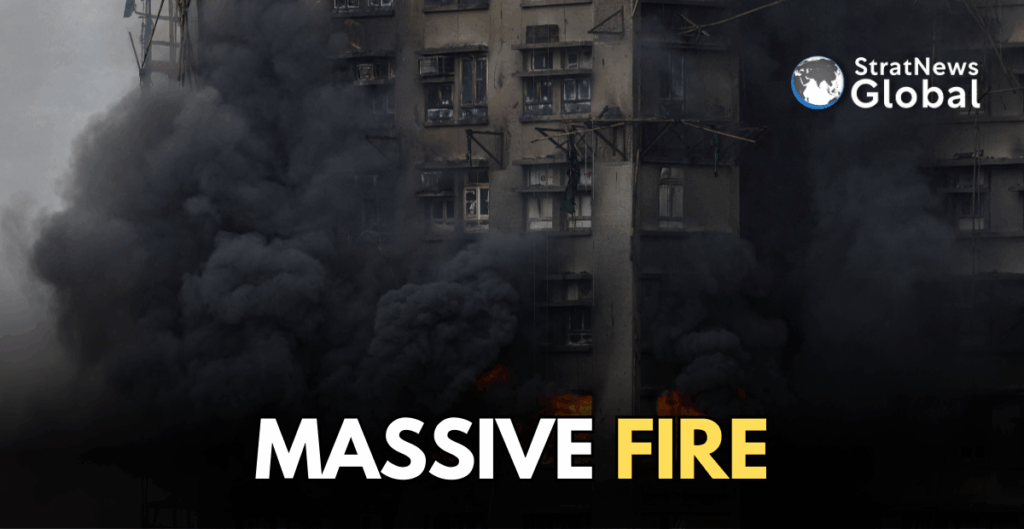
A huge fire still burning in a Hong Kong apartment complex that has killed at least 44 people and left nearly 300 missing may have been spread by unsafe scaffolding and foam materials used during maintenance work, police said on Thursday.
Working through the night, firefighters were struggling to reach residents potentially trapped on the upper floors of the Wang Fuk Court housing complex due to intense heat and thick smoke from the fire that erupted on Wednesday afternoon.
The tightly packed complex in the northern Tai Po district has 2,000 apartments in eight blocks that are home to more than 4,600 people in a city struggling with chronic shortages of affordable housing.
Gross Negligence
By Thursday morning, authorities said they had brought the fire in four blocks under control, with operations continuing in three blocks.
Video from the scene showed flames still leaping from at least two of the 32-storey towers sheathed in bamboo scaffolding and green construction mesh, as heavy smoke billowed into the sky.
Police said in addition to the buildings being covered with protective mesh sheets and plastic that may not meet fire standards, they discovered some windows on one unaffected building were sealed with a foam material, installed by a construction company carrying out maintenance work.
“We have reason to believe that the company’s responsible parties were grossly negligent, which led to this accident and caused the fire to spread uncontrollably, resulting in major casualties,” Eileen Chung, a Hong Kong police superintendent, said.
Three men from the construction company, two directors and one engineering consultant, had been arrested on suspicion of manslaughter over the fire, she added.
The green construction mesh and bamboo scaffolding used on the buildings are a mainstay of traditional Chinese architecture, but have been subject to a phase-out in Hong Kong since March for safety reasons.
A firefighter was among the 44 killed, with 45 people in hospital in critical condition, Hong Kong police told a press conference before dawn on Thursday.
“The priority is to extinguish the fire and rescue the residents who are trapped,” Hong Kong leader John Lee told reporters earlier. “The second is to support the injured. The third is to support and recover. Then, we’ll launch a thorough investigation.”
Some 279 people were uncontactable, and 900 were in eight shelters, he added.
The death toll is now the highest in a Hong Kong fire since 1948, when 176 people were killed in a warehouse blaze.
Search For Relatives Continues
The latest fire has prompted comparisons to the Grenfell Tower inferno that killed 72 people in London in 2017. That fire was blamed on firms fitting the exterior with flammable cladding, as well as failings by the government and the construction industry.
“Our hearts go out to all those affected by the horrific fire in Hong Kong,” the Grenfell United survivors’ group said on social media. “To the families, friends and communities, we stand with you. You are not alone.”
A woman surnamed Ng, 52, was distraught as she looked for her daughter outside a shelter.
“She and her father are still not out yet. They didn’t have water to save our building,” she sobbed, carrying her daughter’s graduation photo.
Harry Cheung, 66, who has lived at Block Two in one of the complexes for more than 40 years, said he heard a loud noise about 2:45 p.m. (0645 GMT) and saw fire erupt in a nearby block.
“I immediately went back to pack up my things,” he said.
“I don’t even know how I feel right now. I’m just thinking about where I’m going to sleep tonight.”
‘All Out’ Against Fire
Many residents took to social media to criticise what they saw as negligence and cost-cutting as a cause of the fire. One video showed several construction workers smoking on the bamboo scaffolding surrounding one of the complex’s blocks during the renovation process.
From the mainland, China’s President Xi Jinping urged an “all-out effort” to extinguish the fire and to minimise casualties and losses, China’s state broadcaster CCTV said.
Hong Kong’s Transport Department said that a number of roads would remain closed in the area on Thursday morning, and 39 bus routes have been diverted.
At least six schools will be closed on Thursday due to the fire and traffic congestion, the city’s Education Bureau said.
On Wednesday, frames of scaffolding were seen tumbling to the ground as firefighters battled the blaze, while scores of fire engines and ambulances lined the road below the development.
Social Discontent
Hong Kong’s government moved to start phasing out bamboo scaffolding in March, citing worker safety after 22 deaths involving bamboo scaffolders between 2019 and 2024. It announced that 50% of public construction works would be required to use metal frames instead.
Though fire hazard was not cited as a reason for the phase-out, there have been at least three fires involving bamboo scaffolding this year, according to the Association for the Rights of Industrial Accident Victims in Hong Kong.
Hong Kong’s sky-high property prices have long been a trigger for social discontent in the city, and the fire tragedy could further stoke resentment towards authorities ahead of a city-wide legislative election in early December.
Wang Fuk Court is one of many high-rise housing complexes in Hong Kong, one of the most densely populated areas in the world. Tai Po, located near the border with mainland China, is an established suburban district with some 300,000 residents.
Occupied since 1983, the complex is under the government’s subsidised home ownership scheme, according to property agency websites. According to online posts, it has been undergoing renovations for a year at a cost of HK$330 million ($42.43 million), with each unit paying between HK$160,000 and HK$180,000.
(with inputs from Reuters)
China’s Retail Landscape Undergoes Reset As Iconic Malls Shut
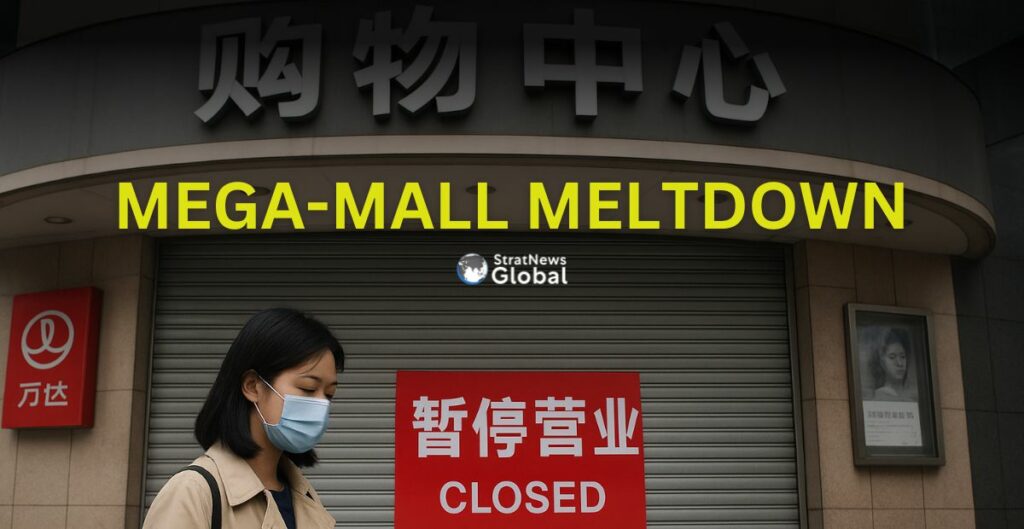
China is undergoing a big retail upheaval in decades as once-crowded mega malls across major cities shut down at a historic pace. The country’s urban shopping landscape which was long seen as a symbol of rising middle-class consumption, is now marked by darkened storefronts, empty atriums, and entire wings sealed off.
According to the news media Vietnam.vn, the closures span every tier of the market. In Shanghai, the shutdown of the Pacific Department Store in Xuhui after 30 years and Meilong Isetan after 27 years has shaken the industry.
Beijing’s Parkson at Fuxingmen, an iconic name for more than three decades, has also closed despite paying heavy penalties for ending contracts early.
Even youth-centric malls such as Yingzhan have pulled out of top city areas after falling into debt.
The collapse is not limited to top-tier regions: Shenzhen’s Henggang Rainbow (closed after 15 years), Lanzhou New World Department Store (20 years), and Lanzhou Xidan Mall (22 years) have all shuttered, reports Vietnam.vn.
The downfall reflects the deeper economic stress. Industry data indicates that only a small fraction of major retail companies recorded any growth this year, while the vast majority experienced a sharp drop in profits. Several leading chains also reported notable revenue decreases, reflecting widespread weaknesses across the sector.
The reasons for this change lies in shifts in the spending patterns. The emergence of big e-commerce companies like Taobao and JD.com have replaced the old mall going culture. With the economic slow down and the middle class shrinking their wallets, people chose to save rather than to spend.
This stress is visible in the rental market. According to reports, in Shanghai’s Qipu Road district, rents have collapsed from 70,000 yuan per month to as low as 500 yuan, with many units empty even at that rate.
Data from Cushman & Wakefield, a leading global real estate services firm shows China’s national average vacancy rate for prime retail properties across 15 major cities reached 11.1% in the second quarter of 2025.
Oversupply becomes the added factor to the crisis. As per The New York Times, by the end of 2024, China had over 6,700 large shopping centers, far more than consumption levels can sustain.
China may be witnessing the slow end of its megamall era. With foot traffic dispersing and capital inflows slowing, many malls have devolved into food-court-only complexes.
India-Venezuela Talks Focus On Digital Tech, Critical Minerals
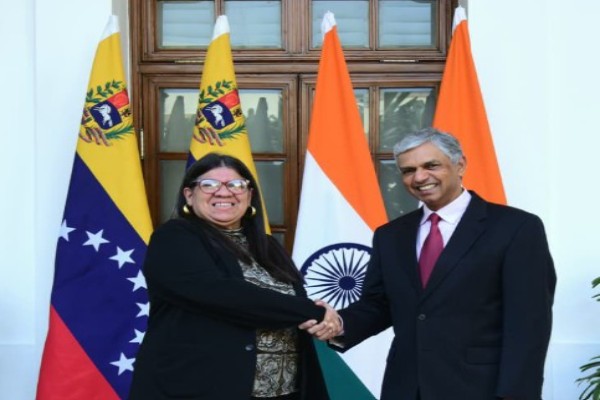
India and Venezuela signalled a broadening of bilateral engagement across multiple sectors following the 5th India–Venezuela Foreign Office Consultations held in New Delhi on November 26.
The meeting, co-chaired by P. Kumaran, Secretary (East) in India’s Ministry of External Affairs, and Tatiana Josefina Pugh Moreno, Venezuela’s Vice-Minister of Foreign Affairs. focused on strengthening collaboration in digital technology, health and pharmaceuticals, trade diversification, critical minerals, agriculture, development cooperation, and people-to-people ties.
A key outcome of the consultations was Venezuela’s decision to initiate pilot projects based on India’s Digital Public Infrastructure systems. These pilots will be implemented in areas such as health, education, agriculture and digital payments, adapting Indian platforms including Aadhaar, DigiLocker and UPI for use in the Venezuelan context.
The move follows the September visit of Raul Hernandez, Venezuela’s Vice Minister for Information and Communication Technologies, who held discussions in New Delhi with Indian counterparts on digital identity, service delivery and fintech applications. During that visit, technical engagements were conducted with agencies such as UIDAI, NISG, NeGD, AI BHASHINI and NPCI to prepare frameworks for customised versions of AgriStack and HealthStack for Venezuelan institutions.
Health and pharmaceutical cooperation also featured prominently. Both sides reviewed ongoing collaboration, noting that India supplied nearly USD 110 million worth of medicines to Venezuela in 2024–25, meeting over 40 per cent of Venezuela’s annual requirement. Venezuelan officials confirmed that there are no outstanding payment dues to Indian pharmaceutical companies.
Discussions included scope for further collaboration in biotechnology, vaccine-related initiatives and steps to stabilise medical supply chains impacted by global disruptions, with India reiterating support through routine commercial shipments and emergency supplies of essential medicines.
Trade and critical minerals were central to the economic discussions. The consultations built on the recent bilateral interaction between Union Commerce and Industry Minister Piyush Goyal and Venezuela’s Minister of Ecological Mining Development Hector Silva during the CII Partnership Summit in Visakhapatnam on November 14–15.
Venezuela expressed interest in cooperation in critical minerals, mining technologies and investment partnerships. India proposed reviving the India–Venezuela Joint Committee Mechanism, which last convened a decade ago, and highlighted the continued presence of ONGC in Venezuela as an area with potential for deeper collaboration.
India also encouraged Venezuela to consider recognising the Indian Pharmacopoeia to facilitate smoother regulatory processes and expand pharmaceutical trade. Additional discussions covered potential cooperation in automobiles, engineering goods and industrial supply chains as both countries explore ways to diversify bilateral commerce.
Agriculture and development cooperation were further reviewed, with an emphasis on how forthcoming DPI pilots such as AgriStack could support Venezuela in modernising farm registries, improving crop data management and enhancing access to agricultural services.
The two sides also discussed expanding development partnership programmes, including capacity-building initiatives under the Indian Technical and Economic Cooperation framework, along with skill development, artificial intelligence and digital governance training.
Cultural and people-to-people exchanges were reaffirmed as important components of the relationship. Both delegations underlined the role of academic collaboration, youth exchanges and institutional partnerships, while noting the contributions made by the Indian-origin community residing in Venezuela.
Multilateral coordination was also part of the agenda, including Venezuela’s interest in BRICS membership, which is expected to be discussed at the next BRICS Summit hosted by India. Both sides agreed to enhance coordination in multilateral forums and continue engagement aimed at strengthening South–South cooperation and broadening international outreach.
Modi’s Oman, Jordan Trip To Focus on Trade, Connectivity
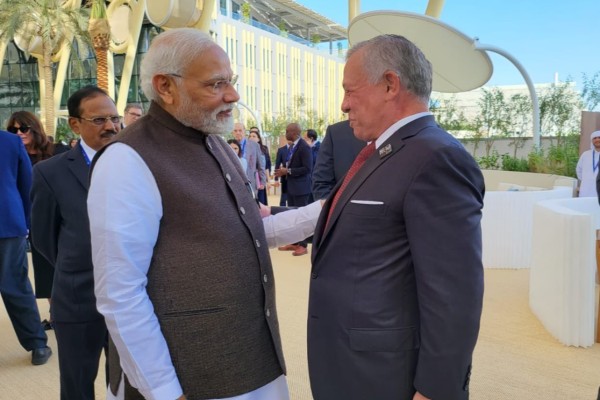
Prime Minister Narendra Modi is expected to undertake an official visit to Oman and Jordan during the December 15–19 period, although confirmed dates have not yet been issued by the government.
Preparatory work for the two-nation tour is underway, with discussions likely to cover trade, connectivity initiatives and maritime collaboration.
In Jordan, the Prime Minister is scheduled to visit at the invitation of King Abdullah II. Diplomatic sources indicate that meetings in Amman will place significant emphasis on the India–Middle East–Europe Economic Corridor (IMEC) and Jordan’s role along the corridor’s northern route.
Jordan’s geographic positioning between the Gulf region and the Mediterranean grants it strategic importance within the proposed corridor, which envisages maritime transport from India to the Arabian Gulf, followed by land-based networks passing through Saudi Arabia, Jordan and Israel before connecting to ports in Europe.
Indian officials have pointed out that while IMEC holds long-term promise, the regional security environment and technical complexities continue to influence progress. Harmonisation of customs procedures, regulatory frameworks and operational standards among participating countries has been identified as a central operational challenge in advancing the project.
India’s presence in the Mediterranean has also drawn attention in recent months, with the Indian Navy deploying assets for a range of missions that include joint exercises and maritime security operations. IMEC’s dependence on stable sea routes has prompted discussions on ensuring predictable maritime conditions, amid considerations over logistical access arrangements along the Mediterranean coastline.
Launched in 2023, IMEC is structured as a multimodal infrastructure network integrating ports, rail systems, digital connectivity and energy corridors. It is backed by the G7’s Partnership for Global Infrastructure and Investment. The initiative is designed to streamline cargo movement between India and Europe, reduce logistics costs and support energy transmission through electricity grids and hydrogen pipelines.
International assessments have pointed to potential economic benefits for India, Gulf countries and parts of Europe if the corridor reaches full implementation, even as uncertainties linked to regional conflict and overlapping connectivity projects remain.
The Jordan leg of the visit comes as bilateral ties continue to broaden. Foreign Office Consultations held in April reviewed cooperation across political, security and economic sectors.
India is currently Jordan’s fourth-largest trading partner, with bilateral trade valued at $2.8 billion in 2023–24. Fertiliser cooperation remains a cornerstone of the relationship, with recent dialogue between Jordan’s Prime Minister Jaafar Hassan and IFFCO leadership focusing on enhancing collaboration through the Jordan–India Fertiliser Company. Both sides have explored avenues to expand production capacity, update technology sharing and strengthen nutrient supply chains.
In Oman, discussions are expected to focus on the announcement of a long-pending bilateral trade agreement. Talks are also likely to address maritime cooperation, logistics and India’s strategic presence at key ports across the western Indian Ocean.
The Duqm port, where India already enjoys access for logistical and military purposes, is expected to feature prominently, given its strategic location near the Gulf of Oman and its connectivity to wider regional trade routes.
Energy cooperation, investment prospects and digital collaboration are also set to be reviewed during engagements in Muscat, with officials indicating that both sides are working towards a broader refresh of their economic partnership framework.
Bangladesh Is Divided, Conflicted As Elections Near: Deep Halder
There’s irony in the manner in which the Bangladesh political landscape is being shaped for the February elections, says Deep Halder, one of three authors of Inshallah Bangladesh: The Story of an Unfinished Revolution.
In a conversation on The Gist, he said “When I covered the Jan 2024 elections for The Print, my headline was ‘Awami League Fights Awami League’ and Sheikh Hasina wins because it was an election where the second largest party, the Bangladesh Nationalist Party, decided to stay away. It was an election where the Bangladesh Supreme Court kept the Islamic parties out of the poll fray.”
Now the boot is on the other foot. All political activities of the Awami League are banned, the students wing of Awami League is banned. It is one thing to keep Sheikh Hasina away or give a verdict against her, but it is quite another to ban the Awami League from the elections.
The former ruling party is backed by an estimated 30% of the population and while some members have defected to other parties, it’s unlikely to make much of a dent in its public support.
The BNP and the Jamaat-e-Islami, once political allies, now don’t seem to like each other very much. The former in fact is wary of the growth in influence of the latter, its influence particularly with the interim government of Mohammad Yunus and even the Election Commission.
Add to that the National Citizen’s Party (NCP), which is known as the ‘king’s party’ because of the backing of Yunus. But the large number of extortion cases against the National Citizen Party has made it very unpopular in Bangladesh and if one looks at the online polls, it is not even in contention.
“I sense on the ground huge anti-incumbency,” said Halder, “and I think even if she (Hasina) has not been fully forgiven there is a sense among common people that look that time was perhaps better than this time.”
There is growing suspicion over the interim leader Mohammad Yunus and his support for the Jamaat. Also, Bangladeshi youth appear disillusioned with India, convinced that Delhi was the puppeteer pulling Hasina’s strings, and disappointed over the rise of Hindutva in their biggest neighbour.
Tune in for more in this conversation with Deep Halder, one of the authors of Inshallah Bangladesh.
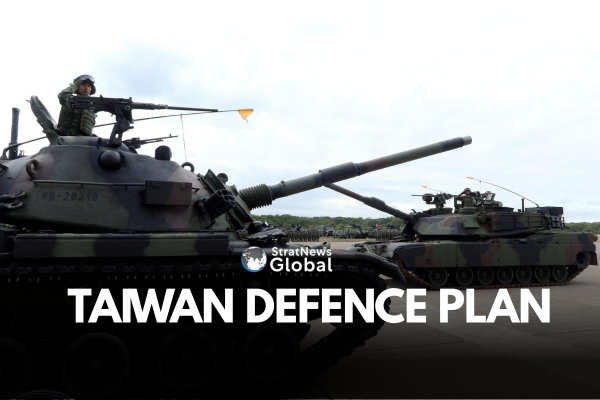
Taiwan Boosts Defence with $40 Billion Plan Amid Rising China Pressure
Taiwan announced a $40 billion supplementary defence budget on Wednesday, underscoring its resolve to strengthen national security amid mounting military pressure from China. President Lai Ching-te said the move reflects Taiwan’s determination to defend itself and safeguard its democratic values.
Strengthening Defence Against Aggression
Beijing, which claims Taiwan as its own territory, has intensified military and political pressure in recent years. Taipei, however, firmly rejects these claims, maintaining that only Taiwan’s people can decide their future.
Presenting the T$1.25 trillion ($39.89 billion) defence package, Lai said that history had shown compromise in the face of aggression only led to “enslavement.”
“There is no room for compromise on national security,” Lai stated during a press conference. “National sovereignty and the core values of freedom and democracy are the very foundation of our nation.”
Defence Minister Wellington Koo said the budget, spanning from 2026 to 2033, would fund missiles, drones, and the new “T-Dome” air defence system.
Boosting Military Readiness and Deterrence
Lai, who detailed the plan in an op-ed in the Washington Post, said the initiative reflects Taiwan’s resolve to stand firm. “It is a struggle between defending democratic Taiwan and refusing to become ‘China’s Taiwan’,” he said.
The de facto US ambassador in Taipei, Raymond Greene, welcomed the announcement, saying it marked a major step toward maintaining peace and stability across the Taiwan Strait. Washington continues to encourage Taiwan to boost its own defence spending, mirroring pressure on European allies.
Taiwan has focused on an “asymmetric” defence strategy, aiming to make its smaller forces more agile and effective against China’s much larger military. For 2026, spending will reach T$949.5 billion ($30.3 billion), accounting for 3.32% of GDP — the first time since 2009 that it surpasses 3%.
Political Debate and Regional Tensions
The proposal must pass Taiwan’s opposition-controlled parliament. Kuomintang chairwoman Cheng Li-wun urged President Lai to “step back from the brink,” stressing that Taiwan’s people “love peace and firmly desire peace.”
China, meanwhile, accused Taipei of following “external forces.” Peng Qingen, spokesperson for China’s Taiwan Affairs Office, said Taiwan was “squandering funds that could improve livelihoods” and warned that such spending “will only plunge Taiwan into disaster.”
President Lai also criticised Beijing’s conduct toward its neighbours, saying its repeated threats and provocations were unworthy of a “responsible major power.”
Tensions remain high as China continues to oppose Lai’s leadership, labelling him a “separatist.” Despite Beijing’s resistance, Lai reiterated that Taiwan’s future must be determined solely by its people.
(with inputs from Reuters)
No Daylight On Israeli PM Netanyahu’s India Visit
Israel’s Prime Minister Benjamin Netanyahu’s visit to India is long overdue. Reports say he was due in 2019 but that was cancelled owing to internal political crisis, the Covid pandemic and the Gaza conflict.
In 2019 alone, Moneycontrol reports, he postponed plans twice due to parliamentary elections in Israel. He last visited India in 2018, during a six-day trip that became only the second visit by an Israeli Prime Minister to the country.
That visit followed Prime Minister Narendra Modi’s historic trip to Israel in 2017 and was seen as a milestone in bilateral ties.
So what is the issue this time? Israel has launched a major counter-terrorist operation in the northern West Bank, one which is expected to take several days. But other reports say that in the wake of the Red Fort blast, security concerns caused the trip to be cancelled.
But the Israeli leader’s office clarified that “Israel’s bond with India, and between Prime Minister Netanyahu and Prime Minister Narendra Modi is very strong. The PM has full confidence in India’s security under PM Modi, and teams are already coordinating a new visit date.”
This year, his visit has been cancelled following domestic issues including political instability. Moneycontrol reports that “In both April and September this year, he called off scheduled visits due to mounting pressure from within Israel. Reasons cited included the threat of snap elections and growing unrest linked to the war in Gaza.”
Protests in April demanded a ceasefire and the release of all the hostages seized during the Oct 7,2023 Hamas attack on Israel. There were also demonstrations against Netanyahu’s sacking of the chief of Shin Bet, the internal security agency, and moves to remove the attorney general.
His feuding with coalition partners over the Gaza campaign, judicial reforms and exemptions for the ultra-Othodox Jewish groups were other reasons for not travelling overseas.
Israel Launches Major Counter-Terrorism Operation In Northern West Bank
Israeli security forces on Wednesday launched what the military described as a
counter-terrorism operation in the northern West Bank, which Palestinians said was targeting the city of Tubas.
Tubas Governor Ahmed Al-Asaad told Reuters Israeli forces, backed by a helicopter that had opened fire, were encircling the city and establishing positions across several neighbourhoods.
“The incursion looks to be a long one; occupation (Israeli) forces have driven people from their houses, commandeered rooftops of buildings, and are conducting arrests,” he said.
Al-Asaad said Israeli forces ordered those whom they forced to leave their homes not to return until the operation ends, which he anticipated could be several days.
The Israeli military said in an earlier statement that the operation, carried out with police and intelligence forces, began early on Wednesday morning.
Asked about the operation, a military spokesperson declined to comment, saying more details would be released soon.
Israel has said its security forces have been targeting Palestinian militancy in the West Bank, where hundreds of thousands of Israeli settlers live among 2.7 million Palestinians, granted limited self-rule under Israeli military occupation.
Hamas, which agreed to a ceasefire with Israel in Gaza last month, condemned the latest West Bank operation and called on the international community to intervene to stop it.
The assault on Tubas appeared to be an extension of a military operation launched by security forces in the northern West Bank city of Jenin in January, days after U.S. President Donald Trump returned to the White House.
That operation has since expanded to other Palestinian cities in the north of the West Bank, forcing thousands from their homes, with Israeli forces maintaining their longest
presence in some West Bank cities for decades.
Israeli forces have cleared out refugee camps across the northern West Bank, with deadly raids destroying roads and homes. Human Rights Watch this month accused Israel of war
crimes and crimes against humanity over what it said were forced expulsions. Israel denies committing such crimes.
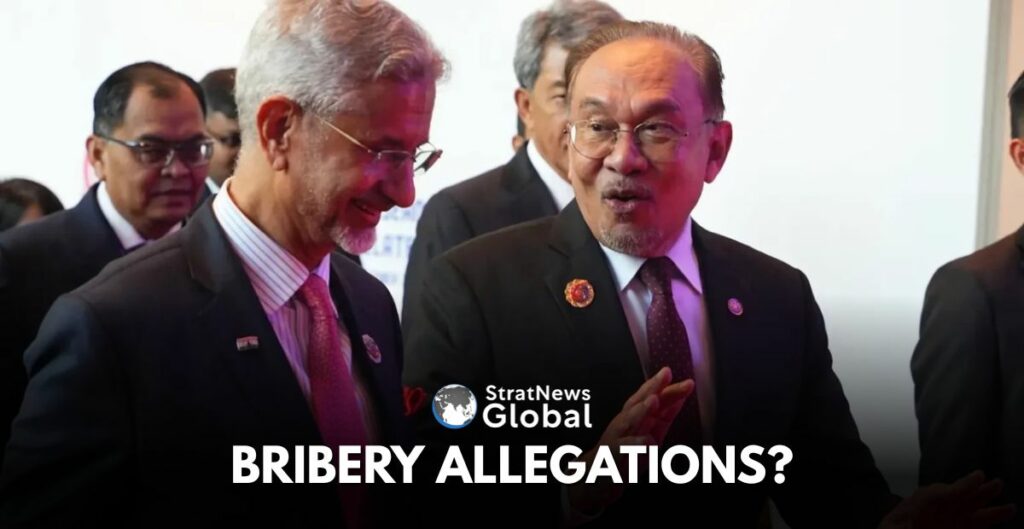
Malaysia: Graft Probe Targets Ex-Aide To PM Anwar Ibrahim
Malaysia’s anti-graft agency will investigate bribery allegations made against a
former senior aide to Prime Minister Anwar Ibrahim, who has faced questions over his commitment to tackling corruption since coming to office three years ago.
Wednesday’s announcement came a day after Shamsul Iskandar Mohd Akin resigned as Anwar’s senior political secretary, citing an attempt to attack him with allegations that could damage the government. He did not detail the allegations, but said he would
defend himself “against this attack”.
Both Shamsul Iskandar and Albert Tei, the businessman who made the bribery allegations, will be summoned for questioning, Malaysian Anti-Corruption Commission Chief Commissioner Azam Baki said in a statement.
“In addition, MACC will call all other relevant parties for the purpose of gathering the necessary evidence,” he said. Anwar, who took office in 2022 on an anti-corruption platform, has faced accusations of backsliding on promised reforms. He has said he remains committed to fighting graft.
On Wednesday, Anwar said in a statement he had accepted the resignation, and that the MACC was “free to conduct an investigation immediately, without any external
interference.”
Shamsul Iskandar is a senior member of Anwar’s People’s Justice Party, having previously served as a lawmaker and deputy minister. He had been Anwar’s senior political secretary since December 2022 and is regarded as one of the premier’s most trusted advisers.
News portal Malaysiakini reported on Tuesday that Tei had alleged he spent 629,000 ringgit ($152,000) on renovations and furnishings for two properties linked to Shamsul Iskandar, among other personal expenses.
Tei confirmed the allegations in the report to Reuters but declined to comment on the MACC probe, saying on Wednesday that he had not yet received any official notice from the anti-graft agency.
Corruption charges were filed against Tei in June after he admitted paying bribes to multiple lawmakers from Sabah state to try to secure mining licenses in the eastern state.
The allegations against Shamsul Iskandar come just before a regional election in Sabah on Saturday, which is seen as an early test of support for Anwar ahead of national polls that must be held by the first quarter of 2028.