

Support us by contributing to StratNewsGlobal on the following UPI ID
ultramodern@hdfcbank

Strategic affairs is our game, South Asia and beyond our playground. Put together by an experienced team led by Nitin A. Gokhale. Our focus is on strategic affairs, foreign policy and international relations, with higher quality reportage, analysis and commentary with new tie-ups across the South Asian region.
You can support our endeavours. Visit us at www.stratnewsglobal.com and follow us on YouTube, Twitter, Facebook and Instagram.
र 500 per month
र 1000 per month
र 5000 per year
र 10000 per year
Donate an amount of your choice
र 500 per month
Donate र 500 per month

र 1000 per month
Donate र 1000 per month
र 5000 per year
Donate र 5,000 per year
र 10000 per year
Donate र 10,000 per year
Donate an amount of your choice
Donate an amount of your choice

Taiwan Raids Former TSMC Executive’s Homes Over Trade Secret Leak Allegations
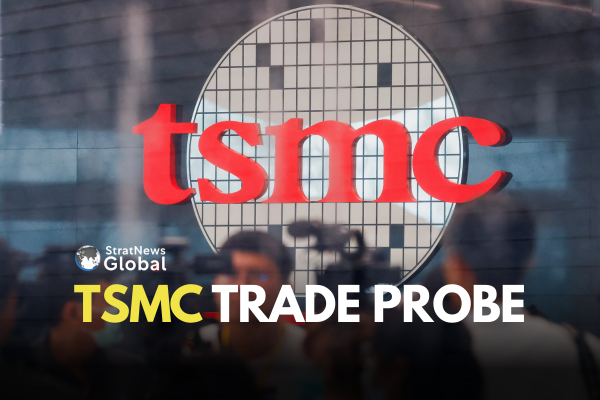
Taiwanese prosecutors said on Thursday that investigators had raided the homes of former TSMC executive Wei-Jen Lo after the company accused him of leaking trade secrets to his new employer, Intel. Authorities seized computers, USB drives, and other electronic devices during the search, which followed a lawsuit filed by TSMC earlier in the week.
TSMC Accuses Ex-Executive of Leaking Confidential Information
TSMC, the world’s largest contract chipmaker and a key supplier to companies such as Nvidia, announced on Tuesday that it had taken legal action against Lo in Taiwan’s Intellectual Property and Commercial Court. The company alleged that Lo may have shared or transferred trade secrets after joining Intel. Prosecutors confirmed that Lo is being investigated under Taiwan’s National Security Act, which covers the protection of critical technologies.
According to the statement, investigators searched two of Lo’s homes on Wednesday and collected several items believed to contain sensitive information. A court also approved the seizure of his assets, including shares and property, as part of the ongoing probe.
Intel Denies Allegations, Cites Strict Compliance Policies
Intel firmly rejected TSMC’s claims, saying it had no reason to believe the allegations held merit. In a statement, the US chipmaker said it enforces strict internal policies that prohibit using or sharing any confidential or proprietary information from other companies. The firm added that such commitments are treated seriously and consistently monitored.
Intel noted that Lo, who rejoined the company in October, is highly regarded in the semiconductor industry for his integrity and expertise. The company described employee movement between major chipmakers as a common and healthy practice in the sector.
Lo’s Career and Industry Significance
Wei-Jen Lo played a major role in developing TSMC’s advanced 5-nanometre, 3-nm, and 2-nm chip technologies during his 21-year tenure at the company. Before joining TSMC in 2004, he had worked at Intel for 18 years, giving him deep experience across the chipmaking landscape.
TSMC said it believes there is a strong possibility that Lo used or disclosed its trade secrets after leaving. The case underscores the growing competition and sensitivity surrounding advanced semiconductor technology, which remains central to global innovation and national security concerns.
(with inputs from Reuters)
Canada Cites ‘Daunting Challenges’, Urges Strategic Partnership With India
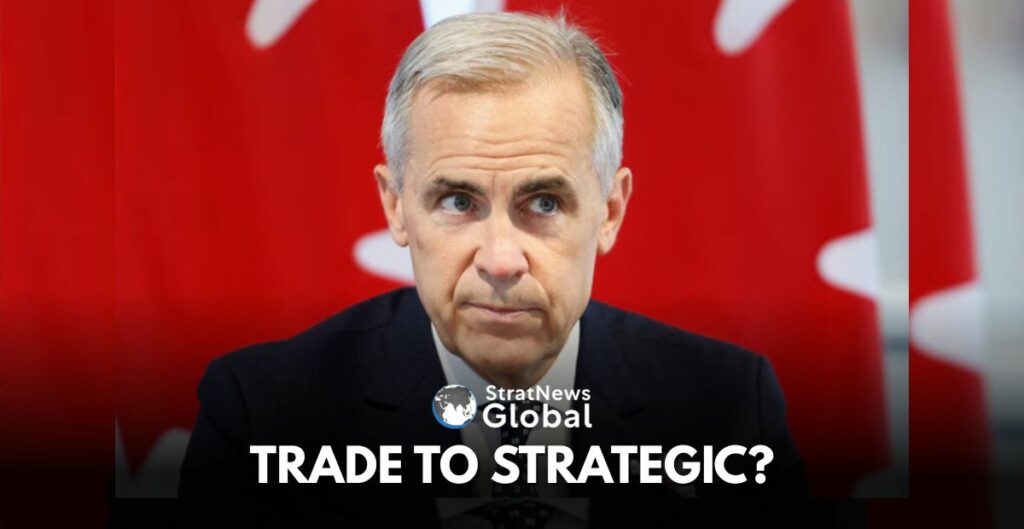
Days after Prime Minister Narendra Modi met his Canadian counterpart Mark Carney on the sidelines of the G20 Summit in Johannesburg, Ottawa’s High Commissioner to India Christopher Cooter said Ottawa wants to a “reliable partner” for New Delhi by deepening the strategic partnership.
“To be clear, Canada is poised to be the reliable partner India needs to help power its ambitious growth targets towards 2030 and beyond. For both countries, this is a defining moment to move beyond transactional trade toward a more comprehensive and indeed strategic partnership,” High Commissioner Cooter said at an event in New Delhi organised jointly by Council for Strategic and Defense Research (CSDR) and Asia Pacific Foundation of Canada.
He said, “We face converging and daunting challenges – supply chain vulnerabilities, climate imperatives, and technological disruption. For Canada and India – two democracies with shared interests and complementary strengths – this is not a time for incrementalism. It is a time for bold, pragmatic and sustained collaboration built on mutual respect.”
On 23 November, Prime Ministers Modi and Carney decided to relaunch a “high-ambition” Comprehensive Economic Partnership Agreement (CEPA), which is aimed at doubling bilateral trade to $50 billion by 2030. In 2024, India-Canada bilateral trade reached $22 billion.
India and Canada began negotiating the CEPA in 2010 but the process stalled in 2017 as tensions between New Delhi and Ottawa peaked over Khalistani separatists operating in that country.
Subsequently, in 2022 both sides decided to negotiate an Economic Partnership Agreement (EPA) – a toned down version of CEPA – which also got stalled owing to the killing of Hardeep Singh Nijjar, a Canadian citizen and Khalistan advocate, in June. India had designated Nijjar a terrorist in 2020 and accused him of leading a militant group.
In September 2023, former Canadian Prime Minister Justin Trudeau stated in Parliament that there were “credible allegations” of a potential link between “agents of the government of India” and Nijjar’s killing.
India vehemently dismissed the allegations as “absurd and motivated” and a “smear campaign,” accusing Canada of providing safe haven to Khalistani extremists and failing to act on its concerns.
The initial allegations triggered a tit-for-tat expulsion of senior diplomats from both countries in September 2023. India also temporarily suspended visa services for Canadian citizens.
In October 2024, the row escalated further with both countries expelling six more diplomats each after Canadian police made new claims of Indian official involvement in a broader criminal network.
Eventually, after the return of high commissioners in August 2025, the two prime ministers agreed to reset ties and return to the previous diplomatic staffing levels in order to meet the consular demands and to strengthen people-to-people linkages.
Modi has also extended an invitation to Prime Minister Carney to visit in early 2026.
“Trade alone is not enough … We must invest in our innovation ecosystems – in clean technologies, AI, quantum computing, aerospace, and advanced manufacturing. These are not abstract ambitions; they are practical pathways to jobs, security, and sustainability,” the High Commissioner said.
“What is clear to me is that Canada and India have the tools, resources and the talent to build a partnership that is not only resilient, but transformative,” he stressed.
India and Canada along with Australia also launched a new trilateral initiative called Australia–Canada–India Technology and Innovation Partnership (ACITI) to boost cooperation in critical and emerging technologies.
Army Officers Announce Guinea-Bissau Coup
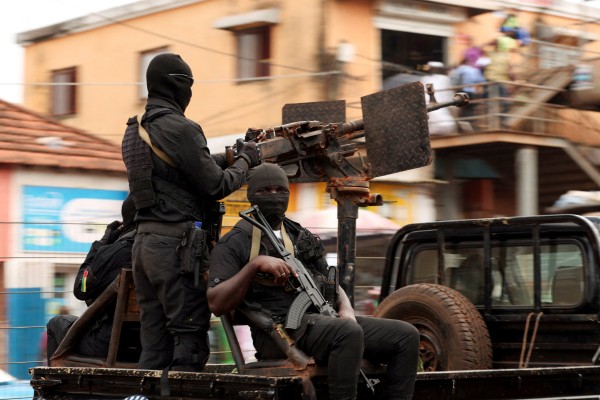
Army officers in Guinea-Bissau said on Wednesday that they had seized power, announcing on state television that President Umaro Sissoco Embalo had been deposed a day before provisional results from a tightly contested presidential election were expected.
Reading a statement on state TV, spokesperson Diniz N’Tchama said the officers had suspended the electoral process, shut the country’s borders and imposed a curfew. President Embalo later told France 24: “I have been deposed.”
The officers said they had formed “The High Military Command for the Restoration of Order,” which would run the West African nation until further notice. They did not clarify whether Embalo had been detained, and his whereabouts remained unknown.
The takeover added to a long history of upheaval in Guinea-Bissau, a small coastal state between Senegal and Guinea that has frequently grappled with political instability and drug trafficking networks. It was unclear whether the officers had the backing of the broader armed forces or full control across the country of roughly two million people.
In their statement, the officers said they acted in response to what they described as a destabilisation plot involving “certain national politicians” and “well-known national and foreign drug barons,” and cited alleged attempts to manipulate the election results.
Gunfire was heard shortly before the announcement near the electoral commission headquarters, the presidential palace and the interior ministry, witnesses said. The shooting lasted around an hour before stopping, according to a Reuters journalist in Bissau. “People are running everywhere,” a driver said, describing scenes of panic. There were no immediate reports of casualties.
The electoral commission had been scheduled to release provisional results on Thursday from Sunday’s vote, in which Embalo faced challenger Fernando Dias. Both camps claimed victory after the first round, and Embalo was aiming to become the first leader in three decades to secure a second consecutive term.
Antonio Yaya Seidy, a spokesperson for Embalo, said unidentified gunmen attacked the election commission to prevent results from being announced. He alleged the attackers were linked to Dias, without providing evidence. A spokesperson for Dias did not immediately comment.
Former Prime Minister Domingos Simoes Pereira, who supported Dias in the election and lost to Embalo in a disputed 2019 runoff, said Dias had no connection to the incident. He said the candidate was meeting election observers when “some people erupted in the room to announce that there were gunshots in the center of the town.” Pereira said Dias was safe and in Bissau.
Guinea-Bissau has experienced repeated political turmoil, with at least nine coups or attempted coups since independence from Portugal in 1974. Embalo has claimed to have survived three coup attempts during his presidency. His critics, meanwhile, have accused him of engineering crises to justify clampdowns on opponents.
Gunfire echoed through the capital for hours in December 2023 in what Embalo’s government described as an attempted putsch. He dissolved parliament shortly after, leaving the country without a functioning legislature. In late October, authorities said they had arrested senior officers suspected of plotting another coup attempt.
Tensions ahead of Sunday’s election had been high, with opposition groups arguing that Embalo had overstayed his mandate. Under his tenure, drug trafficking appeared to surge, with an August report from the Global Initiative Against Transnational Organized Crime describing the cocaine trade as potentially more profitable than ever. Last September, judicial police reported seizing 2.63 tonnes of cocaine from a plane that arrived in Bissau from Venezuela.
(With Inputs from Reuters)
TSMC and US in Talks to Expand Chip Production and Worker Training
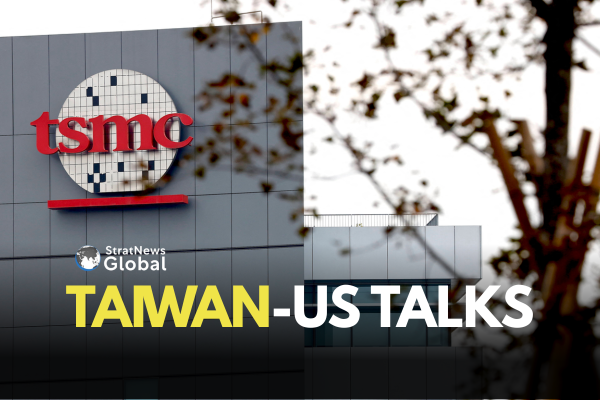
The administration of US President Donald Trump is negotiating a potential agreement with Taiwan that could see the island commit to new investment and worker training in advanced industries such as semiconductor manufacturing. According to people familiar with the discussions, the deal would strengthen cooperation between Taiwanese firms and US industries while supporting Washington’s efforts to build domestic technology capacity.
Boosting US Semiconductor Capabilities
Under the proposed arrangement, major Taiwanese companies, including TSMC—the world’s largest contract chipmaker—would expand their operations in the United States. They would also send capital and skilled personnel to train American workers in semiconductor manufacturing and other high-tech fields. One source said the total investment from Taiwan would be smaller than those made by Japan and South Korea but would include technical support to help the US develop science park infrastructure based on Taiwan’s successful model.
Currently, Taiwan’s exports to the US face a 20% tariff. Taipei has been seeking to reduce this rate as part of broader trade negotiations. Although semiconductors are exempt from tariffs for now, Washington is eager to strengthen local production. South Korea and Japan have already pledged $350 billion and $550 billion respectively, under similar deals that reduced tariffs on their exports.
Challenges and Opportunities in US Projects
TSMC has faced difficulties in staffing its new Arizona plant, with CEO C.C. Wei noting that construction took twice as long as similar projects in Taiwan due to worker shortages and supply chain gaps. To address these issues, TSMC relocated many skilled workers from Texas, which raised costs. Taiwan’s government has continued to discuss ways to deepen supply chain cooperation under what it calls a “Taiwan model,” built on decades of experience in developing integrated science parks.
Taiwan Premier Cho Jung-tai confirmed that both sides are now exchanging documents to finalise details. He stressed that Taiwan’s expertise in creating science parks offers a unique advantage, as few countries can replicate its success. Vice Premier Cheng Li-chiun added that negotiations aim to reach common ground on investment expansion while ensuring the island’s most advanced chip technologies remain in Taiwan.
Trade Tensions and Regional Implications
The talks come amid rising US tariffs under Trump’s trade agenda. Although a 100% tariff on semiconductor imports has been announced, firms like TSMC that invest in the US are exempt. Washington has also hinted that such measures might not take effect soon. Still, the potential deal with Taiwan could draw strong reactions from Beijing, which views the island as part of its territory.
Trump recently defended allowing skilled foreign workers into the US, saying they are vital to train Americans in advanced manufacturing. In a recent speech, he highlighted plans to collaborate with Taiwanese companies on major semiconductor projects. Meanwhile, Taiwan’s Foxconn chairman Young Liu said he hopes building science parks abroad could further strengthen trade ties with the United States.
(with inputs from Reuters)
UK Net Migration Falls Sharply After Policy Clampdown
Signalling the continuation of a steep decline driven by tougher government controls, long-term net migration to Britain dropped to 204,000 in the year to June, roughly two-thirds lower than the previous year, according to official data released on Thursday.
Immigration — both legal and irregular — has dominated British politics for more than a decade, with successive administrations tightening visa rules, raising salary thresholds, and expanding enforcement in an effort to curb arrivals.
The Labour government has moved further in that direction as it tries to blunt the rise of Nigel Farage’s Reform UK, a populist party campaigning aggressively on an anti-migration platform and currently polling in double-digit territory.
Revised numbers published last week by the Office for National Statistics showed that net migration had peaked earlier and higher than previously estimated, hitting 944,000 in the 12 months to March 2023. Updated figures also confirmed that the total had dropped to 345,000 in 2024, marking the beginning of the downward trend now reinforced by the latest release.
Despite the decline, immigration remains the public’s top concern. The British Future think tank said anxiety was being fuelled largely by people arriving on small boats from France to seek asylum — a politically charged issue that continues to dominate headlines.
“Those who most want lower immigration are the least aware of the falling numbers and the most likely to mistakenly believe net migration had increased,” the group said.
Earlier this month, the government announced a fresh round of sweeping reforms. Measures include making refugee status temporary, accelerating deportations of those entering the UK illegally, and doubling to ten years the qualifying period for certain foreign workers to obtain settled status.
A major shift came in July with the scrapping of the care worker route, which had been the largest contributor to work-related migration in recent years. Officials expect the change to push numbers down further over the coming years.
(With Inputs from Reuters)
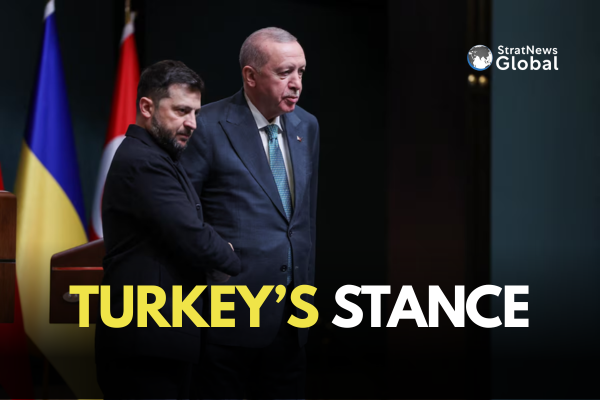
Turkey Insists on Ceasefire Before Discussing Troop Role in Ukraine
Turkey’s defence ministry stated on Thursday that a ceasefire between Ukraine and Russia must come first before any talks about sending troops for a possible reassurance force can take place.
Ankara Responds to Macron’s Proposal
Earlier this week, French President Emmanuel Macron suggested forming a multinational force that could include French, British, and Turkish soldiers. The idea aims to strengthen security and provide reassurance amid the ongoing war in Ukraine. However, Ankara made it clear that while it is open to discussion, any decision depends on clear conditions being met.
Conditions for Turkey’s Involvement
Turkey’s defence ministry explained that the first and most important step is to establish a ceasefire between the warring sides. Only after that, officials said, can discussions move forward to define a clear mission framework. This framework would set out the operation’s mandate and specify the contribution expected from each participating country.
Turkey’s Balanced Diplomatic Approach
Since the start of the war, Turkey has maintained balanced relations with both Moscow and Kyiv. It has supplied military equipment to Ukraine while also engaging in talks with Russia. This diplomatic stance allows Ankara to act as a mediator, but it also means the government must tread carefully when considering any military involvement.
By stressing the need for a ceasefire first, Turkey highlights its preference for diplomacy and peacebuilding rather than direct confrontation. Any future involvement, the ministry noted, would require precise planning and international agreement on how such a force would operate.
(with inputs from Reuters)
Indonesia’s Military Modernisation To Counter Grey-Zone Tactics At Sea
Indonesia’s Defence Minister Sjafrie Sjamsoeddin has just wound up a visit to India that included talks with his counterpart Rajnath Singh in Delhi. An Indian Defence Ministry release said the talks covered the Indo-Pacific, India’s Indo-Pacific Oceans Initiative, cyber resilience and joint operational readiness.
The release said “Indonesia appreciated India’s proposal to establish a Joint Defence Industry Cooperation Committee to further strengthen collaboration in areas such as technology transfer, joint R&D, certification harmonisation, and supply-chain linkages.”
There was no reference to Indonesia wanting to buy the Brahmos missile that various media reports have alluded to. Although India has offered a line-of-credit, Jakarta is yet to make up its mind.
Other reports suggest a high level debate in that country about the pros and cons of buying Chinese military hardware. The military brass, it is said, may not be very keen on the idea although it is acknowledged that such hardware would come at affordable prices.
With that as the context, we bring you an exclusve Q&A with KHAIRUL FAHMI, Co-Founder Institute for Security & Strategic Studies in Jakarta
Q: The Indonesian military has a long history of being in power. How would you define its position today?
A: The Indonesian military (TNI) today has transformed into a professional, modern, and constitutionally disciplined defense institution. The reform era separated the military from politics, and since then, its focus has been on defense and national resilience, not governance.
However, Indonesia’s historical experience, where the military was deeply intertwined with the nation’s founding and survival, still shapes its ethos. The TNI remains a socially legitimate institution with strong public trust, often involved in humanitarian operations, disaster response, and community development.
Under President Prabowo, this role is being reframed: not as political involvement, but as functional proximity to the people, in line with the doctrine of Total People’s Defense.
Q: What does the Indonesian military see as its main challenges and where do these emanate from?
A: First, strategic uncertainty. Indonesia sits astride key sea lanes with proximity to the South China Sea, so any escalation among major powers reverberates across our waters. The mix of grey-zone tactics, ambiguous maritime claims, and rapid military modernization in the region creates a fluid risk environment that demands persistent presence and credible deterrence—especially around Natuna and critical chokepoints like Malacca, Sunda, and Lombok.
Second, non-traditional threats. Hybrid risks are rising: cyber intrusions on critical infrastructure, disinformation targeting social cohesion, terrorism with evolving tactics, illegal fishing and transnational crime, plus frequent natural disasters that require rapid military support. Resource competition, from energy to undersea minerals, adds pressure on maritime domain awareness and law-enforcement at sea, blurring lines between defense and security.
Third, internal readiness. Archipelagic geography magnifies logistics and sustainment challenges: moving people and kit across 17,000 islands, pre-positioning stocks, and maintaining high availability of platforms. Priorities include strengthening air/sea lift, joint C4ISR, interoperable communications, and lifecycle maintenance, alongside human capital, training, talent retention in cyber/tech fields, and faster decision loops across services and agencies.
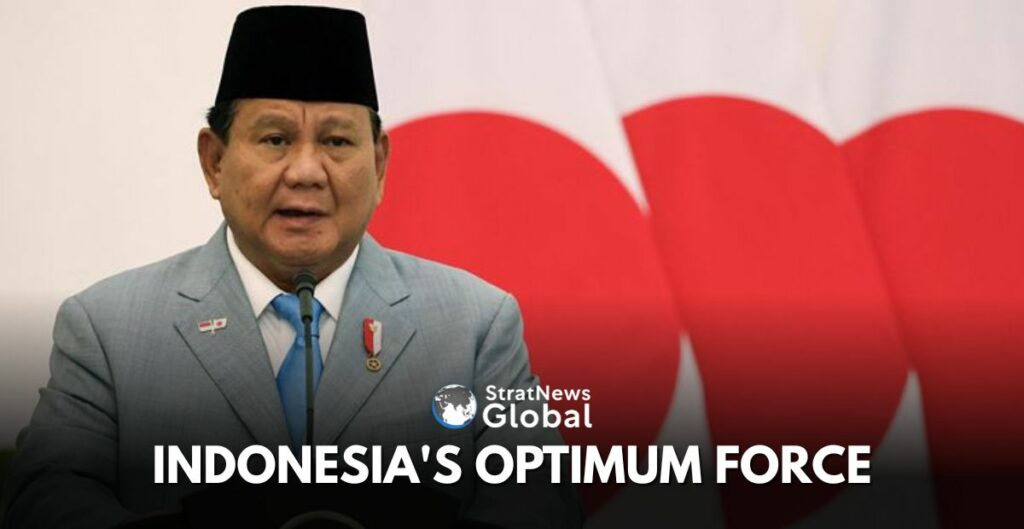
These vectors demand a flexible, integrated defense system: joint operations by design, tighter civil-military coordination, resilient supply chains, and scalable responses from grey-zone to high-end contingencies. This is the logic behind Indonesia’s shift from Minimum to Optimum Essential Force, to anticipate, absorb, and deter across the full spectrum of threats.
Q: Does it have the capacity and capability to meet these challenges?
A: Indonesia’s defense capacity is still developing, but it is moving decisively toward modernization and integration. The TNI has strengthened its joint operational posture through the establishment of new territorial commands and specialized units in cyber, space, and information operations.
Technologically, the TNI is filling critical capability gaps, from maritime domain awareness to air mobility and strategic lift. The induction of platforms such as the A400M Atlas, new frigates and submarines, and long-range surveillance drones indicates a shift toward greater deterrence and regional presence.
While full capability parity with major powers is not the goal, Indonesia seeks to achieve credible deterrence, the ability to impose costs and defend its interests across domains, supported by a more agile command structure and stronger local defense industries.
Q: I understand under President Prabowo, military spending on modernization has got a boost. What can you tell us?
A: Yes, defense modernization under President Prabowo is gaining both momentum and strategic direction. Although Indonesia’s defense budget still hovers around 0.7-0.8 percent of GDP, there is a strong political commitment to raise it toward the psychological threshold of 1 percent of GDP. This target was part of President Prabowo’s 2024 campaign pledge and reflects a shift in mindset, from the old concept of Minimum Essential Force (MEF) to what he calls Optimum Essential Force (OEF).
The idea is to not just maintain the minimum operational level, but to build credible deterrence and readiness across all domains: land, sea, air, cyber, and space, while strengthening domestic industrial participation. The budget increase is expected to prioritize integrated procurement packages, infrastructure improvement, and technological independence, ensuring every dollar contributes to long-term resilience rather than short-term acquisition.
Q: From what I have read, it appears Indonesia is buying equipment and platforms from diverse vendors. There are questions about sustainability, relevance and how practical these procurements are.
A: Indonesia’s diversification is a deliberate strategic choice, not a procurement inconsistency. By working with multiple partners: France, South Korea, Turkey, the United States, and now India, Indonesia avoids dependence on any single supplier and gains access to various technologies and operational doctrines.
This approach also creates strategic leverage in diplomacy. For instance, partnerships with France (Rafale and Scorpène submarines), Turkey (KAAN fighter jets and missiles), and South Korea (KF-21 program and naval cooperation) allow Indonesia to blend technology transfer with strategic alignment.
The government recognizes that sustainability requires better interoperability and lifecycle planning. Thus, recent procurements are increasingly tied to long-term maintenance contracts, training, and domestic co-production, ensuring both practicality and technological learning.
Q: Apart from the Brahmos missile from India, what else do you think Indian industry can offer?
A: India and Indonesia share a civilizational connection and a strategic outlook rooted in autonomy and non-alignment. The proposed BrahMos sale is a milestone, but it should be viewed as the start of a broader defense industrial relationship.
India can offer cooperation in unmanned systems, radar and surveillance technology, electronic warfare, naval shipbuilding, and ammunition manufacturing. Moreover, India’s success with the Atmanirbhar Bharat (self-reliant defense industry) model offers valuable lessons for Indonesia’s own Make in Indonesia program.
Both countries are maritime democracies located at the crossroads of the Indo-Pacific, and their cooperation reflects a shared interest in stability, deterrence, and technological independence from major power blocs.
Q: What about Indonesia’s domestic defence industry?
Yes, “Make in Indonesia” is a cornerstone of President Prabowo’s vision for defense self-reliance. State-owned defense enterprises such as PT Pindad (land systems), PT PAL (shipbuilding), and PT Dirgantara Indonesia (aerospace) are undergoing transformation through joint ventures, co-production, and R&D partnerships.
Indonesia is already producing armored vehicles, small arms, guided rockets, and patrol vessels, and collaborating on advanced projects like the KF-21 fighter jet and medium-range missiles. The long-term target is for at least 50 percent of major platforms to be produced or maintained domestically within the next decade.
This industrial strengthening is also seen as a form of modern heroism, echoing the President’s belief that true independence today is achieved through the capacity to defend and sustain oneself technologically and economically.
US Extends Tariff Exclusions for Chinese Imports After Trade Truce
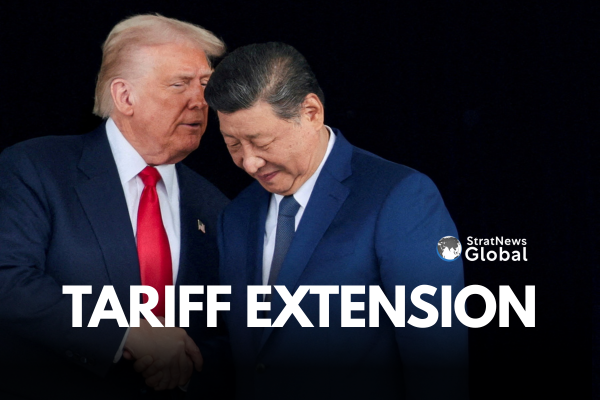
The United States announced on Wednesday a one-year extension of tariff exclusions for selected Chinese industrial and medical imports, including equipment used in solar-energy production. The decision follows a trade and economic agreement reached earlier this month between President Donald Trump and Chinese President Xi Jinping.
Tariff Relief Linked to US–China Deal
The tariff exclusions, first introduced under Trump’s initial term through “Section 301” measures targeting China’s intellectual property practices, were due to expire on 29 November. These exclusions have been repeatedly extended over the past year as part of efforts to stabilise trade relations between the world’s two largest economies.
“The extension of the exclusions follows the historic trade and economic deal reached between President Trump and President Xi Jinping of China, announced by the White House on November 1, 2025,” the Office of the US Trade Representative (USTR) said in a statement.
Wide Range of Products Covered
The latest extension covers 14 categories of equipment used to manufacture solar-energy products and 164 categories of industrial and medical goods. Among the exempted items are electric motors, auto air compressors, printed circuit boards, pump components, and blood pressure monitoring devices.
Officials said the decision aims to maintain supply chain stability while supporting industries that depend on specialised Chinese components.
Balancing Trade Stability and Domestic Interests
The continuation of the tariff exemptions reflects Washington’s effort to balance domestic manufacturing interests with the need to preserve economic ties with Beijing. Analysts note that the move aligns with the broader trade truce agreed earlier this month, signalling a temporary easing of tensions after years of tariff disputes.
(with inputs from Reuters)
New Zealand Navy Ship Makes Rare Transit Through Taiwan Strait
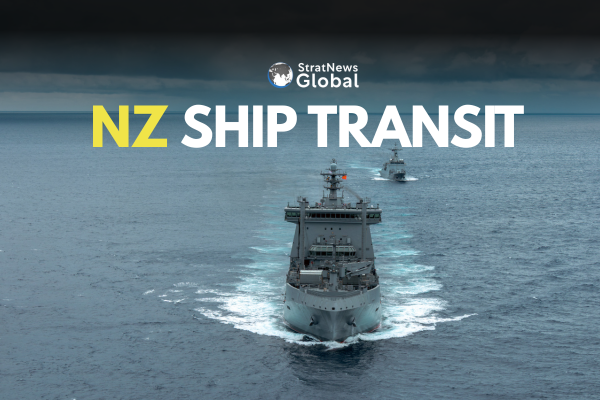
New Zealand’s largest naval vessel, the oiler HMNZS Aotearoa, sailed through the sensitive Taiwan Strait earlier this month, Defence Minister Judith Collins confirmed to Reuters. The previously unreported mission highlights Wellington’s quiet but firm support for freedom of navigation in international waters, amid growing tension in the region.
Monitored by Chinese Forces During Transit
A source familiar with the operation said Chinese forces tracked and followed the Aotearoa as it passed through the strait. The source added that Chinese jets carried out simulated attack manoeuvres during the transit.
While Collins declined to comment on any Chinese military activity, she emphasised that the operation fully complied with international law. “This includes exercising the right to freedom of navigation, as guaranteed under the United Nations Convention of the Law of the Sea,” she said in an email response.
According to the minister, the ship travelled from the South China Sea to the North Asian region via the Taiwan Strait on 5 November.
Beijing Claims Sovereignty, But Others Disagree
China claims democratically governed Taiwan as its own and insists that it alone has sovereignty over the Taiwan Strait. However, both the United States and Taiwan maintain that the strait is an international waterway vital to global trade, with nearly half of the world’s container ships passing through it.
The Chinese defence ministry did not respond to requests for comment. Taiwan’s defence ministry said its armed forces “maintain comprehensive awareness of all military activities across the region and respond appropriately, ensuring national defence security.”
Regional Context and Strategic Significance
The last publicly known transit by a New Zealand naval ship through the Taiwan Strait occurred in September 2023, when the Aotearoa sailed alongside an Australian vessel. Before that, New Zealand’s navy had not made such a passage since 2017.
The latest voyage coincided with Taiwan reporting a “joint combat readiness patrol” by China on 6 November involving J-16 fighter jets operating around the strait and to the island’s southwest.
Built in South Korea, the Aotearoa is a replenishment vessel equipped to carry a helicopter but lacks heavy armaments. The New Zealand Defence Force said last month that the ship would take part in UN sanctions enforcement missions around Japan, related to North Korea.
New Zealand, like most countries, does not have formal diplomatic ties with Taiwan but maintains a close economic and political relationship. It is one of only two major nations, along with Singapore, that have a free trade agreement with Taipei.
Regular transits by US, Canadian, and British warships through the strait often draw strong protests from Beijing, which has increased military activities around Taiwan in recent years and continues to threaten force to assert its claims.
Taiwan’s government firmly rejects Beijing’s sovereignty assertions, insisting that only its people have the right to determine the island’s future.
(with inputs from Reuters)
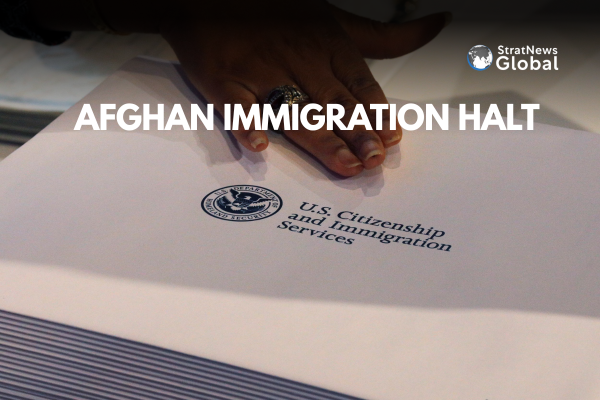
US Stops Processing Afghan Applications Following DC Shooting Incident
The US Citizenship and Immigration Services (USCIS) announced late on Wednesday that it has indefinitely suspended the processing of all immigration applications related to Afghan nationals. The decision came after two National Guard soldiers were shot and critically wounded near the White House.
Shooting Prompts Swift Government Action
President Donald Trump condemned the attack as “an act of terror,” saying the suspect arrived in the United States from Afghanistan in 2021. He added that his administration would take every measure to safeguard Americans and reassess immigration procedures linked to Afghan arrivals.
The suspension marks a significant shift in US immigration policy, reflecting heightened security concerns following the incident. The USCIS said in a post on X (formerly Twitter) that the safety of the nation remains its top priority.
“The protection and safety of our homeland and of the American people remains our singular focus and mission,” the agency stated.
Review of Afghan Immigration Underway
The move follows Trump’s recent directive to re-examine all Afghan nationals who entered the US during Joe Biden’s presidency. Thousands of Afghans had been admitted after the Taliban takeover of Kabul in 2021, under emergency resettlement programmes for those who assisted US and allied forces.
The latest policy pause leaves many Afghan applicants and their families in uncertainty, as the government conducts a security review. It remains unclear when, or if, processing will resume.
Analysts say the decision underscores the administration’s tougher stance on immigration and security vetting, particularly concerning groups admitted under previous administrations.
(with inputs from Reuters)