

Support us by contributing to StratNewsGlobal on the following UPI ID
ultramodern@hdfcbank

Strategic affairs is our game, South Asia and beyond our playground. Put together by an experienced team led by Nitin A. Gokhale. Our focus is on strategic affairs, foreign policy and international relations, with higher quality reportage, analysis and commentary with new tie-ups across the South Asian region.
You can support our endeavours. Visit us at www.stratnewsglobal.com and follow us on YouTube, Twitter, Facebook and Instagram.
र 500 per month
र 1000 per month
र 5000 per year
र 10000 per year
Donate an amount of your choice
र 500 per month
Donate र 500 per month

र 1000 per month
Donate र 1000 per month
र 5000 per year
Donate र 5,000 per year
र 10000 per year
Donate र 10,000 per year
Donate an amount of your choice
Donate an amount of your choice



Huawei and ZTE Secure 5G Deals in Vietnam Amid Closer China Ties
China’s leading telecom firms Huawei and ZTE have secured multiple 5G equipment contracts in Vietnam this year, signalling a shift in Hanoi’s approach towards Beijing as relations with Washington cool. The deals, worth over $40 million combined, mark a major development in Vietnam’s technology partnerships and have raised concerns among Western officials, according to people familiar with the matter.
Vietnam’s Growing Engagement with Chinese Tech
For years, Vietnam avoided using Chinese technology in sensitive infrastructure, wary of security risks and political influence. However, recent warming relations with Beijing and trade tensions with the US appear to have shifted that stance.
While Sweden’s Ericsson and Finland’s Nokia continue to supply Vietnam’s 5G core infrastructure, and US chipmaker Qualcomm provides network components, Chinese companies have begun winning smaller tenders through state-owned operators. Public procurement data shows Huawei and ZTE gaining ground in the market.
A Huawei-led consortium won a $23 million 5G equipment contract in April, just weeks after Washington announced new tariffs on Vietnamese goods. ZTE secured at least two contracts worth over $20 million, with the first publicly revealed deal signed in September, one month after US tariffs took effect.
Strategic and Economic Implications
The timing of these contracts has raised speculation about whether Vietnam’s pivot is linked to US trade measures. Washington has long discouraged its allies from allowing Chinese firms into critical infrastructure, warning of potential data and security risks. Huawei and ZTE are banned from US networks and restricted in several European countries, including Sweden.
Despite these warnings, Vietnamese analysts say the country’s decisions are guided by practical needs. Nguyen Hung, a supply chain specialist at RMIT University Vietnam, noted that “Vietnam has its own priorities,” highlighting that closer economic ties with China could strengthen regional integration.
The new contracts come alongside progress on other sensitive China-linked projects, such as cross-border railway lines and special economic zones near the border initiatives once deemed too risky for national security.
Western Concerns Over Network Security
Western diplomats in Hanoi have reportedly discussed the issue in multiple meetings this month. A US official warned that the use of Chinese technology could erode trust in Vietnam’s networks and complicate cooperation on advanced technologies.
Some officials have explored technical safeguards, such as isolating areas using Chinese equipment to prevent potential data leaks. Yet telecom experts warn that even limited involvement could give suppliers indirect access to network data. “Western contractors may face the awkward prospect of working alongside firms they do not trust,” said telecommunications lawyer Innocenzo Genna.
Cost and Competition Drive Vietnam’s Choices
Sources at Viettel, Vietnam’s army-owned telecom giant, said cost competitiveness played a role in the decision, noting that Chinese technology remains significantly cheaper. Huawei, despite losing several major bids earlier this year, signed a 5G technology transfer agreement with Viettel in June.
While Vietnam continues to balance relationships with both Beijing and Washington, the growing role of Chinese telecom firms reflects a strategic recalibration amid global competition and shifting trade alliances.
(with inputs from Reuters)
Deadly Hong Kong High-Rise Fire Tests Beijing’s Control Over the City
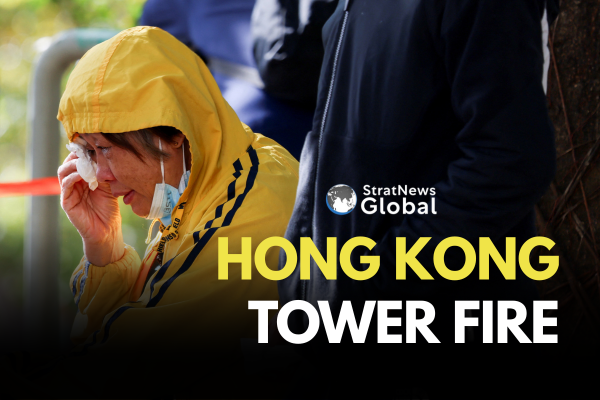
A massive blaze that tore through a Hong Kong high-rise apartment complex, killing at least 55 people and leaving nearly 300 missing, has become one of the most serious crises since Beijing tightened its grip on the city after the 2019 pro-democracy protests. The tragedy, still unfolding as flames burn through the structure, has raised sharp questions about safety, accountability, and the city government’s response under Beijing’s oversight.
Fire Strikes Amid Political Tension
The disaster comes at a politically charged moment, with Hong Kong preparing for the December 7 legislative council elections restricted to “patriotic” candidates and the upcoming sentencing of jailed media tycoon Jimmy Lai, a leading pro-democracy figure. Analysts say Beijing is closely watching both the government’s handling of the fire and public reaction to it.
Political scientist Sonny Lo said the central government will be focused on how the tragedy affects citizens’ trust in the Hong Kong authorities. “The government has done well on national security, but national security includes a human security dimension,” he noted.
Anger Over Safety Failures and Negligence
Residents and survivors have accused authorities and the construction company overseeing building renovations of negligence and cost-cutting. Some questioned whether fire alarms worked, while others pointed to risky practices such as workers smoking on site and using bamboo scaffolding covered with flammable mesh.
Police have already arrested three men from the construction firm two directors and one engineering consultant on suspicion of manslaughter. Officials said early investigations suggest that protective plastic sheets and foam materials used during maintenance work may have fuelled the spread of the flames.
“The company’s responsible parties were grossly negligent, which led to this accident and caused the fire to spread uncontrollably,” said police superintendent Eileen Chung.
Beijing and Local Authorities Respond
Chinese President Xi Jinping, speaking from Beijing late Wednesday, ordered “all-out efforts” to extinguish the fire and minimise casualties. He also expressed condolences to victims’ families and demanded constant updates on rescue efforts.
Hong Kong Chief Executive John Lee later visited shelters for survivors, promising a thorough investigation. “The priority is to extinguish the fire and rescue the residents who are trapped,” Lee said. “Then, we’ll support the injured and recover from this disaster.”
More than 4,600 people lived in the eight-tower complex, seven of which caught fire. By early Thursday, emergency crews continued working through the wreckage as families searched for missing loved ones.
Calls for Accountability and Transparency
Public anger is now spreading online, with forums on Weibo and local platforms becoming spaces for residents to question government accountability. Analysts warn that criticism may soon extend beyond the construction company to Hong Kong’s regulators and fire safety authorities.
Labour leader Chau Sze Kit urged a full review of safety management across the construction industry, including stricter government oversight. Some observers have compared the incident to the 1996 Kowloon building fire that killed 41 people and led to major safety reforms suggesting another such review may be necessary.
While Hong Kong’s government has pledged to investigate, the tragedy underscores a growing public demand for transparency in a city where political freedoms have sharply declined under Beijing’s rule.
(with inputs from Reuters)
‘Is China’s Tiangong Space Station Fake?’
A resurfaced screenshot from a 2021 science lesson aboard China’s Tiangong space station this week triggered a surge of online debate, with users questioning the authenticity of the footage and nationalist accounts rapidly mobilising in response.
Across Weibo, WeChat and Xiaohongshu, a provocative question spread at lightning speed: “Is China’s Tiangong Space Station fake?”
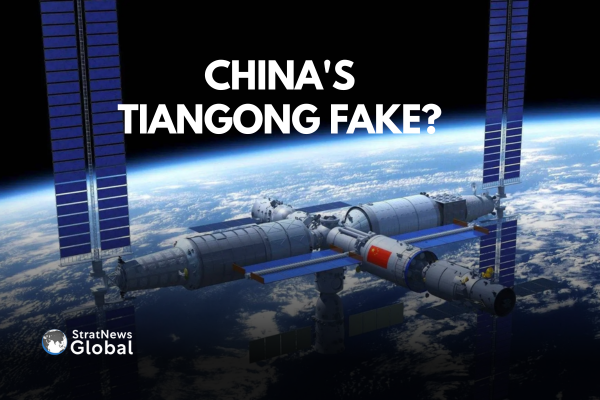
The screenshot, captured during a December 2021 demonstration in which astronaut Wang Yaping conducted the “Buoyancy Disappearance Experiment,” showed a water cup appearing motionless instead of floating in microgravity. As the image circulated again in November 2025, users scrutinised the frame and questioned why the cup seemed fixed in place.
The discussion quickly became one of the week’s most prominent topics on China’s tightly monitored internet. Skeptical posts examining the frame’s details ran alongside comments asking whether the scene had been staged or overly curated.
Nationalist users, often referred to as “little pinks,” responded immediately, flooding comment threads with patriotic slogans, denunciations of critics, and arguments defending the Chinese Communist Party. Their posts accused sceptics of attempting to discredit China’s space achievements.
Within hours, a familiar state-aligned slogan resurfaced in the form of the forcefully promoted hashtag #Anti-China Party Starts with One Image, Everything Else is Fabricated.The phrase is common on Chinese social media, used whenever critics share a single screenshot and question an official narrative. It roughly means “anti-China people take one picture and make up the rest.” This is not the first time the hashtag has appeared; it has been used in past debates about China’s military videos, Xinjiang images, and even earlier space-related posts where users questioned visual details. In the Tiangong case, the same slogan returned as nationalists tried to drown out scepticism by accusing doubters of fabricating stories from one frame.
Defenders argued that the cup was clipped in place and that surface tension explained the water’s behaviour. Sceptical users noted that while the full video does show Wang lifting the cup later, the tightly framed screenshot circulating online created room for confusion. Some commenters argued that selective visuals in official broadcasts often invite misinterpretation.
Others on social media mocked the intensity of the nationalist reaction, questioning why a minor rumour around a plastic cup prompted such a coordinated defence. The debate evolved into a mix of scientific explanations, sarcasm, nationalist rhetoric and continued questioning.
For several hours, Weibo hosted an unusually open contest of views, with sceptical posts briefly gaining traction before being overtaken by the dominant pro-government hashtag and related content amplifying the official position.
While the misunderstanding over the cup was eventually clarified through the full video, the episode highlighted how quickly online discussions in China can escalate, especially when they involve state-released imagery from high-profile national programmes such as Tiangong.
India, US Reaffirm Joint Fight Against Fentanyl
India has reaffirmed its readiness to strengthen cooperation with the United States in tackling the global narcotics crisis, even as US authorities identify India as the second-largest source of fentanyl precursor chemicals, officials said.
Responding to questions from StratNewsGlobal, the Ministry of External Affairs said institutional and operational collaboration has led to significant seizures and arrests, with further engagement planned through the sixth meeting of the India-US Counter-Narcotics Working Group.
MEA spokesperson Randhir Jaiswal said operational cooperation between the two countries has increased in recent years, resulting in coordinated enforcement actions and key interdictions. He noted that joint operations had disrupted transnational networks and that preparations for the forthcoming working group meeting were underway.
The Counter-Narcotics Working Group, upgraded in 2020, has held five meetings so far, during which both sides agreed on measures to strengthen joint efforts against narcotics. Jaiswal said information-sharing has played a central role in the group’s work, contributing to arrests and seizures involving illegal drugs and precursor chemicals.
The United States has also intensified scrutiny of India’s pharmaceutical sector, citing its role in the global supply chain of synthetic opioids. In September, the US State Department included India among 23 major drug transit or illicit drug-producing countries, highlighting its prominence in the production of fentanyl precursors, while noting that the designation does not imply a punitive judgement on India’s counter-narcotics efforts.
As part of enforcement actions, the US embassy in New Delhi revoked and denied visas to certain Indian executives alleged to be linked to trafficking of fentanyl precursors, applying the measures to them and their close family members under the Immigration and Nationality Act. The embassy said the steps were aimed at curbing the flow of synthetic opioids and acknowledged India’s cooperation in addressing the issue.
In January 2025, two India-based firms, Raxuter Chemicals and Athos Chemicals, along with senior executives, were charged with conspiring to distribute fentanyl precursors. Subsequently, Vasudha Pharma Chem Ltd and three of its executives faced similar charges in Washington as part of ongoing US investigations into the diversion of precursor chemicals into illicit supply chains.
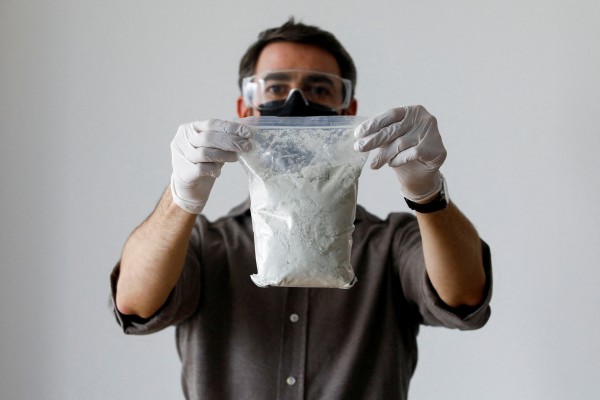
Fentanyl, a synthetic opioid estimated to be around 50 times more potent than heroin, is widely regarded as a major cause of overdose deaths in the US. Its production relies on precursor chemicals such as NPP and 4-ANPP, which have legitimate industrial and pharmaceutical uses but are vulnerable to diversion for illegal manufacture, posing regulatory and monitoring challenges.
According to official accounts, precursor chemicals produced in India and China are often routed to processing centres in Mexico, where criminal groups convert them into fentanyl for smuggling into the United States, primarily through the southwest border. The US response has included criminal prosecutions, visa restrictions and enhanced law enforcement cooperation.
Both sides have indicated that the upcoming working group meeting will focus on evolving challenges posed by synthetic opioids and continued coordination to disrupt trafficking networks.
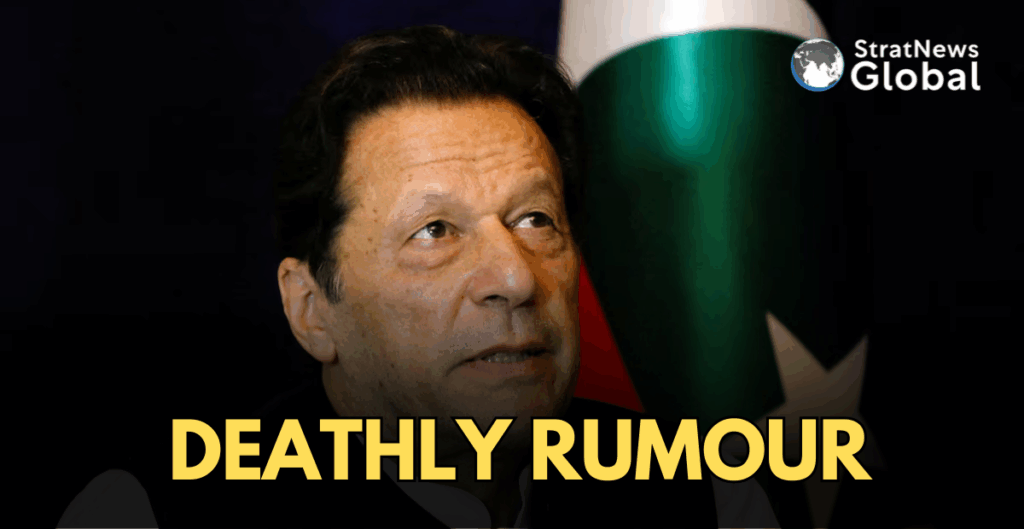
Imran Khan’s Death Rumour And Pakistan’s Grim History
A report triggered by an obscure newspaper in Kabul (Afghanistan Times) set the rumour mills running. It claimed, citing credible sources in Pakistan, that former prime minister Imran Khan “has allegedly been mysteriously killed and his body has been moved out of the prison.”
It was not true, and the Adiala Jail authorities later clarified that “There is no truth to reports about his transfer from Adiala Jail. He is fully healthy and receiving complete medical attention.”
Later, Defence Minister Khawaja Asif claimed that Imran Khan was receiving “Premium facilities. Check the menu of the food that comes to him, it is not available even in a five-star hotel.”
He even claimed that Khan slept on a “velvet mattress.”
The Afghanistan Times report and the manner in which it spread probably had its roots in his family members and party colleagues not being allowed to meet him. Reportedly, that is being remedied, but the fact that it spread in the manner in which it did points to something else.
Pakistan’s political and military leaders have died mysterious deaths in the past. The first prime minister, Liaqat Ali Khan, was assassinated by an Afghan national in October 1951 while addressing a rally in Rawalpindi. The motives of the attacker remain unknown since he was killed by the police.
Populist prime minister Zulfiqar Ali Bhutto was convicted of the murder of a political opponent and hanged in 1979. His trial and hanging took place under martial law.
The man who hanged him, Army Chief Gen Zia Ul-Haq, who was running the country, died when the aircraft he was travelling in crashed in Aug 1988. To date, there’s no clue why the aircraft crashed, although rumours circulate.
Bhutto’s daughter and former prime minister Benazir died when a suicide bomber of the Pakistani Taliban attacked her at a rally in Rawalpindi, the heart of the Pakistani military establishment. It is widely believed that former military dictator Gen Parvez Musharraf had her killed, and the Pakistani Taliban was then a creature of the military.
Imran Khan has said on record that if he ends up dead in prison, Asim Munir is the man who must be held accountable. There is no doubt that for Munir, the jailed former prime minister is the biggest threat to him. But would he take that extreme step and expect to survive whatever follows? History offers the best guide.
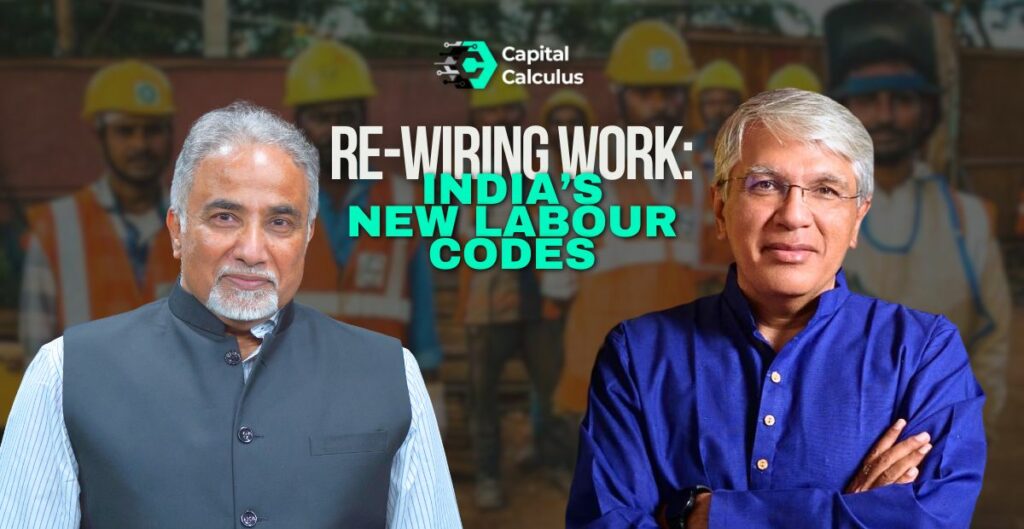
New Labour Codes: A Game Changer?
Since 1991, every regime has promised labour reforms but never dared to walk the talk. Last week the National Democratic Alliance, no doubt buoyed by their landslide win in Bihar, decided to bite the bullet and notified the new labour codes.
It is by far the biggest and boldest structural reform in 75 years.
They aim to transform the way India hires, protects workers, and creates jobs.
Some obvious questions: Will these reforms deliver jobs at scale or trigger new tensions in the workplace? Will they lead to greater formalisation of the workforce?
To help understand what is changing, what is at stake, and what could go wrong, StratNewsGlobal.Tech is joined by Manish Sabharwal, Chairman and co-founder of TeamLease on Capital Calculus. He is someone who has shaped the national conversation on jobs and labour reforms for more than two decades.
Pope Leo Flies To Turkey For First Overseas Trip
Pope Leo set off on Thursday on his first trip outside Italy as leader of the Catholic Church, leaving Rome for Turkey, where he was expected to make appeals for peace in the Middle East and urge unity among long-divided Christian churches.
The first U.S. pope chose mainly Muslim Turkey as his first overseas destination to mark the 1,700th anniversary of a landmark early Church council there that produced the Nicene Creed, still used by most of the world’s Christians today.
Leo, who has a crowded three-day itinerary in Turkey before heading on to Lebanon, will be closely watched as he makes his first speeches overseas and visits sensitive cultural sites.
“It’s a very important trip because we do not know much yet about Leo’s geopolitical views, and this is the first big chance for him to make them clear,” Massimo Faggioli, an Italian academic who follows the Vatican, told Reuters.
Global Attention
Foreign travel has become a major part of the modern papacy, with popes attracting international attention as they lead events with crowds sometimes in the millions, give foreign policy speeches and conduct international diplomacy.
Leo was elected in May by the world’s cardinals to succeed the late Pope Francis. A relative unknown on the world stage before his election, Leo spent decades as a missionary in Peru and only became a Vatican official in 2023.
Francis had been planning to visit Turkey and Lebanon, but was unable to go because of his worsening health.
Leo, 70, departed with his entourage from Rome’s Fiumicino airport at around 8 am (0700 GMT)heading for the Turkish capital Ankara, where he was scheduled to meet President Tayyip Erdogan and address political leaders.
He will fly on Thursday evening to Istanbul, home to Patriarch Bartholomew, spiritual leader of the world’s 260 million Orthodox Christians.
Orthodox and Catholic Christians split in the East-West Schism of 1054 but have generally sought in recent decades to build closer ties.
Leo and Bartholomew travel on Friday to Iznik, 140 km (90 miles) southeast of Istanbul, and once called Nicaea, where early churchmen formulated the Nicene Creed, which lays out what remain the core beliefs of most Christians today.
In a departure from normal practice – popes usually speak Italian on foreign trips – Leo is expected to speak English in his speeches in Turkey.
Peace Theme
Peace is expected to be a key theme of the pope’s visit to Lebanon, which starts on Sunday. Lebanon has the largest percentage of Christians in the Middle East.
Last Sunday, Israel killed the top military official in the Iran-backed militant group Hezbollah in an airstrike on a southern suburb of the Lebanese capital, Beirut, despite a year-long, U.S.-brokered truce.
Vatican spokesman Matteo Bruni said on Monday that necessary security precautions were being taken to ensure the pope’s safety in Lebanon, but he would not comment on specifics.
Leaders in Lebanon, which hosts 1 million Syrian and Palestinian refugees and is also struggling to recover after years of economic crisis, hope the papal visit might bring global attention to the country.
(with inputs from Reuters)
Heavy Rains Flood Thailand, Malaysia, Indonesia; 50+ Dead
Rescuers in Thailand readied drones on Thursday to airdrop food parcels, as receding flood waters in the south and neighbouring Malaysia brightened hopes for the evacuation of those stranded for days, while cyclone havoc in Indonesia killed 28.
Severe floods after a week of heavy rain have killed at least 33 in Thailand and two in neighbouring Malaysia, with tens of thousands huddling in evacuation centres, some after being cut off for days by waters as much as 2 m (7 ft) high.
“It’s a race against time,” Thai government spokesperson Siripong Angkasakulkiat told Nation TV, adding that rescue teams were preparing to use drones to deliver food parcels, relying on satellite internet in the face of telecoms outages.
“We have to help them out,” he added, saying authorities expected to rescue even more people on Thursday.
Relief Efforts
The receding floodwaters are allowing disaster teams in Thailand and Malaysia to boost aid deliveries and efforts to move people out of waterlogged homes.
The floods affected nearly 3 million people in nine southern Thai provinces, authorities said, with 3,000 moved to safety from the worst-hit city of Hat Yai, including some critically ill airlifted on Wednesday from a partially swamped hospital.
Thousands have been marooned on rooftops in the commercial hub by record rainfall, which stood at 335 mm (13 inches) on Friday, its highest in a single day for 300 years.
Thailand pushed relief efforts into higher gear when the military drafted in at least 20 helicopters, planes and convoys of trucks to deliver food, medicine and small boats on Wednesday, and made a public appeal for boats and jet skis.
The country’s only aircraft carrier, Chakri Naruebet, is also providing air support, food and medicines.
Tropical Cyclone
In Indonesia’s province of North Sumatra, a tropical cyclone unleashed floods and landslides to kill at least 28, with 10 missing. Power outages and damaged bridges and homes hampered rescue efforts, the disaster agency said.
Kompas TV showed images of earth sliding down a hillside to pile up in front of homes, while gushing waters higher than 1 m (3.5 ft) high swept along debris and the branches of trees.
Meteorologists say current extremes of weather in Southeast Asia could stem from the interaction of two active systems, Typhoon Koto in the Philippines and the unusual formation of Cyclone Senyar in the Malacca Strait.
Global warming can bring more frequent extreme events as higher sea surface temperatures supercharge tropical storms.
The most recent floods follow a series of deadly typhoons and heavy monsoon rains that have lashed the Philippines and Vietnam and swelled floods elsewhere.
Evacuation Underway
In Malaysia, with floods in seven states, authorities said more than 34,000 people were evacuated, and about 500 nationals were still stranded in the Thai tourist destination of Hat Yai.
Container lorries were used to bring home some Malaysians, the foreign minister told parliament on Thursday, as smaller vehicles were unable to traverse the floodwaters.
In the smallest state of Perlis, Gon Qasim said rising waters trapped her in her home in the middle of a paddy field.
“The water was like the ocean,” the 73-year-old evacuee said.
Teams in Hat Yai worked into the dark on Wednesday, racing to reach the stranded after more boats arrived for the rescue effort, navigating the challenges of both strong currents and shallows.
A tearful Kritchawat Sothiananthakul described the inexorable rise of waters in his home, as he waited with his dog to be rescued.
“We had to climb down from the roof, get into the boat,” said the 70-year-old, stroking the animal while sitting on a mat in a makeshift evacuation centre in a sports hall.
“I needed to carry it and then get onto a truck.”
(with inputs from Reuters)
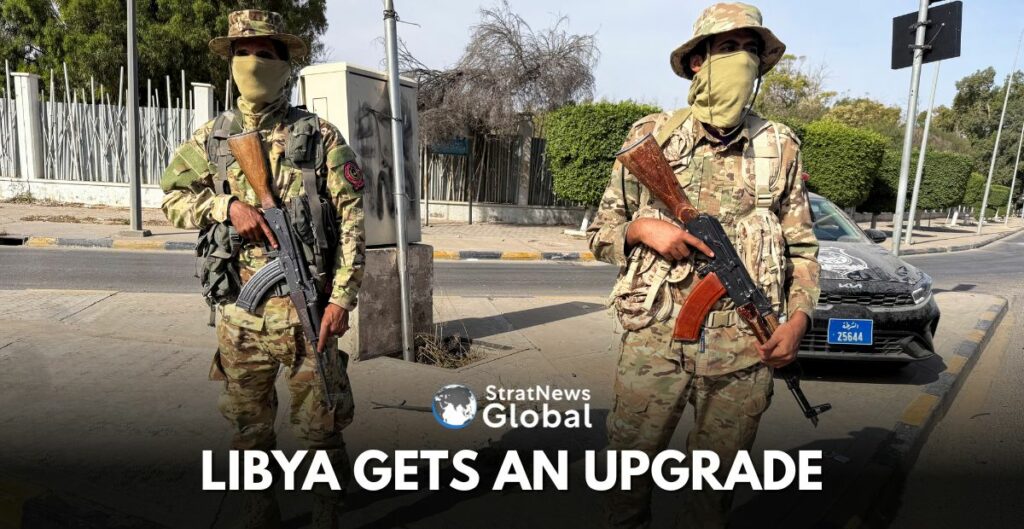
India Steps Up Oil Diplomacy, Sends Ambassador To Libya
India has appointed Dr. Hifzur Rahman, currently ambassador in Chad, as its next Ambassador to Libya. His appointment comes nearly a year after New Delhi reopened its diplomatic mission in Tripoli. The move signals a deeper strategic shift as India seeks to stabilise its presence in a region critical to its future energy security.
India had revived operations at its Tripoli embassy in mid-2024. Five years earlier it was forced to shut the mission when Libya’s civil war escalated. Since then, a small clerical team had kept basic consular work running, while India’s envoy in Tunisia oversaw broader diplomatic responsibilities.
The arrival of Dr Mohammed Aleem last year as chargé d’affaires marked the first return of an Indian diplomat to the Libyan capital since the withdrawal.
Why Libya Matters
Reopening the embassy restores essential services including visa processing, labour oversight and support for Indian expatriates who have been vulnerable to conflict-related disruptions and abductions over the past decade.
But the timing of India’s renewed diplomatic push is not merely about consular needs. With global crude markets entering a phase of volatility and the West tightening sanctions on Russian oil, Libya’s re-emerging energy sector offers a potentially valuable alternative for India.
Oil Diplomacy
Libya exported more than $30 billion worth of crude petroleum in 2023, making it a significant global supplier despite years of political instability. As Tripoli’s National Oil Corporation prepares its first licensing round in 17 years, the country is attempting to reopen vast swathes of unexplored territory, almost a third of its oil-rich regions remain untapped.
Indian companies such ONGC Videsh and Oil India Limited, both of which operated in Libya before withdrawing in 2011, have expressed interest in returning. Their familiarity with Libya’s Ghadames and Sirte basins is a potential advantage as the country courts foreign investors to rebuild its hydrocarbons infrastructure.
India imports roughly 85% of its crude requirements, and the geopolitical landscape is rapidly shifting. Russia, which became India’s largest oil supplier after 2022, now faces increasingly stringent scrutiny from the EU and warnings from Washington.
With the prospect of 100% tariffs on Russian trade if the Ukraine conflict continues, Indian refiners face rising risk and shrinking discounts. The narrowing price gap between Russian Urals and Middle Eastern grades has already weakened the financial incentive that once drove India’s pivot toward Moscow.
The pressures are compounded by global supply chain disruptions, including tensions in West Asia and shipping volatility in the Strait of Hormuz, which make diversification not simply desirable, but essential.
Embassy Security
India’s decision to deploy personnel from the Central Reserve Police Force to safeguard its Tripoli mission underscores the high-stakes nature of this engagement. Libya remains politically divided between rival administrations in the east and west, and although open conflict has receded, the security environment remains fragile.
New Delhi’s readiness to re-establish a full diplomatic presence suggests confidence that the situation has stabilised sufficiently to protect its interests and citizens, conditions necessary for long-term commercial involvement.
Taiwan Holds Talks With US For New Arms Purchase
Taiwan has already held preliminary talks with the U.S. about what arms it wants to buy as part of a $40 billion supplementary defence budget, Defence Minister Wellington Koo said on Thursday.
Taiwan President Lai Ching-te announced the previous day the new spending plan, which runs from 2026-2033, to underscore the island’s determination to defend itself in the face of a rising threat from China.
China, which views democratically governed Taiwan as its own territory, has ramped up military and political pressure over the past five years to assert its claims, which Taipei strongly rejects.
Purchase From the U.S.
Speaking to reporters in Taipei, Koo said purchases from the United States naturally constitute a significant part of the spending plans.
“We have already completed preliminary coordination with the United States on the planning for this military procurement project,” he said.
Taiwan has formally obtained from the U.S. Department of Defence the procurement item quantities, quotation information, transaction timelines, and other relevant details, showing the United States is willing to provide the weapons, Koo added.
But no details can be revealed before a formal notification to the U.S. Congress, he said.
The Pentagon did not immediately respond to a request for comment sent outside of business hours in Washington.
Parliamentary Nod
The spending will need to be passed by Taiwan’s opposition-dominated parliament.
Taiwan’s largest opposition party, the Kuomintang, on Wednesday criticised the announcement, which Lai made first in a Washington Post op-ed, saying he had not told parliament first.
“National defence investment is essential, but leaning primarily on massive borrowing is neither fiscally prudent nor responsible governance,” the party said in a statement.
Taiwan Premier Cho Jung-tai, speaking at the same news conference as Koo, appealed for legislative support for the spending, given the threat level from China.
“If you don’t have a country, how can you have a home?” Cho said.
Koo said the budget would also generate 90,000 jobs and bring a direct economic benefit to Taiwan of T$400 billion.
The United States is Taiwan’s most important international backer and arms supplier, despite the lack of formal diplomatic ties.
As Taiwan faces calls from Washington to spend more on its own defence, mirroring U.S. pressure on Europe, Lai said in August he hoped for a boost in defence spending to 5% of gross domestic product by 2030.
(with inputs from Reuters)