

Support us by contributing to StratNewsGlobal on the following UPI ID
ultramodern@hdfcbank

Strategic affairs is our game, South Asia and beyond our playground. Put together by an experienced team led by Nitin A. Gokhale. Our focus is on strategic affairs, foreign policy and international relations, with higher quality reportage, analysis and commentary with new tie-ups across the South Asian region.
You can support our endeavours. Visit us at www.stratnewsglobal.com and follow us on YouTube, Twitter, Facebook and Instagram.
र 500 per month
र 1000 per month
र 5000 per year
र 10000 per year
Donate an amount of your choice
र 500 per month
Donate र 500 per month

र 1000 per month
Donate र 1000 per month
र 5000 per year
Donate र 5,000 per year
र 10000 per year
Donate र 10,000 per year
Donate an amount of your choice
Donate an amount of your choice
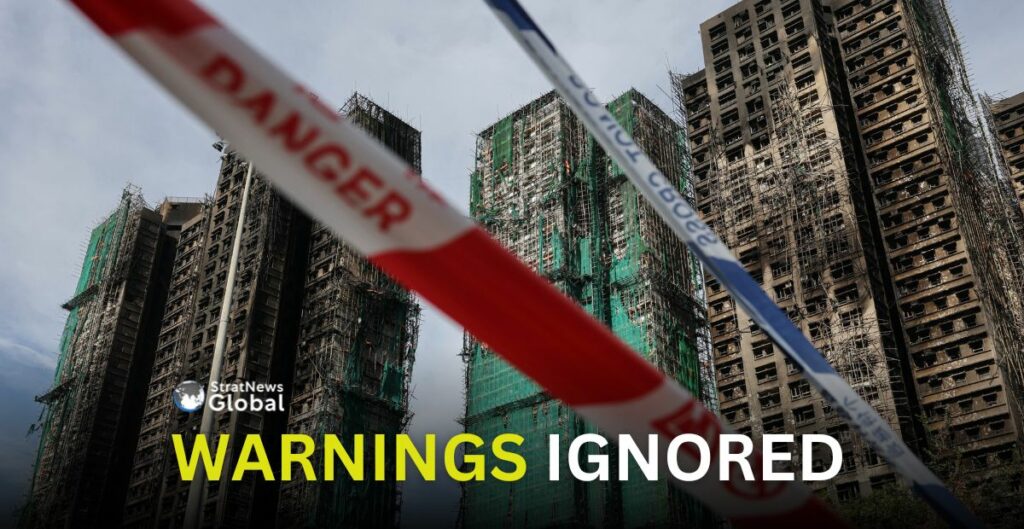



Hong Kong Fire: Authorities Dismissed Residents’ Fears
Residents of Wang Fuk Court, the Hong Kong housing complex later engulfed in the city’s deadliest blaze in seven decades, were told by authorities last year they faced “relatively low fire risks” despite repeated complaints about renovation hazards.
In September 2024, they warned that the green mesh covering bamboo scaffolding could be highly flammable, the Labour Department said.
The department subsequently reviewed safety certification for the mesh and told residents the material’s “flame-retardant performance” met standards, said the agency, which helps enforce construction standards set by the Building Department.
The agency added that it had carried out 16 safety inspections at Wang Fuk Court between July 2024 and November 2025. The department issued six improvement notices to the contractor over its work at the complex and initiated three prosecutions, it said, without providing further specifics.
Hong Kong’s Grenfell?
The Wang Fuk Court fire spread within minutes, engulfing seven of eight towers in four hours. Hundreds were displaced, and nearly 300 residents remained missing by Thursday.
Police on Wednesday also said they had discovered foam at the complex that might have been responsible for the fast expansion of the fire.
Foam “burns quickly and produces thick, toxic smoke,” Chau Sze Kit, chairman of the Hong Kong Construction Industry Employees General Union, told Reuters.
The material can help prevent dust and glass damage to windows during construction, he said, but “did the management team and site supervisors consider this risk?”
Additional Fire-Safety Concerns
A Reuters review of the minutes of meetings held over the past year between homeowners with building management revealed additional fire-safety concerns.
Management told the homeowners’ committee in October 2025 that among the items needing repair or maintenance in the complex were fire water inlets, hose components such as fire nozzles, fire alarm bells, fire extinguishers and fire hose reels, as well as lighting fixtures with batteries.
Residents have also complained about contractors smoking around the scaffolding.
A former resident told the agency that he had complained about smoking incidents and sent management the video in February, but that they did nothing in response.
(With inputs from Reuters)
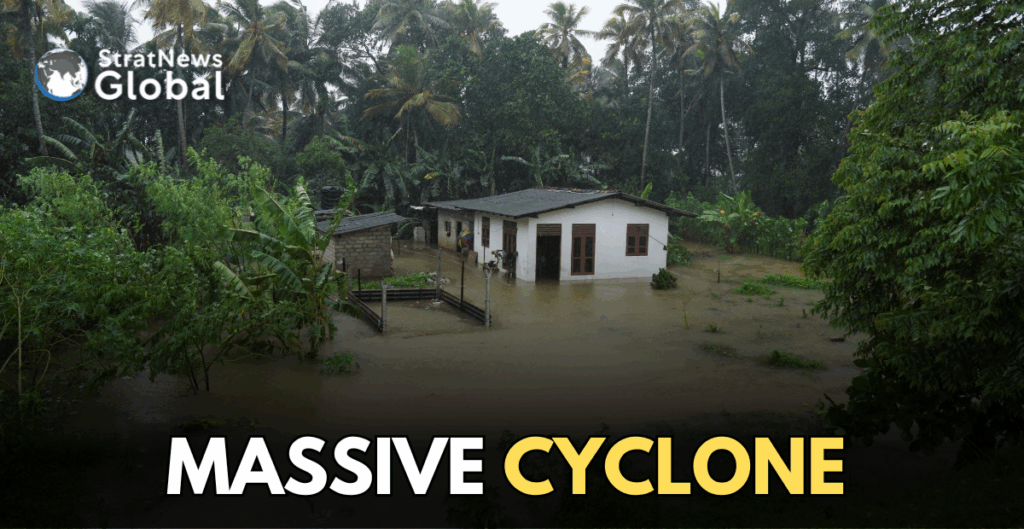
Sri Lanka: Cyclone Ditwah Kills 46, INS Vikrant Deployed For Relief
Cyclone Ditwah swept across Sri Lanka on Friday, leaving 46 people dead and 23 more missing, officials said, with the weather department warning the storm could intensify as it moves across the island over the next 12 hours.
Most fatalities were attributed to landslides triggered by torrential rainfall exceeding 300 mm (11.8 inches) over the past 24 hours as Cyclone Ditwah lashed the island nation, with the eastern and central regions most severely affected.
Displacement And Evacuation
Nationwide, 43,991 people were evacuated to schools and other public shelters, the Disaster Management Centre (DMC) said in a statement, including families stranded on rooftops.
Schools remained closed, train services were suspended, and the Colombo Stock Exchange announced an early trading halt as heavy rains persisted.
Heavy rainfall, strong winds, and falling trees and utility poles have caused numerous power outages across the country, as reported by Sri Lankan newspapers. As of this morning, more than 65,000 outages had been reported, of which nearly 26,000 have already been restored, said the Daily Mail.
“We are continuing rescue operations in the worst-hit areas, but some villages are difficult to reach because roads are blocked by landslides…we are doing our best to get everyone to safety,” Brigadier S. Dharmawickrema, Emergency Operations Director at the DMC, told Reuters.
Help From India
Sri Lanka may divert flights from its main airport to Trivandrum or Cochin airports in India if conditions worsen, Ports and Civil Aviation Minister Anura Karunathilake told reporters.
Local media reported that six flights, including those from Muscat, Dubai, New Delhi, and Bangkok, had already been redirected from Colombo’s Bandaranaike International Airport (BIA).
The Daily Mail Sri Lanka reported that the island nation requested assistance from the Indian warship INS Vikrant, currently docked in Colombo, including the use of its aircraft, for ongoing rescue and relief operations amid the severe weather caused by Cyclonic Storm Ditwah, which India has agreed to.
The New York Times says that Cyclone Ditwah is Sri Lanka’s deadliest natural disaster since 2017, when flooding and landslides killed over 200 people and displaced hundreds of thousands of others.
(With inputs from Reuters)
Orban in Moscow to Discuss Energy Deals and Ukraine Efforts
Hungarian Prime Minister Viktor Orban will meet Russian President Vladimir Putin in Moscow on Friday to discuss crude oil and gas supplies for Hungary, as well as peace efforts in Ukraine. The meeting was confirmed by Kremlin spokesman Dmitry Peskov, according to Russia’s TASS state news agency.
Focus on Securing Hungary’s Energy Supply
Orban announced the visit earlier on Friday through a video interview on his Facebook page. He said the meeting’s main goal is to secure Hungary’s energy needs for the coming winter and the next year. Hungary remains heavily reliant on Russian energy, despite the European Union’s ongoing efforts to reduce dependence on Moscow.
When asked if Ukraine peace talks would also be on the agenda, Orban said, “We can hardly avoid that.”
US Sanctions Exemption and Nuclear Agreement
This month, the United States granted Hungary an exemption from sanctions related to Russian oil and gas. The decision followed Orban’s meeting with former US President Donald Trump in Washington, where he argued for the exemption to ensure Hungary’s energy stability.
Additionally, Hungary signed a nuclear cooperation agreement with the United States. The deal allows Hungary to buy American nuclear fuel and technology to store spent fuel at the Russian-built Paks I nuclear plant. Russia’s state company, Rosatom, is currently expanding the plant under a 2014 project that has faced significant delays.
Orban’s Close Ties with Moscow
Unlike most NATO and EU leaders, Orban has maintained cordial relations with Moscow throughout the war in Ukraine. He has questioned the logic of Western military support for Kyiv and continues to promote dialogue between Russia and Western nations.
Orban has also voiced interest in reviving plans for a “peace summit” in Budapest between Trump and Putin, an initiative that was shelved earlier this year.
According to Hungary’s foreign ministry, the country has imported 8.5 million tonnes of crude oil and more than 7 billion cubic metres of natural gas from Russia so far this year.
(with inputs from Reuters)
Russia Rejects Ukraine’s NATO Ambitions as Unacceptable
Russia has once again voiced its firm opposition to Ukraine’s potential membership in the US-led NATO alliance, describing the move as an unacceptable threat to its national security.
Moscow Sees NATO Expansion as a Security Threat
Russian Foreign Ministry spokeswoman Maria Zakharova said on Thursday that the continued push by NATO to draw Ukraine closer remains a major concern for Moscow. Speaking to reporters in Moscow, she stated, “For us, the threat is still the expansion of NATO. NATO’s desire to pull Ukraine into its orbit remains a threat to us.”
Zakharova added that Ukraine joining a military bloc that views Russia as a security threat is “unacceptable to us.” She stressed that NATO’s classification of Russia as a danger in all operational domains highlights why Moscow views the alliance’s expansion as a direct provocation.
Ukraine’s NATO Aspirations and Constitutional Commitment
One of President Vladimir Putin’s key conditions for ending the war in Ukraine is a Western guarantee that Ukraine will never become a NATO member. At the 2008 Bucharest summit, NATO leaders agreed that Ukraine and Georgia would one day join the alliance. In 2019, Ukraine amended its constitution to formalise its long-term goal of joining both NATO and the European Union.
Despite these ambitions, Russia has maintained that any move to integrate Ukraine into NATO undermines regional stability and poses a direct challenge to its security interests.
US Peace Plan Suggests Ukraine Should Stay Out of NATO
Former US President Donald Trump has also linked Ukraine’s NATO aspirations to the ongoing conflict. He has argued that previous US support for Kyiv’s membership bid was one of the causes of the war and suggested that Ukraine will not gain NATO membership under future agreements.
A 28-point US peace proposal reportedly includes a clause stating that Ukraine would permanently renounce joining NATO. Point seven of the plan reads: “Ukraine agrees to enshrine in its constitution that it will not join NATO, and NATO agrees to include in its statutes a provision that Ukraine will not be admitted in the future.”
(with inputs from Reuters)
Trump To Stop Migration From ‘Third World Countries’ After D.C. Attack
U.S. President Donald Trump said on Thursday his administration will “permanently pause” migration from all “Third World Countries”, following an attack near the White House he attributed to Biden-era immigration vetting failures.
Trump did not identify any countries by name or explain what he meant by third-world countries or “permanently pause”. He said the plan would include cases approved under former President Joe Biden’s administration.
“I will permanently pause migration from all Third World Countries to allow the system to fully recover, terminate all of the millions of Biden illegal admissions, including those signed by Sleepy Joe Biden’s autopen, and remove anyone who is not a net asset to the United States,” Trump said on his social media platform, Truth Social.
Trump said he would end all federal benefits and subsidies for “non-citizens”, adding he would “denaturalise migrants who undermine domestic tranquillity” and deport any foreign national deemed a public charge, security risk, or “non-compatible with Western civilisation.”
White House and U.S. Citizenship and Immigration Services did not immediately respond to Reuters’ requests for comment.
Trump’s comments followed the death of a National Guard member who had been shot near the White House in an ambush, investigators say, which was carried out by an Afghan national.
Earlier, officials from the Department of Homeland Security said that Trump had ordered a widespread review of asylum cases approved under Biden’s administration and Green Cards issued to citizens of 19 countries.
The alleged gunman was granted asylum this year under Trump, according to a U.S. government file seen by Reuters.
The Afghan immigrant, identified as 29-year-old Rahmanullah Lakanwal, had entered the U.S. in 2021 under a resettlement program.
The resettlement program was set up by Biden after the U.S. military withdrawal from Afghanistan in August 2021, which led to the rapid collapse of the Afghan government and the country’s takeover by the Taliban.
In a separate post prior to the announcement, Trump claimed that hundreds of thousands of people poured into the U.S., totally “unvetted and unchecked” during what he described as the “horrendous” airlift from Afghanistan.
The U.S. Citizenship and Immigration Services on Wednesday stopped processing all immigration requests relating to Afghan nationals indefinitely.
“These goals will be pursued with the aim of achieving a major reduction in illegal and disruptive populations,” Trump said.
“Only REVERSE MIGRATION can fully cure this situation.”
The shooting of U.S. troops on American soil by an immigrant is expected to have far-reaching implications across the American political landscape.
Even though Lakanwal was in the country legally, the incident bolsters Trump’s immigration agenda. Cracking down on both legal and illegal immigration has been a key focus of his presidency, and this case gave him an opportunity to broaden the debate beyond legality to include stricter vetting of immigrants.
(With inputs from Reuters)
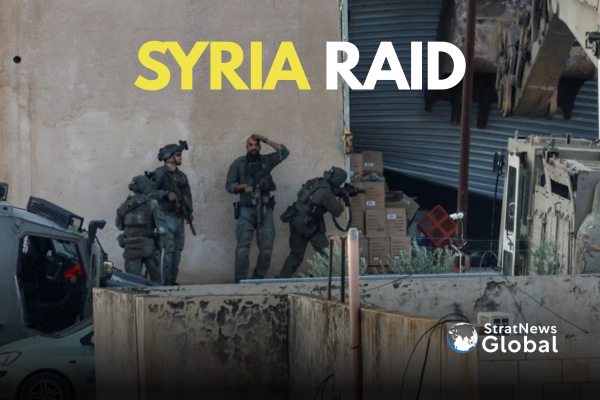
Israeli Troops Detain Suspected Militants in Syrian Village Operation
Israeli troops arrested several suspected members of what the military described as the Islamic Jemaah organisation during an overnight raid in the Syrian village of Beit Jin, the Israel Defence Forces (IDF) said on Friday.
Operation Based on Intelligence Reports
The military said the operation followed weeks of intelligence suggesting the group was preparing attacks against Israeli civilians. Acting on this information, troops launched the raid to prevent potential assaults near the border area.
Exchange of Fire During Raid
According to the IDF, troops came under fire during the mission and returned fire with air support. Three Israeli soldiers were wounded in the exchange. The army confirmed that all targeted suspects were detained, while several militants were killed during the clashes. Troops remain stationed in the area to monitor further threats and continue operations against groups considered hostile.
Broader Context of Israeli Strikes in Syria
Throughout 2025, Israel has conducted numerous strikes across Syria, particularly near Damascus and in the country’s southern regions. These operations, according to Israeli officials, aim to prevent planned attacks and protect the Druze community close to the border.
Israel maintains that its actions are directed against armed groups posing security risks. However, Syrian authorities have repeatedly accused Israel of killing soldiers in the strikes, condemning the operations as violations of sovereignty.
(with inputs from Reuters)
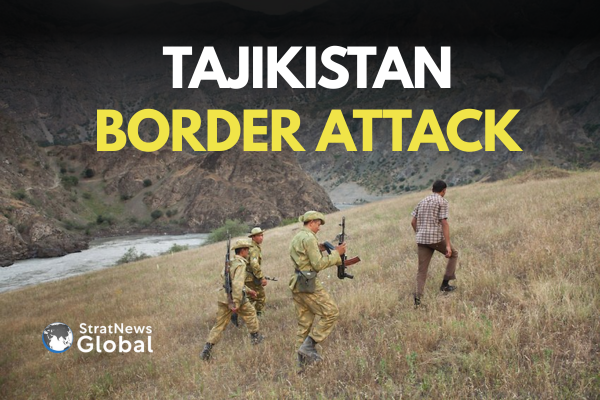
Three Chinese Citizens Killed in Armed Attack Near Tajikistan’s Afghan Border
Three Chinese nationals were killed and one injured in an armed attack near Tajikistan’s border with Afghanistan, China’s embassy in Dushanbe confirmed on Friday.
The attack, which took place on Wednesday evening in the southwestern Khatlon province, has raised serious security concerns in the region.
Embassy Urges Citizens to Leave Border Areas
In its statement, the Chinese embassy said it had called on Tajik authorities to conduct a full investigation into the incident and to ensure the safety of Chinese nationals in the area. The embassy also urged all Chinese citizens and companies near the border to evacuate immediately as a precaution.
While the embassy did not identify who was responsible for the attack, it said China was closely monitoring the situation and maintaining contact with local authorities.
Attack Carried Out by Drone from Afghanistan
Tajikistan’s foreign ministry said the incident targeted a local company, LLC Shahin SM, and was launched from Afghan territory using an unmanned aerial vehicle armed with grenades. The three victims were employees of the company, according to the ministry’s statement.
Authorities have not disclosed further details about the drone or its operators, and no group has claimed responsibility for the attack. The administration in Kabul has not yet responded to the reports.
Rising Security Concerns in the Region
The Khatlon region, which borders Afghanistan, has long been considered a sensitive area due to instability and the risk of cross-border violence. The attack underscores ongoing security challenges in Central Asia, where China has expanded its investments in energy, construction, and infrastructure projects.
Beijing has expressed concern over potential threats to its citizens abroad, particularly in countries bordering Afghanistan, where militant activity remains a concern. The Chinese government has called for stronger regional cooperation to prevent similar incidents.
(with inputs from Reuters)
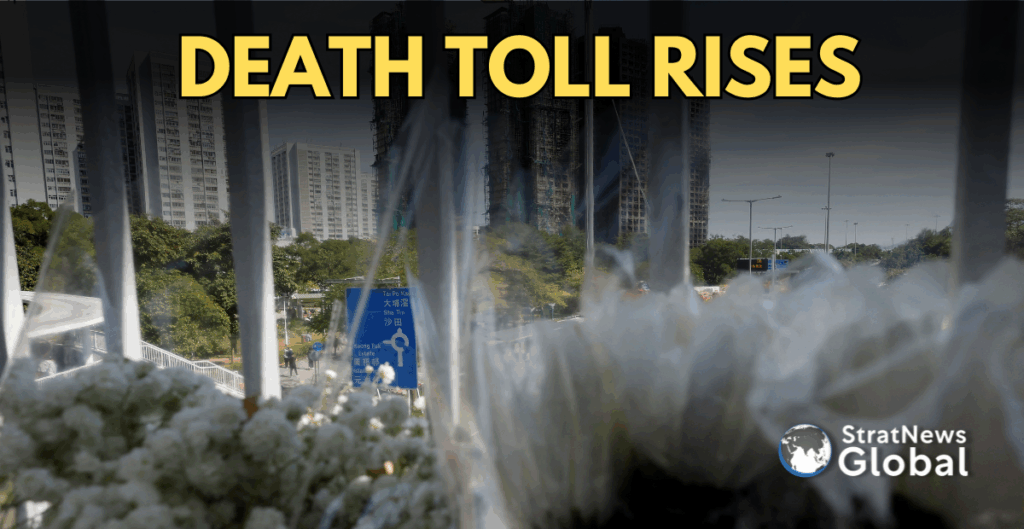
Hong Kong Fire: Death Toll Touches 94, Dozens Still Missing
Hong Kong fire authorities said they expected to wrap up search and rescue operations on Friday after the city’s worst fire in nearly 80 years tore through a massive apartment complex, killing at least 94 people and leaving dozens still missing.
Firefighters had mostly contained the blaze that destroyed the Wang Fuk Court housing complex in the northern district of Tai Po. The eight-tower estate housing more than 4,600 people had been undergoing renovations and was wrapped in bamboo scaffolding and green mesh when the fire started and quickly spread on Wednesday afternoon.
Police said they had arrested three construction company officials on suspicion of manslaughter for using unsafe materials, including flammable foam boards blocking windows.
Firefighters continued to work at the still-smouldering complex on Friday morning.
“We’ll endeavour to effect forcible entry to all the units of the seven buildings, so as to ensure there are no other possible casualties,” Deputy Fire Services Director Derek Chan told reporters early on Friday.
As many as 279 people were listed as missing in the early hours of Thursday morning, but that figure has not been updated for more than 24 hours. Chan said 25 calls for help to the Fire Department remain unresolved, including three in recent hours, which would be prioritised.
Rescue Operations Underway
“Hope they can find more survivors in the building, I think they have tried their best; the firefighters have done a lot,” resident Jacky Kwok said. “It is a terrible disaster that no one wanted to happen.”
Rescuers had battled intense heat, thick smoke and collapsing scaffolding and debris as they fought to reach residents feared trapped on the upper floors of the complex.
On Thursday, a distraught woman carrying her daughter’s graduation photograph searched for her child outside a shelter, one of eight that authorities said were housing 900 residents.
“She and her father are still not out yet,” said the 52-year-old, who gave only her surname, Ng, as she sobbed. “They didn’t have water to save our building.”
Most of the victims were found in two towers in the complex, while firefighters found survivors in several buildings, Chan said, but gave no further details.
Worst Fire Since 1948
The confirmed death toll rose to 94 early on Friday, the Hospital Authority said. Two of the dead were Indonesian nationals working as domestic helpers, the Indonesian consulate said. Hong Kong has around 368,000 domestic workers, mostly women from low-income Asian countries who live with their employers.
The fire is now Hong Kong’s deadliest since 1948, when 176 people died in a warehouse blaze, and has prompted comparisons to London’s Grenfell Tower inferno, which killed 72 people in 2017. That fire was blamed on firms fitting the exterior with flammable cladding, as well as failings by the government and the construction industry.
Police arrested two directors and an engineering consultant of Prestige Construction, a firm that had been doing maintenance on Wang Fuk Court for more than a year.
“We have reason to believe that the company’s responsible parties were grossly negligent, which led to this accident and caused the fire to spread uncontrollably, resulting in major casualties,” Police Superintendent Eileen Chung said on Thursday. Prestige did not answer repeated calls for comment.
Police seized bidding documents, a list of employees, 14 computers and three mobile phones in a raid of the company’s office, the government added.
The city’s development bureau has discussed gradually replacing bamboo scaffolding with metal scaffolding as a safety measure.
(With inputs from Reuters)
USA: National Guard Member Dies After Being Shot Outside White House
A National Guard member died on Thursday after being shot near the White House in an ambush that investigators say was carried out by an Afghan national, an attack President Donald Trump blamed on Biden-era immigration vetting failures as he ordered a sweeping review of asylum cases.
Sarah Beckstrom, 20, died of her wounds and her fellow Guardsman Andrew Wolfe, 24, was “fighting for his life,” Trump said, as investigators conducted what officials said was a terrorism probe after Wednesday’s shooting.
Investigation Underway
The FBI searched multiple properties in a widening investigation, including a home in Washington state linked to the suspect, who officials said was part of a CIA-backed unit in Afghanistan before coming to the U.S. in 2021 under a resettlement program.
Agents seized numerous electronic devices from the residence of the suspect, identified as 29-year-old Rahmanullah Lakanwal, including cellphones, laptops, and iPads, and interviewed his relatives, FBI Director Kash Patel told a news conference.
U.S. Attorney for Washington, D.C. Jeanine Pirro said the suspect drove cross-country and then ambushed the National Guard members while they were patrolling near the White House on Wednesday afternoon.
Casting blame of the attack on National Guards on the administration of his White House predecessor, President Joe Biden, Trump said the alleged gunman, was among thousands of Afghans who came in unvetted as the U.S. carried out a chaotic withdrawal in 2021. He provided no evidence to support his assertion.
Trump said the suspect’s “atrocity reminds us that we have no greater national security priority than ensuring that we have full control over the people that enter and remain in our country.”
Armed with a powerful revolver, a .357 Magnum, the gunman shot the two National Guard members before being wounded in an exchange of gunfirewith other troops. He was in hospital in serious condition, Trump said.
“My baby girl has passed to glory,” Gary Beckstrom, father of the National Guard member who died, wrote on social media, adding that his family was grappling with a “horrible tragedy.” Trump later spoke by phone to Beckstrom’s parents, a White House official said.
Assailant Acted Alone
The alleged assailant, who lived in Washington state with his wife and five children, appeared to have acted alone, said Jeff Carroll, executive assistant chief of the Washington Metropolitan Police Department.
Asked whether he was planning to deport the suspect’s wife and five children who live in Washington state, Trump said, “We’re looking at the whole situation with family.”
The program under which the suspect entered the U.S., which allowed in more than 70,000 Afghan nationals, according to a congressional report, was designed with vetting procedures, including by U.S. counter-terrorism and intelligence agencies. But the large scale and rushed nature of the evacuations led critics to say the background checks were inefficient.
Attorney General Pam Bondi told Fox News the U.S. government planned to bring terrorism charges against the gunman and seek a sentence of life in prison “at a minimum.” Following the death of the National Guard member, she suggested she would seek the death penalty.
At the press conference, Patel described the shootings as a “heinous act of terrorism,” but neither he nor Pirro offered a possible motive.
‘Biden’s Policies At Fault’
Speaking to reporters, Trump echoed Pirro and Patel’s accusations that the Biden administration was to blame for policies they said allowed the Afghan immigrant into the U.S., but they also offered no evidence to support their assertions
The alleged gunman was granted asylum this year under Trump, according to a U.S. government file on him seen by Reuters.
Trump did not dispute that, but told reporters, “When it comes to asylum, when they’re flown in, it’s very hard to get them out. No matter how you want to do it, it’s very hard to get them out, but we’re going to be getting them all out now.”
The incident may give Trump, who has made cracking down on both legal and illegal immigration a centerpiece of his presidency, an opening to argue that even legal pathways like asylum pose security risks for Americans.
Less than 24 hours after the shooting, Trump officials began ordering widespread reviews of immigration policies.
The Trump administration was launching a review of all asylum cases approved under the Biden administration as well as Green Cards issued to citizens of 19 countries, Department of Homeland Security officials said.
Member Of CIA-Backed Force
CIA Director John Ratcliffe said in a statement that Lakanwal had worked with CIA-backed local units in Afghanistan, but gave no further details.
The New York Times, citing unnamed officials, identified the CIA-backed force as a Zero Unit, trained and supported by the U.S. spy agency in the southern province of Kandahar.
The units comprised a paramilitary group trained to conduct night raids and clandestine missions during the U.S. war in Afghanistan and, with thousands of members, had officially become part of the Afghan intelligence service by the time the U.S. withdrew its troops, the Times said.
According to the Department of Homeland Security, Lakanwal entered the U.S. in 2021 under Operation Allies Welcome, a Biden-era program to resettle thousands of Afghans who assisted the U.S. during the Afghanistan war and feared reprisals from Taliban forces who seized control after the U.S. withdrawal there.
“The Biden Administration justified bringing the alleged shooter to the United States in September 2021 due to his prior work with the U.S. Government,” Ratcliffe said in a statement. “This individual – and so many others – should have never been allowed to come here.”
A Trump administration official who spoke on condition of anonymity said Lakanwal applied for asylum in December 2024 and was approved on April 23 this year, three months after Trump took office. Lakanwal, who resided in Washington state, had no known criminal history, the official said.
The two Guard members from West Virginia were part of a militarized law enforcement mission ordered by Trump in August and challenged in court by Washington, D.C., officials.
(With inputs from Reuters)
Huawei and ZTE Secure 5G Deals in Vietnam Amid Closer China Ties
China’s leading telecom firms Huawei and ZTE have secured multiple 5G equipment contracts in Vietnam this year, signalling a shift in Hanoi’s approach towards Beijing as relations with Washington cool. The deals, worth over $40 million combined, mark a major development in Vietnam’s technology partnerships and have raised concerns among Western officials, according to people familiar with the matter.
Vietnam’s Growing Engagement with Chinese Tech
For years, Vietnam avoided using Chinese technology in sensitive infrastructure, wary of security risks and political influence. However, recent warming relations with Beijing and trade tensions with the US appear to have shifted that stance.
While Sweden’s Ericsson and Finland’s Nokia continue to supply Vietnam’s 5G core infrastructure, and US chipmaker Qualcomm provides network components, Chinese companies have begun winning smaller tenders through state-owned operators. Public procurement data shows Huawei and ZTE gaining ground in the market.
A Huawei-led consortium won a $23 million 5G equipment contract in April, just weeks after Washington announced new tariffs on Vietnamese goods. ZTE secured at least two contracts worth over $20 million, with the first publicly revealed deal signed in September, one month after US tariffs took effect.
Strategic and Economic Implications
The timing of these contracts has raised speculation about whether Vietnam’s pivot is linked to US trade measures. Washington has long discouraged its allies from allowing Chinese firms into critical infrastructure, warning of potential data and security risks. Huawei and ZTE are banned from US networks and restricted in several European countries, including Sweden.
Despite these warnings, Vietnamese analysts say the country’s decisions are guided by practical needs. Nguyen Hung, a supply chain specialist at RMIT University Vietnam, noted that “Vietnam has its own priorities,” highlighting that closer economic ties with China could strengthen regional integration.
The new contracts come alongside progress on other sensitive China-linked projects, such as cross-border railway lines and special economic zones near the border initiatives once deemed too risky for national security.
Western Concerns Over Network Security
Western diplomats in Hanoi have reportedly discussed the issue in multiple meetings this month. A US official warned that the use of Chinese technology could erode trust in Vietnam’s networks and complicate cooperation on advanced technologies.
Some officials have explored technical safeguards, such as isolating areas using Chinese equipment to prevent potential data leaks. Yet telecom experts warn that even limited involvement could give suppliers indirect access to network data. “Western contractors may face the awkward prospect of working alongside firms they do not trust,” said telecommunications lawyer Innocenzo Genna.
Cost and Competition Drive Vietnam’s Choices
Sources at Viettel, Vietnam’s army-owned telecom giant, said cost competitiveness played a role in the decision, noting that Chinese technology remains significantly cheaper. Huawei, despite losing several major bids earlier this year, signed a 5G technology transfer agreement with Viettel in June.
While Vietnam continues to balance relationships with both Beijing and Washington, the growing role of Chinese telecom firms reflects a strategic recalibration amid global competition and shifting trade alliances.
(with inputs from Reuters)