

Support us by contributing to StratNewsGlobal on the following UPI ID
ultramodern@hdfcbank

Strategic affairs is our game, South Asia and beyond our playground. Put together by an experienced team led by Nitin A. Gokhale. Our focus is on strategic affairs, foreign policy and international relations, with higher quality reportage, analysis and commentary with new tie-ups across the South Asian region.
You can support our endeavours. Visit us at www.stratnewsglobal.com and follow us on YouTube, Twitter, Facebook and Instagram.
र 500 per month
र 1000 per month
र 5000 per year
र 10000 per year
Donate an amount of your choice
र 500 per month
Donate र 500 per month

र 1000 per month
Donate र 1000 per month
र 5000 per year
Donate र 5,000 per year
र 10000 per year
Donate र 10,000 per year
Donate an amount of your choice
Donate an amount of your choice
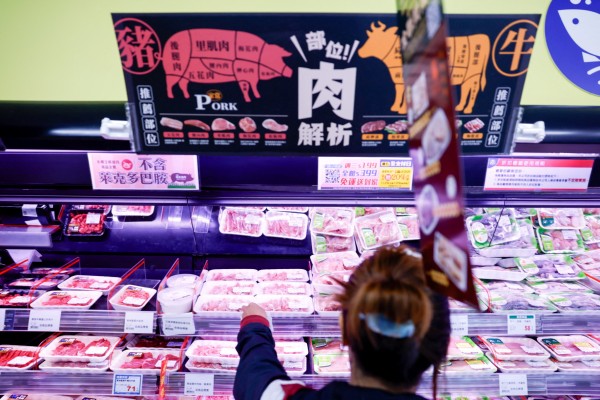
Spain Blocks Pork Exports After Swine Fever
Spain has blocked about one-third of its pork export certificates after confirming its first outbreak of African swine fever in 30 years, Agriculture Minister Luis Planas said on Saturday.
Government data shows Spain is the world’s fourth-largest pork producer and home to the European Union’s biggest herd, alongside a large wild boar population and high domestic consumption.
Planas said that “of the 400 export certificates to 104 countries, a third are blocked,” adding that officials were working to reopen them swiftly. The virus, last detected in Spain in 1994, was found in six wild boar near Barcelona. Spain’s pork exports are valued at 8.8 billion euros ($10.20 billion), with 58% shipped to EU markets. Exports within the European Union remain unaffected except for those originating from within 20 kilometres of the outbreak.
A growing number of countries have imposed restrictions following Spain’s announcement. Taiwan on Saturday banned all Spanish pork products and live pigs. China has blocked pork imports from Barcelona province, according to a Customs document seen by Reuters. Britain has temporarily halted pork imports from Catalonia, while Mexico has also suspended shipments.
Catalonia has closed the Collserola natural park, where the infected wild boar were found, and restricted outdoor activities in 60 surrounding villages. Authorities plan to set traps for wild boar and deploy police to enforce access controls. African swine fever does not infect humans but spreads quickly among pigs and wild boar.
China’s ban comes as Spain seeks to expand its presence in the Chinese pork market at a time when Beijing has imposed tariffs on EU pork as part of an anti-dumping probe. A separate Customs database entry showed China has also suspended imports from plants in the affected area operated by 12 companies, including major exporters Costa Food Meat and Matadero Frigorifico Avinyo.
Spain, the EU’s largest pork producer with annual pork exports of about 3.5 billion euros ($4.05 billion), has temporarily halted all pork shipments to China as a precaution while awaiting confirmation that Beijing has implemented a protocol restricting trade only from the affected province, senior agriculture ministry official Emilio Garcia said.
(With Inputs from Reuters)
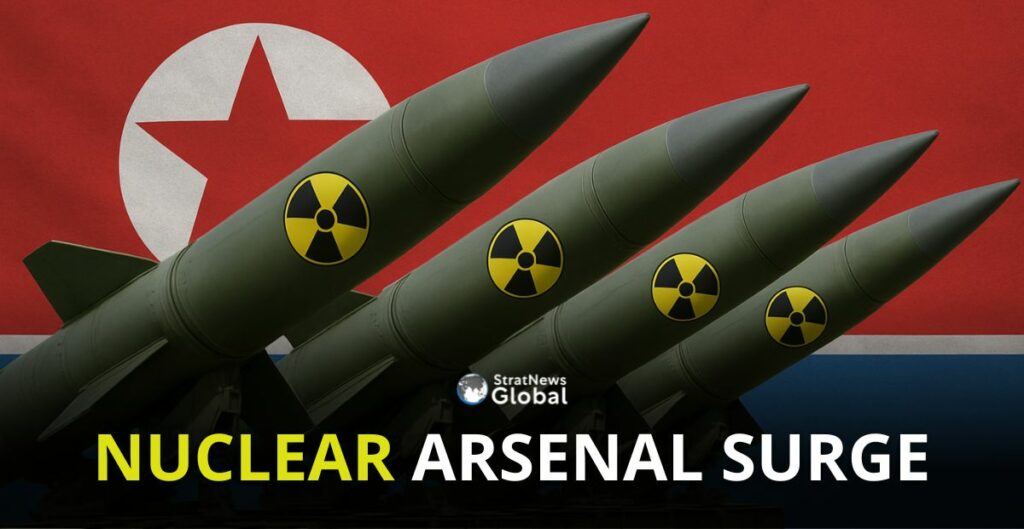
Report Flags Alarming North Korea Nuke Surge
A new assessment by the Korea Institute for Defense Analyses (KIDA) warns that North Korea’s nuclear weapons program may be far larger — and expanding far faster — than commonly understood.
According to The Korea Herald, Lee Sang-kyu, head of KIDA’s nuclear security division, told a forum this week that Pyongyang likely possesses between 127 and 150 nuclear weapons, more than double the figures cited by most international organisations, which tend to estimate around 50 warheads. Lee said KIDA’s higher estimate stems from a detailed review of North Korea’s nuclear material production and recent facility expansions.
Lee projected that North Korea’s arsenal could rise to 200 nuclear weapons by 2030 and surpass 400 by 2040 if current trends continue. He cited Kim Jong-un’s directive for an “exponential” increase in warhead production, which has led the regime to scale up both uranium enrichment and plutonium production.
Breaking down the estimates, Lee said Pyongyang may already hold 115–131 uranium-based warheads and 15–19 plutonium-based weapons, underscoring the size of a stockpile that “many outside experts continue to underestimate.”
KIDA analysts attribute the rapid growth partly to the construction of new enrichment facilities. The International Atomic Energy Agency recently reported a newly identified building at the Yongbyon complex that appears intended for uranium enrichment. Meanwhile, satellite imagery examined by the U.S. monitoring group 38 North shows continued upgrades at Yongbyon in 2025, including support structures and equipment linked to centrifuge operations.
Lee also addressed North Korea’s nuclear-powered submarine project, showcased publicly for the first time this year. He said the vessel remains incomplete, with crucial components — including its reactor and sonar systems — still missing. North Korea could take a decade to develop a functional submarine reactor “unless Russia accelerates the timeline,” he warned, noting deepening Pyongyang–Moscow military cooperation since their 2023 summit. This has heightened concerns about possible nuclear-related technology transfers.
Despite North Korea’s aggressive rhetoric about its ability to deter or strike back against the United States, KIDA experts advised caution in interpreting Pyongyang’s capabilities. Researcher Jeon Gyeong-ju said the North is attempting to project readiness for a limited nuclear conflict, but its systems are not fully mature.
“Outwardly, North Korea has assembled the appearance of such a capability,” Jeon said. “But real effectiveness still requires more development.”
The study’s findings add to growing unease in Seoul, Washington and Tokyo over North Korea’s rapidly evolving nuclear posture, even as the regime continues to defy sanctions and accelerate weapons development.
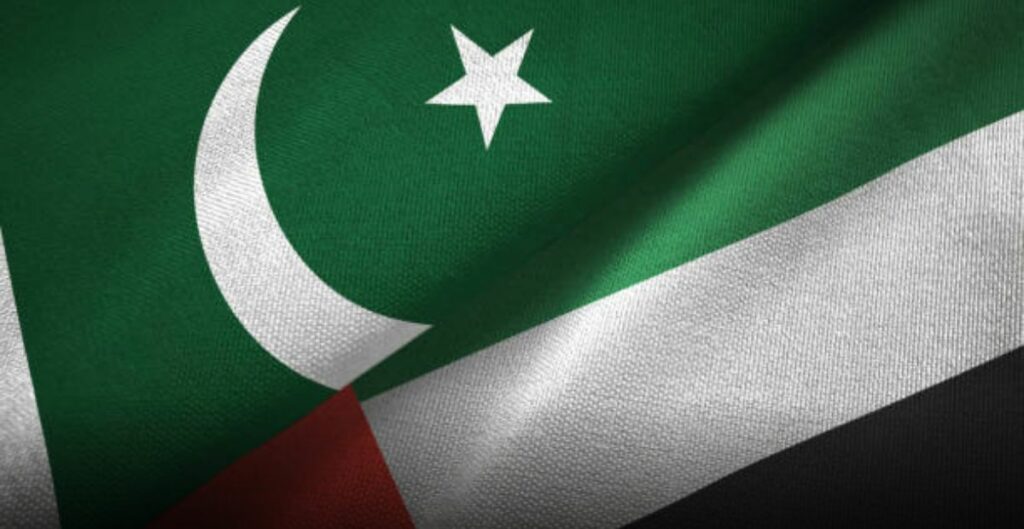
UAE Visa Freeze Deepens Pakistan’s Embarrassment
Pakistan’s deepening credibility problems abroad surfaced again on Thursday after Dawn, a Pakistani daily newspaper, reported that the UAE was no longer issuing visas to Pakistanis, with only a handful granted in recent months “after much difficulty”.
Pakistan’s Interior Ministry has briefed lawmakers that the United Arab Emirates has effectively halted visas for most Pakistani citizens, exempting only blue-passport holders and those with diplomatic status.
The explanation for the freeze, delivered without diplomatic varnish, came from Senator Samina Mumtaz Zehri, who said the ban stemmed from Pakistanis “getting involved in criminal activities” once inside the UAE. The Interior Ministry’s briefing, quoted by the Express Tribune, warned parliamentarians that Pakistan had narrowly escaped the drastic prospect of a complete international ban on its passports.
Additional Interior Secretary Salman Chaudhry told the committee that 21,647 Pakistanis are currently jailed across 61 countries, mostly for offences such as overstaying visas, identity fraud, and bank-related violations. He noted that 93 per cent of Pakistan’s overseas labour force—nearly 800,000 migrants—works in Gulf states, underscoring the fragility of Pakistan’s economic dependence on a region now tightening its scrutiny of Pakistani workers.
The UAE’s clampdown follows an equally uncomfortable episode with Saudi Arabia, which recently “stopped short of imposing a ban on the Pakistani passport”. Riyadh has halted visas for nationals from 30 Pakistani cities, citing incidents of begging. Earlier this year, Dawn reported that Saudi authorities arrested and deported more than 4,700 Pakistani beggars, including many picked up in Mecca and Madina.
According to FirstPost, more than 800,000 Pakistanis apply each year for visas to Gulf and Middle Eastern countries, seeking work and financial stability. Yet a significant number face legal trouble abroad. In 2018, Dubai’s head of security, Dhahi Khalfa, publicly accused Pakistani nationals of bringing drugs into Gulf countries and bluntly cautioned employers: “Do not hire Pakistanis.”
The irony is not lost in Islamabad: the UAE and Saudi Arabia are countries Pakistan routinely describes as “historic partners”. The UAE remains one of Pakistan’s largest trading partners in the Middle East and hosts a huge Pakistani expatriate population, while Saudi Arabia and Pakistan have recently expanded defence cooperation and are discussing new shipping and port development projects.
Yet these diplomatic niceties have not answered the uncomfortable question raised in parliament: why do so many Pakistanis end up resorting to unlawful activities abroad?
A recent IMF report offers a stark explanation. “Corruption continues to hinder Pakistan’s macroeconomic and social development by diverting public funds, distorting markets, impeding fair competition, eroding public trust, and constraining domestic and foreign investment,” it states. The report adds that the most harmful form of corruption is elite capture, noting that “the most economically damaging manifestations involve privileged entities that exert influence over key economic sectors,” many of them tied to the Pakistani state itself.
Putin’s India Trip Signals Distinct Strategic, Economic Reset
Russian President Vladimir Putin will visit New Delhi on December 4–5 for a state visit and the 23rd India–Russia Annual Summit, a meeting that both capitals now see as strategically charged amidst India’s tariff tensions with the United States, tightening Western sanctions on Russia and New Delhi’s preparations to assume the BRICS chairship in 2026.
India’s Ministry of External Affairs confirmed the dates after Moscow’s earlier signal, marking what officials privately describe as a summit shaped less by tradition and more by the overlapping economic and geopolitical pressures facing the two partners.
Putin, in comments to Russian media, called ties with India “special, steady and free of interstate frictions,” praised Prime Minister Narendra Modi as a “balanced and nationally oriented leader,” and stressed that both sides must resolve long-standing logistical and payment hurdles to keep trade running efficiently.
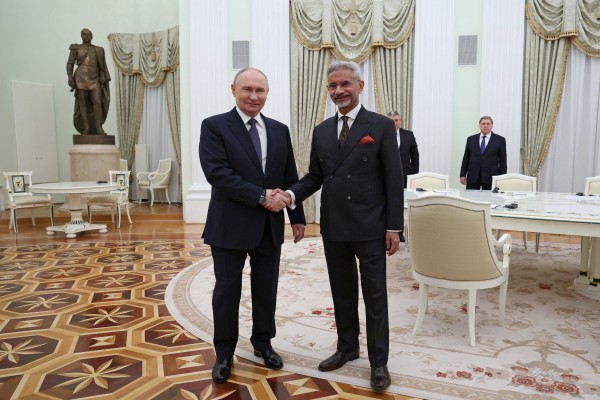
His remarks have intensified expectations for progress on financial architecture, especially the push to make Russia’s Mir card and India’s RuPay network interoperable. With Visa and Mastercard restricted in Russia since 2022, a Mir–RuPay corridor has become one of Moscow’s most urgent priorities, and Indian officials say technical discussions are now in “advanced alignment” after External Affairs Minister S. Jaishankar’s meeting with Putin in Moscow. The two governments are also exploring a possible link between Russia’s SBP instant payments system and India’s UPI, a digital settlement bridge that would allow real-time transactions insulated from the Western sanctions framework.
For India, the move would bolster RuPay’s global ambitions and reinforce UPI’s position as a model for international payments—an agenda New Delhi intends to showcase during its BRICS presidency. In its announcement, the MEA said the leaders will review progress across defence, trade and security, while Moscow’s statement emphasised that “all aspects” of the partnership will be discussed.
Privately, officials acknowledge that this summit is distinct: India is reassessing trade dependencies amid friction with the US, Russia needs stable economic corridors beyond China, and both countries are increasingly invested in parallel financial and technological systems that reduce exposure to global fragmentation.
On defence, India is expected to signal interest in additional S-400 air defence units following their performance during Operation Sindoor, though Russian hopes of elevating discussions on the Su-57 stealth fighter remain unlikely to advance.
Reports said the Indian side would emphasise the early delivery of the two remaining S-400 batteries, and the upgradation and spares needed for India’s existing Sukhoi fleet. Defence Minister Rajnath Singh said that the Russians have promised to deliver the remaining two of the five S-400 systems ordered in 2018 in the coming financial year.
I don’t want to talk about specific procurement decisions…I am not going to be talking about specific platforms, but we have a large defence programme with them, including existing contracts which are delayed,” said Singh, speaking at a defence conclave organised by news agency Asian News International (ANI). “There are a bunch of programmes where there are delivery milestone delays, which we will take up with them and try to expedite those. There are other major programmes like the Sukhoi upgradation Potentially, additional S-400 batteries are not ruled out, but don’t expect any announcements during this meeting,’ he said.
Talks on a visa-free tourist group regime have also advanced substantially, with Moscow indicating that only minor procedural details remain. A political announcement may come during or shortly after the summit, a development that—paired with Mir–RuPay interoperability—would significantly simplify travel for Indian and Russian tourists.
Meanwhile, despite the surge in Russian oil shipments to India, the trade mechanism is strained by shipping restrictions, insurance constraints and a swelling rupee surplus stuck in Indian banks. Putin’s recent comments about improving “logistics, financing and payments” suggest he expects concrete direction from this round of discussions, and energy officials say both sides may weigh new settlement routes or selective use of third-country currencies to reduce risks for Indian refiners.
Beyond bilateral issues, India’s upcoming BRICS 2026 chairmanship looms large: the Mir–RuPay–UPI–SBP proposals could serve as early models for broader BRICS financial cooperation as the grouping expands and experiments with alternative economic tools. However, the Indian side is likely to weigh this against U.S. President Donald Trump’s clear warning against any attempt to undermine the US dollar.
Against a backdrop of shifting energy flows, fractured supply chains and bifurcated financial systems, Putin’s visit is shaping up as a consequential negotiation over how India and Russia intend to move money, goods and strategy in a more divided global order.
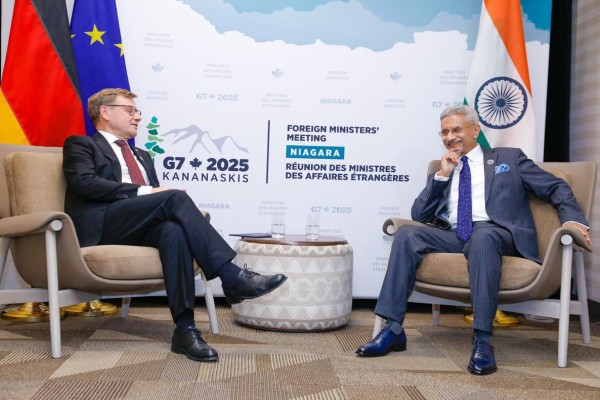
Ahead of Chancellor Merz’s Visit, India, Germany Strengthen Counter-Terror Ties
India and Germany held the 10th meeting of the Joint Working Group on Counter Terrorism (JWG-CT) in New Delhi, marking a renewed commitment to tackling terrorism and related security challenges.
The meeting was co-chaired by Dr. Vinod Bahade, Joint Secretary for Counter Terrorism in India’s Ministry of External Affairs, and Konrad Arz von Straussenburg, Director for International Order, United Nations, and Arms Control of Germany.
During the discussions, both sides strongly condemned terrorism in all its forms, including cross-border attacks, with particular reference to the Pahalgam attack in Jammu & Kashmir in April 2025 and the Red Fort incident in New Delhi in November 2025. They exchanged insights on threat assessments at national and regional levels and discussed emerging challenges, including online radicalisation, misuse of new technologies, countering the financing of terrorism, judicial cooperation, and the designation of terrorists and terrorist entities. Plans were also made to hold the next JWG-CT meeting in Germany next year.
The meeting reaffirmed the importance of multilateral engagement, including cooperation through the United Nations, the Global Counter Terrorism Forum (GCTF), the Financial Action Task Force (FATF), and the No Money for Terror Ministerial Conference. Both countries explored avenues for deeper bilateral collaboration and capacity building to address evolving threats.
This session follows India’s participation in the 15th EU-India Counter Terrorism Working Group meeting in Brussels on 9 September 2025, where India and the European Union discussed the global nature of terrorism and shared experiences on preventing online radicalisation, countering terror financing, monitoring the misuse of emerging technologies, and maintaining updated lists of designated terrorists and organisations. The EU also expressed condolences for the Pahalgam attack and stressed the importance of sustained international cooperation to combat terrorism.
The Germany and EU meetings highlight India’s continued efforts to strengthen partnerships and exchange best practices on counter-terrorism, setting the stage for enhanced cooperation during German Chancellor Friedrich Merz’s scheduled visit to India in early 2026.
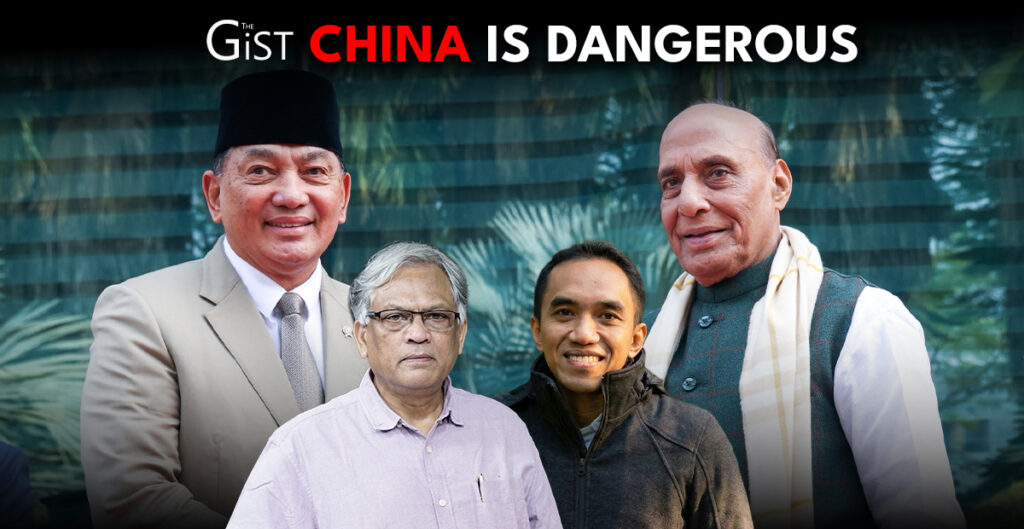
‘China’s Activities In South China Sea Are A Big Concern For Indonesia’
“Our security concern today is the rivalry between the US and China, which may have ramifications to our national interest also to other countries in the Pacific region,” said Alman Helmas Ali, Jakarta-based defence consultant.
In an exclusive conversation on The Gist, Ali pointed out that Indonesia doesn’t recognize the nine-dash-line claim in the South China Sea by Beijing because it is against the UN Convention on the Law of the Sea.
“We regularly face Chinese coast guard vessels in our EEZ (Exclusive Economic Zone) and also sometimes in our territorial, waters. It is a big concern for Indonesia.”
Ali said there was an incident when a Chinese coast guard vessel recently transited Indonesian waters with its automatic identification system turned off. There was also the issue of China’s intimidating and aggressive behaviour with other neighbours like the Philippines.
Describing China as the “potential enemy in the future”, Ali acknowledged a debate in his country about buying Chinese military hardware. This may be more about affordability given that China will not only offer lower prices but back it up with soft loans.
President Prabowo Subianto, since coming to office in October, has reached out to all major countries including China, the US, France and India. He said his country had already bought one battery of the Indian Brahmos missile system for coastal defence at a cost of around $100 million.
“But I don’t think it is enough. We need more batteries. So, strengthening defense cooperation with India is a must, not just in terms of training exercise but also defence industry because we can we can learn much from India’s experience,” he said.
In his view, it would help if the Indian government could provide export credit to Indian companies that want to sell their equipment in Indonesia. He pointed out that Indonesia’s defence budget has been growing and today amounts to around $34.7 billion. There are opportunities here that India can tap.
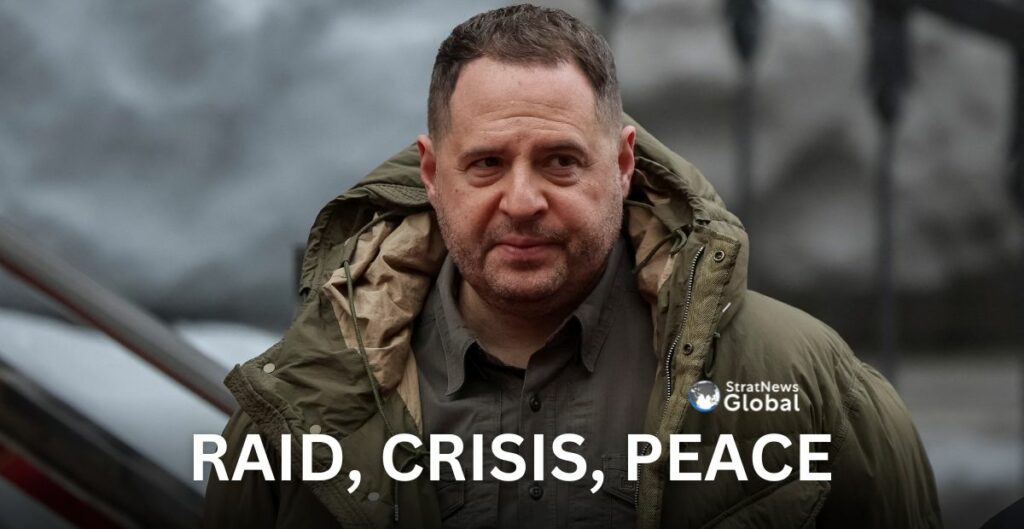
Ukrainian Anti-Graft Police Raids Zelenskyy’s Chief Of Staff
Ukraine’s anti-corruption authorities raided the residence of President Volodymyr Zelenskyy’s influential chief of staff on Friday, intensifying a political crisis as Kyiv comes under mounting pressure from Washington to agree to a peace settlement.
The official, Andriy Yermak, who leads Kyiv’s negotiating team trying to hash out terms after Washington presented a draft backing Russian demands, confirmed his apartment was being searched and said he was fully cooperating.
In a joint statement, the National Anti-Corruption Bureau of Ukraine and the Specialised Anti-Corruption Prosecutor’s Office said the searches were “authorised” and linked to an unspecified investigation.
Earlier this month, the two anti-corruption agencies unveiled a sweeping investigation into an alleged $100 million kickback scheme at the state atomic energy company that ensnared former senior officials and an ex-business partner of Zelenskyy.
Searches Could Inflame Political Tensions
Friday’s searches are likely to inflame tensions between Zelenskyy and his political opponents as Kyiv faces mounting pressure to accept a deal that could force it into painful concessions.
In a statement on Thursday, the European Solidarity opposition party criticised Yermak’s role as a negotiator and called on Zelenskyy for “an honest dialogue” with other parties.
Yermak’s Position In Question
As Washington presses for peace, Russian forces advance along the front, nearing Pokrovsk—their biggest potential gain in nearly two years.
On Thursday, President Vladimir Putin said a 28-point U.S. peace plan leaked last week could be “a basis for future agreements”. He demanded Kyiv withdraw troops from eastern land it holds before Moscow stops fighting.
Speaking to The Atlantic magazine this week, Yermak said “no one should count on us giving up territory”.
Political analyst Viktor Shlinchak, of the Kyiv-based Institute for World Politics, described the searches as a “Black Friday” for Yermak and suggested Zelenskyy may be forced to dismiss him.
(With inputs from Reuters)
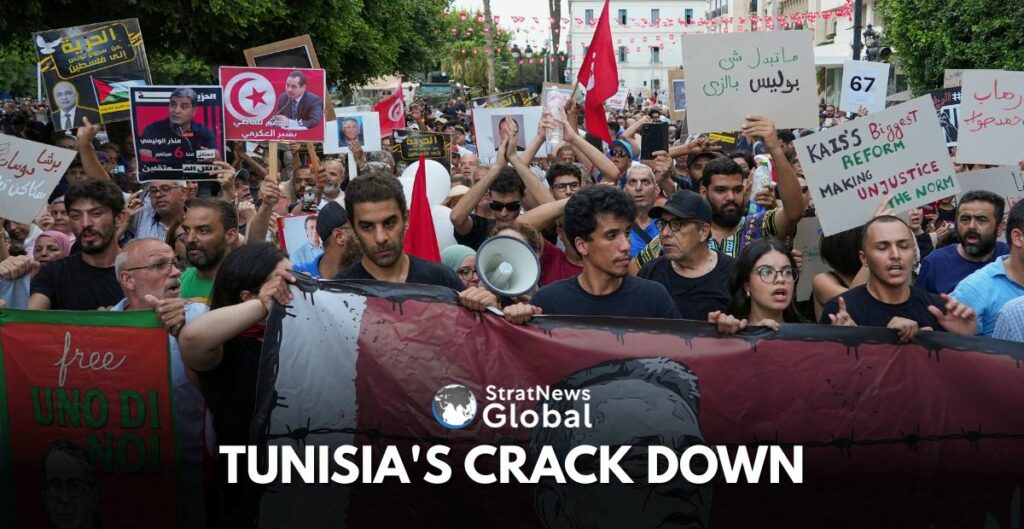
Tunisia: Court Sentences Political Dissidents To Upto 45 Years In Jail
A Tunisian appeals court on Friday handed jail terms of up to 45 years to opposition leaders, businessmen and lawyers, a court document showed, in what critics said was a sign of President Kais Saied’s increasingly authoritarian rule.
Forty people were charged in the case of conspiracy to overthrow the president in one of the largest political prosecutions in Tunisia’s recent history. Twenty of those charged have fled abroad and were sentenced in absentia.
The sentences ranged from five to 45 years, according to a court document seen by Reuters.
Rights groups, such as Human Rights Watch and Amnesty International, said the case is an escalation of Saied’s crackdown on dissent since he seized extraordinary powers in 2021. Critics, journalists and activists have been jailed and independent NGOs
suspended.
“This is a judicial farce… There is a clear intent to eliminate political opponents,” Mokthar Jmai, a lawyer for the defendants, said on Thursday after the trial.
Authorities say the defendants, who include former officials and the former head of intelligence, Kamel Guizani, tried to destabilise the country and overthrow Saied.
Prominent opposition figures including Ghazi Chaouachi, Issam Chebbi, Jawahar Ben Mbarek , Ridha Belhaj and Chaima Issa, received jail terms of 20 years, another lawyer for the defendants, Dalila ben Mbarek, said.
They have all been in custody since being detained in 2023. The maximum sentence was 45 years for businessman Kamel Ltaif, while opposition politician Khyam Turki received a
35-year sentence.
Rights groups say Saied has controlled the judiciary since dissolving parliament in 2021, ruling by decree, dissolving the independent Supreme Judicial Council and sacking
dozens of judges in 2022.
Opposition leaders say the prosecution is fabricated and accused the president of carrying out a political purge. They say they plan to unite the fragmented opposition against the
democratic setback.
In 2023, Saied said the politicians were “traitors and terrorists” and that judges who would acquit them were their accomplices.
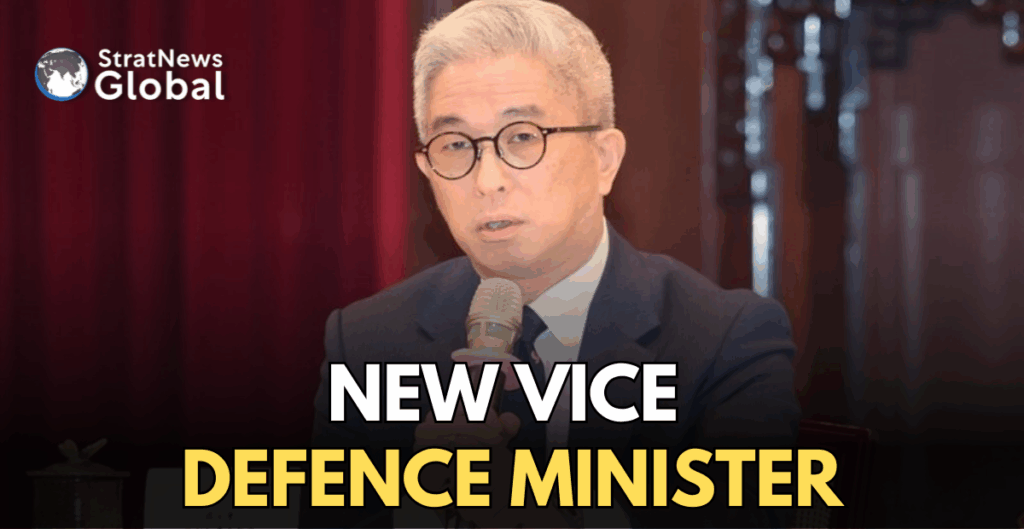
Taiwan Appoints New Vice Defence Minister As Part Of Reforms
Taiwan President Lai Ching-te on Friday promoted a U.S.-educated senior security official as a new vice defence minister to help oversee military reforms and as the government pushes $40 billion in extra spending for the military.
Taiwan, which China views as its own territory, is modernising its armed forces to better deal with a growing threat from Beijing, whose warplanes and warships operate almost daily around the island.
Hsu Szu-chien, a fluent English speaker who is currently an advisor to Taiwan’s National Security Council, has strong experience in international affairs, the presidential office said in a statement.
“The president hopes to draw on Dr Hsu’s strong professional background and practical experience in national security and international affairs to assist Defence Minister Wellington Koo in injecting new momentum into the reform and strengthening of our national defence,” office spokesperson Karen Kuo added.
Hsu has led delegations to take part in important talks with the United States, maintaining “close and well-established interactions with U.S. political and defence circles”, she added.
Hsu, who has a doctorate from Columbia University, has also taken part in international forums like the Halifax International Security Forum, Kuo said.
The defence ministry currently has two vice ministers and two deputy ministers.
The United States is Taiwan’s most important international backer and arms supplier despite the lack of formal diplomatic ties.
Taiwan has already held preliminary talks with the United States about what weapons it wants to buy as part of its $40 billion supplementary defence budget, the defence minister said on Thursday.
Taiwan’s government rejects Beijing’s sovereignty claims, saying only the island’s people can decide their future.
Focus Taiwan reported that Hsu has actively supported the defence ministry in engaging in military exchanges and cooperation with international allies, often leading delegations in key bilateral forums with the United States and working closely with U.S. political and military officials, she said.
During his tenure as deputy foreign minister, Hsu also served on the board of the Institute for National Defence and Security Research, providing guidance on policy research.
(With inputs from Reuters)
EU Fears Using Frozen Russian Assets Could Hit Peace Talks
Belgian Prime Minister Bart De Wever warned that the EU’s proposal to channel frozen Russian state assets into funding Ukraine might jeopardize prospects for a peace agreement to end the nearly four‑year conflict.
“Hastily moving forward on the proposed reparations loan scheme would have, as a collateral damage, that we as EU are effectively preventing reaching an eventual peace deal,” De Wever said in a letter to European Commission President Ursula von der Leyen, seen by Reuters.
Dispute Over Frozen Assets
Under a plan put forward by von der Leyen, the frozen Russian central bank assets in Europe would be lent to Ukraine for Kyiv to use for defence and regular budget needs.
Belgium’s support for the plan is crucial as the assets the EU hopes to use are held by Belgian financial institution Euroclear.
“The proposed reparations loan scheme is in my view fundamentally wrong,” De Wever said, adding that historically, during a war, immobilised assets had never been put to use.
“Such assets have been the object of decisions during after-war settlements, usually in the context of war reparations by the losing party.”
EU Struggles for Consensus
EU leaders tried at a summit last month to agree on a plan to use 140 billion euros ($162 billion) in frozen Russian sovereign assets in Europe as a loan for Kyiv, but failed to secure Belgium’s backing.
The European Commission, the EU’s executive body, hopes to address Belgium’s concerns in a draft legal proposal which it will present this week on using the frozen sovereign assets to support Kyiv in 2026 and 2027, EU officials have said.
In the letter, De Wever said Belgium had not seen “any proposed legal language by the commission”.
Apart from the 185 billion euros immobilised in Belgium, an estimated 25 billion euros of Russian assets is frozen in EU banks elsewhere, mainly in France and Luxembourg.
Belgium has previously said other countries that have Russian assets, including Canada, Japan, Britain and the U.S. – all of which are members of the Group of Seven wealthy nations – should also be included in the scheme.
(With inputs from Reuters)