

Support us by contributing to StratNewsGlobal on the following UPI ID
ultramodern@hdfcbank

Strategic affairs is our game, South Asia and beyond our playground. Put together by an experienced team led by Nitin A. Gokhale. Our focus is on strategic affairs, foreign policy and international relations, with higher quality reportage, analysis and commentary with new tie-ups across the South Asian region.
You can support our endeavours. Visit us at www.stratnewsglobal.com and follow us on YouTube, Twitter, Facebook and Instagram.
र 500 per month
र 1000 per month
र 5000 per year
र 10000 per year
Donate an amount of your choice
र 500 per month
Donate र 500 per month

र 1000 per month
Donate र 1000 per month
र 5000 per year
Donate र 5,000 per year
र 10000 per year
Donate र 10,000 per year
Donate an amount of your choice
Donate an amount of your choice





Finland’s Ambassador to India Calls for Stronger EU–India Ties, Supports Sanctions on Russia
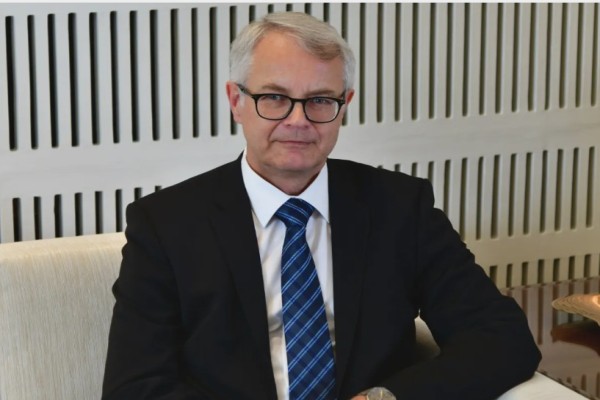
In an exclusive interview on The Gist, Finland’s Ambassador to India, Ambassador Kimmo Lähdevirta, opened up about everything—from sanctions on Russia and India’s oil choices to why Finnish startups are looking to launch satellites from India. His candid insights reveal just how fast the Finland–India partnership is evolving and where the next decade of cooperation may be headed.
Sanctions on Russia “Necessary,” Says Ambassador
Lähdevirta reiterated Finland’s strong support for EU sanctions on Russian oil, stressing that they are essential to pressuring Moscow to end its war of aggression in Ukraine.
“Oil is a key source of revenue for Russia. The sanctions are essential even if they create side effects, because there is simply no alternative when Russia continues its aggression,” he said.
He noted that while India has increased imports of Russian oil, Finland hopes countries worldwide will eventually adopt alternatives, keeping in mind the price-cap mechanism designed by Europe and its partners.
Optimism over India–EU FTA
The ambassador expressed confidence that the India–EU Free Trade Agreement is in its final, decisive stage.
“The last leg is always crucial, but I’m optimistic. A successful agreement will show the world that rules-based free trade is still alive and strong,” he said.
According to Lähdevirta, the FTA would make both markets more predictable, boost bilateral investments, and unleash untapped potential for companies on both sides.
Finnish Investments in India Continue to Grow
Finland currently has around 100 companies operating in India, with strengths in telecommunications, clean energy, smart grid technology, maritime engines, and education technology. Smaller Finnish startups are also making inroads, particularly in software for smart electricity meters and digital learning tools.
Meanwhile, 20 Indian companies are active in Finland, with cumulative investments nearing €1 billion, compared with roughly €4 billion flowing the other way.
Talent Mobility: India a Key Source for Finland’s Workforce
Lähdevirta highlighted Finland’s robust Talent Boost program, which actively recruits skilled workers and students from India. The Indian community in Finland has grown from 2,000 to over 20,000 people in the last two decades.
However, he cautioned Indians to be vigilant about fraudulent recruitment agents, advising that applicants rely on official or verified channels.
Education: Strong Collaboration, No Foreign Campuses
Finnish universities, being public institutions, do not establish foreign campuses like some private global universities do. However, academic collaborations, joint programs, and student exchanges with Indian institutions continue to expand.
Space Cooperation: A Rising Frontier
One of the most promising areas of collaboration is space. Finland’s rapidly growing “new space” sector features cutting-edge startups such as ICEYE (synthetic aperture radar satellites) and ReOrbit (advanced communication satellites), both of which are partnering with Indian companies.
“Indian launch facilities are of great interest. India offers capabilities, especially for geostationary launches, that are difficult to match elsewhere,” Lähdevirta noted.
Defense and Energy: Expanding Strategic Pillars
A 2020 MoU between the two defence ministries provides a foundation for stronger cooperation. Several Finnish companies are already working with Indian defense firms, especially in small arms and technology supply.
In energy, Finnish expertise lies in clean energy, smart grids, and balancing power solutions—critical for countries transitioning toward renewables. The ambassador highlighted the role of Wärtsilä, a major Finnish engineering company whose engines support both maritime operations and land-based power systems, adaptable for next-generation fuels.
A Partnership on the Rise
From energy transition to space tech and mobility, the ambassador stressed that Finland sees India as an increasingly important partner across strategic, economic, and technological domains.
‘Our Networks Can Be Weaponized Overnight’
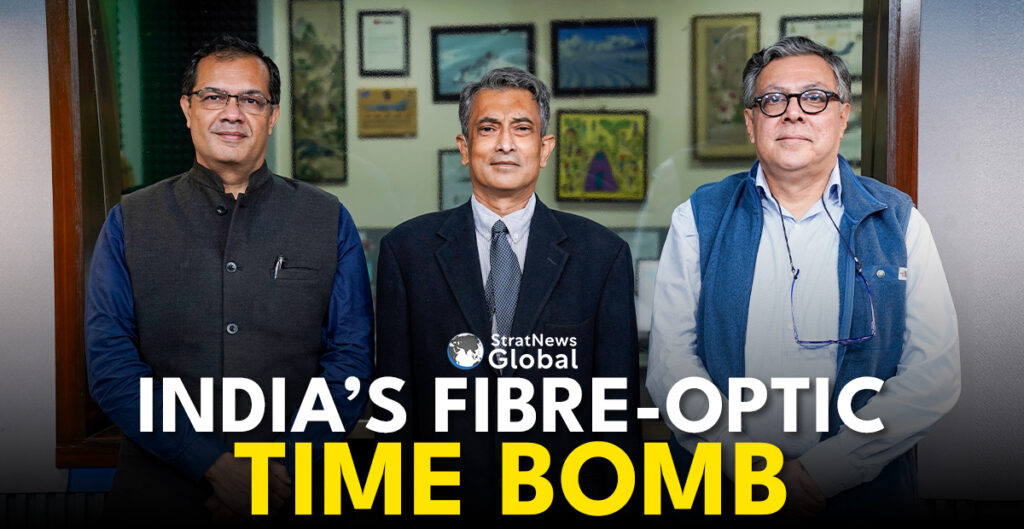
India’s optical-fibre supply chain—crucial to telecom, banking, defence targeting systems and everyday digital services—is dangerously exposed due to overwhelming reliance on Chinese components, warn CloudPhotonix co-founder Tarun Sibal and technology expert Dr. Jaijit Bhattacharya.
Speaking at a StratNews Global Roundtable, the two said India produces almost none of its optical transceivers, the devices that convert light into electrical signals. Nearly everything is imported, leaving the country vulnerable to strategic pressure. If China halts supply, “slowly our networks will degrade,” Dr. Bhattacharya said. “You will not be able to stream content, run payments, or keep banking systems operating.”
Sibal said the global industry is rapidly moving to 400G and 800G technologies while India remains stuck around 10G—yet even these older variants depend on foreign suppliers who may soon abandon them for higher-value markets.
The consequences, they warn, extend far beyond consumer inconvenience. Modern warfare is fibre-dependent. India’s aircraft carriers contain more internal fibre than the entire city of Delhi, and even micro-delays can cripple missile-defence systems. Passive components—like the fibre itself—can be chemically sabotaged to degrade early. “That is weaponisation,” Bhattacharya said, urging India to adopt a U.S.-style Trusted Fiber regime mandating domestic manufacturing and traceability.
Both experts argue that India’s biggest obstacle is the absence of market access for domestic companies. Cheap, subsidised imports make it impossible for Indian firms to scale, echoing the situation India faced before its mobile-phone manufacturing boom. “Indian manufacturers don’t have access to the Indian market,” Bhattacharya said.
Sibal said startups like his are trying to build cutting-edge technology while competing with low-cost imports and paying for global expertise and training. What the sector needs, he said, is clear policy signalling, design-led incentives, and working-capital support—not subsidies.
“India cannot afford to outsource its optical nerve system anymore,” he said.
Japan’s Hot Springs May Hold Clues Of Ancient Life On Earth
New research from Japan, published in Space.com, suggests that iron-rich hot springs may explain how early microbial life survived the introduction of oxygen to Earth billions of years ago.
According to a study conducted by the Earth-Life Science Institute at the Institute of Science, Tokyo, these unique ecosystems likely played a crucial role in bridging the gap between an alien, ancient world and the modern, oxygen-filled planet we know today.
The Great Oxidation Event
Approximately 2.3 billion years ago, Earth underwent the Great Oxidation Event (GOE). During this period, oxygen-producing cyanobacteria introduced atmospheric oxygen to the planet. While this event eventually allowed modern life to flourish, it posed a severe threat to the ancient microorganisms that were then the dominant life form, as oxygen was toxic to them.
The mystery of how these ancient microbes adapted and survived this transition has been a subject of scientific inquiry.
To understand this survival mechanism, a team led by graduate researcher Fatima Li-Hau and supervised by Associate Professor Shawn McGlynn studied five hot springs across Japan.
These specific springs were chosen because their chemical composition mirrors that of Earth’s oceans during the GOE. They are: Rich in ferrous iron, low in oxygen, and possessing a nearly neutral pH.
“These iron-rich hot springs provide a unique natural laboratory to study microbial metabolism under early Earth-like conditions,” McGlynn stated.
Key Findings
The researchers told Space.com that they discovered thriving microbial communities in these springs that resemble ancient transitional ecosystems. In four of the five sites, microaerophilic iron-oxidising bacteria were the dominant group, while cyanobacteria appeared in smaller numbers.
Metagenomic analysis revealed a critical survival strategy: the microbes that metabolised iron were also able to metabolise the oxygen produced as waste by the cyanobacteria. This capability allowed iron oxidisers, oxygenic phototrophs, and anaerobes to consistently coexist.
Additionally, the study found that these communities carry out carbon and nitrogen cycling. Researchers also detected a “cryptic” partial sulfur cycle, despite the hot springs containing very few sulfuric compounds.
The findings, published in the journal *Microbes and Environment*, offer a detailed view of how life may have adapted during one of Earth’s most significant transitions.
“By understanding modern analogue environments, we provide a detailed view of metabolic potentials and community composition relevant to early Earth’s conditions,” Li-Hau said on Space.com.
Russia’s Expanding Sabotage Threatens Europe
A new assessment reveals how extensively Russia has targeted Europe’s critical infrastructure in recent years, using sabotage, vandalism, espionage and covert action to impose costs, sow insecurity and undermine support for Ukraine.
The analysis is drawn from The Scale of Russian Sabotage Operations Against Europe’s Critical Infrastructure, an August 2025 report by Charlie Edwards and Nate Seidenstein of the International Institute for Strategic Studies (IISS).
The authors compile what they describe as the most comprehensive open-source dataset of suspected and confirmed Russian sabotage activity across the continent, showing a dramatic escalation in both frequency and range of targets since 2022.
According to the report, Russia’s campaign is part of an “unconventional war” designed to destabilise European governments, weaken public support for Ukraine and hinder NATO’s ability to respond. The activity spans physical attacks such as arson and sabotage, interference with undersea cables, GPS jamming, and the use of low-tech tools by online-recruited proxies.
A chart in the report’s introduction shows hybrid-warfare incidents rising sharply after Russia’s full-scale invasion of Ukraine, with energy, communications, government and transport infrastructure especially affected
European infrastructure is highly vulnerable, the report notes, due to aging grids, outdated software, fragmented regulation and significant private-sector ownership. The report underlines that many key systems—railways, water management, power grids—were built decades ago, creating single points of failure that can generate cascading disruptions across borders.
Submarine cables, responsible for transmitting 95% of global data, are singled out as particularly exposed, with limited redundancy and high economic value.
Documented incidents span a broad geography. A map on page 6 visually plots suspected Russian-linked attacks from 2018 to mid-2025 across dozens of European states, covering sabotage of transport lines, energy assets, water plants, undersea cables, GPS signals, and military logistics hubs. Examples include sabotage of high-speed rail lines before the 2024 Paris Olympics, spy-camera rings monitoring railways in Poland, water-supply tampering at German and NATO bases near Cologne and Geilenkirchen, and anchor-dragging operations that severed multiple Baltic undersea data cables.
The report attributes much of Russia’s operational shift to the expulsion of about 400 Russian intelligence officers from Europe in 2022, which forced Moscow to adopt what the authors call a “gig economy” model.
It describes how Russian handlers now use platforms like Telegram to recruit third-country nationals, particularly migrants from Eastern Europe, assigning tasks that range from petty vandalism to more serious sabotage of critical infrastructure. This approach has expanded the scale of operations even as the quality of proxies has declined, making many incidents more detectable and sometimes amateurishly executed.
Despite this, the report finds that Russia’s sabotage operations increased by 246% from 2023 to 2024. with at least 25 publicly known sabotage, espionage or vandalism incidents targeting NATO-linked infrastructure in the first five months of 2025.
These include parcel-bomb devices at DHL logistics hubs in Germany, Poland and the UK—described on page 11 as test runs involving magnesium-based flammables inserted into electric massagers—and a series of arson attempts in Germany and Poland tied to Russian operatives.
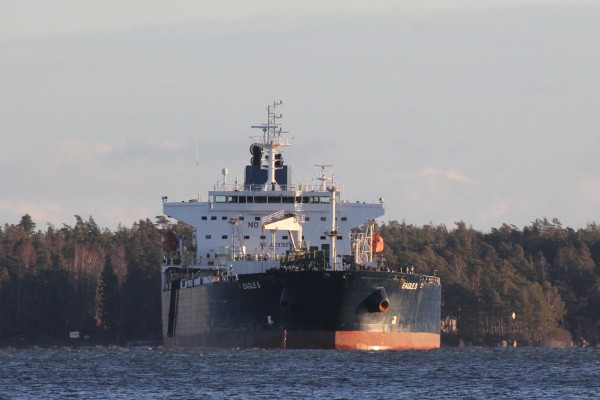
Undersea infrastructure has been a consistent focus. The report recounts incidents involving the Cook Islands–flagged Eagle S, which severed the Estlink-2 cable, and the Yi Peng 3, suspected of cutting cables linking Finland, Germany, Sweden, and Lithuania. Repairing a single severed cable can cost tens of millions of euros, not counting economic losses.
Europe’s response has been mixed. Though NATO and EU states have increased coordination—including Baltic Sentry maritime patrols and the launch of NorthSeal in 2025—the report notes that these efforts remain reactive, fragmented, and costly. A chart on page 12 summarises NATO’s strategy of “deterrence through denial,” built around resilience measures, but the authors argue that this approach has not deterred Russia’s low-cost, low-risk sabotage model.
The report concludes that Europe’s reliance on defining Russia’s actions as “grey zone” aggression has inhibited decisive responses. Without clear thresholds for action or consistent public attribution, Russia faces little deterrent pressure. But allowing sabotage to become normalised risks long-term strategic erosion and miscalculation, it concludes.
Finland Envoy Urges Deeper India–EU Partnership
Priest’s Killing Deepens Nigeria Kidnap Crisis
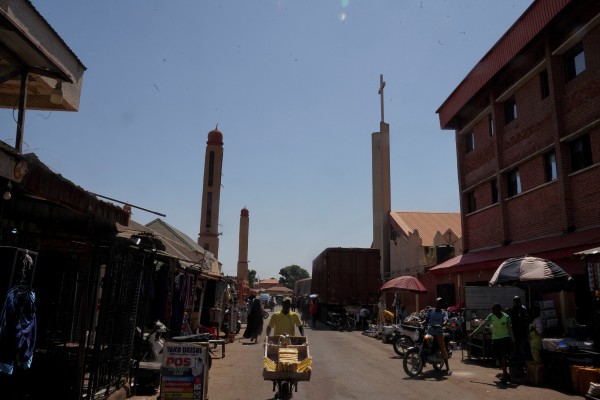
Venerable Edwin Achi, an Anglican priest kidnapped with his wife and daughter in Kaduna state on October 28, has been killed after more than a month in captivity, the head of the Church of Nigeria confirmed on Friday.
Archbishop Henry Ndakuba said in a statement that the church was mourning “the tragic death of our beloved priest… who was brutally murdered after enduring a month-long abduction,” adding that Achi’s wife and daughter remain held by the kidnappers.
The church said gunmen initially demanded 600 million naira (about $416,000) for Achi’s release before lowering the ransom to 200 million naira, though negotiations failed. Police in Kaduna did not respond to requests for comment.
Achi’s killing comes as northern Nigeria faces a sharp escalation in mass abductions. In mid-November, armed gangs seized 25 schoolgirls in Kebbi state and, days later, abducted more than 300 students and teachers from a Catholic school in Niger state, prompting authorities in several states to shut schools over safety fears.
President Bola Tinubu has ordered the recruitment of 50,000 police personnel and suspended foreign travel to focus on what he described as a national security emergency.
The surge in attacks has drawn international criticism. Former U.S. President Donald Trump this month called the situation in Nigeria “a disgrace” and warned that Washington could cut aid or consider military steps if authorities fail to stop violence against Christians. Ndakuba urged security agencies to identify those behind the attacks and appealed for the immediate release of Achi’s wife and daughter.
(With Inputs from Reuters)
Massive ‘Lava Puddles’ Deep In Earth Linked To Origin Of Life
Two perplexing structures called ‘lava puddles’ deep inside the Earth may be ancient remnants of the early planet, offering new insights into the origin of life, said an article in Space.com.
According to research published in “Nature Geoscience”, these gigantic “lava puddles” are not random formations but potential fingerprints of Earth’s history.
The Anomaly
Located 1,800 miles (2,900 kilometres) beneath the surface, two continent-sized blobs cling to the Earth’s core. One sits beneath the Pacific Ocean, and the other lies under the African continent.
Scientists identified these structures by measuring seismic waves travelling through the planet. As these waves pass through the anomalies—known as large low-shear-velocity provinces and ultra-low-velocity zones—they slow down dramatically. This indicates that the structures possess a composition distinct from the surrounding mantle.
Origins
Current theories of planetary evolution suggest that as Earth’s early magma ocean cooled billions of years ago, the mantle should have settled into distinct layers. However, the existence of these amorphous structures challenges that model.
Yoshinori Miyazaki, a geodynamicist at Rutgers University and the study’s lead author, suggests the answer involves the Earth’s core. The researchers propose that silicon and magnesium leaked from the core into the mantle, creating a chemical mixture that cooled unevenly. These “lava puddles” are likely the remnants of this “basal magma ocean.”
The study recently published on Space.com argues that these deep-earth interactions played a crucial role in the planet’s development. The core-mantle exchange may have influenced the Earth’s cooling process, its volcanic activity and the development of the atmosphere.
These factors are essential for explaining why the planet became capable of supporting life.
“If we can understand why they exist, we can understand how our planet formed and why it became habitable,” Miyazaki stated.
Bangladesh: BNP Leader Khaleda Zia’s Condition Reported Critical
Bangladesh Opposition leader and former prime minister Khaleda Zia’s condition, which was reported serious on Friday night, was described as “very critical” on Saturday.
Zia, who heads the BNP (Bangladesh Nationalist Party), was admitted to Evercare Hospital in Dhaka last Sunday, where she is being attended upon by the country’s top doctors and foreign specialists.
BNP secretary-general Mirza Fakhrul Islam Alamgir was quoted by local media as saying that she had been hospitalised after contracting an infection of the heart and lungs. She is battling pneumonia and remains in the coronary care unit.
Alamgir said that “At this moment, she is not in a physical condition to be taken abroad. Once her condition stabilises, it will be considered whether overseas treatment is possible.”
Dhaka Tribune had reported earlier that Mahdi Amin, adviser to Tarique Rahman, Zia’s son and acting chairman of the BNP, had said the family was planning to fly her to London, where he is based, for advanced treatment.
Khaleda Zia had undergone four months of medical treatment in London, returning only in May. She is 80 years old and has a history of kidney ailments, diabetes and arthritis.
Any decision to move her at this point has political ramifications, too. The country is headed for elections in February, and while the BNP is expected to do well, the absence of Zia could tell on the party’s fortunes.
Her son Tarique was expected to return and lead the party in the polls, but there is no indication when he could come. A post on his Facebook page went thus:
In such a moment of crisis, the longing to feel a mother’s affection is something I, to,o experience, like any child. However, unlike others, the opportunity to fulfil this desire is not entirely open or solely within my control.”
“There are limits to how much detail can be shared about this sensitive matter. Our family remains hopeful that as soon as the political realities reach a favourable stage, the prolonged, anxious wait for my return to my homeland will finally come to an end.”
Shafiqul Alam, press secretary to the Interim Adviser Mohammad Yunus, said, “The government has no restrictions or objections of any kind in this regard.”
Albanese Says ‘I Do’ In Office
Australian Prime Minister Anthony Albanese has pulled off a political first — and no, it wasn’t a policy announcement—becoming the nation’s first leader to marry while in office after exchanging vows with partner Jodie Haydon in Canberra on Saturday.
The discreet celebration at The Lodge came complete with confetti, classic tunes and a ring-bearing dog who may now be the most famous cavoodle in the country. According to reporting from the BBC and ABC, the ceremony remained tightly under wraps until the couple had already said “I do,” ensuring the nation’s newest political love story unfolded well away from cameras and curiosity.
The wedding, held the day after Parliament wrapped up for the year, blended romance with just enough theatrical flourish to suit the moment. Albanese, 62, and Haydon, 47, wed before roughly 60 guests, including cabinet ministers and close family members. The pair wrote their own vows, while Haydon’s young niece took on flower-scattering duties and Toto — Albanese’s four-legged scene-stealer — trotted down the aisle with the rings.
The celebration leaned into the couple’s personal tastes: they walked back down the aisle to Stevie Wonder’s Signed, Sealed, Delivered (I’m Yours), and later swayed through their first dance to Frank Sinatra’s The Way You Look Tonight. Guests reportedly enjoyed custom-printed beer cans featuring the same image used to announce the couple’s engagement — a souvenir unlikely to appear in the parliamentary gift shop anytime soon.
Security concerns and political timing meant the couple kept their plans close. They had originally eyed a larger wedding, but Labour strategists, wary of optics during a cost-of-living squeeze, nudged the festivities until after the 2025 election. Albanese had even once mused publicly about inviting former Canadian prime minister Justin Trudeau, though in the end the guest list stayed decidedly local.
Albanese and Haydon, who works in finance, first met at a Melbourne business dinner in 2020, when Albanese was still opposition leader. Since then, she has become a familiar presence at major public events, appearing alongside him during two election campaigns and attending the funeral of Queen Elizabeth II.
The couple’s engagement — also a historic first for a sitting Australian prime minister — took place at The Lodge on Valentine’s Day last year. After their weekend nuptials, they plan a short Australian honeymoon squeezed between Monday and Friday, a modest break befitting a leader whose job rarely pauses, even for love.
(With Inputs from Agencies)
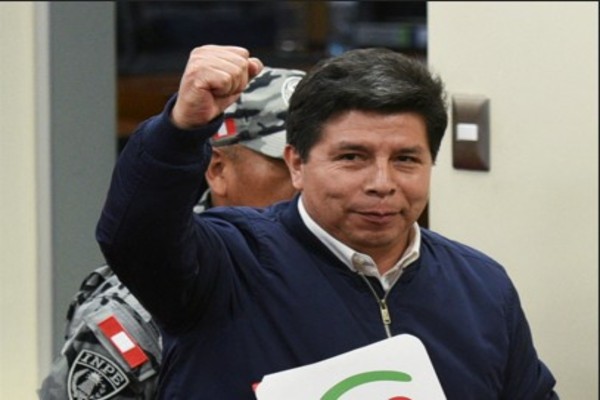
Peru Convicts Two Ex-Presidents in 48 Hours
Peru’s Supreme Court has handed former President Pedro Castillo a sentence of more than 11 years in prison for attempting to dissolve Congress, delivering the ruling just a day after another former president, Martín Vizcarra, was convicted and given 14 years for bribery. According to CNN, the consecutive judgments marked an unprecedented 48-hour period in which two of Peru’s recent leaders were sentenced in separate, high-stakes corruption and abuse-of-power cases.
Castillo’s conviction was issued during a special session of the Supreme Court held Thursday inside Lima’s Barbadillo Prison, where he has been held since December 7, 2022. The chamber found him guilty by a two-to-one vote of conspiracy, ruling that he improperly sought to dissolve Congress and assume extraordinary powers in late 2022. Prosecutors had originally accused him of rebellion and sought a 34-year sentence, but the court determined the higher charge was not met. Castillo argued throughout the proceedings that his televised announcement was a political message, not an official decree, and insisted he never attempted to flee or seek asylum.
The ruling detailed that immediately after his statement, Castillo attempted to travel to the Mexican Embassy, a move the court interpreted as an effort to avoid legal consequences. Castillo denied this claim, saying he was only accompanying his family and that escaping with his official escort would have been impossible. The court also credited the three years he has already spent in pre-trial detention toward his sentence.
Several members of Castillo’s former administration were also sentenced. Betssy Chávez, who served as president of the Council of Ministers, received a prison term, while former interior minister Willy Huerta was given a suspended sentence. Aníbal Torres, Castillo’s former chief of cabinet advisers, was also convicted. Castillo maintained that his ministers were not aware of the contents of his 2022 address and asserted that he alone bore responsibility.
The sentencing came just one day after Vizcarra’s conviction in a separate case heard in Lima. Prosecutors accused Vizcarra of accepting bribes from private contractors when he was governor of Moquegua between 2011 and 2014. He denied the allegations, saying contractors presented claims they could not prove.
In addition to the 14-year sentence, he received a nine-year ban from holding public office. His political trajectory has been marked by upheaval, including his impeachment in 2020 over the same scandal and a previous period of preventive detention at Barbadillo.
The two rulings add to Peru’s long pattern of legal turmoil involving former presidents. Since the early 2000s, nearly every head of state has faced prosecution, including Alberto Fujimori, Alejandro Toledo, Ollanta Humala and Pedro Pablo Kuczynski—underscoring the persistent instability that has defined the country’s political landscape.
(With Inputs from Agencies)