

Support us by contributing to StratNewsGlobal on the following UPI ID
ultramodern@hdfcbank

Strategic affairs is our game, South Asia and beyond our playground. Put together by an experienced team led by Nitin A. Gokhale. Our focus is on strategic affairs, foreign policy and international relations, with higher quality reportage, analysis and commentary with new tie-ups across the South Asian region.
You can support our endeavours. Visit us at www.stratnewsglobal.com and follow us on YouTube, Twitter, Facebook and Instagram.
र 500 per month
र 1000 per month
र 5000 per year
र 10000 per year
Donate an amount of your choice
र 500 per month
Donate र 500 per month

र 1000 per month
Donate र 1000 per month
र 5000 per year
Donate र 5,000 per year
र 10000 per year
Donate र 10,000 per year
Donate an amount of your choice
Donate an amount of your choice


Putin Seeks To Boost Energy, Defence Exports On India Visit
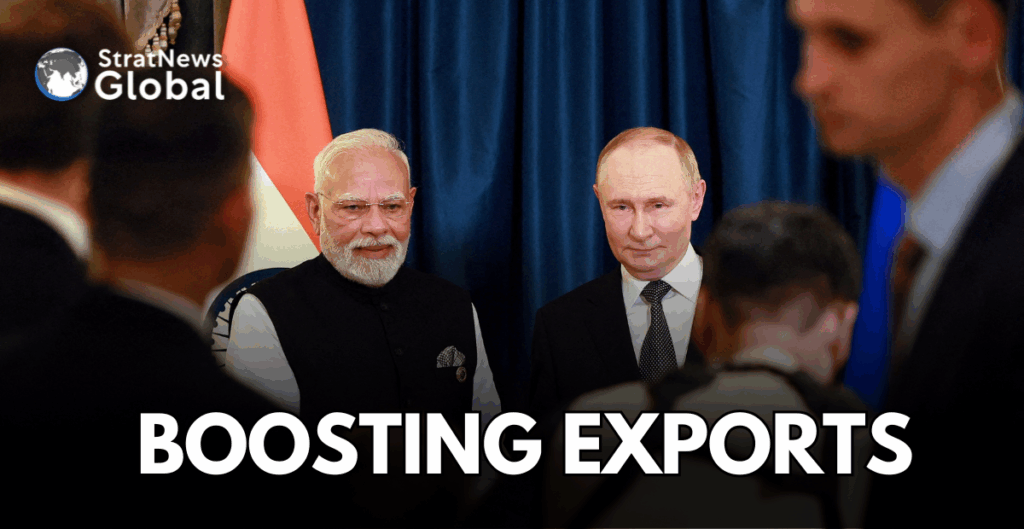
Russian President Vladimir Putin begins a two-day visit to India on Thursday, seeking to boost sales of Russian oil, missile systems, and fighter jets in an effort to revive energy and defence ties strained by U.S. pressure on the South Asian nation.
Russia has supplied arms to India for decades, with New Delhi emerging as its top buyer of seaborne oil despite Western sanctions after Moscow launched its invasion of Ukraine in February 2022.
But India’s crude imports are set to hit a three-year low this month, after the tightening of sanctions on Russia that coincide with its growing purchases of U.S. oil and gas.
On his first visit in four years to India for a summit with Prime Minister Narendra Modi, Putin will be accompanied by his defence minister, Andrei Belousov, and a wide-ranging delegation from business and industry.
“Putin ‘s visit offers an opportunity for India to reassert the strength of its special relationship with Moscow, despite recent developments, and make headway in new arms deals,” said Michael Kugelman of the Atlantic Council think tank in Washington.
New initiatives were likely to be announced, he added, even if they mostly related to low-hanging fruit in ties.
The Trump Factor
But Indian officials worry that any fresh energy and defence deals with Russia could trigger a reaction from U.S. President Donald Trump, who doubled tariffs to 50% in August on Indian goods, as punishment for New Delhi’s purchases of Russian crude.
Ahead of Putin’s visit, officials of both sides held talks in areas from defence to shipping and agriculture. In August, they agreed to launch talks for a free trade deal between India and the Russian-led Eurasian Economic Union.
They are also in talks to expand their partnership in civilian nuclear energy, Indian analysts have said.
Putin’s delegation includes the chief executives of the dominant Russian lender Sberbank SBER.MM and state arms exporter Rosoboronexport, as well as the heads of sanctioned oil firms Rosneft and GazpromNeft GZNPI.MM, an industry source with direct knowledge of the matter, said.
Ahead of the visit, Sberbank said it was interested in investing in Indian infrastructure projects, making use of rupees, in which a big chunk of two-way trade is settled.
India CEO Ivan Nosov said Sberbank was also extending rupee loans to Russian exporters and local units to boost Indian sales of Russian products.
Moscow is likely to seek India’s help to get technical equipment for its oil assets, as sanctions have choked access to key suppliers, said the industry source and a separate Indian government source.
They spoke on condition of anonymity as the matter is a sensitive one.
India is likely to pitch for the restoration of a stake of 20% for state gas explorer ONGC Videsh Ltd in the Sakhalin-1 project in Russia’s far east, the government source added.
India hopes to sign a U.S. trade deal by year’s end, as most of its refiners have stopped buying Russian oil, though widening discounts are now drawing in some state refiners.
The sources sought anonymity as they were not authorised to speak to the media.
Defence Spares
Unlike crude, India does not plan to freeze defence ties with Moscow anytime soon as it requires support for the many Russian systems it operates, Defence Secretary Rajesh Kumar Singh said last week.
Russian Sukhoi-30 jets make up the majority of India’s 29 fighter squadrons, and Moscow has also offered its most advanced fighter, the Su-57, which is likely to figure in this week’s talks, said two Indian officials familiar with the matter.
India has not yet made a decision on buying the jet, said the officials, who spoke on condition of anonymity.
But India is likely to discuss buying more units of the S-400 air defence system, Singh said last week.
Recent U.S.-Russia talks to end the Ukraine war could help make it easier for Indian officials to engage with Moscow, said Harsh Pant, head of foreign policy studies at India’s Observer Research Foundation think tank, though ties appear strained.
“A large part of the trading relationship was based on energy, which is now losing traction under the threat of sanctions from the United States,” he added.
“And at the end of the day, only defence remains, which continues to bind the two together.”
(with inputs from Reuters)
Australia Warns of China’s Expanding Military Reach in the Pacific
Australia’s Foreign Minister Penny Wong has warned that China is increasingly projecting its military power deeper into the Pacific, reflecting a growing strategic challenge for Australia and its regional partners. Speaking in Canberra on Tuesday, Wong said Beijing was asserting influence “through economic and security means” while lacking the transparency expected by neighbouring nations.
“China continues to assert its strategic influence and is more frequently projecting its military power further into our region,” she said. “This is happening without the transparency that the region expects.”
Wong stressed that regional security and prosperity depend on cooperation among Pacific nations. “Unity within the Pacific Islands Forum empowers smaller and medium-sized countries to counter power asymmetries,” she added.
Economic Pressures and Competition for Influence
The remarks come after years of strained trade relations between Canberra and Beijing. Between 2020 and 2023, China imposed trade restrictions worth A$20 billion on Australian exports during a political dispute. Australia has since warned Pacific Island countries about the risks of economic coercion as they deepen trade and infrastructure ties with Beijing.
Wong acknowledged that Australia faces daily competition for influence as more external powers seek partnerships in the Pacific. “Australia can no longer be the only partner of choice in the Pacific. There’s no rewind button,” she said.
China’s Role and Pacific Diplomacy
Currently, eleven Pacific Island nations maintain diplomatic ties with Beijing, while three among them Palau and Tuvalu recognise Taiwan. Several Pacific countries, including Tonga, are heavily indebted to Chinese state banks, underscoring Beijing’s growing economic footprint in the region.
In contrast, Wong reaffirmed Australia’s commitment as a stable and transparent development partner. She said Canberra had pledged A$2.2 billion (US$1.44 billion) in development aid to the Pacific and A$1.3 billion in climate finance to help nations address environmental challenges.
Calls for Balance and Regional Unity
Wong emphasised that cooperation, not confrontation, was essential for maintaining regional stability. “This is how we can ensure that we have choices, should pressure be applied to us,” she said, urging Pacific nations to maintain collective strength.
China’s Ambassador to Australia, Xiao Qian, said last year that Beijing’s activities in the Pacific were not part of a military strategy and should not cause concern in Canberra.
(with inputs from Reuters)
Imran Khan’s Sons Fear “Something Irreversible” Amid Silence on Former PM’s Condition
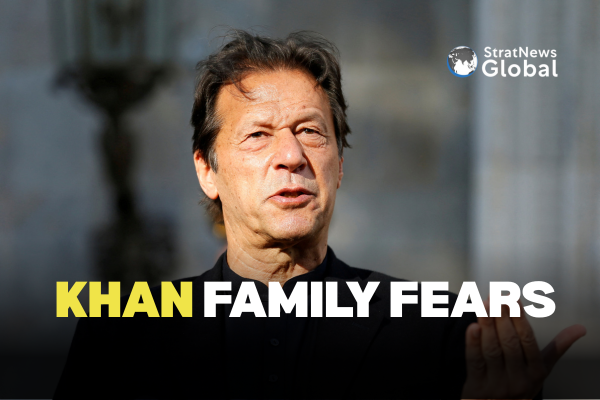
The sons of Pakistan’s jailed former prime minister Imran Khan say they fear authorities are hiding “something irreversible” about his condition, after more than three weeks with no evidence that he is still alive. Despite a court order allowing weekly prison visits, Khan’s family says they have had no verified contact for months.
“Not knowing whether your father is safe, injured, or even alive is a form of psychological torture,” his son Kasim Khan told Reuters in written remarks. “Today we have no verifiable information at all about his condition. Our greatest fear is that something irreversible is being hidden from us.”
The family has repeatedly requested access for Khan’s personal doctor, but those appeals have been denied. His physician has not been permitted to examine him for over a year. Pakistan’s interior ministry has not commented, but a prison official, speaking anonymously, said Khan was in good health and there were no plans to transfer him to a higher-security facility.
Former PM Serving Multiple Jail Sentences
Imran Khan, aged 73, has been imprisoned since August 2023 following a series of convictions he says were politically motivated after his ouster from power in 2022. His first conviction involved the Toshakhana case, which accused him of unlawfully selling state gifts received while in office.
Subsequent rulings added more prison time, including a 10-year sentence over the alleged leaking of a diplomatic cable and a 14-year term linked to the Al-Qadir Trust case. Prosecutors allege that Khan and his wife were involved in improper land deals connected to the trust.
Khan’s party, the Pakistan Tehreek-e-Insaf (PTI), insists the charges are part of a broader effort to remove him from public life and prevent his participation in elections.
Growing Family Anxiety and Media Silence
The family says the lack of communication and media restrictions have deepened their fears. Pakistani television networks have reportedly been instructed not to air Khan’s name or image, leaving a single grainy courtroom photo as the only recent glimpse of him.
“This isolation is intentional,” Kasim said. “They are scared of him. He is Pakistan’s most popular leader and they know they cannot defeat him democratically.”
Kasim and his brother Suleiman Isa Khan live in London with their mother, Jemima Goldsmith. They last saw their father in November 2022, shortly after he survived an assassination attempt. “That image has stayed with me ever since,” Kasim said. “Now, after weeks of total silence and no proof of life, that memory carries a different weight.”
The brothers say they are pursuing every legal and diplomatic channel, including appeals to international human rights bodies, to restore access to their father. “This is not just a political dispute,” Kasim said. “It is a human rights emergency. Pressure must come from every direction. We draw strength from him, but we need to know he is safe.”
(with inputs from Reuters)
Bangladesh: With Khaleda Zia Critical, Will Son Return To Lead BNP?
The BNP (Bangladesh Nationalist Party) has expressed its gratitude to Prime Minister Modi for his “thoughtful message and kind wishes for the speedy recovery of Chairperson Begum Khaleda Zia … BNP deeply appreciates this gesture of goodwill and the expression of readiness to extend support.”
Earlier Modi had offered all help including treatment in India for the ailing former prime minister of Bangladesh, now on ventilator in a Dhaka hospital for treatment of infected lungs and heart.
Her London-based son Tarique Rahman who is acting chairman of the BNP, posted this on Facebook: “I want to take a moment, on behalf of the Zia family and BNP, to give our most profound thanks for the remarkable outpouring of support for Begum Khaleda Zia’s recovery. This collective support has been a source of immense strength for all of us.”
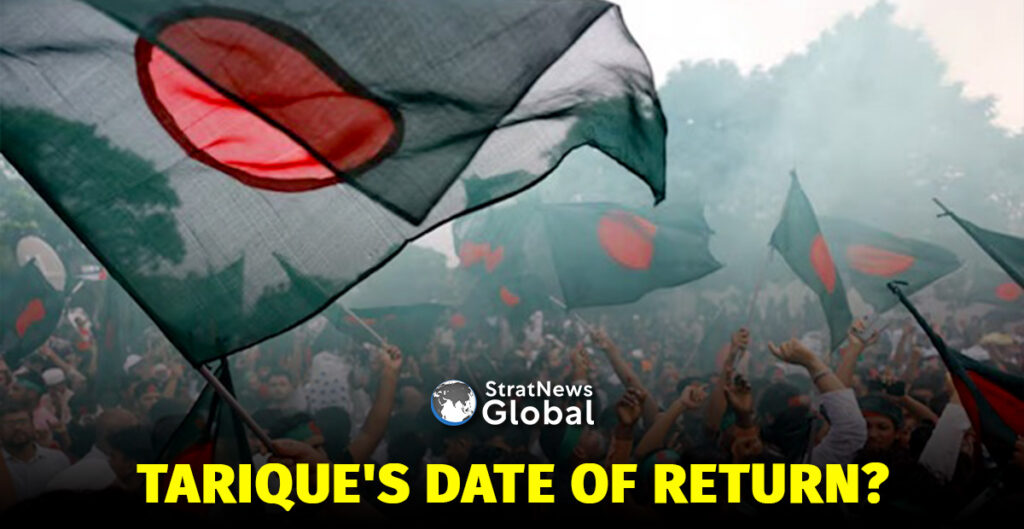
The million dollar question was when and if her son could return home and take over the leadership of the party with elections looming large in February.
Intriguing are reports in the Dhaka Tribune quoting BNP leaders as citing “practical limitations and complexities” delaying his return. It said “a few powerful countries have expressed reservations about his return.”
Prof KMM Rahman of Dhaka University’s Political Science Department said “Tarique Rahman’s return is not a personal or family issue; it is a political matter—highly sensitive in nature.”
Is the US objecting? It is widely believed that the CIA had a role in engineering the mass uprising that led to Prime Minister Sheikh Hasina’s ouster last year. The US is apparently backing the Jammat-e-Islami even though it wants sharia law in Bangladesh.
Historically, the Jammat has fared poorly in elections but this time it could be different. Interim leader Mohammad Yunus has favoured the Jammat, revoking the ban on it and its student wing the Islami Chhatra Shibir. He then banned the Awami League and its student wing.
So the return of Tarique Rahman could overturn this favourable scenario. He could galvanise his cadre and with the Awami League out of the poll fray, could swing voters to his party’s side. Add to that, his mother is seriously ill and if she passes away, public sentiment could swing massively in favour of her grieving son.
Other obstacles in Tarque’s way are not seen as serious: the interim government has said a travel pass could be issued to him at short notice (indicating that his Bangladesh passport may have expired).
Although not a registered voter, the Election Commission can easily make good that discrepancy. He can also stand for election.
There maybe corruption cases against him although that is not clear. He did spend 18 months in jail on graft charges before going into exile in 2008.
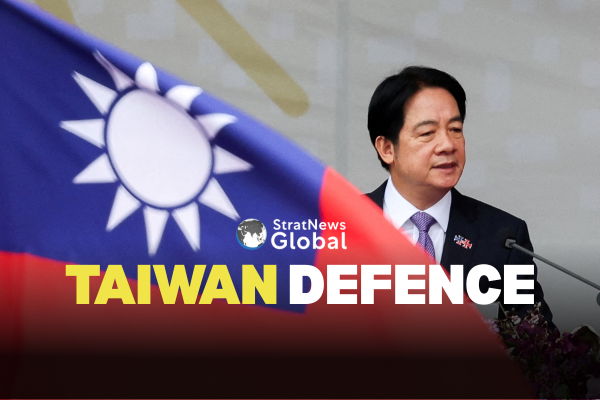
Taiwan’s Lai Says There Is ‘No Room for Compromise’ on National Security
Taiwan’s President Lai Ching-te has declared that there can be “no room for compromise” when it comes to the island’s national security, stressing that freedom and democracy form the foundation of the nation. Speaking to army reservists on Tuesday, Lai said these values are shared by all Taiwanese people and not matters of political ideology.
The president’s remarks came days after he proposed a $40 billion supplementary defence budget, reinforcing Taiwan’s determination to defend itself against increasing pressure from China. Beijing claims the self-ruled island as its own territory and has intensified military activities around it.
Lai told reservists in Yilan County that Taiwan must boost its defences in the face of growing coercion and harassment from China. “National security allows absolutely no room for compromise,” he said. “Peace cannot be achieved merely through a piece of paper called a peace agreement, nor by yielding to the demands of an aggressor.”
He added that true peace can only be secured through strength, warning that reconciliation without power would “ultimately degenerate into surrender.”
Reforming Taiwan’s Reserve Forces
Taiwan began overhauling its reserve force training in 2021, introducing longer and more intensive combat drills. The following year, the government extended compulsory military service from four months to one year to strengthen readiness.
During Tuesday’s event, Lai observed reservists operating drones, firing weapons, throwing grenades, and practising battlefield medical techniques. The exercises reflect Taiwan’s ongoing efforts to improve combat preparedness amid a more volatile regional environment.
Strengthening Defence Partnerships
Although Taiwan is increasing domestic weapons production, it continues to depend on the United States for advanced military equipment such as fighter jets. Despite the absence of formal diplomatic ties, cooperation between Washington and Taipei has deepened.
Vice President Hsiao Bi-khim said on the US podcast Bannon’s WarRoom that Taiwan values American assistance in training its troops. “We are very thankful for some US initiatives to help train our people,” Hsiao said, adding that Taiwanese forces “feel greater confidence” when trained by “the best in the world.”
China has never ruled out the use of force to take control of Taiwan. Lai’s administration firmly rejects Beijing’s sovereignty claims, maintaining that the island’s future must be decided only by its people.
(with inputs from Reuters)
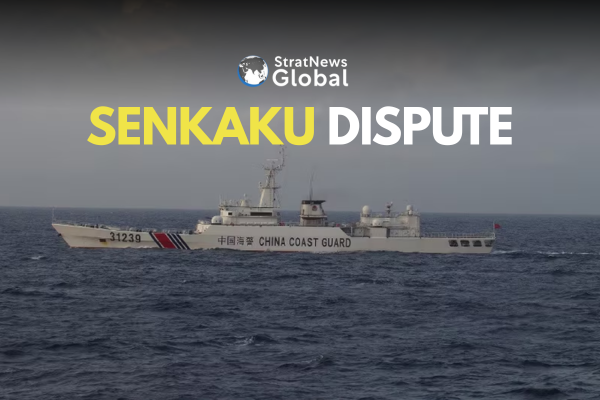
China and Japan Trade Accusations Over Senkaku Islands Maritime Clash
China and Japan have given different accounts of a confrontation near the disputed Senkaku Islands, known in China as the Diaoyu Islands. The incident happened early Tuesday and involved coast guard ships from both countries and a Japanese fishing boat.
China’s Coast Guard said the Japanese fishing vessel had entered Chinese waters illegally before being forced to leave. It repeated Beijing’s claim that the islands belong to China.
Japan’s Coast Guard told a different story. It said two Chinese Coast Guard ships approached a Japanese fishing boat near the islands. Japanese patrol vessels then stepped in and drove the Chinese ships away.
Dispute Adds to Diplomatic Strain
The clash comes at a time of growing tension between the two Asian neighbours. Relations worsened after Japanese Prime Minister Sanae Takaichi said on 7 November that a Chinese attack on Taiwan could lead to a military response from Japan.
Tokyo says the Senkaku Islands are a lawful and historic part of Japan. China, however, continues to send fishing boats and coast guard ships into the area, rejecting Japan’s claim to sovereignty.
Risk of Escalation in the East China Sea
Experts warn that even small incidents like this one could lead to a larger conflict if not managed carefully. Both nations patrol the same waters, and encounters between ships have become more common in recent years.
The Senkaku Islands dispute remains one of East Asia’s most sensitive flashpoints. The ongoing confrontations have deepened mistrust and made diplomatic cooperation harder between the region’s two biggest economies.
(with inputs from Reuters)
Europe Fears Trump’s Ukraine Plan Will Lead To An ‘Ugly Deal’
With Donald Trump’s latest push to end the war in Ukraine, Europe fears the prospect of a deal – sooner or later – that will not punish or weaken Russia as its leaders had hoped, placing the continent’s security in greater jeopardy.
Europe may well even have to accept a growing economic partnership between Washington, its traditional protector in the NATO alliance, and Moscow, which most European governments – and NATO itself – say is the greatest threat to European security.
Although Ukrainians and other Europeans managed to push back against parts of a 28-point U.S. plan to end the fighting that was seen as heavily pro-Russian, any deal is still likely to carry major risks for the continent.
No EU Representatives
Yet Europe’s ability to influence a deal is limited, not least because it lacks the hard power to dictate terms.
It had no representatives at talks between U.S. and Ukrainian officials in Florida over the weekend, and will only watch from afar when U.S. Special Envoy Steve Witkoff visits Russian President Vladimir Putin on Tuesday.
“I get the impression that, slowly, the awareness is sinking in that at some point there will be an ugly deal,” said Luuk van Middelaar, founding director of the Brussels Institute for Geopolitics think tank.
“Trump clearly wants a deal. What is very uncomfortable for the Europeans…is that he wants a deal according to great-power logic: ‘We’re the U.S., they are Russia, we are big powers’.”
Reassuring Europe
U.S. Secretary of State Marco Rubio has said Europe will be involved in discussions about the role of NATO and the European Union in any peace settlement between Russia and Ukraine.
But European diplomats take limited comfort from such reassurances. They say that just about every aspect of a deal would affect Europe – from potential territorial concessions to U.S.-Russian economic cooperation.
The latest initiative has also triggered fresh European worries about the U.S. commitment to NATO, which ranges from its nuclear umbrella through numerous weapons systems to tens of thousands of troops.
German Defence Minister Boris Pistorius said last week that Europeans no longer know “which alliances we will still be able to trust in future and which ones will be durable”.
Despite Trump’s previous criticism of NATO, he affirmed his commitment to the alliance and its Article 5 mutual defence clause in June in return for a pledge by Europeans to ramp up their defence spending.
But Rubio’s plans to skip a meeting of NATO foreign ministers in Brussels this week may only fan European jitters, amid fears that an eastern member of the alliance may be Moscow’s next target.
“Our intelligence services are telling us emphatically that Russia is at least keeping open the option of war against NATO. By 2029 at the latest,” German Foreign Minister Johann Wadephul said last week.
Emboldening Putin?
European officials say they see no sign that Putin wants to end his invasion of Ukraine. But if he does, they worry that any deal that does not respect Ukraine’s territorial integrity could embolden Russia to attack beyond its borders again.
Yet it now seems likely any peace accord would let Moscow at least keep control of Ukrainian land that it has taken by force, whether borders are formally changed or not.
The Trump administration has also not rejected out of hand Russian claims to the rest of the Donbas region that Moscow has been unable to capture after nearly four years of war.
Moreover, Trump and other U.S. officials have made clear they see great opportunities for business deals with Moscow once the war is over.
European officials fear that ending Russia’s isolation from the Western economy will give Moscow billions of dollars to reconstitute its military.
“If Russia’s army is big, if their military budget is as big as it is right now, they will want to use it again,” EU foreign policy chief Kaja Kallas told reporters on Monday.
Exerting Leverage
But European leaders have struggled to exert a strong influence on any peace settlement, even though Europe has provided some 180 billion euros ($209.23 billion) in aid to Ukraine since Russia’s invasion in February 2022.
The EU has a big potential bargaining chip in the form of Russian assets frozen in the bloc. But EU leaders have so far failed to agree on a proposal to use the assets to fund a 140-billion-euro loan to Ukraine that would keep Kyiv afloat and in the fight for the next two years.
To try to show they can bring hard power to bear, a “coalition of the willing” led by France and Britain has pledged to deploy a “reassurance force” as part of postwar security guarantees to Ukraine.
Russia has rejected such a force. But even if it did deploy, it would be modest in size, intended to bolster Kyiv’s forces rather than protect Ukraine on its own, and it could only work with U.S. support.
“The Europeans now are paying the price for not having invested in military capabilities over the last years,” said Claudia Major, senior vice president for transatlantic security at the German Marshall Fund of the United States think tank.
“The Europeans are not at the table. Because, to quote Trump, they don’t have the cards,” she said, referring to the U.S. president’s put-down of Ukrainian President Volodymyr Zelenskyy in February.
(with inputs from Reuters)
Fern Quietly Grows Its Own Rare Earths
Chinese researchers have identified a remarkable biological process in the humble Blechnum orientale fern, which can draw rare-earth elements (REEs) from deep soil layers and crystallise them inside its tissues.
The discovery, made by a team from the Guangzhou Institute of Geochemistry under the Chinese Academy of Sciences in collaboration with scientists at Virginia Tech, marks the first time a living plant has been confirmed to biomineralise REEs into actual mineral crystals under natural conditions.
The fern forms nanoscale monazite crystals — a key rare-earth mineral — not through geological heat or pressure, but under ambient temperature, sunlight, and rain. For an industry long associated with pollution, radioactive waste, and land degradation, the idea that a leafy plant can safely grow its own rare-earth minerals is extraordinary.
Rare-earth elements are fundamental to the modern economy, powering everything from smartphone speakers and medical imaging equipment to electric vehicle motors and wind-turbine magnets. Demand is rising sharply as the global push for electrification accelerates, yet the supply chain remains heavily dependent on mining methods that scar landscapes and leave behind toxic tailings.
Traditional monazite deposits often contain uranium and thorium, creating radioactive by-products that require strict handling and disposal. By contrast, the monazite nanoparticles produced within Blechnum orientale appear strikingly pure and free of such radioactive elements, making the process potentially far safer than conventional extraction.
What astonished researchers was not just the fern’s ability to accumulate REEs — a trait some hyperaccumulator plants show with metals like nickel or manganese — but its ability to convert dissolved ions into solid, structured minerals. When REE-rich soil was examined, the fern’s roots absorbed ions which then moved through the plant’s vascular tissues, where they slowly nucleated into nanoparticles.
Over time, these nanoparticles coalesced into crystalline monazite embedded within the plant’s leaves and stems. This natural mineral factory operates without any intervention, catalysts, or engineered conditions. It is, as one researcher described, “geology conducted by biology.”
The finding has sparked intense interest in the concept of “phytomining,” in which plants are deliberately grown to extract metals from contaminated or low-grade soils. While phytomining has been studied for decades, particularly for nickel in certain tropical shrubs, no previous attempt involving rare-earth metals has demonstrated the formation of usable minerals inside living tissue.
Blechnum orientale could therefore represent a major conceptual leap: instead of using energy-intensive refining to tease rare earths out of complex ores, future systems might harvest these plants, burn or process the biomass, and collect the naturally formed crystals with far less waste.
Still, scientists caution that the discovery is a beginning, not a ready-made industry. The amount of REEs produced by each plant is currently extremely small, and scaling the system to industrial levels would require vast cultivation areas, time-intensive growth cycles, and efficient recovery methods.
Phytomining is unlikely to replace traditional mining in the foreseeable future, given global demand measured in thousands of tonnes. Instead, it may evolve into a complementary technique, particularly useful for rehabilitating polluted lands, scavenging REEs from low-yield soils, or sourcing smaller quantities of high-purity material for specialised applications.
The implications extend beyond China. Countries like India, which possess REE deposits but face environmental and regulatory constraints, could eventually deploy phytomining to restore degraded mines while extracting trace resources. For regions where mining faces local resistance or ecological risk, a “green extraction” model driven by plants rather than heavy machinery could offer a politically and environmentally palatable alternative.
For now, Blechnum orientale stands as a reminder that sophisticated natural processes often lie hidden in plain sight. A fern growing quietly in Asian forests may hold the blueprint for one of the cleanest rare-earth recovery methods imagined — a biological shortcut to minerals usually forged in deep, ancient geological systems.
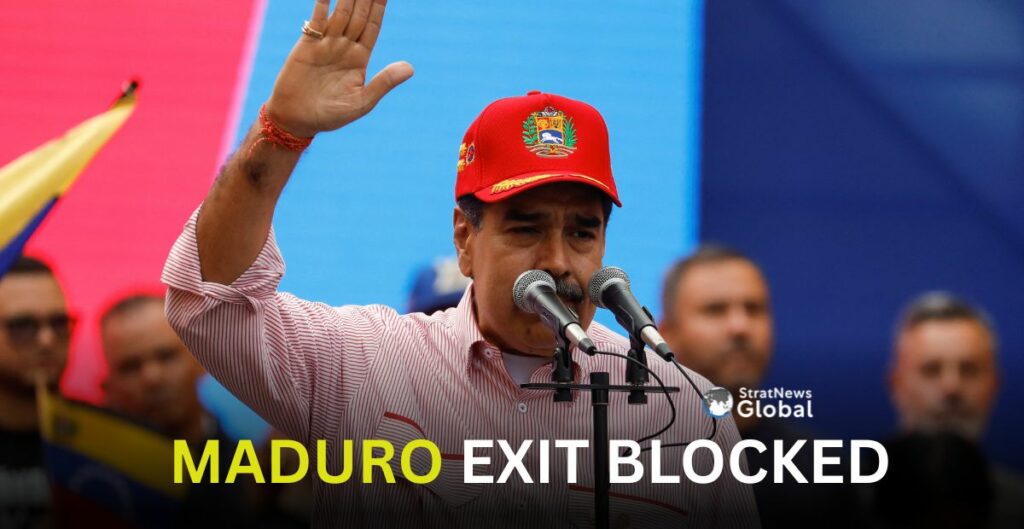
Maduro Runs Out Of Options After Failed Trump Call
Venezuelan President Nicolás Maduro has few remaining avenues to step down with U.S.-guaranteed safe passage after a brief call last month in which U.S. President Donald Trump rejected several of his requests, sources said.
The call, on November 21, came after months of increasing U.S. pressure on Venezuela, including strikes against alleged drug-smuggling boats in the Caribbean, repeated threats by Trump to extend military operations to land and the designation of Cartel de los Soles, a group the Trump administration says includes Maduro, as a foreign terrorist organization.
Maduro and his government have always denied all criminal accusations and say the U.S. is seeking regime change to take control of Venezuela’s vast natural resources, including oil.
Conditions for Stepping Down
Maduro told Trump he would step down if he and his family received full legal amnesty, including lifted sanctions and closure of his ICC case, sources said. He also requested that sanctions be removed for over 100 Venezuelan officials accused of abuses, drug trafficking, or corruption.
Maduro asked that Vice President Delcy Rodriguez run an interim government ahead of new elections, according to the sources.
Trump’s Response
Trump rejected most of his requests on the call, which lasted less than 15 minutes, but told Maduro he had a week to leave Venezuela for the destination of his choice alongside his family members.
That safe passage expired on Friday, prompting Trump to declare on Saturday that Venezuela’s airspace was closed, sources said.
The Trump administration has said it does not recognize Maduro, in power since 2013, as Venezuela’s legitimate president.
A Washington-based source briefed on the Trump administration’s internal discussions did not rule out the possibility of a negotiated exit for Maduro, but stressed that significant disagreements remained and important details were still unresolved.
U.S. has increased its reward for information leading to Maduro’s arrest to $50 million, and is offering $25 million for several other top officials, including Interior Minister Diosdado Cabello, who face U.S. drug-trafficking indictments they deny. Maduro’s government has since requested another call with Trump.
(With inputs from Reuters)
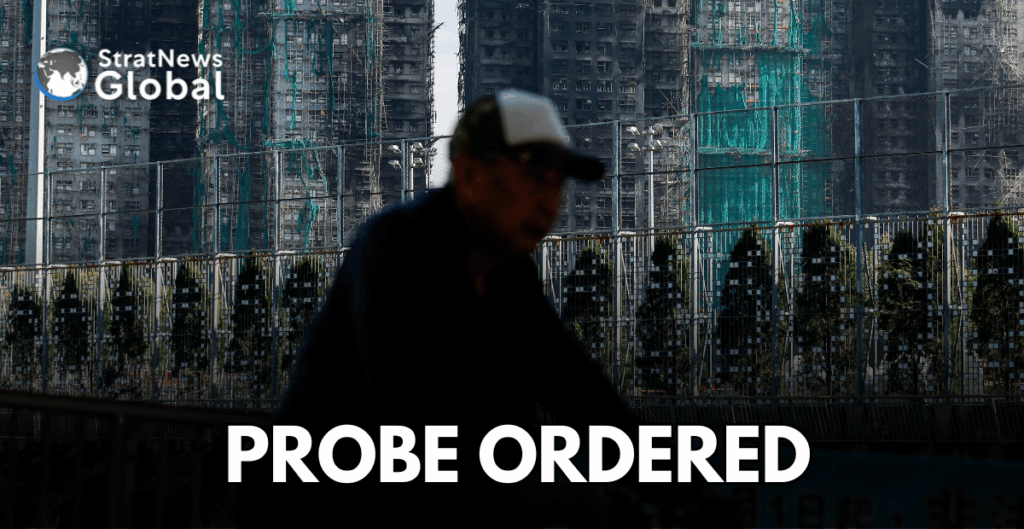
Hong Kong: Judge-Led Probe To Look Into Cause Of Fire
The leader of Hong Kong city said on Tuesday that a judge-led committee will investigate the cause of the deadliest fire in decades and review government oversight of building renovations blamed for fanning a blaze that killed at least 151 people.
Police have arrested 13 people for suspected manslaughter in a criminal inquiry into last week’s tragedy, and 12 people have also been arrested in a corruption probe. It is unclear if any of those people were arrested on both counts.
Authorities have pointed to substandard plastic mesh and insulation foam used during renovation works at Wang Fuk Court in Hong Kong as fuelling the fire that quickly spread to seven high-rise towers, home to more than 4,000 people.
“In order to avoid similar tragedies again, I will set up a judge-led independent committee to examine the reason behind the cause and rapid spreading (of the fire) and related issues,” John Lee, Hong Kong’s chief executive, told a news conference.
Investigators have combed all but two of the seven burnt-out towers, finding bodies of residents in stairwells and on rooftops, trapped as they tried to flee the flames. Around 30 people are still missing.
More Transparency
Some groups in the Chinese-ruled city have called for more transparency and accountability, amid warnings from authorities that any attempts to politicize the disaster would be severely punished.
A student from one of the groups was detained and later released on bail, and local media reported two others are being investigated for possible sedition. Police have not commented on the cases.
International rights groups have said the incidents demonstrate attempts by the government to suppress criticism.
“It’s crucially important not to treat those demanding answers for the tragic fire as criminals,” said Elaine Pearson, Asia director at Human Rights Watch.
China’s national security office has warned individuals against using the disaster to “plunge Hong Kong back into the chaos” of 2019, when massive pro-democracy protests challenged Beijing and triggered a political crisis.
Legislative elections due to take place on Sunday will go ahead as planned, Lee said.
Turnout for the election – in which only candidates screened by the government as “patriots” can run – could serve as a barometer for public frustration over the handling of the fire.
Fire Risks
Residents of Wang Fuk Court in Hong Kong were told by authorities last year that they faced “relatively low fire risks” after complaining about fire hazards posed by the renovations, the city’s Labour Department said.
The residents raised concerns in September 2024, including about the potential flammability of the mesh that contractors used to cover the bamboo scaffolding, a department spokesperson said.
Tests on several samples of mesh on the buildings at the time of the blaze did not match fire-retardant standards, officials overseeing the investigations told a news conference on Monday.
Contractors working on the renovations used these substandard materials in hard-to-reach areas, effectively hiding them from inspectors, Chief Secretary Eric Chan said.
Foam insulation used by contractors also fanned the flames, and fire alarms at the complex were not working properly, officials have said.
Thousands of the city’s residents have paid tribute to the victims, who include at least nine domestic helpers from Indonesia and one from the Philippines.
Vigils are also due to take place this week in Tokyo, Taipei and London.
Search For the Worst Damaged
The remaining buildings being scoured for remains are the worst damaged, and the search may take weeks, authorities have said.
Images shared by police showed officers clad in hazmat suits, face masks and helmets, inspecting rooms with blackened walls and furniture reduced to ashes, and wading through water used to douse fires that raged for days.
More than 60 pets, including 34 cats, 12 dogs and seven turtles, perished in the fire, the Society for the Prevention of Cruelty to Animals said. More than 200 were rescued.
Residents who escaped the blaze must now try to get their lives back on track.
Nearly 1,500 people have been moved out of evacuation centres into temporary housing, with a further 945 put up in youth hostels and hotels, authorities said.
With many residents leaving behind belongings as they fled, authorities have offered emergency funds of HK$10,000 ($1,284) to each household and provided special assistance for issuing new identity cards, passports and marriage certificates.
(with inputs from Reuters)