

Support us by contributing to StratNewsGlobal on the following UPI ID
ultramodern@hdfcbank

Strategic affairs is our game, South Asia and beyond our playground. Put together by an experienced team led by Nitin A. Gokhale. Our focus is on strategic affairs, foreign policy and international relations, with higher quality reportage, analysis and commentary with new tie-ups across the South Asian region.
You can support our endeavours. Visit us at www.stratnewsglobal.com and follow us on YouTube, Twitter, Facebook and Instagram.
र 500 per month
र 1000 per month
र 5000 per year
र 10000 per year
Donate an amount of your choice
र 500 per month
Donate र 500 per month

र 1000 per month
Donate र 1000 per month
र 5000 per year
Donate र 5,000 per year
र 10000 per year
Donate र 10,000 per year
Donate an amount of your choice
Donate an amount of your choice

Taiwan Weighs New Civil Defence Reality
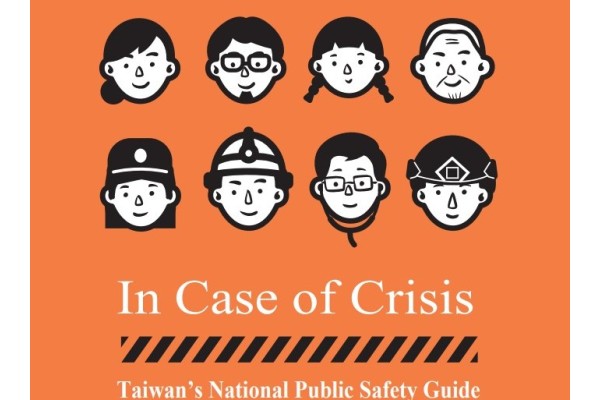
Taiwan’s new 2025 civilian defence handbook arrives at a moment when the island is attempting to rethink what preparedness actually means.
Gone is the textbook-like, jargon-heavy manual meant mainly for bureaucrats; in its place is a colourful, user-friendly guide that speaks to ordinary people in everyday language. The shift is deliberate, and it reflects a broader political reorientation—one that aims to make resilience not just a military concept but a civic habit.
This evolution is unpacked in an article published by the Prospect Foundation and written by Marcin Mateusz Jerzewski, Head of the Taipei Office of the European Values Center for Security Policy. His assessment is clear: the handbook is a meaningful step forward, but it also reveals the limits of policy that must straddle politics, public psychology, and the harsh arithmetic of deterrence. What the manual represents is as important as what it leaves out.
Since the first civilian handbook appeared in 2022, Taiwan has steadily expanded the document’s purpose. What began as a local-government reference tool became, in 2023, a broader guide on emergency preparedness. The 2025 version reframes the entire exercise around “whole-of-society defence”, linking self-help and mutual aid to national security. This framing tracks with the William Lai administration’s prioritisation of civil resilience as a cornerstone of defence policy, now reinforced institutionally through a new Whole-of-Society Defence Resilience Committee chaired by the president himself.
The message is unmistakable: deterrence is no longer the military’s job alone. But deterrence today is not merely about tanks and aircraft. The handbook’s explicit inclusion of “cognitive warfare” and disinformation points to the nature of modern conflict. Taiwan is one of the world’s most persistently targeted democracies when it comes to influence campaigns, and the manual takes a rare, unambiguous stance: any claim of Taiwan’s capitulation, especially during a crisis, should be presumed false.
This blunt warning acknowledges a reality demonstrated repeatedly in Ukraine, the Baltic states, and elsewhere—that psychological disruption often precedes physical confrontation. By encouraging “social immunity”, the handbook tries to inoculate the public against panic, rumour, and the paralysis they can induce.
Yet the presentation itself — bright graphics, a softer tone, simplified checklists — hints at the political balancing act behind the project. The Lai government cannot afford to appear alarmist or feed claims of “militarising society”, accusations routinely levelled by the opposition Kuomintang (KMT).
As Jerzewski observes, the need to keep civil defence politically tolerable may be one reason the handbook leans heavily on blockade and cyberattack scenarios while downplaying the possibility of sustained bombardment or invasion. For a society that must be psychologically prepared for the worst, this may be too cautious.
Even the practical recommendations reveal the tension between aspiration and reality. Citizens are now advised to be self-sufficient for a week instead of three days — a welcome change, but almost certainly inadequate in the event of a prolonged blockade.
The guide points residents to civil-defence shelters, yet many of those shelters remain poorly marked, inconsistently maintained, or in some urban areas physically unsuitable. The gap between guidance and infrastructure risks undermining public confidence, especially if people discover in a crisis that the map and the landscape do not align.
That credibility gap is crucial. Taiwan’s experience during the pandemic showed that public trust can turn coordinated policy into effective action. But that same period also revealed the strains of political polarisation, and civil defence sits even closer to the heart of partisan disagreement. If the public begins to perceive preparedness messaging as political messaging, the entire resilience framework weakens. This is the Achilles’ heel of whole-of-society defence: it depends not only on planning but on belief.
Where Jerzewski’s analysis is most pointed is in outlining what Taiwan could gain by linking its efforts more deeply to those of like-minded democracies. The Nordic and Baltic states, with their long experience in whole-of-society security, offer both cautionary lessons and practical templates. Finland’s model of civilian-military integration, Lithuania’s investment in information hygiene, and the Baltic states’ regular public-participation drills all provide examples of what a mature resilience system looks like. Taiwan, by contrast, is still in the early stages of building such structures.
Existing platforms, such as the Global Cooperation and Training Framework (GCTF), could serve as accelerators. The article outlines a range of concrete possibilities: embedding European experts in Taiwan’s resilience committee; establishing secondments between ministries and think tanks; co-developing public-communication strategies; and even conducting joint resilience audits.
These proposals are not theoretical. They mirror the steps taken by the Baltic states after Russia’s 2014 annexation of Crimea—steps that helped them harden their societies against hybrid threats long before full-scale war returned to Europe.
In this sense, the 2025 handbook is important not because it solves the problem of preparedness, but because it reframes it. It nudges Taiwanese society away from the assumption that civil defence is something done by officials somewhere else. It asks citizens to think of themselves not as bystanders in a geopolitical struggle, but as actors whose choices matter in the first hours of a crisis. That cultural shift — gradual, imperfect, and politically contested — is itself a form of deterrence.
Still, the handbook’s most striking contribution may be its unspoken admission: Taiwan cannot rely solely on hard power, nor on the assumption that conflict will follow predictable patterns. Civil-defence planning is no longer a technocratic exercise; it is a social contract. Whether that contract succeeds will depend on infrastructure, political consensus, and the willingness of citizens to participate meaningfully in their own security—all of which remain uncertain.
Taiwan’s new civil-defence guide is thus both progress and a warning. It signals a government intent on preparing its people, but it also highlights the work left undone. In the end, resilience is not printed into a handbook; it must be built, tested, and lived.
Malaysia Moves To Bar Teens From Social Media
Malaysia’s plan to ban anyone under sixteen from using social-media platforms starting in 2026 has triggered sharp debate at home and across Southeast Asia. Officials say the aim is to protect children from online harms, but reactions remain mixed, especially among young people.
Ong Yue Lin, a member of Malaysia’s National Youth Consultative Council and an Economic Policy and Research Officer at the ASEAN Youth Organisation, told StratNewsGlobal that the move mirrors a wider regional shift. “Malaysia isn’t the only one trying to regulate harmful online content. Others in the region are also taking steps in that direction,” she said.
Ong said officials are especially worried about the rapid spread of sensational videos, misleading clips and behaviour-shaping trends. “Most of it comes from concern over harmful brainrot content, misleading videos and trends that affect young people’s behaviour,” she said. “We’ve seen bullying and even cases like the recent Bandar Utama stabbing being discussed in relation to online influence, so the push is really framed as protecting youth.”
Malaysia’s decision follows rising anxiety over cyber-bullying, scam targeting, and the role of viral content in shaping teenage behaviour. The Bandar Utama stabbing, which was dissected widely on TikTok and Instagram, has been cited by parents and teachers as an example of how quickly online platforms can drive discussion and, in some cases, panic.
The policy places Malaysia among a growing number of governments setting stricter limits on children’s access to social media. Australia already bars under-sixteens from opening accounts. Several European countries are debating tighter rules, the UK is strengthening its Online Safety Act, and US states such as Utah and Arkansas require parental consent for teenagers. Indonesia is drafting its own minimum-age rules.
Public reaction remains divided. ABC News reported that in a survey of more than seventeen thousand young people in Australia, seventy percent opposed the under-sixteen ban, saying it would cut them off from friends and communities. Only nine percent supported the measure.
Supporters of Malaysia’s move say tighter controls are needed to reduce exposure to harmful content, while critics warn it may fuel concerns about government overreach.
Ong acknowledged the tension. “Some may see it as controlling, but I personally support clearer safeguards or age limits for social media because safety matters,” she said. “As part of the National Youth Consultative Board, I also see that many young people don’t agree with stricter bans because they feel it affects children’s rights and their exposure to the digital world. So there’s a balance we need to find.”
Malaysia now joins a fast-growing international debate on how to manage young people’s access to social media, with regulators, parents and teenagers often pulling in different directions.
Aryabhata to Gaganyaan: 50 Years Of An India-Russia Story
India-Russia space cooperation has evolved into one of the world’s most significant partnerships, spanning five decades. In 1975, Russia (then the Soviet Union) launched India’s first satellite, Aryabhata, aboard a Soviet Kosmos-3M rocket, kick-starting India’s space program. This foundational achievement was followed by Rakesh Sharma’s historic spaceflight on Soyuz T-11 in 1984, making him the first Indian citizen in space aboard a Soviet spacecraft.
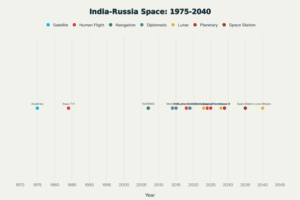
The partnership was formalized through multiple international agreements, including the landmark 2015 MoU signed by ISRO and ROSCOSMOS to expand cooperation in space exploration and utilization for peaceful purposes. This MoU provides scope for developing joint activities in satellite navigation, launch vehicle development, critical technologies for human spaceflight, remote sensing, space science, and planetary exploration.
Current Major Initiatives
The Gaganyaan mission represents the apex of India-Russia space cooperation. Announced by Prime Minister Modi in 2018, this $1.4 billion (Rs 9,023 crore) program aims to send a three-member Indian crew into a 400-km Low-Earth-Orbit for a 3-7 day mission. It could make India only the fourth country after the USA, Russia, and China to achieve independent manned space capability.
Russia is providing critical support across multiple dimensions:
- Astronaut Training: Four Indian astronauts completed advanced training at Russia’s Gagarin Cosmonaut Training Centre in 2024, with more under preparation
- Spacesuits and Life Support: Russia supplies custom Sokol spacesuits, life-support systems, and emergency safety equipment
- Technical Systems: Russian expertise in radiation shielding, crew modules, rendezvous and docking systems, and flight suits enhances the spacecraft’s capabilities
- Medical and Flight Training: Glavkosmos, a ROSCOSMOS subsidiary, provides consulting support, medical examinations, and comprehensive space flight training
Russia’s Ambassador to India, Denis Alipov, emphasized in 2024 that cooperation extends beyond technology transfer to “laying groundwork for India’s space future,” with exploration of private sector involvement and start-ups in joint ventures.
GLONASS-NavIC Integration
A cornerstone of bilateral space cooperation is the mutual deployment of ground stations for satellite navigation systems. Following an agreement signed in October 2016, Russia established a ground base station in Bengaluru to receive communications signals from its GLONASS (Global Navigation Satellite System), while ISRO set up India’s NavIC (now called Indian Regional Navigation Satellite System) ground stations in Russia
This integration enhances precision for civilian and military applications, supports Earth observation for geological surveys and pipeline monitoring, and facilitates real-time tracking of logistics and infrastructure. The GLONASS-NavIC system has become instrumental in resource mapping for oil exploration and monitoring of energy infrastructure.
Additionally, in 2007, India and Russia agreed to share GLONASS military signals, enabling optimized utilization of advanced navigation hardware for strategic applications.
Lunar/Planetary Exploration
Lunar Missions: Chandrayaan-4, planned for 2028, will involve sample return from the Moon with Russian technical expertise in propulsion and landing systems. The Luna 27 joint mission combines India’s rover technology with Russia’s proven lander capabilities. Both nations have demonstrated their independent capabilities, India successfully landed Chandrayaan-3 on the lunar south pole in 2023, while Russia’s Luna-25 made an earlier approach (though it ultimately failed)
Planetary Exploration: Russia is developing the Venera-D Venus mission (targeted for 2029) with an orbiter and lander to study Venus’s atmosphere and surface, leveraging Russian expertise as the world leader in Venus exploration. India is exploring participation in payload development and research collaboration.
A Mars mission is being planned with Russia contributing advanced propulsion technologies. Additionally, both nations are exploring opportunities for joint lunar bases and deep-space missions as part of their extended cooperation framework.
Launch Vehicle Tech, Cryogenic Engines
Russia has provided critical technology for India’s launch vehicle development. Seven cryogenic functional units and ground demonstrator units supplied by Russia to ISRO were used for the GSLV MK-I and became seeds for India’s development of the GSLV MK-II and III’s home-grown cryogenic stage.
Currently, both nations are developing semi-cryogenic rocket engines with scope for collaboration in producing and utilizing these engines for different applications. India and Russia have agreed to explore prospects of “mutually beneficial cooperation in rocket engine development, production and use”.
Space Station
India has announced plans to establish the Bharatiya Antariksh Station (Indian Space Station) by 2035, to enable a permanent human presence and research in low earth orbit. Russia’s Ambassador Alipov commended this goal as a “new milestone” and pledged Russia’s encouragement for the project.
The two nations are also working together within BRICS on broader space initiatives, including a remote satellite constellation project and efforts to prevent an arms race in outer space. Both countries maintain in-depth dialogue on space security and have been collaborating on Russia’s initiative for non-placement of weapons in outer space.
Space Science
Russian and Indian specialists collaborate extensively on space science research through:
- Joint projects at the Russian Academy of Sciences
- Collaborative work at the Moscow Aviation Institute
- Research in space medicine, astronomy, spectroscopy, materials science, and nanotechnology
- Testing of new coatings and structural materials for lunar and orbital missions
In August 2025, India formally invited Russian companies to invest in its space ventures, opening opportunities for private sector participation in satellite communications, earth observation systems, AI-driven logistics, and cybersecurity for space infrastructure.
Strategic Imperatives
The India-Russia space partnership reflects strategic complementarity. Both nations recognize that space cooperation strengthens their geopolitical positioning, demonstrates technological self-sufficiency, and creates economic opportunities. The partnership also addresses global challenges through BRICS collaboration on space security, environmental monitoring via satellites, and peacefully using outer space.
The trajectory is clear: India’s space sector moving from hardware production to service monetization, Russia leveraging India’s market and innovation ecosystem, and both nations building toward ambitious 2030-2040 goals encompassing space stations, planetary missions, and sustained human presence in orbit. This partnership exemplifies how strategic allies can combine resources, expertise, and ambition to achieve goals neither could accomplish alone.
India-Russia Summit: Major Push on Trade, Connectivity, Eurasia FTA
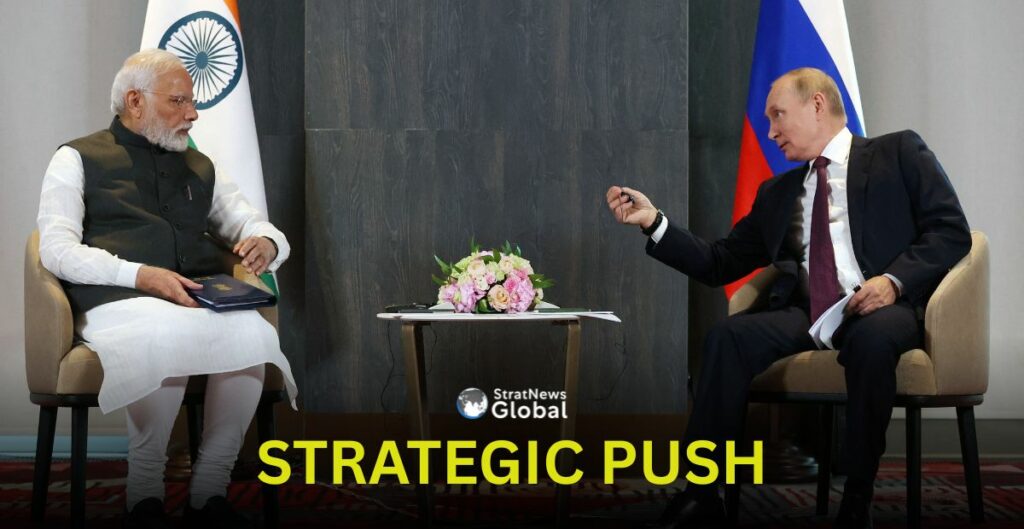
With bilateral trade at a crossroads and energy flows under strain, India is gearing up for a high-stakes summit with Russian President Vladimir Putin on Friday, an engagement officials say will prioritise “expansive, sector-wide economic agreements,” ranging from healthcare and mobility to a long-awaited Free Trade Agreement (FTA) with the Eurasian Economic Union (EAEU) and new transport corridors linking South Asia to Eurasia.
According to senior officials in the Ministry of External Affairs (MEA), the 23rd India–Russia Summit will place “unprecedented emphasis” on strengthening the economic architecture of the partnership at a time when global supply chains, energy markets and geopolitical alignments are in flux.
Growing Trade Ambitions
Officials noted that while India–Russia trade has expanded significantly in recent years, driven largely by energy purchases, the structure of trade remains “highly imbalanced” in Russia’s favour. India aims to correct this by expanding exports across a wide basket of goods.
“We have identified pharmaceuticals, agriculture, food-processing, marine products and several categories of consumer goods as priority sectors for expanding exports,” a senior MEA official said. Indian exporters of processed food, engineering goods, textiles and speciality chemicals are also being prepared for deeper engagement with Russian and Eurasian markets.
Multiple agreements across healthcare, trade, economics, media cooperation and mobility are expected to be signed during Putin’s visit.
India–EAEU FTA
For an India–Eurasian Economic Union (EAEU) FTA, the Terms of Reference were finalised in Moscow recently between India’s Commerce Ministry and the Eurasian Economic Commission. And the first round of negotiations has taken place.
“The FTA is a major priority for both sides,” MEA officials said. “This is not a new idea, but the urgency has increased. Once customs, standards and market-access issues are ironed out, it will open substantial opportunities for Indian businesses across the Eurasian region.”
Officials highlighted that the FTA could help offset fluctuations in energy trade and provide more predictable access for Indian exporters to Russia, Kazakhstan, Armenia, Belarus and Kyrgyzstan.
Connectivity Corridors
India and Russia are also doubling down on two major connectivity initiatives:
International North–South Transport Corridor (INSTC) linking India to Russia and onward to Europe via Iran, is being prioritised to reduce logistics costs and transit times.
“Technical-level discussions on customs harmonisation and digital tracking are in advanced stages,” an MEA official said.
Chennai–Vladivostok Maritime Corridor is expected to significantly shorten cargo transit between India and Russia’s Far East, boosting trade in coal, timber, seafood, and machinery.
“These corridors will be indispensable for taking advantage of the FTA once it is concluded,” officials noted.
Mobility
Mobility will be a major discussion point, especially after instances of Indian nationals being misled into combat or non-combat roles inside Russia.
“Mobility frameworks must ensure safety, legality and transparency,” an official said. India is expected to reiterate its demand that all Indians recruited into the conflict be returned, adding that “more than a dozen have already come back, and the process is ongoing.”
India and Russia are negotiating a structured mobility agreement to facilitate the recruitment of skilled Indian workers in sectors such as construction, infrastructure, transport and energy, but only through legal, government-approved channels.
Energy Trade
On declining oil imports from Russia, officials stressed that India’s energy sourcing remains “guided by commercial considerations and global market dynamics.”
“International sanctions and other market factors naturally affect the equation,” an MEA official said, adding that decisions “will continue to be made by Indian companies based on price, logistics and risk assessments.”
India is also working with Russia on clearing issues related to currency settlement, banking channels and repatriation of dividends from Indian investments in Russian energy projects.
Nuclear & Defence Cooperation
Officials said defence issues are always discussed at summits but “are never announced at that level,” referring to speculation about S-400 systems or aircraft deals.
On nuclear cooperation, both sides will review progress at Kudankulam and discuss future projects, including potential collaboration on small modular reactors.
“There is ongoing technical dialogue, but nothing can be confirmed before the leaders meet,” an official clarified.
Western Commentary
Asked about recent editorials by European ambassadors urging India to reconsider its Russia policy, officials were blunt: “It is not acceptable diplomatic practice for foreign envoys to offer public advice on third-country issues,” adding that India’s Russia policy is guided solely by its national interests.
Regarding Ukraine officials reiterated India’s consistent stance: “We support all efforts that lead to an immediate cessation of hostilities and a return to diplomacy.”
There is no indication that any specific peace proposal will be on the table during the summit.
A Pivotal Moment
As officials pointed out, India and Russia are marking 25 years of their strategic partnership, and the agenda for this summit reflects both continuity and expansion.
“This is not a transactional visit,” an MEA official stressed. “It is a strategic summit with wide-ranging implications for trade, connectivity, energy, mobility and emerging technologies.”
Russia Sets Agenda to Deepen India Ties
Russia has outlined plans to expand cooperation with India across energy, defence, trade and technology ahead of President Vladimir Putin’s upcoming state visit. Dmitry Peskov, Press Secretary to the Russian President, detailed Moscow’s priorities during a virtual media interaction organised by Sputnik in New Delhi.
Peskov said the bilateral relationship went beyond standard diplomatic frameworks. “Our bilateral ties rest on a deep historic background of mutual understanding, partnership, and a mutual vision of global affairs based on the rule of law and taking into account each other’s interests,” he said.
On energy, he described Russia as a key supplier for India. “This trade is of great benefit for India and mutually beneficial,” he noted, pointing to cooperation in nuclear energy, including the Kudankulam project. He added that Russia was ready to explore collaboration on small modular reactors, saying the country had “real experience producing them.”
Defence cooperation, he said, remained central to the partnership. “It’s not only BrahMos missiles, it is exchange of high technologies, know-how,” Peskov said. He reiterated Russia’s view of the Su-57 as “the best plane in the world” and confirmed that S-400 systems remained part of ongoing engagement. Russian-origin platforms, he said, account for 36% of India’s military inventory.
On trade, Peskov said bilateral volume had reached $63 billion and expressed hope that it could touch $100 billion by 2030. Nearly all transactions, he added, were now conducted in local currencies, which he said protected the relationship from external pressures. He acknowledged India’s concerns about trade imbalances and said a forum of importers would be held before the visit to explore ways to increase Russian imports from India.
Commenting on Ukraine, Peskov said Moscow appreciated India’s position. “We appreciate India’s readiness to seek a peaceful solution,” he said. He argued that Europe could not understand Russia’s position without dialogue.
He also referred to labour mobility discussions as “an issue of great importance” and said Russia and India needed close coordination on Afghanistan. On China, he described Beijing as a “privileged strategic partner” and said Moscow was prepared to advance trilateral understanding “as far as India is ready.”
Peskov concluded that the Russia–India relationship had “a very bright future”, describing it as historically grounded and resilient.
Taliban To Tighten Security After Chinese Nationals Die At Border
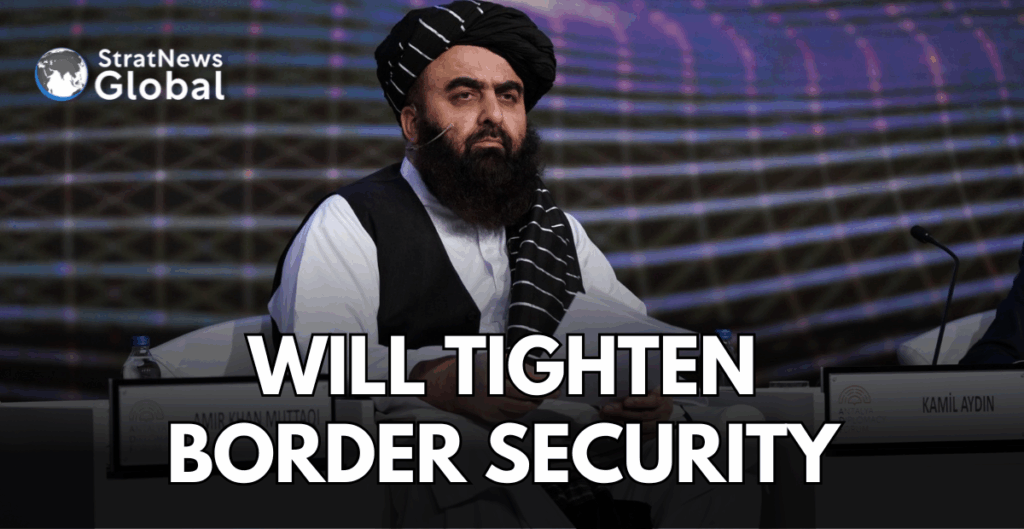
Afghanistan’s Taliban administration said it assured neighbouring Tajikistan on Tuesday it was ready to tighten border security and conduct joint investigations, after attacks which Dushanbe said were launched from Afghan territory killed five Chinese nationals over the past week.
In a call with his Tajik counterpart, Afghan Foreign Minister Amir Khan Muttaqi expressed regret and said Kabul was prepared to boost coordination between border forces, adding that “joint measures against malicious elements are a pressing necessity.”
“The Islamic Emirate is fully prepared to strengthen border security, conduct joint investigations, and engage in any form of coordination,” Muttaqi said, according to a statement from the Afghan foreign ministry.
He added that “an atmosphere of trust” had recently developed between the two countries and should not be undermined.
Tajik authorities said on Monday the two attacks, including one involving drones dropping grenades, had also injured five Chinese workers. China’s embassy confirmed the casualties and urged Chinese citizens to leave the frontier area.
Tajik President Emomali Rahmon ordered tighter border controls following the incidents, which occurred along the remote mountainous frontier.
Chinese Presence
China is a major investor in Tajikistan, a Russia-aligned Central Asian state of around 11 million people.
China Global South China reported that China is urging Tajikistan to “take all necessary measures” to protect Chinese citizens and businesses in Tajikistan’s border area.
Tajik President Emomali Rahmon, meanwhile, met senior security officials in his government on Monday to discuss ways to strengthen security on the southern border with Afghanistan, whose ruling Taliban movement has expressed sorrow and promised to help find the attackers.
Chinese workers are involved in mining and construction projects in Tajikistan, which, along with other countries in Central Asia, is seeking to improve relations and develop trade with Afghanistan despite persistent security concerns. China Global South China also reported that Tajikistan used a drone to kill two suspected drug smugglers from Afghanistan in the border area last month. In August, Tajik guards and fighters from the Afghan Taliban exchanged fire.
Afghanistan’s Ministry of Foreign Affairs has condemned the killings of the three Chinese workers last week and blamed that attack on “those seeking to create disorder, instability, & mistrust among the countries of the region.”
(with inputs from Reuters)
Pope Leo Tells Lebanese Communities To Fix Troubled Country
Pope Leo made a fervent appeal to Lebanon’s diverse communities to unite to solve the crisis-hit country’s myriad problems at a Mass on Tuesday attended by tens of thousands, which wrapped up his first overseas trip as Catholic leader.
The first U.S. pope, speaking to crowds on Beirut’s historic waterfront, pleaded for Lebanon’s people to “cast off the armour of our ethnic and political divisions” and address years of conflict, political paralysis and economic misery.
“We must unite our efforts so that this land can return to its glory,” Leo said to a crowd of 150,000 people, according to Vatican figures.
He spoke hours after praying near piles of rubble at the site of a 2020 chemical explosion that shredded parts of Beirut.
Leo has been visiting Lebanon for three days on the second leg of an overseas trip that started in Turkey, in which he has pleaded for peace in the Middle East and warned that humanity’s future was at risk from the world’s bloody conflicts.
The pope is due to leave for Rome with his entourage at about 1:15 p.m. (1115 GMT).
‘Mission Of Peace’
Leo, who has said he is on a mission of peace, has urged the heads of religious sects in Lebanon to unite to heal the country and pressed political leaders to persevere with peace efforts after last year’s devastating war between Israel and Iran-backed Hezbollah, and continued Israeli strikes.
The pope, a relative unknown on the world stage before his election to the papacy in May, has been closely watched as he made his first speeches overseas and interacted for the first time with people outside mainly Catholic Italy.
Crowds gathered at the waterfront hours before the start of Tuesday’s Mass. They waved Vatican and Lebanese flags as Leo toured in an enclosed popemobile, offering blessings as some in the crowd used umbrellas to guard against a strong Mediterranean sun.
Maroun al-Mallah, a 21-year-old student of landscape engineering, arrived at the site of Leo’s Mass before dawn to volunteer and said the visit could be a reset for Lebanon.
“It was lovely to know there was a sign of hope coming back to Lebanon,” Mallah told Reuters.
“Even in university, we just think about what could come next. It’s just pain after pain after pain … especially after the third biggest explosion happened” at the port, he said.
Lebanon Blasts
The 2020 explosion at the Beirut port killed more than 200 people and caused damage worth billions of dollars, but an investigation into the cause has been stymied, and no one has been held to account.
Leo prayed at the site, laid a wreath of flowers at a memorial and greeted about 60 blast survivors and relatives of the victims from different religions, holding up photos of their lost loved ones.
He gave them each a rosary in a pouch decorated with his coat of arms. One woman sobbed as she greeted Leo and asked if she could give him a hug. He nodded, and they embraced.
Cecile Roukoz, who lost her brother in the explosion, said Leo “will raise his voice for justice, and we need justice for all the victims”.
Leo also visited a psychiatric hospital on Tuesday, run by nuns of the Franciscan order.
Lebanon, which has the largest proportion of Christians in the Middle East, has been rocked by the spillover of the Gaza conflict as Israel and Hezbollah went to war, culminating in a devastating Israeli offensive.
The country, which hosts 1 million Syrian and Palestinian refugees, is also struggling to overcome a severe economic crisis after decades of profligate spending sent the economy into a tailspin in late 2019.
(with inputs from Reuters)
Honduras Elections: Presidential Candidates Asfura, Nasralla Tie
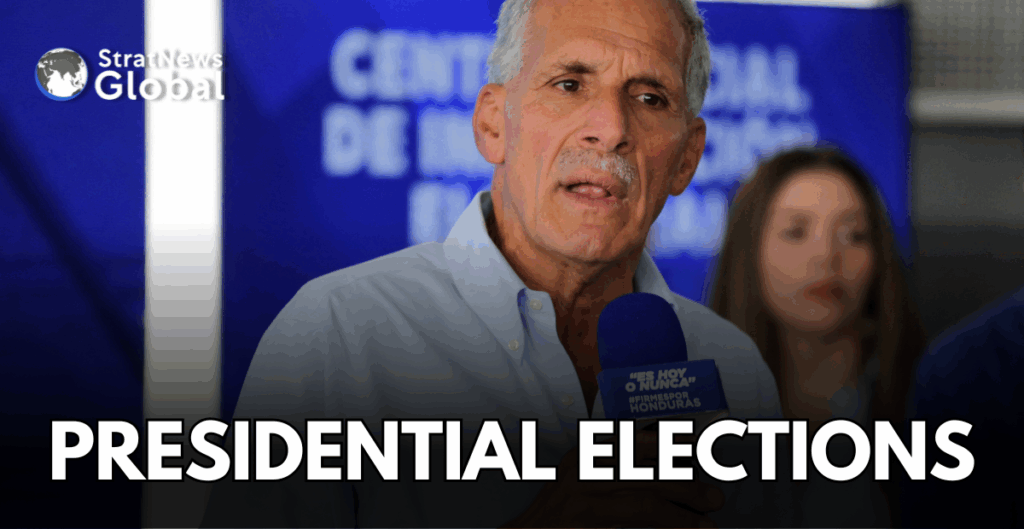
Presidential candidates in Honduras – Nasry Asfura and Salvador Nasralla were practically tied in the latest vote count on Monday, with both holding just under 40% of the vote in a tight race beset by problems with the results website.
Around midday in Honduras, the electoral authority’s website showed Asfura – the conservative National Party candidate backed by U.S. President Donald Trump – leading Liberal Party candidate Nasralla by just 515 votes. It was not clear how many votes had been counted due to problems with the electoral portal. Rixi Moncada, of the ruling LIBRE Party, was well behind in third with 19% of the vote.
Nasralla posted on X that internal projections put him ahead with 44.6%. “We are not declaring ourselves the winners, just projecting the results that will be fed into the CNE (electoral body) in the next hours,” he said in the post. Members of the National Party criticized Nasralla for not waiting until the final results had been released by the electoral authority.
CNE President Ana Paola Hall, in a post on X, called for calm amid the technical tie and asked for patience as the count continues.
Asfura’s lead has narrowed significantly since the first preliminary results were released on Sunday evening.
Awaiting Final Count
Trump responded to the changing margin by saying it appeared Honduras was “trying to change the results of their Presidential Election,” alleging that the country’s election commission prematurely stopped counting votes.
“If they do, there will be hell to pay! The people of Honduras voted in overwhelming numbers on November 30th,” Trump said on his Truth Social platform.
Whichever candidate wins the most votes will govern the country between 2026 and 2030. There is no second round of voting.
Outgoing President Xiomara Castro reposted on X a message from her husband, former President Manuel Zelaya, calling for vigilance while “awaiting the final count, with 100% of the presidential ballots tallied.”
Throughout Monday morning, problems with the online portal where results were meant to be updated added to the frustration around the vote. The website appeared to be down for long stretches, with local media criticizing the outage.
Support Of Asfura
In the runup, Trump weighed in on the tightly contested race to throw his support behind Asfura, 67-year-old former mayor of Tegucigalpa, in a series of social media posts, saying he can work with him to counter drug trafficking and that “if he doesn’t win, the United States will not be throwing good money after bad.”
On Friday, Trump also said he will grant a pardon to former Honduran President Juan Orlando Hernandez, who is serving a 45-year prison sentence in the U.S. for drug trafficking and firearms charges. Hernandez, who led Honduras from 2014-2022, was also from the National Party.
Argentine President Javier Milei threw in his lot with Asfura as well, saying on social media that “he is the candidate who best represents opposition to the leftist tyrants who destroyed Honduras.”
Both Asfura and Nasralla have said they may resume diplomatic relations with Taiwan, which were severed in 2023. Such a move would mark the biggest diplomatic setback for China in the region for decades.
(with inputs from Reuters)
India: Apple Resists Govt Order To Load Sanchar Saathi App
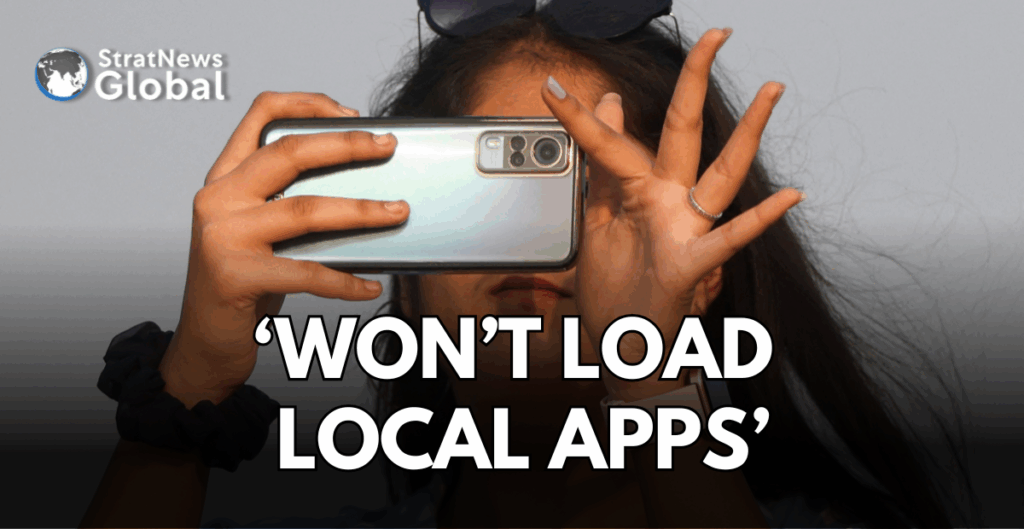
Apple does not plan to comply with a mandate to preload its smartphones with India’s own cybersecurity app and will convey its concerns to the government, three sources familiar with the matter said, after the government’s move sparked concerns about surveillance.
The government of India has confidentially ordered companies, including Apple, Samsung, and Xiaomi, to preload their phones with an app called Sanchar Saathi, or Communication Partner, within 90 days. The app is intended to track stolen phones, block them, and prevent them from being misused.
The government also wants manufacturers to ensure that the app is not disabled. And for devices already in the supply chain, manufacturers should push the app to phones via software updates, Reuters was first to report on Monday.
India’s telecom ministry confirmed the move later, describing it as a security measure to combat “serious endangerment” of cybersecurity. But opposition parties and privacy advocates criticized the move, saying it is a way for the government to gain access to India’s 730 million smartphones.
Apple does not plan to comply with the directive in India and will tell the government it does not follow such mandates anywhere in the world, as they raise a host of privacy and security issues for the company’s iOS ecosystem, said two of the industry sources who are familiar with Apple’s concerns. They declined to be named publicly as the company’s strategy is private.
“It’s not only like taking a sledgehammer, but this is also like a double-barreled gun,” said the first source.
Apple and the telecom ministry did not respond to requests for comment.
‘Cannot Watch Us’
The app order comes as Apple is locked in a court fight with an Indian watchdog over the nation’s antitrust penalty law. Apple has said it risks facing a fine of up to $38 billion in a case.
The second source said Apple does not plan to go to court or take a public stand, but it will tell the government it cannot follow the order because of security vulnerabilities.
Apple “can’t do this. Period,” the person said.
Other brands, including Samsung, are reviewing the order, said a fourth industry source who is familiar with the matter. Samsung did not respond to Reuters queries.
Sources have said the government moved forward with the order without industry consultation.
While Apple tightly controls its App Store and proprietary iOS software, which are crucial to its $100-billion-per-year services business, Google’s Android is open-sourced, allowing manufacturers like Samsung and Xiaomi greater leeway to modify their software.
Congress Party has called for a rollback of the mandate. On X, KC Venugopal, a top Congress leader, said, “Big Brother cannot watch us.”
The government’s press release said the app can help tackle incidents of duplicated or spoofed IMEI numbers, which enable scams and network misuse.
“India has a big second-hand mobile device market,” the telecom ministry said in a statement late on Monday. “Cases have also been observed where stolen or blacklisted devices are being resold.”
(with inputs from Reuters)
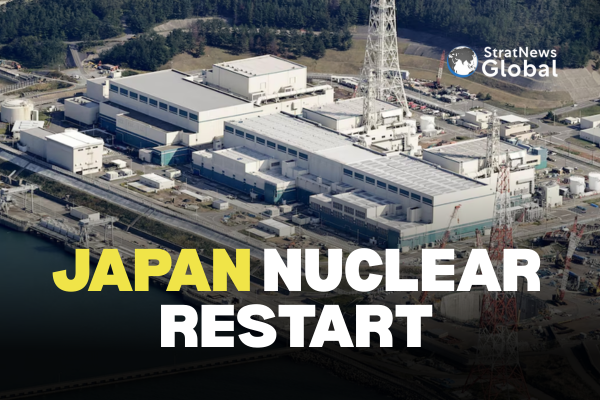
Japan Weighs Partial Restart of World’s Largest Nuclear Plant
A regional assembly in Japan began discussions on Tuesday over whether to partially restart the Kashiwazaki-Kariwa Nuclear Power Plant, the largest in the world, as the country seeks to boost domestic energy production. The plant, located about 300 kilometres northeast of Tokyo along the Sea of Japan, has been shut since the 2011 Fukushima Daiichi disaster. Both facilities are operated by Tokyo Electric Power Co (TEPCO).
If approved, the restart of the plant’s Unit No. 6 would mark TEPCO’s first nuclear reactivation since Fukushima. The peaceful coastal region, encompassing Kashiwazaki city and Kariwa village home to around 80,000 residents has drawn renewed national attention as Japan moves to balance safety concerns with growing energy demands.
TEPCO Says Nuclear Power Essential for Energy Security
TEPCO President Tomiaki Kobayakawa said nuclear energy remains crucial for Japan, a country with limited natural resources. “The use of nuclear energy is essential in Japan, which has few resources,” he told business delegates during a tour of the plant on Monday.
Following the Fukushima disaster, all 54 of Japan’s reactors were shut down, leaving the country dependent on fossil fuel imports. Prime Minister Sanae Takaichi has voiced support for restarting more reactors to enhance energy security and reduce costs, as imported fuels still generate around 60% to 70% of Japan’s electricity.
Kobayakawa said safety improvements have been extensive, with about 20 workers in protective blue hazmat suits conducting safety drills at the site.
Local Concerns Over Safety and Evacuation
Despite reassurances from TEPCO, local officials and residents remain uneasy. Kashiwazaki city assembly member Yukihiko Hoshino said residents still fear another nuclear accident. “The biggest worry is whether they will be able to evacuate,” he said, noting that some people displaced by the Fukushima disaster have yet to return home.
The Niigata assembly’s final session for 2025 will run until 22 December, during which deliberations on the restart will continue. TEPCO aims to resume operations at the 1,356-megawatt Unit No. 6 in January, pending approval, with plans to restart Unit No. 7 later and potentially decommission the remaining five reactors.
Growing Power Demand in a Digital Era
Japan has restarted 14 of the 33 reactors still operable since the 2011 disaster. According to the industry ministry, restarting Unit No. 6 alone could boost electricity supply for the Tokyo region by 2%.
After years of declining demand, Japan’s power needs are expected to rise again due to the rapid growth of data centres and AI-related industries. TEPCO, meanwhile, continues to pay compensation for the Fukushima Daiichi disaster as it works to restore public trust in nuclear energy.
(with inputs from Reuters)