

Support us by contributing to StratNewsGlobal on the following UPI ID
ultramodern@hdfcbank

Strategic affairs is our game, South Asia and beyond our playground. Put together by an experienced team led by Nitin A. Gokhale. Our focus is on strategic affairs, foreign policy and international relations, with higher quality reportage, analysis and commentary with new tie-ups across the South Asian region.
You can support our endeavours. Visit us at www.stratnewsglobal.com and follow us on YouTube, Twitter, Facebook and Instagram.
र 500 per month
र 1000 per month
र 5000 per year
र 10000 per year
Donate an amount of your choice
र 500 per month
Donate र 500 per month

र 1000 per month
Donate र 1000 per month
र 5000 per year
Donate र 5,000 per year
र 10000 per year
Donate र 10,000 per year
Donate an amount of your choice
Donate an amount of your choice
US Tariffs, Territorial Tensions To Dominate ASEAN Talks In Malaysia
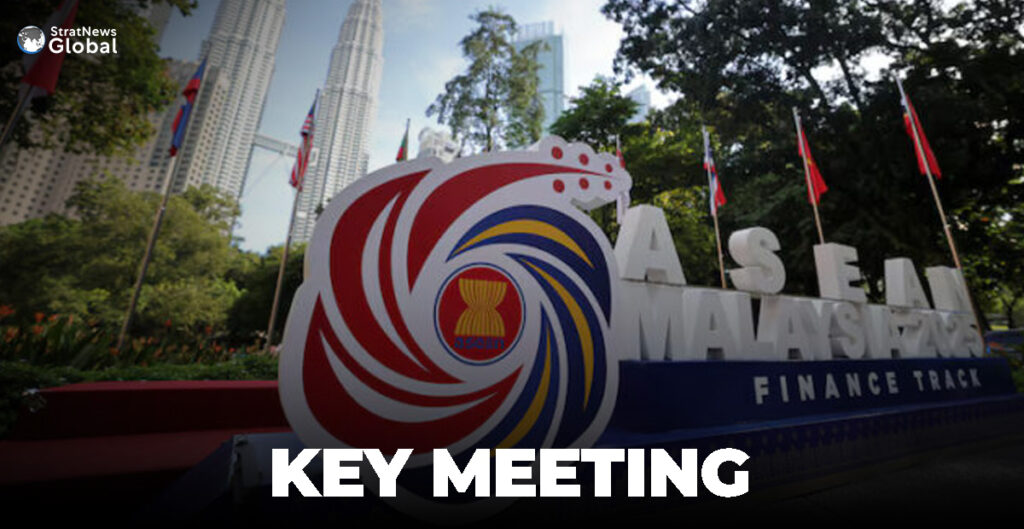
ASEAN foreign ministers are set to meet on Wednesday amid fresh concerns over US trade tariffs and rising tensions between Thailand and Cambodia that could challenge the region’s unity.
The gathering in Malaysia of the 10-member Association of Southeast Asian Nations will be followed by a flurry of meetings on Thursday and Friday between the group and its major trade partners, including the United States, China, Japan, Russia, India and the European Union.
China, Russia To Join ASEAN Meeting
China’s Foreign Minister Wang Yi and Russian counterpart Sergei Lavrov are expected to join the Kuala Lumpur meetings, as will US Secretary of State Marco Rubio, who makes his first trip to Asia looking to smooth over relations with allies and partners rattled by President Donald Trump’s tariff strategy.
Trump on Monday announced hefty levies of between 25% and 40% on six Southeast Asian countries, despite concerted efforts by some to offer broad concessions and negotiate lower rates.
The export-reliant ASEAN is collectively the world’s fifth-biggest economy, with some members beneficiaries of supply chain realignments from China. Only Vietnam has secured a deal, which lowers the levy to 20% from 46% initially.
Indonesia, Thailand and Malaysia said they would seek further talks ahead of the tariff implementation on August 1.
Tariffs ‘Counterproductive’
ASEAN foreign ministers will express “concern over rising global trade tensions and growing uncertainties in the international economic landscape, particularly the unilateral actions relating to tariffs,” according to a draft joint communique seen by Reuters.
The draft, dated July 7 and before the latest tariff rates were announced, did not mention the United States and used language similar to an ASEAN leaders’ statement in May. Both said tariffs were “counterproductive and risk exacerbating global economic fragmentation”.
The bloc in April said it would not impose retaliatory measures and its leaders have pledged any bilateral deals they strike with Washington would not harm fellow ASEAN members.
OCBC senior ASEAN economist Lavanya Ventakeswaran said countries including Vietnam face additional uncertainty over tariffs targeting transshipments, a measure aimed at products largely from China, with questions remaining over enforcement and implementation.
“The bottom line is that it’s going to be quite complicated moving forward,” Ventakeswaran said.
The issue has also been complicated by Trump’s initial threat of an additional 10% on tariffs on countries aligned with the BRICS grouping. Indonesia is a member, while Malaysia, Thailand and Vietnam are partner countries.
Resolution To Thailand-Cambodia Dispute?
ASEAN will promote a treaty on a nuclear weapons-free zone in Southeast Asia and the meeting could also see Thailand and Cambodia seek to ease a dispute that led to a mobilisation of their troops at their border and a crisis for a Thai government now hanging by a thread.
Thai Prime Minister Paetongtarn Shinawatra has since been suspended pending a court case over her with Cambodia’s influential former leader, Hun Sen, a conversation her opponents say undermined Thailand’s sovereignty and integrity.
The dispute puts more pressure on ASEAN to maintain a united front, amid other unresolved issues including an intensifying civil war in Myanmar and a protracted drafting of a code of conduct with Beijing for the South China Sea, a key source of geopolitical tension.
(With inputs from Reuters)
Taiwan Simulates China Invasion In Massive War Games
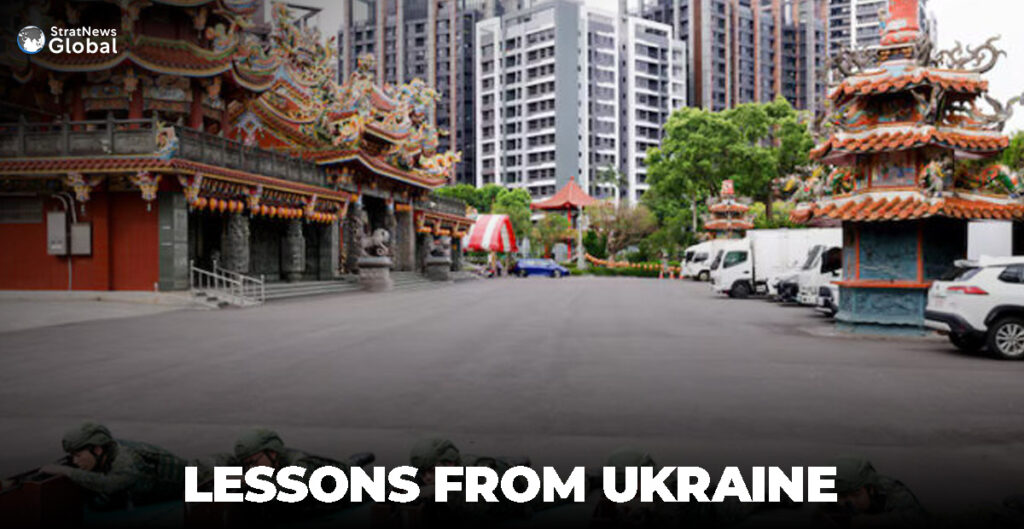
Taiwan has initiated its largest-ever war games on Wednesday, launching simulated attacks on its command systems and infrastructure in preparation for a possible Chinese invasion, senior defence officials said.
The early stages of the annual Han Kuang exercises will focus on testing how Taiwan’s military can decentralise command in the event of a crippling communications attack. Over the next 10 days, the drills will expand to assess Taiwan’s combat readiness against a full-scale attempt to seize the island.
Lessons From Ukraine
“We are learning from the situation in Ukraine in recent years and realistically thinking about what Taiwan might face … in real combat,” said one senior defence official, highlighting the need to protect command and communication systems.
“Commanders have to think what issues their troops might face and they need to pass them down to their subordinates,” the official said, speaking on condition of anonymity due to the sensitivity of the operation.
Cyber attacks and misinformation campaigns are seen by Taiwan as high-intensity “grey zone” actions that are likely to precede a broader Chinese assault.
Reservists, HIMARS To Feature
The annual Han Kuang exercises will mobilise the largest number of reservists, some 22,000, and for the first time feature New High Mobility Artillery Rocket Systems, or HIMARS, made by Lockheed Martin, along with Taiwan-developed Sky Sword surface-to-air missiles.
China views democratically governed Taiwan as its own and has intensified military pressure around the island over the last five years, including a string of war games.
Beijing has never renounced the use of force to bring the island under its control, and any attack on Taiwan could ignite a broader regional war.
As they evolve, the drills will feature 24-hour operations army, naval and air operations to defend Taiwan coasts.
Civil defence elements will also be tested, including the creation of emergency supply stations as well as the use of Taiwan’s recently-expanded air-raid shelters.
‘Nothing But A Bluff’
China’s defence ministry said on Tuesday that Taiwan’s Han Kuang military exercises were “nothing but a bluff”.
“No matter what weapons are used, Taiwan can’t resist the People’s Liberation Army’s sharp sword against independence,” ministry spokesperson Jiang Bin was quoted as saying by state broadcaster CCTV.
The Taiwanese senior defence official said they wanted to show China that they faced an unpredictable foe and that any invasion scenario was growing more complex, while showing the international community that Taiwan was determined to defend itself.
Taiwan’s President Lai Ching-te and his government strongly object to China’s sovereignty claims, saying it is up to the island’s people to decide their future.
(With inputs from Reuters)
Ukraine Seeks Probe Into Suspected Russian Chemical Weapons Use
Ukraine on Tuesday formally asked the global chemical weapons watchdog in The Hague to probe Russia’s alleged use of banned toxic munitions against Ukrainian forces.
Kyiv submitted a request to establish an investigation to the governing body of the Organisation for the Prohibition of Chemical Weapons (OPCW).
It followed Dutch and German intelligence agencies on Friday saying they had evidence of widespread use of illegal weapons by Russia along the frontline.
Agency chief Fernando Arias said in a statement to the OPCW’s Executive Council that in view of the alleged frequent use of dangerous chemical agents his office would step up monitoring of activity along the Russia-Ukraine conflict line.
He invited Ukraine to discuss its proposal with member states, a majority of whom may be needed to support such an investigation.
The OPCW created a similar team in 2018 to examine accusations of chemical weapons use in Syria. The Investigation and Identification Team found that Syrian government forces and Islamic State militants had used banned chemical weapons in the civil war that began in March 2011.
Chloropicrin
The United States first accused Russia in May last year of using chloropicrin, a chemical compound more toxic than riot control agents and first used by Germany during World War One.
The OPCW, a disarmament agency in The Hague with 193 member states, said last year that initial accusations levelled by both countries at each other were “insufficiently substantiated”.
Both sides have denied using chemical weapons in the conflict, which escalated when Russia invaded Ukraine in February 2022.
“Ukraine hereby requests the Director-General of the OPCW to take steps towards establishing an independent and impartial mechanism (to) investigate cases of alleged use of chemical weapons in Ukraine,” a copy of the request shared with Reuters said.
It asked that the mechanism be empowered to “collect additional evidence and identify perpetrators, organisers, sponsors of such use.”
It was submitted at the beginning of four days of closed-door meetings by the 41-country Executive Council of the OPCW. The disarmament body had no immediate comment on the request.
At least three Ukrainian deaths have been tied to chemical weapons use, the Dutch Military Intelligence Agency said, while more than 2,500 people injured on the battlefield reported chemical weapons-related symptoms to Ukrainian health authorities.
On Monday, Britain had two Russian individuals and one Russian entity as part of its chemical weapons sanctions regime, in its latest effort to punish Moscow for the war in Ukraine.
(With inputs from Reuters)
Russian Minister Linked To Embezzlement Probe Before Death: Sources
A sacked Russian minister found dead with a gunshot wound in a park outside Moscow had been linked to an official probe into embezzled funds meant for fortifying the border with Ukraine, two sources said.
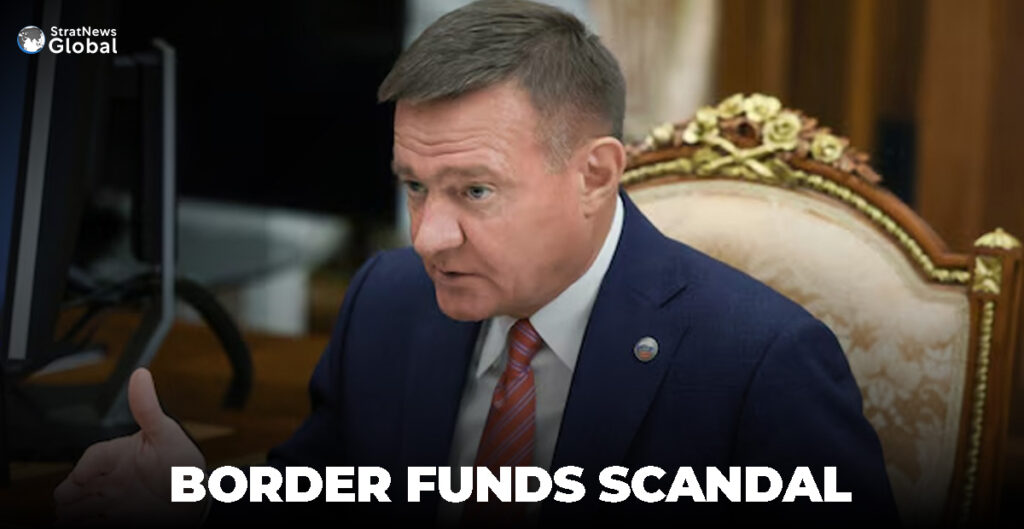
President Vladimir Putin on Monday dismissed Roman Starovoit, a former Kursk governor, as transport minister and asked Starovoit’s deputy to replace him. Starovoit was found dead at a park just outside Moscow, state investigators announced a few hours later.
Two sources told Reuters on condition of anonymity that Starovoit’s dismissal had been planned for some time because he was suspected of being involved in the embezzlement of funds earmarked for strengthening the defences in the Kursk region.
The sources spoke on condition of anonymity due to the sensitivity of the situation. Starovoit’s family could not be reached for comment.
The Kremlin said it was shocked by news of his death, but has refused to disclose the reasons for his dismissal. State prosecutors did not respond to a request for comment.
Border Breach Shock
Thousands of Ukrainian soldiers smashed their way across the Russian border into the Kursk region in August 2024, the biggest foreign incursion into Russia since World War Two, in what was a major embarrassment for the Russian army.
Ukrainian forces were only pushed out of Kursk earlier this year, but swathes of the region were devastated and Russia said tens of thousands of Ukrainian soldiers had been killed or injured in the battles there. It did not disclose its own losses but Ukraine said they had been heavy.
RBC, a leading Russian media group, reported that Russian law enforcement agencies were checking Starovoit’s involvement in the embezzlement of funds in the Kursk region.
Kommersant, one of Russia’s leading newspapers, said those accused in the case had given evidence against Starovoit.
State prosecutors said in December that they had discovered embezzlement – including overstating construction costs – of some of the 19.4 billion roubles ($248 million) in state spending earmarked for strengthening the border in Kursk.
The work on strengthening the border began when Starovoit was governor of Kursk. Prosecutors said the work was not finished on time and that at least 3.2 billion roubles ($41 million) was missing.
Russia’s State Investigative Committee, which investigates serious crimes, said its principal hypothesis was that Starovoit had taken his own life. A gun was found near his body.
It gave no further details and did not specify when he had been found dead.
(With inputs from Reuters)
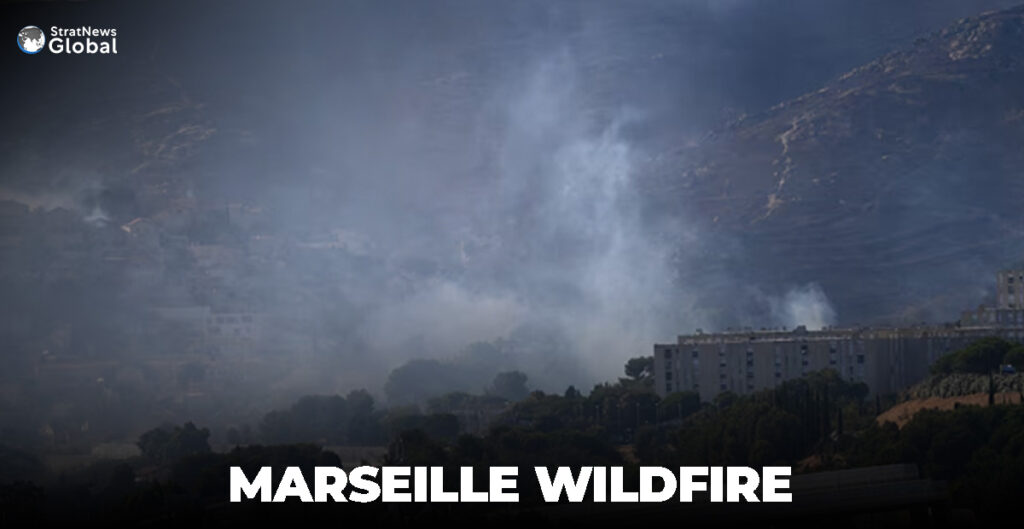
Firefighters Battle Raging Wildfire Near French City Of Marseille
Hundreds of firefighters battled a rapidly spreading wildfire that reached the outskirts of Marseille in southern France on Tuesday, prompting residents to stay indoors and forcing the nearby airport to shut down.
Aided by firefighting helicopters and aircraft, the firefighters had the blaze under control by evening, officials said, but a forecast of more strong winds meant it might yet advance further towards France’s second most populous city.
The fire, fanned by winds of up to 70 kph (43 mph), could be smelt in the centre of Marseille as thick clouds of smoke hovered over the city on the Mediterranean coast.
“It’s very striking – apocalyptic even,” said Monique Baillard, a resident of Les Pennes-Mirabeau, the town north of Marseille where officials said the fire started on a highway.
Firefighters Hold The Line
The fire has burnt through 700 hectares (1,730 acres) and was considered to be under control even though it is still burning, regional prefect Georges-Francois Leclerc said.
About 20 buildings have been at least partly hit by the fire but no fatalities have been reported and hundreds of homes have been saved by firefighters, he said. Over 700 firefighters were battling the blaze, aided by firefighting helicopters and aircraft.
Wildfires, which have become more destructive in Mediterranean countries in recent years and attributed to climate change, were also raging in northeastern Spain, where large parts of the country were on high alert for fires.
There were also fires last week on the Greek island of Crete and in Athens, as much of Europe sweltered in an early summer heatwave.
As the fire was spreading, residents of Marseille received official alerts on their phones telling them to stay at home and put damp cloths on any openings.
“As we speak, it’s a battle,” Payan said, likening tackling the wildfire to “guerrilla warfare”.
“We’re waiting to see what happens overnight because that’s critical too. Everything is strategic: wind speed, humidity, nightfall — every factor matters. Once again, it’s extremely complex, and the work is incredibly difficult.”
Residents Confined
Two residents of the 16th borough, in the north of Marseille, near where the fire started, described how scared they had been.
“It was dangerous, a lot of very dark smoke, we were really afraid. Police and firefighters did a great job,” said one resident, who did not give his name and said things now looked under control in his neighbourhood.
Residents were told not to evacuate unless ordered so that roads could be left clear for rescue services.
“At this stage, populations must remain confined,” the Provence-Alpes-Côte d’Azur prefecture posted on X. “Close shutters, doors, keep your property clear for emergency services, and do not travel on the roads.”
Anne, a 51-year-old woman who works in Marseille and lives on the outskirts, said by phone: “The sky is grey with ash, and the smell of fire is very strong in the centre of Marseille.”
In the coastal neighbourhood of l’Estaque, restaurant owner Simon Epenmbia said he was huddling in the restaurant with his family and neighbours.
“We are relatively close to the sea, where we feel safer for now and there is less smoke,” he said. “I also saw other people who came here towards the beach and are sheltering in their cars.”
A spokesperson for Marseille airport, France’s fourth-busiest, said planes had not been taking off or landing since around midday and some flights had been diverted to Nice, Nimes and other regional airports. It was unclear when it would reopen.
Many train lines heading to and from Marseille were suspended. Some roads and highways were also shut.
A wildfire that started near Narbonne, in southwestern France, was also still active on Monday. Some 2,000 hectares have burnt there, the local prefecture said.
(With inputs from Reuters)
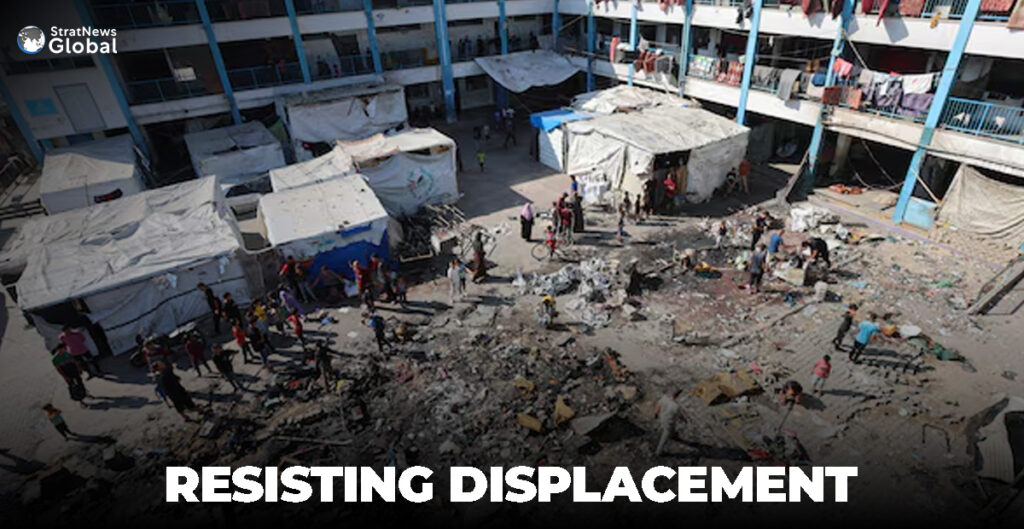
Gazans Reject Trump’s Displacement Plan Amid Ruins Of War
Although 45-year-old Mansour Abu Al-Khaier sees nothing but death and destruction across war-ravaged Gaza, he and many others firmly reject Trump’s Israeli-backed displacement plan.
“This is our land. Who would we leave it to, where would we go?” asked Al-Khaier, a technician.
Trump, hosting Israeli Prime Minister Benjamin Netanyahu at the White House on Monday, indicated progress on a disputed initiative to relocate Palestinians out of the coastal enclave, citing “great cooperation from…surrounding countries…”
Speaking to reporters at the start of a dinner between U.S. and Israeli officials, Netanyahu said the United States and Israel were working with other countries that would give Palestinians a “better future,” suggesting that Gazans would be able to move to neighbouring nations.
In an exchange with Trump, Netanyahu said: “You know if people want to stay, they can stay. But if they want to leave, they should be able to leave. It shouldn’t be a prison. It should be an open place and give people free choice.”
He added: “We’re working with the United States very closely about finding countries that will seek to realise what they always say, that they wanted to give the Palestinians a better future. I think we’re getting close to finding several countries.”
Asked about Netanyahu’s remarks, U.N. human rights spokesperson Ravina Shamdasani told a Geneva press briefing:
“This raises concerns with regard to forcible transfer – the concept of voluntary transfers in the context that we are seeing in Gaza right now (is) very questionable.”
Five days after becoming president in January, Trump said Jordan and Egypt should take in Palestinians from Gaza while suggesting he was open to this being a long-term plan.
Cairo and Amman quickly rebuffed Trump’s idea to turn impoverished Gaza into the “Riviera of the Middle East”, and so did Palestinians and human rights groups, who said the plan would amount to ethnic cleansing.
When asked this week about displacing Palestinians, Trump said the countries around Israel were helping out. “We’ve had great cooperation from … surrounding countries. … So something good will happen,” Trump said.
Saed, a 27-year-old Gaza Palestinian, woke up troubled to the news that Trump and Netanyahu, whose military has flattened much of Gaza, were again floating the displacement idea.
Even after more than 20 months of war and repeated internal displacement, he remains deeply attached to Gaza, a tiny, densely populated strip that is itself home to generations of refugees from the 1948 war that led to the creation of Israel.
“We have the right to leave of our own free will and visit other countries, but we reject the plan of displacement as Palestinians,” said Saed.
Palestinians have long sought to create an independent state in the Israeli-occupied West Bank, Gaza and East Jerusalem through a U.S.-mediated peace process.
Fear Of Repeated ‘Nakba’
Many Palestinians accuse Israel of having methodically undermined their statehood prospects through increased settlement building in the West Bank and by levelling much of Gaza during the current war.
Israel rejects the accusation, saying it is fighting only to eliminate Palestinian militants it says pose an existential threat, and that it has historical and biblical roots in the West Bank.
Displacement is one of the most emotional issues for Palestinians, who fear a repetition of the 1948 “Nakba” (catastrophe) when hundreds of thousands were dispossessed of their homes in the war of Israel’s birth.
The Nakba has been one of the defining experiences for Palestinians for more than 75 years, helping to shape their national identity and casting its shadow on their conflicted relationship with Israel in the decades since.
To Israelis, the creation of their state was a joyous moment for a long-persecuted people.
The Gaza war erupted when Hamas attacked southern Israel in October 2023, killing around 1,200 people and taking 251 hostages, according to Israeli tallies. About 50 hostages remain in Gaza, with 20 believed to be alive.
Israel’s subsequent assault on the Palestinian enclave in its war with Hamas has killed over 57,000 Palestinians, according to the Gaza health ministry.
Some Palestinians who have faced relentless Israeli airstrikes and severe shortages of food, fuel, medicine and water are looking for a way out, according to findings by the Palestinian Centre for Policy and Survey Research.
“Almost half want to leave the Gaza Strip if they could,” the think tank said in a report in May.
A proposal seen by Reuters and bearing the name of a controversial U.S.-backed aid group described a plan to build large-scale camps called “Humanitarian Transit Areas” inside – and possibly outside – Gaza to house the Palestinian population.
It outlined a vision of “replacing Hamas control over the population in Gaza”.
As far as Gaza Palestinian Abu Samir el-Fakaawi was concerned, “I will not leave Gaza. This is my country.”
“Our children who were martyred in the war are buried here. Our families. Our friends. Our cousins. We are all buried here. Whether Trump or Netanyahu or anyone else likes it or not, we are staying on this land,” he added.
(With inputs from Reuters)
Australian PM Albanese Confirms China Visit As Beijing Considers Trade Deal Review
Australia’s Prime Minister Anthony Albanese announced on Tuesday that he will visit China starting this weekend, as Beijing seeks to strengthen partnerships in artificial intelligence, green energy, and the digital economy.
“I look forward to going to Shanghai, Beijing and Chengdu, which I will visit from Saturday,” Albanese told reporters in Hobart. He did not give more details about his trip.
The Chinese foreign ministry confirmed that Albanese will be visiting the country from July 12 to 18.
“China is willing to work with Australia to take this visit as an opportunity to strengthen communication, enhance mutual trust and expand practical cooperation,” ministry spokesperson Mao Ning told a regular press conference.
This would be Albanese’s second visit to China as prime minister, after his re-election in May.
Albanese’s first visit to Beijing as prime minister in 2023 broke a seven-year freeze in diplomatic ties, and he emphasised the need for communication with China, despite differences between the two trading partners.
Albanese’s trip comes as China, its largest trading partner, suggested a review of the 10-year-old free trade agreement between the two countries to boost ties in agriculture and mining and explore growth areas in new technologies.
“We are willing to review the agreement with a more open attitude and higher standard,” Xiao Qian, the Chinese ambassador to Australia, wrote in The Australian Financial Review on Monday.
When asked if Australia would look to expand the free trade deal with China to include AI, Albanese said: “We will determine our policy”.
Beijing’s Trade Deal Review
China has proposed a comprehensive review of their decade-old free trade agreement to deepen cooperation in traditional sectors like agriculture and mining, while also expanding into emerging industries such as artificial intelligence, green energy, and digital technologies.
The proposal comes amid a broader effort by both countries to stabilise and revitalise their bilateral relationship, which had been strained in recent years over political tensions and trade barriers.
The China-Australia Free Trade Agreement (ChAFTA), signed in 2015, significantly boosted trade flows by reducing tariffs and improving market access.
However, evolving global economic dynamics and technological advances have prompted both sides to reassess the deal’s relevance and potential for expansion.
Chinese officials have indicated interest in enhancing trade mechanisms to support sustainable growth and meet rising demand in critical sectors.
For Australia, a review could open up greater opportunities for exporters of agricultural products, minerals, and rare earths, while also encouraging deeper partnerships in tech-driven fields.
(With inputs from Reuters and IBNS)
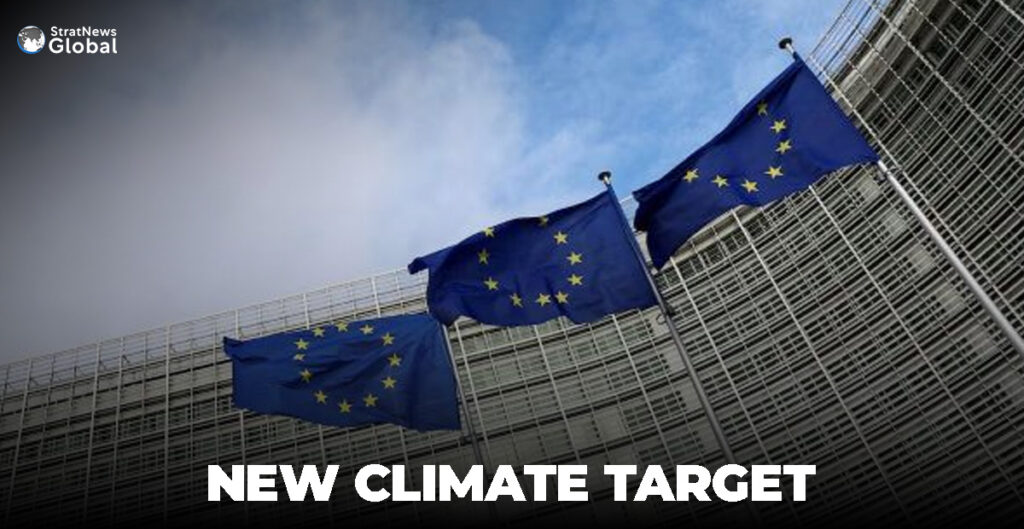
Far-Right Lawmakers To Lead EU Talks On 2040 Climate Target
The far-right Patriots for Europe group will head the European Parliament’s efforts on setting the EU’s new climate target, lawmakers said on Tuesday. Their leadership role could pose challenges to reaching an agreement on the proposed goal of cutting greenhouse gas emissions by 90% by 2040.
The Patriots group, which has rejected EU policies to curb climate change, is the third-biggest in the parliament, and includes the political parties of France’s far-right leader Marine Le Pen and Hungarian Prime Minister Viktor Orban.
Patriots group chair Jordan Bardella said the group “resolutely opposed” the 90% emissions target and had bid to lead the work to assert its vision on the goal.
“We are opposed to it because we feel that there are far too many constraints already bearing on industry at European level, and this would simply precipitate us into de-growth,” Bardella told a news conference.
Climate change has made Europe the world’s fastest-warming continent, and a severe heatwave last week caused disruption across the continent. But governments from Italy to Poland have pushed back this year on ambitious emissions-cutting goals, citing concerns over the costs for industries.
2040 Climate Target
The new role puts the Patriots in an influential position for when EU countries and the European Parliament negotiate the EU’s 2040 climate target in the coming months – talks in which the Patriots will represent the European legislature.
The Patriots will be tasked with drafting an initial proposal for the parliament’s position in these negotiations. Liberal, socialist and green groups said they were preparing a proposal, which the Parliament would on Wednesday vote on, to fast-track the negotiations – cutting out this first stage of the process where the Patriots would exert influence.
“We can take back the control of the file,” French liberal EU lawmaker Pascal Canfin told reporters.
The Patriots group holds eurosceptic positions including the accusation that the EU is seeking to replace national governments with a European “superstate”.
The Patriots secured the negotiating role in a closed-door meeting on Tuesday morning by outbidding the parliament’s biggest group, the centre-right European People’s Party, EU officials said.
Brussels has struggled to generate political support for the 2040 climate target, which the European Commission last week proposed after months of delay.
(With inputs from Reuters)
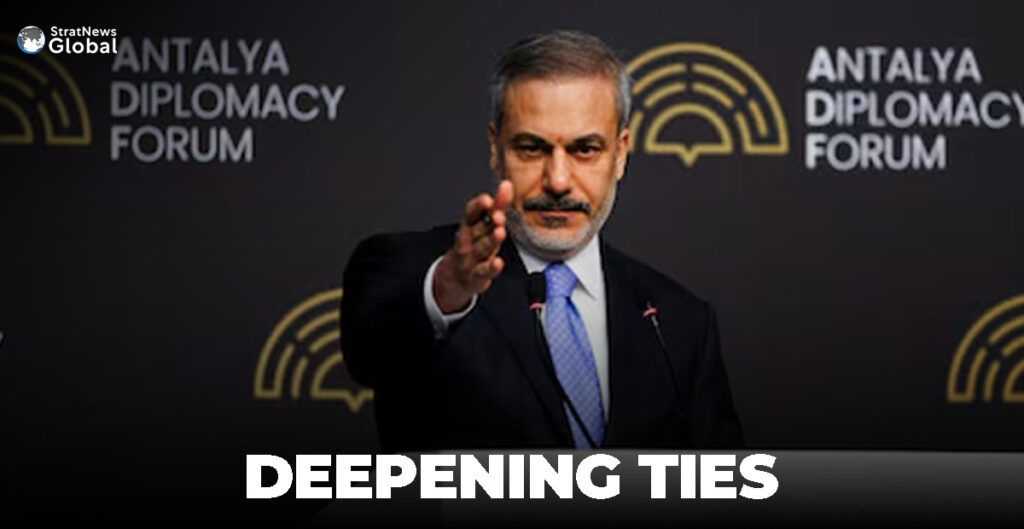
Turkish Foreign, Defence Ministers To Visit Pakistan On July 9: Source
Turkiye‘s foreign and defence ministers are scheduled to visit Pakistan on Wednesday for talks with Prime Minister Shehbaz Sharif focused on strengthening bilateral relations, addressing regional developments, and enhancing cooperation in the defence industry, a Turkish diplomatic source said on Tuesday.
Turkiye has strong ties with Pakistan and expressed solidarity with it during its military conflict with India in May, angering India.
During the visit, Foreign Minister Hakan Fidan will express Turkiye’s desire to deepen ties in every field and offer Ankara’s support in taking steps toward regional peace, the source said.
Fidan will stress the countries “need to strengthen their cooperation in the defence industry,” the source said.
Ankara also has cordial ties with India, but after its support for Pakistan, small Indian grocery shops and major online fashion retailers boycotted Turkish products, while New Delhi also cancelled Turkiye-based aviation service provider Celebi’s clearance over “national security” reasons.
Strengthening Ties
Turkiye and Pakistan are reinforcing their long-standing bilateral relationship, marked by deepening political, economic, and defence cooperation.
The two nations, both members of the Organisation of Islamic Cooperation (OIC), have steadily expanded ties over recent years, underscoring their shared strategic interests and cultural affinity.
In a significant display of solidarity, Turkiye openly supported Pakistan during its military and diplomatic standoff with India in May 2025, drawing regional and international attention.
Ankara’s vocal backing came at a critical moment when tensions between Islamabad and New Delhi escalated following the deadly Pahalgam terror attack.
Turkish leaders called for restraint but emphasised Pakistan’s right to defend its sovereignty, framing the conflict within the broader context of unresolved issues in Kashmir.
The Turkish government also expressed support for Pakistan’s stance at international forums, including the United Nations and OIC platforms.
Beyond crisis moments, Turkiye and Pakistan are actively working on enhancing defence industry collaboration, energy partnerships, and trade linkages.
Military-to-military ties have grown through joint exercises and defence procurement deals, including Turkish drone technology and naval support.
(With inputs from Reuters and IBNS)
Russia’s FSB To Establish Its Own Pre-Trial Detention Centres, Says Deputy
Russia’s Federal Security Service (FSB), the successor to the Soviet-era KGB, will soon be authorized to set up its own network of pre-trial detention centres. The move follows the passage of a bill in the lower house of parliament, a deputy confirmed.
After the 1991 fall of the Soviet Union and in the years after Russia joined the Council of Europe in 1996, the FSB lost its formal hold over a network of pre-trial detention centres, though it retained significant informal control.
Lawmakers say that the FSB needs such detention facilities due to a spike in the intelligence and subversive activities of foreign powers since the start of the war in Ukraine – known as the “special military operation” inside Russia.
Vasily Piskaryov, the chairman of the lower house of parliament’s Security and Anti-Corruption Committee, said the law had been passed in its final reading by the chamber, the State Duma.
“The law provides for the detention of those accused of crimes against state security in separate detention facilities under the jurisdiction of the FSB of Russia,” Piskaryov said on Telegram.
An explanatory note accompanying the bill said that military personnel from state security would run the detention centres.
Surge In Espionage And Terrorism
Piskaryov said that treason, espionage and terrorism cases had soared three-fold over the past decade, while the number of defendants had soared by four-fold.
The FSB, headquartered on Lubyanka Square in central Moscow, is one of the world’s most powerful intelligence agencies with significant counter-espionage, counter-terrorism, cyber, human intelligence and special forces capabilities.
Its director, Alexander Bortnikov, reports directly to President Vladimir Putin, who himself served as a KGB officer in east Germany in the 1980s and ran the FSB before he was appointed prime minister in 1999.
Opponents of Putin say that he has built an increasingly repressive political system that relies heavily on the FSB. Supporters of Putin say that Russia is under hybrid-attack from major Western powers and needs the FSB to ensure security and to preserve the sovereignty of Russia.
To become law, the bill must be approved by the upper house of parliament and then signed into law by Putin, steps which usually follow swiftly once the lower house of parliament approves legislation. The bill is due to become law on January 1, 2026.
(With inputs from Reuters)