

Support us by contributing to StratNewsGlobal on the following UPI ID
ultramodern@hdfcbank

Strategic affairs is our game, South Asia and beyond our playground. Put together by an experienced team led by Nitin A. Gokhale. Our focus is on strategic affairs, foreign policy and international relations, with higher quality reportage, analysis and commentary with new tie-ups across the South Asian region.
You can support our endeavours. Visit us at www.stratnewsglobal.com and follow us on YouTube, Twitter, Facebook and Instagram.
र 500 per month
र 1000 per month
र 5000 per year
र 10000 per year
Donate an amount of your choice
र 500 per month
Donate र 500 per month

र 1000 per month
Donate र 1000 per month
र 5000 per year
Donate र 5,000 per year
र 10000 per year
Donate र 10,000 per year
Donate an amount of your choice
Donate an amount of your choice
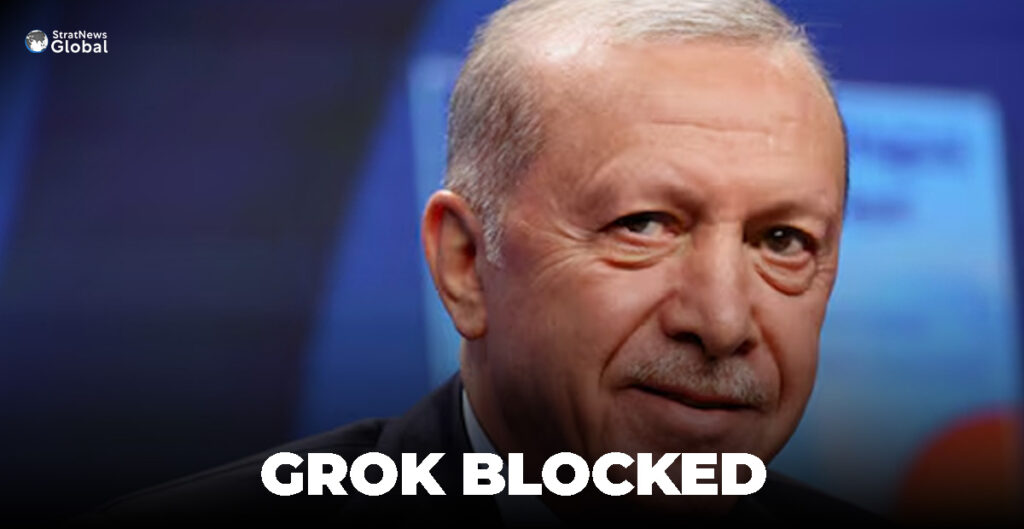
Turkiye Blocks Musk’s AI Chatbot Grok Over Alleged Insults To President Erdogan
A court in Turkiye has restricted access to Grok, the artificial intelligence (AI) chatbot by Elon Musk’s xAI, after it allegedly produced content insulting President Tayyip Erdogan.
Issues of political bias, hate speech and accuracy of AI chatbots have been a concern since at least the launch of OpenAI’s ChatGPT in 2022, with Grok dropping content accused of antisemitic tropes and praise for Adolf Hitler.
The office of Ankara’s chief prosecutor has launched a formal investigation into the incident, it said on Wednesday, in Turkey’s first such ban on access to an AI tool.
Neither X nor its owner, Elon Musk, has commented on the decision.
Last month, Musk promised an upgrade to Grok, suggesting there was “far too much garbage in any foundation model trained on uncorrected data”.
Grok, which is integrated into X, reportedly generated offensive content about Erdogan when asked certain questions in Turkish, the media said.
The Information and Communication Technologies Authority (BTK) adopted the ban after a court order, citing violations of Turkey’s laws that make insults to the president a criminal offence, punishable with up to four years in jail.
Critics say the law is frequently used to stifle dissent, while the government maintains it is necessary to protect the dignity of the office.
AI Chatbots Under Scrutiny
AI chatbots like Grok have come under increasing scrutiny for generating offensive or politically sensitive content.
Grok, in particular, has been accused of producing content that echoes antisemitic tropes, prompting public backlash and renewed calls for stricter content moderation and oversight.
These incidents highlight the broader challenge AI developers face in balancing free expression with ethical responsibility.
While large language models are designed to simulate human-like responses, they can inadvertently amplify toxic narratives or offensive ideologies, especially when deployed in public-facing platforms.
(With inputs from Reuters)
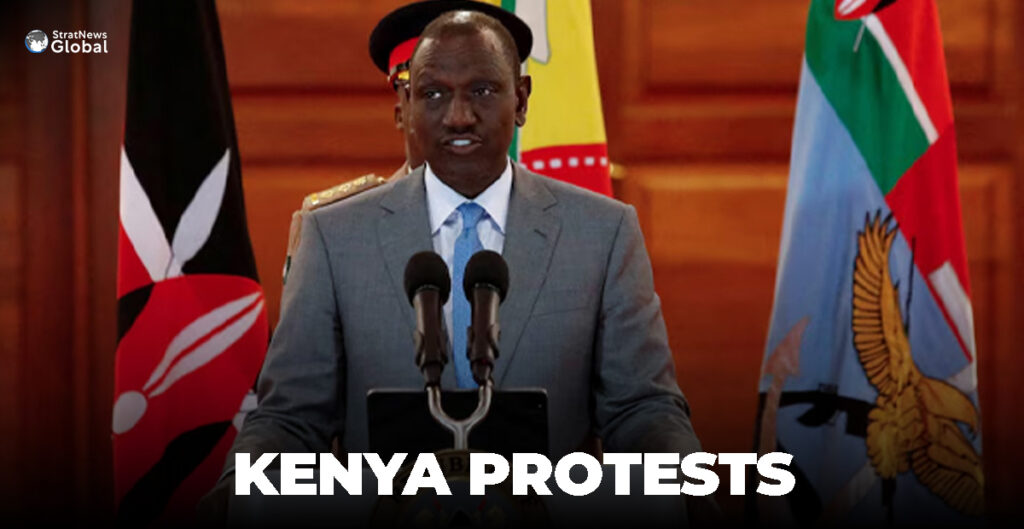
Defiant Kenyan Protesters Challenge President Ruto Amid Crackdown
Braving police batons, water cannons, and even sporadic gunfire, protesters on the streets of Kenya this week have adopted a defiant new chant that could rattle embattled President William Ruto: “Ruto wantam”, or Ruto one-term.
Ruto won power almost three years ago, vowing to protect the poor and end police violence, but he is facing mounting public dissatisfaction over high living costs, corruption and police brutality that could yet seal his fate as a “wantam” leader.
As the faint drum beat of the 2027 election grows louder, analysts say, his administration will need not only to deliver on its economic promises but also to adopt a more conciliatory tone to win over a younger, better-educated population.
“Persistent economic hardship and widespread allegations of police violence pose serious challenges to any ambitions he may have for securing re-election in 2027,” said Mucahid Durmaz, Senior Africa Analyst at risk intelligence firm Verisk Maplecroft.
A government-funded rights group said 31 people were killed nationwide in the latest anti-government protests on Monday, held to mark the 35th anniversary of pro-democracy rallies. Police fired to disperse the demonstrators after also using tear gas and water cannon.
“We can’t feed our families, so we have to be on the street to stop the increasing prices, to stop the (police) abductions, and to stand up for our country,” said Festus Muiruri, a 22-year-old protester in the capital, Nairobi.
“We want the president to hear us.”
But Ruto’s government has been consistently slow to respond to public discontent. Last year, he only abandoned proposed tax hikes after protesters overran parliament in unprecedented scenes flashed across TV screens around the world.
His interior minister, Kipchumba Murkomen, branded last month’s protests as a “coup attempt” by what he called “criminal anarchists”.
Gen Z
Unlike his predecessors, Ruto faces a generation of uncompromising young Kenyans desperate for economic opportunities, who can mobilise amorphously through social media, bypassing opposition parties and leaders.
The so-called “Gen Z” protesters, the product of free schooling introduced two decades ago, have no recollection of authoritarian rule. Many were not yet born when Kenya introduced multi-party elections in 1992.
With up to 800,000 young people entering the job market each year, Gen Z are more educated than their elders, but also more likely to be unemployed, according to a report by Afrobarometer, a pollster.
“They have no memory of the rough times,” said Macharia Munene, a professor of history and international relations at the United States International University (USIU) in Nairobi.
“They’ve learned how to ask questions.”
Discontent with the government found a lightning rod last month with the death of blogger Albert Ojwang in police custody. On June 25, some 19 people lost their lives in demonstrations over Ojwang’s death.
The administration’s hardline response to protesters has rattled investors in East Africa’s largest economy. Business expectations fell to their second-lowest level on record in May, according to a survey by Stanbic Bank Kenya.
“Repeated protests and shutdowns will continue to erode investor confidence and disrupt economic activity, especially if the government continues to prioritise force over dialogue,” said Jervin Naidoo from Oxford Economics.
‘Blind, Deaf And Dumb’
Despite the swelling disillusionment, Kenyans are left with few options for now. Ruto’s large parliamentary majority ensures he won’t be unseated prematurely.
He also faces a weak and fractured opposition, which is yet to find a standard bearer for the next election. Following last year’s protests, Ruto brought former Prime Minister Raila Odinga into his government, neutralising his main threat.
He has two more years to turn things around or use his incumbency to help ensure a second term.
Ruto will hope that his increased social spending and programmes aimed at tackling youth unemployment, combined with positive economic prospects and a decline in inflation, will bolster his appeal, according to Control Risks.
However, that may not be enough to avoid “wantam”, said Javas Bigambo, a political commentator.
“The government is perceived to be blind, deaf and dumb by the young people. This perception needs to be managed. Dealing with the protesters with this condescending attitude will only worsen Ruto’s re-election prospects,” he said.
“It is urgent that measures are taken to bridge the divide.”
(With inputs from Reuters)
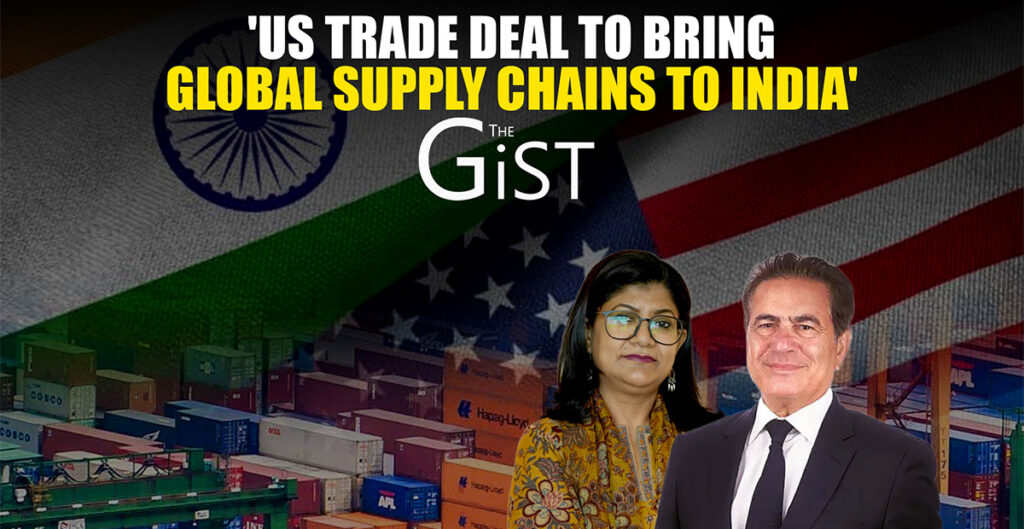
Apple Unlikely To Move Manufacturing Out Of India, Says Aghi of USISPF
Despite immense pressure from US President Donald Trump, iPhone-maker Apple Inc. is unlikely to move its production line out of India and relocate it in the United States even as the Cupertino-based multinational is witnessing its cost of production coming down for its smartphones by 60 per cent compared to the U.S. market, said Mukesh Aghi, President and CEO of Washington DC-based US-India Strategic Partnership Forum (USISPF).
“Tim Cook, the CEO of Apple, has gone down and showed to the president (Donald Trump) that if they manufacture the iPhones in the U.S., the cost to the consumer is going to be $3,500. Studies have shown consistently, for the US companies when they manufacture outside the US it is 60% cheaper. And so I don’t think Apple will basically move that manufacturing from India into the US,” Aghi told StratNews Global in an exclusive interaction over videoconferencing.
He highlighted that Apple has committed to invest $500 billion in advanced manufacturing, in which India features prominently.
India and the United States are currently engaged in negotiations for having an interim trade deal that seeks to give more market access to American goods, especially in the agricultural sector. Once the deal is signed, both sides will go on to conclude a mega trade deal encompassing trade in goods, services and investment, which will focus more on eliminating the non-tariff barriers.
However, Aghi said, it is not clear whether the interim deal will lead to the removal of the 10 per cent baseline tariff that the U.S. has imposed on all Indian imports.
“If it stays, I don’t think it has much impact on India’s exports because we saw with a 10% baseline also exports are going up from India into the United States. And the same way India will also put 10%. So it will be a reciprocal agreement between the two countries having 10% tariffs on each other’s goods exports. So, it kind of flattens out the arrangement,” he said.
On Monday, Trump said the deal with India will be signed “soon” even as the trade negotiators on both sides are believed to have presented a draft copy of the agreement to the U.S. President for his approval.
“We’ve made a deal with the United Kingdom, we’ve made a deal with China, we’re close to making a deal with India,” Trump told reporters at the White House while meeting Israel Prime Minister Benjamin Netanyahu even as the US President announced new reciprocal tariffs on 14 countries — including Bangladesh, Malaysia, Japan, Cambodia and South Korea.
According to Aghi, both countries are likely to sign the mega trade deal “by fall” when India is expecting a visit by President Trump in order to attend the Quadrilateral Security Dialogue (Quad) Summit, which will be hosted by New Delhi.
The Trump administration will need approval of the U.S. Congress for the ratification of the comprehensive trade deal with India.
Aghi also pointed out that, on the other hand, when it comes to India’s export competitors, when goods will be exported from China into Vietnam and then to the US, then the tariff jumps to 40%.
“So I think there is a strategy to basically punitively go after China, on the tariff side, directly or indirectly. And that’s where India benefits,” he highlighted, adding that the Bilateral Trade Agreement with the U.S. will provide more market access to Indian pharmaceuticals, gems and jewellery as well as energy products.
On Monday, Trump announced the decision to impose a 25 percent tariff on goods from two of its closest allies Japan and South Korea, with effect from August 1.
Aghi also feels that a potential trade deal between the United States and China will take time and it will not impact Indian exports.
“China’s relations with the U.S are very complex. China will prolong the discussion. It will make every effort to tire the U.S negotiators and ensure that at least, the process continues … So we don’t expect trade deals happening with China because it’s not just about trade between the US and China, it is also about geopolitics,” said Aghi.
“It’s about dominance. It’s about controlling the manufacturing industrial base itself. So we do expect, at least India will sign a trade deal, whereas China will be a challenge,” he added.
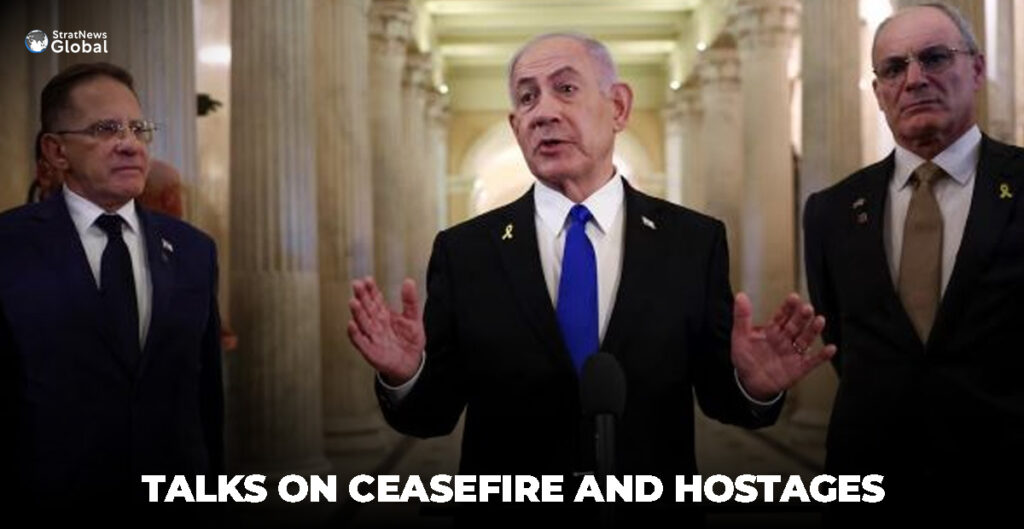
Netanyahu And Trump Focus On Gaza Hostage Crisis And Push For Hamas Ceasefire
Israeli Prime Minister Benjamin Netanyahu said on Wednesday that his discussions with U.S. President Donald Trump centered on efforts to secure the release of hostages held in Gaza. He also emphasized his commitment to dismantling both the military and governing infrastructure of Hamas.
Netanyahu said on X that the leaders also discussed the consequences and possibilities of “the great victory we achieved over Iran,” following an aerial war last month in which the United States joined Israeli attacks on the Islamic Republic’s nuclear sites.
Netanyahu is making his third U.S. visit since Trump took office on January 20 and had earlier told reporters that while he did not think Israel’s campaign in the Palestinian enclave was done, negotiators are “certainly working” on a ceasefire.
Trump Meets Netanyahu
Trump met Netanyahu on Tuesday for the second time in two days to discuss the situation in Gaza, with the president’s Middle East envoy indicating that Israel and Hamas were nearing an agreement on a ceasefire deal after nearly two years of war.
Netanyahu also said that ceasefire efforts were underway.
A delegation from Qatar, the host of indirect talks between Israeli negotiators and the Palestinian terrorist group Hamas, met senior White House officials before Netanyahu’s arrival on Tuesday, Axios said, citing a source familiar with the details.
The White House had no immediate comment on the report.
Steve Witkoff, Trump’s special envoy to the Middle East, said the number of issues preventing Israel and Hamas from reaching an agreement had decreased from four to one, expressing optimism for a temporary ceasefire deal by the end of the week.
Witkoff told reporters at a Cabinet meeting that the anticipated agreement would involve a 60-day ceasefire, with the release of ten live hostages and nine deceased individuals.
Netanyahu met with Vice President JD Vance and then visited the U.S. Capitol on Tuesday, and is due back in Congress on Wednesday to meet with U.S. Senate leaders.
He told reporters after a meeting with the Republican House of Representatives Speaker Mike Johnson that while he did not think Israel’s campaign in the Palestinian enclave was done, negotiators are “certainly working” on a ceasefire.
“We have still to finish the job in Gaza, release all our hostages, eliminate and destroy Hamas’ military and government capabilities,” Netanyahu said.
Gaza Hostages
The Gaza conflict began with a Hamas attack on southern Israel in October 2023 that resulted in the deaths of approximately 1,200 people and the taking of 251 hostages, according to Israeli figures. Currently, around 50 hostages remain in Gaza, with 20 believed to be alive.
Israel’s retaliatory war has killed over 57,000 Palestinians, as reported by Gaza’s health ministry, and reduced much of Gaza to rubble.
Hamas has long demanded an end to the war before it would free the remaining hostages. Israel has insisted it would not agree to end the fighting until all hostages are released and Hamas dismantled.
The United Nations estimates that most of Gaza’s population has been displaced, with nearly half a million people facing famine in the coming months.
Netanyahu expressed hope that Israel could expand the Abraham Accords, normalisation deals reached between the United Arab Emirates, Bahrain and Morocco in 2020 under U.S. mediation.
“We are working on this with full vigour,” Netanyahu said on X.
Trump had strongly supported Netanyahu, even wading into domestic Israeli politics by criticizing prosecutors over a corruption trial against the Israeli leader on bribery, fraud and breach-of-trust charges that Netanyahu denies.
In his remarks to reporters at the U.S. Congress, Netanyahu praised Trump, saying there has never been closer coordination between the U.S. and Israel in his country’s history.
(With inputs from Reuters)
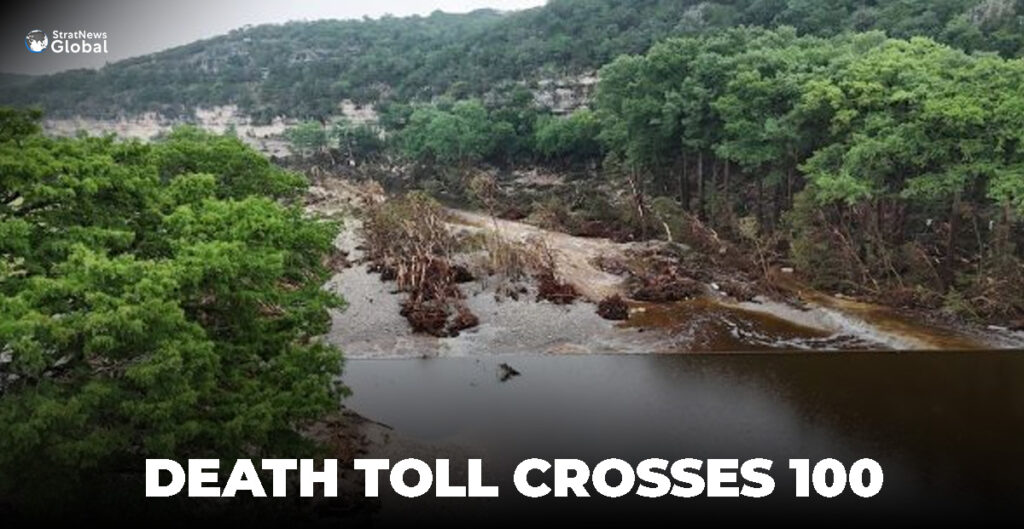
Texas Flood Death Toll Surpasses 100 As Over 180 Remain Missing
The number of deaths from the devastating July Fourth flash flood that swept through central Texas Hill Country climbed to at least 109 on Tuesday, with many victims reported to be children. Rescue teams continued combing through thick, mud-covered debris in search of many more still unaccounted for.
According to figures released by Governor Gregg Abbott, authorities were seeking more than 180 people whose fate remained unknown four days after one of the deadliest U.S. flood events in decades.
The bulk of fatalities and the search for additional victims were concentrated in Kerr County and the county seat of Kerrville, a town of 25,000 residents transformed into a disaster zone when torrential rains struck the region early last Friday, flooding the Guadalupe River basin.
Many Children Among Victims
The bodies of 94 flood victims, about a third of them children, have been recovered in Kerr County alone as of Tuesday, Texas Governor Greg Abbott said at a late-afternoon news conference after touring the area by air.
The Kerr County dead include 27 campers and counselors from Camp Mystic, a nearly century-old all-girls Christian summer retreat on the banks of the Guadalupe near the town of Hunt. The camp director also perished.
Five girls and a camp counselor were still unaccounted for on Tuesday, Abbott said, along with another child not associated with the camp.
As of Tuesday, 15 other flood-related fatalities had been confirmed across a swath of Texas Hill Country known as “flash flood alley,” the governor said, bringing the overall tally of lives lost to 109. Reports from local sheriffs’ and media have put the number of flood deaths outside Kerr County at 22.
But authorities have said they were bracing for the death toll to climb as flood waters recede and the search for more victims gains momentum.
Law enforcement agencies have compiled a list of 161 people “known to be missing” in Kerr County alone, Abbott said. The roster was checked against those who might be out of touch with loved ones or neighbours because they were away on vacation or out of town, according to the governor.
‘Find Every Single Person’
He said another 12 people were missing elsewhere across the flood zone as a whole, a sprawling area northwest of San Antonio.
“We need to find every single person who is missing. That’s job number one,” Abbott said.
On Tuesday, San Antonio-born country singer Pat Green disclosed on social media that his younger brother and sister-in-law and two of their children were among those “swept away in the Kerrville flood.”
Hindered by intermittent thunderstorms and showers, rescue teams from federal agencies, neighbouring states and Mexico have joined local efforts to search for missing victims, though hopes of finding more survivors faded as time passed. The last victim found alive in Kerr County was last Friday.
“The work is extremely treacherous, time-consuming,” Lieutenant Colonel Ben Baker of the Texas Game Wardens said at a press conference. “It’s dirty work. The water is still there.”
A water-soaked family photo album was among the personal belongings found in flood debris by Sandi Gilmer, 46, a U.S. Army veteran and certified chaplain volunteering in the search operation along the Guadalupe at Hunt.
“I don’t know how many people in this album are alive or deceased,” she said, flipping through images of two toddlers and a gray-haired man. “I didn’t have the heart to step over it without picking it up and hoping to return it to a family member.”
Makings Of A Disaster
More than a foot of rain fell in the region in less than an hour before dawn last Friday, sending a wall of water cascading down the Guadalupe that killed dozens of people and left mangled piles of debris, uprooted trees and overturned vehicles.
Public officials have faced days of questions about whether they could have alerted people in flood-prone areas sooner.
The state emergency management agency warned last Thursday, on the eve of the disaster, that parts of central Texas faced a flash floods threat, based on National Weather Service forecasts.
But twice as much rain as predicted ended up falling over two branches of the Guadalupe just upstream of the fork where they converge, sending all of that water racing into the single river channel where it slices through Kerrville, City Manager Dalton Rice said.
Rice has said the outcome was unforeseen and unfolded in a matter of two hours, leaving too little time to conduct a precautionary mass evacuation without the risk of placing more people in harm’s way.
Effects Of Climate Change
Scientists have said extreme flood events are growing more common as climate change creates warmer, wetter weather patterns in Texas and other parts of the country.
At an earlier news briefing on Tuesday, Kerr County Sheriff Larry Leitha rebuffed questions about the county’s emergency operations and preparedness and declined to say who was ultimately in charge of monitoring weather alerts and issuing flood warnings or evacuation orders.
He said his office began receiving emergency-911 calls between 4 a.m. and 5 a.m. on Friday, several hours after the local National Weather Service station issued a flash-flood alert. “We’re in the process of trying to put (together) a timeline,” Leitha said.
Abbott said a special session of the Texas legislature would convene later this month to investigate the emergency response and provide funding for disaster relief.
(With inputs from Reuters)
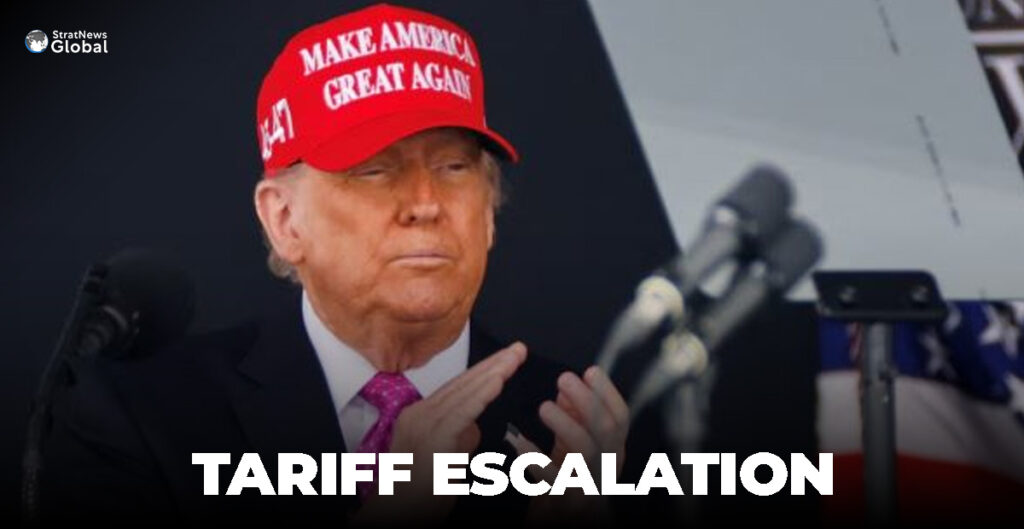
Trump Announces 50% Tariff On Copper, Expands Trade War
On Tuesday, U.S. President Donald Trump announced plans to impose a 50% tariff on copper imports, along with long-promised duties on semiconductors and pharmaceutical products. The move marks a significant escalation in his global trade war, which has already unsettled markets around the world.
One day after he pressured 14 trading partners, including powerhouse U.S. suppliers like South Korea and Japan, with fresh tariff letters, Trump reiterated his threat of 10% tariffs on products from Brazil, India and other members of the BRICS group of countries.
He also said trade talks have been going well with the European Union and China, though he added he is only days away from sending a tariff letter to the EU.
Trump’s remarks, made during a White House cabinet meeting, could inject further instability into a global economy that has been shaken by the tariffs he has imposed or threatened on imports to the world’s largest consumer market.
U.S. copper futures jumped more than 10% after Trump’s announcement of new duties on a metal that is critical to electric vehicles, military hardware, the power grid and many consumer goods. They would join duties already in place for steel, aluminum and automobile imports, though it was unclear when the new tariffs might take effect.
U.S. pharmaceutical stocks also slid following Trump’s threat of 200% tariffs on drug imports, which he said could be delayed by about a year.
Impact Of Trump’s Tariffs
Other countries, meanwhile, said they would try to soften the impact of Trump’s threatened duties after he pushed back a Wednesday deadline to August 1.
Trump’s administration promised “90 deals in 90 days” after he unveiled an array of country-specific duties in early April. So far only two agreements have been reached, with the United Kingdom and Vietnam. Trump has said a deal with India is close.
Trump said countries have been clamoring to negotiate.
“It’s about time the United States of America started collecting money from countries that were ripping us off … and laughing behind our back at how stupid we were,” he said.
He said late Tuesday that “a minimum of seven” tariff notices would be released on Wednesday morning, and more in the afternoon. He gave no other details in his Truth Social post.
Trading partners across the globe say it has been difficult to negotiate even framework agreements with the U.S. given the haphazard way new tariffs are announced, complicating their internal discussions about concessions.
Highest Levels Since 1934
Following Trump’s announcement of higher tariffs for imports from the 14 countries, U.S. research group Yale Budget Lab estimated consumers face an effective U.S. tariff rate of 17.6%, up from 15.8% previously and the highest in nine decades.
Trump’s administration has been touting those tariffs as a significant revenue source. Treasury Secretary Scott Bessent said Washington has taken in about $100 billion so far and could collect $300 billion by the end of the year. The United States has taken in about $80 billion annually in tariff revenue in recent years.
The S&P 500 finished slightly lower on Tuesday, a day after Wall Street markets sold off sharply following Trump’s new tariffs announcement.
Trump said he will “probably” tell the European Union within two days what rate it can expect for its exports to the U.S., adding that the 27-member bloc had been treating his administration “very nicely” in trade talks.
EU’s Potential Deal
The EU, the largest bilateral trade partner of the U.S., aims to strike a deal before August 1 with concessions for key export industries such as aircraft, medical equipment and spirits, according to EU sources. Brussels is also considering an arrangement that would protect European automakers with large U.S. production facilities.
However, German Finance Minister Lars Klingbeil warned that the EU was prepared to retaliate if necessary.
“If we don’t reach a fair trade deal with the U.S., the EU is ready to take counter measures,” he said in the lower house of parliament.
Japan, which faces a possible 25% tariff – up from 24% first threatened in April – wants concessions for its large automobile industry and will not sacrifice its agriculture sector, a powerful domestic lobby, for the sake of an early deal, top trade negotiator Ryosei Akazawa said on Tuesday.
South Korea, which also faces a possible 25% tariff, said it planned to intensify trade talks over the coming weeks “to reach a mutually beneficial result.”
Washington and Beijing agreed to a trade framework in June, but with many of the details still unclear, traders and investors are watching to see if it unravels before a separate, U.S.-imposed August 12 deadline or leads to a lasting detente.
“We have had a really good relationship with China lately, and we’re getting along with them very well. They’ve been very fair on our trade deal, honestly,” Trump said, adding that he has been speaking regularly with Chinese President Xi Jinping.
Trump said the United States would impose tariffs of 25% on goods from Tunisia, Malaysia and Kazakhstan; 30% on South Africa and Bosnia and Herzegovina; 32% on Indonesia; 35% on Serbia and Bangladesh; 36% on Cambodia and Thailand; and 40% on Laos and Myanmar.
(With inputs from Reuters)
Singapore Eyes Stronger Ties As Global Dynamics Evolve
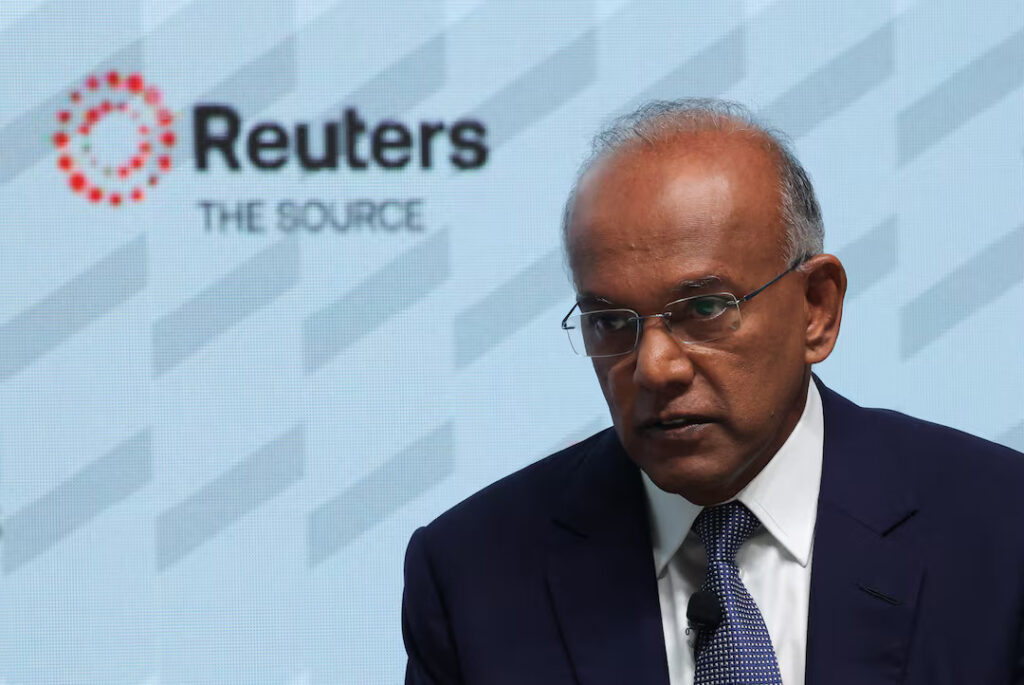
In today’s multipolar world, small nations like Singapore must forge even stronger ties with other countries, said Home Affairs Minister K Shanmugam on Wednesday.
“There are more powers playing the game as it were, as opposed to the time when the Americans held the peace across the world. So that’s changing, and in such a context, small countries like us have to develop even deeper relationships,” said Shanmugam, pointing to China, the United States and Europe.
US Indispensable
Shanmugam, who is also coordinating minister for national security, was speaking in an interview at the Reuters NEXT Asia summit in Singapore that covered trade issues as well as domestic concerns such as a fake news law.
On trade, Shanmugam said the US was an indispensable nation and its policies impact “every country, allies and non-allies alike”, especially for a trade-reliant country like Singapore where external trade is 3 to 4 times its GDP.
On Monday, US President Donald Trump sent letters to 14 countries, including allies Japan and South Korea, notifying them of tariffs of 25% to 40% that will kick in from August 1.
In the letters, Trump warned that reprisals from countries would draw a like-for-like response.
Meanwhile, China threatened to retaliate against nations that strike deals with the US to cut China out of supply chains.
Singapore Dodges Trump Trade Letter
Singapore has not received a letter from the Trump administration this round. In April on what Trump called “Liberation Day”, Singapore was hit with a 10% baseline tariff, lower than its Southeast Asian neighbours, but high enough to harm the economy said the Singapore government.
The trade ministry in April downgraded the nation’s GDP forecast for 2025 to 0%-2% growth from 1%-3% after the US announced tariffs.
The US had a goods trade surplus of $2.8 billion with Singapore last year, an 84.8% increase over 2023, according to the United States Trade Representative website.
The city-state’s data, which includes services, showed the US trade surplus with Singapore amounted to $30 billion in 2024.
The US accounted for 11% of Singapore’s exports in 2024 and about 55% of shipments would be hit with the baseline 10% tariff, estimated the central bank.
(With inputs from Reuters)
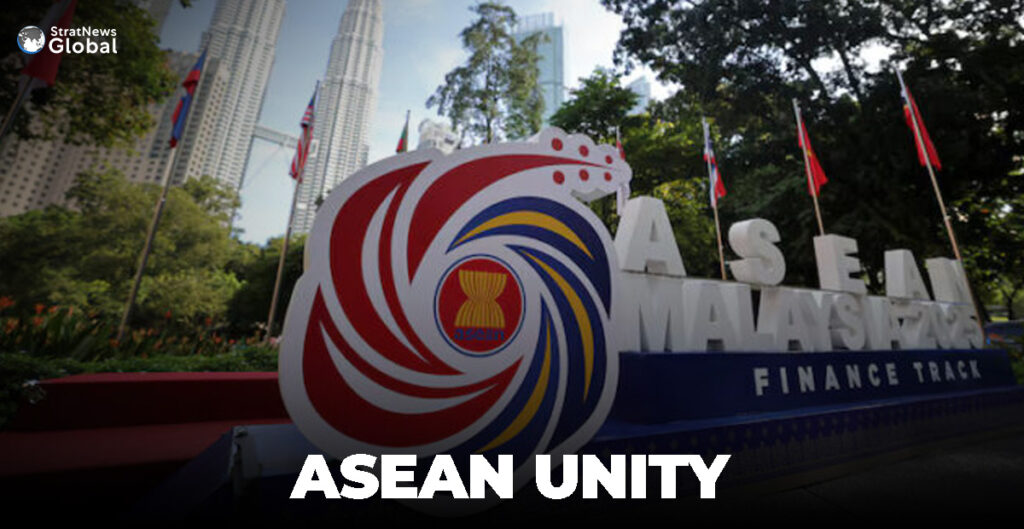
Anwar Calls For ASEAN Unity As Trump Slaps Tariffs On SE Asia
Malaysia’s Prime Minister Anwar Ibrahim on Wednesday called on Southeast Asian nations to act decisively and boost trade within the region, as ASEAN foreign ministers gathered amid fresh concerns over Trump’s trade tariffs and growing global uncertainty.
Anwar, addressing ministers of the 10-member Association of Southeast Asian Nations, described tariffs, export restrictions and investment barriers as “the sharpened instruments of geopolitical rivalry”. He did not mention the United States specifically.
‘Need To Fortify Our Internal Foundations’
“As we navigate external pressures, we need to fortify our internal foundations. Trade more among ourselves, invest more in one another, and advance integration across sectors with resolve,” he said.
“As global conditions remain uncertain, there is no overstressing the need to act with purpose in our own region.”
Trump’s Hefty Levies
US President Donald Trump on Monday announced hefty levies, opens new tab of between 25% and 40% on six Southeast Asian countries, despite concerted efforts by some to offer broad concessions and negotiate lower rates.
The export-reliant ASEAN is collectively the world’s fifth-biggest economy, with some members beneficiaries of supply chain realignments from China. Only Vietnam has secured a deal, which lowers the levy to 20% from 46% initially.
Indonesia, Thailand and Malaysia are seeking further talks ahead of the tariff implementation on August 1.
The Kuala Lumpur meeting will see ASEAN engage with key trade partners like the US, China, Japan, Russia, India, and the EU. From Thursday, China’s Wang Yi, Russia’s Sergei Lavrov, and US Secretary of State Marco Rubio — on his first Asia visit — are expected to join, aiming to ease tensions over Trump’s tariff policies.
Tariffs To Cause ‘Economic Fragmentation’
ASEAN foreign ministers will express “concern over rising global trade tensions and growing uncertainties in the international economic landscape, particularly the unilateral actions relating to tariffs”, according to a draft joint communique seen by Reuters.
The draft, dated July 7 and before the latest tariff rates were announced, did not mention the United States and used language similar to an ASEAN leaders’ statement in May. Both said tariffs were “counterproductive and risk exacerbating global economic fragmentation”.
In April, ASEAN said it won’t retaliate and assured that any trade deals with Washington won’t hurt other members. OCBC economist Lavanya Ventakeswaran noted that countries like Vietnam now face more uncertainty due to US tariffs on transshipments, mainly targeting Chinese goods, with doubts over how they’ll be enforced.
“The bottom line is that it’s going to be quite complicated moving forward,” Ventakeswaran said.
Cambodia-Thailand Dispute
Trump’s earlier threat of an extra 10% tariff on BRICS-aligned nations has added to ASEAN’s trade concerns, especially for members like Indonesia and partners like Malaysia, Thailand, and Vietnam.
Meanwhile, ASEAN is pushing for a Southeast Asia nuclear weapons-free zone, with hopes that the meet will also help ease Thailand-Cambodia border tensions that have triggered a political crisis in Bangkok.
Thai Prime Minister Paetongtarn Shinawatra has been suspended pending a court case over her leaked phone call with Cambodia’s influential former leader, Hun Sen, a conversation her opponents say undermined Thailand’s sovereignty and integrity.
The dispute puts more pressure on ASEAN to maintain a united front, amid other unresolved issues including an intensifying civil war in Myanmar and a protracted drafting of a code of conduct with Beijing for the South China Sea, a key source of geopolitical tension.
Malaysia’s Foreign Minister Mohamad Hasan on Wednesday urged all groups in war-torn Myanmar to create a conducive environment for an election.
It was not immediately clear if his remarks indicate ASEAN chair Malaysia will endorse the election, which critics have derided as a sham to entrench military rule in the absence of opposition parties.
(With inputs from Reuters)
4 Seafarers Killed In Second Houthi Attack Within A Day In Red Sea
A drone and speedboat assault near Yemen on Tuesday claimed four seafarers’ lives aboard a Liberian-flagged, Greek-operated bulk carrier, an official familiar with the matter said, marking the second such incident in a day after months of calm in the Red Sea.
Traffic in the Red Sea, a key waterway for oil and commodities, has dropped since Yemen’s Houthi militia aligned with Iran began targeting ships in 2023 in what it called solidarity with Palestinians under assault in Israel’s war in Gaza.
The deaths on the Eternity C, the first involving shipping in the Red Sea since June 2024, take to eight the total of seafarers killed in the Red Sea attacks.
One more injured crew died on board after the attack, a source with knowledge of the matter said, speaking on condition of anonymity.
The Houthis have not commented on the Eternity C, but hours earlier claimed responsibility for a strike on another Liberia-flagged, Greek-operated bulk carrier, the MV Magic Seas, off southwest Yemen on Sunday, saying the vessel sank.
‘Deplorable Attacks’
“After several months of calm, the resumption of deplorable attacks in the Red Sea constitutes a renewed violation of international law and freedom of navigation,” IMO Secretary-General Arsenio Dominguez said on Tuesday.
The US State Department condemned the “unprovoked Houthi terror attack on the civilian cargo vessels MV Magic Seas and MV Eternity C”, as demonstrating the threats the Houthis posed to freedom of navigation and regional security.
Washington “will continue to take necessary action to protect freedom of navigation and commercial shipping”, it added in a statement.
The Eternity C’s operator, Cosmoship Management, was not immediately available to comment.
Eternity C, with 21 Philippine nationals and a Russian making up a crew of 22, was adrift and listing after the attack with sea drones and rocket-propelled grenades fired from manned speed boats, maritime security sources told Reuters.
Greece was in diplomatic talks with Saudi Arabia over the incident, sources said, as two maritime security firms, including Greece-based Diaplous, prepared to mount a rescue mission for the crew trapped on Eternity C.
An official with Aspides, the European Union’s mission assigned to help protect Red Sea shipping, also said at least two other crew were injured. Earlier, Liberia’s shipping delegation told a UN meeting that two crew were killed.
Houthi Video
The Houthis released a video they said depicted their attack on the Magic Seas, including the Mayday call, explosions, and the vessel’s ultimate submersion. Reuters could not independently verify the footage.
The vessel’s manager said the information about the sinking could not be verified.
But Joshua Hutchinson, managing director of maritime security firm Ambrey, told Reuters it had a response vessel in the area and confirmed the Magic Seas had gone down.
All crew on the Magic Seas were rescued by a passing merchant vessel and arrived safely in Djibouti on Monday, Djibouti authorities said.
Since November 2023, the Houthis have disrupted commerce by launching hundreds of drones and missiles at vessels in the Red Sea, saying they were targeting ships linked to Israel.
While the Houthis struck a ceasefire with Washington in May, the militia has vowed to keep attacking ships it says are connected with Israel.
“Just as Liberia was processing the shock and grief of the attack against Magic Seas, we received a report that Eternity C again has been attacked … causing the death of two seafarers,” Liberia’s delegation told a session of the International Maritime Organization.
‘Elevated Risks’
Both vessels attacked were part of commercial fleets whose sister vessels have called at Israeli ports over the past year.
“The pause in Houthi activity did not necessarily indicate a change in underlying intent,” said Ellie Shafik, head of intelligence with the Britain-based maritime risk management company Vanguard Tech.
“As long as the conflict in Gaza persists, vessels with affiliations, both perceived and actual, will continue to face elevated risks.”
The Philippines has urged its seafarers, who form one of the world’s largest groups of merchant mariners, to exercise their right to refuse to sail in “high-risk, war-like” areas, including the Red Sea after the latest strikes, its department of migrant workers said.
Shipping traffic through the region has shrunk about half from normal levels since the first Houthi attacks in 2023, said Jakob Larsen, chief safety and security officer with shipping association BIMCO.
“This reduction in traffic has persisted due to the ongoing unpredictability of the security situation,” Larsen said. “As such, BIMCO does not anticipate the recent attacks will significantly alter current shipping patterns.”
Monday’s attack on Eternity C, 50 nautical miles southwest of Yemen’s port of Hodeidah, was the second on merchant vessels in the region since November 2024, an official at Aspides said.
Israel-Houthi Conflict
On Monday, Israel’s military said it had struck Houthi targets at three Yemeni ports and a power plant, in its first attack on Yemen in a month.
The Houthis say their attacks are an act of solidarity with Palestinians in Gaza where Israel’s military assault since late 2023 has killed more than 57,000 people, Gaza authorities say.
The Israeli assault has unleashed a hunger crisis, internally displaced the entire population of Gaza and spurred accusations of genocide at the International Court of Justice and of war crimes at the International Criminal Court.
Israel denies the accusations.
The latest bloodshed in the decades-old Israeli-Palestinian conflict was triggered in October 2023, when Palestinian Hamas militants attacked Israel, killing 1,200 and taking about 250 hostages, Israeli tallies show.
(With inputs from Reuters)
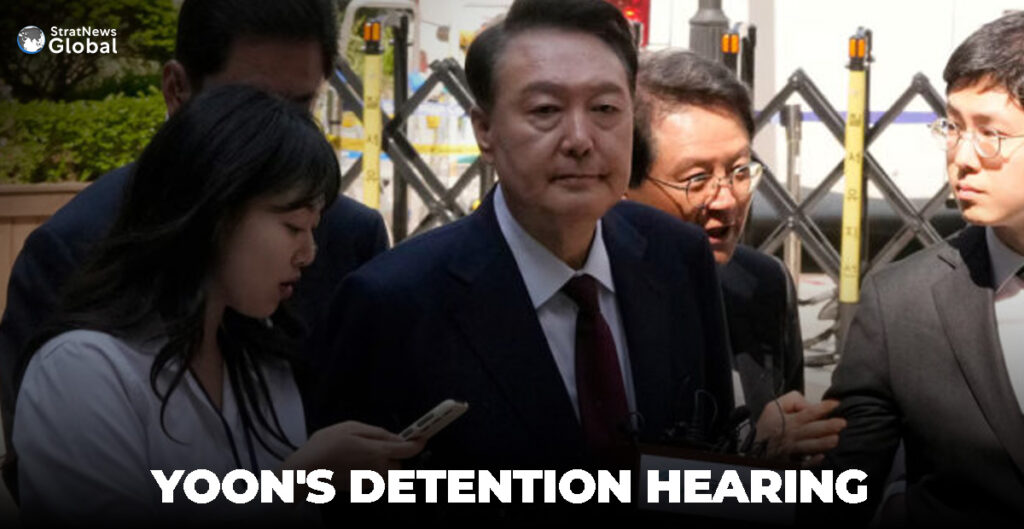
South Korea: Yoon Faces Detention Hearing In Martial Law Case
Former South Korean President Yoon Suk Yeol is set to appear in a Seoul court on Wednesday, where a special prosecutor will seek his detention in connection with an investigation into his failed attempt to impose martial law.
The Seoul Central District Court will hear from the special counsel team investigating Yoon’s martial law decree in December and Yoon’s legal team on the request to detain the deposed president over allegations of abuse of power and obstruction of justice.
After the hearing, Yoon is expected to await the court’s decision at the Seoul Detention Center, or in a detention area within the court, the special prosecutor’s team has said.
Additional Charges
There has been tight security around the court, which is expected to announce a decision late on Wednesday or in the early hours of Thursday.
Yoon was ousted in April by the Constitutional Court, which upheld his impeachment by parliament for his martial law bid that shocked South Koreans and triggered months of political turmoil, entrenching already deep divisions in the country.
The former conservative president is already under a criminal trial on charges that his attempt to rule the country using martial law amounted to an insurrection, a charge that is punishable by a life sentence or even death.
But the probe has picked up pace since the special prosecution began its investigation after liberal President Lee Jae Myung was elected in June and has been looking at additional charges, including accusations that Yoon mobilised presidential guards to stop authorities from arresting him in January.
Possible Detention
He was previously taken into custody over the earlier criminal probe but was released from jail after 52 days on technical grounds.
The detention warrant request was made on the grounds of him being a flight risk and concerns that he might interfere with witnesses linked to his case, local media reported, citing the special prosecutors’ request.
If Yoon is detained, he is expected to be held at the Seoul Detention Center, and the special prosecution is expected to speed up a probe into additional allegations including whether Yoon hurt South Korea’s interests by intentionally inflaming tensions with North Korea.
Yoon’s lawyers have rejected all the allegations against him, saying the detention warrant request is unreasonable and the investigation lacks objective evidence.
(With inputs from Reuters)