

Support us by contributing to StratNewsGlobal on the following UPI ID
ultramodern@hdfcbank

Strategic affairs is our game, South Asia and beyond our playground. Put together by an experienced team led by Nitin A. Gokhale. Our focus is on strategic affairs, foreign policy and international relations, with higher quality reportage, analysis and commentary with new tie-ups across the South Asian region.
You can support our endeavours. Visit us at www.stratnewsglobal.com and follow us on YouTube, Twitter, Facebook and Instagram.
र 500 per month
र 1000 per month
र 5000 per year
र 10000 per year
Donate an amount of your choice
र 500 per month
Donate र 500 per month

र 1000 per month
Donate र 1000 per month
र 5000 per year
Donate र 5,000 per year
र 10000 per year
Donate र 10,000 per year
Donate an amount of your choice
Donate an amount of your choice


Syrians Begin Returning From Lebanon Under UN-Backed Plan In Significant Policy Shift
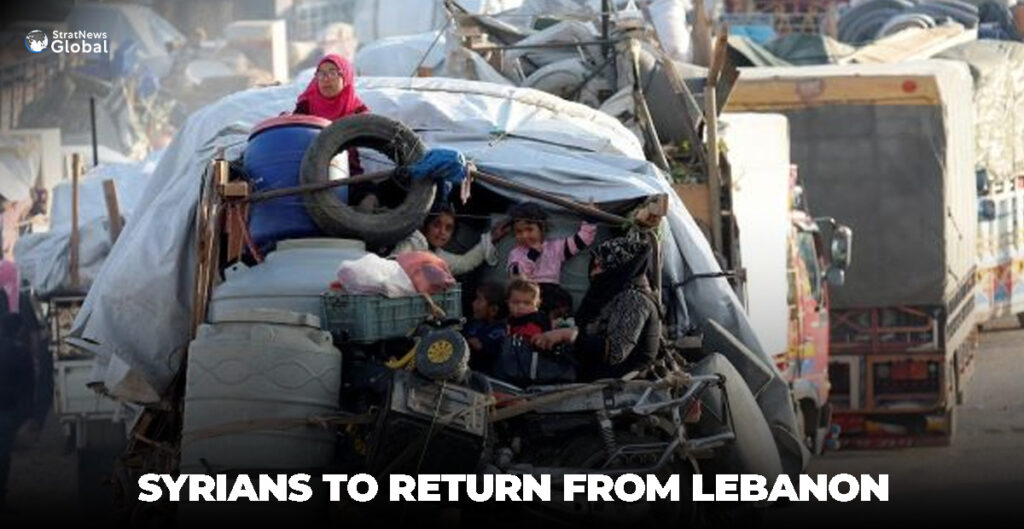
Thousands of Syrian refugees are expected to return from Lebanon this week as part of the first U.N.-backed initiative offering financial incentives for repatriation. The move marks a major shift, following assurances from Syria’s new leadership that all citizens are welcome back, despite widespread war damage and lingering security risks.
Returning Syrians will be provided with $100 each in Lebanon and $400 per family upon arrival in Syria, Lebanese Social Affairs Minister Haneen Sayed said. Transport is also covered and fees have been waived by border authorities, she added.
“I think it’s a good and important start. We have discussed and are coordinating this with our Syrian counterparts and I think the numbers will increase in the coming weeks,” Sayed said. A Syrian interior ministry spokesperson did not respond to a request for comment.
Syrian Refugees
More than 6 million Syrians fled as refugees after conflict broke out in Syria in 2011, with most heading to Turkey, Lebanon and Jordan. Lebanon has the highest concentration of refugees per capita in the world, hosting about 1.5 million Syrians among a population of about 4 million Lebanese.
Some 11,000 have registered to return from Lebanon in the first week, and the government targets between 200,000 and 400,000 returns this year under the plan, Sayed said.
The Lebanese government is focused on informal tented settlements in the country, where some 200,000 refugees live, she added, and may provide Syrian breadwinners who stay in Lebanon with work permits for sectors such as agriculture and construction if their families return to Syria.
U.N. agencies previously viewed Syria as unsafe for large-scale returns due to uncertainty over security and persecution by the government of Bashar al-Assad, who was toppled in December.
That has changed.
Since taking over, the new Islamist-led Syrian government has said all Syrians are welcome home. A U.N. survey from earlier this year showed nearly 30% of refugees living in Middle Eastern countries wanted to go back, up from 2% when Assad was in power.
War Damage, Insecurity
“While the situation in Syria continues to rapidly evolve, (U.N. refugee agency) UNHCR considers the current context a positive opportunity for larger numbers of Syrian refugees to return home, or to begin considering return in a realistic and durable way,” Ivo Freijsen, UNHCR Representative in Lebanon, said.
As of the end of June 2025, UNHCR estimated that over 628,000 Syrians had crossed back to Syria via neighbouring countries since 8 December 2024, including 191,000 via Lebanon.
Pressures on Syrians have also grown in Lebanon, which in addition to a months-long war with Israel in 2024 has been stuck in financial disarray and economic stagnation for years, leading to rising anti-Syrian sentiment.
But much of Syria remains in ruins, with homes and public infrastructure, including power stations, schools and water services, devastated.
More than 7 million Syrians are still internally displaced, according to the U.N.
“Many refugees have expressed a desire to return to their country but also remain hesitant due to the uncertain short and long-term conditions in Syria,” Freijsen said.
Security is a main concern. Despite this year’s returns, over 106,000 Syrians have also arrived in Lebanon, many members of the country’s Alawite minority fleeing violence in coastal regions.
(With inputs from Reuters)
Kremlin Unsure If CNN Report On Trump’s ‘Moscow Bomb’ Threat Is Genuine
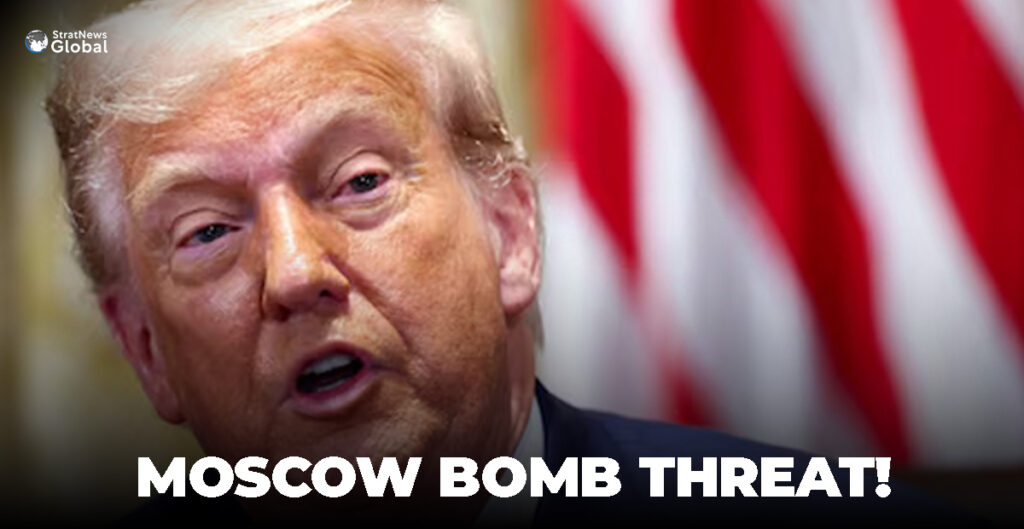
The Kremlin said on Wednesday it was uncertain about the accuracy of a CNN report claiming United States President Donald Trump once threatened to bomb Moscow to deter Russian President Vladimir Putin from attacking Ukraine.
CNN’s report cited audio recordings of Trump telling a private gathering of donors amid his pre-election campaign in 2024 that he had once warned Putin that he would “bomb the sh*t out of Moscow” if Russia attacked Ukraine.
Asked about the report, Kremlin spokesman Dmitry Peskov said: “I cannot confirm or deny this, even if I wanted to… Whether it is fake or not, we do not know either. There is a lot of fake news these days.”
The CNN report did not say when exactly Trump reportedly made the comments about bombing Moscow to Putin.
‘Pure Fiction’
The Washington Post reported that Trump had spoken to Putin by phone last November – after he won the presidential election but before he returned to the White House – and warned him not to escalate in Ukraine. The Kremlin dismissed reports of the phone call as “pure fiction.”
The first acknowledged phone call between the men this year took place on February 12.
Trump, who promised to swiftly end the war in Ukraine, has grown increasingly frustrated with Putin in recent months as the conflict has dragged on.
He directed his ire at the Kremlin chief during a meeting with his cabinet officials at the White House on Tuesday, saying “We get a lot of bullshit thrown at us by Putin”. Trump also said he was considering levying additional sanctions on Moscow.
CNN said that Trump also said he had delivered a similar warning to Chinese President Xi Jinping over a potential invasion of Taiwan, telling him that the United States would bomb Beijing in response.
(With inputs from Reuters)
Russia Launches Record 728-Drone Attack On Ukraine After Trump Vows More Military Aid
Russia launched a record 728 drones at Ukraine overnight, just hours after U.S. President Donald Trump pledged increased defensive aid to Kyiv and delivered rare, pointed criticism of Russian President Vladimir Putin.
The attack was the latest in a series of escalating air assaults in recent weeks that have involved hundreds of drones in addition to ballistic missiles, straining Ukrainian air defences at a perilous moment in the war, now in its fourth year.
Kyiv’s military downed almost all the drones, but some of the six hypersonic missiles launched by Russia had caused unspecified damage, air force spokesperson Yurii Ihnat said on Ukrainian television.
Calls For Harsher Sanctions
President Volodymyr Zelenskyy, who will meet U.S. envoy Keith Kellogg in Rome on Wednesday, said the strike showed the need for “biting sanctions” on the sources of income Russia uses to finance the war, including on those who buy Russian oil.
Trump said on Tuesday he was considering supporting a bill that would impose steep sanctions on Russia, including 500% tariffs on nations that buy Russian oil, gas, uranium and other exports.
“We get a lot of bullshit thrown at us by Putin … He’s very nice all the time, but it turns out to be meaningless,” Trump said at a cabinet meeting.
When asked by a reporter what action he would take against Putin, Trump said: “I wouldn’t tell you. We want to have a little surprise.”
Separately, Europe is working on a new sanctions package against Moscow.
Trump, who returned to power this year promising a swift end to the war in Ukraine, has taken a more conciliatory tone toward Moscow in a departure from the Biden administration’s staunch support for Kyiv.
But initial rounds of talks between Russia and Ukraine to end the Kremlin’s February 2022 invasion have so far borne little fruit, with Moscow yet to accept an unconditional ceasefire proposed by Trump and accepted by Kyiv.
The U.S. president’s promise to supply more defensive weapons appeared to reverse a Pentagon decision days earlier to stall some critical munitions supplies to Ukraine, despite increasing Russian attacks that have killed dozens in recent weeks.
Shortly after Wednesday’s attack, German Chancellor Friedrich Merz said that diplomatic means to resolve the war have been exhausted. He vowed to continue supporting Kyiv.
Following Trump’s new promise, Zelenskyy said on Tuesday he had ordered an expansion of contacts with the United States to ensure critical deliveries of military supplies, primarily air defence.
Poland Scrambles Jets
Residents of Kyiv and other major cities spent the night in air raid shelters, including metro stations.
Part of Russia’s overnight strike was aimed at a western region close to NATO-member Poland. The northwestern city of Lutsk, some 200 km (125 miles) from Poland, was the main target, Zelenskyy said, listing 10 other provinces across Ukraine where damage was also reported.
Polish and allied aircraft were activated to ensure air safety, Poland’s military said.
In Lutsk, buildings were damaged, but no deaths or injuries were reported in what amounted to the biggest air strike of the war on the city of 200,000 people, regional authorities said.
A storage facility of a local enterprise and some parking structures were ablaze, said the city’s mayor, Ihor Polishchuk.
Ivan Rudnytskyi, governor of the Volyn region that includes Lutsk, said 50 Russian drones and five missiles were in the region’s airspace overnight.
(With inputs from Reuters)
Former South Korean President Yoon Appears In Court For Detention Warrant Hearing
Former South Korean President Yoon Suk Yeol appeared in a Seoul court on Wednesday as it weighed a special prosecutor’s request to detain him over his failed attempt to impose martial law.
The Seoul Central District Court began hearing arguments from the special counsel team investigating Yoon’s martial law decree in December and from Yoon’s legal team on the request to detain the deposed president over allegations of abuse of power and obstruction of justice.
After the hearing, Yoon will await the court’s decision at the Seoul Detention Centre, about 20 km south of the capital, the special prosecutor said.
Yoon, who was wearing a dark navy suit and a red tie, did not answer questions from reporters as he entered the court building.
About 100 supporters gathered near the court, holding flags and signs, chanting “President Yoon” and “Yoon Again” in the stifling heat of about 35 degrees Celsius (95 degrees Fahrenheit).
Scores of police officers and dozens of buses formed a tight security cordon in front of Yoon’s house as well as around the court, which is expected to announce a decision late on Wednesday or in the early hours of Thursday.
Yoon was ousted in April by the Constitutional Court, which upheld his impeachment by parliament for his martial law bid that shocked South Koreans and triggered months of political turmoil, entrenching already deep divisions in the country.
Criminal Trial
The former conservative president is already under a criminal trial on charges that his attempt to rule the country using martial law amounted to an insurrection, a charge that is punishable by a life sentence or even death.
But the probe has picked up pace since the special prosecution began its investigation after liberal President Lee Jae Myung was elected in June and has been looking at additional charges, including accusations that Yoon mobilised presidential guards to stop authorities from arresting him in January.
He was previously taken into custody over the earlier criminal probe, but was released from jail after 52 days on technical grounds.
The detention warrant request was made on the grounds of Yoon posing a flight risk and concerns that he might interfere with witnesses linked to his case, local media reported, citing the special prosecutors’ request.
If Yoon is detained, he is expected to be held at the Seoul Detention Centre, and the special prosecution is expected to speed up a probe into additional allegations, including whether Yoon hurt South Korea’s interests by intentionally inflaming tensions with North Korea.
Yoon’s lawyers have rejected all the allegations against him, saying the detention warrant request is unreasonable and the investigation lacks objective evidence.
(With inputs from Reuters)
Lithuania, Finland To Begin Anti-Personnel Mine Production Amid Rising Russian Threat
Lithuania and Finland are expected to begin producing anti-personnel landmines domestically next year to supply their own forces and Ukraine, citing the growing military threat from Russia, officials from the two NATO countries said.
The two countries, which border Russia, have announced their intention to pull out of the Ottawa Convention banning the use of such mines, and the officials said production could be launched once the six-month withdrawal process is completed.
Three other NATO and European Union states – Poland, Latvia and Estonia – are also quitting the treaty, citing rising security concerns about Russia because of its war in Ukraine.
Those three countries have not announced plans to start producing anti-personnel mines, but officials in Poland and Latvia have indicated they could start production quickly if needed, and Estonia sees it as a possible option in the future.
Ukraine To Exit Ottawa Treaty
Ukraine has also announced it is withdrawing from the 1997 Ottawa treaty, so that it can defend itself better against Russia, which is not a party to the treaty. Each side has accused the other of using anti-personnel mines during the war.
The moves in Finland and Lithuania towards starting production of such mines underline mounting concern in Europe that Russia’s military ambitions may go beyond Ukraine and follow pledges by NATO states to increase defence spending, in line with demands by U.S. President Donald Trump.
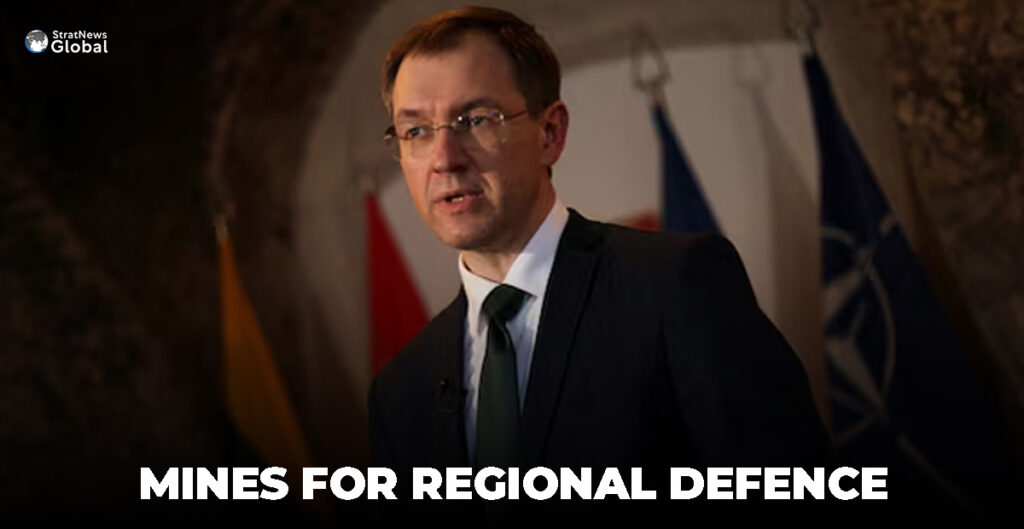
“We are going to spend hundreds of millions of euros on anti-tank mines, but also on anti-personnel mines. It will be a significant amount,” Lithuanian Deputy Defence Minister Karolis Aleksa told Reuters.
Tens of thousands of anti-personnel landmines, or more, will be ordered, he said.
“Our national industry will be one of the sources. Our industry can make these”, said Aleksa, whose country has a 274-km (170-mile) border with Russia and a 679-km border with Belarus, Russia’s close ally.
Once production is established, Lithuania will be in a position to supply others, including Ukraine, said Vincas Jurgutis, head of Lithuania’s defence industry association.
Russia’s Defence Ministry did not respond to a request for comment by Reuters.
‘Duty To Support Ukraine’
Finland has, at 1,340 km, a longer border with Russia than any other NATO state.
“Finland must, for security of supply, have its own (anti-landmines) production,” Finnish parliament defence committee chair Heikki Autto told Reuters. “They are a highly effective and very cost-efficient weapons system.”
Finland could also supply landmines to Ukraine, he said.
“It is not only right and our duty to support Ukraine, it is also important for Finland’s own security,” Autto said.
Helsinki had more than 1 million anti-personnel landmines before joining the Ottawa treaty in 2011, he said.
Finnish defence companies Nammo Lapua, Insta and Raikka told the parliamentary defence committee they would be interested in producing the mines. Another, Forcit Explosives, said it was ready to discuss possibilities with the military.
The companies declined to comment to Reuters. The Finnish military was not immediately available for comment.
Asked about Finland quitting the Ottawa treaty, Russia’s ambassador to Helsinki said in April that the decision would create risks only for residents of Finland because its military planned to mine only Finnish territory.
Six-Month Process
Anti-personnel mines explode when triggered by contact, vibration or a tripwire, and can maim civilians as well as combatants. Many stay on the ground long after conflicts end.
Anti-mine campaigners have criticised the countries that are leaving the Ottawa Convention and say that reintroducing anti-personnel mine production could be expensive and take a long time to become fully operational.
Asked whether Latvia would start producing anti-personnel mines, its defence ministry did not commit to starting such production but said: “The Latvian military industry has the necessary capabilities and the metalworking sector is highly advanced.”
Estonia has no immediate plans to purchase anti-personnel mines, Defence Minister Hanno Pevkur said. “For now, it’s an option in the back pocket,” he told Reuters.
PGZ S.A., Poland’s state-owned defence conglomerate, told Reuters it would be ready to produce millions of them if needed.
ZSP Niewiadów, a private Polish munitions manufacturer, has said it plans to restart large-scale production of the mines in 2027 and that it is investing in new facilities.
The five NATO countries that plan to quit the Ottawa treaty say they will not create minefields in peacetime but will store the mines for swift deployment if they feel threatened.
Poland has designated zones that could be mined within days if needed, as part of future military fortifications along the eastern frontier, between rows of reinforced concrete obstacles, a government source told Reuters.
The countries’ governments say any minefields must be marked, so that they can be cleared after a conflict. They regard such munitions as a deterrence.
“When we have them in storage, that is the best guarantee that they will never have to be used,” Autto said.
(With inputs from Reuters)
India, Brazil Set $20 Billion Trade Target, Call For Peace In Gaza
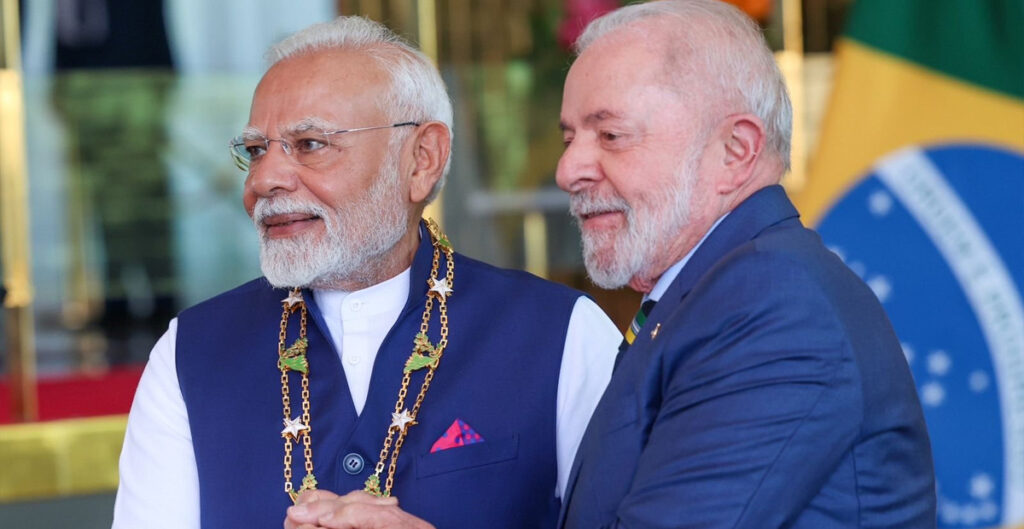
India and Brazil jointly reaffirmed their commitment to international peace and human rights during Prime Minister Narendra Modi’s state visit to Brazil. In a joint statement, Prime Minister Modi and President Luiz Inácio Lula da Silva called for an immediate end to hostilities in Gaza, backing a negotiated two-state solution and emphasising the need for safe, unimpeded humanitarian access throughout the conflict zone.
The leaders stressed that diplomacy and dialogue are the only viable paths to lasting peace in West Asia. They reaffirmed support for UNRWA’s mandate and humanitarian role, while demanding the release of all hostages and protection of civilians.
Bold Trade Ambitions
Framing economic cooperation as the backbone of the strategic partnership, the two leaders set an ambitious target to raise bilateral trade to $20 billion over the next five years. This goal will be driven by a new ministerial-level Trade and Commerce Mechanism, tasked with tackling non-tariff barriers, enabling smoother investments and guiding the expansion of the India-MERCOSUR Preferential Trade Agreement (PTA).
As reported previously, two major institutional advances were announced to support this push:
- The opening of India’s Exim Bank representative office in São Paulo, boosting credit and export-finance linkages
- The establishment of a Brazilian Health Regulatory Agency (ANVISA) office in New Delhi, strengthening regulatory cooperation in pharmaceuticals and health tech
Five Pillars Of Strategic Roadmap
The India-Brazil relationship, elevated to a Strategic Partnership in 2006, is now being structured around five pillars:
Defence And Security: Deeper cooperation through joint exercises, high-level exchanges, and an Agreement on Classified Information Exchange. A Defence Industry Cooperation MoU is expected soon, along with the first India-Brazil Cybersecurity Dialogue.
Food And Nutritional Security: Launch of an MoU between EMBRAPA and ICAR for joint research in biotechnology, animal genetics, and agricultural innovation to boost productivity and resilience.
Energy Transition And Climate Action: Both sides pledged stronger biofuels collaboration as founding members of the Global Biofuels Alliance, with joint focus on Sustainable Aviation Fuel, flex-fuel technologies, and offshore oil exploration with carbon capture goals. These priorities will also feed into preparations for COP‑30, hosted by Brazil later this year.
Digital Transformation And Emerging Tech: India’s Unified Payments Interface (UPI) is set to expand to Brazil. A new MoU on Digital Public Infrastructure and AI collaboration will support Brazil’s digital inclusion and innovation initiatives, with Indian expertise in supercomputing, fintech and digital health being shared.
Industrial And Strategic Partnerships: The two nations aim to integrate supply chains across pharmaceuticals, defence manufacturing, critical minerals and oil & gas, while building capabilities in mining, processing and recycling of rare earths.
Space Cooperation, Supercomputing & AI
Both leaders announced new momentum in ISRO-Brazil space collaboration, covering satellite launches, ground stations, climate data-sharing and oceanic monitoring. Space R&D and personnel training will form part of the expanded cooperation, alongside deepening ties in AI, supercomputing and other frontier technologies.
Terrorism, Ukraine And Global Stability
Both nations condemned terrorism in all forms, including cross-border terrorism. They welcomed the signing of the Agreement on Cooperation in Combating International Terrorism and Transnational Organised Crime. The leaders also supported the newly adopted UN Convention on Cybercrime, scheduled for signing in Hanoi in 2025.
On the situation in Ukraine, Modi and Lula expressed concern over the humanitarian fallout and disruption to the Global South, urging all parties to return to diplomacy. They also jointly opposed the use of environmental and security pretexts for protectionist trade restrictions, calling for a rules-based global trading system led by the WTO.
Agreements Signed
Several new agreements and MoUs were finalised during the visit, including: Renewable Energy Cooperation; Digital Public Infrastructure; Agricultural Research; Intellectual Property Rights; Terrorism and Security Information Sharing. And agreements in sports, cultural exchange, archival cooperation and defence industry collaboration.
Strategic South-South Blueprint
Prime Minister Modi captured the spirit of the visit with a sporting comparison: “Football is Brazil’s passion; cricket is ours. Whether it’s scoring goals or hitting boundaries, when India and Brazil are on the same team, even a $20 billion trade partnership is not difficult to achieve.”
Air India Crash Probe Focuses On Fuel Control Switches As Preliminary Report Nears
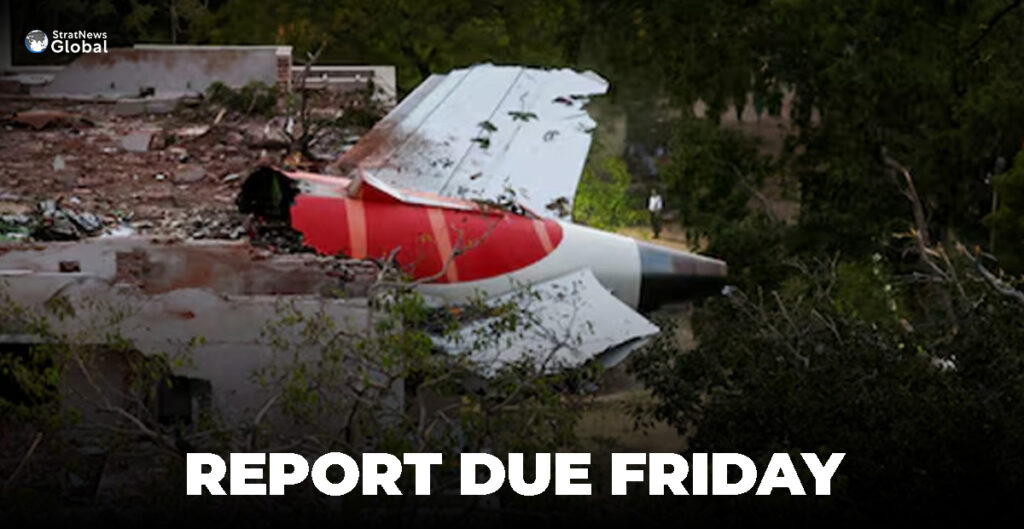
A preliminary report on the deadly Air India jetliner crash in June is expected by Friday, according to three sources familiar with the matter, one of whom said investigators are now focusing on the movement of the aircraft’s fuel control switches.
The London-bound Boeing 787 Dreamliner, which started losing height after reaching an altitude of 650 feet, crashed moments after takeoff from Ahmedabad, India, killing 241 of the 242 people on board and the rest on the ground.
The investigation into the Air India crash is focusing on the movement of the engine fuel control switches following an analysis of the 787’s flight and voice data recorders, along with a simulation by Boeing of the aircraft’s final moments, one of the sources said.
The investigation has not raised any immediate concerns over mechanical failure, the source said, and there has been no bulletin to airlines recommending changes to 787 operations.
Boeing declined to comment.
Focus On Fuel Switches
Aviation industry publication The Air Current first reported the focus on the fuel switches that help power the plane’s two engines.
It was not clear what specific actions involving the fuel switches are being looked at by investigators.
Sources told the Air Current that the available information on the black boxes could not rule in or out improper, inadvertent or intentional actions that preceded or followed the apparent loss of thrust before the aircraft crashed.
U.S. aviation safety expert John Cox said a pilot would not be able to accidentally move the fuel switches that feed the engines. “You can’t bump them and they move,” he said.
Cox added that if a switch was shut off, the effect would be almost immediate, cutting off engine power.
Most air crashes are caused by multiple factors. The investigation is focusing at least partly on engine thrust, Reuters reported last month.
While the report from Indian investigators could be made public on Friday, the three sources cautioned Reuters that plans could change and there was no clarity on how much information would be available in the document, which comes about 30 days after the June 12 tragedy.
The sources spoke on condition of anonymity because they were not authorised to speak to the media.
India’s Aircraft Accident Investigation Bureau, which is leading the probe under international rules, did not respond immediately to a request for comment outside normal business hours.
Information Release
The probe has been dogged by questions over a lack of information, after investigators took about two weeks to download flight recorder data after the crash. The Indian government held only one press conference on the incident, and no questions were taken.
However, India reversed course on an earlier decision reported by Reuters to prevent a U.N. aviation investigator from joining the probe, two senior sources said.
A specialist from the U.N.’s International Civil Aviation Organisation (ICAO) was granted observer status, following an unusual request by the agency to offer its support.
ICAO declined to comment, adding in a statement that any public discussion of “cooperative arrangements” would require authorisation by the state.
The crash is challenging the Tata Group’s ambitious campaign to restore Air India’s reputation and revamp its fleet, after taking the carrier over from the government in 2022.
India is banking on a boom in aviation to support wider development goals, with New Delhi saying it wants India to be a job-creating global aviation hub along the lines of Dubai, which currently handles much of the country’s international traffic.
A panel of Indian lawmakers will review safety in the country’s civil aviation sector and has invited several industry and government officials to answer questions on Wednesday, with topics set to include the recent plane crash.
(With inputs from Reuters)
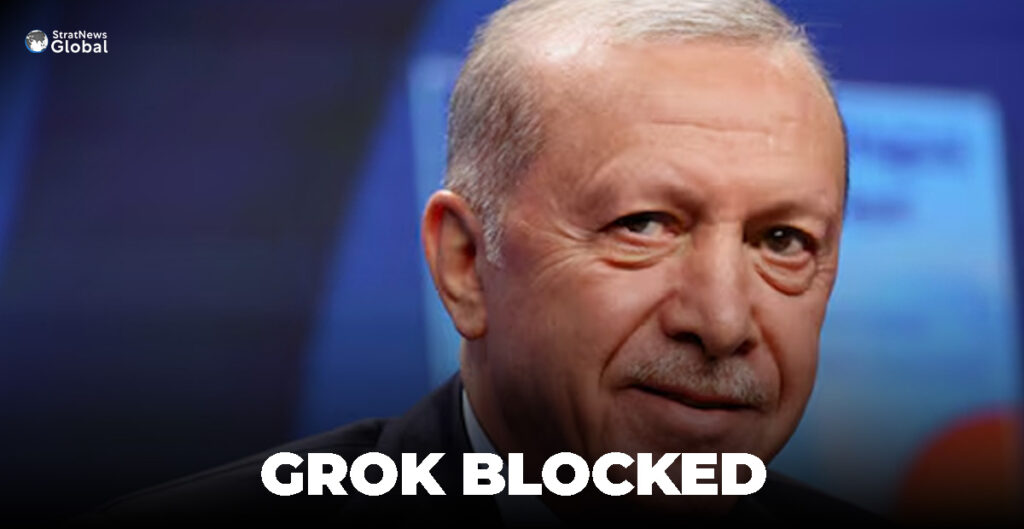
Turkiye Blocks Musk’s AI Chatbot Grok Over Alleged Insults To President Erdogan
A court in Turkiye has restricted access to Grok, the artificial intelligence (AI) chatbot by Elon Musk’s xAI, after it allegedly produced content insulting President Tayyip Erdogan.
Issues of political bias, hate speech and accuracy of AI chatbots have been a concern since at least the launch of OpenAI’s ChatGPT in 2022, with Grok dropping content accused of antisemitic tropes and praise for Adolf Hitler.
The office of Ankara’s chief prosecutor has launched a formal investigation into the incident, it said on Wednesday, in Turkey’s first such ban on access to an AI tool.
Neither X nor its owner, Elon Musk, has commented on the decision.
Last month, Musk promised an upgrade to Grok, suggesting there was “far too much garbage in any foundation model trained on uncorrected data”.
Grok, which is integrated into X, reportedly generated offensive content about Erdogan when asked certain questions in Turkish, the media said.
The Information and Communication Technologies Authority (BTK) adopted the ban after a court order, citing violations of Turkey’s laws that make insults to the president a criminal offence, punishable with up to four years in jail.
Critics say the law is frequently used to stifle dissent, while the government maintains it is necessary to protect the dignity of the office.
AI Chatbots Under Scrutiny
AI chatbots like Grok have come under increasing scrutiny for generating offensive or politically sensitive content.
Grok, in particular, has been accused of producing content that echoes antisemitic tropes, prompting public backlash and renewed calls for stricter content moderation and oversight.
These incidents highlight the broader challenge AI developers face in balancing free expression with ethical responsibility.
While large language models are designed to simulate human-like responses, they can inadvertently amplify toxic narratives or offensive ideologies, especially when deployed in public-facing platforms.
(With inputs from Reuters)
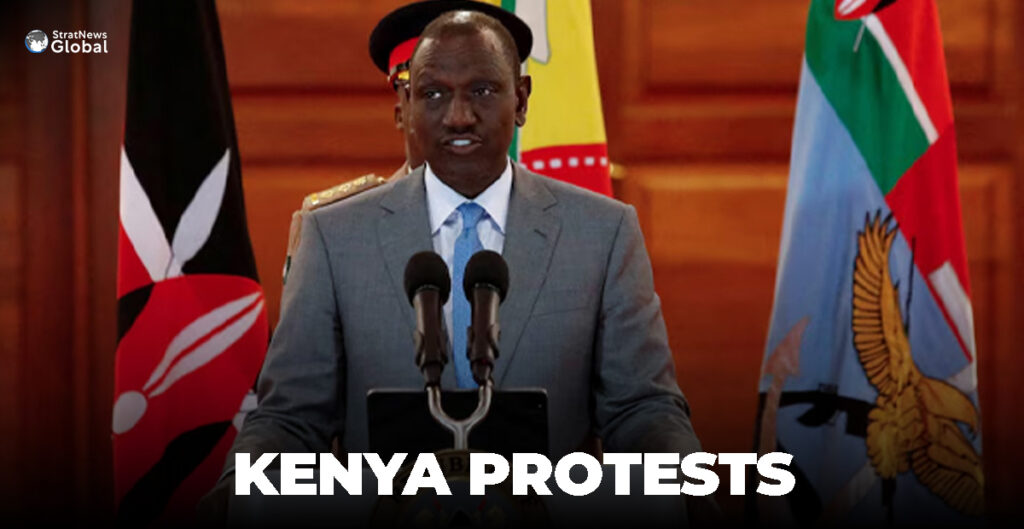
Defiant Kenyan Protesters Challenge President Ruto Amid Crackdown
Braving police batons, water cannons, and even sporadic gunfire, protesters on the streets of Kenya this week have adopted a defiant new chant that could rattle embattled President William Ruto: “Ruto wantam”, or Ruto one-term.
Ruto won power almost three years ago, vowing to protect the poor and end police violence, but he is facing mounting public dissatisfaction over high living costs, corruption and police brutality that could yet seal his fate as a “wantam” leader.
As the faint drum beat of the 2027 election grows louder, analysts say, his administration will need not only to deliver on its economic promises but also to adopt a more conciliatory tone to win over a younger, better-educated population.
“Persistent economic hardship and widespread allegations of police violence pose serious challenges to any ambitions he may have for securing re-election in 2027,” said Mucahid Durmaz, Senior Africa Analyst at risk intelligence firm Verisk Maplecroft.
A government-funded rights group said 31 people were killed nationwide in the latest anti-government protests on Monday, held to mark the 35th anniversary of pro-democracy rallies. Police fired to disperse the demonstrators after also using tear gas and water cannon.
“We can’t feed our families, so we have to be on the street to stop the increasing prices, to stop the (police) abductions, and to stand up for our country,” said Festus Muiruri, a 22-year-old protester in the capital, Nairobi.
“We want the president to hear us.”
But Ruto’s government has been consistently slow to respond to public discontent. Last year, he only abandoned proposed tax hikes after protesters overran parliament in unprecedented scenes flashed across TV screens around the world.
His interior minister, Kipchumba Murkomen, branded last month’s protests as a “coup attempt” by what he called “criminal anarchists”.
Gen Z
Unlike his predecessors, Ruto faces a generation of uncompromising young Kenyans desperate for economic opportunities, who can mobilise amorphously through social media, bypassing opposition parties and leaders.
The so-called “Gen Z” protesters, the product of free schooling introduced two decades ago, have no recollection of authoritarian rule. Many were not yet born when Kenya introduced multi-party elections in 1992.
With up to 800,000 young people entering the job market each year, Gen Z are more educated than their elders, but also more likely to be unemployed, according to a report by Afrobarometer, a pollster.
“They have no memory of the rough times,” said Macharia Munene, a professor of history and international relations at the United States International University (USIU) in Nairobi.
“They’ve learned how to ask questions.”
Discontent with the government found a lightning rod last month with the death of blogger Albert Ojwang in police custody. On June 25, some 19 people lost their lives in demonstrations over Ojwang’s death.
The administration’s hardline response to protesters has rattled investors in East Africa’s largest economy. Business expectations fell to their second-lowest level on record in May, according to a survey by Stanbic Bank Kenya.
“Repeated protests and shutdowns will continue to erode investor confidence and disrupt economic activity, especially if the government continues to prioritise force over dialogue,” said Jervin Naidoo from Oxford Economics.
‘Blind, Deaf And Dumb’
Despite the swelling disillusionment, Kenyans are left with few options for now. Ruto’s large parliamentary majority ensures he won’t be unseated prematurely.
He also faces a weak and fractured opposition, which is yet to find a standard bearer for the next election. Following last year’s protests, Ruto brought former Prime Minister Raila Odinga into his government, neutralising his main threat.
He has two more years to turn things around or use his incumbency to help ensure a second term.
Ruto will hope that his increased social spending and programmes aimed at tackling youth unemployment, combined with positive economic prospects and a decline in inflation, will bolster his appeal, according to Control Risks.
However, that may not be enough to avoid “wantam”, said Javas Bigambo, a political commentator.
“The government is perceived to be blind, deaf and dumb by the young people. This perception needs to be managed. Dealing with the protesters with this condescending attitude will only worsen Ruto’s re-election prospects,” he said.
“It is urgent that measures are taken to bridge the divide.”
(With inputs from Reuters)
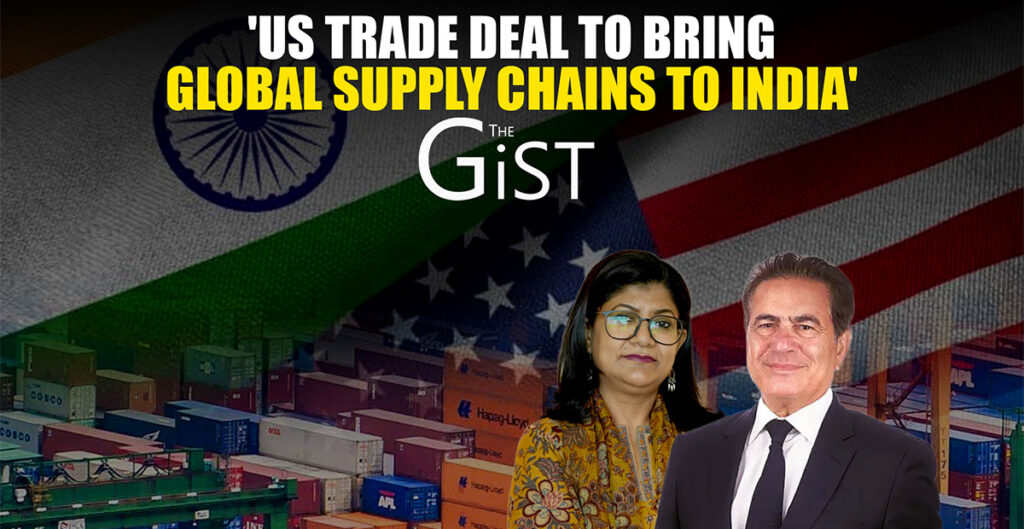
Apple Unlikely To Move Manufacturing Out Of India, Says Aghi of USISPF
Despite immense pressure from US President Donald Trump, iPhone-maker Apple Inc. is unlikely to move its production line out of India and relocate it in the United States even as the Cupertino-based multinational is witnessing its cost of production coming down for its smartphones by 60 per cent compared to the U.S. market, said Mukesh Aghi, President and CEO of Washington DC-based US-India Strategic Partnership Forum (USISPF).
“Tim Cook, the CEO of Apple, has gone down and showed to the president (Donald Trump) that if they manufacture the iPhones in the U.S., the cost to the consumer is going to be $3,500. Studies have shown consistently, for the US companies when they manufacture outside the US it is 60% cheaper. And so I don’t think Apple will basically move that manufacturing from India into the US,” Aghi told StratNews Global in an exclusive interaction over videoconferencing.
He highlighted that Apple has committed to invest $500 billion in advanced manufacturing, in which India features prominently.
India and the United States are currently engaged in negotiations for having an interim trade deal that seeks to give more market access to American goods, especially in the agricultural sector. Once the deal is signed, both sides will go on to conclude a mega trade deal encompassing trade in goods, services and investment, which will focus more on eliminating the non-tariff barriers.
However, Aghi said, it is not clear whether the interim deal will lead to the removal of the 10 per cent baseline tariff that the U.S. has imposed on all Indian imports.
“If it stays, I don’t think it has much impact on India’s exports because we saw with a 10% baseline also exports are going up from India into the United States. And the same way India will also put 10%. So it will be a reciprocal agreement between the two countries having 10% tariffs on each other’s goods exports. So, it kind of flattens out the arrangement,” he said.
On Monday, Trump said the deal with India will be signed “soon” even as the trade negotiators on both sides are believed to have presented a draft copy of the agreement to the U.S. President for his approval.
“We’ve made a deal with the United Kingdom, we’ve made a deal with China, we’re close to making a deal with India,” Trump told reporters at the White House while meeting Israel Prime Minister Benjamin Netanyahu even as the US President announced new reciprocal tariffs on 14 countries — including Bangladesh, Malaysia, Japan, Cambodia and South Korea.
According to Aghi, both countries are likely to sign the mega trade deal “by fall” when India is expecting a visit by President Trump in order to attend the Quadrilateral Security Dialogue (Quad) Summit, which will be hosted by New Delhi.
The Trump administration will need approval of the U.S. Congress for the ratification of the comprehensive trade deal with India.
Aghi also pointed out that, on the other hand, when it comes to India’s export competitors, when goods will be exported from China into Vietnam and then to the US, then the tariff jumps to 40%.
“So I think there is a strategy to basically punitively go after China, on the tariff side, directly or indirectly. And that’s where India benefits,” he highlighted, adding that the Bilateral Trade Agreement with the U.S. will provide more market access to Indian pharmaceuticals, gems and jewellery as well as energy products.
On Monday, Trump announced the decision to impose a 25 percent tariff on goods from two of its closest allies Japan and South Korea, with effect from August 1.
Aghi also feels that a potential trade deal between the United States and China will take time and it will not impact Indian exports.
“China’s relations with the U.S are very complex. China will prolong the discussion. It will make every effort to tire the U.S negotiators and ensure that at least, the process continues … So we don’t expect trade deals happening with China because it’s not just about trade between the US and China, it is also about geopolitics,” said Aghi.
“It’s about dominance. It’s about controlling the manufacturing industrial base itself. So we do expect, at least India will sign a trade deal, whereas China will be a challenge,” he added.