

Support us by contributing to StratNewsGlobal on the following UPI ID
ultramodern@hdfcbank

Strategic affairs is our game, South Asia and beyond our playground. Put together by an experienced team led by Nitin A. Gokhale. Our focus is on strategic affairs, foreign policy and international relations, with higher quality reportage, analysis and commentary with new tie-ups across the South Asian region.
You can support our endeavours. Visit us at www.stratnewsglobal.com and follow us on YouTube, Twitter, Facebook and Instagram.
र 500 per month
र 1000 per month
र 5000 per year
र 10000 per year
Donate an amount of your choice
र 500 per month
Donate र 500 per month

र 1000 per month
Donate र 1000 per month
र 5000 per year
Donate र 5,000 per year
र 10000 per year
Donate र 10,000 per year
Donate an amount of your choice
Donate an amount of your choice
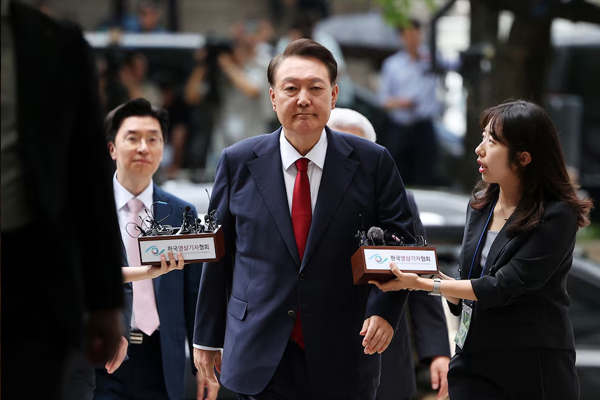



South Korea: Yoon Returns To Jail As Special Counsel Intensifies Probe
Former South Korean President Yoon Suk Yeol was sent back to jail on Thursday after a court approved a warrant sought by prosecutors over his alleged attempt to impose martial law last year.
The Seoul Central District Court’s decision bolstered the special counsel investigation into allegations that Yoon’s move in December represented obstruction of justice and abuse of power.
The court said in a statement it granted the request because of concerns Yoon could seek to destroy evidence.
Potential Capital Punishment
The conservative politician already faces criminal charges of insurrection over his martial law decree, and that could carry a sentence of life in prison or death.
The former president returned to confinement in the Seoul Detention Center about 20 km (12 miles) south of the capital after the decision. He spent 52 days in jail earlier in the year but was released four months ago on technical grounds.
The Constitutional Court ousted him as president in April, upholding parliament’s impeachment for the martial law bid, which shocked South Koreans and triggered months of political turmoil.
The special prosecution team launched its investigation after new leader Lee Jae Myung was elected in June, and it has been looking into additional charges against Yoon.
Speeding Up Probe
The special counsel team is now expected to speed up its probe into allegations, including whether Yoon hurt South Korea’s interests by intentionally inflaming tensions with North Korea.
Yoon attended the court hearing on Wednesday on the detention warrant, wearing a dark navy suit and a red tie, but did not answer questions from reporters.
His lawyers have denied the allegations against him and called the detention request an unreasonable move in a hasty investigation.
More than 1,000 supporters rallied near the court on Wednesday, local media reported, waving flags and signs and chanting Yoon’s name in heat of 35 degrees Celsius (95 degrees Fahrenheit).
In their warrant request, prosecutors said Yoon poses a flight risk, local media reported.
(With inputs from Reuters)
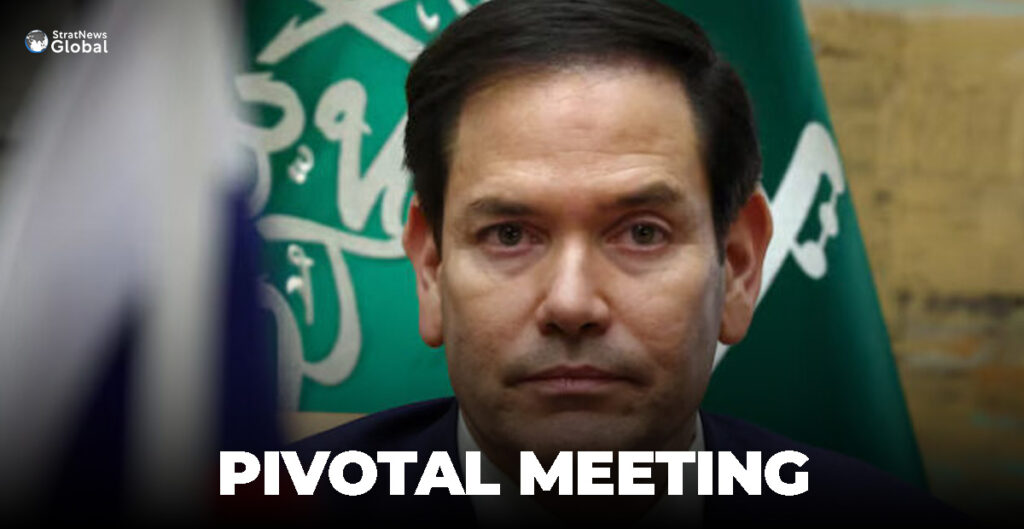
Rubio, Lavrov To Meet In Malaysia Amid Trump’s Shift On Russia
US Secretary of State Marco Rubio is set to hold talks with Russian Foreign Minister Sergei Lavrov on the sidelines of the ASEAN Foreign Ministers’ Meeting in Kuala Lumpur this Thursday, according to a senior official from the US State Department.
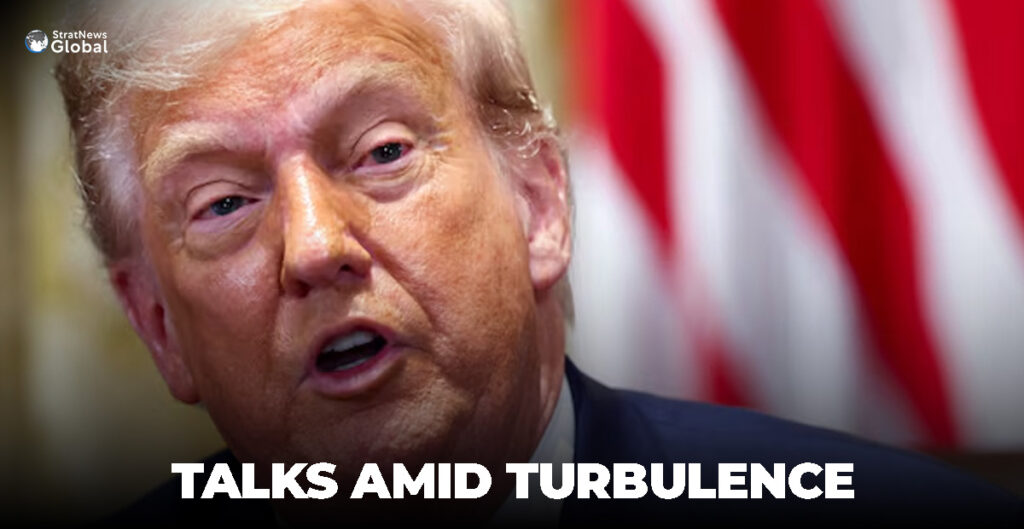
It would be the second in-person meeting between Rubio and Lavrov, and comes at a time when US President Donald Trump has grown increasingly frustrated with Russian President Vladimir Putin as the war in Ukraine drags on.
The first meeting between the top diplomats took place in Saudi Arabia in February as part of the Trump administration’s effort to re-establish bilateral relations and help negotiate an end to the war.
Sanctioning Russia
Trump, who returned to power this year promising a swift end to the war that began in 2022, had taken a more conciliatory tone toward Moscow in a departure from predecessor Joe Biden’s staunch support for Kyiv.
But on Tuesday, a day after Trump approved sending US defensive weapons to Ukraine, he aimed unusually direct criticism at Putin, saying the Kremlin leader’s statements on moving towards peace were “meaningless”.
Trump has also said he was considering supporting a bill that would impose steep sanctions on Russia, including 500% tariffs on nations that buy Russian oil, gas, uranium and other exports.
When asked on Wednesday about Trump’s criticism of Putin, the Kremlin said Moscow was “calm” regarding the criticism and that it would continue to try to fix a “broken” US-Russia relationship.
Discussion With Ukraine
At a conference of Ukraine-friendly nations in Rome on Wednesday, Trump’s Ukraine envoy Keith Kellogg met Ukrainian President Volodymyr Zelenskyy in what Kyiv described as a “substantive” conversation.
Russia targeted Ukraine with a record 728 drones early on Wednesday, the latest attack in a series of escalating air assaults in recent weeks that have involved hundreds of drones in addition to ballistic missiles, straining Ukrainian air defences at a perilous moment in the war.
Looking Beyond Europe, Middle East
In his first visit to Asia since taking office, Rubio is in Kuala Lumpur to meet with the 10-member Association of Southeast Asian Nations and with senior Malaysian government officials.
The trip is part of an effort to renew US focus on the Indo-Pacific and look beyond the conflicts in the Middle East and Europe that have consumed much of the Trump administration’s attention, with Rubio balancing dual responsibilities as secretary of state and national security adviser.
(With inputs from Reuters)
Afghanistan: From Pariahs To Partners, A Deadly Shortcut To Legitimacy
Is India’s abstention from the recent UN General Assembly resolution on Afghanistan part of a disturbing trend of violent, extremist regimes quietly gaining global legitimacy?
New Delhi’s decision came just days after Moscow formally recognised the Islamic Emirate of Afghanistan on July 3, making Russia the first country to grant the Taliban full diplomatic recognition since their return to power in 2021.
This follows Russia’s April move to lift its two-decade-old ban on the Taliban as a terrorist organisation.
The UNGA Resolution, which urged Kabul to end the “grave, worsening, widespread and systematic oppression” of women, children and minorities and take decisive action against terrorism, was passed as a draft with 116 votes in favour, two against (US and Israel) and 12 abstentions, including India, Russia and China.
“An approach focused only on punitive measures, in our view, is unlikely to succeed,” explained India’s permanent representative to the U.N. Parvathaneni Harish.
While Russia had maintained diplomatic and intelligence ties with the Taliban for some time, this full endorsement removes any pretence of hesitation.
The Kremlin says it’s a matter of pragmatism: the Taliban are in control, are fighting ISIS-K, and are maintaining order.
But what Moscow has handed the Taliban is far more than a trade deal or diplomatic handshake. It is the one thing the group has craved and lacked: international legitimacy. Which grants access to global finance, bilateral agreements, and eventually, a seat at major international forums.
“Thanks to this formal recognition, Russia is strengthening its economic ties with Afghanistan, aiming to become a major supplier and partner,” says Giuliano Bifolchi, Italian intelligence analyst and co-founder of SpecialEurasia.
Russia is reportedly seeking to expand trade in oil, gas, and wheat, and collaborate with the Taliban on energy, infrastructure, and agriculture. This could place Moscow in direct competition with China, which has long subsidised the Taliban in exchange for access to Afghanistan’s mineral wealth, he adds.
Of course, geopolitical interests have always overshadowed human rights. But there was once a red line: a designated terrorist group that seized power through violence was not granted formal recognition. That line is blurring, fast.
In March 2025, the United States quietly removed three senior Haqqani Network leaders from its “Rewards for Justice” program—including Sirajuddin Haqqani, now the Taliban regime’s acting Interior Minister. The Haqqani Network, one of the most brutal factions within the Taliban, is responsible for numerous attacks on civilians and diplomats, including two deadly bombings targeting India’s embassy in Kabul in 2008 and 2009. The July 2008 attack killed 59 people, including four Indian officials. Today, the Haqqanis are a part of the regime in Kabul.
Despite this, India—once a strong backer of a democratic Afghanistan—has been tiptoeing toward a more open engagement with the Taliban.
Afghanistan was among the first to condemn Pakistan for the recent terror attack in Pahalgam, and India earlier allowed a Taliban-linked, India-educated representative to head the Afghan consulate in Mumbai. These are signals, however cautious, of deepening ties that may eventually pave the way for formal recognition.
But this is no longer just about Afghanistan or Russia. Globally, regimes run by militants or designated terrorists are slowly acquiring the sheen of normalcy.
Syria’s Bashar al-Assad, once a global pariah, has been readmitted into the Arab League. The United States and European governments have dialled down opposition to groups like Hay’at Tahrir al-Sham (HTS), an Al Qaeda offshoot now entrenched in northwest Syria.
What’s emerging is a new playbook for power: if you can seize territory, maintain a semblance of order, and offer geopolitical value, particularly in counterterrorism or trade, your past can be papered over. Recognition becomes a question of time, not conduct.
That sets a disastrous precedent. If the Taliban—whose rule is marked by repression, gender apartheid, and elimination of civil liberties—can win international recognition, what’s to stop other armed groups from believing they can do the same? Why negotiate or engage in dialogue when power can be taken by force and eventually rewarded?
It also abandons those suffering under these regimes. Afghan women have been erased from public life. Journalists are jailed, protests crushed. Recognising the Taliban without demanding any measurable change is a brutal betrayal of the millions of Afghans who once believed the world stood with them.
None of this is to argue for isolation. Afghanistan is in humanitarian freefall. Millions need aid. Engagement is essential. But there’s a line between delivering food and medicine and handing power and legitimacy to a regime that has shown nothing but contempt for human rights.
The real danger is what happens next. When legitimacy is decoupled from democratic process and basic human dignity, and tethered instead to strategic convenience, the signal is clear: violence works. Just hold on long enough, and someone will come calling.
We’ve already seen where this logic leads in parts of Africa, in Syria, and now in Afghanistan. It breeds unaccountable regimes and extinguishes hopes for more open, representative governance.
Russia’s recognition of the Taliban may seem like a footnote in a complicated region. It’s not. It’s a marker of the world we’re drifting into: where legitimacy is seized, not earned.
Heatwave Kills 2,300 Across 12 European Cities, Study Finds
Around 2,300 people died from heat-related causes across 12 European cities during last week’s severe heatwave, according to a rapid scientific analysis released on Wednesday.
The study targeted the 10 days, ending July 2, during which large parts of Western Europe were hit by extreme heat, with temperatures breaching 40 degrees Celsius (104°F) in Spain and wildfires breaking out in France.
Of the 2,300 people estimated to have died during this period, 1,500 deaths were linked to climate change, which made the heatwave more severe, according to the study conducted by scientists at Imperial College London and the London School of Hygiene and Tropical Medicine.
“Climate change has made it significantly hotter than it would have been, which in turn makes it a lot more dangerous,” said Dr Ben Clarke, a researcher at Imperial College London.
The study covered 12 cities, including Barcelona, Madrid, London and Milan, where the researchers said climate change had increased heatwave temperatures by up to 4 degrees Celsius.
The researchers used established epidemiological models and historical mortality data to estimate the death toll, which reflects deaths where heat was the underlying reason for mortality, including if exposure exacerbated pre-existing health conditions.
The scientists said they used peer-reviewed methods to quickly produce the estimated death toll because most heat-related deaths are not officially reported, and some governments do not release this data.
‘Strong Heat Stress’
Last month was the planet’s third-hottest June on record, behind the same month in 2024 and 2023, the EU’s Copernicus Climate Change Service said in a monthly bulletin on Wednesday.
Western Europe experienced its warmest June on record, with much of the region experiencing “very strong heat stress” – defined by conditions that feel like a temperature of 38 degrees Celsius or more, Copernicus said.
Western Europe experienced its warmest June on record, with much of the region experiencing “very strong heat stress” – defined by conditions that feel like a temperature of 38 degrees Celsius or more, Copernicus said.
Researchers from European health institutes reported in 2023 that as many as 61,000 people may have died in Europe’s sweltering heatwaves in 2022, according to new research, suggesting countries’ heat preparedness efforts are falling fatally short.
The build-up of greenhouse gas emissions in the atmosphere – which mostly come from the burning of fossil fuels – means the planet’s average temperature has increased over time. This increase in baseline temperatures means that when a heatwave comes, temperatures can surge to higher peaks.
(With inputs from Reuters)
Trump Meets African Leaders Amid Escalating Trade War Threats
U.S. President Donald Trump meets with leaders from five African nations on Wednesday, at a time when the U.S. leader is intensifying a trade war that poses significant risks to developing countries reliant on commerce with the world’s largest economy.
Trump is hosting leaders from Gabon, Guinea-Bissau, Liberia, Mauritania and Senegal for a discussion and lunch at the White House, with the discussions to focus on business opportunities, a White House official said.
Africa experts are waiting for Trump to announce dates for a broader summit with African leaders, possibly in September, around the time of the United Nations General Assembly.
This week’s mini-summit marks the latest effort by successive U.S. administrations to counter perceptions of U.S. neglect of a continent where China has increasingly made economic inroads. Since Trump took office in January, his administration has hit Africa with steep cuts in foreign aid as well as a tariff war against U.S. trading partners.
Trump did not visit Africa during his first term, though his wife, Melania, did. Some African politicians labeled Trump a racist in 2018 after he was reported to have described some immigrants from Africa and Haiti as coming from “shithole” countries.
Tense Diplomatic Encounter
In May, Trump confronted South African President Cyril Ramaphosa with explosive false claims of white genocide and land seizures during a tense White House meeting.
Wednesday’s meeting was expected to focus on economics.
The U.S. International Development Finance Corporation said earlier in the day it would provide project development funding for the Banio Potash Mine in Mayumba, Gabon, helping Gabon reduce its dependence on imports.
“DFC’s efforts not only benefit the countries and communities where they invest but also advance U.S. economic interests by opening new markets, strengthening trade relationships, and promoting a more secure and prosperous global economy,” said DFC head of investments Conor Coleman.
Trump’s government continues to send out letters notifying trading partners of higher tariff rates taking effect on August 1 and has launched a new front in his trade war against members of the BRICS group of developing countries.
‘America First’ Agenda
His administration has also axed huge swaths of U.S. foreign aid for Africa as part of a plan to curb spending it considers wasteful and focus on an “America First” agenda.
Those cuts could result in more than 14 million additional deaths by 2030, research published by The Lancet medical journal showed last week.
Senior U.S. officials have said that Washington wants to prioritise trade and investment over charity-based assistance and will focus on creating more opportunities for U.S. firms.
All five countries invited have abundant natural resources, including manganese, iron ore, gold, diamonds, lithium and cobalt, which are essential for use in current technologies. China has made huge inroads in Africa in recent years, investing heavily across the continent, especially in resource extraction.
But African Union officials question how Africa could deepen trade ties with the U.S. under what they called “abusive” tariff proposals and visa restrictions largely targeting travellers from Africa. The top U.S. diplomat for Africa, Ambassador Troy Fitrell, has dismissed allegations of unfair U.S. trade practices.
(With inputs from Reuters)
Haitian Immigrants In Springfield Stay Resilient Amid Trump’s Deportation Threat
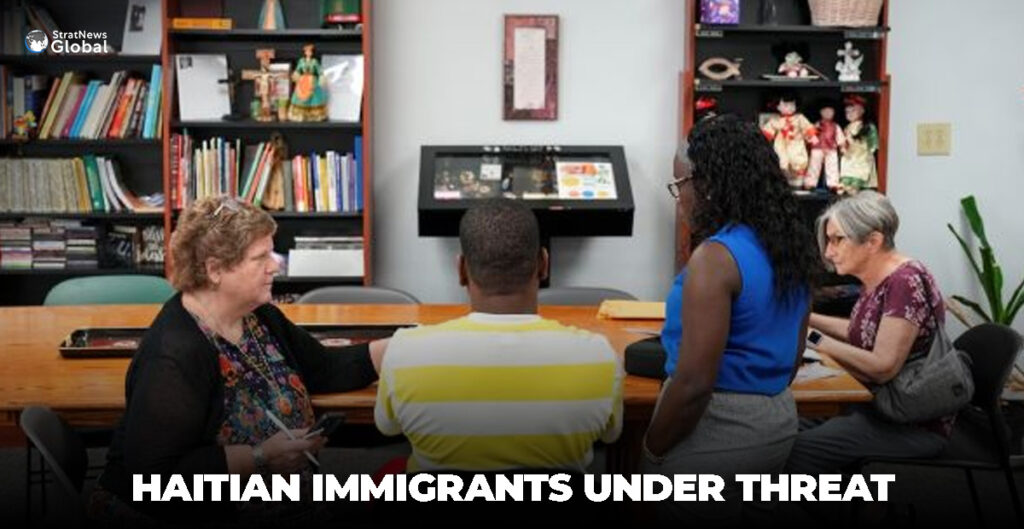
With their newborn son in tow, Michelet and his wife visited the St. Vincent de Paul Community Center in Springfield, Ohio, last week seeking assistance from its volunteers. Their goal was to apply for a U.S. passport for their baby — a document that, as Haitian immigrants, now feels increasingly out of reach.
With their own legal status precarious, Michelet and his wife see the passport as crucial proof that their U.S.-born son is an American citizen. But they know that their son’s citizenship will do nothing to stop the Trump administration from following through on its goal of deporting them – and hundreds of thousands of other Haitian immigrants – back to the violence-racked Caribbean island nation.
Michelet, who only provided his first name for fear of drawing attention from immigration agents, said he was not interested in migrating to a third country and sees his pending asylum claim as the best option for staying in the U.S.
“Moving to Canada or another country would mean starting over,” said the 35-year-old, who works for a local auto parts company and came to Springfield via Chile more than two years ago. “I’m already here. I have a job and experience here.”
Temporary Protected Status
Some migrants began exploring such contingency plans after the Department of Homeland Security said on June 27 that it would terminate the Temporary Protected Status providing legal status for half a million Haitians, effective September 2.
On July 1, a federal judge in New York blocked that DHS effort, but the Trump administration is expected to appeal. The Supreme Court already allowed a similar move to go ahead, ruling in May that the administration could end TPS protections for Venezuelans in the United States.
Initially granted to Haitians after a devastating 2010 earthquake, TPS has been extended numerous times, most recently due to gang violence and unrest that persists to this day.
White House spokesperson Abigail Jackson said in a statement that the earthquake no longer posed a risk and that ending TPS showed Trump was “keeping his promise to restore sanity to our immigration system.” Eligible Haitians could pursue legal status through other means, she said.
‘Jesus Put Me Here’
Springfield is home to an estimated 10,000 to 15,000 Haitian nationals. Working at Amazon warehouses and auto suppliers, they help drive the local economy. Predominantly Christian, many lean on their faith when talking through their deportation fears.
“I’m going to stay here. I’m not afraid,” said Jean Marc, a warehouse worker in his 20s. “Jesus put me here.”
Michelet’s and Jean Marc’s stories were typical of the dozen Haitian immigrants in Springfield last week. Of the total, eight said they were banking on asylum claims for a shot at staying in the United States. All said a third country was an unrealistic option for them.
Still, a number of migrants with pending asylum claims have been swept up in the immigration crackdown around the country and are now in detention awaiting court hearings.
The Haitians said they remain committed to staying despite facing a torrent of threats and online hate last year triggered by false rumors on social media that Haitian nationals were eating local pets. Those claims were then repeated by Trump on the campaign trail.
Some Haitians find it hard to believe that Trump, as a former businessman, would want to deport hardworking members of society contributing to economic growth, said Casey Rollins, executive director at St. Vincent in Springfield.
“They have been in such denial about this,” she said, adding that some Haitians leaned into a belief that God would take care of them or that the administration would somehow change its thinking and let them stay.
“They have this ultimate faith thing,” she said.
`I Don’t Have Anywhere Else To Go`
During an interview at the Haitian Community Help and Support Center just outside downtown Springfield, a Haitian man in his 50s lifted his collared shirt to reveal the scar from a hot iron pressed to his chest six years ago.
M.B., who only gave his initials because he was afraid of being singled out by ICE, said he did not know the men who tortured him, but believes the attack was likely related to his work for a political party out of power in Haiti at the time.
M.B., who is permitted to work for a local manufacturer under the TPS program, said he and his wife are consulting with a lawyer about their asylum claims. In his 50s, he said he did not want to uproot to somewhere else.
“This is the only other country that we have lived in besides Haiti,” he said. “I don’t have anywhere else to go.”
Displaced Haitians
Rampant gang violence in Haiti has displaced some 1.3 million people from their homes, fueling hunger and insecurity, while hospitals have shut their doors, and much of the economy, judicial system and government remain paralyzed.
I.M., a Haitian man in his 20s and a brain cancer survivor, worries he would not be able to get medications needed to sustain his life in Haiti. But he said he will not flee to a third country and would self-deport to avoid detention.
I.M. also asked to be identified by his initials, citing concerns he could be targeted by ICE.
He laughed when asked about the DHS assertion that Haiti was now stable and safe enough for Haitian migrants to return, pointing to the U.S. State Department advisory warning Americans against traveling there due to “kidnapping, crime, civil unrest, and limited health care.”
“If they tell me to go September the 2nd, I will go before that just not to let people put me in handcuffs and treat me like a criminal,” he said, referring to how migrants deported from the United States are often transported shackled.
Viles Dorsainvil, director at the Haitian Community Help and Support Center, said most Haitian immigrants faced limited options, without the family ties or financial resources needed to get to a third country like Canada or Brazil.
“It’s like a Catch-22,” he said. “It’s so sad.”
(With inputs from Reuters)
YouTube Considers Banning Over Two Dozen Critics Of Pakistani Government
Alphabet-owned YouTube has informed over two dozen critics of the Pakistani government that their channels may be blocked, following a local court’s order to ban them for allegedly being “anti-state.”
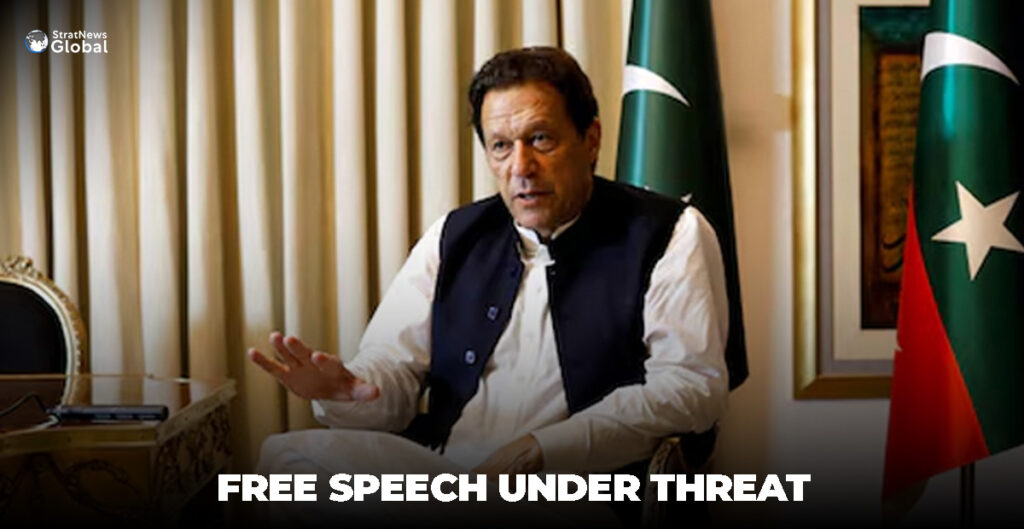
The channels that could be blocked in Pakistan include those of the main opposition party and also its leader, jailed former prime minister Imran Khan, as well as journalists critical of the government, according to the June 24 court order seen by Reuters.
The judicial magistrate court in Islamabad said it was seeking the ban after the National Cyber Crime Investigation Agency (NCCIA) criticised the channels in a June 2 report for “sharing highly intimidating, provocative and derogatory contents against state institutions and officials of the state of Pakistan”.
Free Speech Under Threat
Digital rights campaigners say that any ban would further undermine free speech in Pakistan, where the authorities are accused of stifling newspapers and television and social media is seen as one of the few outlets for dissent.
YouTube told the 27 content creators that their channels could be taken down if they did not comply with the court orders.
“If you fail to do so, as per our local law obligations, we may comply with the request without further notice,” the popular video sharing platform said in emails this week to the channel owners, according to a notice seen by Reuters.
YouTube’s regional communications manager did not immediately respond to a Reuters request for a comment. Pakistan’s Information Minister Attaullah Tarar also did not immediately respond to a request for comment.
One of the content creators, Asad Toor, who has more than 333,000 YouTube subscribers, said the move was aimed at undermining fundamental and constitutional rights of the people, political parties and other dissident groups.
“It is not about me. It is about these people who are on the left side of the state,” he told Reuters. “I have dedicated my platform for these underdogs who have no place to go to and raise their voices against state oppression.”
Migration To YouTube
After the government clamped down on traditional media, many independent-minded reporters migrated to YouTube, as did journalists and commentators sympathetic to Khan, who was removed from office in 2022.
“It’s not only about anchors getting fired or YouTube channels getting banned. It’s what they are not allowing to be told and the human rights abuse they are trying to hide from the world,” said Zulfikar Bukhari, a spokesman for Khan’s Pakistan Tehreek-e-Insaf (PTI) party.
Khan has said his party has faced a military-backed crackdown since his removal, a charge the army denies.
“In this day and age, you can’t suppress digital media,” said Bukhari.
The order is the latest in a series of laws and regulations from Islamabad that have enabled the authorities to crack down on critics and dissidents. It has blocked social media platforms like X, Facebook and TikTok on several occasions.
Tightening Cyber Content Controls
In January, Pakistan’s parliament introduced a new amendment in the Electronic Crimes Act to further regulate cyber content, which included a new social media regulatory authority with its own investigation agency and tribunals.
Such tribunals will be able to try and punish alleged offenders with prison sentences of as long as three years and fines of two million rupees ($7,200) for dissemination of information deemed “false or fake”.
Similar laws to order the removal of disputed content have also been introduced in neighbouring India, which has had disagreements with X and Google over such directives.
In recent years, India has banned dozens of YouTube channels, citing national security.
Digital rights activist Usama Khilji said the Pakistani court did not fulfil due process.
“What is jarring is the complete lack of legal process,” he said.
Toor said neither the court nor the cybercrime agency gave him a chance to respond to the allegations, and that he would be taking legal action against the court order.
“It is a dictatorial move. It can’t silence me,” he said.
(With inputs from Reuters)
Nvidia Tops $4 Trillion, Lifting Markets; Euro Falls
Stock markets gained on Wednesday as Nvidia touched a $4-trillion valuation, while the euro weakened against the dollar amid signs that the European Union may soon finalise a trade deal framework with the United States.
US President Donald Trump promised he would deliver further tariff notices on unnamed countries.
On Tuesday, Trump broadened his trade war, announcing he would impose a 50% tariff on imported copper. The move sent US copper prices soaring and US stock prices lower. He also said he would soon introduce levies of up to 200% for pharmaceuticals.
On Wednesday, US copper futures widened their premium to the London benchmark.
Investors Ignoring The Noise
“Certainly, President Trump and the administration have shown a willingness to change course, and what’s on the table today doesn’t necessarily mean it will be on the table tomorrow,” said Oliver Pursche, senior vice president at Wealthspire Advisors in Westport, Connecticut.
“Investors I think are ignoring that noise, and the reason they’re ignoring that noise is that the greatest fear of the tariffs was they were going to create a significant amount of inflationary pressure and economic disorder, and it hasn’t happened on a broad basis,” he said.
Investors are awaiting further developments in Trump’s trade war in the coming days, after he told 14 nations on Monday they will face sharply higher tariffs from a new deadline of August 1.
Numbers
Helping US stocks, artificial intelligence leader Nvidia notched a market capitalization of $4 trillion, making it the first public company in the world to reach the milestone.
The Dow Jones Industrial Average rose 32.69 points, or 0.07%, to 44,272.15, the S&P 500 climbed 10.39 points, or 0.16%, to 6,235.46 and the Nasdaq Composite rose 82.75 points, or 0.4%, to 20,499.80.
MSCI’s gauge of stocks across the globe rose 3.15 points, or 0.34%, to 922.46. The pan-European STOXX 600 index gained 0.68%.
Dollar Rises
The dollar index , which measures the greenback against a basket of currencies including the yen and the euro, rose 0.03% to 97.58, with the euro down 0.1% at $1.1712.
The dollar earlier touched its highest level in more than two weeks against the yen, as Japan, which depends on exports, stands out among major US trading partners as being the farthest from reaching a trade deal with Washington. Against the Japanese yen, the dollar was last down 0.13% at 146.36.
Investors concerned that higher tariffs could increase inflation and slow economic growth will pay close attention to the latest meeting minutes from the Federal Reserve, due to be released later on Wednesday.
US Treasury yields dipped though benchmark 10-year yields held near a more than two-week high as investors waited on a $39-billion sale of the notes that will offer further guidance on demand for longer-dated debt.
The yield on benchmark US 10-year notes was last down 3.6 basis points at 4.381%, after reaching 4.435% on Tuesday, the highest since June 20.
European government bonds were little changed, with the benchmark 10-year German yield at 2.637% .
US crude rose 0.09% to $68.38 a barrel and Brent rose to $70.19 per barrel, up 0.06%.
(With inputs from Reuters)
European Rights Court Holds Russia Liable For MH17 Downing And Rights Violations In Ukraine
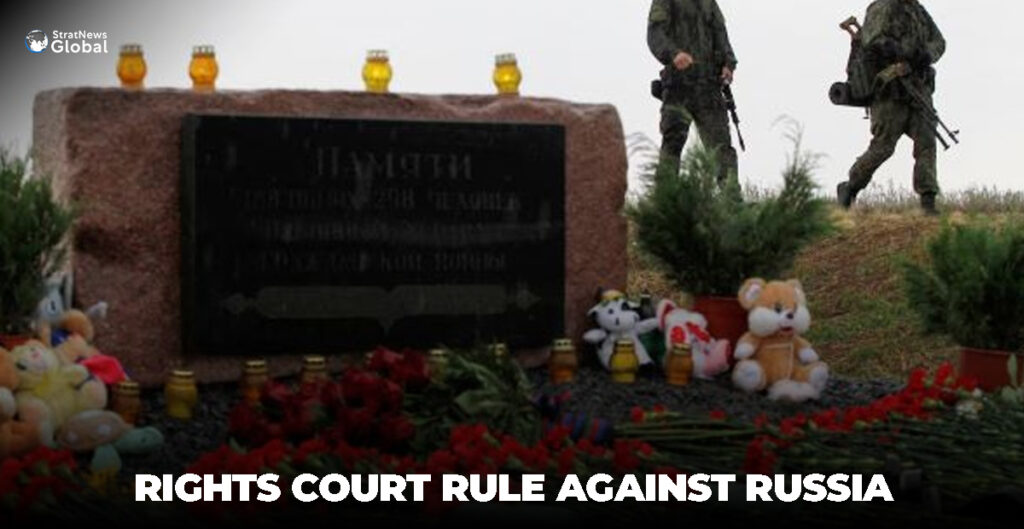
On Wednesday, Europe’s top human rights court unanimously concluded that Russia is liable for the 2014 downing of Malaysian Airlines flight MH17. The court also ruled that Moscow had committed repeated and systematic human rights abuses in Ukraine.
The Strasbourg-based European Court of Human Rights said Russia had performed indiscriminate military attacks, summary executions of civilians, torture including the use of rape as a weapon of war, unjustified displacement and transfer of civilians and other violations.
Ahead of Wednesday’s ruling, Kremlin spokesman Dmitry Peskov said Russia would not abide by any court decisions, saying: “We consider them null and void.”
The ECHR is an international court of the Council of Europe, also based in Strasbourg, from which Russia was expelled in 2022 following its invasion of Ukraine. Russia’s parliament then voted in 2023 to end the ECHR’s jurisdiction in the country.
In its ruling, the ECHR said: “Taken as a whole, the vast volume of evidence before the Court presented a picture of interconnected practices of manifestly unlawful conduct by agents of the Russian State (Russian armed forces and other authorities, occupying administrations, and separatist armed groups and entities) on a massive scale across Ukraine.”
The ruling concerned four consolidated cases, one of which involved Malaysian Airlines flight MH17, which departed Amsterdam for Kuala Lumpur in July 2014 and was shot down over eastern Ukraine amid fighting between Ukrainian forces and pro-Russian separatists. All 298 people on board the plane died.
Moscow denies any responsibility for MH17’s downing and in 2014 denied any presence in Ukraine.
‘Suffering And Grief’
The ECHR ruled that Russia had failed to conduct an adequate investigation into the incident, to cooperate with requests for information or provide legal remedies for survivors. Its lack of cooperation and continued denial of any involvement has caused additional suffering for the victims’ relatives, the court said.
Responding to the ruling, Dutch Foreign Minister Caspar Veldkamp said: “Nothing can take away this suffering and grief, but I hope the verdict offers a sense of justice and recognition.” A majority of those on the airliner were Dutch.
The other three cases covered by Wednesday’s ruling were brought by Ukraine, over pro-Russian separatists accused of abducting groups of Ukrainian children and transferring them to Russia, and over alleged patterns of human rights violations during Russia’s war in Ukraine, now in its fourth year.
Ukraine’s Justice Ministry, in a statement on the Telegram messaging app, hailed the ECHR ruling as “one of the most important in the practice of interstate cases”.
The court is expected to rule in due course on possible damages and compensation but it has no way of enforcing its rulings, especially on a country that no longer recognises its jurisdiction, meaning Wednesday’s verdict is mainly symbolic.
(With inputs from Reuters)
Judges Continue Blocking Trump’s Policies Despite Supreme Court Injunctions Curbs
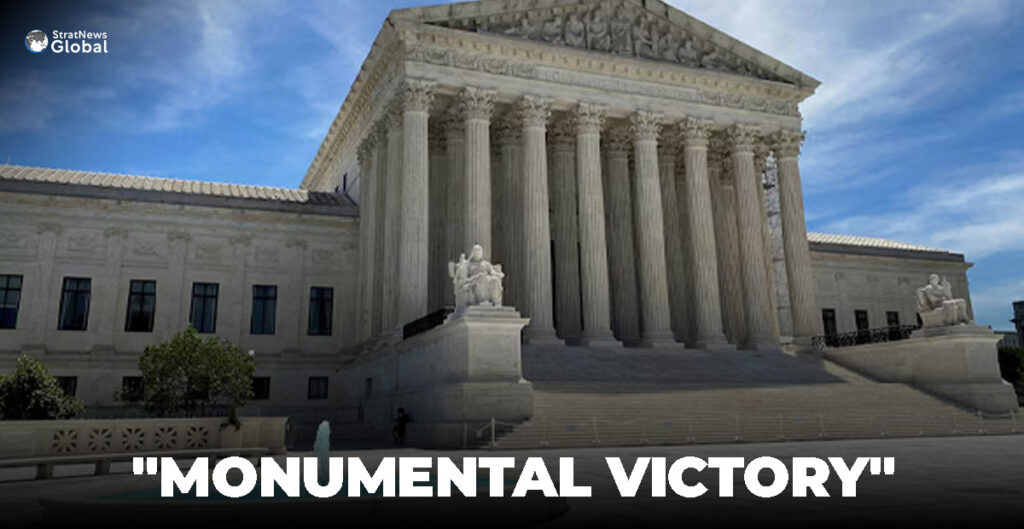
U.S. President Donald Trump hailed the Supreme Court’s June 27 ruling curbing nationwide injunctions as “a monumental victory,” though its legal impact may prove less decisive than it initially seemed.
The Supreme Court’s decision curtailed the ability of judges to issue so-called universal injunctions that can stop the government from enforcing a policy against anyone, anywhere in the entire country.
The Trump administration said it would move quickly to challenge such injunctions. However, the ruling by the court’s 6-3 conservative majority contained exceptions, allowing federal judges to continue to issue sweeping rulings blocking key parts of the Republican president’s agenda.
In the short time since the ruling, lower-court judges have already blocked Trump’s asylum ban at the U.S.-Mexico border, prevented his administration from ending temporary deportation protections for Haitian migrants and forced the government to restore health websites deemed to run afoul of Trump’s efforts to squash “gender ideology.”
One of the biggest tests of the impact of the Supreme Court’s ruling in Trump v. CASA will come on Thursday, when a federal judge in New Hampshire will consider whether to prevent Trump’s executive order curtailing birthright citizenship from taking effect nationally on July 27.
That executive order was at the heart of the Supreme Court’s ruling, which did not address the legality of the policy but held that judges likely lack the authority to issue universal injunctions and ordered three judges to reconsider rulings blocking the policy nationwide.
Issued on his first day back in office in January, the order directs federal agencies to refuse to recognise the citizenship of children born in the United States who do not have at least one parent who is an American citizen or a lawful permanent resident.
Class Status
The plaintiffs in the New Hampshire birthright citizenship case are looking to seize upon one of the major exceptions to the Supreme Court’s ruling. They argue it allows judges to continue to block Trump policies on a nationwide basis in class action lawsuits.
The lawsuit, which was filed by the American Civil Liberties Union and others hours after the Supreme Court ruled, seeks class action status on behalf of babies who would be subject to Trump’s executive order and their parents.
The plaintiffs are asking U.S. District Judge Joseph Laplante, who previously issued a more narrow injunction blocking Trump’s order, to go further this time by allowing the plaintiffs to sue as a nationwide class and issuing an order blocking Trump’s ban from being enforced against members of the class.
At least one other judge has already followed this formula.
On July 2, U.S. District Judge Randolph Moss in Washington determined that Trump’s denial of asylum to migrants on the southern border exceeded the president’s authority.
He then certified a class that covered all individuals subject to the presidential proclamation on asylum and issued an injunction to protect the class — effectively a nationwide injunction.
The administration appealed the ruling, which White House aide Stephen Miller called a judge’s attempt to “circumvent” the Supreme Court’s ruling by recognising “a protected global ‘class’ entitled to admission into the United States.”
“I think there’s going to be a lot more class actions,” said Lee Gelernt, an attorney with the ACLU, which brought the asylum case.
Strict Standards For Certification
Class actions must follow what is known as Rule 23, which requires the plaintiffs to meet several elements, including proving that the proposed class members suffered the same injury. Conservative Supreme Court Justice Samuel Alito warned lower courts against certifying nationwide classes without “scrupulous adherence to the rigours of Rule 23.”
The process to certify a class can often take months. A senior White House official told Reuters the administration will be watching class certification decisions closely and plans to aggressively challenge them to prevent abuse of the process.
The government says the named class plaintiffs in the New Hampshire case are too different from one another to be able to proceed as a class action. They include an asylum seeker and someone on a student visa.
Judges have used other legal tools to block Trump administration policies on a nationwide basis, including by finding the government failed to comply with administrative law, another exception in the Supreme Court’s ban on injunctions.
Judges did so in two separate rulings last week blocking the Trump administration from ending a program that allows a half million Haitians to stay and work temporarily in the United States, and requiring the U.S. Department of Health and Human Services to restore government websites that had been scrubbed early in Trump’s tenure following an executive order.
Separately, on July 2, U.S. District Judge Brian Murphy, during a hearing in Boston, raised the possibility that he could, on the same basis, continue to block the U.S. Department of Defence from sharply cutting federal research funding provided to universities throughout the country.
“There’s a strong argument that CASA doesn’t apply at all,” Murphy said.
(With inputs from Reuters)