

Support us by contributing to StratNewsGlobal on the following UPI ID
ultramodern@hdfcbank

Strategic affairs is our game, South Asia and beyond our playground. Put together by an experienced team led by Nitin A. Gokhale. Our focus is on strategic affairs, foreign policy and international relations, with higher quality reportage, analysis and commentary with new tie-ups across the South Asian region.
You can support our endeavours. Visit us at www.stratnewsglobal.com and follow us on YouTube, Twitter, Facebook and Instagram.
र 500 per month
र 1000 per month
र 5000 per year
र 10000 per year
Donate an amount of your choice
र 500 per month
Donate र 500 per month

र 1000 per month
Donate र 1000 per month
र 5000 per year
Donate र 5,000 per year
र 10000 per year
Donate र 10,000 per year
Donate an amount of your choice
Donate an amount of your choice


Kremlin Says Ukraine Peace Process Remains On Track Despite Trump Remarks
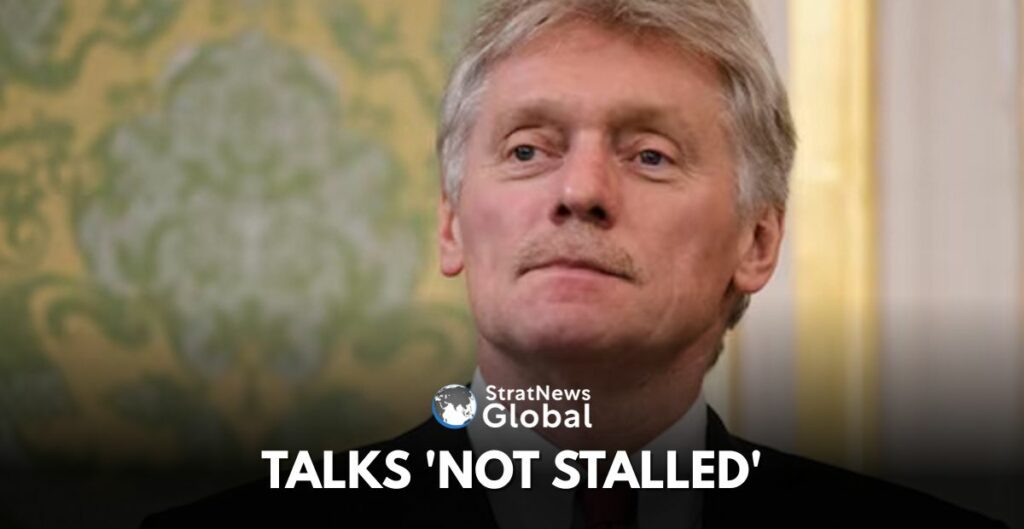
The Kremlin said on Thursday that Russia does not believe peace talks on Ukraine have stalled, despite comments from Donald Trump about President Vladimir Putin and the U.S. resuming some weapons supplies to Kyiv.
Trump said on Tuesday that he was not happy with Putin and accused the Kremlin chief of throwing “a lot of bullshit”. The United States is delivering artillery shells and mobile rocket artillery missiles to Ukraine, two U.S. officials told Reuters.
Asked by Reuters if the peace process on Ukraine was stalled due to Trump’s remarks and the resumption of U.S. weapons deliveries, Kremlin spokesman Dmitry Peskov told reporters: “No, I don’t think so. You cannot say that.”
Waiting For ‘Signal’
Russia, Peskov said, was waiting for a signal from Kyiv on whether or not it would join a third round of talks, which first kicked off in May in Istanbul.
“We have repeatedly said that it would be preferable for us to achieve our goals through peaceful political and diplomatic means, but as long as this does not happen, a special military operation continues, and the reality on the ground is changing every day,” Peskov said.
Putin ordered tens of thousands of troops into Ukraine in February 2022 after eight years of fighting in eastern Ukraine between Russian-backed separatists and Ukrainian troops. The United States says over 1.2 million people have been killed and injured in the war since 2022.
Trump, who says he wants to be remembered as a peacemaker, has repeatedly called for an end to the “bloodbath” of Ukraine, which his administration has cast as a proxy war between the United States and Russia.
Putin, whose forces control a fifth of Ukraine and are advancing, has stood firm on his conditions for ending the war, despite public and private pressure from Trump and repeated warnings from European powers.
In June 2024, Putin said Ukraine must officially drop its NATO ambitions and withdraw its troops from the entire territory of the four Ukrainian regions that Russia claims.
(With inputs from Reuters)
Indian Delegation To Visit US Soon For Trade Talks On Auto, Steel, Farm Duties
An Indian delegation is set to visit the United States soon for trade talks, a government official said, as both nations work to resolve disputes over tariffs on auto parts, steel, and agricultural products.
India is among the few countries that are still negotiating a trade deal with Washington, as President Donald Trump ramps up his trade war with the threat of sharply higher tariffs from August 1.
A team of Indian officials on an extended visit to the U.S. recently failed to secure a deal as the two countries were unable to overcome some key hurdles.
India is resisting opening up its agriculture and dairy sectors while asking for a favourable tariff for its goods entering the U.S. compared to countries like Vietnam and China.
“Indian team will visit the U.S. soon for further talks,” said the trade official, who did not want to be named.
The trade ministry did not immediately reply to an e-mail seeking comments.
Last week, India’s Trade Minister Piyush Goyal said the country will only make deals in its national interest.
New Delhi has proposed retaliatory duties against the U.S. at the World Trade Organisation, saying Washington’s 25% tariff on automobiles and some auto parts would affect $2.89 billion of India’s exports.
“We are engaged with the U.S. team through virtual and physical meetings,” the official said, adding that India still aims to conclude the first tranche of the deal by fall.
Ongoing Trade Negotiations
Since April 2025, when President Trump enacted sweeping “reciprocal tariffs” beginning at a 10% baseline and rising to 26% on April 9, India was among the countries hit.
India and the U.S. have engaged in continuous, high-stakes trade negotiations. The tariffs targeted key sectors like autos, steel, electronics, gems and jewellery, while sparing strategic areas such as pharmaceuticals and semiconductors.
India responded strategically by offering to substantially cut or eliminate tariffs on over $23 billion worth of U.S. imports—about 55% of the targeted goods—potentially shielding $66 billion of exports.
To forestall the tariff wave set for April 2, high-level talks began in March, including U.S. Assistant Trade Rep. Brendan Lynch visiting India and senior Indian ministers meeting in Washington.
Discussions now span sector-specific working groups under a proposed Bilateral Trade Agreement (BTA), aiming for a first-phase deal by fall 2025.
India is willing to cut duties on U.S. autos, EVs, alcoholic beverages, and select farm produce, while firmly protecting agriculture, dairy, GM crops, and smallholder farmers.
Despite pressure, India views the tariffs as a negotiating lever—not a crisis—with assessments from Niti Aayog suggesting limited damage and potential export opportunities.
Both sides remain optimistic that a framework deal can be reached before the August 1 reciprocal tariff deadline is reinstated.
(With inputs from Reuters and IBNS)
Iran Demands UN Nuclear Watchdog Drop ‘Double Standards’ To Resume Cooperation
Iran’s president said on Thursday that Tehran would resume cooperation with the UN nuclear watchdog, the International Atomic Energy Agency (IAEA), only if it abandons its “double standards,” according to state media.
President Masoud Pezeshkian last week enacted a law suspending cooperation with the IAEA, and the nuclear watchdog said it had pulled its last remaining inspectors out of Iran.
Relations between Iran and the IAEA have worsened since the United States and Israel bombed Iranian nuclear facilities in June, saying they wanted to prevent Tehran from developing an atomic weapon. Iran says its nuclear programme is for peaceful purposes only and denies seeking atomic weapons.
“The continuation of Iran’s cooperation with the agency (IAEA) depends on the latter correcting its double standards regarding the nuclear file,” state media quoted Pezeshkian as telling European Council President Antonio Costa by phone.
“Any repeated aggression (against Iran) will be met with a more decisive and regrettable response,” he said.
Tehran accuses the IAEA of failing to condemn the attacks by the United States and Israel, and says the nuclear watchdog paved the way for the bombing by issuing a resolution declaring Iran in breach of its non-proliferation obligations.
“Failure to observe the principle of impartiality in reporting is one of the examples that casts doubt on the status and credibility of the IAEA,” Pezeshkian said.
The bombing of Iran’s nuclear facilities led to a 12-day war, during which Iran launched drones and missiles at Israel.
IAEA inspectors have not been able to inspect Iran’s facilities since the bombing campaign, even though IAEA chief Rafael Grossi has said it is his top priority.
(With inputs from Reuters)
A New Foreign Policy Playbook?
Under President Donald Trump, the United States has become a diplomatic challenge for adversaries, allies and friends. Especially, in the backdrop of President Trump’s frequent policy flip-flops.
This is leading to a piquant situation. While no country can afford to delink from the US, staying engaged is exacting a cost.
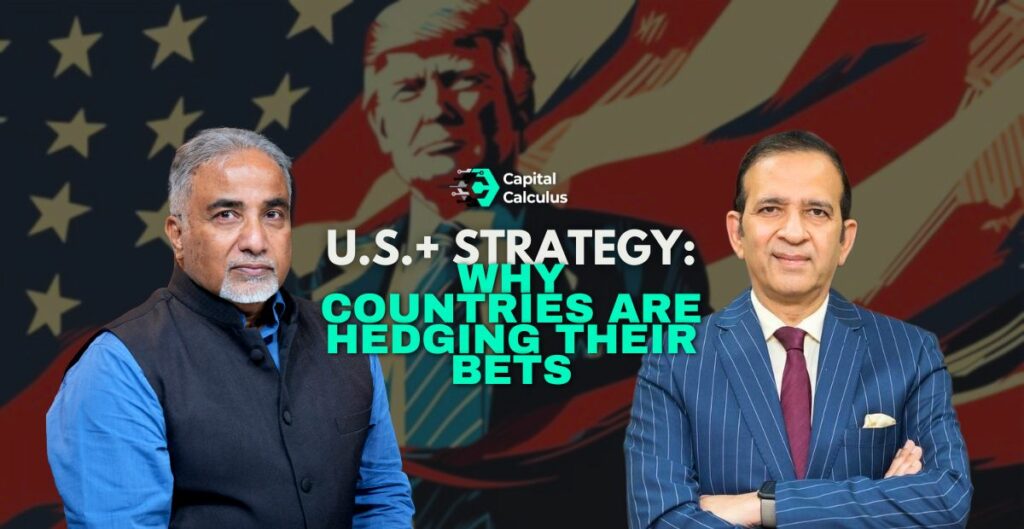
To hedge their bets in these circumstances, countries are now exploring a US-plus strategy. Stay anchored in the US for security, tech, and trade, but hedge their bets with other global powers too.
This geopolitical diversification has acquired a moniker: A US-plus strategy.
What does this mean for the future world order? And how does India navigate this difficult terrain?
To answer all this and more, StratNewsGlobal.Tech spoke to Ajay Bisaria, India’s former Ambassador to Pakistan and Canada on Capital Calculus.
India, Namibia Call For Fast-tracking Trade Deal With South African Customs Union
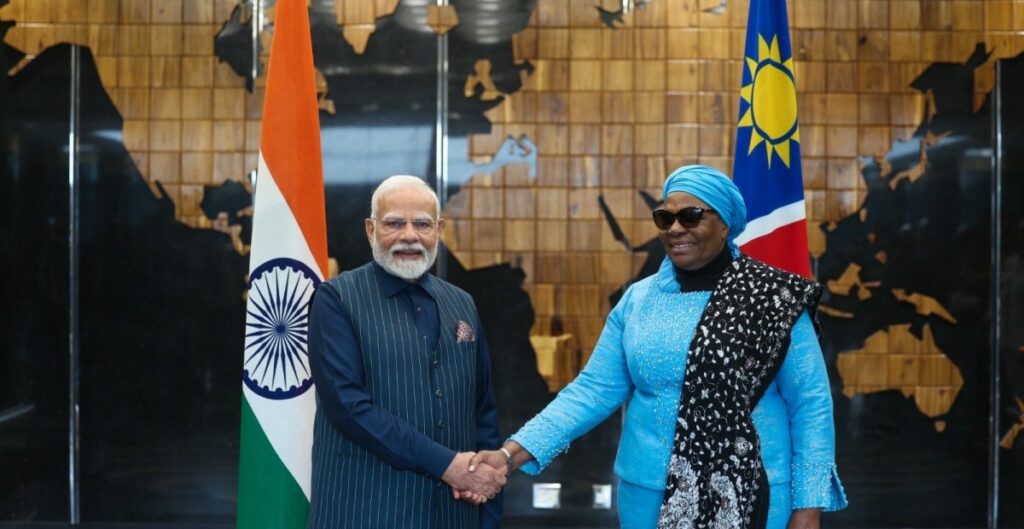
India and Namibia have jointly called for the expedited conclusion of the Preferential Trade Agreement (PTA) between India and South African Customs Union (SACU). This was among the top outcomes of PM Narendra Modi’s state visit to Namibia—the first by an Indian Prime Minister in nearly three decades.
The move signals renewed momentum behind the long-pending negotiations between India and SACU, comprising Namibia, South Africa, Botswana, Lesotho and Eswatini. Five rounds of negotiations were held between 2007 and 2010, but talks had stalled until recent efforts revived discussions.
“The growth in our bilateral trade is encouraging but the full potential is yet to be realised,” Prime Minister Modi told Namibia’s Parliament. “The India–SACU PTA can be a transformative platform for regional trade, investment and value chain integration.”
Currently, bilateral trade between India and Namibia stands at approximately $600 million, while India’s investments in the country exceed $800 million. With SACU, trade is heavily skewed toward South Africa—accounting for over 95%—but Namibia’s resource wealth and strategic location are attracting increasing attention.
Expanding Economic And Strategic Agenda
At a special press briefing, Dammu Ravi, Secretary (Economic Relations), Ministry of External Affairs, stressed that PM Modi’s visit was not only historic in its symbolism but also substantial in outcomes.
“This visit has opened doors to significantly deepen our partnership with Namibia and the wider SACU region. Our cooperation spans trade, natural resources, digital payments, health, defence and sustainable development,” he said.
He noted that India is looking to partner with Namibia in sectors such as pharmaceuticals, agriculture, MSMEs, green technology and critical minerals, including lithium, cobalt and graphite.
Namibia First Country To Adopt UPI
Namibia has become the first country to sign a licencing agreement to adopt India’s Unified Payments Interface (UPI). The pact, between the National Payments Corporation of India (NPCI) and the Bank of Namibia, is expected to revolutionise real-time digital transactions in the country and potentially serve as a model across Africa.
“This is a major breakthrough in digital public infrastructure collaboration,” said Ravi. “It showcases how India’s scalable fintech platforms can serve as global public goods.”
Capacity Building And Development Partnerships
India reiterated its commitment to building human capital in Namibia through the ITEC scholarship program, widely utilised by Namibian professionals across civil and defence sectors. PM Modi also offered support for Quick Impact Projects in agriculture, IT, cybersecurity, healthcare, women’s empowerment and education.
Two memorandums of understanding were signed during the visit. One on establishing an Entrepreneurship Development Centre in Namibia and another on Cooperation in Health and Medicine, including direct pharmaceutical sourcing and potential introduction of India’s Janaushadhi scheme to increase access to affordable medicine.
India also offered expertise in using drones for precision farming, aimed at enhancing Namibia’s agricultural productivity and food security.
Namibia Joins India-led Global Alliances
In a show of alignment with India’s multilateral initiatives, Namibia formally joined two key international platforms: The Coalition for Disaster Resilient Infrastructure (CDRI) and The Global Biofuels Alliance.
These steps highlight Namibia’s commitment to climate resilience and green energy transitions, aligning with India’s global leadership in sustainability.
Defence Cooperation And Natural Resources
Defence cooperation was another key focus area, with discussions on capacity building, training exchanges and defence production partnerships. India’s strategic interest in Namibia’s natural resources—particularly for clean energy technologies—was also a core part of the dialogue.
‘Freedom To Future’: Vision For Global South
Addressing Namibia’s Parliament, PM Modi outlined India’s vision for equitable global development. “Let us create a future defined not by power but by partnership; not by dominance but by dialogue; not by exclusion but by equity.”
He reaffirmed India’s continued support to Africa during and beyond its G20 Presidency, including its role in ensuring permanent African Union membership in the G20.
“India remains committed to Africa’s Agenda 2063—building capacity, promoting innovation, and sharing developmental experiences,” he added.
Turkiye Detains Hundreds Of Erdogan Opponents In Widening Corruption Probe
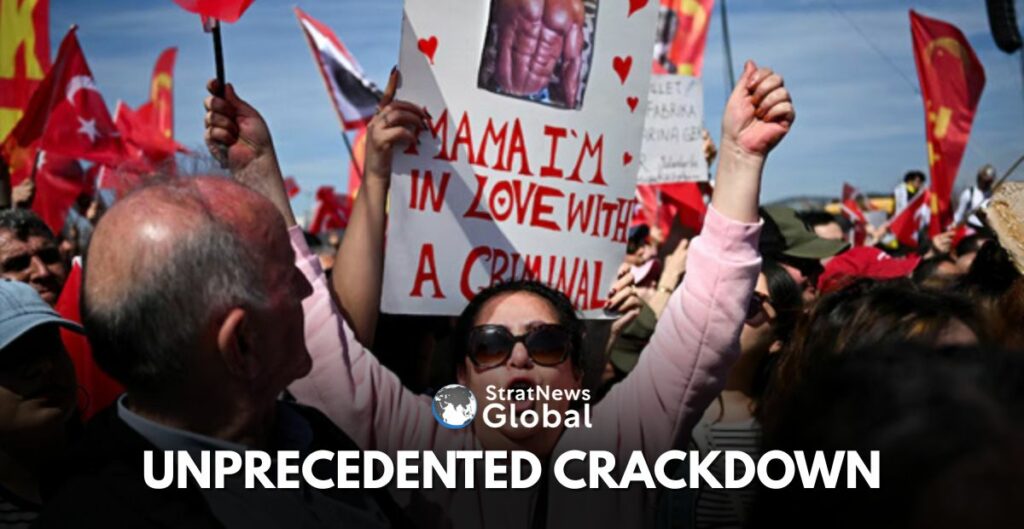
Turkiye‘s President Tayyip Erdogan’s top political opponents have been swept up in an unprecedented crackdown, with over 500 detained in nine months, according to a Reuters review of a rapidly expanding investigation.
Turkiye’s president says the probe tackles what he calls a corrupt network that is like “an octopus whose arms stretch to other parts of Turkiye and abroad.”
The investigation, which began in Istanbul but has spread across the country, has targetted only municipalities run by the main opposition Republican People’s Party, or CHP, the party of modern Turkiye’s secularist founder, Mustafa Kemal Ataturk.
The CHP denies the corruption allegations and calls them a naked attempt to eliminate a democratic alternative for Turks, a charge the government refutes.
Power Consolidation Amid Silence
The crackdown tightens Erdogan’s two-decade grip on power at a time when Turkiye’s influence in the Middle East and Europe has grown. For this reason, diplomats and analysts say, it has garnered only muted criticism from Western allies as a threat to democracy even as street protests erupted in the spring.
According to the review of legal filings and state disclosures, 14 elected CHP mayors, including Istanbul’s Ekrem Imamoglu – Erdogan’s main rival – and more than 200 party members or local officials have been jailed pending trial.
Not since a series of coups in the 1960s, 1970s and 1980s have such high-profile political leaders been removed from office on the basis of as yet unpublished evidence, which suspects’ lawyers dismiss as fabricated.
“These investigations are being used as a tool for political attrition rather than objective investigation of concrete events,” said Ertugrul Gunay, a former culture and tourism minister in Erdogan’s cabinets between 2007 and 2013.
He resigned from the ruling AK Party (AKP) after thousands of Turks were arrested over the anti-government Gezi Park protests of 2013.
The latest legal drive, though smaller in scale, has gone further in targetting a would-be future government, riding high in the polls.
It reflects “anxiety and panic that (Erdogan’s) ruling party has for the next elections,” Gunay told Reuters.
Erdogan and his ministers have repeatedly rejected as unfounded critics’ accusations of judicial interference, saying the independent courts need time to sort through evidence.
They say such criticism reflects an opposition party reckoning with its illegal practices and internal strife, and undermines public trust.
“This is a legal process, not a political one. We are not involved in any aspect of this process,” Erdogan told his AKP MPs in parliament on Wednesday.
More Than 220 Imprisoned
At the centre of the investigation is Imamoglu, mayor of Istanbul’s 17 million people, who was jailed in March pending a court hearing on corruption charges he denies.
He is the CHP presidential candidate in any future election, and his arrest sparked the biggest protests since Gezi and a sharp lira selloff, both of which have since abated.
But beyond Imamoglu – who from behind bars still leads Erdogan in some polls – the Reuters review found that more than 500 people were detained and questioned since the probe began in October last year, including at least 202 since last week alone.
Of those, more than 220 were imprisoned or put under house arrest, according to the review, which was based in part on a compilation of reports by state-run Anadolu Agency.
Erdogan’s office and the Justice Ministry did not respond this week to a detailed request for a tally of detentions and arrests, and for a comment on the Reuters review’s findings.
Reuters further found that at least 36 people, mostly those in the private sector doing business with municipalities, provided a second statement to prosecutors from prison under the “effective repentance” provision of Turkish law – after which 32 of them were released from prison under judicial control measures.
These statements have identified more suspects, disclosures from prosecutors and others show.
Since Tuesday last week, the investigation has spread to Izmir, Turkiye’s third-largest city, as well as Antalya, Adana and Adiyaman – all won by the centrist CHP over Erdogan’s ruling conservative AKP in last year’s March municipal elections, the party’s biggest ever electoral defeat.
(With inputs from Reuters)
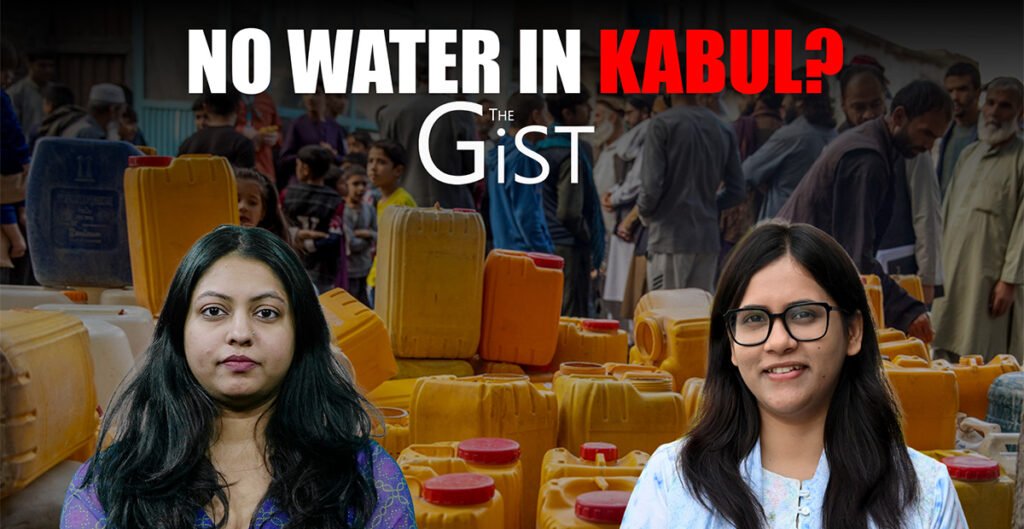
‘Kabul To Run Out Of Water In Five Years’
By 2030 Afghanistan ’s capital Kabul will run dry – meaning there will be no water for the city’s estimated seven million residents. It will be the world’s first capital to run out of water, a basic resource, says Dr Anchita Borthakur, a researcher at the Chintan Research Foundation.
Borthakur, who researches on Afghanistan and is a South Asia expert, as a guest on The Gist said that more than 80% of ground water in Kabul has been contaminated and is therefore unfit for drinking. Add to that, the widespread cultivation of opium in place of food crops, because opium needs less water.
“Destruction of the entire agricultural infrastructure and coupled with water scarcity, has even encouraged Afghan farmers to grow more poppy because poppy is water restive,” she said.
It was not always so. In fact, the current crisis can be traced back to the country’s attempts to industrialise in the 1950s and 1960s. The Soviet invasion of 1979 was another blow as fighting not only destroyed crops, it also rendered the soil unfit for cultivation. Nearly half of the country’s farmland has been rendered useless due to continuous warfare.
While climate change continues to alter weather patterns and resource availability, the destruction of farmland, disruption of supply chains, and the forced displacement of farming communities, have caused long-lasting setbacks to agricultural productivity in Afghanistan.
“Previously fertile areas struggle with declining crop yields as land poisoned by explosives doesn’t recover easily. Due to the scarcity of water, Afghan farmers are now planting more poppy or opium, because it is not water-intensive. Destruction in t0he agricultural infrastructure has led to this,” Dr Borthakur says.
She added that war, climate change and their impact on human security have consequences at a regional level too.
Dr Borthakur discusses other implications of long-term wars, such as the threat from landmines, economic revival and so on. To watch the full video, click here.
Four More Mariners Rescued From Houthi-Hit Ship; 11 Still Missing
Rescuers pulled three more crew members and a security guard alive from the Red Sea on Thursday, maritime security sources said, a day after Houthi militants sank the Greek-owned ship Eternity C and claimed to be holding some of the crew members still missing.
It was the second Greek bulk carrier sunk this week by the Iran-aligned Houthi militia, shattering months of relative calm off Yemen’s coast, the gateway to the Red Sea and a critical route for oil and commodities to the world.
Voyages Suspended
Many shipping companies have suspended voyages due to the fear of attack. The Houthis are believed to be holding six of the Eternity C’s complement of 22 crew and three guards, maritime security sources said.
“We remain deeply concerned for the welfare of the crew members in the custody of the Houthis, as well as for those currently unaccounted for,” Ellie Shafik, head of intelligence with UK-based maritime risk management company Vanguard Tech, said. “Their safety and swift release must be a priority for all involved.”
Houthi militants first hit the Eternity C ship in the Red Sea on Monday with sea drones and rocket-propelled grenades fired from speed boats. Four people were believed to have been killed in the attacks, maritime security sources say. If confirmed, the deaths would be the first fatalities in the area since June 2024.
Search Operations Underway
Following a second attack on Tuesday morning, the crew were forced to jump into the water. Rescuers have been searching for survivors since Wednesday morning. The vessel’s operator, Cosmoship Management, has not responded to Reuters’ requests for comment.
A total of 10 survivors from the Eternity C have been rescued so far – eight Filipino crew members, one Indian and one Greek security guard. The four people rescued on Thursday morning had spent nearly 48 hours in the water.
“This fills us with more courage to continue to search for those missing, as the Greek vessel operator requested, and shows that our search plan was correct,” said Nikos Georgopoulos, an official at the Greece-based maritime risk firm Diaplous.
Another 11 people are still missing.
The United States’ Mission in Yemen has accused the Houthis of kidnapping crew members and has called for their immediate, unconditional release.
On Wednesday, the Houthis’ military spokesperson said in a televised address that the Yemeni navy had “responded to rescue a number of the ship’s crew, provide them with medical care, and transport them to a safe location”.
Fraught Passage
The Eternity C sank on Wednesday, days after Houthis hit and sank the Magic Seas, reviving a campaign launched in November 2023 that has seen more than 100 ships attacked in what the group said was solidarity with the Palestinians in the Gaza war.
Both of the vessels that hit this week flew Liberian flags and were operated by Greek companies. All the crew from the Magic Seas were rescued before it went down.
Some of their sister vessels in the respective fleets had made calls to Israeli ports in the past year, an analysis of shipping data showed.
The number of daily sailings through the narrow Bab al-Mandab strait, at the southern tip of the Red Sea and a gateway to the Gulf of Aden, was 32 vessels on July 9 from 43 on July 1, according to data from maritime data group Lloyd’s List Intelligence.
The situation has become so fraught that many of the ships sailing on Thursday broadcast public messages referring to Chinese crew and management or armed guards on board, according to ship tracking data on the MarineTraffic platform. One vessel broadcast a message which said it had no relation to Israel.
(With inputs from Reuters)
China Urges EU To Soften Criticism Over Market Access Restrictions
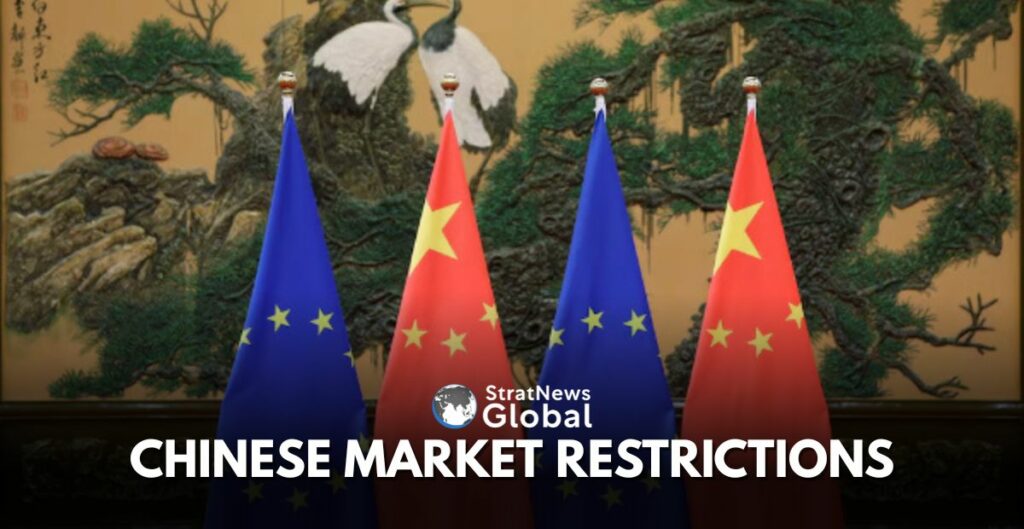
China hopes the European Union will tone down its accusations, the commerce ministry said on Thursday, responding to EU complaints over restricted market access for European firms.
Setting the tone for an expected China-EU summit in Beijing in late July, European Commission President Ursula von der Leyen earlier this week said China had flooded global markets with its overcapacity, limited access to its market, and de-facto enabled Russia’s war economy.
China hopes the EU would “make fewer accusations and communicate more, be less protectionist, and be more open,” He Yongqian, a spokeswoman for the Chinese commerce ministry, said at a regular press conference.
China hopes the EU would view their economic and trade relationship “without emotion and prejudice,” He said.
‘Unique Instruments At Its Disposal’
In an address to the European Parliament on Tuesday, Von der Leyen praised China for expanding its economy by more than 10 times over 50 years, lifting 800 million of its people out of poverty, and transforming itself into an industrial giant and a clean tech leader.
“But our relations with China must be rooted in a clear-eyed assessment of this new reality,” she said.
Von der Leyen said China had “unique instruments at its disposal” that allowed it to flood global markets with subsidised overcapacity not just to boost its own industries, but to choke international competition.
She also said China’s “unyielding” support for Russia had created heightened instability and insecurity here in Europe, becoming a de-facto enabler of Russia’s economy as the war between Moscow and Kyiv persisted.
Her criticism of China followed a visit to Brussels by China’s Foreign Minister Wang Yi, who told the EU’s top diplomat Kaja Kallas that he hoped the EU would develop a more objective and rational understanding of China and adopt a more positive and practical policy toward China.
(With inputs from Reuters)
PM Modi’s Visit New Starting Point For Greater Cooperation: Argentine Envoy
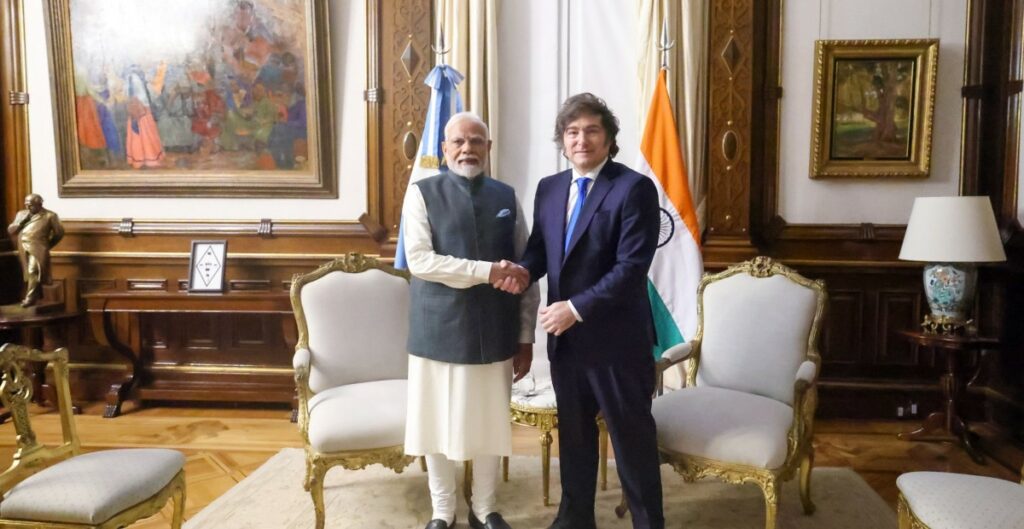
Indian Prime Minister Narendra Modi’s recent visit to Argentina has historic relevance that deserves to be highlighted. For the first time in 57 years, an Indian head of government made a bilateral visit to Argentina. Indian prime ministers—including PM Modi himself at the G20 in 2018—have visited our country in the past. But this is the first time an Indian prime minister has made a bilateral visit since Indira Gandhi travelled to Argentina in 1968, almost six decades ago.
PM Modi’s visit to President Javier Milei takes place at a unique moment. Because India appears today on the international stage as a rising power called to play an increasingly prominent role in the world theatre.
Especially given that India, with 1.45 billion inhabitants, has become the world´s most populous country surpassing the People’s Republic of China.
At the same time, as is well known, India has achieved astonishing economic growth figures that have allowed it to achieve the status of the fourth largest global economy, with aspirations of becoming the third by the end of the decade.
The rise of hundreds of millions of people to the middle class is the result of this economic expansion that has transformed the country in one of the world’s major engines of global growth. Because, as someone once said, you can’t be socially just if you’re economically inefficient. And although, naturally, huge segments of the population still suffer from great material hardship, the improvement in the quality of life is an undeniable fact.
But none of this is coincidence. The economic rise of recent decades is the result of a process of deregulation and opening to the market economy since 1991. A path of modernising economic reforms launched more than three decades ago and deepened since 2014 under the leadership of PM Modi.
Reforms that effectively entailed the progressive abandonment of an economic system of heavy state regulation and control. This had led—in Indian terms—to the transition from “British Raj” to a “Licence Raj,” which, through an endless web of regulations, slowed and complicated the private initiative of an enormously creative and vibrant population.
It is at this auspicious stage that the increasingly strategic bilateral relationship between our countries is unfolding.
With consolidated trade of around $5 billion, India has become one of Argentina’s top six trading partners. Currently, our country is the leading supplier of soybean oil to India and the third largest supplier of sunflower oil.
Recent years have marked a significant milestone for investment by Indian mining companies in our country. The province of Catamarca is home to Indian companies that are not only exploring for lithium but are also showing interest in copper and gold. It is worth noting the positive visit that Governor Raúl Jalil made a few months ago to strengthen and promote these ties.
These investments are particularly important as India advances its electric vehicle (EV) development, aiming to ensure a resilient and diversified supply chain for critical minerals essential to various industries in India.
In terms of energy, it is worth highlighting the two missions that YPF Chairman Horacio Marín made to New Delhi, where he signed a Memorandum of Understanding with companies in the sector, the first step toward making Argentina an energy supplier to meet India’s unlimited demand.
In the strictly political sphere, we are particularly grateful to India for its historic support on the Malvinas Question before the United Nations, especially in the Decolonization Committee, where, for obvious historical reasons, India has an authoritative voice and a strong say on the matter.
In the field of defence cooperation, the armed forces of both countries have maintained a relationship based on shared experience, exchange opportunities and mutual support. This area is particularly notable for the university courses on national defence and the exchange of mountain troops.
In nuclear matters, both countries are moving toward concluding a memorandum of understanding between our two nuclear regulatory authorities, and there is ample room to deepen existing cooperation in this area.
The firm condemnation of terrorism unites our countries. We have both been victims of the actions of transnational terrorism. Therefore, when an unacceptable terrorist attack occurred a few weeks ago in Pahalgam (Jammu & Kashmir), in which nearly 30 people were killed, our country was one of the first to express its condemnation, in line with the global anti-terrorism commitment that President Milei upholds as a guiding principle of his foreign policy.
Naturally, as readers will understand, the countless points of cooperation between the two countries exceed the scope of a single column. But perhaps it is necessary to highlight the significance of PM Modi’s visit to President Milei.
A trip that undoubtedly constitutes an auspicious new starting point for greater cooperation between two countries that maintain a high degree of objective complementarity and are destined to intensify the ties of friendship inaugurated almost eight decades ago.
(Mariano A. Caucino is the Argentine ambassador to India. He previously served as ambassador to Israel and Costa Rica. Views expressed here are personal.)