

Support us by contributing to StratNewsGlobal on the following UPI ID
ultramodern@hdfcbank

Strategic affairs is our game, South Asia and beyond our playground. Put together by an experienced team led by Nitin A. Gokhale. Our focus is on strategic affairs, foreign policy and international relations, with higher quality reportage, analysis and commentary with new tie-ups across the South Asian region.
You can support our endeavours. Visit us at www.stratnewsglobal.com and follow us on YouTube, Twitter, Facebook and Instagram.
र 500 per month
र 1000 per month
र 5000 per year
र 10000 per year
Donate an amount of your choice
र 500 per month
Donate र 500 per month

र 1000 per month
Donate र 1000 per month
र 5000 per year
Donate र 5,000 per year
र 10000 per year
Donate र 10,000 per year
Donate an amount of your choice
Donate an amount of your choice
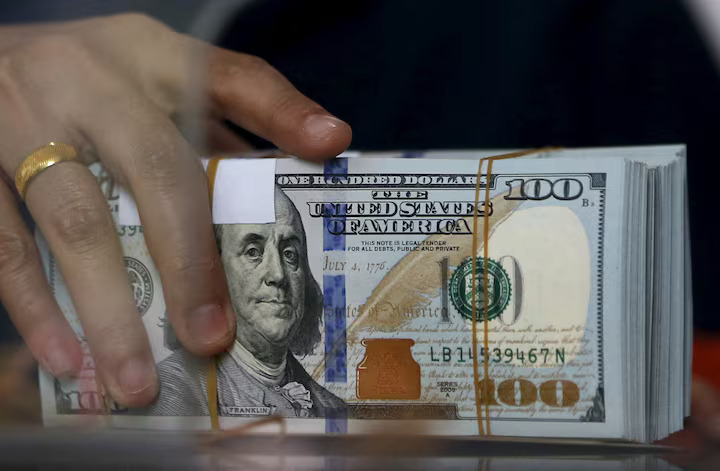
By Weaponising Dollar U.S. Is Forcing World To Seek Alternatives
U.S. President Donald Trump’s call for a 10% tariff on all BRICS nations—Brazil, Russia, India, China, and South Africa—is based on the accusation that they are sabotaging the U.S. dollar by trading in local currencies.
But the reality is, countries didn’t choose to abandon the dollar—they were forced to after Washington weaponized it. By blocking access to dollar-based payments through sanctions and cutting off nations like Russia, Iran, and Venezuela from the SWIFT system, the U.S. left many countries with no choice but to seek alternatives.
The dollar wasn’t pushed out—it shut the door on itself. Now, Washington blames others for walking away from a system it deliberately locked them out of.
Over the last decade, the U.S. has turned the dollar into a political weapon by using SWIFT, the global messaging system that routes payment instructions between banks worldwide. SWIFT connects over 11,000 banks in 200+ countries and was designed to be a neutral platform for trade-related payments.
But under U.S. pressure, SWIFT has blocked access to countries under American sanctions, like Iran, Venezuela, and Russia. In 2022, when Russian banks were cut off from SWIFT and $300 billion in Russian central bank reserves—20% of its GDP—were frozen, it sent a clear warning: disobey the U.S., and your financial lifeline can be shut off.
As a result, countries importing oil and gas from sanctioned suppliers had no option but to bypass the dollar. India pays for Russian crude in rupees and UAE dirhams through non-SWIFT channels. China uses yuan to settle Russian gas trade. This isn’t an anti-dollar strategy—it’s a survival mechanism triggered by U.S. sanctions.
Details of local currency and non-dollar trade:
- Russia and China now settle over 90% of their trade in rubles or yuan—up from 30% before 2022. Gazprom now accepts yuan for gas exports to China.
- India imports oil from Russia with most payment settled in local currencies. In 2022, the RBI allowed trade settlements in Indian rupees, helping countries with dollar shortages. Russian banks opened rupee accounts in India for oil payments. India has rejected China’s call for a BRICS common currency.
- Brazil has set up a yuan clearing system and promotes local currency finance through the BRICS Bank.
- China operates the Shanghai Petroleum and Natural Gas Exchange, where more energy trade is being settled in yuan.
- Even Saudi Arabia—the original architect of the 1970s petrodollar pact—has said it is open to oil payments in non-dollar currencies.
- Other countries like Iran, UAE, Turkey, and Kazakhstan are also turning to local currencies or barter to keep trade going under U.S. sanctions.
Trading in local currencies is not a threat—it is a country’s sovereign right. With proper planning, local currency trade can cut transaction costs by up to 4% by avoiding double dollar conversions at both the buyer’s and seller’s ends. As more countries realize these savings, local currency trade is likely to grow.
As part of crude oil trade—valued at over $4 trillion annually—begins to decouple from the dollar, U.S. dominance over global payments is slipping. The dollar still holds 60% of global reserves and is used in 70% of trade, but its monopoly is weakening. Trump’s tariff threat may accelerate, not stop, this shift. It is not BRICS that undermined the dollar—but Washington’s own use of it as a weapon that triggered this pushback.
The dollar’s global dominance is not backed by any treaty, only by historical trust and power. That trust has eroded due to U.S. overreach.
India Must Be Cautious
India must tread carefully and avoid rushing into a one-sided trade deal under U.S. pressure. Washington’s recent actions make it clear that what it offers are not traditional free trade agreements, but MASAL deals—Mutually Agreed Settlements Achieved through Leveraged Arm-twisting.
While pushing India to sign such a deal, the U.S. has simultaneously proposed a 10% tariff on all BRICS nations, including India, accusing them of undermining the dollar. It has also introduced a bipartisan bill to impose 500% tariffs on countries that continue buying Russian oil and gas—directly targeting India’s energy security.
These aggressive moves indicate that even after a deal, the U.S. may still impose new tariffs on political grounds. India must factor in these risks, safeguard its strategic and economic autonomy, and ensure that any agreement genuinely serves long-term national interests.
The author is founder of the Global Trade Research Initiative
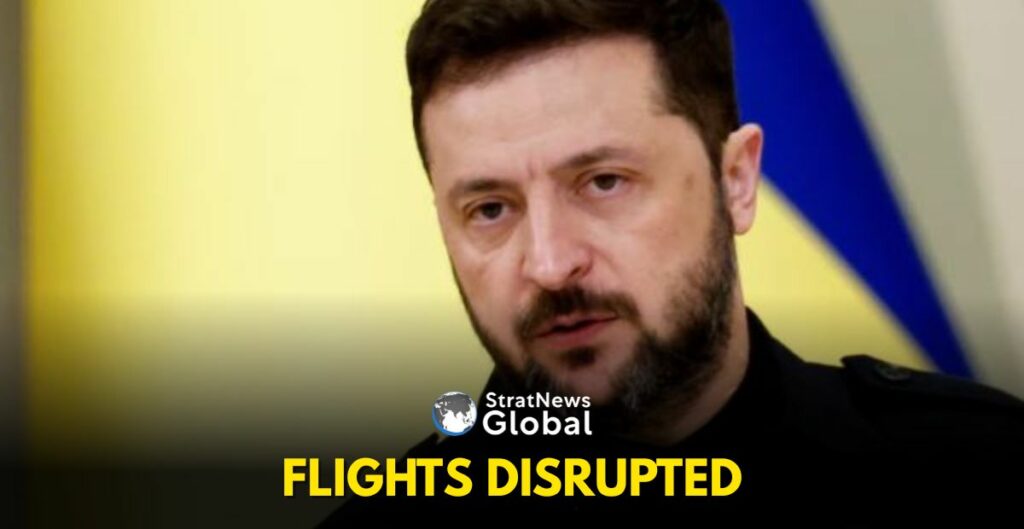
Ukraine Launches Overnight Drone Attacks on Russia, 1 Killed
In a significant escalation of hostilities, Ukraine carried out overnight drone attacks targeting Moscow and several other regions across Russia, resulting in the death of one person and causing damage to an agricultural enterprise in the country’s southwest, Russian authorities said on Friday.
In a detailed statement issued on the Telegram messaging app, Russia’s defence ministry said that its air defence systems had intercepted and downed a total of 155 Ukrainian drones between 11 p.m. on Thursday (2000 GMT) and 7 a.m. on Friday, including 11 drones that were headed towards the capital, Moscow.
Flight Operation Suspended Temporarily
Russia’s aviation authority, Rosaviatsia, said late on Thursday that three of the four major airports serving the capital — Domodedovo, Vnukovo, and Zhukovsky — had temporarily suspended operations as a precautionary measure due to the drone attacks, but normal flight services were later resumed after the situation stabilised.
A drone crashed onto the territory of an agricultural enterprise in the Lipetsk region, sparking a short-lived fire and killing one person and injuring another, regional governor Igor Artamonov said on Telegram.
Drones Destroyed
The Russian defence ministry stated that its air defence systems successfully destroyed four Ukrainian drones over the Lipetsk region, located in the country’s southwest. However, the ministry did not disclose the total number of drones launched by Ukraine, as it typically only reports the number of drones intercepted or destroyed by its own military units, without providing details on the full scale of the attacks.
Most of the drones overnight were destroyed over Russian regions bordering Ukraine: Kursk, Belgorod and Bryansk, the ministry added.
Reuters could not independently verify the reports. There was no immediate comment from Ukraine.
Kyiv says its attacks on the territory of Russia are aimed at destroying infrastructure key to Moscow’s war efforts and are in response to Russia’s continued strikes on Ukraine throughout the war.
(With inputs from Reuters)
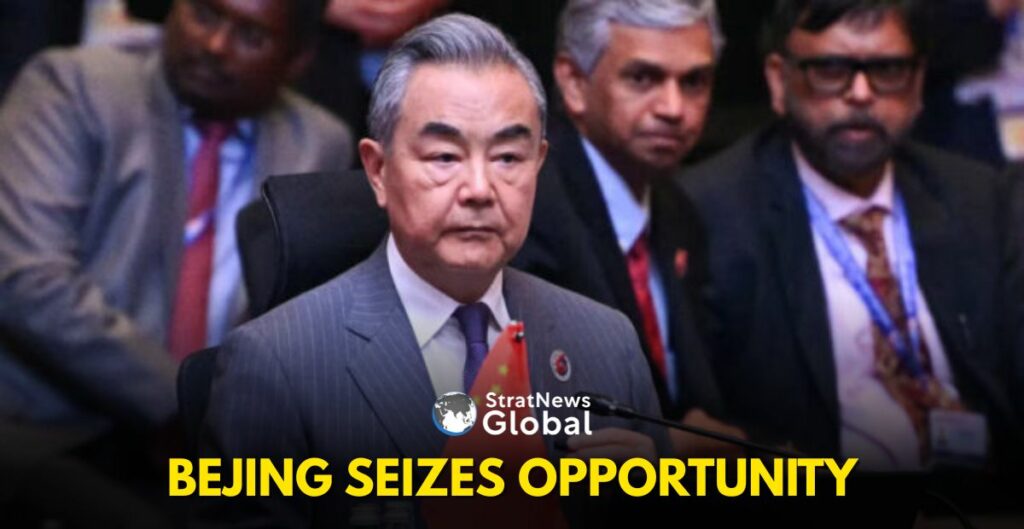
China Offers Mediation In Cambodia-Thailand Dispute
China on Thursday called upon Cambodia and Thailand to peacefully resolve their border dispute through friendly dialogue, and expressed its willingness to play a constructive role by maintaining an “objective and fair” stance, according to its foreign ministry.
Chinese Foreign Minister Wang Yi on Thursday emphasised the importance of peaceful coexistence between Cambodia and Thailand during a meeting with his Thai counterpart, Maris Sangiampongsa, held on the sidelines of the ASEAN summit in Malaysia, the Chinese foreign ministry said in an official statement.
‘Objective And Fair Position’
“China is willing to uphold an objective and fair position and play a constructive role for the harmonious coexistence between Thailand and Cambodia,” Wang said.
Tensions have been steadily rising between the two Southeast Asian neighbours since the end of May, following a brief exchange of gunfire at a disputed section along their 820-km (510-mile) border, which resulted in the death of a Cambodian soldier.
Last month Cambodia asked the International Court of Justice to resolve the disputes.
Thai Prime Minister Paetongtarn Shinawatra has been suspended pending a court case over her leaked phone call with Cambodia’s influential former leader, Hun Sen, a conversation her opponents say undermined Thailand’s sovereignty and integrity.
China Impartial On Border Issue
Wang, in a separate meeting held the same day with Cambodian Foreign Minister Prak Sokhonn, reiterated China’s neutral and impartial stance on the ongoing border issue, the Chinese foreign ministry said in a separate statement.
He emphasised security measures to protect Chinese and Cambodians, calling for tougher action to “completely eradicate the tumour” of cross-border crimes such as online gambling, wire fraud, counterfeiting and smuggling.
Referring to US tariffs, he added that China believed Southeast Asia had the ability to cope with the “complex situation” and safeguard common interests as well as those of individual nations.
(With inputs from Reuters)
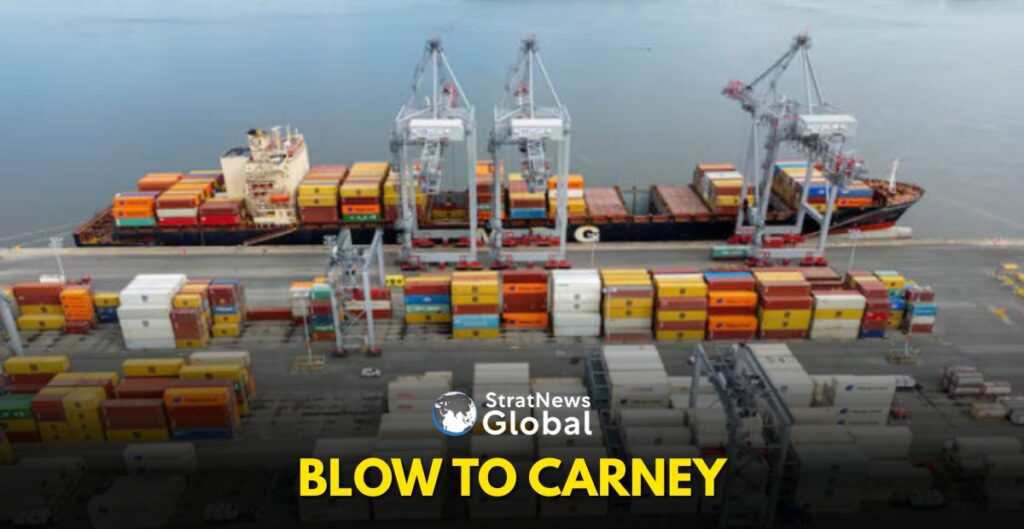
Trump Targets Canada With 35% Tariff, 15%-20% For Others
US President Donald Trump on Thursday announced that the United States would impose a 35% tariff on imports from Canada starting next month, and indicated plans to levy blanket tariffs of 15% to 20% on most other trading partners.
In a letter released on his social media platform, Trump told Canadian Prime Minister Mark Carney the new rate would go into effect on August 1 and would go up if Canada retaliated.
The 35% tariff is an increase from the current 25% rate that Trump had assigned to Canada and is a blow to Carney, who was seeking to agree a trade pact with Washington.
Trump Uses Fentanyl Card
An exclusion for goods covered by the United States-Mexico-Canada Agreement (USMCA) on trade was expected to stay in place, and 10% tariffs on energy and fertilizer were also not set to change, though Trump had not made a final decision on those issues, an administration official said.
Trump complained in his letter about what he referred to as the flow of fentanyl from Canada as well as the country’s tariff- and non-tariff trade barriers that hurt US dairy farmers and others. He said the trade deficit was a threat to the US economy and national security.
Canadian officials say a miniscule amount of fentanyl originates from Canada but they have taken measures to strengthen the border.
Trump Open To Adjustment
“If Canada works with me to stop the flow of Fentanyl, we will, perhaps, consider an adjustment to this letter,” Trump wrote.
Carney’s office did not immediately respond to a request for comment. The prime minister said last month that he and Trump had agreed to wrap up a new economic and security deal within 30 days.
Trump has broadened his trade war in recent days, setting new tariffs on a number of countries, including allies Japan and South Korea, along with a 50% tariff on copper.
In an interview with NBC News published on Thursday, Trump said other trading partners that had not yet received such letters would likely face blanket tariffs.
‘We’re Just Setting Our Tariffs’
“Not everybody has to get a letter. You know that. We’re just setting our tariffs,” Trump said in the interview.
“We’re just going to say all of the remaining countries are going to pay, whether it’s 20% or 15%. We’ll work that out now,” Trump was quoted as saying by the network.
Blow To Carney
Canada is the second-largest US trading partner after Mexico, and the largest buyer of US exports. It bought $349.4 billion of US goods last year and exported $412.7 billion to the US, according to US Census Bureau data.
Carney, who led his Liberal Party to a comeback election victory earlier this year with a pledge to tackle trade challenges with the US, had been aiming to negotiate a trade deal with its key trading partner by July 21.
Trump, in his letter, did not specifically address how trade negotiations were proceeding, but he said the “tariffs may be modified, upward or downward, depending on our relationship with your Country”.
Last month, the Carney government scrapped a planned digital services tax targeting US technology firms after Trump abruptly called off trade talks saying the tax was a “blatant attack”.
(With inputs from Reuters)
US State Department To Begin Layoffs Soon
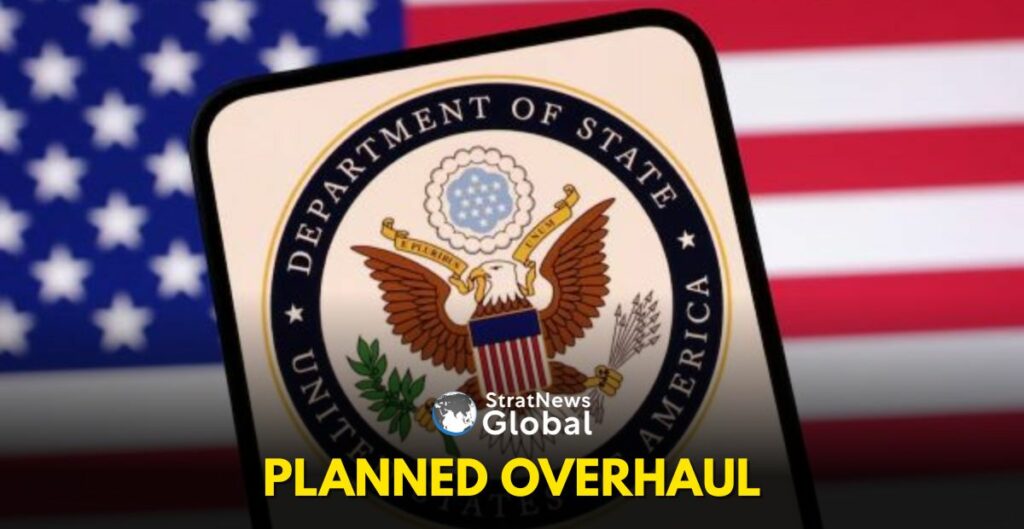
The US State Department will soon begin issuing notices to employees affected by its reorganisation, the agency’s top management official said on Thursday, as President Donald Trump’s administration proceeds with plans to restructure the diplomatic corps and reduce staffing.
“Soon, the Department will be communicating to individuals affected by the reduction in force,” Deputy Secretary for Management and Resources Michael Rigas said in an email to the workforce.
“Once notifications have taken place, the Department will enter the final stage of its reorganization and focus its attention on delivering results-driven diplomacy,” Rigas said.
Aligning With ‘America First’ Agenda
The move is the first step of a restructuring that Trump has sought to ensure US foreign policy is aligned with his “America First” agenda. It will likely result in hundreds of job cuts including members of the elite foreign service who advocate for US interests in the face of growing assertiveness from adversaries such as China and Russia.
No State Department official publicly said when the first notices for the planned layoffs would be sent, but the widespread expectation is for the terminations to start as soon as Friday.
The Supreme Court cleared the way for the Trump administration to pursue the job cuts and the sweeping downsizing of numerous agencies, a decision that could lead to tens of thousands of layoffs while dramatically reshaping the federal bureaucracy.
Cleaning Out The ‘Deep State’
Trump in February issued an executive order directing Secretary of State Marco Rubio to revamp the foreign service to ensure that the Republican president’s foreign policy is “faithfully” implemented. He has also repeatedly pledged to “clean out the deep state” by firing bureaucrats that he deems disloyal.
Neither Rigas nor any other State Department official specified how many people would be fired but in its plans to Congress sent in May, the Department had proposed laying off nearly 1,900 employees of the 18,000 estimated domestic workforce. Another 1,575 were estimated to have taken deferred resignations.
The plans to Congress did not specify how many of these people would be civil service and how many from the foreign service but said that more than 300 of the department’s 734 bureaus and offices will be streamlined, merged or eliminated.
Open Letter Criticises Overhaul
Last week, more than 130 retired diplomats and other former senior US officials issued an open letter criticizing the planned overhaul.
One of the criticism has been directed at the firing of potentially several hundred US foreign service officers who typically are evaluated based on years of experience, knowledge of particular areas and regions in the world and language skills.
The administration, as it vowed to bring back “merit”, has dismantled many diversity and inclusion efforts. Most if not all of the DEI programs at State Department have been rescinded.
‘Too Bureaucratic’
US officials said the criteria for the layoffs have been based on the functions of the bureaus that the agency sees are redundant and overlapping in responsibilities and not based on the personnel that occupies those roles.
“The focus is on the org chart first. Functions of a more efficient, capable, fast and effective State Department,” said a senior State Department official speaking to reporters on the condition of anonymity.
“When something is too large to operate, too bureaucratic, to actually function, and to deliver projects, or action, it has to change,” Department spokesperson Tammy Bruce told a news briefing earlier.
As part of the reorganization, the role of a top official for civilian security, democracy, and human rights will be eliminated, along with the offices that monitored war crimes and conflicts around the world, according to the congressional notification the Department sent to Congress.
A new Senate-confirmed role of under secretary for foreign assistance and humanitarian affairs will oversee the new Bureau of Democracy, Human Rights and Labor, which is to be reorganized to “ground the Department’s values-based diplomacy in traditional Western conceptions of core freedoms” and headed by a deputy assistant secretary for “Democracy and Western Values”.
(With inputs from Reuters)
Mahmoud Khalil Demands $20 Million, Apology From Trump Admin
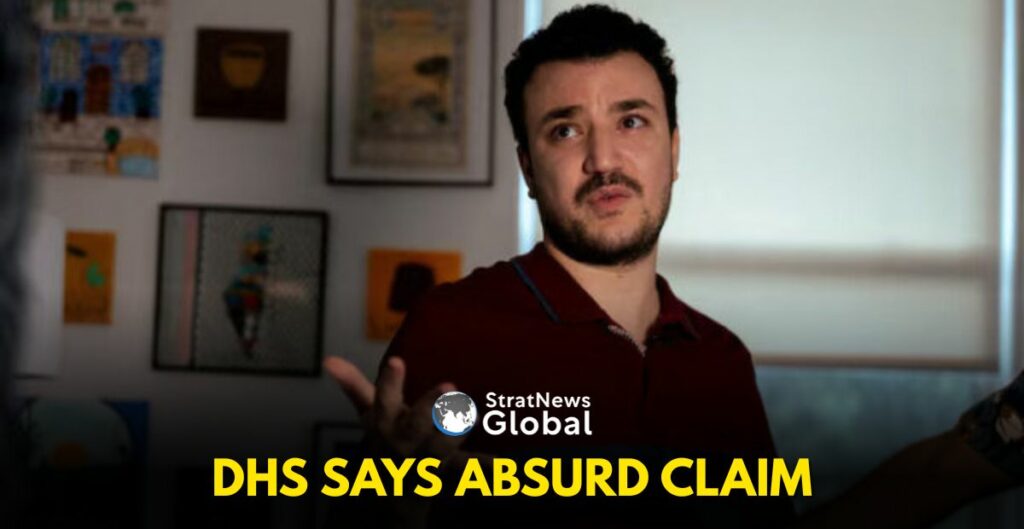
Mahmoud Khalil, a Columbia University student and pro-Palestinian activist, has sought $20 million in damages from the Trump administration, alleging false imprisonment and malicious prosecution after being held by US immigration authorities for over 100 days.
Khalil’s lawyers on Thursday said they submitted the claim against President Donald Trump’s departments of Homeland Security and State under a law requiring people to seek damages directly from the government before they can file a lawsuit. Officials have six months to respond.
‘Absurd’ Claim
A DHS spokesperson called Khalil’s claim “absurd” and said the Trump administration acted well within its legal authority to detain Khalil.
Khalil, a 30-year-old permanent US resident of Palestinian descent, was arrested in March and detained for months while the Trump administration sought to deport him, saying his support of Palestinians undermined US relations with Israel.
He was released on June 20 after an intense legal fight where his lawyers accused the Trump administration of unconstitutionally targeting him for political reasons.
‘Serve As A Deterrent’
“I hope this would serve as a deterrent for the administration,” Khalil told Reuters on Thursday. “Trump made it clear he only understands the language of money.”
Khalil said he would also accept an official apology and a commitment by the administration to no longer arrest, jail or seek to deport people for pro-Palestinian speech.
Trump, a Republican, has called protests against Israel’s war in Gaza antisemitic and vowed to deport foreign students who took part.
Khalil became the first target of this policy, and his case sparked outcry from pro-Palestinian and civil rights groups who said the government was wrongly conflating criticism of Israel with antisemitism.
In June, US District Judge Michael Farbiarz in New Jersey ruled that the Trump administration was violating Khalil’s constitutional right to free speech and ordered him released on bail while he continues to fight the government’s deportation efforts.
(With inputs from Reuters)
Zelenskyy, US Lawmakers Discuss Air Defences, Sanctions On Russia
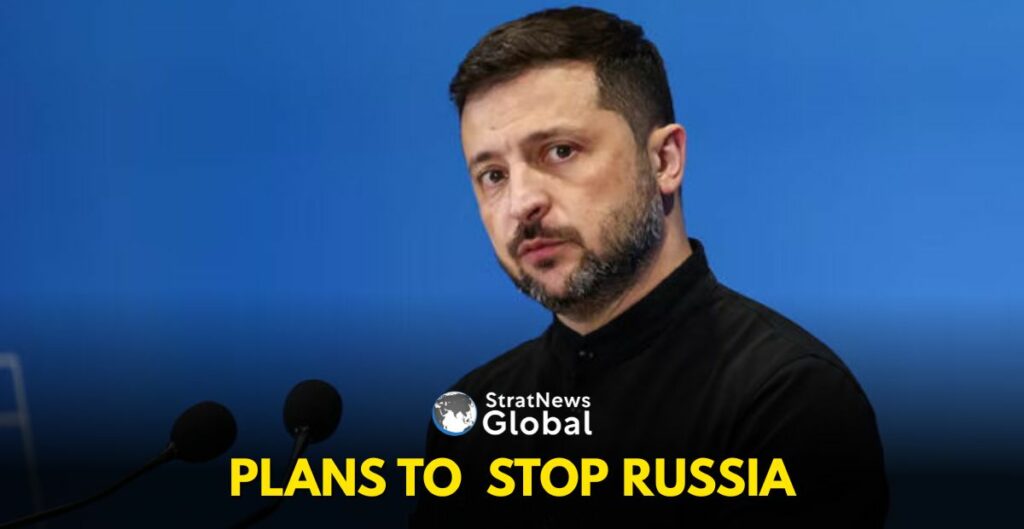
Ukrainian President Volodymyr Zelenskyy on Thursday said he had discussed strengthening air defences and tightening sanctions on Russia with two visiting US lawmakers who are supporting a bill to impose tougher measures on Moscow.
Zelenskyy, writing early on Friday on Telegram, said he had met Republican Senator Lindsey Graham of South Carolina and Democratic Senator Richard Blumenthal of Connecticut in Rome in conjunction with international meetings on Ukraine.
Ukraine To Buy ‘Large US Defence Packages’
“Right now, our priority is strengthening air defences. Russia wants to move on to using 1,000 drones in the space of a single attack,” Zelenskyy wrote.
“It is therefore important to boost defences, particularly to invest in interceptor drones. We spoke about continuing supplies from the United States and joint weapons production.”
Ukraine, he said, was ready to work together with Europe to buy “large US Defence packages to protect lives”.
On Thursday, Zelenskyy said Ukraine had received all necessary political signals for US military aid to resume after a pause last week.
He also said that Ukraine had reached agreement with Germany for Berlin to buy two Patriot missile interceptor systems and an accord for Norway to pay for one system.
Russia Intensifies Attack
Russia has been intensifying attacks on Ukrainian cities in recent weeks, with Zelenskyy saying Moscow had deployed around 400 drones and 18 missiles on Wednesday night, primarily targeting the capital. The previous night, Russian forces launched a record 728 drones at Ukraine.
US President Donald Trump said on Tuesday he had approved sending US defensive weapons to Ukraine and was considering additional sanctions on Moscow, underscoring his frustration with Russian President Vladimir Putin over the failure to make progress on solving Russia’s war with Ukraine.
Tougher Sanctions
Zelenskyy discussed US weapons supplies in Rome on Wednesday with Trump’s Ukraine envoy, Keith Kellogg.
In his comments on Telegram, Zelenskyy said that, together with Graham and Blumenthal, he had discussed the legislation on tougher sanctions against Russia “and those who support it in the war”.
“Undoubtedly, this is precisely the lever that can bring peace closer and make diplomacy worthwhile,” he wrote.
The bill calls for a 500% tariff on goods imported from countries that continue to buy Russian oil, gas, uranium and other exports.
(With inputs from Reuters)
Starmer, Macron Announce Migration Deal, Ukraine Plan
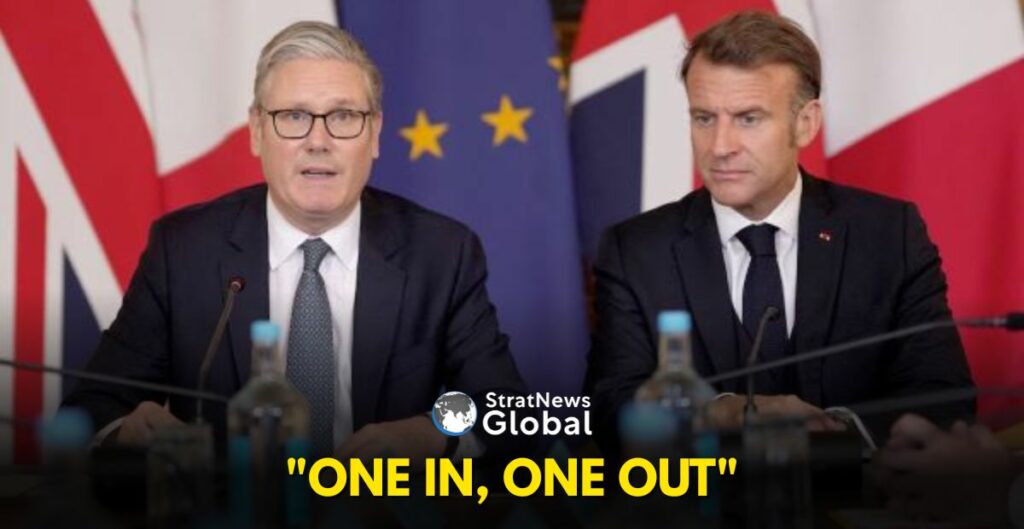
British Prime Minister Keir Starmer and French President Emmanuel Macron, during the conclusion of a state visit on Thursday, announced stricter migration controls, along with agreements on defence, nuclear cooperation, and continued support for Ukraine in the event of a ceasefire.
After hosting Macron for a three-day visit that included a carriage procession to Windsor Castle with King Charles and a state banquet, Starmer was handed a much-desired boost when Macron said France had agreed to a migrant returns scheme.
Starmer, who has seen his popularity fall since winning an election last year, is working to address high levels of immigration, including asylum seekers arriving by small boats across the Channel from France, to try to stem the rise of the populist Reform UK party, led by Brexit campaigner Nigel Farage.
‘One In, One Out’
At a joint press conference, the two leaders said they had agreed a “one in, one out” returns scheme – which would see Britain deporting to France undocumented people arriving in small boats, in return for accepting an equal number of legitimate asylum seekers with British family connections.
“I’m pleased to announce our agreement today on a groundbreaking returns pilot. For the very first time, migrants arriving in small boats will be detained and returned to France in short order,” Starmer said, standing alongside Macron.
“This will show others trying to make the same journey that it will be in vain.”
50 Returns A Week
It was unclear, however, whether the agreement would have a big impact. In a joint declaration, it cited the need for the deal to get “prior legal scrutiny in full transparency and understanding with the Commission and EU member states” – something that could potentially take some time.
A government source said they were looking at about 50 returns a week, or 2,600 a year, a fraction of the more than 35,000 arrivals reported by the government last year. Another source said the scheme could be scaled up.
More than 21,000 people have arrived on small boats so far in 2025, a record number for this stage of the year.
Fabian Hamilton, a lawmaker in Starmer’s Labour Party, said he was “sceptical that this is the answer”.
‘Migration Pull Factors’
The policy, which is similar to a scheme used by the EU and Turkey, carries risks for Macron from his right-wing political critics who may question why he has agreed to take back migrants wanting to live in Britain.
Macron criticised Britain’s decision to leave the European Union, saying “a lot of people in your country explained that Brexit would allow you to fight more efficiently against illegal immigration” but that it resulted in “the exact opposite”.
He had earlier called on Britain to address “migration pull factors”, suggesting it should be harder for migrants in Britain to find work without legal residential status.
Starmer said Britain’s nationwide crackdown on illegal working, which he described as being on a “completely unprecedented scale”, would mean the jobs migrants had been promised would no longer exist.
‘Coalition Of The Willing’
Underlining their desire for closer ties between the two countries, which were damaged when Britain left the EU in 2020, the two leaders agreed to strengthen their defence cooperation and both participated in a call of the “coalition of the willing”, nations that plan to support Ukraine in the event of a ceasefire with Russia.
On the call, Starmer told Keith Kellogg, US President Donald Trump’s Ukraine envoy, it was time to force Russian President Vladimir Putin to the negotiating table to try to secure a peace deal. In the meantime, the focus should be on ensuring Ukraine was in the strongest possible position.
They agreed Paris would be the new headquarters of the “coalition of the willing”, rotating to London after the first 12 months. The group of nations would form a post-ceasefire force to regenerate land forces, secure Ukraine’s skies and support safer seas.
“Supporting Ukraine is not just the right thing to do, it’s essential for delivering security at home,” said Starmer.
Both pledged to order more Storm Shadow cruise missiles, now used in Ukraine, and signed an agreement to deepen their nuclear cooperation, which will say for the first time that the respective deterrents of both countries can be coordinated.
“As close partners and NATO allies, the UK and France have a deep history of defence collaboration and today’s agreements take our partnership to the next level,” Starmer said.
(With inputs from Reuters)
Xi (Re)Thought : China’s Strategic Surge in West Asia, North Africa
China’s engagement with West Asia and North Africa is undergoing a significant transformation—one that is no longer confined to oil shipments or infrastructure projects.
A May 2025 research paper by the International Institute for Strategic Studies (IISS) reveals a marked evolution in Beijing’s regional strategy, driven by a mix of domestic imperatives, global ambitions, and a calculated effort to present itself as a stabilising alternative to the West.
The IISS report describes how China has moved from a narrowly transactional, state-to-state economic approach to what it terms a “bilateral-plus-multilateral” model. In this new phase, China is embedding itself not just as an investor or energy customer but as a diplomatic and, increasingly, a security actor. This deliberate, systemic expansion is rooted in Beijing’s long-term vision of national rejuvenation and global influence.
At the heart of China’s strategy are four interlinked drivers.
First, the need to preserve internal political stability and maintain steady economic growth.
The region is indispensable to China’s energy security: nearly half of its crude oil comes from there, and its dependence on external energy sources is projected to deepen in the coming decades. Chinese investments in regional energy infrastructure, from Iraqi oil fields to pipelines in Algeria, are geared not only toward diversifying sources but also ensuring long-term supply chains in a volatile world.
Second, Beijing’s desire to reshape the global order is evident in its push for a multipolar system that dilutes American and Western dominance. Through mechanisms like the Belt and Road Initiative (BRI), the Global Development Initiative (GDI), and the Global Security Initiative (GSI), China is offering alternative platforms for development and diplomacy—ones that promote its own norms of sovereignty, non-interference, and regime stability.
These ideas resonate across a region long fatigued by U.S.-led interventions and Western lectures on democracy and human rights.
As the IISS notes, China’s third driver—its aspiration to lead the Global South morally and politically—is bearing fruit. By portraying itself as a neutral, non-judgmental actor, Beijing has positioned itself as an attractive partner for governments facing internal dissent, economic distress, or strained relations with the West.
The language of “win-win cooperation” and “civilisational respect” allows China to engage with countries like Iran, Egypt, Saudi Arabia, and the UAE without triggering the ideological anxieties that often accompany Western partnerships.
The fourth pillar of Beijing’s approach is the projection of the so-called “China model” as a viable alternative to Western liberalism. High-level summits, such as the China–Arab States Summit and forums like the China–Arab States Cooperation Forum, showcase China not only as a development financier but as a role model for governance and technological advancement. Its model—centralised authority coupled with digital surveillance, economic growth, and limited civil liberties—is being watched closely by many authoritarian regimes in the region.
But this soft power and economic footprint are now being accompanied by harder instruments of statecraft. While China continues to eschew formal alliances or permanent military bases, its involvement in the region’s security sphere is no longer peripheral.
The IISS report highlights growing defence-industrial cooperation—ranging from drone sales and licensed production to maintenance agreements and arms transfers. Chinese-made UAVs have been sold to countries like Iraq, Saudi Arabia, and the UAE. Joint ventures with Emirati firms like GAL for aircraft servicing indicate a more sustained presence.
At the same time, proliferation concerns are rising. Chinese-origin components have been found in Houthi missiles and drones used against Gulf targets. While Beijing insists on end-user agreements and denies responsibility for misuse, the IISS notes that China’s growing role as a defence supplier may soon force it to reckon with the political fallout of its arms exports—especially in proxy-ridden conflicts like Yemen.
Looking ahead, the IISS report explores four possible trajectories for China’s strategy in the region up to 2040.
The most optimistic is the “Xi (Re)Thought” scenario, where China continues to deepen its economic and diplomatic engagement while keeping security involvement at arm’s length.
A second, more ambitious path—“The Middle (East) Kingdom”—envisions Beijing emerging as a central player in both economic and military domains, rivalling traditional Western influence.
The other two scenarios are more adverse: “Stumbling China” foresees a retrenchment due to domestic or international setbacks, while “From the Barrel of a Gun” imagines a region so volatile that China is drawn into heavier security commitments, possibly even conflict mediation.
Of these, the report suggests “Xi (Re)Thought” is the most likely. It aligns with Beijing’s historical caution in military matters and its preference for influence without entanglement. However, even this balanced approach carries risks. As Chinese stakes in the region grow, so will regional expectations—from providing diplomatic support in crises to protecting Chinese nationals and assets on the ground. The contradiction between China’s official posture of neutrality and its expanding strategic footprint may become harder to sustain.
Moreover, the evolving U.S.–China rivalry casts a long shadow. While Washington remains the dominant security actor in the region, its gradual pivot to Asia has created space that China is quietly filling. Yet Beijing is still careful not to directly challenge American military primacy.
The IISS points out that China prefers asymmetric tools: infrastructure, finance, technology, and information warfare. Whether these will suffice to make China a true strategic counterweight remains an open question.
What is clear, however, is that the old narrative of China as a passive, economically motivated actor in MENA is no longer valid. The region now matters to Beijing not just as a supplier of oil, but as a theatre where its vision for global leadership, diplomatic alignment, and ideological competition is being tested.
As China navigates the next phase of its ascent, its decisions in the Middle East and North Africa will be closely watched—not just in Riyadh and Tehran, but in Washington, Brussels, and New Delhi.
Israeli Strike Kills 10 Children Queuing At Gaza Medical Clinic
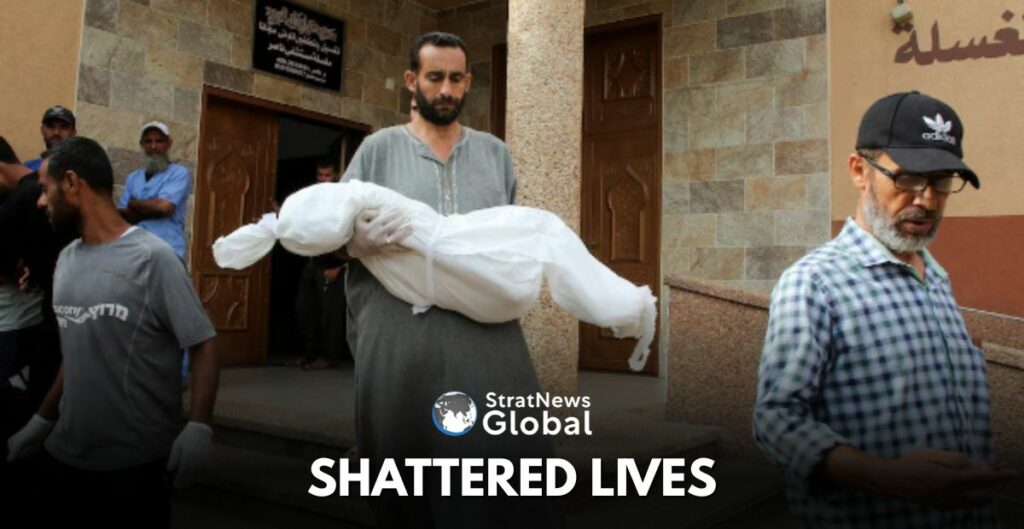
An Israeli airstrike struck Palestinians near a medical centre in Gaza on Thursday, killing six adults and 10 children, according to local health authorities, as ceasefire negotiations continued without signs of an imminent agreement.
Verified video footage from the strike in Deir al-Balah in the central Gaza Strip showed the bodies of women and children lying in pools of blood amid dust and screaming. One clip showed several motionless children lying on a donkey cart.
“She didn’t do anything, she was innocent, I swear. Her dream was for the war to end and that they announce it today, to go back to school,” said Samah al-Nouri, sitting by the body of her daughter, who was killed in the blast.
“She was only getting treatment in a medical facility. Why did they kill them?” she said, with other bodies laid out around her at a nearby hospital.
‘Horryfic’
Israel’s military said it had struck a militant who took part in the Hamas-led October 7, 2023, attack that triggered the war. It said it was aware of reports regarding a number of injured bystanders and that the incident was under review.
U.S.-based Project HOPE said the strike had hit right outside its Altayara health clinic. “Horrified and heartbroken cannot properly communicate how we feel anymore,” the aid group said in a statement.
The Deir al-Balah missile strike came as Israeli and Hamas negotiators hold talks with mediators in Qatar over a proposed 60-day ceasefire and hostage release deal aimed at building agreement on a lasting truce.
A senior Israeli official said on Wednesday that an agreement was not likely to be secured for another one or two weeks; however, U.S. Secretary of State Marco Rubio said on Thursday he was hopeful of a deal.
“I think we’re closer, and I think perhaps we’re closer than we’ve been in quite a while,” Rubio told reporters at the ASEAN summit in Malaysia.
Several rounds of indirect talks between Israel and the Palestinian militant group Hamas have failed to produce a breakthrough since the Israeli military resumed its campaign in March following a previous ceasefire.
Repeated attacks by Israeli forces in recent weeks have killed hundreds of Gazans, many of them civilians, and injured thousands, according to local health authorities, putting an enormous strain on the enclave’s few remaining hospitals.
Fuel Running Out
Dwindling fuel supplies risk further disruption in the semi-functioning hospitals, including incubators at the neonatal unit of al-Shifa Hospital in Gaza City, doctors there said.
“We are forced to place four, five or sometimes three premature babies in one incubator,” said Dr Mohammed Abu Selmia, the hospital director, adding that premature babies were now in a critical condition.
An Israeli military official said that fuel destined for hospitals and other humanitarian facilities was let into the enclave on Wednesday and on Thursday.
However, U.N. spokesperson Stephane Dujarric said that far more fuel was needed to keep essential life-saving and life-sustaining services operating.
Talks
U.S. President Donald Trump met Israeli Prime Minister Benjamin Netanyahu this week to discuss the situation in Gaza amid reports that Israel and Hamas were nearing agreement on a U.S.-brokered ceasefire proposal after 21 months of war.
Netanyahu said that if the two sides reach an agreement on the U.S. 60-day truce plan, Israel will begin negotiations on a permanent ceasefire.
In a statement from Washington, he reiterated Israel’s terms for ending the war, including Hamas disarming and no longer ruling Gaza. Hamas has rejected calls to lay down its weapons.
“If this can be achieved through negotiations – that’s good. If it’s not achieved through 60-day negotiations, then we will achieve it by other means, by use of force,” Netanyahu said.
A Palestinian official said the talks in Qatar were in crisis and that issues under dispute, including whether Israel would continue to occupy parts of Gaza after a ceasefire, had yet to be resolved.
The two sides previously agreed to a ceasefire in January, but it did not lead to a deal on ending the war, and Israel resumed its military assault two months later, stopping all aid supplies into Gaza for 11 weeks and telling civilians to leave the north of the tiny territory.
Gaza Offensive
Israel’s military campaign in Gaza has now killed more than 57,000 people, according to Palestinian health authorities. It has destroyed swathes of the territory and driven most Gazans from their homes.
The Hamas attack on Israeli border communities that triggered the war in 2023 killed around 1,200 people, and the militant group seized 251 hostages, according to Israeli tallies. At least 20 are believed to still be alive.
There has also been repeated violence in the Israeli-occupied West Bank. An Israeli man was killed at a shopping centre in the territory on Thursday by two Palestinian militants, who were then shot dead, police said.
In a separate incident, a Palestinian man was shot dead after he stabbed and injured a soldier, the army said.
(With inputs from Reuters)