

Support us by contributing to StratNewsGlobal on the following UPI ID
ultramodern@hdfcbank

Strategic affairs is our game, South Asia and beyond our playground. Put together by an experienced team led by Nitin A. Gokhale. Our focus is on strategic affairs, foreign policy and international relations, with higher quality reportage, analysis and commentary with new tie-ups across the South Asian region.
You can support our endeavours. Visit us at www.stratnewsglobal.com and follow us on YouTube, Twitter, Facebook and Instagram.
र 500 per month
र 1000 per month
र 5000 per year
र 10000 per year
Donate an amount of your choice
र 500 per month
Donate र 500 per month

र 1000 per month
Donate र 1000 per month
र 5000 per year
Donate र 5,000 per year
र 10000 per year
Donate र 10,000 per year
Donate an amount of your choice
Donate an amount of your choice


India Rejects Australia’s Push For Deeper Tariff Cuts On Dairy, Alcohol
India has turned down Australia’s request for deeper tariff cuts on dairy and alcohol, hindering progress toward finalising the second phase of their trade pact by year-end, according to two Indian government sources.
An interim trade pact signed in 2022 lowered tariffs on a range of goods, but negotiations on a broader Comprehensive Economic Cooperation Agreement (CECA) covering goods, services and visas have slowed, with dairy and wine emerging as key sticking points, the sources said.
The officials declined to be named as they were not authorised to speak to the media on confidential trade talks.
India’s commerce ministry and Australia’s Department of Foreign Affairs and Trade did not immediately respond to requests for comment.
India’s refusal to concede on politically sensitive dairy and agriculture products reflects mounting pressure from powerful farm groups, which is also shaping trade talks with other partners, including the United States.
“There is no question of agreeing to Australia’s demands for further tariff cuts on dairy and wine,” a senior Indian official with direct knowledge of the talks with Australia told Reuters.
“It could have an impact on millions of farmers and our nascent wine industry and grape producers.”
Domestic Backlash
Farmer groups and politicians from Prime Minister Narendra Modi’s home state, Gujarat, and the grape-growing state of Maharashtra, along with the $35 billion alcoholic beverages industry, are strongly opposing any concessions, the official added.
Under the interim pact, tariffs on Australian wine priced above $5 per 750ml bottle were cut to 100% from 150%, with a provision of a reduction to 50% over 10 years, while for bottles above $15, tariffs dropped to 75%, with a target of 25% in a decade.
Australia is pushing to accelerate these cuts and gain better access for dairy products – including cheese, high-protein whey concentrate, lactose and processed items – currently taxed between 20% and 30%.
“We’d like to see a reduction in the price at which tariff reductions kick in and a speeding up of those reductions,” said Lee McLean, CEO of industry body Australian Grape & Wine, noting rising demand could benefit both Indian and Australian winemakers because they make different products.
Even relatively affordable Australian wines, he added, can retail for over A$100 ($65.77) in India due to high tariffs and taxes, despite costing just A$10-15 at home.
Karl Ellis of Dairy Australia said India’s vast and culturally sensitive dairy sector limits mainstream exports, but niche products like high-protein whey, lactose, and select cheeses offer promise.
‘Prohibitive’ Tariffs
“Current tariffs are prohibitive,” he said, adding lower duties could help Australia tap into the $30-40 million market now served by European exporters.
Despite the impasse, officials on both sides remain hopeful.
India is open to offering cutting tariffs on non-agricultural goods, including industrial items, while seeking more access for services and visas, a second official said.
The Australian Department of Foreign Affairs said the talks for CECA are backed by both prime ministers, and the conclusion of the pact would boost two-way trade, while building a more resilient economic partnership.
($1 = 85.8730 Indian rupees)
($1 = 1.5205 Australian dollars)
(With inputs from Reuters)
Air India Crash Probe Finds Fuel Cutoff Triggered Engines Shutdown Seconds After Takeoff
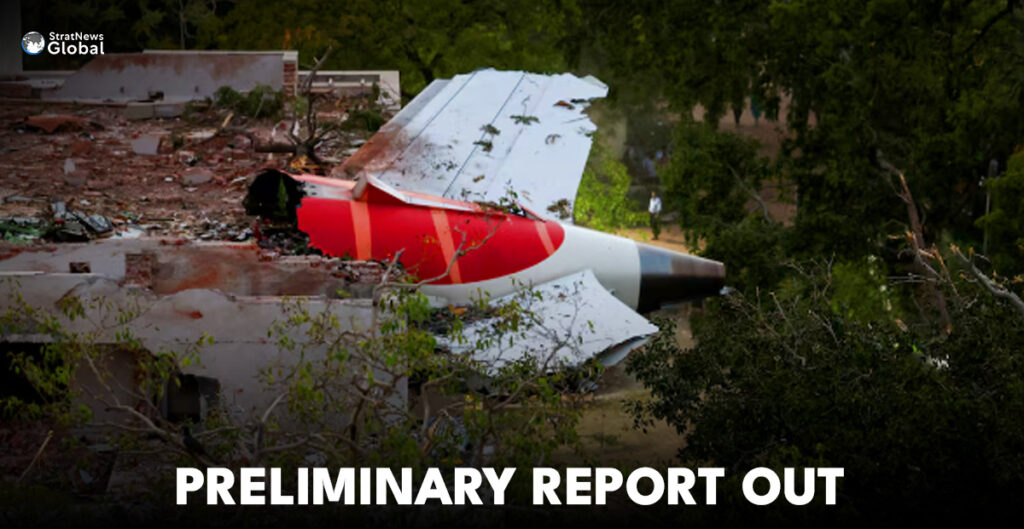
A preliminary report on last month’s Air India crash that killed 260 people revealed that just three seconds after takeoff, the aircraft’s engine fuel cutoff switches almost simultaneously flipped from “run” to “cutoff,” cutting off fuel supply and causing the engines to shut down.
The Boeing 787 Dreamliner immediately began to lose thrust and sink down, according to the report released on Saturday by Indian aviation accident investigators.
One pilot can be heard on the cockpit voice recorder asking the other why he cut off the fuel. “The other pilot responded that he did not do so,” the report said.
Mayday Call
It did not identify which remarks were made by the flight’s captain and which by the first officer, nor which pilot transmitted “Mayday, Mayday, Mayday” just before the crash.
The preliminary report also does not say how the switch could have flipped to the cutoff position on the June 12 London-bound flight from the Indian city of Ahmedabad.
U.S. aviation safety expert John Cox said a pilot would not be able to accidentally move the fuel switches that feed the engines. “You can’t bump them and they move,” he said.
Flipping to the cutoff almost immediately cuts the engines. It is most often used to turn engines off once a plane has arrived at its airport gate and in certain emergency situations, such as an engine fire. The report does not indicate there was any emergency requiring an engine cutoff.
No Immediate Action For Boeing
“At this stage of investigation, there are no recommended actions to Boeing 787-8 and/or GE GEnx-1B engine operators and manufacturers”, India’s Aircraft Accident Investigation Bureau said.
Air India, Boeing and GE Aviation did not respond immediately to requests for comment.
The agency, an office under India’s civil aviation ministry, is leading the probe into the world’s deadliest aviation accident in a decade.
(With inputs from Reuters)
EU Urges Israel To Ease Gaza Crisis Amid Concerns Over Human Rights, Says Top Diplomat
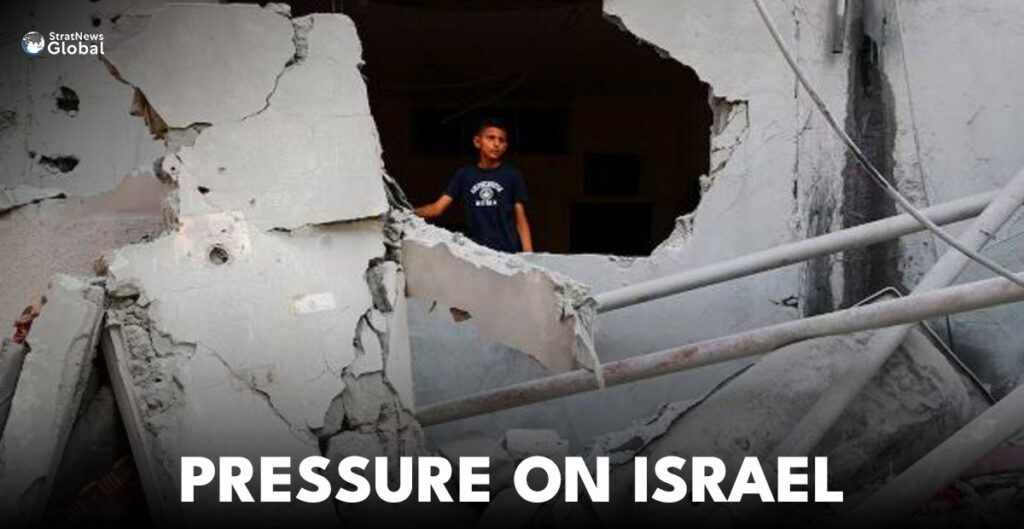
The European Union is exploring ways to press Israel to improve humanitarian conditions in Gaza, the bloc’s top diplomat said. Member states are also considering possible measures in response to what they view as potential human rights violations by Israel.
The EU’s diplomatic service on Thursday presented 10 options for political action against Israel after saying it found “indications” last month that Israel breached human rights obligations under a pact governing its ties with the bloc.
In a document prepared for EU member countries, the options included major steps such as suspending the EU-Israel Association Agreement – which includes trade relations – and lesser steps such as suspending technical projects.
EU foreign policy chief Kaja Kallas said on Friday the options were prepared in response to member states that wanted stronger pressure on Israel to rectify the suffering of civilians in Gaza’s now 21-month-old war.
“Our aim is not to punish Israel in any way,” she said after meeting with Asian foreign ministers in Kuala Lumpur on Friday, amid growing global jitters arising from U.S. President Donald Trump’s tariff offensive.
“Our aim is to really improve the situation on the ground (in Gaza), because the humanitarian situation is untenable.”
Concerns Over Civilian Casualties And Mass Displacement
EU members have voiced concern over the large number of civilian casualties and mass displacement of Gaza’s inhabitants during Israel’s war against Hamas terrorists in the enclave, and alarm about restrictions on access for humanitarian aid.
Kallas said on Thursday Israel had agreed to expand humanitarian access to Gaza, including increasing the number of aid trucks, crossing points and routes to distribution hubs.
She also said negotiations with the U.S. on a trade deal to avoid high tariffs threatened by Trump were ongoing, and stressed that the EU did not want to retaliate with counter-levies on U.S. imports.
Trump has said the EU could receive a letter on tariff rates by Friday, throwing into question the progress of talks between Washington and the bloc on a potential trade deal.
“We have of course possibilities to react, but we don’t want to retaliate. We don’t want a trade war, actually,” Kallas said.
(With inputs from Reuters)
PKK Militants Burn Weapons In Iraq, Signalling Step Toward Disarmament
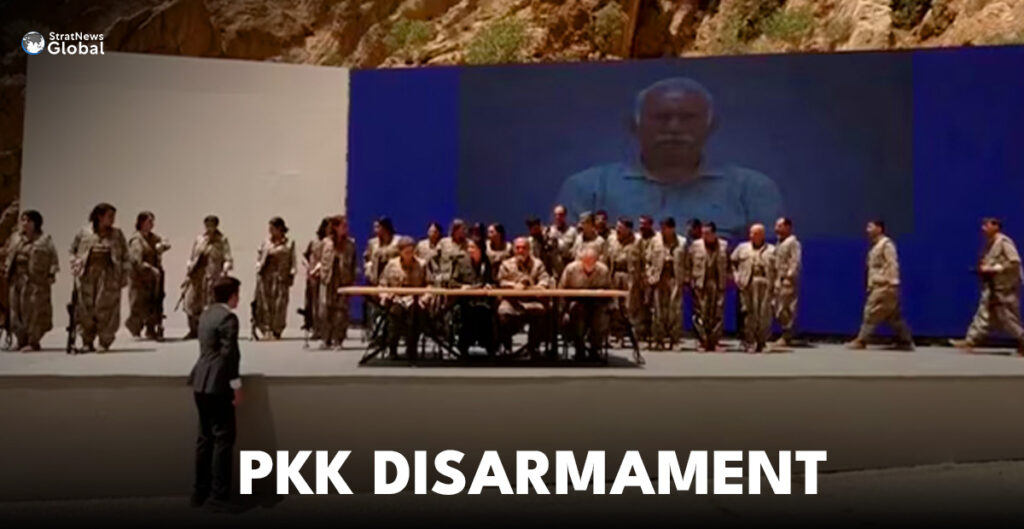
Thirty Kurdistan Workers Party (PKK) militants burned their weapons at the entrance of a cave in northern Iraq on Friday, marking a symbolic yet significant move toward ending their decades-long insurgency against Turkiye.
Footage from the ceremony showed the fighters, half of them women, queuing to place AK-47 assault rifles, bandoliers and other guns into a large grey cauldron. Flames later engulfed the black gun shafts pointed to the sky, as Kurdish, Iraqi and Turkish officials watched nearby.
Disarmament
The PKK, locked in conflict with the Turkish state and outlawed since 1984, decided in May to disband, disarm and end its separatist struggle after a public call to do so from its long-imprisoned leader Abdullah Ocalan.
After a series of failed peace efforts, the new initiative could pave the way for Ankara to end an insurgency that has killed over 40,000 people, burdened the economy and wrought deep social and political divisions in Turkiye and the wider region.
The ceremony was held at the entrance of the Jasana cave in the town of Dukan, 60 km (37 miles) northwest of Sulaymaniyah in the Kurdistan region of Iraq’s north.
The fighters, in beige military fatigues, were flanked by four commanders, including senior PKK figure Bese Hozat, who read a statement in Turkish declaring the group’s decision to disarm.
“We voluntarily destroy our weapons, in your presence, as a step of goodwill and determination,” she said, before another commander read the same statement in Kurdish.
Helicopters hovered overhead, with dozens of Iraqi Kurdish security forces surrounding the mountainous area, a Reuters witness said.
The ceremony was attended by Turkish and Iraqi intelligence figures, officials of Iraq’s Kurdistan regional government, and senior members of Turkiye’s pro-Kurdish DEM party, which also played a key role this year facilitating the PKK’s disarmament decision.
It was unclear when further handovers would take place.
A senior Turkish official said the arms handover marked an “irreversible turning point” in the peace process, while another government source said ensuing steps would include the legal reintegration of PKK members into society in Turkiye and efforts to heal communities and promote reconciliation.
Wider Significance
The PKK has been based in northern Iraq after being pushed well beyond Turkiye’s southeastern frontier in recent years. Turkiye’s military carries out regular strikes on PKK bases in the region and has established several military outposts there.
The end of NATO member Turkiye’s conflict with the PKK could have consequences across the region, including in neighbouring Syria, where the United States is allied with Syrian Kurdish forces that Ankara deems a PKK offshoot.
Washington and Ankara want those Kurds to quickly integrate with Syria’s security structure, which has been undergoing reconfiguration since the fall in December of autocratic President Bashar al-Assad. PKK disarmament could add to this pressure, analysts say.
The PKK, DEM and Ocalan have all called on Turkish President Tayyip Erdogan’s government to address Kurdish demands for more rights in regions where Kurds form a majority, particularly Turkiye’s southeast, where the insurgency was concentrated.
In a rare online video published on Wednesday, Ocalan – whose large image was shown at the weapons ceremony – also urged Turkiye’s parliament to set up a commission to oversee disarmament and manage the broader peace process.
‘Terror-Free Turkiye’
Ankara has taken steps toward forming the commission, while the DEM and Ocalan have said that legal assurances and certain mechanisms were needed to smooth the PKK’s transition into democratic politics.
Omer Celik, spokesman for Erdogan’s AK Party, said the ceremony marked a first step toward full disarmament and a “terror-free Turkiye”, adding this must be completed “in a short time”.
Erdogan has said the disarmament will enable the rebuilding of Turkiye’s southeast.
Turkiye spent nearly $1.8 trillion over the past five decades combating terrorism, Finance Minister Mehmet Simsek has said.
(With inputs from Reuters)
Pakistani Court Halts Order To Block YouTube Channels Of Government Critics
A court in Pakistan on Friday suspended a directive that aimed to ban over two dozen YouTube channels belonging to critics of the government, including former Prime Minister Imran Khan, according to a defence lawyer.
Alphabet-owned GOOGL.O YouTube this week told 27 content creators that it could block their channels – including those of journalists and Khan and his opposition party Pakistan Tehreek-e-Insaf – if they failed to comply with a judicial magistrate court order seeking to ban them.
It said that it is considering blocking their channels after a local court sought to ban them for being “anti-state.”
A regional communication manager for YouTube did not respond to a request for a comment.
The judicial magistrate court in Islamabad had said it was seeking the ban after the National Cyber Crime Investigation Agency criticised the channels in a June 2 report for “sharing highly intimidating, provocative and derogatory contents against state institutions and officials of the state of Pakistan.”
‘The Order Has No Legal Basis’
The decision to suspend the order was taken by an additional sessions judge, said Imaan Mazari, the lawyer for two of the YouTube content creators.
In Pakistan, an additional sessions judge is a judicial officer who presides over a sessions court, handling both civil and criminal cases.
“Our submission is that the order has no legal basis. It was a one-sided decision without giving defence a chance to be heard,” Mazari said.
She also said the magistrate court had no jurisdiction over the matter.
The next hearing in the sessions court is on July 21.
In Pakistan’s judicial system, cases start at civil and judicial magistrate courts and appeals are heard in high courts and the Supreme Court.
Digital rights campaigners say that any ban would further undermine free speech in Pakistan, where the authorities are accused of stifling newspapers and television, and social media is seen as one of the few outlets for dissent.
(With inputs from Reuters)
Ships Use Nationality And Religious Messages To Avoid Red Sea Houthi Attacks
Commercial vessels navigating the Red Sea are now broadcasting messages about their country of origin—and in some cases, the religious identity of their crew—on public tracking systems. The move comes in response to recent deadly attacks by Yemen’s Houthi rebels, as ships attempt to avoid being targeted.
The Red Sea is a critical waterway for oil and commodities but traffic has dropped sharply since Houthi attacks off Yemen’s coast began in November 2023 in what the Iran-aligned group said was in solidarity with Palestinians in the Gaza war.
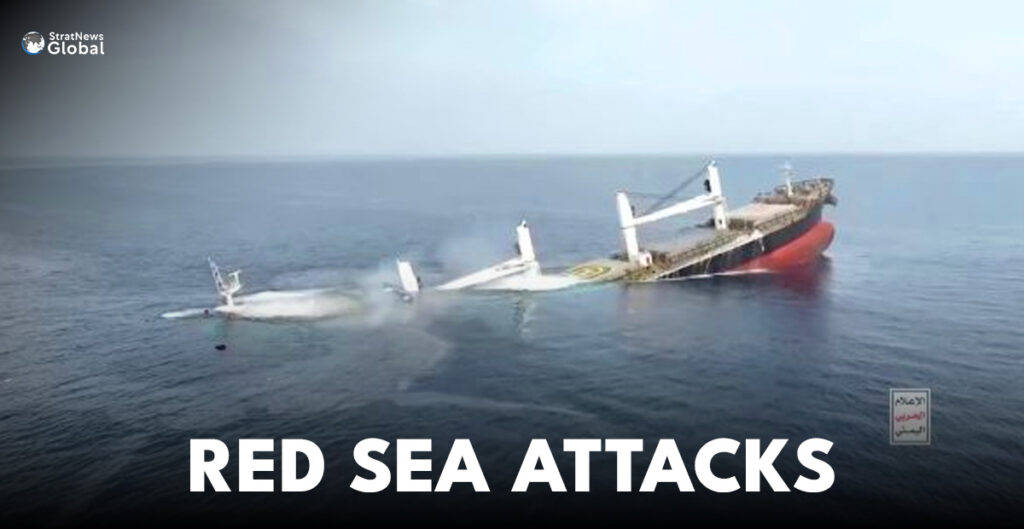
The group sank two ships this week after months of calm and its leader Abdul Malik al-Houthi reiterated there would be no passage for any company transporting goods connected to Israel.
In recent days more ships sailing through the southern Red Sea and the narrow Bab al-Mandab strait have added messages to their AIS public tracking profiles that can be seen when clicking on a vessel.
Messages have included referring to an all-Chinese crew and management, and flagging the presence of armed guards on board.
“All Crew Muslim,” read one message, while others made clear the ships had no connection to Israel, according to MarineTraffic and LSEG ship-tracking AIS data.
High Risk Of Attack
Maritime security sources said this was a sign of growing desperation to avoid attack by Houthi commandos or deadly drones – but they also thought it was unlikely to make any difference.
Houthi intelligence preparation was “much deeper and forward-leaning”, one source said.
Vessels in the broader fleets of both ships attacked and sunk by the Houthis this week had made calls to Israeli ports in the past year, shipping analysis showed.
Maritime security sources said even though shipping companies must step up due diligence on any tangential link to Israel before sailing through the Red Sea, the risk of attack was still high.
In March 2024, the Houthis hit the Chinese-operated tanker Huang Pu with ballistic missiles despite previously saying they would not attack Chinese vessels, the U.S. Central Command said.
The Houthis have also targeted vessels trading with Russia.
“Despite declared ceasefires, areas such as the Red Sea and Bab al-Mandab Strait remain designated high-risk by underwriters,” insurance broker Aon said in a report this week.
“Ongoing monitoring and adaptive security measures are essential for ship operators.”
The insurance cost of shipping goods through the Red Sea has more than doubled since this week’s attacks, with some underwriters pausing cover for some voyages.
The number of daily sailings through the strait, at the southern tip of the Red Sea and a gateway to the Gulf of Aden, was 35 vessels on July 10, 32 vessels on July 9, down from 43 on July 1, Lloyd’s List Intelligence data showed.
That compares with a daily average of 79 sailings in October 2023, before Houthi attacks began.
“Seafarers are the backbone of global trade, keeping countries supplied with food, fuel and medicine. They should not have to risk their lives to do their job,” the UK-based Seafarers’ Charity said this week.
(With inputs from Reuters)
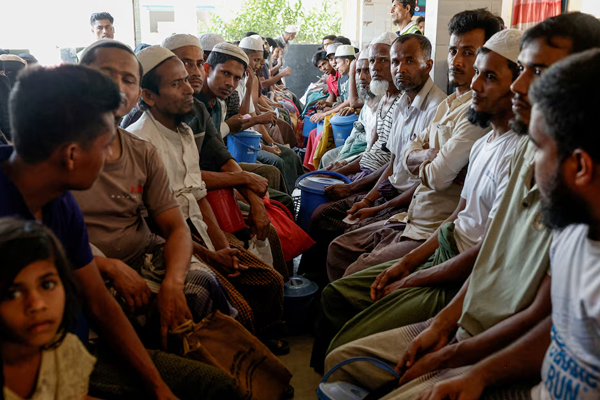
UN Warns Essential Services For Rohingyas In Bangladesh On The Brink Of Collapse
The United Nations (UN) refugee agency warned on Friday that essential services for Rohingya refugees in Bangladesh are on the brink of collapse, with its $255 million appeal only 35% funded.
More than 1 million Rohingya have been crammed into the camps in southeastern Bangladesh, the world’s largest refugee settlement. Most fled a brutal crackdown by Myanmar’s military in 2017, although some have been there for longer.
“There is a huge gap in terms of what we need and what resources are available. These funding gaps will affect the daily living of Rohingya refugees as they depend on humanitarian support on a daily basis for food, health and education,” United Nations High Commissioner for Refugees spokesperson Babar Baloch told reporters in Geneva.
Global Funding Crisis
The humanitarian sector has been roiled by funding reductions from major donors, led by the U.S. under President Donald Trump and other Western countries, as they prioritise defence spending prompted by growing fears of Russia and China.
“With the acute global funding crisis, the critical needs of both newly arrived refugees and those already present will be unmet, and essential services for the whole Rohingya refugee population are at risk of collapsing unless additional funds are secured,” Baloch said.
Health services would be severely disrupted by September, and by December, essential food assistance would stop, UNHCR said.
At least 150,000 Rohingya refugees have arrived in Cox’s Bazar in Bangladesh in the last 18 months, according to UNHCR.
Violence and persecution against the Rohingya, a mostly Muslim minority in mainly Buddhist Myanmar’s western Rakhine state, have continued to force thousands to seek protection across the border in Bangladesh, it added.
“This movement of Rohingya refugees into Bangladesh… is the largest from Myanmar into Bangladesh since 2017 when some 750,000 Rohingya fled the deadly violence in their native Rakhine state in Myanmar,” Baloch stated.
(With inputs from Reuters)
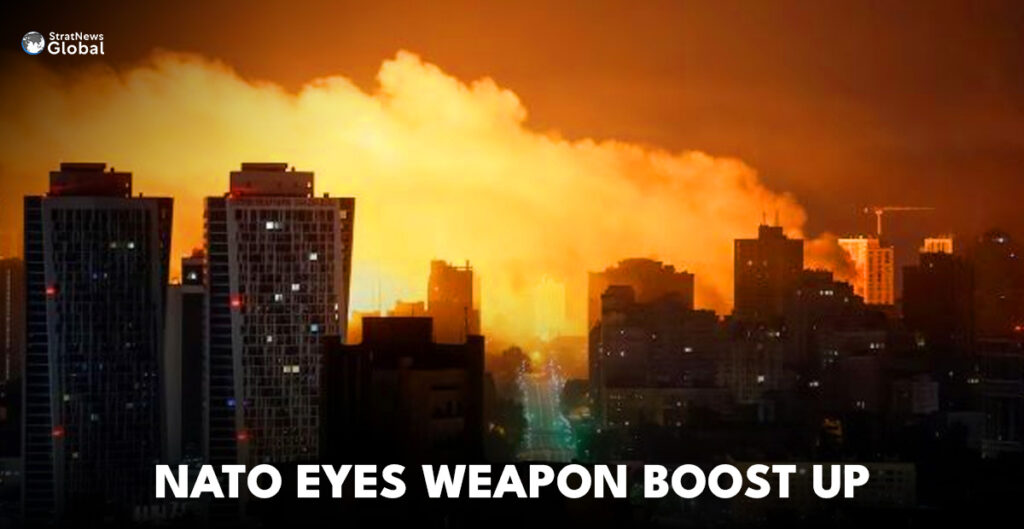
NATO Must Expand Long-Range Missile Arsenal To Deter Russia: U.S. General
NATO should boost its stockpile of long-range missiles to effectively deter potential Russian aggression in Europe, a U.S. Army general said. He warned that Moscow is likely to ramp up its production of long-range weapons in near future.
Russia’s effective use of long-range missiles in its war in Ukraine has convinced Western military officials of their importance for destroying command posts, transportation hubs and missile launchers far behind enemy lines.
The Russian army is bigger today than it was when they started the war in Ukraine,” Major General John Rafferty said in an interview at a U.S. military base in Wiesbaden, Germany.
“And we know that they’re going to continue to invest in long-range rockets and missiles and sophisticated air defences. So more alliance capability is really, really important.”
Strengthening Of Air Defences
The war in Ukraine has underscored Europe’s heavy dependence on the United States to provide long-range missiles, with Kyiv seeking to strengthen its air defences.
Rafferty recently completed an assignment as commander of the U.S. Army’s 56th Artillery Command in the German town of Mainz-Kastel, which is preparing for temporary deployments of long-range U.S. missiles on European soil from 2026.
At a meeting with U.S. Secretary of Defence Pete Hegseth on Monday, German Defence Minister Boris Pistorius is expected to try to clarify whether such deployments, agreed between Berlin and Washington when Joe Biden was president, will go ahead now that Donald Trump is back in the White House.
The agreement foresaw the deployment of systems including Tomahawk missiles with a range of 1,800 km and the developmental hypersonic weapon Dark Eagle with a range of around 3,000 km.
Russia has criticised the planned deployment of longer-range U.S. missiles in Germany as a serious threat to its national security. It has dismissed NATO concerns that it could attack an alliance member and cited concerns about NATO expansion as one of its reasons for invading Ukraine in 2022.
European Plans
Fabian Hoffmann, a doctoral research fellow at Oslo University who specialises in missiles, estimated that the U.S. provides some 90% of NATO’s long-range missile capabilities.
“Long-range strike capabilities are crucial in modern warfare,” he said. “You really, really don’t want to be caught in a position like Ukraine (without such weapons) in the first year (of the war). That puts you at an immediate disadvantage.”
Aware of this vulnerability, European countries in NATO have agreed to increase defence spending under pressure from Trump.
Some European countries have their own long-range missiles but their number and range are limited. U.S. missiles can strike targets at a distance of several thousand km.
Europe’s air-launched cruise missiles, such as the British Storm Shadow, the French Scalp and the German Taurus, have a range of several hundred km. France’s sea-launched Missile de Croisiere Naval (MdCN) can travel more than 1,000 km.
They are all built by European arms maker MBDA, BAES.L, LDOF.MI, which has branches in Britain, France, Germany and Italy.
France, Germany, Italy, Poland, Britain and Sweden are now participating in a programme to acquire long-range, ground-launched conventional missiles known as the European Long-Range Strike Approach (ELSA).
As part of the program, Britain and Germany announced in mid-May that they would start work on the development of a missile with a range of over 2,000 km.
(With inputs from Reuters)
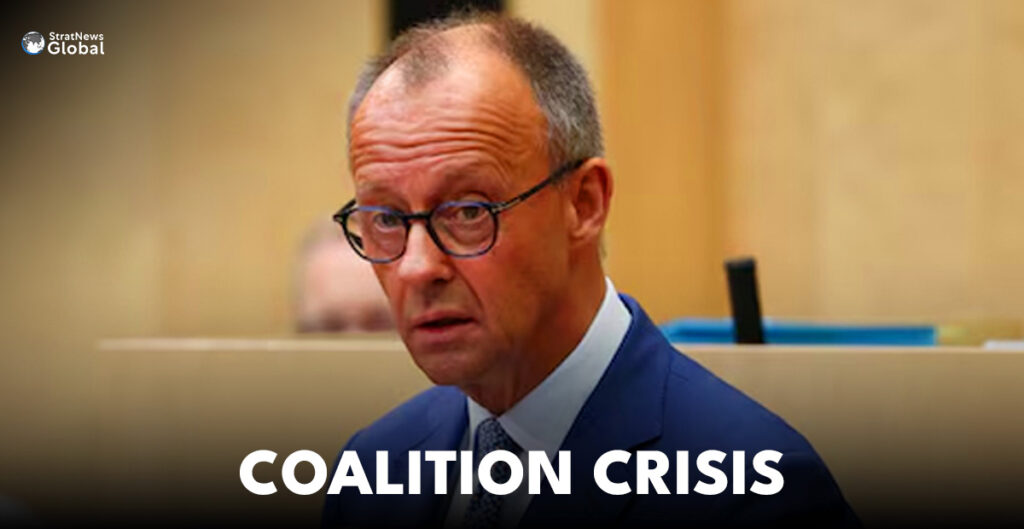
Germany’s Ruling Coalition In Turmoil After Merz Blocks Key Court Vote
Germany’s coalition plunged into disarray on Friday after Chancellor Friedrich Merz’s conservatives abruptly postponed a vote to appoint a Constitutional Court judge.
Merz’s Christian Democrats said it had taken the decision to pause Friday’s parliamentary vote because of the publication of unsubstantiated plagiarism allegations against Frauke Brosius-Gersdorf.
But his Social Democrat coalition partners and the opposition Greens said she was being treated unfairly. Over the past week, conservative legislators have said they were uncomfortable with her support for abortion rights.
This is the second occasion on which the coalition has failed to muster support on a key vote. Merz’s own appointment three months ago fell through in the first round of voting.
The Christian Democrats had indicated this week they would support Brosius-Gersdorf, a judge and law professor nominated by the Social Democrats.
‘Plagiarism Hunter’
But on Friday, they said they had changed their mind after Austrian Stefan Weber, a self-declared “plagiarism hunter”, published allegations against Brosius-Gersdorf on X on Thursday evening.
Brosius-Gersdorf did not immediately respond to an emailed request for a comment. Many comments under Weber’s social media post dismissed the allegations, some calling them “nonsense”.
“Whatever happens now, this process has been conducted in a very unsavoury way,” senior SPD politician Anke Rehlinger said.
“It harms the person in question and the reputation of the court… It really bothers me how a judge, and a woman, is being treated.”
The row is an embarrassment for Merz and his ally Jens Spahn, the party’s parliamentary leader, whose job includes coordinating votes to preserve the peace in the coalition.
“This is a disaster for parliament, and especially for Jens Spahn and Friedrich Merz and the coalition parties,” senior Green Britta Hasselmann said.
Weber said bibliographic references in a PhD thesis by Brosius-Gersdorf had lifted material from her husband’s thesis on a similar topic, even though it was published a year later.
The Constitutional Court is one of Germany’s most respected and powerful institutions. Its decision to overturn a budget helped trigger the collapse of Germany’s last government.
While judges often have open party affiliations, public disagreements over hot-button cultural issues are rare. It members speak with pride about its political neutrality, frequently comparing it favourably with the U.S. Supreme Court.
(With inputs from Reuters)
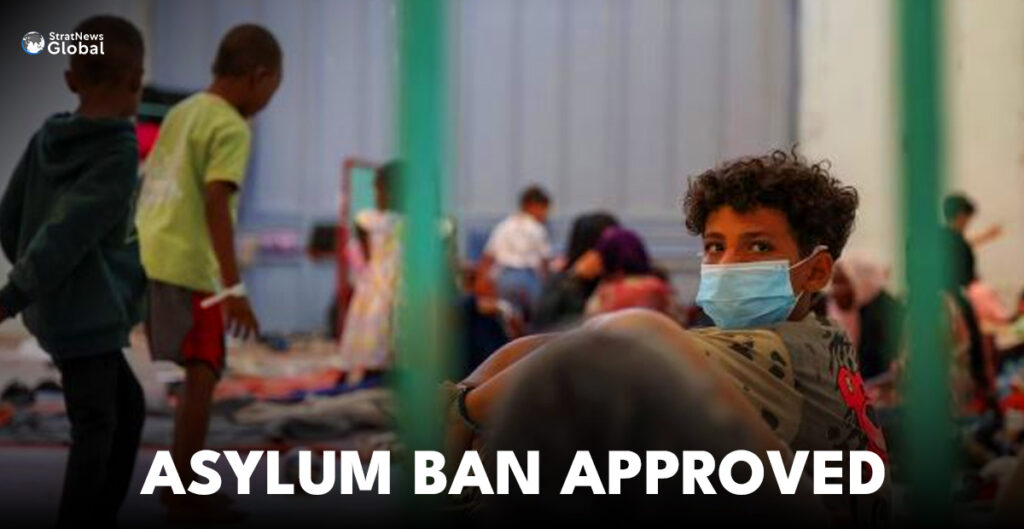
Greece Approves North Africa Asylum Ban Despite Criticism From Rights Groups
On Friday, Greek lawmakers voted to temporarily halt the processing of asylum applications from migrants arriving by sea from North Africa. The government says the measure aims to curb migration to the country’s southern shores, while rights groups and opposition parties have condemned it as unlawful.
The ban comes amid a surge in migrants reaching the island of Crete and after talks with Libya’s Benghazi-based government to stem the flow were this week.
It marks a further hardening of Greece’s stance towards migrants under Prime Minister Kyriakos Mitsotakis’ centre-right government, which has built a fence at its northern land borders and boosted sea patrols since it came to power in 2019.
Human rights groups accuse Greece of forcefully turning back asylum-seekers on its sea and land borders. This year, the European Union border agency said it was reviewing 12 cases of potential human rights violations by Greece.
The government denies wrongdoing.
Asylum Processing Halted
The law, which received 177 votes in favour and 74 against, halts asylum processing for at least three months and allows authorities to quickly repatriate migrants without any prior identification process.
“Faced with the sharp increase in irregular arrivals by sea from North Africa, particularly from Libya to Crete, we have taken the difficult but absolutely necessary decision to temporarily suspend the examination of asylum applications,” Mitsotakis was quoted by his office as telling the German newspaper Bild on Friday.
“Greece is not a gateway to Europe open to everyone.”
Greece was on the front line of a migration crisis in 2015-16 when hundreds of thousands of migrants from the Middle East, Asia and Africa passed through its islands and mainland.
Since then, flows have dropped off dramatically. While there has been a rise in arrivals to the outlying islands of Crete and Gavdos – those numbers have quadrupled to over 7,000 so far this year – sea arrivals to Greece as a whole dropped by 5.5% to 17,000 in the first half of this year, U.N. data show.
Human Rights Violation?
Rights groups and opposition parties said the ban approved by parliament violates human rights.
“Seeking refuge is a human right; preventing people from doing so is both illegal and inhumane,” said Martha Roussou, a senior advocacy adviser for aid group IRC.
Thousands of irregular migrants have been rescued by the Greek coastguard off Crete in recent days, the Athens government said. Hundreds of them, including children, were temporarily housed at an exhibition centre in Agyia, near the city of Chania in western Crete, amid sweltering summer temperatures.
Media footage on Friday showed a migrant who had fainted being taken out of the shelter on a stretcher.
Crete lacks an organised reception facility. The government said it would build a migrant camp there but the local tourist industry is worried the plan could harm the island’s image.
“The weight is too great, the load is too big, and solutions now have to be found … at a central level,” said George Tsapakos, a deputy governor for Crete.
(With inputs from Reuters)