

Support us by contributing to StratNewsGlobal on the following UPI ID
ultramodern@hdfcbank

Strategic affairs is our game, South Asia and beyond our playground. Put together by an experienced team led by Nitin A. Gokhale. Our focus is on strategic affairs, foreign policy and international relations, with higher quality reportage, analysis and commentary with new tie-ups across the South Asian region.
You can support our endeavours. Visit us at www.stratnewsglobal.com and follow us on YouTube, Twitter, Facebook and Instagram.
र 500 per month
र 1000 per month
र 5000 per year
र 10000 per year
Donate an amount of your choice
र 500 per month
Donate र 500 per month

र 1000 per month
Donate र 1000 per month
र 5000 per year
Donate र 5,000 per year
र 10000 per year
Donate र 10,000 per year
Donate an amount of your choice
Donate an amount of your choice
Gunman Kills 2 At US Church, Injures Policeman Before Being Shot
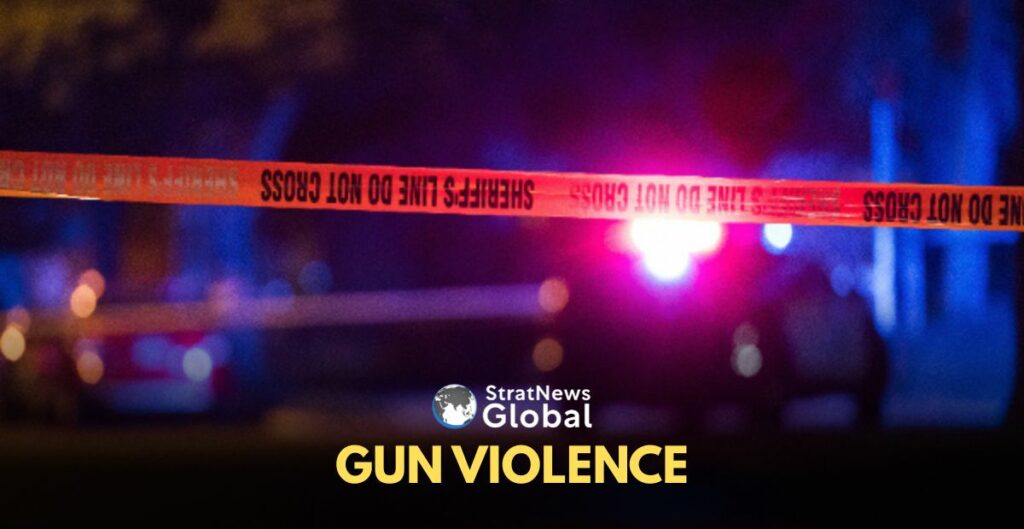
In a shocking incident in the United States, a gunman opened fire at a church in Kentucky on Sunday, killing two women and later shooting and injuring a state trooper near an airport, before being gunned down by the police.
The women were killed at the Richmond Road Baptist Church in Lexington. Two men were also wounded there, including one who was in critical condition, Lexington Police Chief Lawrence Weathers told an afternoon press conference.
Authorities did not provide the suspect’s name or age.
‘Extremely Difficult’ Day
“There are days like today that are extremely difficult,” Weathers said. “Sometimes things happen, you just don’t have a reason why.”
The suspect fired at the trooper after being pulled over near Blue Grass Airport at about 11:30 a.m. in Fayette County, Weathers said. The shooting happened on a road that rings the airport but was not connected to its operations, police said.
The trooper was being treated at a nearby hospital and was in stable condition.
The suspect then carjacked a vehicle about 10 miles (16 km) from the airport and fled to Richmond Road Baptist Church, where the individual began firing at people on the church grounds.
Police tracked the location of the carjacked vehicle to the church.
No Motive Behind Shooting
The police chief did not offer any motive for the shootings, but said there was some indication that the suspect may have known some of the people at the church.
Weathers said Lexington police would conduct an internal review of the shooting, as required by department policies.
The Blue Grass Airport informed the public through a post on X at 1 p.m. ET (1700 GMT) that a law enforcement investigation was underway, affecting a section of the airport road. However, the airport authorities reassured passengers that all flights and regular operations were continuing without any disruption.
(With inputs from Reuters)
Chinese Embassy Warning Over Dalai Lama Sparks Anger, Outrage
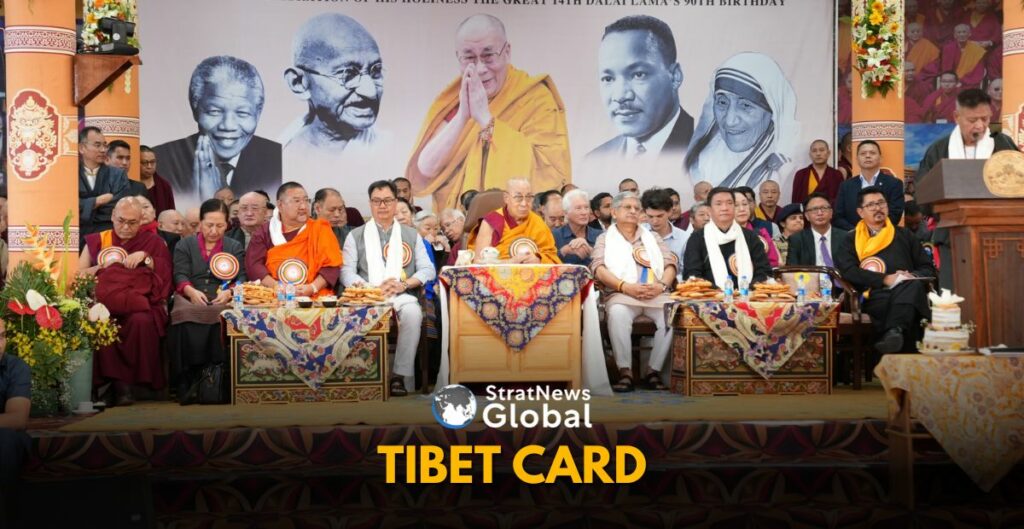
Just ahead of External Affairs Minister S. Jaishankar’s visit to China for the SCO Foreign Ministers’ meeting, the Chinese embassy in New Delhi on Sunday warned India against playing the “Xizang card”.
Accusing Indian “strategic and academic communities, including former officials,” of making “improper remarks” about the Dalai Lama’s reincarnation, embassy spokesperson Yu Jing posted on X: “In reality, Xizang‑related issue is a thorn in China-India relations and has become a burden for India. Playing the ‘Xizang card’ will definitely end up shooting oneself in the foot.”
(Xizang, for the uninitiated, is Beijing’s official term for Tibet.)
Yu went on to claim that such commentary was “contrary to [the] Indian government’s public stance,” and warned that Indian experts should be “fully cognizant” of the sensitivity, stressing that the Dalai Lama’s reincarnation is “an internal affair of China” that brooks “no interference from external forces.”
Her post comes days after the Dalai Lama’s reaffirmation—just before his 90th birthday on July 6—that his successor will be chosen through traditional Tibetan Buddhist practices under the authority of the Gaden Phodrang Trust, founded by him.
Strategically, this warning is timed to pre-empt External Affairs Minister Jaishankar’s visit, which is expected to pave the way for Prime Minister Modi’s attendance at the SCO Leaders’ Summit in Beijing this August. Beijing clearly seeks to set rhetorical traps before any substantive diplomacy begins.
As expected, Ms Yu’s remarks sparked a pushback on X, ranging from sarcastic comments to downright abuse.
“India recognises Tibet as an “autonomous” region of China. Common sense would dictate that the succession of the Dalai Lama is part of the autonomy under which Tibet operates,” declared a former IAF fighter pilot and military analyst.
“Allowing Tibetans to wear their traditional attire, eat their traditional food, and live in traditional homes cannot be equated with autonomy since every Chinese citizen has those rights. As a diplomat, you should have the sense not to threaten your host country with statements such as – Playing the “Xizang card” will definitely end up shooting oneself in the foot,” he said.
“And please don’t issue threats to ordinary Indians on what we can or cannot do. This is not China, and we have not struck a Faustian bargain with our political leaders. Stay in your lane,” added a senior journalist.
Let’s be clear: the Dalai Lama’s succession is a religious, not strategic, matter. Only the Tibetan Buddhist community—led by His Holiness himself—has the moral authority to decide the process. The idea that an atheist, authoritarian regime which has systematically suppressed Tibetan culture can appoint its own successor is not just absurd—it is Orwellian.
India, which has hosted the Dalai Lama and Tibetan exile community since 1959, has maintained a carefully balanced stance of diplomatic neutrality. But Beijing now demands not only silence, but submission.
When Indian minister of parliamentary affairs recently Kiren Rijiju affirmed that only the Dalai Lama and his tradition can decide succession, he upheld religious autonomy—not “played the Xizang card.” China’s fury reveals Beijing’s insecurity over the issue.
The real irritant in China–India ties is not Tibet—it is China’s own provocations.
From the Galwan clash of 2020 to continued military pressure along the Line of Actual Control, Beijing has shown scant respect for bilateral trust. Now it seeks to reframe spiritual matters as diplomatic provocations—yet again shifting attention from its own provocations.
The Dalai Lama is a global symbol of nonviolence and moral authority, and his legacy remains untarnished. Suggesting his succession is a “thorn”—or worse, issuing veiled threats—is not diplomacy. It’s intimidation.
If Jaishankar’s visit is meant to build momentum toward a Modi–Xi summit, India must respond with strategic clarity, not rhetorical appeasement. The message must be firm: Tibetans choose Tibetan leaders. India will defend moral autonomy within its borders.
The last time Beijing threw a tantrum over the Dalai Lama—in 2017—it ended with his visit to Arunachal Pradesh.
That visit sent a message Beijing needs to hear again: moral authority cannot be manufactured by bureaucrats. Nor can it be silenced by tweets.
New Book On Pakistan Provides Fresh Insight Into Familiar Territory
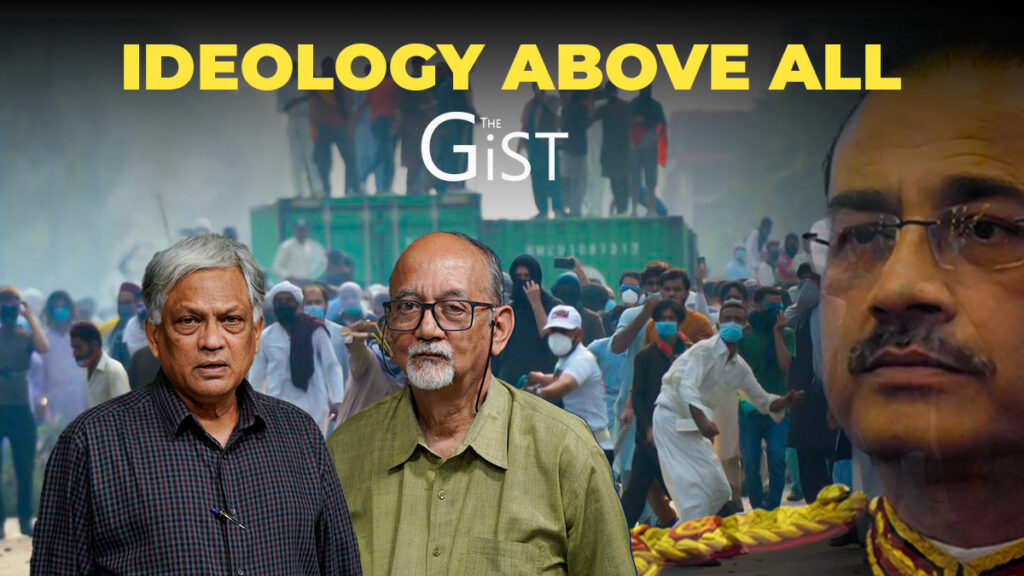
It’s widely accepted that Pakistan is not a “normal” country, in the sense that while it has all the trappings of normalcy including a parliament, political parties, elections and so on, it’s also true that the country remains under the army’s grip and no government has ever completed its full term.
Here’s something else: the ideology of Pakistan, never actually defined although the late president Ayub Khan said it was Islam, precedes the current constitution adopted in 1973. Meaning the ideology is actually above the constitution.
It also defines the mindset of the Pakistan army which sees itself as the guardian of the nation’s physical and “ideological frontiers”.
Ideology explains a lot about present day Pakistan, says Dinkar Srivastava, former diplomat and author of Pakistan: Ideologies Strategies & Interests. He was a guest on The Gist and said the book was two years in the writing and explores how ideology has led Pakistan to where it currently stands:
“Contempt for democratic norms, encouragement of groups in their use of force, refusal to accept the modern state system and perpetual confrontation with India.”
But the army’s legitimacy is under increasing strain: recall the events of May 2023 when there were mass attacks on military installations including the celebrated one on the Lahore corps commander’s residence.
But the army continues on its merry way, appropriating more than 14% of the national budget regardless of the impact it is having on the nation. The civilian government of Shahbaz Sharif, under the army’s thumb, is unable to pay its way much less fund development programmes.
Srivastava believes there was a quid pro quo in the ease with which Pakistan got an IMF loan and the lunch hosted by President Trump for Field Marshal Asim Munir. Clearly, Pakistan will be expected to play a role in terms of helping the US pursue its future plans with regard to Iran.
US Senators Warn Nvidia CEO Against China Visit
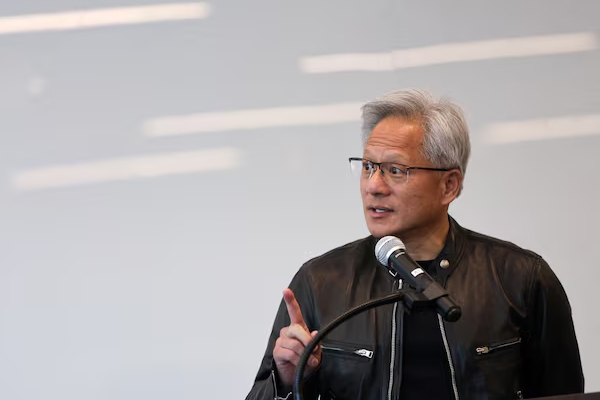
A bipartisan pair of U.S. senators warned Nvidia CEO Jensen Huang on Friday about his upcoming trip to China urging him to refrain from meeting with firms suspected of undermining U.S. chip export controls.
The letter from Republican Senator Jim Banks and Democratic Senator Elizabeth Warren asked Huang to also abstain from meeting with representatives of companies that are working with the People’s Republic of China’s military or intelligence bodies.
The senators also asked Huang to refrain from meeting with entities named on the U.S. restricted export list.
“We are worried that your trip to the PRC could legitimise companies that cooperate closely with the Chinese military or involve discussing exploitable gaps in U.S. export controls,” the senators wrote.
Huang planned to visit China on Friday.
An Nvidia spokesperson said “American wins” when its technology sets “the global standard” and that China has one of the largest bodies of software developers in the world.
AI software “should run best on the U.S. technology stack, encouraging nations worldwide to choose America,” the spokesperson said.
In May at the Computex trade show in Taipei, Huang praised President Donald Trump’s decision to scrap some artificial intelligence chip export controls and described the prior diffusion rules as a failure.
U.S. restrictions in April on AI chips Nvidia modified to comply with export controls to China would reduce Nvidia’s revenue by $15 billion, the CEO said.
The hardware necessary to power advanced AI is now subject to a bipartisan consensus related to the free export of such hardware, the senators wrote. Advanced AI hardware could “accelerate the PRC’s effort to modernise its military”, the letter reads.
Senators Concerned
U.S. lawmakers have grown increasingly concerned about efforts to circumvent export controls to China and proposed a law that would force AI chip companies to verify the location of their products.
Last month, Reuters reported that a senior U.S. official said the AI firm DeepSeek is aiding China’s military and intelligence operations and sought to use shell companies to circumvent U.S. AI chip export controls to China.
Nvidia is planning to launch a cheaper version of its flagship Blackwell AI chips for China, Reuters reported in May.
The senators said in the letter they had previously expressed concern that Nvidia’s actions could support the AI and chip industries in China and cited Nvidia’s new research facility in Shanghai as an example.
(With inputs from Reuters)
New Trump Tariff Threats Alarm Global Investors
After Trump threatened new tariffs on his major trading partners in Europe and Mexico, global investors were alerted to the stark risks associated with trade tariffs.
Trump said in social media posts on Saturday he would impose a 30% tariff on imports from Mexico and the European Union starting on August 1.
New Trump Tariffs
The announcement comes after weeks of talks with key U.S. trading allies that failed to reach a more comprehensive trade deal and a week marked by heightened trade tensions after Trump issued new tariff announcements for a number of other countries, including Japan, South Korea, Canada and Brazil, as well as a 50% tariff on copper.
The European Union is the United States’ largest trade and investment partner and had hoped to reach a comprehensive trade agreement with the U.S. for the 27-country bloc.
Three EU officials told Reuters on Saturday that Trump’s 30% tariff threat is a negotiating tactic.
Michael Brown, a senior market strategist at Pepperstone in London, said it seemed to be an “escalate to de-escalate” strategy by Trump aimed at getting trading partners to negotiate and extract concessions.
The EU had been facing the threat of 50% U.S. tariffs on its steel and aluminium exports, 25% on cars and car parts and 10% on most other products. The U.S. had also been looking into further tariffs on pharmaceuticals and semiconductors.
Brown said the risk was the European Union takes the new tariffs poorly and announces countermeasures that escalate trade tensions to levels in early April, when markets were whipsawed by Trump’s initial Liberation Day tariffs.
“Depending on what happens in the next 24 hours or so, I imagine that the knee-jerk move is euro-negative, eurozone asset-negative. And then, as calmer heads prevail, it comes back to the fact that, is it just a negotiating gambit?” he said.
Despite some modest rockiness this week, the benchmark S&P 500 (.SPX) ended down just 0.3% on the week and not far from record-high levels.
Market Jitters
European stocks took a slight hit on Friday as markets waited for the promised letter on tariffs. The pan-European STOXX 600 index (.STOXX) lost 1% and snapped a four-day winning streak, clocking its biggest single-day decline in over three months.
Mexico has more to lose, given the United States is its largest export market and the economy is already feeling the impact of the uncertainty over trade.
U.S. stocks have rebounded after plunging in April following Trump’s “Liberation Day” announcement of sweeping global tariffs. Trump had paused many of those steep tariffs but issued new levies this week with an August 1 date for them to go into effect.
The CBOE Volatility Index (.VIX), Wall Street’s “fear gauge”, closed on Thursday at 15.78, its lowest closing level in nearly five months, although it moved back above 16 on Friday.
Karl Schamotta, chief market strategist with payments company Corpay in Toronto, said the stream of tariff announcements could reignite market concerns.
“At some point soon, it will become clear that Trump’s protectionist agenda has not been appropriately discounted in currencies, in asset prices, or in measures of volatility.”
“A moment of capitulation is coming, in financial markets, or in the White House itself,” Schamotta said.
While markets are less sensitive to headlines than a few months ago, “we will need some positive trade developments by the White House’s August 1 deadline to hold recent equity market gains,” Citi strategist Scott Chronert said in a note on Friday.
The current weighted average tariff in the U.S. is about 16%, up from 2.5% at the start of the year, UBS economists said on Friday. The rate would rise to about 18%, including the country tariffs announced in this week’s letters, UBS said in a note.
(With inputs from Reuters)
Hungary’s Opposition Launches ‘New Deal’ To Revive Economy Ahead of 2026 Vote
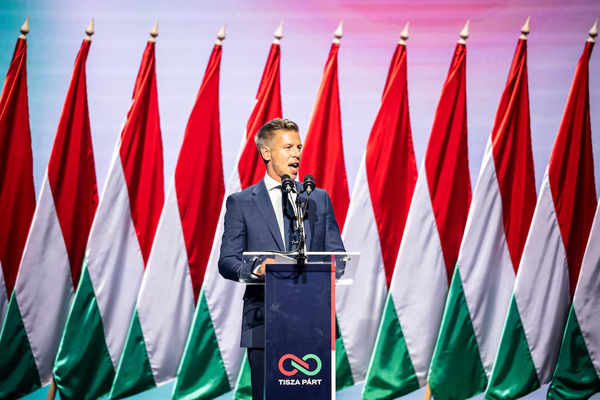
Hungary‘s opposition leader Peter Magyar said on Saturday his Tisza party will launch a “Hungarian New Deal” to revive the stagnating economy with massive investment and predictable policy if it wins elections next year.
Stagnant Economy
Magyar, whose centre-right party has a firm lead over the ruling Fidesz in most opinion polls, poses the biggest political challenge to nationalist Prime Minister Viktor Orban, who, after 15 years in power, finds himself struggling to boost the inflation-hit economy.
The risk of steep U.S. tariffs on EU imports also looms large over recovery prospects and Saturday’s announcement of 30% tariffs on the EU by President Donald Trump is bad news for the Central European country.
Magyar announced his Hungarian New Deal plan to supporters at his party’s congress in the western city of Nagykanizsa.
“We need economic growth, investments, and predictable financial and economic policy in Hungary,” Magyar said, adding that Tisza would crack down on corruption and buy back state assets that he said had been stolen over the past 15 years.
Tisza’s Tenets
The main pillars of Tisza’s plan will be a major healthcare reform with additional funding of 500 billion forints ($1.5 billion) annually, a large-scale rental flat and home construction programme, a modernisation of state railways using EU and national funds, and investments in energy efficiency for households and in education.
Magyar, a former government insider who burst into Hungarian politics last year, again pledged to unlock some 20 billion euros of suspended EU funds that Hungary has not received for years due to clashes between Brussels and Orban over a perceived erosion of democracy and corruption – accusations that Orban denies.
The parliamentary election is set to take place early next year, though no date has been set. In June parliament passed Orban’s 2026 election year budget, including steep tax cuts for families, a key demographic group for Fidesz.
“People are fed up with this regime. And Tisza is a kind of ‘collecting party’ which stood behind all this (discontent). People want change,” said Edit Piroska Borsi, a retired teacher at the congress.
($1 = 341.6200 forints)
(With inputs from Reuters)
Australia Rules Out Advance Troop Pledge In China–Taiwan Conflict
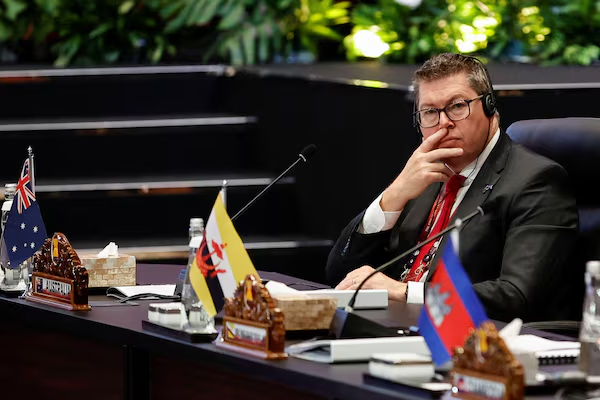
Australia will not commit troops in advance to any conflict, responded Defence Industry Minister Pat Conroy Sunday to the report that the Pentagon has pressed its ally to clarify what role it would play if the U.S. and China went to war over Taiwan.
Australia prioritises its sovereignty and “we don’t discuss hypotheticals”, Conroy said in an interview with the Australian Broadcasting Corporation.
“The decision to commit Australian troops to a conflict will be made by the government of the day, not in advance but by the government of the day,” he said.
The Financial Times reported on Saturday that Elbridge Colby, the U.S. undersecretary of defence for policy, has been pushing Australian and Japanese defence officials on what they would do in a Taiwan conflict, although the U.S. does not offer a blank cheque guarantee to defend Taiwan.
Colby posted on X that the Department of Defence is implementing President Donald Trump’s “America First” agenda of restoring deterrence, which includes “urging allies to step up their defence spending and other efforts related to our collective defence”.
China-Taiwan Conflict
China claims democratically governed Taiwan as its own and has not ruled out the use of force to bring Taiwan under its control.
Taiwan President Lai Ching-te rejects China’s sovereignty claims, saying only Taiwan’s people can decide their future.
Australia’s largest war-fighting exercise with the United States, involving 30,000 troops from 19 countries, opens on Sunday on Sydney Harbour.
Conroy said Australia was concerned about China’s military buildup of nuclear and conventional forces and wants a balanced Indo-Pacific region where no country dominates.
“China is seeking to secure a military base in the region and we are working very hard to be the primary security partner of choice for the region because we don’t think that’s a particularly optimal thing for Australia,” he said, referring to the Pacific Islands.
Security is expected to be on the agenda when Prime Minister Anthony Albanese meets China’s leaders this week. He arrived in Shanghai on Saturday for a six-day visit.
The Talisman Sabre exercise will span 6,500 km (4,000 miles), from Australia’s Indian Ocean territory of Christmas Island to the Coral Sea on Australia’s east coast.
Conroy said it was possible China’s navy would be watching the exercise to collect information, as it had done in the past.
The United States is Australia’s major security ally. Although Australia does not permit foreign bases, the U.S. military is expanding its rotational presence and fuel stores on Australian bases, which from 2027 will have U.S. Virginia submarines at port in Western Australia.
These would play a key role in supporting U.S. forces in any conflict over Taiwan, analysts say.
(With inputs from Reuters)
EU Warns Of Retaliation If US Imposes Tariff On Goods
The European Union on Saturday warned that it was prepared to retaliate in order to protect its interests if the United States imposed a 30% tariff on European goods starting August 1.
U.S. President Donald Trump’s latest salvo surprised the bloc, the United States’ largest trading partner, which had hoped to avoid an escalating trade war after intense negotiations and increasingly warm words from the White House.
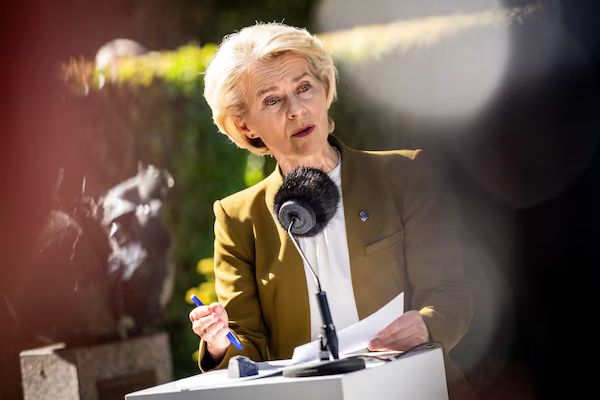
Ursula von der Leyen, head of the EU executive which handles trade policy for the 27 member states, said the bloc was ready to keep working towards an agreement before August 1 but was willing to stand firm.
“We will take all necessary steps to safeguard EU interests, including the adoption of proportionate countermeasures if required,” she said of possible retaliatory tariffs on U.S. goods entering Europe.
EU ambassadors will discuss next steps on Sunday, before trade ministers meet in Brussels on Monday for an extraordinary meeting.
They will need to decide whether to impose tariffs on 21 billion euros of U.S. imports in retaliation against separate U.S. tariffs against steel and aluminium or extend a suspension which lasts until the end of Monday.
The EU has so far held back from retaliating against the U.S., although it has readied two packages that could hit a combined 93 billion euros of U.S. goods
European capitals swiftly backed von der Leyen’s position.
German Economy Minister Katherina Reiche called for a “pragmatic outcome to the negotiations”.
Trump’s proposed tariffs “would hit European exporting companies hard. At the same time, they would also have a strong impact on the economy and consumers on the other side of the Atlantic,” she said.
French President Emmanuel Macron said on X that the European Commission needed more than ever to “assert the Union’s determination to defend European interests resolutely”.
Retaliation might need to include so-called anti-coercion instruments if Trump did not back down, Macron said.
The tool, drawn up during Trump’s first term and used against China, allows the EU to go beyond traditional tariffs on goods and impose restrictions on trade in services, if it deems that a country is using tariffs to force a change in policy.
Spain’s Economy Ministry backed further negotiations but added that Spain and others in the EU were ready to take “proportionate countermeasures if necessary”.
Trump has periodically railed against the European Union, saying in February it was “formed to screw the United States”.
His biggest grievance is the U.S. merchandise trade deficit with the EU, which in 2024 amounted to $235 billion, according to U.S. Census Bureau data. The EU has repeatedly pointed to a U.S. surplus in services, arguing it in part redresses the balance.
EU Retaliation
Combining goods, services and investment, the EU and the United States are each other’s largest trading partners by far.
The American Chamber of Commerce to the EU said in March the trade dispute could jeopardise $9.5 trillion of business in the world’s most important commercial relationship.
Bernd Lange, head of the European Parliament’s trade committee, said he was now convinced the first stage of countermeasures should come into force on Monday, followed quickly by the second package.
Trump has said he would mirror any retaliatory moves.
Still, Trump has repeatedly announced sweeping tariffs in recent months, only to row back or suspend them before his own self-imposed deadlines.
The expectation that he will again relent has led to increasingly muted responses in financial markets, which have recovered since plunging after his initial “Liberation Day” announcement of big global tariffs in April.
Three EU officials who spoke on condition of anonymity said they saw Trump’s latest threats as a negotiating ploy.
Carsten Brzeski, global head of macro at ING, said Trump’s move suggested that months of negotiations remained deadlocked and that the situation was inching towards a make-or-break moment for the transatlantic trade relationship.
“The EU will now have to decide whether to budge or to play hardball,” he said. “This will bring market volatility and even more uncertainty.”
Cyrus de la Rubia, chief economist at Hamburg Commercial Bank, noted that the brunt of the U.S. tariffs, if implemented, would be felt by U.S. consumers.
However, there would also be clear repercussions for the euro area economy, already struggling with weak growth.
The European Central Bank had used a 10% tariff on EU exports to the United States as the baseline in its latest economic projections, which put output growth in the euro area at 0.9% this year, 1.1% in 2026 and 1.3% in 2027.
It said a 20% U.S. tariff would curb growth by 1 percentage point over the same period and also pull down inflation to 1.8% in 2027 from 2.0% in the baseline scenario. It did not even offer an estimate for the possibility of a 30% tariff.
(With inputs from Reuters)
Over 80 Detained Across UK For Supporting Palestine Action
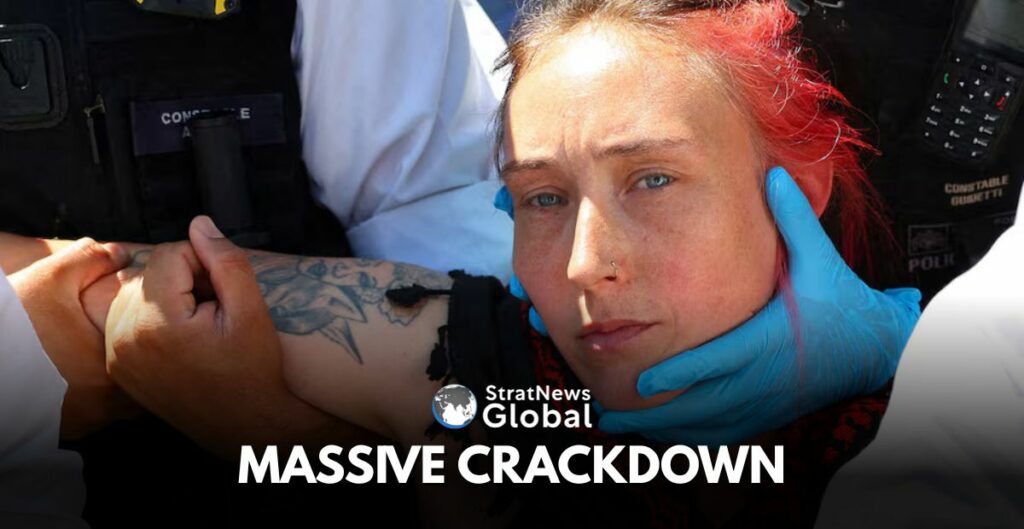
In a major crackdown, UK police on Saturday detained several supporters of pro-Palestinian group Palestine Action recently banned under anti-terror laws.
Police said they had arrested at least 41 people in London and 16 others in Manchester for showing support for the group Palestine Action. Campaign group Defend our Juries said 86 people had been arrested across the UK, with other protests held in Wales and Northern Ireland.
UK lawmakers proscribed the group under anti-terrorism legislation earlier this month after some of its members broke into a Royal Air Force base and damaged planes in protest against Britain’s support for Israel.
“Officers have made 41 arrests for showing support for a proscribed organisation. One person has been arrested for common assault,” London’s Metropolitan Police said in a statement on social media about the demonstration.
After a similar protest in London last week, police arrested 29 people.
Supporting Palestine Action
Before Saturday’s arrests in London, close to 50 protesters had gathered with placards saying “I oppose genocide. I support Palestine Action” near a statue of former South African President Nelson Mandela outside the UK parliament.
The International Court of Justice in the Hague is hearing a case brought by South Africa accusing Israel of genocide against Palestinians in the Gaza war, which began after Palestinian militant group Hamas attacked Israel in October 2023. Israel has repeatedly denied committing abuses.
The UK government’s decision to classify Palestine Action as a terrorist group places it in the same category as Hamas, al-Qaeda and ISIS. Membership now carries a prison sentence of up to 14 years.
Opponents of the ban say using anti-terrorism laws is inappropriate against a group accused mainly of damaging property rather than harming people, although some members have in the past been charged with violence in clashes with police.
Disruptive Behaviour
Palestine Action generally targeted Israeli and Israel-linked businesses in Britain such as defence company Elbit Systems, often spraying red paint, blocking entrances or damaging equipment.
In an unsuccessful court appeal against the ban, a lawyer for Palestine Action said the government ban was the first time Britain had proscribed a group which undertook this type of direct action.
(With inputs from Reuters)
U.S. Delegation’s Attempt To Promote Trump Deal In Congo Ends In Chaos
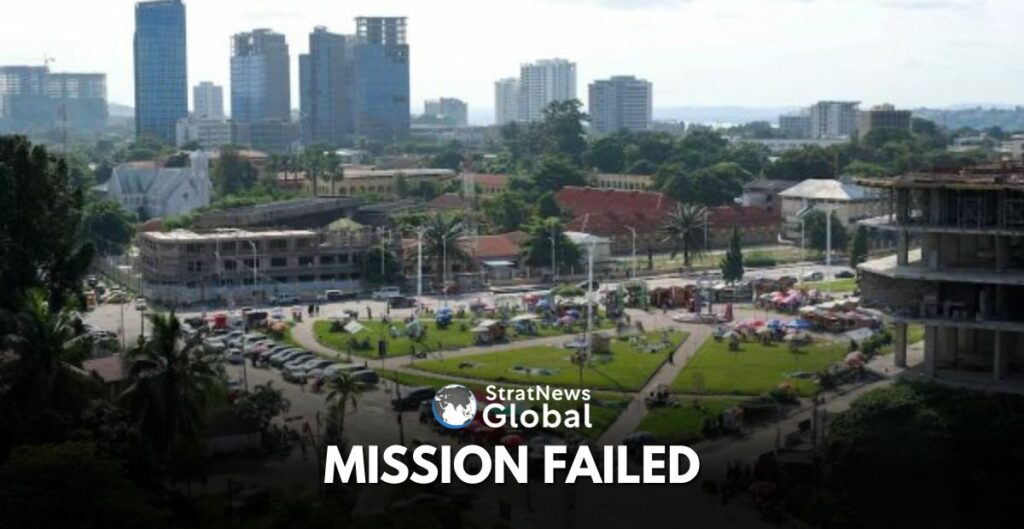
In March, an Israeli-American businessman, a former U.S. State Department official, and a decorated Green Beret arrived in the Democratic Republic of Congo to deliver a message to President Felix Tshisekedi on behalf of the Trump administration. Just two days later, the group abruptly left the country, fearing arrest.
The three envoys had come with an offer from Washington: release three American prisoners on death row and, in return, President Donald Trump will accept your minerals-for-security proposal.
The trip started well with a police motorcycle escort from the airport, but a frosty first meeting with Tshisekedi’s security adviser, some ill-advised late-night target practice by some of the envoys and a Congolese general with an axe to grind put paid to the mission.
The story of the ill-fated venture, which has not previously been reported, provides a glimpse of how the Trump administration is prepared to work through unconventional channels in pursuit of deals to bring Americans home, a top priority for the president.
“We want to work with folks who have the right connections, but more importantly, have the positive relationships that can help influence a decision-maker’s thinking … so it’s not uncommon for us to do that,” Dustin Stewart, Trump’s deputy special envoy for hostage affairs, who was involved in discussions on the initiative, commented.
“We thought they had enough sway to talk to the right people. Obviously, that proved incorrect,” he said.
“Trump gave every indication right from the beginning that he was going to be purely transactional,” said Ebenezer Obadare, a senior fellow at the Council on Foreign Relations. “He’s thrown out the old playbook. He’s not going through normal diplomatic channels.”
Americans On Death Row
It all started in January this year when Israeli-American businessman Moti Kahana met the Congolese president on the sidelines of the World Economic Forum in Davos to warn him about a coup plot purportedly involving Israelis.
Kahana handed over the names of the alleged plotters to Tshisekedi in an envelope, according to the businessman and two other people involved.
At the same time, negotiations were intensifying over a deal in which the United States would secure greater access to Congo’s minerals in return for help defending the country from Rwanda-backed insurgents rampaging across its eastern provinces.
To get the ball rolling, Kahana met with State Department officials in Washington in March. The officials thought it worth empowering a team led by Kahana to discuss U.S. diplomatic goals and the release of the three Americans with Tshisekedi, the businessman and the State Department’s Stewart said.
“I don’t think anybody had high hopes that they were going to be able to sort of go to Kinshasa and come back with those three,” he said. “But, again, I think reinforcing the message that it was important to find a positive resolution, it helped us.”
Unlikely Cast
Kahana had a track record of extracting people from dangerous places. His exploits included rescuing about 200 Jewish orphans from Ukraine in 2022 and the last Jew from Afghanistan when the Taliban took control in 2021.
“He generally sees himself as the guy saving the day,” said Sapp. “Now, is he doing it for free? In the end, no.”
The other was Stuart Seldowitz, a business associate of Kahana’s and former U.S. diplomat who was charged with a hate crime for verbally abusing a Halal hot dog vendor in New York in 2023.
Seldowitz said the charges were dismissed after he completed a 26-week anti-bias course.
On their first night in Kinshasa, the trio had expected a discussion over dinner with Tshisekedi’s security adviser, Desire-Cashmir Kolongele Eberande. But they said he was not in a welcoming mood when he finally saw them at 1 a.m.
“We were supposed to have a meeting with the president the next day,” Sapp said. “In retrospect, I’m not sure we had a firm meeting with him. I think it was tentative, and they were going to sniff us out. And then we didn’t pass the sniff test.”
Sapp said Eberande was suspicious about whether the trio were actually authorised to convey a message from Trump.
Seeking Help From Washington
Kahana reached out to Washington for help. The next day, Stewart sent an email to Eberande confirming the State Department knew of the visitors, and Eberande begrudgingly accepted their credentials, Kahana said.
“Per our previous exchange, this is to confirm that I am aware of the travel of Mr. Seldowitz and Mr. Kahana as it pertains to the status of the three Americans in custody,” Stewart wrote in the email.
That evening, while the trio waited to see if President Tshisekedi would meet them, they were invited for dinner by an Israeli security contractor on a compound within an army base in Kinshasa.
Another guest was an Israeli-French arms dealer who had been doing business in Congo for decades and helped set up Kahana’s first meeting with Tshisekedi in Davos, according to the arms dealer, Kahana and Kinuani Kamitatu Massamba, a Congolese politician close to Tshisekedi.
After dinner, the host invited the guests for a shooting session at the compound’s range. Kahana and Sapp agreed to take part.
The next morning, Kahana received a call from Massamba, who said Congo’s intelligence services were upset about the late-night gunfire.
Massamba said the shooting had raised alarm about a possible attack on the presidential palace.
It was at that point that things became alarming for the Americans.
‘Good To Be American’
General Franck Ntumba, head of the presidential guard, showed up at their hotel, demanding they surrender their passports and visit his headquarters.
“He didn’t look like he wanted to be screwed around with,” Seldowitz said.
Ntumba had been one of the people Kahana named as an alleged coup plotter to President Tshisekedi in Davos.
Seldowitz called his old acquaintance the U.S. ambassador.
A large contingent of embassy staff soon showed up at the hotel to protect the Americans, the Israeli-French arms dealer said.
“I thought, wow, it’s good to be American in this situation. It was like a movie, believe me,” he said.
Ntumba eventually left, but warned the trio that things would not end there. An American security officer at the embassy gave them three options: stay in their hotel rooms and hope no one kicks down the doors, move to another hotel, or leave Congo immediately.
“And I said, well, I like the third option the best,” said Kahana.
The embassy sent a car with diplomatic plates to take them to the airport. The trio arrived as an Air France flight for Paris was boarding.
But at passport control, they were taken into a room and asked for their phones. Seldowitz called the embassy again. Air France staff came and the three Americans were released.
Mission Not Achieved
While the men’s mission did not go as planned, progress has since been made on their initial goals. Massamba, Stewart and Kahana all said it helped signal that Trump was serious about striking a deal involving the American prisoners.
In April, Tshisekedi commuted the sentences of the three Americans convicted of coup-plotting to life in prison. Soon afterwards, Trump’s senior Africa adviser, Massad Boulos, visited Congo and the three were transferred to the United States, where they were charged with conspiring to carry out a coup on Congo.
The men – Marcel Malanga, Tyler Thompson and Benjamin Zalman-Polun – are currently in custody after pleading not guilty. Their lawyers did not respond to requests for comment about the mission to free them.
“As you’ve seen, the three were pardoned and released,” the State Department’s Stewart said. “That was the outcome that we were looking for.”
And in June, Congo and Rwanda signed a U.S.-brokered peace deal in Washington to end fighting in the mineral-rich east.
“We’re getting, for the United States, a lot of the mineral rights from the Congo as part of it,” said Trump.
(With inputs from Reuters)