

Support us by contributing to StratNewsGlobal on the following UPI ID
ultramodern@hdfcbank

Strategic affairs is our game, South Asia and beyond our playground. Put together by an experienced team led by Nitin A. Gokhale. Our focus is on strategic affairs, foreign policy and international relations, with higher quality reportage, analysis and commentary with new tie-ups across the South Asian region.
You can support our endeavours. Visit us at www.stratnewsglobal.com and follow us on YouTube, Twitter, Facebook and Instagram.
र 500 per month
र 1000 per month
र 5000 per year
र 10000 per year
Donate an amount of your choice
र 500 per month
Donate र 500 per month

र 1000 per month
Donate र 1000 per month
र 5000 per year
Donate र 5,000 per year
र 10000 per year
Donate र 10,000 per year
Donate an amount of your choice
Donate an amount of your choice





Kremlin Says US Weapons And Ammunition Deliveries To Ukraine Continuing
The Kremlin stated on Monday that United States President Donald Trump’s comments about supplying Patriot air defence systems to Ukraine highlight the broader reality that American weapons and ammunition shipments to Kyiv have been ongoing and continue to this day.
Trump did not say how many Patriots he plans to send to Ukraine, but he said the United States would be reimbursed for their cost by the European Union.
“Now it seems that these supplies will be paid for by Europe, some will be paid for, some will not,” Kremlin spokesman Dmitry Peskov told reporters when asked about Trump’s words.
“The fact remains that the supply of weapons, ammunition, and military equipment from the United States continued and continues to Ukraine.”
Patriots To Ukraine
Trump said on Sunday he would send Patriot air defence missiles to Ukraine because they were needed to repel intensifying Russian attacks.
The U.S. President said that the weapons are essential for Ukraine’s protection, noting that Russian President Vladimir Putin “talks nice but then he bombs everybody in the evening,” referring to the ongoing Russian strikes against Ukrainian cities.
He is expected to announce a new plan to arm Ukraine with offensive weapons in a sharp departure from his earlier stance, Axios reported on Sunday, citing two sources familiar with the matter.
Reuters could not immediately verify the report.
The U.S. president has grown increasingly disenchanted with Putin because the Russian leader has resisted Trump’s attempts to negotiate a ceasefire between Ukraine and Russia.
Patriot systems are among the most advanced surface-to-air missile platforms and could significantly bolster Ukraine’s ability to intercept incoming threats.
Peskov said that Kyiv was obviously in no hurry on the third round of peace talks, adding that Russia was ready for them and awaiting clarity on the timing from Ukraine.
(With inputs from Reuters)
Spain Detains Eight After Clashes Between Far-Right Groups And Migrants
Spanish authorities have arrested eight individuals following three consecutive nights of violent confrontations between far-right groups and North African migrants in a southeastern town, the government announced on Monday.
In one of Spain’s worst such flare-ups of recent times, several dozen youths, some hooded, hurled glass bottles and other objects at riot police in Torre Pacheco on Sunday night, journalists reported.
The trouble stemmed from an attack last week on a man in his late 60s that left him injured and recovering at home.
The victim told LaSexta broadcaster last week that he had been on a walk in a cemetery garden when two men, speaking in a language he did not understand, ran towards him, one in an agitated state.
“He threw me to the ground and hit me. It all happened very quickly. I think they hit me and then left,” said the man, whom LaSexta and other media identified as Domingo Tomas.
Authorities said they arrested two foreigners suspected of being involved in the assault though they were still looking for the main perpetrator, who had been identified.
The other six – five Spaniards and one person of North African origin – were arrested for assault, public disorder, hate crimes or damage to property, the Interior Ministry said.
Migrants, many of them second-generation, make up about a third of Torre Pacheco’s population of about 40,000.
The area around the town also hosts large numbers of migrants who work as day labourers in agriculture, one of the pillars of the economy in the Murcia region.
“I ask the migrant community not to leave their homes and not to confront rioters, because confrontation achieves nothing and ultimately makes us all afraid,” local mayor Pedro Angel Roca told national broadcaster TVE.
‘We Want Peace’
Speaking to radio station Cadena Ser, Interior Minister Fernando Grande-Marlaska attributed the violence to anti-immigration rhetoric from far-right groups and political parties such as Vox, which he said unjustifiably links immigration to crime.
The violence in Torre Pacheco was organised and fomented by calls on social media, the minister added.
Vox leader Santiago Abascal denied any responsibility for the incidents and said the goverment’s migration policies were to blame.
Spain has been open to migration and its economic benefits, even as other European governments have tightened borders. But debate has reignited, led by Vox, as plans to relocate unaccompanied underage migrants from the Canary Islands to the rest of Spain have been confirmed in recent weeks.
“Spain is not a country that hunts down immigrants, and if we have to take to the streets, it is to defend the rights of thousands of people who are completely trapped and distressed by this hunt for immigrants,” Migration Minister Elma Saiz told El Pais newspaper.
Abdelali, a North African migrant who lives in Torre Pacheco and declined to give his surname, said he was afraid of riding his scooter for fear of being hit by bottles from rioters.
“We want peace. That’s what we want, we don’t want anything else,” he said on Sunday.
In 2000, violent anti-immigration protests broke out in the Almeria town of El Ejido in southern Spain after three Spanish citizens were killed by Moroccan migrants.
(With inputs from Reuters)
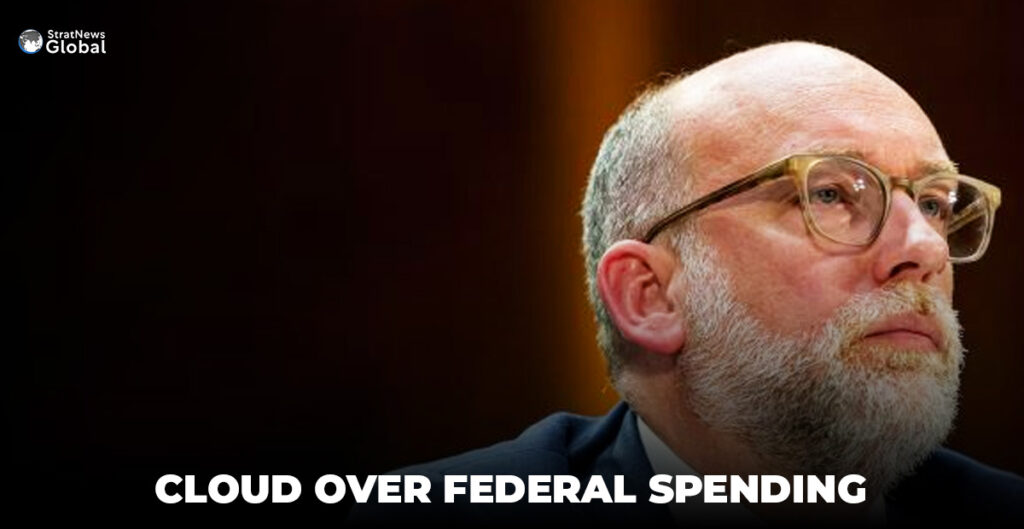
Trump Administration Withholds Spending Details From Congress
Roughly 300 students in Cleveland Heights, Ohio, could see disruptions to after-school tutoring and English-language learning programs unless an $860,000 federal grant is released by President Donald Trump’s administration in time for the upcoming school year. Lawmakers say the administration has kept Congress in the dark on key spending decisions.
This funding is a part of more than $6 billion in school funds held up on July 1 for school programs nationwide, leaving superintendents including Cleveland Heights’ Elizabeth Kirby in a budget bind. “We have not received any information about whether or not this money is coming,” she said.
The lack of clarity follows a broader pattern in which the Trump administration has provided less detail on how it plans to spend taxpayer dollars, drawing criticism from some Republicans in Congress.
“Delayed budgets, missing details, and omitted spend plans make the federal budget less transparent and less accountable to the people and their elected representatives,” Republican Senator Susan Collins of Maine, who chairs the Senate Appropriations Committee told Russell Vought, director of the U.S. Office of Management and Budget, at a June 25 hearing.
The OMB and the White House did not respond to a request for comment. In previous statements, the OMB said the held-up education funds are a part of an “ongoing programmatic review” due to initial findings of grant programs being “grossly misused to subsidize a radical leftwing agenda.”
‘Where The Money Is Going?’
Budget experts say this unwillingness to share a broad range of spending details skirts funding law, complicates the budget process going forward, and breaks from precedent aimed at increasing spending transparency.
“At this point in the year, there has never been less reliable information available to either the public or Congress about actual agency spending than at any time since the modern budget process was established in 1974,” said David Taylor, a former leader of President George H.W. Bush’s White House budget office and chief budget aide to Senate Majority Leader Bob Dole, who now runs the research firm Federal Budget IQ.
The U.S. Constitution gave Congress the power of the federal purse to decide how to allocate taxpayer money for the executive branch to disburse throughout its agencies.
But since lawmakers passed a full-year stopgap funding bill in March — signed by Trump — they have been left with questions about where the money is going because a wide swath of federal agencies across the government either failed to share spending plans required by the stopgap bill, or sent incomplete data, according to U.S. lawmakers.
“This administration has — more than any other in my time in office — refused to share basic information with this committee,” said Democratic Senator Patty Murray, a 32-year veteran of the chamber and her party’s top appropriator.
This standoff on federal funding powers will be tested again this week as the Senate considers the administration’s $9 billion request to cancel foreign aid and public media, which could undo the funding passed on a bipartisan basis in March with a simple Republican majority.
The Republican-controlled Congress early this month narrowly passed Trump’s sweeping tax-cut and spending bill, overriding some Republicans’ objections about the heavy toll it was expected to take on the nation’s $36.2 trillion in debt.
‘Need More Information’
The administration’s reluctance to share detailed spending plans has placed Cabinet secretaries in the hot seat on Capitol Hill for the last several weeks, as the funding law required these details by the end of April.
“We need more information than we have gotten,” Republican House of Representatives Appropriations Chair Tom Cole of Oklahoma told Defence Secretary Pete Hegseth in June, more than a month after his department’s spending plan was required.
“I’m doing the best I can,” FBI Director Kash Patel said at his May hearing, pointing the finger at other parts of the administration when hounded about the lack of spending details.
“We have a lot of irons in the fire … as we try to build up staff,” explained Interior Secretary Doug Burgum when pressed by Democratic Senator Jeff Merkley of Oregon about the lack of clarity on conservation projects.
Even the agency plans that were submitted had notable gaps. There were 530 asterisks in the Health and Human Services Department’s plan where specific funding amounts for programs should have been listed, according to Murray and Representative Rosa DeLauro, the top House appropriations Democrat.
“The fact that appropriators are discussing these issues in open hearings means that multiple attempts to get this information behind the scenes has failed,” said Joe Carlile, a former Democratic budget official.
Transparency Divide
Trump’s focus on slashing the federal government also has made his administration less concerned about congressional queries, said Cerin Lindgrensavage, counsel at Protect Democracy, a group which is suing the administration over removal of online spending details.
“Usually, administration officials would be wary of angering the appropriations committee for the same reason it’s a bad idea to bite the hand that feeds you, but now, Congress is negotiating against an executive branch that seems happy to cut more spending,” Lindgrensavage said.
Veterans Affairs Secretary Doug Collins cited White House budget office guidance and a 1983 Supreme Court ruling over congressional restraints on emergency powers to defend how his department notified Congress to “reprogram” money away from initiatives the administration deemed wasteful.
Congressional leaders tasked with overseeing VA funding demanded the department request approval to redirect money.
“The way this secretary, and this administration, has interacted with Congress on moving hundreds of millions of dollars from one account to the next is unprecedented,” said Democratic Representative Debbie Wasserman Schultz of Florida.
(With inputs from Reuters)
Indonesia Reduces Search Effort For 17 Missing After Bali Ferry Sinking
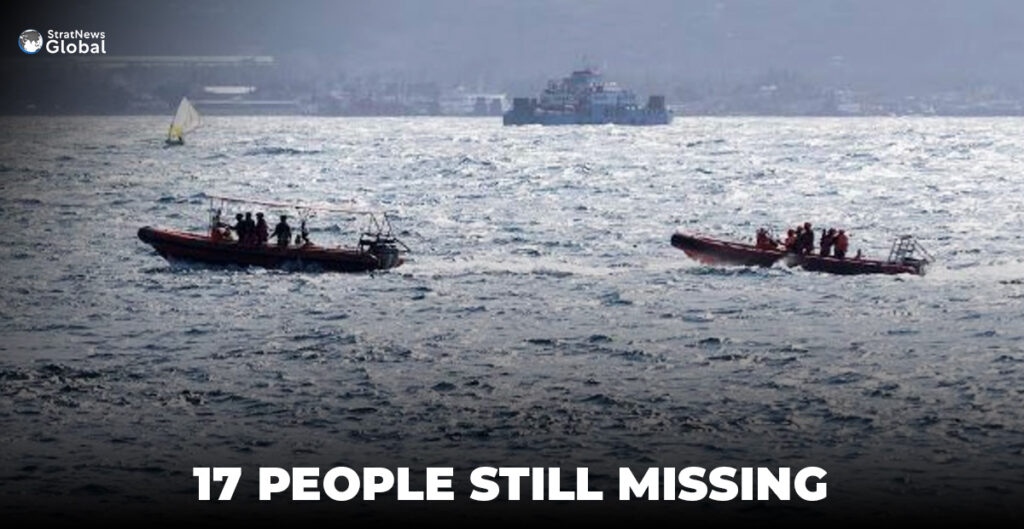
Indonesian rescue teams on Monday reduced the scale of their search for 17 people still unaccounted for after a ferry sank near the island of Bali earlier this month, an official confirmed.
The ferry, KMP Tunu Pratama Jaya, was carrying 65 people when it sank almost 30 minutes after leaving East Java province’s Banyuwangi port to Bali on July 3.
The ferry was bound for the holiday island of Bali on Wednesday night.
As of Monday afternoon, 18 people were confirmed dead with 30 survivors, Ribut Eko Suyatno, an official at Indonesia’s search and rescue agency, said.
Twenty-nine passengers were rescued on Thursday before the search was called off due to poor visibility.
Rescue operations resumed on Friday in the waters of Bali Strait involving ships, helicopters, and hundreds of rescuers, Suyatno said.
All passengers were Indonesian except for one Malaysian who was among the fatalities, local media reported.
Search For The Missing
The national-level search, which lasted for around two weeks and involved around 500 people, including rescuers, police, and military personnel, was officially called off on Monday.
A provincial-level team will continue to search for the missing people for the next seven days, Suyatno said.
“After today, the East Java search agency will search for the missing. Around 100 personnel will be involved,” Suyatno said.
The rescuers over the weekend located the wreck of KMP Tunu Pratama Jaya which was also carrying 22 vehicles.
Officials are now preparing to recover the wreck, Suyatno added.
Based on the preliminary reports by Indonesia’s Transportation Safety Committee, the ferry sank because seawater entered the engine room after its door opened, local media reported.
The ferry began tilting and then sinking, the committee said, adding that it was still investigating the main cause of the incident.
Ferries are a common mode of transportation in Indonesia, a nation of over 17,000 islands, and lax safety standards allow vessels to be overcrowded with inadequate life-saving equipment.
(With inputs from Reuters)
Resolving Border Tensions Crucial For Mutual Trust, Jaishankar Tells China’s Wang Yi
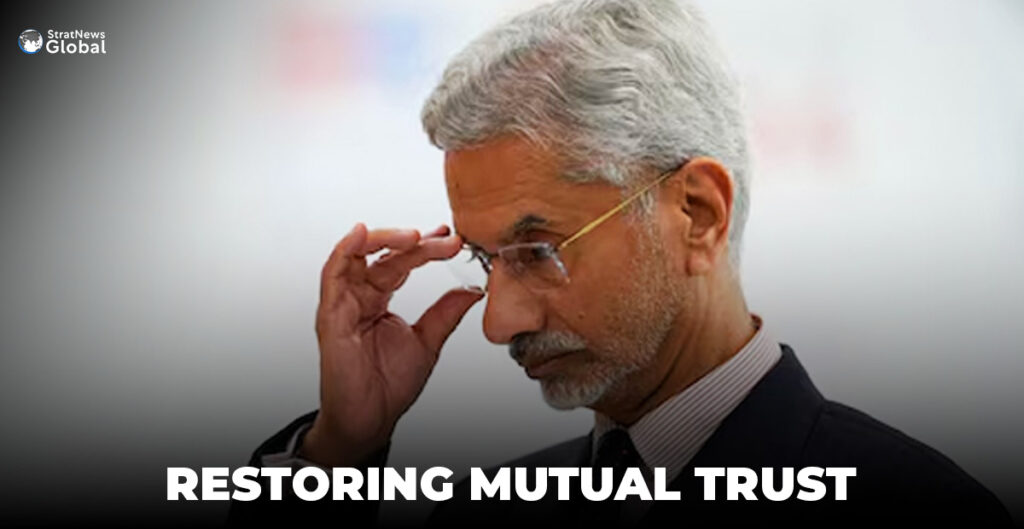
External Affairs Minister Subrahmanyam Jaishankar told his Chinese counterpart Wang Yi on Monday that resolving border friction and maintaining peace are essential for building mutual trust between India and China.
The neighbours have made “good progress” over the last nine months for the normalisation of relations, he said, adding that it was key for restrictive trade measures and roadblocks to be avoided.
During his opening remarks at the meeting with Chinese Foreign Minister Wang Yi, Jaishankar noted that significant progress had been made over the past nine months in efforts to normalise bilateral ties.
He attributed this advancement to the resolution of certain border frictions and the ability of both nations to maintain peace and stability in those sensitive areas.
Restoring Mutual Trust
According to Jaishankar, this calm along the Line of Actual Control forms the foundation for restoring strategic trust and enabling the smooth development of overall India-China relations.
He emphasised that further steps were needed, particularly in addressing unresolved border issues and moving towards comprehensive de-escalation.
As two neighbouring powers and major global economies, Jaishankar highlighted the multifaceted nature of the bilateral relationship.
He pointed out that steps aimed at resuming people-to-people exchanges could help foster mutually beneficial cooperation.
In this context, he also stressed the importance of removing barriers to trade and avoiding restrictive economic measures. These, he said, would be discussed in greater detail during the visit.
75th Anniversary Of Diplomatic Ties
Jaishankar also acknowledged the significance of the year 2025, which marks the 75th anniversary of diplomatic relations between India and China.
He expressed appreciation for the resumption of the Kailash Manasarovar Yatra after a five-year hiatus and thanked the Chinese authorities for facilitating it.
Earlier in the day, Jaishankar held talks with Chinese Vice President Han Zheng and conveyed India’s support for China’s ongoing presidency of the Shanghai Cooperation Organisation (SCO).
This visit marks Jaishankar’s first trip to China since diplomatic ties deteriorated following the deadly 2020 Galwan Valley clash. His visit also follows recent high-level engagements, including those of Defence Minister Rajnath Singh and National Security Advisor Ajit Doval, who were in China in June for SCO-related meetings.
(With inputs from Reuters and IBNS)
Air India Crash Probe Ongoing, Too Early For Conclusions: CEO
Following the release of a preliminary report by investigators, Air India CEO Campbell Wilson said in an internal memo on Monday that the probe into last month’s deadly crash in Ahmedabad remains far from complete and cautioned against drawing any premature conclusions.
The memo, reviewed by Reuters, comes after the report depicted confusion in the cockpit shortly before the crash of the Boeing Dreamliner that killed 260 people. It said the plane’s engine fuel cutoff switches flipped almost simultaneously and starved the engines of fuel.
“The release of the preliminary report marked the point at which we, along with the world, began receiving additional details about what took place. Unsurprisingly, it provided both greater clarity and opened additional questions,” the memo said.
Wilson added: “The preliminary report identified no cause nor made any recommendations, so I urge everyone to avoid drawing premature conclusions as the investigation is far from over.”
AAIB Preliminary Report
The Boeing 787 Dreamliner bound for London from the Indian city of Ahmedabad began to lose thrust and sink shortly after takeoff, according to the report released by India’s Aircraft Accident Investigation Bureau (AAIB).
The memo said the preliminary report found no mechanical or maintenance faults and that all required maintenance had been carried out.
The preliminary report, released on Saturday, suggested no immediate action for Boeing or GE, whose engines were fitted on to the aircraft.
The AAIB, an office under India’s civil aviation ministry, is leading the probe into the crash, which killed all but one of the 242 people on board and 19 others on the ground.
Air India has come under heightened scrutiny on multiple fronts following the crash.
On July 4, the European Union Aviation Safety Agency said it would investigate budget unit Air India Express, after a Reuters report revealed the airline failed to promptly replace engine parts on an Airbus A320 as mandated, and falsified records to indicate compliance.
ALPA India, which represents Indian pilots at the Montreal-based International Federation of Air Line Pilots’ Associations, rejected the presumption of pilot error in the Ahmedabad crash and called for a “fair, fact-based inquiry.”
“The pilots’ body must now be made part of the probe, at least as observers,” ALPA India President Sam Thomas told Reuters on Sunday.
(With inputs from Reuters)
Iran Vows Response If UN Sanctions Are Reimposed Over Nuclear Programme
Iran will respond to any reimposition of United Nations (UN) sanctions over its nuclear programme, the spokesperson of the Iranian foreign ministry said on Monday, without specifying potential actions.
A French diplomatic source told Reuters last week that European powers would have to restore U.N. sanctions on Iran under the so-called “snapback mechanism” if there were no nuclear deal that guaranteed European security interests.
The “snapback mechanism” is a process that would reimpose U.N. sanctions on Tehran under a 2015 nuclear deal that lifted the measures in return for restrictions on Iran’s nuclear programme.
“The threat to use the snapback mechanism lacks legal and political basis and will be met with an appropriate and proportionate response from the Islamic Republic of Iran,” Foreign Ministry spokesperson Esmaeil Baghaei told a press conference, without giving further details.
JCPOA ‘Violations’
The 2015 deal with Britain, Germany, France, the U.S., Russia and China – known as the Joint Comprehensive Plan of Action (JCPOA) – states that if the parties cannot resolve accusations of “significant non-performance” by Iran, the “snapback mechanism” process can be triggered by the 15-member U.N. Security Council.
“The European parties, who are constantly trying to use this possibility as a tool, have themselves committed gross and fundamental violations of their obligations under the JCPOA,” Baghaei said.
“They have failed to fulfil the duties they had undertaken under the JCPOA, so they have no legal or moral standing to resort to this mechanism.”
Western countries accuse Iran of plotting to build a nuclear weapon, which Tehran denies.
The United States pulled out of the deal in 2018 under the first administration of President Donald Trump, who called the agreement “weak”.
Trump, whose second presidency began in January, has urged Tehran to return to nuclear negotiations on a new deal after a ceasefire was reached last month that ended a 12-day air war between Iran and Israel that destabilised the Middle East.
When asked if Iranian Foreign Minister Abbas Araqchi would meet with Trump’s Middle East envoy, Steve Witkoff, Baghaei said no date or location had been set for resuming the U.S.-Iran nuclear talks.
(With inputs from Reuters)
Australia Launches First HIMARS Rocket In Joint War Games With US
For the first time, Australia’s army fired a truck-mounted long-range rocket system on Monday during joint war games with U.S. and Singaporean forces — a key move as the system gains strategic importance among U.S. allies in the Indo-Pacific.
Armoured trucks with HIMARS – High Mobility Artillery Rocket Systems that can reach 400 km (250 miles) – are in high demand in the Ukraine conflict and are also being acquired by U.S. allies in the Indo-Pacific, including Australia, which is reshaping its forces to respond to China’s military build-up.
‘Talisman Sabre’
On the first day of Australia’s largest war games, “Talisman Sabre”, the U.S., Australia, Japan, France, South Korea and Singapore held a live-fire exercise in northern Queensland involving U.S. F-35B fighter jets and land-based long-range strike rockets and missiles.
Up to 40,000 troops from 19 nations are taking part in Talisman Sabre, across thousands of kilometres from Australia’s Indian Ocean territory of Christmas Island to the Coral Sea on Australia’s east coast.
Australian Army Brigadier Nick Wilson, director general of the combined live-fire exercise, said it was the first time Australia, Singapore and the United States had fired HIMARS together, and the first firing by Australia on home soil.
“HIMARS will be utilised in conjunction with a number of other weapon platforms … to ensure we have a strategy of denial for security, peace and stability in the Indo-Pacific,” he told reporters on Monday.
The joint exercise at Shoalwater Bay in north Queensland was watched by Australian Governor General Sam Mostyn and Chief of Defence Admiral David Johnston.
Missile Deal Milestone
Australia has previously said that army regiments with HIMARS can be transported to neighbouring island states with defence agreements to protect its northern approaches in a conflict.
Lockheed Martin delivered the first two of 42 HIMARS launcher vehicles ordered by Australia in April.
Australia has said it will spend A$74 billion ($49 billion) on missiles over the next decade, including a new domestic manufacturing capability.
U.S. Army Lieutenant General Joel Vowell, deputy commanding general for the Pacific, said on Sunday the U.S. needed to work with partners in the Indo-Pacific, and that Talisman Sabre was “a deterrent mechanism because our ultimate goal is no war”.
(With inputs from Reuters)
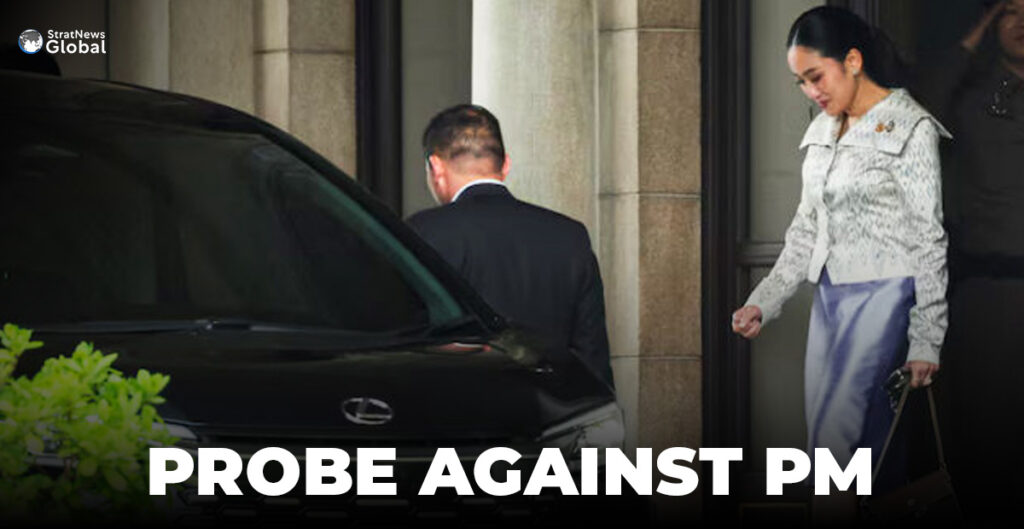
Ethics Investigation Launched Against Thai PM Over Cambodia Call
Thailand’s anti-corruption agency has launched an investigation into suspended Prime Minister Paetongtarn Shinawatra over alleged ethics violations, following a leaked phone conversation with Cambodia’s former leader Hun Sen, an official and local media reported on Monday.
The investigation will be another blow to the beleaguered government of 38-year-old Paetongtarn, Thailand’s youngest premier, who the Constitutional Court suspended from duty earlier this month over the same issue.
Leaked Call
The leaked June 15 call, during which Paetongtarn appeared to kowtow before Hun Sen and criticised a Thai army commander, triggered a major backlash at home, with allegations she had undermined Thailand’s integrity and sovereignty amid a heated territorial dispute with Cambodia.
Paetongtarn has since seen protests calling for her resignation and the exit from her coalition of its second-largest party, leaving her government with a razor-thin majority.
“The commission has set up an investigation panel. There is no timeframe,” said an official from the National Anti-Corruption Commission, who declined to be named because they were not authorised to speak publicly about the matter.
The body has a broad remit to probe allegations of offences by state officials beyond graft. Multiple Thai media outlets on Monday reported it had decided to investigate Pateongtarn.
The NACC secretary-general Sarote Phuengrampan told reporters he was not aware of the investigation or any decision by commissioners.
Deep Rift In Thai Politics
The complaint came from 36 senators who also petitioned the Constitutional Court alleging Paetongtarn, the daughter of politically influential billionaire Thaksin Shinawatra, had violated ethical standards and intentionally abused her power. She is suspended from duty until a verdict is delivered.
Paetongtarn has apologised for the call and insisted she was trying to find a peaceful solution to an escalating row with Cambodia, which saw a troop buildup on both sides of their border.
Paetongtarn’s battles after only 10 months in office underline a deep rift in Thailand between the Shinawatra political dynasty and its rivals among a conservative establishment backed by the army, a long-running power struggle that has seen two coups and the fall of multiple parties and prime ministers by court orders.
(With inputs from Reuters)
US Congress Set To Advance Key Crypto Bills This Week
The cryptocurrency sector is set to move a step closer to mainstream adoption this week, as several industry-friendly bills make headway in the US Congress, potentially paving the way for deeper integration of digital assets into traditional financial systems.
The House of Representatives is set to pass a series of crypto-related bills in a week which the Republican majority has dubbed “crypto week”. The most notable is a bill that would establish a regulatory framework for stablecoins and is likely to advance to President Donald Trump’s desk.
That bill — and another the House is considering that would define when a crypto token is a commodity — is a huge win for the crypto industry, which has been pushing for federal legislation for years and poured money into last year’s elections in order to promote pro-crypto candidates.
Stablecoins
“Historically, when lawmakers advance industry-backed frameworks, institutional sentiment strengthens. We expect capital that was previously sidelined due to regulatory uncertainty to re-enter,” said Jag Kooner, head of derivatives at crypto exchange Bitfinex.
“Crypto week” also comes as bitcoin has scaled record highs in recent days as investors dive back into risk assets on the back of tariff-related news, as well as expectations that legislation could potentially unlock capital in the crypto space.
The big ticket item the House is set to vote on this week is a bill that would create a set of federal requirements for stablecoins.
Stablecoins, a type of cryptocurrency designed to maintain a constant value, usually a 1:1 dollar peg, are commonly used by crypto traders to move funds between tokens. Their use has grown rapidly in recent years, and proponents say they could be used to send payments instantly.
GENIUS Act
The bill, dubbed the GENIUS Act, received bipartisan support in the Senate, with several Democrats joining most Republicans to back the proposed federal rules. It is expected to pass the House and would then head to Trump, who has said he will sign it into law.
The bill would require tokens to be backed by liquid assets – such as US dollars and short-term Treasury bills – and for issuers to disclose publicly the composition of their reserves on a monthly basis.
Crypto proponents say those rules could legitimize stablecoins, making banks, retailers and consumers more comfortable with using them to transfer funds.
Ahead of the bill’s final passage, many companies across sectors are already considering how they might incorporate stablecoins into their business, said Julia Demidova, head of digital currencies product and strategy at FIS, a financial technology solutions provider.
“I think everyone is realizing, look, this is moving forward and they need to have a stablecoin strategy,” she said. “They need to think how banks themselves will position against some of these novel, new, emerging fintech-issued stablecoins as well.”
Opposition To GENIUS Act, CLARITY Act
Still, many Democrats have argued that the GENIUS Act would not prevent big tech companies from issuing their own private stablecoins, and have called for stronger anti-money laundering protections and prohibitions on foreign stablecoin issuers.
Many Democrats fiercely oppose both the GENIUS Act and the CLARITY Act, arguing that they have too few consumer protections and would be a giveaway to Trump’s own personal crypto ventures by enabling softer-touch regulation.
Democratic members are expected to offer several amendments to both the GENIUS Act and the CLARITY Act on the House floor next week, according to a source familiar with the matter, but it is unclear whether any of them will be considered.
The House will also vote next week on a bill that would prohibit the US from issuing a central bank digital currency, which Republicans say violate Americans’ privacy. The bill has not been considered in the Senate and the Federal Reserve has not indicated a desire to develop a central bank digital currency.
Market Structure
The House this week is also expected to pass a bill that aims to develop a regulatory regime for cryptocurrencies and would expand the Commodity Futures Trading Commission’s oversight of the digital asset industry and is backed by the industry.
If signed into law, the bill would define when a cryptocurrency is a security or a commodity and clarify the Securities and Exchange Commission’s jurisdiction over the sector, something crypto companies heavily disputed during the Biden administration. That could help crypto companies avoid the oversight of the SEC, which under the Biden administration sued a number of crypto exchanges for flouting its rules.
Crypto companies have argued that most crypto tokens should be classified as commodities, rather than securities, which would enable platforms to more easily offer those tokens to their customers.
That bill, called the CLARITY Act, has yet to be considered in the Senate, where it would need to pass before heading to Trump for final approval.
Trump Seeking Overhaul
Trump has sought to overhaul US cryptocurrency policies after courting cash from the industry during his presidential campaign. The sector spent more than $119 million backing pro-crypto congressional candidates in last year’s elections.
Trump’s crypto ventures include a meme coin called $TRUMP, launched in January, and a business called World Liberty Financial, a crypto company owned partly by the president.
The White House has said there are no conflicts of interest and that Trump’s assets are in a trust managed by his children.
(With inputs from Reuters)