

Support us by contributing to StratNewsGlobal on the following UPI ID
ultramodern@hdfcbank

Strategic affairs is our game, South Asia and beyond our playground. Put together by an experienced team led by Nitin A. Gokhale. Our focus is on strategic affairs, foreign policy and international relations, with higher quality reportage, analysis and commentary with new tie-ups across the South Asian region.
You can support our endeavours. Visit us at www.stratnewsglobal.com and follow us on YouTube, Twitter, Facebook and Instagram.
र 500 per month
र 1000 per month
र 5000 per year
र 10000 per year
Donate an amount of your choice
र 500 per month
Donate र 500 per month

र 1000 per month
Donate र 1000 per month
र 5000 per year
Donate र 5,000 per year
र 10000 per year
Donate र 10,000 per year
Donate an amount of your choice
Donate an amount of your choice



French PM Bayrou Faces Pressure As He Prepares Deep Budget Squeeze
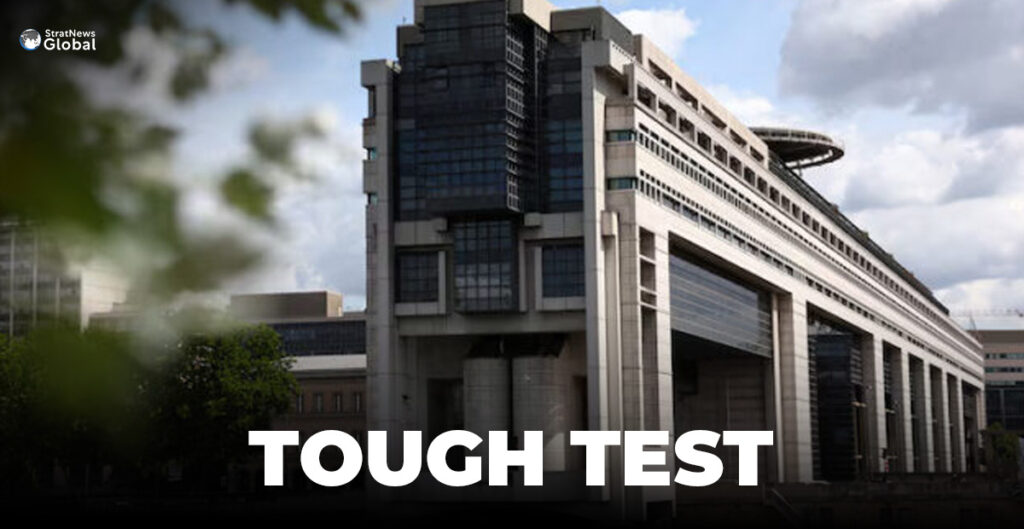
French Prime Minister Francois Bayrou is set to unveil a 40-billion-euro budget tightening plan on Tuesday, even as opposition parties warn they may bring down his minority government if the proposed spending cuts are seen as too severe.
President Emmanuel Macron has left Bayrou the task of repairing the public finances with the 2026 budget, after his own move to call a snap legislative election last year delivered a hung parliament too divided to tackle spiralling spending and a surprise tax shortfall.
Broad Sacrifices Unavoidable
Long-time debt hawk Bayrou has tried to warn the French that broad sacrifices are unavoidable, although defence spending will be allowed to increase next year.
The squeeze, to be detailed in a late afternoon news conference, will probably involve freezing most social benefits while some tax breaks will likely be capped.
Bayrou, a veteran centrist, must persuade the opposition ranks in France’s fractured parliament to at least tolerate his cuts or risk facing a no-confidence motion like the one that toppled his predecessor in December over the 2025 budget.
Macron’s Request
When announcing a new hike in defence spending on Sunday, Macron urged lawmakers not to trigger another no-confidence motion, saying that the one in December had hurt companies and set a defence build-up back by delaying the 2025 budget.
“That vote has delayed the defence budget. It is now up to the government to allocate the necessary funds in a timely manner so we can continue to innovate more quickly, to produce more quickly,” he said.
Left-wing parties will likely baulk at welfare cuts, while the far right warns a broad spending freeze is unfair to French citizens and could prompt them to oppose Bayrou’s plans.
In the final two years of his second term, the dramatic deterioration of the public finances may tarnish Macron’s legacy.
A political outsider, he was first elected in 2017 on promises to break the right-left divide and modernise the euro zone’s second-biggest economy with growth-friendly tax cuts and reforms.
Successive crises – from protests, COVID-19 and runaway inflation – have shown he has failed to change the country’s overspending habit, however.
0.8% Cut
Bayrou aims to reduce the budget deficit from 5.4% of GDP this year to 4.6% in 2026, ultimately targeting the EU’s 3% fiscal deficit limit by 2029.
With interest payments potentially becoming the biggest budget outlay, financial markets and ratings agencies are keen to see whether Bayrou can get his plans through parliament without triggering another political collapse.
(With inputs from Reuters)
Netanyahu Coalition Wobbles As Religious Party Quits Over Military Draft
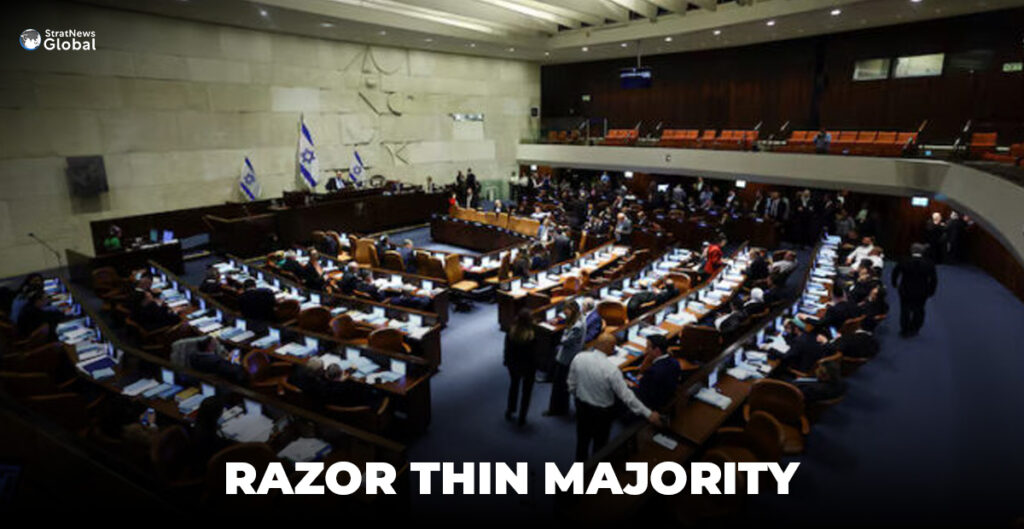
In a fresh political setback for Prime Minister Benjamin Netanyahu, a key religious party has withdrawn from Israel’s ruling coalition over a disagreement on military conscription — a move that leaves Netanyahu with a razor-thin parliamentary majority, though still sufficient backing to pursue a possible ceasefire in Gaza.
Six members of United Torah Judaism (UTJ) handed in resignation letters overnight from posts in parliamentary committees and government ministries, in protest against lawmakers’ failure to guarantee future exemption from military conscription for ultra-Orthodox religious students.
48-Hour Ultimatum
Shas, a second ultra-Orthodox party closely allied with UTJ, may follow and leave the government with no parliament majority.
The UTJ lawmakers said their walkout would come into effect after 48 hours, giving Netanyahu two days to try and resolve the crisis which has dogged his coalition for months.
Even if that fails, parliament goes on summer break at the end of July, which would give the prime minister a further three months to seek a solution before any loss of his majority could threaten his position.
Netanyahu is also facing pressure from far-right parties in his coalition over ceasefire talks underway in Qatar.
The indirect negotiations between Israel and Palestinian militant group Hamas aim to halt fighting in Gaza for 60 days to allow half of remaining hostages held by Hamas to be released and aid to flow into the battered enclave.
It would also open a further phase of talks on ending the war entirely.
Waiting For The Right Deal
National Security Minister Itamar Ben-Gvir and Finance Minister Bezalel Smotrich want Israel to press on with the war, but Netanyahu would still be likely to have enough cabinet votes to secure a ceasefire without them.
“As soon as the right deal is on the table, the prime minister will be able to pass it through,” a close aide to Netanyahu, Topaz Luk, told Army Radio on Tuesday.
Military Exemptions
Israelis have become increasingly weary of the 21-month war in Gaza, which began with a surprise attack by Hamas on October 7, 2023 that led to Israel’s single deadliest day with 1,200 killed and 251 taken hostage by the Palestinian militants.
Israel’s subsequent offensive against Hamas has since killed more than 58,000 Palestinians, according to health officials, displaced almost the entire population of Gaza, led to a humanitarian crisis and left much of the enclave in ruins.
It has also exacted Israel’s highest military death toll in decades, with around 450 soldiers killed so far in Gaza combat. This has added fuel to an already explosive debate over a new conscription bill at the center of Netanyahu’s political crisis.
Ultra-Orthodox seminary students have long been exempt from mandatory military service. Many Israelis are angered by what they see as an unfair burden carried by the mainstream who serve.
Ultra-Orthodox Jewish leaders say full-time devotion to holy scriptures study is sacrosanct and fear their young men will steer away from religious life if they are drafted into the military.
Last year the Supreme Court ordered an end to the exemption. Parliament has been trying to work out a new conscription bill, which has so far failed to meet UTJ demands.
(With inputs from Reuters)
Jaishankar In Beijing: India Is Never Satisfied, Say Netizens
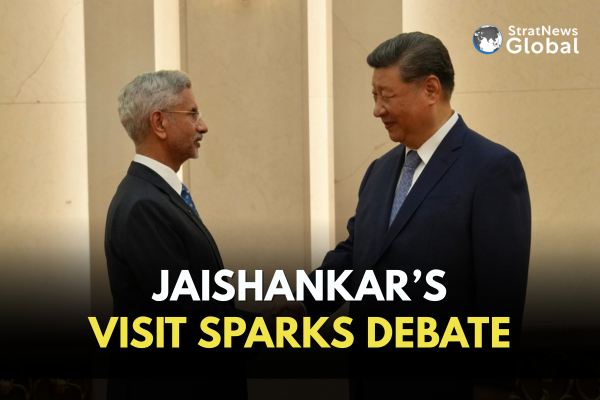
External Affairs Minister S. Jaishankar’s two-day visit to China, where he is attending the Shanghai Cooperation Organisation (SCO) Foreign Ministers’ Meeting, has become a top-trending topic on Weibo (China’s equivalent to X, formerly Twitter).
His visit sparked widespread discussion among Chinese analysts and social media users, many of whom are closely monitoring India’s evolving foreign policy—especially its current approach towards China amid shifting global dynamics. While many Chinese netizens reacted positively, welcoming signs of improvement in India-China relations, critical narratives continue to circulate, with some questioning India’s diplomatic posture.
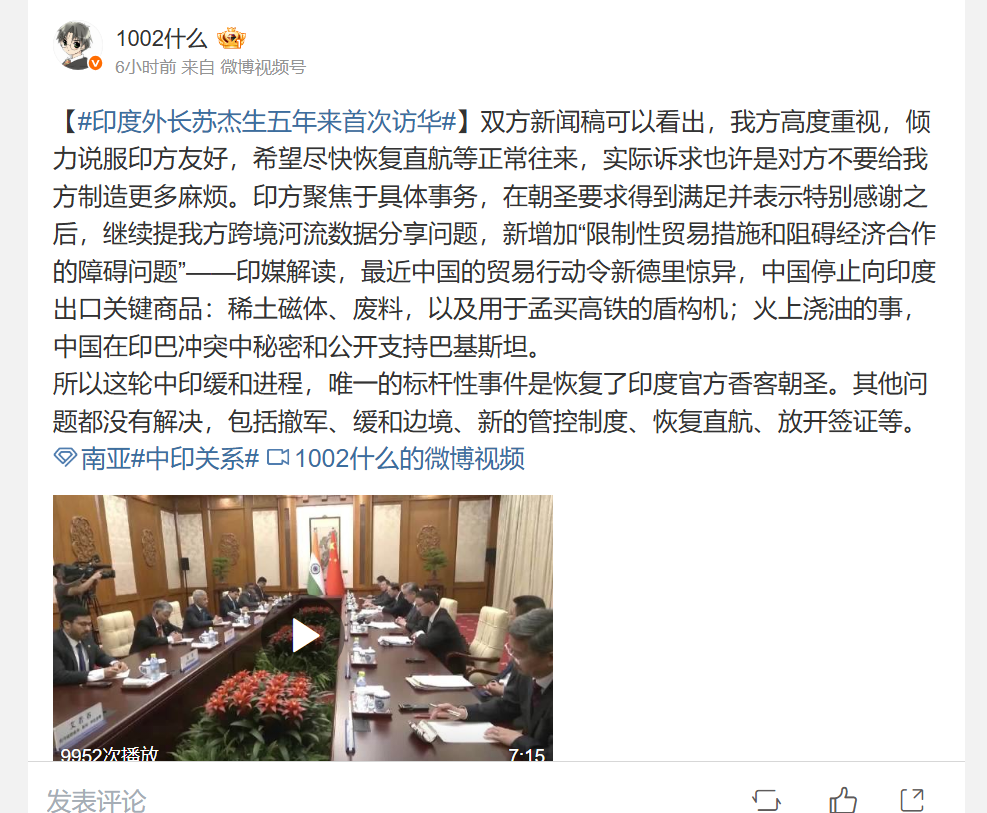
Among these, the popular Anti- India Weibo account “1002Shenme”, with over 307,000 followers, has gained attention for accusing India of repeatedly making new demands despite China’s goodwill gestures (Weibo Post screenshot attached below), such as the reopening of the pilgrimage route to Mansarovar Yatra. According to the account, India’s new demands include mutual sharing of river data, lifting of trade restrictions and resumption of normal economic exchanges, and accused India of never being satisfied with anything.
Professor Lin Minwang of Fudan University suggested that future progress in China-India ties depends largely on India’s approach, and said India’s domestic politics and Prime Minister Narendra Modi’s leadership shape a cautious strategy towards China. “India still holds a wait-and-see attitude. Its China policy lacks full commitment,” Lin said in his comments to a Chinese state media website.
Lin also claimed “India’s global image took a hit after the May 2025 India–Pakistan clash.” He was referring to Operation Sindoor, carried out by the Indian Armed Forces on May 7, 2025, in response to cross-border terrorism threats.
As part of this precision operation, the Indian Air Force launched deep strikes on terror infrastructure inside Pakistan, following credible intelligence. Far from being a setback, Operation Sindoor demonstrated India’s growing defence capability and reliance on indigenous systems, showcasing its ability to respond decisively to regional security threats.
A popular Zhihu article speculated that operations like Sindoor and continued border tensions were putting pressure on India’s economy. It further argued that India’s reaffirmation of the October 2024 Kazan Consensus signals its desire to maintain stable ties with China without external interference, indirectly referring to the United States.
A separate video (screenshot attached below) circulating on Weibo and Douyin claimed Jaishankar’s visit was intended to “buy time,” suggesting New Delhi feared Chinese military moves in what Beijing calls “Southern Tibet”—a term China uses for Arunachal Pradesh, which remains an integral and sovereign part of India. India has consistently rejected all Chinese territorial claims over the region.
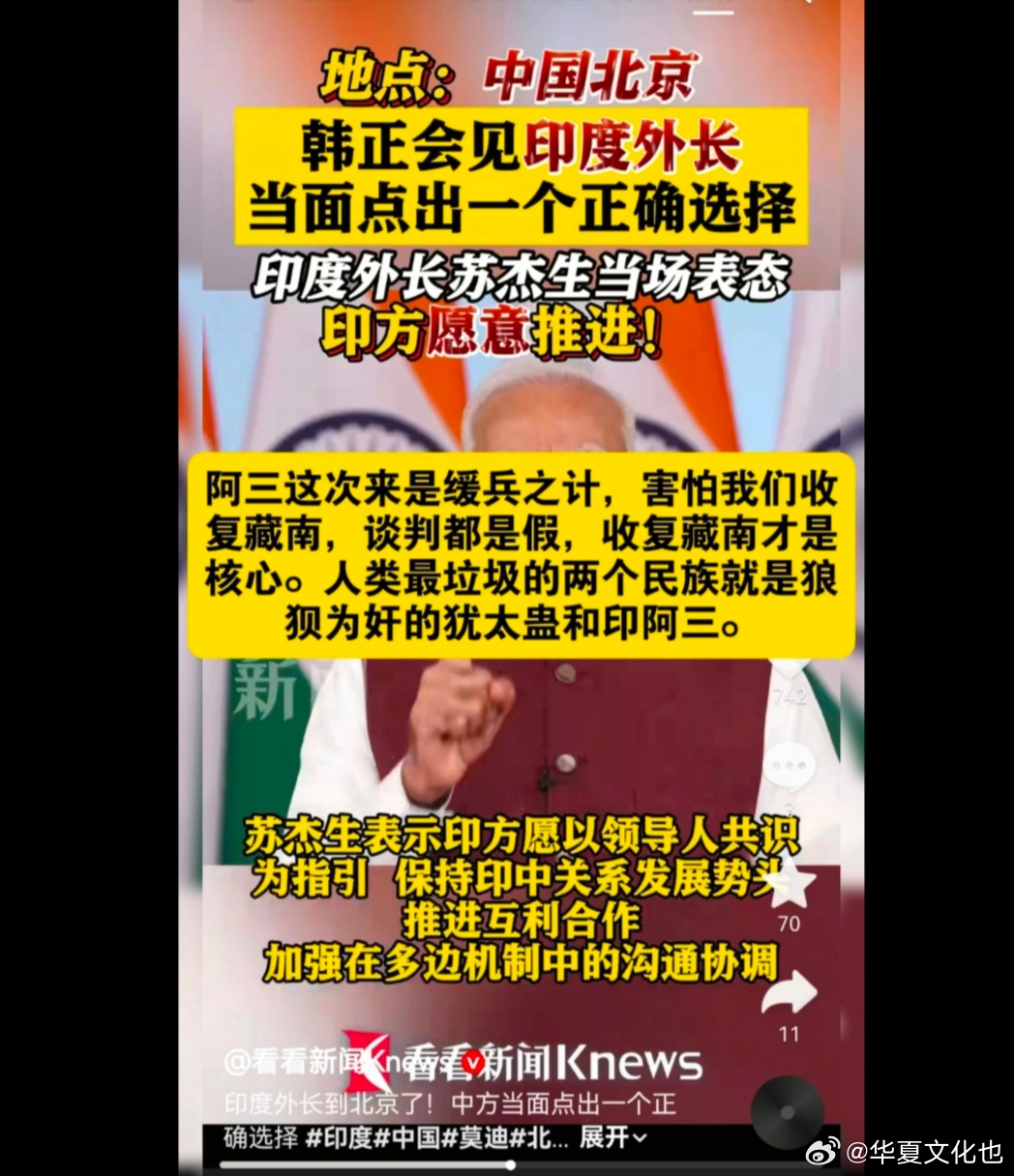
Chinese online discussions also focused on India’s rising defence spending and infrastructure development along the LAC.
Indian policymakers assert that New Delhi’s engagement with China is not driven by hesitation but by strategic clarity and maturity. Diplomatic talks continue because India understands that strength lies in dialogue backed by preparedness. While reaffirming its sovereignty over Arunachal Pradesh, India remains committed to peace, stability, and its independent foreign policy in the Indo-Pacific.
Trump Gathers Big Tech, Energy Leaders To Boost AI Expansion
President Donald Trump is set to participate in a high-level summit in Pittsburgh on Tuesday, where he will join top executives from some of the largest US tech and energy companies, as his administration gears up to announce new initiatives aimed at accelerating the growth of artificial intelligence across the country.
Top economic rivals US and China are locked in a technological arms race over who can dominate AI as the technology takes on increasing importance everywhere from corporate boardrooms to the battlefield.
$70 Billion AI, Energy Investment
The Energy and Innovation Summit at Carnegie Mellon University is expected to bring tech executives and officials from top energy and tech firms including Meta, Microsoft, Alphabet and Exxon Mobil to discuss how to position the US as a leader in AI.
Trump will use the summit – put together by US Senator Dave McCormick, a Republican ally from Pennsylvania – to announce some $70 billion in artificial intelligence and energy investments in the state.
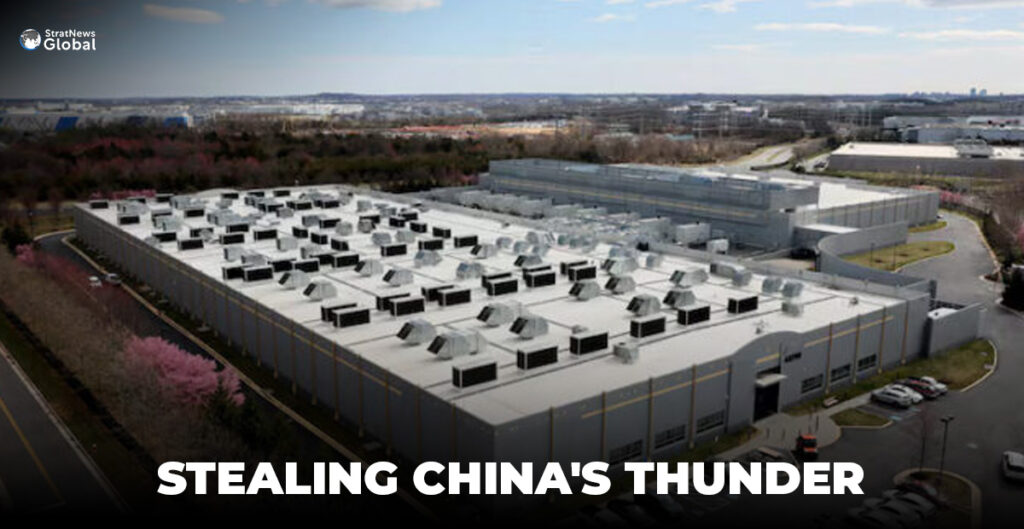
Big Tech is scrambling to secure vast amounts of electricity supplies to power the energy-guzzling data centers needed for its rapid expansion of artificial intelligence.
Top CEOs To Attend Event
The CEOs expected to attend include Khaldoon Al-Mubarak of Mubadala, Rene Hass of SoftBank, Larry Fink of BlackRock, Darren Woods of ExxonMobil, Brendan Bechtel of Bechtel and Dario Amodei of Anthropic.
The White House is considering executive actions in the coming weeks to make it easier for power-generating projects to connect to the grid and also provide federal land on which to build the data centers needed to expand AI technology, Reuters previously reported.
The administration is also weighing streamlining permitting for data centers by creating a nationwide Clean Water Act permit, rather than requiring companies to seek permits on a state-by-state basis.
Mike Sommers, head of the influential American Petroleum Institute, said executive action is welcomed to unlock the energy needed to power the data centers, but a more durable solution is needed.
“Real durable permitting reform requires an act of Congress, not just an executive order,” Sommers said in an interview with Reuters.
AI Action Plan
Trump ordered his administration in January to produce an AI Action Plan that would make “America the world capital in artificial intelligence” and reduce regulatory barriers to its rapid expansion.
That report, which includes input from the National Security Council, is due by July 23. The White House is considering making July 23 “AI Action Day” to draw attention to the report and demonstrate its commitment to expanding the industry, Reuters has reported.
US power demand is hitting record highs this year after nearly two decades of stagnation as AI and cloud computing data centers balloon in numbers and size across the country.
The demand is also leading to unprecedented deals between the power industry and technology companies, including the attempted restart of the Three Mile Island nuclear power plant in Pennsylvania between Constellation Energy and Microsoft.
The surge has led to concerns about power shortages that threaten to raise electricity bills and increase the risk of blackouts, while slowing Big Tech in its global race against countries like China to dominate artificial intelligence.
(With inputs from Reuters)
India, South Korea Order Checks On Boeing Fuel Switches After Air India Crash
India on Monday directed its airlines to inspect fuel switches on multiple Boeing models, followed by a similar directive from South Korea on Tuesday, as scrutiny deepened over fuel switch locks central to the investigation into a deadly Air India crash.
The precautionary moves by India, South Korea and some airlines in other countries came despite the planemaker and the U.S. Federal Aviation Administration telling airlines and regulators in recent days that the fuel switch locks on Boeing jets are safe.
Preliminary Report Triggers Concerns
A preliminary report into the Air India crash that killed 260 people found that the switches had almost simultaneously flipped from run position to cutoff shortly after takeoff.
One pilot was heard on the cockpit voice recorder asking the other why he cut off the fuel. “The other pilot responded that he did not do so,” the report said.
The report noted a 2018 advisory from the U.S. Federal Aviation Administration (FAA), which recommended, but did not mandate, operators of several Boeing models, including the 787, to inspect the locking feature of fuel cutoff switches to ensure they could not be moved accidentally.
India’s Directorate General of Civil Aviation said it had issued an order to investigate locks on several Boeing models, including 787s and 737s, after several Indian and international airlines began making their own inspections of fuel switches.
The regulator oversees the world’s third-largest and fastest-growing aviation market. Boeing planes are used by three of the country’s four largest airlines.
Precautionary Checks
Some airlines around the world told Reuters they had been checking relevant switches since 2018 in accordance with the FAA advisory, including Australia’s Qantas Airways and Japan’s ANA.
Others said they had been making additional or new checks since the release of the preliminary report into the Air India crash.
Singapore Airlines said on Tuesday that precautionary checks on the fuel switches of its 787 fleet, including planes used by its low-cost subsidiary Scoot, confirmed all were functioning properly.
South Korea’s transport ministry said it ordered domestic airlines on Tuesday to inspect fuel control switches in accordance with the 2018 FAA advisory.
“At that time (2018), it was a recommended measure and was not fully inspected,” the statement to the media said.
Flag carrier Korean Air Lines said on Tuesday it had proactively begun inspecting fuel control switches.
Japan Airlines said it was conducting inspections in accordance with the 2018 advisory.
Boeing referred Reuters’ questions to the FAA, which did not respond to a request for comment. Boeing shares closed 1.6% higher on Monday after there were no recommended actions in the report aimed at operators of 787 jets or the GE engines.
Fuel Switch Checks
Over the weekend, Air India Group started checking the locking mechanism on the fuel switches of its 787 and 737 fleets and has discovered no problems yet, a source familiar with the matter told Reuters on Monday.
About half the group’s 787s have been inspected and nearly all its 737s, the source added, speaking on condition of anonymity. Inspections were set to be completed in the next day or two.
The Air India crash preliminary report said the airline had not carried out the FAA’s suggested inspections, as the FAA’s 2018 advisory was not a mandate.
But it also said maintenance records showed that the throttle control module, which includes the fuel switches, was replaced in 2019 and 2023 on the plane involved in the crash.
In an internal memo on Monday, Air India CEO Campbell Wilson said the preliminary report found no mechanical or maintenance faults and that all required maintenance had been carried out.
(With inputs from Reuters)
World Buddhist Body Decries China’s Stand On Reincarnation
A little over one week after celebrations around the 90th birthday of the Dalai Lama in Dharmshala, it was the turn of the International Buddhist Confederation (IBC) in Delhi to reignite global attention on the complex issues surrounding his reincarnation, China’s stance on the matter, and the broader geopolitical implications.
The IBC event drew scholars and monks from all over the world including the US, UK, Russia, Vietnam, Bhutan, Thailand and Malaysia. Discussions centered around the enduring philosophical and ethical significance of Buddhism in today’s world and its intersections with quantum physics and neuroscience.
But there was more concern over the future of Tibetan Buddhism in the face of growing cultural and political challenges. There was animated discussion over “China’s efforts to appropriate Indian and Tibetan Buddhism” and Beijing’s unwanted interference in the reincarnation process.
A delegate from Taiwan warned that even if China appoints its own Dalai Lama, his country would follow the line of succession as laid down by the His Holiness. Well known Tibetologist Claude Arpi underscored the Dalai Lama’s efforts to unite Tibetans, pointing out that such unity is essential for surviving the challenges posed by China.
A declaration issued at the end of the deliberations reffirmed that “From the highlands of Tibet to the corners of the world Holiness teachings transcend borders.” It emphasised the global impact of the Dalai Lama’s teachings and his pivotal role in revitalising Tibetan Buddhism and championing non-violence and harmony.
There was also a hard warning to China: that the issue of reincarnation remains the sole prerogative of the Dalai Lama and “This is a vital step in preserving Tibetan culture and religious freedom.”
Tesla Enters India With Pricey $70,000 Model Y Despite High Tariffs
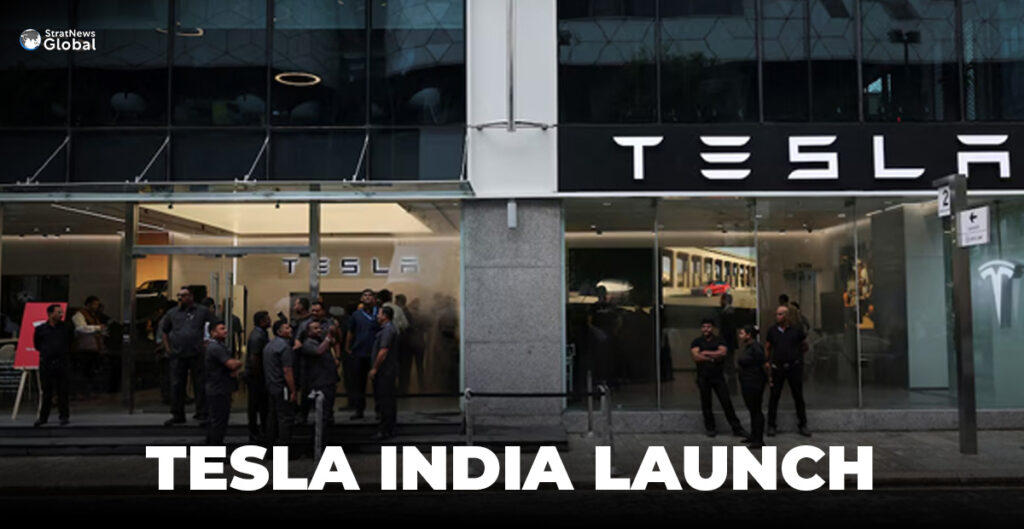
Tesla on Tuesday launched its Model Y in India at around $70,000—its highest price globally—as the U.S. automaker, facing slowing sales, bets on growth in a market CEO Elon Musk has long criticised for steep import tariffs.
With deliveries estimated to start from the third quarter, Tesla is targeting a niche electric vehicle segment in India that accounts for just 4% of overall sales in the world’s third-largest car market.
Mumbai Showroom
It will compete mainly with German luxury giants such as BMW and Mercedes-Benz rather than domestic mass-market EV players such as Tata Motors and Mahindra.
Tesla opened its first showroom in Mumbai on Tuesday and began taking Model Y orders on its website, marking its long-awaited entry into the market where Musk once had plans to open a factory.
For now, Tesla will import cars into a country where tariffs and related duties can exceed 100%, driving up the price for consumers.
‘High’ Tariffs
Grappling with excess capacity in global factories and declining sales, Tesla has adopted a strategy of selling imported vehicles in India, despite the duties and levies.
The U.S. EV maker has long lobbied India for lower import tariffs on cars, and Prime Minister Narendra Modi’s officials remain in talks with U.S. President Donald Trump’s administration to lower the levies under a bilateral trade deal.
But the cars Tesla displayed in Mumbai were made in China, and its U.S. factories do not currently make the right-hand drive vehicles that are used in India.
Tesla’s Model Y rear-wheel drive is priced at about 6 million rupees ($70,000), while its Model Y long-range rear-wheel drive costs 6.8 million rupees.
That compares with a starting price from $44,990 in the United States, 263,500 yuan ($36,700) in China, and 45,970 euros ($53,700) in Germany.
FSD Costs Extra
The firm’s Full Self-Driving (FSD) capability is on offer at an additional cost of 600,000 rupees, with future updates promised to enable operation with minimal driver intervention.
On Tuesday, police guarded Tesla’s Mumbai showroom as media crowded outside the office complex where it is located and the chief minister of the western state of Maharashtra, home to the Indian commercial capital, arrived for the launch.
“In the future, we wish to see R&D and manufacturing done in India, and I am sure at an appropriate stage, Tesla will think about it,” Maharashtra Chief Minister Devendra Fadnavis said.
(With inputs from Reuters)
Bessent’s Absence, BRICS Tensions Loom Over G20 Summit In Durban
U.S. Treasury Secretary Scott Bessent’s latest no-show, coupled with Donald Trump’s renewed tariff threats and escalating tensions between Washington and BRICS nations, is expected to overshadow this week’s G20 finance chiefs’ summit in Durban, South Africa.
Several key officials, including Bessent, skipped February’s Cape Town gathering of finance ministers and central banks in the grouping, already raising questions about its ability to tackle pressing global challenges.
“I think it’s problematic not to have the world’s largest economy represented at the table, at least at a senior political level,” said Josh Lipsky, chair of international economics at the Atlantic Council.
“It raises questions about the G20’s long-term viability,” said Lipsky, adding that Bessent’s absence foreshadowed U.S. plans for a slimmed-down, “back to basics” G20 when it assumes the grouping’s rotating presidency next year.
Tariff Threat Escalates
Trump has implemented a baseline 10% tariff on all U.S. imports, with punitive rates targeting specific countries and products, including steel and aluminium at 50%, autos at 25%, and threatened levies of up to 200% on pharmaceuticals. Extra tariffs on 25 countries are set to take effect on August 1.
His threat to impose further tariffs on BRICS countries adds complexity, given that eight G20 members – including host South Africa – belong to the expanded BRICS grouping. The overlap hints at the emergence of competing forums as Western-led institutions face credibility challenges.
“Policy uncertainty is the biggest theme at this point in time,” South African Reserve Bank Deputy Governor Fundi Tshazibana told Reuters.
The G20 has its origins in past crisis fire-fighting and really took off as countries around the world saw a need to coordinate policies to emerge from the global financial crisis of the late 2000s.
“The G20 was built around a presumption that all the world’s major economies shared a common interest in a stable, relatively open global economy,” said Brad Setser of the Council on Foreign Relations. “But Trump doesn’t really care about stability and wants a more closed global economy.”
‘Difficult Space’
The Durban gathering of finance chiefs on Thursday and Friday also unfolds against a backdrop of mounting economic pressures, particularly for African economies. Sub-Saharan Africa’s external debt has ballooned to $800 billion, or 45% of GDP, according to Goldman Sachs, while traditional funding sources are drying up.
Chinese lending has slowed to a trickle after years of expansion, leaving an $80 billion financing gap.
“The views that they’ve expressed are if you negotiate them down before taking the loan, they will go with that,” said Trevor Manuel, the former finance minister of South Africa, who is leading the Africa Expert Panel of the G20.
“But once the loan is made, then they expect a return, and that is embedded in their legislation. So that is one issue that needs a lot of attention,” he said. China’s Belt and Road Initiative has brought very significant resources to the African continent, “but there are also the offsets,” said Manuel.
“I think that part of the push going forward is greater transparency, which means that some of the barter arrangements and so on need to be dealt with quite differently.”
Meanwhile, U.S. and European grants – accounting for 25% of the region’s external financing – face cuts as Washington suspends foreign aid and European capitals redirect funds towards defence.
“Africa is in a difficult space,” said Lumkile Mondi, political commentator at the University of Witwatersrand.
“Investment in the continent is going to dwindle because of high levels of indebtedness and low GDP growth, making it less relevant in the current geoeconomics.”
Fractured Solidarity
When it assumed the G20 presidency in December under the motto “Solidarity, Equality, Sustainability”, Pretoria had hoped to use the platform to pressure rich countries on climate finance and address the distrust between the global North and South. Instead, it finds itself managing the fallout from aid cuts and tariff wars that directly undermine those goals.
As the continent’s most developed economy, South Africa faces pressure to champion African interests while navigating great power rivalries. The National Treasury said it was “premature to comment” on specific goals for the gathering, however.
Director General of Treasury Duncan Pieterse said in a statement on Monday that they hoped to issue the first Communique under the South African G20 presidency at the end of the meetings.
On Monday, the G20’s financial stability watchdog delivered a new plan on how to tackle climate risks but paused policy work amid a U.S. retreat that has tested efforts to advance a united financial policy on climate-related risks.
The U.S. has withdrawn from multiple groups dedicated to exploring how flooding, wildfires, and big climate-related policy shifts could impact financial stability.
(With inputs from Reuters)
Execution Of Nurse Nimisha Priya In Yemen Put Off After Indian Government Intervenes
The execution of Indian nurse Nimisha Priya, scheduled for July 16 in Yemen, has been postponed. Sources say it came after sustained efforts by the Indian government, which has been actively pursuing a diplomatic and humanitarian resolution to the case.
“The Government of India has since the beginning of the case been rendering all possible assistance in the matter and has made concerted efforts in recent days to seek more time for the family of Ms. Nimisha Priya to reach a mutually agreeable solution with the other party,” according to sources.
Indian officials have been in regular touch with the local jail authorities and the prosecutor’s office, leading to securing this postponement.
The Supreme Court of India had heard an urgent plea from the Save Nimisha Priya International Action Council on July 14. While the Centre acknowledged constraints in operating diplomatically in Yemen, a country in civil strife and under Houthi control, the Attorney General had told the court that the government was doing “whatever is utmost possible”.
Background Of The Case
Nimisha Priya, a nurse from Kerala, has been on death row at Sanaa Central Prison in Yemen for the alleged murder of her Yemeni business partner, Talal Abdo Mahdi. According to her family and legal team, the partnership turned abusive, with Mahdi allegedly torturing her and taking full control of her clinic’s finances.
In 2017, a desperate attempt to sedate him and recover her passport tragically ended in his death. A Yemeni trial court sentenced her to death in 2020. Her appeal was dismissed in November 2023.
Yemeni law allows clemency if the victim’s family accepts diyah or “blood money,” under Islamic legal principles. The Save Nimisha Priya International Action Council has been working to raise the required funds and negotiate with Mahdi’s family for a possible pardon.
Ongoing Efforts And Diplomatic Challenges
The Council’s initiatives, along with appeals from human rights activists and Kerala Chief Minister Pinarayi Vijayan, have helped sustain public and legal attention on the case. Nimisha’s mother, Premakumari, travelled to Yemen in April 2024 with special clearance from the Indian government, an exception to India’s standing travel ban to Yemen.
However, the situation has remained complex due to India’s lack of formal diplomatic ties with the Houthis, who control Sanaa. Despite delays caused by legal fees and negotiation challenges, the Indian government has facilitated fund transfers and maintained consistent communication with Yemeni authorities.
As of now, the execution is on hold, not cancelled. The victim’s family’s final decision on accepting diyah remains unknown, and further negotiations are expected.
What Lies Ahead
The postponement offers a critical but temporary lifeline. The Indian government’s immediate goal is to buy time for continued negotiation with the victim’s family. Without their consent, the execution could still proceed. Advocacy groups are urging swift diplomatic and humanitarian intervention.
New US Policy May Deny Hearings, Widen Scope Of Detention
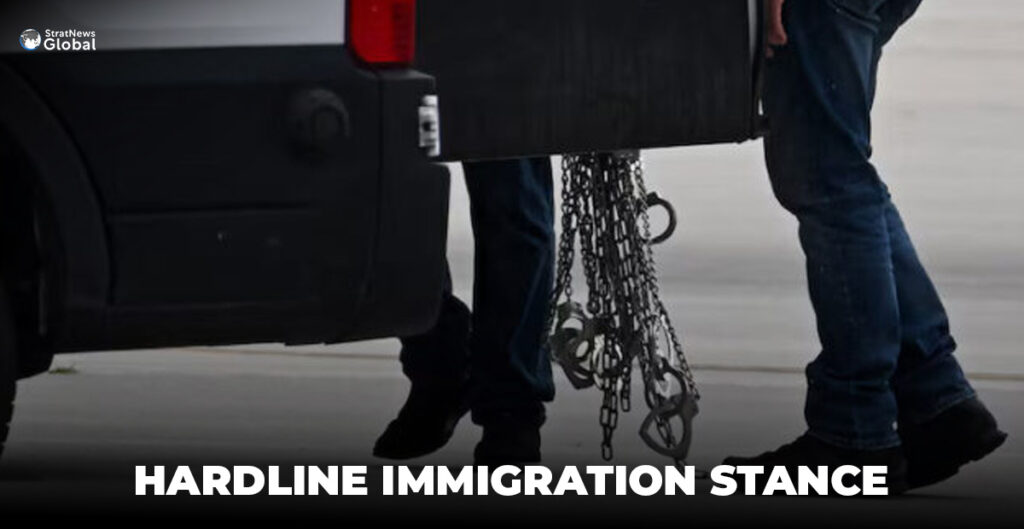
In a significant policy shift, the Trump administration is initiating fresh efforts to keep undocumented immigrants in detention by denying them bond hearings, according to an internal memo — a move that could further increase the number of people held in US immigration facilities.
The latest guidance issued by the US Immigration and Customs Enforcement (ICE), a portion of which was reviewed by Reuters, has the potential to impact millions of individuals who entered the United States illegally and are currently fighting deportation orders — signalling a tougher stance on immigration enforcement under the Trump administration.
Trump’s Hardline Immigration Stance
President Donald Trump has renewed his pledge to carry out mass deportations, claiming they are necessary to address what he describes as record-high levels of illegal immigration that occurred during the tenure of his predecessor, Democratic leader Joe Biden — a key point in his hardline immigration agenda.
Earlier this month, the US Congress passed a new spending law that allocates funds to detain a minimum of 100,000 individuals — marking a significant rise from the previous record of around 58,000 people held in custody as of late June, and reflecting a sharp escalation in the country’s immigration enforcement capacity.
The Washington Post first reported the new ICE policy limiting bond hearing eligibility, citing a July 8 memo by its acting director, Todd Lyons.
Alternative Arguments
The guidance shared with Reuters called for ICE to interpret several immigration law provisions as “prohibitions on release” after an arrest, adding the shift in policy was “likely to be litigated”.
It encouraged ICE prosecutors “to make alternative arguments in support of continued detention” during immigration court hearings.
The new policy appeared to reverse legal standards governing detention for decades, said Tom Jawetz, a former homeland security official in the Biden administration, calling it “a radical departure that could explode the detention population.”
The US Department of Homeland Security and ICE did not immediately respond to requests for comment.
(With inputs from Reuters)