

Support us by contributing to StratNewsGlobal on the following UPI ID
ultramodern@hdfcbank

Strategic affairs is our game, South Asia and beyond our playground. Put together by an experienced team led by Nitin A. Gokhale. Our focus is on strategic affairs, foreign policy and international relations, with higher quality reportage, analysis and commentary with new tie-ups across the South Asian region.
You can support our endeavours. Visit us at www.stratnewsglobal.com and follow us on YouTube, Twitter, Facebook and Instagram.
र 500 per month
र 1000 per month
र 5000 per year
र 10000 per year
Donate an amount of your choice
र 500 per month
Donate र 500 per month

र 1000 per month
Donate र 1000 per month
र 5000 per year
Donate र 5,000 per year
र 10000 per year
Donate र 10,000 per year
Donate an amount of your choice
Donate an amount of your choice

Ukraine Welcomes Trump’s Weapons Reversal, But Key Details Remain Unclear
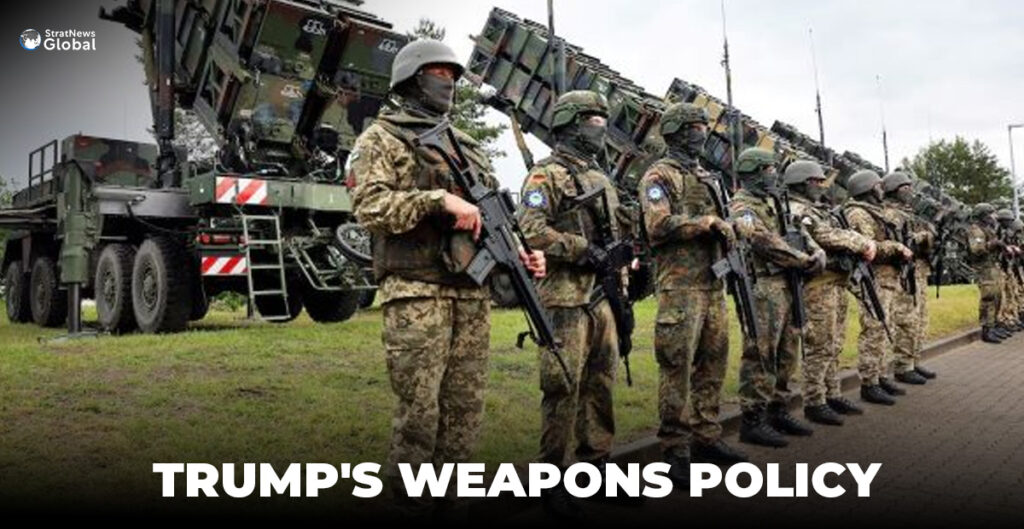
U.S. President Donald Trump has shifted his stance on arming Ukraine, now supporting a plan that encourages European allies to donate their existing weapons to Kyiv while purchasing American-made replacements.
Now comes the hard part — agreeing on who will actually give up their prized systems, including the Patriot missile batteries that Kyiv has been desperately seeking.
We’re going to make top-of-the-line weapons, and they’ll be sent to NATO,” Trump said in the Oval Office on Monday.
Some Patriot missile defence systems should arrive in Ukraine “within days,” added Trump, who faces resistance from some high-profile figures in the MAGA movement who oppose U.S. support for Ukraine.
The costly Patriot systems – in high demand among U.S. allies – have proven effective at destroying Russian ballistic missiles aimed at Ukraine’s cities.
The U.S. has also signaled willingness under the proposed arrangement with European allies to send additional offensive weapons, said one source familiar with the matter, though Trump has said that Ukraine should refrain from attacking Moscow.
The plan, which Trump and NATO Secretary General Mark Rutte hatched in recent days, according to two sources familiar with the discussions, has been received positively by Ukraine and its allies.
Leaders in Kyiv and elsewhere have celebrated a major tonal shift from Trump, who had until recent weeks spoken glowingly of Russian President Vladimir Putin.
But since the announcement, it has become clear Trump presented a framework – not a fleshed-out plan. How material any support ends up being for Ukraine will depend on coming negotiations about who provides which equipment, according to 10 officials in the U.S. and Europe.
“As always with these things, the devil is in the details,” said one northern European ambassador in Washington.
The central question is who would donate the Patriot batteries, and when.
Spare A Patriot?
During his Oval Office meeting with Trump on Monday, Rutte mentioned six NATO countries – Finland, Denmark, Sweden, Norway, the Netherlands and Canada – that were willing to participate in the weapons-purchasing scheme.
“It is my clear sense that nobody has been briefed about the exact details in advance, and I also suspect that internally in the administration they are only now beginning to sort out what it means in practice,” said a separate European ambassador.
Throughout the campaign, Trump said he would push European countries to spend more on defence, to great applause from MAGA crowds. “You gotta pay,” he said. “If they’re not going to pay, we’re not going to protect, ok?”
Volker said Ukraine could ultimately receive 12 to 13 Patriot batteries but it could take a year for them all to be delivered.
“Several European countries have already committed to support this initiative including Germany, Norway, Denmark, the Netherlands, Sweden, the United Kingdom, Canada and Finland,” a NATO official said. “Details are still under discussion.”
The White House did not respond to a request for comment, nor did the Ukrainian or Russian embassies in Washington.
‘We Are Ready’
The rapid hardening of Trump’s rhetoric toward Moscow in recent weeks has come amid an increasingly firm belief that Putin is not engaging in good-faith negotiations, according to two U.S. officials.
“At a certain point, you know, ultimately talk doesn’t talk. It’s got to be action. It’s got to be results,” Trump said during his meeting with Rutte on Monday.
Three Russian sources close to the Kremlin said Putin will not stop the war under pressure from the West and believe that Russia – which has survived the toughest sanctions imposed by the West – can endure further economic hardship, including Trump’s Monday threat to impose U.S. tariffs targeting buyers of Russian oil.
“We are ready to participate,” Danish Foreign Minister Lars Lokke Rasmussen told reporters in Brussels on Tuesday ahead of a meeting of European Union ministers.
One official cited Germany, Greece, the Netherlands and Spain as good candidates to send a Patriot battery to Kyiv, either because they had multiple batteries or the threats they face are relatively remote.
Some, including Greece and Spain, have previously resisted appeals from allies to give some of their Patriot systems to Ukraine, arguing that they are essential to defend their own countries and NATO as a whole.
Trump’s move to take credit for the additional weapons headed to Ukraine has created some mild friction in Europe.
European Support
“If we pay for these weapons, it’s our support,” said EU foreign policy chief Kaja Kallas, speaking after the Brussels meeting, adding that she welcomed Trump’s decision.
“So it’s European support, and we are doing as much as we can to help Ukraine … If you promise to give the weapons, but say that somebody else is going to pay for it, it’s not really given by you, is it?”
Trump told reporters there was one country with 17 Patriots, some of which would go directly to Ukraine.
The figure has caused widespread confusion among European allies and on Capitol Hill – many of whom have not been briefed – according to the U.S. and European officials.
No NATO member except the U.S. has that number of Patriot systems, said two sources familiar with the matter, causing speculation that Trump may have been referring to particular Patriot components, like launchers or missiles.
German Defence Minister Boris Pistorius, who visited the Pentagon on Monday, said the Germans would discuss sending Patriot batteries to Ukraine with the U.S. in the coming days or weeks. But no Patriot system would arrive in Kyiv for months, he said, likely delaying any receipt until after the tactically crucial summer months.
Another official said Trump was engaged directly in negotiations, though talks so far were “squishy.”
“So far folks have said, ‘We can help,'” that official said.
“Now, what that means, we don’t know.”
(With inputs from Reuters)
Iceland Volcano Erupts Again; Residents Advised On Air Quality
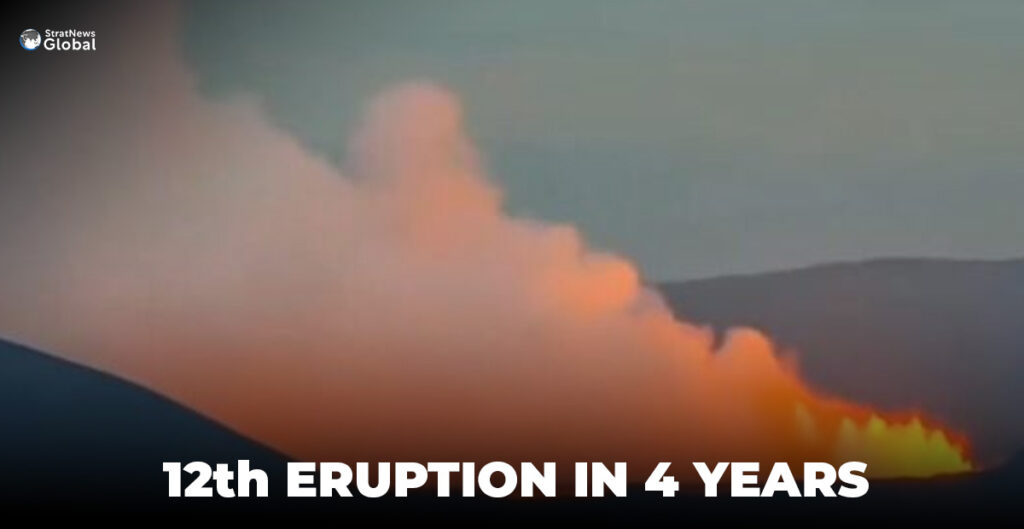
A volcano erupted in south-west Iceland on Wednesday, according to the country’s meteorological office, marking the latest in a series of eruptions near the capital region in recent years.
Often referred to as a land of ice and fire, the North Atlantic island nation with its many glaciers and volcanoes has now seen a dozen eruptions since geological systems on its Reykjanes peninsula reactivated in 2021.
No Threat To Reykjavik So Far
The outbreaks, known as fissure eruptions, are characterised by lava flows emerging from long cracks in the earth’s crust, rather than from a central crater.
The Reykjanes eruptions have not so far posed a threat to the capital Reykjavik, nor have they caused significant dispersals of ash into the stratosphere, avoiding air traffic disruption.
The nearby fishing town of Grindavik, home to nearly 4,000 residents before an evacuation order in 2023, however remains mostly deserted due to the periodic threat from lava flows and related eartquakes.
The Blue Lagoon luxury spa and the nearby Svartsengi thermal power station have also been at risk from lava in some of the previous eruptions.
Residents Asked To Monitor Air Quality
Gas pollution from the eruption is spreading northwest towards Vogar and Reykjanesbraut. Residents of Vogar and Reykjanesbær have been advised to keep their windows closed and regularly check air quality updates on the Icelandic Meteorological Office website. Pollution forecasts are also available on the same platform.
According to experts, the fissure measures between 700 and 1000 metres in width and does not seem to be extending further. Lava flow is currently concentrated mostly towards the southeast.
Experts have said the eruptions in the area could recur for decades, or even centuries.
Volcano Tourism
Iceland, which is roughly the size of the US state of Kentucky and has fewer than 400,000 residents, boasts more than 30 active volcanoes.
That makes the north European island a prime destination for volcano tourism – a niche segment that attracts thousands of thrill seekers every year to sites from Mexico and Guatemala, to Sicily, Indonesia and New Zealand.
(With inputs from Reuters)
US Sends Migrants To Eswatini After Court Lifts Ban
The US Homeland Security Department on Tuesday said that a deportation flight carrying migrants from various countries had landed in Eswatini, following the US Supreme Court’s decision to lift restrictions on deporting migrants to third countries.
In late June, the US Supreme Court cleared the way for President Donald Trump’s administration to resume deporting migrants to countries other than their own without offering them a chance to show the harms they could face. The decision handed the government a win in its aggressive pursuit of mass deportations.
Deportation Of ‘Uniquely Barbaric’ Individuals
“A safe third country deportation flight to Eswatini in Southern Africa has landed — This flight took individuals so uniquely barbaric that their home countries refused to take them back,” US Department of Homeland Security spokeswoman Tricia McLaughlin said late on Tuesday.
In a thread on social media platform X, McLaughlin named five deportees from Vietnam, Jamaica, Laos, Cuba and Yemen and said they were convicted of crimes ranging from child rape to murder.
New Policy
Earlier this month, a top Trump administration official said in a memo that US immigration officials may deport migrants to countries other than their home nations with as little as six hours’ notice.
US Immigration and Customs Enforcement will generally wait at least 24 hours to deport someone after informing them of their removal to a so-called “third country,” according to a memo dated July 9 from the agency’s acting director, Todd Lyons.
ICE could remove them, however, to a so-called “third country” with as little as six hours’ notice “in exigent circumstances,” the memo said, as long as the person was provided the chance to speak with an attorney.
The memo stated that migrants could be sent to nations that have pledged not to persecute or torture them “without the need for further procedures”.
The new ICE policy suggested the Trump administration could move quickly to send migrants to countries around the world.
Human rights advocates have raised due process and other concerns over Trump’s immigration policies that his administration has cast as measures aimed at improving domestic security.
(With inputs from Reuters)
Trump Unveils Indonesia Trade Pact As EU Readies Retaliation
President Donald Trump on Tuesday announced that the United States will impose a 19% tariff on goods from Indonesia as part of a new agreement with the Southeast Asian nation, adding that more such deals are on the way, along with new details on proposed tariffs on pharmaceuticals.
Trump announced the pact with Indonesia, a relatively minor US trading partner, as he continued to press for what he views as better terms with trading partners and ways to shrink a huge US trade deficit. Letters setting tariff rates for dozens of smaller countries were also coming soon, he said on Tuesday.
The deal with Indonesia is among the handful struck so far by the Trump administration ahead of an August 1 deadline when duties on most US imports are due to rise again. The accord came as the top US trading partner – the European Union – readied retaliatory measures should talks with Washington fail.
As that deadline approached, negotiations were under way with other nations eager to avoid more US levies beyond a baseline 10% on most goods that has been in place since April.
Chaotic Roll-out
Trump’s roll-out of the policies has often been chaotic. His moves have upended decades of negotiated reductions in global trade barriers, unsettling international financial markets and threatening a new wave of inflation.
Trump’s recent tariff announcements will raise the US’s average effective tariff rate to 20.6%, up from 2–3% before January, according to Yale Budget Lab. Even with consumption shifts, it would fall only to 19.7%—still the highest since 1933.
Trump also outlined a trade deal with Indonesia, similar to one with Vietnam, imposing a flat 19% tariff on Indonesian exports, no duties on US exports, penalties for Chinese transhipments, and a commitment from Indonesia to purchase selected US goods.
‘We Are Going To Pay Nothing’
“They are going to pay 19% and we are going to pay nothing … we will have full access into Indonesia, and we have a couple of those deals that are going to be announced,” Trump said outside the Oval Office. Trump later said on his Truth Social platform that Indonesia had agreed to buy $15 billion of US energy products, $4.5 billion of American farm products and 50 Boeing, though no time frame was specified.
He told reporters the deal with Vietnam was “pretty well set” but said it was not necessary to release details.
Growing Trade
Indonesia’s total trade with the US – totalling just under $40 billion in 2024 – does not rank in the top 15, but it has been growing. US exports to Indonesia rose 3.7% last year, while imports from there were up 4.8%, leaving the US with a goods trade deficit of nearly $18 billion.
The top US import categories from Indonesia, according to US Census Bureau data from the International Trade Centre’s TradeMap tool, last year were palm oil, electronics equipment including data routers and switches, footwear, car tires, natural rubber and frozen shrimp.
Susiwijono Moegiarso, a senior official with Indonesia’s Coordinating Ministry for Economic Affairs, told Reuters in a text message: “We are preparing a joint statement between US and Indonesia that will explain the size of reciprocal tariff for Indonesia including the tariff deal, non-tariff and commercial arrangements. We will inform (the public) soon.”
Trump last week threatened Indonesia with a 32% tariff from August 1 in a letter to its president. Similar letters went to about two dozen countries, including Canada, Japan, and Brazil, outlining tariffs of 20% to 50%, plus 50% on copper. In Pittsburgh, Trump backed blanket tariffs, though his top officials prefer negotiating more trade deals.
Upon his arrival back in Washington, Trump told reporters that letters would be going out soon for many smaller countries, suggesting they would face a tariff of “a little over 10%”.
‘Very High Tariff’
He said his administration would also announce tariffs on pharmaceuticals imported into the United States, probably at the end of the month, starting with what he called a low tariff rate to give companies time to move manufacturing to the US before imposing a “very high tariff” in a year or so.
The August 1 deadline gives targeted countries time to negotiate about lower tariff rates. Some economists have also noted Trump’s pattern of backing off his tariff threats.
Since launching his tariff policy, Trump has clinched only a few “framework” agreements, falling short of earlier promises to land “90 deals in 90 days”.
So far, such deals have been reached with the United Kingdom and Vietnam, and an interim deal has been struck with China to forestall the steepest of Trump’s tariffs while negotiations continue between Washington and Beijing.
Trump said talks with India were moving “along that same line,” saying the agreement would give US firms access to the large Indian market.
EU Readies Retaliation
The breakthrough with Indonesia came as the European Commission, which oversees trade for the EU, prepared to target 72 billion euros ($84.1 billion) worth of US goods – from Boeing aircraft and bourbon whiskey to cars – for possible tariffs if trade talks with Washington fail.
Trump has threatened a 30% tariff on imports from the EU from August 1, a level European officials say is unacceptable and would end normal trade between two of the world’s largest markets.
The list, sent to EU member states and seen by Reuters on Tuesday, pre-dated Trump’s move over the weekend to ramp up pressure on the 27-nation bloc and responded instead to US duties on cars and car parts and a 10% baseline tariff.
The package also covers chemicals, medical devices, electrical and precision equipment as well as agriculture and food products – a range of fruits and vegetables, along with wine, beer and spirits – valued at 6.35 billion euros.
(With inputs from Reuters)
Canada’s Infrastructure Laws Face Indigenous Legal Challenge
A group of First Nations communities in Canada has moved the court with a constitutional challenge against newly passed legislation aimed at fast-tracking approvals for infrastructure projects such as mines and oil pipelines. They argue that these new measures go against the government’s constitutional obligations towards the Indigenous peoples.
The two new laws — one in the province of Ontario and one at the federal level — “represent a clear and present danger to the Applicant First Nations’ self-determination rights” and violate the government’s obligation to reconcile with Indigenous peoples, according to a notice filed in Ontario Superior Court on Monday.
9 First Nations Join Hands
The nine First Nations involved in the lawsuit are located across Ontario and comprise Alderville First Nation, Apitipi Anicinapek Nation, Aroland First Nation, Attawapiskat First Nation, Fort Albany First Nation, Ginoogaming First Nation, Kitchenuhmaykoosib Inninuwug, Oneida Nation of the Thames and Wabauskang First Nation.
Parliament passed the federal legislation speedily late last month. It would let the government select infrastructure and resource projects in the “national interest” and then decide whether some laws apply to them.
Special Economic Zones
Liberal Prime Minister Mark Carney aims for the law to fulfill a campaign promise to speed up approvals of what he calls nation-building projects, including mines and oil pipelines.
The Ontario law, passed in early June, allows the government to declare “special economic zones” that make some projects exempt from other provincial laws.
Environmentalists oppose both laws, saying they sidestep legislation meant to mitigate ecological harms while Indigenous groups argue they run roughshod over their rights to self-determination and the government’s duty to consult.
The national law lets Canada “unilaterally ram through projects without meaningful engagement with First Nations,” the court filing reads.
Carney’s Upcoming Meeting
Canada is committed to upholding its commitments and obligations to Indigenous peoples, a spokesperson for Canada’s Privy Council Office wrote in an email, adding that Carney will meet with First Nations, Inuit and Metis in coming weeks.
“Canada’s goal is to pursue projects in the national interest in partnership with Indigenous Peoples,” the email said. “Indigenous equity participation in major projects is a central focus of this initiative.”
The Ontario government said it has begun talks with First Nations aligned with its economic development goals and will continue consultations this summer.
(With inputs from Reuters)
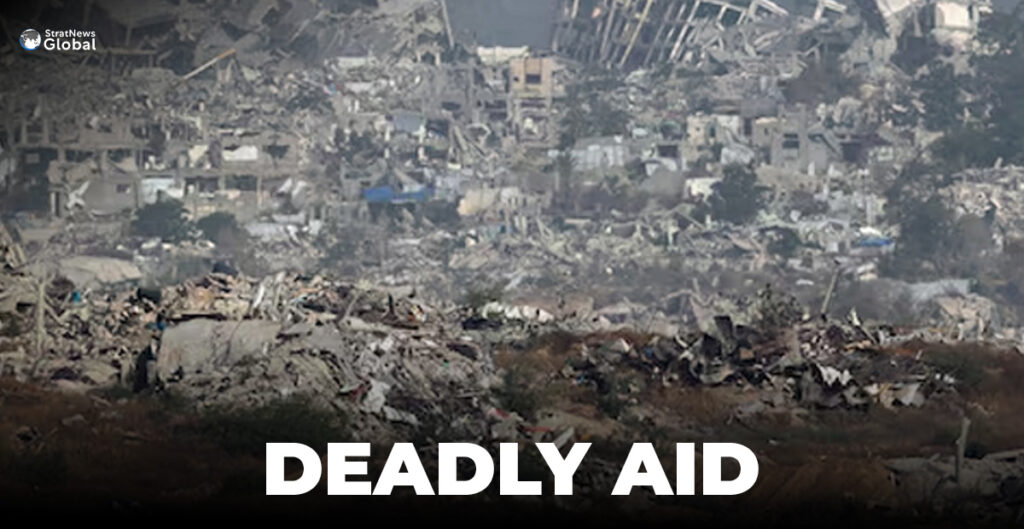
UN Reports 875 Palestinians Killed Near Gaza Aid Sites In Six Weeks
The UN rights office said on Tuesday it had documented at least 875 deaths over the past six weeks near aid distribution sites in Gaza operated by the U.S.- and Israeli-backed Gaza Humanitarian Foundation (GHF), as well as convoys run by other relief organisations, including the United Nations.
The majority of those killed were in the vicinity of Gaza Humanitarian Foundation sites, while the remaining 201 were killed on the routes of other aid convoys.
The GHF uses private U.S. security and logistics companies to get supplies into Gaza, largely bypassing a U.N.-led system that Israel alleges has let Hamas-led militants loot aid shipments intended for civilians. Hamas denies the allegation.
The GHF, which began distributing food packages in Gaza in late May after Israel lifted an 11-week aid blockade, previously told Reuters that such incidents have not occurred on its sites and accused the U.N. of misinformation, which it denies.
The GHF did not immediately respond to a request for comment on the latest UN figures.
“The data we have is based on our own information gathering through various reliable sources, including medical human rights and humanitarian organisations,” Thameen Al-Kheetan, a spokesperson for the U.N. Office of the High Commissioner for Human Rights, told reporters in Geneva.
‘Inherently Unsafe’ Aid Model
The United Nations has called the GHF aid model “inherently unsafe” and a violation of humanitarian impartiality standards.
The GHF said on Friday it had delivered more than 70 million meals to Gaza Palestinians in five weeks, and that other humanitarian groups had “nearly all of their aid looted” by Hamas or criminal gangs.
The Israeli army previously told Reuters in a statement that it was reviewing recent mass casualties and that it had sought to minimise friction between Palestinians and the Israel Defence Forces by installing fences and signs and opening additional routes.
The U.N. Office for the Coordination of Humanitarian Affairs has previously cited instances of violent pillaging of aid, and the U.N. World Food Programme said last week that most trucks carrying food assistance into Gaza had been intercepted by “hungry civilian communities”
(With inputs from Reuters)
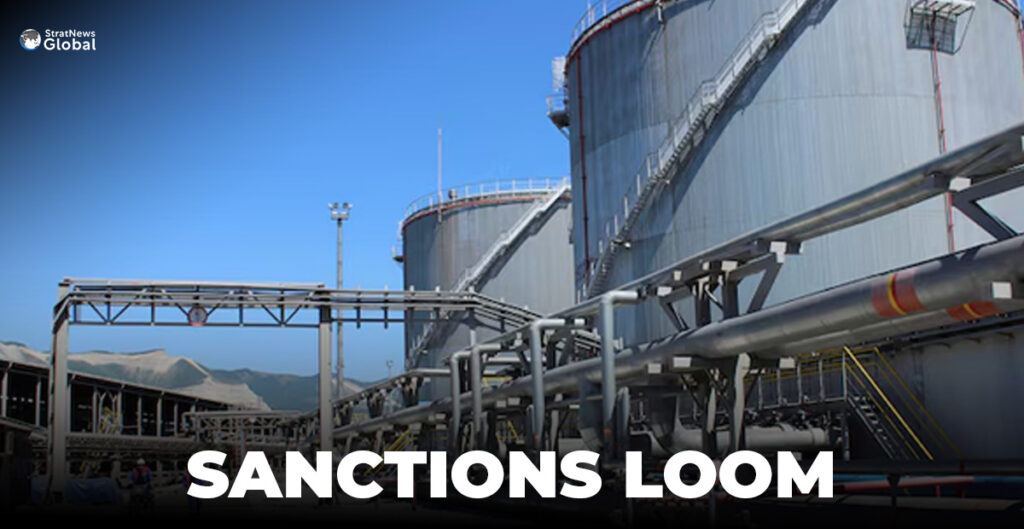
Trump’s Sanctions Threat Casts Shadow Over Russian Oil Exports To China, India, Turkey
U.S. President Donald Trump has threatened to impose sanctions on buyers of Russian exports unless Moscow agrees to a peace deal in Ukraine, a move that could complicate Russia’s oil sales to key partners like China, India, and Turkey.
Russia’s Oil Grades, Ports
According to the International Energy Agency, Russia’s revenue from sales of crude oil and oil products in June declined by almost 14% from a year earlier to $13.57 billion.
Russia’s crude output, however, stayed broadly flat at 9.2 million barrels per day (bpd) last month, and crude loadings were stable at 4.68 million bpd, the IEA said. Its exports of oil products dropped by 110,000 bpd to 2.55 million bpd.
Russia exports Urals, Siberian Light, and CPC Blend oil grades from its Western ports, such as Primorsk, Ust-Luga and Novorossiisk. It also loads smaller amounts of Arctic oil, ARCO and Novy port grades from its northern Murmansk port.
Russia also exports the ESPO Blend from Kozmino port in the Far East, and the Sokol and Sakhalin Blend from Sakhalin Island in the Pacific.
Russian oilfields are also linked by pipelines to China and European countries. Currently, only Hungary and Slovakia are still buying oil from Russia in Europe as part of an exception to European Union sanctions.
Russia also provides its pipeline network for oil transit from Kazakhstan for further shipments to its ports and via the Druzhba oil pipeline to Germany. Russia also exports its oil to its neighbour Belarus, which has two major refineries.
Main Buyers
China remains the largest buyer of Russian oil, mostly due to direct connections to Russian fields by pipeline: oil enters the country via the Skovorodino-Mohe and Kazakhstan’s Atasu-Alashankou oil pipelines, and the rest is purchased by Chinese refineries by sea.
China purchases about 2 million bpd of oil from Russia -mainly ESPO Blend, Sokol and Sakhalin Blend, as well as some Urals and Arctic oil, according to Chinese customs data.
That’s worth around $130 million each day, according to Reuters’ calculations.
The main buyers are energy companies CNPC, Sinopec and CNOOC, as well as independent refineries.
India is the second-largest oil buyer from Russia and the main buyer of its flagship Urals oil. India also purchases ESPO Blend oil, Sokol and Arctic grades from Russia. Its overall imports of Russian oil are at about 1.8 million bpd, according to ship tracking data from Kpler.
Russian oil flows to most of India’s refiners, including Reliance Industries, owner of the world’s largest refinery. It also flows to private refiner Nayara Energy, in which Russia’s Rosneft holds a stake, as well as Indian Oil and ONGC.
The third-largest importer of Russian oil, Turkey, ramped its purchases to an annual record in June of 400,000 bpd, according to LSEG.
The increase in purchases of Russian oil by Turkey was due to a price decline of the Russian grade. Since April 1, Urals oil has been trading consistently below the price cap of $60 per barrel.
Turkey’s STAR refinery, controlled by Azerbaijan’s SOCAR, is the main buyer of Russian oil in Turkey, while another major refiner, Tupras, also purchases Urals grade oil.
Oil Products
Russia exports some 2.5 million bpd of fuel products, including low-sulphur diesel, gasoline, naphtha, fuel oil and others.
Since 2023, Russia has also diverted its oil-product sales from Europe to Asia and Latin America.
Moscow is a major diesel supplier to Brazil and Turkey, while it also supplies significant volumes of fuel to African countries, including Ghana, Egypt, Morocco, Togo and Tunisia.
Others
Russian oil and products also flow to “friendly” states, as Moscow calls the countries it continues to do business with.
Among the buyers are Syria, which has recently started to buy Russian fuel and Arctic oil, as well as countries such as Pakistan, Cuba and Sri Lanka.
(With inputs from Reuters)
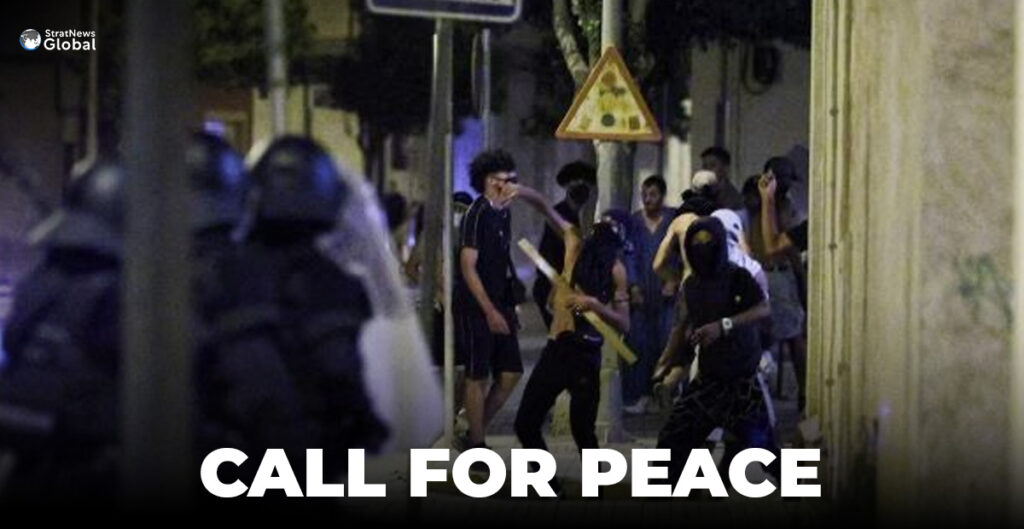
Moroccan Community Urges Calm After Days Of Anti-Migrant Unrest In Spanish Town
Leaders from the Moroccan community in Torre Pacheco, Spain, have appealed for calm after four consecutive nights of violent clashes between North African migrants and far-right groups. The disturbances are among the most serious migrant-related unrest the country has witnessed in recent years.
Police have detained at least 14 people so far over the clashes that flared up on Friday after an attack last week on a local man in his 60s.
Far-right groups have called for anti-migrant protests on Tuesday and over 120 Civil Guard officers have been deployed to maintain security in the town, a government spokesperson for the region said.
Authorities said three Moroccan citizens suspected of involvement in the assault have been apprehended, including a 19-year-old alleged to be the main perpetrator. He was detained on Monday evening in northern Spain on assault and battery charges.
A spokesperson for the central government’s office in the Murcia region said none of the suspects lived in Torre Pacheco.
‘We Want Peace’
After xenophobic messages on social media to “hunt down” residents of North African origin, leaders of the local Moroccan community urged calm and advised younger members to remain in their homes after dozens took to the streets over the weekend and on Monday, clashing with far-right groups and police.
“We want peace … We don’t want criminals, we don’t want violence or people who come from outside to make trouble here,” Abdelali, an informal spokesperson for the Moroccan community who has lived in the town for 25 years, told reporters.
Police arrested three people overnight after a confrontation with dozens of young men in the San Antonio neighbourhood, home to a majority of the town’s first- and second generation migrants who represent nearly a third of the town’s population of 40,000, according to local government data.
Media footage showed some of the protesters, mostly masked, lobbing fireworks at officers clad in riot gear, who responded by firing rubber bullets.
Hate Crimes Investigation
Spain’s top hate crimes prosecutor, Miguel Angel Aguilar, told SER radio on Tuesday that his office was investigating the events in Torre Pacheco, as well as social media messages inciting violence towards migrants.
He also confirmed regional prosecutors were looking at statements by the leader of far-right party Vox in Murcia, Jose Angel Antelo, who is accused by Spain’s ruling Socialist Party of linking immigration to criminality in speeches, media appearances and posts on X.
Late on Monday, the messaging app Telegram shuttered a channel named “DeportThemNowSpain” for “inciting violence”.
Dozens of messages in the channel included expletive-laden calls to attack Moroccans residing in Torre Pacheco or set fire to their homes, according to sources.
The Spanish Interior Ministry said police in Mataro, near Barcelona, had arrested an unnamed leader of supremacist movement “Deport Them Now Europe” suspected of inciting hatred and seized two computers.
(With inputs from Reuters)
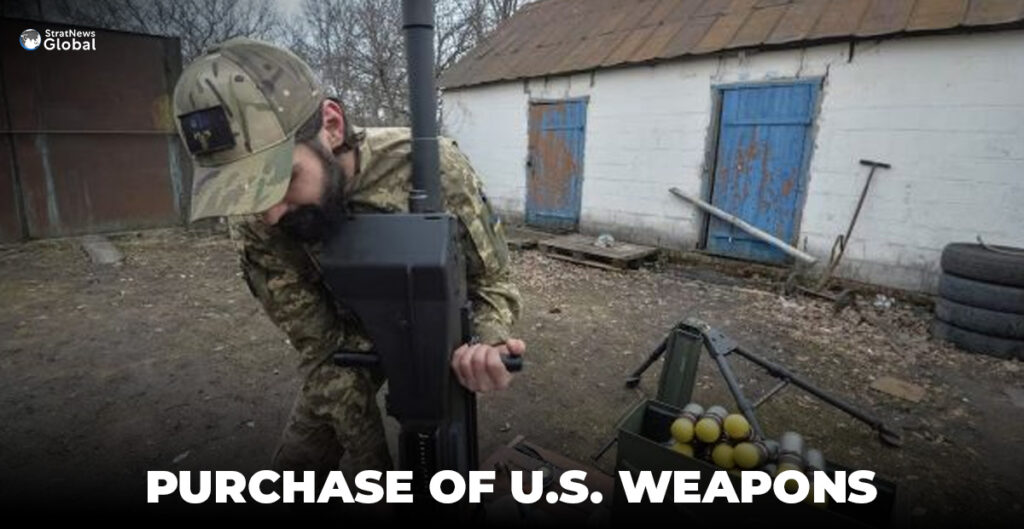
European Nations Open To Buying U.S. Arms For Ukraine Under Trump Plan, But Await Further Details
Many European nations expressed readiness on Tuesday to purchase U.S. arms for Ukraine as part of a plan proposed by President Donald Trump. However, officials noted that key details of the arrangement still need to be clarified before any commitments can be made.
Trump said on Monday that Washington will supply Patriot air defence systems, missiles and other weaponry to Ukraine for its war against Russia’s invasion and that the arms would be paid for by other NATO countries.
But much remains undisclosed, including the amounts and precise types of weapons to be provided, how quickly they would be supplied and how they would be paid for.
U.S. officials have suggested that European countries will be willing to give up some of their own stocks of weapons for Ukraine and then buy replacements from the United States. But some of the countries involved say they still don’t even know what is being asked of them.
Such a move would get weapons to Ukraine more quickly but would leave donor countries’ defences more exposed until new systems are ready.
Several Countries Want To Be A Part Of Trump’s Plan
“We are ready to participate. Of course we can’t do it on our own, we need others to partner up – but we have a readiness,” Danish Foreign Minister Lars Lokke Rasmussen told reporters in Brussels on Tuesday ahead of a meeting of European Union ministers.
Speaking alongside Trump at the White House on Monday, NATO chief Mark Rutte said that Germany, Finland, Denmark, Sweden, Norway, the United Kingdom, the Netherlands and Canada want to be part of the new initiative.
Many of those countries have been among the biggest military aid donors to Ukraine, either overall or per capita.
Asked whether Denmark could give U.S. arms from its own stocks as part of the scheme, Rasmussen said: “We don’t have these kind of systems – the Patriot systems – so if we should lean in, and we are absolutely ready to do so, it will be (with) money and we have to work out the details.”
Purchases Of U.S. Arms
European ministers said they would now need to examine how new purchases of U.S. weapons could be paid for. In many cases, that seems likely to involve countries teaming up to buy U.S. weapons systems.
“Now we need to see how together we can go in and finance, among other things, Patriots, which they plan to send to Ukraine,” Sweden’s Foreign Minister Maria Malmer Stenergard told Swedish radio.
In Brussels, Dutch Foreign Minister Caspar Veldkamp said his country is looking into the plan “with a positive inclination”.
Asked about the scheme, Norwegian Defence Minister Tore Sandvik said that Oslo was “in close dialogue with Ukraine” on military aid and “air defence remains a high priority for Ukraine and for the Norwegian military support”.
“Norway has contributed to significant amounts of air defence for Ukraine, including co-financing the donation of a Patriot system and missiles,” he said.
The Finnish Defence Ministry said Helsinki “will continue to provide material support to Ukraine”.
“The details of the U.S. initiative … are not yet known and we are interested to hear more about them before we can take more concrete lines on this issue,” it said.
(With inputs from Reuters)
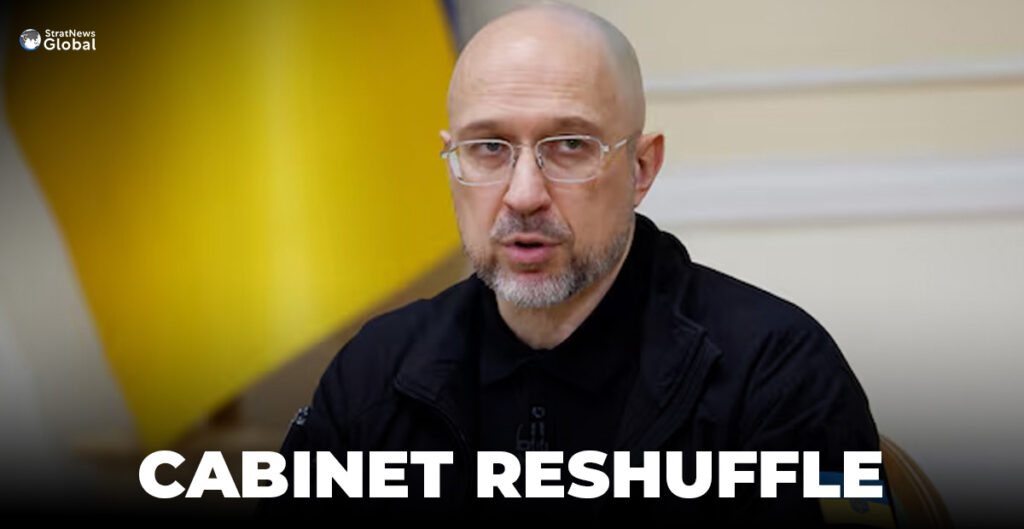
Ukraine PM Denys Shmyhal Quits As Part Of Major Wartime Cabinet Reshuffle
Ukraine’s Prime Minister Denys Shmyhal announced on Tuesday that he had submitted his resignation, ahead of the country’s largest wartime cabinet reshuffle expected this week.
President Volodymyr Zelenskyy on Monday nominated First Deputy Prime Minister Yulia Svyrydenko to replace Shmyhal. Svyrydenko, who is also the economy minister, is a close and long-standing ally of Zelenskyy.
Shmyhal, who has been in his post since March 2020, is expected to be appointed as Ukraine’s new defence minister, Zelenskyy said on Monday.
Parliament is due to vote on Svyrydenko’s nomination later this week. Zelenskyy said that he had already discussed priority tasks for the next six months with her.
“We are preparing the initial steps of the renewed government,” he said on the Telegram app, posting a picture from their meeting in his office.
The key tasks would be to increase domestic weapons production and implement reforms to unlock Ukraine’s economic potential, he said.
The shakeup, the biggest since Russia’s invasion in February 2022, comes as the Russian forces continue their grinding advance in Ukraine’s east, and prospects for any fast ceasefire deal look dim.
Ukraine’s economy is still smaller than before the war, despite local businesses adapting to the wartime reality and billions in foreign aid from Kyiv’s Western allies to help maintain macroeconomic stability.
Next year, the country is facing a tough task of financing its ballooning budget deficit as foreign aid is set to diminish. Ukrainian officials have said the country would need about $40 billion in external financing in 2026.
Parliament is due to vote on the new government nominations on Thursday, lawmakers said.
(With inputs from Reuters)