

Support us by contributing to StratNewsGlobal on the following UPI ID
ultramodern@hdfcbank

Strategic affairs is our game, South Asia and beyond our playground. Put together by an experienced team led by Nitin A. Gokhale. Our focus is on strategic affairs, foreign policy and international relations, with higher quality reportage, analysis and commentary with new tie-ups across the South Asian region.
You can support our endeavours. Visit us at www.stratnewsglobal.com and follow us on YouTube, Twitter, Facebook and Instagram.
र 500 per month
र 1000 per month
र 5000 per year
र 10000 per year
Donate an amount of your choice
र 500 per month
Donate र 500 per month

र 1000 per month
Donate र 1000 per month
र 5000 per year
Donate र 5,000 per year
र 10000 per year
Donate र 10,000 per year
Donate an amount of your choice
Donate an amount of your choice
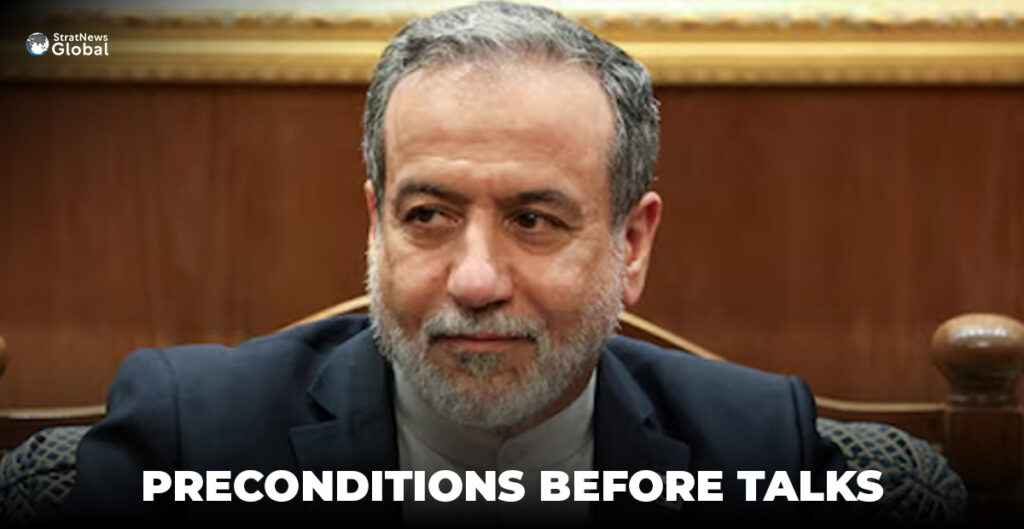


Iran’s Parliament Rejects Resuming Nuclear Talks With US Until Preconditions Met
Iran’s parliament declared that nuclear talks with the United States should not resume until specific preconditions are fulfilled, according to state media reports on Wednesday.
“When the U.S. uses negotiations as a tool to deceive Iran and cover up a sudden military attack by the Zionist regime (Israel), talks cannot be conducted as before. Preconditions must be set and no new negotiations can take place until they are fully met,” the statement said.
The statement did not define the preconditions, but Iran’s Foreign Minister Abbas Araqchi has previously said there should be guarantees that there will be no further attacks against Tehran.
Israel and the U.S. launched strikes on Iran’s nuclear facilities last month, saying that they were part of a programme geared towards developing nuclear weapons. Tehran maintains that its nuclear programme is purely for civilian purposes.
Indirect Negotiations
Tehran and Washington had held five rounds of indirect negotiations mediated by Oman prior to the 12-day air war, with U.S. demands that Tehran drop its domestic uranium enrichment programme reaching a dead end.
Last week, Araqchi reiterated Tehran’s position that it would not agree to a nuclear deal that prevents it from enriching uranium and would refuse to discuss extra-nuclear topics such as its ballistic missile programme.
U.S. President Donald Trump said on Tuesday he was in no rush to negotiate with Iran as its nuclear sites were now “obliterated”, but the U.S., in coordination with three European countries, has agreed to set the end of August as the deadline for a deal.
French Foreign Minister Jean-Noel Barrot said on Tuesday that Paris, London and Berlin would trigger the United Nations sanctions snapback mechanism, which would reimpose international sanctions on Iran, by the end of August if there is no concrete progress regarding an agreement.
(With inputs from Reuters)
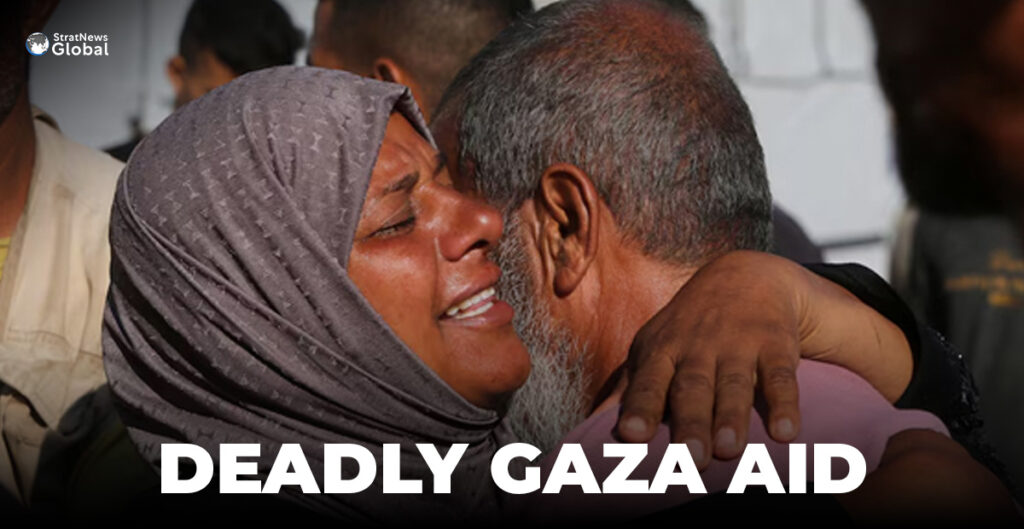
At Least 20 Killed In Crush At Gaza Aid Site, US-Backed GHF Says
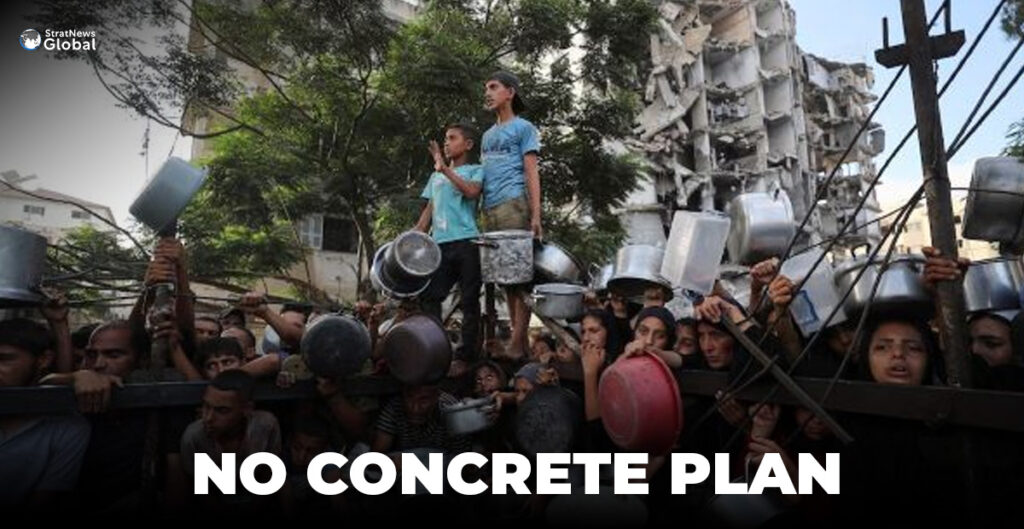
At Least 20 Palestinians were killed on Wednesday at an aid distribution site run by the U.S.-backed Gaza Humanitarian Foundation (GHF), which blamed the deadly crowd surge on armed agitators.
The United Nations rights office says it has documented at least 875 deaths over the past six weeks near aid sites and convoys in Gaza, the majority of them near GHF distribution points.
The GHF, which is supported by Israel, said 19 people were trampled and one was fatally stabbed during the crush at one of its centres in Khan Younis in southern Gaza.
“We have credible reason to believe that elements within the crowd – armed and affiliated with Hamas – deliberately fomented the unrest,” GHF said in a statement.
There was no immediate comment from Hamas.
Palestinian health officials told Reuters at least 20 people had died of suffocation at the site. One medic said lots of people had been crammed into a small space and had been crushed.
The GHF, which began distributing food packages in late May after Israel lifted an 11-week blockade on humanitarian supplies, has previously rejected U.N. criticism, accusing it of spreading misinformation.
‘Inherently Unsafe’ Aid Model
The U.N. has called the GHF’s model “inherently unsafe” and a breach of humanitarian impartiality standards.
GHF operates outside the U.N.-coordinated aid system and uses private U.S. security and logistics contractors to deliver aid — an approach Israel says reduces the risk of Hamas looting, a charge the group denies.
The GHF said on Friday it had delivered more than 70 million meals to Gaza Palestinians in five weeks, and that other humanitarian groups had “nearly all of their aid looted” by Hamas or criminal gangs.
The Israeli army previously told Reuters in a statement that it was reviewing recent mass casualties and that it had sought to minimise friction between Palestinians and the Israel Defence Forces by installing fences and signs and opening additional routes.
The U.N. Office for the Coordination of Humanitarian Affairs has previously cited instances of violent pillaging of aid, and the U.N. World Food Programme said last week that most trucks carrying food assistance into Gaza had been intercepted by “hungry civilian communities”
(With inputs from Reuters)
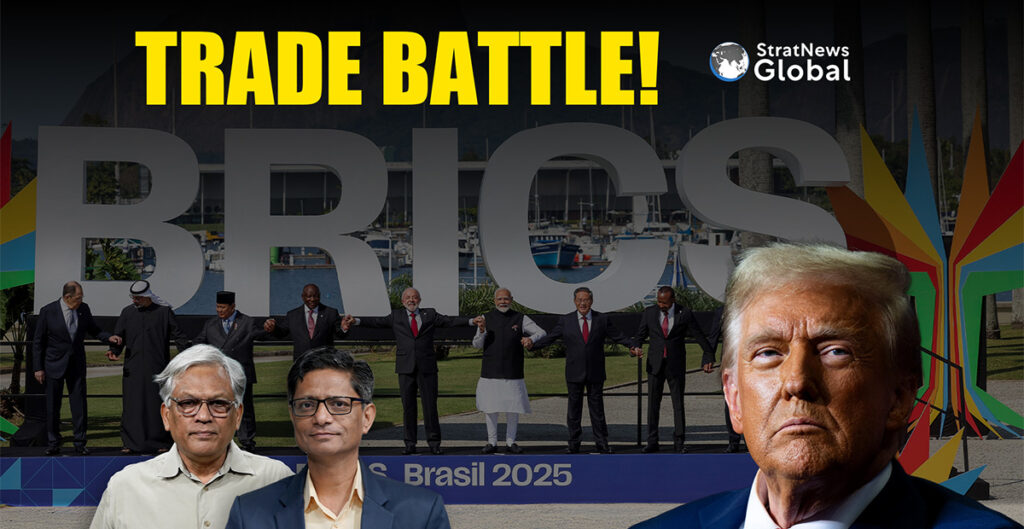
From Rice To GM Products And Tech, US Ups Pressure On India
India-US negotiations on a bilateral trade agreement has gone into extra time, with the deadline now shifting to Aug 1. Is that good or bad for India?
Abhijit Das, former head of the Centre for WTO Studies in Delhi, believes that “the more the negotiations drag on, more will be the demands that the US will likely make on India particularly in the agriculture sector. It will require India to make concessions if the interim agreement has to be finalised.”
Das believes the pressure on India will be more in the area of poultry, soyabean, corn, maybe even rice and wheat.
“The biggest lobby group in the US is on rice. They want to make sure India’s MSP (minimum support price) is dismantled so they can export to the Indian market,” Das pointed out. “Ethanol is another issue, then problems around US ambitions to export GM products to India.”
He warns that while tech has not been talked about much, “I would be very surprised if the US does not bring the interests of its Big Tech to the negotiating table. They might be demanding a permanent moratorium on customs duties on electronic transmissions. They might want a commitment that in future, government will not mandate localisation of servers.”
Not only will US Big Tech want free flow of data across borders, they will also seek any data that government shares with a local domestic entity.
“The idea is to tie the hands of the government from implementing policies which can help India create vibrant domestic champions in the digital sector in the future.”
A major aim of the US is to get governments to de-link from the Chinese economy, particularly through global value chains. China, in a countermove, is trying to get closer to the Asean states. This is where the US strategy of targeting Asean with tariffs could boomerang.
Tune in for more in this conversation with Abhijit Das, former head of the Centre for WTO Studies.
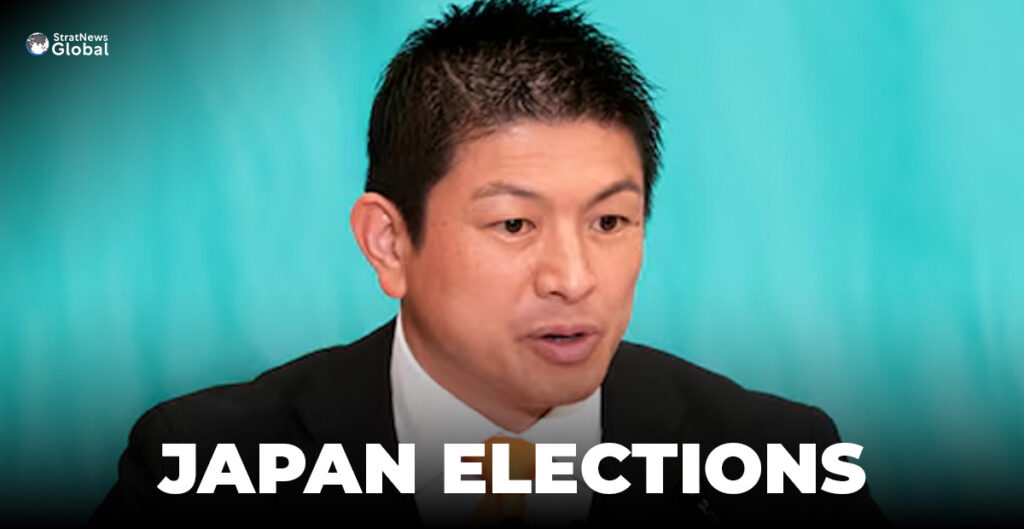
‘Japanese First’ Party Upends Election With Anti-Foreigner Rhetoric
A rising political party in Japan is gaining traction ahead of the elections by decrying a ‘silent invasion’ of immigrants, pressuring the government to address public fears about foreigners and bringing once-fringe rhetoric into the mainstream.
Birthed on YouTube during the COVID-19 pandemic, spreading conspiracy theories about vaccinations and a cabal of global elites, the party, Sanseito, is widening its appeal with a ‘Japanese First’ campaign ahead of Sunday’s upper house vote.
And while polls show it may only secure 10 to 15 of the 125 seats up for grabs, it is further eroding the support of Prime Minister Shigeru Ishiba’s shaky minority government, increasingly beholden to opposition parties as it clings to power.
“In the past, anyone who brought up immigration would be attacked by the left. We are getting bashed too, but are also gaining support,” Sohei Kamiya, the party’s 47-year-old charismatic leader, told Reuters in an interview.
“The LDP and Komeito can’t stay silent if they want to keep their support,” Kamiya added, referring to Ishiba’s Liberal Democratic Party, which has ruled Japan for most of the past seven decades, and its junior coalition partner.
Kamiya’s message has grabbed voters frustrated with a weak economy and currency that has lured tourists in record numbers in recent years, further driving up prices that the Japanese can ill-afford, political analysts say.
The fast-ageing society has also seen foreign-born residents hit a record of about 3.8 million last year, although that is still just 3% of the total population, a tiny fraction compared to numbers in the United States and Europe.
Kamiya, a former supermarket manager and English teacher, says he has drawn inspiration from U.S. President Donald Trump’s “bold political style”.
It remains to be seen whether he can follow the path of other far-right parties with which he has drawn comparisons, such as Germany’s AFD and Reform UK.
Yet the ingredients are there, said Jeffrey Hall, a lecturer at Tokyo’s Kanda University who has studied Japan’s right-wing politics, pointing to their online following, appeal among young men and warnings about immigration eroding indigenous cultures.
“Anti-foreign sentiment that was considered maybe taboo to talk about so openly is now out of the box,” he added.
With immigration emerging as a top election issue, Ishiba this week unveiled a new government task force to fight “crimes and disorderly conduct” by foreign nationals, and his party has promised to pursue “zero illegal foreigners”.
Polls show Ishiba’s ruling coalition is likely to lose its majority in the upper house vote, in a repeat of elections last year in the more powerful lower house.
While he is expected to limp on, his government may have to broaden its coalition or strike deals with other parties on policy matters, analysts say.
‘Hot-Blooded’
Kamiya, who won the party’s first seat in 2022 after having gained notoriety for appearing to call for Japan’s emperor to take concubines, has tried to tone down some controversial ideas formerly embraced by the party.
His election manifesto, for example, includes plans to cut taxes and increase child benefits, policies promoted by a raft of opposition parties that led investors to fret about Japan’s fiscal health and massive debt pile.
While Sanseito is the latest in a string of small far-right parties that have struggled for a foothold in Japan’s staid politics, its online support suggests it may have staying power.
Its YouTube channel has 400,000 followers, more than any other party on the platform and three times that of the LDP, according to socialcounts.org.
There are still hurdles. Like right-wing parties in the U.S. and Europe, Sanseito’s support skews heavily toward men in their twenties and thirties.
Kamiya is trying to widen its appeal by fielding several female candidates, such as the single-named singer Saya, seen as likely to clinch a seat in Tokyo.
Earlier in the campaign, Kamiya faced a backlash for branding gender equality policies a mistake, as they encourage women to work and keep them from having children.
“Maybe because I am hot-blooded, that resonates more with men,” Kamiya replied to a question on the party’s greater appeal to men.
(With inputs from Reuters)
Trump To Meet Qatar’s Prime Minister To Discuss Gaza Truce: Axios
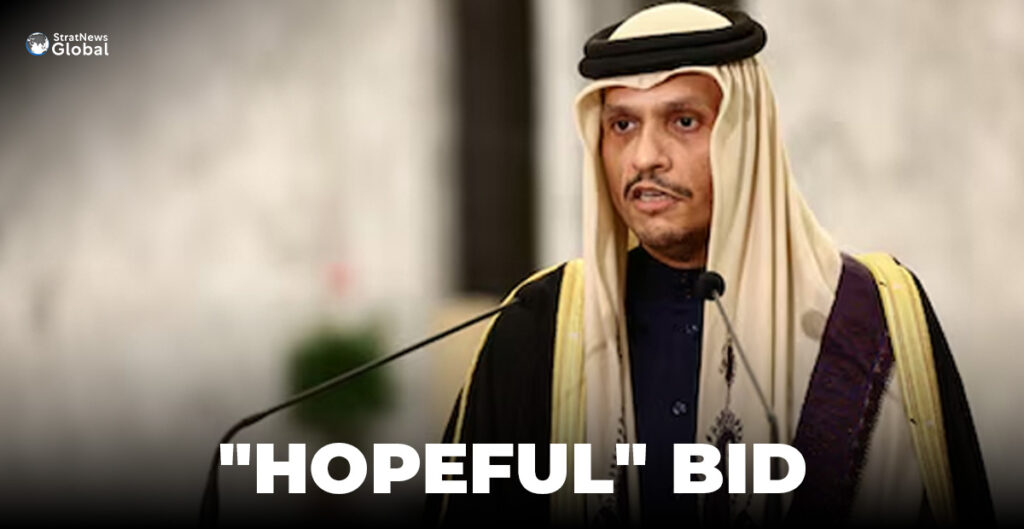
U.S. President Donald Trump is set to meet Qatar’s Prime Minister Sheikh Mohammed bin Abdulrahman al-Thani on Wednesday to discuss Gaza ceasefire negotiations, according to Axios reporter Barak Ravid on X.
Israeli and Hamas negotiators have been taking part in the latest round of ceasefire talks in Doha since July 6, discussing a U.S.-backed proposal for a 60-day ceasefire that envisages a phased release of hostages, Israeli troop withdrawals from parts of Gaza and discussions on ending the conflict.
Trump’s Middle East envoy Steve Witkoff had said on Sunday that he was “hopeful” about the ceasefire negotiations underway in Qatar, a key mediator between the two sides.
U.S., Qatari and Egyptian mediators have been working to secure an agreement; however, Israel and Hamas are divided over the extent of an eventual Israeli withdrawal from the Palestinian enclave.
The latest bloodshed in the decades-old Israeli-Palestinian conflict was triggered in October 2023 when Hamas attacked Israel. Israel says Hamas killed 1,200 and took about 250 hostages.
Gaza’s health ministry says Israel’s subsequent military assault has killed over 58,000 Palestinians. It has also caused a hunger crisis, internally displaced Gaza’s entire population and prompted accusations of genocide at the International Court of Justice and of war crimes at the International Criminal Court. Israel denies the accusations.
A previous two-month ceasefire ended when Israeli strikes killed more than 400 Palestinians on March 18. Trump earlier this year proposed a U.S. takeover of Gaza, which was condemned globally by rights experts, the U.N. and Palestinians as a proposal of “ethnic cleansing.”
Trump and Sheikh Mohammed are also expected to discuss efforts to resume talks between the U.S. and Iran to reach a new nuclear agreement, Ravid added, citing a source familiar with the matter.
(With inputs from Reuters)
Air India Crash Reignites Debate Over In-Cockpit Video Surveillance
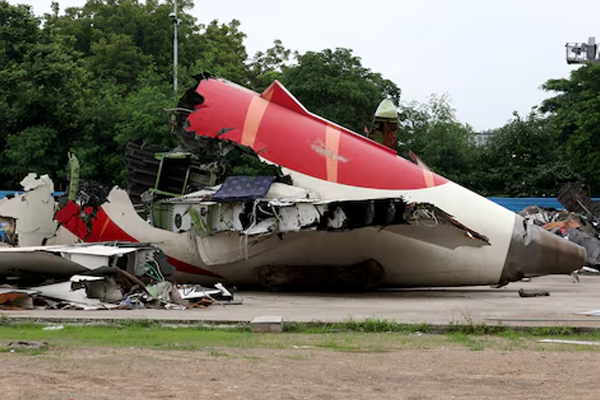
Last month’s deadly Air India crash has reignited a decades-old debate in the aviation industry over adding video cameras to monitor pilot actions, supplementing the cockpit voice and flight data recorders already used by accident investigators.
One of the industry’s most influential voices, International Air Transport Association head Willie Walsh, a former airline pilot, said on Wednesday in Singapore, there was a strong argument for video cameras to be installed in airliner cockpits to monitor pilot actions to complement voice and flight data recorders already used by accident investigators.
Aviation experts have said a preliminary report from India’s Aircraft Accident Investigation Bureau (AAIB) raised questions over whether one of the pilots of Air India flight 171 cut off fuel to the Boeing 787’s engines seconds after takeoff, leading to an irrecoverable situation.
The crash in Ahmedabad, India, killed 241 of the 242 people aboard, as well as 19 people on the ground.
As of now, “based on what little we know now, it’s quite possible that a video recording, in addition to the voice recording, would significantly assist the investigators in conducting that investigation on the issue of mental health,” Walsh said.
Debate Over Privacy
Advocates for cockpit video cameras say the footage could fill in gaps left by the audio and data recorders, while opponents say concerns about privacy and misuse outweigh what they argue are marginal benefits for investigations.
Video footage was “invaluable” to Australian crash investigators determining what led to the Robinson R66 helicopter breaking up in mid-air in 2023, killing the pilot, the only person aboard, according to the Australian Transport Safety Bureau’s final report, which was released 18 days after the Air India crash.
The video showed “the pilot was occupied with non-flying related tasks for much of this time, specifically, mobile phone use and the consumption of food and beverages,” the report said.
The ATSB commended Robinson Helicopters for providing factory-installed cameras and said it encouraged other manufacturers and owners to consider the ongoing safety benefits of similar devices.
In 2000, U.S. National Transportation Safety Board (NTSB) Chairman Jim Hall urged the Federal Aviation Administration to require commercial airliners to be equipped with cockpit image recorders.
Hall’s recommendation came in the wake of 1999’s Egyptair Flight 990 crash, when the first officer intentionally crashed the Boeing 767, according to the NTSB, killing all 217 people on board.
“In the balance between privacy and safety, the scale tips toward safety, unequivocally,” air safety expert and former commercial airline pilot John Nance said. “Protecting the flying public is a sacred obligation.”
Another aviation safety expert, Anthony Brickhouse, said that as an accident investigator, he is in favour of cockpit video, but acknowledged that commercial pilots have real concerns.
Video on Air India flight 171 “would have answered lots of questions,” he said.
Air India declined to comment. India’s AAIB, which is expected to release a final report within a year of the crash under international rules, did not reply to a request for comment.
Pilot Objections
U.S. pilots’ unions such as the Air Line Pilots Association (ALPA) and Allied Pilots Association (APA) say the voice and data recorders already provide enough information to determine the cause of a crash and that the cameras would be an invasion of privacy and could be misused.
Calls for cockpit cameras are an understandable reaction to “the stress of not knowing what happened immediately after an accident,” said APA spokesperson Dennis Tajer, an American Airlines, opens new tab pilot.
“I can understand the initial reaction of the more information, the better,” but investigators already have enough data to adequately determine an accident’s cause, leaving no need for cameras, he said.
To make flying safer, current safety systems should be enhanced to record higher-quality data, rather than adding video cameras, an ALPA spokesperson said.
There are also concerns that the footage could be used by airlines for disciplinary actions or that the video could be leaked to the public after a crash, said John Cox, an aviation safety expert, retired airline pilot and former ALPA executive air safety chairman.
A pilot’s death being broadcast on “the 6 o’clock news is not something that the pilot’s family should ever have to go through,” he said.
If confidentiality can be assured around the world, “I can see an argument” for installing cameras, Cox said.
Cockpit voice recordings are typically kept confidential by investigators in favour of partial or full transcripts being released in final reports.
Despite that, the International Federation of Air Line Pilots Associations said it was sceptical that confidentiality could ever be assured for cockpit videos.
“Given the high demand for sensational pictures, IFALPA has absolutely no doubt that the protection of (airborne image recorder) data, which can include identifiable images of flight crewmembers, would not be ensured either,” the organisation said in a statement.
Boeing declined to disclose whether customers are able to order cockpit video recorders, while Airbus did not reply to a request for comment.
(With inputs from Reuters)
NATO Chief Warns Brazil, China, India Could Face Sanctions Over Russia Ties
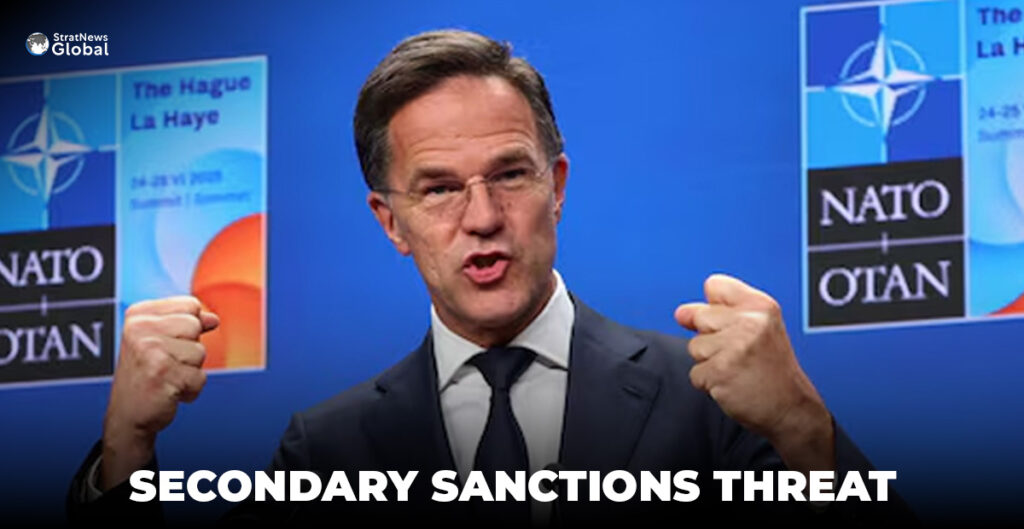
NATO Secretary General Mark Rutte warned on Wednesday that nations like Brazil, China, and India risk facing severe secondary sanctions if they persist in maintaining business ties with Russia.
Rutte made the comment while meeting with senators in the U.S. Congress the day after President Donald Trump announced new weapons for Ukraine and threatened “biting” secondary tariffs of 100% on the buyers of Russian exports unless there is a peace deal in 50 days.
“My encouragement to these three countries, particularly is, if you live now in Beijing, or in Delhi, or you are the president of Brazil, you might want to take a look into this, because this might hit you very hard,” Rutte told reporters, who met with Trump on Monday and agreed the new steps.
“So please make the phone call to Vladimir Putin and tell him that he has to get serious about peace talks, because otherwise this will slam back on Brazil, on India and on China in a massive way,” Rutte added.
50-Day Delay
Republican U.S. Senator Thom Tillis praised Trump for announcing the steps, but said the 50-day delay “worries” him.
He said he was concerned that “Putin would try to use the 50 days to win the war, or to be better positioned to negotiate a peace agreement after having murdered and potentially collected more ground as a basis for negotiation.
“So we should look at the current state of Ukraine today and say, no matter what you do over the next 50 days, any of your gains are off the table,” he added.
Rutte said Europe would find the money to ensure Ukraine was in the best possible position in peace talks.
He said that under the agreement with Trump, the U.S. would now “massively” supply Ukraine with weapons “not just air defence, but also missiles, also ammunition paid for by the Europeans.”
Asked if long-range missiles for Ukraine were under discussion, Rutte said: “It is both defensive and offensive. So there are all kinds of weapons, but we have not discussed in detail yesterday with the president. This is really being worked through now by the Pentagon, by the Supreme Allied Commander in Europe, together with the Ukrainians.”
(With inputs from Reuters)
Amid Political Disputes, Israel’s ‘Humanitarian City’ Plan In Gaza Lacks Clear Strategy
A controversial Israeli proposal to relocate hundreds of thousands of displaced Palestinians to a designated “humanitarian city” within Gaza has sparked tensions between politicians and the defence establishment. Despite the heated debate, officials acknowledge that no concrete plan has been formulated so far.
Even without a clear blueprint, opposition critics have denounced the proposal, with some likening the suggested site to a “concentration camp”, which could lead to ethnic cleansing in the coastal enclave devastated by 21 months of conflict.
Prime Minister Benjamin Netanyahu’s administration has defended the project, saying it would offer civilians a safe haven while further weakening Hamas terrorists’ grip on Gaza, but it remains unclear whether it is a concrete government policy.
The idea was floated by Defence Minister Israel Katz earlier this month and Netanyahu convened minister and defence officials to discuss it late on Sunday.
The military had been asked to put together a detailed proposition, but Netanyahu dismissed it as far too costly and complicated, two Israeli officials who were present said, and ordered them to come up with something cheaper and faster.
An Israeli military source said the “humanitarian city” was a complex initiative that required intricate logistics for infrastructure such as sewage, sanitation, medical services, water and food supplies.
Planning was in a very initial phase only, the source said, and the goal was to help Palestinians who do not want to live under Hamas rule.
The Plan
Some commentators have suggested the real aim of floating the plan was to increase pressure on Hamas during ongoing ceasefire talks, while also appeasing right-wingers in the cabinet who oppose any truce.
Katz outlined the plan on July 7 at a briefing with Israeli military correspondents. It followed a proposal by U.S. President Donald Trump, which was publicly embraced by Netanyahu but widely criticised abroad, for Gazans to move to third countries while the battered enclave was rebuilt.
Almost all of Gaza’s population of more than 2 million people has already been uprooted during the conflict, which was triggered in October 2023 when Hamas launched a deadly surprise attack on Israel.
Katz said last week that around 600,000 people would be moved to the new “humanitarian city” encampment, to be built in southern Gaza abutting the Egyptian border where Israeli forces have gained control and which, like much of Gaza, now lies in ruins.
No Presence Of Hamas
The new zone, in Rafah, would be free of any Hamas presence and run by international forces, not Israeli ones, Katz was quoted by both Israel public broadcaster Kan and Army Radio’s military correspondents as saying at the July 7 briefing.
He was also quoted as saying that the people who chose to move there would not be free to leave.
Katz’s spokesman declined to comment.
Zeev Elkin, an Israeli minister who sits on Netanyahu’s security cabinet, told Kan the plan aimed to weaken Hamas’ power in Gaza.
“The more you separate Hamas from the population, the more Hamas will lose. As long as Hamas controls the food, the water and the money, it can go on recruiting militants,” Elkin said.
Asked about concerns the relocations there would be forced and whether the new zone was meant to serve as transit camps with the ultimate aim of expelling Palestinians from Gaza, the military official said: “that is not our policy.”
When asked about the plan, U.N. spokesperson Stephane Dujarric said: “As we’ve said multiple times, we firmly stand against any plan that involves forced displacements of civilians in Gaza or forces (them) to make impossible choices.”
The Plan Faces Resistance
Since Katz’s briefing, Israeli media has been awash with leaks.
Left-leaning Haaretz newspaper, on July 9 citing senior military officials, said the plan had met resistance from the military because of its legal and logistical challenges.
On Sunday, Israel’s N12 News said the military objected to the plan because it could scupper ceasefire talks in Doha, while the Ynet news site cited officials as saying it would cost 10 billion to 15 billion shekels ($3 billion to $4.5 billion).
The report drew a rebuke from Finance Minister Bezalel Smotrich, who said that some people in the defence establishment were trying to sabotage the plan by presenting inflated budgets.
“Preparing a protected area for the population,” Smotrich’s office said, “is a simple logistical operation that costs only hundreds of millions – an amount that the Ministry of Finance is willing to transfer.”
After Sunday’s discussions, hardline national security minister Itamar Ben-Gvir dismissed the controversy as a smokescreen to distract from concessions Israel may be willing to make in the ceasefire talks with Hamas.
‘Mainly Spin’
Ben-Gvir, like Smotrich, wants Israel to press on with the war, Palestinians to leave Gaza and Jewish settlements that were dismantled there two decades ago to be rebuilt.
“The debate surrounding the establishment of the humanitarian city is mainly spin aimed at concealing the deal that is brewing,” Ben-Gvir posted on X. He said there was no way it could be built during the proposed 60-day ceasefire.
Opposition leader Yair Lapid said on Monday the plan was dangerous and would not materialise.
“Will the residents of this city be allowed to leave it? If not, how will they be prevented? Will it be surrounded by a fence? A regular fence? An electrical fence? How many soldiers will guard it? What will the soldiers do when children want to leave the city?” he said at Israel’s parliament.
(With inputs from Reuters)
Australian PM Albanese Defends Investment Screening While Visiting Great Wall
Australian Prime Minister Anthony Albanese on Wednesday defended his government’s foreign investment screening process, stating it is not targeted at any specific country. His comments came after Chinese Premier Li Qiang raised concerns about difficulties faced by Chinese firms trying to invest in Australia.
On the fifth day of a China visit where the Australian leader is balancing trade and security, Albanese visited the Great Wall to draw a comparison with former prime minister Gough Whitlam who walked the wall in 1971, opening dialogue with communist China before Australia’s ally the United States had done so.
“Foreign investment is viewed not on the basis of any one country but on the basis of an objective assessment of our national interest,” he told reporters during the visit on Wednesday.
At a roundtable of Chinese and Australian company executives on Tuesday evening, Li had said he hoped Australia would “solve the problems encountered by enterprises in terms of market access and investment review”, a readout of the meeting by Chinese state media outlet Xinhua showed.
Relationship With China
Australia has blocked some Chinese investments in critical minerals, and company executives have said that security screening of renewable energy and key infrastructure has also stepped up.
Australia supplies around half of the world’s lithium as well as other minerals including rare earths used in batteries for electric cars and defence, and is seeking to boost trade with the U.S. amid a global push to diversify supply chains away from dominant producer China.
Albanese said on Wednesday that it was in Australia’s interest to have a positive relationship with China and not be defined by differences.
To underline the point, Albanese said he was following in the footsteps of the Labor leader Whitlam, who made “a decision that took courage” to visit and recognise the People’s Republic of China in a changing world.
“It’s important that we build stability and security in our world, and part of that has to be positive engagement,” he added.
(With inputs from Reuters)
South Africa Pushes African Agenda As G20 Finance Talks Open
Finance ministers and central bank governors from the Group of 20 will gather in South Africa from Thursday, amid rising global trade tensions, economic slowdown, and Washington’s threats to pull out of multilateral bodies. President Cyril Ramaphosa is using Africa’s first-ever G20 presidency to push an African agenda, focusing on issues like high capital costs and climate change.
Here are the key issues to be discussed:
Debt Stress
Nearly two dozen countries in Africa are already in or at high risk of debt distress, the International Monetary Fund said. Debt-servicing costs crowd out spending on services like infrastructure development, health and education.
Launched in late 2020, the G20 Common Framework is a platform aimed at speeding up and simplifying the process of getting overstretched countries back on their feet. But progress has been slow.
Making the platform more efficient is one target for South Africa. Ramaphosa launched an Africa Expert Panel in March whose role is to galvanise efforts, chief among them debt relief.
Panel chair Trevor Manuel told Reuters it had already begun to make detailed recommendations on improving the framework.
“One of the reforms is that the opportunities in the Common Framework should be available to all middle-income countries as well,” said Manuel.
Financing For Development
With aid and development-finance cuts and a pivot by wealthy countries to defence spending, traditional funding sources for developing nations have become scarcer. South Africa is looking to shore up favourable finance for poorer nations.
It wants to strengthen and improve the role of multilateral development banks in financing for development. Washington, meanwhile, could potentially withdraw from more global institutions – including these banks.
Some analysts believe Washington’s withdrawal from multilateralism could leave a space for China to occupy, but it is unclear if Beijing aims to do that.
Lending to Africa from China has slowed to a trickle leaving an $80 billion financing gap. Meanwhile, US and European grants – accounting for 25% of the region’s external financing – face cuts as Washington suspends foreign aid and European capitals redirect funds toward defence.
Just Energy Transition
President Donald Trump’s administration has withdrawn from the Just Energy Transition Partnership (JETP) – a key focus for South Africa that is designed to help developing countries transition away from coal to cleaner energy.
Launched in 2021, JETPs aim to funnel money from governments, multilateral lenders and the private sector to renewable energy projects in a way that benefits local communities.
On Monday, the G20’s financial stability watchdog said it had developed a new plan to tackle climate risks but it had paused further policy work in light of the US retreat from climate action.
Mobilising funding for climate disasters affecting the Global South was a key agenda item for South Africa’s presidency.
Trade
Trump’s tariff threats have disrupted the global economy and the response will dominate the agenda even as US Treasury Secretary Scott Bessent skips the gathering.
US plans for tariffs on Canada, Europe and Mexico as well as threats to impose further levies on BRICS member countries including China, India, Russia, Brazil and G20 host South Africa, further heighten tensions between the world’s largest economy and other G20 nations.
Communique
Director General of Treasury Duncan Pieterse said in a statement on Monday that he hoped to issue the first Communique under the South African G20 presidency at the end of the meetings. The G20 was last able to take a mutually agreed stance to issue a Communique in July of 2024.
(With inputs from Reuters)