

Support us by contributing to StratNewsGlobal on the following UPI ID
ultramodern@hdfcbank

Strategic affairs is our game, South Asia and beyond our playground. Put together by an experienced team led by Nitin A. Gokhale. Our focus is on strategic affairs, foreign policy and international relations, with higher quality reportage, analysis and commentary with new tie-ups across the South Asian region.
You can support our endeavours. Visit us at www.stratnewsglobal.com and follow us on YouTube, Twitter, Facebook and Instagram.
र 500 per month
र 1000 per month
र 5000 per year
र 10000 per year
Donate an amount of your choice
र 500 per month
Donate र 500 per month

र 1000 per month
Donate र 1000 per month
र 5000 per year
Donate र 5,000 per year
र 10000 per year
Donate र 10,000 per year
Donate an amount of your choice
Donate an amount of your choice




Bangladesh: Violent Clashes Erupt At Youth Rally In Gopalganj, Four Killed
Violence broke out on Wednesday at a rally organised by Bangladesh’s youth-led National Citizen Party (NCP) in the southern town of Gopalganj, leaving four people dead and several others injured, according to local media reports.
Deadly student-led protests forced long-time Prime Minister Sheikh Hasina to flee to India in August last year, and since then, there have been delays over promised reforms, growing protests and political division.
Nobel peace laureate Muhammad Yunus, who took over as interim head, said in a post on X that members of the NCP, police and media were attacked during a peaceful rally on Wednesday, with cars vandalised and individuals assaulted.
“Preventing young citizens from peacefully holding a rally to commemorate the one-year anniversary of their revolutionary movement is a shameful violation of their fundamental rights,” he said, blaming Hasina’s political party, the Awami League and its student group for Wednesday’s violence.
BBC News Bangla reported that four people were killed, while the local daily Prothom Alo said nine were injured.
Police and hospital officials did not immediately respond to a request for comment from Reuters.
Authorities imposed a curfew.
The Awami League said on Facebook that one of its members had been killed by army gunfire.
Section 144 Imposed
Gopalganj descended into chaos on Wednesday afternoon as violent clashes broke out shortly after a rally by the youth-led National Citizen Party (NCP), prompting authorities to impose Section 144 in the area.
According to an executive magistrate, the order was issued by Gopalganj Deputy Commissioner Md Kamruzzaman to prevent further unrest.
The violence began moments after the NCP concluded its rally, part of its ongoing “July March to Build the Nation” campaign, which has been drawing attention across multiple districts since the beginning of the month.
Tuesday’s announcement on the party’s official Facebook page had promoted the event as “16 July: March to Gopalganj.”
Local media and eyewitnesses reported that a group of armed individuals, allegedly affiliated with the ruling Awami League, surrounded vehicles carrying NCP leaders and activists.
Armed with sticks and clubs, the attackers encircled both the NCP convoy and accompanying police vehicles, launching an assault that turned the area into a virtual battlefield.
In response, police and army personnel deployed to the scene fired sound grenades and blank rounds in an attempt to disperse the crowd and restore order.
Some NCP members were able to escape the violence by turning their vehicles around and taking alternate routes.
NCP Chief Coordinator Nasiruddin Patwari blamed Awami League supporters for orchestrating the attack and accused both police and army personnel of initially standing by without intervening.
The incident has further intensified the political climate in Bangladesh, already fraught with growing dissent and delays in promised reforms following last year’s ouster of PM Sheikh Hasina.
(With inputs from Reuters and IBNS)
$8Bn Meta Trial Begins Over Alleged Facebook Data Misuse
An $8 billion trial against Mark Zuckerberg and other current and former Meta leaders began on Wednesday, as shareholders accused them of illegally collecting Facebook user data in violation of a 2012 agreement with the US Federal Trade Commission.
The trial started with a privacy expert for the plaintiffs, Neil Richards of Washington University Law School, who testified about Facebook’s data policies.
“Facebook’s privacy disclosures were misleading,” he told the court.
Zuckerberg To Testify
Jeffrey Zients, White House chief of staff under President Joe Biden and a Meta director for two years starting in May 2018, is expected to take the stand later on Wednesday in the non-jury trial before Kathaleen McCormick, chief judge of the Delaware Chancery Court.
The case will feature testimony from Zuckerberg and other billionaire defendants including former Chief Operating Officer Sheryl Sandberg, venture capitalist and board member Marc Andreessen as well as former board members Peter Thiel, Palantir Technologies co-founder, and Reed Hastings, co-founder of Netflix.
A lawyer for the defendants, who have denied the allegations, declined to comment.
McCormick, the judge who rescinded Elon Musk’s $56 billion Tesla pay package last year, is expected to rule on liability and damages months after the trial concludes.
Lengthy Case
The case began in 2018, following revelations that data from millions of Facebook users was accessed by Cambridge Analytica, a now-defunct political consulting firm that worked for Donald Trump’s successful US presidential campaign in 2016.
The FTC fined Facebook $5 billion in the wake of the Cambridge Analytica scandal, saying the company had violated a 2012 agreement with the FTC to protect user data.
Shareholders want the defendants to reimburse Meta for the FTC fine and other legal costs, which the plaintiffs estimate total more than $8 billion.
In court filings, the defendants described the allegations as “extreme” and said the evidence at trial will show Facebook hired an outside consulting firm to ensure compliance with the FTC agreement and that Facebook was a victim of Cambridge Analytica’s deceit.
Meta, which is not a defendant, declined to comment. On its website, the company has said it has invested billions of dollars into protecting user privacy since 2019.
Delaware Bill
The lawsuit is considered the first of its kind to go to trial that alleges that board members consciously failed to oversee their company. Known as a Caremark claim, such lawsuits are often described as the hardest to prove in Delaware corporate law. However, in recent years, Delaware courts have allowed a growing number of these claims to proceed.
Boeing’s current and former board members settled a case with similar claims in 2021 for $237.5 million, the largest ever in an alleged breach of oversight lawsuit. The Boeing directors did not admit to wrongdoing.
The Meta trial comes four months after Delaware lawmakers overhauled the state’s corporate law to make it harder for shareholders to challenge deals struck with controlling shareholders like Zuckerberg. The bill, which did not address Caremark claims, was drafted after the state’s governor met with representatives of Meta.
Most publicly traded companies are incorporated in the state, which generates more than a quarter of the state’s budget revenue. Meta, which was reportedly considering leaving Delaware earlier this year, is still incorporated in the state.
Andreessen Horowitz, the venture capital fund co-founded by Andreessen, said earlier this month that it was reincorporating in Nevada from Delaware and encouraged other companies to do the same. The company cited the uncertainty of the state’s courts and referenced the Musk pay ruling.
Andreessen is expected to testify on Thursday.
Addition Allegation
In addition to privacy claims at the heart of the Meta case, plaintiffs allege that Zuckerberg anticipated that the Cambridge Analytica scandal would send the company’s stock lower and sold his Facebook shares as a result, pocketing at least $1 billion.
Defendants said evidence will show that Zuckerberg did not trade on inside information and that he used a stock-trading plan that removes his control over sales and is designed to guard against insider trading.
(With inputs from Reuters)
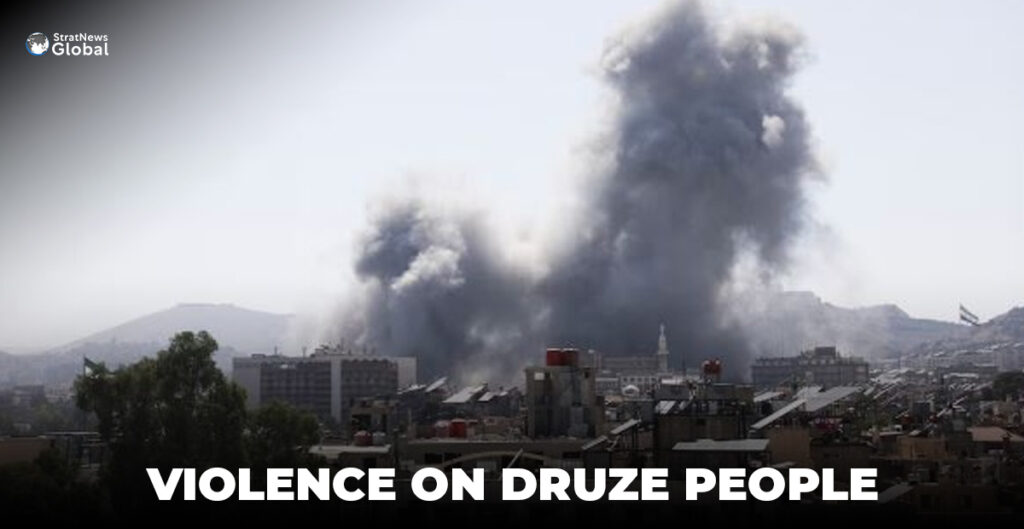
Israel Carries Out Major Airstrikes In Damascus, Vows To Protect Druze Communities
Israel launched a series of intense airstrikes on Damascus on Wednesday, targeting the defence ministry and striking areas near the presidential palace. The Israeli government said the strikes were aimed at halting Syrian government attacks on Druze communities in southern Syria and called for an immediate withdrawal of those forces.
The attacks marked a significant Israeli escalation against the Islamist-led administration of interim President Ahmed al-Sharaa and came despite his warming ties with the United States and his administration’s evolving security contacts with Israel.
Describing Syria’s new rulers as barely disguised jihadists, Israel has said it won’t let them move forces into southern Syria while vowing to shield the area’s Druze community from attack, encouraged by calls from Israel’s own Druze minority.
Scores of people have been killed this week in violence in and around the predominantly Druze city of Sweida, pitting fighters from the Druze minority against government security forces and members of Bedouin tribes.
Massive Strikes
Warplanes were heard to swoop low over the capital and unleash a series of massive strikes, according to reports. Thick columns were seen rising from the city centre defence ministry.
The Israeli military struck the entrance to the military headquarters in Damascus and a military target near the presidential palace, an Israeli military official said. Israel would not allow a massacre of Druze in Syria, the official said.
The Syrian Health Ministry said the strikes in Damascus wounded 13 people, the state news agency reported.
The Israeli military official said Syrian forces were not preventing attacks on Druze and were part of the problem.
Defence Minister Israel Katz said the Israeli military “will continue to operate vigorously in Sweida to destroy the forces that attacked the Druze until they withdraw completely”.
Sharaa is facing major challenges to stitch Syria back together in the face of deep misgivings from groups that fear Islamist rule – mistrust exacerbated by mass killings of the Alawite minority in March.
Syrian government troops were dispatched to the Sweida region on Monday to quell fighting between Druze fighters and Bedouin armed men but ended up clashing with the Druze militias themselves.
Residents Feel Scared
Sweida residents reached by phone said they were holed up indoors as fighting continued on Wednesday.
“We are surrounded and we hear the fighters screaming … we’re so scared,” said a resident of Sweida who was reached by phone.
The crack of gunfire interspersed by booms could be heard in the background. “We’re trying to keep the children quiet so that no one can hear us,” the man added, asking not to be identified for fear of reprisals.
Druze are followers of a religion that is an offshoot of Islam and are spread between Syria, Lebanon and Israel.
A Druze spiritual leader said on Tuesday his community was being subjected to a barbaric attack by government forces. The government says outlawed gangs are responsible for the violence.
The Israeli military said it continued to strike “Syrian regime” targets in southern Syria, including tanks, and pickup trucks mounted with machine guns heading towards Sweida.
The Syrian Network for Human Rights reported that 169 people had been killed in this week’s violence. Security sources put the toll at 300.
U.S. Urges Restraint
Following calls in Israel to help Druze in Syria, scores of Israeli Druze broke through the border fence on Wednesday, linking up with Druze on the Syrian side, a witness said. The Israeli military said it was working to safely return civilians who crossed the border.
U.S. Syria envoy Tom Barrack, who has praised Syria’s new rulers and declared in May that peace was possible between Syria and Israel, condemned violence against civilians in Sweida.
“All parties must step back and engage in meaningful dialogue that leads to a lasting ceasefire. Perpetrators need to be held accountable,” he said.
Israeli Druze man Faez Shkeir said he felt helpless watching the violence in Syria. “My family is in Syria – my wife is in Syria, my uncles are from Syria, and my family is in Syria, in Sweida, I don’t like to see them being killed. They kicked them out of their homes, they robbed and burned their houses, but I can’t do anything,” he said.
Sharaa has repeatedly promised to protect minorities.
A Syrian government statement on Wednesday said those responsible for lawlessness in Sweida would be held accountable. It said the government was committed to protecting the rights of the people in Sweida.
News outlet Sweida24 said Sweida and nearby villages were coming under heavy artillery and mortar fire early on Wednesday.
The defence ministry called on residents of the city to stay indoors. On Tuesday, government forces were seen looting and burning homes and stealing cars and furniture in Sweida, according to sources. One man showed the body of his brother who had been shot in the head inside their home.
(With inputs from Reuters)
Australia, China Near Deal To Resume Canola Trade After Years-Long Freeze
Canberra is nearing a deal with Beijing to allow Australia‘s suppliers to send five trial canola shipments to China, signalling a potential end to the years-long trade freeze, according to sources familiar with the matter.
China, the world’s largest canola importer, sources nearly all of its imports from Canada, but those supplies could be limited by an anti-dumping probe Beijing is conducting. China imposed 100% tariffs on Canadian canola meal and oil this year amid strained diplomatic ties.
Australia, the second-largest canola exporter, has been shut out of the Chinese market since 2020, mainly due to Chinese rules to stop the spread of fungal plant disease, but the trial cargoes could reopen trade and reduce Canada’s market share.
Framework Nearing Completion
Chinese and Australian officials are finalising a framework to address Beijing’s phytosanitary requirements aimed at preventing the spread of blackleg disease, according to two Australian agriculture industry sources briefed on the negotiations.
“It looks like we’ve found a pathway that works for everyone,” said one of the sources. “Now we need to run a few ships and see if it all works.”
The five trial cargoes will be handled by trading companies once the framework is agreed, the sources said.
Two trading company sources familiar with the negotiations said the shipments would carry between 150,000 and 250,000 metric tons of Australian canola, also known as rapeseed, to China.
The sources declined to be named as they were not authorised to speak publicly on the matter.
In response to a query from Reuters, Australia’s agriculture ministry said: “This is an active and ongoing government-government discussion and details have not yet been finalised.”
China’s Ministry of Commerce and General Administration of Customs did not immediately respond to a request for comment.
China has bought an average of 4 million metric tons of canola, worth over $2 billion each year for the last five years, for use in cooking oil, renewable fuels, and animal feed.
Albanese’s China Tour
Australian Prime Minister Anthony Albanese is currently visiting China, underscoring a warming of ties since his Labour government won power in 2022.
The planned shipments follow smaller test deliveries last year, when Australia exported 500 tons of canola to China in both June and July 2024, according to Australian trade data.
The negotiations have focused on addressing China’s requirement that canola shipments contain less than 1% admixture — impurities such as chaff and broken seeds – and its concerns of blackleg contamination, the two sources briefed on the talks said.
Unlike Canadian exporters, who clean their canola before shipping, Australian suppliers often exceed this limit.
Additional demand from China should lift Australian canola prices, traders said, but Australia may not be able to fully replace Canadian canola in China.
The Australian government expects the upcoming harvest later this year to produce 5.7 million tons of canola, the least in five years, due to unfavourable weather and a smaller planted area.
Of that, Australia will likely export around 4 million tons of canola, much of which may be earmarked for longstanding customers in Europe and elsewhere, said one of the trade sources.
“China might struggle to get more than their trial volume depending on how quickly they move,” the person said.
China had 159,000 tons of imported canola in its stockpiles as of July 4, the lowest level for this time of year in nearly four years, said Zhang Deqiang, an analyst at Shandong-based Sublime China Information.
(With inputs from Reuters)
UK Sets Up Secret Plan To Evacuate Afghans Exposed In Major Data Breach
Britain launched a covert operation to relocate thousands of Afghans to the UK after a major data breach exposed their personal details, placing them at risk of Taliban reprisals following the group’s return to power.
Concerns that individuals could be targeted by the Taliban led the previous Conservative government to set up the relocation scheme, involving thousands of people and estimated to cost the government about 2 billion pounds ($2.7 billion).
The leak by the Ministry of Defence in early 2022, which led to data being published on Facebook the following year, and the secret relocation programme, were subject to a so-called superinjunction preventing the media from reporting what happened, which was lifted on Tuesday by a court.
Defence Minister Apologises
British defence minister John Healey apologised for the leak, which included details about members of parliament and senior military officers who supported applications to help Afghan soldiers who worked with the British military and their families relocate to the UK.
“This serious data incident should never have happened,” Healey told lawmakers in the House of Commons. ”It may have occurred three years ago under the previous government, but to all whose data was compromised, I offer a sincere apology.”
The incident ranks among the worst security breaches in modern British history because of the cost and risk posed to the lives of thousands of Afghans, some of whom fought alongside British forces until their chaotic withdrawal in 2021.
Healey said about 4,500 Afghans and their family members have been relocated or were on their way to Britain under the previously secret scheme.
But he added that no one else from Afghanistan would be offered asylum because of the data leak, citing a government review which found little evidence of intent from the Taliban to seek retribution against former officials.
The review, a summary of which was also published on Tuesday, said more than 16,000 people affected by it had been relocated to the UK as of May this year, though some of those had been relocated to the UK under existing schemes.
News of the leak comes as Britain’s public finances are tight and the right-wing, anti-immigration Reform UK political party leads in the opinion polls.
Superinjunction Lifted
The government is facing lawsuits from those affected by the breach, further adding to the ultimate cost of the incident.
Sean Humber, a lawyer at Leigh Day who has acted for Afghan citizens affected by previous data breaches, said those affected were “likely to have strong claims for substantial compensation” for the anxiety and distress caused by the leak.
British forces were first deployed to Afghanistan in 2001 following the September 11 attacks on the United States, and they played a major role in combat operations there until 2014.
In early 2022, a spreadsheet containing details of Afghans who had worked for the British government prior to the Taliban takeover in 2021 and had applied for relocation to Britain was emailed to someone outside of government systems by mistake.
The superinjunction was first granted in 2023 after the Ministry of Defence, under the former Conservative government, argued that a public disclosure of the breach could put people at risk of extra-judicial killing or serious violence by the Taliban.
Prime Minister Keir Starmer’s centre-left government, which was elected last July, launched a review into the injunction, the breach and the relocation scheme.
($1 = 0.7464 pounds)
(With inputs from Reuters)
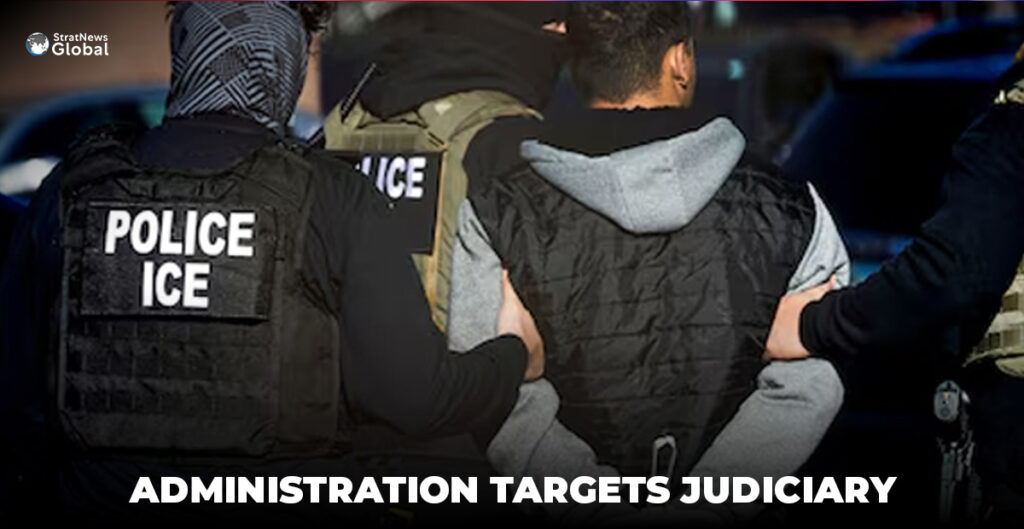
DOJ Weighs Charging Judges, Lawyers Over Immigration-Related Virtual Hearings
The U.S. Department of Justice (DOJ) considered filing criminal charges against Minnesota judges and defence attorneys who discussed holding virtual court hearings to shield defendants from federal immigration arrests, according to five sources familiar with the matter.
In February, FBI agents in Minneapolis opened a preliminary inquiry into whether local judges and defence attorneys obstructed immigration enforcement by requesting virtual hearings, and the concept was also pitched to law enforcement officials in Minneapolis and Washington, D.C., said the people, who spoke on the condition of anonymity to discuss internal Justice Department deliberations.
Reuters could not determine whether the probe is ongoing. To date, no judge or lawyer in Minnesota has been charged over the episode.
Two of the people familiar with the discussions said FBI and Justice Department leadership in Washington supported the probe.
A Justice Department spokesperson declined to comment.
The probe was launched shortly after Emil Bove, the former Acting Deputy Attorney General who has since been nominated by President Donald Trump to serve as an appellate judge for the U.S. Court of Appeals for the Third Circuit, ordered prosecutors in a January 21 memo to pursue potential criminal cases against “state and local actors” for impeding immigration enforcement.
The Senate Judiciary Committee is slated to vote on Bove’s nomination on Thursday, with Democrats expected to oppose it.
The Trump administration has taken aggressive steps against the legal system when its policies have been blocked, lashing out at judges over rulings it disagrees with and seeking to punish law firms and legal organisations that have challenged its policies.
“They’ve been intimidating law firms and lawyers from the beginning,” said Bennett Gershman, a former state prosecutor who teaches law at Pace University. “This is just … part of the campaign to terrorise, intimidate, frighten people from speaking out.”
Email Trail
The Minneapolis probe followed comments made in an email chat maintained by Minnesota defence lawyers on February 6 discussing requesting virtual court hearings for defendants who were living in the U.S. illegally to reduce the risk that Immigration and Customs Enforcement officers would apprehend them at court, the five people told Reuters.
Fox News reported on the existence of the email chat in March, about a month after the Justice Department started its inquiry.
The DOJ probe that the chat helped spark has not been previously reported.
In the email chain, one defense attorney said judges in the Third Judicial District in Minnesota “proactively” reached out to public defenders and prosecutors to encourage them to request Zoom court hearings on any cases with immigration issues, and that such requests would be granted “liberally,” according to an excerpt of the chat verified to Reuters by an attorney who saw the email messages.
In late April, the Justice Department charged Hannah Dugan, a local elected judge in Milwaukee, with trying to help a migrant evade immigration authorities when he appeared in her courtroom for a hearing. The indictment also alleges she told the defendant’s attorney he could “appear by Zoom” for his future court appearances.
Dugan has pleaded not guilty to the charges.
The Justice Department previously tried to charge a local Massachusetts judge in Trump’s first term for helping a state court defendant evade arrest by ICE by allowing him to leave through a rear door.
The case was later dropped during the Biden administration.
Virtual hearings became commonplace in courtrooms across America during the COVID pandemic, and still remain a popular option in some states, including Minnesota.
Chris Wellborn, a recent former president of the National Association of Criminal Defence Lawyers, said that scheduling virtual appearances for clients is a “routine and established procedure” that can help defendants who are balancing multiple jobs or facing child care duties.
“This situation underscores a recurring challenge: the misinterpretation of the vital role a criminal defence attorney plays in upholding constitutional obligations,” he said.
“It is a fundamental duty of all defence lawyers to provide comprehensive advice to their clients regarding all available legal options and pathways.”
(With inputs from Reuters)
China Reaffirms Thaw In EU Ties Amid Rising Global Trade Tensions Ahead Of July Summit
China on Wednesday reaffirmed the normalisation of its relations with the European Parliament, aiming to strengthen economic and political ties with Brussels amid escalating global trade tensions.
“In recent years, exchanges between Chinese and European legislative bodies have encountered some setbacks due to well-known reasons,” China’s foreign ministry said, referring to disputes over alleged human rights abuses in the Xinjiang region.
“Under current circumstances, both sides believe it is very important for China and Europe to strengthen dialogue and cooperation,” spokesperson Lin Jian said, adding that Beijing and the European Parliament had decided to lift all restrictions on mutual exchanges of lawmakers.
The comments by China’s foreign ministry came after the South China Morning Post reported that Beijing had removed “restrictions” on former EU lawmaker Reinhard Buetikofer, sanctioned in 2021.
The normalisation of ties was first confirmed by both the European Parliament and Beijing earlier this year.
Wednesday’s remarks also came ahead of a China-EU leaders’ summit slated for later this month when the EU’s Ursula von der Leyen and Antonio Costa are expected to meet Chinese President Xi Jinping and Premier Li Qiang in Beijing.
In March 2021, China blacklisted 10 EU individuals and four entities in response to Brussels’ sanctions against Chinese officials for human rights abuses in Xinjiang.
Buetikofer, a German politician who chaired the European Parliament’s delegation to China at the time, was among those sanctioned, barred from entering China or doing business with it.
Beijing had accused those sanctioned of seriously harming the country’s sovereignty and interests over Xinjiang.
(With inputs from Reuters)
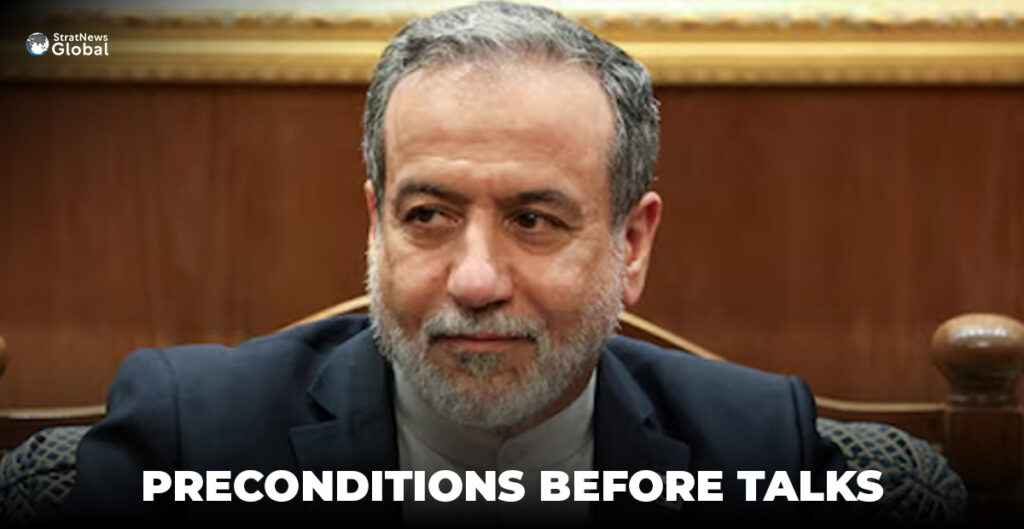
Iran’s Parliament Rejects Resuming Nuclear Talks With US Until Preconditions Met
Iran’s parliament declared that nuclear talks with the United States should not resume until specific preconditions are fulfilled, according to state media reports on Wednesday.
“When the U.S. uses negotiations as a tool to deceive Iran and cover up a sudden military attack by the Zionist regime (Israel), talks cannot be conducted as before. Preconditions must be set and no new negotiations can take place until they are fully met,” the statement said.
The statement did not define the preconditions, but Iran’s Foreign Minister Abbas Araqchi has previously said there should be guarantees that there will be no further attacks against Tehran.
Israel and the U.S. launched strikes on Iran’s nuclear facilities last month, saying that they were part of a programme geared towards developing nuclear weapons. Tehran maintains that its nuclear programme is purely for civilian purposes.
Indirect Negotiations
Tehran and Washington had held five rounds of indirect negotiations mediated by Oman prior to the 12-day air war, with U.S. demands that Tehran drop its domestic uranium enrichment programme reaching a dead end.
Last week, Araqchi reiterated Tehran’s position that it would not agree to a nuclear deal that prevents it from enriching uranium and would refuse to discuss extra-nuclear topics such as its ballistic missile programme.
U.S. President Donald Trump said on Tuesday he was in no rush to negotiate with Iran as its nuclear sites were now “obliterated”, but the U.S., in coordination with three European countries, has agreed to set the end of August as the deadline for a deal.
French Foreign Minister Jean-Noel Barrot said on Tuesday that Paris, London and Berlin would trigger the United Nations sanctions snapback mechanism, which would reimpose international sanctions on Iran, by the end of August if there is no concrete progress regarding an agreement.
(With inputs from Reuters)
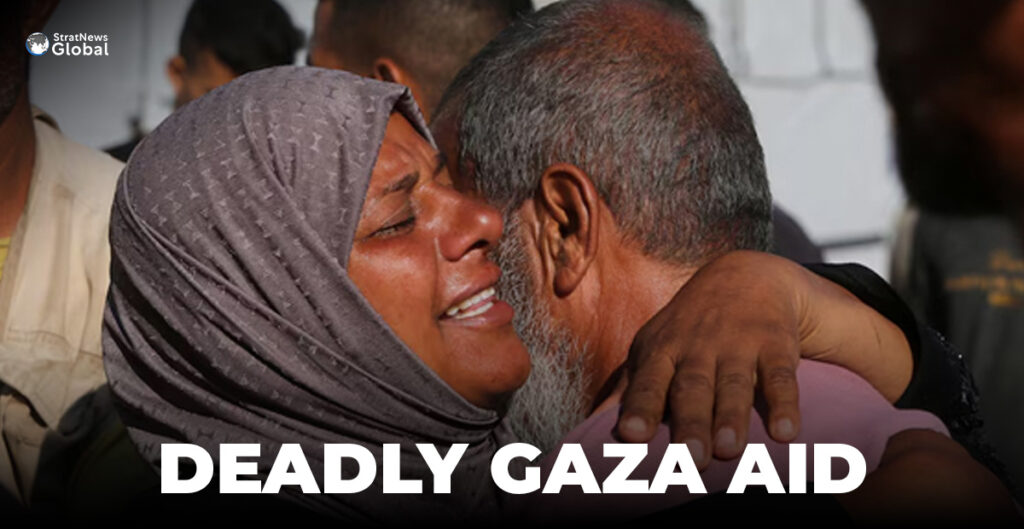
At Least 20 Killed In Crush At Gaza Aid Site, US-Backed GHF Says
At Least 20 Palestinians were killed on Wednesday at an aid distribution site run by the U.S.-backed Gaza Humanitarian Foundation (GHF), which blamed the deadly crowd surge on armed agitators.
The United Nations rights office says it has documented at least 875 deaths over the past six weeks near aid sites and convoys in Gaza, the majority of them near GHF distribution points.
The GHF, which is supported by Israel, said 19 people were trampled and one was fatally stabbed during the crush at one of its centres in Khan Younis in southern Gaza.
“We have credible reason to believe that elements within the crowd – armed and affiliated with Hamas – deliberately fomented the unrest,” GHF said in a statement.
There was no immediate comment from Hamas.
Palestinian health officials told Reuters at least 20 people had died of suffocation at the site. One medic said lots of people had been crammed into a small space and had been crushed.
The GHF, which began distributing food packages in late May after Israel lifted an 11-week blockade on humanitarian supplies, has previously rejected U.N. criticism, accusing it of spreading misinformation.
‘Inherently Unsafe’ Aid Model
The U.N. has called the GHF’s model “inherently unsafe” and a breach of humanitarian impartiality standards.
GHF operates outside the U.N.-coordinated aid system and uses private U.S. security and logistics contractors to deliver aid — an approach Israel says reduces the risk of Hamas looting, a charge the group denies.
The GHF said on Friday it had delivered more than 70 million meals to Gaza Palestinians in five weeks, and that other humanitarian groups had “nearly all of their aid looted” by Hamas or criminal gangs.
The Israeli army previously told Reuters in a statement that it was reviewing recent mass casualties and that it had sought to minimise friction between Palestinians and the Israel Defence Forces by installing fences and signs and opening additional routes.
The U.N. Office for the Coordination of Humanitarian Affairs has previously cited instances of violent pillaging of aid, and the U.N. World Food Programme said last week that most trucks carrying food assistance into Gaza had been intercepted by “hungry civilian communities”
(With inputs from Reuters)
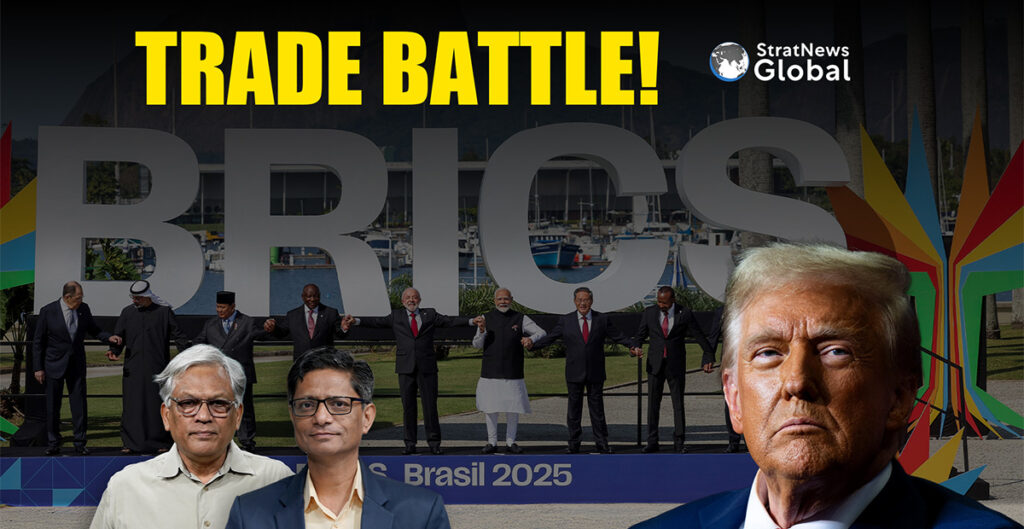
From Rice To GM Products And Tech, US Ups Pressure On India
India-US negotiations on a bilateral trade agreement has gone into extra time, with the deadline now shifting to Aug 1. Is that good or bad for India?
Abhijit Das, former head of the Centre for WTO Studies in Delhi, believes that “the more the negotiations drag on, more will be the demands that the US will likely make on India particularly in the agriculture sector. It will require India to make concessions if the interim agreement has to be finalised.”
Das believes the pressure on India will be more in the area of poultry, soyabean, corn, maybe even rice and wheat.
“The biggest lobby group in the US is on rice. They want to make sure India’s MSP (minimum support price) is dismantled so they can export to the Indian market,” Das pointed out. “Ethanol is another issue, then problems around US ambitions to export GM products to India.”
He warns that while tech has not been talked about much, “I would be very surprised if the US does not bring the interests of its Big Tech to the negotiating table. They might be demanding a permanent moratorium on customs duties on electronic transmissions. They might want a commitment that in future, government will not mandate localisation of servers.”
Not only will US Big Tech want free flow of data across borders, they will also seek any data that government shares with a local domestic entity.
“The idea is to tie the hands of the government from implementing policies which can help India create vibrant domestic champions in the digital sector in the future.”
A major aim of the US is to get governments to de-link from the Chinese economy, particularly through global value chains. China, in a countermove, is trying to get closer to the Asean states. This is where the US strategy of targeting Asean with tariffs could boomerang.
Tune in for more in this conversation with Abhijit Das, former head of the Centre for WTO Studies.