

Support us by contributing to StratNewsGlobal on the following UPI ID
ultramodern@hdfcbank

Strategic affairs is our game, South Asia and beyond our playground. Put together by an experienced team led by Nitin A. Gokhale. Our focus is on strategic affairs, foreign policy and international relations, with higher quality reportage, analysis and commentary with new tie-ups across the South Asian region.
You can support our endeavours. Visit us at www.stratnewsglobal.com and follow us on YouTube, Twitter, Facebook and Instagram.
र 500 per month
र 1000 per month
र 5000 per year
र 10000 per year
Donate an amount of your choice
र 500 per month
Donate र 500 per month

र 1000 per month
Donate र 1000 per month
र 5000 per year
Donate र 5,000 per year
र 10000 per year
Donate र 10,000 per year
Donate an amount of your choice
Donate an amount of your choice

US House Moves Closer To First Federal Crypto Law
The Republican-led US House of Representatives on Wednesday cleared crucial procedural hurdles on crypto legislation, just a day after President Donald Trump stepped in to rescue the initiative — paving the way for America’s first federal law on digital assets.
The votes came after more than nine hours of private talks as leaders worked to win over lawmakers skeptical of how the package was structured.
A bill to establish a federal framework for stablecoins is likely to be the first to be passed, in what would be a watershed victory for the crypto industry.
It has already been approved by the Senate, and if approved by the House, it would go to Trump for his signature.
Stablecoins
Stablecoins, a type of cryptocurrency designed to maintain a constant value, usually a 1:1 dollar peg, are commonly used by crypto traders to move funds. They have gained much momentum in recent years, offering faster and cheaper transaction costs than moving money through a bank.
In addition to stablecoins, the House is set to consider a bill to establish market structure rules for crypto products, including defining when the products are a commodity and not subject to oversight from the Securities and Exchange Commission. The Senate has yet to take up a similar measure.
Third Bill
The third bill, strongly backed by conservatives, would prohibit the Federal Reserve from issuing a digital currency of its own. Some Republicans argue a Fed digital currency could give the government too much control over Americans’ finances. Current Fed leaders have said they are not considering such an initiative.
House Majority Whip Tom Emmer said on X late Wednesday that the third bill would be attached to a separate defence authorisation bill as part of the overall compromise.
House Republicans had suffered a setback in their bid to advance the bills on Tuesday, when several conservative Republicans joined with Democrats to block an earlier procedural vote. But Trump met with the hold-outs and paved the way for another vote on Wednesday.
Even after those talks, subsequent procedural votes required to consider the legislation proved fraught, as Republican leaders had to spend several hours convincing conservative lawmakers to allow the bills to proceed. A handful of members had resisted efforts to consider the three main pieces of crypto legislation separately.
(With inputs from Reuters)
Sharaa Pledges Safety For Druze Amid Israeli Airstrikes
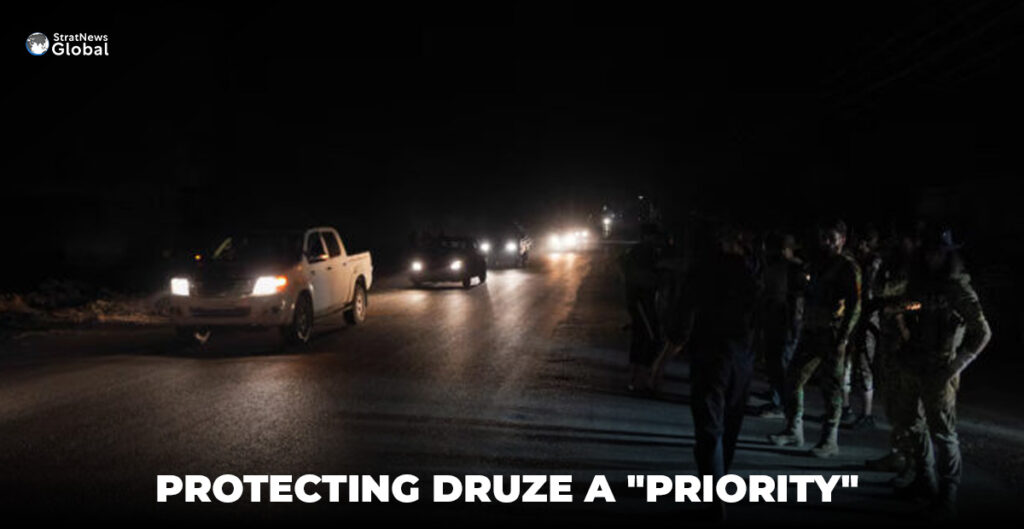
Syria’s interim President Ahmed al-Sharaa on Thursday said safeguarding Druze citizens and their rights remains “our top priority”, even as Israel vowed to eliminate Syrian forces targeting the Druze community in southern Syria.
In his first televised statement after powerful Israeli air strikes on Damascus on Wednesday, Sharaa addressed Druze citizens saying “we reject any attempt to drag you into hands of an external party”.
“We are not among those who fear the war. We have spent our lives facing challenges and defending our people, but we have put the interests of the Syrians before chaos and destruction,” he said.
He added that the Syrian people are not afraid of war and are ready to fight if their dignity is threatened.
Presidential Palace Hit
Israel’s airstrikes blew up part of Syria’s defence ministry and hit near the presidential palace as it vowed to destroy government forces attacking Druze in southern Syria and demanded they withdraw.
The attacks marked a significant Israeli escalation against Sharaa’s Islamist-led administration. They came despite his warming ties with the US and his administration’s evolving security contacts with Israel.
Describing Syria’s new rulers as barely disguised jihadists, Israel has said it will not let them move forces into southern Syria and vowed to shield the area’s Druze community from attack, encouraged by calls from Israel’s own Druze minority.
Fighting Would Stop Soon: US
“We have engaged all the parties involved in the clashes in Syria. We have agreed on specific steps that will bring this troubling and horrifying situation to an end tonight,” US Secretary of State Marco Rubio said on social media.
The United Nations Security Council will meet on Thursday to address the conflict, diplomats said.
“The council must condemn the barbaric crimes committed against innocent civilians on Syrian soil,” said Israel’s ambassador to the UN, Danny Danon. “Israel will continue to act resolutely against any terrorist threat on its borders, anywhere and at any time.”
Warplanes Over Damascus
The Syrian Network for Human Rights said 169 people had been killed in this week’s violence. Security sources put the toll at 300. Reuters could not independently verify the tolls.
Reuters reporters heard warplanes swoop low over the capital Damascus and unleash a series of massive strikes on Wednesday afternoon. Columns of smoke rose from the area near the defence ministry. A section of the building was destroyed, the ground strewn with rubble.
An Israeli military official said the entrance to the military headquarters in Damascus was struck, along with a military target near the presidential palace. The official said Syrian forces were not acting to prevent attacks on Druze and were part of the problem.
“We will not allow southern Syria to become a terror stronghold,” said Eyal Zamir, Israel’s military chief of staff.
Challenges
Sharaa faces challenges to stitch Syria back together in the face of deep misgivings from groups that fear Islamist rule. In March, mass killings of members of the Alawite minority exacerbated the mistrust.
Druze, followers of a religion that is an offshoot of Islam, are spread between Syria, Lebanon and Israel.
Following calls in Israel to help Druze in Syria, scores of Israeli Druze broke through the border fence on Wednesday, linking up with Druze on the Syrian side, a Reuters witness said.
Israeli Prime Minister Benjamin Netanyahu said the Israeli military was working to save the Druze and urged Israeli Druze citizens not to cross the border. The Israeli military said it was working to safely return civilians who had crossed.
Israeli Druze Faez Shkeir said he felt helpless watching the violence in Syria.
“My family is in Syria – my wife is in Syria, my uncles are from Syria, and my family is in Syria, in Sweida, I don’t like to see them being killed. They kicked them out of their homes, they robbed and burned their houses, but I can’t do anything,” he said.
(With inputs from Reuters)
Malaysia Faces Heat Over Trump’s Pick For US Envoy
Malaysia’s government is under growing pressure to reject a self-proclaimed “alpha male” influencer nominated by President Donald Trump as US ambassador — a move that could strain bilateral ties amid crucial tariff negotiations.
The White House has proposed 40-year-old author and outspoken political commentator Nick Adams to the Senate as its nominee for ambassador to Malaysia, triggering concerns in the Muslim-majority nation over Adams’ views on Islam and support for Israel’s military campaign in Gaza, among other sensitive topics.
No date is set for the Senate vote, but Adams is expected to be approved, with the Republican-held Senate green-lighting every Trump nominee since he became president in January.
Hooters, Hot Dogs And Muscle Cars
Adams, a naturalised US citizen originally from Australia, has an outsized persona on social media and is known for his appeal among young males in the “manosphere”, an online space for men’s issues. He lists interests including a love for hot dogs, steak, muscle cars, and restaurant chain Hooters, where servers wear revealing uniforms.
In posts on online platform X, Adams has railed against alleged efforts to “teach Islam in schools” and described those expressing solidarity with Palestinians as supporters of terrorism.
The posts have sparked outrage in Malaysia, which has a majority of mostly Muslim ethnic Malays alongside significant ethnic Chinese and ethnic Indian minorities of other faiths. Malaysia has also long supported the Palestinian cause, with Prime Minister Anwar Ibrahim rejecting what he described as Western pressure to condemn Palestinian militant group Hamas.
‘Open Insult’
The youth wing of Anwar’s People’s Justice Party said this week it would submit a memorandum of protest to the US embassy in Kuala Lumpur against Adams’ proposed appointment as envoy, adding any rejection “should not be misconstrued as hostility but rather seen as a necessary measure to safeguard the integrity of bilateral relations.”
Mohamed Sukri Omar, a member of Islamic opposition party PAS, said in a statement the appointment would be “an open insult towards the sensitivities of the Malaysian people,” while a group representing 20 pro-Palestine organisations in Malaysia urged the government to reject Adams.
Malaysian government spokesperson Fahmi Fadzil said on Tuesday Adams’ appointment had not yet been raised in cabinet, which has the authority to accept new diplomatic appointments.
‘No Elegant Solution’
Shahriman Lockman of Malaysia’s Institute of Strategic and International Studies, said protests from Muslim groups and ruling bloc allies could be too politically costly for Anwar’s government to ignore, although Adams may be a useful conduit during trade talks due to his perceived closeness to Trump.
Refusing Adams could also provoke retaliation from Trump at a time when Malaysia faces pressure to make trade concessions in exchange for lowering a potentially hefty 25% US tariff, he said.
“There’s no elegant solution here. It’s damned if you do, damned if you don’t,” Shahriman said.
Adams’ office did not immediately respond to a request for comment. In an X post on July 10, he thanked Trump for the nomination, describing it as “the honour of a lifetime”. Trump described Adams on Truth Social as “an incredible Patriot and very successful entrepreneur, whose love of, and devotion to, our Great Country is an inspiration.”
When contacted for comment, the US embassy in Kuala Lumpur pointed to remarks made by US Secretary of State Marco Rubio during a visit to Malaysia last week. Rubio said he supported Adams’ nomination and looked forward to his confirmation.
‘Tone Matters’
Former diplomats say Malaysia was unlikely to reject Adams’ appointment outright, but could make its objections known through informal channels or by delaying its approval.
“That would send a subtle but clear diplomatic signal: we value the bilateral relationship, but we also expect a standard of decorum, cultural sensitivity, and respect appropriate to such a posting,” said Ilango Karuppannan, a retired former Malaysian ambassador who was once deputy chief of mission in Washington.
While concerns over Adams’ appointment were unlikely to have a direct impact on trade negotiations, “the broader tone of the bilateral relationship always matters,” he said.
“A smooth, professional handling of this nomination can help ensure those trade discussions stay on track, while an avoidable public clash might risk unnecessary complications,” Karuppannan said.
‘Cannot Compromise On Certain Principles’
Former Malaysia Foreign Minister Saifuddin Abdullah, a member of the largely ethnic Malay opposition bloc Perikatan Nasional, said Malaysia should stand firm in upholding its values despite Adams’ relationship with Trump.
“Yes it would be good to have a US ambassador who is very close to Trump… but you cannot compromise on certain principles,” he said.
Tricia Yeoh, an associate professor at the University of Nottingham Malaysia, said Adams’ success as envoy would be highly dependent on his ability to win the trust of Malaysia’s political and policy leadership.
“If the comments he has previously made on social media are accurate depictions of his position on sociopolitical matters, he might find it challenging to do so, especially if he intends to make these positions publicly and explicitly known,” she said.
(With inputs from Reuters)
Germany, UK To Sign New Friendship Treaty
German Chancellor Friedrich Merz is all set to make his maiden visit to London on Thursday, where he will meet British Prime Minister Keir Starmer and ink a comprehensive friendship treaty — a key step towards rejuvenating EU-UK ties.
Merz’s day trip comes a week after a three-day state visit by French President Emmanuel Macron, signaling greater cooperation between Europe’s three top powers at a time of growing threats to the continent and uncertainty about their US ally.
Trade Tensions
Europe is facing trade tensions with the United States since the return of President Donald Trump to the White House as well as existential questions about Washington’s commitment to helping defend its European allies, including Ukraine in the face of Russia’s invasion.
“The agreement comes at a time when, as Europeans, we are particularly challenged in terms of security policy,” a German government official said in a briefing ahead of the trip.
“Not stated in the preamble is that transatlantic matters are also — let’s put it this way — in flux. This too is part of the context.”
Germany has such friendship treaties with just a handful of countries like France, symbolizing the closeness of their ties.
Coming nearly a decade after Britain voted to leave the European Union, the treaty includes a clause on mutual assistance which, “in light of the Russian war of aggression against Ukraine, is highly significant”, the official said.
Bolstering Defence
It builds on a defence deal agreed last year that included the joint development of long-range strike weapons, and comes after France and Britain agreed last week to reinforce cooperation over their respective nuclear arsenals.
German defence tech company Stark on Wednesday announced a new factory in Britain, the first production facility outside of Germany, to create AI-powered unmanned systems.
The treaty will include an agreement to jointly combat smuggling and human trafficking, the German official said.
The British government said Germany would make a landmark commitment to outlaw the facilitation of illegal migration to Britain with a law change to be adopted by the end of the year.
That would give law enforcement the tools to investigate warehouses and storage facilities used by migrant smugglers to conceal dangerous small boats intended for illegal crossings to Britain, it said in a statement.
(With inputs from Reuters)
NATO Sucks on Russian Gas, But Wags Its Finger at India, China, Brazil
If hypocrisy were an energy source, NATO could ditch Russian gas tomorrow.
On July 15, NATO Secretary General Mark Rutte delivered a pompous warning from Washington, threatening secondary sanctions of 100% on Brazil, China, and India for continuing to buy Russian oil and gas.
The former Dutch prime minister, now playing global morality enforcer, declared that if these countries didn’t fall in line, they’d be hit hard—very hard—because apparently, NATO now decides how sovereign nations conduct their energy trade.
“Listen,” he intoned, “if you’re the president of China, the prime minister of India, or the president of Brazil, and you’re still trading with the Russians… I will slam secondary sanctions on you of 100%.”
But here’s the little detail the sanctimonious little Rutte forgot to mention: in June 2025 alone, the EU’s five biggest fossil fuel buyers shelled out €1.2 billion to Russia. And over 72% of that was for natural gas—the very thing the EU refuses to sanction.
Why? Because that’s how Europe stays warm, powers its factories, and keeps pretending it’s morally superior. Let’s not forget, 23 of NATO’s 32 members are part of the EU.
Take Hungary, for example. In June, it imported €191 million worth of Russian gas via pipeline and another €165 million in crude oil—legally, under an EU exemption. Apparently, this doesn’t count as “supporting the war effort,” because when EU members buy Russian energy, it’s called “strategic autonomy.” But when India or Brazil does it, it’s an international crisis.
The irony is richer than a Gazprom dividend.
Let’s be clear: NATO has no mandate to dictate the economic choices of sovereign nations like India, Brazil, or China. These are not NATO members. They do not answer to Brussels. They have the right—legally and morally—to purchase energy from whoever they choose, especially when the people doing the finger-wagging are quietly helping keep the Kremlin’s energy revenues afloat.
It’s a stunning act of gaslit diplomacy: pressure the Global South to stop buying oil from Russia, while the EU keeps the gas flowing in through pipelines and LNG terminals. When India refines Russian crude and sells it back to the West, it’s “circumvention.” When the EU takes it directly, it’s “pragmatism.”
And now, under the Trump Doctrine 2.0, Rutte says the world has 50 days to force Putin into peace talks—or face economic hellfire.
What’s next? NATO issuing food sanctions on countries that import Russian wheat? Drone strikes on Indian refineries?
The absurdity is matched only by the arrogance. Rutte even urged U.S. senators and the media to help “put maximum pressure” on these countries, as though they were rogue states instead of functioning democracies managing complex energy needs in an unstable world.
Here’s a revolutionary thought: maybe NATO should focus on defending its own members and stop trying to micromanage global trade. Maybe it should stop moralising from behind a curtain of gas pipelines and exemptions. Maybe, just maybe, it should clean its own house before demanding others burn theirs down.
Until then, NATO might want to keep its sanctimony on tap—right next to the Russian gas it still can’t live without.
Cameroon: Biya Reshuffles Military Top Brass Ahead Of 8th-Term Bid
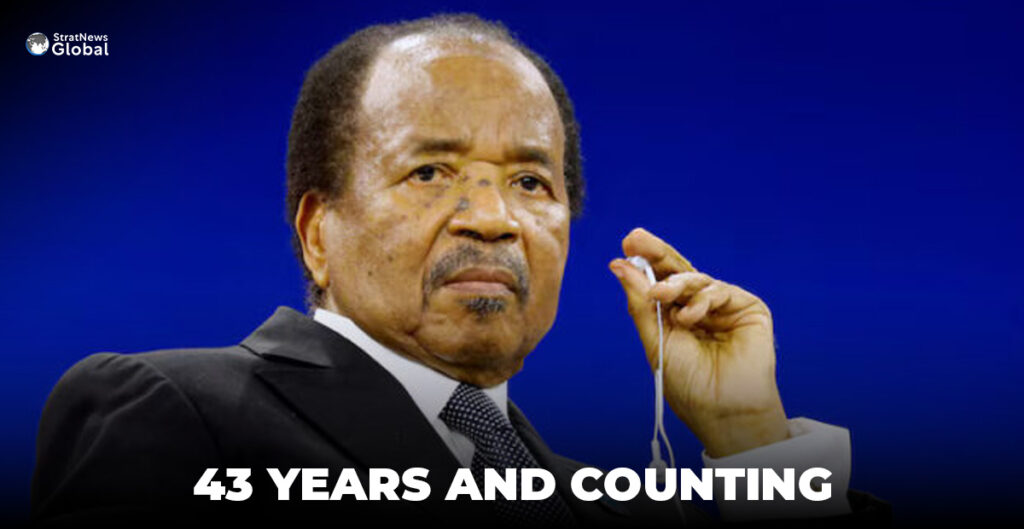
Cameroon’s 92-year-old President Paul Biya, currently the world’s oldest serving head of state, has reshuffled the top military leadership — a move analysts see as an attempt to secure army support for his possible eighth-term bid, following growing public discontent.
The personnel moves, announced late on Tuesday in a series of presidential decrees, affect nearly all branches of the armed forces. They include the appointment of new chiefs of staff for the infantry, air force and navy as well as the promotion of eight brigadier generals to the rank of major general.
One of the promoted generals is the coordinator of the elite Rapid Intervention Battalion (BIR), a special forces unit often deployed in counter-terrorism operations and seen as central to Biya’s security apparatus. The decrees also named a new special presidential military adviser.
43 Years And Counting
The decrees were published two days after Biya, in power since 1982, announced he would run for his eighth term in office in Cameroon’s presidential election scheduled for October 12. The seven-year term could keep him in office until he is nearly 100.
The announcement prompted an unprecedented public outcry in the press and on social media in Cameroon, where Biya’s age and long absences have raised questions about his fitness to rule.
The government has said Biya is in good health and dismissed any suggestions otherwise.
The decrees concerning the armed forces reflect “a strategy by President Biya and his collaborators to consolidate power by building a fortress of loyal army generals around him” that can suppress any protest to his continued rule, said Anthony Antem, peace and security analyst at the Nkafu Policy Institute in Yaounde.
Celestin Delanga, researcher at the Institute for Security Studies (ISS), said the decrees “come in a unique political and security context”.
No Explanation For Overhaul
Biya wants to ensure stability during and after the election and “additional trusted personnel are needed” for that, he said.
The cocoa- and oil-producing Central African nation also faces a host of serious security challenges, notably a conflict with Anglophone separatists and threats from Nigeria-based Islamist fighters in the north.
The government gave no explanation for the overhaul.
The last significant military shake-up in Cameroon came just last year, shortly after Biya returned in October from his latest extended stay abroad which revived speculation about his health.
(With inputs from Reuters)
Zelenskyy Seeks Public And Trump Support With New Ukraine Cabinet
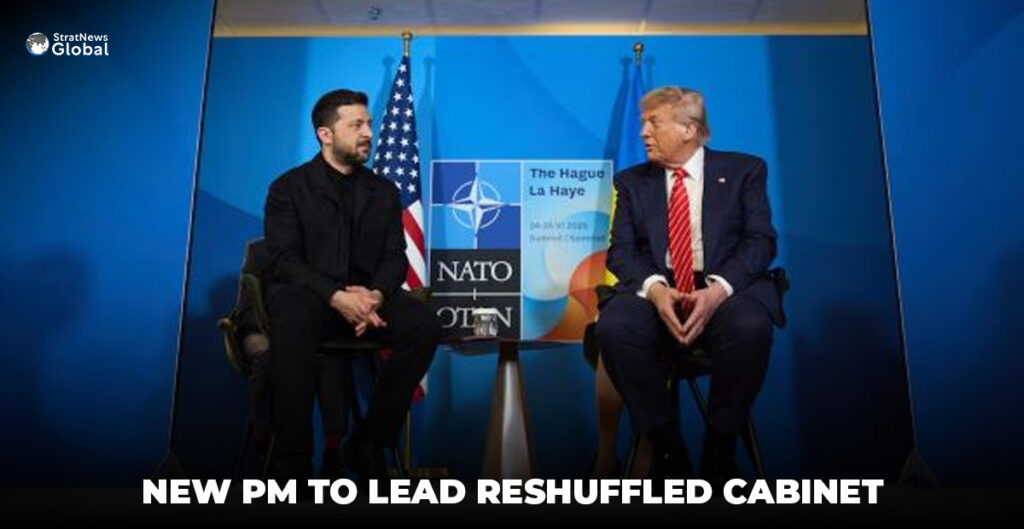
On Thursday, Ukraine is set to appoint its first new prime minister since the war began, as President Volodymyr Zelenskyy aims to streamline defence spending and present a renewed image of leadership. The move is seen as an effort to appeal to both U.S. President Donald Trump and a weary Ukrainian public.
Yulia Svyrydenko, 39, the only candidate for the post, is expected to take over a reshuffled cabinet, tasked with scaling up a fledgling arms industry and breathing life into an economy kept afloat by Western lenders.
Zelenskyy’s choice of a young economist well known in Washington reflects the importance of repairing relations with the Trump administration after Zelenskyy’s disastrous White House visit in February.
Svyrydenko’s outgoing predecessor, Denys Shmyhal, is meanwhile likely to shift to the job of defence minister, a sign of the importance Kyiv now places in building up the capacity of its defence industry as the best chance of fending off Russia.
But with Zelenskyy still relying on a small handful of close allies to make his biggest reshuffle of the war, the moves could disappoint Ukrainians who want to see a wider talent pool at the top.
Svyrydenko, with a more prominent public profile than Shmyhal, has already played a role in shoring up ties with the United States and was one of Kyiv’s main negotiators in reaching a deal that gives Washington preferential access to swathes of Ukraine’s mineral wealth.
Her nomination sends a signal to Washington that Kyiv is prioritising the relationship, said political analyst Mykola Davydiuk.
“For us, it’s a partnership that’s not just about money but about values, about joint projects and generally about our common movement forward together,” he said, summing up how he saw Zelenskyy’s thinking.
Importance Of Defence
Shmyhal, 49, was Ukraine’s longest-serving prime minister. Moving him to the defence ministry, a demotion on paper, gives Zelenskyy an experienced technocratic economist in a job that oversees the bulk of Ukraine’s state cash flow.
The 2025 budget allocates 2.23 trillion hryvnias $53.2 billion – about 26% of Ukraine’s gross domestic product – for defence spending. The ministry has faced public criticism over poor organisation and procurement problems as Ukraine struggles to fend off a bigger and better-armed Russian military.
“This is a ministry that practically since the beginning of the war has suffered from a lack of systemic management,” said Hlib Vyshlinsky, head of the Centre for Economic Strategy in Kyiv. He described Shmyhal’s appointment as “an extremely good step”.
Economically, Kyiv faces the tough challenge of finding money to finance its ballooning budget deficit as foreign aid is set to diminish but defence spending continues to grow.
Officials have said Ukraine would need about $40 billion in international financing in 2026 and could face a shortfall of about $19 billion.
Maintaining stability will only become more difficult as the war drags on, complicated by a lack of effective policymakers, said opposition lawmaker Andrii Osadchuk.
“Unfortunately, it is increasingly difficult for Zelenskyy and his coalition to add new, bright people to ministerial positions,” said Osadchuk, of the Holos party, adding it could lead to “stagnation” in the executive branch.
Political Challenges
Earlier this month, Shmyhal’s cabinet came under fire from businesses and civil society for rejecting the candidacy of an economic security chief who had been unanimously backed by an internationally supervised committee.
Other opposition lawmakers have criticised what they describe as Zelenskyy’s reliance on an ever-smaller band of close loyalists.
“Zelenskyy’s short bench of personnel has long since turned into a stool on which maybe five or six managers fit,” wrote lawmaker Iryna Herashchenko, a member of Zelenskyy rival Petro Poroshenko’s party, on Wednesday.
“The only innovation (in Svyrydenko’s appointment) is that a female manager has been added.”
Elections are prohibited while the country is under martial law, a principle widely accepted within Ukraine given the difficulty of staging a vote while millions of people are displaced and cities are under bombardment and occupation.
But this also means it is difficult for a new crop of leaders to emerge.
While Zelenskyy himself remains broadly popular, the cabinet and other current or former senior officials have been ensnared in allegations of corruption and incompetence. Last month, authorities charged a deputy prime minister with taking a $345,000 kickback.
Ukraine’s government and parliament suffer from low levels of public trust, said Anton Grushetskyi, executive director of the Kyiv International Institute of Sociology.
However, he added that most Ukrainians, while wanting a widespread political renewal, are against wartime elections and accept that fending off Russia is the greater priority.
(With inputs from Reuters)
Russia Launches Massive Drone Strikes On Ukraine, Hits Energy Infrastructure
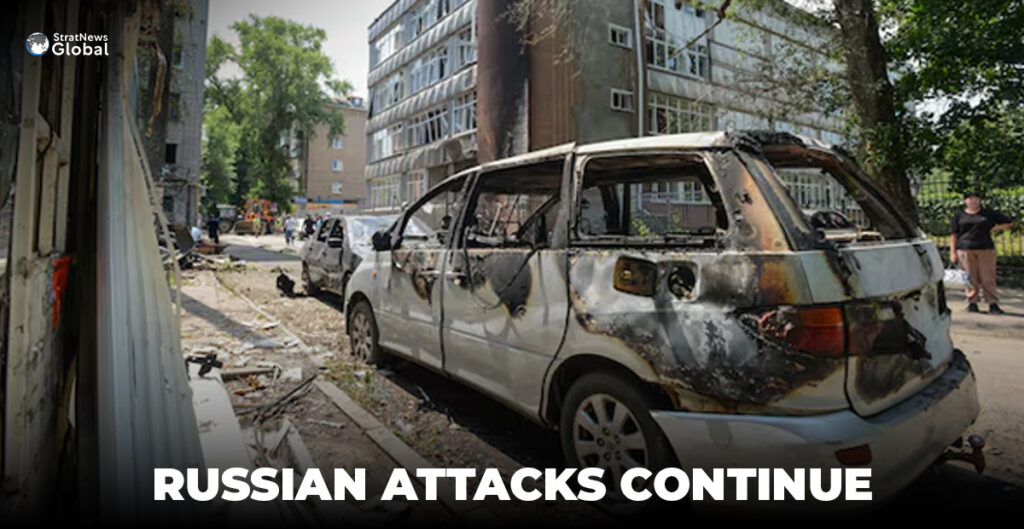
Russia launched overnight attacks on multiple cities in Ukraine using hundreds of drones and a missile, striking energy infrastructure and injuring at least 15 people, officials said on Wednesday.
Ukraine’s air force said Russia launched 400 drones and one ballistic missile, primarily targeting Kharkiv, Kryvyi Rih and Vinnytsia – three cities in different parts of Ukraine.
The large-scale long-range attacks targeted energy infrastructure, President Volodymyr Zelenskyy said on X.
Power was cut for 80,000 families in Kryvyi Rih and other locations in the Dnipropetrovsk region, Ukraine’s largest private energy company, DTEK, said on the Telegram app.
The air force said it had shot down most of the drones, but that 12 targets were hit by 57 drones and a missile.
Russia Intensifies Strikes
Russia has stepped up attacks on cities across Ukraine this summer, regularly sending several hundred drones accompanied by ballistic missiles. The attacks were cited by U.S. President Donald Trump this week as a reason for his decision to approve more weapons for Ukraine, including air defences.
“Russia does not change its strategy, and to effectively counter this terror we need a systemic strengthening of defences: more air defences, more interceptors (drones), more determination to make Russia feel our response,” Zelenskyy wrote.
In Vinnytsia and the surrounding region, eight people were wounded, according to Ukraine’s interior ministry.
Polish Foreign Minister Radoslaw Sikorski said on X that drones had hit a factory of the Polish wood flooring producer Barlinek Group in Vinnytsia, which is in the western part of central Ukraine.
“The plant manager told me just now that it was deliberate, from three directions… Putin’s criminal war is getting closer to our borders,” he added.
The head of the military administration in Kryvyi Rih, Oleksandr Vilkul, said Russian forces conducted an extended attack with a missile and 28 drones. He said water supplies had also been disrupted in some areas.
Injuries Reported
A 17-year-old boy had been severely injured in the attack and was fighting for his life in the hospital, Vilkul added.
In Kharkiv, a frequent target of Russian attacks, regional Governor Oleh Syniehubov said at least 17 explosions were recorded in a 20-minute drone attack in which three people were injured.
Kyiv Mayor Vitali Klitschko said air defence units had gone into action for a time in the capital, but there were no reports of casualties or damage there.
Russia has killed thousands of civilians in attacks on Ukrainian cities since launching its full-scale invasion more than three years ago. Moscow says civilian infrastructure, such as energy systems are legitimate targets because they help Ukraine’s war effort. Ukraine also launches long-range strikes on targets in Russia, although on a more limited scale.
(With inputs from Reuters)
Ukrainian Parliament Votes To Dismiss PM Shmyhal In Wartime Shake-Up
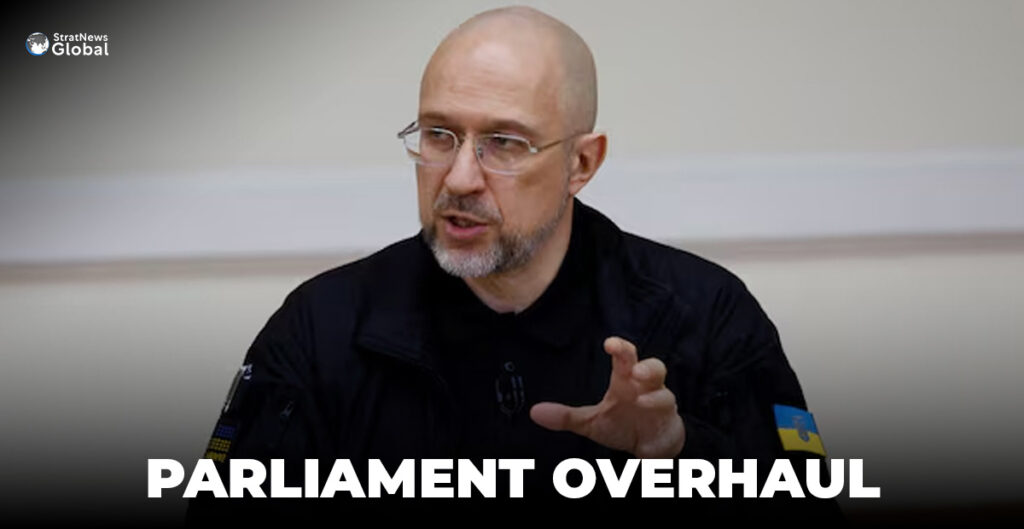
The Ukrainian lawmakers voted on Wednesday to dismiss Prime Minister Denys Shmyhal as part of a broader government reshuffle aimed at bolstering wartime economic and military leadership.
The move effectively dissolves the cabinet, and lawmakers are expected to approve new members on Thursday.
First Deputy Prime Minister Yulia Svyrydenko, tapped by President Volodymyr Zelenskyy this week, is the only candidate to chair the new government.
Shmyhal Resigns
Shmyhal announced on Tuesday that he had submitted his resignation, ahead of the country’s largest wartime cabinet reshuffle expected this week.
President Zelenskyy on Monday nominated First Deputy Prime Minister Yulia Svyrydenko to replace Shmyhal. Svyrydenko, who is also the economy minister, is a close and long-standing ally of Zelenskyy.
Shmyhal, who has been in his post since March 2020, is expected to be appointed as Ukraine’s new defence minister, Zelenskyy said on Monday.
The shakeup, the biggest since Russia’s invasion in February 2022, comes as the Russian forces continue their grinding advance in Ukraine’s east, and prospects for any fast ceasefire deal look dim.
Ukraine’s economy is still smaller than before the war, despite local businesses adapting to the wartime reality and billions in foreign aid from Kyiv’s Western allies to help maintain macroeconomic stability.
Next year, the country is facing a tough task of financing its ballooning budget deficit as foreign aid is set to diminish. Ukrainian officials have said the country would need about $40 billion in external financing in 2026.
Russia Intensifies Strikes
Russia has intensified its attacks on Ukraine, launching a wave of missile and drone strikes across key cities including Kharkiv, Vinnytsia, and Odesa.
The latest assault targeted energy infrastructure and injured at least 15 civilians, according to Ukrainian officials.
The escalation comes amid renewed Russian offensives in the northeast and Donetsk regions, where heavy fighting continues.
(With inputs from Reuters and IBNS)
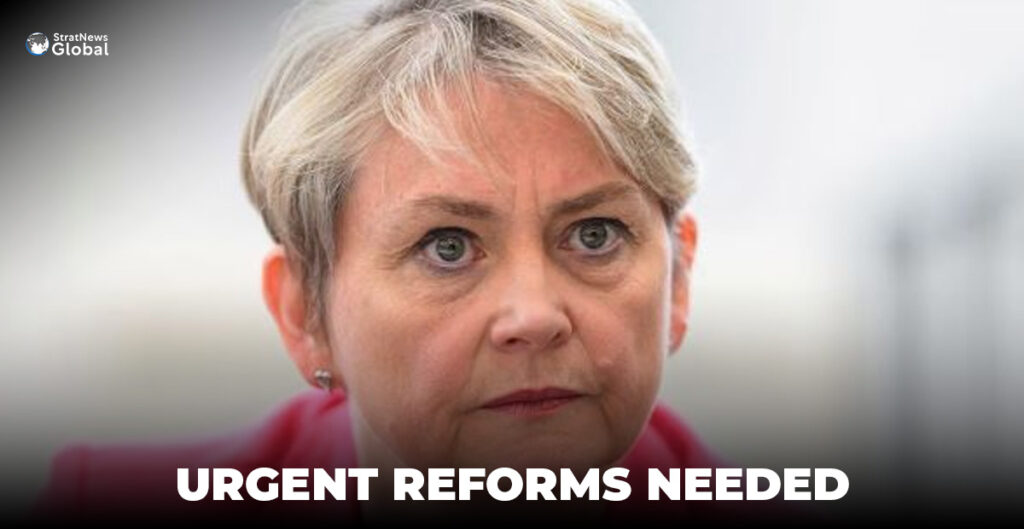
UK’s Prevent Scheme Needs Urgent Reform To Avoid Past Failures, Review Says
UK’s counter-radicalisation initiative, Prevent, must significantly strengthen its approach to avoid further lapses, according to a review released on Wednesday. The findings highlight that two men who carried out fatal knife attacks had previously been referred to the programme, underscoring the urgent need for reform.
Prevent has been a key strand of Britain’s security apparatus since the September 11 attacks on the United States in 2001, with the aim of stopping radicalisation and preventing people from going on to commit acts of violence.
But since its inception it has faced criticism from some Muslims who argue it has been used to spy on their communities, while some referrals have gone on to commit acts of terrorism.
The government commissioned a report into the scheme after it emerged that teenager Axel Rudakubana, who murdered three girls at a Taylor Swift-themed dance event in Southport last year, had previously been referred by his school, but concerns about his violent tendencies were not acted upon.
David Anderson, the Interim Independent Prevent Commissioner, looked at the case of Ali Harbi Ali, who was inspired by Islamic State to stab to death veteran lawmaker David Amess in 2021.
Ali too had previously been referred to Prevent by his school, and Anderson said both cases involved a long string of mistakes and poor judgments.
‘More Needs To Be Done’
He concluded that the scheme, while it worked sometimes, had to improve and adapt, applying to those who were simply obsessed with violence, such as Rudakubana. In the longer term, it should become part of a broader safeguarding and violence protection system, he said.
“More needs to be done,” Anderson said. “Prevent needs to up its game in the online world, where most radicalisation now takes place.”
Home Secretary (interior minister) Yvette Cooper said the government would immediately act on his findings.
The most recent figures showed in the year to the end of March 2024, 6,922 people had been referred to Prevent, an increase of 1.5% on the previous 12 months.
Of those, 63% were categorised as holding extremist Islamist views and 29% were considered to hold extreme right-wing ideologies.
Only two years ago, another independent review concluded that Prevent should refocus its efforts more on the threat posed by terrorist Islamism after becoming too concerned with extreme right-wing ideologies.
(With inputs from Reuters)